Venous Thromboembolism and Gut Dysbiosis: Mechanistic Links Between Endotoxemia, Microbial Metabolites, and Thromboinflammation

 , , , , and
Abstract
1. Introduction
1.1. Clinical Burden and Unmet Needs in Venous Thromboembolism
1.2. Immunothrombosis as an Extension of Virchow’s Triad
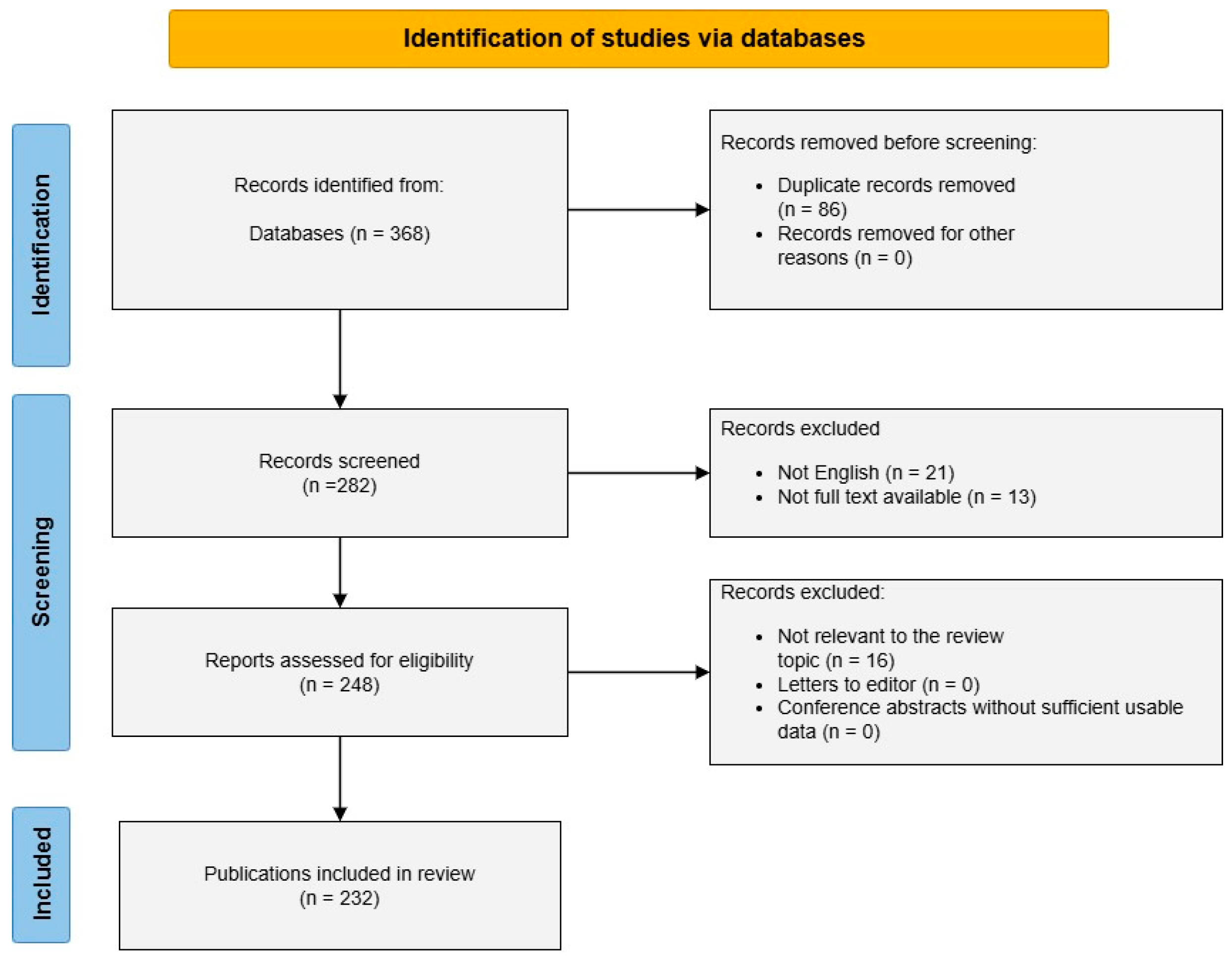
2. Materials and Methods
3. Pathogenetic Gut Bacteria and Dysbiotic Signatures in Chronic Diseases
3.1. Gram-Negative Pathobionts and LPS Structural Heterogeneity
3.2. Barrier Dysfunction and Microbial Translocation
3.3. Chronic Diseases with Elevated VTE Risk as Dysbiosis-Associated States
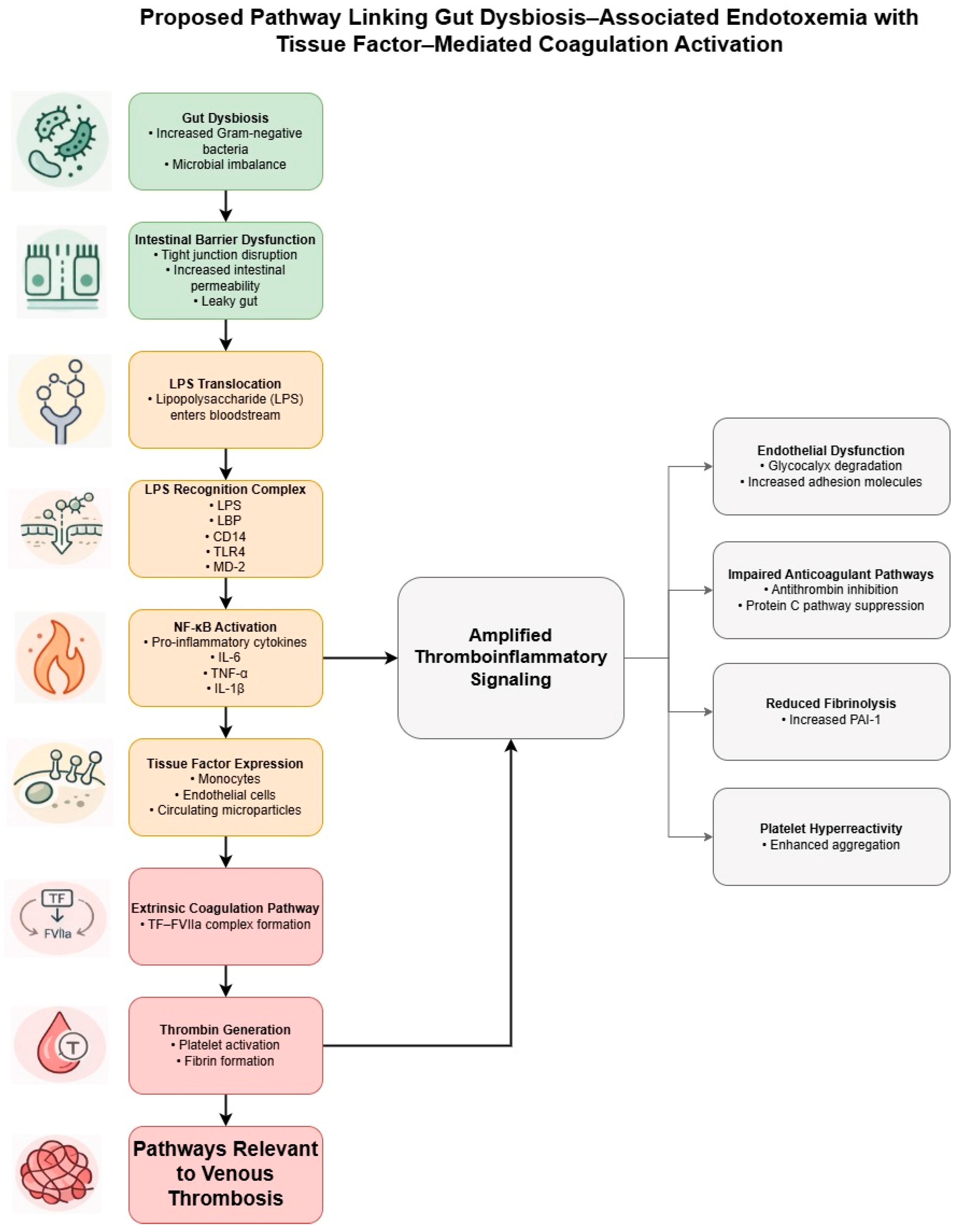
4. Endotoxemia and Tissue Factor Activation
4.1. LPS–TLR4–NF-κB–Tissue Factor Axis
4.2. Impairment of Anticoagulant and Fibrinolytic Systems
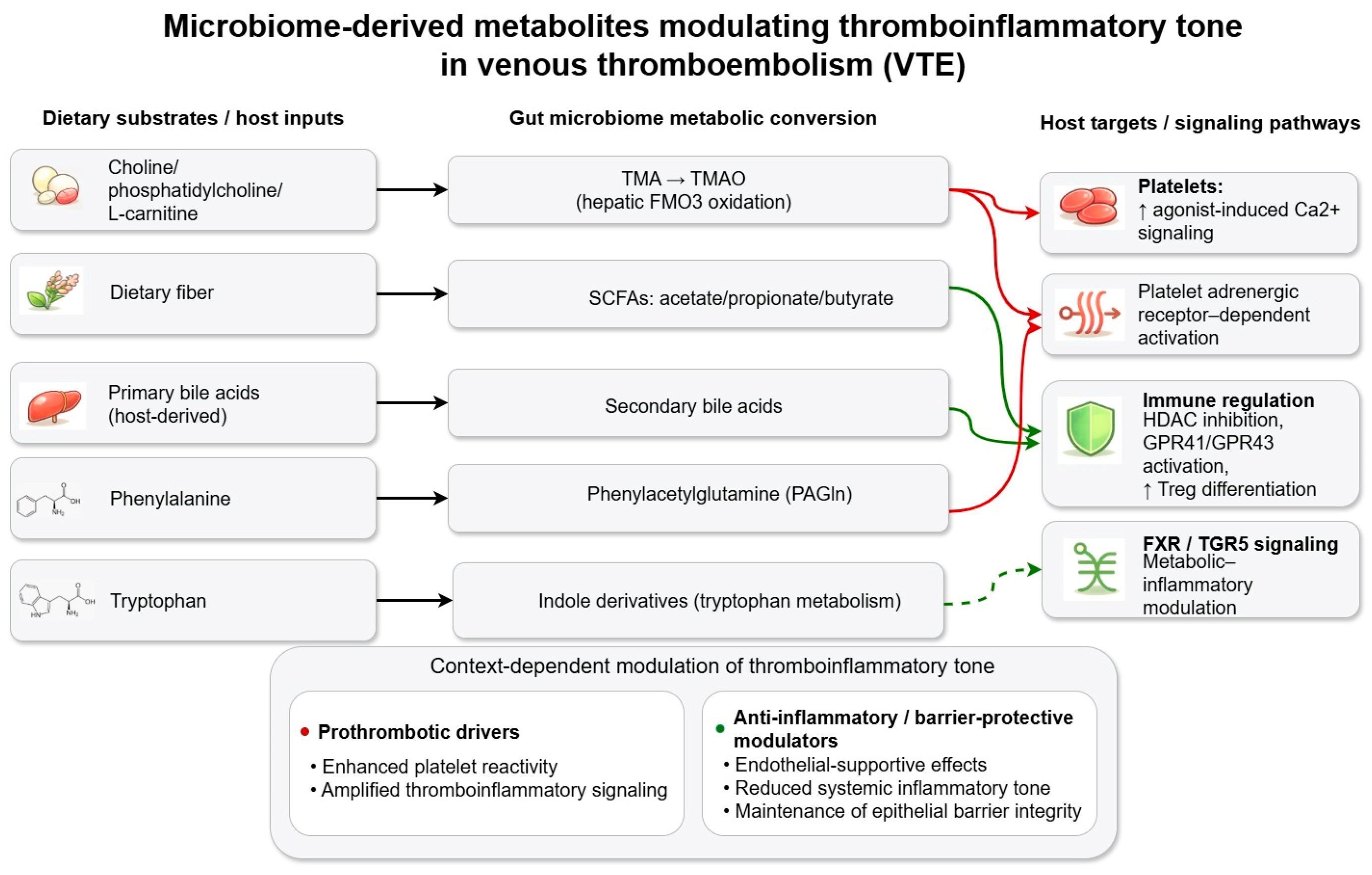
5. Microbiome-Derived Metabolites Converging on a Prothrombotic Milieu
5.1. TMAO and Platelet Hyperreactivity
5.2. Short-Chain Fatty Acids (SCFAs)
5.3. Bile Acids and FXR/TGR5 Signaling
5.4. Emerging Metabolites (PAGln, Indoles)
6. NETs and Complement Amplification
7. Human, Genetic, and Multi-Omics Evidence
8. Microbiome–Anticoagulant Interactions
8.1. Warfarin: Microbiome-Driven Vitamin K Availability and International Normalized Ratio (INR) Variability
8.2. Antibiotic-Associated Dysbiosis: Clinical Evidence of Warfarin Destabilization and Bleeding Risk
8.3. DOACs: Plausible Microbiome Effects on Exposure, but Limited Direct Clinical Evidence
8.4. Translational Implications for VTE Care
9. Translational Perspectives and Future Directions
10. Strengths and Limitations
11. Conclusions
Supplementary Materials
Author Contributions
Funding
Institutional Review Board Statement
Data Availability Statement
Acknowledgments
Conflicts of Interest
Abbreviations
| ABCA1 | ATP-binding cassette transporter A1 |
| AhR | aryl hydrocarbon receptor |
| AI | artificial intelligence |
| APC | activated protein C |
| C3a | complement component 3a |
| C5a | complement component 5a |
| Ca2+ | calcium |
| CD14 | cluster of differentiation 14 |
| citH3 | citrullinated histone H3 |
| CTEPH | chronic thromboembolic pulmonary hypertension |
| cutC | choline TMA-lyase capacity |
| CYP3A4 | cytochrome P450 3A4 |
| DMB | 3,3-dimethyl-1-butanol |
| DNA | deoxyribonucleic acid |
| DOAC(s) | direct oral anticoagulant(s) |
| DVT | deep vein thrombosis |
| eNOS | endothelial nitric oxide synthase |
| EPCR | endothelial protein C receptor |
| FMO3 | flavin-containing monooxygenase 3 |
| FXR | farnesoid X receptor |
| GPR | G-protein-coupled receptor |
| GPR41 | G protein-coupled receptor 41 |
| GPR43 | G protein-coupled receptor 43 |
| GWAS | genome-wide association study |
| HDAC | histone deacetylase |
| IBD | inflammatory bowel disease |
| IL-1β | interleukin 1 beta |
| IL-6 | interleukin 6 |
| IL-8 | interleukin 8 |
| INR | international normalized ratio |
| IRF3 | interferon regulatory factor 3 |
| LBP | lipopolysaccharide-binding protein |
| LPS | lipopolysaccharide |
| MAPK | mitogen-activated protein kinase |
| MASLD | metabolic dysfunction-associated steatotic liver disease |
| MD-2 | myeloid differentiation protein 2 |
| MR | Mendelian randomization |
| MyD88 | myeloid differentiation primary response 88 |
| NET(s) | neutrophil extracellular trap(s) |
| NF-κB | nuclear factor kappa B |
| Nrf2 | nuclear factor erythroid 2-related factor 2 |
| PAGln | phenylacetylglutamine |
| PAI-1 | plasminogen activator inhibitor 1 |
| PAMPs | pathogen-associated molecular patterns |
| PAR-1 | protease-activated receptor 1 |
| PAR-4 | protease-activated receptor 4 |
| PE | pulmonary embolism |
| P-gp | P-glycoprotein |
| PSGL-1 | P-selectin glycoprotein ligand-1 |
| PTS | post-thrombotic syndrome |
| SCFA(s) | short-chain fatty acid(s) |
| TF | tissue factor |
| TGR5 | Takeda G-protein-coupled receptor 5 |
| TIR | Toll/interleukin-1 receptor |
| TLR4 | Toll-like receptor 4 |
| TMA | trimethylamine |
| TMAO | trimethylamine N-oxide |
| TNF-α | tumor necrosis factor alpha |
| tPA | tissue-type plasminogen activator |
| Treg | regulatory T cell |
| TRIF | TIR-domain-containing adapter-inducing interferon-β |
| uPA | urokinase-type plasminogen activator |
| VKA | vitamin K antagonist |
| VTE | venous thromboembolism |
| ZO | zonula occludens |
References
- Wändell, P.; Forslund, T.; Danin Mankowitz, H.; Ugarph-Morawski, A.; Eliasson, S.; Braunschwieg, F.; Holmström, M. Venous thromboembolism 2011–2018 in Stockholm: A demographic study. J. Thromb. Thrombolysis 2019, 48, 668–673. [Google Scholar] [CrossRef]
- Pastori, D.; Cormaci, V.M.; Marucci, S.; Franchino, G.; Del Sole, F.; Capozza, A.; Fallarino, A.; Corso, C.; Valeriani, E.; Menichelli, D.; et al. A Comprehensive Review of Risk Factors for Venous Thromboembolism: From Epidemiology to Pathophysiology. Int. J. Mol. Sci. 2023, 24, 3169. [Google Scholar] [CrossRef] [PubMed]
- Heit, J.A. Epidemiology of Venous Thromboembolism. Nat. Rev. Cardiol. 2015, 12, 464–474. [Google Scholar] [CrossRef] [PubMed]
- Marschang, P.; Gerotziafas, G.; Kozak, M.; Cosmi, B.; Catalano, M.; Stanek, A. Epidemiology of Venous Thromboembolism: Implications for Clinical Practice. Pol. Arch. Intern. Med. 2025, 135, 17105. [Google Scholar] [CrossRef] [PubMed]
- Heit, J.A.; Spencer, F.A.; White, R.H. The Epidemiology of Venous Thromboembolism. J. Thromb. Thrombolysis 2016, 41, 3–14. [Google Scholar] [CrossRef]
- Khan, F.; Rahman, A.; Carrier, M.; Kearon, C.; Weitz, J.I.; Schulman, S.; Couturaud, F.; Eichinger, S.; Kyrle, P.A.; Becattini, C.; et al. Long Term Risk of Symptomatic Recurrent Venous Thromboembolism after Discontinuation of Anticoagulant Treatment for First Unprovoked Venous Thromboembolism Event: Systematic Review and Meta-Analysis. BMJ 2019, 366, l4363. [Google Scholar] [CrossRef]
- Laczkovics, C.; Grafenhofer, H.; Kaider, A.; Quehenberger, P.; Simanek, R.; Mannhalter, C.; Lechner, K.; Pabinger, I. Risk of Recurrence after a First Venous Thromboembolic Event in Young Women. Haematologica 2007, 92, 1201–1207. [Google Scholar] [CrossRef][Green Version]
- Konstantinides, S.V.; Meyer, G.; Becattini, C.; Bueno, H.; Geersing, G.J.; Harjola, V.P.; Huisman, M.V.; Humbert, M.; Jennings, C.S.; Jiménez, D.; et al. 2019 ESC Guidelines for the Diagnosis and Management of Acute Pulmonary Embolism Developed in Collaboration with the European Respiratory Society (ERS). Eur. Heart J. 2020, 41, 543–603. [Google Scholar] [CrossRef]
- Jiménez, D.; de Miguel-Díez, J.; Guijarro, R.; Trujillo-Santos, J.; Otero, R.; Barba, R.; Muriel, A.; Meyer, G.; Yusen, R.D.; Monreal, M. Hospital Volume and Outcomes for Acute Pulmonary Embolism: Multinational Population Based Cohort Study. BMJ 2019, 366, l4416. [Google Scholar] [CrossRef]
- Leung, P.; Ho, P.; Lim, H.Y. Contemporary Challenges in Venous Thromboembolism: Evolving Populations and Implications for Management and Risk Stratification. J. Clin. Med. 2026, 15, 1509. [Google Scholar] [CrossRef]
- Ende-Verhaar, Y.M.; Cannegieter, S.C.; Vonk Noordegraaf, A.; Delcroix, M.; Pruszczyk, P.; Mairuhu, A.T.; Huisman, M.V.; Klok, F.A. Incidence of chronic thromboembolic pulmonary hypertension after acute pulmonary embolism: A contemporary view of the published literature. Eur. Respir. J. 2017, 49, 1601792. [Google Scholar] [CrossRef] [PubMed]
- Kahn, S.R. The post-thrombotic syndrome. Hematol. Am. Soc. Hematol. Educ. Program. 2016, 2016, 413–418. [Google Scholar] [CrossRef]
- Kahn, S.R.; Kearon, C.; Julian, J.A.; Mackinnon, B.; Kovacs, M.J.; Wells, P.; Crowther, M.A.; Anderson, D.R.; Van Nguyen, P.; Demers, C.; et al. Predictors of the post-thrombotic syndrome during long-term treatment of proximal deep vein thrombosis. J. Thromb. Haemost. 2005, 3, 718–723. [Google Scholar] [CrossRef]
- Mukhopadhyay, S.; Johnson, T.A.; Duru, N.; Buzza, M.S.; Pawar, N.R.; Sarkar, R.; Antalis, T.M. Fibrinolysis and Inflammation in Venous Thrombus Resolution. Front. Immunol. 2019, 10, 1348. [Google Scholar] [CrossRef] [PubMed]
- Ridker, P.M.; Cushman, M.; Stampfer, M.J.; Tracy, R.P.; Hennekens, C.H. Inflammation, Aspirin, and the Risk of Cardiovascular Disease in Apparently Healthy Men. N. Engl. J. Med. 1997, 336, 973–979. [Google Scholar] [CrossRef] [PubMed]
- Folsom, A.R.; Lutsey, P.L.; Astor, B.C.; Cushman, M. C-reactive protein and venous thromboembolism: A prospective investigation in the ARIC cohort. Thromb. Haemost. 2009, 102, 615–619. [Google Scholar] [CrossRef]
- Christiansen, S.C.; Næss, I.A.; Cannegieter, S.C.; Hammerstrøm, J.; Rosendaal, F.R.; Reitsma, P.H. Inflammatory cytokines as risk factors for a first venous thrombosis: A prospective population-based study. PLoS Med. 2006, 3, e334. [Google Scholar] [CrossRef]
- Lu, Y.-J.; Tang, S.-Y.; Hao, M.; Tang, S.-Y.; Zhang, H.; Duysenbi, S.; Jinsihan, N.; Yu, B.; Tang, J.-D.; Jiang, S.; et al. Baseline low-grade systemic inflammation and risk of hospitalized venous thromboembolism: A UK Biobank cohort study. Thromb. Update 2026, 22, 100234. [Google Scholar] [CrossRef]
- Chan, N.; Sobieraj-Teague, M.; Eikelboom, J.W. Direct oral anticoagulants: Evidence and unresolved issues. Lancet 2020, 396, 1767–1776. [Google Scholar] [CrossRef]
- Sirkin, N.J.; Kolla, S.; Etkin, Y.; Oropallo, A. Direct oral anticoagulants in patients with venous thromboembolism: Current challenges in everyday practice. Pol. Arch. Intern. Med. 2026, 136, 17192. [Google Scholar] [CrossRef]
- Anderson, F.A.; Spencer, F.A. Risk factors for venous thromboembolism. Circulation 2003, 107, I9–I16. [Google Scholar] [CrossRef]
- Ageno, W.; Becattini, C.; Brighton, T.; Selby, R.; Kamphuisen, P.W. Cardiovascular Risk Factors and Venous Thromboembolism: A Meta-Analysis. Circulation 2008, 117, 93–102. [Google Scholar] [CrossRef] [PubMed]
- Grainge, M.J.; West, J.; Card, T.R. Venous thromboembolism during active disease and remission in inflammatory bowel disease: A cohort study. Lancet 2010, 375, 657–663. [Google Scholar] [CrossRef] [PubMed]
- Falanga, A.; Marchetti, M.; Russo, L. The mechanisms of cancer-associated thrombosis. Thromb. Res. 2015, 135, S8–S11. [Google Scholar] [CrossRef] [PubMed]
- Miceli, G.; Ciaccio, A.M.; Tuttolomondo, A. From Circulating Biomarkers to Polymorphic Variants: A Narrative Review of Challenges in Thrombophilia Evaluation. J. Clin. Med. 2025, 14, 3448. [Google Scholar] [CrossRef]
- Smółka, L.; Pomianowski, B.; Szczygieł, J.; Karaś, R.; Lepich, T.; Bajor, G. Unusual connections in pulmonary vein drainage—Anatomical and pathological variants and their clinical meaning. Pielęgniarstwo Chir. I Angiol. Surg. Vasc. Nurs. 2024, 18, 43–50. [Google Scholar] [CrossRef]
- Hasan, R.A.; Koh, A.Y.; Zia, A. The gut microbiome and thromboembolism. Thromb. Res. 2020, 189, 77–87. [Google Scholar] [CrossRef]
- Smółka, L.; Strugała, M.; Kursa, K.; Pomianowski, B.; Blady, K.; Bratek, K. The impact of the gut microbiome on the development of atherosclerosis and peripheral arterial disease: A narrative review. Przegl. Epidemiol. 2025, 79, 1–36. [Google Scholar] [CrossRef]
- Smółka, L.; Strugała, M.; Blady, K.; Pomianowski, B.; Kursa, K.; Stanek, A. Pathogenetic Gut Microbiota in Aortic Diseases: Evidence and Mechanisms Across Aneurysm, Dissection, and Inflammatory Aortopathies. Nutrients 2026, 18, 565. [Google Scholar] [CrossRef]
- Wang, C.; Wu, X.; Wang, J.; Fei, B.; Jiang, H. Investigating the association between gut microbiota and venous thromboembolism mediated by immune cells: A mediation Mendelian randomization study. Medicine 2026, 105, e47709. [Google Scholar] [CrossRef]
- Engelmann, B.; Massberg, S. Thrombosis as an intravascular effector of innate immunity. Nat. Rev. Immunol. 2013, 13, 34–45. [Google Scholar] [CrossRef]
- Opal, S.M.; Esmon, C.T. Bench-to-bedside review: Functional relationships between coagulation and the innate immune response and their respective roles in the pathogenesis of sepsis. Crit. Care 2003, 7, 23–38. [Google Scholar] [CrossRef] [PubMed]
- Esmon, C.T. The interactions between inflammation and coagulation. Br. J. Haematol. 2005, 131, 417–430. [Google Scholar] [CrossRef] [PubMed]
- Denorme, F.; Portier, I.; Castro, H.; Ajanel, A.; Kosaka, Y.; Benzon, H.; de Araujo, C.V.; Souvenir, R.; Abel, E.D.; Weyrich, A.S.; et al. Platelet mTOR is a regulator of sterile immunothrombosis. Arterioscler. Thromb. Vasc. Biol. 2026, 46, e324250. [Google Scholar] [CrossRef] [PubMed]
- Martinod, K.; Wagner, D.D. Thrombosis: Tangled up in NETs. Blood 2014, 123, 2768–2776. [Google Scholar] [CrossRef]
- Fuchs, T.A.; Brill, A.; Duerschmied, D.; Schatzberg, D.; Monestier, M.; Myers, D.D.; Wrobleski, S.K.; Wakefield, T.W.; Hartwig, J.H.; Wagner, D.D. Extracellular DNA traps promote thrombosis. Proc. Natl. Acad. Sci. USA 2010, 107, 15880–15885. [Google Scholar] [CrossRef]
- Brill, A.; Fuchs, T.A.; Savchenko, A.S.; Thomas, G.M.; Martinod, K.; De Meyer, S.F.; Bhandari, A.A.; Wagner, D.D. Neutrophil extracellular traps promote deep vein thrombosis in mice. J. Thromb. Haemost. 2012, 10, 136–144. [Google Scholar] [CrossRef]
- Xu, J.; Zhang, X.; Pelayo, R.; Monestier, M.; Amollo, C.T.; Semeraro, F.; Taylor, F.B.; Esmon, N.L.; Lupu, F.; Esmon, C.T. Extracellular histones are major mediators of death in sepsis. Nat. Med. 2009, 15, 1318–1321. [Google Scholar] [CrossRef]
- Gould, T.J.; Vu, T.T.; Swystun, L.L.; Dwivedi, D.J.; Mai, S.H.C.; Weitz, J.I.; Liaw, P.C. Neutrophil extracellular traps promote thrombin generation through platelet-dependent and platelet-independent mechanisms. Arterioscler. Thromb. Vasc. Biol. 2014, 34, 1977–1984. [Google Scholar] [CrossRef]
- Poitevin, S.; Cochery-Nouvellon, E.; Dupont, A.; Nguyen, P. Monocyte IL-10 produced in response to lipopolysaccharide modulates thrombin generation by inhibiting tissue factor expression and release of active tissue factor-bound microparticles. Thromb. Haemost. 2007, 97, 598–607. [Google Scholar] [CrossRef]
- Mooberry, M.J.; Bradford, R.; Hobl, E.L.; Lin, F.C.; Jilma, B.; Key, N.S. Procoagulant microparticles promote coagulation in a factor XI-dependent manner in human endotoxemia. J. Thromb. Haemost. 2016, 14, 1031–1042. [Google Scholar] [CrossRef]
- Aleman, M.M.; Walton, B.L.; Byrnes, J.R.; Wolberg, A.S. Fibrinogen and red blood cells in venous thrombosis. Thromb. Res. 2014, 133, S38–S40. [Google Scholar] [CrossRef]
- Levi, M.; van der Poll, T. Inflammation and coagulation. Crit. Care Med. 2010, 38, S26–S34. [Google Scholar] [CrossRef] [PubMed]
- Aras, O.; Shet, A.; Bach, R.R.; Hysjulien, J.L.; Slungaard, A.; Hebbel, R.P.; Escolar, G.; Jilma, B.; Key, N.S. Induction of microparticle- and cell-associated intravascular tissue factor in human endotoxemia. Blood 2004, 103, 4545–4553. [Google Scholar] [CrossRef] [PubMed]
- Turner, J.R. Intestinal mucosal barrier function in health and disease. Nat. Rev. Immunol. 2009, 9, 799–809. [Google Scholar] [CrossRef] [PubMed]
- Cani, P.D.; Amar, J.; Iglesias, M.A.; Poggi, M.; Knauf, C.; Bastelica, D.; Neyrinck, A.M.; Fava, F.; Tuohy, K.M.; Chabo, C.; et al. Metabolic endotoxemia initiates obesity and insulin resistance. Diabetes 2007, 56, 1761–1772. [Google Scholar] [CrossRef]
- Pussinen, P.J.; Havulinna, A.S.; Lehto, M.; Sundvall, J.; Salomaa, V. Endotoxemia is associated with an increased risk of incident diabetes. Diabetes Care 2011, 34, 392–397. [Google Scholar] [CrossRef]
- Park, B.S.; Lee, J.O. Recognition of lipopolysaccharide pattern by TLR4 complexes. Exp. Mol. Med. 2013, 45, e66. [Google Scholar] [CrossRef]
- Park, B.S.; Song, D.H.; Kim, H.M.; Choi, B.S.; Lee, H.; Lee, J.O. The structural basis of lipopolysaccharide recognition by the TLR4–MD-2 complex. Nature 2009, 458, 1191–1195. [Google Scholar] [CrossRef]
- Needham, B.D.; Trent, M.S. Fortifying the barrier: The impact of lipid A remodelling on bacterial pathogenesis. Nat. Rev. Microbiol. 2013, 11, 467–481. [Google Scholar] [CrossRef]
- Raetz, C.R.H.; Whitfield, C. Lipopolysaccharide endotoxins. Annu. Rev. Biochem. 2002, 71, 635–700. [Google Scholar] [CrossRef]
- van der Poll, T. Coagulation and inflammation. J. Endotoxin Res. 2001, 7, 301–304. [Google Scholar] [CrossRef] [PubMed]
- von Brühl, M.L.; Stark, K.; Steinhart, A.; Chandraratne, S.; Konrad, I.; Lorenz, M.; Khandoga, A.; Tirniceriu, A.; Coletti, R.; Köllnberger, M.; et al. Monocytes, neutrophils, and platelets cooperate to initiate and propagate venous thrombosis in mice in vivo. J. Exp. Med. 2012, 209, 819–835. [Google Scholar] [CrossRef] [PubMed]
- Fuchs, T.A.; Brill, A.; Wagner, D.D. Neutrophil extracellular trap (NET) impact on deep vein thrombosis. Arterioscler. Thromb. Vasc. Biol. 2012, 32, 1777–1783. [Google Scholar] [CrossRef] [PubMed]
- Dhanesha, N.; Jain, M.; Doddapattar, P.; Undas, A.; Chauhar, A.K. Cellular fibronectin promotes deep vein thrombosis in diet-induced obese mice. J. Thromb. Haemost. 2021, 19, 814–821. [Google Scholar] [CrossRef]
- Groschwitz, K.R.; Hogan, S.P. Intestinal barrier function: Molecular regulation and disease pathogenesis. J. Allergy Clin. Immunol. 2009, 124, 3–20. [Google Scholar] [CrossRef]
- Chelakkot, C.; Ghim, J.; Ryu, S.H. Mechanisms regulating intestinal barrier integrity and its pathological implications. Exp. Mol. Med. 2018, 50, 103. [Google Scholar] [CrossRef]
- Fasano, A. Zonulin and its regulation of intestinal barrier function: The biological door to inflammation, autoimmunity, and cancer. Physiol. Rev. 2011, 91, 151–175. [Google Scholar] [CrossRef]
- Cani, P.D.; Bibiloni, R.; Knauf, C.; Waget, A.; Neyrinck, A.M.; Delzenne, N.M.; Burcelin, R. Changes in gut microbiota control metabolic endotoxemia-induced inflammation in high-fat diet-induced obesity and diabetes in mice. Diabetes 2008, 57, 1470–1481. [Google Scholar] [CrossRef]
- Wiedermann, C.J.; Kiechl, S.; Dunzendorfer, S.; Schratzberger, P.; Egger, G.; Oberhollenzer, F.; Willeit, J. Association of endotoxemia with carotid atherosclerosis and cardiovascular disease: Prospective results from the Bruneck Study. J. Am. Coll. Cardiol. 1999, 34, 1975–1981. [Google Scholar] [CrossRef]
- Stein, P.D.; Beemath, A.; Olson, R.E. Obesity as a risk factor in venous thromboembolism. Am. J. Med. 2005, 118, 978–980. [Google Scholar] [CrossRef]
- Borch, K.H.; Braekkan, S.K.; Mathiesen, E.B.; Njølstad, I.; Wilsgaard, T.; Hansen, J.B. Joint effects of obesity and body height on the risk of venous thromboembolism: The Tromsø study. Arterioscler. Thromb. Vasc. Biol. 2011, 31, 1439–1444. [Google Scholar] [CrossRef] [PubMed]
- Bagheri, S.; Zolghadri, S.; Stanek, A. Beneficial effects of anti-inflammatory diet in modulating gut microbiota and controlling obesity. Nutrients 2022, 14, 3985. [Google Scholar] [CrossRef] [PubMed]
- Stanek, A.; Brożyna-Tkaczyk, K.; Zolghadri, S.; Cholewka, A.; Myśliński, W. The role of intermittent energy restriction diet on metabolic profile and weight loss among obese adults. Nutrients 2022, 14, 1509. [Google Scholar] [CrossRef] [PubMed]
- Sharebiani, H.; Keramat, S.; Chavoshan, A.; Fazeli, B.; Stanek, A. The Influence of Antioxidants on Oxidative Stress-Induced Vascular Aging in Obesity. Antioxidants 2023, 12, 1295. [Google Scholar] [CrossRef]
- Huang, S.-S.; Li, S.-P.; Xie, C.-Y.; Qiu, J.-Y.; Wang, P.-W.; Zhang, J.; Cheng, C.-Y.; Ding, C.-W.; Ma, Y.-J.; Ding, D.; et al. Triglyceride-glucose body mass index and risk of incident venous thromboembolism: A prospective cohort study from the UK Biobank. Eur. J. Med. Res. 2026, 31, 246. [Google Scholar] [CrossRef]
- Beygi, M.; Ahi, S.; Zolghadri, S.; Stanek, A. Management of Metabolic-Associated Fatty Liver Disease/Metabolic Dysfunction-Associated Steatotic Liver Disease: From Medication Therapy to Nutritional Interventions. Nutrients 2024, 16, 2220. [Google Scholar] [CrossRef]
- Ramírez-Mejía, M.M.; Jiménez-Gutiérrez, C.; Eslam, M.; George, J.; Méndez-Sánchez, N. Breaking new ground: MASLD vs. MAFLD—Which holds the key for risk stratification? Hepatol. Int. 2024, 18, 168–178. [Google Scholar] [CrossRef]
- Yuhara, H.; Steinmaus, C.; Corley, D.; Koike, J.; Igarashi, M.; Suzuki, T.; Mine, T. Meta-analysis: The risk of venous thromboembolism in patients with inflammatory bowel disease. Aliment. Pharmacol. Ther. 2013, 37, 953–962. [Google Scholar] [CrossRef]
- Brata, V.D.; Crisan, D.A.; Cozma, A.; Gerdanovics, C.-A.; Popa, S.L.; Milaciu, M.V.; Orășan, O.H. From Inflammation to Thrombosis: The Prothrombotic State and Cardiovascular Risk in Inflammatory Bowel Disease. Medicina 2026, 62, 270. [Google Scholar] [CrossRef]
- Yu, L.C.H. Microbiota dysbiosis and barrier dysfunction in inflammatory bowel disease and colorectal cancers: Exploring a common ground hypothesis. J. Biomed. Sci. 2018, 25, 79. [Google Scholar] [CrossRef] [PubMed]
- Geng, J.; Chen, J.; Olén, O.; Halfvarson, J.; Sundström, J.; Yuan, S.; Ludvigsson, J.F.; Sun, J. Association of Inflammatory Bowel Disease with Cardiovascular Disease, and the Mediating Role of Inflammation: A Matched-Cohort Study. Ther. Adv. Gastroenterol. 2026, 19, 17562848261424145. [Google Scholar] [CrossRef] [PubMed]
- Khorana, A.A.; Kuderer, N.M.; Culakova, E.; Lyman, G.H.; Francis, C.W. Development and validation of a predictive model for chemotherapy-associated thrombosis. Blood 2008, 111, 4902–4907. [Google Scholar] [CrossRef] [PubMed]
- Abdol Razak, N.B.; Jones, G.; Bhandari, M.; Berndt, M.C.; Metharom, P. Cancer-associated thrombosis: An overview of mechanisms, risk factors, and treatment. Cancers 2018, 10, 380. [Google Scholar] [CrossRef]
- Falanga, A.; Marchetti, M. Anticancer treatment and thrombosis. Thromb. Res. 2012, 129, 353–359. [Google Scholar] [CrossRef]
- Lacy, B.E.; Wise, J.L.; Cangemi, D.J. Leaky Gut Syndrome: Myths and Management. Gastroenterol. Hepatol. 2024, 20, 264–272. [Google Scholar]
- Violi, F.; Cammisotto, V.; Bartimoccia, S.; Nocella, C.; Carnevale, R.; Pignatelli, P. Gut-derived low-grade endotoxaemia, atherothrombosis and cardiovascular disease. Nat. Rev. Cardiol. 2023, 20, 24–37. [Google Scholar] [CrossRef]
- Gorabi, A.M.; Kiaie, N.; Khosrojerdi, A.; Sathyapalan, T.; Sahebkar, A. Implications for the role of lipopolysaccharide in the development of atherosclerosis. Trends Cardiovasc. Med. 2022, 32, 525–533. [Google Scholar] [CrossRef]
- Violi, F.; Nocella, C.; Bartimoccia, S.; Castellani, V.; Carnevale, R.; Pignatelli, P.; Cammisotto, V. Gut dysbiosis-derived low-grade endotoxemia: A common basis for liver and cardiovascular disease. Kardiol. Pol. 2023, 81, 563–571. [Google Scholar] [CrossRef]
- Ciesielska, A.; Matyjek, M.; Kwiatkowska, K. TLR4 and CD14 trafficking and its influence on LPS-induced pro-inflammatory signaling. Cell Mol. Life Sci. 2021, 78, 1233–1261. [Google Scholar] [CrossRef]
- Fu, Y.; Kim, H.; Lee, D.S.; Han, A.; Heine, H.; Zamyatina, A.; Kim, H.M. Structural insight into TLR4/MD-2 activation by synthetic LPS mimetics with distinct binding modes. Nat. Commun. 2025, 16, 4164. [Google Scholar] [CrossRef]
- Klasinc, R.; Battin, C.; Paster, W.; Reiter, M.; Schatzlmaier, P.; Rhein, P.; Spittler, A.; Steinberger, P.; Stockinger, H. TLR4/CD14/MD2 Revealed as the Limited Toll-like Receptor Complex for Chlamydia trachomatis-Induced NF-κB Signaling. Microorganisms 2022, 10, 2489. [Google Scholar] [CrossRef] [PubMed]
- Ye, R.; Ye, C.; Huang, Y.; Liu, L.; Wang, S. Circulating tissue factor positive microparticles in patients with acute recurrent deep venous thrombosis. Thromb. Res. 2012, 130, 253–258. [Google Scholar] [CrossRef] [PubMed]
- Uno, K.; Homma, S.; Satoh, T.; Nakanishi, K.; Abe, D.; Matsumoto, K.; Oki, A.; Tsunoda, H.; Yamaguchi, I.; Nagasawa, T.; et al. Tissue factor expression as a possible determinant of thromboembolism in ovarian cancer. Br. J. Cancer 2007, 96, 290–295. [Google Scholar] [CrossRef] [PubMed]
- Hisada, Y.; Mackman, N. Tissue Factor and Extracellular Vesicles: Activation of Coagulation and Impact on Survival in Cancer. Cancers 2021, 13, 3839. [Google Scholar] [CrossRef]
- Ndonwi, M.; Broze, G., Jr.; Bajaj, S.P. The first epidermal growth factor-like domains of factor Xa and factor IXa are important for the activation of the factor VII-tissue factor complex. J. Thromb. Haemost. 2005, 3, 112–118. [Google Scholar] [CrossRef]
- Ząbczyk, M.; Natorska, J.; Undas, A. Factor XIII and Fibrin Clot Properties in Acute Venous Thromboembolism. Int. J. Mol. Sci. 2021, 22, 1607. [Google Scholar] [CrossRef]
- Kahn, M.L.; Nakanishi-Matsui, M.; Shapiro, M.J.; Ishihara, H.; Coughlin, S.R. Protease-activated receptors 1 and 4 mediate activation of human platelets by thrombin. J. Clin. Investig. 1999, 103, 879–887. [Google Scholar] [CrossRef]
- Liu, X.; Yin, S.; Chen, Y.; Wu, Y.; Zheng, W.; Dong, H.; Bai, Y.; Qin, Y.; Li, J.; Feng, S.; et al. LPS-induced proinflammatory cytokine expression in human airway epithelial cells and macrophages via NF-κB, STAT3 or AP-1 activation. Mol. Med. Rep. 2018, 17, 5484–5491. [Google Scholar] [CrossRef]
- Saboor, M.; Hamali, H.A.; Mobarki, A.A.; Madkhali, A.M.; Dboie, G. Exploring antithrombin: Insights into its physiological features, clinical implications and analytical techniques. Blood Coagul. Fibrinolysis 2024, 35, 43–48. [Google Scholar] [CrossRef]
- Schlömmer, C.; Brandtner, A.; Bachler, M. Antithrombin and Its Role in Host Defense and Inflammation. Int. J. Mol. Sci. 2021, 22, 4283. [Google Scholar] [CrossRef] [PubMed]
- Sun, P.; Jeffery, U. Decreased antithrombin activity and inflammation in cats. J. Feline Med. Surg. 2021, 23, 498–506. [Google Scholar] [CrossRef] [PubMed]
- Shi, Y.; Gauer, J.S.; Baker, S.R.; Philippou, H.; Conell, S.D.; Ariëns, A.S. Neutrophils can promote clotting via FXI and impact clot structure via neutrophil extracellular traps in a distinctive manner in vitro. Sci. Rep. 2021, 11, 1718. [Google Scholar] [CrossRef] [PubMed]
- Wakasugi, R.; Suzuki, K.; Kaneko-Kawano, T. Molecular Mechanisms Regulating Vascular Endothelial Permeability. Int. J. Mol. Sci. 2024, 25, 6415. [Google Scholar] [CrossRef] [PubMed]
- Padda, I.S.; Zubair, M.; Citla Sridhar, D. Protein C and S. In StatPearls; StatPearls Publishing: Treasure Island, FL, USA, 2026. Available online: https://www.ncbi.nlm.nih.gov/books/NBK557814/ (accessed on 10 March 2026).
- Dahlbäck, B. Protein S and C4b-binding protein: Components involved in the regulation of the protein C anticoagulant system. Thromb. Haemost. 1991, 66, 49–61. [Google Scholar] [CrossRef]
- Agarwal, S.; Cohen, C.T.; Zobeck, M.; Jacobi, P.M.; Sartain, S.E. Downregulation of thrombomodulin-thrombin-activated protein C pathway as a mechanism for SARS-CoV-2 induced endotheliopathy and microvascular thrombosis. Thromb. Update 2022, 8, 100116. [Google Scholar] [CrossRef]
- Perico, L.; Morigi, M.; Galbusera, M.; Pezzotta, A.; Gastoldi, S.; Imberti, B.; Perna, A.; Ruggenenti, P.; Donadelli, R.; Benigni, A.; et al. SARS-CoV-2 Spike Protein 1 Activates Microvascular Endothelial Cells and Complement System Leading to Platelet Aggregation. Front. Immunol. 2022, 13, 827146. [Google Scholar] [CrossRef]
- Sarangi, P.P.; Lee, H.W.; Kim, M. Activated protein C action in inflammation. Br. J. Haematol. 2010, 148, 817–833. [Google Scholar] [CrossRef]
- Esmon, C.T. Protein C anticoagulant system-anti-inflammatory effects. Semin. Immunopathol. 2012, 34, 127–132. [Google Scholar] [CrossRef]
- Toltl, L.J.; Austin, R.C.; Liaw, P.C. Activated protein C modulates inflammation, apoptosis and tissue factor procoagulant activity by regulating endoplasmic reticulum calcium depletion in blood monocytes. J. Thromb. Haemost. 2011, 9, 582–592. [Google Scholar] [CrossRef]
- Cheng, T.; Liu, D.; Griffin, J.H.; Fernández, J.A.; Castellino, F.; Rosen, E.D.; Fukudome, K.; Zlokovic, B.V. Activated protein C blocks p53-mediated apoptosis in ischemic human brain endothelium and is neuroprotective. Nat. Med. 2003, 9, 338–342. [Google Scholar] [CrossRef]
- Rahman, F.A.; Krause, M.P. PAI-1, the Plasminogen System, and Skeletal Muscle. Int. J. Mol. Sci. 2020, 21, 7066. [Google Scholar] [CrossRef] [PubMed]
- Suelves, M.; Vidal, B.; Ruiz, V.; Baeza-Raja, B.; Diaz-Ramos, A.; Cuartas, I.; Lluis, F.; Parra, M.; Jardi, M.; Lopez-Alemany, R.; et al. The plasminogen activation system in skeletal muscle regeneration: Antagonistic roles of urokinase-type plasminogen activator (uPA) and its inhibitor (PAI-1). Front. Biosci. 2005, 10, 2978–2985. [Google Scholar] [CrossRef] [PubMed]
- Morrow, G.B.; Whyte, C.S.; Mutch, N.J. A Serpin with a Finger in Many PAIs: PAI-1’s Central Function in Thromboinflammation and Cardiovascular Disease. Front. Cardiovasc. Med. 2021, 8, 653655. [Google Scholar] [CrossRef] [PubMed]
- Urano, T.; Suzuki, Y.; Iwaki, T.; Sano, H.; Honkura, N.; Castellino, F.J. Recognition of Plasminogen Activator Inhibitor Type 1 as the Primary Regulator of Fibrinolysis. Curr. Drug Targets 2019, 20, 1695–1701. [Google Scholar] [CrossRef]
- Woźnica-Niesobska, E.; Leśnik, P.; Janc, J.; Zalewska, M.; Łysenko, L. The Role of Plasminogen Activator Inhibitor 1 in Predicting Sepsis-Associated Liver Dysfunction: An Observational Study. Int. J. Environ. Res. Public Health 2023, 20, 4846. [Google Scholar] [CrossRef]
- Bruno, M.E.C.; Mukherjee, S.; Sturgill, J.L.; Cornea, V.; Yeh, P.; Hawk, G.S.; Saito, H.; Starr, M.E. PAI-1 as a critical factor in the resolution of sepsis and acute kidney injury in old age. Front. Cell Dev. Biol. 2024, 11, 1330433. [Google Scholar] [CrossRef]
- Bruno, M.E.C.; Mukherjee, S.; Stromberg, A.J.; Saito, H.; Starr, M.E. Visceral fat-specific regulation of plasminogen activator inhibitor-1 in aged septic mice. J. Cell. Physiol. 2022, 237, 706–719. [Google Scholar] [CrossRef]
- Villalba, N.; Baby, S.; Yuan, S.Y. The Endothelial Glycocalyx as a Double-Edged Sword in Microvascular Homeostasis and Pathogenesis. Front. Cell Dev. Biol. 2021, 9, 711003. [Google Scholar] [CrossRef]
- Li, L.; Cook, C.; Liu, Y.; Li, J.; Jiang, J.; Li, S. Endothelial glycocalyx in hepatopulmonary syndrome: An indispensable player mediating vascular changes. Front. Immunol. 2022, 13, 1039618. [Google Scholar] [CrossRef]
- Patterson, E.K.; Cepinskas, G.; Fraser, D.D. Endothelial Glycocalyx Degradation in Critical Illness and Injury. Front. Med. 2022, 9, 898592. [Google Scholar] [CrossRef]
- Qu, J.; Cheng, Y.; Wu, W.; Yuan, L.; Liu, X. Glycocalyx Impairment in Vascular Disease: Focus on Inflammation. Front. Cell Dev. Biol. 2021, 9, 730621. [Google Scholar] [CrossRef]
- Tang, W.H.W.; Wang, Z.; Levison, B.S.; Koeth, R.A.; Britt, E.B.; Fu, X.; Wu, Y.; Hazen, S.L. Intestinal microbial metabolism of phosphatidylcholine and cardiovascular risk. N. Engl. J. Med. 2013, 368, 1575–1584. [Google Scholar] [CrossRef] [PubMed]
- Koeth, R.A.; Wang, Z.; Levison, B.S.; Buffa, J.A.; Org, E.; Sheehy, B.T.; Britt, E.B.; Fu, X.; Wu, Y.; Li, L. Intestinal microbiota metabolism of L-carnitine, a nutrient in red meat, promotes atherosclerosis. Nat. Med. 2013, 19, 576–585. [Google Scholar] [CrossRef] [PubMed]
- Reiner, M.F.; Müller, D.; Gobbato, S.; Stalder, O.; Limacher, A.; Bonetti, N.R.; Pasterk, L.; Méan, M.; Rodondi, N.; Aujesky, D.; et al. Gut microbiota-dependent trimethylamine-N-oxide (TMAO) shows a U-shaped association with mortality but not with recurrent venous thromboembolism. Thromb. Res. 2019, 174, 40–47. [Google Scholar] [CrossRef]
- Zhu, W.; Gregory, J.C.; Org, E.; Buffa, J.A.; Gupta, N.; Wang, Z.; Li, L.; Fu, X.; Wu, Y.; Mehrabian, M.; et al. Gut microbial metabolite TMAO enhances platelet hyperreactivity and thrombosis risk. Cell 2016, 165, 111–124. [Google Scholar] [CrossRef]
- Berger, M.; Kleber, M.E.; Delgado, G.E.; März, W.; Andreas, M.; Hellstern, P.; Marx, N.; Schuett, K.A. Trimethylamine N-Oxide and Adenosine Diphosphate-Induced Platelet Reactivity Are Independent Risk Factors for Cardiovascular and All-Cause Mortality. Circ. Res. 2020, 126, 660–662. [Google Scholar] [CrossRef] [PubMed]
- Seldin, M.M.; Meng, Y.; Qi, H.; Zhu, W.; Wang, Z.; Hazen, S.L.; Lusis, A.J.; Shih, D.M. Trimethylamine N-oxide promotes vascular inflammation through signaling of mitogen-activated protein kinase and nuclear factor-κB. J. Am. Heart Assoc. 2016, 5, e002767. [Google Scholar] [CrossRef]
- Tang, W.H.W.; Wang, Z.; Fan, Y.; Levison, B.; Hazen, J.E.; Donahue, L.M.; Wu, Y.; Hazen, S.L. Prognostic value of elevated levels of intestinal microbe-generated metabolite trimethylamine-N-oxide in patients with heart failure: Refining the gut hypothesis. J. Am. Coll. Cardiol. 2014, 64, 1908–1914. [Google Scholar] [CrossRef]
- Canyelles, M.; Plaza, M.; Rotllan, N.; Llobet, D.; Julve, J.; Mojal, S.; Diaz-Ricart, M.; Soria, J.M.; Escolà-Gil, J.C.; Tondo, M.; et al. TMAO and Gut Microbial-Derived Metabolites TML and γBB Are Not Associated with Thrombotic Risk in Patients with Venous Thromboembolism. J. Clin. Med. 2022, 11, 1425. [Google Scholar] [CrossRef]
- Koh, A.; De Vadder, F.; Kovatcheva-Datchary, P.; Bäckhed, F. From dietary fiber to host physiology: Short-chain fatty acids as key bacterial metabolites. Cell 2016, 165, 1332–1345. [Google Scholar] [CrossRef]
- Smith, P.M.; Howitt, M.R.; Panikov, N.; Michaud, M.; Gallini, C.A.; Bohlooly, Y.M.; Glickman, J.N.; Garrett, W.S. The microbial metabolites, short-chain fatty acids, regulate colonic Treg cell homeostasis. Science 2013, 341, 569–573. [Google Scholar] [CrossRef]
- Vinolo, M.A.R.; Rodrigues, H.G.; Nachbar, R.T.; Curi, R. Regulation of inflammation by short chain fatty acids. Nutrients 2011, 3, 858–876. [Google Scholar] [CrossRef] [PubMed]
- Bartolomaeus, H.; Balogh, A.; Yakoub, M.; Homann, S.; Markó, L.; Höges, S.; Tsvetkov, D.; Krannich, A.; Wundersitz, S.; Avery, E.G.; et al. Short-chain fatty acid propionate protects from hypertensive cardiovascular damage. Circulation 2019, 139, 1407–1421. [Google Scholar] [CrossRef] [PubMed]
- Dürholz, K.; Schmid, E.; Frech, M.; Azizov, V.; Otterbein, N.; Lucas, S.; Rauh, M.; Schett, G.; Bruns, H.; Zaiss, M.M. Microbiota-Derived Propionate Modulates Megakaryopoiesis and Platelet Function. Front. Immunol. 2022, 13, 908174. [Google Scholar] [CrossRef] [PubMed]
- Tandon, N.N.; Tralka, T.S.; Jamieson, G.A. Synergistic effects of butyrate on platelet responses to arachidonate, A23187, PGE1, and forskolin. Blood 1986, 67, 366–372. [Google Scholar] [CrossRef]
- Ridlon, J.M.; Kang, D.J.; Hylemon, P.B. Bile salt biotransformations by human intestinal bacteria. J. Lipid Res. 2006, 47, 241–259. [Google Scholar] [CrossRef]
- Li, T.; Chiang, J.Y.L. Bile acid signaling in metabolic disease and drug therapy. Pharmacol. Rev. 2014, 66, 948–983. [Google Scholar] [CrossRef]
- Baker, K.S.; Kopec, A.K.; Pant, A.; Poole, L.G.; Cline-Fedewa, H.; Ivkovich, D.; Olyaee, M.; Woolbright, B.L.; Miszta, A.; Jaeschke, H.; et al. Direct amplification of tissue factor:Factor VIIa procoagulant activity by bile acids drives intrahepatic coagulation. Arterioscler. Thromb. Vasc. Biol. 2019, 39, 2038–2048. [Google Scholar] [CrossRef]
- Greimel, T.; Jahnel, J.; Pohl, S.; Strini, T.; Tischitz, M.; Meier-Allard, N.; Holasek, S.; Meinel, K.; Aguiriano-Moser, V.; Zobel, J.; et al. Bile acid-induced tissue factor activity in hepatocytes correlates with activation of farnesoid X receptor. Lab. Investig. 2021, 101, 1394–1402. [Google Scholar] [CrossRef]
- Nemet, I.; Saha, P.P.; Gupta, N.; Zhu, W.; Romano, K.A.; Skye, S.M.; Cajka, T.; Mohan, M.L.; Li, L.; Wu, Y.; et al. A cardiovascular disease–linked gut microbial metabolite acts via adrenergic receptors. Cell 2020, 180, 862–877.e22. [Google Scholar] [CrossRef] [PubMed]
- Fu, Y.; Yang, Y.; Fang, C.; Liu, X.; Dong, Y.; Xu, L.; Chen, M.; Zuo, K.; Wang, L. Prognostic value of plasma phenylalanine and gut microbiota-derived metabolite phenylacetylglutamine in coronary in-stent restenosis. Front. Cardiovasc. Med. 2022, 9, 944155. [Google Scholar] [CrossRef] [PubMed]
- Zelante, T.; Iannitti, R.G.; Cunha, C.; De Luca, A.; Giovannini, G.; Pieraccini, G.; Zecchi, R.; D’Angelo, C.; Massi-Benedetti, C.; Fallarino, F.; et al. Tryptophan catabolites from microbiota engage aryl hydrocarbon receptor and balance mucosal reactivity via interleukin-22. Immunity 2013, 39, 372–385. [Google Scholar] [CrossRef]
- Shivanna, S.; Kolandaivelu, K.; Shashar, M.; Belghasim, M.; Al-Rabadi, L.; Balcells, M.; Zhang, A.; Weinberg, J.; Francis, J.; Pollastri, M.P.; et al. The Aryl Hydrocarbon Receptor is a Critical Regulator of Tissue Factor Stability and an Antithrombotic Target in Uremia. J. Am. Soc. Nephrol. 2016, 27, 189–201. [Google Scholar] [CrossRef] [PubMed]
- Qi, Z.; Zhou, L.; Dai, S.; Zhang, P.; Zhong, H.; Zhou, W.; Zhao, X.; Xu, H.; Zhao, G.; Wu, H.; et al. Intermittent fasting inhibits platelet activation and thrombosis through the intestinal metabolite indole-3-propionate. Life Metab. 2025, 4, loaf002. [Google Scholar] [CrossRef]
- Witkowski, M.; Witkowski, M.; Friebel, J.; Buffa, J.A.; Li, X.S.; Wang, Z.; Sangwan, N.; Li, L.; DiDonato, J.A.; Tizian, C.; et al. Vascular endothelial tissue factor contributes to trimethylamine N-oxide-enhanced arterial thrombosis. Cardiovasc. Res. 2022, 118, 2367–2384. [Google Scholar] [CrossRef]
- Zhou, Y.; Xu, Z.; Liu, Z. Impact of Neutrophil Extracellular Traps on Thrombosis Formation: New Findings and Future Perspective. Front. Cell Infect. Microbiol. 2022, 12, 910908. [Google Scholar] [CrossRef]
- Laridan, E.; Martinod, K.; De Meyer, S.F. Neutrophil Extracellular Traps in Arterial and Venous Thrombosis. Semin. Thromb. Hemost. 2019, 45, 86–93. [Google Scholar] [CrossRef]
- Thålin, C.; Hisada, Y.; Lundström, S.; Mackman, N.; Wallén, H. Neutrophil Extracellular Traps: Villains and Targets in Arterial, Venous, and Cancer-Associated Thrombosis. Arterioscler. Thromb. Vasc. Biol. 2019, 39, 1724–1738. [Google Scholar] [CrossRef]
- Natorska, J.; Ząbczyk, M.; Undas, A. Neutrophil extracellular traps (NETs) in cardiovascular diseases: From molecular mechanisms to therapeutic interventions. Kardiol. Pol. 2023, 81, 1205–1216. [Google Scholar] [PubMed]
- Pertiwi, K.R.; van der Wal, A.C.; Pabittei, D.R.; Mackaaij, C.; van Leeuwen, M.B.; Li, X.; de Boer, O.J. Neutrophil Extracellular Traps Participate in All Different Types of Thrombotic and Haemorrhagic Complications of Coronary Atherosclerosis. Thromb. Haemost. 2018, 118, 1078–1087. [Google Scholar] [CrossRef]
- Vazquez-Garza, E.; Jerjes-Sanchez, C.; Navarrete, A.; Joya-Harrison, J.; Rodriguez, D. Venous thromboembolism: Thrombosis, inflammation, and immunothrombosis for clinicians. J. Thromb. Thrombolysis 2017, 44, 377–385. [Google Scholar] [CrossRef] [PubMed]
- Potere, N.; Abbate, A.; Kanthi, Y.; Carrier, M.; Toldo, S.; Porreca, E.; Di Nisio, M. Inflammasome Signaling, Thromboinflammation, and Venous Thromboembolism. JACC Basic. Transl. Sci. 2023, 8, 1245–1261. [Google Scholar] [CrossRef] [PubMed]
- Obeagu, E.I. Thromboinflammatory pathways in breast cancer: Clinical and molecular insights into venous thromboembolism risk—A narrative review. Ann. Med. Surg. 2025, 87, 5822–5828. [Google Scholar] [CrossRef] [PubMed]
- Hisada, Y.; Mackman, N. Update from the laboratory: Mechanistic studies of pathways of cancer-associated venous thrombosis using mouse models. Hematol. Am. Soc. Hematol. Educ. Program. 2019, 2019, 182–186. [Google Scholar] [CrossRef]
- Rawish, E.; Sauter, M.; Sauter, R.; Nording, H.; Langer, H.F. Complement, inflammation and thrombosis. Br. J. Pharmacol. 2021, 178, 2892–2904. [Google Scholar] [CrossRef]
- Wenzel, U.O.; Kemper, C.; Bode, M. The role of complement in arterial hypertension and hypertensive end organ damage. Br. J. Pharmacol. 2021, 178, 2849–2862. [Google Scholar] [CrossRef]
- Etulain, J.; Martinod, K.; Wong, S.L.; Cifuni, S.M.; Schattner, M.; Wagner, D.D. P-selectin promotes neutrophil extracellular trap formation in mice. Blood 2015, 126, 242–246. [Google Scholar] [CrossRef]
- Li, X.; Ma, Y.; Wang, D. The role of P-selectin/PSGL-1 in regulating NETs as a novel mechanism in cerebral ischemic injury. Front. Neurol. 2024, 15, 1442613. [Google Scholar] [CrossRef]
- Yao, M.; Ma, J.; Wu, D.; Fang, C.; Wang, Z.; Guo, T.; Mo, J. Neutrophil extracellular traps mediate deep vein thrombosis: From mechanism to therapy. Front. Immunol. 2023, 14, 1198952. [Google Scholar] [CrossRef]
- Smith, P.; Rosell, A.; Farm, M.; Bruzelius, M.; Aguilera Gatica, K.; Mackman, N.; Odeberg, J.; Thålin, C. Markers of neutrophil activation and neutrophil extracellular traps in diagnosing patients with acute venous thromboembolism: A feasibility study based on two VTE cohorts. PLoS ONE 2022, 17, e0270865. [Google Scholar] [CrossRef]
- Liu, L.; Zhang, W.; Su, Y.; Chen, Y.; Cao, X.; Wu, J. The impact of neutrophil extracellular traps on deep venous thrombosis in patients with traumatic fractures. Clin. Chim. Acta 2021, 519, 231–238. [Google Scholar] [CrossRef]
- Reyes-García, A.M.L.; Aroca, A.; Arroyo, A.B.; García-Barbera, N.; Vicente, V.; González-Conejero, R.; Martínez, C. Neutrophil extracellular trap components increase the expression of coagulation factors. Biomed. Rep. 2019, 10, 195–201. [Google Scholar] [CrossRef] [PubMed]
- Duchemin, J.; Pan-Petesch, B.; Arnaud, B.; Blouch, M.T.; Abgrall, J.F. Influence of coagulation factors and tissue factor concentration on the thrombin generation test in plasma. Thromb. Haemost. 2008, 99, 767–773. [Google Scholar] [CrossRef] [PubMed]
- Li, X.; Ren, Y.; Gao, X.; Wang, H.; Zhang, J.; Xie, J.; Liang, J.; Zhao, B.; Zhou, H.; Yin, J. Gut microbiota-mediated choline metabolism exacerbates cognitive impairment induced by chronic cerebral hypoperfusion. J. Cereb. Blood Flow. Metab. 2025, 45, 989–1004. [Google Scholar] [CrossRef] [PubMed]
- Martelli, A.; Abate, F.; Roggia, M.; Benedetti, G.; Caradonna, E.; Calderone, V.; Tenore, G.C.; Cosconati, S.; Novellino, E.; Stornaiuolo, M. Trimethylamine N-Oxide (TMAO) Acts as Inhibitor of Endothelial Nitric Oxide Synthase (eNOS) and Hampers NO Production and Acetylcholine-Mediated Vasorelaxation in Rat Aortas. Antioxidants 2025, 14, 517. [Google Scholar] [CrossRef]
- Querio, G.; Antoniotti, S.; Geddo, F.; Levi, R.; Gallo, M.P. Modulation of Endothelial Function by TMAO, a Gut Microbiota-Derived Metabolite. Int. J. Mol. Sci. 2023, 24, 5806. [Google Scholar] [CrossRef]
- Bordoni, L.; Samulak, J.J.; Sawicka, A.K.; Pelikant-Malecka, I.; Radulska, A.; Lewicki, L.; Kalinowski, L.; Gabbianelli, R.; Olek, R.A. Trimethylamine N-oxide and the reverse cholesterol transport in cardiovascular disease: A cross-sectional study. Sci. Rep. 2020, 10, 18675. [Google Scholar] [CrossRef]
- Wang, Z.; Man, S.; Koeth, R.A. TMAO metaorganismal pathway and chronic inflammatory diseases. Explor. Med. 2025, 6, 1001339. [Google Scholar] [CrossRef]
- Luo, Z.; Yu, X.; Wang, C.; Zhao, H.; Wang, X.; Guan, X. Trimethylamine N-oxide promotes oxidative stress and lipid accumulation in macrophage foam cells via the Nrf2/ABCA1 pathway. J. Physiol. Biochem. 2024, 80, 67–79. [Google Scholar] [CrossRef]
- Shi, F.; Dou, J.; Zhang, X. Advancements in research to mitigate residual risk of atherosclerotic cardiovascular disease. Eur. J. Med. Res. 2025, 30, 735. [Google Scholar] [CrossRef]
- Cheng, P.F.; Wang, J.X.; Wu, J.S.; Li, G.M. Gut microbiota, plasma metabolites, and venous thromboembolism: A Mendelian randomization study. AMB Express 2025, 15, 97. [Google Scholar] [CrossRef] [PubMed]
- Brown, J.M.; Hazen, S.L. Microbial modulation of cardiovascular disease. Nat. Rev. Microbiol. 2018, 16, 171–181. [Google Scholar] [CrossRef] [PubMed]
- Kurilshikov, A.; Medina-Gomez, C.; Bacigalupe, R.; Radjabzadeh, D.; Wang, J.; Demirkan, A.; Le Roy, C.I.; Garay, J.A.R.; Finnicum, C.S.; Liu, X.; et al. Large-scale association analyses identify host factors influencing human gut microbiome composition. Nat. Genet. 2021, 53, 156–165. [Google Scholar] [CrossRef] [PubMed]
- Huang, P.; Xiao, Y.; He, Y. The causal relationships between gut microbiota and venous thromboembolism: A Mendelian randomization study. Hereditas 2025, 162, 25. [Google Scholar] [CrossRef]
- Cen, L.; Qin, L.; Chen, W.; Wei, L.; Tang, C.; Teng, X.; Tian, Z. Causal Relationship between Gut Microbiota and Pulmonary Embolism: An Analysis Using Mendelian Randomization. Pol. J. Microbiol. 2025, 74, 153–164. [Google Scholar] [CrossRef]
- Xi, L.; Wang, H.; Du, J.; Liu, A.; Wang, J.; Ni, Y.; Zhang, S.; Xie, W.; Liu, M.; Wang, C. Causal effect of gut microbiota on venous thromboembolism: A two-sample mendelian randomization study. Thromb. J. 2024, 22, 106. [Google Scholar] [CrossRef]
- Hughes, D.A.; Bacigalupe, R.; Wang, J.; Rühlemann, M.C.; Tito, R.Y.; Falony, G.; Joossens, M.; Vieira-Silva, S.; Henckaerts, L.; Rymenans, L.; et al. Genome-wide associations of human gut microbiome variation and implications for causal inference analyses. Nat. Microbiol. 2020, 5, 1079–1087. [Google Scholar] [CrossRef]
- Tang, W.H.; Hazen, S.L. Microbiome, trimethylamine N-oxide, and cardiometabolic disease. Transl. Res. 2017, 179, 108–115. [Google Scholar] [CrossRef]
- Aron-Wisnewsky, J.; Clément, K. The gut microbiome, diet, and links to cardiometabolic and chronic disorders. Nat. Rev. Nephrol. 2016, 12, 169–181. [Google Scholar] [CrossRef]
- Holbrook, A.; Schulman, S.; Witt, D.M.; Vandvik, P.O.; Fish, J.; Kovacs, M.J.; Svensson, P.J.; Veenstra, D.L.; Crowther, M.; Guyatt, G.H. Evidence-based management of anticoagulant therapy: Antithrombotic Therapy and Prevention of Thrombosis, 9th ed: American College of Chest Physicians Evidence-Based Clinical Practice Guidelines. Chest 2012, 141, e152S–e184S. [Google Scholar] [CrossRef]
- Weersma, R.K.; Zhernakova, A.; Fu, J. Interaction between drugs and the gut microbiome. Gut 2020, 69, 1510–1519. [Google Scholar] [CrossRef] [PubMed]
- Sharma, A.; Buschmann, M.M.; Gilbert, J.A. Pharmacomicrobiomics: The Holy Grail to Variability in Drug Response? Clin. Pharmacol. Ther. 2019, 106, 317–328. [Google Scholar] [CrossRef] [PubMed]
- Olson, R.E. The function and metabolism of vitamin K. Annu. Rev. Nutr. 1984, 4, 281–337. [Google Scholar] [CrossRef] [PubMed]
- Conly, J.M.; Stein, K. The production of menaquinones (vitamin K2) by intestinal bacteria and their role in maintaining coagulation homeostasis. Prog. Food Nutr. Sci. 1992, 16, 307–343. [Google Scholar]
- Conly, J.M.; Stein, K.; Worobetz, L.; Rutledge-Harding, S. The contribution of vitamin K2 (menaquinones) produced by the intestinal microflora to human nutritional requirements for vitamin K. Am. J. Gastroenterol. 1994, 89, 915–923. [Google Scholar]
- Conly, J.; Stein, K. Reduction of vitamin K2 concentrations in human liver associated with the use of broad spectrum antimicrobials. Clin. Investig. Med. 1994, 17, 531–539. [Google Scholar]
- Glasheen, J.J.; Fugit, R.V.; Prochazka, A.V. Brief report: The risk of overanticoagulation with antibiotic use in outpatients on stable warfarin regimens. J. Gen. Intern. Med. 2005, 20, 653–656. [Google Scholar] [CrossRef]
- Penning-van Beest, F.J.; van Meegen, E.; Rosendaal, F.R.; Stricker, B.H. Drug interactions as a cause of overanticoagulation on phenprocoumon or acenocoumarol predominantly concern antibacterial drugs. Clin. Pharmacol. Ther. 2001, 69, 451–457. [Google Scholar] [CrossRef]
- Tilstone, W.J.; Gray, J.M.; Nimmo-Smith, R.H.; Lawson, D.H. Interaction between warfarin and sulphamethoxazole. Postgrad. Med. J. 1977, 53, 388–390. [Google Scholar] [CrossRef]
- Foster, D.R.; Milan, N.L. Potential interaction between azithromycin and warfarin. Pharmacotherapy 1999, 19, 902–908. [Google Scholar] [CrossRef]
- Saum, L.M.; Balmat, R.P. Ceftriaxone potentiates warfarin activity greater than other antibiotics in the treatment of urinary tract infections. J. Pharm. Pract. 2016, 29, 121–124. [Google Scholar] [CrossRef]
- Lane, M.A.; Zeringue, A.; McDonald, J.R. Serious bleeding events due to warfarin and antibiotic co-prescription in a cohort of veterans. Am. J. Med. 2014, 127, 657–663. [Google Scholar] [CrossRef]
- Cunningham, A.; Stein, C.M.; Chung, C.P.; Daugherty, J.R.; Smalley, W.E.; Ray, W.A. An automated database case definition for serious bleeding related to oral anticoagulant use. Pharmacoepidemiol. Drug Saf. 2011, 20, 560–566. [Google Scholar] [CrossRef] [PubMed]
- Ageno, W.; Gallus, A.S.; Wittkowsky, A.; Crowther, M.; Hylek, E.M.; Palareti, G. Oral anticoagulant therapy: Antithrombotic Therapy and Prevention of Thrombosis, 9th ed: American College of Chest Physicians Evidence-Based Clinical Practice Guidelines. Chest 2012, 141, e44S–e88S. [Google Scholar] [CrossRef] [PubMed]
- Byon, W.; Garonzik, S.; Boyd, R.A.; Frost, C.E. Apixaban: A Clinical Pharmacokinetic and Pharmacodynamic Review. Clin. Pharmacokinet. 2019, 58, 1265–1279. [Google Scholar] [CrossRef] [PubMed]
- Foerster, K.I.; Hermann, S.; Mikus, G.; Haefeli, W.E. Drug–Drug Interactions with Direct Oral Anticoagulants. Clin. Pharmacokinet. 2020, 59, 967–980. [Google Scholar] [CrossRef]
- Ferri, N.; Corsini, A.; Bellosta, S. Drug-Drug Interactions of Direct Oral Anticoagulants (DOACs): From Pharmacological to Clinical Practice. Pharmaceutics 2022, 14, 1120. [Google Scholar] [CrossRef]
- Foley, S.E.; Tuohy, C.; Dunford, M.; Grey, M.J.; De Luca, H.; Cawley, C.; Szabady, R.L.; Maldonado-Contreras, A.; Houghton, J.M.; Ward, D.V.; et al. Gut microbiota regulation of P-glycoprotein in the intestinal epithelium in maintenance of homeostasis. Microbiome 2021, 9, 183. [Google Scholar] [CrossRef]
- Gao, X.; Li, T.; Wei, B.; Yan, Z.; Yan, R. Regulatory mechanisms of gut microbiota on intestinal CYP3A and P-glycoprotein in rats with dextran sulfate sodium-induced colitis. Yao Xue Xue Bao 2017, 52, 34–43. [Google Scholar]
- Priyamvada, S.; Anbazhagan, A.N.; Kumar, A.; Soni, V.; Alrefai, W.A.; Gill, R.K.; Dudeja, P.K.; Saksena, S. Lactobacillus acidophilus stimulates intestinal P-glycoprotein expression via a c-Fos/c-Jun-dependent mechanism in intestinal epithelial cells. Am. J. Physiol. Gastrointest. Liver Physiol. 2016, 310, G599–G608. [Google Scholar] [CrossRef]
- Sodhi, J.K.; Liu, S.; Benet, L.Z. Intestinal efflux transporters P-gp and BCRP are not clinically relevant determinants of apixaban disposition. Pharm. Res. 2020, 37, 208. [Google Scholar] [CrossRef] [PubMed]
- Gronich, N.; Stein, N.; Muszkat, M. Association Between Use of Pharmacokinetic-Interacting Drugs and Effectiveness and Safety of Direct Acting Oral Anticoagulants: Nested Case-Control Study. Clin. Pharmacol. Ther. 2021, 110, 1526–1536. [Google Scholar] [CrossRef] [PubMed]
- Dempsey, J.L.; Cui, J.Y. Microbiome is a functional modifier of P450 drug metabolism. Curr. Pharmacol. Rep. 2019, 5, 481–490. [Google Scholar] [CrossRef] [PubMed]
- Fischer, H.D.; Juurlink, D.N.; Mamdani, M.M.; Kopp, A.; Laupacis, A. Hemorrhage during warfarin therapy associated with cotrimoxazole and other antibiotics. Am. J. Med. 2010, 123, e11–e17. [Google Scholar] [CrossRef]
- Lam, K.N.; Alexander, M.; Turnbaugh, P.J. Precision medicine goes microscopic: Engineering the microbiome to improve drug outcomes. Cell Host Microbe 2019, 26, 22–34. [Google Scholar] [CrossRef]
- Hasin, Y.; Seldin, M.; Lusis, A. Multi-omics approaches to disease. Genome Biol. 2017, 18, 83. [Google Scholar] [CrossRef]
- Mirzayi, C.; Renson, A.; Zohra, F.; Elsafoury, S.; Geistlinger, L.; Kasselman, L.J.; Eckenrode, K.; van de Wijgert, J.; Loughman, A.; Marques, F.Z. Reporting guidelines for human microbiome research: The STORMS checklist. Nat. Med. 2021, 27, 1885–1892. [Google Scholar] [CrossRef]
- Burgess, S.; Daniel, R.M.; Butterworth, A.S.; Thompson, S.G.; EPIC-InterAct Consortium. Network Mendelian randomization: Using genetic variants as instrumental variables to investigate mediation in causal pathways. Int. J. Epidemiol. 2015, 44, 484–495. [Google Scholar] [CrossRef]
- Zimmermann, M.; Zimmermann-Kogadeeva, M.; Wegmann, R.; Goodman, A.L. Separating host and microbiome contributions to drug pharmacokinetics and toxicity. Science 2019, 363, eaat9931. [Google Scholar] [CrossRef]
- Jensen, S.B.; Latysheva, N.; Hindberg, K.; Ueland, T. Plasma lipopolysaccharide-binding protein is a biomarker for future venous thromboembolism: Results from discovery and validation studies. J. Intern. Med. 2022, 292, 523–535. [Google Scholar] [CrossRef] [PubMed]
- Ząbczyk, M.; Kruk, A.; Natorska, J.; Undas, A. Low-grade endotoxemia in acute pulmonary embolism: Links with prothrombotic plasma fibrin clot phenotype. Thromb. Res. 2023, 232, 70–76. [Google Scholar] [CrossRef] [PubMed]
- Bryk, A.H.; Natorska, J.; Ząbczyk, M.; Zettl, K.; Wiśniewski, J.R.; Undas, A. Plasma fibrin clot proteomics in patients with acute pulmonary embolism: Association with clot properties. J. Proteom. 2020, 229, 103946. [Google Scholar] [CrossRef] [PubMed]
- Liu, C.; Zhou, Y.; Gao, H.; Zhang, Z.; Zhou, Y.; Xu, Z.; Zhang, C.; Xu, Z.; Zheng, H.; Ma, Y.Q. Circulating LPS from gut microbiota leverages stenosis-induced deep vein thrombosis in mice. Thromb. J. 2023, 21, 71. [Google Scholar] [CrossRef]
- Yang, M.; Luo, P.; Zhang, F.; Xu, K.; Feng, R.; Xu, P. Large-scale correlation analysis of deep venous thrombosis and gut microbiota. Front. Cardiovasc. Med. 2022, 9, 1025918. [Google Scholar] [CrossRef]
- Elaskalani, O.; Abdol Razak, N.B.; Metharom, P. Neutrophil extracellular traps induce aggregation of washed human platelets independently of extracellular DNA and histones. Cell Commun. Signal 2018, 16, 24. [Google Scholar] [CrossRef]
- Martinod, K.; Witsch, T.; Farley, K.; Gallant, M.; Remold-O’Donnell, E.; Wagner, D.D. Neutrophil elastase-deficient mice form neutrophil extracellular traps in an experimental model of deep vein thrombosis. J. Thromb. Haemost. 2016, 14, 551–558. [Google Scholar] [CrossRef]
- Mauracher, L.M.; Posch, F.; Martinod, K.; Grilz, E.; Däullary, T.; Hell, L.; Brostjan, C.; Zielinski, C.; Ay, C.; Wagner, D.D.; et al. Citrullinated histone H3, a biomarker of neutrophil extracellular trap formation, predicts the risk of venous thromboembolism in cancer patients. J. Thromb. Haemost. 2018, 16, 508–518. [Google Scholar] [CrossRef]
- Subramaniam, S.; Jurk, K.; Hobohm, L.; Jäckel, S.; Saffarzadeh, M.; Schwierczek, K.; Wenzel, P.; Langer, F.; Reinhardt, C.; Ruf, W. Distinct contributions of complement factors to platelet activation and fibrin formation in venous thrombus development. Blood 2017, 129, 2291–2302. [Google Scholar] [CrossRef]
- Golomingi, M.; Kohler, J.; Lamers, C.; Pouw, R.B.; Ricklin, D.; Dobó, J.; Gál, P.; Pál, G.; Kiss, B.; Dopler, A.; et al. Complement inhibition can decrease the haemostatic response in a microvascular bleeding model at multiple levels. Front. Immunol. 2023, 14, 1226832. [Google Scholar] [CrossRef]
- Eichinger, S.; Heinze, G.; Jandeck, L.M.; Kyrle, P.A. Risk assessment of recurrence in patients with unprovoked deep vein thrombosis or pulmonary embolism: The Vienna prediction model. Circulation 2010, 121, 1630–1636. [Google Scholar] [CrossRef]
- Palareti, G.; Legnani, C.; Cosmi, B.; Valdré, L.; Lunghi, B.; Bernardi, F.; Coccheri, S. Predictive value of D-dimer test for recurrent venous thromboembolism after anticoagulation withdrawal in subjects with a previous idiopathic event and in carriers of congenital thrombophilia. Circulation 2003, 108, 313–318. [Google Scholar] [CrossRef] [PubMed]
- Legnani, C.; Mattarozzi, S.; Cini, M.; Cosmi, B.; Favaretto, E.; Palareti, G. Abnormally short activated partial thromboplastin time values are associated with increased risk of recurrence of venous thromboembolism after oral anticoagulation withdrawal. Br. J. Haematol. 2006, 134, 227–232. [Google Scholar] [CrossRef] [PubMed]
- Tosetto, A.; Iorio, A.; Marcucci, M.; Baglin, T.; Cushman, M.; Eichinger, S.; Palareti, G.; Poli, D.; Tait, R.C.; Douketis, J. Predicting disease recurrence in patients with previous unprovoked venous thromboembolism: A proposed prediction score (DASH). J. Thromb. Haemost. 2012, 10, 1019–1025. [Google Scholar] [CrossRef]
- Kearon, C.; Parpia, S.; Spencer, F.A.; Schulman, S.; Stevens, S.M.; Shah, V.; Bauer, K.A.; Douketis, J.D.; Lentz, S.R.; Kessler, C.M.; et al. Long-term risk of recurrence in patients with a first unprovoked venous thromboembolism managed according to D-dimer results: A cohort study. J. Thromb. Haemost. 2019, 17, 1144–1152. [Google Scholar] [CrossRef] [PubMed]
- Kyrle, P.A.; Eischer, L.; Šinkovec, H.; Gressenberger, P.; Gary, T.; Brodmann, M.; Heinze, G.; Eichinger, S. The Vienna Prediction Model for identifying patients at low risk of recurrent venous thromboembolism: A prospective cohort study. Eur. Heart J. 2024, 45, 45–53. [Google Scholar] [CrossRef]
- Prandoni, P.; Noventa, F.; Ghirarduzzi, A.; Pengo, V.; Bernardi, E.; Pesavento, R.; Iotti, M.; Tormene, D.; Simioni, P.; Pagnan, A. The risk of recurrent venous thromboembolism after discontinuing anticoagulation in patients with acute proximal deep vein thrombosis or pulmonary embolism: A prospective cohort study in 1626 patients. Haematologica 2007, 92, 199–205. [Google Scholar] [CrossRef]
- Stevens, H.; Peter, K.; Tran, H.; McFadyen, J. Predicting the Risk of Recurrent Venous Thromboembolism: Current Challenges and Future Opportunities. J. Clin. Med. 2020, 9, 1582. [Google Scholar] [CrossRef]
- Wang, Z.; Roberts, A.B.; Buffa, J.A.; Levison, B.S.; Zhu, W.; Org, E.; Gu, X.; Huang, Y.; Zamanian-Daryoush, M.; Culley, M.K.; et al. Non-lethal inhibition of gut microbial trimethylamine production for the treatment of atherosclerosis. Cell 2015, 163, 1585–1595. [Google Scholar] [CrossRef]
- Li, X.; Su, C.; Jiang, Z.; Yang, Y.; Zhang, Y.; Yang, M.; Zhang, X.; Du, Y.; Zhang, J.; Wang, L.; et al. Berberine attenuates choline-induced atherosclerosis by inhibiting trimethylamine and trimethylamine-N-oxide production via manipulating the gut microbiome. npj Biofilms Microbiomes 2021, 7, 36. [Google Scholar] [CrossRef]
- Smits, L.P.; Kootte, R.S.; Levin, E.; Prodan, A.; Fuentes, S.; Zoetendal, E.G.; Wang, Z.; Levison, B.S.; Cleophas, M.C.P.; Kemper, E.M.; et al. Effect of Vegan Fecal Microbiota Transplantation on Carnitine- and Choline-Derived Trimethylamine-N-Oxide Production and Vascular Inflammation in Patients With Metabolic Syndrome. J. Am. Heart Assoc. 2018, 7, e008342. [Google Scholar] [CrossRef] [PubMed]
- Kuka, J.; Liepinsh, E.; Makrecka-Kuka, M.; Liepins, J.; Cirule, H.; Gustina, D.; Loza, E.; Zharkova-Malkova, O.; Grinberga, S.; Pugovics, O.; et al. Suppression of intestinal microbiota-dependent production of pro-atherogenic trimethylamine N-oxide by shifting L-carnitine microbial degradation. Life Sci. 2014, 117, 84–92. [Google Scholar] [CrossRef] [PubMed]
- Skye, S.M.; Zhu, W.; Romano, K.A.; Guo, C.J.; Wang, Z.; Jia, X.; Kirsop, J.; Haag, B.; Lang, J.M.; DiDonato, J.A.; et al. Microbial transplantation with human gut commensals containing CutC is sufficient to transmit enhanced platelet reactivity and thrombosis potential. Circ. Res. 2018, 123, 1164–1176. [Google Scholar] [CrossRef] [PubMed]
- Gupta, N.; Buffa, J.A.; Roberts, A.B.; Sangwan, N.; Skye, S.M.; Li, L.; Ho, K.J.; Varga, J.; DiDonato, J.A.; Tang, W.H.W.; et al. Targeted inhibition of gut microbial trimethylamine N-oxide production reduces renal tubulointerstitial fibrosis and functional impairment in a murine model of chronic kidney disease. Arterioscler. Thromb. Vasc. Biol. 2020, 40, 1239–1255. [Google Scholar] [CrossRef]
- Smółka, L.; Pomianowski, B.; Strugała, M.; Osuch, K.; Pakulska, J.; Blady, K. Physical activity in the prevention and treatment of atherosclerotic cardiovascular diseases. Acta Angiol. 2025, 31, 100–112. [Google Scholar] [CrossRef]
- Franklin, B.A.; Jaec, S.Y. Physical Activity, Cardiorespiratory Fitness and Atherosclerotic Cardiovascular Disease: Part. Pulse 2024, 12, 113–125. [Google Scholar] [CrossRef]
- Smółka, L.; Semerjak, A. Differential diagnosis of pneumonia, including COVID-19-related pneumonia, based on chest X-rays using neural networks. Med. Res. J. 2026, 11, e04426010. [Google Scholar] [CrossRef]
- Ali, H. Artificial intelligence in multi-omics data integration: Advancing precision medicine, biomarker discovery and genomic-driven disease interventions. Int. J. Sci. Res. Arch. 2023, 8, 1012–1030. [Google Scholar] [CrossRef]
- Heo, Y.J.; Hwa, C.; Lee, G.H.; Park, J.M.; An, J.Y. Integrative multi-omics approaches in cancer research: From biological networks to clinical subtypes. Mol. Cells 2021, 44, 433–443. [Google Scholar] [CrossRef]
- Blady, K.; Pomianowski, B.; Strugała, M.; Smółka, L.; Kursa, K.; Stanek, A. Vitamin D in atopic dermatitis: Role in disease and skin microbiome. Nutrients 2025, 17, 3584. [Google Scholar] [CrossRef]
- Connell, T.; Seidler, K.; Neil, J. Cathelicidin expression in the pathogenesis of atopic dermatitis and the therapeutic potential of vitamin D. Nutr. Res. 2025, 139, 113–123. [Google Scholar] [CrossRef]



| Study | Dysbiosis-Related Trigger/State | Key Host Pathway/Mediator | Proposed Thromboinflammatory Consequence Relevant to VTE | Evidence Type | Direct Relevance to VTE |
|---|---|---|---|---|---|
| Park et al. 2013 [48] Park et al. 2009 [49] | Gram-negative bacterial LPS as an innate immune trigger | LPS recognition by TLR4–MD-2 → NF-κB signaling | Innate immune activation that may prime proinflammatory and potentially procoagulant vascular and leukocyte phenotypes, providing mechanistic context | Structural/mechanistic; review synthesis | Mechanistic/contextual |
| Needham et al. 2013 [50] Raetz et al. 2002 [51] | Lipid A structural heterogeneity (hexa-acylated vs. underacylated LPS) | Lipid A acylation/phosphorylation tunes TLR4 activation potency | Variable inflammatory signaling intensity, with indirect implications for systemic inflammatory tone relevant to dysbiosis-associated host responses | Mechanistic review/biochemical background | Mechanistic/contextual |
| Levi et al. 2010 [43] Aras et al. 2004 [44] Opal et al. 2003 [32] | Endotoxin exposure (human endotoxemia) | LPS-driven TF induction and coagulation pathway engagement | In vivo activation of coagulation, including increased coagulation activation markers and TF-related activity, supporting biologic plausibility | Human experimental model; mechanistic review | Indirect human/related mechanism |
| Martinod et al. 2014 [35] Brill et al. 2012 [37] Fuchs et al. 2010 [36] | Inflammation-associated NET formation | NET formation as an innate effector response; NET scaffolds support thrombosis-related processes | Enhanced thrombus propagation and thrombosis susceptibility in experimental venous models, with microbiome relevance remaining indirect | Review; experimental venous model (murine DVT) | Experimental venous model |
| Turner 2009 [45] Groschwitz et al. 2009 [56] | Barrier dysfunction (tight junction disruption; cytokine-driven opening) | Claudins/occludin/ZO proteins; cytokine-mediated permeability increase | Increased permeability that may enable systemic translocation of microbial products, including LPS, providing indirect context for thromboinflammatory signaling | Barrier biology review; mechanistic epithelial study | Mechanistic/contextual |
| Fasano 2011 [58] | Zonulin-regulated permeability pathways | Zonulin-mediated modulation of intestinal barrier function | Barrier loosening potentially permissive for greater exposure to luminal microbial components, with indirect relevance to VTE-related pathways | Mechanistic review | Mechanistic/contextual |
| Cani et al. 2007 [46] Cani et al. 2008 [59] | High-fat-diet-associated dysbiosis and “metabolic endotoxemia” | Increased circulating LPS; microbiota-dependent endotoxemia and low-grade inflammation | Chronic low-grade inflammatory activation relevant to thromboinflammatory risk in metabolic disease, but not specific evidence for VTE | Experimental (mouse) | Mechanistic/contextual |
| Pussinen et al. 2011 [47] Wiedermann et al. 1999 [60] | Chronic endotoxemia proxies in populations | LBP as an indirect biomarker of endotoxin exposure | Association with systemic inflammation and cardiometabolic risk, providing indirect human context for thromboinflammatory priming | Prospective population studies | Indirect human/related disease |
| Ageno et al. 2008 [22] Borch et al. 2011 [62] Stein et al. 2005 [61] | Obesity/metabolic syndrome as high-risk states | Systemic inflammatory–metabolic perturbations | Increased incident VTE risk in observational epidemiology, supporting a relevant clinical context rather than a microbiome-specific mechanism | Meta-analysis; prospective cohort | Indirect human/related disease |
| Grainge et al. 2010 [23] Yuhara et al. 2013 [69] Yu 2018 [71] | IBD as dysbiosis-associated inflammatory disease | Dysbiosis, epithelial barrier disruption, and active inflammation | Increased VTE risk, particularly during active disease, in a dysbiosis-associated inflammatory context | Cohort; meta-analysis; microbiome review | Indirect human/related disease |
| Khorana et al. 2008 [73] Abdol Razak et al. 2018 [74] | Malignancy (especially during chemotherapy) | High thrombotic risk captured by prediction models; systemic inflammation | Substantial thrombosis incidence during chemotherapy, supporting a high-risk clinical setting in which thromboinflammatory pathways may be relevant | Clinical prediction model; review | Indirect human/related disease |
| Falanga et al. 2012 [75] Falanga et al. 2015 [24] | Cancer-associated thromboinflammation | Inflammation- and TF-linked procoagulant signaling | Amplified coagulation activation considered relevant to venous thrombogenesis, although not specific to microbiome-driven mechanisms | Mechanistic review | Indirect human/related mechanism |
| Metabolite | Microbial Pathway | Experimental Model(s) | Reported Biological Effect | Hemostatic/Inflammatory Target | Evidence Level | Study |
|---|---|---|---|---|---|---|
| TMAO (platelet/thrombosis axis) | Microbial conversion of choline/phosphatidylcholine to TMA → hepatic FMO3 oxidation to TMAO | Human prospective cohort; murine thrombosis model; ex vivo platelet assays | Elevated plasma TMAO associated with incident cardiovascular events in arterial/cardiometabolic cohorts; enhanced platelet Ca2+ signaling; accelerated thrombosis in murine models | Platelet activation; thrombosis susceptibility (primarily arterial and experimental models) | Human cardiovascular cohort + animal model + ex vivo human platelets; direct human VTE evidence limited and includes a null study | Tang et al. 2013 [114] Zhu et al. 2016 [117] Reiner et al. 2019 [116] |
| TMAO (vascular inflammatory axis) | As above | In vitro vascular cell studies | Activation of MAPK and NF-κB signaling in vascular cells | Vascular inflammatory signaling in non-VTE in vitro settings | In vitro mechanistic study; direct VTE relevance not established | Seldin et al. 2016 [119] |
| PAGln | Microbial metabolism of phenylalanine | Human cardiovascular cohort; murine thrombosis model; ex vivo platelet functional assays | PAGln levels associated with cardiovascular risk; enhanced platelet responsiveness via adrenergic receptor signaling in experimental and cardiovascular settings | Platelet responsiveness and aggregation via adrenergic receptors | Human cardiovascular cohort + animal model + ex vivo platelets; direct VTE relevance not established | Nemet et al. 2020 [132] |
| SCFAs (acetate, propionate, butyrate) | Fermentation of dietary fiber by gut microbiota | Murine models; in vitro immune assays | Promotion of regulatory T-cell differentiation via HDAC inhibition and GPR41/GPR43 signaling | Immune regulation and anti-inflammatory signaling | Animal model + in vitro immune studies; thrombosis relevance indirect | Smith et al. 2013 [123] Koh et al. 2016 [122] |
| Propionate (SCFA subtype) | As above | Murine model of hypertensive cardiovascular injury | Reduced cardiac hypertrophy and vascular dysfunction in a murine cardiovascular model | Vascular function and inflammatory modulation | Animal model; cardiovascular relevance described | Bartolomaeus et al. 2019 [125] |
| Secondary bile acids | Microbial biotransformation of primary bile acids | Mechanistic and biochemical studies | Modulation of FXR- and TGR5-related signaling pathways | Metabolic and inflammatory signaling pathways | Mechanistic review + experimental biochemical studies; direct VTE relevance not established | Ridlon et al., 2006 [128] Li et al. 2014 [129] |
| Indole derivatives | Microbial metabolism of tryptophan | Murine models; mucosal immune assays; mechanistic studies | Activation of AhR signaling; regulation of mucosal immune homeostasis | Barrier integrity and immune regulation | Animal model + mechanistic immunology studies; thrombosis relevance indirect and hypothesis-generating | Zelante et al. 2013 [134] |
| Study | Drug/ Context | Microbiome- Related Mechanism | Potential Clinical Consequence | Evidence Type | Direct Clinical Relevance | Practical Implication |
|---|---|---|---|---|---|---|
| Olson 1984 [175] Conly et al. 1992 [176] Conly et al. 1994 [177] | Warfarin | Bacterial menaquinone production and vitamin K availability | INR variability; altered warfarin sensitivity | Mechanistic; human physiologic | Indirect/mechanistic | Consider microbiome-linked vitamin K perturbation as one possible contributor to unstable INR |
| Conly et al. 1994 [177] Weersma et al. 2020 [173] | Warfarin during antibiotic exposure | Antibiotic-associated dysbiosis and reduced vitamin K2 availability | Increased warfarin sensitivity; overanticoagulation risk | Mechanistic; translational review | Biologically plausible, but not microbiome-specific | Interpret post-antibiotic INR increase as potentially multifactorial, including possible microbiome effects |
| Glasheen et al. 2005 [179] Penning-van Beest et al. 2001 [180] | Warfarin + commonly used antibiotics | Antibiotic-associated VKA destabilization with possible microbiome contribution | Overanticoagulation | Observational; pharmacoepidemiologic | Clinically relevant, but microbiome-specific contribution difficult to isolate | Closer INR surveillance after antibiotic initiation |
| Tilstone et al. 1977 [181] Foster et al. 1999 [182] Saum et al. 2016 [183] | Warfarin + selected antibiotic regimens | Agent-specific antibiotic effects on INR stability | Marked INR elevation; higher bleeding susceptibility | Case reports; comparative clinical | Clinically relevant, but not specifically attributable to microbiome effects | Careful antibiotic selection and intensified INR monitoring |
| Lane et al. 2014 [184] Cunningham et al. 2011 [185] | Warfarin + antibiotic co-prescription | Antibiotic-associated anticoagulation destabilization in routine care | Serious bleeding events | Observational cohort | High clinical relevance, but microbiome-specific contribution uncertain | Early INR evaluation may improve safety in observational studies |
| Holbrook et al. 2012 [172] Ageno et al. 2012 [186] | VKA management | Interacting drugs and anticoagulant instability | Avoidable INR excursions and bleeding | Guideline-based clinical evidence | High clinical relevance, but not microbiome-specific | Proactive monitoring and dose adjustment during antimicrobial exposure |
| Byon et al. 2019 [187] Foerster et al. 2020 [188] Ferri et al. 2022 [189] | DOACs | Possible indirect effects via P-gp and CYP3A4-related pathways | Potential exposure variability | Pharmacokinetic reviews | Limited direct clinical evidence | No basis for microbiome-guided DOAC dose adjustment currently |
| Foley et al. 2021 [190] Gao et al. 2017 [191] Priyamvada et al. 2016 [192] | DOACs in dysbiosis-prone states | Possible effects on barrier integrity, transporter expression, and inflammatory tone | Hypothetical variability in absorption/exposure | Mechanistic; preclinical | Hypothesis-generating | Currently relevant mainly as a research direction |
| Ferri et al. 2022 [189] Sodhi et al. 2020 [193] Gronich et al. 2021 [194] Dempsey et al. 2019 [195] | DOACs: evidence gap | Limited direct microbiome–DOAC clinical evidence | Uncertain clinical significance | Review-based synthesis; indirect clinical evidence | Sparse direct evidence/research gap | Framed as hypothesis and research priority, no established clinical determinant |
Disclaimer/Publisher’s Note: The statements, opinions and data contained in all publications are solely those of the individual author(s) and contributor(s) and not of MDPI and/or the editor(s). MDPI and/or the editor(s) disclaim responsibility for any injury to people or property resulting from any ideas, methods, instructions or products referred to in the content. |
© 2026 by the authors. Licensee MDPI, Basel, Switzerland. This article is an open access article distributed under the terms and conditions of the Creative Commons Attribution (CC BY) license.
Share and Cite
Smółka, L.; Strugała, M.; Blady, K.; Kursa, K.; Pomianowski, B.; Stanek, A. Venous Thromboembolism and Gut Dysbiosis: Mechanistic Links Between Endotoxemia, Microbial Metabolites, and Thromboinflammation. Nutrients 2026, 18, 1231. https://doi.org/10.3390/nu18081231
Smółka L, Strugała M, Blady K, Kursa K, Pomianowski B, Stanek A. Venous Thromboembolism and Gut Dysbiosis: Mechanistic Links Between Endotoxemia, Microbial Metabolites, and Thromboinflammation. Nutrients. 2026; 18(8):1231. https://doi.org/10.3390/nu18081231
Chicago/Turabian StyleSmółka, Leon, Miłosz Strugała, Karolina Blady, Karolina Kursa, Bartosz Pomianowski, and Agata Stanek. 2026. "Venous Thromboembolism and Gut Dysbiosis: Mechanistic Links Between Endotoxemia, Microbial Metabolites, and Thromboinflammation" Nutrients 18, no. 8: 1231. https://doi.org/10.3390/nu18081231
APA StyleSmółka, L., Strugała, M., Blady, K., Kursa, K., Pomianowski, B., & Stanek, A. (2026). Venous Thromboembolism and Gut Dysbiosis: Mechanistic Links Between Endotoxemia, Microbial Metabolites, and Thromboinflammation. Nutrients, 18(8), 1231. https://doi.org/10.3390/nu18081231