Bifidobacterium animalis ssp. lactis 420 and Cordyceps militaris Synergistically Modulate the Gut Microbiota by Increasing Mucin 2 Production

 ,
, 
Abstract
1. Introduction
2. Materials and Methods
2.1. Animal Experiments
2.2. Oral Glucose Tolerance Test and Insulin Tolerance Test
2.3. Analysis of Serum Inflammatory Cytokines with ELISA
2.4. Gut Permeability Assays
2.5. RNA Extraction and Quantitative Real-Time PCR Analysis
2.6. Bacterial Quantification by qPCR
2.7. Immunohistochemistry Staining
2.8. Culture of B420 with Cordyceps militaris
2.9. Culture of Gut Microbiota from HFD-Fed Mice with B420 and Cordyceps militaris
2.10. Cell Culture and Assessment
2.11. Statistical Analysis
3. Results and Discussion
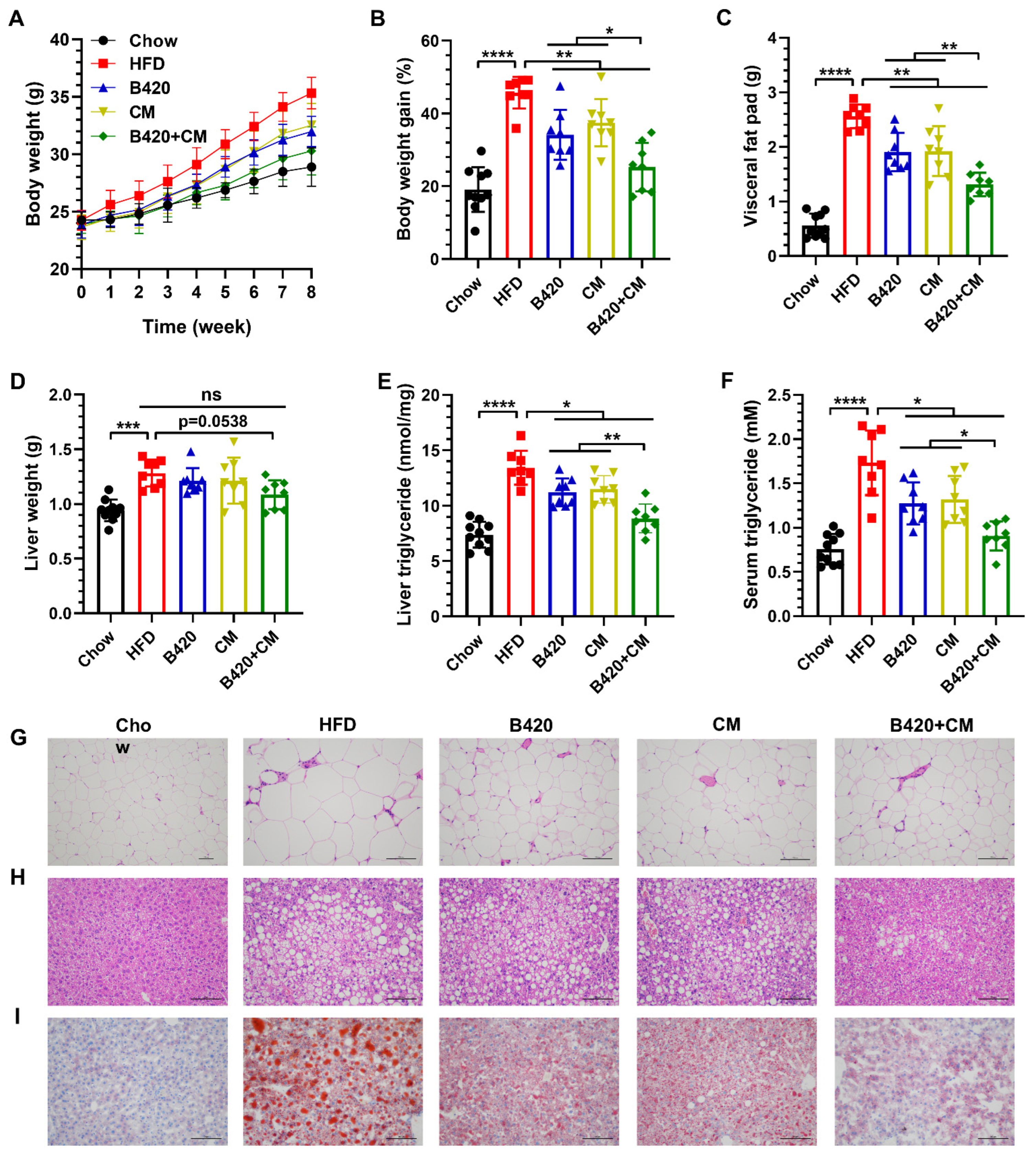
3.1. B420 and Cordyceps militaris Synergistically Reduce Body Weight in HFD-Fed Mice
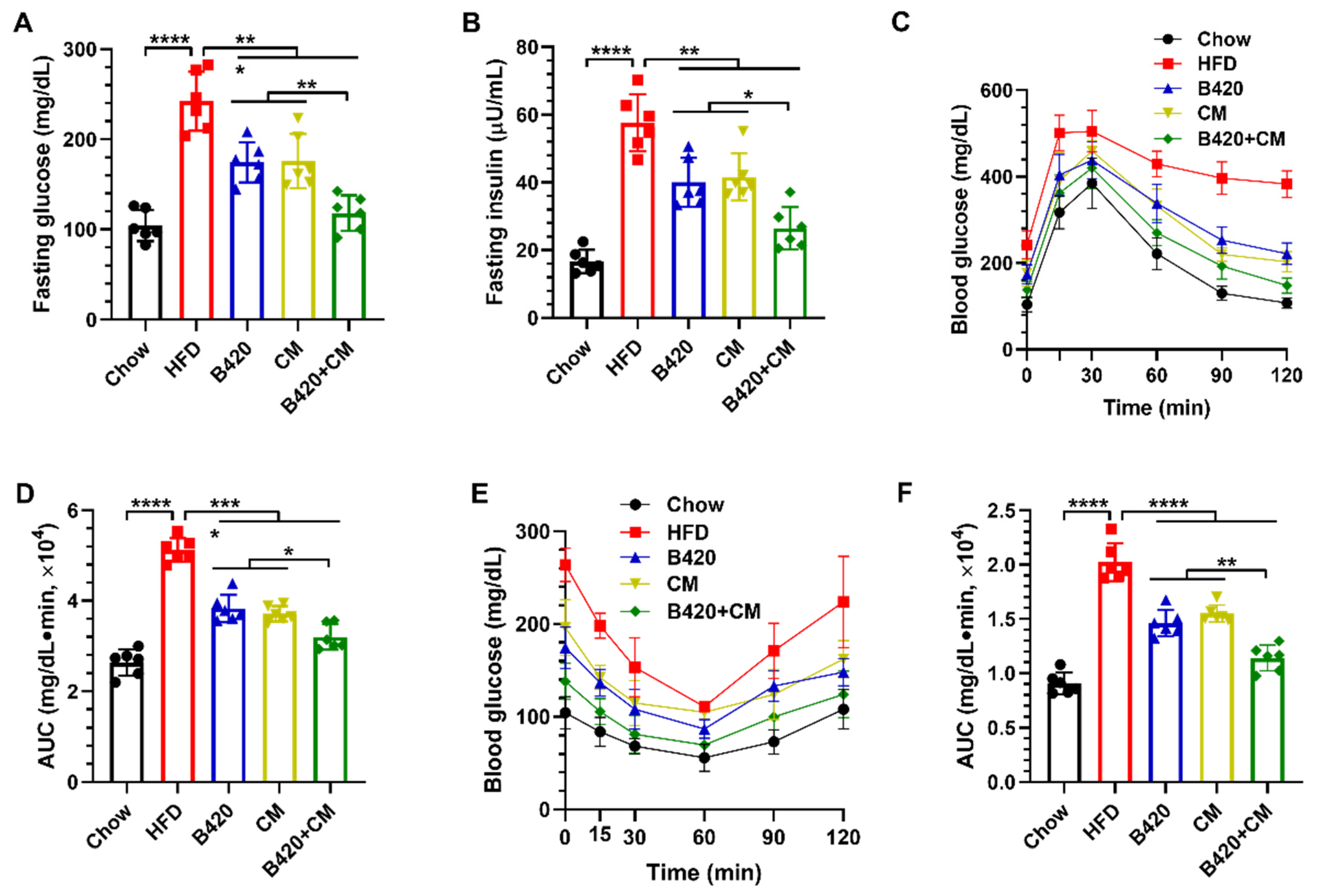
3.2. B420 and Cordyceps militaris Synergistically Improve Glucose Homeostasis in HFD-Fed Mice
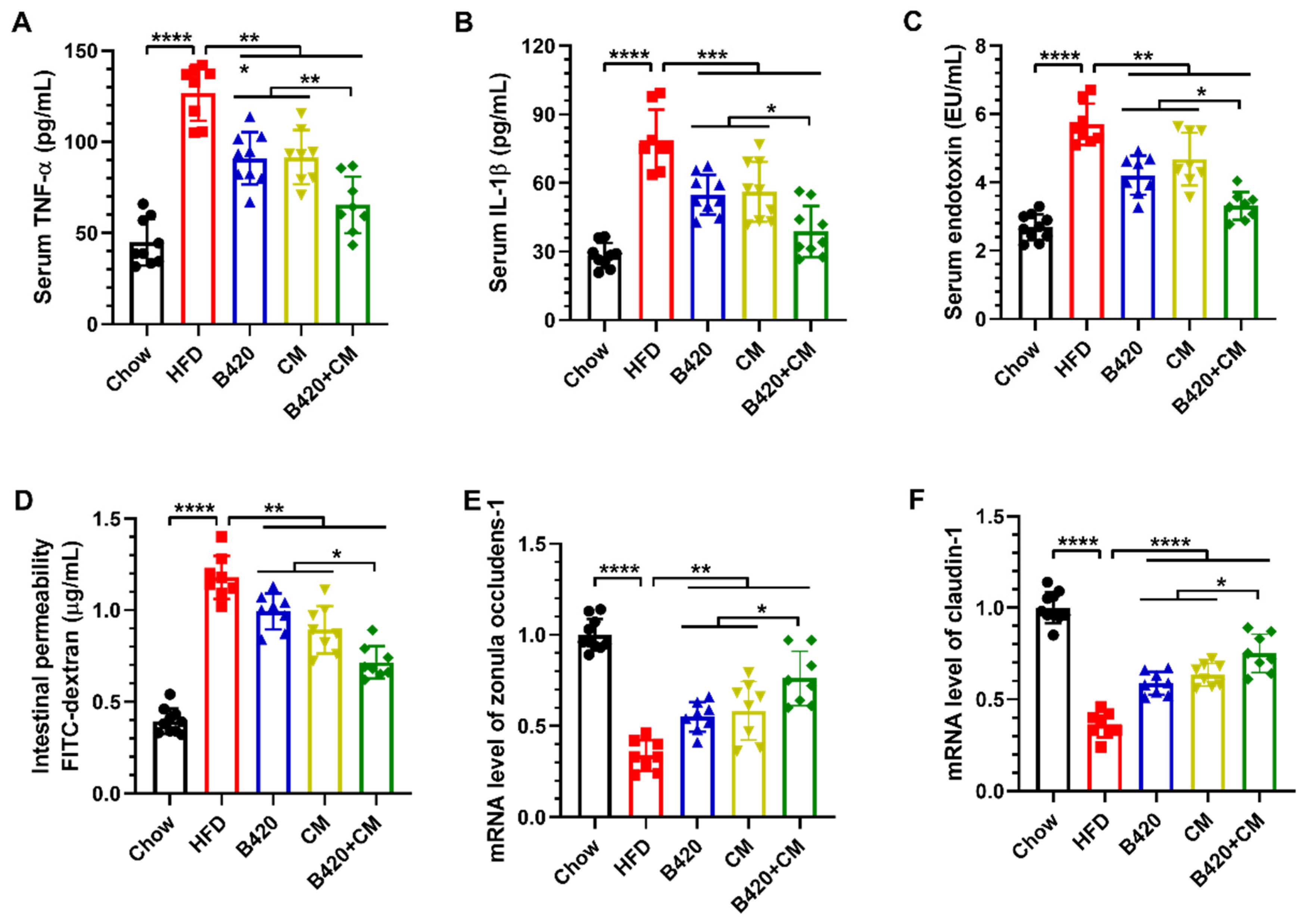
3.3. B420 and Cordyceps Militaris Synergistically Ameliorate Inflammation and Prevent Leaky Gut in HFD-Fed Mice
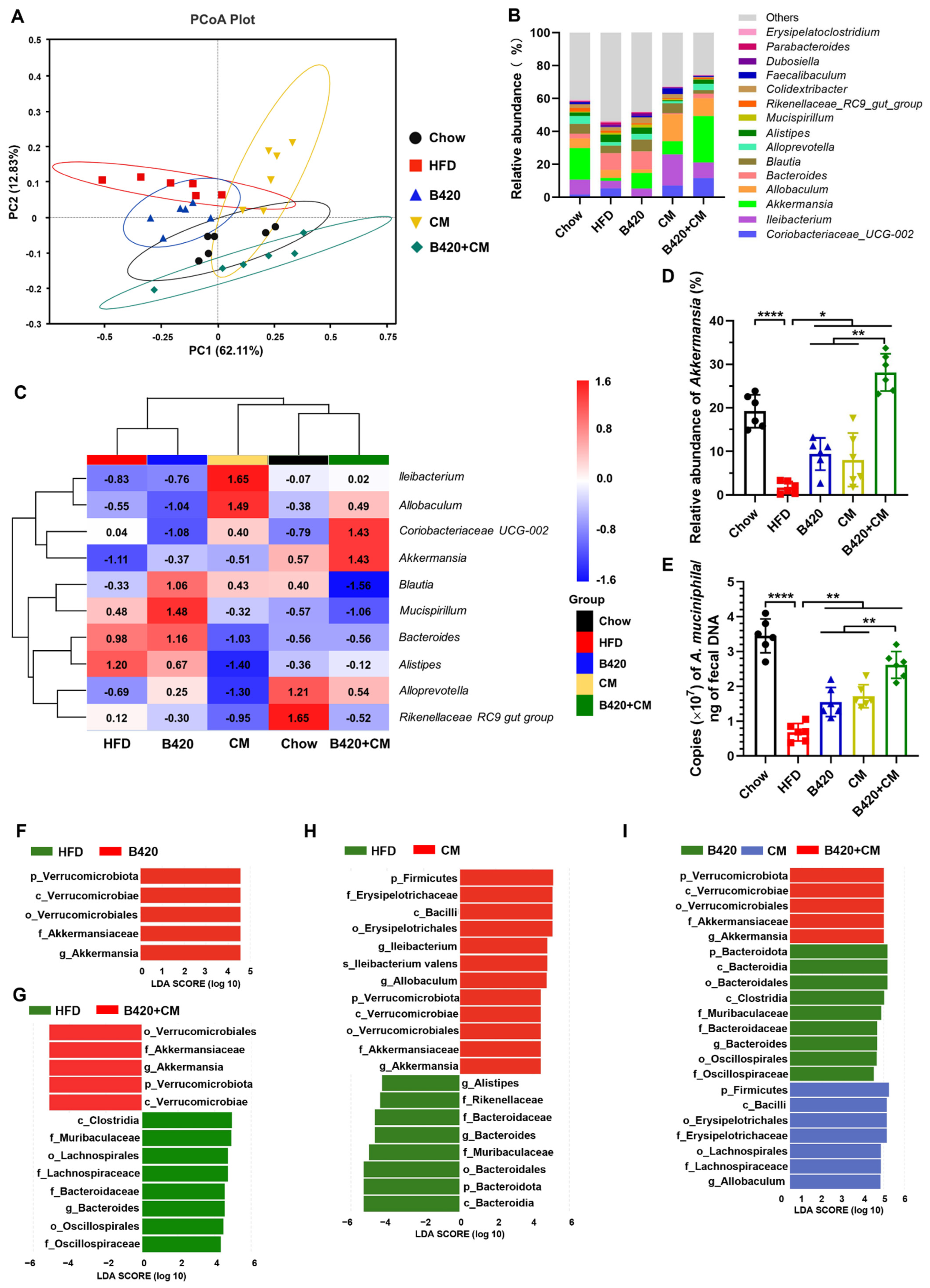
3.4. B420 and Cordyceps militaris Synergistically Prevent Obesity-Driven Dysbiosis in HFD-Fed Mice
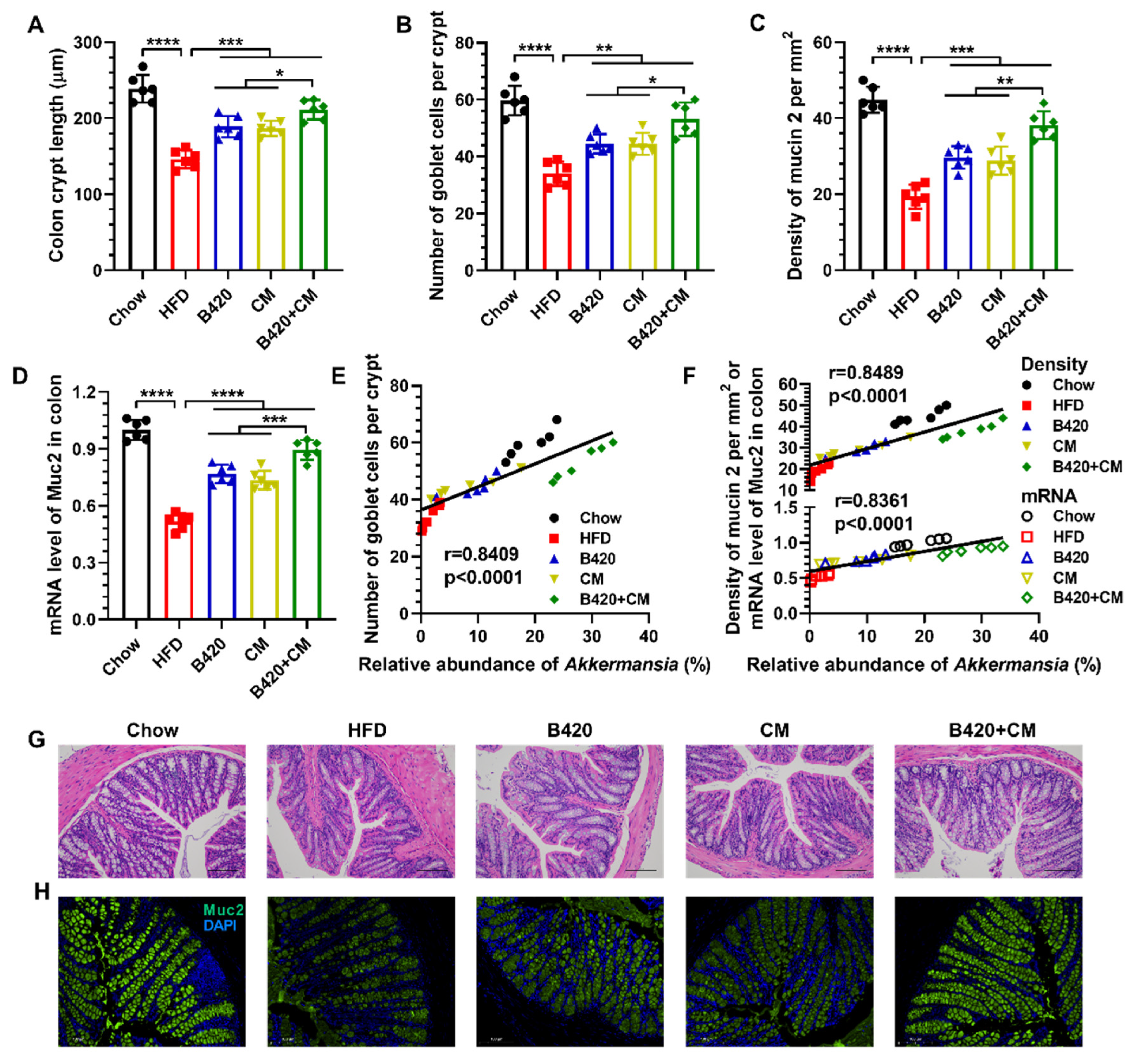
3.5. B420 and Cordyceps militaris Synergistically Increase the Number of Goblet Cells and Promote the Expression of Mucin 2 in the Colon of HFD-Fed Mice
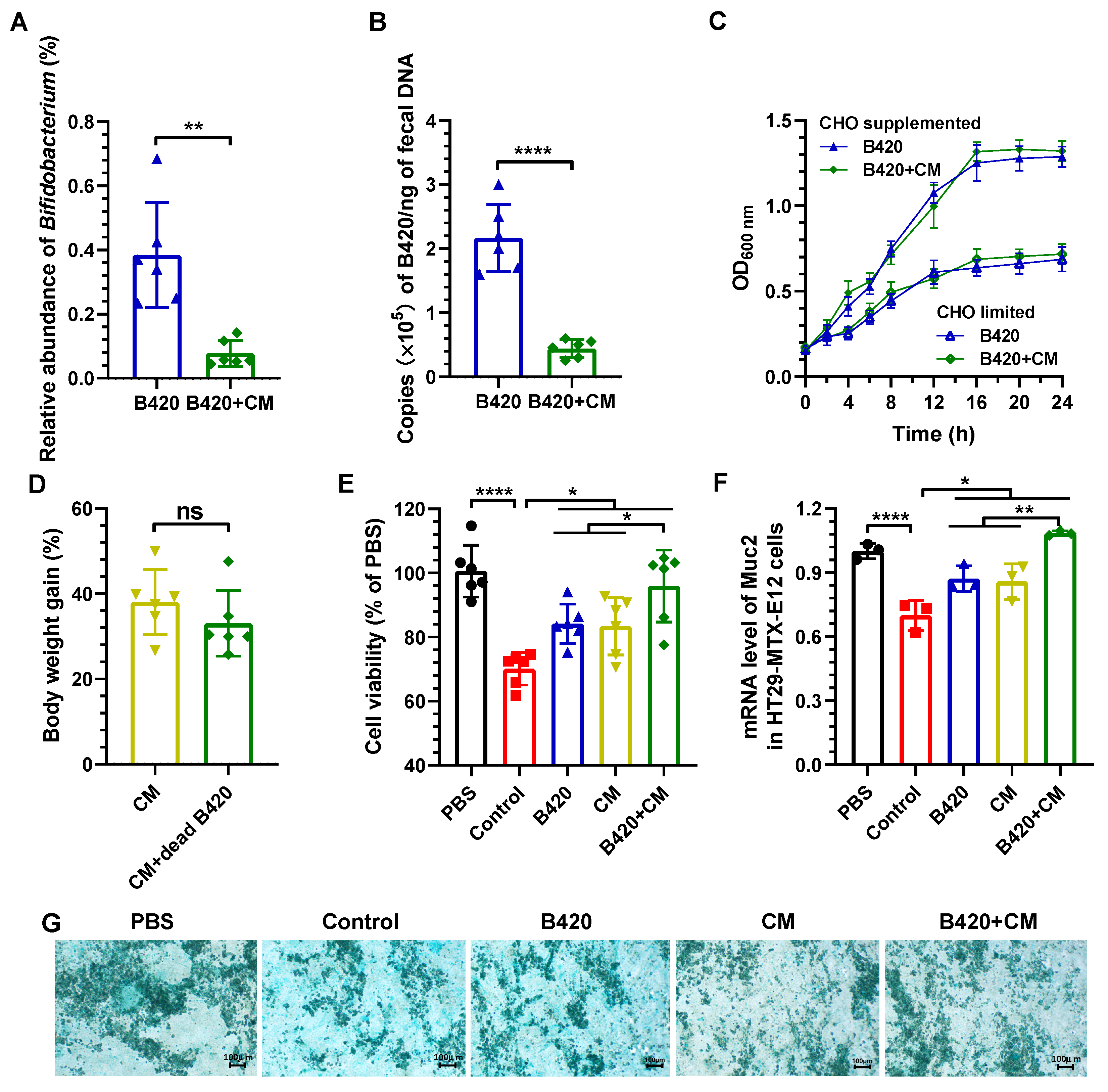
3.6. Live B420, Rather than Dead B420, Collaborated with Cordyceps militaris to Produce the Synergistic Effect
4. Conclusions
Supplementary Materials
Author Contributions
Funding
Institutional Review Board Statement
Informed Consent Statement
Data Availability Statement
Conflicts of Interest
References
- Lingvay, I.; Cohen, R.V.; le Roux, C.W.; Sumithran, P. Obesity in adults. Lancet 2024, 404, 972–987. [Google Scholar] [CrossRef]
- Van Hul, M.; Cani, P.D. The gut microbiota in obesity and weight management: Microbes as friends or foe? Nat. Rev. Endocrinol. 2023, 19, 258–271. [Google Scholar] [CrossRef]
- Depommier, C.; Everard, A.; Druart, C.; Plovier, H.; Van Hul, M.; Vieira-Silva, S.; Falony, G.; Raes, J.; Maiter, D.; Delzenne, N.M.; et al. Supplementation with Akkermansia muciniphila in overweight and obese human volunteers: A proof-of-concept exploratory study. Nat. Med. 2019, 25, 1096–1103. [Google Scholar] [CrossRef] [PubMed]
- Aggarwal, V.; Sunder, S.; Verma, S.R. Disease-associated dysbiosis and potential therapeutic role of Akkermansia muciniphila, a mucus degrading bacteria of gut microbiome. Folia Microbiol. 2022, 67, 811–824. [Google Scholar] [CrossRef] [PubMed]
- Guo, P.; Wang, W.; Xiang, Q.; Pan, C.; Qiu, Y.; Li, T.; Wang, D.; Ouyang, J.; Jia, R.; Shi, M.; et al. Engineered probiotic ameliorates ulcerative colitis by restoring gut microbiota and redox homeostasis. Cell Host Microbe 2024, 32, 1502–1518.e9. [Google Scholar] [CrossRef] [PubMed]
- Uusitupa, H.-M.; Rasinkangas, P.; Lehtinen, M.J.; Mäkelä, S.M.; Airaksinen, K.; Anglenius, H.; Ouwehand, A.C.; Maukonen, J. Bifidobacterium animalis subsp. lactis 420 for Metabolic Health: Review of the Research. Nutrients 2020, 12, 892. [Google Scholar] [CrossRef]
- Hibberd, A.A.; Yde, C.C.; Ziegler, M.L.; Honoré, A.H.; Saarinen, M.T.; Lahtinen, S.; Stahl, B.; Jensen, H.M.; Stenman, L.K. Probiotic or synbiotic alters the gut microbiota and metabolism in a randomised controlled trial of weight management in overweight adults. Benef. Microbes 2019, 10, 121–136. [Google Scholar] [CrossRef]
- Stenman, L.K.; Lehtinen, M.J.; Meland, N.; Christensen, J.E.; Yeung, N.; Saarinen, M.T.; Courtney, M.; Burcelin, R.; Lähdeaho, M.-L.; Linros, J.; et al. Probiotic With or Without Fiber Controls Body Fat Mass, Associated With Serum Zonulin, in Overweight and Obese Adults—Randomized Controlled Trial. EBioMedicine 2016, 13, 190–200. [Google Scholar] [CrossRef]
- Fu, Y.; Wang, Q.; Tang, Z.; Liu, G.; Guan, G.; Lyu, J. Cordycepin Ameliorates High Fat Diet-Induced Obesity by Modulating Endogenous Metabolism and Gut Microbiota Dysbiosis. Nutrients 2024, 16, 2859. [Google Scholar] [CrossRef]
- Wu, Y.; Zhang, Y.; Huang, S.; Xie, W.; Huang, G.; Zou, Y.; Ye, Z.; Wei, T.; Lin, J.; Zheng, Q. Anti-obesity effects of the high molecular weight Cordyceps militaris polysaccharide CMP40 in high-fat diet mice. Food Biosci. 2024, 60, 104467. [Google Scholar] [CrossRef]
- Lee, B.-H.; Chen, C.-H.; Hsu, Y.-Y.; Chuang, P.-T.; Shih, M.-K.; Hsu, W.-H. Polysaccharides Obtained from Cordyceps militaris Alleviate Hyperglycemia by Regulating Gut Microbiota in Mice Fed a High-Fat/Sucrose Diet. Foods 2021, 10, 1870. [Google Scholar] [CrossRef]
- Kim, S.B.; Ahn, B.; Kim, M.; Ji, H.-J.; Shin, S.-K.; Hong, I.P.; Kim, C.Y.; Hwang, B.Y.; Lee, M.K. Effect of Cordyceps militaris extract and active constituents on metabolic parameters of obesity induced by high-fat diet in C58BL/6J mice. J. Ethnopharmacol. 2014, 151, 478–484. [Google Scholar] [CrossRef]
- Kusama, K.; Oka, K.; Yashiro, Y.; Yoshida, K.; Miyaoka, H.; Tamura, K. Effect of Cordyceps militaris extract containing cordycepin on the adipogenesis and lipolysis of adipocytes. FEBS Open Bio 2025, 15, 335–345. [Google Scholar] [CrossRef] [PubMed]
- Anhê, F.F.; Nachbar, R.T.; Varin, T.V.; Trottier, J.; Dudonné, S.; Le Barz, M.; Feutry, P.; Pilon, G.; Barbier, O.; Desjardins, Y.; et al. Treatment with camu camu (Myrciaria dubia) prevents obesity by altering the gut microbiota and increasing energy expenditure in diet-induced obese mice. Gut 2019, 68, 453–464. [Google Scholar] [CrossRef] [PubMed]
- Dong, W.; Matsuno, Y.-K.; Kameyama, A. A Procedure for Alcian Blue Staining of Mucins on Polyvinylidene Difluoride Membranes. Anal. Chem. 2012, 84, 8461–8466. [Google Scholar] [CrossRef] [PubMed]
- Zhao, H.; Li, M.; Liu, L.; Li, D.; Zhao, L.; Wu, Z.; Zhou, M.; Jia, L.; Yang, F. Cordyceps militaris polysaccharide alleviates diabetic symptoms by regulating gut microbiota against TLR4/NF-κB pathway. Int. J. Biol. Macromol. 2023, 230, 123241. [Google Scholar] [CrossRef]
- Gupta, G.; Wadhwa, R.; Pandey, P.; Singh, S.K.; Gulati, M.; Sajita, S.; Mehta, M.; Singh, A.K.; Dureja, H.; Collet, T.; et al. Obesity and Diabetes: Pathophysiology of Obesity-Induced Hyperglycemia and Insulin Resistance. In Pathophysiology of Obesity-Induced Health Complications; Tappia, P.S., Ramjiawan, B., Dhalla, N.S., Eds.; Springer International Publishing: Cham, Switzerland, 2020; pp. 81–97. [Google Scholar] [CrossRef]
- Tong, Y.; Xu, S.; Huang, L.; Chen, C. Obesity and insulin resistance: Pathophysiology and treatment. Drug Discov. Today 2022, 27, 822–830. [Google Scholar] [CrossRef]
- Chae, Y.-R.; Lee, Y.R.; Kim, Y.-S.; Park, H.-Y. Diet-induced gut dysbiosis and leaky gut syndrome. J. Microbiol. Biotechnol. 2024, 34, 747. [Google Scholar] [CrossRef]
- Fang, H.; e-Lacerda, R.R.; Schertzer, J.D. Obesity promotes a leaky gut, inflammation and pre-diabetes by lowering gut microbiota that metabolise ethanolamine. Gut 2023, 72, 1809. [Google Scholar] [CrossRef]
- Mishra, S.P.; Wang, B.; Jain, S.; Ding, J.; Rejeski, J.; Furdui, C.M.; Kitzman, D.W.; Taraphder, S.; Brechot, C.; Kumar, A.; et al. A mechanism by which gut microbiota elevates permeability and inflammation in obese/diabetic mice and human gut. Gut 2023, 72, 1848–1865. [Google Scholar] [CrossRef]
- Koutoukidis, D.A.; Jebb, S.A.; Zimmerman, M.; Otunla, A.; Henry, J.A.; Ferrey, A.; Schofield, E.; Kinton, J.; Aveyard, P.; Marchesi, J.R. The association of weight loss with changes in the gut microbiota diversity, composition, and intestinal permeability: A systematic review and meta-analysis. Gut Microbes 2022, 14, 2020068. [Google Scholar] [CrossRef]
- Everard, A.; Belzer, C.; Geurts, L.; Ouwerkerk, J.P.; Druart, C.; Bindels, L.B.; Guiot, Y.; Derrien, M.; Muccioli, G.G.; Delzenne, N.M.; et al. Cross-talk between Akkermansia muciniphila and intestinal epithelium controls diet-induced obesity. Proc. Natl. Acad. Sci. USA 2013, 110, 9066–9071. [Google Scholar] [CrossRef]
- Dao, M.C.; Everard, A.; Aron-Wisnewsky, J.; Sokolovska, N.; Prifti, E.; Verger, E.O.; Kayser, B.D.; Levenez, F.; Chilloux, J.; Hoyles, L.; et al. Akkermansia muciniphila and improved metabolic health during a dietary intervention in obesity: Relationship with gut microbiome richness and ecology. Gut 2016, 65, 426–436. [Google Scholar] [CrossRef]
- Plovier, H.; Everard, A.; Druart, C.; Depommier, C.; Van Hul, M.; Geurts, L.; Chilloux, J.; Ottman, N.; Duparc, T.; Lichtenstein, L.; et al. A purified membrane protein from Akkermansia muciniphila or the pasteurized bacterium improves metabolism in obese and diabetic mice. Nat. Med. 2017, 23, 107–113. [Google Scholar] [CrossRef]
- Kim, S.; Shin, Y.-C.; Kim, T.-Y.; Kim, Y.; Lee, Y.-S.; Lee, S.-H.; Kim, M.-N.; Oc, E.; Kim, K.S.; Kweon, M.-N. Mucin degrader Akkermansia muciniphila accelerates intestinal stem cell-mediated epithelial development. Gut Microbes 2021, 13, 1892441. [Google Scholar] [CrossRef]
- Luo, Y.; Lan, C.; Li, H.; Ouyang, Q.; Kong, F.; Wu, A.; Ren, Z.; Tian, G.; Cai, J.; Yu, B.; et al. Rational consideration of Akkermansia muciniphila targeting intestinal health: Advantages and challenges. npj Biofilms Microbiomes 2022, 8, 81. [Google Scholar] [CrossRef] [PubMed]
- Ma, X.; Li, M.; Zhang, Y.; Xu, T.; Zhou, X.; Qian, M.; Yang, Z.; Han, X. Akkermansia muciniphila identified as key strain to alleviate gut barrier injury through Wnt signaling pathway. eLife 2025, 12, RP92906. [Google Scholar] [CrossRef] [PubMed]
- Tingler Anna, M.; Engevik Melinda, A. Breaking down barriers: Is intestinal mucus degradation by Akkermansia muciniphila beneficial or harmful? Infect. Immun. 2025, 93, e00503–e00524. [Google Scholar] [CrossRef] [PubMed]
- Mo, C.; Lou, X.; Xue, J.; Shi, Z.; Zhao, Y.; Wang, F.; Chen, G. The influence of Akkermansia muciniphila on intestinal barrier function. Gut Pathog. 2024, 16, 41. [Google Scholar] [CrossRef]
- Zou, J.; Chassaing, B.; Singh, V.; Pellizzon, M.; Ricci, M.; Fythe, M.D.; Kumar, M.V.; Gewirtz, A.T. Fiber-Mediated Nourishment of Gut Microbiota Protects against Diet-Induced Obesity by Restoring IL-22-Mediated Colonic Health. Cell Host Microbe 2018, 23, 41–53.e4. [Google Scholar] [CrossRef]
- Flores, C.; Millard, S.; Seekatz, A.M. Bridging Ecology and Microbiomes: Applying Ecological Theories in Host-associated Microbial Ecosystems. Curr. Clin. Microbiol. Rep. 2025, 12, 9. [Google Scholar] [CrossRef] [PubMed]
- Zhang, J.; Wen, C.; Duan, Y.; Zhang, H.; Ma, H. Advance in Cordyceps militaris (Linn) Link polysaccharides: Isolation, structure, and bioactivities: A review. Int. J. Biol. Macromol. 2019, 132, 906–914. [Google Scholar] [CrossRef] [PubMed]
- Gu, C.; Zhang, D.; Zhai, W.; Zhang, H.; Wang, S.; Lv, S.; Bao, Y.; Zhu, D.; Feng, S.; Guo, S.; et al. Research progress on Cordyceps militaris polysaccharides. Food Biosci. 2022, 45, 101503. [Google Scholar] [CrossRef]




Disclaimer/Publisher’s Note: The statements, opinions and data contained in all publications are solely those of the individual author(s) and contributor(s) and not of MDPI and/or the editor(s). MDPI and/or the editor(s) disclaim responsibility for any injury to people or property resulting from any ideas, methods, instructions or products referred to in the content. |
© 2026 by the authors. Licensee MDPI, Basel, Switzerland. This article is an open access article distributed under the terms and conditions of the Creative Commons Attribution (CC BY) license.
Share and Cite
Deng, Z.; Wang, Y.; Shuai, J.; Chen, M.; Yang, S.; Liu, D.; Ye, X.; Chen, S.; Pan, H. Bifidobacterium animalis ssp. lactis 420 and Cordyceps militaris Synergistically Modulate the Gut Microbiota by Increasing Mucin 2 Production. Nutrients 2026, 18, 1195. https://doi.org/10.3390/nu18081195
Deng Z, Wang Y, Shuai J, Chen M, Yang S, Liu D, Ye X, Chen S, Pan H. Bifidobacterium animalis ssp. lactis 420 and Cordyceps militaris Synergistically Modulate the Gut Microbiota by Increasing Mucin 2 Production. Nutrients. 2026; 18(8):1195. https://doi.org/10.3390/nu18081195
Chicago/Turabian StyleDeng, Ziyang, Yi Wang, Jike Shuai, Miaomiao Chen, Shuai Yang, Donghong Liu, Xingqian Ye, Shiguo Chen, and Haibo Pan. 2026. "Bifidobacterium animalis ssp. lactis 420 and Cordyceps militaris Synergistically Modulate the Gut Microbiota by Increasing Mucin 2 Production" Nutrients 18, no. 8: 1195. https://doi.org/10.3390/nu18081195
APA StyleDeng, Z., Wang, Y., Shuai, J., Chen, M., Yang, S., Liu, D., Ye, X., Chen, S., & Pan, H. (2026). Bifidobacterium animalis ssp. lactis 420 and Cordyceps militaris Synergistically Modulate the Gut Microbiota by Increasing Mucin 2 Production. Nutrients, 18(8), 1195. https://doi.org/10.3390/nu18081195