Targeting Insulin Resistance Through Nutrition: Pathophysiological Insights and Dietary Interventions


Abstract
1. Introduction
2. Methods
3. Prevalence and Costs of Insulin Resistance
4. How to Assess Insulin Resistance
5. Insulin Resistance and Metabolic Diseases: A Close Interaction
6. Insulin Resistance and Other Conditions
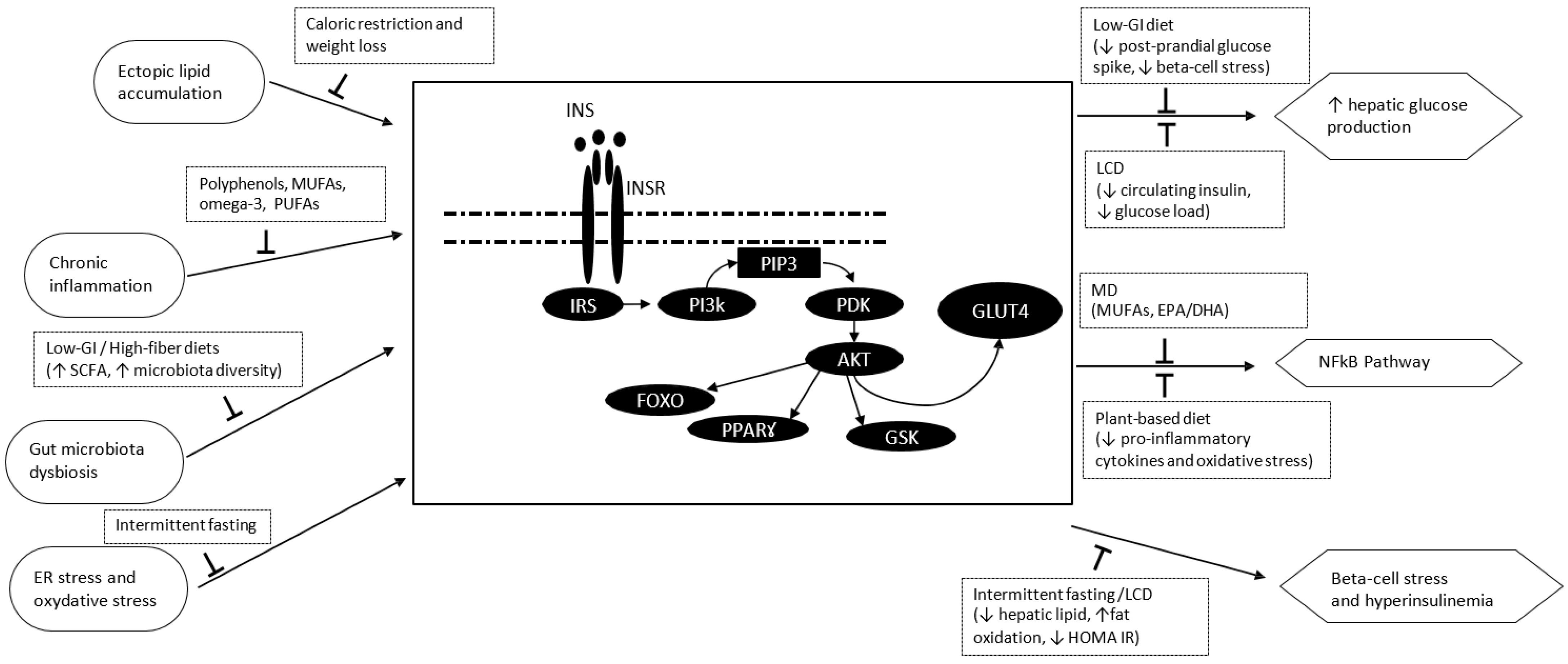
7. Mechanisms Underlying Insulin Resistance: Insulin Receptors and the Environment
8. Management of Insulin Resistance
8.1. Non-Drug Interventions: Lifestyle Modification, Physical Exercise and Diet to Fight Insulin Resistance
8.2. Macronutrients and Dietary Strategies for Insulin Resistance
8.3. Mediterranean Diet and Insulin Resistance
8.4. DASH Diet and Insulin Resistance
8.5. Low-Glycemic Index Diets and Insulin Resistance
8.6. Plant-Based Diets and Insulin Resistance
8.7. Low-Carbohydrate Diets and Insulin Resistance
8.8. Intermittent Fasting and Insulin Resistance
9. Nutritional Modulation of Inflammation to Improve IR
10. Nutritional Guidelines
- Caloric restriction and portion control.
- Healthy eating with whole or unprocessed food.
- Reduction in sodium intake.
- Avoidance of alcohol consumption.
- Increased use of whole grains and fibers in order to reduce glycemic load and glucose index.
- Preference of a plant-based diet.
- Increased intake of insoluble fibers (14 g/1000 kcal per day).
11. Discussion
Author Contributions
Funding
Institutional Review Board Statement
Informed Consent Statement
Data Availability Statement
Conflicts of Interest
Abbreviations
| IR | insulin resistance |
| T2DM | type 2 diabetes |
| MASLD | metabolic dysfunction-associated steatotic liver disease |
| RCT | randomized controlled trials |
| PCOS | polycystic ovary syndrome |
| T1DM | type 1 diabetes |
| TyG | triglyceride–glucose index |
References
- Zhao, X.; An, X.; Yang, C.; Sun, W.; Ji, H.; Lian, F. The crucial role and mechanism of insulin resistance in metabolic disease. Front. Endocrinol. 2023, 14, 1149239. [Google Scholar] [CrossRef] [Scilit]
- Kahn, S.E. The relative contributions of insulin resistance and beta-cell dysfunction to the pathophysiology of Type 2 diabetes. Diabetologia 2003, 46, 3–19. [Google Scholar] [CrossRef] [Scilit]
- Petersen, M.C.; Shulman, G.I. Mechanisms of Insulin Action and Insulin Resistance. Physiol. Rev. 2018, 98, 2133–2223. [Google Scholar] [CrossRef] [Scilit]
- Khalid, M.; Alkaabi, J.; Khan, M.A.B.; Adem, A. Insulin Signal Transduction Perturbations in Insulin Resistance. Int. J. Mol. Sci. 2021, 22, 8590. [Google Scholar] [CrossRef] [Scilit]
- Lee, S.H.; Park, S.Y.; Choi, C.S. Insulin Resistance: From Mechanisms to Therapeutic Strategies. Diabetes Metab. J. 2022, 46, 15–37. [Google Scholar] [CrossRef] [Scilit]
- Schwingshackl, L.; Missbach, B.; König, J.; Hoffmann, G. Adherence to a Mediterranean diet and risk of diabetes: A systematic review and meta-analysis. Public Health Nutr. 2015, 18, 1292–1299. [Google Scholar] [CrossRef] [Scilit]
- Saklayen, M.G. The Global Epidemic of the Metabolic Syndrome. Curr. Hypertens. Rep. 2018, 20, 12. [Google Scholar] [CrossRef] [Scilit]
- DeFronzo, R.A. Insulin resistance: A multifaceted syndrome responsible for NIDDM, obesity, hypertension, dyslipidaemia and atherosclerosis. Neth. J. Med. 1997, 50, 191–197. [Google Scholar] [CrossRef] [Scilit] [PubMed]
- Steenblock, C.; Schwarz, P.E.H.; Ludwig, B.; Linkermann, A.; Zimmet, P.; Kulebyakin, K.; Tkachuk, V.A.; Markov, A.G.; Lehnert, H.; de Angelis, M.H.; et al. COVID-19 and metabolic disease: Mechanisms and clinical management. Lancet Diabetes Endocrinol. 2021, 9, 786–798. [Google Scholar] [CrossRef] [Scilit]
- Younossi, Z.M.; Golabi, P.; de Avila, L.; Paik, J.M.; Srishord, M.; Fukui, N.; Qiu, Y.; Burns, L.; Afendy, A.; Nader, F. The global epidemiology of NAFLD and NASH in patients with type 2 diabetes: A systematic review and meta-analysis. J. Hepatol. 2019, 71, 793–801. [Google Scholar] [CrossRef] [Scilit] [PubMed]
- Borai, A.; Livingstone, C.; Kaddam, I.; Ferns, G. Selection of the appropriate method for the assessment of insulin resistance. BMC Med. Res. Methodol. 2011, 11, 158. [Google Scholar] [CrossRef] [Scilit]
- Antuna-Puente, B.; Disse, E.; Rabasa-Lhoret, R.; Laville, M.; Capeau, J.; Bastard, J.P. How can we measure insulin sensitivity/resistance? Diabetes Metab. 2011, 37, 179–188. [Google Scholar] [CrossRef] [Scilit]
- Sharma, V.R.; Matta, S.T.; Haymond, M.W.; Chung, S.T. Measuring Insulin Resistance in Humans. Horm. Res. Paediatr. 2020, 93, 577–588. [Google Scholar] [CrossRef] [Scilit] [PubMed]
- Gutch, M.; Kumar, S.; Razi, S.M.; Gupta, K.K.; Gupta, A. Assessment of insulin sensitivity/resistance. Indian J. Endocrinol. Metab. 2015, 19, 160–164. [Google Scholar] [CrossRef] [Scilit]
- Kaul, K.; Apostolopoulou, M.; Roden, M. Insulin resistance in type 1 diabetes mellitus. Metabolism 2015, 64, 1629–1639. [Google Scholar] [CrossRef] [Scilit] [PubMed]
- Liu, H.Y.; Cao, S.Y.; Hong, T.; Han, J.; Liu, Z.; Cao, W. Insulin is a stronger inducer of insulin resistance than hyperglycemia in mice with type 1 diabetes mellitus (T1DM). J. Biol. Chem. 2009, 284, 27090–27100. [Google Scholar] [CrossRef] [Scilit]
- Hall, K.D.; Heymsfield, S.B.; Kemnitz, J.W.; Klein, S.; Schoeller, D.A.; Speakman, J.R. Energy balance and its components: Implications for body weight regulation. Am. J. Clin. Nutr. 2012, 95, 989–994, Erratum in Am. J. Clin. Nutr. 2012, 96, 448. [Google Scholar] [CrossRef] [Scilit] [PubMed] [PubMed Central]
- McArdle Maeve, A.; Finucane, O.M.; Connaughton, R.M.; McMorrow, A.M.; Roche, H.M. Mechanisms of obesity-induced inflammation and insulin resistance: Insights into the emerging role of nutritional strategies. Front. Endocrin. 2013, 4, 52. [Google Scholar] [CrossRef] [Scilit]
- Schenk, S.; Saberi, M.; Olefsky, J.M. Insulin sensitivity: Modulation by nutrients and inflammation. J. Clin. Investig. 2008, 118, 2992–3002. [Google Scholar] [CrossRef] [Scilit] [PubMed]
- Seppälä-Lindroos, A.; Vehkavaara, S.; Häkkinen, A.M.; Goto, T.; Westerbacka, J.; Sovijärvi, A.; Halavaara, J.; Yki-Järvinen, H. Fat accumulation in the liver is associated with defects in insulin suppression of glucose production and serum free fatty acids independent of obesity in normal men. J. Clin. Endocrinol. Metab. 2002, 87, 3023–3028. [Google Scholar] [CrossRef] [Scilit]
- Karelis, A.D.; Faraj, M.; Bastard, J.P.; St-Pierre, D.H.; Brochu, M.; Prud’homme, D.; Rabasa-Lhoret, R. The metabolically healthy but obese individual presents a favorable inflammation profile. J. Clin. Endocrinol. Metab. 2005, 90, 4145–4150. [Google Scholar] [CrossRef] [Scilit]
- Abdul-Ghani, M.A.; Jayyousi, A.; DeFronzo, R.A.; Asaad, N.; Al-Suwaidi, J. Insulin Resistance the Link between T2DM and CVD: Basic Mechanisms and Clinical Implications. Curr. Vasc. Pharmacol. 2019, 17, 153–163. [Google Scholar] [CrossRef] [Scilit] [PubMed]
- Haffner, S.M.; Fong, D.; Hazuda, H.P.; Pugh, J.A.; Patterson, J.K. Hyperinsulinemia, upper body adiposity, and cardiovascular risk factors in non-diabetics. Metabolism 1988, 37, 338–345. [Google Scholar] [CrossRef] [Scilit] [PubMed]
- Jia, G.; Whaley-Connell, A.; Sowers, J.R. Diabetic cardiomyopathy: A hyperglycaemia- and insulin-resistance-induced heart disease. Diabetologia 2018, 61, 21–28. [Google Scholar] [CrossRef] [Scilit]
- Assmann, G.; Schulte, H. The Prospective Cardiovascular Münster (PROCAM) study: Prevalence of hyperlipidemia in persons with hypertension and/or diabetes mellitus and the relationship to coronary heart disease. Am. Heart J. 1988, 116, 1713–1724. [Google Scholar] [CrossRef] [Scilit] [PubMed]
- Wang, S.; Shi, J.; Peng, Y.; Fang, Q.; Mu, Q.; Gu, W.; Hong, J.; Zhang, Y.; Wang, W. Stronger association of triglyceride glucose index than the HOMA-IR with arterial stiffness in patients with type 2 diabetes: A real-world single-centre study. Cardiovasc. Diabetol. 2021, 20, 82. [Google Scholar] [CrossRef] [Scilit]
- Pop, A.; Clenciu, D.; Anghel, M.; Radu, S.; Socea, B.; Mota, E.; Mota, M.; Panduru, N.M.; RomDiane Study Group. Insulin resistance is associated with all chronic complications in type 1 diabetes. J. Diabetes 2016, 8, 220–228. [Google Scholar] [CrossRef] [Scilit]
- Saely, C.H.; Aczel, S.; Marte, T.; Langer, P.; Hoefle, G.; Drexel, H. The metabolic syndrome; insulin resistance; and cardiovascular risk in diabetic and nondiabetic patients. J. Clin. Endocrinol. Metab. 2005, 90, 5698–5703. [Google Scholar] [CrossRef] [Scilit]
- Fernández-Real, J.M.; Ricart, W. Insulin resistance and chronic cardiovascular inflammatory syndrome. Endocr. Rev. 2003, 24, 278–301. [Google Scholar] [CrossRef] [Scilit]
- Qi, Y.; Xu, Z.; Zhu, Q.; Thomas, C.; Kumar, R.; Feng, H.; Dostal, D.E.; White, M.F.; Baker, K.M.; Guo, S. Myocardial loss of IRS1 and IRS2 causes heart failure and is controlled by p38a MAPK during insulin resistance. Diabetes 2013, 62, 3887–3900. [Google Scholar] [CrossRef] [Scilit]
- Novo, G.; Manno, G.; Russo, R.; Buccheri, D.; Dell’Oglio, S.; Morreale, P.; Evola, G.; Vitale, G.; Novo, S. Impact of insulin resistance on cardiac and vascular function. Int. J. Cardiol. 2016, 221, 1095–1099. [Google Scholar] [CrossRef] [Scilit]
- Kim, S.H.; Reaven, G. Sex differences in insulin resistance and cardiovascular disease risk. J. Clin. Endocrinol. Metab. 2013, 98, E1716–E1721. [Google Scholar] [CrossRef] [Scilit]
- Nakamura, M.; Sadoshima, J. Cardiomyopathy in obesity, insulin resistance and diabetes. J. Physiol. 2020, 598, 2977–2993. [Google Scholar] [CrossRef] [Scilit]
- Eddy, D.; Schlessinger, L.; Kahn, R.; Peskin, B.; Schiebinger, R. Relationship of insulin resistance and related metabolic variables to coronary artery disease: A mathematical analysis. Diabetes Care 2009, 32, 361–366. [Google Scholar] [CrossRef] [Scilit]
- Dongiovanni, P.; Stender, S.; Pietrelli, A.; Mancina, R.M.; Cespiati, A.; Petta, S.; Pelusi, S.; Pingitore, P.; Badiali, S.; Maggioni, M.; et al. Causal relationship of hepatic fat with liver damage and insulin resistance in nonalcoholic fatty liver. J. Intern. Med. 2018, 283, 356–370. [Google Scholar] [CrossRef] [Scilit]
- Huang, J.F.; Tsai, P.C.; Yeh, M.L.; Huang, C.F.; Huang, C.I.; Hsieh, M.H.; Dai, C.-Y.; Yang, J.-F.; Chen, S.-C.; Yu, M.-L.; et al. Risk stratification of non-alcoholic fatty liver disease across body mass index in a community basis. J. Formos. Med. Assoc. 2020, 119, 89–96. [Google Scholar] [CrossRef] [Scilit] [PubMed]
- Mantovani, A.; Byrne, C.D.; Bonora, E.; Targher, G. Nonalcoholic fatty liver disease and risk of incident type 2 diabetes: A meta-analysis. Diabetes Care 2018, 41, 372–382. [Google Scholar] [CrossRef] [Scilit] [PubMed]
- Sainsbury, E.; Kizirian, N.V.; Partridge, S.R.; Gill, T.; Colagiuri, S.; Gibson, A.A. Effect of dietary carbohydrate restriction on glycemic control in adults with diabetes: A systematic review and meta-analysis. Diabetes Res. Clin. Pract. 2018, 139, 239–252. [Google Scholar] [CrossRef] [Scilit] [PubMed]
- Diamanti-Kandarakis, E.; Dunaif, A. Insulin resistance and the polycystic ovary syndrome revisited: An update on mechanisms and implications. Endocr. Rev. 2012, 33, 981–1030. [Google Scholar] [CrossRef] [Scilit]
- Falcone, T.; Finegood, D.T.; Fantus, I.G.; Morris, D. Androgen response to endogenous insulin secretion during the frequently sampled intravenous glucose tolerance test in normal and hyperandrogenic women. J. Clin. Endocrinol. Metab. 1990, 71, 1653–1657. [Google Scholar] [CrossRef] [Scilit] [PubMed]
- Godsland, I.F. Insulin resistance and hyperinsulinaemia in the development and progression of cancer. Clin. Sci. 2009, 118, 315–332. [Google Scholar] [CrossRef] [Scilit] [PubMed]
- Pan, K.; Chlebowski, R.T.; Mortimer, J.E.; Gunter, M.J.; Rohan, T.; Vitolins, M.Z.; Adams-Campbell, L.L.; Ho, G.Y.F.; Cheng, T.D.; Nelson, R.A. Insulin resistance and breast cancer incidence and mortality in postmenopausal women in the Women’s Health Initiative. Cancer 2020, 126, 3638–3647. [Google Scholar] [CrossRef] [Scilit]
- Arcidiacono, B.; Iiritano, S.; Nocera, A.; Possidente, K.; Nevolo, M.T.; Ventura, V.; Foti, D.; Chiefari, E.; Brunetti, A. Insulin resistance and cancer risk: An overview of the pathogenetic mechanisms. Exp. Diabetes Res. 2012, 2012, 789174. [Google Scholar] [CrossRef] [Scilit] [PubMed]
- Kwa, M.; Plottel, C.S.; Blaser, M.J.; Adams, S. The intestinal microbiome and estrogen receptor-positive female breast cancer. J. Natl. Cancer Inst. 2016, 108, djw029. [Google Scholar] [CrossRef] [Scilit]
- Shulman, G.I. Cellular mechanisms of insulin resistance. J. Clin. Investig. 2000, 106, 171–176. [Google Scholar] [CrossRef] [Scilit]
- Copps, K.D.; White, M.F. Regulation of insulin sensitivity by serine/threonine phosphorylation of insulin receptor substrate proteins IRS1 and IRS2. Diabetologia 2012, 55, 2565–2582. [Google Scholar] [CrossRef] [Scilit]
- Taniguchi, C.M.; Emanuelli, B.; Kahn, C.R. Critical nodes in signalling pathways: Insights into insulin action. Nat. Rev. Mol. Cell Biol. 2006, 7, 85–96. [Google Scholar] [CrossRef] [Scilit] [PubMed]
- Lipke, K.; Kubis-Kubiak, A.; Piwowar, A. Molecular Mechanism of Lipotoxicity as an Interesting Aspect in the Development of Pathological States-Current View of Knowledge. Cells 2022, 11, 844. [Google Scholar] [CrossRef] [Scilit]
- Markova, I.; Hüttl, M.; Šťastný, J.; Zapletalova, I.; Kačer, P.; Hönig, V.; Kacerova, T.; Malinska, H. Skeletal muscle insulin resistance in prediabetes: A lipidomic perspective on diacylglycerols, ceramides, and phospholipids. Sci. Rep. 2025, 15, 38784. [Google Scholar] [CrossRef] [Scilit]
- Huang, J.; Meng, P.; Wang, C.; Zhang, Y.; Zhou, L. The relevance of organelle interactions in cellular senescence. Theranostics 2022, 12, 2445–2464. [Google Scholar] [CrossRef] [Scilit]
- Colberg, S.R.; Sigal, R.J.; Fernhall, B.; Regensteiner, J.G.; Blissmer, B.J.; Rubin, R.R.; Chasan-Taber, L.; Albright, A.L.; Braun, B.; American College of Sports Medicine; et al. Exercise and type 2 diabetes: The American College of Sports Medicine and the American Diabetes Association: Joint position statement. Diabetes Care 2010, 33, e147–e167. [Google Scholar] [CrossRef] [Scilit]
- Yaribeygi, H.; Atkin, S.L.; Simental-Mendía, L.E.; Sahebkar, A. Molecular mechanisms by which aerobic exercise induces insulin sensitivity. J. Cell Physiol. 2019, 234, 12385–12392. [Google Scholar] [CrossRef] [Scilit]
- de Las Heras, N.; Klett-Mingo, M.; Ballesteros, S.; Martín-Fernández, B.; Escribano, Ó.; Blanco-Rivero, J.; Balfagón, G.; Hribal, M.L.; Benito, M.; Lahera, V.; et al. Chronic Exercise Improves Mitochondrial Function and Insulin Sensitivity in Brown Adipose Tissue. Front. Physiol. 2018, 9, 1122. [Google Scholar] [CrossRef] [Scilit]
- Wang, M.; Wang, D.; Liao, Y.; Li, R.; Zhong, Y.; Zhang, J. The Effect of Tai Chi on Cardiometabolic Risk Factors: Systematic Review and Meta-Analysis. J. Integr. Complement. Med. 2025, 31, 641–653. [Google Scholar] [CrossRef] [Scilit]
- Kováčiková, M.; Sengenes, C.; Kováčová, Z.; Šiklová-Vítková, M.; Klimčáková, E.; Polák, J.; Rossmeislová, L.; Bajzová, M.; Hejnová, J.; Hněvkovská, Z.; et al. Dietary intervention-induced weight loss decreases macrophage content in adipose tissue of obese women. Int. J. Obes. 2011, 35, 91–98. [Google Scholar] [CrossRef] [Scilit]
- Kitabchi, A.E.; Temprosa, M.; Knowler, W.C.; Kahn, S.E.; Fowler, S.E.; Haffner, S.M.; Andres, R.; Saudek, C.; Edelstein, S.L.; Arakaki, R.; et al. Role of insulin secretion and sensitivity in the evolution of type 2 diabetes in the diabetes prevention program: Effects of lifestyle intervention and metformin. Diabetes 2005, 54, 2404–2414. [Google Scholar] [CrossRef] [Scilit] [PubMed]
- Pérez-Jiménez, F.; López-Miranda, J.; Pinillos, M.D.; Gómez, P.; Paz-Rojas, E.; Montilla, P.; Marín, C.; Velasco, M.J.; Blanco-Molina, A.; Jiménez Perepérez, J.A.; et al. A Mediterranean and a high-carbohydrate diet improve glucose metabolism in healthy young persons. Diabetologia 2001, 44, 2038–2043. [Google Scholar] [CrossRef] [Scilit]
- Accurso, A.; Bernstein, R.K.; Dahlqvist, A.; Draznin, B.; Feinman, R.D.; Fine, E.J.; Gleed, A.; Jacobs, D.B.; Larson, G.; Lustig, R.H.; et al. Dietary carbohydrate restriction in type 2 diabetes mellitus and metabolic syndrome: Time for a critical appraisal. Nutr. Metab. 2008, 5, 9. [Google Scholar] [CrossRef] [Scilit] [PubMed]
- Bolla, A.M.; Caretto, A.; Laurenzi, A.; Scavini, M.; Piemonti, L. Low-Carb and Ketogenic Diets in Type 1 and Type 2 Diabetes. Nutrients 2019, 11, 962. [Google Scholar] [CrossRef] [Scilit] [PubMed]
- Hotamisligil, G.S.; Erbay, E. Nutrient sensing and inflammation in metabolic diseases. Nat. Rev. Immunol. 2008, 8, 923–934. [Google Scholar] [CrossRef] [Scilit]
- Jakubowicz, D.; Wainstein, J.; Ahren, B.; Landau, Z.; Bar-Dayan, Y.; Froy, O. Fasting until noon triggers increased postprandial hyperglycemia and impaired insulin response after lunch and dinner in individuals with type 2 diabetes: A randomized clinical trial. Diabetes Care 2015, 38, 1820–1826. [Google Scholar] [CrossRef] [Scilit]
- Feskens, E.J.; Virtanen, S.M.; Räsänen, L.; Tuomilehto, J.; Stengård, J.; Pekkanen, J.; Nissinen, A.; Kromhout, D. Dietary factors determining diabetes and impaired glucose tolerance. A 20-year follow-up of the Finnish and Dutch cohorts of the Seven Countries Study. Diabetes Care 1995, 18, 1104–1112. [Google Scholar] [CrossRef] [Scilit]
- Van Nielen, M.; Feskens, E.J.; Rietman, A.; Siebelink, E.; Mensink, M. Partly replacing meat protein with soy protein alters insulin resistance and blood lipids in postmenopausal women with abdominal obesity. J. Nutr. 2014, 144, 1423–1429. [Google Scholar] [CrossRef] [Scilit]
- Weickert, M.O. What dietary modification best improves insulin sensitivity and why? Clin. Endocrinol. 2012, 77, 508–512. [Google Scholar] [CrossRef] [Scilit]
- Zemel, M.B. Regulation of adiposity and obesity risk by dietary calcium: Mechanisms and implications. J. Am. Coll. Nutr. 2002, 21, 146S–151S. [Google Scholar] [CrossRef] [Scilit]
- Pittas, A.G.; Lau, J.; Hu, F.B.; Dawson-Hughes, B. The role of vitamin D and calcium in type 2 diabetes. A systematic review and meta-analysis. J. Clin. Endocrinol. Metab. 2007, 92, 2017–2029. [Google Scholar] [CrossRef] [Scilit]
- Ortega, E.; Franch, J.; Castell, C.; Goday, A.; Ribas-Barba, L.; Soriguer, F.; Vendrell, J.; Casamitjana, R.; Bosch-Comas, A.; Bordiú, E.; et al. Mediterranean diet adherence in individuals with prediabetes and unknown diabetes: The Di@bet.es Study. Ann. Nutr. Metab. 2013, 62, 339–346. [Google Scholar] [CrossRef] [Scilit] [PubMed]
- Rossi, L.; Gianfredi, V.; Lezo, A.; Maggi, S.; Nucci, D.; Onder, G.; Silano, M.; Troiano, E.; Volpe, M.; Zanetti, M.; et al. Toward strong, transparent and science-based dietary guidance: Lessons learned from the Mediterranean Diet guideline development. Front. Nutr. 2025, 12, 1708486. [Google Scholar] [CrossRef] [Scilit] [PubMed]
- Bakaloudi, D.R.; Chrysoula, L.; Kotzakioulafi, E.; Theodoridis, X.; Chourdakis, M. Impact of the Level of Adherence to Mediterranean Diet on the Parameters of Metabolic Syndrome: A Systematic Review and Meta-Analysis of Observational Studies. Nutrients 2021, 13, 1514. [Google Scholar] [CrossRef] [Scilit]
- Vetrani, C.; Verde, L.; Colao, A.; Barrea, L.; Muscogiuri, G. The Mediterranean Diet: Effects on Insulin Resistance and Secretion in Individuals with Overweight or Obesity. Nutrients 2023, 15, 4524. [Google Scholar] [CrossRef] [Scilit] [PubMed]
- Mirabelli, M.; Chiefari, E.; Arcidiacono, B.; Corigliano, D.M.; Brunetti, F.S.; Maggisano, V.; Russo, D.; Foti, D.P.; Brunetti, A. Mediterranean Diet Nutrients to Turn the Tide against Insulin Resistance and Related Diseases. Nutrients 2020, 12, 1066. [Google Scholar] [CrossRef] [Scilit]
- Catalán-Lambán, A.; Ojeda-Rodríguez, A.; Marti Del Moral, A.; Azcona-Sanjulian, C. Changes in objectively measured sleep after a multidisciplinary lifestyle intervention in children with abdominal obesity: A randomized trial. Sleep Med. 2023, 109, 252–260. [Google Scholar] [CrossRef] [Scilit]
- Asoudeh, F.; Fallah, M.; Aminianfar, A.; Djafarian, K.; Shirzad, N.; Clark, C.C.T.; Larijani, B.; Esmaillzadeh, A. The effect of Mediterranean diet on inflammatory biomarkers and components of metabolic syndrome in adolescent girls. J. Endocrinol. Investig. 2023, 46, 1995–2004. [Google Scholar] [CrossRef] [Scilit] [PubMed]
- Bajerska, J.; Chmurzynska, A.; Muzsik, A.; Krzyżanowska, P.; Mądry, E.; Malinowska, A.M.; Walkowiak, J. Weight loss and metabolic health effects from energy-restricted Mediterranean and Central-European diets in postmenopausal women: A randomized controlled trial. Sci. Rep. 2018, 8, 11170. [Google Scholar] [CrossRef] [Scilit]
- Blancas-Sánchez, I.M.; Del Rosal Jurado, M.; Aparicio-Martínez, P.; Quintana Navarro, G.; Vaquero-Abellan, M.; Castro Jiménez, R.A.; Fonseca Pozo, F.J. A Mediterranean-Diet-Based Nutritional Intervention for Children with Prediabetes in a Rural Town: A Pilot Randomized Controlled Trial. Nutrients 2022, 14, 3614. [Google Scholar] [CrossRef] [Scilit]
- Estruch, R.; Ros, E.; Salas-Salvadó, J.; Covas, M.I.; Corella, D.; Arós, F.; Gómez-Gracia, E.; Ruiz-Gutiérrez, V.; Fiol, M.; Lapetra, J.; et al. Primary Prevention of Cardiovascular Disease with a Mediterranean Diet Supplemented with Extra-Virgin Olive Oil or Nuts. N. Engl. J. Med. 2018, 378, e34. [Google Scholar] [CrossRef] [Scilit]
- Salas-Salvadó, J.; Bulló, M.; Babio, N.; Martínez-González, M.A.; Ibarrola-Jurado, N.; Basora, J.; Estruch, R.; Covas, M.I.; Corella, D.; Arós, F.; et al. Reduction in the incidence of type 2 diabetes with the Mediterranean diet: Results of the PREDIMED-Reus nutrition intervention randomized trial. Diabetes Care 2011, 34, 14–19. [Google Scholar] [CrossRef] [Scilit]
- Esposito, K.; Maiorino, M.I.; Bellastella, G.; Chiodini, P.; Panagiotakos, D.; Giugliano, D. A randomized trial of a Mediterranean diet for patients with type 2 diabetes. Ann. Intern. Med. 2009, 151, 306–314. [Google Scholar] [CrossRef] [Scilit] [PubMed]
- Schwingshackl, L.; Hoffmann, G. Mediterranean dietary pattern, inflammation and endothelial function: A systematic review and meta-analysis of intervention trials. Nutr. Metab. Cardiovasc. Dis. 2014, 24, 929–939. [Google Scholar] [CrossRef] [Scilit] [PubMed]
- Martínez-González, M.A.; Hershey, M.S.; Zazpe, I.; Trichopoulou, A. Transferability of the Mediterranean diet to non-Mediterranean countries: What is and what is not the Mediterranean diet. Nutrients 2017, 11, 1226. [Google Scholar] [CrossRef] [Scilit] [PubMed]
- Ruiz-Canela, M.; Corella, D.; Martínez-González, M.Á.; Babio, N.; Martínez, J.A.; Forga, L.; Alonso-Gómez, Á.M.; Wärnberg, J.; Vioque, J.; Romaguera, D.; et al. Comparison of an energy-reduced Mediterranean diet and physical activity versus an ad libitum Mediterranean diet in the prevention of type 2 diabetes: A secondary analysis of a randomized controlled trial. Ann Intern Med. 2025, 178, 1–13. [Google Scholar] [CrossRef] [Scilit] [PubMed]
- NIH National Heart, Lung and Blood Institute. DASH Eating Plan. Available online: https://www.nhlbi.nih.gov/education/dash-eating-plan (accessed on 1 February 2026).
- Gołąbek, K.D.; Regulska-Ilow, B. Dietary support in insulin resistance: An overview of current scientific reports. Adv. Clin. Exp. Med. 2019, 28, 1577–1585. [Google Scholar] [CrossRef] [Scilit]
- Foroozanfard, F.; Rafiei, H.; Samimi, M.; Gilasi, H.R.; Gorjizadeh, R.; Heidar, Z.; Asemi, Z. The effects of dietary approaches to stop hypertension diet on weight loss, anti-Müllerian hormone and metabolic profiles in women with polycystic ovary syndrome: A randomized clinical trial. Clin. Endocrinol. 2017, 87, 51–58. [Google Scholar] [CrossRef] [Scilit]
- Asemi, Z.; Esmaillzadeh, A. DASH diet, insulin resistance, and serum hs-CRP in polycystic ovary syndrome: A randomized controlled clinical trial. Horm. Metab. Res. 2015, 47, 232–238. [Google Scholar] [CrossRef] [Scilit]
- Mattei, J.; Sotos-Prieto, M.; Bigornia, S.J.; Noel, S.E.; Tucker, K.L. The Mediterranean Diet Score Is More Strongly Associated with Favorable Cardiometabolic Risk Factors over 2 Years Than Other Diet Quality Indexes in Puerto Rican Adults. J. Nutr. 2017, 147, 661–669. [Google Scholar] [CrossRef] [Scilit] [PubMed]
- Jenkins, D.J.A.; Wolever, T.M.; Taylor, R.H.; Barker, H.; Fielden, H.; Baldwin, J.M.; Bowling, A.C.; Newman, H.C.; Jenkins, A.L.; Goff, D.V. Glycemic index of foods: A physiological basis for carbohydrate exchange. Am. J. Clin. Nutr. 1981, 34, 362–3669. [Google Scholar] [CrossRef] [Scilit]
- Yu, Y.; Fu, J.; Chen, X.; Fang, Z.; Tsai, M.-H. Effect of dietary glycemic index on insulin resistance in adults without diabetes mellitus: A systematic review and meta-analysis. Front. Nutr. 2025, 12, 1458353. [Google Scholar] [CrossRef] [Scilit]
- Solomon, T.P.J.; Sistrun, S.N.; Krishnan, R.K.; Cook, M.D.; Filion, J.; Rocco, M.; Kashyap, S.R.; Watanabe, R.M.; Hope, B.; Kirwan, J.P. A low-glycemic index diet combined with exercise reduces insulin resistance, postprandial hyperinsulinemia, and glucose-dependent insulinotropic polypeptide responses in obese, prediabetic humans. Am. J. Clin. Nutr. 2010, 92, 135–143. [Google Scholar] [CrossRef] [Scilit]
- Khorshidi, Y.; Moslehi, N.; Zolfaghari, F.; Golzarand, M.; Asghari, G. Effects of carbohydrate-modified diets on insulin sensitivity in children and adolescents with overweight/obesity: A systematic review and meta-analysis of randomized controlled trials. BMC Endocr. Disord. 2026, 26, 35. [Google Scholar] [CrossRef] [Scilit] [PubMed]
- Liu, E.; McKeown, N.M.; Newby, P.K.; Meigs, J.B.; Vasan, R.S.; Quatromoni, P.A.; D’Agostino, R.B.; Jacques, P.F. Cross-sectional association of dietary patterns with insulin-resistant phenotypes among adults without diabetes in the Framingham Offspring Study. Br. J. Nutr. 2009, 102, 576–583. [Google Scholar] [CrossRef] [Scilit]
- Termannsen, A.-D.; Søndergaard, C.S.; Færch, K.; Andersen, T.H.; Raben, A.; Quist, J.S. Effects of Plant-Based Diets on Markers of Insulin Sensitivity: A Systematic Review and Meta-Analysis of Randomised Controlled Trials. Nutrients 2024, 16, 2110. [Google Scholar] [CrossRef] [Scilit]
- Kahleova, H.; Tura, A.; Hill, M.; Holubkov, R.; Barnard, N.D. A Plant-Based Dietary Intervention Improves Beta-Cell Function and Insulin Resistance in Overweight Adults: A 16-Week Randomized Clinical Trial. Nutrients 2018, 10, 189. [Google Scholar] [CrossRef] [Scilit] [PubMed] [PubMed Central]
- Kahleova, H.; Petersen, K.F.; Shulman, G.I.; Alwarith, J.; Rembert, E.; Tura, A.; Hill, M.; Holubkov, R.; Barnard, N.D. Effect of a Low-Fat Vegan Diet on Body Weight, Insulin Sensitivity, Postprandial Metabolism, and Intramyocellular and Hepatocellular Lipid Levels in Overweight Adults: A Randomized Clinical Trial. JAMA Netw. Open 2020, 3, e2025454. [Google Scholar] [CrossRef] [Scilit]
- Chen, Z.; Zuurmond, M.G.; van der Schaft, N.; Nano, J.; Wijnhoven, H.A.H.; Ikram, M.A.; Franco, O.H.; Voortman, T. Plant versus animal based diets and insulin resistance, prediabetes and type 2 diabetes: The Rotterdam Study. Eur. J. Epidemiol. 2018, 33, 883–893. [Google Scholar] [CrossRef] [Scilit]
- Paoli, A.; Rubini, A.; Volek, J.S.; Grimaldi, K.A. Beyond weight loss: A review of the therapeutic uses of very-low-carbohydrate (ketogenic) diets. Eur. J. Clin. Nutr. 2023, 77, 101–113. [Google Scholar] [PubMed]
- Daley, S.F.; Masood, W.; Annamaraju, P.; Khan Suheb, M.Z. The Ketogenic Diet: Clinical Applications, Evidence-based Indications, and Implementation. In StatPearls; StatPearls Publishing: Treasure Island, FL, USA, 2025. [Google Scholar]
- Lan, J.; Chen, M.; Zhang, X.; Yang, J. Effect of dietary carbohydrate intake on glycaemic control and insulin resistance in type 2 diabetes: A systematic review and meta-analysis. Asia. Pac. J. Clin. Nutr. 2025, 34, 282–297. [Google Scholar] [CrossRef] [Scilit] [PubMed] [PubMed Central]
- Yuan, X.; Wang, J.; Yang, S.; Gao, M.; Cao, L.; Li, X.; Hong, D.; Tian, S.; Sun, C. Effect of the ketogenic diet on glycemic control, insulin resistance, and lipid metabolism in patients with T2DM: A systematic review and meta-analysis. Nutr. Diabetes 2020, 10, 38. [Google Scholar] [CrossRef] [Scilit] [PubMed]
- Foster, G.D.; Wyatt, H.R.; Hill, J.O.; McGuckin, B.G.; Brill, C.; Mohammed, B.S.; Szapary, P.O.; Rader, D.J.; Edman, J.S.; Klein, S. A randomized trial of a low-carbohydrate diet for obesity. N. Engl. J. Med. 2003, 348, 2082–2090. [Google Scholar] [CrossRef] [Scilit] [PubMed]
- Al-Reshed, F.; Sindhu, S.; Al Madhoun, A.; Bahman, F.; AlSaeed, H.; Akhter, N.; Malik, M.Z.; Alzaid, F.; Al-Mulla, F.; Ahmad, R. Low carbohydrate intake correlates with trends of insulin resistance and metabolic acidosis in healthy lean individuals. Front. Public Health 2023, 11, 1115333. [Google Scholar] [CrossRef] [Scilit]
- Merovci, A.; Finley, B.; Hansis-Diarte, A.; Neppala, S.; Abdul-Ghani, M.A.; Cersosimo, E.; Triplitt, C.; DeFronzo, R.A. Effect of weight-maintaining ketogenic diet on glycemic control and insulin sensitivity in obese T2D subjects. BMJ Open Diabetes Res. Care 2024, 12, e004199. [Google Scholar] [CrossRef] [Scilit] [PubMed]
- Sumithran, P.; Prendergast, L.A.; Delbridge, E.; Purcell, K.; Shulkes, A.; Kriketos, A.; Proietto, J. Ketosis and appetite-mediating nutrients and hormones after weight loss. Eur. J. Clin. Nutr. 2013, 67, 759–764. [Google Scholar] [CrossRef] [Scilit]
- Paoli, A.; Bianco, A.; Moro, T.; Mota, J.F.; Coelho-Ravagnani, C.F. The Effects of Ketogenic Diet on Insulin Sensitivity and Weight Loss, Which Came First: The Chicken or the Egg? Nutrients 2023, 15, 3120. [Google Scholar] [CrossRef] [Scilit]
- Patterson, R.E.; Sears, D.D. Metabolic effects of intermittent fasting. Annu. Rev. Nutr. 2017, 37, 371–393. [Google Scholar] [CrossRef] [Scilit]
- Vasim, I.; Majeed, C.N.; DeBoer, M.D. Intermittent fasting and metabolic health. Nutrients 2022, 14, 631. [Google Scholar] [CrossRef] [Scilit] [PubMed]
- Song, D.K.; Kim, Y.W. Beneficial effects of intermittent fasting: A narrative review. J. Yeungnam Med. Sci. 2023, 40, 4–11. [Google Scholar] [CrossRef] [Scilit]
- Hoddy, K.K.; Marlatt, K.L.; Çetinkaya, H.; Ravussin, E. Intermittent fasting and metabolic health: From religious fast to time-restricted feeding. Obesity 2020, 28, S29–S37. [Google Scholar] [CrossRef] [Scilit]
- Manoogian, E.N.C.; Wilkinson, M.J.; O’Neal, M.; Laing, K.; Nguyen, J.; Van, D.; Rosander, A.; Pazargadi, A.; Gutierrez, N.R.; Fleischer, J.G.; et al. Time-Restricted Eating in Adults with Metabolic Syndrome: A Randomized Controlled Trial. Ann. Intern. Med. 2024, 177, 1462–1470. [Google Scholar] [CrossRef] [Scilit]
- Parvaresh, A.; Razavi, R.; Abbasi, B.; Yaghoobloo, K.; Hassanzadeh, A.; Mohammadifard, N.; Safavi, S.M.; Hadi, A.; Clark, C.C. Modified alternate-day fasting vs. calorie restriction in the treatment of patients with metabolic syndrome: A randomized clinical trial. Complement. Ther. Med. 2019, 47, 102187. [Google Scholar] [CrossRef] [Scilit] [PubMed]
- Kunduraci, Y.E.; Ozbek, H. Does the energy restriction intermittent fasting diet alleviate metabolic syndrome biomarkers? A randomized controlled trial. Nutrients 2020, 12, 3213. [Google Scholar] [CrossRef] [Scilit] [PubMed]
- Guo, Y.; Luo, S.; Ye, Y.; Yin, S.; Fan, J.; Xia, M. Intermittent fasting improves cardiometabolic risk factors and alters gut microbiota in metabolic syndrome patients. J. Clin. Endocrinol. Metab. 2021, 106, 64–79. [Google Scholar] [CrossRef] [Scilit]
- Cramer, H.; Hohmann, C.; Lauche, R.; Choi, K.A.; Schneider, N.; Steckhan, N.; Rathjens, F.; Anheyer, D.; Paul, A.; von Scheidt, C.; et al. Effects of fasting and lifestyle modification in patients with metabolic syndrome: A randomized controlled trial. J. Clin. Med. 2022, 11, 4751. [Google Scholar] [CrossRef] [Scilit] [PubMed]
- Yuan, X.; Wang, J.; Yang, S.; Gao, M.; Cao, L.; Li, X.; Hong, D.; Tian, S.; Sun, C. Effect of Intermittent Fasting Diet on Glucose and Lipid Metabolism and Insulin Resistance in Patients with Impaired Glucose and Lipid Metabolism: A Systematic Review and Meta-Analysis. Int. J. Endocrinol. 2022, 2022, 6999907. [Google Scholar] [CrossRef] [Scilit] [PubMed]
- Rondanelli, M.; Opizzi, A.; Perna, S.; Faliva, M.; Solerte, S.B.; Fioravanti, M.; Klersy, C.; Cava, E.; Paolini, M.; Scavone, L.; et al. Improvement in insulin resistance and favourable changes in plasma inflammatory adipokines after weight loss associated with two months’ consumption of a combination of bioactive food ingredients in overweight subjects. Endocrine 2013, 44, 391–401. [Google Scholar] [CrossRef] [Scilit] [PubMed]
- Yang, X.; Li, X.; Hu, M.; Huang, J.; Yu, S.; Zeng, H.; Mao, L. EPA and DHA differentially improve insulin resistance by reducing adipose tissue inflammation-targeting GPR120/PPARγ pathway. J. Nutr. Biochem. 2024, 130, 109648. [Google Scholar] [CrossRef] [Scilit]
- Muscogiuri, G.; Barrea, L.; Caprio, M.; Ceriani, F.; Chavez, A.O.; El Ghoch, M.; Frias-Toral, E.; Mehta, R.J.; Mendez, V.; Paschou, S.A.; et al. Nutritional guidelines for the management of insulin resistance. Crit. Rev. Food Sci. Nutr. 2022, 62, 6947–6960. [Google Scholar] [CrossRef] [Scilit]


| Category | Method/Index/Biomarker | Clinical Use | Research/Epidemiology Use | Notes |
|---|---|---|---|---|
| Reference Methods | HEC (Hyperinsulinemic–Euglycemic Clamp) | Rarely | Commonly | Gold standard for insulin sensitivity but labor-intensive and costly procedure requiring IV infusions |
| FSIVGTT (Frequently Sampled IV Glucose Tolerance Test) | Rarely | Commonly | Evaluates insulin–glucose dynamics requiring modeling | |
| Dynamic/Experimental Tests | ITT (Insulin Tolerance Test) | Rarely | Commonly | Assesses glucose decay post-insulin administration with limited clinical application |
| CIGMA (Continuous Infusion Glucose Model Assessment) | Rarely | Commonly | Experimental and not widely validated | |
| Simple surrogate indices | HOMA-IR/HOMA2 | Commonly | Commonly | Correlates fasting glucose–insulin levels widely used in clinical settings |
| QUICKI | Commonly | Commonly | Log-transformed fasting glucose–insulin correlates well with HEC | |
| Matsuda/OGTT-derived ISI | Limited | Commonly | Indicates hepatic and peripheral insulin sensitivity | |
| FGIR | Limited | Commonly | Simple fasting glucose/insulin ratio | |
| Fasting insulin | Limited | Commonly | Rapid surrogate measure, common clinical use | |
| Lipid-based indices | Limited | Commonly | Includes triglycerides/HDL-C, population-dependent | |
| Biomarkers | Fasting insulin | Commonly | Commonly | Baseline indicator for assessing insulin resistance |
| IGFBP-1 | Limited | Commonly | Low levels indicate IR often utilized in research | |
| SHBG | Limited | Commonly | Inversely correlated with insulin resistance | |
| Leptin/Adiponectin ratio | Limited | Commonly | Adipokine-based marker for research purposes | |
| TG/HDL-C ratio | Limited | Commonly | Lipid-based surrogate marker that may be influenced by ethnicity or metabolic status |
| Factor or Mechanism | Effect on Insulin Resistance | Target Tissue or Organ | Principal Molecules or Pathways |
|---|---|---|---|
| Insulin receptor impairment | Decreased insulin binding, disrupted intracellular signaling | Muscle, liver, adipose tissue, kidney | INSR, IRS1/2, PI3K, AKT/PKB, PTP1B, PKC, JNK, IKK |
| Abnormal insulin signaling | Reduced glucose uptake and metabolic dysregulation | Muscle, liver, adipose tissue | PI3K-AKT/PKB pathway, Ras-MAPK pathway, GSK3, PDE3B |
| Inflammation | Cytokine-driven IRS inhibition leading to decreased insulin sensitivity | Adipose tissue, liver, skeletal muscle | TNF-α, IL-1β, IL-6, MCP-1, CRP, JNK, IKKβ, NF-κB, TLR4 |
| Immune system activation | Stimulation of pro-inflammatory pathways and dysfunction in adipose tissue | Adipose tissue, systemic | M1 macrophages, CD4+/CD8+, T cells, B cells, NK cells, ROS |
| Hypoxia | Impaired glucose uptake along with inflammation and β-cell dysfunction | Adipose tissue, skeletal muscle, pancreas | HIF-1α, HIF-2α, NOX4, AMPK |
| Lipotoxicity | Lipid metabolites like ceramides and DAG hinder proximal insulin signaling causing mitochondrial dysfunction | Muscle, liver, adipose tissue, heart | CerS1-6, DAG, PKC isoforms, PP2A, ROS |
| Organelle interaction | ER stress leading to mitochondrial dysfunction and disrupted signaling | Muscle, liver, brain | ER, ROS |
| PTEN signaling | Negative modulation of the PI3K-AKT pathway disrupting insulin signaling | Muscle, liver, adipose tissue, pancreas | PTEN, PIP3 |
| Vitamin D | Decreases oxidative stress while enhancing β-cell function; regulates lipid and glucose metabolism | Pancreas, muscle, liver, adipose tissue | Calcitriol, Ca2+ flux, ROS modulation |
| Minerals: Mg and Zn | Magnesium enhances insulin receptor functionality while reducing inflammation; Zinc modulates insulin secretion | Pancreas, muscle, liver, adipose tissue | Mg2+, Zn2+ |
| Insulin actions on nervous system | Regulates feeding behavior alongside cognitive function | Hypothalamus, hippocampus | GLUT4, insulin receptors, cerebral blood flow |
| Autophagy | Preserves organelle functionality; regulates insulin signaling; diminishes mitochondrial stress | Muscle, liver, adipose tissue | ATG proteins, BCL2, FGF21, ATF4, ER function |
| Gut microbiota | Modulates inflammation, SCFA production, energy metabolism | Gut, systemic | SCFAs, BCAAs, TLR4, Prevotella copri, butyrate |
| Dietary Pattern | Key Features | Effects on Insulin Resistance | Study Limitations |
|---|---|---|---|
| Low-carbohydrate | <45% energy from carbohydrates, increased fats and/or protein | ↓ HbA1c, ↓ fasting glucose, ↓ fasting insulin ↓ HOMA-IR | Short follow-up, heterogeneous definitions, macronutrient quality often not standardized |
| Ketogenic | <50 g carbohydrates/day, nutritional ketosis | ↓ HbA1c, ↑ insulin sensitivity | Few long-term RCTs |
| Mediterranean | High in fiber, MUFAs, polyphenols; complex carbohydrates | Gradual improvement in insulin sensitivity | Adherence monitoring challenging, cultural/geographic variability |
| Intermittent Fasting | Time-restricted eating (TRE), Alternate-day fasting (ADF), intermittent energy restriction (IER) | ↓ HOMA-IR, ↓ fasting glucose, ↓ Hba1c, ↓ fasting insulin | Protocol heterogeneity, short intervention durations, small sample size |
| Plant-based | Predominantly plant foods, high in fiber; low in animal products; low saturated fat | ↓ HOMA-IR ↓Fasting glucose, insulin, and C-peptide | Residual confounding in observational studies, heterogeneous definitions |
| Low Glycemic Index (Low GI) | Low-GI carbohydrate foods | ↓ postprandial glucose and insulin ↓ HOMA-IR | Often short-term, small sample sizes, variable adherence |
| Authors (Year) | Population | Study Design | Study Duration | Definition | Outcome Measure | Main Result |
|---|---|---|---|---|---|---|
| Vetrani et al. (2023) [70] | Adults with overweight/obesity (n = 62) | Cross-sectional observational study | / | Adherence to the Mediterranean Diet | Insulin resistance (HOMA-IR); insulin secretion and β-cell function indices (e.g., insulinogenic index, disposition index derived from OGTT); glucose and insulin response during OGTT | High MD adherence, and in particular the consumption of fish, is associated with a decreased IR in individuals with overweight/obesity |
| Catalán-Lambán et al. (2023) [72] | Children and adolescents with abdominal Obesity (n = 122) | RCT | 2 years | Moderately hypocaloric mediterranean diet vs. usual care | Metabolic: fasting insulin, HOMA-IR; Sleep parameters (latency, efficiency, WASO, awakenings) | Intervention group showed significant within-group reductions in fasting insulin and HOMA-IR at 2- and 12 months vs. baseline, but no significant differences between groups |
| Asoudeh et al. (2023) [73] | Adolescents with PCOS (n = 70) | RCT | 12 weeks | MD vs. dietary advice (Food Pyramid) | HOMA-IR, fasting blood glucose, anthropometric measures, inflammatory markers, systolic and diastolic blood pressure | MD led to a significant decrease in fasting blood glucose, HOMA-IR, LDL, TGs and increase in serum levels of high-density lipoprotein (HDL). In addition, resulted in a significant reduction in serum levels of inflammatory markers |
| Bajerska et al. (2018) [74] | Postmenopausal women with central obesity (n = 144) | RCT | 16 weeks | Energy-restricted Mediterranean diet (MED) moderate in fat and high proportion of MUFAs vs. energy-restricted Central European diet (CED) low in fat, moderate in carbohydrates, and high in dietary fiber | Weight, waist circumference (WC), visceral fat (VF), fasting glucose (GLU), insulin (INS), HOMA-IR, lipid profile (TC, TGs, HDL-c, LDL-c) blood pressure | Both diets induced significant weight loss, WC, VF, GLU, INS, HOMA-IR, TC, TGs and BP. Improvements in metabolic syndrome risk factors were similar for both diets with no significant differences between |
| Blancas-Sánchez et al. (2022) [75] | Children with prediabetes (n = 29) | RCT | 6 weeks | Adapted Mediterranean Diet (experimental) vs. standardized healthy diet (control) | Anthropometrics (waist, arm, hip circumferences, BMI, body fat %, fat-free mass); Glycemic: HbA1c, fasting insulin | HbA1c decreased significantly in both groups, but fasting insulin decreased significantly only in MD with a significant between-group difference for insulin |
| Salas-Salvadó et al. (2011) [77] | Adults with cardiovascular high risk without diabetes (n = 418) | RCT | Median follow-up ≈ 4 years | Mediterranean diet supplemented with extra-virgin olive oil (1 L/week) or nuts (30 g/die), control low-fat diet | Incidence of type 2 diabetes diagnosed | Significant reduction in type 2 diabetes incidence in Mediterranean diet groups vs. control |
| Ruiz-Canela et al. (2025) [81] | Adults with metabolic syndrome and overweight or obesity (n = 4746) | RCT | 6 years | MedDiet (planned reduction of 600 kcal per day), increased physical activity, and behavioral strategies for reducing weight, or a control group receiving ad libitum MedDiet advice | Type 2 diabetes incidence, weight, waist circumference, adherence, physical activity | Intensive intervention (energy-reduced MedDiet + physical activity + behavioral strategies) reduced type 2 diabetes incidence by ~31% vs. ad libitum MedDiet |
| Authors (Year) | Population | Study Design | Study Duration | Definition | Outcome Measure | Main Result |
|---|---|---|---|---|---|---|
| Foroozanfard et al. (2017) [84] | Women with PCOS (n = 60) | RCT | 12 weeks | Hypocaloric DASH diet vs. hypocaloric control diet | BMI, insulin, HOMA-IR, insulin sensitivity check index (ISI), anti-Müllerian hormone (AMH), free androgen index (FAI), sex hormone-binding globulin (SHBG), nitric oxide (NO), malondialdehyde (MDA) | Compared with control diet, the DASH diet led to greater reductions in BMI, insulin, HOMA-IR and insulin sensitivity check index. |
| Asemi et al. (2015) [85] | Women with PCOS (n = 48) | RCT | 8 weeks | DASH vs. control diet | Insulin resistance (serum insulin, HOMA-IR), serum hs-CRP, waist & hip circumferences | DASH eating pattern, compared to the control diet, resulted in a significant reduction in serum insulin levels and HOMA-IR |
| Authors (Year) | Population | Study Design | Study Duration | Definition | Outcome Measure | Main Result |
|---|---|---|---|---|---|---|
| Yu et al., 2025 [88] | Adults without diabetes (n = 192) | Meta-analysis of RCTs | 7 days to 6 months | Low-GI diets ≤ 55 vs. high-GI diets ≥ 70 | HOMA-IR | Low-GI diets significantly reduced HOMA-IR vs. high-GI |
| Solomon et al., 2010 [89] | Obese, prediabetic adults (n = 22) | RCT | 12 weeks | Low-GI ~40 diet + exercise vs. high-GI 80 diet + exercise | HOMA-IR, insulin sensitivity (hyperinsulinemic–euglycemic clamp), oral glucose-induced insulin secretion, postprandial glucose-dependent insulinotropic polypeptide (GIP) responses, body composition | Low-glycemic index (GI) diet + exercise improved insulin resistance similarly to a high-GI diet + exercise, but only the low-GI group showed reduced postprandial hyperinsulinemia and suppressed GIP response |
| Khorshidi et al., 2026 [90] | Children/adolescents with overweight/obesity | Meta-analysis of RCTs | 5–24 weeks | Low-GI (≤55) and reduced-carb diets vs. control | HOMA-IR, fasting insulin | Low-GI diets combined with calorie restriction significantly reduced fasting insulin and HOMA-IR, and balanced carbohydrate low-GI diets also lowered HOMA-IR; reduced-carbohydrate diets alone did not significantly affect insulin or HOMA-IR |
| Liu et al., 2009 [91] | Adults without diabetes (Framingham Offspring Study, n ≈ 2875) | Cross-sectional | 1991–995 | Habitual diet/dietary patterns (observational) low-GI pattern ≤ 55 vs. high-GI pattern ≥ 70. | Waist circumference, BMI, 2 h post-challenge insulin, fasting insulin, insulin sensitivity index (ISI0,120), HDL-cholesterol, TAG triacylglycerol and blood pressure | Diets high in fruits, whole grains, and reduced-fat dairy associated with lower waist circumference and BMI; diets high in refined grains, sweets, and soda associated with higher fasting insulin and less favorable insulin-resistant phenotypes; 2 h post-challenge insulin differences not significant |
| Authors (Year) | Population | Study Design | Study Duration | Definition | Outcome Measure | Main Result |
|---|---|---|---|---|---|---|
| Termannsen et al. (2024) [92] | Adults with overweight/obesity, prediabetes or T2D (n = 716) | Meta-analysis of RCTs | 4–24 weeks | Plant-based diets (vegan/vegetarian) vs. control diets | HOMA-IR, fasting insulin | Plant-based diets improved insulin sensitivity markers compared with control diets in overweight/obesity population; HOMA-IR ↓ (p = 0.007); fasting insulin ↓ (p = 0.009) |
| Kahleova H. et al. (2018) [93] | Adults with overweight/obesity (n = 75) | RCT | 16 weeks | Low-fat plant-based diet vs. control diet | β-cell function (meal test), HOMA-IR, body composition, BMI | Plant-based diet reduces fasting plasma glucose, insulin, C-peptide, HOMA-IR, body weight and fat visceral fat |
| Kahleova H. et al. (2020) [94] | Overweight adults (n = 244) | RCT | 16 weeks | Low-fat vegan diet vs. control diet | Body weight, HOMA-IR, postprandial metabolism, intramyocellular and hepatocellular lipids | Vegan diet reduced body weight, HOMA-IR, intramyocellular and hepatocellular lipids |
| Chen et al. (2018) [95] | Adults from the Rotterdam Study (n = 6798) | Prospective cohort study | Median follow-up ≈7 years | Plant-based dietary index (range 0–92) reflecting higher plant vs. animal food intake | HOMA-IR, incidence of prediabetes and type 2 diabetes | Higher adherence to plant-based diets was associated with significantly lower insulin resistance |
| Authors (Year) | Population | Intervention Study Type | Duration | Definition | Outcome Measure | Main Result |
|---|---|---|---|---|---|---|
| Lan et al. (2025) [98] | Adults with T2DM (n = 2831) | Systematic review and meta-analysis of RCTs | 3–208 weeks | Low carbohydrate or very-low-carbohydrate diet vs. conventional low-fat diets | HbA1c, fasting glucose, HOMA-IR, fasting insulin, BMI | Low-carbohydrate diets improved glycemic control (↓ HbA1c, ↓ fasting glucose) and reduced insulin resistance (↓ HOMA-IR), particularly in short-term interventions (3 months) |
| Yuan et al. (2020) [99] | Adults with T2DM (n = 67) | Systematic review and meta-analysis of RCTs | Variable (1–56 weeks) | Ketogenic diet vs. control diets | HbA1c, fasting glucose, lipid profile, weight | Ketogenic diet significantly reduces fasting glucose, HbA1c and body weight |
| Foster et al. (2003) [100] | Adults with obesity (n = 63) | RCT | 12 months | Low-carbohydrate diet (Atkin’s diet) vs. low-fat diet | Body weight, insulin sensitivity, metabolic parameters | No significant changes in insulin sensitivity. Greater short-term weight loss and metabolic improvements at 3 months and 6 months |
| Al-Reshed (2023) [101] | Normal-weight healthy adults (n = 120) | Cross-sectional observational study | At least 7 days | Low-carbohydrate diet (<45% of daily energy intake from carbohydrates) vs. recommended range of carbohydrate group (45–65% of daily energy intake) vs. high-carbohydrate group (> 65% of daily energy intake) | HOMA-IR, HOMA-β and C-peptide | Low carbohydrate intake associated with higher insulin resistance markers |
| Merovci et al. (2024) [102] | Adults with overweight/obesity and T2D (n = 29) | RCT | 10 days | Standard weight-maintaining diet vs. weight-maintaining ketogenic diet vs. weight-maintaining ketogenic diet fat supplemented | FPI, FPG, C-peptide, HOMA-IR, HbA1c, hepatic glucose production and total body (muscle) glucose disposal | Ketogenic diet in absence of weight loss has no beneficial effect on glucose tolerance and insulin sensitivity |
| Sumithran (2013) [103] | Adults with overweight or obesity (n = 39) | Non-randomized interventional study | 10 weeks | Ketogenic very-low-energy diet + maintenance diet | Appetite-related hormones (leptin, ghrelin, PYY, CCK, insulin); subjective appetite ratings, FI, FG, HOMA-IR, BHB | Weight loss led to significant reductions in FG and FI and improved HOMA-IR from week 0 to 8 |
| Authors (Year) | Population | Intervention Study Type | Duration | Definition | Outcome Measure | Main Result |
|---|---|---|---|---|---|---|
| Paravaresh et al. (2019) [110] | Adults with metabolic syndrome (n = 69) | RCT | 8 weeks | Alternate-day fasting vs. calorie restriction | Anthropometric parameters, blood pressure, fasting plasma glucose, fasting insulin, HOMA-IR and lipid profile | Alternate-day fasting diet significantly reduced anthropometric parameters, systolic blood pressure and fasting plasma glucose. No significant difference on HOMA-IR and fasting insulin concentration |
| Kunduraci et al. (2020) [111] | Adults with metabolic syndrome (n = 70) | RCT | 12 weeks | Intermittent energy restriction (IER) intervention group and continuous energy restriction (CER) control group | Lipid profile, fasting plasma glucose, insulin, HbA1c, HOMA-IR, blood pressure and body composition | Fasting glucose and insulin decreased in both groups. No significant differences were observed between the IER and CER groups |
| Guo et al. (2021) [112] | Adults with metabolic syndrome (n = 39) | RCT | 8 weeks | 2-day fasting dietary schedule (IF) vs. control diet (CD) | Anthropometric parameters; lipid profiles: TC, HDL-c, LDL-c, TGs, ApoA1, ApoB; serum glucose and insulin, plasma and cytokines of systemic inflammation; adipokines: leptin and adiponectin; biomarkers of oxidative stress; biomarkers of endothelial function and gut-derived metabolites | IF did not result in statistically significant changes in glucose metabolism parameters, including fasting blood glucose, fasting insulin, and HOMA-IR, although non-significant improving trends were observed |
| Cramer et al. (2022) [113] | Adults with metabolic syndrome (n = 145) | RCT | 24 weeks | 5-day fasting followed by 10 weeks of lifestyle modification vs. 10 weeks of lifestyle modification only | HOMA index, insulin, glucose, HbA1c, diastolic blood pressure, anthropometric parameters, lipids profile, IL-6, CRP, IGF-1, creatinine, eGFR and acid uric | Fasting significantly reduced HOMA index, insulin and HbA1c after 1 week and glucose at week 24 |
| Yuan et al. (2022) [114] | Adults with metabolic syndrome or diabetes (n = 359) | Meta-analysis of RCTs | 5 weeks–12 months | Different types of intermittent fasting: IER, IECR, TRF, IF, IFCR-L, IFCR-F | Fasting glucose, insulin, HbA1c, HOMA-IR, lipid profile, anthropometric parameters | IF diets reduce fasting glucose, insulin and HOMA-IR |
Disclaimer/Publisher’s Note: The statements, opinions and data contained in all publications are solely those of the individual author(s) and contributor(s) and not of MDPI and/or the editor(s). MDPI and/or the editor(s) disclaim responsibility for any injury to people or property resulting from any ideas, methods, instructions or products referred to in the content. |
© 2026 by the authors. Licensee MDPI, Basel, Switzerland. This article is an open access article distributed under the terms and conditions of the Creative Commons Attribution (CC BY) license.
Share and Cite
Caretto, A.; Zanardini, A.; Frontino, G.; Pedone, E. Targeting Insulin Resistance Through Nutrition: Pathophysiological Insights and Dietary Interventions. Nutrients 2026, 18, 1119. https://doi.org/10.3390/nu18071119
Caretto A, Zanardini A, Frontino G, Pedone E. Targeting Insulin Resistance Through Nutrition: Pathophysiological Insights and Dietary Interventions. Nutrients. 2026; 18(7):1119. https://doi.org/10.3390/nu18071119
Chicago/Turabian StyleCaretto, Amelia, Anna Zanardini, Giulio Frontino, and Erika Pedone. 2026. "Targeting Insulin Resistance Through Nutrition: Pathophysiological Insights and Dietary Interventions" Nutrients 18, no. 7: 1119. https://doi.org/10.3390/nu18071119
APA StyleCaretto, A., Zanardini, A., Frontino, G., & Pedone, E. (2026). Targeting Insulin Resistance Through Nutrition: Pathophysiological Insights and Dietary Interventions. Nutrients, 18(7), 1119. https://doi.org/10.3390/nu18071119