Dietary Behaviors, Digestive Symptoms, and Neurovegetative Features in Disorders of Gut–Brain Interaction: A Cross-Sectional Clinical Study
 , ,
, ,  , , ,
, , ,
Abstract
1. Introduction
The Gut–Brain Axis: Mechanisms and Clinical Implications for Patient Comfort
2. Materials and Methods
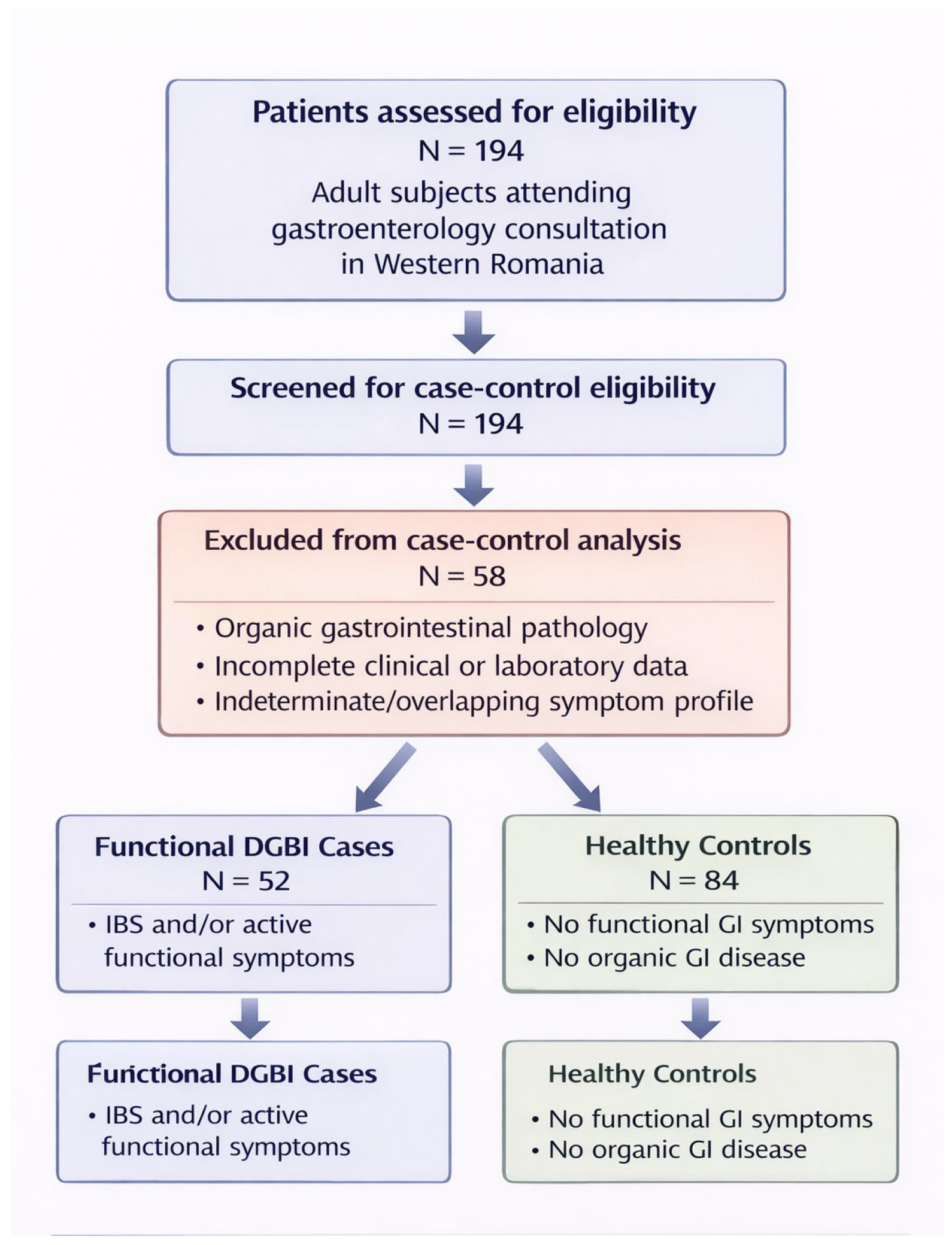
2.1. Participant Selection and Case–Control Derivation
- (1)
- availability of complete demographic and clinical records;
- (2)
- documented gastrointestinal symptom assessment recorded during routine clinical evaluation;
- (3)
- availability of anthropometric data sufficient to calculate body mass index (BMI);
- (4)
- completion of the dietary behavior questionnaire used for the study.
- (1)
- confirmed organic gastrointestinal disease, including inflammatory bowel disease, gastrointestinal malignancy, peptic ulcer disease, or advanced hepatobiliary pathology documented in medical records;
- (2)
- incomplete clinical, laboratory, or questionnaire data preventing phenotype classification;
- (3)
- overlapping or indeterminate symptom patterns that did not allow clear categorization as either functional DGBI phenotype or asymptomatic control;
- (4)
- acute medical conditions or laboratory abnormalities suggesting active systemic or inflammatory disease requiring further diagnostic evaluation.
- (5)
- extreme laboratory abnormalities suggestive of acute organic or systemic pathology requiring further diagnostic clarification.
2.2. Data Extraction and Variable Definition
- Presence of recurrent abdominal discomfort or bloating
- At least one associated bowel habit alteration (constipation and/or diarrhea)
- Absence of diagnosed organic gastrointestinal disease according to medical records
2.3. Statistical Analysis
3. Results
3.1. Descriptive Characteristics of the Cohort
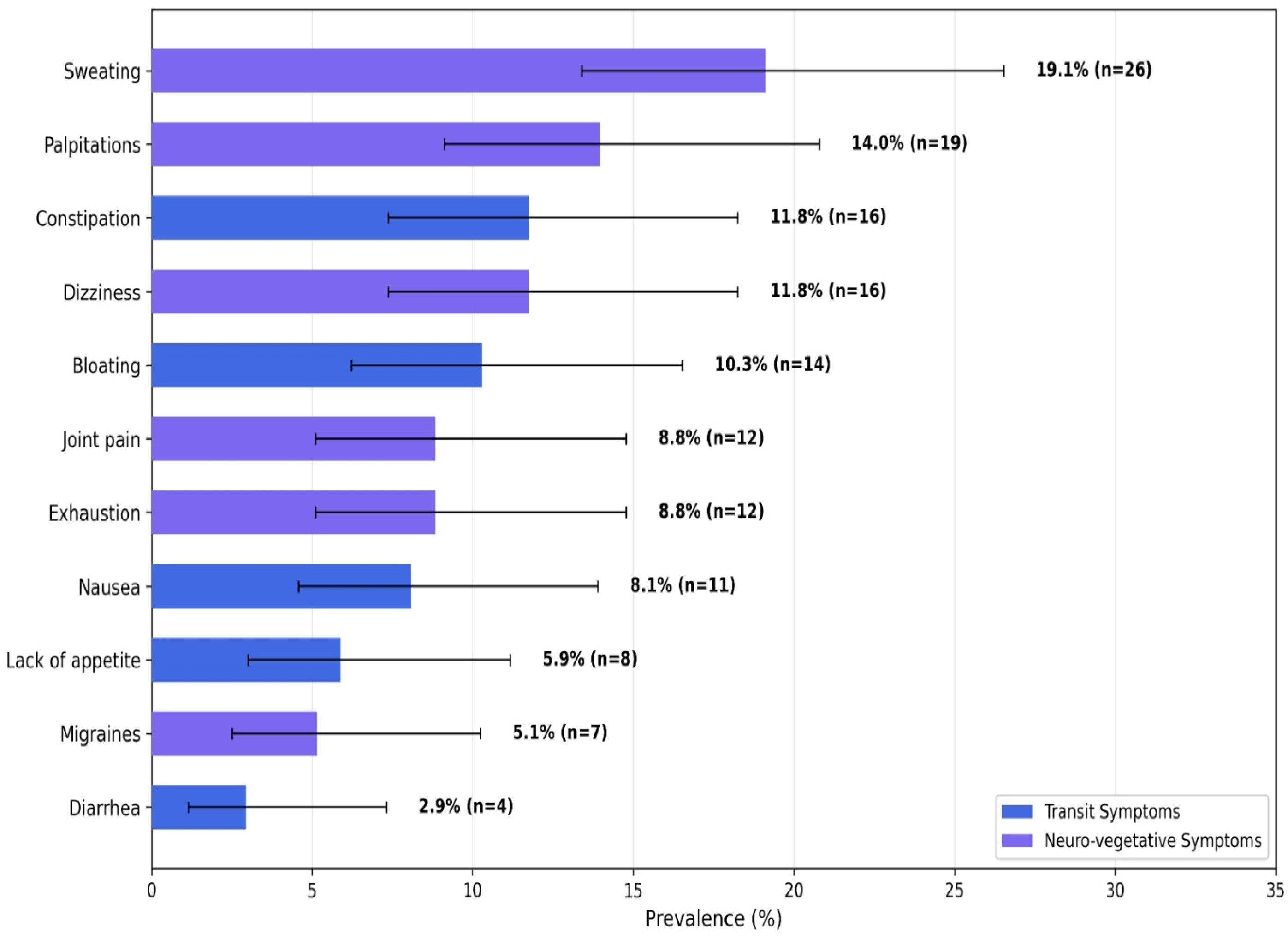
3.2. Spectrum of Symptoms and the Primacy of the Gut–Brain Axis
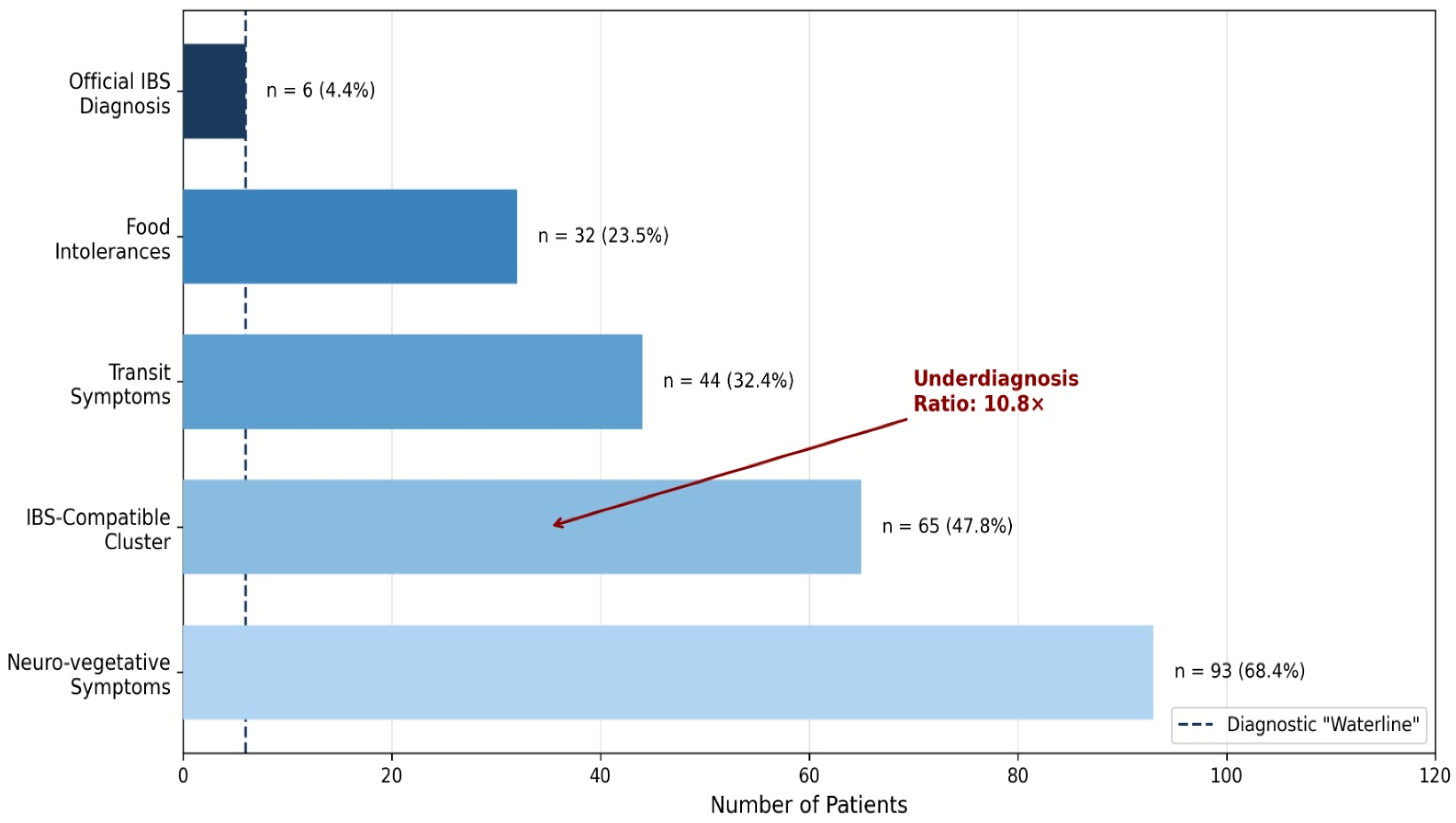
3.3. The Symptomatic Iceberg: Quantifying the Diagnostic Gap
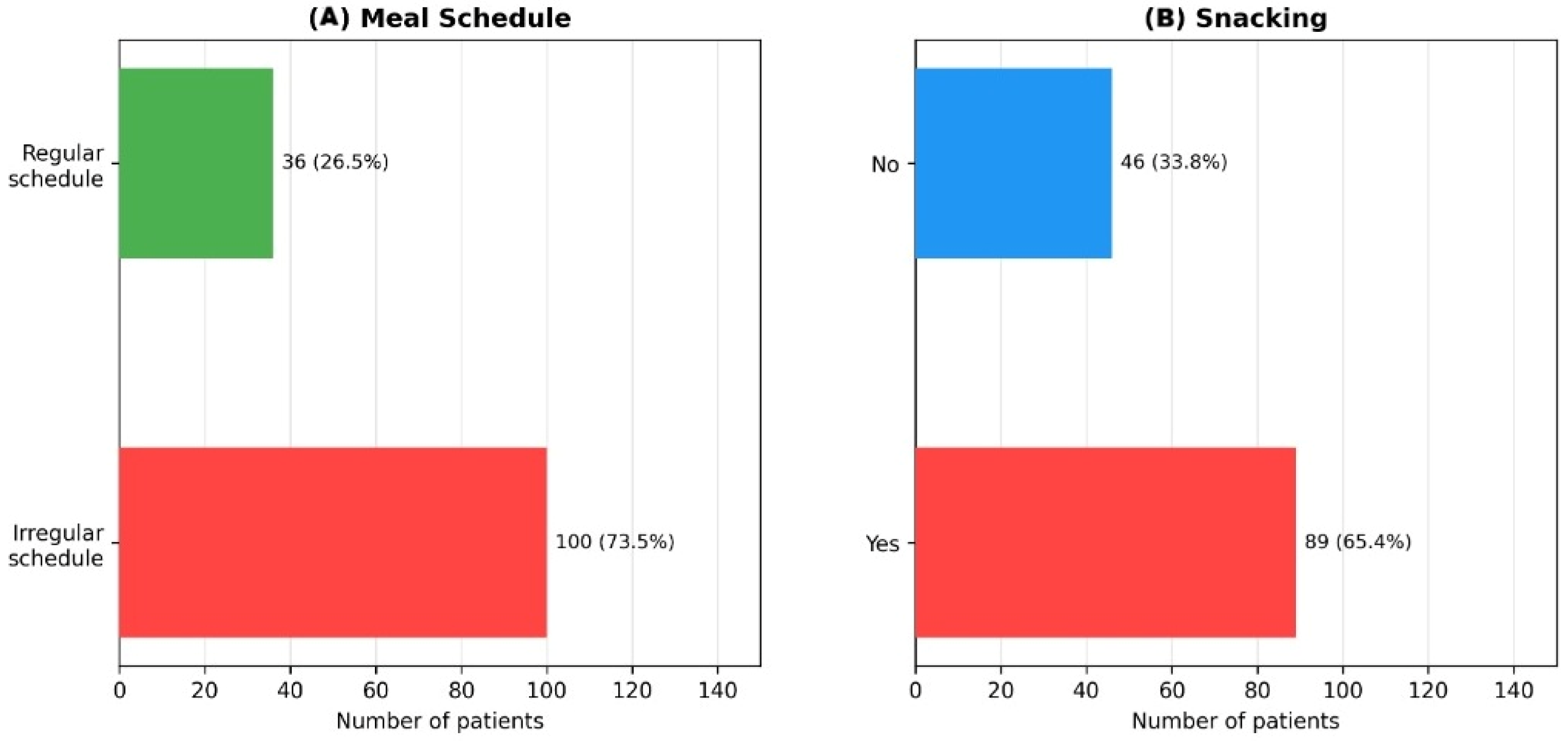
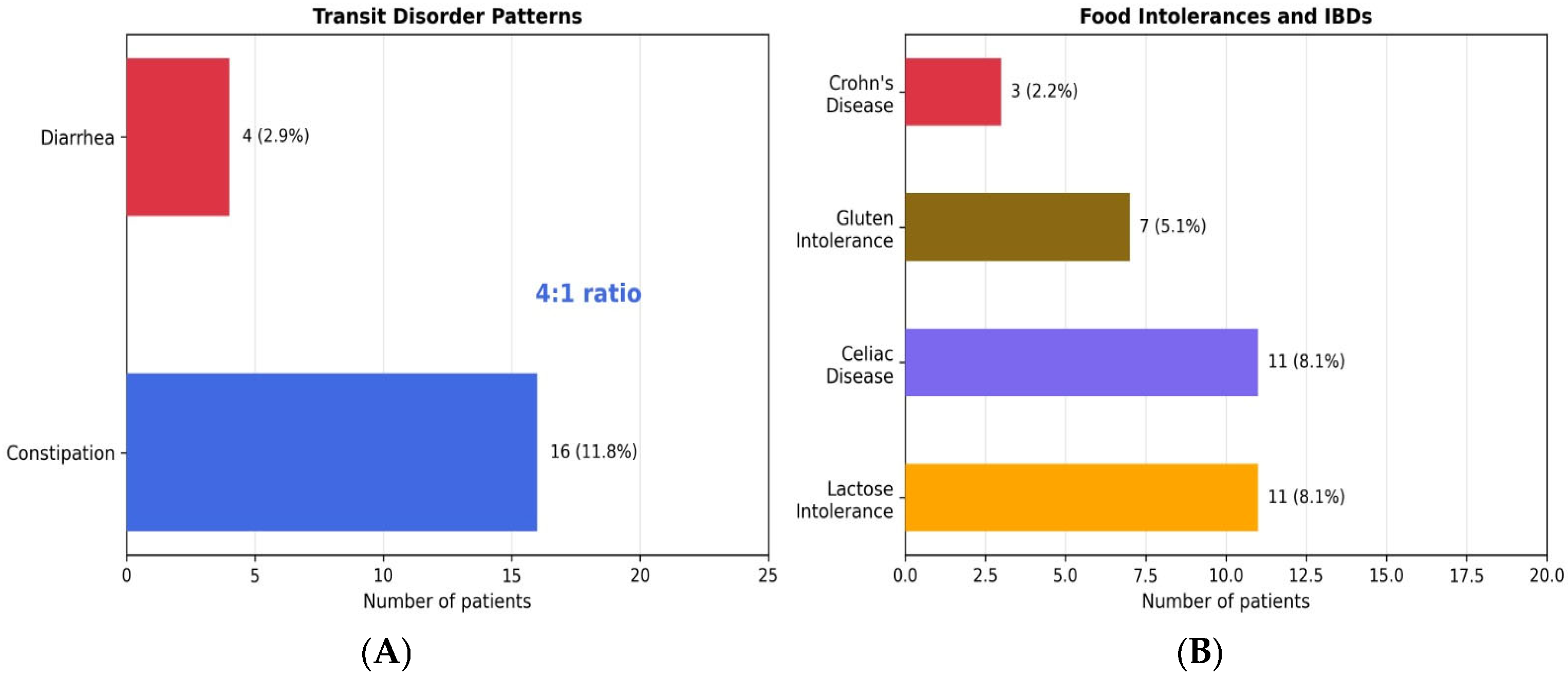
3.4. Lifestyle Factors: Eating Behaviors and Transit Patterns
3.5. Case–Control Analysis: Eating Behaviors and BMI in DGBI

| (A) | ||||
| Eating Behavior (Risk Factor) | DGBI Cases (N = 52) | Asymptomatic Controls (N = 84) | Odds Ratio (95% CI) | p-Value (χ2 Test) |
| Fast Eating | 9 (17.3%) | 23 (27.4%) | 0.56 (0.23–1.32) | 0.255 |
| Distracted Eating | 28 (53.8%) | 42 (50.0%) | 1.17 (0.58–2.33) | 0.795 |
| Irregular Meals | 34 (65.4%) | 57 (67.9%) | 0.89 (0.43–1.86) | 0.912 |
| Snacking | 24 (46.2%) | 59 (70.2%) | 0.36 (0.18–0.74) | 0.009 |
| (B) | ||||
| Metabolic Indicator | DGBI Cases (Mean ± SD) | Asymptomatic Controls (Mean ± SD) | Mean Difference | p-Value (Welch’s t-Test) |
| BMI (kg/m2) | 28.15 ± 6.49 | 24.47 ± 4.60 | +3.68 units | 0.001 |
4. Discussion
5. Limitations of the Study
6. Conclusions
Future Directions
Author Contributions
Funding
Institutional Review Board Statement
Informed Consent Statement
Data Availability Statement
Acknowledgments
Conflicts of Interest
References
- Sperber, A.D.; Bangdiwala, S.I.; Drossman, D.A.; Ghoshal, U.C.; Simren, M.; Tack, J.; Whitehead, W.E.; Dumitrascu, D.L.; Fang, X.; Fukudo, S.; et al. Worldwide Prevalence and Burden of Functional Gastrointestinal Disorders, Results of Rome Foundation Global Study. Gastroenterology 2021, 160, 99–114.e3. [Google Scholar] [CrossRef] [Scilit] [PubMed]
- Drossman, D.A.; Hasler, W.L. Rome IV—Functional GI Disorders: Disorders of Gut-Brain Interaction. Gastroenterology 2016, 150, 1257–1261. [Google Scholar] [CrossRef] [Scilit] [PubMed]
- Arif, T.B.; Ali, S.H.; Bhojwani, K.D.; Sadiq, M.; Siddiqui, A.A.; Ur-Rahman, A.; Khan, M.Z.; Hasane, F.; Shahzil, M. Global Prevalence and Risk Factors of Irritable Bowel Syndrome from 2006 to 2024 Using the Rome III and IV Criteria: A Meta-Analysis. Eur. J. Gastroenterol. Hepatol. 2025, 37, 1314–1325. [Google Scholar] [CrossRef] [Scilit] [PubMed]
- Ballena-Caicedo, J.; Valladolid-Sandoval, L.A.M.; Zuzunaga-Montoya, F.E.; Vera-Ponce, V.J. Global Prevalence of Irritable Bowel Syndrome: An Updated Systematic Review and Meta-Analysis. Gastroenterol. Res. 2025, 18, 308–321. [Google Scholar] [CrossRef] [Scilit]
- Cross, E.; Saunders, B.; Farmer, A.D.; Prior, J.A. Diagnostic Delay in Adult Inflammatory Bowel Disease: A Systematic Review. Indian J. Gastroenterol. 2023, 42, 40–52. [Google Scholar] [CrossRef] [Scilit]
- Heidelbaugh, J.J.; Hungin, A.P.; Palsson, O.S.; Anastasiou, F.; Agreus, L.; Fracasso, P.; Maaroos, H.I.; Matic, J.R.; Mendive, J.M.; Seifert, B.; et al. Perceptions and Practices of Primary Care Providers in Europe and the US in the Diagnosis and Treatment of Irritable Bowel Syndrome: A Multinational Survey. Neurogastroenterol. Motil. 2025, 37, e14967. [Google Scholar] [CrossRef] [Scilit]
- Hungin, A.P.S.; Molloy-Bland, M.; Scarpignato, C. Revisiting Montreal: New Insights into Symptoms and Their Causes, and Implications for the Future of GERD. Am. J. Gastroenterol. 2019, 114, 414–421. [Google Scholar] [CrossRef] [Scilit]
- Canavan, C.; West, J.; Card, T. The Epidemiology of Irritable Bowel Syndrome. Clin. Epidemiol. 2014, 6, 71–80. [Google Scholar] [CrossRef] [Scilit]
- Frändemark, Å.; Törnblom, H.; Jakobsson, S.; Simrén, M. Work Productivity and Activity Impairment in Irritable Bowel Syndrome (IBS): A Multifaceted Problem. Am. J. Gastroenterol. 2018, 113, 1540–1549. [Google Scholar] [CrossRef] [Scilit]
- Bonaz, B.; Bazin, T.; Pellissier, S. The Vagus Nerve at the Interface of the Microbiota-Gut-Brain Axis. Front. Neurosci. 2018, 12, 49. [Google Scholar] [CrossRef] [Scilit]
- Chen, J.; Xu, Y.; Cao, P. The Role of the Gut-Brain Axis in Diseases. Physiology 2026, 41, 109–121. [Google Scholar] [CrossRef] [Scilit] [PubMed]
- Mayer, E.A.; Nance, K.; Chen, S. The Gut-Brain Axis. Annu. Rev. Med. 2022, 73, 439–453. [Google Scholar] [CrossRef] [Scilit] [PubMed]
- Margolis, K.G.; Cryan, J.F.; Mayer, E.A. The Microbiota-Gut-Brain Axis: From Motility to Mood. Gastroenterology 2021, 160, 1486–1501. [Google Scholar] [CrossRef] [Scilit] [PubMed]
- Ruška, P.; Jerković, A.; Sila, S.; Močić Pavić, A.; Krbot Skorić, M.; Habek, M.; Hojsak, I. Autonomic Nervous System Abnormalities in Children with Inflammatory Bowel Disease and Irritable Bowel Syndrome: A Comparative Study. Clin. Auton. Res. 2025, 35, 591–600. [Google Scholar] [CrossRef] [Scilit]
- Mazor, Y.; Leach, M.M.; Jones, M.; Ejova, A.; Fisher, C.; Joffe, D.; Roach, P.; Kellow, J.; Malcolm, A. Prospective Evaluation of Autonomic Function and Intestinal Blood Flow in Health and Irritable Bowel Syndrome Shows Differences Limited to Patients with Constipation Predominance. Neurogastroenterol. Motil. 2025, 37, 109–121. [Google Scholar] [CrossRef] [Scilit]
- Polster, A.V.; Friberg, P.; Le Neve, B.; Törnblom, H.; Simren, M. Autonomic Nervous System Function in Patients with Irritable Bowel Syndrome (IBS): Relevance for Symptoms? Gastroenterology 2017, 152, S724. [Google Scholar] [CrossRef] [Scilit]
- Mazurak, N.; Seredyuk, N.; Sauer, H.; Teufel, M.; Enck, P. Heart Rate Variability in the Irritable Bowel Syndrome: A Review of the Literature. Neurogastroenterol. Motil. 2012, 24, 206–216. [Google Scholar] [CrossRef] [Scilit]
- Norton, B.; Sennfalt, S.; Nortley, R.; Hill, P.; Nathan, P.; Iodice, V.; Zarate-Lopez, N.; Carr, A. Gastrointestinal Dysautonomia: A Rare Immune-Related Adverse Event That Requires Early Recognition and High-Dose Immunosuppression. Cureus 2025, 17, e92896. [Google Scholar] [CrossRef] [Scilit]
- Lacy, B.E.; Mearin, F.; Chang, L.; Chey, W.D.; Lembo, A.J.; Simren, M.; Spiller, R. Bowel Disorders. Gastroenterology 2016, 150, 1393–1407.e5. [Google Scholar] [CrossRef] [Scilit]
- Black, C.J.; Drossman, D.A.; Talley, N.J.; Ruddy, J.; Ford, A.C. Functional Gastrointestinal Disorders: Advances in Understanding and Management. Lancet 2020, 396, 1664–1674. [Google Scholar] [CrossRef] [Scilit]
- Enck, P.; Aziz, Q.; Barbara, G.; Farmer, A.D.; Fukudo, S.; Mayer, E.A.; Niesler, B.; Quigley, E.M.M.; Rajilić-Stojanović, M.; Schemann, M.; et al. Irritable Bowel Syndrome. Nat. Rev. Dis. Primers 2016, 2, 16014. [Google Scholar] [CrossRef] [Scilit] [PubMed]
- Farmer, A.D.; Aziz, Q. Gut Pain & Visceral Hypersensitivity. Br. J. Pain 2013, 7, 39–47. [Google Scholar] [CrossRef] [Scilit] [PubMed]
- Ballou, S.; Keefer, L. Psychological Interventions for Irritable Bowel Syndrome and Inflammatory Bowel Diseases. Clin. Transl. Gastroenterol. 2017, 8, e214. [Google Scholar] [CrossRef] [Scilit] [PubMed]
- Windgassen, S.; Moss-Morris, R.; Goldsmith, K.; Chalder, T. Key Mechanisms of Cognitive Behavioural Therapy in Irritable Bowel Syndrome: The Importance of Gastrointestinal Related Cognitions, Behaviours and General Anxiety. J. Psychosom. Res. 2019, 118, 73–82. [Google Scholar] [CrossRef] [Scilit]
- Aghamohammadi, V.; Rezakhani Moghadam, H.; Najafi, E.; Nasiri, K.; Hamidi, H.; Hajizadeh, M.; Zamani, P.; Lotfi Yaghin, N.; Bazyar, H.; Najafipour, F. Mindfulness Is Associated with the Weight Status, Severity of Disease, and Severity of Extra-Intestinal Symptoms among Individuals with Irritable Bowel Syndrome. Front. Psychol. 2025, 16, 1545033. [Google Scholar] [CrossRef] [Scilit]
- Verma, D.P. Impact of Mindful Eating Practices on Gut and Brain Health. South East. Eur. J. Public Health 2025, XXVI, 1386–1398. [Google Scholar] [CrossRef]
- Hillman, E.T.; Lu, H.; Yao, T.; Nakatsu, C.H. Microbial Ecology along the Gastrointestinal Tract. Microbes Environ. 2017, 32, 300–313. [Google Scholar] [CrossRef] [Scilit]
- Tap, J.; Derrien, M.; Törnblom, H.; Brazeilles, R.; Cools-Portier, S.; Doré, J.; Störsrud, S.; Le Nevé, B.; Öhman, L.; Simrén, M. Identification of an Intestinal Microbiota Signature Associated with Severity of Irritable Bowel Syndrome. Gastroenterology 2017, 152, 111–123.e8. [Google Scholar] [CrossRef] [Scilit]
- Lupusoru, R.; Moleriu, L.C.; Mare, R.; Sporea, I.; Popescu, A.; Sirli, R.; Goldis, A.; Nica, C.; Moga, T.V.; Miutescu, B.; et al. AI-Guided Multi-Omic Microbiome Modulation Improves Clinical and Inflammatory Outcomes in Refractory IBD: A Real-World Study. Int. J. Mol. Sci. 2025, 27, 201. [Google Scholar] [CrossRef] [Scilit]
- Simrén, M.; Tack, J. New Treatments and Therapeutic Targets for IBS and Other Functional Bowel Disorders. Nat. Rev. Gastroenterol. Hepatol. 2018, 15, 589–605. [Google Scholar] [CrossRef] [Scilit]
- Simon, E.; Călinoiu, L.F.; Mitrea, L.; Vodnar, D.C. Probiotics, Prebiotics, and Synbiotics: Implications and Beneficial Effects against Irritable Bowel Syndrome. Nutrients 2021, 13, 2112. [Google Scholar] [CrossRef] [Scilit] [PubMed]
- Marin, R.C.; Ianculescu, M.; Costescu, M.; Mocanu, V.; Mihăescu, A.G.; Fulga, I.; Coman, O.A. Integrated Medical and Digital Approaches to Enhance Post-Bariatric Surgery Care: A Prototype-Based Evaluation of the NutriMonitCare System in a Controlled Setting. Nutrients 2025, 17, 2542. [Google Scholar] [CrossRef] [Scilit] [PubMed]
- Bajaj, P.; Sharma, M. Chrononutrition and Gut Health: Exploring the Relationship Between Meal Timing and the Gut Microbiome. Curr. Nutr. Rep. 2025, 14, 79. [Google Scholar] [CrossRef] [Scilit] [PubMed]
- Reytor-González, C.; Simancas-Racines, D.; Román-Galeano, N.M.; Annunziata, G.; Galasso, M.; Zambrano-Villacres, R.; Verde, L.; Muscogiuri, G.; Frias-Toral, E.; Barrea, L. Chrononutrition and Energy Balance: How Meal Timing and Circadian Rhythms Shape Weight Regulation and Metabolic Health. Nutrients 2025, 17, 2135. [Google Scholar] [CrossRef] [Scilit]
- Thaiss, C.A.; Zeevi, D.; Levy, M.; Zilberman-Schapira, G.; Suez, J.; Tengeler, A.C.; Abramson, L.; Katz, M.N.; Korem, T.; Zmora, N.; et al. Transkingdom Control of Microbiota Diurnal Oscillations Promotes Metabolic Homeostasis. Cell 2014, 159, 514–529. [Google Scholar] [CrossRef] [Scilit]
- Matenchuk, B.A.; Mandhane, P.J.; Kozyrskyj, A.L. Sleep, Circadian Rhythm, and Gut Microbiota. Sleep Med. Rev. 2020, 53, 101340. [Google Scholar] [CrossRef] [Scilit]
- Pavel, F.M.; Bungau, S.G.; Tit, D.M.; Ghitea, T.C.; Marin, R.C.; Radu, A.F.; Moleriu, R.D.; Ilias, T.; Bustea, C.; Vesa, C.M. Clinical Implications of Dietary Probiotic Supplement (Associated with L-Glutamine and Biotin) in Ulcerative Colitis Patients’ Body Composition and Quality of Life. Nutrients 2023, 15, 5049. [Google Scholar] [CrossRef] [Scilit]
- Bishehsari, F.; Voigt, R.M.; Keshavarzian, A. Circadian Rhythms and the Gut Microbiota: From the Metabolic Syndrome to Cancer. Nat. Rev. Endocrinol. 2020, 16, 731–739. [Google Scholar] [CrossRef] [Scilit]
- Parkar, S.G.; Kalsbeek, A.; Cheeseman, J.F. Potential Role for the Gut Microbiota in Modulating Host Circadian Rhythms and Metabolic Health. Microorganisms 2019, 7, 41. [Google Scholar] [CrossRef] [Scilit]
- Duboc, H.; Coffin, B.; Siproudhis, L. Disruption of Circadian Rhythms and Gut Motility: An Overview of Underlying Mechanisms and Associated Pathologies. J. Clin. Gastroenterol. 2020, 54, 405–414. [Google Scholar] [CrossRef] [Scilit]
- Zhang, M.; Sun, X.; Zhu, X.; Zheng, L.; Bi, Y.; Li, Q.; Sun, L.; Di, F.; Xu, Y.; Zhu, D.; et al. Association between Fast Eating Speed and Metabolic Dysfunction-Associated Steatotic Liver Disease: A Multicenter Cross-Sectional Study and Meta-Analysis. Nutr. Diabetes 2024, 14, 61. [Google Scholar] [CrossRef] [Scilit] [PubMed]
- Jaafari, H.; Houghton, L.A.; West, R.M.; Shuweihdi, F.; Staudacher, H.; Nikolova, S.; Ford, A.C.; Whorwell, P.J.; Bangdiwala, S.I.; Palsson, O.S.; et al. Dietary Patterns Are Associated with Variations in the Global Prevalence and Severity of Rome IV Irritable Bowel Syndrome. Clin. Gastroenterol. Hepatol. 2026, 24, 814–823.e3. [Google Scholar] [CrossRef] [Scilit] [PubMed]
- Eswaran, S.; Chey, W.D.; Jackson, K.; Pillai, S.; Chey, S.W.; Han-Markey, T. A Diet Low in Fermentable Oligo-, Di-, and Monosaccharides and Polyols Improves Quality of Life and Reduces Activity Impairment in Patients with Irritable Bowel Syndrome and Diarrhea. Clin. Gastroenterol. Hepatol. 2017, 15, 1890–1899.e3. [Google Scholar] [CrossRef] [Scilit] [PubMed]
- Staudacher, H.M.; Whelan, K. The Low FODMAP Diet: Recent Advances in Understanding Its Mechanisms and Efficacy in IBS. Gut 2017, 66, 1517–1527. [Google Scholar] [CrossRef] [Scilit]
- Black, C.J.; Staudacher, H.M.; Ford, A.C. Efficacy of a Low FODMAP Diet in Irritable Bowel Syndrome: Systematic Review and Network Meta-Analysis. Gut 2022, 71, 1117–1126. [Google Scholar] [CrossRef] [Scilit]
- Rej, A.; Sanders, D.S. Gluten-Free Diet and Its “Cousins” in Irritable Bowel Syndrome. Nutrients 2018, 10, 1727. [Google Scholar] [CrossRef] [Scilit]
- Coman, L.I.; Balaban, D.V.; Dumbravă, B.F.; Păunescu, H.; Marin, R.C.; Costescu, M.; Dima, L.; Jinga, M.; Coman, O.A. Targeting Oxidative Stress in Acute Pancreatitis: A Critical Review of Antioxidant Strategies. Nutrients 2025, 17, 2390. [Google Scholar] [CrossRef] [Scilit]
- Palsson, O.S.; Whitehead, W.E.; Van Tilburg, M.A.L.; Chang, L.; Chey, W.; Crowell, M.D.; Keefer, L.; Lembo, A.J.; Parkman, H.P.; Rao, S.S.C.; et al. Rome IV Diagnostic Questionnaires and Tables for Investigators and Clinicians. Gastroenterology 2016, 150, 1481–1491. [Google Scholar] [CrossRef] [Scilit]
- Lovell, R.M.; Ford, A.C. Global Prevalence of and Risk Factors for Irritable Bowel Syndrome: A Meta-Analysis. Clin. Gastroenterol. Hepatol. 2012, 10, 712–721.e4. [Google Scholar] [CrossRef] [Scilit]
- Talley, N.J.; Duncanson, K.; Williams, G.M. Why Are Disorders of Gut-Brain Interaction (DGBI) Often Food-Related? Duodenal Eosinophils and Mast Cells, Small Intestinal Bacteria, Food Allergy and Altered Food Intake in Functional Dyspepsia and the Irritable Bowel Syndrome: A New Paradigm. J. Gastroenterol. 2025, 60, 1211–1220. [Google Scholar] [CrossRef] [Scilit]
- Halpin, S.J.; Ford, A.C. Prevalence of Symptoms Meeting Criteria for Irritable Bowel Syndrome in Inflammatory Bowel Disease: Systematic Review and Meta-Analysis. Am. J. Gastroenterol. 2012, 107, 1474–1482. [Google Scholar] [CrossRef] [Scilit] [PubMed]
- Cremon, C.; Stanghellini, V.; Barbaro, M.R.; Cogliandro, R.F.; Bellacosa, L.; Santos, J.; Vicario, M.; Pigrau, M.; Alonso Cotoner, C.; Lobo, B.; et al. Randomised Clinical Trial: The Analgesic Properties of Dietary Supplementation with Palmitoylethanolamide and Polydatin in Irritable Bowel Syndrome. Aliment. Pharmacol. Ther. 2017, 45, 909–922. [Google Scholar] [CrossRef] [Scilit] [PubMed]
- Aasbrenn, M.; Lydersen, S.; Farup, P.G. A Conservative Weight Loss Intervention Relieves Bowel Symptoms in Morbidly Obese Subjects with Irritable Bowel Syndrome: A Prospective Cohort Study. J. Obes. 2018, 2018, 3732753. [Google Scholar] [CrossRef] [Scilit] [PubMed]
- Muscatello, M.R.A.; Bruno, A.; Pandolfo, G.; Micò, U.; Stilo, S.; Scaffidi, M.; Consolo, P.; Tortora, A.; Pallio, S.; Giacobbe, G.; et al. Depression, Anxiety and Anger in Subtypes of Irritable Bowel Syndrome Patients. J. Clin. Psychol. Med. Settings 2010, 17, 64–70. [Google Scholar] [CrossRef] [Scilit]
- Choi, Y.; Youn, Y.H.; Kang, S.J.; Shin, J.E.; Cho, Y.S.; Jung, Y.S.; Shin, S.Y.; Huh, C.W.; Lee, Y.J.; Koo, H.S.; et al. 2025 Seoul Consensus on Clinical Practice Guidelines for Irritable Bowel Syndrome. J. Neurogastroenterol. Motil. 2025, 31, 133–169. [Google Scholar] [CrossRef] [Scilit]
- Sadik, R.; Abrahamsson, H.; Stotzer, P.O. Gender Differences in Gut Transit Shown with a Newly Developed Radiological Procedure. Scand. J. Gastroenterol. 2003, 38, 36–42. [Google Scholar] [CrossRef] [Scilit]
- World Gastroenterology Organisation Global Guidelines. A Global Cascade Approach to Diagnosis and Management of Chronic Constipation; World Gastroenterology Organisation: Milwaukee, WI, USA, 2025. [Google Scholar]
- Gill, S.K.; Rossi, M.; Bajka, B.; Whelan, K. Dietary Fibre in Gastrointestinal Health and Disease. Nat. Rev. Gastroenterol. Hepatol. 2021, 18, 101–116. [Google Scholar] [CrossRef] [Scilit]
- Gunn, D.; Abbas, Z.; Harris, H.C.; Major, G.; Hoad, C.; Gowland, P.; Marciani, L.; Gill, S.K.; Warren, F.J.; Rossi, M.; et al. Psyllium Reduces Inulin-Induced Colonic Gas Production in IBS: MRI and In Vitro Fermentation Studies. Gut 2022, 71, 919–927. [Google Scholar] [CrossRef] [Scilit]
- Black, C.J.; Ford, A.C. Chronic Idiopathic Constipation in Adults: Epidemiology, Pathophysiology, Diagnosis and Clinical Management. Med. J. Aust. 2018, 209, 86–91. [Google Scholar] [CrossRef] [Scilit]
- Zheng, B.; Wang, L.; Sun, S.; Yuan, X.; Liang, Q. The Molecular Interplay between the Gut Microbiome and Circadian Rhythms: An Integrated Review. Front. Microbiol. 2025, 16, 1712516. [Google Scholar] [CrossRef] [Scilit]


| Variable | Mean ± SD | 95% CI | Median (IQR) | Range |
|---|---|---|---|---|
| Age (years) | 68.70 ± 12.94 | 66.50–70.90 | 70.00 (69.00–73.00) | 30.0–92.0 |
| BMI (kg/m2) | 25.36 ± 5.36 | 24.39–26.32 | 24.41 (23.54–25.48) | 20.1–32.2 |
| ALT (U/L) | 44.89 ± 9.81 | 35.81–53.98 | 24.00 (21.00–29.00) | 6.0–192.0 |
| AST (U/L) | 52.20 ± 10.86 | 43.57–60.83 | 31.50 (28.00–37.90) | 9.0–203.0 |
| Total cholesterol (mg/dL) | 142.83 ± 48.23 | 134.29–151.37 | 131.00 (126.00–141.00) | 37.0–309.0 |
| Triglycerides (mg/dL) | 113.10 ± 4.07 | 105.03–121.17 | 103.00 (92.52–114.47) | 44.0–238.0 |
| CRP (mg/L) | 9.28 ± 0.60 | 8.09–10.47 | 5 (5.00–6.00) | 4.0–29.0 |
| Variable | OR | 95% CI | p-Value |
|---|---|---|---|
| Age | 0.985 | 0.957–1.015 | 0.318 |
| Sex | 0.685 | 0.296–1.583 | 0.376 |
| BMI | 1.129 | 1.045–1.219 | 0.002 |
| Snacking | 0.461 | 0.205–1.035 | 0.061 |
| Test | p Value | Bonferroni | FDR (BH) |
|---|---|---|---|
| Fast Eating | 0.255 | 1.000 | 0.425 |
| Distracted | 0.795 | 1.000 | 0.912 |
| Irregular Meals | 0.912 | 1.000 | 0.912 |
| Snacking | 0.009 | 0.045 | 0.023 |
| BMI | 0.001 | 0.005 | 0.005 |
Disclaimer/Publisher’s Note: The statements, opinions and data contained in all publications are solely those of the individual author(s) and contributor(s) and not of MDPI and/or the editor(s). MDPI and/or the editor(s) disclaim responsibility for any injury to people or property resulting from any ideas, methods, instructions or products referred to in the content. |
© 2026 by the authors. Licensee MDPI, Basel, Switzerland. This article is an open access article distributed under the terms and conditions of the Creative Commons Attribution (CC BY) license.
Share and Cite
Moleriu, L.C.; Lupusoru, R.; Muntean, C.; Piroș, T.; Popescu, A.; Sirli, R.; Nica, C.; Vlad, D.C.; Cîmpian, D.M.; Corodan Comiati, D.M.; et al. Dietary Behaviors, Digestive Symptoms, and Neurovegetative Features in Disorders of Gut–Brain Interaction: A Cross-Sectional Clinical Study. Nutrients 2026, 18, 1023. https://doi.org/10.3390/nu18071023
Moleriu LC, Lupusoru R, Muntean C, Piroș T, Popescu A, Sirli R, Nica C, Vlad DC, Cîmpian DM, Corodan Comiati DM, et al. Dietary Behaviors, Digestive Symptoms, and Neurovegetative Features in Disorders of Gut–Brain Interaction: A Cross-Sectional Clinical Study. Nutrients. 2026; 18(7):1023. https://doi.org/10.3390/nu18071023
Chicago/Turabian StyleMoleriu, Lavinia Cristina, Raluca Lupusoru, Călin Muntean, Teodora Piroș, Alina Popescu, Roxana Sirli, Camelia Nica, Daliborca Cristina Vlad, Dora Mihaela Cîmpian, Diana Mihaela Corodan Comiati, and et al. 2026. "Dietary Behaviors, Digestive Symptoms, and Neurovegetative Features in Disorders of Gut–Brain Interaction: A Cross-Sectional Clinical Study" Nutrients 18, no. 7: 1023. https://doi.org/10.3390/nu18071023
APA StyleMoleriu, L. C., Lupusoru, R., Muntean, C., Piroș, T., Popescu, A., Sirli, R., Nica, C., Vlad, D. C., Cîmpian, D. M., Corodan Comiati, D. M., Dumitrașcu, A. L., & Dumitrașcu, V. (2026). Dietary Behaviors, Digestive Symptoms, and Neurovegetative Features in Disorders of Gut–Brain Interaction: A Cross-Sectional Clinical Study. Nutrients, 18(7), 1023. https://doi.org/10.3390/nu18071023