Loquat Flowers Exceed Leaves: A Less Explored Phenolic Source with Functional Potential
 , and
, and
Abstract
1. Introduction
2. Materials and Methods
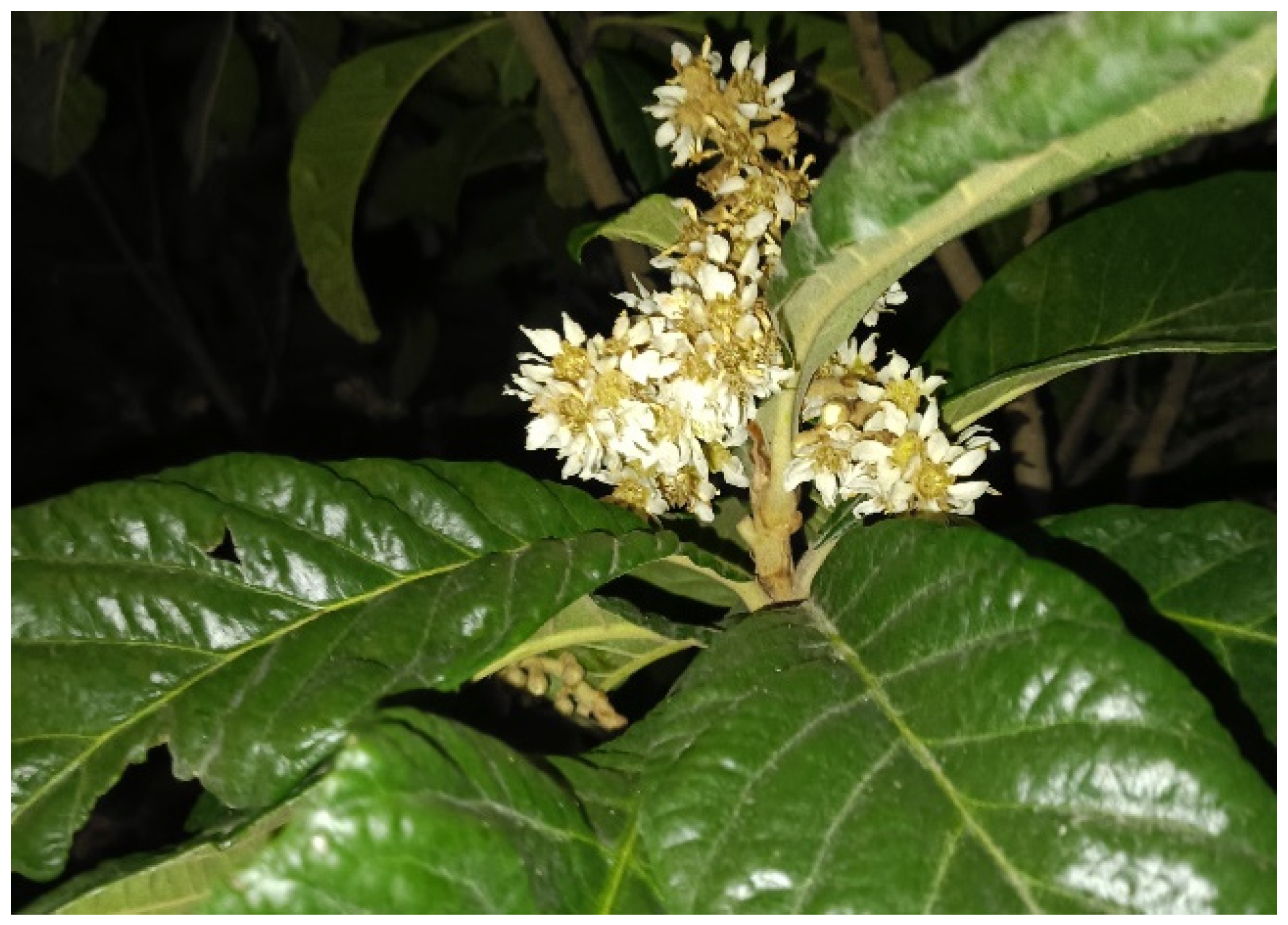
2.1. Plant Material
2.2. Isolation of Phenolic Fractions
2.2.1. Extractable Polyphenols (EPPs)
2.2.2. Non-Extractable Polyphenols (NEPPs)
2.3. Determination of Phenolic Compounds
2.3.1. Total Content of Extractable and Non-Extractable Polyphenols
2.3.2. Qualitative and Quantitative Analysis by HPLC-ESI-QTOF
2.4. Antioxidant Capacity
2.4.1. Ferric Reducing Antioxidant Power (FRAP) Assay
2.4.2. ABTS Radical Cation Scavenging Assay
2.5. In Vitro Antidiabetic Assays
2.5.1. Glucose Retardation Index
2.5.2. α-Glucosidase Inhibition Index
2.6. Statistical Analysis
3. Results
3.1. Total Phenolic Content of EPP and NEPP
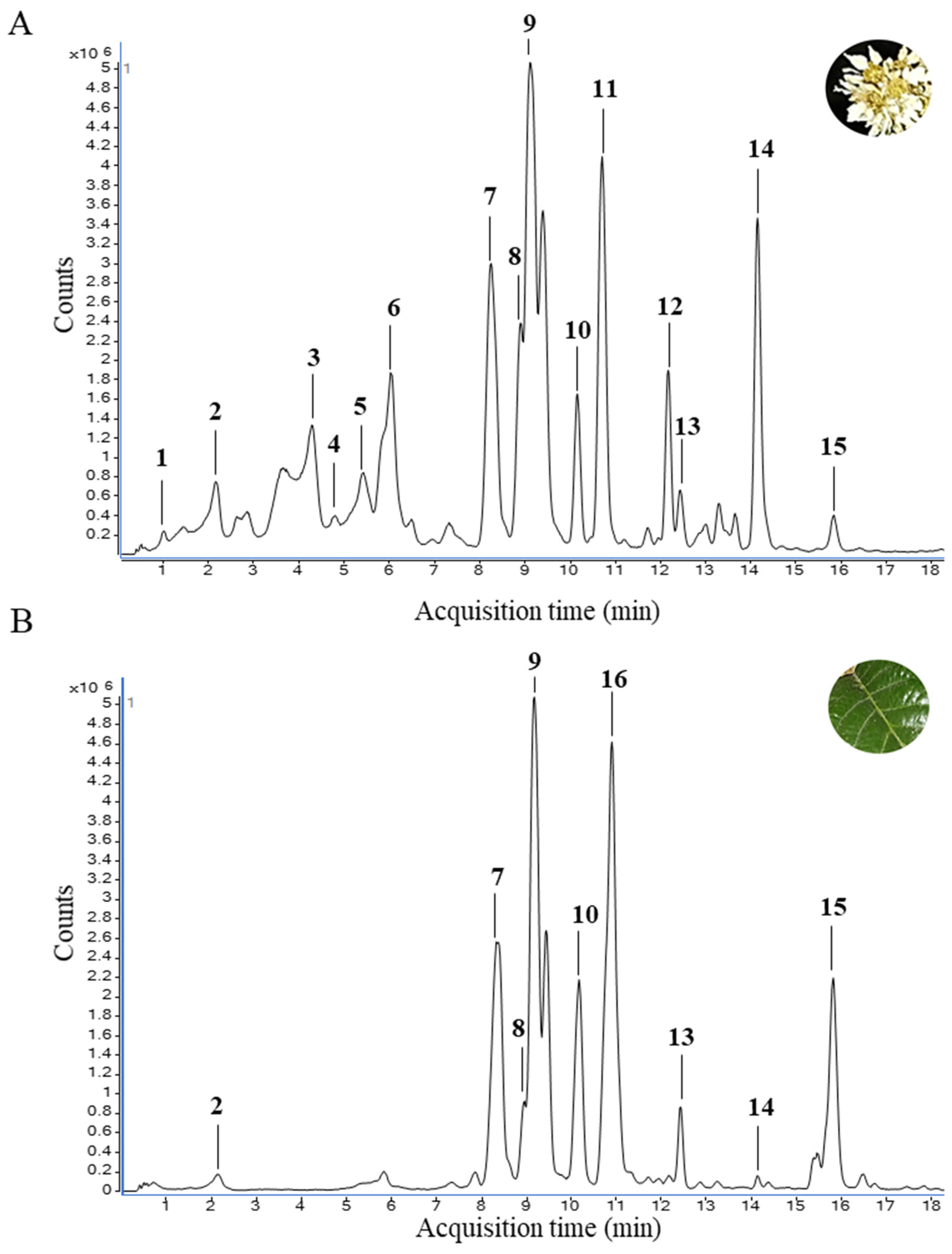
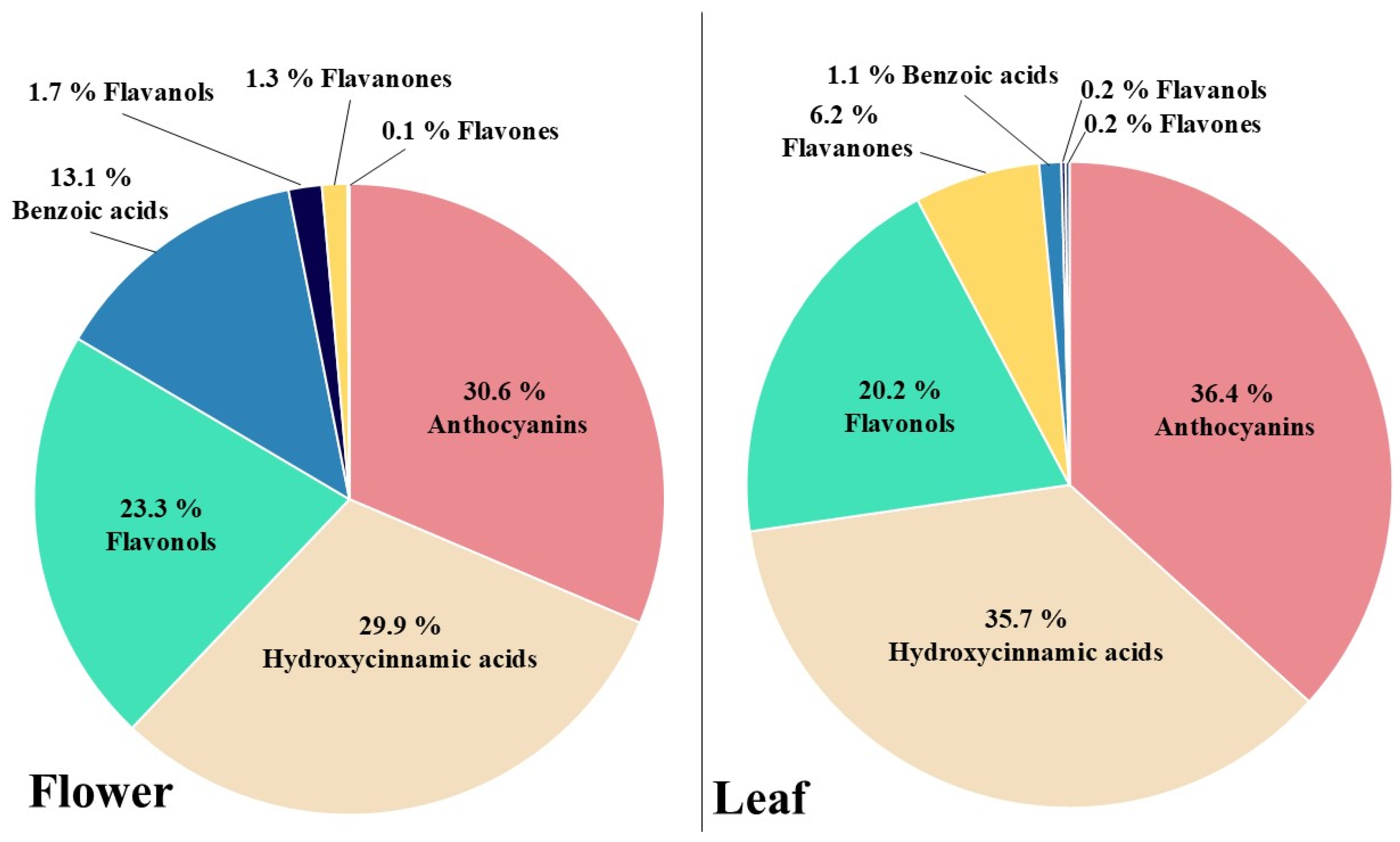
3.2. HPLC-QTOF-MS/MS Identification of Extractable Polyphenols
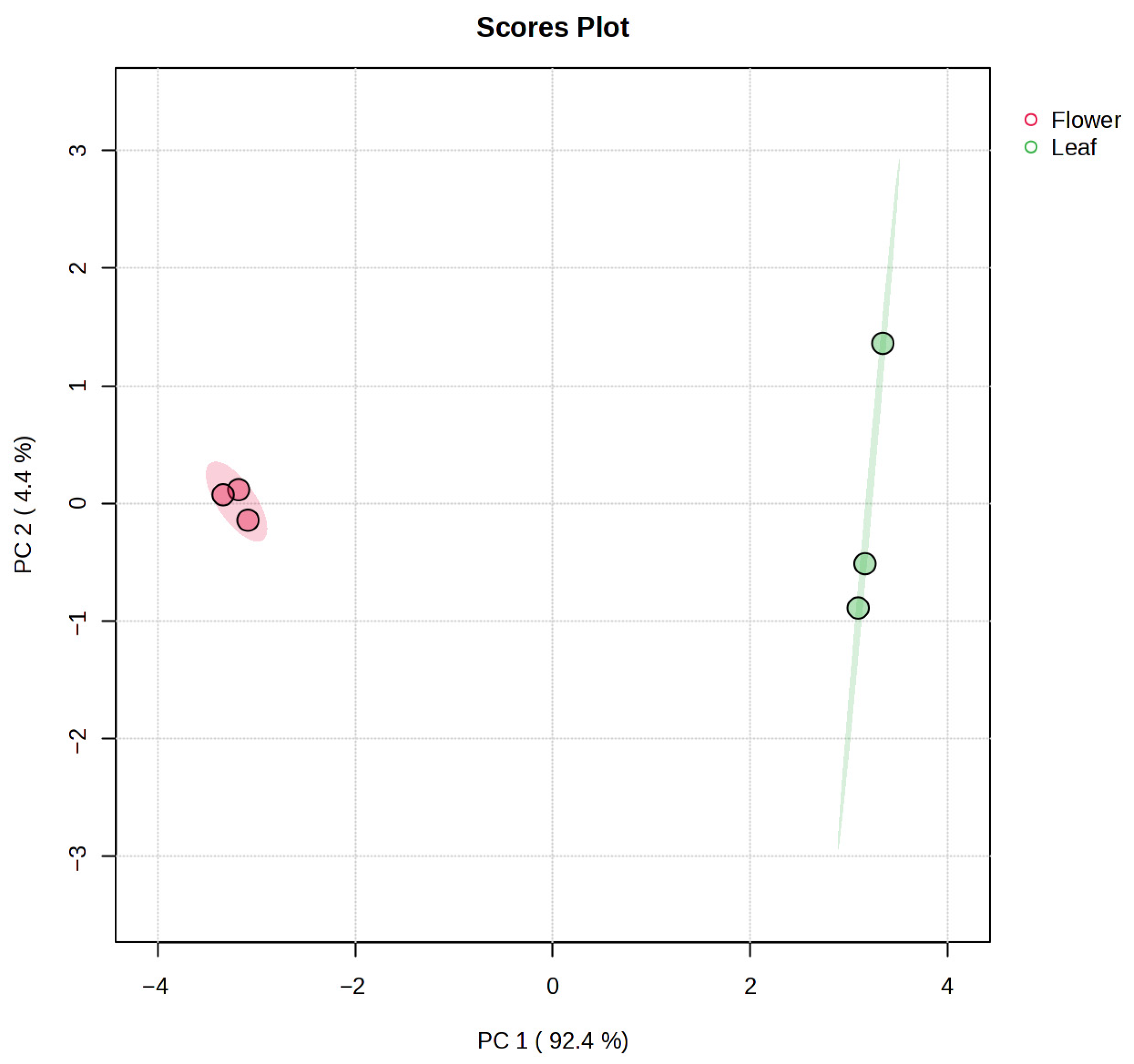
3.3. Multivariate and Univariate Analysis of Phenolic Compounds
3.4. Antioxidant Capacity
3.5. In Vitro Antidiabetic Assays
4. Discussion
5. Conclusions
Supplementary Materials
Author Contributions
Funding
Institutional Review Board Statement
Informed Consent Statement
Data Availability Statement
Acknowledgments
Conflicts of Interest
References
- Nunes, A.R.; Alves, G.; Falcão, A.; Lopes, J.A.; Silva, L.R. Phenolic Acids from Fruit By-Products as Therapeutic Agents for Metabolic Syndrome: A Review. Int. J. Mol. Sci. 2025, 26, 3834. [Google Scholar] [CrossRef]
- Estarriaga-Navarro, S.; Valls, T.; Plano, D.; Sanmartín, C.; Goicoechea, N. Potential Application of Plant By-Products in Biomedicine: From Current Knowledge to Future Opportunities. Antioxidants 2025, 14, 942. [Google Scholar] [CrossRef]
- Syahputra, R.A.; Helen, H.; Gunawan, M.C.; Utari, Z.D.; Dalimunthe, A.; Salim, E.; Bastian, M.; Taslim, N.A.; Pitriani, P.; Nugraha, S.E.; et al. Eriobotrya japonica a review: Phytochemical constituents, traditional uses, and therapeutic potentials. J. Agric. Food Res. 2025, 22, 102091. [Google Scholar] [CrossRef]
- Hyun, M.K.; Kim, D.H.; Park, C.H.; Noh, S.G.; Choi, S.; Lee, J.Y.; Choi, J.H.; Park, D.; Choi, Y.J.; Chung, H.Y. Protective mechanisms of loquat leaf extract and ursolic acid against diabetic pro-inflammation. J. Mol. Med. 2022, 100, 1455–1464. [Google Scholar] [CrossRef]
- Chen, B.; Long, P.; Sun, Y.; Meng, Q.; Liu, X.; Cui, H.; Lv, Q.; Zhang, L. The chemical profiling of loquat leaf extract by HPLC-DAD-ESI-MS and its effects on hyperlipidemia and hyperglycemia in rats induced by a high-fat and fructose diet. Food Funct. 2017, 8, 687–694. [Google Scholar] [CrossRef]
- Alkofahi, A.; Alzoubi, K.H.; Khabour, O.F.; Alzubi, M.A.; Shawaqfeh, M.S.; Mahafdeh, R. The beneficial Effects of Eriobotrya japonica Lindl. Leaves Extract on Body Weight, Glycemic Control, and Lipid Profile. Curr. Diabetes Rev. 2025, 22, 10. [Google Scholar] [CrossRef]
- Liu, Y.; Zhang, W.; Xu, C.; Li, X. Biological Activities of Extracts from Loquat (Eriobotrya japonica Lindl.): A Review. Int. J. Mol. Sci. 2016, 17, 1983. [Google Scholar] [CrossRef]
- Hu, C.; Hu, J.; Ye, H.; Wang, M.; Wu, M.; Yang, H.; Chen, K.; Cao, J.; Wang, Y.; Wang, Y.; et al. Anti-Inflammatory and Antioxidant Activities of Polyphenols from Loquat (Eriobotrya japonica Lindl.) Leaf Hair in Lipopolysaccharide-Induced In Vitro and In Vivo Models. eFood 2025, 6, e70064. [Google Scholar] [CrossRef]
- González-Sarrías, A.; Espín, J.C.; Tomás-Barberán, F.A. Non-extractable polyphenols produce gut microbiota metabolites that persist in circulation and show anti-inflammatory and free radical-scavenging effects. Trends Food Sci. Technol. 2017, 69, 281–288. [Google Scholar] [CrossRef]
- Huang, G.L.; Ma, J.J.; Sui, S.Y.; Wang, Y.N. Optimization of extraction of loquat flowers polyphenolics and its antioxidant and anti-polyphenol oxidase properties. Bioengineered 2020, 11, 281–290. [Google Scholar] [CrossRef] [PubMed]
- Zhou, C.; Sun, C.; Chen, K.; Li, X. Flavonoids, phenolics, and antioxidant capacity in the flower of Eriobotrya japonica Lindl. Int. J. Mol. Sci. 2011, 12, 2935–2945. [Google Scholar] [CrossRef] [PubMed]
- Shen, Z.; Chen, J.; Zhu, J.; Yu, H. Changes of bioactive composition and concentration in loquat flower extracted with water/Chinese Baijiu. Heliyon 2023, 9, e14701. [Google Scholar] [CrossRef]
- Wu, S.K.; Zhang, N.; Shen, X.R.; Mei, W.W.; He, Y.; Ge, W.H. Preparation of total flavonoids from loquat flower and its protective effect on acute alcohol-induced liver injury in mice. J. Food Drug Anal. 2015, 23, 136–143. [Google Scholar] [CrossRef] [PubMed]
- Duan, M.; Feng, J.; Feng, J.H.; Wang, X.; Xiao, X.; He, S.; Guo, H.; Zhang, W.; Jiang, Z.; Wan, T.; et al. Optimizing processing methods for maximum bioactive retention: Comparative metabolomic analysis of dried loquat (Eriobotrya japonica) flowers and their powdered extracts. Front. Nutr. 2025, 12, 1637247. [Google Scholar] [CrossRef]
- Pérez-Jiménez, J.; Arranz, S.; Tabernero, M.; Díaz-Rubio, M.E.; Serrano, J.; Goñi, I.; Saura-Calixto, F. Updated methodology to determine antioxidant capacity in plant foods, oils and beverages: Extraction, measurement and expression of results. Food Res. Int. 2008, 41, 274–285. [Google Scholar] [CrossRef]
- Carboni Martins, C.; Rodrigues, R.C.; Domeneghini Mercali, G.; Rodrigues, E. New insights into non-extractable phenolic compounds analysis. Food Res. Int. 2022, 157, 111487. [Google Scholar] [CrossRef]
- Hartzfeld, P.W.; Forkner, R.; Hunter, M.D.; Hagerman, A.E. Determination of hydrolyzable tannins (gallotannins and ellagitannins) after reaction with potassium iodate. J. Agric. Food Chem. 2002, 50, 1785–1790. [Google Scholar] [CrossRef]
- Porter, L.J.; Hrstich, L.N.; Chan, B.G. The conversion of procyanidins and prodelphinidins to cyanidin and delphinidin. Phytochemistry 1985, 25, 223–230. [Google Scholar] [CrossRef]
- Zurita, J.; Díaz-Rubio, M.E.; Saura-Calixto, F. Improved procedure to determine non-extractable polymeric proanthocyanidins in plant foods. Int. J. Food Nutr. 2012, 63, 936–939. [Google Scholar] [CrossRef]
- Singleton, V.L.; Orthofer, R.; Lamuela-Raventós, R.M. Analysis of total phenols and other oxidation substrates and antioxidants by means of folin-ciocalteu reagent. Methods Enzymol. 1999, 299, 152–178. [Google Scholar]
- Benzie, I.F.; Strain, J.J. The ferric reducing ability of plasma (FRAP) as a measure of “antioxidant power”: The FRAP assay. Anal. Biochem. 1996, 239, 70–76. [Google Scholar] [CrossRef]
- Re, R.; Pellegrini, N.; Proteggente, A.; Pannala, A.; Yang, M.; Rice-Evans, C. Antioxidant activity applying an improved ABTS radical cation decolorization assay. Free Radic. Biol. Med. 1999, 26, 1231–1237. [Google Scholar] [CrossRef] [PubMed]
- Aguilar-Ávila, D.S.; Martínez-Flores, H.E.; Morales-Sánchez, E.; Reynoso-Camacho, R.; Garnica-Romo, M.G. Effect of extrusion on the functional properties and bioactive compounds of tamarind (Tamarindus indica L.) shell. Polish J. Food Nutr. Sci. 2023, 73, 278–288. [Google Scholar] [CrossRef]
- Arranz, S.; Silván, J.M.; Saura-Calixto, F. Nonextractable polyphenols, usually ignored, are the major part of dietary polyphenols: A study on the Spanish diet. Mol. Nutr. Food Res. 2010, 54, 1646–1658. [Google Scholar] [CrossRef] [PubMed]
- Pérez-Jiménez, J.; Saura-Calixto, F. Fruit peels as sources of non-extractable polyphenols or macromolecular antioxidants: Analysis and nutritional implications. Food Res. Int. 2018, 111, 148–152. [Google Scholar] [CrossRef]
- Pérez-Jiménez, J.; Díaz-Rubio, M.E.; Saura-Calixto, F. Non-extractable polyphenols, a major dietary antioxidant: Occurrence, metabolic fate and health effects. Nutr. Res. Rev. 2013, 26, 118–129. [Google Scholar] [CrossRef]
- Cavaiuolo, M.; Cocetta, G.; Ferrante, A. The Antioxidants Changes in Ornamental Flowers during Development and Senescence. Antioxidants 2013, 2, 132–155. [Google Scholar] [CrossRef]
- Zhang, R.; Dan, L.; Su, L.; Wei, X. Integrated multi-omics analysis reveals tissue-specific flavonoid profiles and bioactivities in Ormosia henryi Prain for industrial applications. Ind. Crop. Prod. 2025, 237, 122224. [Google Scholar] [CrossRef]
- Gao, Y.; Xia, W.; Shao, P.; Wu, W.; Chen, H.; Fang, X.; Mu, H.; Xiao, J.; Gao, H. Impact of thermal processing on dietary flavonoids. Curr. Opin. Food Sci. 2022, 48, 100915. [Google Scholar] [CrossRef]
- Chen, S.Y.; Huang, P.H.; Shih, M.K.; Wu, C.C.; Hsieh, C.W.; Chen, M.H.; Hou, C.Y. Functional evaluation of loquat (Eriobotrya japonica Lindl.) flower water extracts and its potential use in tea. J. Food Process. Preserv. 2023, 2023, 1188178. [Google Scholar] [CrossRef]
- Kim, M.H.; Yeon, S.W.; Ryu, S.H.; Lee, H.H.; Turk, A.; Jeong, S.Y.; Lee, M.K. Structural Diversity and Anti-Diabetic Potential of Flavonoids and Phenolic Compounds in Eriobotrya japonica Leaves. Molecules 2025, 30, 736. [Google Scholar] [CrossRef] [PubMed]
- Zhu, Q.; Li, X.; Ge, H.; Wang, Z.; Wang, B.; Chen, J.; Xu, H. Genetic Tendency Analysis and Comprehensive Antioxidant Activity Evaluation of Leaves and Flowers of Loquat F1 Generation. Curr. Issues Mol. Biol. 2025, 47, 58. [Google Scholar] [CrossRef] [PubMed]
- Fu, Y.; Li, F.; Ding, Y.; Li, H.Y.; Xiang, X.R.; Ye, Q.; Wu, D.T. Polysaccharides from loquat (Eriobotrya japonica) leaves: Impacts of extraction methods on their physicochemical characteristics and biological activities. Int. J. Biol. Macromol. 2020, 146, 508–517. [Google Scholar] [CrossRef]
- Guan, L.; Long, H.; Ren, F.; Li, Y.; Zhang, H. A Structure—Activity Relationship Study of the Inhibition of α-Amylase by Benzoic Acid and Its Derivatives. Nutrients 2022, 14, 1931. [Google Scholar] [CrossRef]
- Zhang, R.; Zhang, Y.; Yu, T.; Zhang, Z.; Chen, Y.; Jiang, Z.; Meng, M.; Zhang, M.; Zhou, J. Inhibition mechanisms of α-glucosidase by eight catechins: Kinetic, molecular docking, and surface plasmon resonance analysis. Int. J. Biol. Macromol. 2024, 283, 137365. [Google Scholar] [CrossRef]
- Książkiewicz, M.; Karczewska, M.; Nawrot, F.; Grabowska, K.; Szymański, M.; Cielecka-Piontek, J.; Studzińska-Sroka, E. Edible Flowers as Bioactive Food Ingredients with Antidiabetic Potential: A Study on Paeonia officinalis L., Forsythia × intermedia, Gomphrena globosa L., and Clitoria ternatea L. Plants 2025, 14, 2603. [Google Scholar] [CrossRef] [PubMed]



| EPP (g/100 g dw) | HPP (g/100 g dw) | NEPA (g/100 g dw) | Total (g/100 g dw) | |
|---|---|---|---|---|
| Leaf | 1.0 ± 0.1 | 1.8 ± 0.1 | 3.9 ± 0.2 | 6.7 ± 0.2 |
| Flower | 2.7 ± 0.1 * | 1.8 ± 0.2 * | 5.1 ± 0.3 * | 9.6 ± 0.4 * |
| Identified Compound | RT (min) | Molecular Formula | Molecular Mass | [M − H]−/[M]+ | MS2 Fragments (m/z) | Sample | MSI Identity Levels |
|---|---|---|---|---|---|---|---|
| Benzoic acids | |||||||
| Salicylic acid | 0.9 | C7H6O3 | 138.0317 | 137.0244 | 93 | F; L | 2 |
| Protocatechuic acid | 1.6 | C7H6O4 | 154.0266 | 153.0193 | 109 | F; L | 1 |
| 3-Hydroxybenzoic acid | 2.6 | C7H6O3 | 138.0317 | 137.0244 | 93 | F; L | 2 |
| 4-Hydroxybenzoic acid | 2.8 | C7H6O3 | 138.0317 | 137.0244 | 93 | F; L | 1 |
| Hydroxycinnamic acids | |||||||
| 3-O-Caffeoylquinic acid (Neochlorogenic acid) | 2.1 | C16H18O9 | 354.0951 | 353.0878 | 191; 179 | F; L | 2 |
| o-Coumaric acid | 3.4 | C9H8O3 | 164.0473 | 163.0401 | 119 | F; L | 2 |
| Coumaroylquinic acid (isomer 1) | 3.5 | C16H18O8 | 338.1002 | 337.0929 | 191; 163 | F; L | 3 |
| 5-O-Caffeoylquinic acid (Chlorogenic acid) | 4.3 | C16H18O9 | 354.0951 | 353.0878 | 191; 179 | F; L | 1 |
| 4-O-Caffeoylquinic acid (Cryptochlorogenic acid) | 4.8 | C16H18O9 | 354.0951 | 353.0878 | 191; 173 | F; L | 2 |
| Coumaroylquinic acid (isomer 2) | 6.1 | C16H18O8 | 338.1002 | 337.0929 | 191; 163 | F; L | 3 |
| 3-O-Feruloylquinic acid | 7.1 | C17H20O9 | 368.1107 | 367.1035 | 193; 191 | F; L | 2 |
| 5-O-Feruloylquinic acid | 7.7 | C17H20O9 | 368.1107 | 367.1035 | 191; 173 | F; L | 2 |
| 4-O-Feruloylquinic acid | 8.1 | C17H20O9 | 368.1107 | 367.1035 | 193; 173 | F; L | 2 |
| Flavonols | |||||||
| Quercetin-3-O-sambubioside | 8.4 | C26H28O16 | 596.1377 | 595.1305 | 300 | F; L | 2 |
| Quercetin-3-O-neohesperidoside | 8.7 | C27H30O16 | 610.1534 | 609.1461 | 300; 301 | F; L | 2 |
| Quercetin-3-O-rutinoside (Rutin) | 9.0 | C27H30O16 | 610.1534 | 609.1461 | 300 | F; L | 2 |
| Quercetin-3-O-glucoside (Isoquercitrin) | 9.5 | C21H20O12 | 464.0955 | 463.0882 | 301; 300 | F; L | 1 |
| Kaempferol-3-O-glucoside-7-O-rhamnoside | 9.6 | C27H30O15 | 594.1585 | 593.1512 | 285; 430; 447 | F; L | 2 |
| Isorhamnetine-3-O-rutinoside | 9.7 | C28H32O16 | 624.1690 | 623.1618 | 315; 299 | F; L | 2 |
| Kaempferol-3-O-rutinoside | 9.8 | C27H30O15 | 594.1585 | 593.1512 | 284; 285 | F; L | 2 |
| Quercetin-3-O-xyloside | 10.1 | C20H18O11 | 434.0849 | 433.0776 | 300; 301 | F; L | 2 |
| Quercetin-3-O-rhamnoside (Quercitrin) | 10.2 | C21H20O11 | 448.1006 | 447.0933 | 300; 301; 284 | F; L | 2 |
| Kaempferol-3-O-neohesperidoside | 10.4 | C27H30O15 | 594.1585 | 593.1512 | 285 | F; L | 2 |
| Isorhamnetine-3-O-glucoside-7-O-rhamnoside | 10.5 | C28H32O16 | 624.1690 | 623.1618 | 315; 299 | F; L | 2 |
| Kaempferol-3-O-glucoside | 10.7 | C21H20O11 | 448.1006 | 447.0933 | 285 | F; L | 1 |
| Isorhamnetine-3-O-galactoside | 10.8 | C22H22O12 | 478.1111 | 477.1038 | 315; 314 | F; L | 2 |
| Isorhamnetine-3-O-glucoside | 11.1 | C22H22O12 | 478.1111 | 477.1038 | 314; 271 | F; L | 2 |
| Kaempferol-3-O-rhamnoside | 12.2 | C21H20O10 | 432.1056 | 431.0984 | 285 | F; L | 2 |
| Quercetin-7-O-glucoside | 12.4 | C21H20O12 | 464.0955 | 463.0882 | 301; 300 | F; L | 2 |
| Kaempferol | 13.8 | C15H10O6 | 286.0477 | 285.0405 | 257 | F | 1 |
| Quercetin-4-O-glucoside | 14.1 | C21H20O12 | 464.0955 | 463.0882 | 301; 300 | F; L | 2 |
| Kaempferol 3-O-(2″, 3″-dicoumaroyl) rhamnoside | 22.0 | C39H32O14 | 724.1792 | 723.1719 | 285 | F; L | 2 |
| Flavanols | |||||||
| Catechin | 3.8 | C15H14O6 | 290.0790 | 289.0718 | 245 | F; L | 1 |
| Procyanidin B-type dimer | 5.4 | C30H26O12 | 578.1424 | 577.1351 | 289 | F; L | 2 |
| Epicatechin | 5.9 | C15H14O6 | 290.0790 | 289.0718 | 245 | F; L | 1 |
| Flavanones | |||||||
| Naringenin-6-C-(2″-O-acetyl)-glucoside | 10.9 | C23H24O11 | 476.1319 | 475.1246 | 314; 271 | F; L | 2 |
| Naringenin-3-O-glucoside | 12.7 | C21H22O10 | 434.1213 | 433.1140 | 271 | F | 2 |
| Naringenin-6-C-(2″, 4″, 6″-O-triacetyl)-glucoside | 15.9 | C27H28O13 | 560.1530 | 559.1457 | 271 | F; L | 2 |
| Flavones | |||||||
| Luteolin-O-glucoside | 11.7 | C21H20O11 | 448.1006 | 447.0933 | 285 | F; L | 2 |
| Luteolin | 16.8 | C15H10O6 | 286.0477 | 285.0405 | 133 | F; L | 2 |
| Anthocyanins | |||||||
| Cyanidin-3-O-(6″-acetyl)-galactoside | 5.8 | [C23H23O12]+ | 491.1190 | 491.1184 | - | F | 2 |
| Delphinidin-diglucoside (isomer 1) | 8.0 | [C27H31O17]+ | 627.1561 | 627.1556 | - | F; L | 3 |
| Cyanidin-3-O-(6″-acetyl)-glucoside | 8.2 | [C23H23O12]+ | 491.1190 | 491.1184 | - | F; L | 2 |
| Delphinidin-3-O-sambubioside | 8.5 | [C26H29O16]+ | 597.1456 | 597.1450 | 303 | F; L | 2 |
| Petunidin-3,5-diglucoside | 8.7 | [C28H33O17]+ | 641.1718 | 641.1712 | - | F | 2 |
| Cyanidin-3-O-sophoroside | 9.1 | [C27H31O16]+ | 611.1612 | 611.1607 | 287 | F; L | 2 |
| Cyanidin-3,5-diglucoside | 9.2 | [C27H31O16]+ | 611.1612 | 611.1607 | 287 | F; L | 2 |
| Delphinidin | 9.3 | [C15H11O7]+ | 303.0556 | 303.0499 | - | F; L | 2 |
| Delphinidin-diglucoside (isomer 2) | 9.4 | [C27H31O17]+ | 627.1561 | 627.1556 | - | F; L | 3 |
| Cyanidin-O-glucoside (isomer 1) | 9.7 | [C21H21O11]+ | 449.1084 | 449.1074 | 287 | F; L | 3 |
| Malvidin-3,5-diglucoside | 9.7 | [C29H35O17]+ | 655.1874 | 655.1869 | - | F | 2 |
| Cyanidin-3-O-sambubioside | 9.8 | [C26H29O15]+ | 581.1506 | 581.1501 | 287 | F; L | 2 |
| Petunidin-rhamnoside-glucoside | 10.0 | [C28H33O16]+ | 625.1769 | 625.1763 | 317 | F; L | 2 |
| Cyanidin-rhamnoside-glucoside | 10.1 | [C27H31O15]+ | 595.1663 | 595.1657 | 287 | F; L | 2 |
| Delphinidin-xylose/Delphinidin-arabinose | 10.2 | [C20H19O11]+ | 435.0927 | 435.0922 | 303 | F; L | 2 |
| Cyanidin-O-glucoside (isomer 2) | 10.4 | [C21H21O11]+ | 449.1084 | 449.1074 | 287 | F; L | 3 |
| Cyanidin-3-O-rutinoside | 10.6 | [C27H31O15]+ | 595.1663 | 595.1657 | 287 | F; L | 2 |
| Petunidin-3-O-rutinoside | 10.7 | [C28H33O16]+ | 625.1769 | 625.1763 | 317 | F; L | 2 |
| Petunidin-O-galactoside (isomer 1) | 10.9 | [C22H23O12]+ | 479.1190 | 479.1184 | 317 | F; L | 3 |
| Petunidin | 11.2 | [C16H13O7]+ | 317.0661 | 317.0656 | 257 | F; L | 2 |
| Petunidin-O-galactoside (isomer 2) | 11.2 | [C22H23O12]+ | 479.1190 | 479.1184 | 317 | F; L | 3 |
| FRAP EPP (μmol Trolox/g dw) | ABTS EPP (μmol Trolox/g dw) | FRAP HPP (μmol Trolox/g dw) | ABTS NEPA (μmol Trolox/g dw) | |
|---|---|---|---|---|
| Leaf | 62.1 ± 5.4 | 28.7 ± 0.6 | 104.6 ± 10.2 | 14.3 ± 1.0 |
| Flower | 210.1 ± 13.4 * | 139.1 ± 13.2 * | 142.0 ± 17.3 * | 36.7 ± 1.8 * |
| 20 min GDRI (%) | 30 min GDRI (%) | 60 min GDRI (%) | 120 min GDRI (%) | 180 min GDRI (%) | |
|---|---|---|---|---|---|
| Leaf | 14.2 ± 2.0 | 9.1 ± 0.9 | 7.5 ± 2.2 | <5 | <5 |
| Flower | n.d. | n.d. | n.d. | n.d. | n.d. |
| IC50 | |
|---|---|
| Leaf | n.d. |
| Flower | 0.48 ± 0.04 * |
| Acarbose | 4.76 ± 0.08 |
Disclaimer/Publisher’s Note: The statements, opinions and data contained in all publications are solely those of the individual author(s) and contributor(s) and not of MDPI and/or the editor(s). MDPI and/or the editor(s) disclaim responsibility for any injury to people or property resulting from any ideas, methods, instructions or products referred to in the content. |
© 2026 by the authors. Licensee MDPI, Basel, Switzerland. This article is an open access article distributed under the terms and conditions of the Creative Commons Attribution (CC BY) license.
Share and Cite
Moratilla-Rivera, I.; García-Acosta, N.; Pérez-Jiménez, J.; Mateos, R. Loquat Flowers Exceed Leaves: A Less Explored Phenolic Source with Functional Potential. Nutrients 2026, 18, 924. https://doi.org/10.3390/nu18060924
Moratilla-Rivera I, García-Acosta N, Pérez-Jiménez J, Mateos R. Loquat Flowers Exceed Leaves: A Less Explored Phenolic Source with Functional Potential. Nutrients. 2026; 18(6):924. https://doi.org/10.3390/nu18060924
Chicago/Turabian StyleMoratilla-Rivera, Ignacio, Natalia García-Acosta, Jara Pérez-Jiménez, and Raquel Mateos. 2026. "Loquat Flowers Exceed Leaves: A Less Explored Phenolic Source with Functional Potential" Nutrients 18, no. 6: 924. https://doi.org/10.3390/nu18060924
APA StyleMoratilla-Rivera, I., García-Acosta, N., Pérez-Jiménez, J., & Mateos, R. (2026). Loquat Flowers Exceed Leaves: A Less Explored Phenolic Source with Functional Potential. Nutrients, 18(6), 924. https://doi.org/10.3390/nu18060924