Development of a Lipidomics-Based Cell Screening Platform for Indirect Antioxidants Targeting Oxidized Lipid Droplet Formation and Mitochondrial Membrane Abnormality



Abstract
1. Introduction
2. Materials and Methods
2.1. Separation and Oxidation of LDL
2.2. Cell Culture
2.3. Cell Viability Test
2.4. Establishment of a Lipidomics-Based Cell Screening Platform for Oxidized Lipid Droplet Formation
2.5. Extraction of Intracellular Lipids
2.6. Simultaneous Lipid Analysis Using Orbitrap Liquid Chromatography–Tandem Mass Spectrometry (LC-MS/MS)
2.7. Fluorescent Staining for Lipid Hydroperoxide
2.8. Statistical Analysis
2.9. Ethical Approval
3. Results
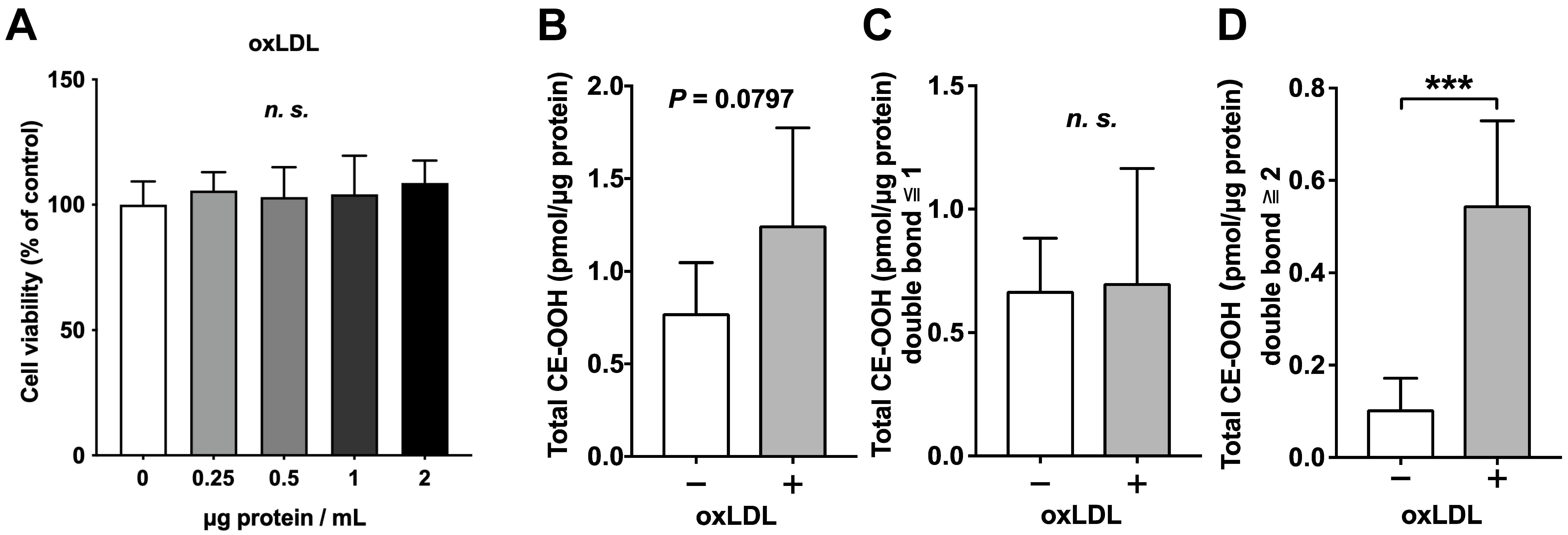
3.1. Oxidized Lipid Droplet Formation by oxLDL
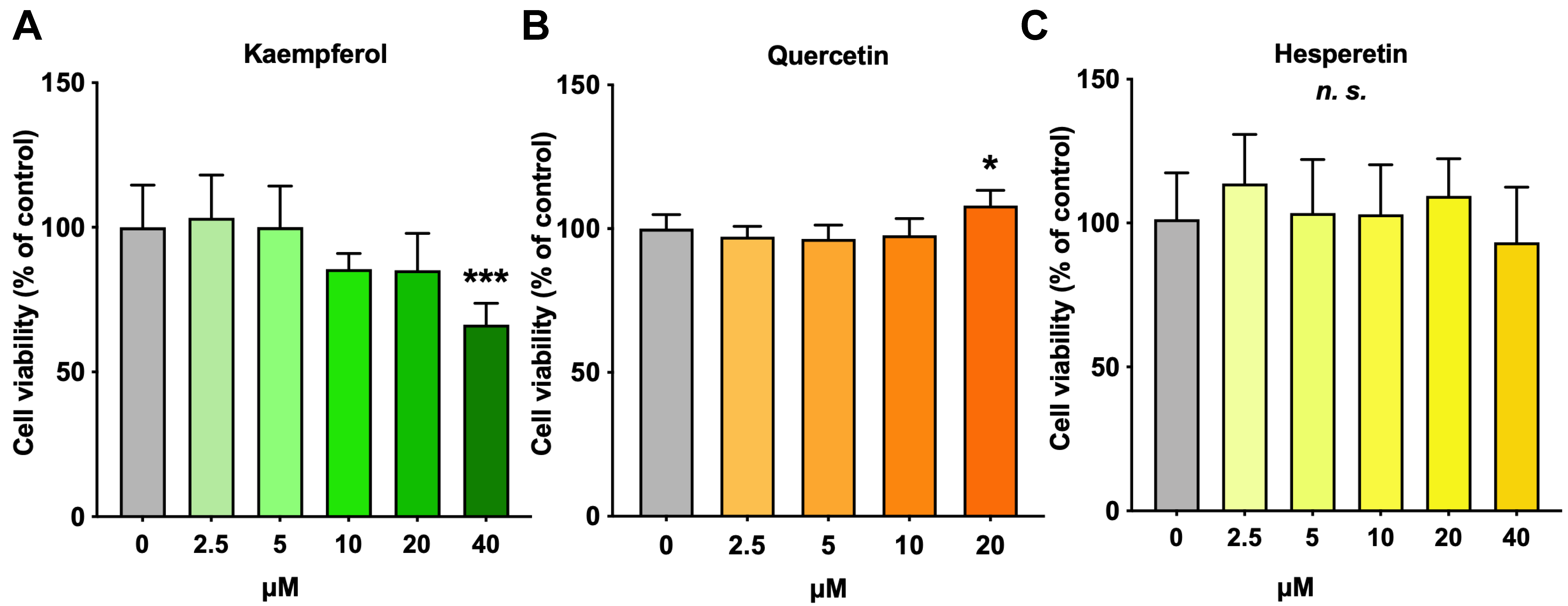
3.2. Cell Viability of Each Antioxidant
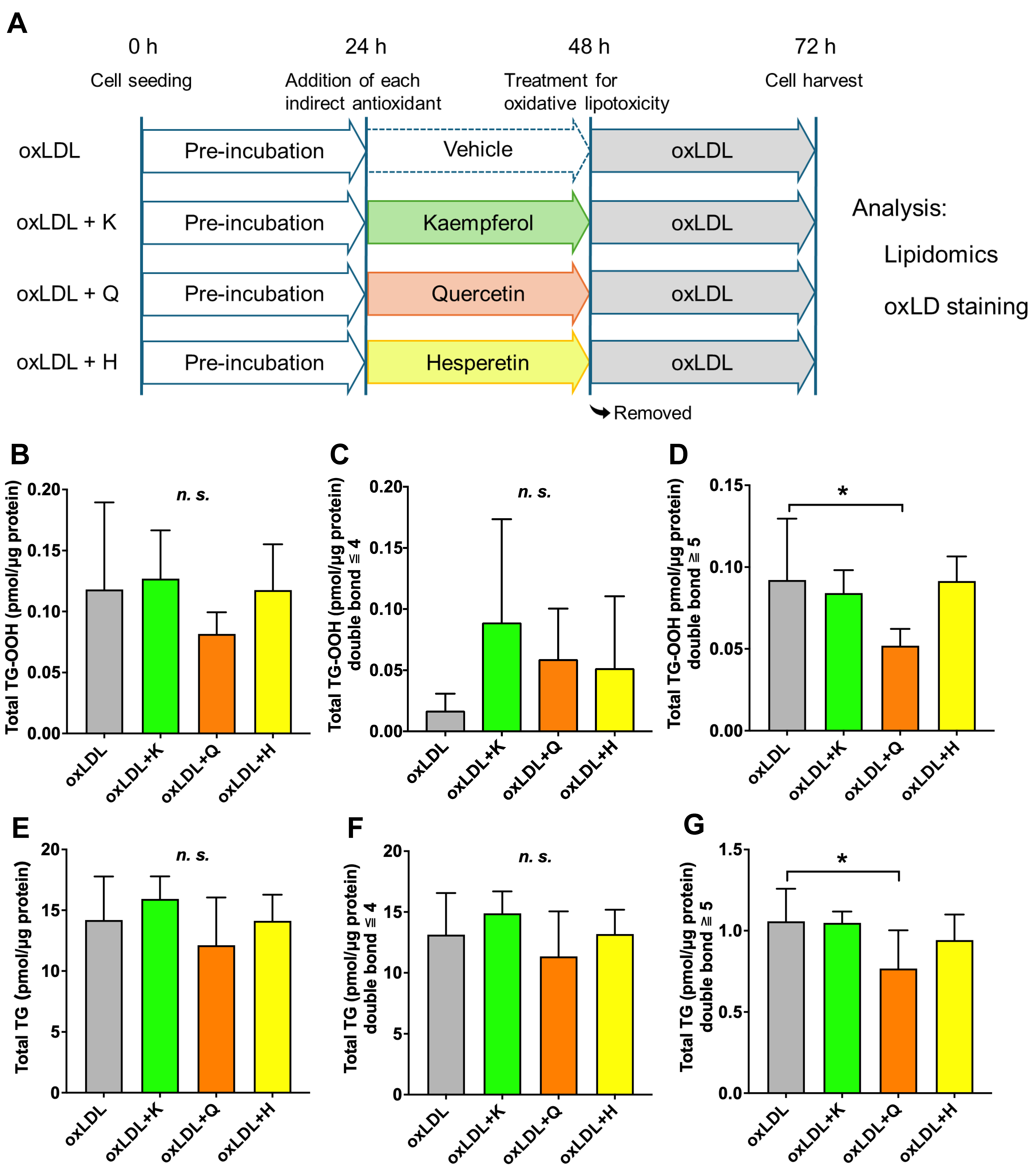
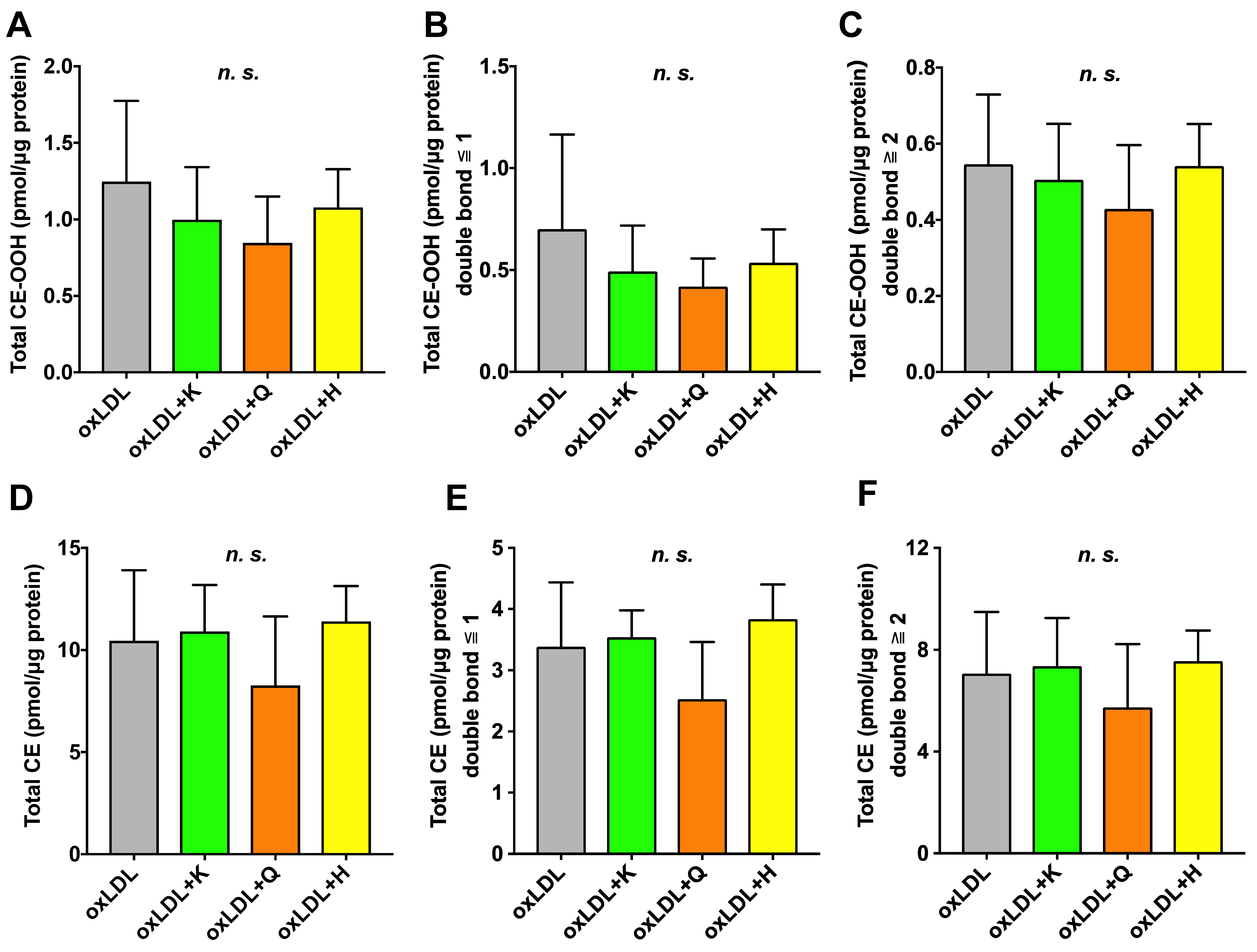
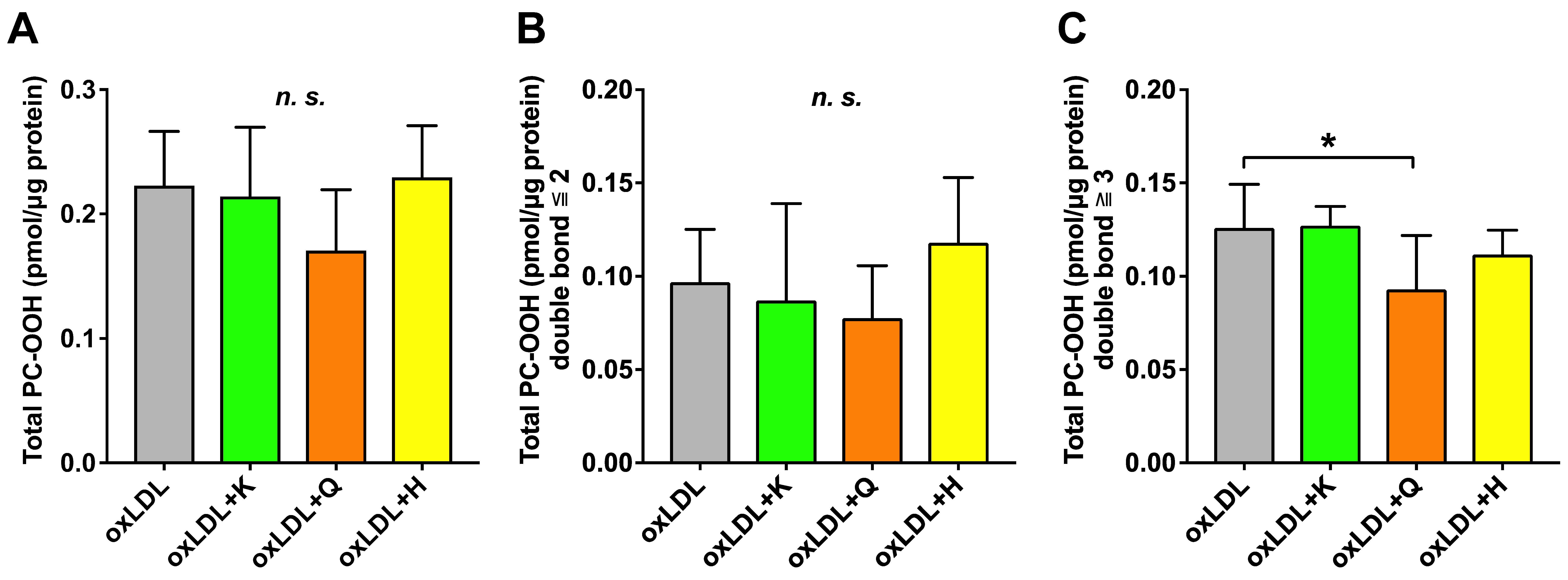
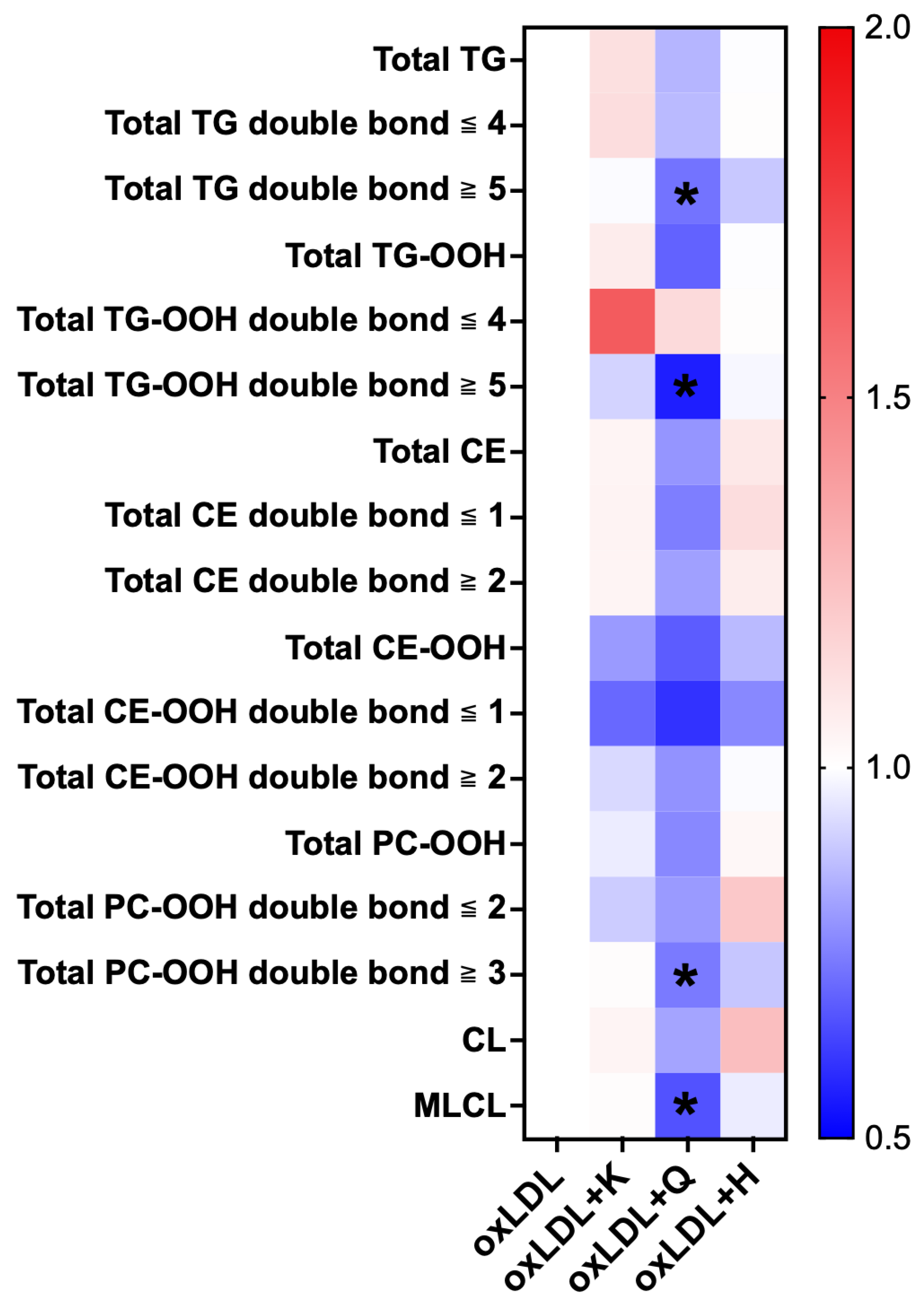
3.3. Prevention of Oxidized Lipid Droplet Formation in Each Antioxidant-Supplemented C3A Cells
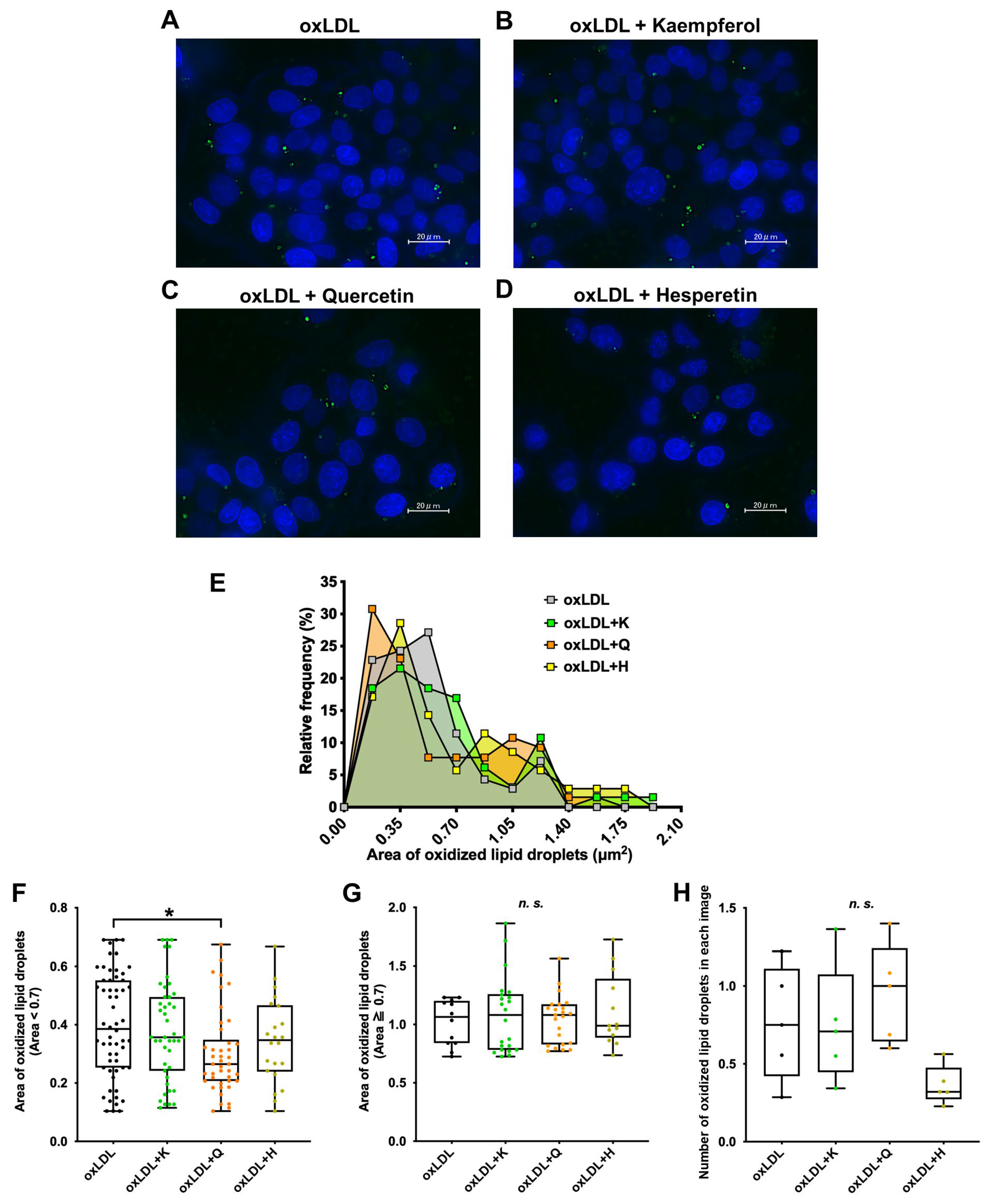
3.4. Evaluation of Oxidized Lipid Droplets Using Fluorescence Microscopy
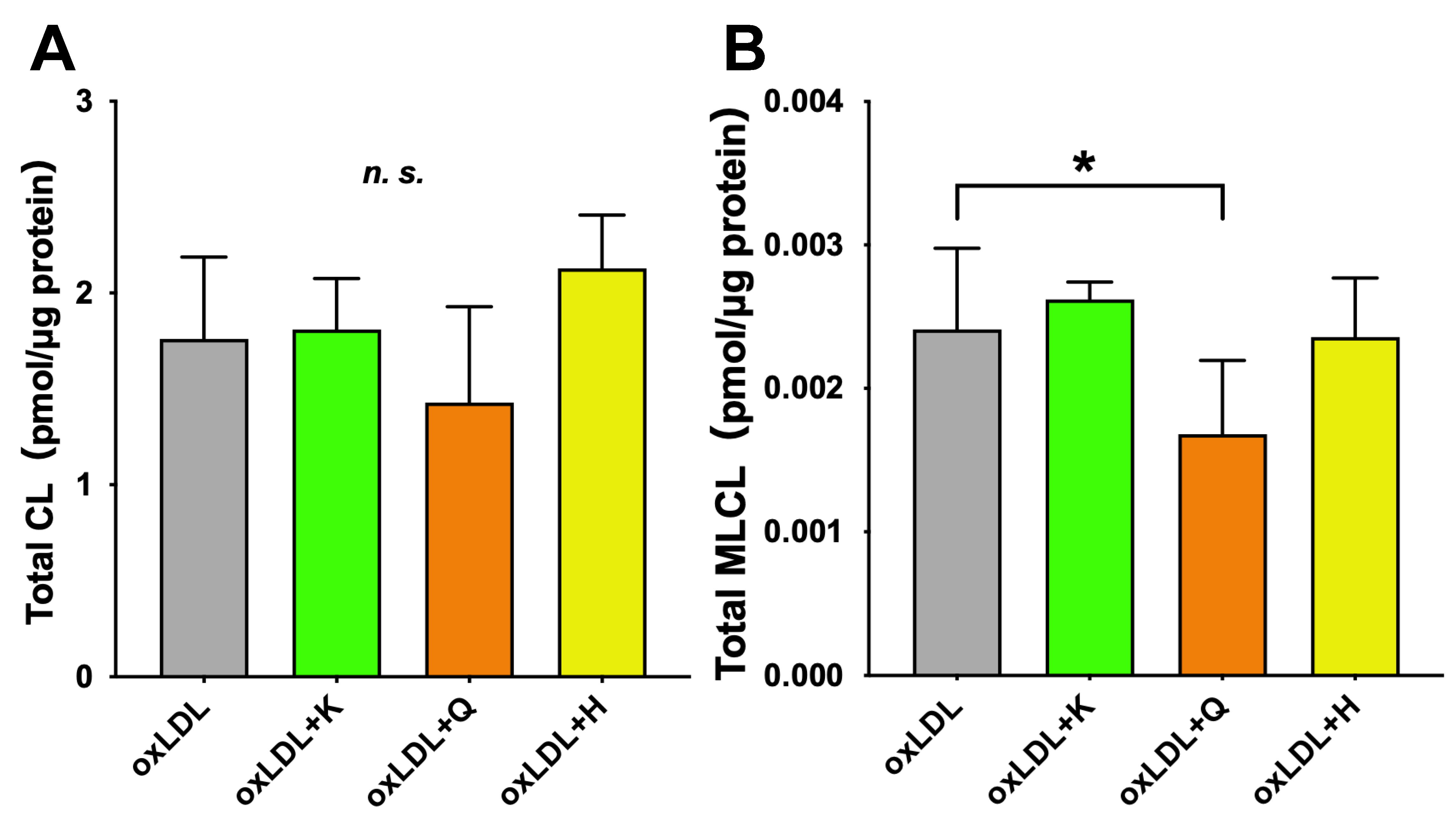
3.5. Effect of Antioxidants on Improving Mitochondrial Membrane Lipids
4. Discussion
5. Conclusions
Supplementary Materials
Author Contributions
Funding
Institutional Review Board Statement
Informed Consent Statement
Data Availability Statement
Acknowledgments
Conflicts of Interest
Abbreviations
| CL | cardiolipin |
| MASLD | metabolic dysfunction-associated steatotic liver disease |
| oxLDL | oxidized low-density lipoprotein |
| NAFLD/NASH | nonalcoholic fatty liver disease/hepatitis |
| MLCL | monolysocardiolipin |
| D-PBS | Dulbecco’s PBS |
| FBS | fetal bovine serum |
| IS | internal standard |
| TG | triglycerides |
| CE | cholesteryl esters |
| PC | phosphatidylcholine |
| LC-MS/MS | liquid chromatography-tandem mass spectrometry |
| GPx4 | glutathione peroxidase 4 |
References
- Miao, L.; Targher, G.; Byrne, C.D.; Cao, Y.Y.; Zheng, M.H. Current status and future trends of the global burden of MASLD. Trends Endocrinol. Metab. 2024, 35, 697–707. [Google Scholar] [CrossRef]
- Younossi, Z.M.; Kalligeros, M.; Henry, L. Epidemiology of metabolic dysfunction-associated steatotic liver disease. Clin. Mol. Hepatol. 2025, 31, S32–S50. [Google Scholar] [CrossRef]
- Kan, C.; Zhang, K.; Wang, Y.; Zhang, X.; Liu, C.; Ma, Y.; Hou, N.; Huang, N.; Han, F.; Sun, X. Global burden and future trends of metabolic dysfunction-associated Steatotic liver disease: 1990–2021 to 2045. Ann. Hepatol. 2025, 30, 101898. [Google Scholar] [CrossRef]
- Rinella, M.E.; Lazarus, J.V.; Ratziu, V.; Francque, S.M.; Sanyal, A.J.; Kanwal, F.; Romero, D.; Abdelmalek, M.F.; Anstee, Q.M.; Arab, J.P.; et al. A multisociety Delphi consensus statement on new fatty liver disease nomenclature. Hepatology 2023, 78, 1966–1986. [Google Scholar] [CrossRef] [PubMed]
- Sanyal, A.J.; Campbell-Sargent, C.; Mirshahi, F.; Rizzo, W.B.; Contos, M.J.; Sterling, R.K.; Luketic, V.A.; Shiffman, M.L.; Clore, J.N. Nonalcoholic steatohepatitis: Association of insulin resistance and mitochondrial abnormalities. Gastroenterology 2001, 120, 1183–1192. [Google Scholar] [CrossRef]
- Wu, Y.; Chen, Z.; Fuda, H.; Tsukui, T.; Wu, X.; Shen, N.; Saito, N.; Chiba, H.; Hui, S.P. Oxidative stress linked organ lipid hydroperoxidation and dysregulation in mouse model of nonalcoholic steatohepatitis: Revealed by lipidomic profiling of liver and kidney. Antioxidants 2021, 10, 1602. [Google Scholar] [CrossRef] [PubMed]
- Yimin; Furumaki, H.; Matsuoka, S.; Sakurai, T.; Kohanawa, M.; Zhao, S.; Kuge, Y.; Tamaki, N.; Chiba, H. A novel murine model for non-alcoholic steatohepatitis developed by combination of a high-fat diet and oxidized low-density lipoprotein. Lab. Investig. 2012, 92, 265–281. [Google Scholar] [CrossRef] [PubMed]
- Sazaki, I.; Sakurai, T.; Yamahata, A.; Mogi, S.; Inoue, N.; Ishida, K.; Kikkai, A.; Takeshita, H.; Sakurai, A.; Takahashi, Y.; et al. Oxidized low-density lipoproteins trigger hepatocellular oxidative stress with the formation of cholesteryl ester hydroperoxide-enriched lipid droplets. Int. J. Mol. Sci. 2023, 24, 4281. [Google Scholar] [CrossRef]
- Zhang, Y.; Wei, H.; Wang, M.; Yu, Y.; Gu, M.; Zhong, H.; Dong, S. Dexmedetomidine alleviates ferroptosis following hepatic ischemia-reperfusion injury by upregulating Nrf2/GPx4-dependent antioxidant responses. Biomed. Pharmacother. 2023, 169, 115915. [Google Scholar] [CrossRef]
- Joko, S.; Watanabe, M.; Fuda, H.; Takeda, S.; Furukawa, T.; Hui, S.P.; Shrestha, R.; Chiba, H. Comparison of chemical structures and cytoprotection abilities between direct and indirect antioxidants. J. Funct. Foods 2017, 35, 245–255. [Google Scholar] [CrossRef]
- Li, J.; Wang, T.; Liu, P.; Yang, F.; Wang, X.; Zheng, W.; Sun, W. Hesperetin ameliorates hepatic oxidative stress and inflammation via the PI3K/AKT-Nrf2-ARE pathway in oleic acid-induced HepG2 cells and a rat model of high-fat diet-induced NAFLD. Food Funct. 2021, 12, 3898–3918. [Google Scholar] [CrossRef] [PubMed]
- Tie, F.; Ding, J.; Hu, N.; Dong, Q.; Chen, Z.; Wang, H. Kaempferol and kaempferide attenuate oleic acid-induced lipid accumulation and oxidative stress in HepG2 cells. Int. J. Mol. Sci. 2021, 22, 8847. [Google Scholar] [CrossRef]
- Ramyaa, P.; Krishnaswamy, R.; Padma, V.V. Quercetin modulates OTA-induced oxidative stress and redox signalling in HepG2 cells—Up regulation of Nrf2 expression and down regulation of NF-κB and COX-2. Biochim. Biophys. Acta 2014, 1840, 681–692. [Google Scholar] [CrossRef]
- Bhagwat, S.; Haytowitz, B.D. USDA Database for the Flavonoid Content of Selected Foods; (release 3.3, March 2018) [Dataset]; Nutrient Data Laboratory, Beltsville Human Nutrition Research Center, ARS, USDA: Beltsville, MD, USA, 2022. Available online: http://www.ars.usda.gov/nutrientdata/flav (accessed on 20 February 2026).
- DuPont, M.S.; Day, A.J.; Bennett, R.N.; Mellon, F.A.; Kroon, P.A. Absorption of kaempferol from endive, a source of kaempferol-3-glucuronide, in humans. Eur. J. Clin. Nutr. 2004, 58, 947–954. [Google Scholar] [CrossRef] [PubMed]
- Day, A.J.; Mellon, F.; Barron, D.; Sarrazin, G.; Morgan, M.R.; Williamson, G. Human metabolism of dietary flavonoids: Identification of plasma metabolites of quercetin. Free Radic. Res. 2001, 35, 941–952. [Google Scholar] [CrossRef]
- Brett, G.M.; Hollands, W.; Needs, P.W.; Teucher, B.; Dainty, J.R.; Davis, B.D.; Brodbelt, J.S.; Kroon, P.A. Absorption, metabolism and excretion of flavanones from single portions of orange fruit and juice and effects of anthropometric variables and contraceptive pill use on flavanone excretion. Br. J. Nutr. 2009, 101, 664–675. [Google Scholar] [CrossRef] [PubMed]
- O’Leary, K.A.; Day, A.J.; Needs, P.W.; Sly, W.S.; O’Brien, N.M.; Williamson, G. Flavonoid glucuronides are substrates for human liver β-glucuronidase. FEBS Lett. 2001, 503, 103–106. [Google Scholar] [CrossRef]
- Steinberg, G.R.; Valvano, C.M.; De Nardo, W.; Watt, M.J. Integrative metabolism in MASLD and MASH: Pathophysiology and emerging mechanisms. J. Hepatol. 2025, 83, 584–595. [Google Scholar] [CrossRef]
- Chicco, A.J.; Sparagna, G.C. Role of cardiolipin alterations in mitochondrial dysfunction and disease. Am. J. Physiol. Cell Physiol. 2007, 292, C33–C44. [Google Scholar] [CrossRef]
- Pennington, E.R.; Funai, K.; Brown, D.A.; Shaikh, S.R. The role of cardiolipin concentration and acyl chain composition on mitochondrial inner membrane molecular organization and function. Biochim. Biophys. Acta Mol. Cell Biol. Lipids 2019, 1864, 1039–1052. [Google Scholar] [CrossRef]
- Sakurai, T.; Chen, Z.; Yamahata, A.; Hayasaka, T.; Satoh, H.; Sekiguchi, H.; Chiba, H.; Hui, S.P. A mouse model of short-term, diet-induced fatty liver with abnormal cardiolipin remodeling via downregulated tafazzin gene expression. J. Sci. Food Agric. 2021, 101, 4995–5001. [Google Scholar] [CrossRef]
- Duncan, A.L. Monolysocardiolipin (MLCL) interactions with mitochondrial membrane proteins. Biochem. Soc. Trans. 2020, 48, 993–1004. [Google Scholar] [CrossRef]
- Sun, X.; Yu, Q.; Qi, Y.; Kang, B.; Zhao, X.; Liu, L.; Wang, P.; Cong, M.; Liu, T. Peridroplet mitochondria are associated with the severity of MASLD and the prevention of MASLD by diethyldithiocarbamate. J. Lipid Res. 2024, 65, 100590. [Google Scholar] [CrossRef]
- Markwell, M.A.; Haas, S.M.; Bieber, L.L.; Tolbert, N.E. A modification of the Lowry procedure to simplify protein determination in membrane and lipoprotein samples. Anal. Biochem. 1978, 87, 206–210. [Google Scholar] [CrossRef] [PubMed]
- Folch, J.; Lees, M.; Sloane Stanley, G.H.S. A simple method for the isolation and purification of total lipides from animal tissues. J. Biol. Chem. 1957, 226, 497–509. [Google Scholar] [CrossRef]
- Sakurai, A.; Sakurai, T.; Ho, H.J.; Chiba, H.; Hui, S.P. Kaempferol improves cardiolipin and ATP in hepatic cells: A cellular model perspective in the context of metabolic dysfunction-associated steatotic liver disease. Nutrients 2024, 16, 508. [Google Scholar] [CrossRef]
- van Werkhoven, M.A.; Thorburn, D.R.; Gedeon, A.K.; Pitt, J.J. Monolysocardiolipin in cultured fibroblasts is a sensitive and specific marker for Barth syndrome. J. Lipid Res. 2006, 47, 2346–2351. [Google Scholar] [CrossRef]
- Takayama, F.; Egashira, T.; Kudo, Y.; Yamanaka, Y. Effects of anti-free radical interventions on phosphatidylcholine hydroperoxide in plasma after ischemia-reperfusion in the liver of rats. Biochem. Pharmacol. 1993, 46, 1749–1757. [Google Scholar] [CrossRef] [PubMed]
- Jeong, H.J.; Picou, C.; Jeong, K.; Chung, J.K. Oxidation kinetics of fluorescent membrane lipid peroxidation indicators. ACS Chem. Biol. 2024, 19, 1786–1793. [Google Scholar] [CrossRef] [PubMed]
- Tsukui, T.; Chen, Z.; Fuda, H.; Furukawa, T.; Oura, K.; Sakurai, T.; Hui, S.P.; Chiba, H. Novel fluorescence-based method to characterize the antioxidative effects of food metabolites on lipid droplets in cultured hepatocytes. J. Agric. Food Chem. 2019, 67, 9934–9941. [Google Scholar] [CrossRef]
- Piao, D.; Ritchey, J.W.; Holyoak, G.R.; Wall, C.R.; Sultana, N.; Murray, J.K.; Bartels, K.E. In vivo percutaneous reflectance spectroscopy of fatty liver development in rats suggests that the elevation of the scattering power is an early indicator of hepatic steatosis. J. Innov. Opt. Health Sci. 2018, 11, 1850019. [Google Scholar] [CrossRef]
- de Almeida, M.E.; Nielsen, J.; Petersen, M.H.; Wentorf, E.K.; Pedersen, N.B.; Jensen, K.; Højlund, K.; Ørtenblad, N. Altered intramuscular network of lipid droplets and mitochondria in type 2 diabetes. Am. J. Physiol. Cell Physiol. 2023, 324, C39–C57. [Google Scholar] [CrossRef]
- de Almeida, M.E.; Ørtenblad, N.; Petersen, M.H.; Schjerning, A.N.; Wentorf, E.K.; Jensen, K.; Højlund, K.; Nielsen, J. Acute exercise increases the contact between lipid droplets and mitochondria independently of obesity and type 2 diabetes. J. Physiol. 2023, 601, 1797–1815. [Google Scholar] [CrossRef]
- Su, L.; Zeng, Y.; Li, G.; Chen, J.; Chen, X. Quercetin improves high-fat diet-induced obesity by modulating gut microbiota and metabolites in C57BL/6J mice. Phytother. Res. 2022, 36, 4558–4572. [Google Scholar] [CrossRef] [PubMed]
- Zhao, J.; Sun, Y.; Yuan, C.; Li, T.; Liang, Y.; Zou, H.; Zhang, J.; Ren, L. Quercetin ameliorates hepatic fat accumulation in high-fat diet-induced obese mice via PPARs. Food Funct. 2023, 14, 1674–1684. [Google Scholar] [CrossRef] [PubMed]
- Seo, Y.S.; Kang, O.H.; Kim, S.B.; Mun, S.H.; Kang, D.H.; Yang, D.W.; Choi, J.G.; Lee, Y.M.; Kang, D.K.; Lee, H.S.; et al. Quercetin prevents adipogenesis by regulation of transcriptional factors and lipases in OP9 cells. Int. J. Mol. Med. 2015, 35, 1779–1785. [Google Scholar] [CrossRef]
- Kato, C.; Suzuki, Y.; Parida, I.S.; Kato, S.; Yamasaki, H.; Takekoshi, S.; Nakagawa, K. Possible glutathione peroxidase 4-independent reduction of phosphatidylcholine hydroperoxide: Its relevance to ferroptosis. J. Oleo Sci. 2022, 71, 1689–1694. [Google Scholar] [CrossRef]
- Sattler, W.; Maiorino, M.; Stocker, R. Reduction of HDL- and LDL-associated Cholesterylester and phospholipid hydroperoxides by phospholipid hydroperoxide glutathione peroxidase and ebselen (PZ 51). Arch. Biochem. Biophys. 1994, 309, 214–221. [Google Scholar] [CrossRef]
- Thomas, J.P.; Geiger, P.G.; Maiorino, M.; Ursini, F.; Girotti, A.W. Enzymatic reduction of phospholipid and cholesterol hydroperoxides in artificial bilayers and lipoproteins. Biochim. Biophys. Acta 1990, 1045, 252–260. [Google Scholar] [CrossRef]
- Cozza, G.; Rossetto, M.; Bosello-Travain, V.; Maiorino, M.; Roveri, A.; Toppo, S.; Zaccarin, M.; Zennaro, L.; Ursini, F. Glutathione peroxidase 4-catalyzed reduction of lipid hydroperoxides in membranes: The polar head of membrane phospholipids binds the enzyme and addresses the fatty acid hydroperoxide group toward the redox center. Free Radic. Biol. Med. 2017, 112, 1–11. [Google Scholar] [CrossRef] [PubMed]
- Wang, Y.; Quan, F.; Cao, Q.; Lin, Y.; Yue, C.; Bi, R.; Cui, X.; Yang, H.; Yang, Y.; Birnbaumer, L.; et al. Quercetin alleviates acute kidney injury by inhibiting ferroptosis. J. Adv. Res. 2021, 28, 231–243. [Google Scholar] [CrossRef]
- Hoffmann, B.; Stöckl, A.; Schlame, M.; Beyer, K.; Klingenberg, M. The reconstituted ADP/ATP carrier activity has an absolute requirement for cardiolipin as shown in cysteine mutants. J. Biol. Chem. 1994, 269, 1940–1944. [Google Scholar] [CrossRef] [PubMed]
- Rafiei, H.; Omidian, K.; Bandy, B. Dietary polyphenols protect against oleic acid-induced steatosis in an in vitro model of NAFLD by modulating lipid metabolism and improving mitochondrial function. Nutrients 2019, 11, 541. [Google Scholar] [CrossRef] [PubMed]
- Egert, S.; Wolffram, S.; Bosy-Westphal, A.; Boesch-Saadatmandi, C.; Wagner, A.E.; Frank, J.; Rimbach, G.; Mueller, M.J. Daily quercetin supplementation dose-dependently increases plasma quercetin concentrations in healthy humans. J. Nutr. 2008, 138, 1615–1621. [Google Scholar] [CrossRef] [PubMed]
- Cunningham, P.; Patton, E.; VanderVeen, B.N.; Unger, C.; Aladhami, A.; Enos, R.T.; Madero, S.; Chatzistamou, I.; Fan, D.; Murphy, E.A.; et al. Sub-chronic oral toxicity screening of quercetin in mice. BMC Complement. Med. Ther. 2022, 22, 279. [Google Scholar] [CrossRef]


Disclaimer/Publisher’s Note: The statements, opinions and data contained in all publications are solely those of the individual author(s) and contributor(s) and not of MDPI and/or the editor(s). MDPI and/or the editor(s) disclaim responsibility for any injury to people or property resulting from any ideas, methods, instructions or products referred to in the content. |
© 2026 by the authors. Licensee MDPI, Basel, Switzerland. This article is an open access article distributed under the terms and conditions of the Creative Commons Attribution (CC BY) license.
Share and Cite
Shibata, Y.; Sakurai, T.; Sakurai, A.; Sato, M.; Hui, S.-P. Development of a Lipidomics-Based Cell Screening Platform for Indirect Antioxidants Targeting Oxidized Lipid Droplet Formation and Mitochondrial Membrane Abnormality. Nutrients 2026, 18, 719. https://doi.org/10.3390/nu18050719
Shibata Y, Sakurai T, Sakurai A, Sato M, Hui S-P. Development of a Lipidomics-Based Cell Screening Platform for Indirect Antioxidants Targeting Oxidized Lipid Droplet Formation and Mitochondrial Membrane Abnormality. Nutrients. 2026; 18(5):719. https://doi.org/10.3390/nu18050719
Chicago/Turabian StyleShibata, Yuzu, Toshihiro Sakurai, Akiko Sakurai, Misuzu Sato, and Shu-Ping Hui. 2026. "Development of a Lipidomics-Based Cell Screening Platform for Indirect Antioxidants Targeting Oxidized Lipid Droplet Formation and Mitochondrial Membrane Abnormality" Nutrients 18, no. 5: 719. https://doi.org/10.3390/nu18050719
APA StyleShibata, Y., Sakurai, T., Sakurai, A., Sato, M., & Hui, S.-P. (2026). Development of a Lipidomics-Based Cell Screening Platform for Indirect Antioxidants Targeting Oxidized Lipid Droplet Formation and Mitochondrial Membrane Abnormality. Nutrients, 18(5), 719. https://doi.org/10.3390/nu18050719