Current Concepts in Probiotic Safety and Efficacy


Abstract
1. Introduction
2. Regulatory Framework for Probiotics
2.1. International Experience
2.2. Regulatory Framework of the Russian Federation
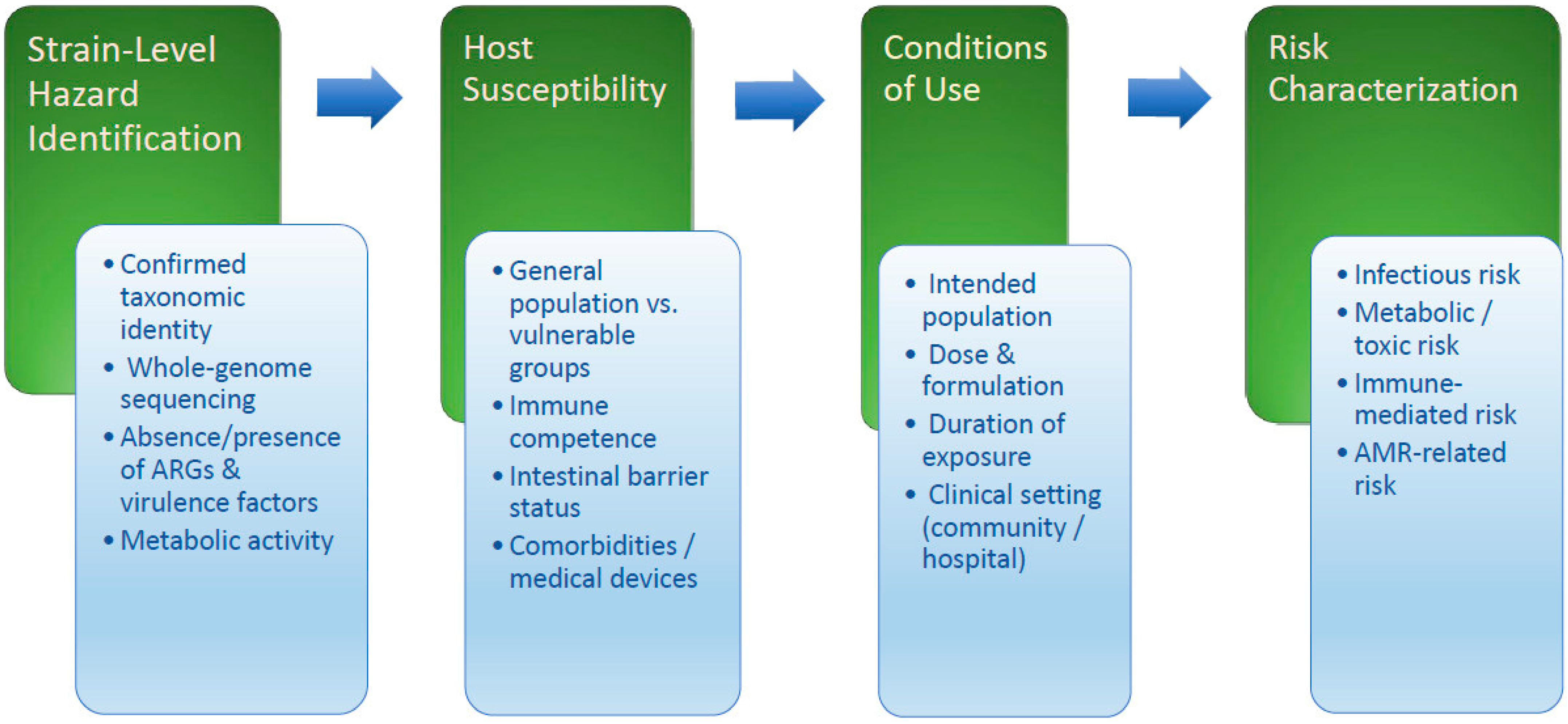
3. Safety, Toxicity and Other Risks Associated with Probiotics
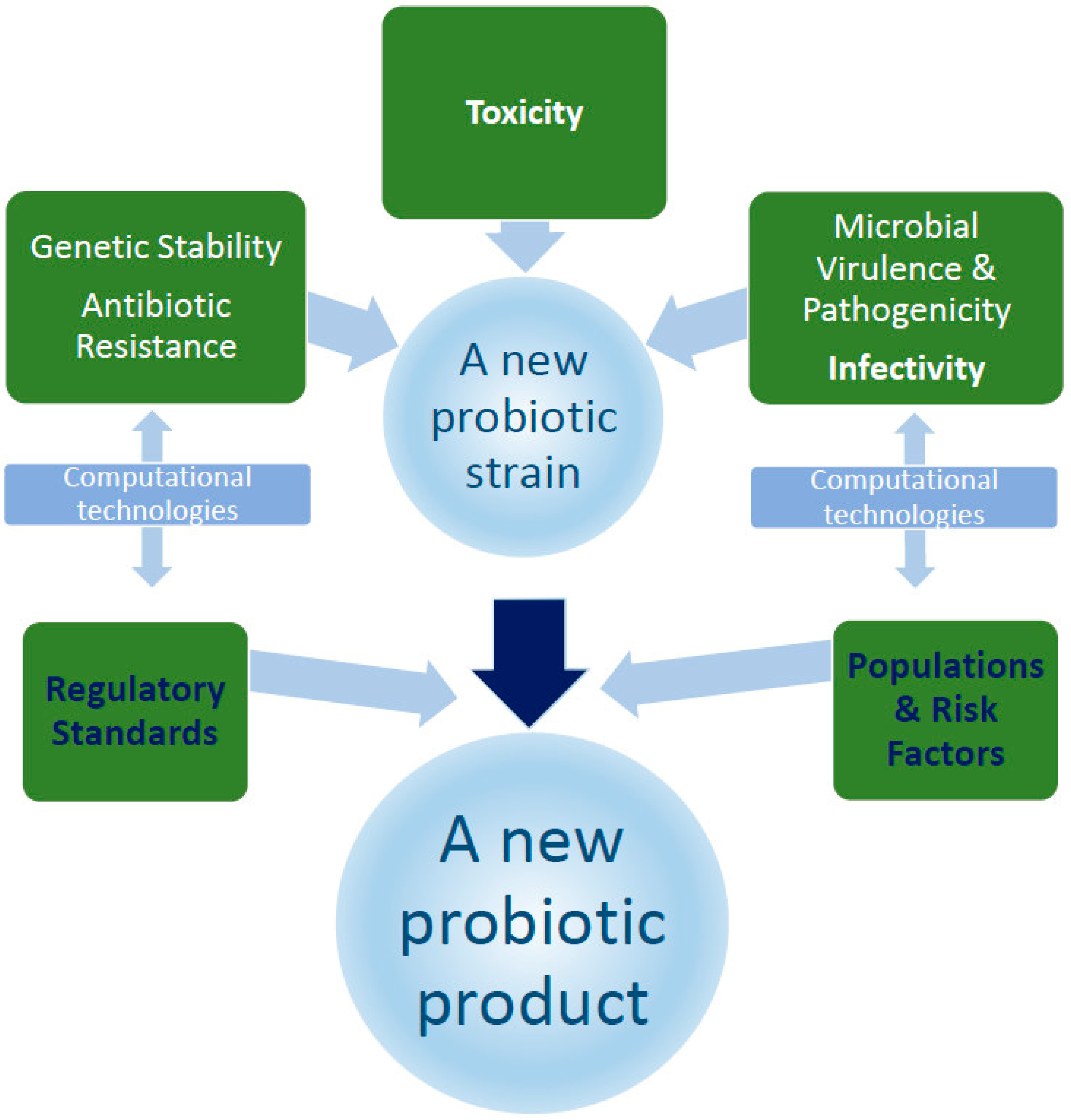
4. Computational Technologies in the Development of New Probiotics
5. Conclusions
Author Contributions
Funding
Institutional Review Board Statement
Data Availability Statement
Conflicts of Interest
References
- Petrova, P.; Ivanov, I.; Tsigoriyna, L.; Valcheva, N.; Vasileva, E.; Parvanova-Mancheva, T.; Arsov, A.; Petrov, K. Traditional Bulgarian dairy products: Ethnic foods with health benefits. Microorganisms 2021, 9, 480. [Google Scholar] [CrossRef] [Scilit] [PubMed]
- Tribby, D.; Teter, V. Yogurt. In The Sensory Evaluation of Dairy Products; Springer International Publishing: Cham, Switzerland, 2023; pp. 199–234. [Google Scholar] [CrossRef] [Scilit]
- Mackowiak, P.A. Recycling Metchnikoff: Probiotics, the intestinal microbiome and the quest for long life. Front. Public Health 2013, 1, 52. [Google Scholar] [CrossRef] [Scilit] [PubMed]
- Yunes, R.A.; Poluektova, E.U.; Belkina, T.V.; Danilenko, V.N. Danilenko VN Lactobacilli: Legal regulation and prospects for new generation drugs. Appl. Biochem. Microbiol. 2022, 58, 652–664. [Google Scholar] [CrossRef] [Scilit]
- Heavey, M.K.; Durmusoglu, D.; Crook, N.; Anselmo, A.C. Discovery and delivery strategies for engineered live biotherapeutic products. Trends Biotechnol. 2022, 40, 354–369. [Google Scholar] [CrossRef] [Scilit] [PubMed]
- Ivashkin, V.T.; Maev, I.V.; Abdulganieva, D.I. Practical recommendations of the Scientific Community for the Promotion of Clinical Study of the Human Microbiome (SCSCHM) and the Russian Gastroenterological Association (RGA) on the use of probiotics, prebiotics, synbiotics and functional foods enriched with them for the treatment and prevention of gastrointestinal diseases in children and adults. Russ. J. Gastroenterol. Hepatol. Proctol. 2021, 31, 65–91. [Google Scholar] [CrossRef] [Scilit]
- Kornienko, E.A. Probiotics, postbiotics and paraprobiotics. Exp. Clin. Gastroenterol. 2022, 9, 240–250. [Google Scholar] [CrossRef] [Scilit]
- Al-Yami, A.M.; Al-Mousa, A.T.; Al-Otaibi, S.A.; Khalifa, A.Y. Lactobacillus species as probiotics: Isolation sources and health benefits. J. Pure Appl. Microbiol. 2022, 16, 1761–1770. [Google Scholar] [CrossRef] [Scilit]
- Ağagündüz, D.; Gençer Bingöl, F.; Çelik, E.; Cemali, Ö.; Özenir, Ç.; Özoğul, F.; Capasso, R. Recent developments in the probiotics as live biotherapeutic products (LBPs) as modulators of gut brain axis related neurological conditions. J. Transl. Med. 2022, 20, 460. [Google Scholar] [CrossRef] [Scilit]
- Średnicka, P.; Juszczuk-Kubiak, E.; Wójcicki, M.; Akimowicz, M.; Roszko, M. Probiotics as a biological detoxification tool of food chemical contamination: A review. Food Chem. Toxicol. 2021, 153, 112306. [Google Scholar] [CrossRef] [Scilit]
- Sachdeva, A.; Tomar, T.; Malik, T.; Bains, A.; Karnwal, A. Exploring probiotics as a sustainable alternative to antimicrobial growth promoters: Mechanisms and benefits in animal health. Front. Sustain. Food Syst. 2025, 8, 1523678. [Google Scholar] [CrossRef] [Scilit]
- Pyo, Y.; Kwon, K.H.; Jung, Y.J. Probiotic functions in fermented foods: Anti-viral, immunomodulatory, and anti-cancer benefits. Foods 2024, 13, 2386. [Google Scholar] [CrossRef] [Scilit]
- Oelschlaeger, T.A. Mechanisms of probiotic actions–a review. Int. J. Med. Microbiol. 2010, 300, 57–62. [Google Scholar] [CrossRef] [Scilit]
- Liu, P.C.; Yan, Y.K.; Ma, Y.J.; Wang, X.W.; Geng, J.; Wang, M.C.; Wei, F.X.; Zhang, Y.W.; Xu, X.D.; Zhang, Y.C. Probiotics reduce postoperative infections in patients undergoing colorectal surgery: A systematic review and meta-analysis. Gastroenterol. Res. Pract. 2017, 2017, 6029075. [Google Scholar] [CrossRef] [Scilit] [PubMed]
- Tenorio-Jiménez, C.; Martínez-Ramírez, M.J.; Gil, Á.; Gómez-Llorente, C. Effects of probiotics on metabolic syndrome: A systematic review of randomized clinical trials. Nutrients 2020, 12, 124. [Google Scholar] [CrossRef] [Scilit] [PubMed]
- Zavišić, G.; Ristić, S.; Petković, B.; Živkov-Šaponja, D.; Jojić, N.; Janković, D. Microbiological quality of probiotic products. Arh. Za Farm. 2023, 73, 17–34. [Google Scholar] [CrossRef] [Scilit]
- Sarita, B.; Samadhan, D.; Hassan, M.Z.; Kovaleva, E.G. A comprehensive review of probiotics and human health-current prospective and applications. Front. Microbiol. 2025, 15, 1487641. [Google Scholar] [CrossRef] [Scilit]
- Bezkorovainy, A. Probiotics: Determinants of survival and growth in the gut. Am. J. Clin. Nutr. 2001, 73, 399s–405s. [Google Scholar] [CrossRef] [Scilit]
- Sanders, M.E.; Akkermans, L.M.A.; Haller, D.; Hammerman, C.; Heimbach, J.; Hörmannsperger, G.; Huys, G.; Levy, D.D.; Lutgendorff, F.; Mack, D.; et al. Safety assessment of probiotics for human use. Gut Microbes 2010, 1, 164–185. [Google Scholar] [CrossRef] [Scilit]
- Merenstein, D.; Pot, B.; Leyer, G.; Ouwehand, A.C.; Preidis, G.A.; Elkins, C.A.; Hill, C.; Lewis, Z.T.; Shane, A.L.; Zmora, N.; et al. Emerging issues in probiotic safety: 2023 perspectives. Gut Microbes 2023, 15, 2185034. [Google Scholar] [CrossRef] [Scilit]
- Hua, Z.; Liu, S.; Yang, G.; Hou, X.; Fang, Y. Next-generation probiotics: Innovations in safety assessments. Curr. Opin. Food Sci. 2025, 61, 101238. [Google Scholar] [CrossRef] [Scilit]
- Abouelela, M.E.; Helmy, Y.A. Next-generation probiotics as novel therapeutics for improving human health: Current trends and future perspectives. Microorganisms 2024, 12, 430. [Google Scholar] [CrossRef] [Scilit]
- Al-Fakhrany, O.M.; Elekhnawy, E. Next-generation probiotics: The upcoming biotherapeutics. Mol. Biol. Rep. 2024, 51, 505. [Google Scholar] [CrossRef] [Scilit]
- Thilagavathi, T. Probiotics, prebiotics, synbiotics and its health benefits. Int. J. Curr. Microbiol. Appl. Sci. 2020, 9, 497–511. [Google Scholar] [CrossRef] [Scilit]
- Salminen, S.; Collado, M.C.; Endo, A.; Hill, C.; Lebeer, S.; Quigley, E.M.; Sanders, M.E.; Shamir, R.; Swann, J.R.; Szajewska, H.; et al. The International Scientific Association of Probiotics and Prebiotics (ISAPP) consensus statement on the definition and scope of postbiotics. Nat. Rev. Gastroenterol. Hepatol. 2021, 18, 649–667. [Google Scholar] [CrossRef] [Scilit]
- Mafe, A.N.; Sharifi-Rad, J.; Calina, D.; Ogunyemi, A.J.; Tubi, A.O. Postbiotics in Functional Foods: Microbial Derivatives Shaping Health, Immunity and Next-Generation Nutrition. Food Front. 2026, 7, e70205. [Google Scholar] [CrossRef] [Scilit]
- Woźniak, A.; Dorotkiewicz-Jach, A.; Brzychczy-Włoch, M. Understanding Probiotics, Prebiotics, Synbiotics, and Postbiotics: A Comprehensive Review of the Newest Definitions, Selected Strains and Products. Adv. Microbiol. 2025, 64, 160–181. [Google Scholar] [CrossRef] [Scilit]
- Sotoudegan, F.; Daniali, M.; Hassani, S.; Nikfar, S.; Abdollahi, M. Reappraisal of probiotics’ safety in human. Food Chem. Toxicol. 2019, 129, 22–29. [Google Scholar] [CrossRef] [Scilit]
- Spacova, I.; Binda, S.; ter Haar, J.A.; Henoud, S.; Legrain-Raspaud, S.; Dekker, J.; Espadaler-Mazo, J.; Langella, P.; Martín, R.; Pane, M.; et al. Comparing technology and regulatory landscape of probiotics as food, dietary supplements and live biotherapeutics. Front. Microbiol. 2023, 14, 1272754. [Google Scholar] [CrossRef] [Scilit] [PubMed]
- Cordaillat-Simmons, M.; Rouanet, A.; Pot, B. Live biotherapeutic products: The importance of a defined regulatory framework. Exp. Mol. Med. 2020, 52, 1397–1406. [Google Scholar] [CrossRef] [Scilit] [PubMed]
- EFSA Panel on Biological Hazards (BIOHAZ); Koutsoumanis, K.; Allende, A.; Alvarez-Ordóñez, A.; Bolton, D.; Bover-Cid, S.; Chemaly, M.; Davies, R.; De Cesare, A.; Hilbert, F.; et al. Scientific Opinion on the update of the list of QPS-recommended biological agents intentionally added to food or feed as notified to EFSA (2017–2019). EFSA J. 2020, 18, 5966. [Google Scholar] [CrossRef] [Scilit]
- European Food Safety Authority (EFSA). EFSA statement on the requirements for whole genome sequence analysis of microorganisms intentionally used in the food chain. EFSA J. 2021, 19, e06506. [Google Scholar] [CrossRef] [Scilit]
- Roe, A.L.; Boyte, M.E.; Elkins, C.A.; Goldman, V.S.; Heimbach, J.; Madden, E.; Oketch-Rabah, H.; Sanders, M.E.; Sirois, J.; Smith, A. Considerations for determining safety of probiotics: A USP perspective. Regul. Toxicol. Pharmacol. 2022, 136, 105266. [Google Scholar] [CrossRef] [Scilit]
- FAO. Probiotics in Food: Health and Nutritional Properties and Guidelines for Evaluation (Food and Agriculture Organization of the United Nations, Rome, 2006). Available online: https://openknowledge.fao.org/server/api/core/bitstreams/382476b3-4d54-4175-803f-2f26f3526256/content (accessed on 22 December 2025).
- Hill, C. Probiotics and pharmabiotics: Alternative medicine or an evidence-based alternative. Bioeng. Bugs 2010, 1, 79–84. [Google Scholar] [CrossRef] [Scilit]
- FDA. Early Clinical Trials with Live Biotherapeutic Products: Chemistry, Manufacturing, and Control Information. 2016. Available online: https://www.fda.gov/regulatory-information/search-fda-guidance-documents/early-clinical-trials-live-biotherapeutic-products-chemistry-manufacturing-and-control-information (accessed on 22 December 2025).
- European Pharmacopoeia Commission. 3053E General monograph on live biotherapeutic products. Eur. Pharmacopoeia 2019, 10. [Google Scholar]
- European Pharmacopoeia Commission. Microbiological examination of live biotherapeutic products: Test for specified microorganism (2.6.38). Eur. Pharmacopoeia 2019, 9, 6301–6305. [Google Scholar]
- Garg, V.; Velumani, D.; Lin, Y.C.; Haye, A. A comprehensive review of probiotic claim regulations: Updates from the Asia-Pacific regions, the United States, and Europe. PharmaNutrition 2024, 30, 100423. [Google Scholar] [CrossRef] [Scilit]
- Microbiome Therapeutics Innovation Group; Barberio, D. Navigating regulatory and analytical challenges in live biotherapeutic product development and manufacturing. Front. Microbiomes 2024, 3, 1441290. [Google Scholar] [CrossRef] [Scilit]
- NCCIH. Probiotics: Usefulness and Safety. NCCIH. 2025. Available online: https://www.nccih.nih.gov/health/probiotics-usefulness-and-safety (accessed on 22 December 2025).
- FDA. Microorganisms & Microbial-Derived Ingredients Used in Food. FDA, 2018. Available online: https://www.fda.gov/food/generally-recognized-safe-gras/microorganisms-microbial-derived-ingredients-used-food-partial-list (accessed on 22 December 2025).
- Tóth, A.G.; Csabai, I.; Judge, M.F.; Maróti, G.; Becsei, Á.; Spisák, S.; Solymosi, N. Mobile antimicrobial resistance genes in probiotics. Antibiotics 2021, 10, 1287. [Google Scholar] [CrossRef] [Scilit]
- Samperio, S.; Guzmán-Herrador, D.L.; May-Cuz, R.; Martín, M.C.; Álvarez, M.A.; Llosa, M. Conjugative DNA transfer from Escherichia coli to lactobacilli: Optimized protocols and evidence of transfer. Front. Microbiol. 2021, 12, 606629. [Google Scholar] [CrossRef] [Scilit] [PubMed]
- Directive 2001/83/EC of the European Parliament and of the Council of 6 November 2001 on the Community code relating to medicinal products for human use. Off. J. L 2001, 311, 0067–0128. Available online: https://eur-lex.europa.eu/eli/dir/2001/83/oj/eng (accessed on 22 December 2025).
- Regulation (EU) 2015/2283 of the European Parliament and of the Council of 25 November 2015 on novel foods. Off. J. Eur. Union L 2015, 327, 1–22. Available online: https://faolex.fao.org/docs/pdf/eur151053.pdf (accessed on 22 December 2025).
- Pot, B.; Vandenplas, Y. Factors that influence clinical efficacy of live biotherapeutic products. Eur. J. Med. Res. 2021, 26, 40. [Google Scholar] [CrossRef] [Scilit]
- ISAPP. ISAPP Position Statement on Minimum Criteria for Harmonizing Global Regulatory Approaches for Probiotics in Foods and Supplements. 2018. Available online: https://isappscience.org/wp-content/uploads/2018/10/summary-document-probiotics-criteria-ISAPP.pdf (accessed on 22 December 2025).
- EDQM. The European Directorate for the Quality of Medicines & HealthCare—EDQM. Live biotherapeutic products for human use 3053 monograph. Europ. Pharmacopoeia 2019, 9, 6522–6523.
- Paquet, J.-C.; Claus, S.P.; Cordaillat-Simmons, M.; Mazier, W.; Rawadi, G.; Rinaldi, L.; Elustondo, F.; Rouanet, A. Entering first-in-human clinical study with a single-strain live biotherapeutic product: Input and feedback gained from the EMA and the FDA. Front. Med. 2021, 8, 716266. [Google Scholar] [CrossRef] [Scilit] [PubMed]
- Franciosa, G.; Guida, S.; Gomez Miguel, M.J.; Von Hunolstein, C. Live biotherapeutic products and their regulatory framework in Italy and Europe. Ann. Ist. Super. Sanita 2023, 59, 56–67. [Google Scholar] [PubMed]
- Benefit-Risk Assessment in Drug Regulatory Decision-Making. FDA, 2018. Available online: https://www.fda.gov/files/about%20fda/published/Benefit-Risk-Assessment-in-Drug-Regulatory-Decision-Making.pdf (accessed on 22 December 2025).
- EFSA. Opinion of the Scientific Committee on a request from EFSA on the introduction of a Qualified Presumption of Safety (QPS) approach for assessment of selected microorganisms referred to EFSA. EFSA J. 2007, 5, 587. [Google Scholar] [CrossRef] [Scilit]
- Dickinson, A. History and overview of DSHEA. Fitoterapia 2011, 82, 5–10. [Google Scholar] [CrossRef] [Scilit]
- McGuffin, M.; Young, A.L. Premarket notifications of new dietary ingredients--a ten-year review. Food Drug Law J. 2004, 59, 229–244. [Google Scholar] [PubMed]
- European Commission. Regulation (EC) No. 1924/2006 of the European parliament and of the council of 20th December 2006 on nutrition and health claims made on foods. Off. J. Eur. Union L 2006, 404, 9–25. Available online: https://eur-lex.europa.eu/legal-content/EN/TXT/PDF/?uri=CELEX:32006R1924 (accessed on 22 December 2025).
- Hoffmann, D.E. Health claim regulation of probiotics in the USA and the EU: Is there a middle way? Benef. Microbes 2013, 4, 109–115. [Google Scholar] [CrossRef] [Scilit]
- Chieffi, D.; Fanelli, F.; Fusco, V. Legislation of probiotic foods and supplements. In Probiotics for Human Nutrition in Health and Disease; Academic Press: Cambridge, MA, USA, 2022; pp. 25–44. [Google Scholar] [CrossRef] [Scilit]
- Salminen, S.; Loveren, H. Probiotics and prebiotics: Health claim substantiation. Microb. Ecol. Health Dis. 2012, 23, 18568. [Google Scholar] [CrossRef] [Scilit]
- Rana, A.; Smriti. Probiotics: Mechanism of action and gastrointestinal health: Gut guardians: Unlocking the power of probiotics. J. Sci. Food Agric. 2025. Epub ahead of printing. [Google Scholar] [CrossRef] [Scilit]
- Kim, H.; Haque, M.A.; Razzak, M.A.; Jang, M.J.; Song, S.; Ku, S. Probiotic Development Strategy Centered on Stability and Regulatory Considerations. Compr. Rev. Food Sci. Food Saf. 2026, 25, e70320. [Google Scholar] [CrossRef] [Scilit]
- General pharmacopoeial article “Probiotics” OFS.1.7.1.0008.15. State Pharmacopoeia of the Russian Federation XIV edition. Moscow, 2018. Vol. 2. Available online: https://docs.rucml.ru/feml/pharma/v14/vol2/783/ (accessed on 22 December 2025).
- Doron, S.; Snydman, D.R. Risk and safety of probiotics. Clin. Infect. Dis. 2015, 60, S129–S134. [Google Scholar] [CrossRef] [Scilit]
- Rao, S.S.C.; Yu, S.; Tetangco, E.P.; Yan, Y. Probiotics can cause D-lactic acidosis and brain fogginess: Reply to Quigley et al. Clin. Transl. Gastroenterol. 2018, 9, e207. [Google Scholar] [CrossRef] [Scilit]
- Barbieri, F.; Tofalo, R.; Suzzi, G. Biogenic amine production by lactic acid bacteria: A review. Foods 2019, 8, 17. [Google Scholar] [CrossRef] [Scilit]
- Montassier, E.; Valdés-Mas, R.; Batard, E.; Zmora, N.; Dori-Bachash, M.; Suez, J.; Elinav, E. Probiotics impact the antibiotic resistance gene reservoir along the human GI tract in a person-specific and antibiotic-dependent manner. Nat. Microbiol. 2021, 6, 1361–1372. [Google Scholar] [CrossRef] [Scilit] [PubMed]
- Papp, M.; Solymosi, N. Review and comparison of antimicrobial resistance gene databases. Antibiotics 2022, 11, 339. [Google Scholar] [CrossRef] [Scilit] [PubMed]
- Karnachuk, O.V.; Beletsky, A.V.; Rakitin, A.L.; Ikkert, O.P.; Avakyan, M.R.; Zyusman, V.S.; Mardanov, A.V.; Ravin, N.V. Antibiotic-resistant Desulfovibrio produces H2S from supplements for animal farming. Microorganisms 2023, 11, 838. [Google Scholar] [CrossRef] [Scilit] [PubMed]
- O’Brien, J.; Crittenden, R.; Ouwehand, A.C.; Salminen, S. Safety evaluation of probiotics. Trends Food Sci. Technol. 1999, 10, 418–424. [Google Scholar] [CrossRef] [Scilit]
- Das, U.; Mehra, R.K.; Mandal, S.; Ashique, S.; Kumar, S.; Farid, A.; Hussain, A.; Mishra, N.; Faiyazuddin, M.D.; Taghizadeh-Hesary, F. Toxicology of probiotics: Challenges and future prospects. In The Role of Probiotics in Cancer Management; Apple Academic Press: Palm Bay, FL, USA, 2025; pp. 379–428. [Google Scholar] [CrossRef] [Scilit]
- Jones, M.L.; Martoni, C.J.; Di Pietro, E.; Simon, R.R.; Prakash, S. Evaluation of clinical safety and tolerance of a Lactobacillus reuteri NCIMB 30242 supplement capsule: A randomized control trial. Regul. Toxicol. Pharmacol. 2012, 63, 313–320. [Google Scholar] [CrossRef] [Scilit]
- Tremblay, A.; Fatani, A.; Ford, A.L.; Piano, A.; Nagulesapillai, V.; Auger, J.; MacPherson, C.W.; Christman, M.C.; Tompkins, T.A.; Dahl, W.J. Safety and effect of a low-and high-dose multi-strain probiotic supplement on microbiota in a general adult population: A randomized, double-blind, placebo-controlled study. J. Diet. Suppl. 2021, 18, 227–247. [Google Scholar] [CrossRef] [Scilit] [PubMed]
- Whelan, K.; Myers, C.E. Safety of probiotics in patients receiving nutritional support: A systematic review of case reports, randomized controlled trials, and nonrandomized trials. Am. J. Clin. Nutr. 2010, 91, 687–703. [Google Scholar] [CrossRef] [Scilit] [PubMed]
- Costa, R.L.; Moreira, J.; Lorenzo, A.; Lamas, C.C. Infectious complications following probiotic ingestion: A potentially underestimated problem? A systematic review of reports and case series. BMC Complement. Altern. Med. 2018, 18, 329. [Google Scholar] [CrossRef] [Scilit] [PubMed]
- Mikucka, A.; Deptuła, A.; Bogiel, T.; Chmielarczyk, A.; Nurczyńska, E.; Gospodarek-Komkowska, E. Bacteraemia caused by probiotic strains of Lacticaseibacillus rhamnosus—Case studies highlighting the need for careful thought before using microbes for health benefits. Pathogens 2022, 11, 977. [Google Scholar] [CrossRef] [Scilit]
- Whelan, K.; Myers, C. Safety of probiotics in patients receiving enteral or parenteral nutrition: A systematic review of trials and case reports. Proc. Nutr. Soc. 2009, 68, E4. [Google Scholar] [CrossRef] [Scilit]
- Cohen, P.A. Probiotic safety—No guarantees. JAMA Intern. Med. 2018, 178, 1577–1578. [Google Scholar] [CrossRef] [Scilit]
- Bafeta, A.; Koh, M.; Riveros, C.; Ravaud, P. Harms reporting in randomized controlled trials of interventions aimed at modifying microbiota: A systematic review. Ann. Intern. Med. 2018, 169, 240–247. [Google Scholar] [CrossRef] [Scilit]
- Anadón, A.; Martínez-Larrañaga, M.R.; Ares, I.; Martínez, M.A. Probiotics: Safety and toxicity considerations. In Nutraceuticals; Academic Press: Cambridge, MA, USA, 2016; pp. 777–798. [Google Scholar] [CrossRef] [Scilit]
- Zielińska, D.; Sionek, B.; Kołożyn-Krajewska, D. Safety of probiotics. In Diet, Microbiome and Health; Academic Press: Cambridge, MA, USA, 2018; pp. 131–161. [Google Scholar] [CrossRef] [Scilit]
- Allen, S.J.; Jordan, S.; Storey, M.; Thornton, C.A.; Gravenor, M.; Garaiova, I.; Plummer, S.F.; Wang, D.; Morgan, G. Dietary supplementation with lactobacilli and bifidobacteria is well tolerated and not associated with adverse events during late pregnancy and early infancy. J. Nutr. 2010, 140, 483–488. [Google Scholar] [CrossRef] [Scilit]
- Liu, B.; Zhong, X.; Liu, Z.; Guan, X.; Wang, Q.; Qi, R.; Zhou, X.; Huang, J. Probiotic potential and safety assessment of Lactiplantibacillus plantarum cqf-43 and whole-genome sequence analysis. Int. J. Mol. Sci. 2023, 24, 17570. [Google Scholar] [CrossRef] [Scilit]
- d’Ettorre, G.; Rossi, G.; Scagnolari, C.; Andreotti, M.; Giustini, N.; Serafino, S.; Schietroma, I.; Scheri, G.C.; Fard, S.N.; Trinchieri, V.; et al. Probiotic supplementation promotes a reduction in T-cell activation, an increase in Th17 frequencies, and a recovery of intestinal epithelium integrity and mitochondrial morphology in ART-treated HIV-1-positive patients. Immun. Inflamm. Dis. 2017, 5, 244–260. [Google Scholar] [CrossRef] [Scilit]
- Ho, Y.H.; Huang, Y.T.; Lu, Y.C.; Lee, S.Y.; Tsai, M.F.; Hung, S.P.; Hsu, T.Y. Effects of gender and age on immune responses of human peripheral blood mononuclear cells to probiotics: A large scale pilot study. J. Nutr. Health Aging 2017, 21, 521–526. [Google Scholar] [CrossRef] [Scilit] [PubMed]
- Daliri, E.B.M.; Lee, B.H.; Oh, D.H. Safety of probiotics in health and disease. In The Role of Functional Food Security in Global Health; Academic Press, 2019; pp. 603–622. [Google Scholar] [CrossRef] [Scilit]
- Ashraf, R.; Vasiljevic, T.; Day, S.L.; Smith, S.C.; Donkor, O.N. Lactic acid bacteria and probiotic organisms induce different cytokine profile and regulatory T cells mechanisms. J. Funct. Foods 2014, 6, 395–409. [Google Scholar] [CrossRef] [Scilit]
- Liu, X.; Zhao, H.; Wong, A. Accounting for the health risk of probiotics. Heliyon 2024, 10, e27908. [Google Scholar] [CrossRef] [Scilit]
- Kothari, D.; Patel, S.; Kim, S.K. Probiotic supplements might not be universally-effective and safe: A review. Biomed. Pharmacother. 2019, 111, 537–547. [Google Scholar] [CrossRef] [Scilit]
- O’Flaherty, S.; Saulnier, D.; Pot, B.; Versalovic, J. How can probiotics and prebiotics impact mucosal immunity? Gut Microbes 2010, 1, 293–300. [Google Scholar] [CrossRef] [Scilit]
- Chiu, C.J.; Huang, M.T. Asthma in the precision medicine era: Biologics and probiotics. Int. J. Mol. Sci. 2021, 22, 4528. [Google Scholar] [CrossRef] [Scilit]
- Tan-Lim, C.S.C.; Esteban-Ipac, N.A.R.; Recto, M.S.T.; Castor, M.A.R.; Casis-Hao, R.J.; Nano, A.L.M. Comparative effectiveness of probiotic strains on the prevention of pediatric atopic dermatitis: A systematic review and network meta-analysis. Pediatr. Allergy Immunol. 2021, 32, 1255–1270. [Google Scholar] [CrossRef] [Scilit]
- Sivamaruthi, B.S.; Kesika, P.; Chaiyasut, C. Probiotic based therapy for atopic dermatitis: Outcomes of clinical studies. Asian Pac. J. Trop. Biomed. 2018, 8, 328–332. [Google Scholar] [CrossRef] [Scilit]
- Casaro, M.B.; Thomas, A.M.; Mendes, E.; Fukumori, C.; Ribeiro, W.R.; Oliveira, F.A.; Crisma, A.R.; Murata, G.M.; Bizzarro, B.; Sá-Nunes, A.; et al. A probiotic has differential effects on allergic airway inflammation in A/J and C57BL/6 mice and is correlated with the gut microbiome. Microbiome 2021, 9, 134. [Google Scholar] [CrossRef] [Scilit] [PubMed]
- Peldan, P.S.; Kukkonen, A.K.; Savilahti, E.; Kuitunen, M. Perinatal probiotic mixture and development of allergic sensitization up to 13 years of age. Int. Arch. Allergy Immunol. 2020, 181, 270–277. [Google Scholar] [CrossRef] [Scilit] [PubMed]
- Munbli, D.; Treneva, M.; Peroni, D.G.; Colicino, S.; Chow, L.Y.; Dissanayeke, S.; Pampura, A.; Boner, A.L.; Geddes, D.T.; Boyle, R.J.; et al. Immune components in human milk are associated with early infant immunological health outcomes: A prospective three-country analysis. Nutrients 2017, 9, 532. [Google Scholar] [CrossRef] [Scilit]
- Butel, M.J.; Waligora-Dupriet, A.J.; Wydau-Dematteis, S. The developing gut microbiota and its consequences for health. J. Dev. Orig. Health Dis. 2018, 9, 590–597. [Google Scholar] [CrossRef] [Scilit] [PubMed]
- D’Auria, E.; Salvatore, S.; Pozzi, E.; Mantegazza, C.; Sartorio, M.U.A.; Pensabene, L.; Baldassarre, M.E.; Agosti, M.; Vandenplas, Y.; Zuccotti, G. Cow’s milk allergy: Immunomodulation by dietary intervention. Nutrients 2019, 11, 1399. [Google Scholar] [CrossRef] [Scilit] [PubMed]
- Johnston, B.C.; Ma, S.S.; Goldenberg, J.Z.; Thorlund, K.; Vandvik, P.O.; Loeb, M.; Guyatt, G.H. Probiotics for the prevention of Clostridium difficile–associated diarrhea: A systematic review and meta-analysis. Ann. Intern. Med. 2012, 157, 878–888. [Google Scholar] [CrossRef] [Scilit] [PubMed]
- Goldenberg, J.Z.; Yap, C.; Lytvyn, L.; Lo, C.K.F.; Beardsley, J.; Mertz, D.; Johnston, B.C. Probiotics for the prevention of Clostridium difficile-associated diarrhea in adults and children. Cochrane Database Syst. Rev. 2017, 12. [Google Scholar] [CrossRef] [Scilit] [PubMed]
- Munakata, S.; Arakawa, C.; Kohira, R.; Fujita, Y.; Fuchigami, T.; Mugishima, H. A case of D-lactic acid encephalopathy associated with use of probiotics. Brain Dev. 2010, 32, 691–694. [Google Scholar] [CrossRef] [Scilit]
- Lahtinen, S.J.; Boyle, R.J.; Margolles, A.; Frias, R.; Gueimonde, M. Safety Assessment of Probiotics. In Prebiotics and Probiotics Science and Technology; Charalampopoulos, D., Rastall, R.A., Eds.; Springer: New York, NY, USA, 2009; pp. 1193–1235. [Google Scholar] [CrossRef] [Scilit]
- Khare, A.; Gaur, S. Cholesterol-lowering effects of Lactobacillus species. Curr. Microbiol. 2020, 77, 638–644. [Google Scholar] [CrossRef] [Scilit]
- Watson, R.R.; Preedy, V.R. (Eds.) Probiotics, Prebiotics, and Synbiotics: Bioactive Foods in Health Promotion; Academic Press: Cambridge, MA, USA, 2015. [Google Scholar]
- Kundu, S.; Kumar, S.; Bajaj, A. Cross-talk between bile acids and gastrointestinal tract for progression and development of cancer and its therapeutic implications. IUBMB Life 2015, 67, 514–523. [Google Scholar] [CrossRef] [Scilit]
- Kumar, M.; Ghosh, M.; Ganguli, A. Mitogenic response and probiotic characteristics of lactic acid bacteria isolated from indigenously pickled vegetables and fermented beverages. World J. Microbiol. Biotechnol. 2012, 28, 703–711. [Google Scholar] [CrossRef] [Scilit]
- Rochlani, Y.; Pothineni, N.V.; Kovelamudi, S.; Mehta, J.L. Metabolic syndrome: Pathophysiology, management, and modulation by natural compounds. Ther. Adv. Cardiovasc. Dis. 2017, 11, 215–225. [Google Scholar] [CrossRef] [Scilit]
- Dhondge, R.H.; Agrawal, S.; Patil, R.; Kadu, A.; Kothari, M. A comprehensive review of metabolic syndrome and its role in cardiovascular disease and type 2 diabetes mellitus: Mechanisms, risk factors, and management. Cureus 2024, 16, e67428. [Google Scholar] [CrossRef] [Scilit]
- Porchia, L.M.; Vazquez-Marroquin, G.; Ochoa-Précoma, R.; Pérez-Fuentes, R.; Gonzalez-Mejia, M.E. Probiotics’ effect on visceral and subcutaneous adipose tissue: A systematic review of randomized controlled trials. Eur. J. Clin. Nutr. 2022, 76, 1646–1656. [Google Scholar] [CrossRef] [Scilit]
- Hempel, S.; Newberry, S.; Ruelaz, A.; Wang, Z.; Miles, J.N.; Suttorp, M.J.; Johnsen, B.; Shanman, R.; Slusser, W.; Fu, N.; et al. Safety of probiotics used to reduce risk and prevent or treat disease. Evid. Rep./Technol. Assess. 2011, 200, 1–645. [Google Scholar] [PubMed] [PubMed Central]
- Liu, W.; Zhang, S.; Dong, C.; Lv, X.; Zheng, X.; Zhao, W.; Jamali, M.; Abedi, R.; Saedisomeolia, A. Probiotics and inflammatory bowel disease: An umbrella meta-analysis of relapse, recurrence, and remission outcomes. Nutr. Metab. 2025, 22, 111. [Google Scholar] [CrossRef] [Scilit]
- Dore, M.P.; Bibbò, S.; Fres, G.; Bassott, G.; Pes, G.M. Side Effects Associated with Probiotic Use in Adult Patients with Inflammatory Bowel Disease: A Systematic Review and Meta-Analysis of Randomized Controlled Trials. Nutrients 2019, 11, 2913. [Google Scholar] [CrossRef] [Scilit]
- Zhou, S.; Yu, Y.; Tian, J.; Wang, X.; Zeng, M.; Song, H. Efficacy and safety of probiotics combined with bismuth-containing quadruple therapy for Helicobacter pylori eradication: A systematic review and meta-analysis. Front. Microbiol. 2026, 16, 1704508. [Google Scholar] [CrossRef] [Scilit]
- Wang, Y.; Tan, W.; Li, X.; Yang, G.; Wang, Y.; Liao, J.; Lu, A.; Zhang, G.; Chen, K.; Yang, L.; et al. A pharmacovigilance study on probiotic preparations based on the FDA Adverse Event Reporting System from 2005 to 2023. Front. Cell. Infect. Microbiol 2025, 15, 1455735. [Google Scholar] [CrossRef] [Scilit] [PubMed]
- Plaza-Diaz, J.; Ruiz-Ojeda, F.J.; Gil-Campos, M.; Gil, A. Mechanisms of action of probiotics. Adv. Nutr. 2019, 10, S49–S66. [Google Scholar] [CrossRef] [Scilit]
- Schupack, D.A.; Mars, R.A.; Voelker, D.H.; Abeykoon, J.P.; Kashyap, P.C. The promise of the gut microbiome as part of individualized treatment strategies. Nat. Rev. Gastroenterol. Hepatol. 2022, 19, 7–25. [Google Scholar] [CrossRef] [Scilit]
- Harahap, I.A.; Kuligowski, M.; Schmidt, M.; Kołodziejski, P.A.; Suliburska, J. Effects of isoflavone and probiotic intake on calcium transport and bone metabolism biomarkers in female rats. Food Sci. Nutr. 2023, 11, 6324–6335. [Google Scholar] [CrossRef] [Scilit] [PubMed]
- Skrypnik, K.; Schmidt, M.; Olejnik-Schmidt, A.; Harahap, I.A. Influence of supplementation with iron and probiotic bacteria Lactobacillus plantarum and Lactobacillus curvatus on selected parameters of inflammatory state in rats on a high-fat iron-deficient diet. J. Sci. Food Agric. 2024, 104, 4411–4424. [Google Scholar] [CrossRef] [Scilit] [PubMed]
- Harahap, I.A.; Schmidt, M.; Pruszyńska-Oszmałek, E.; Sassek, M.; Suliburska, J. Impact of Lactobacillus acidophilus and Its Combination with Isoflavone Products on Calcium Status, Calcium Transporters, and Bone Metabolism Biomarkers in a Post-Menopausal Osteoporotic Rat Model. Nutrients 2024, 16, 2524. [Google Scholar] [CrossRef] [Scilit]
- Harahap, I.A.; Skrypnik, K.; Kołodziejski, P.; Suliburska, J. Influence of Daidzein, Tempeh, and Probiotics on Phosphorus Levels in the Postmenopausal Rat Model. Int. J. Vitam. Nutr. Res. 2025, 95, 46717. [Google Scholar] [CrossRef] [Scilit]
- Harahap, I.A.; Salem, O.; Fahmi, R.L.; Ahmed, N.; Leciejewska, N.; Suliburska, J. Influence of Tempeh, Daidzein, Probiotics, and Their Combination on Magnesium Status and Hematological Ratios in a Postmenopausal Osteoporotic Animal Model. Nutrients 2025, 17, 2917. [Google Scholar] [CrossRef] [Scilit]
- Magro, D.O.; de Oliveira, L.M.R.; Bernasconi, I.; de Souza Ruela, M.; Credidio, L.; Barcelos, I.K.; Leal, R.F.; Ayrizono, M.d.L.S.; Fagundes, J.J.; Teixeira, L.d.B.; et al. Effect of yogurt containing polydextrose, Lactobacillus acidophilus NCFM and Bifidobacterium lactis HN019: A randomized, double-blind, controlled study in chronic constipation. Nutr. J. 2014, 13, 75. [Google Scholar] [CrossRef] [Scilit]
- Munita, J.M.; Arias, C.A. Mechanisms of antibiotic resistance. Virulence Mech. Bact. Pathog. 2016, 4, 481–511. [Google Scholar] [CrossRef] [Scilit]
- Ott, L.C.; Mellata, M. Models for gut-mediated horizontal gene transfer by bacterial plasmid conjugation. Front. Microbiol. 2022, 13, 891548. [Google Scholar] [CrossRef] [Scilit]
- EFSA FEEDAP Panel. Guidance on the characterisation of microorganisms used as feed additives or as production organisms. EFSA J. 2018, 16, e05206. [Google Scholar] [CrossRef] [Scilit] [PubMed]
- Rouanet, A.; Bolca, S.; Bru, A.; Claes, I.; Cvejic, H.; Girgis, H.; Harper, A.; Lavergne, S.N.; Mathys, S.; Pane, M.; et al. Live Biotherapeutic Products, A Road Map for Safety Assessment. Front. Med. 2020, 7, 237. [Google Scholar] [CrossRef] [Scilit] [PubMed]
- Li, T.; Teng, D.; Mao, R.; Hao, Y.; Wang, X.; Wang, J. A critical review of antibiotic resistance in probiotic bacteria. Food Res. Int. 2020, 136, 109571. [Google Scholar] [CrossRef] [Scilit]
- Ammor, M.S.; Flórez, A.B.; Mayo, B. Antibiotic resistance in non-enterococcal lactic acid bacteria and bifidobacteria. Food Microbiol. 2007, 24, 559–570. [Google Scholar] [CrossRef] [Scilit] [PubMed]
- van Reenen, C.A.; Dicks, L.M.T. Horizontal gene transfer amongst probiotic lactic acid bacteria and other intestinal microbiota: What are the possibilities? A review. Arch. Microbiol. 2011, 193, 157–168. [Google Scholar] [CrossRef] [Scilit]
- Devirgiliis, C.; Barile, S.; Perozzi, G. Antibiotic resistance determinants in the interplay between food and gut microbiota. Genes. Nutr. 2011, 6, 275–284. [Google Scholar] [CrossRef] [Scilit] [PubMed]
- Radovanovic, M.; Kekic, D.; Gajic, I.; Kabic, J.; Jovicevic, M.; Kekic, N.; Opavski, N.; Ranin, L. Potential influence of antimicrobial resistance gene content in probiotic bacteria on the gut resistome ecosystems. Front. Nutr. 2023, 10, 1054555. [Google Scholar] [CrossRef] [Scilit]
- Interagency Coordination Group on Antimicrobial Resistance. No Time to Wait: Securing the Future from Drug-Resistant Infections. Report to the Secretary General of the United Nations. 2019. Available online: https://www.who.int/docs/default-source/documents/no-time-to-wait-securing-the-future-from-drug-resistant-infections-en.pdf (accessed on 22 December 2025).
- Campedelli, I.; Mathur, H.; Salvetti, E.; Clarke, S.; Rea, M.C.; Torriani, S.; O’Toole, P.W. Genus-wide assessment of antibiotic resistance in Lactobacillus spp. Appl. Environ. Microbiol. 2019, 85, e01738-18. [Google Scholar] [CrossRef] [Scilit] [PubMed]
- Rozman, V.; Lorbeg, P.M.; Treven, P.; Accetto, T.; Janežič, S.; Rupnik, M.; Matijašić, B.B. Genomic insights into antibiotic resistance and mobilome of lactic acid bacteria and bifidobacterial. Life Sci. Alliance 2023, 6, e202201637. [Google Scholar] [CrossRef] [Scilit]
- Panel, E.B. Update of the list of QPS-recommended biological agents intentionally added to food or feed as notified to EFSA 8: Suitability of taxonomic units notified to EFSA until March 2018. EFSA J. 2018, 16, 5315. [Google Scholar] [CrossRef] [Scilit]
- Naseri, A.; Seyedi-Sahebari, S.; Mahmoodpoor, A.; Sanaie, S. Probiotics in critically ill patients: An umbrella review. Indian. J. Crit. Care Med. Peer-Rev. Off. Publ. Indian. Soc. Crit. Care Med. 2022, 26, 339. [Google Scholar] [CrossRef] [Scilit]
- Rochlani, Y.; Pothineni, N.V.; Mehta, J.L. Metabolic syndrome: Does it differ between women and men? Cardiovasc. Drugs Ther. 2015, 29, 329–338. [Google Scholar] [CrossRef] [Scilit]
- Lahtinen, S.J. Probiotic viability–does it matter? Microb. Ecol. Health Dis. 2012, 23, 18567. [Google Scholar] [CrossRef] [Scilit]
- Terpou, A.; Papadaki, A.; Lappa, I.K. Probiotics in food systems: Significance and emerging strategies towards improved viability and delivery of enhanced beneficial value. Nutrients 2019, 11, 1591. [Google Scholar] [CrossRef] [Scilit]
- Urben, L.M.; Wiedmar, J.; Boettcher, E.; Cavallazzi, R.; Martindale, R.G.; McClave, S.A. Bugs or drugs: Are probiotics safe for use in the critically ill? Curr. Gastroenterol. Rep. 2014, 16, 388. [Google Scholar] [CrossRef] [Scilit] [PubMed]
- Saarela, M.H. Safety aspects of next generation probiotics. Curr. Opin. Food Sci. 2019, 30, 8–13. [Google Scholar] [CrossRef] [Scilit]
- Jadhav, N.K.; Magdum, A.B.; Shinde, K.V.; Nimbalkar, M.S. Next-Generation Probiotics: From Traditional Strains to Personalized Therapeutics. Mol. Nutr. Food Res. 2026, 70, e70339. [Google Scholar] [CrossRef] [Scilit]
- Lalowski, P.; Zielińska, D. The Most Promising Next-Generation Probiotic Candidates—Impact on Human Health and Potential Application in Food Technology. Fermentation 2024, 10, 444. [Google Scholar] [CrossRef] [Scilit]
- Kumari, M.; Singh, P.; Nataraj, B.H.; Kokkiligadda, A.; Naithani, H.; Ali, S.A.; Behare, P.V.; Nagpal, R. Fostering next-generation probiotics in human gut by targeted dietary modulation: An emerging perspective. Food Res. Int. 2021, 150, 110716. [Google Scholar] [CrossRef] [Scilit]
- Nataraj, H.B.; Behare, P.V.; Yadav, H.; Srivastava, A.K. Emerging pre-clinical safety assessments for potential probiotic strains: A review. Crit. Rev. Food Sci. Nutr. 2024, 64, 8155–8183. [Google Scholar] [CrossRef] [Scilit]
- Salminen, S.; von Wright, A.; Morelli, L.; Marteau, P.; Brassart, D.; de Vos, W.M.; Fondén, R.; Saxelin, M.; Collins, K.; Mogensen, G.; et al. Demonstration of safety of probiotics—A review. Int. J. Food Microbiol. 1998, 44, 93–106. [Google Scholar] [CrossRef] [Scilit]
- Qin, G.; Wang, D.; Luo, K.; Liu, Y.; Xie, Y.; Wang, M.; Li, C.; Fan, R.; Tian, X. Evaluation of probiotic properties and safety of a Bacillus strain for shrimp farming: Integrating in vitro testing, genomic analysis and in vivo validation. Microbiol. Res. 2025, 297, 128179. [Google Scholar] [CrossRef] [Scilit] [PubMed]
- Pradhan, D.; Mallappa, R.H.; Grover, S. Comprehensive approaches for assessing the safety of probiotic bacteria. Food Control 2020, 108, 106872. [Google Scholar] [CrossRef] [Scilit]
- Dunne, C.; O’Mahony, L.; Murphy, L.; Thornton, G.; Morrissey, D.; O’Halloran, S.; Feeney, M.; Flynn, S.; Fitzgerald, G.; Daly, C.; et al. In vitro selection criteria for probiotic bacteria of human origin: Correlation with in vivo findings. Am. J. Clin. Nutr. 2001, 73, 386s–392s. [Google Scholar] [CrossRef] [Scilit] [PubMed]
- Udo, T.; Qin, Z.; Jiao, Y.; Singh, R.K.; Kong, F. A comprehensive review of mathematical modeling in probiotic microencapsulation. Food Eng. Rev. 2025, 17, 249–269. [Google Scholar] [CrossRef] [Scilit]
- Boyte, M.E.; Akhtar, N.; Koshy, B.; Roe, A.L. A review of probiotic ingredient safety supporting monograph development conducted by the United States Pharmacopeia (USP). J. Diet. Suppl. 2025, 22, 123–161. [Google Scholar] [CrossRef] [Scilit]
- Hill, C.; Guarner, F.; Reid, G.; Gibson, G.R.; Merenstein, D.J.; Po, B.; Sanders, M.E. Activity of cecropin P1 and FA-LL-37 against urogenital microflora. Nat. Rev. Gastroenterol. Hepatol. 2014, 11, 506–514. [Google Scholar] [CrossRef] [Scilit] [PubMed]
- Florensa, A.F.; Kaas, R.S.; Clausen, P.T.L.C.; Aytan-Aktug, D.; Aarestrup, F.M. ResFinder–an open online resource for identification of antimicrobial resistance genes in next-generation sequencing data and prediction of phenotypes from genotypes. Microb. Genom. 2022, 8, 000748. [Google Scholar] [CrossRef] [Scilit] [PubMed]
- Sanders, M.E.; Merenstein, D.J.; Reid, G.; Gibson, G.R.; Rastall, R.A. Probiotics and prebiotics in intestinal health and disease: From biology to the clinic. Nat. Rev. Gastroenterol. Hepatol. 2019, 16, 605–616. [Google Scholar] [CrossRef] [Scilit]
- Senan, S.; Prajapati, J.B.; Joshi, C.G. Feasibility of genome-wide screening for biosafety assessment of probiotics: A case study of Lactobacillus helveticus MTCC 5463. Probiotics Antimicrob. Proteins 2015, 7, 249–258. [Google Scholar] [CrossRef] [Scilit]
- Liu, Y.; Zheng, H.; Wang, J.; Xin, J.; Wu, R.; Zhang, J.; Zhong, Z.; Liu, H.; Huang, Y.; Fu, H.; et al. Whole genome analysis and in vivo safety assessment of probiotic candidate Lactobacillus acidophilus L177. BMC Microbiol. 2025, 25, 398. [Google Scholar] [CrossRef] [Scilit]
- Han, X.; Liu, Q.; Li, Y.; Zhang, M.; Liu, K.; Kwok, L.Y.; Zhang, W. Synergizing artificial intelligence and probiotics: A comprehensive review of emerging applications in health promotion and industrial innovation. Trends Food Sci. Technol. 2025, 159, 104938. [Google Scholar] [CrossRef] [Scilit]
- Lee, H.; Kim, J.; Kim, J.W.; Lee, Y. Recent advances in AI-based toxicity prediction for drug discovery. Front. Chem. 2025, 13, 1632046. [Google Scholar] [CrossRef] [Scilit]
- Kiouri, D.P.; Batsis, G.C.; Chasapis, C.T. Structure-Based Deep Learning Framework for Modeling Human-Gut Bacterial Protein Interactions. Proteomes 2025, 13, 10. [Google Scholar] [CrossRef] [Scilit]
- Donaghy, J.A.; Danyluk, M.D.; Ross, T.; Krishna, B.; Farber, J. Big data impacting dynamic food safety risk management in the food chain. Front. Microbiol. 2021, 12, 668196. [Google Scholar] [CrossRef] [Scilit]
- Singh, D. Harnessing Artificial Intelligence to Safeguard Food Quality and Safety. J. Food Prot. 2025, 88, 100621. [Google Scholar] [CrossRef] [Scilit] [PubMed]
- O’Toole, P.W.; Marchesi, J.R.; Hill, C. Next-generation probiotics: The spectrum from probiotics to live biotherapeutics. Nat. Microbiol. 2017, 2, 17057. [Google Scholar] [CrossRef] [Scilit]
- Cani, P.D. Human gut microbiome: Hopes, threats and promises. Gut 2018, 67, 1716–1725. [Google Scholar] [CrossRef] [Scilit]
- Ohlmann, R. Artificial Intelligence for Authorisation Processes: From Collecting to Connecting Data. Int. Anim. Health J. 2024, 11, 32. [Google Scholar]
- Asar, R.; Erenler, S.; Devecioglu, D.; Ispirli, H.; Karbancioglu-Guler, F.; Ozturk, H.I.; Dertli, E. Understanding the Functionality of Probiotics on the Edge of Artificial Intelligence (AI) Era. Fermentation 2025, 11, 259. [Google Scholar] [CrossRef] [Scilit]
- Lv, N.; Wang, C.; Zhou, H.; Ma, X.; Yu, X.; Ren, D. Genome- and Toxicology-Based Safety Assessment of Probiotic Akkermansia muciniphila ONE Isolated from Humans. Foods 2024, 13, 1979. [Google Scholar] [CrossRef] [Scilit] [PubMed]
- D’Urso, F.; Broccolo, F. Applications of artificial intelligence in microbiome analysis and probiotic interventions—An overview and perspective based on the current state of the art. Appl. Sci. 2024, 14, 8627. [Google Scholar] [CrossRef] [Scilit]
- Oh, M.; Zhang, L. DeepMicro: Deep representation learning for disease prediction based on microbiome data. Sci. Rep. 2020, 10, 6026. [Google Scholar] [CrossRef] [Scilit]
- Alcock, B.P.; Raphenya, A.R.; Lau, T.T.; Tsang, K.K.; Bouchard, M.; Edalatmand, A.; McArthur, A.G. CARD 2020: Antibiotic resistome surveillance with the comprehensive antibiotic resistance database. Nucleic Acids Res. 2020, 48, D517–D525. [Google Scholar] [CrossRef] [Scilit] [PubMed]
- Castro-López, C.; Garcia, H.S.; Martinez-Avila, G.C.; González-Córdova, A.F.; Vallejo-Cordoba, B.; Hernández-Mendoza, A. Genomics-based approaches to identify and predict the health-promoting and safety activities of promising probiotic strains–A probiogenomics review. Trends Food Sci. Technol. 2021, 108, 148–163. [Google Scholar] [CrossRef] [Scilit]
- Giesriegl, F.; Mrazek, C.; Cadamuro, J. How laboratory medicine will change in the near future: Integrating artificial intelligence, automation, and human expertise in the era of Industry 5.0. J. Lab. Precis. Med. 2025, 10, 12. [Google Scholar] [CrossRef] [Scilit]
- Regulation (EU) 2024/1689 of the European Parliament and of the Council of 13 June 2024. Available online: https://eur-lex.europa.eu/legal-content/EN/TXT/?uri=CELEX:32024R1689 (accessed on 22 December 2025).
- Jo, D.M.; Ko, S.C.; Kim, K.W.; Yang, D.; Kim, J.Y.; Oh, G.W.; Choi, G.; Lee, D.S.; Tabassum, N.; Kim, Y.M.; et al. Artificial intelligence-driven strategies to enhance the application of lactic acid bacteria as functional probiotics: Health promotion and optimization for industrial applications. Trends Food Sci. Technol. 2025, 165, 105309. [Google Scholar] [CrossRef] [Scilit]
- Probul, N.; Huang, Z.; Saak, C.C.; Baumbach, J.; List, M. AI in microbiome-related healthcare. Microb. Biotechnol. 2024, 17, e70027. [Google Scholar] [CrossRef] [Scilit] [PubMed]
- Naseem, S.; Rizwan, M. The role of artificial intelligence in advancing food safety: A strategic path to zero contamination. Food Control 2025, 175, 111292. [Google Scholar] [CrossRef] [Scilit]



| Types of Products | Definition |
|---|---|
| Probiotics | Live microorganisms that, when administered in adequate amounts, confer a health benefit on the host (ISAPP). Product that contains live or inactivated apathogenic microorganisms with antagonistic activity against pathogenic and conditionally pathogenic bacteria |
| NGPs | Specifically developed for the treatment of specific diseases with targeted therapeutic effects, non-traditional probiotics. NGPs do not have a single official consensus definition from ISAPP. |
| Prebiotics | A substrate that is selectively utilized by host microorganisms conferring a health benefit (ISAPP). |
| Synbiotics | A mixture comprising live microorganisms and substrate(s) selectively utilized by host microorganisms that confers a health benefit on the host (ISAPP). |
| Postbiotics | Preparation of inanimate microorganisms and/or their components that confers a health benefit on the host (ISAPP). |
| Term | Definition | Regulatory Status | Primary Use Case |
|---|---|---|---|
| Probiotic | Live microorganisms which when administered in adequate amounts confer a health benefit on the host (FAO/WHO, ISAPP) | Food/Supplement | General health maintenance |
| GRAS (Generally Recognized as Safe) | An FDA classification of food substances that demonstrates they are reasonably safe under the conditions of their intended use. | FDA Safety Class | US food ingredient safety |
| QPS (Qualified Presumption of Safety) | The QPS approach assesses the taxonomic identity, body of relevant knowledge and safety of microorganisms intentionally added to the food and feed chain. | EFSA Safety Class | EU harmonized safety list |
| Novel Food | Novel Food is defined as food that had not been consumed to a significant degree by humans in the EU before 15 May 1997, when the first Regulation on novel food came into force | EU Food Category | Newly introduced microorganisms |
| Dietary supplement | It is defined as a product intended for oral administration that contains a “food ingredient” (such as vitamins, minerals, amino acids, or probiotics) to supplement the diet. | FDA: Regulated under the Dietary Supplement Health and Education Act (DSHEA) of 1994; EU: Regulated under Directive 2002/46/EC | For all supplements |
| LBP |
| Biological Drug | Disease treatment or prevention |
| Authority | FDA | EFSA | Ph. Eur. |
|---|---|---|---|
| Regulatory Framework | GRAS/LBP | QPS/Novel Food | Medicinal Products |
| Key Safety Requirement |
|
|
|
| Approach to Claims |
|
|
|
| Probiotic Products | US | EU | RF |
|---|---|---|---|
| Traditional probiotics |
|
|
|
| LBPs |
|
|
Federal Law No. 61-FZ “On Circulation of Medicines.” (Ministry of Health) |
| NGPs |
|
|
Federal Law No. 61-FZ “On Circulation of Medicines.” (Ministry of Health) |
Disclaimer/Publisher’s Note: The statements, opinions and data contained in all publications are solely those of the individual author(s) and contributor(s) and not of MDPI and/or the editor(s). MDPI and/or the editor(s) disclaim responsibility for any injury to people or property resulting from any ideas, methods, instructions or products referred to in the content. |
© 2026 by the authors. Licensee MDPI, Basel, Switzerland. This article is an open access article distributed under the terms and conditions of the Creative Commons Attribution (CC BY) license.
Share and Cite
Churin, A.A.; Sokolyanskaya, L.O.; Lukina, A.P.; Karnachuk, O.V. Current Concepts in Probiotic Safety and Efficacy. Nutrients 2026, 18, 696. https://doi.org/10.3390/nu18040696
Churin AA, Sokolyanskaya LO, Lukina AP, Karnachuk OV. Current Concepts in Probiotic Safety and Efficacy. Nutrients. 2026; 18(4):696. https://doi.org/10.3390/nu18040696
Chicago/Turabian StyleChurin, Alexey A., Ludmila O. Sokolyanskaya, Anastasia P. Lukina, and Olga V. Karnachuk. 2026. "Current Concepts in Probiotic Safety and Efficacy" Nutrients 18, no. 4: 696. https://doi.org/10.3390/nu18040696
APA StyleChurin, A. A., Sokolyanskaya, L. O., Lukina, A. P., & Karnachuk, O. V. (2026). Current Concepts in Probiotic Safety and Efficacy. Nutrients, 18(4), 696. https://doi.org/10.3390/nu18040696