The Neuroprotective Effects of Alpha-Tocopherol as an Anti-Inflammatory Agent: Mechanistic Insights and Therapeutic Challenges


Abstract
1. Introduction
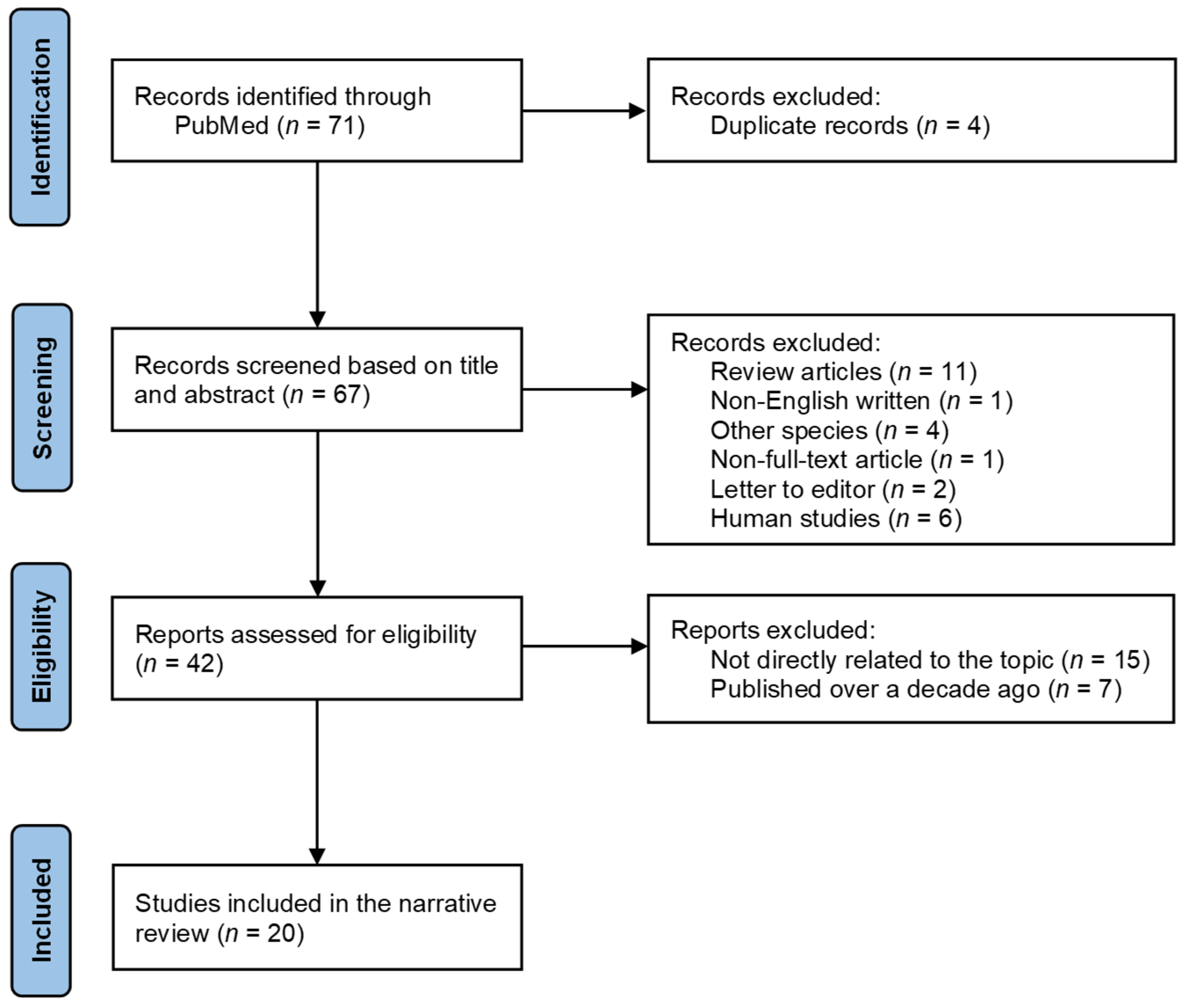
2. Preclinical Studies Selection Criteria
3. The Effects of αToc on Neuroinflammatory Response
3.1. The Distribution of αToc in the Brain
3.2. The Importance of αToc Status in Immune System
3.3. The Anti-Inflammatory Role of αToc In Vitro
3.4. The Regulatory Role of αToc on Neuroinflammation and Neuroprotection In Vivo
3.4.1. αToc on Systemic Inflammation
3.4.2. αToc on Chemical-Exposed Inflammation
3.4.3. αToc on Chronic Inflammation and Neurodegenerative Disease
3.4.4. Synergistic Effects of αToc with Other Nutrients
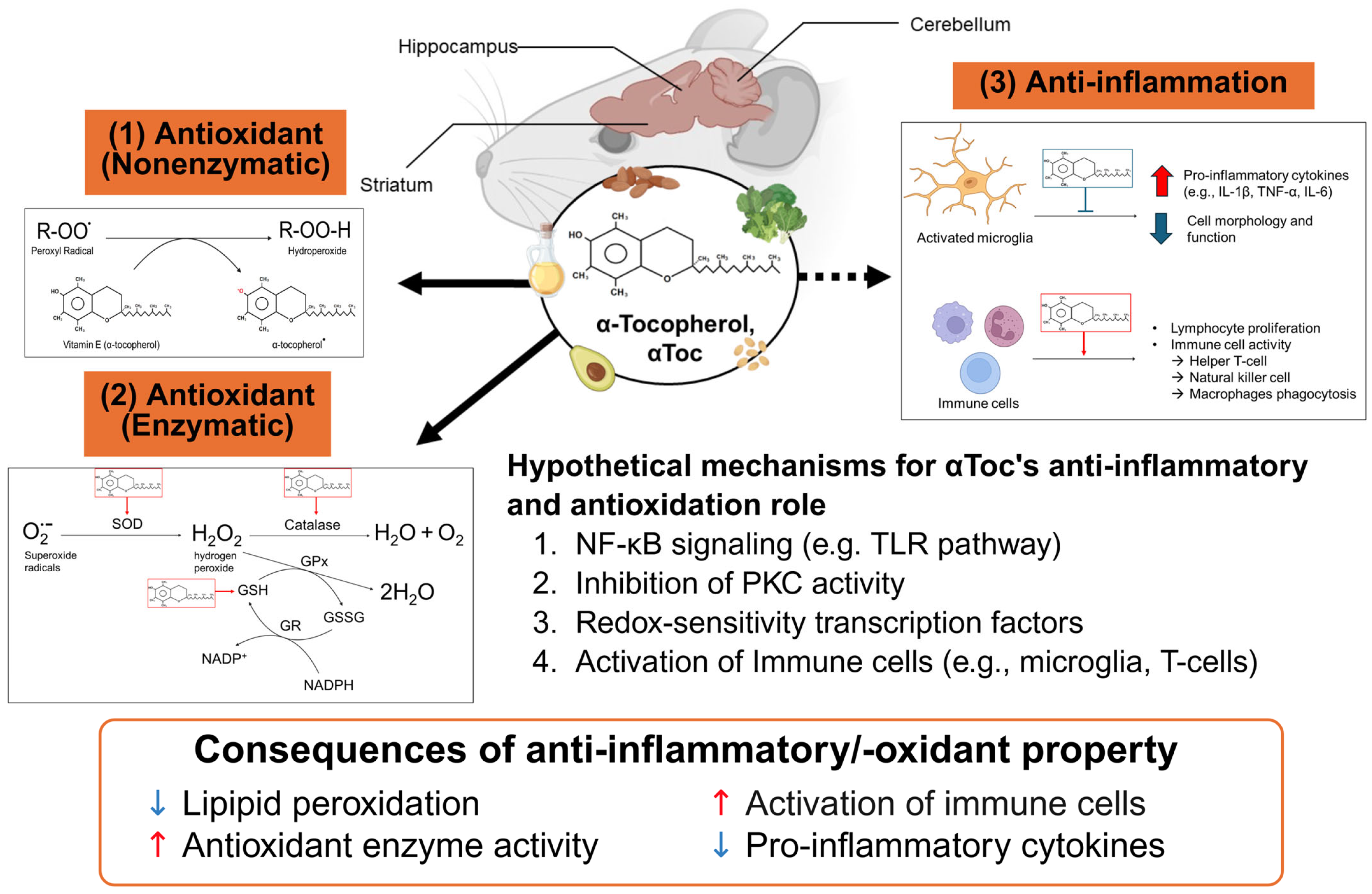
4. Discussion
5. Conclusions and Perspectives
Funding
Data Availability Statement
Conflicts of Interest
Abbreviations
| αToc | alpha-tocopherol |
| αTTP | α-tocopherol transfer protein |
| IL | interleukin |
| i.p. | intraperitoneal |
| LPS | lipopolysaccharide |
| PUFA | polyunsaturated fatty acids |
| TNF-α | tumor necrosis factor-alpha |
| Ttpa−/− | α-tocopherol transfer protein knockout |
| WT | wild type |
References
- Evans, H.M.; Bishop, K.S. On the Existence of a Hitherto Unrecognized Dietary Factor Essential for Reproduction. Science 1922, 56, 650–651. [Google Scholar] [CrossRef]
- Angelo, A.; Atkinson, J.; Ozer, N.K.; Manor, D.; Wallert, M.; Galli, F. Vitamin E nomenclature: Summary and response to articles published in the FRBM Vitamin E Discussion Forum. Free Radic. Biol. Med. 2025, 234, 277–282. [Google Scholar] [CrossRef]
- Noguchi, N.; Niki, E. Vitamin E nomenclature. Is RRR-alpha-tocopherol the only vitamin E? Free Radic. Biol. Med. 2024, 221, 257–260. [Google Scholar] [CrossRef] [PubMed]
- Azzi, A.; Atkinson, J.; Ozer, N.K.; Manor, D.; Wallert, M.; Galli, F. Vitamin E discussion forum position paper on the revision of the nomenclature of vitamin E. Free Radic. Biol. Med. 2023, 207, 178–180. [Google Scholar] [CrossRef]
- Azzi, A.; Stocker, A. Vitamin E: Non-antioxidant roles. Prog. Lipid Res. 2000, 39, 231–255. [Google Scholar] [CrossRef] [PubMed]
- Niki, E. Role of vitamin E as a lipid-soluble peroxyl radical scavenger: In vitro and in vivo evidence. Free Radic. Biol. Med. 2014, 66, 3–12. [Google Scholar] [PubMed]
- Salim, S. Oxidative Stress and the Central Nervous System. J. Pharmacol. Exp. Ther. 2017, 360, 201–205. [Google Scholar] [CrossRef]
- Tasinato, A.; Boscoboinik, D.; Bartoli, G.M.; Maroni, P.; Azzi, A. D-alpha-tocopherol inhibition of vascular smooth muscle cell proliferation occurs at physiological concentrations, correlates with protein kinase C inhibition, and is independent of its antioxidant properties. Proc. Natl. Acad. Sci. USA 1995, 92, 12190–12194. [Google Scholar] [CrossRef]
- Jiang, Q. Natural forms of vitamin E: Metabolism, antioxidant, and anti-inflammatory activities and their role in disease prevention and therapy. Free Radic. Biol. Med. 2014, 72, 76–90. [Google Scholar] [CrossRef]
- Godbout, J.P.; Berg, B.M.; Kelley, K.W.; Johnson, R.W. Alpha-Tocopherol reduces lipopolysaccharide-induced peroxide radical formation and interleukin-6 secretion in primary murine microglia and in brain. J. Neuroimmunol. 2004, 149, 101–109. [Google Scholar] [CrossRef]
- Berg, B.M.; Godbout, J.P.; Chen, J.; Kelley, K.W.; Johnson, R.W. Alpha-Tocopherol and selenium facilitate recovery from lipopolysaccharide-induced sickness in aged mice. J. Nutr. 2005, 135, 1157–1163. [Google Scholar] [CrossRef]
- Hashida, M.; Ranard, K.M.; Steelman, A.J.; Erdman, J.W., Jr. Alpha-Tocopherol Transfer Protein-Null Mice with Very Low alpha-Tocopherol Status Do Not Have an Enhanced Lipopolysaccharide-Induced Acute Inflammatory Response. Curr. Dev. Nutr. 2023, 7, 100017. [Google Scholar] [CrossRef]
- Ulatowski, L.; Parker, R.; Warrier, G.; Sultana, R.; Butterfield, D.A.; Manor, D. Vitamin E is essential for Purkinje neuron integrity. Neuroscience 2014, 260, 120–129. [Google Scholar] [CrossRef] [PubMed]
- Yokota, T.; Igarashi, K.; Uchihara, T.; Jishage, K.; Tomita, H.; Inaba, A.; Li, Y.; Arita, M.; Suzuki, H.; Mizusawa, H.; et al. Delayed-onset ataxia in mice lacking alpha -tocopherol transfer protein: Model for neuronal degeneration caused by chronic oxidative stress. Proc. Natl. Acad. Sci. USA 2001, 98, 15185–15190. [Google Scholar] [CrossRef] [PubMed]
- Cuddihy, S.L.; Ali, S.S.; Musiek, E.S.; Lucero, J.; Kopp, S.J.; Morrow, J.D.; Dugan, L.L. Prolonged alpha-tocopherol deficiency decreases oxidative stress and unmasks alpha-tocopherol-dependent regulation of mitochondrial function in the brain. J. Biol. Chem. 2008, 283, 6915–6924. [Google Scholar] [CrossRef] [PubMed]
- Lee, P.; Ulatowski, L.M. Vitamin E: Mechanism of transport and regulation in the CNS. IUBMB Life 2019, 71, 424–429. [Google Scholar]
- Gohil, K.; Oommen, S.; Quach, H.T.; Vasu, V.T.; Aung, H.H.; Schock, B.; Cross, C.E.; Vatassery, G.T. Mice lacking alpha-tocopherol transfer protein gene have severe alpha-tocopherol deficiency in multiple regions of the central nervous system. Brain Res. 2008, 1201, 167–176. [Google Scholar] [CrossRef]
- Goss-Sampson, M.A.; MacEvilly, C.J.; Muller, D.P. Longitudinal studies of the neurobiology of vitamin E and other antioxidant systems, and neurological function in the vitamin E deficient rat. J. Neurol. Sci. 1988, 87, 25–35. [Google Scholar] [CrossRef]
- Nishio, K.; Ishida, N.; Saito, Y.; Ogawa-Akazawa, Y.; Shichiri, M.; Yoshida, Y.; Hagihara, Y.; Noguchi, N.; Chirico, J.; Atkinson, J.; et al. Alpha-Tocopheryl phosphate: Uptake, hydrolysis, and antioxidant action in cultured cells and mouse. Free Radic. Biol. Med. 2011, 50, 1794–1800. [Google Scholar] [CrossRef]
- Vatassery, G.T.; Angerhofer, C.K.; Knox, C.A.; Deshmukh, D.S. Concentrations of vitamin E in various neuroanatomical regions and subcellular fractions, and the uptake of vitamin E by specific areas, of rat brain. Biochim. Biophys. Acta 1984, 792, 118–122. [Google Scholar] [CrossRef]
- Ulatowski, L.; Ghelfi, M.; West, R.; Atkinson, J.; Finno, C.J.; Manor, D. The tocopherol transfer protein mediates vitamin E trafficking between cerebellar astrocytes and neurons. J. Biol. Chem. 2022, 298, 101712. [Google Scholar] [CrossRef] [PubMed]
- Hatam, L.J.; Kayden, H.J. A high-performance liquid chromatographic method for the determination of tocopherol in plasma and cellular elements of the blood. J. Lipid Res. 1979, 20, 639–645. [Google Scholar] [CrossRef] [PubMed]
- Lee, G.Y.; Han, S.N. The Role of Vitamin E in Immunity. Nutrients 2018, 10, 1614. [Google Scholar] [CrossRef] [PubMed]
- Finno, C.J.; Peterson, J.; Kang, M.; Park, S.; Bordbari, M.H.; Durbin-Johnson, B.; Settles, M.; Perez-Flores, M.C.; Lee, J.H.; Yamoah, E.N. Single-Cell RNA-seq Reveals Profound Alterations in Mechanosensitive Dorsal Root Ganglion Neurons with Vitamin E Deficiency. iScience 2019, 21, 720–735. [Google Scholar] [CrossRef]
- La Torre, M.E.; Cianciulli, A.; Monda, V.; Monda, M.; Filannino, F.M.; Antonucci, L.; Valenzano, A.; Cibelli, G.; Porro, C.; Messina, G.; et al. α-Tocopherol Protects Lipopolysaccharide-Activated BV2 Microglia. Molecules 2023, 28, 3340. [Google Scholar] [CrossRef]
- Espinosa, J.M.; Castellano, J.M.; Garcia-Rodriguez, S.; Quintero-Flórez, A.; Carrasquilla, N.; Perona, J.S. Lipophilic Bioactive Compounds Transported in Triglyceride-Rich Lipoproteins Modulate Microglial Inflammatory Response. Int. J. Mol. Sci. 2022, 23, 7706. [Google Scholar] [CrossRef]
- Hosain, M.Z.; Mori, T.; Kishimura, A.; Katayama, Y. Synergy between phenotypic modulation and ROS neutralization in reduction of inflammatory response of hypoxic microglia by using phosphatidylserine and antioxidant containing liposomes. J. Biomater. Sci. Polym. Ed. 2016, 27, 290–302. [Google Scholar] [CrossRef]
- Elfakhri, K.H.; Abdallah, I.M.; Brannen, A.D.; Kaddoumi, A. Multi-faceted therapeutic strategy for treatment of Alzheimer’s disease by concurrent administration of etodolac and α-tocopherol. Neurobiol. Dis. 2019, 125, 123–134. [Google Scholar] [CrossRef]
- Badreddine, A.; Zarrouk, A.; Karym, E.M.; Debbabi, M.; Nury, T.; Meddeb, W.; Sghaier, R.; Bezine, M.; Vejux, A.; Martine, L.; et al. Argan Oil-Mediated Attenuation of Organelle Dysfunction, Oxidative Stress and Cell Death Induced by 7-Ketocholesterol in Murine Oligodendrocytes 158N. Int. J. Mol. Sci. 2017, 18, 2220. [Google Scholar] [CrossRef]
- Torres, P.; Cacabelos, D.; Pairada, J.; Bauer, K.C.; Boada, J.; Fontdevila, L.; Rossi, C.; Povedano, M.; Ferrer, I.; Pamplona, R.; et al. Gender-Specific Beneficial Effects of Docosahexaenoic Acid Dietary Supplementation in G93A-SOD1 Amyotrophic Lateral Sclerosis Mice. Neurotherapeutics 2020, 17, 269–281. [Google Scholar] [CrossRef]
- Seese, M.H.; Steelman, A.J.; Erdman, J.W., Jr. The Impact of LPS on Inflammatory Responses in Alpha-Tocopherol Deficient Mice. Curr. Dev. Nutr. 2024, 8, 104416. [Google Scholar] [CrossRef]
- Hashida, M.; Steelman, A.J.; Erdman, J.W., Jr. α-Tocopherol Depletion Exacerbates Lipopolysaccharide-Induced Reduction of Grip Strength. J. Nutr. 2024, 154, 498–504. [Google Scholar]
- Singh, S.; Chauhan, K. Pharmacological approach using doxycycline and tocopherol in rotenone induced oxidative stress, neuroinflammation and Parkinson’s like symptoms. Int. J. Neurosci. 2024, 134, 866–881. [Google Scholar] [CrossRef]
- Moreira, L.S.; Chagas, A.C.; Ames-Sibin, A.P.; Pateis, V.O.; Gonçalves, O.H.; Silva-Comar, F.M.S.; Hernandes, L.; Sá-Nakanishi, A.B.; Bracht, L.; Bersani-Amado, C.A.; et al. Alpha-tocopherol-loaded polycaprolactone nanoparticles improve the inflammation and systemic oxidative stress of arthritic rats. J. Tradit. Complement. Med. 2022, 12, 414–425. [Google Scholar] [CrossRef]
- Villas Boas, G.R.; Paes, M.M.; Cunha, M.S.; Ponsoni, L.F.; Stefanello da Silveira, A.P.; Oesterreich, S.A. Evaluation of the effect of alpha-tocopherol on anxiety and the neuroinflammatory process during alcohol withdrawal in a model of forced and chronic self-administration of liquid diet containing ethanol: Behavioral and neurochemical evidence. Alcohol 2022, 104, 31–44. [Google Scholar] [CrossRef] [PubMed]
- Al-Omar, M.S.; Naz, M.; Mohammed, S.A.A.; Mansha, M.; Ansari, M.N.; Rehman, N.U.; Kamal, M.; Mohammed, H.A.; Yusuf, M.; Hamad, A.M.; et al. Pyrethroid-Induced Organ Toxicity and Anti-Oxidant-Supplemented Amelioration of Toxicity and Organ Damage: The Protective Roles of Ascorbic Acid and α-Tocopherol. Int. J. Environ. Res. Public Health 2020, 17, 6177. [Google Scholar] [PubMed]
- Rana, A.; Singh, S.; Deshmukh, R.; Kumar, A. Pharmacological potential of tocopherol and doxycycline against traumatic brain injury-induced cognitive/motor impairment in rats. Brain Inj. 2020, 34, 1039–1050. [Google Scholar] [CrossRef] [PubMed]
- Takahashi, K.; Yanai, S.; Takisawa, S.; Kono, N.; Arai, H.; Nishida, Y.; Yokota, T.; Endo, S.; Ishigami, A. Vitamin C and vitamin E double-deficiency increased neuroinflammation and impaired conditioned fear memory. Arch. Biochem. Biophys. 2019, 663, 120–128. [Google Scholar] [CrossRef]
- Ambrogini, P.; Albertini, M.C.; Betti, M.; Galati, C.; Lattanzi, D.; Savelli, D.; Di Palma, M.; Saccomanno, S.; Bartolini, D.; Torquato, P.; et al. Neurobiological Correlates of Alpha-Tocopherol Antiepileptogenic Effects and MicroRNA Expression Modulation in a Rat Model of Kainate-Induced Seizures. Mol. Neurobiol. 2018, 55, 7822–7838. [Google Scholar] [CrossRef]
- Berressem, D.; Koch, K.; Franke, N.; Klein, J.; Eckert, G.P. Intravenous Treatment with a Long-Chain Omega-3 Lipid Emulsion Provides Neuroprotection in a Murine Model of Ischemic Stroke—A Pilot Study. PLoS ONE 2016, 11, e0167329. [Google Scholar] [CrossRef]
- Wang, S.W.; Yang, S.G.; Liu, W.; Zhang, Y.X.; Xu, P.X.; Wang, T.; Ling, T.J.; Liu, R.T. Alpha-tocopherol quinine ameliorates spatial memory deficits by reducing beta-amyloid oligomers, neuroinflammation and oxidative stress in transgenic mice with Alzheimer’s disease. Behav. Brain Res. 2016, 296, 109–117. [Google Scholar] [CrossRef] [PubMed]
- Guimarães, M.R.; Murad, L.B.; Paganelli, A.; de Oliveira, C.A.; Vianna, L.M. Effects of alpha-tocopherol associated with lovastatin on brain tissue and memory function in SHRSPs. Physiol. Behav. 2015, 149, 303–309. [Google Scholar] [CrossRef] [PubMed]
- Khanna, S.; Heigel, M.; Weist, J.; Gnyawali, S.; Teplitsky, S.; Roy, S.; Sen, C.K.; Rink, C. Excessive α-tocopherol exacerbates microglial activation and brain injury caused by acute ischemic stroke. FASEB J. 2015, 29, 828–836. [Google Scholar] [CrossRef] [PubMed]
- Ambrogini, P.; Minelli, A.; Galati, C.; Betti, M.; Lattanzi, D.; Ciffolilli, S.; Piroddi, M.; Galli, F.; Cuppini, R. Post-seizure α-tocopherol treatment decreases neuroinflammation and neuronal degeneration induced by status epilepticus in rat hippocampus. Mol. Neurobiol. 2014, 50, 246–256. [Google Scholar] [CrossRef]
- Kopańska, M.; Batoryna, M.; Banaś-Ząbczyk, A.; Błajda, J.; Lis, M.W. The Effect of α-Tocopherol on the Reduction of Inflammatory Processes and the Negative Effect of Acrylamide. Molecules 2022, 27, 965. [Google Scholar] [CrossRef]
- Gostomska-Pampuch, K.; Ostrowska, A.; Kuropka, P.; Dobrzyński, M.; Ziółkowski, P.; Kowalczyk, A.; Łukaszewicz, E.; Gamian, A.; Całkosiński, I. Protective effects of levamisole, acetylsalicylic acid, and α-tocopherol against dioxin toxicity measured as the expression of AhR and COX-2 in a chicken embryo model. Histochem. Cell Biol. 2017, 147, 523–536. [Google Scholar] [CrossRef]
- Betti, M.; Minelli, A.; Ambrogini, P.; Ciuffoli, S.; Viola, V.; Galli, F.; Canonico, B.; Lattanzi, D.; Colombo, E.; Sestili, P.; et al. Dietary supplementation with α-tocopherol reduces neuroinflammation and neuronal degeneration in the rat brain after kainic acid-induced status epilepticus. Free Radic. Res. 2011, 45, 1136–1142. [Google Scholar] [CrossRef]
- Li, Y.; Liu, L.; Barger, S.W.; Mrak, R.E.; Griffin, W.S. Vitamin E suppression of microglial activation is neuroprotective. J. Neurosci. Res. 2001, 66, 163–170. [Google Scholar] [CrossRef]
- Behl, C. Vitamin E protects neurons against oxidative cell death in vitro more effectively than 17-beta estradiol and induces the activity of the transcription factor NF-kappaB. J. Neural. Transm. 2000, 107, 393–407. [Google Scholar] [CrossRef]
- Lu, Y.C.; Yeh, W.C.; Ohashi, P.S. LPS/TLR4 signal transduction pathway. Cytokine 2008, 42, 145–151. [Google Scholar] [CrossRef]
- Mahoney, C.W.; Azzi, A. Vitamin E inhibits protein kinase C activity. Biochem. Biophys. Res. Commun. 1988, 154, 694–697. [Google Scholar] [CrossRef]
- McCary, C.A.; Yoon, Y.; Panagabko, C.; Cho, W.; Atkinson, J.; Cook-Mills, J.M. Vitamin E isoforms directly bind PKCα and differentially regulate activation of PKCα. Biochem. J. 2012, 441, 189–198. [Google Scholar] [CrossRef] [PubMed]
- Reeves, P.G. Components of the AIN-93 diets as improvements in the AIN-76A diet. J. Nutr. 1997, 127, 838s–841s. [Google Scholar] [CrossRef] [PubMed]
- Ranard, K.M.; Kuchan, M.J.; Juraska, J.M.; Erdman, J.W., Jr. Natural and Synthetic α-Tocopherol Modulate the Neuroinflammatory Response in the Spinal Cord of Adult Ttpa-null Mice. Curr. Dev. Nutr. 2021, 5, nzab008. [Google Scholar] [CrossRef] [PubMed]
- Finno, C.J.; Bordbari, M.H.; Gianino, G.; Ming-Whitfield, B.; Burns, E.; Merkel, J.; Britton, M.; Durbin-Johnson, B.; Sloma, E.A.; McMackin, M.; et al. An innate immune response and altered nuclear receptor activation defines the spinal cord transcriptome during alpha-tocopherol deficiency in Ttpa-null mice. Free Radic. Biol. Med. 2018, 120, 289–302. [Google Scholar] [CrossRef]
- Yasunaga, T.; Kato, H.; Ohgaki, K.; Inamoto, T.; Hikasa, Y. Effect of vitamin E as an immunopotentiation agent for mice at optimal dosage and its toxicity at high dosage. J. Nutr. 1982, 112, 1075–1084. [Google Scholar] [CrossRef]
- An, X.L.; Zou, J.X.; Wu, R.Y.; Yang, Y.; Tai, F.D.; Zeng, S.Y.; Jia, R.; Zhang, X.; Liu, E.Q.; Broders, H. Strain and sex differences in anxiety-like and social behaviors in C57BL/6J and BALB/cJ mice. Exp. Anim. 2011, 60, 111–123. [Google Scholar] [CrossRef]
- Feingold, I.B.; Colby, H.D. Sex differences in adrenal and hepatic alpha-tocopherol concentrations in rats. Pharmacology 1992, 44, 113–116. [Google Scholar] [CrossRef]
- Al-Azemi, M.K.; Omu, A.E.; Fatinikun, T.; Mannazhath, N.; Abraham, S. Factors contributing to gender differences in serum retinol and alpha-tocopherol in infertile couples. Reprod. Biomed. Online 2009, 19, 583–590. [Google Scholar] [CrossRef]
- Cyr, B.; de Rivero Vaccari, J.P. Sex Differences in the Inflammatory Profile in the Brain of Young and Aged Mice. Cells 2023, 12, 1372. [Google Scholar] [CrossRef]
- Shin, H.; Eo, H.; Lim, Y. Similarities and differences between alpha-tocopherol and gamma-tocopherol in amelioration of inflammation, oxidative stress and pre-fibrosis in hyperglycemia induced acute kidney inflammation. Nutr. Res. Pract. 2016, 10, 33–41. [Google Scholar] [CrossRef]
- Pahrudin Arrozi, A.; Shukri, S.N.S.; Wan Ngah, W.Z.; Mohd Yusof, Y.A.; Ahmad Damanhuri, M.H.; Jaafar, F.; Makpol, S. Comparative Effects of Alpha- and Gamma-Tocopherol on Mitochondrial Functions in Alzheimer’s Disease In Vitro Model. Sci. Rep. 2020, 10, 8962. [Google Scholar] [CrossRef] [PubMed]
- Jiang, Q.; Elson-Schwab, I.; Courtemanche, C.; Ames, B.N. Gamma-tocopherol and its major metabolite, in contrast to alpha-tocopherol, inhibit cyclooxygenase activity in macrophages and epithelial cells. Proc. Natl. Acad. Sci. USA 2000, 97, 11494–11499. [Google Scholar] [CrossRef] [PubMed]
- Chung, M.Y.; Yeung, S.F.; Park, H.J.; Volek, J.S.; Bruno, R.S. Dietary α- and γ-tocopherol supplementation attenuates lipopolysaccharide-induced oxidative stress and inflammatory-related responses in an obese mouse model of nonalcoholic steatohepatitis. J. Nutr. Biochem. 2010, 21, 1200–1206. [Google Scholar] [PubMed]
- Ng, L.T.; Ko, H.J. Comparative effects of tocotrienol-rich fraction, α-tocopherol and α-tocopheryl acetate on inflammatory mediators and nuclear factor kappa B expression in mouse peritoneal macrophages. Food Chem. 2012, 134, 920–925. [Google Scholar] [CrossRef]
- Ranard, K.M.; Kuchan, M.J.; Erdman, J.W., Jr. α-Tocopherol, but Not γ-Tocopherol, Attenuates the Expression of Selective Tumor Necrosis Factor-Alpha-Induced Genes in Primary Human Aortic Cell Lines. Lipids 2019, 54, 289–299. [Google Scholar] [CrossRef]
- Milatovic, D.; Zaja-Milatovic, S.; Montine, K.S.; Horner, P.J.; Montine, T.J. Pharmacologic suppression of neuronal oxidative damage and dendritic degeneration following direct activation of glial innate immunity in mouse cerebrum. J. Neurochem. 2003, 87, 1518–1526. [Google Scholar] [CrossRef]
- Porsgaard, T.; Høy, C.E. Absorption by rats of tocopherols present in edible vegetable oils. Lipids 2000, 35, 1073–1078. [Google Scholar] [CrossRef]
- Niki, E.; Abe, K. Vitamin E: Structure, Properties and Functions. In Vitamin E: Chemistry and Nutritional Benefits; Niki, E., Ed.; The Royal Society of Chemistry: Cambridge, UK, 2019. [Google Scholar]
- Jiang, Q.; Ames, B.N. Gamma-tocopherol, but not alpha-tocopherol, decreases proinflammatory eicosanoids and inflammation damage in rats. FASEB J. 2003, 17, 816–822. [Google Scholar] [CrossRef]
- Szewczyk, K.; Chojnacka, A.; Górnicka, M. Tocopherols and Tocotrienols-Bioactive Dietary Compounds; What Is Certain, What Is Doubt? Int. J. Mol. Sci. 2021, 22, 6222. [Google Scholar]
- Abuasal, B.S.; Qosa, H.; Sylvester, P.W.; Kaddoumi, A. Comparison of the intestinal absorption and bioavailability of γ-tocotrienol and α-tocopherol: In vitro, in situ and in vivo studies. Biopharm. Drug Dispos. 2012, 33, 246–256. [Google Scholar] [CrossRef]



| Author | Study Design | Route of Administration (Dosage) | Targeted Brain Region | Summary |
|---|---|---|---|---|
| Seese et al. (2024) [31] | Male WT and Ttpa−/− mice with an αToc-deficient diet for 12 weeks ± single LPS i.p. injection. | Oral (0 mg/kg diet) | Hippocampus | Systemic LPS administration caused increased neuroinflammation and decreased grip strength. The impact of αToc deficiency did not affect LPS-induced inflammatory and oxidative stress responses. |
| Hashida et al. (2024) [32] | Male WT and Ttpa−/− mice with an αToc-deficient diet for 9 weeks ± single LPS i.p. injection. | Oral (0 mg/kg diet) | Cerebellum | LPS administration caused an acute systemic and neuroinflammation and decreased grip strength, especially in Ttpa−/− mice. αToc deficiency may cause exacerbate reductions in grip strength brought on by systemic inflammation. |
| Singh and Chauhan (2024) [33] | Male Wistar rats (4–5 months old) with rotenone-induced Parkinson’s disease symptoms ± oral drug treatment of αToc, Doxy, αToc + Doxy, and i.p. ropinirole. | Oral (5 or 10 mg/kg) | Striatum | The synergic effect of Doxy with αToc contributed to the prevention of Parkinson’s disease-like symptoms in rotenone-injected rats by antioxidant, anti-inflammatory, as well as neuroprotective function in the striatum. |
| Moreira et al. (2022) [34] | Male Holtzman rats (12 months old) ± Freund’s adjuvant-induced polyarthritis + i.p. injection of free αToc or oral nanoparticles, free αToc, or nano-encapsulated αToc for 23 days. | i.p. or oral (100 mg/kg) | Whole brain | αToc administration (either i.p. or oral nanoparticle) reduced arthritis-induced inflammation in the muscle and oxidative stress in the brain, suggesting the effects of αToc on systemic inflammation and oxidative stress. |
| Villas Boas et al. (2022) [35] | Male Wistar rats (45–60 days old) with ethanol exposure ± oral gavage of αToc. | Oral gavage (100, 200, or 300 mg/kg in corn oil) | Amygdala Medial hypothalamic nucleus | αToc treatment attenuated ethanol-induced anxious behavior and decreased cytokine production in amygdaloid and medial hypothalamic nucleus as anxiolytic and anti-inflammatory activity. The pharmacological effects of αToc are dose dependent. |
| Al-Omar et al. (2020) [36] | Male albino mice (3–4 months old) with pyrethroids exposure ± ascorbic acids or αToc in water. | Oral (100 mg/kg) | Cerebrum Diencephalon | Pyrethroid-induced tissue damage and toxicities can be mitigated by ascorbic acids or αToc; however, the effectiveness varies in degree and location. |
| Rana et al. (2020) [37] | Male Wistar rats (4–5 months old) with TBI ± Doxy, αToc, and Doxy + αToc for 28 days. | Oral (5 or 10 mg/kg) | Striatum Cortex | The synergistic effect of Doxy & αToc may be effective in neuroprotection due to its anti-inflammatory, antioxidant, and neurotransmitter effects, and improved behavioral function. |
| Elfakhri et al. (2019) [28] | 5XFAD female mice (4 months old) with i.p. etodolac, oral αToc, or etodolac + αToc (COMB) in water for 1 month. | Oral (10 mg/kg BW) | Hippocampus Cortex | The COMB improved the blood-brain barrier function, decreased total Aβ levels, increased synaptic markers expression, and attenuated neuroinflammation and oxidative stress both in vitro and in vivo studies. |
| Takahashi et al. (2019) [38] | SMP30/αTTP DKO and WT male mice (5 weeks old) ± vitamin C and αToc. | Oral (0 or 500 mg/kg diet) | Hippocampus | Vitamin C and αToc deficiency in DKO mice impaired conditioned fear memory, possibly due to increased neuroinflammation in the hippocampus. |
| Ambrogini et al. (2018) [39] | Adult male Sprague-Dawley albino rats with kainite-induced seizures ± i.p. bolus αToc for 15 days. | i.p. (250 mg/kg & 2 mg/kg BW) | Hippocampus | As anti-epileptogenic role, αToc treatment improved kainic acid-induced seizures by decreased neuroinflammation, miRNA expression, astrogliosis, and microglial activation in the hippocampus of rats. |
| Berressem et al. (2016) [40] | Stroke-induced female CD-1 mice with formulas. | i.v. (~0.2 mg/mL) | Striatum | Ω-3 fatty acids improved neurological impacts by strokes. For stabilizer of long-chain fatty acids, αToc is critical to add the lipid emulsion. |
| Wang et al. (2016) [41] | APPswe/PS1dE9 or WT male mice (8 mo) ± oral RRR αToc quinine for 4 weeks. | Oral gavage (100 mg/kg) | Hippocampus Cortex | αToc quinine treatment prevented spatial memory deficits, reduced Aβ oligomers, and inhibited neuroinflammation and oxidative stress. |
| Guimarães et al. (2015) [42] | Stroke-prone spontaneously hypertensive male rats (15 weeks old) ± daily orogastric gavage of synthetic αToc, lovastatin and αToc for 4 weeks. | Orogastric gavage (120 IU) | Hippocampus | αToc or lovastatin improved cognitive and memory function as well as decreased oxidative stress levels against stroke-induced neurological implications. |
| Khanna et al. (2015) [43] | Male Ttpa−/−, heterozygous, and WT mice (21 days old) with middle cerebral artery occlusion surgery ± αToc diets for 10 weeks. | Oral (0 or 150 IU/kg diet) | Whole brain | High αToc supplementation may cause adverse effects of stroke by increased neuroinflammation and neurodegeneration. |
| Ambrogini et al. (2014) [44] | Adult male Sprague-Dawley albino rats with kainite-induced seizures ± i.p. bolus αToc for 4 days. | i.p. (250 mg/kg BW) | Hippocampus | αToc treatment for kainic acid-induced status epilepticus reduced astrocytosis, microglia activation, pro-inflammatory cytokine production, neurodegeneration, and spine loss, and enhanced dendritic NFs and synaptophysin. |
| αToc | γToc | Tocotrienols | |
|---|---|---|---|
| Structure |  Chromanol ring (R1: CH3−, R2: CH3−) + saturated side chain |  Chromanol ring (R1: H−, R2: CH3−) + saturated side chain |  Chromanol ring (R1/R2: CH3− and/or H−) + unsaturated side chain |
| Bioavailability | αToc >> γToc > Tocotrienols | ||
| Antioxidant activity | α > β > γ > δ | ||
| Anti-inflammatory mechanism |
|
|
|
Disclaimer/Publisher’s Note: The statements, opinions and data contained in all publications are solely those of the individual author(s) and contributor(s) and not of MDPI and/or the editor(s). MDPI and/or the editor(s) disclaim responsibility for any injury to people or property resulting from any ideas, methods, instructions or products referred to in the content. |
© 2026 by the authors. Licensee MDPI, Basel, Switzerland. This article is an open access article distributed under the terms and conditions of the Creative Commons Attribution (CC BY) license.
Share and Cite
Seese, M.H.; Xu, Y. The Neuroprotective Effects of Alpha-Tocopherol as an Anti-Inflammatory Agent: Mechanistic Insights and Therapeutic Challenges. Nutrients 2026, 18, 676. https://doi.org/10.3390/nu18040676
Seese MH, Xu Y. The Neuroprotective Effects of Alpha-Tocopherol as an Anti-Inflammatory Agent: Mechanistic Insights and Therapeutic Challenges. Nutrients. 2026; 18(4):676. https://doi.org/10.3390/nu18040676
Chicago/Turabian StyleSeese, Megumi H, and Yuanzhong Xu. 2026. "The Neuroprotective Effects of Alpha-Tocopherol as an Anti-Inflammatory Agent: Mechanistic Insights and Therapeutic Challenges" Nutrients 18, no. 4: 676. https://doi.org/10.3390/nu18040676
APA StyleSeese, M. H., & Xu, Y. (2026). The Neuroprotective Effects of Alpha-Tocopherol as an Anti-Inflammatory Agent: Mechanistic Insights and Therapeutic Challenges. Nutrients, 18(4), 676. https://doi.org/10.3390/nu18040676