Individually Recognized Functional Ingredients of Korean Health Functional Foods: Functional Classification, Regulatory Context, and Clinical Implication




Abstract
1. Introduction
2. Methodology
3. Functional Classification System of IRFIs in Korea
3.1. Definition of HFFs and Regulatory Structure of Functional Ingredients
3.1.1. Standardized Ingredients (SIs)
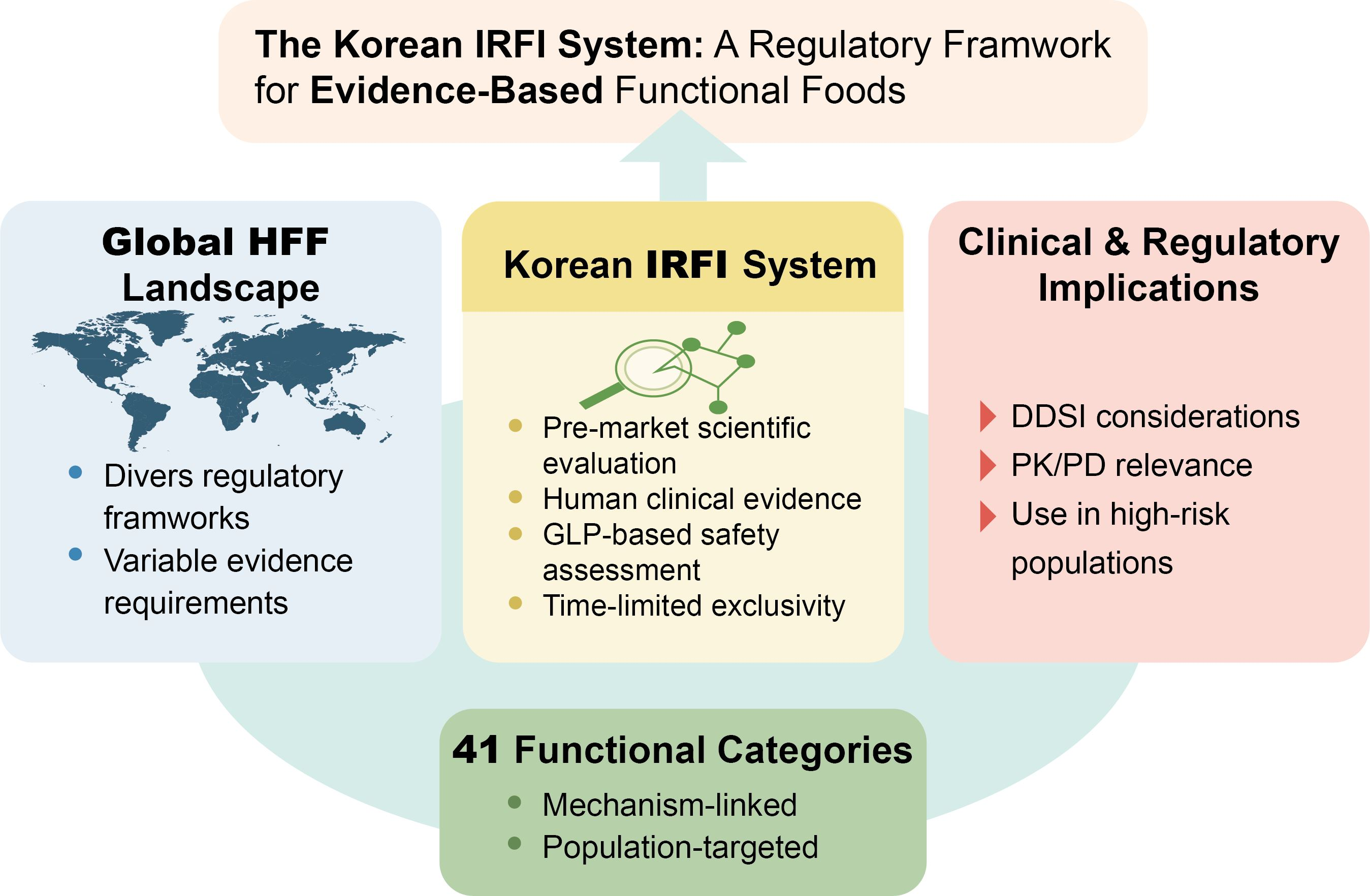
3.1.2. Individually Recognized Functional Ingredients (IRFIs)
- GLP-compliant toxicological studies, determined by risk-based assessment, may include acute, sub-chronic or chronic toxicity, reproductive and developmental toxicity, and genotoxicity. The specific toxicological endpoints are not uniformly mandated for all ingredients; rather, the scope and depth of required studies are determined based on ingredient characteristics, intended use levels, duration of exposure, and the availability of existing safety data, in accordance with MFDS evaluation guidelines;
- RCTs demonstrating statistically and clinically meaningful functional efficacy;
- Compositional characterization, including purity profiles, active compound identification, and potential contaminants;
- Stability data and manufacturing information, including production processes, quality control procedures, and specification standards to ensure lot-to-lot consistency.
3.2. Classification and Current Status of the 41 Functional Categories (As of December 2025)
4. Background of the IRFI System in Korea and Its Current Implications
4.1. Regulatory Background and Market Drivers
4.2. Trends in the Expansion of Functional Categories and Their Implications
5. Comparative Analysis of IRFI Systems Across Major Countries
5.1. United States: Dietary Supplement Health and Education Act (DSHEA) and the NDI System
5.2. European Union: Novel Food Regulation and Health Claim Authorization
5.3. Japan: Foods with Function Claims (FFCs) and CAA
5.4. China: Registration and Health Food Approval System
6. Drug–Dietary Supplement Interactions (DDSIs) in IRFIs
6.1. Potential Mechanisms for DDSIs
6.2. Regulatory Approaches to Interaction Assessment for IRIFs
6.2.1. United States FDA
6.2.2. European Union: The European Medicines Agency (EMA) and EFSA
6.2.3. Republic of Korea: KFDA (MFDS)
7. Limitations and Future Perspectives
8. Conclusions
Author Contributions
Funding
Data Availability Statement
Conflicts of Interest
References
- Rashidinejad, A. The Road Ahead for Functional Foods: Promising Opportunities amidst Industry Challenges. Future Postharvest Food 2024, 1, 266–273. [Google Scholar] [CrossRef]
- Vignesh, A.; Cheeran Amal, T.; Sarvalingam, A.; Vasanth, K. A Review on the Influence of Nutraceuticals and Functional Foods on Health. Food Chem. Adv. 2024, 5, 100749. [Google Scholar] [CrossRef]
- Son, C.-G. Progress of Functional Food Market in Korea and Strategy of Korean Medicine. J. Korean Med. 2014, 35, 68–74. [Google Scholar] [CrossRef]
- Kim, J.Y.; Kim, D.B.; Lee, H.J. Regulations on Health/Functional Foods in Korea. Toxicology 2006, 221, 112–118. [Google Scholar] [CrossRef]
- Korea Health Functional Food Association (KHFF). Domestic Health Functional Food Market Size 2024. 2024. Available online: https://www.khff.or.kr/user/info/InfoBoardUserView.do?_menuNo=369&boardSeqno=10035&postsSeqno=119022/ (accessed on 4 December 2025).
- Grand View Research. Asia Pacific Dietary Supplements Market Size Report. 2024. Available online: https://www.grandviewresearch.com/industry-analysis/asia-pacific-dietary-supplements-market-report (accessed on 4 December 2025).
- Ministry of Food and Drug Safety (MFDS). Health Functional Food Ingredients. Available online: https://www.foodsafetykorea.go.kr/portal/board/board.do?menu_grp=MENU_NEW01&menu_no=2660 (accessed on 27 December 2025).
- Cho, S.-J.; Hong, Y.-B.; Kang, D.-W.; Cho, H.-Y. Study on the Reliability Improvement of Health Functional Foods: The Regulatory Operation and Management of Institution Conducting Human Study in Korea. Food Suppl. Biomater. Health 2022, 2, e14. [Google Scholar] [CrossRef]
- Lee, H. Approval of Functional Ingredient of Health/Functional Foods in Korea. Food Ind. Nutr. 2013, 18, 1–7. [Google Scholar]
- Hwang, J.S.; Kim, S.J.; Kim, H.B. Development and Industry of Health Functional Food in Korea. Food Sci. Technol. Res. 2009, 15, 1–4. [Google Scholar] [CrossRef]
- Son, C.-G. Analysis for Individual-authorization of Functional Food Materials in Korea. J. Korean Med. 2015, 36, 35–41. [Google Scholar] [CrossRef]
- Ministry of Food and Drug Safety (MFDS). Regulation on Approval of Functional Ingredients and Standards (Notification No. 2024-79). 2024. Available online: https://www.law.go.kr/LSW/admRulInfoP.do?admRulSeq=2100000250458&chrClsCd=010201 (accessed on 27 December 2025).
- Ministry of Food and Drug Safety (MFDS). Health Functional Food Code (Notification No. 2023-74). 2023. Available online: https://www.mfds.go.kr/brd/m_211/view.do?seq=14822&srchFr=&srchTo=&srcWord=&srchTp=&itm_seq_1=0&itm_seq_2=0&multi_itm_seq=0&company_cd=&company_nm=&page=1 (accessed on 27 December 2025).
- Ministry of Food and Drug Safety (MFDS). Health Functional Food Code (Notification No. 2020-92). 23 September 2020. Available online: https://www.mfds.go.kr/eng/brd/m_15/view.do?seq=70011 (accessed on 27 November 2025).
- Li, L. South Korea Health Functional Ingredient Recognition: Recap and Analysis. Food Compliance Intelligence & Solutions. ChemLinked. 2023. Available online: https://food.chemlinked.com (accessed on 7 December 2025).
- Korea Health Functional Food Association (KHFF). Korea Health Functional Food Market Overview and Status of Recognized Functional Ingredients. 10 September 2025. Available online: https://www.khff.or.kr/assets/images/userEng/contents/KHFF_Brochure_20250910.pdf (accessed on 7 December 2025).
- Ministry of Food and Drug Safety (MFDS). Regulation on Recognition of Functional Ingredients and Standards and Specifications for Health Functional Foods (Notification No. 2021-66). 19 November 2021. Available online: https://easylaw.go.kr/CSP/CnpClsMain.laf?popMenu=ov&csmSeq=1006 (accessed on 7 December 2025).
- Ministry of Food and Drug Safety (MFDS). Health Functional Foods Act, Article 3 (Definitions, Act No. 13201). 3 February 2015. Available online: https://elaw.klri.re.kr/eng_service/lawView.do?hseq=34992&lang=ENG (accessed on 7 December 2025).
- Park, Y.I. Definition of Health Functional Food in Korea. Food Suppl. Biomater. Health 2021, 1, e21. [Google Scholar] [CrossRef]
- Ministry of Food and Drug Safety (MFDS). Standards and Specifications for Functional Ingredients. Available online: https://easylaw.go.kr/CSP/CnpClsMain.laf?popMenu=ov&csmSeq=1006&ccfNo=2&cciNo=1&cnpClsNo=1 (accessed on 27 December 2025).
- Ministry of Food and Drug Safety (MFDS). Health Functional Foods Act, Article 15 (Functional Ingredients Recognition). Available online: https://elaw.klri.re.kr/eng_service/lawView.do?hseq=34992&lang=ENG (accessed on 7 December 2025).
- Functional Agri-Food Resource Information Service (FMIS). What Is Health Functional Food? Available online: https://www.fmis.kr/public/html/HtmlPage.do?pg=/gabin/sub_401/sub_4010000_1.jsp&pageNo=4010000 (accessed on 27 December 2025).
- Ministry of Food and Drug Safety (MFDS). Civil Application Guide: Health Functional Food Functional Evaluation Guide. Available online: https://www.mfds.go.kr/brd/m_1060/list.do (accessed on 27 December 2025).
- Lee, I.P.; Kang, B.H.; Roh, J.K.; Kim, J.R. Lack of carcinogenicity of lyophilized Agricus blazei Murrill in a F344 rat two year bioassay. Food Chem. Toxicol. 2008, 46, 87–95. [Google Scholar] [CrossRef]
- Korea Health Supplements Association (KHSA). Introduction to Health Functional Foods in Korea. Available online: https://www.khsa.or.kr (accessed on 7 December 2025).
- Nam, K.; Ha, I.; Ahn, B. Analysis of Companies’ Perceptions of Health Functional Food Raw Material Regulations: Focusing on Company Classification According to Possession of Individual Recognition Type Products. Korean J. Agric. Econ. Res. 2019, 42, 79–102. [Google Scholar]
- Jung, J.C. Individualized Approval Health Functional Foods: Research Development and Commercialization; Korea Food Industry Cluster Promotion Agency: Seoul, Republic of Korea, 2024; Available online: https://www.foodpolis.kr (accessed on 22 January 2026).
- Murphy, E.J.; Rezoagli, E.; Major, I.; Rowan, N.J.; Laffey, J.G. β-Glucan metabolic and immunomodulatory properties and potential for clinical application. J. Fungi 2020, 6, 356. [Google Scholar] [CrossRef]
- Kim, J.Y.; Kim, D.B.; Lee, H.J. Regulations on Health/Functional Foods in Korea. In Nutraceutical and Functional Food Regulations in the United States and Around the World; Elsevier: London, UK, 2008; pp. 281–290. [Google Scholar]
- Andallu, B.; Varadacharyulu, N.C. Control of hyperglycemia and retardation of cataract by mulberry (Morus indica L.) leaves in streptozotocin diabetic rats. Indian J. Exp. Biol. 2002, 40, 791–795. [Google Scholar]
- Stohs, S.J.; Miller, H.; Gilbert, K.R. A review of the efficacy and safety of banaba (Lagerstroemia speciosa L.) and corosolic acid. Phytother. Res. 2012, 26, 317–324. [Google Scholar] [CrossRef]
- Vetvicka, V.; Vannucci, L.; Sima, P. β-Glucan as a new tool in vaccine development. Scand. J. Immunol. 2020, 91, e12833. [Google Scholar] [CrossRef]
- Takata, R.; Yamamoto, R.; Yanai, T.; Konno, T.; Okubo, T. Immunostimulatory effects of a polysaccharide-rich substance with antitumor activity isolated from black currant (Ribes nigrum L.). Biosci. Biotechnol. Biochem. 2005, 69, 2042–2050. [Google Scholar] [CrossRef][Green Version]
- Aghdam, M.A.; Pagán, A.; García-Estañ, J.; Atucha, N.M. Evaluation of the Effects of Mulberry Leaf Extracts Morus alba L. on Cardiovascular, Renal, and Platelet Function in Experimental Arterial Hypertension. Nutrients 2024, 17, 49. [Google Scholar] [CrossRef] [PubMed]
- Wang, X.; Li, J.; Shang, J.; Bai, J.; Wu, K.; Liu, J.; Yang, Z.; Ou, H.; Shao, L. Metabolites extracted from microorganisms as potential inhibitors of glycosidases (α-glucosidase and α-amylase): A review. Front. Microbiol. 2022, 13, 1050869. [Google Scholar] [CrossRef] [PubMed]
- Kim, S.; Kim, D.; Um, M.Y.; Yoon, M.; Choi, J.S.; Choi, Y.H.; Cho, S. Marine Polyphenol Phlorotannins as a Natural Sleep Aid for Treatment of Insomnia: A Review of Sedative-Hypnotic Effects and Mechanism of Action. Mar. Drugs 2022, 20, 774. [Google Scholar] [CrossRef] [PubMed]
- Varinthra, P.; Anwar, S.N.M.N.; Shih, S.C.; Liu, I.Y. The role of the GABAergic system on insomnia. Tzu Chi Med. J. 2024, 36, 103–109. [Google Scholar] [CrossRef]
- Kim, H.J.; Kim, J.; Lee, S.; Kim, B.; Kwon, E.; Lee, J.E.; Chun, M.Y.; Lee, C.Y.; Boulier, A.; Oh, S.; et al. A Double-Blind, Randomized, Placebo-Controlled Crossover Clinical Study of the Effects of Alpha-s1 Casein Hydrolysate on Sleep Disturbance. Nutrients 2019, 11, 1466. [Google Scholar] [CrossRef]
- Korea Food and Drug Administration (KFDA). Regulation on the Recognition of Functional Ingredients in Health Functional Foods; (Notification No. 2009-39); KFDA: Seoul, Republic of Korea, 2009. [Google Scholar]
- Korea Health Functional Food Association (KHFF). Health Functional Food Functional Ingredient Recognition Status (As of 2004). 2016. Available online: https://www.khff.or.kr/assets/extra/hfood/01.pdf (accessed on 7 December 2025).
- Oh, S.W. Regulatory systems and scientific evidence for health functional foods in Korea. J. Korean Med. Assoc. 2025, 68, 311–318. [Google Scholar] [CrossRef]
- Oh, H. Vitamin, Health Functional Food, Detox. Geriatr. Rehabil. 2015, 5, 35–39. [Google Scholar]
- Heo, S.-H. Study on the Measure for Improving the Review System for the Individually Approved Health Functional Food. Food Suppl. Biomater. Health 2021, 1, e36. [Google Scholar] [CrossRef]
- Heo, S.H. Solutions to the Issues Raised from Korea’s Food with Functional Claims System. Food Suppl. Biomater. Health 2024, 4, e15. [Google Scholar] [CrossRef]
- Kim, H.; Kim, D.Y.; Lee, S.; Choi, J.H.; Lim, B.O. Curation Service Strategy for Health Functional Food: Focusing on Case Studies of Customized Health Functional Food in Korea. Serv. Mark. J. 2023, 16, 63–78. [Google Scholar]
- Kim, K.J.; Kim, E.J.; Song, Y.R.; Kim, Y.J.; Chun, S.H.; Kim, J.Y. Current status of personalized dietary supplement. J. Korean Soc. Food Sci. Nutr. 2020, 25, 20–37. [Google Scholar]
- Seo, I.W. Evaluation of functional ingredients. Food Sci. Ind. 2015, 48, 4–10. [Google Scholar]
- Verhagen, H.; van Loveren, H. Status of nutrition and health claims in Europe by mid 2015. Trends Food Sci. Technol. 2016, 56, 39–45. [Google Scholar] [CrossRef]
- Arshad, Z.; Shahid, S.; Hasnain, A.; Yaseen, E.; Rahimi, M. Functional Foods Enriched with Bioactive Compounds: Therapeutic Potential and Technological Innovations. Food Sci. Nutr. 2025, 13, e71024. [Google Scholar] [CrossRef]
- Kim, K.J.; Kang, J.; Kim, J.Y. A study on improvement of functional evaluation system for health functional food. Regul. Res. Food Drug Cosmet. 2021, 16, 95–102. [Google Scholar]
- Ministry of Food and Drug Safety (MFDS). Notification on Amendment of Standards and Specifications for Health Functional Foods (Notification No. 2016-143). 25 December 2016. Available online: https://www.mfds.go.kr/brd/m_207/view.do?seq=11444&srchFr=&srchTo=&srcWord=&srchTp=&itm_seq_1=0&itm_seq_2=0&multi_itm_seq=0&company_cd=&company_nm=&page=85 (accessed on 27 December 2025).
- Kim, M.E.; Lee, J.S. The Potential of Korean Bioactive Substances and Functional Foods for Immune Enhancement. Int. J. Mol. Sci. 2024, 25, 1334. [Google Scholar] [CrossRef]
- Yoon, Y.S.; Lee, H.I.; Oh, S.W. A Life-Stage Approach to Precision Nutrition: A Narrative Review. Cureus 2024, 16, e66813. [Google Scholar] [CrossRef]
- Heo, S.; Lee, G.W.; Park, J.H.; Kim, T.; Oh, S.E.; Jeong, D.W. Current status of the novel food ingredient safety evaluation system. Food Sci. Biotechnol. 2023, 33, 1–11. [Google Scholar] [CrossRef]
- Lee, M. Research trends in obesity & obesogenic environments in Korea. Nutr. Res. Pract. 2019, 13, 461–472. [Google Scholar]
- Jeong, M. 20th Anniversary of the Health Functional Foods Act: Achievements and Challenges. Food Suppl. Biomater. Health 2024, 4, e20. [Google Scholar] [CrossRef]
- EFSA Panel on Dietetic Products, Nutrition and Allergies (NDA). General scientific guidance for stakeholders on health claim applications. EFSA J. 2016, 14, 4367. [Google Scholar] [CrossRef]
- Moon, J. South Korea Enters Super-Aged Society, Elderly Surpass 21%. Chosun Ilbo. Available online: https://www.chosun.com/english/national-en/2026/01/04/S2KM7CI47NHEHLRT5IAGSZK4RE (accessed on 22 January 2026).
- Flynn, A. Symposium 2: Nutrition and health claims: Help or hindrance Scientific substantiation of health claims in the EU. Proc. Nutr. Soc. 2012, 71, 120–126. [Google Scholar] [CrossRef] [PubMed]
- Iwatani, S.; Yamamoto, N. Functional food products in Japan: A review. Food Sci. Hum. Wellness 2019, 8, 96–101. [Google Scholar] [CrossRef]
- Bailey, R.L. Current Regulatory Guidelines and Resources to Support Research of Dietary Supplements in the United States. Crit. Rev. Food Sci. Nutr. 2020, 60, 298–309. [Google Scholar] [CrossRef] [PubMed]
- U.S. Food and Drug Administration (FDA). Dietary Supplements: New Dietary Ingredient Notifications and Related Issues: Guidance for Industry (Draft—Not for Implementation); Center for Food Safety and Applied Nutrition: College Park, MD, USA, 2024. Available online: https://www.fda.gov/media/71815/download (accessed on 28 December 2025).
- Valtuena Martínez, S.; Siani, A. Health Claims Made on Food in the EU: The Edge between Scientific Knowledge and Regulatory Requirements. Trends Food Sci. Technol. 2017, 69, 315–323. [Google Scholar] [CrossRef]
- Le Bloch, J.; Rouault, M.; Langhi, C.; Hignard, M.; Iriantsoa, V.; Michelet, O. The novel food evaluation process delays access to food innovation in the European Union. npj Sci. Food 2025, 9, 117. [Google Scholar] [CrossRef]
- Sato, K.; Kodama, K.; Sengoku, S. The Co-Evolution of Markets and Regulation in the Japanese Functional Food Industry: Balancing Risk and Benefit. Foods 2025, 14, 1581. [Google Scholar] [CrossRef] [PubMed]
- Chatterjee, D. Nutraceutical Regulations and Registration Process in Japan. Artixio Nutraceuticals Insights. 14 April 2025. Available online: https://artixio.com/post/nutraceutical-regulation-in-japan (accessed on 28 December 2025).
- RegAsk. An Easy-to-Follow Guide to Preparing for Approval of Foods with Function Claims in Japan. Regulatory Resources. 21 July 2025. Available online: https://regask.com/japan-food-function-claims/ (accessed on 28 December 2025).
- ZMUni Compliance Centre. 2024 in Review: Health Food Registration and Notification in China. 10 January 2025. Available online: https://www.zmuni.com/en/news/2024-in-review-health-food-registration-and-notification-in/ (accessed on 27 December 2025).
- CIRS Group. SAMR Health Food Registration and Filing in China. LinkedIn Pulse. 14 August 2022. Available online: https://www.linkedin.com/pulse/samr-health-food-dietary-supplement-[complete-url] (accessed on 28 December 2025).
- United States Code. Title 21—Food and Drugs, §350b (New Dietary Ingredients). 1994. Available online: https://law.justia.com/codes/us/1994/title21/chap8/subchapiv/sec350b (accessed on 5 December 2025).
- U.S. Food and Drug Administration (FDA). New Dietary Ingredients in Dietary Supplements: Background for Industry. 2023. Available online: https://www.fda.gov/food/new-dietary-ingredient-ndi-notification-process/new-dietary-ingredients-dietary-supplements-background-industry (accessed on 5 December 2025).
- Lenehan, J.E. Better Late than Never? FDA Issues Draft Guidance to Encourage the Submission of Late New Dietary Ingredient (NDI) Notifications; Kleinfeld, Kaplan & Becker LLP: Washington, DC, USA, 2022; Available online: https://kkblaw.com/better-late-than-never-fda-issues-draft-guidance-to-encourage-the-submission-of-late-new-dietary-ingredient-ndi-notifications (accessed on 22 January 2026).
- Kerksick, C.M.; Arent, S.; Schoenfeld, B.J.; Stout, J.R.; Campbell, B.; Wilborn, C.D.; Taylor, L.; Kalman, D.; Smith-Ryan, A.E.; Kreider, R.B.; et al. ISSN exercise & sports nutrition review update: Research & recommendations. J. Int. Soc. Sports Nutr. 2018, 15, 38. [Google Scholar] [CrossRef] [PubMed]
- Dwyer, J.T.; Coates, P.M.; Smith, T. Dietary Supplements: Regulatory Challenges and Research Resources. Nutrients 2018, 10, 41. [Google Scholar] [CrossRef]
- U.S. Food and Drug Administration (FDA). Dietary Supplements: New Dietary Ingredient (ND) Notification Process. Guidance for Industry. 2019. Available online: https://www.fda.gov/regulatory-information/search-fda-guidance-documents (accessed on 7 December 2025).
- EFSA Scientific Committee; Hardy, A.; Benford, D.; Halldorsson, T.; Jeger, M.J.; Knutsen, H.K.; More, S.; Naegeli, H.; Noteborn, H.; Ockleford, C.; et al. Guidance on the assessment of the biological relevance of data in scientific assessments. EFSA J. 2017, 15, e04970. [Google Scholar] [CrossRef]
- Kušar, A.; Žmitek, K.; Lähteenmäki, L.; Raats, M.M.; Pravst, I. Comparison of requirements for using health claims on foods in the European Union, the USA, Canada, and Australia/New Zealand. Compr. Rev. Food Sci. Food Saf. 2021, 20, 1307–1332. [Google Scholar] [CrossRef]
- European Food Safety Authority (EFSA). Guidance on the scientific requirements for an application for authorization of a novel food under Regulation (EU) 2015/2283. EFSA J. 2024, 22, 8961. [Google Scholar]
- Shimizu, T. Health claims on functional foods: The Japanese regulations and an international comparison. Nutr. Res. Rev. 2003, 16, 241–252. [Google Scholar] [CrossRef]
- Japan Food Research Laboratories. New Japanese Functional Food Labelling; Japan Food Research Laboratories: Tokyo, Japan, 2015; Available online: https://www.jfrl.or.jp/pdf/english/top/002-004FFC.pdf (accessed on 7 December 2025).
- Kamioka, H.; Tsutani, K.; Origasa, H.; Yoshizaki, T.; Kitayuguchi, J.; Shimada, M.; Tang, W.; Takano-Ohmuro, H. Quality of systematic reviews of the Foods with Function Claims registered at the Consumer Affairs Agency Web site in Japan: A prospective systematic review. Nutr. Res. 2017, 40, 21–31. [Google Scholar] [CrossRef]
- Matsumoto, C.; Tomiyama, H.; Takahashi, O.; Maruhashi, T.; Matsuzawa, Y.; Masaki, N.; Muraki, I.; Yano, Y.; Sugimoto, T.; Kabutoya, T.; et al. An evidence review project for food with function claims ~Challenges of the Japan society for vascular failure for the promotion of adequate evidences for food with function claims. Hypertens. Res. 2024, 47, 533–536. [Google Scholar] [CrossRef]
- Fujita, H. Nutritional function claims on Japanese food labels: “Foods for specified health uses,” “Foods with nutrient function claims” and the newly instituted “Foods with function claims”. J. Acad. Soc. Qual. Life 2018, 4, 1–6. [Google Scholar]
- Tanemura, N.; Hamadate, N.; Urushihara, H. Evaluation of randomized controlled trials of foods with functional claims request: The learning outcomes from studies in Japan. J. Funct. Foods 2018, 42, 248–253. [Google Scholar] [CrossRef]
- Kamioka, H.; Tsutani, K.; Origasa, H.; Yoshizaki, T.; Kitayuguchi, J.; Shimada, M.; Wada, Y.; Takano-Ohmuro, H. Quality of systematic reviews of the foods with function claims in Japan: Comparative before- and after-evaluation of verification reports by the Consumer Affairs Agency. Nutrients 2019, 11, 1583. [Google Scholar] [CrossRef] [PubMed]
- Sato, K.; Kodama, K.; Sengoku, S. Optimizing the Relationship between Regulation and Innovation in Dietary Supplements: A Case Study of Food with Function Claims in Japan. Nutrients 2023, 15, 476. [Google Scholar] [CrossRef]
- Yamamoto, M.; Yamamoto, K.; Takano-Ohmuro, H.; Yamamoto, R.; Saruwatari, J. Usability evaluation of foods with function claims labelling as health information in Japan: A user-testing study. Nutr. Diet. Suppl. 2025, 17, 1–18. [Google Scholar] [CrossRef]
- Burdock Group Consultants. Updated Health Food Registration and Notification Process in China. Burdock Group. Available online: https://www.burdockgroup.com/updated-health-food-registration-and-notification-process-in-china (accessed on 22 January 2026).
- Chen, G.; Shen, G. The evolution, current situation and prospects of China’s functional food regulatory system. Food Nutr. 2025, 1, 100025. [Google Scholar] [CrossRef]
- Liu, Z.; Mutukumira, A.N.; Chen, H. Food safety governance in China: From supervision to coregulation. Food Sci. Nutr. 2019, 7, 4127–4139. [Google Scholar] [CrossRef]
- Zhao, T.; Li, T.; Liu, D.; Luo, Y. The impact of food safety regulatory information disclosure on production violation behavior: A randomized intervention trial in China. Front. Sustain. Food Syst. 2024, 7, 1245773. [Google Scholar] [CrossRef]
- Mao, A. Unravelling the Mystery—China Health Food Registration and Notification. Acurit Medical Communications. Available online: https://www.acuritmedcomms.com/2020/11/13/unravelling-the-mystery-china-health-food-registration-notification/ (accessed on 22 January 2026).
- People’s Republic of China. Food Safety Law of the People’s Republic of China, Articles 71, 78, and 150. 2018. Available online: http://www.npc.gov.cn/npc/c12946/202006/7f0b8b4a4e6c425db07b59160eaf5e3e.shtml (accessed on 7 December 2025).
- Wang, M.; Kuai, Y.; Gan, R.Y. The Challenges and Opportunities of Nutraceutical and Health Food Industry in China. Food Med. 2025, 1, 4. [Google Scholar]
- Cisema. China Health Food with New Functions: Technical Evaluation Rules Announced for Trial Implementation. August 2023. Available online: https://www.cisema.com/en/china-health-food-with-new-functions-technical-evaluation-rules-aug2023/ (accessed on 7 December 2025).
- National Center for Biotechnology Information (NCBI). Chinese Food Regulatory System. NCBI Bookshelf. Available online: https://www.ncbi.nlm.nih.gov/books/NBK201166/ (accessed on 7 December 2025).
- Fugh-Berman, A.; Ernst, E. Herb-drug interactions: Review and assessment of report reliability. Br. J. Clin. Pharmacol. 2001, 52, 587–595. [Google Scholar] [CrossRef]
- Izzo, A.A.; Ernst, E. Interactions between herbal medicines and prescribed drugs: An updated systematic review. Drugs 2009, 69, 1777–1798. [Google Scholar] [CrossRef]
- Markowitz, J.S.; Donovan, J.L.; DeVane, C.L.; Taylor, R.M.; Ruan, Y.; Wang, J.S.; Chavin, K.D. Effect of St. John’s wort on drug metabolism by induction of CYP3A4 enzyme. JAMA 2003, 290, 1500–1504. [Google Scholar] [CrossRef]
- Zhou, S.; Gao, Y.; Jiang, W.; Huang, M.; Xu, A.; Paxton, J.W. Interactions of herbs with cytochrome P450. Drug Metab. Rev. 2003, 35, 35–98. [Google Scholar] [CrossRef] [PubMed]
- Zhou, S.; Lim, L.Y.; Chowbay, B. Herbal modulation of P-glycoprotein. Drug Metab. Rev. 2004, 36, 57–104. [Google Scholar] [CrossRef] [PubMed]
- Fugh-Berman, A. Herb–drug interactions. Lancet 2000, 355, 134–138. [Google Scholar] [CrossRef]
- Byard, R.W.; Musgrave, I. Herbal medicines and forensic investigations. Forensic Sci. Med. Pathol. 2010, 6, 81–82. [Google Scholar] [CrossRef] [PubMed][Green Version]
- Gurley, B.J.; Fifer, E.K.; Gardner, Z. Pharmacokinetic herb-drug interactions (part 2): Drug interactions involving popular botanical dietary supplements and their clinical relevance. Planta Med. 2012, 78, 1490–1514. [Google Scholar] [CrossRef]
- Wishart, D.S. Applications of metabolomics in drug discovery and development. Drugs R D 2008, 9, 307–322. [Google Scholar] [CrossRef]
- Yuan, C.S.; Wei, G.; Dey, L.; Karrison, T.; Nahlik, L.; Maleckar, S.; Kasza, K.; Ang-Lee, M.; Moss, J. American ginseng reduces warfarin’s effect in healthy patients: A randomized controlled Trial. Ann. Intern. Med. 2004, 141, 23–27. [Google Scholar] [CrossRef]
- Kim, H.J.; Yoon, K.H.; Kang, M.J.; Yim, H.W.; Lee, K.S.; Vuksan, V.; Sung, M.K. A six-month supplementation of mulberry, Korean red ginseng, and Banaba decreases biomarkers of systemic low-grade inflammation in subjects with impaired glucose tolerance and type 2 diabetes. Altern. Med. 2012, 2012, 735191. [Google Scholar] [CrossRef]
- Hsia, C.H.; Shen, M.C.; Lin, J.S.; Wen, Y.K.; Hwang, K.L.; Cham, T.M.; Yang, N.C. Nattokinase decreases plasma levels of fibrinogen, factor VII, and factor VIII in human subjects. Nutr. Res. 2009, 29, 190–196. [Google Scholar] [CrossRef]
- Kurosawa, Y.; Nirengi, S.; Homma, T.; Esaki, K.; Ohta, M.; Clark, J.F.; Hamaoka, T. A single-dose of oral nattokinase potentiates thrombolysis and anti-coagulation profiles. Sci. Rep. 2015, 5, 11601. [Google Scholar] [CrossRef]
- Becker, D.J.; Gordon, R.Y.; Halbert, S.C.; French, B.; Morris, P.B.; Rader, D.J. Red yeast rice for dyslipidemia in statin-intolerant patients: A randomized trial. Ann. Intern. Med. 2009, 150, 830–839. [Google Scholar] [CrossRef] [PubMed]
- Smith, D.J.; Olive, K.E. Chinese red rice-induced myopathy. South Med J. 2003, 96, 1265–1267. [Google Scholar] [CrossRef]
- Abdou, A.M.; Higashiguchi, S.; Horie, K.; Kim, M.; Hatta, H.; Yokogoshi, H. Relaxation and immunity enhancement effects of gamma-aminobutyric acid (GABA) administration in humans. BioFactors 2006, 26, 201–208. [Google Scholar] [CrossRef] [PubMed]
- Yoto, A.; Murao, S.; Motoki, M.; Yokoyama, Y.; Horie, N.; Takeshima, K.; Masuda, K.; Kim, M.; Yokogoshi, H. Oral intake of γ-aminobutyric acid affects mood and activities of central nervous system during stressed condition induced by mental tasks. Amino Acids 2012, 43, 1331–1337. [Google Scholar] [CrossRef]
- Choudhary, D.; Bhattacharyya, S.; Bose, S. Efficacy and Safety of Ashwagandha (Withania somnifera (L.) Dunal) Root Extract in Improving Memory and Cognitive Functions. J. Diet. Suppl. 2017, 14, 599–612. [Google Scholar] [CrossRef]
- Mikulska, P.; Malinowska, M.; Ignacyk, M.; Szustowski, P.; Nowak, J.; Pesta, K.; Szeląg, M.; Szklanny, D.; Judasz, E.; Kaczmarek, G.; et al. Ashwagandha (Withania somnifera)—Current Research on the Health-Promoting Activities: A Narrative Review. Pharmaceutics 2023, 15, 1057. [Google Scholar] [CrossRef] [PubMed]
- Bahramsoltani, R.; Rahimi, R.; Farzaei, M.H. Pharmacokinetic interactions of curcuminoids with conventional drugs: A review. J. Ethnopharmacol. 2017, 209, 1–12. [Google Scholar] [CrossRef]
- Volak, L.P.; Hanley, M.J.; Masse, G.; Hazarika, S.; Harmatz, J.S.; Badmaev, V.; Majeed, M.; Greenblatt, D.J.; Court, M.H. Effect of a herbal extract containing curcumin and piperine on midazolam, flurbiprofen and paracetamol (acetaminophen) pharmacokinetics in healthy volunteers. Br. J. Clin. Pharmacol. 2013, 75, 450–462. [Google Scholar] [CrossRef]
- McFarland, L. From yaks to yogurt: The history, development, and current use of probiotics. Clin. Infect. Dis. 2015, 60, S85–S90. [Google Scholar] [CrossRef]
- Sanders, M.E.; Akkermans, L.M.; Haller, D.; Hammerman, C.; Heimbach, J.; Hörmannsperger, G.; Huys, G.; Levy, D.D.; Lutgendorff, F.; Mack, D.; et al. Safety assessment of probiotics for human use. Gut Microbes 2010, 1, 164–185. [Google Scholar] [CrossRef]
- Koh, J.H.; Kim, J.M.; Chang, U.J.; Suh, H.J. Hypocholesterolemic effect of hot-water extract from mycelia of Cordyceps sinensis. Biol. Pharm. Bull. 2003, 26, 84–87. [Google Scholar] [CrossRef]
- Paterson, R.R.M. Cordyceps—A traditional Chinese medicine and another fungal therapeutic biofactory? Phytochemistry 2008, 69, 1469–1495. [Google Scholar] [CrossRef]
- Misaka, S.; Nakamura, R.; Uchida, S.; Takeuchi, K.; Takahashi, N.; Inui, N.; Kosuge, K.; Yamada, S.; Watanabe, H. Effect of 2 weeks’ consumption of pomegranate juice on the pharmacokinetics of a single dose of midazolam: An open-label, randomized, single-center, 2-period crossover study in healthy Japanese volunteers. Clin. Ther. 2011, 33, 246–252. [Google Scholar] [CrossRef]
- Hidaka, M.; Okumura, M.; Fujita, K.; Ogikubo, T.; Yamasaki, K.; Iwakiri, T.; Setoguchi, N.; Arimori, K. Effects of pomegranate juice on human cytochrome p450 3A (CYP3A) and carbamazepine pharmacokinetics in rats. Drug Metab. Dispos. 2005, 33, 644–648. [Google Scholar] [CrossRef] [PubMed]
- Olmedilla-Alonso, B.; Granado-Lorencio, F.; Castro-Feito, J.; Herrero-Barbudo, C.; Blanco-Navarro, I.; Estévez-Santiago, R. Bioavailability of Lutein from Marigold Flowers (Free vs. Ester Forms): A Randomised Cross-Over Study to Assess Serum Response and Visual Contrast Threshold in Adults. Nutrients 2024, 16, 1415. [Google Scholar] [CrossRef] [PubMed]
- Kotagiri, S.R.; Morde, A.; Rai, D.; Babji, K.; Lal, M.; Padigaru, M.; Khatri, C. Superior Bioavailability of a Novel Lutein and Zeaxanthin Formulation in Healthy Human Subjects. Ophthalmol. Ther. 2022, 11, 1463–1477. [Google Scholar] [CrossRef] [PubMed]
- Cohan, P.A. The FDA and Adulterated Supplements-Dereliction of Duty. JAMA Netw. Open 2018, 1, e183329. [Google Scholar] [CrossRef]
- U.S. Food and Drug Administration (FDA). In Vitro Drug Interaction Studies: Cytochrome P450 Enzyme- and Transporter-Mediated Interactions. Guidance for Industry. 2020. Available online: https://www.fda.gov/media/135587/download (accessed on 7 December 2025).
- European Medicines Agency (EMA). Guideline on the Investigation of Drug Interactions. Committee for Medicinal Products for Human Use (CHMP). 2012. Available online: https://www.ema.europa.eu/en/documents/scientific-guideline/guideline-investigation-drug-interactions_en.pdf (accessed on 7 December 2025).
- Hwang, S.J.; Lee, Y.J.; Jang, Y.S.; Cho, J.Y.; Yoon, S.H.; Chung, J.Y. Comprehensive Evaluation of OATP- and BCRP-Mediated Drug-Drug Interactions of Methotrexate Using Physiologically-Based Pharmacokinetic Modeling. Clin. Pharmacol. Ther. 2024, 116, 1013–1022. [Google Scholar] [CrossRef]
- Hepburn, P.; Howlett, J.; Cockburn, A.; Constable, A.; Davi, A.; Jong, N.; Moseley, B.; Oberdörfer, R.; Robertson, C.; Wal, J.M.; et al. The application of post-market monitoring to novel foods. Food Chem. Toxicol. 2008, 46, 9–33. [Google Scholar] [CrossRef]
- Schmitz, S.M.; Lopez, H.L.; Mackay, D.; Nguyen, H.; Miller, P.E. Serious adverse events reported with dietary supplement use in the United States: A 2.5-year experience. J. Diet. Suppl. 2020, 17, 227–248. [Google Scholar] [CrossRef]
- Eussen, S.R.B.M.; Verhangen, H.; Klungel, O.H.; Garssen, J.; Loveren, H.; Kranen, H.J.; Rompelberg, C.J.M. Functional foods and dietary supplements: Products at the interface between pharma and nutrition. Eur. J. Pharmacol. 2011, 688, S2–S9. [Google Scholar] [CrossRef]
- Russell, L.E.; Yadav, J.; Maldonato, B.J.; Chien, H.C.; Zou, L.; Vergara, A.G.; Villavicencio, E.G. Transporter-mediated drug–drug interactions: Regulatory guidelines, in vitro and in vivo methodologies and translation, special populations, and the blood–brain barrier. Drug Dev. Ind. Pharm. 2024, 50, 244–271. [Google Scholar] [CrossRef]
- Advinha, A.M.; Fernandes, J.P.; Perdigão, M. Food–drug interactions risk management: An emergent piece of pharmacovigilance systems. Pharmacol. Res. Perspect. 2024, 12, e1245. [Google Scholar] [CrossRef] [PubMed]
- Hua, R.; Lam, C.S.; Wu, Y.K.; Deng, W.; Chu, N.; Yang, A.; Chow, E.; Cheung, Y.T. The use of potentially interacting supplement–drug pairs in adults with type 2 diabetes: A large population-based cohort study in the UK Biobank. Diabetes Res. Clin. Pract. 2024, 211, 111658. [Google Scholar] [CrossRef] [PubMed]
- U.S. Food and Drug Administration (FDA). Real-World Data: Assessing Electronic Health Records and Medical Claims Data to Support Regulatory Decision-Making for Drug and Biological Products. Guidance for Industry. July 2024. Available online: https://www.fda.gov/regulatory-information/search-fda-guidance-documents/real-world-data-assessing-electronic-health-records-and-medical-claims-data-support-regulatory (accessed on 7 December 2025).
- Bass, S.; Marden, E. The new dietary ingredient safety provision of DSHEA: A return to congressional intent. Am. J. Law Med. 2005, 31, 285–304. [Google Scholar] [CrossRef] [PubMed]

| Category | SIs | IRFIs | Refs. |
|---|---|---|---|
| Definition | Ingredients listed in the official Health Functional Food Code | Ingredients approved through individual scientific review | [20,21] |
| Approval process | No separate review required | Requires submission of data such as human intervention studies followed by official evaluation | [12,20,21] |
| Users | Available for use by any manufacturer | Use restricted to the company that received approval | [20,21,22] |
| Conversion to SIs | Not applicable | Possible after 6 years | [13] |
| Examples | Vitamin C, Red ginseng, EPA/DHA | Chicken sternal cartilage powder, Krill oil-containing complex, Lactobacillus plantarum TWK10 probiotics | [13,23] |
| No. | Functional Category | No. of IRFIs | Representative Ingredients |
|---|---|---|---|
| 1 | Intestinal health | 14 | Bacillus coagulans SNZ 1969 probiotics, Bacillus coagulans Unique IS-2 probiotics, Coffee mannooligosaccharides powder, Fig paste, Galactooligosaccharide powder, Heat-treated Lacticaseibacillus paracasei subsp. paracasei 327(K-1) culture powder, Isomalto-oligosaccharide, Lactulose powder, PME88 melon extract, Portulaca oleracea L. extract powder, Probiotics (De simone), Resistant maltodextrin from wheat starch, Soy oligosaccharide, Xylooligosaccharide powder |
| 2 | Blood glucose control | 20 | Albumin, Black soybean peptide, Chitooligosaccharide, Fermented soy bean extract, Freeze dry silkworm powder, Hydrolyzed ginseng extract, Hydroxypropyl methyl cellulose, Lactiplantibacillus plantarum HAC01 probiotics, L-arabinose, Mixture complex of Mori Folium and Aurantii Fructus extract, Morus alba L. Branch ethanol extract powder, Mulberry leaf extract, Nopal extract, Pine needle distilled concentrate, Powder of Capsicum annuum L. cv. Dangjo, Red ginseng, Seapolynol Ecklonia cava ethanol extract, Tagatose, The submerged culture of Ceriporia lacerata mycelium, Unripe Momordica charantia ethanolic extract powder |
| 3 | Joint and bone health | 42 | Andrographis paniculata Wall. ex Nees extract, Angelica gigas extract powder (Nutragen), Anthriscus sylvestris(L.) Hoffm leaf extract, Bees wax alcohol, Boswellia extract (FJH-BS), Boswellia serrata extract, Boswellia serrata R. extract, Chicken breast cartilage powder, Chondroitin sulfate sodium, Chrysanthemum extract, Complex of krill oil, Hemetococcus extract and sodium hyaluronate, Curcuma longa root extract, Egg shell membrane hydrolysate, Extract complex of Achyranthes, Eucommiaceae and pomegranate, Extract complex of fermented Achyranthes, Angelica gigas and Eucommia, Extract complex of Schisandra chinensis, Eucommia ulmoides and Lycium chinense, Extract complex of Boswellia serrata, Curcuma longa, and Terminalia chebula., Extract complex of Tamarindus indica and Curcuma longa, Extract powder of Lilium lancifolium Thunb., Fatty acid complex, Fatty acid complex containing cetyl myristoleate, Ginseng extract, Hop extract, Hyaluronic acid, Krill oil, Lactobacillus sakei LB-P12 probiotics, Litsea japonica fruit ethanol extracts, Low-molecular-weight collagen peptide, Milk basic protein, Panax notoginseng, Rehmanniae Radix and Acanthopanacis Cortex extract powder, Perilla frutescens var. acuta Kudo extract complex, Powder of egg shell membrane, Rehmanniae Radix and Acanthopanacis Cortex extract powder, Rosehip powder, Salmon milt extract, Salmon nasal cartilage extract, Schisandra chinensis extract, Scutellaria composition, Siberian ginseng mixture extract, Siraitia grosvenorii extract powder, Taheebo extract, Terminalia chebula Retzins extract |
| 4 | Cholesterol improvement | 14 | B. breve IDCC 4401(BBR4401) heat treatment culture powder, Barley β-glucan extract, Bokbunja extract, Changnyeong onion extract, Fermented-red grape concentrate, Flax plant powder, Mixture of L. plantarum CECT 7527, CECT 7528 and CECT 7529, Monascus purpureus, Plant stanol ester, Policosanol–sugar cane wax alcohol, Puer tea extract, Seapolynol Ecklonia cava ethanol extract, Sugarcane wax alcohol, Yellow rice with Aspergillus terreus |
| 5 | Body fat reduction | 56 | Adenophora triphylla var. japonica Hara extract, Amomum villosum extract, APIC soybean embryos extract, Artichoke dry aqueous extract, Aster spathulifolius extract, Aster spathulifolius leaf extract, Bifidobacterium breve B-3 probiotic, Black cumin seed extract powder, Black soy peptide, Cissus quadrangularis extract, Complex extract of Undaria pinnatifida, Diacylglyceride, Dichrostachys glomerata extract, Ethanol-extracted powder of Gynostemma pentaphyllum leaf, Extract complex of grapefruit, orange and guarana, Extract complex of Lemon verbena and Hibiscus, Extract complex of lime and cacao, Extract complex of Atractylodes macrocephala Koidzumi and amomum villosum Loureiro, Extract complex of Cornus officinalis and Ribes fasciculatum, Extract of Gelidium elegans, Extract of unripe apple, Fermented Castanea crenata inner shell extract, Fingerroot extract powder, Fingerroot extract (Panduratin), Green coffee bean extract, Green mate extract, Irvingia gabonensis seed extract, Kaempferia parviflora extract, Krill oil, Lactiplantibacillus plantarum ATG-K2 probiotics, Lactiplantibacillus plantarum LMT1-48 probiotics, Lactobacillus gasseri BNR17, Lactoferrin, L-carnitine tartrate, Lonicera caerulea L. fruits extract powder, Low-molecular-weight whey peptide, Lythrum salicaria extract, Marmelo extract, MCFA, Mixture complex of lemonbalm extract powder, Mixture of CJ Hibiscus and other extracts, Moroorange extract, Oil containing MCFA, Perilla leaf extract, Probiotics mixture of L. curvatus HY7601 and L. plantarum KY1032, Puer tea extract, Roasted citrus peel extract powder, Salacia reticulata root extract, Schisandra chinensis pomace extract, Skate skin collagen peptide, Sunflower seed extract, The hot water extract of hydrangea leaf, Vinegar-pomegranate complex, Wasabi leaf extract, Zea mays and Melissa officinalis extract |
| 6 | Immune function | 15 | AHCC, Bacillus subtilis chungkookjang culture purification substance, Cordyceps militaris extract, Echinacea extract, Enzyme-treated extract of Cervus elaphus L., Extract complex of Perilla frutescens var. japonica (Hassk.) H. Hara and Portulaca oleracea L., Ganoderma lucidum mushroom mycelia extract, Ginseng polysaccharide extract, Lacticaseibacillus paracasei HY7017 probiotics, Lactoferrin, PLAG, Silk protein acid hydrolysate, Weissella cibaria JW15 probiotics, Yeast β-glucan, β-glucan powder |
| 7 | Antioxidant function | 6 | Barley shoot extract, Beeswax alcohol, Bokbunja powder, Grape seed extract, PME88 melon extract, Pycnogenol-French maritime pine bark extract |
| 8 | Skin health | 49 | Agastache rugosa extract, AP collagen peptide, Bonito elastin peptide, CJ Low-molecular-weight collagen peptide, Collactive collagen peptide, Concentrated powder of milk cream, Concentrated powder of Citrus sinensis (L.) Osbeck (ROCH), Corn germ extract, Dandelion extract powder complex, Elaeagnus umbellata Thunberg fruits extract, Extract complex of Indian gooseberry and barley sprout, Extract complex of rosemary and grapefruit, Extract complex of Rosmarinus officinalis L. and Tagetes erecta L., Extract of Actinidia arguta, Fermented barley and soybean moisturizing agent, Fermented honeybush extract powder, Fingerroot extract powder, Fingerroot extract, Fish collagen peptide, Galactooligosaccharides, Gromwell extract, Korean mint, Goji berry and fig mixed extract, Krill Oil, Low-molecular-weight collagen peptide AG, Low-molecular-weight collagen peptide GT, Low-molecular-weight collagen peptide NS, Low-molecular-weight collagen peptide SH, Low-molecular-weight fish collagen peptide, Low-molecular-weight porcine placenta peptide, Low-molecular-weight collagen peptide, Oyster hydrolysate, Pine bark extract complex, PME88 melon extract, Pomegranate juice concentrate powder, Powder of egg shell membrane, Probiotics HY7714, Probiotics mixture of L. plantarum PBS067, L. reuteri PBS072 and L. rhamnosus PBS070, Red ginseng, Torilis japonica, Cornus officinalis complex extract, Refined fish oil from Alaska pollak containing palmitoleic acid, Rice bran extract, Rose petal extract, Silver vine fruit extract powder, The hot water extract of hydrangea leaf, Unripe apple concentrated powder, Vaccinium uliginosum L. fruits extract powder, Wheat endosperm extract, Wheat extract, Whey protein lipid extract |
| 9 | Blood pressure control | 13 | Black raspberry extract powder, Black soy peptide, Eleutherococcus sessiliflorus fruits extract powder, Enzyme treated grape seed extract, Enzyme treated red ginseng extract powder, Fermentation powder of the Bacillus subtilis var. natto, GABA from L-glutamic acid powder, Hydrolyzed casein, Katsuobushi oligopeptide, Nori peptide, Olive leaf extract, Policosanol–sugar cane wax alcohol, Salmon peptide, Sardine peptide SP100N |
| 10 | Triglyceride reduction | 3 | Lactiplantibacillus plantarum Q180, Post-fermented tea (Heukcha) extracts, Refined squid oil |
| 11 | Blood circulation improvement | 10 | Fermentation powder of the Bacillus subtilis var. natto, HK natto culture extract, L-arginine, Plant extract mixture of Phellinus baumii and Salvia miltiorrhiza Bunge, PME88 melon extract, Policosanol–sugar cane wax alcohol, Pycnogenol-French maritime pine bark extract, Refined squid oil, Theobroma cacao L., Vitis labrusca L. leaf extract |
| 12 | Memory enhancement | 13 | Angelica gigas Nakai, Saururus chinensis Baill, Schisandra chinensis extract complex, BF-7 (Brain Factor-7) silk fibroin peptide, Eriobotrya leaf extract, Extract powder of Panax ginseng C.A. Meyer sprout, Fermented sea tangle, Gastrodia combination extract, Heat treated green tea extract, Lycium chinense fruit extract, Mixture complex of grape and blueberry powder, Polygala tenuifolia Willdenow root extract powder, Scrophularia buergeriana Miquel extract, Sesame oil cake extract, Spirulina extract |
| 13 | Liver health | 14 | Artemisia annua extract powder, Centella asiatica extract, Ecklonia stolonifera extract, Extract complex of lemon balm and dandelion, Extract complex of Hovenia dulcis and Schisandra chinensis, Fermented sea tangle, Ginseng, HK shiitake mushroom mycelia, Hovenia dulcis Thunb. extract powder, Lonicera caerulea L. fruit (honeyberry) extract powder, Lonicera caerulea L. fruits (honeyberries) extract powder, Mangus Lentinus edodes mycelia extract powder, Platycodon root extract, Probiotics fermented garlic extract powder, Probiotics mixture of L. plantarum LC27 and B. longum LC67 |
| 14 | Eye health | 15 | Bilberry extract, Centella asiatica extract, Complex of lutein and zeaxanthin extracted from Tagetes erecta L., Dried powder of Tetraselmis chuii, Ethanol extract powder of Diospyros kaki leaves, Extract of Perilla frutescens var. acuta Kudo, Grape skin enzyme fermentation extract, Lutein zeaxanthin complex extract, Lutein zeaxanthin complex extract 20%, Maquiberry extract, Marigold extract, Marigold flower ethanol extract (containing zeaxanthin), Marigold flower extract, Small black soybean extract, Tisochrysis lutea powder |
| 15 | Stress relief | 4 | Ashwagandha extract, Gynostemma pentaphyllum Makino extract powder, Ocimum tenuiflorum extract, Saffron extract |
| 16 | Cognitive function improvement | 10 | Angelica gigas extract powder, Angelica gigas root extract, Aster glehni extract powder, Complex of Lactiplantibacillus plantarum C29 probiotics and fermented soybean powder, Enzyme-treated Tremella fuciformis extract, Gastrodia elata extract, Leaf and stem extract of Dendropanax morbiferus, Probiotics mixture of L. mucosae NK41 and B. longum NK46, Pyrroloquinoline quinone disodium salt, Turmeric extract |
| 17 | Prostate health | 6 | Complex extract of Cervus elaphus, Angelica gigas and Glycyrrhiza uralensis, Extracts complex of Angelica gigas Nakai and Astragalus membranaceus Bunge, Quisqualis indica Linn. extract, Red ginseng oil, Salvia miltiorrhiza extract, Saw palmetto extract complex |
| 18 | Calcium absorption | 0 | - |
| 19 | Exercise performance | 4 | CaHMB, Fermented of P. hepiali (Cs-4) from Cordyceps sinensis, Hovenia dulcis Thunb. extract powder, Lactiplantibacillus plantarum TWK10 probiotics |
| 20 | Urinary tract health | 2 | Extract of cranberry, Pacran cranberry powder |
| 21 | Dental health | 1 | Xylitol |
| 22 | Fatigue recovery | 5 | Complex extract of Angelica gigas Nakai, Cervus elaphus L. and Astragalus membranaceus Bunge, Fermented generating amino acid complex, Hovenia dulcis Thunb. extract powder, L-carnitine tartrate, The fermented extract of pig placenta |
| 23 | Male menopause support | 9 | Complex extract of Eucommia ulmoides Oliver and Achyranthes japonica Nakai (Achyranthes bidentata Blume), Extract complex of fenugreek seed and Lespedeza, Fenugreek seed extract, Fermented soy germ powder (SE5-OH), Korean dandelion extract complex, Lespedeza cuneata G. Don extract, Maca gelatinized powder, Rhus verniciflua extract powder, Trigonella foenum-graecum seed extract |
| 24 | Female menopause support | 11 | EstroG-100, Ethanol extract powder of the root of Salvia miltiorrhiza Bunge, Extract complex of soybean and hop, Fermented germinated soybean extract, Lactobacillus acidophilus YT1, MS-10 thistle complex extract, Pomegranate extract, Pomegranate juice concentrate, Pycnogenol-French maritime pine bark extract, Rhapontic rhubarb root extract, Schisandra chinensis extract |
| 25 | Sensitive skin improvement | 3 | Fruit and vegetable origin LAB (L. plantarum CJLP133), L. sakei probio65, Lacticaseibacillus rhamnosus IDCC3201 heat treatment culture powder |
| 26 | Urination function | 1 | Complex of pumpkin seed extract et al. |
| 27 | Gastric health | 13 | Bees wax alcohol, Cudrania tricuspidata leaf extract, Dolichos lablab L. extract powder, Extract complex of Rubus crataegifolius, Extract powder of the leaf of Artemisia argyi, Fermented gold kiwi, Honeysuckle flower extract (greencera-F), Lactobacillus fermented soybean powder, Licorice extract, Mastic gum, Mixture of extracts from Paeonia lactiflora and Inula britannica, Salmon milt extract, Stemed zingiber officinale Roscoe extract |
| 28 | Sperm motility | 1 | Maca gelatinized powder |
| 29 | Vaginal microbiome support | 3 | Licorice extract, Respecta (probiotic complex), UREX probiotics |
| 30 | Premenstrual symptom relief | 1 | Extract complex of Hordeum vulgare and Chrysanthemum zawadskii |
| 31 | Height growth in children | 3 | Extract of Humulus japonicus Siebold et Zucc., Fermented oyster extract, Mixture of Astragalus membranaceus, Phlomis umbrosa and Eleutherococcus senticosus |
| 32 | Sleep quality improvement | 8 | Ashwagandha extract, Ecklonia cava ethanol extract, Fermented L-glutamate GABA powder, Fermented rice germ powder, Lettuce extract, Lime peel extract, Milk protein hydrolysate (Lactium), Rice bran ethanol extract |
| 33 | Muscle strength improvement | 8 | Curcuma longa extract, Extract powder of the root of Lithospermum erythrorhizon, Fermented oyster extract, Fermented velvet antler (Cervus elaphus L.) powder, Low-molecular-weight whey peptide, Low-molecular whey protein hydrolysate, Pasteurized Akkermansia muciniphila HB05 (HB05P) powder, Schisandra chinensis extract |
| 34 | Leg discomfort (swelling/edema) | 0 | - |
| 35 | Respiratory tract/bronchial condition (cough, phlegm, etc.) | 3 | Extract complex of Chrysanthemum indicum L. and Ecklonia cava, Heat-treated Akkermansia muciniphila EB-AMDK19 culture powder, Mixture of probiotics (Lactiplantibacillus plantarum KC3) and Leonurus japonicus Houttuyn extract (CKDB-315) |
| 36 | Uremic toxins | 0 | - |
| 37 | Hearing maintenance | 0 | - |
| 38 | Bad breath (halitosis) | 0 | - |
| 39 | Hair health | 4 | Complex of extract from Panicum miliaceum L. and Triticum aestivum L., Fish collagen peptide, Latilactobacillus curvatus LB-P9 probiotics, Low-molecular-weight collagen peptide |
| 40 | Gum health | 1 | Extract complex of propolis and Garcinia mangostana L. |
| 41 | Immune hypersensitivity | 8 | Aster yomena extract powder, Enterococcus faecalis extract powder (LFK), Extract of Actinidia arguta, Extract of Saururus chinensis Baill, Guava leaf complex extract, Immature Canavalia gladiata extracts, Mixture of L. plantarum IM76 and B. longum IM55, Picao preto powder blend |
| Country | Regulatory System | Pre-Market Review | Evidence Required for Functional Claims | Exclusive Use by Company | Approval Timeline |
|---|---|---|---|---|---|
| Republic of Korea | IRFI | Yes | Human intervention trials required | Allowed | ≥120 days |
| United States | NDI | Partial | Primarily safety data | Allowed | ≥75 days |
| European Union | EFSA | Yes (EFSA evaluation) | Human RCT-based substantiation | Not allowed | ≥9 months |
| Japan | FFC | No (self-notification) | Literature review or human trials | Practically possible | ≥60 days |
| China | Health Food Registration System | Yes | Functional efficacy evidence required | Conditionally allowed | 12–24 months (registration), 6–12 months (filling) |
| IRFIs or Globally Known Supplements | Potential Interactions | Mechanisms | Types of Evidence | Refs. |
|---|---|---|---|---|
| Red ginseng | Warfarin, antiplatelet drugs, antidiabetic agents | CYP2C9 modulation, platelet inhibition, glucose-lowering synergy | Human case reports, clinical interaction studies | [106,107] |
| Ginkgo biloba Extract | Warfarin, antiplatelet drugs, SSRIs, anticonvulsants | Platelet-activating factor inhibition; CYP2C19 and CYP3A4 modulation | Multiple case reports, clinical studies, meta-analyses | [97,98] |
| Milk Thistle (Silybum marianum; Silymarin) | Statins, antidiabetic drugs, immunosuppressants | CYP3A4, CYP2C9, UGT modulation; P-gp effects | In vitro studies, pharmacokinetic trials | [93,100] |
| Natto fermentation products | Anticoagulants (warfarin), antiplatelet drugs (aspirin, clopidogrel) | Fibrinolytic activity; clotting factor modulation | In clinical studies, enhanced fibrinolysis | [108,109] |
| Red Yeast Rice (Monacolin K) | Statins, CYP3A4 substrates, antifungals | Same metabolic pathway as lovastatin | Clinical DDSIs analyses, case reports | [110,111] |
| L-Theanine (Green Tea Extract) | Antihypertensives, stimulants, caffeine-containing drugs | Blood pressure modulation, CNS activity changes | Human studies and pharmacodynamic interactions | [105,106] |
| GABA (Gamma-Aminobutyric Acid) | Sedatives, benzodiazepines, antihypertensive drugs | CNS depressant synergy, blood pressure lowering | Efficacy | [112,113] |
| Ashwagandha (Withania somnifera) | Sedatives, thyroid medications, immunosuppressants | GABAergic modulation, thyroid hormone changes | Clinical trials and case reports | [114,115] |
| Curcumin (Curcuma longa root extract) | Anticoagulants, antiplatelets, CYP3A4/CYP1A2 substrates | CYP inhibition, anti-inflammatory synergy | interaction studies, case reports | [116,117] |
| Probiotics (e.g., Lactobacillus TWK10, Weissella JW15) | Antibiotics | Reduced probiotic viability; altered absorption | Known DDSIs mechanism, although mild | [118,119] |
| Cordyceps Extract | Immunosuppressants, anticoagulants, antidiabetic drugs | Immunomodulatory and glucose-lowering effects | PD/PK interaction concerns reported | [120,121] |
| Pomegranate Extract | CYP3A4 substrates (similar to grapefruit in some studies) | CYP3A inhibition (controversial but noted) | Conflicting evidence; included due to potential mechanistic overlap | [122,123] |
| Marigold Extract (Lutein/Zeaxanthin) | Fat-soluble drug absorption competition | Shared lipid transport pathways | Clinical absorption studies | [124,125] |
| Regulatory Body | Pre-Market Interaction Assessment | Mandatory DDSIs Data | Evidence Emphasis | Regulatory Strength | Key Features |
|---|---|---|---|---|---|
| FDA (U.S.) | Not required for supplements; required for NDI | No (safety-focused only) | CYP/Transporter interaction, safety data | Moderate | Strong labeling rules; adverse event reporting |
| EFSA (EU) | Required for Novel Food or Health Claim applications | Yes, when relevant | Human RCTs, mechanistic plausibility | Strongest scientific rigor | No exclusivity; EFSA scientific substantiation |
| MFDS (Korea) | Integrated within safety evaluation; not standalone | Not mandatory | ADME review, clinical study design considerations | Medium–High | Unique exclusive-use system; post-market re-evaluation |
Disclaimer/Publisher’s Note: The statements, opinions and data contained in all publications are solely those of the individual author(s) and contributor(s) and not of MDPI and/or the editor(s). MDPI and/or the editor(s) disclaim responsibility for any injury to people or property resulting from any ideas, methods, instructions or products referred to in the content. |
© 2026 by the authors. Licensee MDPI, Basel, Switzerland. This article is an open access article distributed under the terms and conditions of the Creative Commons Attribution (CC BY) license.
Share and Cite
Kang, P.; Kim, S.Y.; Shi, J.; Choi, Y.H.; Chin, Y.-W. Individually Recognized Functional Ingredients of Korean Health Functional Foods: Functional Classification, Regulatory Context, and Clinical Implication. Nutrients 2026, 18, 637. https://doi.org/10.3390/nu18040637
Kang P, Kim SY, Shi J, Choi YH, Chin Y-W. Individually Recognized Functional Ingredients of Korean Health Functional Foods: Functional Classification, Regulatory Context, and Clinical Implication. Nutrients. 2026; 18(4):637. https://doi.org/10.3390/nu18040637
Chicago/Turabian StyleKang, Pureum, So Yeon Kim, Jiayu Shi, Young Hee Choi, and Young-Won Chin. 2026. "Individually Recognized Functional Ingredients of Korean Health Functional Foods: Functional Classification, Regulatory Context, and Clinical Implication" Nutrients 18, no. 4: 637. https://doi.org/10.3390/nu18040637
APA StyleKang, P., Kim, S. Y., Shi, J., Choi, Y. H., & Chin, Y.-W. (2026). Individually Recognized Functional Ingredients of Korean Health Functional Foods: Functional Classification, Regulatory Context, and Clinical Implication. Nutrients, 18(4), 637. https://doi.org/10.3390/nu18040637