Associations Between Gut Microbiome Enterotypes and Body Weight Change During Whole Milk Consumption

 , , and
Abstract
1. Introduction
2. Materials and Methods
2.1. Study Setting and Participants
2.2. Sample Collection and Clinical Variables
2.3. Metagenomics DNA Extraction, Library Construction, and Sequencing
2.4. Metagenomic Data Processing, Taxonomic Profiling, KEGG Ortholog (KO) Annotation, and Metagenome-Assembled Genome (MAG) Reconstruction
2.5. Gut Microbiome Community Typing (Enterotype Identification)
2.6. Metabolome Analysis
2.7. Assessment of Microbial Metabolism and Transport Capacity
2.8. Statistical Analysis and Visualization
3. Results
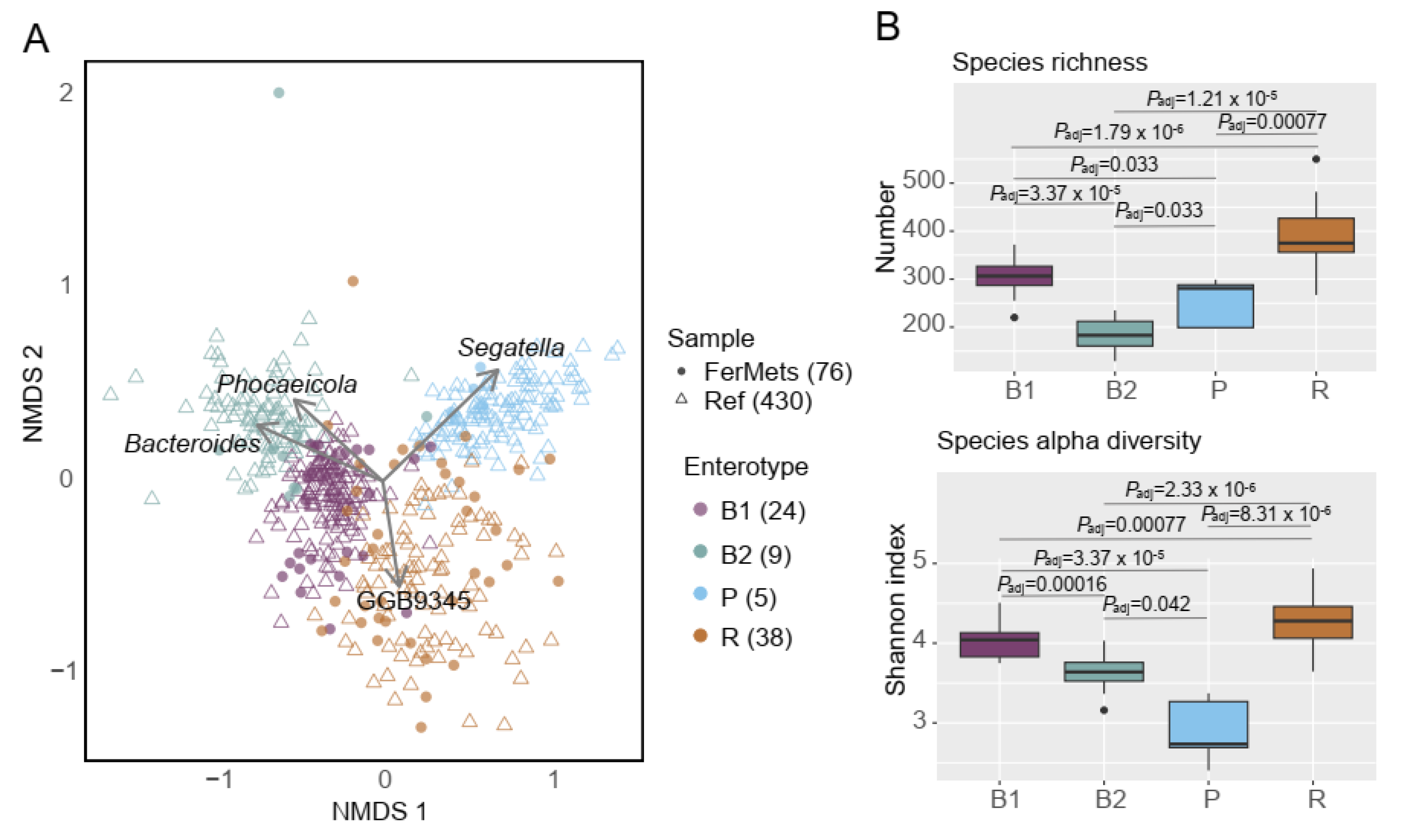
3.1. Four Distinct Enterotypes at Baseline
3.2. Baseline Features of B1 and R Participants
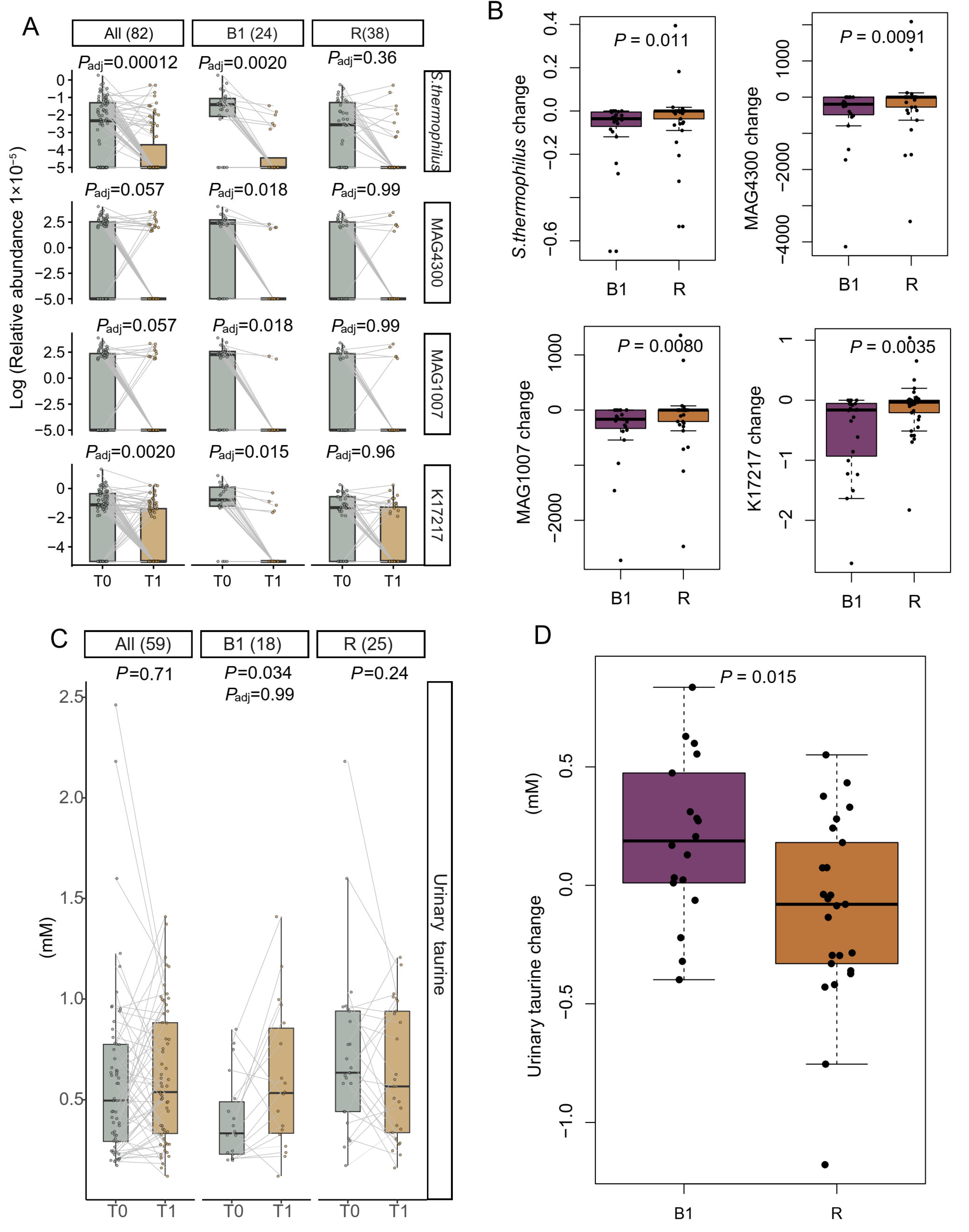
3.3. Features Altered During the Lead-In Phase
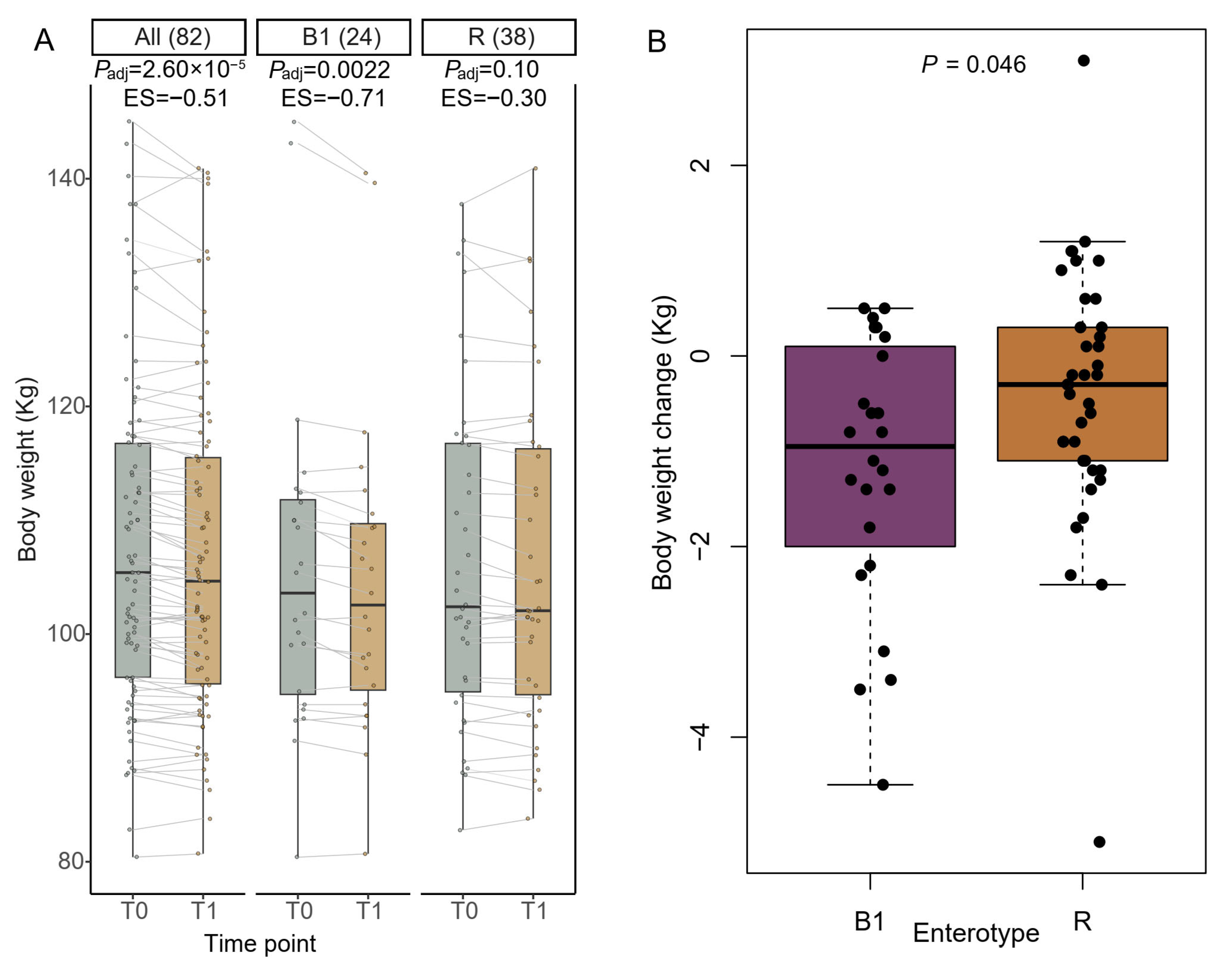
3.4. Enterotypes and Body Weight Change
3.5. Gut Microbiome Potential for Taurine Metabolism and Transport
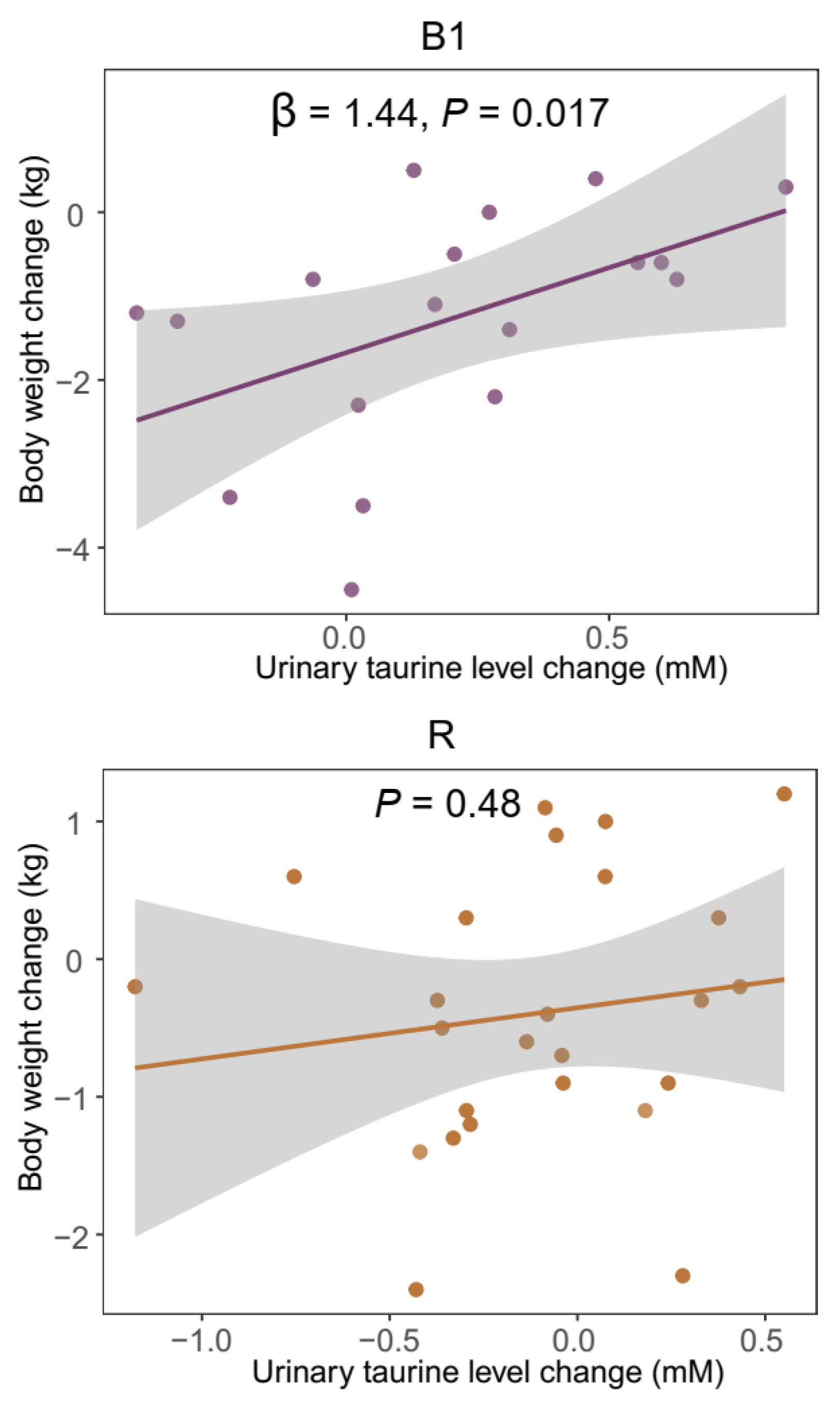
3.6. The Correlation Between S. thermophilus Change and Urinary Taurine Level Change
4. Discussion
5. Conclusions
Supplementary Materials
Author Contributions
Funding
Institutional Review Board Statement
Informed Consent Statement
Data Availability Statement
Acknowledgments
Conflicts of Interest
Abbreviations
| MAG | Metagenome-assembled genomes |
| KEGG | Kyoto Encyclopedia of Genes and Genomes |
| KO | KEGG Ortholog |
References
- Zhang, X.; Ha, S.; Lau, H.C.; Yu, J. Excess body weight: Novel insights into its roles in obesity comorbidities. Semin. Cancer Biol. 2023, 92, 16–27. [Google Scholar] [CrossRef]
- An, S.M.; Cho, S.H.; Yoon, J.C. Adipose tissue and metabolic health. Diabetes Metab. J. 2023, 47, 595–611. [Google Scholar] [CrossRef]
- Shai, I.; Schwarzfuchs, D.; Henkin, Y.; Shahar, D.R.; Witkow, S.; Greenberg, I.; Golan, R.; Fraser, D.; Bolotin, A.; Vardi, H.; et al. Weight loss with a low-carbohydrate, Mediterranean, or low-fat diet. N. Engl. J. Med. 2008, 359, 229–241. [Google Scholar] [CrossRef]
- Bazzano, L.A.; Hu, T.; Reynolds, K.; Yao, L.; Bunol, C.; Liu, Y.; Chen, C.S.; Klag, M.J.; Whelton, P.K.; He, J. Effects of low-carbohydrate and low-fat diets: A randomized trial. Ann. Intern. Med. 2014, 161, 309–318. [Google Scholar] [CrossRef]
- Meslier, V.; Laiola, M.; Roager, H.M.; De Filippis, F.; Roume, H.; Quinquis, B.; Giacco, R.; Mennella, I.; Ferracane, R.; Pons, N.; et al. Mediterranean diet intervention in overweight and obese subjects lowers plasma cholesterol and causes changes in the gut microbiome and metabolome independently of energy intake. Gut 2020, 69, 1258–1268. [Google Scholar] [CrossRef]
- Salas-Salvadó, J.; Díaz-López, A.; Ruiz-Canela, M.; Basora, J.; Fitó, M.; Corella, D.; Serra-Majem, L.; Wärnberg, J.; Romaguera, D.; Estruch, R.; et al. Effect of a lifestyle intervention program with energy-restricted Mediterranean diet and exercise on weight loss and cardiovascular risk factors: One-year results of the PREDIMED-Plus trial. Diabetes Care 2019, 42, 777–788. [Google Scholar] [CrossRef] [PubMed]
- Mohr, A.E.; Sweazea, K.L.; Bowes, D.A.; Jasbi, P.; Whisner, C.M.; Sears, D.D.; Krajmalnik-Brown, R.; Jin, Y.; Gu, H.; Klein-Seetharaman, J.; et al. Gut microbiome remodeling and metabolomic profile improves in response to protein pacing with intermittent fasting versus continuous caloric restriction. Nat. Commun. 2024, 15, 4155. [Google Scholar] [CrossRef] [PubMed]
- Guevara-Cruz, M.; Hernández-Gómez, K.G.; Condado-Huerta, C.; González-Salazar, L.E.; Peña-Flores, A.K.; Pichardo-Ontiveros, E.; Serralde-Zúñiga, A.E.; Sánchez-Tapia, M.; Maya, O.; Medina-Vera, I.; et al. Intermittent fasting, calorie restriction, and a ketogenic diet improve mitochondrial function by reducing lipopolysaccharide signaling in monocytes during obesity: A randomized clinical trial. Clin. Nutr. 2024, 43, 1914–1928. [Google Scholar] [CrossRef] [PubMed]
- Sandby, K.; Magkos, F.; Chabanova, E.; Petersen, E.T.; Krarup, T.; Bertram, H.C.; Kristiansen, K.; Geiker, N.R.W. The effect of dairy products on liver fat and metabolic risk markers in males with abdominal obesity—A four-arm randomized controlled trial. Clin. Nutr. 2024, 43, 534–542. [Google Scholar] [CrossRef]
- Correia, B.S.; Sandby, K.; Krarup, T.; Magkos, F.; Geiker, N.R.; Bertram, H.C. Changes in Plasma, Urine, and Fecal Metabolome after 16 Weeks of Consuming Dairy With Different Food Matrixes–A Randomized Controlled Trial. Mol. Nutr. Food Res. 2024, 68, 2300363. [Google Scholar] [CrossRef]
- Corbin, K.D.; Carnero, E.A.; Dirks, B.; Igudesman, D.; Yi, F.; Marcus, A.; Davis, T.L.; Pratley, R.E.; Rittmann, B.E.; Krajmalnik-Brown, R.; et al. Host-diet-gut microbiome interactions influence human energy balance: A randomized clinical trial. Nat. Commun. 2023, 14, 3161. [Google Scholar] [CrossRef]
- Li, F.; Armet, A.M.; Korpela, K.; Liu, J.; Quevedo, R.M.; Asnicar, F.; Seethaler, B.; Rusnak, T.B.S.; Cole, J.L.; Zhang, Z.; et al. Cardiometabolic benefits of a non-industrialized-type diet are linked to gut microbiome modulation. Cell 2025, 188, 1226–1247.e1218. [Google Scholar] [CrossRef]
- Bar, N.; Korem, T.; Weissbrod, O.; Zeevi, D.; Rothschild, D.; Leviatan, S.; Kosower, N.; Lotan-Pompan, M.; Weinberger, A.; Le Roy, C.I.; et al. A reference map of potential determinants for the human serum metabolome. Nature 2020, 588, 135–140. [Google Scholar] [CrossRef]
- Arumugam, M.; Raes, J.; Pelletier, E.; Le Paslier, D.; Yamada, T.; Mende, D.R.; Fernandes, G.R.; Tap, J.; Bruls, T.; Batto, J.M.; et al. Enterotypes of the human gut microbiome. Nature 2011, 473, 174–180. [Google Scholar] [CrossRef]
- Vieira-Silva, S.; Falony, G.; Belda, E.; Nielsen, T.; Aron-Wisnewsky, J.; Chakaroun, R.; Forslund, S.K.; Assmann, K.; Valles-Colomer, M.; Nguyen, T.T.D.; et al. Statin therapy is associated with lower prevalence of gut microbiota dysbiosis. Nature 2020, 581, 310–315. [Google Scholar] [CrossRef]
- Knights, D.; Ward, T.L.; McKinlay, C.E.; Miller, H.; Gonzalez, A.; McDonald, D.; Knight, R. Rethinking “enterotypes”. Cell Host Microbe 2014, 16, 433–437. [Google Scholar] [CrossRef]
- Costea, P.I.; Hildebrand, F.; Arumugam, M.; Bäckhed, F.; Blaser, M.J.; Bushman, F.D.; de Vos, W.M.; Ehrlich, S.D.; Fraser, C.M.; Hattori, M.; et al. Enterotypes in the landscape of gut microbial community composition. Nat. Microbiol. 2018, 3, 8–16. [Google Scholar] [CrossRef]
- Vieira-Silva, S.; Falony, G.; Darzi, Y.; Lima-Mendez, G.; Garcia Yunta, R.; Okuda, S.; Vandeputte, D.; Valles-Colomer, M.; Hildebrand, F.; Chaffron, S. Species–function relationships shape ecological properties of the human gut microbiome. Nat. Microbiol. 2016, 1, 16088. [Google Scholar] [CrossRef] [PubMed]
- Boekhorst, J.; Venlet, N.; Procházková, N.; Hansen, M.L.; Lieberoth, C.B.; Bahl, M.I.; Lauritzen, L.; Pedersen, O.; Licht, T.R.; Kleerebezem, M.; et al. Stool energy density is positively correlated to intestinal transit time and related to microbial enterotypes. Microbiome 2022, 10, 223. [Google Scholar] [CrossRef] [PubMed]
- Chen, S.; Zhou, Y.; Chen, Y.; Gu, J. fastp: An ultra-fast all-in-one FASTQ preprocessor. Bioinformatics 2018, 34, i884–i890. [Google Scholar] [CrossRef]
- Langmead, B.; Salzberg, S.L. Fast gapped-read alignment with Bowtie 2. Nat. Methods 2012, 9, 357–359. [Google Scholar] [CrossRef]
- Blanco-Míguez, A.; Beghini, F.; Cumbo, F.; McIver, L.J.; Thompson, K.N.; Zolfo, M.; Manghi, P.; Dubois, L.; Huang, K.D.; Thomas, A.M. Extending and improving metagenomic taxonomic profiling with uncharacterized species using MetaPhlAn 4. Nat. Biotechnol. 2023, 41, 1633–1644. [Google Scholar] [CrossRef]
- Prjibelski, A.; Antipov, D.; Meleshko, D.; Lapidus, A.; Korobeynikov, A. Using SPAdes De Novo Assembler. Curr. Protoc. Bioinform. 2020, 70, e102. [Google Scholar] [CrossRef]
- Hyatt, D.; Chen, G.-L.; LoCascio, P.F.; Land, M.L.; Larimer, F.W.; Hauser, L.J. Prodigal: Prokaryotic gene recognition and translation initiation site identification. BMC Bioinform. 2010, 11, 119. [Google Scholar] [CrossRef]
- Steinegger, M.; Söding, J. MMseqs2 enables sensitive protein sequence searching for the analysis of massive data sets. Nat. Biotechnol. 2017, 35, 1026–1028. [Google Scholar] [CrossRef]
- Aroney, S.T.; Newell, R.J.; Nissen, J.N.; Camargo, A.P.; Tyson, G.W.; Woodcroft, B.J. CoverM: Read alignment statistics for metagenomics. Bioinform. 2025, 41, btaf147. [Google Scholar] [CrossRef]
- Cantalapiedra, C.P.; Hernández-Plaza, A.; Letunic, I.; Bork, P.; Huerta-Cepas, J. eggNOG-mapper v2: Functional annotation, orthology assignments, and domain prediction at the metagenomic scale. Mol. Biol. Evol. 2021, 38, 5825–5829. [Google Scholar] [CrossRef]
- Nissen, J.N.; Johansen, J.; Allesøe, R.L.; Sønderby, C.K.; Armenteros, J.J.A.; Grønbech, C.H.; Jensen, L.J.; Nielsen, H.B.; Petersen, T.N.; Winther, O. Improved metagenome binning and assembly using deep variational autoencoders. Nat. Biotechnol. 2021, 39, 555–560. [Google Scholar] [CrossRef]
- Chklovski, A.; Parks, D.H.; Woodcroft, B.J.; Tyson, G.W. CheckM2: A rapid, scalable and accurate tool for assessing microbial genome quality using machine learning. Nat. Methods 2023, 20, 1203–1212. [Google Scholar] [CrossRef]
- Olm, M.R.; Brown, C.T.; Brooks, B.; Banfield, J.F. dRep: A tool for fast and accurate genomic comparisons that enables improved genome recovery from metagenomes through de-replication. ISME J. 2017, 11, 2864–2868. [Google Scholar] [CrossRef]
- Chaumeil, P.A.; Mussig, A.J.; Hugenholtz, P.; Parks, D.H. GTDB-Tk v2: Memory friendly classification with the genome taxonomy database. Bioinform. 2022, 38, 5315–5316. [Google Scholar] [CrossRef]
- Parks, D.H.; Chuvochina, M.; Rinke, C.; Mussig, A.J.; Chaumeil, P.A.; Hugenholtz, P. GTDB: An ongoing census of bacterial and archaeal diversity through a phylogenetically consistent, rank normalized and complete genome-based taxonomy. Nucleic Acids Res. 2022, 50, D785–D794. [Google Scholar] [CrossRef]
- Frioux, C.; Ansorge, R.; Özkurt, E.; Ghassemi Nedjad, C.; Fritscher, J.; Quince, C.; Waszak, S.M.; Hildebrand, F. Enterosignatures define common bacterial guilds in the human gut microbiome. Cell Host Microbe 2023, 31, 1111–1125.e1116. [Google Scholar] [CrossRef]
- Li, Y.; Zhao, D.; Qian, M.; Liu, J.; Pan, C.; Zhang, X.; Duan, X.; Zhang, Y.; Jia, W.; Wang, L. Amlodipine, an anti-hypertensive drug, alleviates non-alcoholic fatty liver disease by modulating gut microbiota. Br. J. Pharmacol. 2022, 179, 2054–2077. [Google Scholar] [CrossRef]
- Wolf, P.G.; Cowley, E.S.; Breister, A.; Matatov, S.; Lucio, L.; Polak, P.; Ridlon, J.M.; Gaskins, H.R.; Anantharaman, K. Diversity and distribution of sulfur metabolic genes in the human gut microbiome and their association with colorectal cancer. Microbiome 2022, 10, 64. [Google Scholar] [CrossRef]
- Mallick, H.; Rahnavard, A.; McIver, L.J.; Ma, S.; Zhang, Y.; Nguyen, L.H.; Tickle, T.L.; Weingart, G.; Ren, B.; Schwager, E.H.; et al. Multivariable association discovery in population-scale meta-omics studies. PLoS Comput. Biol. 2021, 17, e1009442. [Google Scholar] [CrossRef]
- Fritz, C.O.; Morris, P.E.; Richler, J.J. Effect size estimates: Current use, calculations, and interpretation. J. Exp. Psychol. Gen. 2012, 141, 2. [Google Scholar] [CrossRef]
- Hitch, T.C.A.; Bisdorf, K.; Afrizal, A.; Riedel, T.; Overmann, J.; Strowig, T.; Clavel, T. A taxonomic note on the genus Prevotella: Description of four novel genera and emended description of the genera Hallella and Xylanibacter. Syst. Appl. Microbiol. 2022, 45, 126354. [Google Scholar] [CrossRef]
- Li, X.; Yin, J.; Zhu, Y.; Wang, X.; Hu, X.; Bao, W.; Huang, Y.; Chen, L.; Chen, S.; Yang, W.; et al. Effects of Whole Milk Supplementation on Gut Microbiota and Cardiometabolic Biomarkers in Subjects with and without Lactose Malabsorption. Nutrients 2018, 10, 1403. [Google Scholar] [CrossRef]
- Cakebread, J.; Wallace, O.A.M.; Henderson, H.; Jauregui, R.; Young, W.; Hodgkinson, A. The impacts of bovine milk, soy beverage, or almond beverage on the growing rat microbiome. PeerJ 2022, 10, e13415. [Google Scholar] [CrossRef]
- Song, C.H.; Kim, N.; Choi, Y.; Kim, S.; Kim, K.S.; Park, M.H.; Lee, S.H.; Lee, D.H. Beneficial effect of consuming milk containing only A2 beta-casein on gut microbiota: A single-center, randomized, double-blind, cross-over study. PLoS ONE 2025, 20, e0323016. [Google Scholar] [CrossRef]
- Feng, Y.F.; Zhao, Y.; Liu, J.; Huang, Z.L.; Yang, X.J.; Qin, P.; Chen, C.Q.; Luo, X.P.; Li, Y.; Wu, Y.Y.; et al. Consumption of Dairy Products and the Risk of Overweight or Obesity, Hypertension, and Type 2 Diabetes Mellitus: A Dose-Response Meta-Analysis and Systematic Review of Cohort Studies. Adv. Nutr. 2022, 13, 2165–2179. [Google Scholar] [CrossRef]
- Bergholdt, H.K.; Nordestgaard, B.G.; Ellervik, C. Milk intake is not associated with low risk of diabetes or overweight-obesity: A Mendelian randomization study in 97,811 Danish individuals. Am. J. Clin. Nutr. 2015, 102, 487–496. [Google Scholar] [CrossRef]
- Park, J.; Lee, D.K.; Sharma, A.; Lee, H.J. An eight-week randomized intervention study on Korean adults to evaluate the effect of milk intake on obesity. J. Dairy. Sci. 2023, 106, 8262–8271. [Google Scholar] [CrossRef]
- Faghih, S.; Abadi, A.R.; Hedayati, M.; Kimiagar, S.M. Comparison of the effects of cows’ milk, fortified soy milk, and calcium supplement on weight and fat loss in premenopausal overweight and obese women. Nutr. Metab. Cardiovasc. Dis. 2011, 21, 499–503. [Google Scholar] [CrossRef]
- Fathi, Y.; Faghih, S.; Zibaeenezhad, M.J.; Tabatabaei, S.H. Kefir drink leads to a similar weight loss, compared with milk, in a dairy-rich non-energy-restricted diet in overweight or obese premenopausal women: A randomized controlled trial. Eur. J. Nutr. 2016, 55, 295–304. [Google Scholar] [CrossRef]
- Manzi, P.; Pizzoferrato, L. Taurine in milk and yoghurt marketed in Italy. Int. J. Food Sci. Nutr. 2013, 64, 112–116. [Google Scholar] [CrossRef]
- Tastesen, H.S.; Keenan, A.H.; Madsen, L.; Kristiansen, K.; Liaset, B. Scallop protein with endogenous high taurine and glycine content prevents high-fat, high-sucrose-induced obesity and improves plasma lipid profile in male C57BL/6J mice. Amino Acids 2014, 46, 1659–1671. [Google Scholar] [CrossRef]
- Chesney, R.W.; Han, X.; Patters, A.B. Taurine and the renal system. J. Biomed. Sci. 2010, 17, S4. [Google Scholar] [CrossRef]
- Zhang, M.; Bi, L.F.; Fang, J.H.; Su, X.L.; Da, G.L.; Kuwamori, T.; Kagamimori, S. Beneficial effects of taurine on serum lipids in overweight or obese non-diabetic subjects. Amino Acids 2004, 26, 267–271. [Google Scholar] [CrossRef]
- De Carvalho, F.G.; Brandao, C.F.C.; Batitucci, G.; Souza, A.O.; Ferrari, G.D.; Alberici, L.C.; Muñoz, V.R.; Pauli, J.R.; De Moura, L.P.; Ropelle, E.R.; et al. Taurine supplementation associated with exercise increases mitochondrial activity and fatty acid oxidation gene expression in the subcutaneous white adipose tissue of obese women. Clin. Nutr. 2021, 40, 2180–2187. [Google Scholar] [CrossRef]
- Rosa, F.T.; Freitas, E.C.; Deminice, R.; Jordão, A.A.; Marchini, J.S. Oxidative stress and inflammation in obesity after taurine supplementation: A double-blind, placebo-controlled study. Eur. J. Nutr. 2014, 53, 823–830. [Google Scholar] [CrossRef]
- Batitucci, G.; Brandao, C.F.C.; De Carvalho, F.G.; Marchini, J.S.; Pfrimer, K.; Ferrioli, E.; Cunha, F.Q.; Papoti, M.; Terrazas, S.; Junqueira-Franco, M.V.M.; et al. Taurine supplementation increases irisin levels after high intensity physical training in obese women. Cytokine 2019, 123, 154741. [Google Scholar] [CrossRef] [PubMed]
- Haidari, F.; Asadi, M.; Mohammadi-Asl, J.; Ahmadi-Angali, K. Effect of weight-loss diet combined with taurine supplementation on body composition and some biochemical markers in obese women: A randomized clinical trial. Amino Acids 2020, 52, 1115–1124. [Google Scholar] [CrossRef]
- Geng, X.; Feng, Y.; Yu, C.; Yao, Y.; Chen, W.; Guo, J.; Zhang, Y.; Zhang, J.; Mi, S. Taurine supplementation decreases fat accumulation by suppressing FAS and enhancing ATGL through the ATGL pathway. Iran. J. Basic. Med. Sci. 2024, 27, 1529–1535. [Google Scholar] [PubMed]
- Kim, K.S.; Doss, H.M.; Kim, H.J.; Yang, H.I. Taurine Stimulates Thermoregulatory Genes in Brown Fat Tissue and Muscle without an Influence on Inguinal White Fat Tissue in a High-Fat Diet-Induced Obese Mouse Model. Foods 2020, 9, 688. [Google Scholar] [CrossRef]
- Guo, Y.Y.; Li, B.Y.; Peng, W.Q.; Guo, L.; Tang, Q.Q. Taurine-mediated browning of white adipose tissue is involved in its anti-obesity effect in mice. J. Biol. Chem. 2019, 294, 15014–15024. [Google Scholar] [CrossRef]
- Zhao, D.; Yin, D.; Wang, X.; Li, Y.; He, M.; Hu, J.; Shumei, L.; Yang, J. Taurine alleviates high-fat-high-glucose-induced pancreatic islet β-cell oxidative stress and apoptosis in rat. Heliyon 2023, 9, e21879. [Google Scholar] [CrossRef] [PubMed]
- Osuga, Y.; Harada, K.; Yamauchi, T.; Kitaguchi, T.; Hirai, M.Y.; Matsumoto, M.; Tsuboi, T. Taurine promotes glucagon-like peptide-1 secretion in enteroendocrine L cells. FEBS Lett. 2025, 599, 1595–1608. [Google Scholar] [CrossRef]
- Sarra, F.; Paocic, D.; Zöchling, A.; Gregor, A.; Auñon-Lopez, A.; Pignitter, M.; Duszka, K. Gut microbiota, dietary taurine, and fiber shift taurine homeostasis in adipose tissue of calorie-restricted mice to impact fat loss. J. Nutr. Biochem. 2024, 134, 109720. [Google Scholar] [CrossRef]
- Yu, P.; Jiang, Y.; Pan, Y.; Guo, M.; Yang, B.; Liu, X.; Zhao, J.; Zhang, H.; Chen, W. Strain-specific effect of Streptococcus thermophilus consumption on host physiology. Food Sci. Hum. Wellness 2024, 13, 2876–2888. [Google Scholar] [CrossRef]
- Zhao, M.; Zhao, J.; Yang, H.; Ouyang, Z.; Lv, C.; Geng, Z.; Zhao, J. The bile acid-gut microbiota axis: A central hub for physiological regulation and a novel therapeutic target for metabolic diseases. Biomed. Pharmacother. 2025, 188, 118182. [Google Scholar] [CrossRef]
- Su, R.; Wen, W.; Jin, Y.; Cao, Z.; Feng, Z.; Chen, J.; Lu, Y.; Zhou, G.; Dong, C.; Gao, S.; et al. Dietary whey protein protects against Crohn’s disease by orchestrating cross-kingdom interaction between the gut phageome and bacteriome. Gut 2025, 74, 1246–1260. [Google Scholar] [CrossRef] [PubMed]
- Zeevi, D.; Korem, T.; Zmora, N.; Israeli, D.; Rothschild, D.; Weinberger, A.; Ben-Yacov, O.; Lador, D.; Avnit-Sagi, T.; Lotan-Pompan, M.; et al. Personalized Nutrition by Prediction of Glycemic Responses. Cell 2015, 163, 1079–1094. [Google Scholar] [CrossRef] [PubMed]
- Zeevi, D.; Korem, T.; Godneva, A.; Bar, N.; Kurilshikov, A.; Lotan-Pompan, M.; Weinberger, A.; Fu, J.; Wijmenga, C.; Zhernakova, A.; et al. Structural variation in the gut microbiome associates with host health. Nature 2019, 568, 43–48. [Google Scholar] [CrossRef]



| Predictor | Estimate | Std. Error | T Value | p Value | R2 | Adjusted R2 |
|---|---|---|---|---|---|---|
| (Intercept) | 2.51 | 1.24 | 2.02 | 0.050 | 0.37 | 0.33 |
| Baseline body weight | −0.038 | 0.011 | −3.27 | 0.0023 | ||
| Enterotype B1 | −1.07 | 0.34 | −3.12 | 0.0034 | ||
| Urinary taurine level change | 1.04 | 0.43 | 2.40 | 0.021 |
Disclaimer/Publisher’s Note: The statements, opinions and data contained in all publications are solely those of the individual author(s) and contributor(s) and not of MDPI and/or the editor(s). MDPI and/or the editor(s) disclaim responsibility for any injury to people or property resulting from any ideas, methods, instructions or products referred to in the content. |
© 2026 by the authors. Licensee MDPI, Basel, Switzerland. This article is an open access article distributed under the terms and conditions of the Creative Commons Attribution (CC BY) license.
Share and Cite
Qin, P.; Berzina, L.; Geiker, N.R.W.; Sandby, K.; Krarup, T.; Kristiansen, K.; Magkos, F. Associations Between Gut Microbiome Enterotypes and Body Weight Change During Whole Milk Consumption. Nutrients 2026, 18, 563. https://doi.org/10.3390/nu18040563
Qin P, Berzina L, Geiker NRW, Sandby K, Krarup T, Kristiansen K, Magkos F. Associations Between Gut Microbiome Enterotypes and Body Weight Change During Whole Milk Consumption. Nutrients. 2026; 18(4):563. https://doi.org/10.3390/nu18040563
Chicago/Turabian StyleQin, Panpan, Lelde Berzina, Nina Rica Wium Geiker, Karoline Sandby, Thure Krarup, Karsten Kristiansen, and Faidon Magkos. 2026. "Associations Between Gut Microbiome Enterotypes and Body Weight Change During Whole Milk Consumption" Nutrients 18, no. 4: 563. https://doi.org/10.3390/nu18040563
APA StyleQin, P., Berzina, L., Geiker, N. R. W., Sandby, K., Krarup, T., Kristiansen, K., & Magkos, F. (2026). Associations Between Gut Microbiome Enterotypes and Body Weight Change During Whole Milk Consumption. Nutrients, 18(4), 563. https://doi.org/10.3390/nu18040563