Using Plant-Derived Polysaccharides in the Management of Cognitive Disorders: Molecular and Clinical Perspectives

Abstract
1. Introduction
2. Materials and Methods
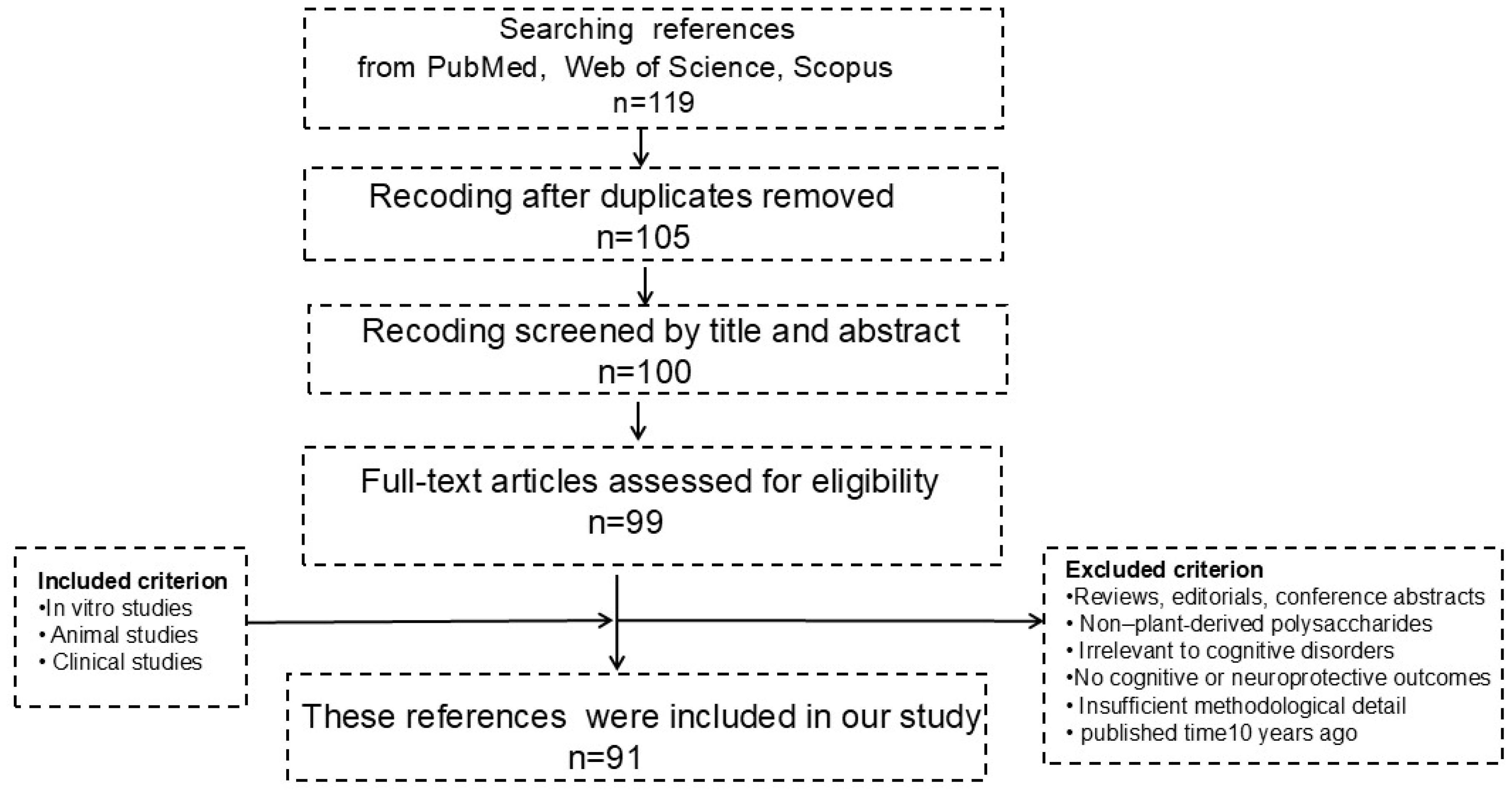
2.1. Literature Search Strategy
2.2. Inclusion and Exclusion Criteria
2.3. Data Extraction and Synthesis
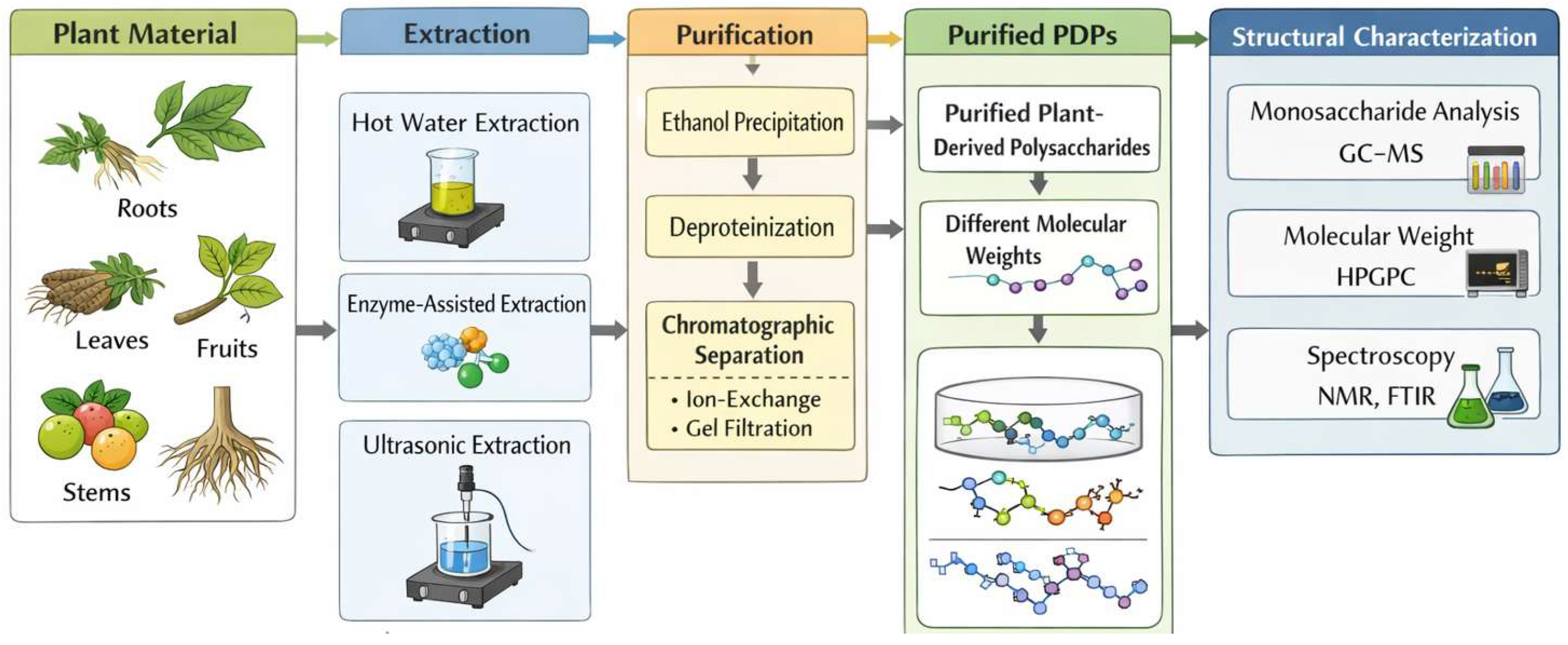
3. Overview of Plant-Derived Polysaccharides
3.1. The Structure of Plant-Derived Polysaccharides
3.2. The Function of Plant-Derived Polysaccharides
3.3. The Relationship of Structure and Function of Plant-Derived Polysaccharides
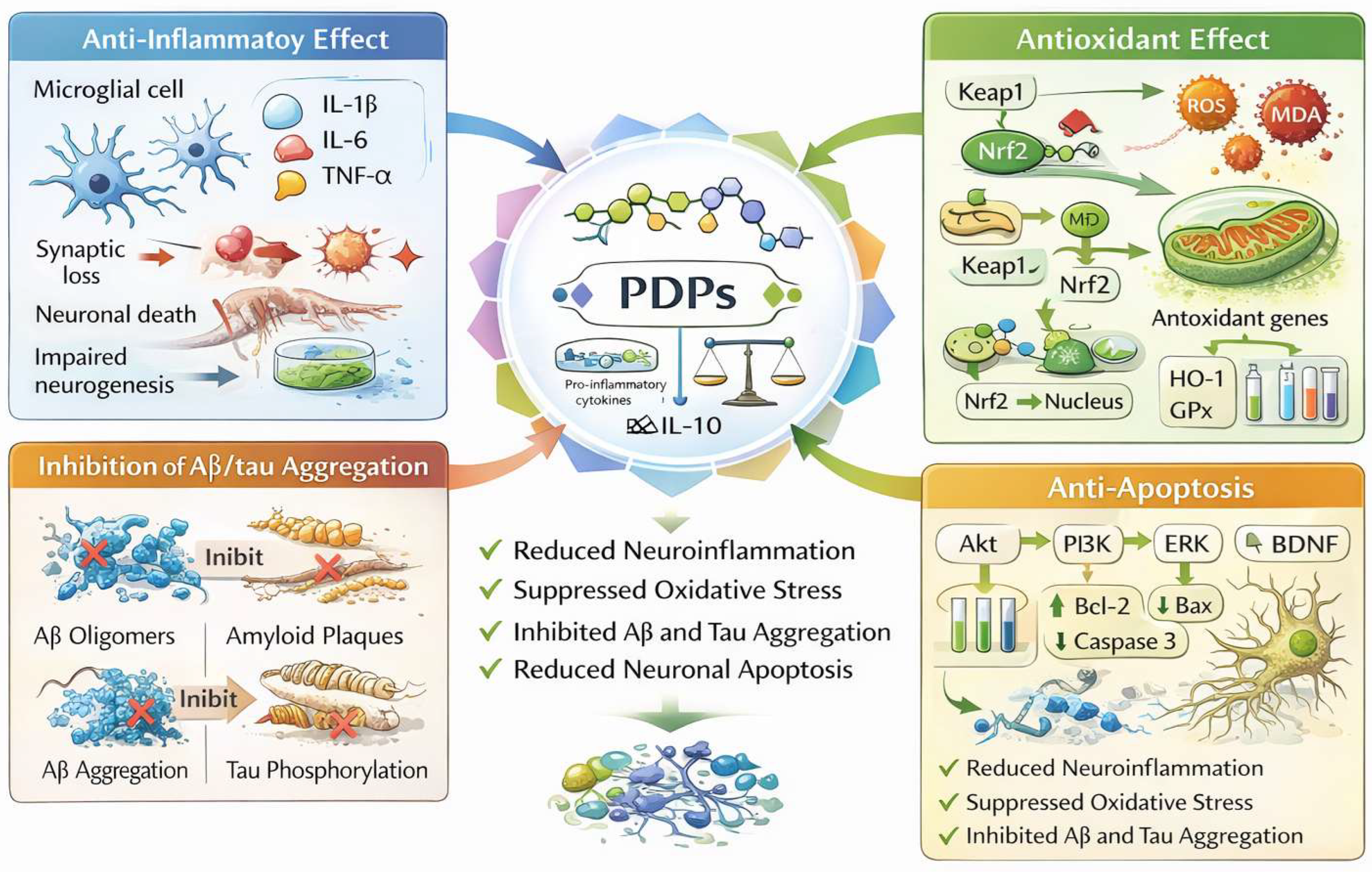
4. Molecular Mechanisms Governing Pdp-Mediated Neuroprotection
4.1. The Anti-Inflammatory Effect
4.2. The Antioxidant Effect
4.3. Inhibition of Protein Aggregation
4.4. Inhibit Neuronal Cell Apoptosis
5. Pdps as Regulators of the Gut–Brain Axis
6. Clinical Prospects
7. Future Perspectives and Opportunities
8. Limitations
9. Conclusions
Author Contributions
Funding
Institutional Review Board Statement
Informed Consent Statement
Data Availability Statement
Conflicts of Interest
References
- Moon, W.; Han, J.W.; Bae, J.B.; Suh, S.W.; Kim, T.H.; Kwak, K.P.; Kim, B.J.; Kim, S.G.; Kim, J.L.; Moon, S.W.; et al. Disease burdens of Alzheimer’s disease, vascular dementia, and mild cognitive impairment. J. Am. Med. Dir. Assoc. 2021, 22, 2093–2099.e3. [Google Scholar] [CrossRef] [PubMed]
- Yanez, I.M.; Torres-Cuevas, I.; Corral-Debrinski, M. Neuroglobin: A promising candidate to treat neurological diseases. Neural Regen. Res. 2026, 21, 1292–1303. [Google Scholar] [PubMed]
- El-Hayek, Y.H.; Wiley, R.E.; Khoury, C.P.; Daya, R.P.; Ballard, C.; Evans, A.R.; Karran, M.; Molinuevo, J.L.; Norton, M.; Atri, A. Tip of the Iceberg: Assessing the Global Socioeconomic Costs of Alzheimer’s Disease and Related Dementias and Strategic Implications for Stakeholders. J. Alzheimer’s Dis. 2019, 70, 323–341. [Google Scholar] [CrossRef] [PubMed]
- Singh, N.; Hazari, P.P.; Mittal, P.; Yadav, S.K.; Kumar, N.; Mishra, G.; Dahiya, S.; Mishra, A.K. Role of selective serotonin reuptake inhibitors, serotonin-norepinephrine reuptake inhibitors and psychedelics in the treatment of major depressive disorder: A perspective on mechanistic insight and current status. Eur. J. Pharmacol. 2025, 1001, 177737. [Google Scholar] [CrossRef]
- Finn, L. Current medications for the treatment of Alzheimer’s disease: Acetylcholinesterase inhibitors and NMDA receptor antagonist. In Drug Discovery Approaches for the Treatment of Neurodegenerative Disorders; Elsevier: Amsterdam, The Netherlands, 2017; pp. 49–58. [Google Scholar]
- Ceyzériat, K.; Zilli, T.; Millet, P.; Frisoni, G.B.; Garibotto, V.; Tournier, B.B. Learning from the past: A review of clinical trials targeting amyloid, tau and neuroinflammation in Alzheimer’s disease. Curr. Alzheimer Res. 2020, 17, 112–125. [Google Scholar] [CrossRef]
- Xue, H.; Li, P.; Bian, J.; Gao, Y.; Sang, Y.; Tan, J. Extraction, purification, structure, modification, and biological activity of traditional Chinese medicine polysaccharides: A review. Front. Nutr. 2022, 9, 1005181. [Google Scholar] [CrossRef]
- Gao, J.; Liang, Y.; Liu, P. Along the microbiota–gut–brain axis: Use of plant polysaccharides to improve mental disorders. Int. J. Biol. Macromol. 2024, 265, 130903. [Google Scholar] [CrossRef]
- Yue, B.; Zong, G.; Tao, R.; Wei, Z.; Lu, Y. Crosstalk between traditional Chinese medicine-derived polysaccharides and the gut microbiota: A new perspective to understand traditional Chinese medicine. Phytother. Res. 2022, 36, 4125–4138. [Google Scholar] [CrossRef]
- Loh, J.S.; Mak, W.Q.; Tan, L.K.S.; Ng, C.X.; Chan, H.H.; Yeow, S.H.; Foo, J.B.; Ong, Y.S.; How, C.W.; Khaw, K.Y. Microbiota–gut–brain axis and its therapeutic applications in neurodegenerative diseases. Signal Transduct. Target. Ther. 2024, 9, 37. [Google Scholar] [CrossRef]
- Wang, H.; Li, H.; Hou, Y.; Zhang, P.; Tan, M. Plant polysaccharides: Sources, structures, and antidiabetic effects. Curr. Opin. Food Sci. 2023, 51, 101013. [Google Scholar] [CrossRef]
- Kabir, S.F.; Rahman, A.; Yeasmin, F.; Sultana, S.; Masud, R.A.; Kanak, N.A.; Haque, P. Occurrence, distribution, and structure of natural polysaccharides. In Radiation-Processed Polysaccharides; Elsevier: Amsterdam, The Netherlands, 2022; pp. 1–27. [Google Scholar]
- Lu, J.; He, R.; Sun, P.; Zhang, F.; Linhardt, R.J.; Zhang, A. Molecular mechanisms of bioactive polysaccharides from Ganoderma lucidum (Lingzhi), a review. Int. J. Biol. Macromol. 2020, 150, 765–774. [Google Scholar] [CrossRef] [PubMed]
- Chen, G.; Jiang, N.; Zheng, J.; Hu, H.; Yang, H.; Lin, A.; Hu, B.; Liu, H. Structural characterization and anti-inflammatory activity of polysaccharides from Astragalus membranaceus. Int. J. Biol. Macromol. 2023, 241, 124386. [Google Scholar] [CrossRef] [PubMed]
- Chen, W.; Cheng, X.; Chen, J.; Yi, X.; Nie, D.; Sun, X.; Qin, J.; Tian, M.; Jin, G.; Zhang, X. Lycium barbarum polysaccharides prevent memory and neurogenesis impairments in scopolamine-treated rats. PLoS ONE 2014, 9, e88076. [Google Scholar] [CrossRef]
- Xu, W.; Zhao, J.; Li, S. Action mechanisms of polysaccharides in Chinese herbal decoctions. Acupunct. Herb. Med. 2025, 5, 1–22. [Google Scholar] [CrossRef]
- Wang, Y.; Chen, R.; Yang, Z.; Wen, Q.; Cao, X.; Zhao, N.; Yan, J. Protective effects of polysaccharides in neurodegenerative diseases. Front. Aging Neurosci. 2022, 14, 917629. [Google Scholar] [CrossRef]
- Shukla, D.; Jaiswal, A.K.; Suryavanshi, A.; Asati, V.; Mahapatra, D.K.; Kumar, V.; Bharti, S.K. Role of garlic and onion for better cognition and maintenance of neurodegenerative diseases. In Nutraceutical Fruits and Foods for Neurodegenerative Disorders; Elsevier: Amsterdam, The Netherlands, 2024; pp. 333–352. [Google Scholar]
- Gan, Q.; Ding, Y.; Peng, M.; Chen, L.; Dong, J.; Hu, J.; Ma, Y. The potential of edible and medicinal resource polysaccharides for prevention and treatment of neurodegenerative diseases. Biomolecules 2023, 13, 873. [Google Scholar] [CrossRef]
- Zhao, C.; Li, X.; Miao, J.; Jing, S.; Li, X.; Huang, L.; Gao, W. The effect of different extraction techniques on property and bioactivity of polysaccharides from Dioscorea hemsleyi. Int. J. Biol. Macromol. 2017, 102, 847–856. [Google Scholar] [CrossRef]
- Li, X.; Wang, L. Effect of extraction method on structure and antioxidant activity of Hohenbuehelia serotina polysaccharides. Int. J. Biol. Macromol. 2016, 83, 270–276. [Google Scholar] [CrossRef]
- Li, L.-F.; Zhang, Q.-W.; Han, Q.-B. Recent advances in qualitative and quantitative analysis of polysaccharides in natural medicines: A critical review. J. Pharm. Biomed. Anal. 2022, 220, 115016. [Google Scholar] [CrossRef] [PubMed]
- Ying, C.; Kang, P.; Binkley, M.M.; Ford, A.L.; Chen, Y.; Hassenstab, J.; Wang, Q.; Strain, J.; Morris, J.C.; Lee, J.-M.; et al. Neuroinflammation and amyloid deposition in the progression of mixed Alzheimer and vascular dementia. NeuroImage Clin. 2023, 38, 103373. [Google Scholar] [CrossRef]
- Leng, F.; Edison, P. Neuroinflammation and microglial activation in Alzheimer disease: Where do we go from here? Nat. Rev. Neurol. 2021, 17, 157–172. [Google Scholar] [CrossRef]
- Hilliard, A.; Mendonca, P.; Soliman, K.F. Involvement of NFƙB and MAPK signaling pathways in the preventive effects of Ganoderma lucidum on the inflammation of BV-2 microglial cells induced by LPS. J. Neuroimmunol. 2020, 345, 577269. [Google Scholar] [CrossRef]
- Yang, L.; Han, X.; Xing, F.; Wu, H.; Shi, H.; Huang, F.; Xu, Q.; Wu, X. Total flavonoids of astragalus attenuates experimental autoimmune encephalomyelitis by suppressing the activation and inflammatory responses of microglia via JNK/AKT/NFκB signaling pathway. Phytomedicine 2021, 80, 153385. [Google Scholar] [CrossRef]
- Xu, M.; Wang, J.; Zhang, X.; Yan, T.; Wu, B.; Bi, K.; Jia, Y. Polysaccharide from Schisandra chinensis acts via LRP-1 to reverse microglia activation through suppression of the NF-κB and MAPK signaling. J. Ethnopharmacol. 2020, 256, 112798. [Google Scholar] [CrossRef]
- Bai, H.; Zhang, Q. Activation of NLRP3 inflammasome and onset of Alzheimer’s disease. Front. Immunol. 2021, 12, 701282. [Google Scholar] [CrossRef]
- Li, W.; Shao, C.; Huang, P.; Yu, D.; Yang, J.; Wan, H.; He, Y. Optimization, characterization of Astragalus polysaccharides, and evaluation of anti-inflammation effect in primary cultured astrocytes via HMGB1/RAGE/NF-κB/NLRP3 signal pathway. Ind. Crops Prod. 2023, 197, 116594. [Google Scholar] [CrossRef]
- Feng, C.Z.; Cao, L.; Luo, D.; Ju, L.S.; Yang, J.J.; Xu, X.Y.; Yu, Y.P. Dendrobium polysaccharides attenuate cognitive impairment in senescence-accelerated mouse prone 8 mice via modulation of microglial activation. Brain Res. 2019, 1704, 1–10. [Google Scholar] [CrossRef] [PubMed]
- Zhang, X.; Ge, R.; Wu, J.; Cai, X.; Deng, G.; Lv, J.; Ma, M.; Yu, N.; Yao, L.; Peng, D. Structural characterization and improves cognitive disorder in ageing mice of a glucomannan from Dendrobium huoshanense. Int. J. Biol. Macromol. 2024, 269, 131995. [Google Scholar] [CrossRef]
- Lu, Q.; Meng, Y.; Feng, H.; Di, X.; Guo, X. Evaluation of the Anti-Alzheimer Activity of Lycium barbarum Polysaccharide in Abeta(1-42)-Induced Neurotoxicity in Rat Model. Curr. Issues Mol. Biol. 2025, 47, 226. [Google Scholar] [CrossRef]
- Franzoni, F.; Scarfò, G.; Guidotti, S.; Fusi, J.; Asomov, M.; Pruneti, C. Oxidative Stress and Cognitive Decline: The Neuroprotective Role of Natural Antioxidants. Front. Neurosci. 2021, 15, 729757. [Google Scholar] [CrossRef] [PubMed]
- Liu, Y.; Sun, Y.; Huang, G. Preparation and antioxidant activities of important traditional plant polysaccharides. Int. J. Biol. Macromol. 2018, 111, 780–786. [Google Scholar] [CrossRef]
- Yang, Y.; Yu, L.; Zhu, T.; Xu, S.; He, J.; Mao, N.; Liu, Z.; Wang, D. Neuroprotective effects of Lycium barbarum polysaccharide on light-induced oxidative stress and mitochondrial damage via the Nrf2/HO-1 pathway in mouse hippocampal neurons. Int. J. Biol. Macromol. 2023, 251, 126315. [Google Scholar] [CrossRef]
- Hu, C.; Li, J.; Yang, D.; Pan, Y.; Wan, H. A neuroprotective polysaccharide from Hyriopsis cumingii. J. Nat. Prod. 2010, 73, 1489–1493. [Google Scholar] [CrossRef]
- Sun, X.Z.; Liao, Y.; Li, W.; Guo, L.M. Neuroprotective effects of Ganoderma lucidum polysaccharides against oxidative stress-induced neuronal apoptosis. Neural Regen. Res. 2017, 12, 953–958. [Google Scholar] [CrossRef] [PubMed]
- Guo, S.S.; Cui, X.L.; Rausch, W.D. Ganoderma Lucidum polysaccharides protect against MPP+ and rotenone-induced apoptosis in primary dopaminergic cell cultures through inhibiting oxidative stress. Am. J. Neurodegener. Dis. 2016, 5, 131–144. [Google Scholar]
- Olasehinde, T.A.; Olaniran, A.O.; Okoh, A.I. Sulfated polysaccharides of some seaweeds exhibit neuroprotection via mitigation of oxidative stress, cholinergic dysfunction and inhibition of Zn-induced neuronal damage in HT-22 cells. BMC Complement. Med. Ther. 2020, 20, 251. [Google Scholar] [CrossRef]
- Lei, T.; Li, H.; Fang, Z.; Lin, J.; Wang, S.; Xiao, L.; Yang, F.; Liu, X.; Zhang, J.; Huang, Z.; et al. Polysaccharides from Angelica sinensis alleviate neuronal cell injury caused by oxidative stress. Neural Regen. Res. 2014, 9, 260–267. [Google Scholar] [CrossRef] [PubMed]
- Wang, F.; Liu, Q.; Wang, W.; Li, X.; Zhang, J. A polysaccharide isolated from Cynomorium songaricum Rupr. protects PC12 cells against H2O2-induced injury. Int. J. Biol. Macromol. 2016, 87, 222–228. [Google Scholar] [CrossRef] [PubMed]
- Loboda, A.; Damulewicz, M.; Pyza, E.; Jozkowicz, A.; Dulak, J. Role of Nrf2/HO-1 system in development, oxidative stress response and diseases: An evolutionarily conserved mechanism. Cell. Mol. Life Sci. 2016, 73, 3221–3247. [Google Scholar] [CrossRef]
- Yu, C.; Xiao, J.-H. The Keap1-Nrf2 system: A mediator between oxidative stress and aging. Oxidative Med. Cell. Longev. 2021, 2021, 6635460. [Google Scholar] [CrossRef]
- Huang, G.; Mei, X.; Hu, J. The antioxidant activities of natural polysaccharides. Curr. Drug Targets 2017, 18, 1296–1300. [Google Scholar] [CrossRef]
- Gao, Q.-H.; Fu, X.; Zhang, R.; Wang, Z.; Guo, M. Neuroprotective effects of plant polysaccharides: A review of the mechanisms. Int. J. Biol. Macromol. 2018, 106, 749–754. [Google Scholar] [CrossRef]
- Guan, Y.; Wang, C.; Li, L.; Dai, X.; Liu, Y.; Hsiang, T.; Liu, S.; Wang, D. Structural characterization of Hericium coralloides polysaccharide and its neuroprotective function in Alzheimer’s disease. Int. J. Biol. Macromol. 2024, 277, 133865. [Google Scholar] [CrossRef]
- Liu, Y.; Liu, Z.; Wei, M.; Hu, M.; Yue, K.; Bi, R.; Zhai, S.; Pi, Z.; Song, F.; Liu, Z. Pharmacodynamic and urinary metabolomics studies on the mechanism of Schisandra polysaccharide in the treatment of Alzheimer’s disease. Food Funct. 2019, 10, 432–447. [Google Scholar] [CrossRef]
- Wang, C.; Duan, X.; Li, H.; Zeng, S.; Yang, Y.; Zhang, W.; Liu, Y.; Ma, W.; Ma, L.; Fan, Y. On the miRNAs-regulated mechanisms by which natural plant polysaccharides control apoptosis. Pharmacol. Res.-Mod. Chin. Med. 2024, 11, 100456. [Google Scholar] [CrossRef]
- Wang, C.S.; Kavalali, E.T.; Monteggia, L.M. BDNF signaling in context: From synaptic regulation to psychiatric disorders. Cell 2022, 185, 62–76. [Google Scholar] [CrossRef]
- Ma, M.; Quan, H.; Chen, S.; Fu, X.; Zang, L.; Dong, L. The anxiolytic effect of polysaccharides from stellariae radix through monoamine neurotransmitters, HPA axis, and ECS/ERK/CREB/BDNF signaling pathway in stress-induced male rats. Brain Res. Bull. 2023, 203, 110768. [Google Scholar] [CrossRef]
- Zhao, S.; Rong, C.; Gao, Y.; Wu, L.; Luo, X.; Song, S.; Liu, Y.; Wong, J.H.; Wang, H.; Yi, L.; et al. Antidepressant-like effect of Ganoderma lucidum spore polysaccharide-peptide mediated by upregulation of prefrontal cortex brain-derived neurotrophic factor. Appl. Microbiol. Biotechnol. 2021, 105, 8675–8688. [Google Scholar] [CrossRef] [PubMed]
- Huang, X.; Li, Q.; Li, H.; Guo, L. Neuroprotective and antioxidative effect of cactus polysaccharides in vivo and in vitro. Cell. Mol. Neurobiol. 2009, 29, 1211–1221. [Google Scholar] [CrossRef] [PubMed]
- Zhou, F.; Jiang, X.; Wang, T.; Zhang, B.; Zhao, H. Lycium barbarum polysaccharide (LBP): A novel prebiotics candidate for Bifidobacterium and Lactobacillus. Front. Microbiol. 2018, 9, 1034. [Google Scholar] [CrossRef] [PubMed]
- Gavande, P.V.; Goyal, A.; Fontes, C.M. Carbohydrates and carbohydrate-active enzymes (CAZyme): An overview. In Glycoside Hydrolases; Elsevier: Amsterdam, The Netherlands, 2023; pp. 1–23. [Google Scholar]
- Cabral, L.; Persinoti, G.F.; Paixão, D.A.; Martins, M.P.; Morais, M.A.; Chinaglia, M.; Domingues, M.N.; Sforca, M.L.; Pirolla, R.A.; Generoso, W.C.; et al. Gut microbiome of the largest living rodent harbors unprecedented enzymatic systems to degrade plant polysaccharides. Nat. Commun. 2022, 13, 629. [Google Scholar] [CrossRef]
- Sun, Y.; Ho, C.-T.; Zhang, Y.; Hong, M.; Zhang, X. Plant polysaccharides utilized by gut microbiota: New players in ameliorating cognitive impairment. J. Tradit. Complement. Med. 2023, 13, 128–134. [Google Scholar] [CrossRef]
- Jiang, Y.; Zeng, X.; Dai, H.; Luo, S.; Zhang, X. Polygonatum sibiricum polysaccharide regulation of gut microbiota: A viable approach to alleviate cognitive impairment. Int. J. Biol. Macromol. 2024, 277, 134494. [Google Scholar] [CrossRef]
- Yang, B.; Li, X.; Mesalam, N.M.; Elsadek, M.F.; Abdel-Moneim, A.-M.E. The impact of dietary supplementation of polysaccharide derived from Polygonatum sibiricum on growth, antioxidant capacity, meat quality, digestive physiology, and gut microbiota in broiler chickens. Poult. Sci. 2024, 103, 103675. [Google Scholar] [CrossRef]
- Zheng, H.; Ji, H.; Fan, K.; Xu, H.; Huang, Y.; Zheng, Y.; Xu, Q.; Li, C.; Zhao, L.; Li, Y.; et al. Targeting gut microbiota and host metabolism with Dendrobium officinale dietary fiber to prevent obesity and improve glucose homeostasis in diet-induced obese mice. Mol. Nutr. Food Res. 2022, 66, 2100772. [Google Scholar] [CrossRef] [PubMed]
- Yu, S.; Chun, E.; Ji, Y.; Lee, Y.J.; Jin, M. Effects of red ginseng on gut, microbiota, and brain in a mouse model of post-infectious irritable bowel syndrome. J. Ginseng Res. 2021, 45, 706–716. [Google Scholar] [CrossRef]
- Liu, Y.; Liu, W.; Li, J.; Tang, S.; Wang, M.; Huang, W.; Yao, W.; Gao, X. A polysaccharide extracted from Astragalus membranaceus residue improves cognitive dysfunction by altering gut microbiota in diabetic mice. Carbohydr. Polym. 2019, 205, 500–512. [Google Scholar] [CrossRef] [PubMed]
- Hsiao, Y.-K.; Lee, B.-H.; Wu, S.-C. Lactiplantibacillus plantarum-encapsulated microcapsules prepared from okra polysaccharides improved intestinal microbiota in Alzheimer’s disease mice. Front. Microbiol. 2024, 15, 1305617. [Google Scholar] [CrossRef]
- Yan, T.; Nian, T.; Liao, Z.; Xiao, F.; Wu, B.; Bi, K.; He, B.; Jia, Y. Antidepressant effects of a polysaccharide from okra (Abelmoschus esculentus (L) Moench) by anti-inflammation and rebalancing the gut microbiota. Int. J. Biol. Macromol. 2020, 144, 427–440. [Google Scholar] [CrossRef]
- Zhu, W.; Zhou, S.; Liu, J.; McLean, R.J.; Chu, W. Prebiotic, immuno-stimulating and gut microbiota-modulating effects of Lycium barbarum polysaccharide. Biomed. Pharmacother. 2020, 121, 109591. [Google Scholar] [CrossRef] [PubMed]
- Zhao, H.; Liu, J.; Wang, Y.; Shao, M.; Wang, L.; Tang, W.; Wang, Y.; Li, X. Polysaccharides from sea buckthorn (Hippophae rhamnoides L.) berries ameliorate cognitive dysfunction in AD mice induced by a combination of d-gal and AlCl3 by suppressing oxidative stress and inflammation reaction. J. Sci. Food Agric. 2023, 103, 6005–6016. [Google Scholar] [CrossRef]
- Xu, L.; Wang, S.; Wu, L.; Cao, H.; Fan, Y.; Wang, X.; Yu, Z.; Zhou, M.; Gao, R.; Wang, J. Coprococcus eutactus screened from healthy adolescent attenuates chronic restraint stress-induced depression-like changes in adolescent mice: Potential roles in the microbiome and neurotransmitter modulation. J. Affect. Disord. 2024, 356, 737–752. [Google Scholar] [CrossRef]
- Luo, Y.; Fang, Q.; Lai, Y.; Lei, H.; Zhang, D.; Niu, H.; Wang, R.; Song, C. Polysaccharides from the leaves of Polygonatum sibiricum Red. regulate the gut microbiota and affect the production of short-chain fatty acids in mice. AMB Express 2022, 12, 35. [Google Scholar] [CrossRef]
- Lv, H.; Jia, H.; Cai, W.; Cao, R.; Xue, C.; Dong, N. Rehmannia glutinosa polysaccharides attenuates colitis via reshaping gut microbiota and short-chain fatty acid production. J. Sci. Food Agric. 2023, 103, 3926–3938. [Google Scholar] [CrossRef]
- Bayazid, A.B.; Jang, Y.A.; Kim, Y.M.; Kim, J.G.; Lim, B.O. Neuroprotective effects of sodium butyrate through suppressing neuroinflammation and modulating antioxidant enzymes. Neurochem. Res. 2021, 46, 2348–2358. [Google Scholar] [CrossRef] [PubMed]
- Song, M.; Zhang, S.; Gan, Y.; Ding, T.; Li, Z.; Fan, X. Poria cocos Polysaccharide Reshapes Gut Microbiota to Regulate Short-Chain Fatty Acids and Alleviate Neuroinflammation-Related Cognitive Impairment in Alzheimer’s Disease. J. Agric. Food Chem. 2025, 73, 10316–10330. [Google Scholar] [CrossRef]
- Louis, P.; Flint, H.J. Formation of propionate and butyrate by the human colonic microbiota. Environ. Microbiol. 2017, 19, 29–41. [Google Scholar] [CrossRef]
- Machiels, K.; Joossens, M.; Sabino, J.; De Preter, V.; Arijs, I.; Eeckhaut, V.; Ballet, V.; Claes, K.; Van Immerseel, F.; Verbeke, K.; et al. A decrease of the butyrate-producing species Roseburia hominis and Faecalibacterium prausnitzii defines dysbiosis in patients with ulcerative colitis. Gut 2014, 63, 1275–1283. [Google Scholar] [CrossRef]
- Chen, R.; Li, K.; Wang, Y.; Song, L.; Wang, R.; Fan, W.; Zhao, N.; Zou, W.; Yang, Z.; Yan, J. Valeric acid reduction by chitosan oligosaccharide induces autophagy in a Parkinson’s disease mouse model. J. Drug Target. 2024, 32, 423–432. [Google Scholar] [CrossRef] [PubMed]
- Chen, Y.; Li, J.; Zhang, S.; Zhao, Y.; Gao, D.; Xu, G. Effects of Ganoderma lucidum polysaccharide on learning and memory impairment and intestinal flora in mice with D-galactose-induced aging. Sci. Nat. 2025, 112, 46. [Google Scholar] [CrossRef] [PubMed]
- Fan, M.; Jiang, Y.; Cai, C.; Wang, Z.; Chen, L.; Zhang, X.; Yin, H.; Hu, S.; Liu, J.; Qian, Z.; et al. Barley polysaccharides modulate metabolic and mild cognitive impairment in naturally aging mice through the liver-gut-brain axis. Int. J. Biol. Macromol. 2025, 311, 144008. [Google Scholar] [CrossRef] [PubMed]
- Gao, Y.; Li, B.; Liu, H.; Tian, Y.; Gu, C.; Du, X.; Bu, R.; Gao, J.; Liu, Y.; Li, G. Cistanche deserticola polysaccharides alleviate cognitive decline in aging model mice by restoring the gut microbiota-brain axis. Aging 2021, 13, 15320–15335. [Google Scholar] [CrossRef] [PubMed]
- Wiatrak, B.; Balon, K.; Jawień, P.; Bednarz, D.; Jęśkowiak, I.; Szeląg, A. The role of the microbiota-gut-brain axis in the development of Alzheimer’s disease. Int. J. Mol. Sci. 2022, 23, 4862. [Google Scholar] [CrossRef]
- Solas, M.; Milagro, F.I.; Ramírez, M.J.; Martínez, J.A. Inflammation and gut-brain axis link obesity to cognitive dysfunction: Plausible pharmacological interventions. Curr. Opin. Pharmacol. 2017, 37, 87–92. [Google Scholar] [CrossRef]
- Ban, S.; Lee, S.L.; Jeong, H.S.; Lim, S.M.; Park, S.; Hong, Y.S.; Kim, J.E. Efficacy and safety of Tremella fuciformis in individuals with subjective cognitive impairment: A randomized controlled trial. J. Med. Food 2018, 21, 400–407. [Google Scholar] [CrossRef]
- Gao, L.-L.; Li, Y.-X.; Ma, J.-M.; Guo, Y.-Q.; Li, L.; Gao, Q.-H.; Fan, Y.-N.; Zhang, M.-W.; Tao, X.-J.; Yu, J.-Q.; et al. Effect of Lycium barbarum polysaccharide supplementation in non-alcoholic fatty liver disease patients: Study protocol for a randomized controlled trial. Trials 2021, 22, 566. [Google Scholar] [CrossRef]
- Li, X.; Mo, X.; Liu, T.; Shao, R.; Teopiz, K.; McIntyre, R.S.; So, K.-F.; Lin, K. Efficacy of Lycium barbarum polysaccharide in adolescents with subthreshold depression: Interim analysis of a randomized controlled study. Neural Regen. Res. 2022, 17, 1582–1587. [Google Scholar] [CrossRef]
- Chiu, H.-F.; Fu, H.-Y.; Lu, Y.-Y.; Han, Y.-C.; Shen, Y.-C.; Venkatakrishnan, K.; Golovinskaia, O.; Wang, C.-K. Triterpenoids and polysaccharide peptides-enriched Ganoderma lucidum: A randomized, double-blind placebo-controlled crossover study of its antioxidation and hepatoprotective efficacy in healthy volunteers. Pharm. Biol. 2017, 55, 1041–1046. [Google Scholar] [CrossRef]
- Tsuk, S.; Lev, Y.H.; Rotstein, A.; Carasso, R.; Zeev, A.; Netz, Y.; Dwolatzky, T.; Steiner, G. Clinical effects of a commercial supplement of Ophiocordyceps sinensis and Ganoderma lucidum on cognitive function of healthy young volunteers. Int. J. Med. Mushrooms 2017, 19, 667–673. [Google Scholar] [CrossRef]
- Wang, G.-H.; Wang, L.-H.; Wang, C.; Qin, L.-H. Spore powder of Ganoderma lucidum for the treatment of Alzheimer disease: A pilot study. Medicine 2018, 97, e0636. [Google Scholar] [CrossRef] [PubMed]
- Liu, C.-H.; Tsai, C.-H.; Li, T.-C.; Yang, Y.-W.; Huang, W.-S.; Lu, M.-K.; Tseng, C.-H.; Huang, H.-C.; Chen, K.-F.; Hsu, T.-S.; et al. Effects of the traditional Chinese herb Astragalus membranaceus in patients with poststroke fatigue: A double-blind, randomized, controlled preliminary study. J. Ethnopharmacol. 2016, 194, 954–962. [Google Scholar] [CrossRef] [PubMed]
- Cheng, Y.; Lin, L.; Huang, P.; Zhang, J.; Pan, X. Efficacy, safety, and response predictors of Astragalus in patients with mild to moderate Alzheimer’s disease: A study protocol of an assessor-blind, statistician-blind open-label randomized controlled trial. Contemp. Clin. Trials Commun. 2024, 41, 101339. [Google Scholar] [CrossRef]
- Rosales, T.K.O.; da Silva, F.F.A.; Bernardes, E.S.; Fabi, J.P. Plant-derived polyphenolic compounds: Nanodelivery through polysaccharide-based systems to improve the biological properties. Crit. Rev. Food Sci. Nutr. 2024, 64, 11894–11918. [Google Scholar] [CrossRef]
- Chen, Y.; Li, H.; Lai, F.; Min, T.; Wu, H.; Zhan, Q. The influence and mechanisms of natural plant polysaccharides on intestinal microbiota-mediated metabolic disorders. Foods 2024, 13, 3882. [Google Scholar] [CrossRef]
- Ismail, N.S.A.; Mohamad, M. Ultrasonic Assisted Enzyme Extraction in Plant Extraction: Bioactive Compound. Acta Chem. Malays. (ACMY) 2024, 8, 39–42. [Google Scholar]
- Huang, X.; Liu, H.; Lu, D.; Lin, Y.; Liu, J.; Liu, Q.; Nie, Z.; Jiang, G. Mass spectrometry for multi-dimensional characterization of natural and synthetic materials at the nanoscale. Chem. Soc. Rev. 2021, 50, 5243–5280. [Google Scholar] [CrossRef] [PubMed]



| DP Source | Study Design | Population | Sample Size | Intervention/Dose | Duration | Primary Outcomes | Secondary Outcomes | Main Findings | Quality/Notes |
|---|---|---|---|---|---|---|---|---|---|
| Tremella fuciformis | RCT, double-blind, placebo-controlled | Individuals with subjective cognitive impairment (SCI) | 75 | Tremella fuciformis polysaccharides | 8 weeks | Subjective memory complaints, short-term memory, executive function | Neuroimaging: region-specific gray matter volume changes | Improved subjective memory and selected cognitive domains | Small sample, short intervention, exploratory outcomes [79] |
| Lycium barbarum (LBP) | RCT, double-blind, placebo-controlled | NAFLD patients | 50 | LBP or maltodextrin | 3 months | Serum ALT | Gut microbiota com-position/diversity, intestinal permeability, body composition, compliance, adverse events | Feasible and safe; modulated gut micro-biota | Small sample, short-term intervention [80] |
| Lycium barbarum | Multi-center/composite outcomes | Subthreshold depression, NAFLD | 29 | LBP preparations | 6 weeks | Inflammatory markers, depression scores | - | Demonstrated anti-inflammatory and antidepressant activity | Preliminary data, limited evidence [81] |
| Ganoderma lucidum | RCT, safety assessment | Healthy volunteers | 42 | Polysaccharide preparation | 6 months | Liver function | Safety assessment | Safe and hepato-protective | Short intervention, no cognitive benefit [82] |
| Cordyceps sinensis & Ganoderma lucidum | RCT | Healthy young adults | 96 | Polysaccharide preparation | 30 days | Cognitive function | - | No improvement in cognition | Short duration, small sample, possible ceiling effect [83] |
| Ganoderma lucidum spore powder | Pilot study | AD patients | 42 | Spore powder | 6 weeks | ADAS-cog, NPI, WHOQOL-BREF | - | No significant cognitive improvement | Small sample, short intervention, feasibility study [84] |
| Astragalus membranaceus (APS) | RCT, double-blind, con-trolled | Post-stroke fatigue patients | 61 | APS-containing compound formulation | 28 days | Cognitive symptoms | - | Alleviated several cognitive symptoms | Preliminary study [85] |
| APS-containing formulations | Clinical trials | AD patients | 66 | APS-containing compound | 24 weeks | Cognitive indices | - | Results not yet published | Study on-going [86] |
Disclaimer/Publisher’s Note: The statements, opinions and data contained in all publications are solely those of the individual author(s) and contributor(s) and not of MDPI and/or the editor(s). MDPI and/or the editor(s) disclaim responsibility for any injury to people or property resulting from any ideas, methods, instructions or products referred to in the content. |
© 2026 by the authors. Licensee MDPI, Basel, Switzerland. This article is an open access article distributed under the terms and conditions of the Creative Commons Attribution (CC BY) license.
Share and Cite
Li, Y.; Du, L.; Wang, M.; He, X.; Liang, Z.; Liu, J. Using Plant-Derived Polysaccharides in the Management of Cognitive Disorders: Molecular and Clinical Perspectives. Nutrients 2026, 18, 555. https://doi.org/10.3390/nu18040555
Li Y, Du L, Wang M, He X, Liang Z, Liu J. Using Plant-Derived Polysaccharides in the Management of Cognitive Disorders: Molecular and Clinical Perspectives. Nutrients. 2026; 18(4):555. https://doi.org/10.3390/nu18040555
Chicago/Turabian StyleLi, Yandong, Linlin Du, Mengyuan Wang, Xingyu He, Zongsuo Liang, and Jingling Liu. 2026. "Using Plant-Derived Polysaccharides in the Management of Cognitive Disorders: Molecular and Clinical Perspectives" Nutrients 18, no. 4: 555. https://doi.org/10.3390/nu18040555
APA StyleLi, Y., Du, L., Wang, M., He, X., Liang, Z., & Liu, J. (2026). Using Plant-Derived Polysaccharides in the Management of Cognitive Disorders: Molecular and Clinical Perspectives. Nutrients, 18(4), 555. https://doi.org/10.3390/nu18040555