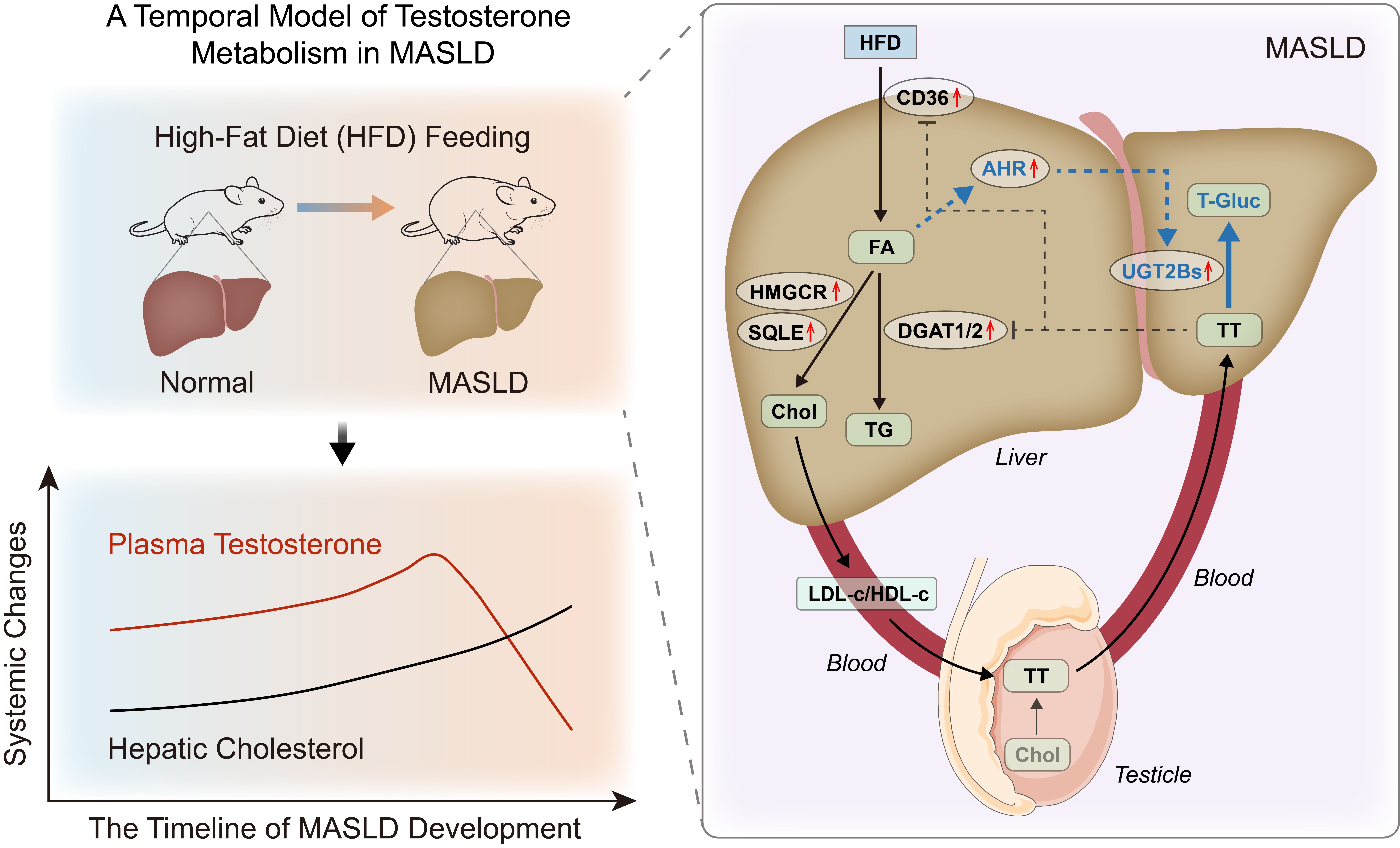
Hepatic UGT2B-Mediated Testosterone Clearance Promotes Lipid Accumulation in High-Fat-Diet-Induced MASLD

Abstract
1. Introduction
2. Materials and Methods
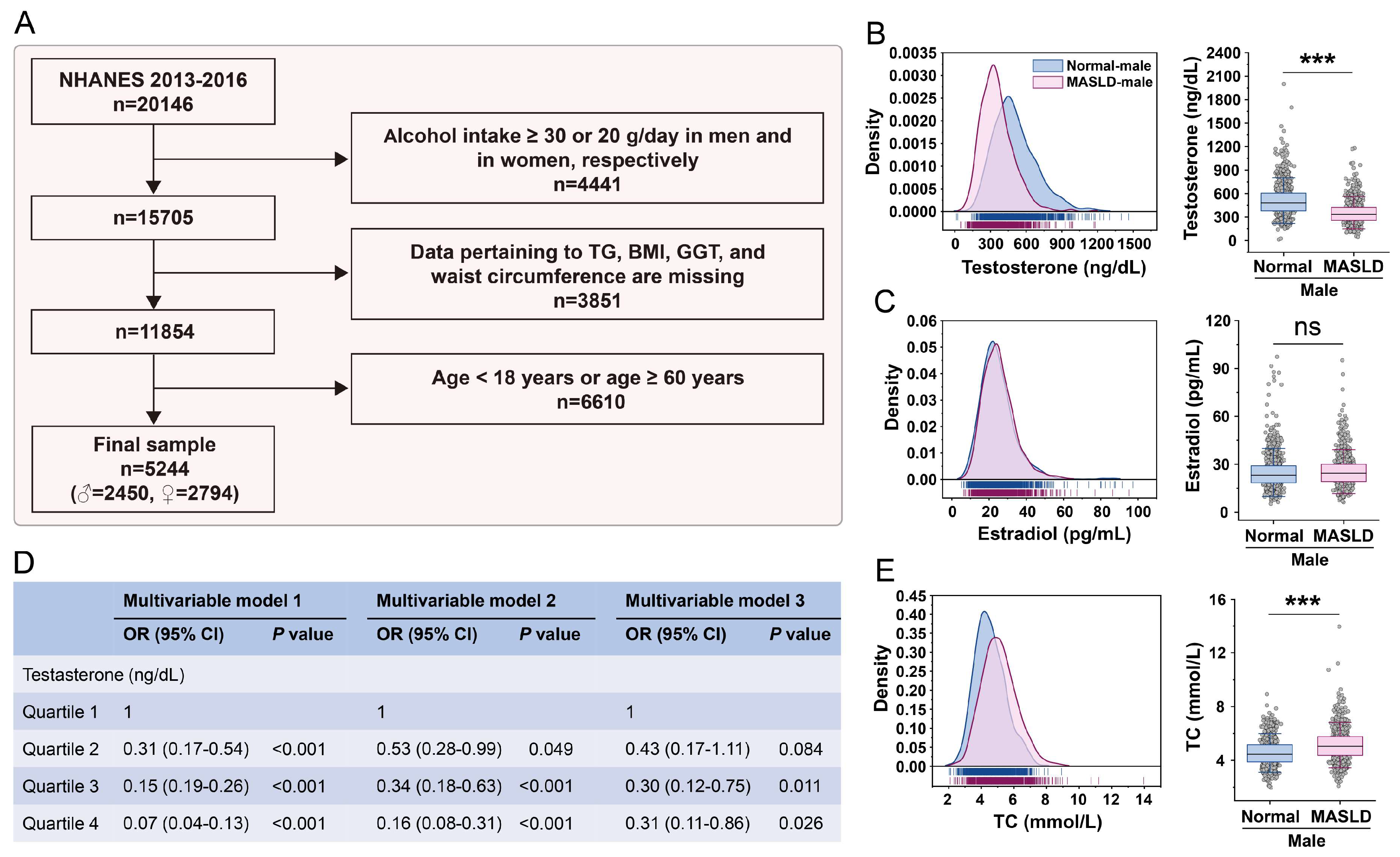
2.1. Epidemiologic Analysis of Relationship Between Blood Testosterone Levels and MASLD in NHANES Data
- Model 1: Age and alcohol consumption.
- Model 2: Model 1 plus insulin resistance (HOMA-IR), smoking status, and medication use.
- Model 3: Model 2 plus BMI.
2.2. Mouse Husbandry and Experimentation
2.3. Glucose and Insulin Tolerance Test
2.4. Histologic Analysis
2.5. Cell Culture and Lipid Droplet Staining
2.6. Total RNA Extraction and qPCR
2.7. Protein Extraction and Western Blot Analysis
2.8. Mouse Liver Transcriptome Analysis
2.9. Mouse Liver Metabolomics Analysis
2.10. Plasma and Liver Lipid Measurement
2.11. Plasma LH, FSH, TT, and T-Gluc Concentration Determination
2.12. Hepatic UGT2B Activity Determination
2.13. Statistical Analyses
3. Results
3.1. Analysis of Population Data Reveals Markedly Reduced Blood Testosterone Levels in Male Patients with MASLD Compared to the Normal Population
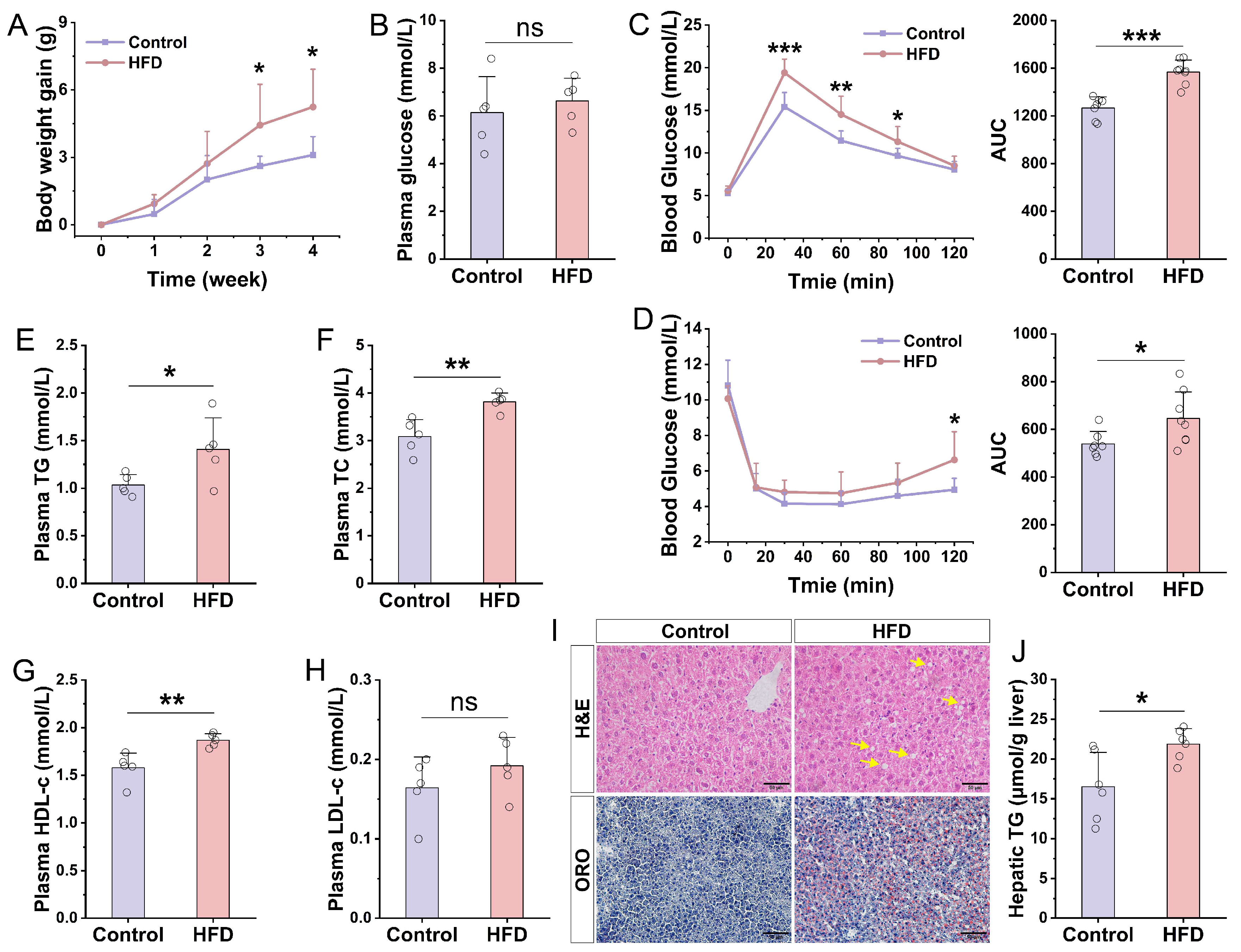
3.2. Development and Phenotypic Characterization of a Murine MASLD Model
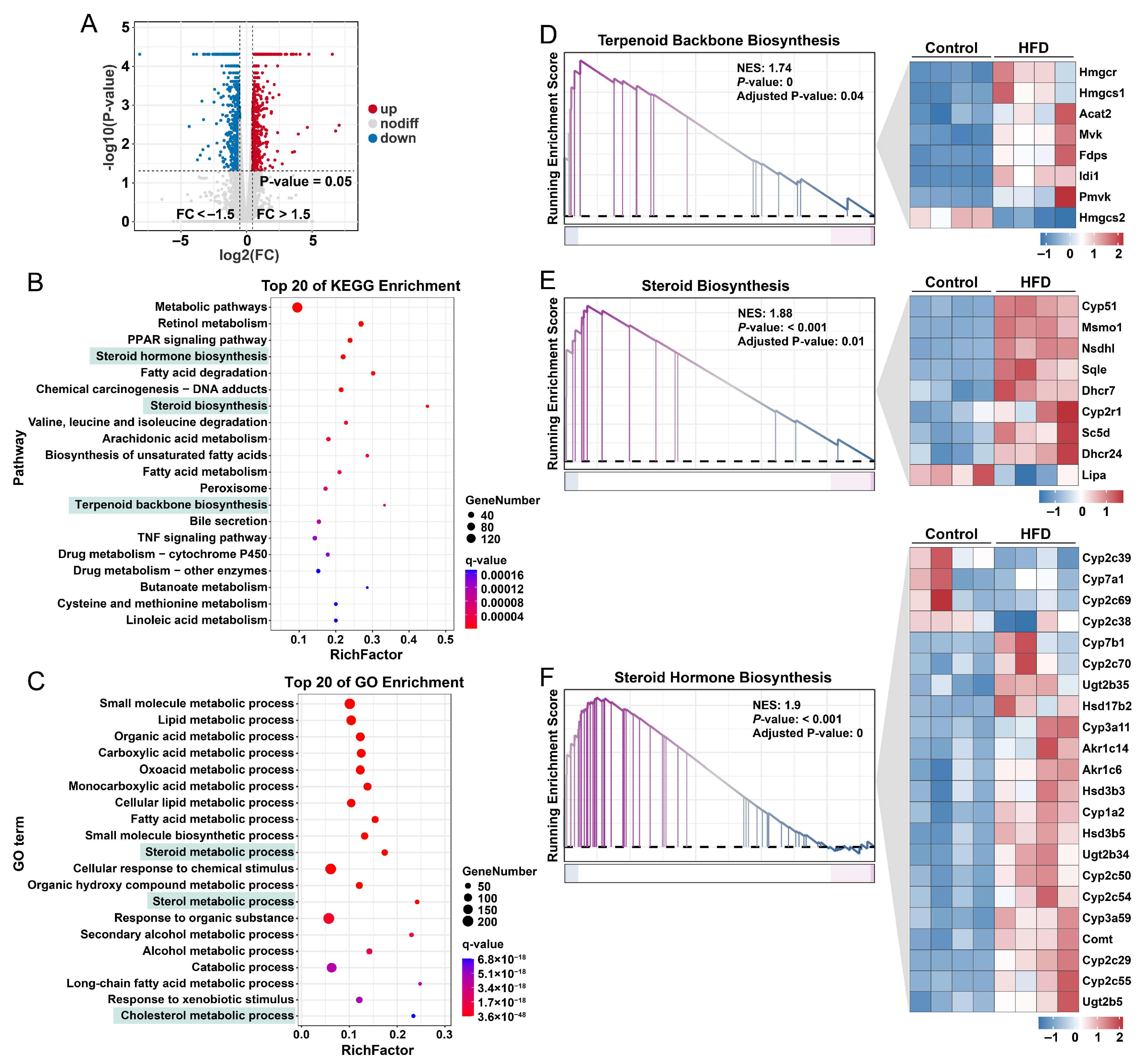
3.3. Liver Transcriptomic Analysis Reveals Upregulation of Cholesterol and Steroid Hormone Biosynthesis Pathways in Mouse Livers Following HFD Exposure
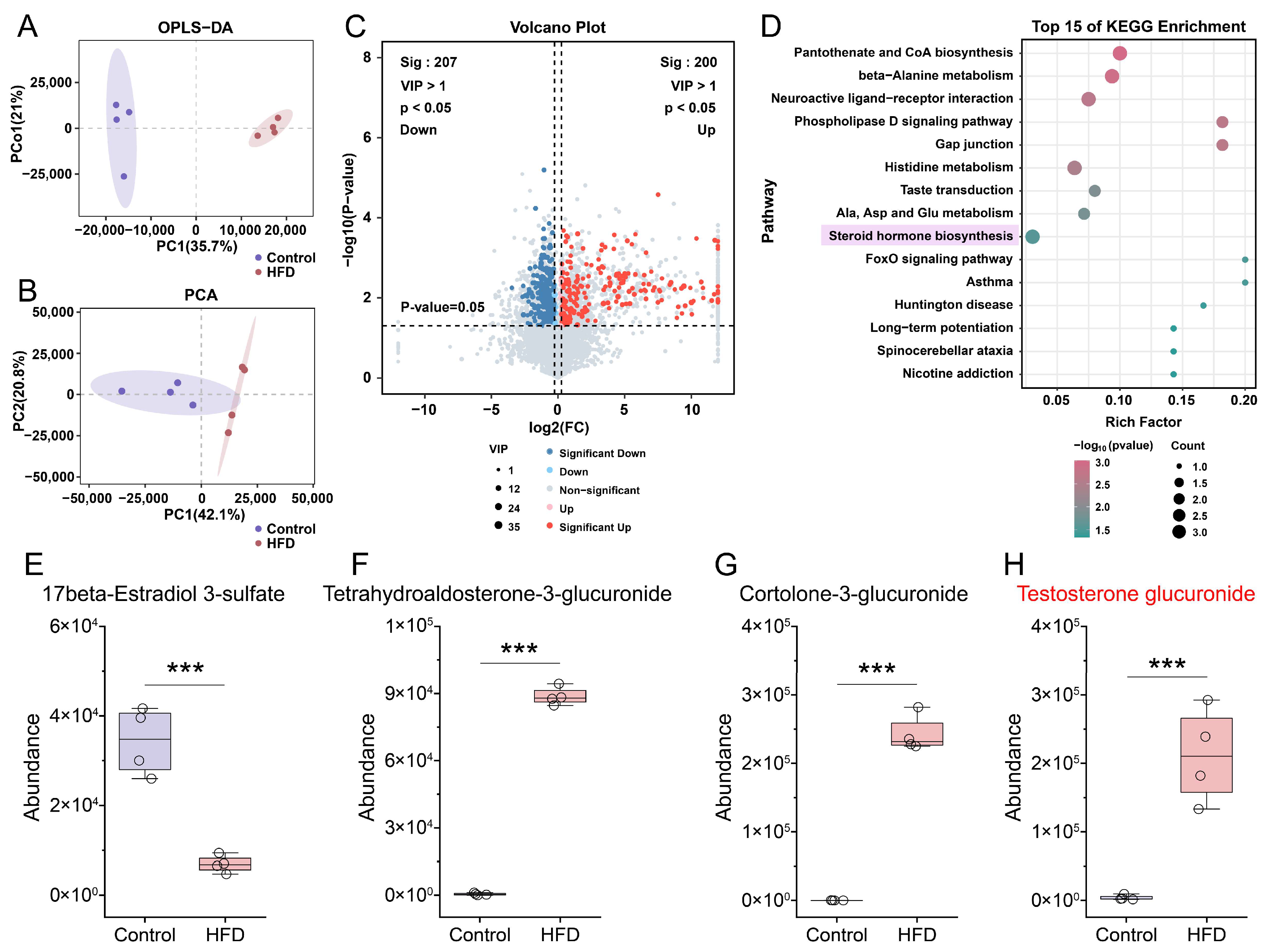
3.4. Liver Metabolomic Analysis Reveals That HFD Induces Significant Alterations in the Hepatic Steroid Hormone Biosynthesis Pathway in Mice
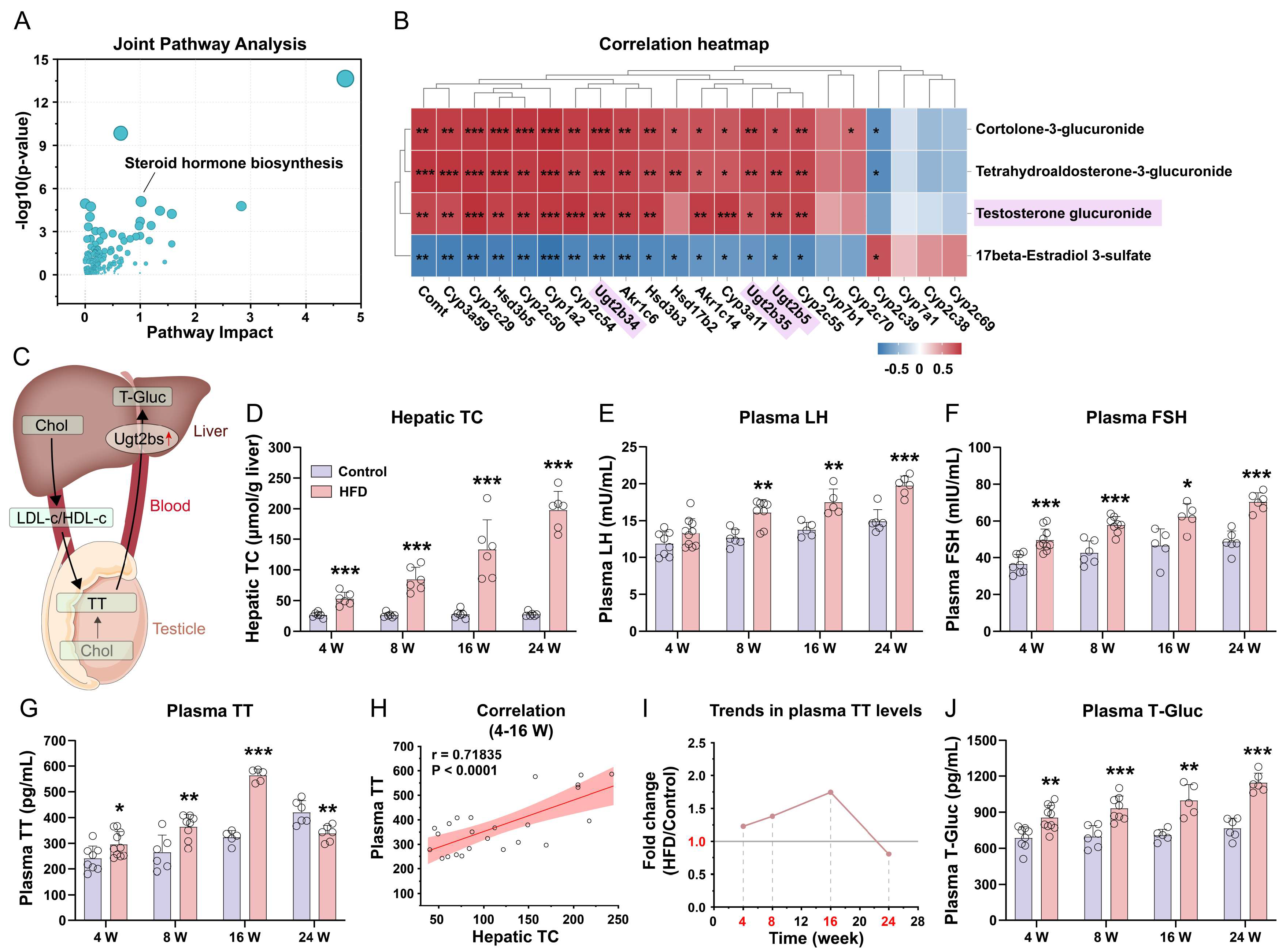
3.5. Integrated Analysis of Hepatic Transcriptomics and Metabolomics and Changes in Liver Cholesterol and Blood Testosterone Levels
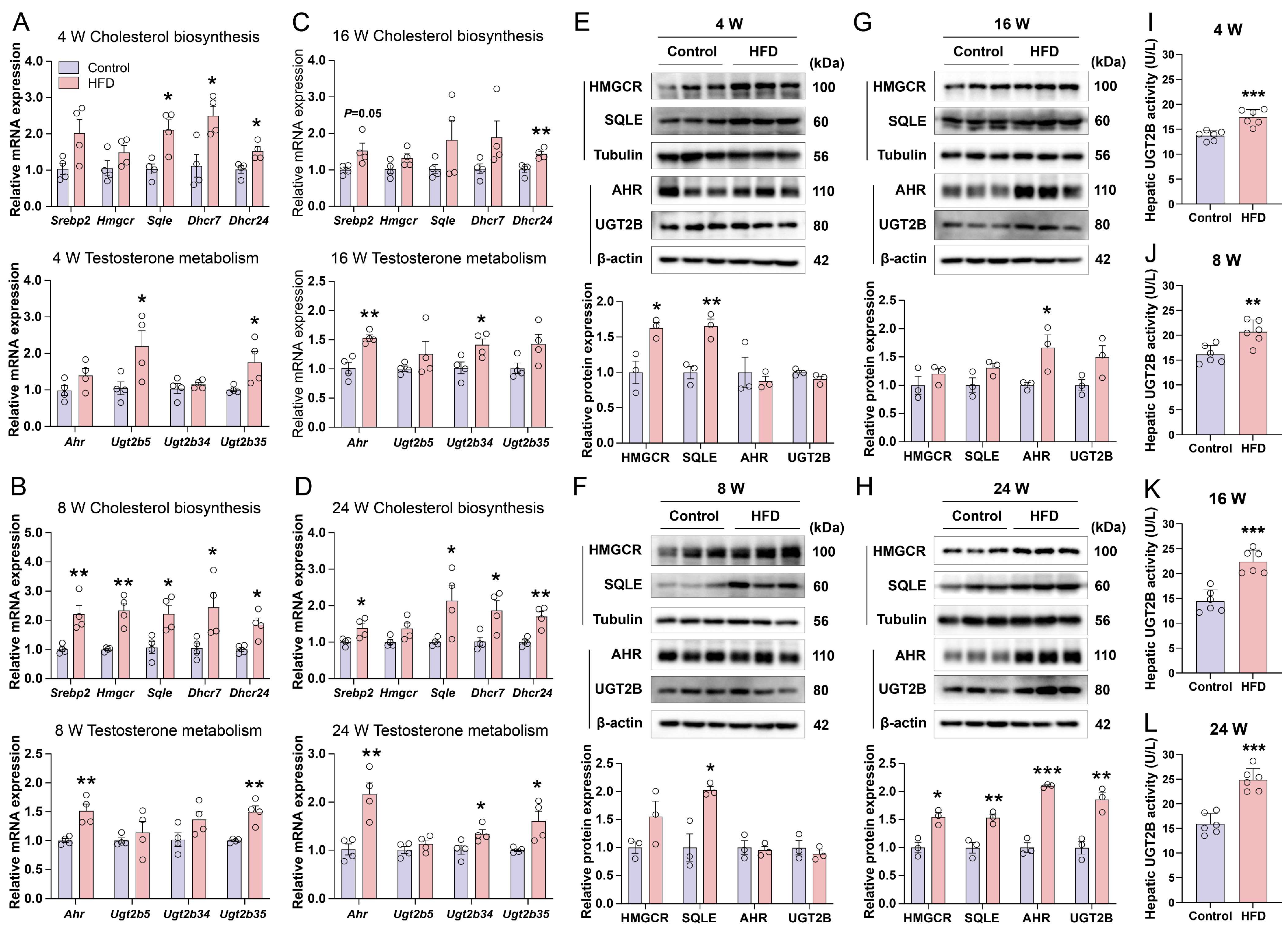
3.6. HFD Induces Hepatic Cholesterol Biosynthesis and Upregulates Testosterone Metabolism Pathways in Mice
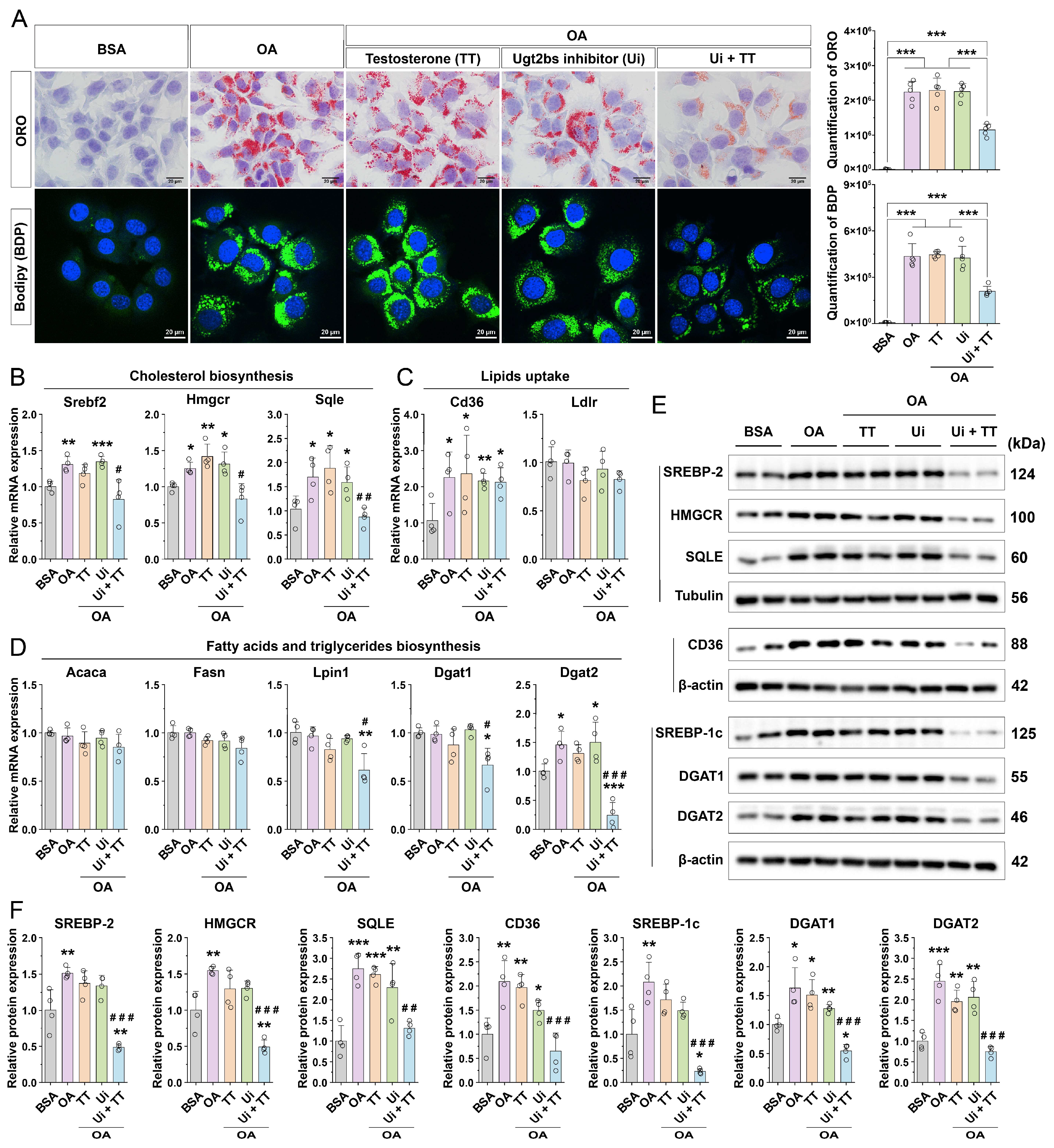
3.7. Exogenous Testosterone Supplementation Attenuates Oleic Acid-Induced Lipid Accumulation by Suppressing Fatty Acid Uptake and Triglyceride Biosynthesis
4. Discussion
5. Conclusions
Supplementary Materials
Author Contributions
Funding
Institutional Review Board Statement
Informed Consent Statement
Data Availability Statement
Conflicts of Interest
References
- Targher, G.; Valenti, L.; Byrne, C.D. Metabolic Dysfunction–Associated Steatotic Liver Disease. N. Engl. J. Med. 2025, 393, 683–698. [Google Scholar] [CrossRef]
- Tacke, F.; Horn, P.; Wai-Sun Wong, V.; Ratziu, V.; Bugianesi, E.; Francque, S.; Zelber-Sagi, S.; Valenti, L.; Roden, M.; Schick, F.; et al. EASL–EASD–EASO Clinical Practice Guidelines on the management of metabolic dysfunction-associated steatotic liver disease (MASLD). J. Hepatol. 2024, 81, 492–542. [Google Scholar] [CrossRef]
- Miao, L.; Targher, G.; Byrne, C.D.; Cao, Y.-Y.; Zheng, M.-H. Current status and future trends of the global burden of MASLD. Trends Endocrinol. Metab. 2024, 35, 697–707. [Google Scholar] [CrossRef]
- Hutchison, A.L.; Tavaglione, F.; Romeo, S.; Charlton, M. Endocrine aspects of metabolic dysfunction-associated steatotic liver disease (MASLD): Beyond insulin resistance. J. Hepatol. 2023, 79, 1524–1541. [Google Scholar] [CrossRef] [PubMed]
- Betlejewska, J.; Hubska, J.; Roszkowska, Z.; Maciejczyk, A.; Bachurska, D.; Domański, J.; Miarka, M.; Raszeja-Wyszomirska, J.; Bobrowicz, M.; Ambroziak, U. Endocrine Disorders and Metabolic Dysfunction-Associated Steatotic Liver Disease: A Narrative Review. Biomedicines 2025, 13, 2500. [Google Scholar] [CrossRef]
- Booijink, R.; Ramachandran, P.; Bansal, R. Implications of innate immune sexual dimorphism for MASLD pathogenesis and treatment. Trends Pharmacol. Sci. 2024, 45, 614–627. [Google Scholar] [CrossRef]
- Schiffer, L.; Kempegowda, P.; Arlt, W.; O’Reilly, M.W. MECHANISMS IN ENDOCRINOLOGY: The sexually dimorphic role of androgens in human metabolic disease. Eur. J. Endocrinol. 2017, 177, R125–R143. [Google Scholar] [CrossRef] [PubMed]
- Liu, D.; Gao, X.; Pan, X.-F.; Zhou, T.; Zhu, C.; Li, F.; Fan, J.-G.; Targher, G.; Zhao, J. The hepato-ovarian axis: Genetic evidence for a causal association between non-alcoholic fatty liver disease and polycystic ovary syndrome. BMC Med. 2023, 21, 62. [Google Scholar] [CrossRef] [PubMed]
- Cherubini, A.; Della Torre, S.; Pelusi, S.; Valenti, L. Sexual dimorphism of metabolic dysfunction-associated steatotic liver disease. Trends Mol. Med. 2024, 30, 1126–1136. [Google Scholar] [CrossRef]
- Coelho, F.B.V.; Stefano, J.T.; Oliveira, C. Low testosterone is associated with steatosis in the male population with spinal cord injury. Arch. Endocrinol. Metab. 2025, 68, e240047. [Google Scholar] [CrossRef]
- Völzke, H.; Aumann, N.; Krebs, A.; Nauck, M.; Steveling, A.; Lerch, M.M.; Rosskopf, D.; Wallaschofski, H. Hepatic steatosis is associated with low serum testosterone and high serum DHEAS levels in men. Int. J. Androl. 2010, 33, 45–53. [Google Scholar] [CrossRef] [PubMed]
- Kim, S.; Kwon, H.; Park, J.-H.; Cho, B.; Kim, D.; Oh, S.-W.; Lee, C.M.; Choi, H.-C. A low level of serum total testosterone is independently associated with nonalcoholic fatty liver disease. BMC Gastroenterol. 2012, 12, 69. [Google Scholar] [CrossRef]
- Barbonetti, A.; Caterina Vassallo, M.R.; Cotugno, M.; Felzani, G.; Francavilla, S.; Francavilla, F. Low testosterone and non-alcoholic fatty liver disease: Evidence for their independent association in men with chronic spinal cord injury. J. Spinal Cord Med. 2016, 39, 443–449. [Google Scholar] [CrossRef]
- Polyzos, S.A.; Mousiolis, A.; Mintziori, G.; Goulis, D.G. Nonalcoholic fatty liver disease in males with low testosterone concentrations. Diabetes Metab. Syndr. Clin. Res. Rev. 2020, 14, 1571–1577. [Google Scholar] [CrossRef]
- Seo, N.K.; Koo, H.s.; Haam, J.-h.; Kim, H.Y.; Kim, M.J.; Park, K.-C.; Park, K.-S.; Kim, Y.-S. Prediction of prevalent but not incident non-alcoholic fatty liver disease by levels of serum testosterone. J. Gastroenterol. Hepatol. 2015, 30, 1211–1216. [Google Scholar] [CrossRef]
- Sarkar, M.; Yates, K.; Suzuki, A.; Lavine, J.; Gill, R.; Ziegler, T.; Terrault, N.; Dhindsa, S. Low Testosterone Is Associated with Nonalcoholic Steatohepatitis and Fibrosis Severity in Men. Clin. Gastroenterol. Hepatol. 2021, 19, 400–402.e402. [Google Scholar] [CrossRef]
- Puri, P.; Baillie, R.A.; Wiest, M.M.; Mirshahi, F.; Choudhury, J.; Cheung, O.; Sargeant, C.; Contos, M.J.; Sanyal, A.J. A lipidomic analysis of nonalcoholic fatty liver disease. Hepatology 2007, 46, 1081–1090. [Google Scholar] [CrossRef]
- Yadav, A.K.; MacNeill, J.J.; Krylov, A.; Ashrafi, N.; Mimi, R.A.; Saxena, R.; Liu, S.; Graham, S.F.; Wan, J.; Morral, N. Sex- and age-associated factors drive the pathophysiology of MASLD. Hepatol. Commun. 2024, 8, e0523. [Google Scholar] [CrossRef]
- Zhang, L.; Shi, Y.; Liang, B.; Li, X. An overview of the cholesterol metabolism and its proinflammatory role in the development of MASLD. Hepatol. Commun. 2024, 8, e0434. [Google Scholar] [CrossRef] [PubMed]
- Isidori, A.M.; Caprio, M.; Strollo, F.; Moretti, C.; Frajese, G.; Isidori, A.; Fabbri, A. Leptin and Androgens in Male Obesity: Evidence for Leptin Contribution to Reduced Androgen Levels. J. Clin. Endocrinol. Metab. 1999, 84, 3673–3680. [Google Scholar] [CrossRef] [PubMed][Green Version]
- Kapoor, D.; Clarke, S.; Stanworth, R.; Channer, K.S.; Jones, T.H. The effect of testosterone replacement therapy on adipocytokines and C-reactive protein in hypogonadal men with type 2 diabetes. Eur. J. Endocrinol. 2007, 156, 595–602. [Google Scholar] [CrossRef]
- Maggio, M.; Basaria, S.; Ble, A.; Lauretani, F.; Bandinelli, S.; Ceda, G.P.; Valenti, G.; Ling, S.M.; Ferrucci, L. Correlation between Testosterone and the Inflammatory Marker Soluble Interleukin-6 Receptor in Older Men. J. Clin. Endocrinol. Metab. 2006, 91, 345–347. [Google Scholar] [CrossRef]
- Turgeon, D.; Carrier, J.-S.b.; Lévesque, E.r.; Hum, D.W.; Bélanger, A. Relative Enzymatic Activity, Protein Stability, and Tissue Distribution of Human Steroid-Metabolizing UGT2B Subfamily Members. Endocrinology 2001, 142, 778–787. [Google Scholar] [CrossRef] [PubMed]
- Nakamura, A.; Nakajima, M.; Yamanaka, H.; Fujiwara, R.; Yokoi, T. Expression of UGT1A and UGT2B mRNA in Human Normal Tissues and Various Cell Lines. Drug Metab. Dispos. 2008, 36, 1461–1464. [Google Scholar] [CrossRef]
- Buckley, D.B.; Klaassen, C.D. Tissue- and Gender-Specific mRNA Expression of UDP-Glucuronosyltransferases (UGTs) in Mice. Drug Metab. Dispos. 2007, 35, 121–127. [Google Scholar] [CrossRef]
- Buckley, D.B.; Klaassen, C.D. Induction of Mouse UDP-Glucuronosyltransferase mRNA Expression in Liver and Intestine by Activators of Aryl-Hydrocarbon Receptor, Constitutive Androstane Receptor, Pregnane X Receptor, Peroxisome Proliferator-Activated Receptor α, and Nuclear Factor Erythroid 2-Related Factor 2. Drug Metab. Dispos. 2009, 37, 847–856. [Google Scholar] [CrossRef] [PubMed]
- Yang, N.; Sun, R.; Liao, X.; Aa, J.; Wang, G. UDP-glucuronosyltransferases (UGTs) and their related metabolic cross-talk with internal homeostasis: A systematic review of UGT isoforms for precision medicine. Pharmacol. Res. 2017, 121, 169–183. [Google Scholar] [CrossRef] [PubMed]
- Xu, C.X.; Wang, C.; Zhang, Z.M.; Jaeger, C.D.; Krager, S.L.; Bottum, K.M.; Liu, J.; Liao, D.F.; Tischkau, S.A. Aryl hydrocarbon receptor deficiency protects mice from diet-induced adiposity and metabolic disorders through increased energy expenditure. Int. J. Obes. 2015, 39, 1300–1309. [Google Scholar] [CrossRef]
- Moyer, B.J.; Rojas, I.Y.; Kerley-Hamilton, J.S.; Hazlett, H.F.; Nemani, K.V.; Trask, H.W.; West, R.J.; Lupien, L.E.; Collins, A.J.; Ringelberg, C.S.; et al. Inhibition of the aryl hydrocarbon receptor prevents Western diet-induced obesity. Model for AHR activation by kynurenine via oxidized-LDL, TLR2/4, TGFβ, and IDO1. Toxicol. Appl. Pharmacol. 2016, 300, 13–24. [Google Scholar] [CrossRef]
- Orlowska, K.; Nault, R.; Ara, J.; LaPres, J.J.; Harkema, J.; Demireva, E.Y.; Xie, H.; Wilson, R.H.; Bradfield, C.A.; Yap, D.; et al. Disruption of canonical AHR-mediated induction of hepatocyte PKM2 expression compromises antioxidant defenses and increases TCDD-induced hepatotoxicity. Redox Biol. 2024, 77, 103405. [Google Scholar] [CrossRef]
- Li, X.; Wang, S.; Mao, X.; Fang, M.; Liu, X.; Jiang, J.; Jin, W. AhR in biological processes of adipocytes and lipid metabolism in obesity: Friend and foe. Life Sci. 2025, 381, 123996. [Google Scholar] [CrossRef] [PubMed]
- Zheng, W.; Liu, M.; Lv, X.; He, C.; Yin, J.; Ma, J. AhR governs lipid metabolism: The role of gut microbiota. Front. Microbiol. 2025, 16, 1442282. [Google Scholar] [CrossRef] [PubMed]
- Kurita, A.; Miyauchi, Y.; Ikushiro, S.i.; Mackenzie, P.I.; Yamada, H.; Ishii, Y. Comprehensive Characterization of Mouse UDP-Glucuronosyltransferase (Ugt) Belonging to the Ugt2b Subfamily: Identification of Ugt2b36 as the Predominant Isoform Involved in Morphine Glucuronidation. J. Pharmacol. Exp. Ther. 2017, 361, 199–208. [Google Scholar] [CrossRef]
- Hong, S.-h.; Sung, Y.-A.; Hong, Y.S.; Song, D.K.; Jung, H.; Jeong, K.; Chung, H.; Lee, H. Non-alcoholic fatty liver disease is associated with hyperandrogenism in women with polycystic ovary syndrome. Sci. Rep. 2023, 13, 13397. [Google Scholar] [CrossRef]
- Zeng, T.; Xiao, L.; Li, J.; Wu, H.; Guo, X.; Zhu, F.; Yu, X.; Cui, Y.; Zhao, X.; Wang, Y.; et al. Adipocyte RNA-binding protein CELF1 promotes beiging of white fat through stabilizing Dio2 mRNA. Nat. Commun. 2025, 16, 7414. [Google Scholar] [CrossRef]
- Zhang, L.; Zhang, Z.; Li, C.; Zhu, T.; Gao, J.; Zhou, H.; Zheng, Y.; Chang, Q.; Wang, M.; Wu, J.; et al. S100A11 Promotes Liver Steatosis via FOXO1-Mediated Autophagy and Lipogenesis. Cell. Mol. Gastroenterol. Hepatol. 2021, 11, 697–724. [Google Scholar] [CrossRef]
- Dalla, V.L.; Spaggiari, G.; Nascimbeni, F.; Lugari, S.; Feliciani, C.; Ahmad, A.; Granata, A.R.M.; Andreone, P.; Simoni, M.; Santi, D. Testosterone serum levels predict the severity of metabolic dysfunctio n-associated steatotic liver disease (MASLD) in hypogonadal men. Endocr. Abstr. 2024, 102, 28. [Google Scholar] [CrossRef]
- Zhang, Z.; Chen, C.; Wang, Y.; Wang, N.; Chen, Y.; Lu, Y.; Xia, F. The associations of total testosterone with probable nonalcoholic steatohepatitis and nonalcoholic fatty liver disease fibrotic progression in men with type 2 diabetes: A cross-sectional study. Eur. J. Med. Res. 2022, 27, 307. [Google Scholar] [CrossRef]
- Uchaipichat, V.; Mackenzie, P.I.; Guo, X.-H.; Gardner-Stephen, D.; Galetin, A.; Houston, J.B.; Miners, J.O. Human UDP-glucuronosyltransferases: Isoform selectivity and kinetics of 4-methylumbelliferone and 1-naphthol glucuronidation, effects of organic solvents, and inhibition by diclofenac and probenecid. Drug Metab. Dispos. 2004, 32, 413–423. [Google Scholar] [CrossRef]
- Wu, L.; Chen, Y.; Liu, H.; Zhan, Z.; Liang, Z.; Zhang, T.; Cai, Z.; Ye, L.; Liu, M.; Zhao, J.; et al. Emodin-induced hepatotoxicity was exacerbated by probenecid through inhibiting UGTs and MRP2. Toxicol. Appl. Pharmacol. 2018, 359, 91–101. [Google Scholar] [CrossRef]
- Matin, B.; Sherbini, A.A.; Alam, N.; Harmatz, J.S.; Greenblatt, D.J. Resveratrol glucuronidation in vitro: Potential implications of inhibition by probenecid. J. Pharm. Pharmacol. 2019, 71, 371–378. [Google Scholar] [CrossRef]
- Shu, H.; Peng, Y.; Hang, W.; Nie, J.; Zhou, N.; Wang, D.W. The role of CD36 in cardiovascular disease. Cardiovasc. Res. 2020, 118, 115–129. [Google Scholar] [CrossRef] [PubMed]
- Yassin, A.A.; Alwani, M.; Talib, R.; Almehmadi, Y.; Nettleship, J.E.; Alrumaihi, K.; Albaba, B.; Kelly, D.M.; Saad, F. Long-term testosterone therapy improves liver parameters and steatosis in hypogonadal men: A prospective controlled registry study. Aging Male 2020, 23, 1553–1563. [Google Scholar] [CrossRef]
- Saad, F.; Doros, G.; Haider, K.S.; Haider, A. Differential effects of 11 years of long-term injectable testosterone undecanoate therapy on anthropometric and metabolic parameters in hypogonadal men with normal weight, overweight and obesity in comparison with untreated controls: Real-world data from a controlled registry study. Int. J. Obes. 2020, 44, 1264–1278. [Google Scholar] [CrossRef]
- Hoyos, C.M.; Yee, B.J.; Phillips, C.L.; Machan, E.A.; Grunstein, R.R.; Liu, P.Y. Body compositional and cardiometabolic effects of testosterone therapy in obese men with severe obstructive sleep apnoea: A randomised placebo-controlled trial. Eur. J. Endocrinol. 2012, 167, 531–541. [Google Scholar] [CrossRef]
- Magnussen, L.V.; Andersen, P.E.; Diaz, A.; Ostojic, J.; Højlund, K.; Hougaard, D.M.; Christensen, A.N.; Nielsen, T.L.; Andersen, M. MR spectroscopy of hepatic fat and adiponectin and leptin levels during testosterone therapy in type 2 diabetes: A randomized, double-blinded, placebo-controlled trial. Eur. J. Endocrinol. 2017, 177, 157–168. [Google Scholar] [CrossRef]
- Huang, G.; Bhasin, S.; Tang, E.R.; Aakil, A.; Anderson, S.W.; Jara, H.; Davda, M.; Travison, T.G.; Basaria, S. Effect of Testosterone Administration on Liver Fat in Older Men with Mobility Limitation: Results from a Randomized Controlled Trial. J. Gerontol. Ser. A 2013, 68, 954–959. [Google Scholar] [CrossRef]
- Bhasin, S.; Singh, A.B.; Mac, R.P.; Carter, B.; Lee, M.I.; Cunningham, G.R. Managing the Risks of Prostate Disease During Testosterone Replacement Therapy in Older Men: Recommendations for a Standardized Monitoring Plan. J. Androl. 2003, 24, 299–311. [Google Scholar] [CrossRef]
- Hackett, G.; Kirby, M.; Rees, R.W.; Jones, T.H.; Muneer, A.; Livingston, M.; Ossei-Gerning, N.; David, J.; Foster, J.; Kalra, P.A.; et al. The British Society for Sexual Medicine Guidelines on Male Adult Testosterone Deficiency, with Statements for Practice. World J. Mens Health 2023, 41, 508–537. [Google Scholar] [CrossRef] [PubMed]
- Girer, N.G.; Tomlinson, C.R.; Elferink, C.J. The Aryl Hydrocarbon Receptor in Energy Balance: The Road from Dioxin-Induced Wasting Syndrome to Combating Obesity with Ahr Ligands. Int. J. Mol. Sci. 2021, 22, 49. [Google Scholar] [CrossRef]



Disclaimer/Publisher’s Note: The statements, opinions and data contained in all publications are solely those of the individual author(s) and contributor(s) and not of MDPI and/or the editor(s). MDPI and/or the editor(s) disclaim responsibility for any injury to people or property resulting from any ideas, methods, instructions or products referred to in the content. |
© 2026 by the authors. Licensee MDPI, Basel, Switzerland. This article is an open access article distributed under the terms and conditions of the Creative Commons Attribution (CC BY) license.
Share and Cite
Zhou, L.; Zheng, Y.; Qiao, Y.; Xu, X.; Zhang, D.; Shi, Y.; Huang, Y.; Zeng, H.; Zeng, T.; Li, X.; et al. Hepatic UGT2B-Mediated Testosterone Clearance Promotes Lipid Accumulation in High-Fat-Diet-Induced MASLD. Nutrients 2026, 18, 549. https://doi.org/10.3390/nu18030549
Zhou L, Zheng Y, Qiao Y, Xu X, Zhang D, Shi Y, Huang Y, Zeng H, Zeng T, Li X, et al. Hepatic UGT2B-Mediated Testosterone Clearance Promotes Lipid Accumulation in High-Fat-Diet-Induced MASLD. Nutrients. 2026; 18(3):549. https://doi.org/10.3390/nu18030549
Chicago/Turabian StyleZhou, Liping, Yingzhuan Zheng, Yujie Qiao, Xin Xu, Duoli Zhang, Yongqiong Shi, Yuanmeng Huang, Hongxiang Zeng, Ting Zeng, Xi Li, and et al. 2026. "Hepatic UGT2B-Mediated Testosterone Clearance Promotes Lipid Accumulation in High-Fat-Diet-Induced MASLD" Nutrients 18, no. 3: 549. https://doi.org/10.3390/nu18030549
APA StyleZhou, L., Zheng, Y., Qiao, Y., Xu, X., Zhang, D., Shi, Y., Huang, Y., Zeng, H., Zeng, T., Li, X., & Zhang, L. (2026). Hepatic UGT2B-Mediated Testosterone Clearance Promotes Lipid Accumulation in High-Fat-Diet-Induced MASLD. Nutrients, 18(3), 549. https://doi.org/10.3390/nu18030549