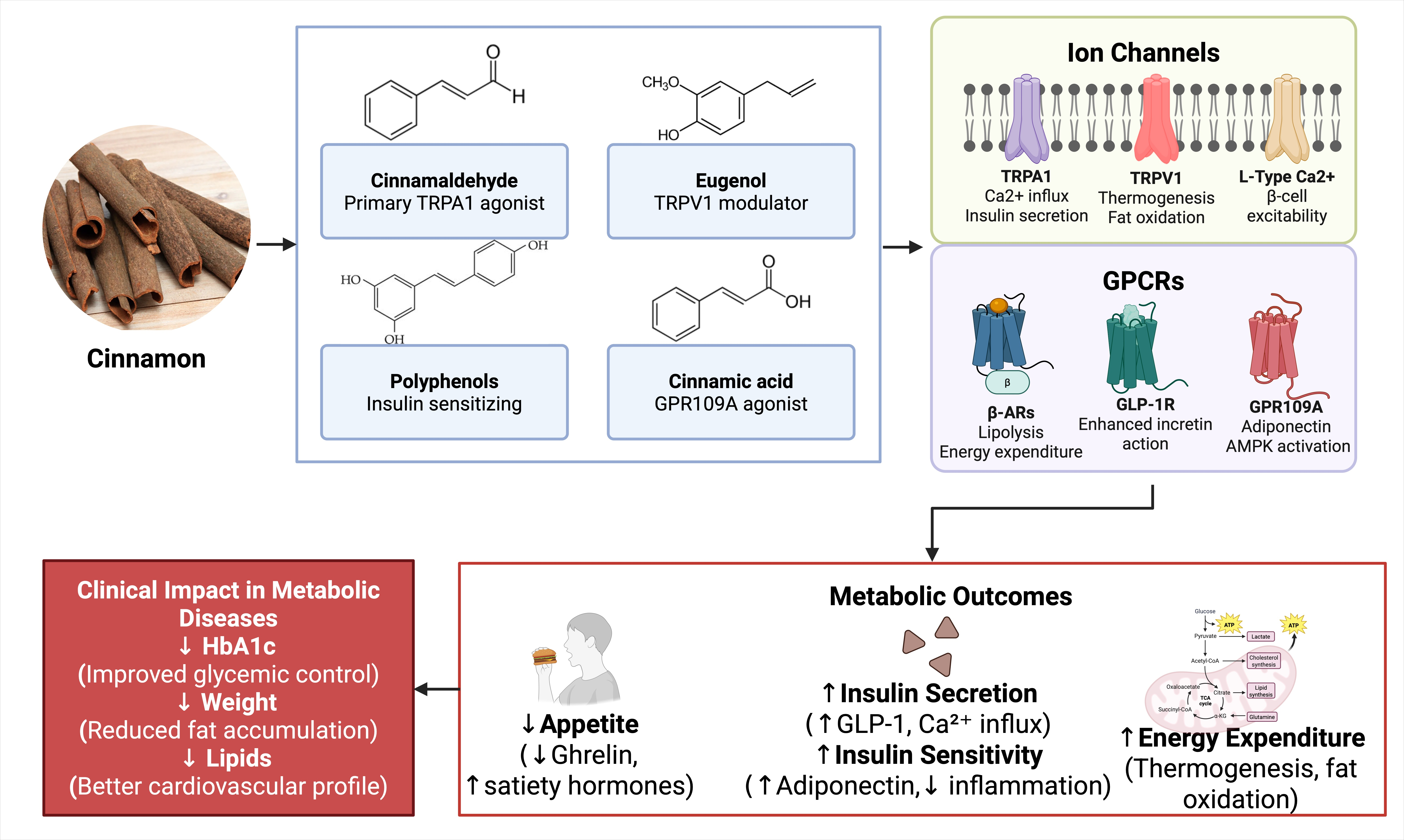
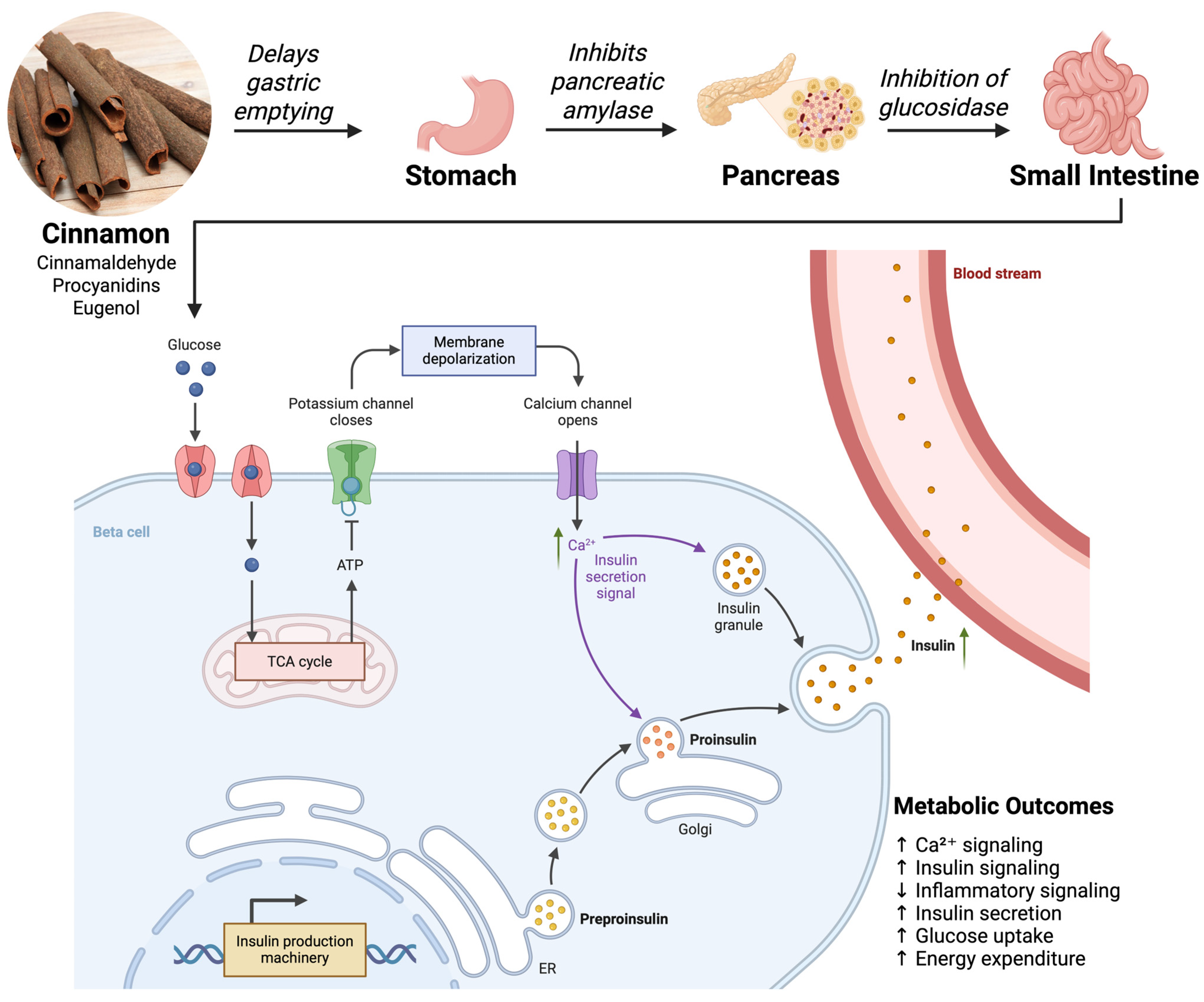
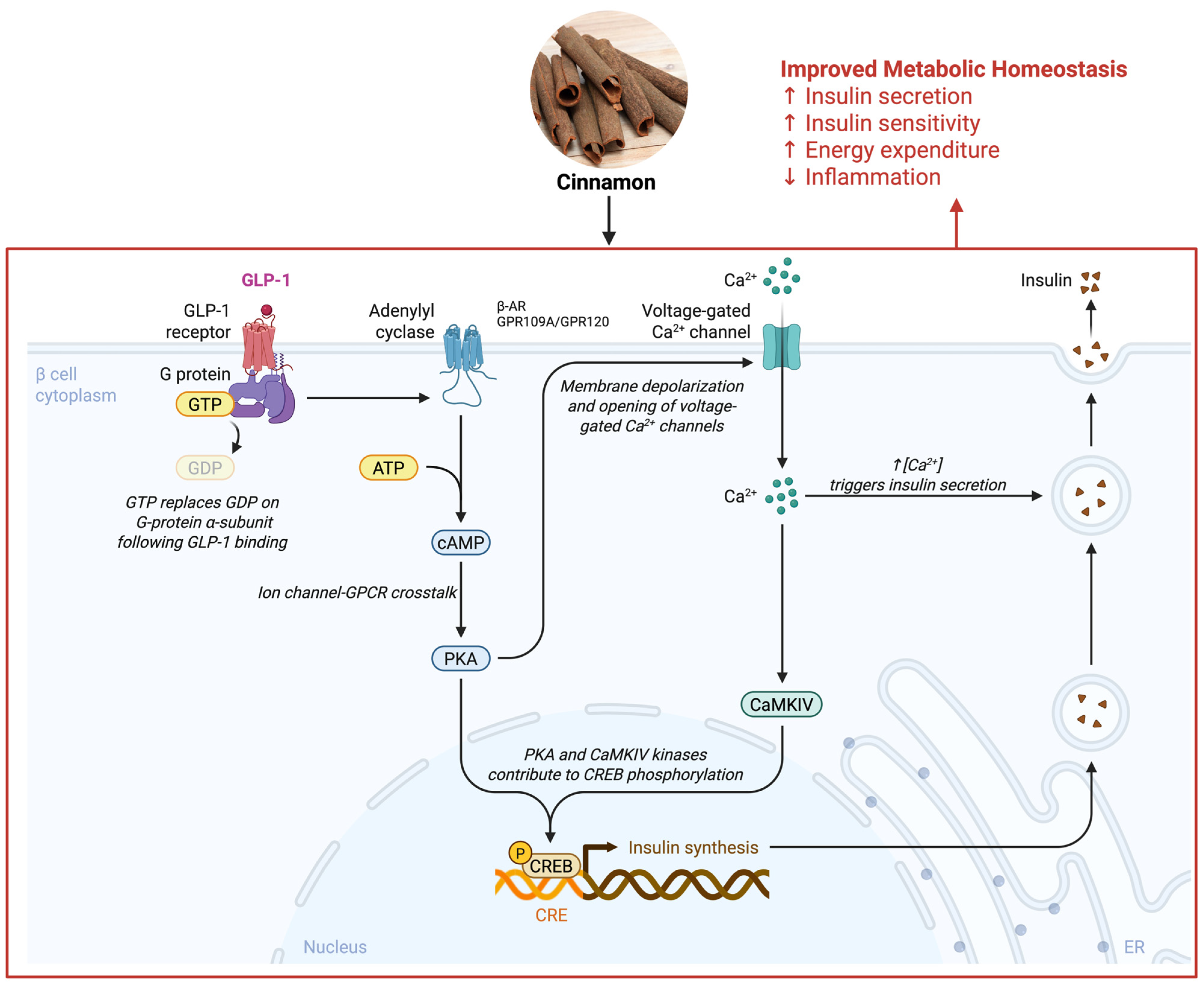
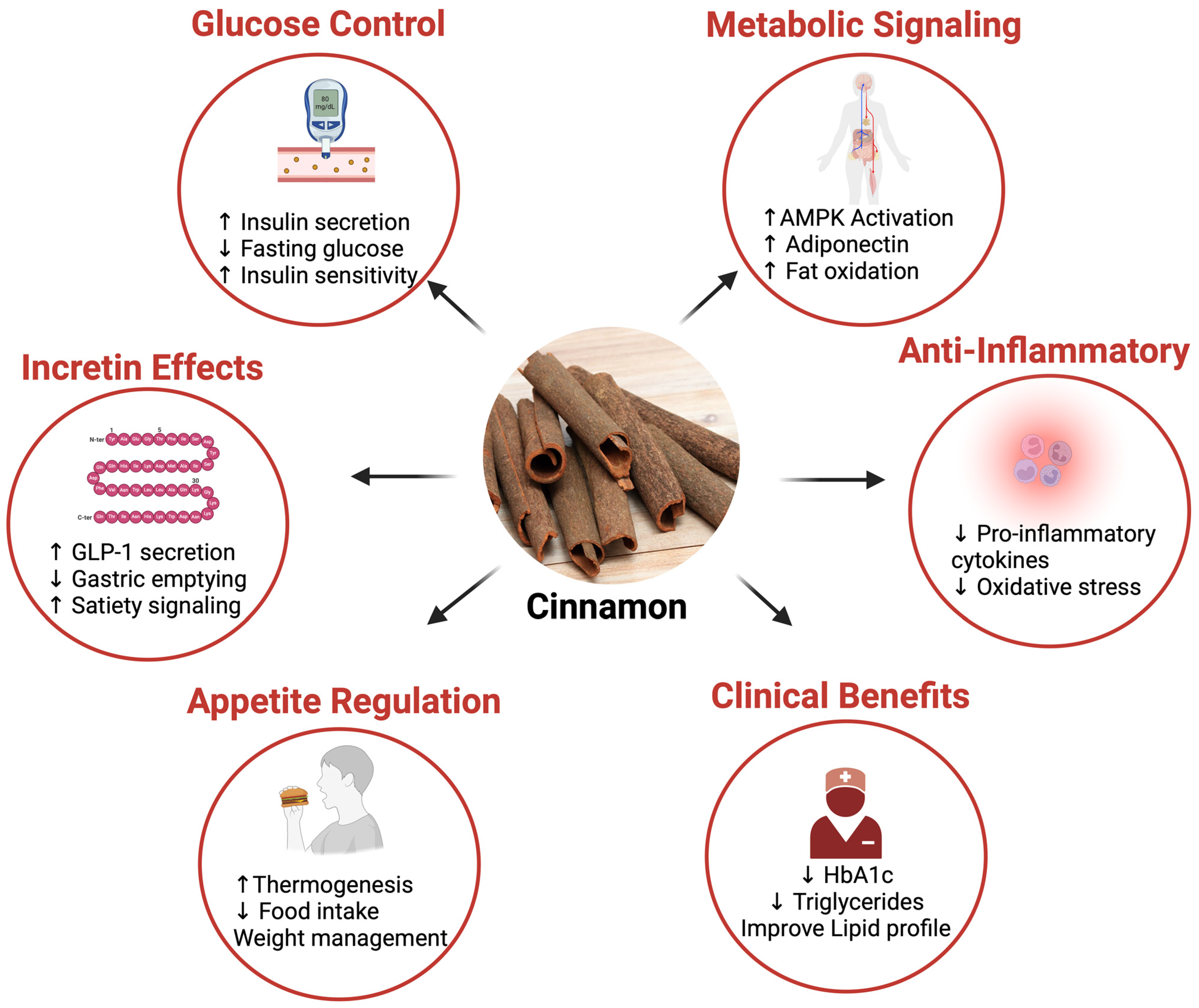
Cinnamon-Derived Phytonutrients as Modulators of Ion Channels and G Protein-Coupled Receptor Signaling in Metabolic Diseases
 , , ,
, , , 
Abstract
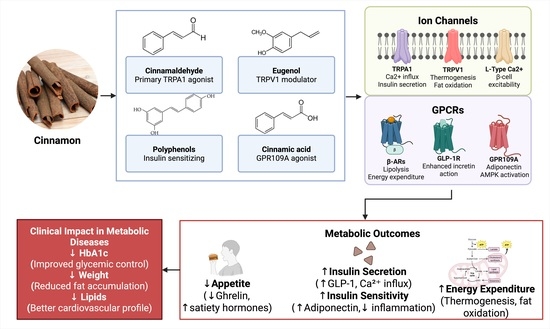
1. Introduction
Search Strategy and Study Selection
2. Nutraceuticals and Membrane Signaling in Metabolic Diseases
3. Why Ion Channels and GPCRs Are Underrated Targets in Metabolic Diseases
4. Phytochemistry of Cinnamon Relevant to Membrane Targets
5. Ion Channel Modulation by Cinnamon-Derived Compounds
5.1. Calcium (Ca2+) Signaling in Metabolic Regulation
5.2. Transient Receptor Potential (TRP) Channels
5.3. Ion Channel-Mediated Regulation of Metabolic Homeostasis
6. GPCR-Targeted Metabolic Actions of Cinnamon Phytonutrients
6.1. GPCRs in Glucose and Lipid Metabolism
6.2. Biased GPCR Signaling in Metabolic Control
6.3. Anti-Inflammatory and Insulin-Sensitizing Effects
7. Ion Channel–GPCR Crosstalk in Metabolic Tissues
8. Translational Potential in Metabolic Diseases
8.1. Combination with Antidiabetic Therapies
8.2. Nutritional Dosing and Safety
9. Future Directions
9.1. Omics-Guided Precision Nutrition
9.2. Personalized Nutrition for Metabolic Health
10. Conclusions
Author Contributions
Funding
Institutional Review Board Statement
Informed Consent Statement
Data Availability Statement
Acknowledgments
Conflicts of Interest
References
- Cho, Y.Y.; Kim, S.; Kim, P.; Jo, M.J.; Park, S.-E.; Choi, Y.; Jung, S.M.; Kang, H.J. G-Protein-Coupled Receptor (GPCR) Signaling and Pharmacology in Metabolism: Physiology, Mechanisms, and Therapeutic Potential. Biomolecules 2025, 15, 291. [Google Scholar] [CrossRef] [Scilit]
- Maiese, K. Cornerstone Cellular Pathways for Metabolic Disorders and Diabetes Mellitus: Non-Coding RNAs, Wnt Signaling, and AMPK. Cells 2023, 12, 2595. [Google Scholar] [CrossRef] [Scilit]
- Yang, Q.; Cai, Y.; Guan, Y.; Wang, Z.; Guo, S.; Qiu, S.; Zhang, A. Metabolic Phenotypes: Molecular Bridges between Health Homeostasis and Disease Imbalance. Comput. Struct. Biotechnol. J. 2025, 27, 4710–4719. [Google Scholar] [CrossRef] [Scilit]
- Shaikh, S.; Lee, E.-J.; Ahmad, K.; Ahmad, S.-S.; Lim, J.-H.; Choi, I.; Shaikh, S.; Lee, E.-J.; Ahmad, K.; Ahmad, S.-S.; et al. A Comprehensive Review and Perspective on Natural Sources as Dipeptidyl Peptidase-4 Inhibitors for Management of Diabetes. Pharmaceuticals 2021, 14, 591. [Google Scholar] [CrossRef] [Scilit] [PubMed]
- Lohse, M.J.; Bock, A.; Zaccolo, M. G Protein–Coupled Receptor Signaling: New Insights Define Cellular Nanodomains. Annu. Rev. Pharmacol. Toxicol. 2024, 64, 387–415. [Google Scholar] [CrossRef] [Scilit]
- Gou, H.; Zhong, L.; Wei, Q.; Fan, Y. The Effects of Cinnamon on Patients with Metabolic Diseases: An Umbrella Review of Meta-Analyses of Randomized Controlled Trials. Front. Nutr. 2025, 12, 1683477. [Google Scholar] [CrossRef] [Scilit] [PubMed]
- Camacho, S.; Michlig, S.; de Senarclens-Bezençon, C.; Meylan, J.; Meystre, J.; Pezzoli, M.; Markram, H.; le Coutre, J. Anti-Obesity and Anti-Hyperglycemic Effects of Cinnamaldehyde via Altered Ghrelin Secretion and Functional Impact on Food Intake and Gastric Emptying. Sci. Rep. 2015, 5, 7919. [Google Scholar] [CrossRef] [Scilit] [PubMed]
- Zhang, R.; Shen, C.; Lei, Y.; Song, Y.; Li, L.; Pang, H.; Chen, C.; Hu, Y.; Fu, C.; Liu, F. Cinnamon (Cinnamomum) as a Food-Medicine Homologue: A Review of Pharmacological Mechanisms and Potential Applications in Metabolic Diseases. Food Rev. Int. 2026, 42, 122–151. [Google Scholar] [CrossRef] [Scilit]
- Wink, M. Current Understanding of Modes of Action of Multicomponent Bioactive Phytochemicals: Potential for Nutraceuticals and Antimicrobials. Annu. Rev. Food Sci. Technol. 2022, 13, 337–359. [Google Scholar] [CrossRef] [Scilit]
- Pham, D.-C.; Shibu, M.A.; Mahalakshmi, B.; Velmurugan, B.K. Effects of Phytochemicals on Cellular Signaling: Reviewing Their Recent Usage Approaches. Crit. Rev. Food Sci. Nutr. 2020, 60, 3522–3546. [Google Scholar] [CrossRef] [Scilit]
- Shang, C.; Lin, H.; Fang, X.; Wang, Y.; Jiang, Z.; Qu, Y.; Xiang, M.; Shen, Z.; Xin, L.; Lu, Y.; et al. Beneficial Effects of Cinnamon and Its Extracts in the Management of Cardiovascular Diseases and Diabetes. Food Funct. 2021, 12, 12194–12220. [Google Scholar] [CrossRef] [Scilit]
- Mohsin, S.N.; Saleem, F.; Humayun, A.; Tanweer, A.; Muddassir, A. Prospective Nutraceutical Effects of Cinnamon Derivatives Against Insulin Resistance in Type II Diabetes Mellitus—Evidence From the Literature. Dose-Response 2023, 21, 15593258231200528. [Google Scholar] [CrossRef] [Scilit]
- Van Liefferinge, E.; Müller, M.; Van Noten, N.; Degroote, J.; Niknafs, S.; Roura, E.; Michiels, J.; Van Liefferinge, E.; Müller, M.; Van Noten, N.; et al. Cinnamaldehyde Induces Release of Cholecystokinin and Glucagon-Like Peptide 1 by Interacting with Transient Receptor Potential Ankyrin 1 in a Porcine Ex-Vivo Intestinal Segment Model. Animals 2021, 11, 2262. [Google Scholar] [CrossRef] [Scilit]
- Pardella, E.; Ippolito, L.; Giannoni, E.; Chiarugi, P. Nutritional and Metabolic Signalling through GPCRs. FEBS Lett. 2022, 596, 2364–2381. [Google Scholar] [CrossRef] [Scilit] [PubMed]
- Oteng, A.-B.; Liu, L. GPCR-Mediated Effects of Fatty Acids and Bile Acids on Glucose Homeostasis. Front. Endocrinol. 2023, 14, 1206063. [Google Scholar] [CrossRef] [Scilit] [PubMed]
- Tuluc, P.; Theiner, T.; Jacobo-Piqueras, N.; Geisler, S.M. Role of High Voltage-Gated Ca2+ Channel Subunits in Pancreatic β-Cell Insulin Release. From Structure to Function. Cells 2021, 10, 2004. [Google Scholar] [CrossRef] [Scilit]
- Collins, S. β-Adrenergic Receptors and Adipose Tissue Metabolism: Evolution of an Old Story. Annu. Rev. Physiol. 2022, 84, 1–16. [Google Scholar] [CrossRef] [Scilit]
- Michlig, S.; Merlini, J.M.; Beaumont, M.; Ledda, M.; Tavenard, A.; Mukherjee, R.; Camacho, S.; le Coutre, J. Effects of TRP Channel Agonist Ingestion on Metabolism and Autonomic Nervous System in a Randomized Clinical Trial of Healthy Subjects. Sci. Rep. 2016, 6, 20795. [Google Scholar] [CrossRef] [Scilit] [PubMed]
- Mahajan, N.; Khare, P.; Kondepudi, K.K.; Bishnoi, M. TRPA1: Pharmacology, Natural Activators and Role in Obesity Prevention. Eur. J. Pharmacol. 2021, 912, 174553. [Google Scholar] [CrossRef] [Scilit]
- Liu, L.; Wess, J. Adipocyte G Protein–Coupled Receptors as Potential Targets for Novel Antidiabetic Drugs. Diabetes 2023, 72, 825–834. [Google Scholar] [CrossRef] [Scilit]
- Alshammaa, Z.A.A.; AlShammaa, D.A.S. The Metabolic Effect of Medicinal Plants and Synthetic Anti-Obesity Products on Human Health. Plant Sci. Today 2024, 11, 704–718. [Google Scholar] [CrossRef] [Scilit]
- Aoki, K.; Sato, H.; Terauchi, Y. Usefulness of Antidiabetic Alpha-Glucosidase Inhibitors: A Review on the Timing of Administration and Effects on Gut Hormones. Endocr. J. 2019, 66, 395–401. [Google Scholar] [CrossRef] [Scilit]
- Liang, Y.; Wang, Y.; Peng, A.; Li, J.; Zhang, K. Molecular Mechanisms and Drug Therapy of Metabolism Disorders in Psoriasis. J. Dermatol. Treat. 2024, 35, 2375580. [Google Scholar] [CrossRef] [Scilit]
- Zhang, L.; Liu, J.; Zhou, C. Current Aspects of Small Extracellular Vesicles in Pain Process and Relief. Biomater. Res. 2023, 27, 78. [Google Scholar] [CrossRef] [Scilit]
- Ye, L.; Kleiner, S.; Wu, J.; Sah, R.; Gupta, R.K.; Banks, A.S.; Cohen, P.; Khandekar, M.J.; Boström, P.; Mepani, R.J.; et al. TRPV4 Is a Regulator of Adipose Oxidative Metabolism, Inflammation, and Energy Homeostasis. Cell 2012, 151, 96–110. [Google Scholar] [CrossRef] [Scilit]
- Zhang, Y.; Xue, J.; Zhu, W.; Wang, H.; Xi, P.; Tian, D. TRPV4 in Adipose Tissue Ameliorates Diet-Induced Obesity by Promoting White Adipocyte Browning. Transl. Res. 2024, 266, 16–31. [Google Scholar] [CrossRef] [Scilit] [PubMed]
- Sharifi-Rad, J.; Dey, A.; Koirala, N.; Shaheen, S.; El Omari, N.; Salehi, B.; Goloshvili, T.; Cirone Silva, N.C.; Bouyahya, A.; Vitalini, S.; et al. Cinnamomum Species: Bridging Phytochemistry Knowledge, Pharmacological Properties and Toxicological Safety for Health Benefits. Front. Pharmacol. 2021, 12, 600139. [Google Scholar] [CrossRef] [Scilit]
- Fuloria, S.; Subramaniyan, V.; Karupiah, S.; Kumari, U.; Sathasivam, K.; Meenakshi, D.U.; Wu, Y.S.; Guad, R.M.; Udupa, K.; Fuloria, N.K.; et al. A Comprehensive Review on Source, Types, Effects, Nanotechnology, Detection, and Therapeutic Management of Reactive Carbonyl Species Associated with Various Chronic Diseases. Antioxidants 2020, 9, 1075. [Google Scholar] [CrossRef] [Scilit] [PubMed]
- Klein, A.H.; Joe, C.L.; Davoodi, A.; Takechi, K.; Carstens, M.I.; Carstens, E. Eugenol and Carvacrol Excite First- and Second-Order Trigeminal Neurons and Enhance Their Heat-Evoked Responses. Neuroscience 2014, 271, 45–55. [Google Scholar] [CrossRef] [Scilit]
- Andrei, C.; Zanfirescu, A.; Nițulescu, G.M.; Olaru, O.T.; Negreș, S.; Andrei, C.; Zanfirescu, A.; Nițulescu, G.M.; Olaru, O.T.; Negreș, S. Natural Active Ingredients and TRPV1 Modulation: Focus on Key Chemical Moieties Involved in Ligand–Target Interaction. Plants 2023, 12, 339. [Google Scholar] [CrossRef] [Scilit] [PubMed]
- Chung, G.; Im, S.T.; Kim, Y.H.; Jung, S.J.; Rhyu, M.-R.; Oh, S.B. Activation of Transient Receptor Potential Ankyrin 1 by Eugenol. Neuroscience 2014, 261, 153–160. [Google Scholar] [CrossRef] [Scilit]
- Huang, T.; Chen, X.; He, J.; Zheng, P.; Luo, Y.; Wu, A.; Yan, H.; Yu, B.; Chen, D.; Huang, Z. Eugenol Mimics Exercise to Promote Skeletal Muscle Fiber Remodeling and Myokine IL-15 Expression by Activating TRPV1 Channel. eLife 2024, 12, RP90724. [Google Scholar] [CrossRef]
- Dinesh, R.; Leela, N.K.; Zachariah, T.J.; Anandaraj, M. Controversies Surrounding Coumarin in Cassia: The Good, the Bad and the Not so Ugly. Curr. Sci. 2015, 108, 482–484. [Google Scholar]
- Hussain, M.I.; Syed, Q.A.; Khattak, M.N.K.; Hafez, B.; Reigosa, M.J.; El-Keblawy, A. Natural Product Coumarins: Biological and Pharmacological Perspectives. Biologia 2019, 74, 863–888. [Google Scholar] [CrossRef] [Scilit]
- Wang, Y.; Liu, Q.; Kang, S.-G.; Huang, K.; Tong, T.; Wang, Y.; Liu, Q.; Kang, S.-G.; Huang, K.; Tong, T. Dietary Bioactive Ingredients Modulating the CAMP Signaling in Diabetes Treatment. Nutrients 2021, 13, 3038. [Google Scholar] [CrossRef] [Scilit]
- Lippolis, T.; Cofano, M.; Caponio, G.R.; Nunzio, V.D.; Notarnicola, M.; Lippolis, T.; Cofano, M.; Caponio, G.R.; Nunzio, V.D.; Notarnicola, M. Bioaccessibility and Bioavailability of Diet Polyphenols and Their Modulation of Gut Microbiota. Int. J. Mol. Sci. 2023, 24, 3813. [Google Scholar] [CrossRef] [Scilit]
- Vasconcelos, N.G.; Croda, J.; Simionatto, S. Antibacterial Mechanisms of Cinnamon and Its Constituents: A Review. Microb. Pathog. 2018, 120, 198–203. [Google Scholar] [CrossRef] [Scilit]
- Tsuchiya, H. Membrane Interactions of Phytochemicals as Their Molecular Mechanism Applicable to the Discovery of Drug Leads from Plants. Molecules 2015, 20, 18923–18966. [Google Scholar] [CrossRef] [Scilit]
- Han, R.; Li, X.; Gao, X.; Lv, G. Cinnamaldehyde: Pharmacokinetics, Anticancer Properties and Therapeutic Potential (Review). Mol. Med. Rep. 2024, 30, 163. [Google Scholar] [CrossRef] [Scilit] [PubMed]
- Wang, B.; Zhao, M.-Z.; Huang, L.-Y.; Zhang, L.-J.; Yu, X.-J.; Liu, Y.; Li, J. Exploring Cinnamaldehyde: Preparation Methods, Biological Functions, Efficient Applications, and Safety. Food Rev. Int. 2025, 41, 615–642. [Google Scholar] [CrossRef] [Scilit]
- Karimirad, R.; Inbaraj, B.S.; Chen, B.-H.; Karimirad, R.; Inbaraj, B.S.; Chen, B.-H. Recent Advances on the Analysis and Biological Functions of Cinnamaldehyde and Its Derivatives. Antioxidants 2025, 14, 765. [Google Scholar] [CrossRef] [Scilit] [PubMed]
- Thompson, B.; Satin, L.S. Beta-Cell Ion Channels and Their Role in Regulating Insulin Secretion. Compr. Physiol. 2021, 11, 1–21. [Google Scholar] [CrossRef] [Scilit] [PubMed]
- Oluwamodupe, C.; Babalola, O.O. Ion Channels and Regulation of Insulin Secretion in Beta-Cells. Curr. Mol. Bio. Rep. 2024, 10, 65–77. [Google Scholar] [CrossRef] [Scilit]
- Demirbilek, H.; Galcheva, S.; Vuralli, D.; Al-Khawaga, S.; Hussain, K.; Demirbilek, H.; Galcheva, S.; Vuralli, D.; Al-Khawaga, S.; Hussain, K. Ion Transporters, Channelopathies, and Glucose Disorders. Int. J. Mol. Sci. 2019, 20, 2590. [Google Scholar] [CrossRef] [Scilit]
- Kang, G.G.; Francis, N.; Hill, R.; Waters, D.; Blanchard, C.; Santhakumar, A.B.; Kang, G.G.; Francis, N.; Hill, R.; Waters, D.; et al. Dietary Polyphenols and Gene Expression in Molecular Pathways Associated with Type 2 Diabetes Mellitus: A Review. Int. J. Mol. Sci. 2019, 21, 140. [Google Scholar] [CrossRef] [Scilit]
- Benchoula, K.; Mediani, A.; Hwa, W.E. The Functions of Ca2+/Calmodulin-Dependent Protein Kinase II (CaMKII) in Diabetes Progression. J. Cell Commun. Signal. 2023, 17, 25–34. [Google Scholar] [CrossRef] [Scilit]
- Viskupicova, J.; Rezbarikova, P.; Viskupicova, J.; Rezbarikova, P. Natural Polyphenols as SERCA Activators: Role in the Endoplasmic Reticulum Stress-Related Diseases. Molecules 2022, 27, 5095. [Google Scholar] [CrossRef] [Scilit]
- Hoi, J.K.; Lieder, B.; Liebisch, B.; Czech, C.; Hans, J.; Ley, J.P.; Somoza, V. TRPA1 Agonist Cinnamaldehyde Decreases Adipogenesis in 3T3-L1 Cells More Potently than the Non-Agonist Structural Analog Cinnamyl Isobutyrate. ACS Omega 2020, 5, 33305–33313. [Google Scholar] [CrossRef] [Scilit]
- Alvarado, M.G.; Thakore, P.; Earley, S.; Alvarado, M.G.; Thakore, P.; Earley, S. Transient Receptor Potential Channel Ankyrin 1: A Unique Regulator of Vascular Function. Cells 2021, 10, 1167. [Google Scholar] [CrossRef] [Scilit] [PubMed]
- Wang, Y.B.; de Lartigue, G.; Page, A.J. Dissecting the Role of Subtypes of Gastrointestinal Vagal Afferents. Front. Physiol. 2020, 11, 643. [Google Scholar] [CrossRef] [Scilit] [PubMed]
- Smoak, P.; Burke, S.J.; Collier, J.J. Botanical Interventions to Improve Glucose Control and Options for Diabetes Therapy. SN Compr. Clin. Med. 2021, 3, 2465–2491. [Google Scholar] [CrossRef] [Scilit]
- Mahajan, N.; Khare, P.; Kondepudi, K.; Bishnoi, M. TRPA1 in Obesity and Insulin Resistance. Authorea 2020. [Google Scholar] [CrossRef] [Scilit]
- Cancello, R. Metabolites, Bioactive Compounds, and Browning: Unveiling the Therapeutic Potential of Whole-Body Cryostimulation for Metabolic Health. In Whole-Body Cryostimulation: Clinical Applications; Capodaglio, P., Ed.; Springer International Publishing: Cham, Switzerland, 2024; pp. 93–108. [Google Scholar]
- Khare, P.; Jagtap, S.; Jain, Y.; Baboota, R.K.; Mangal, P.; Boparai, R.K.; Bhutani, K.K.; Sharma, S.S.; Premkumar, L.S.; Kondepudi, K.K.; et al. Cinnamaldehyde Supplementation Prevents Fasting-Induced Hyperphagia, Lipid Accumulation, and Inflammation in High-Fat Diet-Fed Mice. BioFactors 2016, 42, 201–211. [Google Scholar] [CrossRef] [Scilit]
- Harb, A.A.; Bustanji, Y.K.; Almasri, I.M.; Abdalla, S.S. Eugenol Reduces LDL Cholesterol and Hepatic Steatosis in Hypercholesterolemic Rats by Modulating TRPV1 Receptor. Sci. Rep. 2019, 9, 14003. [Google Scholar] [CrossRef] [Scilit]
- Zhang, W.; Zhang, Q.; Wang, L.; Zhou, Q.; Wang, P.; Qing, Y.; Sun, C. The Effects of Capsaicin Intake on Weight Loss among Overweight and Obese Subjects: A Systematic Review and Meta-Analysis of Randomised Controlled Trials. Br. J. Nutr. 2023, 130, 1645–1656. [Google Scholar] [CrossRef] [Scilit]
- Huang, Q.; Li, Y.; Yu, M.; Lv, Z.; Lu, F.; Xu, N.; Zhang, Q.; Shen, J.; Zhu, J.; Jiang, H. Global Burden and Risk Factors of Type 2 Diabetes Mellitus from 1990 to 2021, with Forecasts to 2050. Front. Endocrinol. 2025, 16, 1538143. [Google Scholar] [CrossRef] [Scilit] [PubMed]
- Araújo, M.C.; Soczek, S.H.S.; Pontes, J.P.; Marques, L.A.C.; Santos, G.S.; Simão, G.; Bueno, L.R.; Maria-Ferreira, D.; Muscará, M.N.; Fernandes, E.S.; et al. An Overview of the TRP-Oxidative Stress Axis in Metabolic Syndrome: Insights for Novel Therapeutic Approaches. Cells 2022, 11, 1292. [Google Scholar] [CrossRef] [Scilit]
- Izquierdo García, C.; Martín-Martínez, M.; Gómez-Monterrey, I.; González-Muñiz, R. Trpm8 Channels: Advances in Structural Studies and Pharmacological Modulation. Int. J. Mol. Sci. 2021, 22, 8502. [Google Scholar] [CrossRef] [Scilit] [PubMed]
- Yao, X.; Zhang, X.; Cui, T.; Jian, M.; Wu, H.; Wu, C.; Tao, F. Modulating TRPV1 and TRPA1 Channels: A Viable Strategy for Treating Asthma Using Chinese Herbal Medicines. Front. Pharmacol. 2025, 16, 1573901. [Google Scholar] [CrossRef] [Scilit]
- Dastgheib, M.; Barati-Boldaji, R.; Bahrampour, N.; Taheri, R.; Borghei, M.; Amooee, S.; Mohammadi-Sartang, M.; Wong, A.; Babajafari, S.; Mazloomi, S.M. A Comparison of the Effects of Cinnamon, Ginger, and Metformin Consumption on Metabolic Health, Anthropometric Indices, and Sexual Hormone Levels in Women with Poly Cystic Ovary Syndrome: A Randomized Double-Blinded Placebo-Controlled Clinical Trial. Front. Nutr. 2022, 9, 1071515. [Google Scholar] [CrossRef] [Scilit] [PubMed]
- Tamura, Y.; Iwasaki, Y.; Narukawa, M.; Watanabe, T. Ingestion of Cinnamaldehyde, a TRPA1 Agonist, Reduces Visceral Fats in Mice Fed a High-Fat and High-Sucrose Diet. J. Nutr. Sci. Vitaminol. 2012, 58, 9–13. [Google Scholar] [CrossRef] [Scilit]
- De Marchi, U.; Fernandez-Martinez, S.; de la Fuente, S.; Wiederkehr, A.; Santo-Domingo, J. Mitochondrial Ion Channels in Pancreatic β-Cells: Novel Pharmacological Targets for the Treatment of Type 2 Diabetes. Br. J. Pharmacol. 2021, 178, 2077–2095. [Google Scholar] [CrossRef] [Scilit]
- Han, L.; Ho, C.-T.; Lu, M. Regulatory Role of Bioactive Compounds from Natural Spices on Mitochondrial Function. J. Agric. Food Chem. 2025, 73, 5711–5723. [Google Scholar] [CrossRef] [Scilit]
- Oliveira Neto, J.G.; Karl Boechat, S.; Santos Romão, J.; Ballard Kuhnert, L.R.; Cabanelas Pazos-Moura, C.; Jesus Oliveira, K. Cinnamaldehyde Treatment during Adolescence Improves White and Brown Adipose Tissue Metabolism in a Male Rat Model of Early Obesity. Food Funct. 2022, 13, 3405–3418. [Google Scholar] [CrossRef] [Scilit]
- Jalleh, R.J.; Jones, K.L.; Rayner, C.K.; Marathe, C.S.; Wu, T.; Horowitz, M. Normal and Disordered Gastric Emptying in Diabetes: Recent Insights into (Patho)Physiology, Management and Impact on Glycaemic Control. Diabetologia 2022, 65, 1981–1993. [Google Scholar] [CrossRef] [Scilit] [PubMed]
- Lorente, J.S.; Sokolov, A.V.; Ferguson, G.; Schiöth, H.B.; Hauser, A.S.; Gloriam, D.E. GPCR Drug Discovery: New Agents, Targets and Indications. Nat. Rev. Drug Discov. 2025, 24, 458–479. [Google Scholar] [CrossRef] [Scilit]
- Abiola, J.O.; Oluyemi, A.A.; Idowu, O.T.; Oyinloye, O.M.; Ubah, C.S.; Owolabi, O.V.; Somade, O.T.; Onikanni, S.A.; Ajiboye, B.O.; Osunsanmi, F.O.; et al. Potential Role of Phytochemicals as Glucagon-like Peptide 1 Receptor (GLP-1R) Agonists in the Treatment of Diabetes Mellitus. Pharmaceuticals 2024, 17, 736. [Google Scholar] [CrossRef] [Scilit] [PubMed]
- Ansari, M.A.; Chauhan, W.; Shoaib, S.; Alyahya, S.A.; Ali, M.; Ashraf, H.; Alomary, M.N.; Al-Suhaimi, E.A. Emerging Therapeutic Options in the Management of Diabetes: Recent Trends, Challenges and Future Directions. Int. J. Obes. 2023, 47, 1179–1199. [Google Scholar] [CrossRef] [Scilit] [PubMed]
- Hlebowicz, J.; Hlebowicz, A.; Lindstedt, S.; Björgell, O.; Höglund, P.; Holst, J.J.; Darwiche, G.; Almér, L.-O. Effects of 1 and 3 g Cinnamon on Gastric Emptying, Satiety, and Postprandial Blood Glucose, Insulin, Glucose-Dependent Insulinotropic Polypeptide, Glucagon-like Peptide 1, and Ghrelin Concentrations in Healthy Subjects. Am. J. Clin. Nutr. 2009, 89, 815–821. [Google Scholar] [CrossRef] [Scilit]
- Kopp, C.; Singh, S.P.; Regenhard, P.; Müller, U.; Sauerwein, H.; Mielenz, M.; Kopp, C.; Singh, S.P.; Regenhard, P.; Müller, U.; et al. Trans-Cinnamic Acid Increases Adiponectin and the Phosphorylation of AMP-Activated Protein Kinase through G-Protein-Coupled Receptor Signaling in 3T3-L1 Adipocytes. Int. J. Mol. Sci. 2014, 15, 2906–2915. [Google Scholar] [CrossRef] [Scilit]
- Qi, L.; Mao, H.; Lu, X.; Shi, T.; Wang, J. Cinnamaldehyde Promotes the Intestinal Barrier Functions and Reshapes Gut Microbiome in Early Weaned Rats. Front. Nutr. 2021, 8, 748503. [Google Scholar] [CrossRef] [Scilit] [PubMed]
- Van Hul, M.; Geurts, L.; Plovier, H.; Druart, C.; Everard, A.; Ståhlman, M.; Rhimi, M.; Chira, K.; Teissedre, P.-L.; Delzenne, N.M.; et al. Reduced Obesity, Diabetes, and Steatosis upon Cinnamon and Grape Pomace Are Associated with Changes in Gut Microbiota and Markers of Gut Barrier. Am. J. Physiol.-Endocrinol. Metab. 2018, 314, E334–E352. [Google Scholar] [CrossRef] [Scilit]
- Fan, L.; Wang, S. Biased GPCR Signaling: Possible Mechanisms and Therapeutic Applications. Biochemistry 2025, 64, 1180–1192. [Google Scholar] [CrossRef] [Scilit] [PubMed]
- Bologna, Z.; Teoh, J.-P.; Bayoumi, A.S.; Tang, Y.; Kim, I.-M. Biased G Protein-Coupled Receptor Signaling: New Player in Modulating Physiology and Pathology. Biomol Ther. 2017, 25, 12–25. [Google Scholar] [CrossRef] [Scilit]
- Casadó Anguera, V. Allosteric Interactions between Catecholamine Receptors and Other G Protein-Coupled Receptors: Pharmacological and Functional Characterization. Ph.D. Thesis, Universitat de Barcelona, Barcelona, Spain, 2018. [Google Scholar]
- Borah, M.P.; Trakroo, D.; Soni, N.; Kumari, P.; Baidya, M. Exploring Bias in GPCR Signaling and Its Implication in Drug Development: A One-Sided Affair. Biochemistry 2025, 64, 1–14. [Google Scholar] [CrossRef] [Scilit]
- Jones, B. The Therapeutic Potential of GLP-1 Receptor Biased Agonism. Br. J. Pharmacol. 2022, 179, 492–510. [Google Scholar] [CrossRef] [Scilit] [PubMed]
- Liu, L.; Rashid, M.; Wess, J. Regulation of GLP-1 and Glucagon Receptor Function by β-Arrestins in Metabolically Important Cell Types. Biochemistry 2025, 64, 978–986. [Google Scholar] [CrossRef] [Scilit]
- Gopalsamy, R.G.; dos Santos Barreto, M.; Ummalyma, S.B.; Edwin Hillary, V.; Hariharan, G.; Athesh, K.; Krishnakumar, N.M.; de Novaes, A.M.; Pereira, M.M.; Montalvao, M.M.; et al. Dietary Essential Oil Components Enhance Gut Function by Modulating Interleukins and Mitigating Inflammatory Markers: A Systematic Review. Food Rev. Int. 2025. [Google Scholar] [CrossRef] [Scilit]
- Varra, F.-N.; Varras, M.; Varra, V.-K.; Theodosis-Nobelos, P. Molecular and Pathophysiological Relationship between Obesity and Chronic Inflammation in the Manifestation of Metabolic Dysfunctions and Their Inflammation-mediating Treatment Options (Review). Mol. Med. Rep. 2024, 29, 95. [Google Scholar] [CrossRef] [Scilit]
- Kulicka, J.; Bychowski, M.; Kwaśna, J.; Załęska, A.; Kaźmierczyk, I.; Lenart, K.; Górski, M.; Homza, M.; Zakrzewska, N.; Bednarek, S. Unlocking the Power of Cinnamon: A Detailed Review of Cinnamon Therapeutic Effects in Chronic Disease Management. Qual. Sport 2024, 28, 56834. [Google Scholar] [CrossRef] [Scilit]
- Muredda, L. Modulation of Gene Expression of GPR Fatty Acids Sensors/Receptors by Dietary Fatty Acids Influences Inflammatory Response in Adipocytes. Ph.D. Thesis, Università degli Studi di Cagliari, Cagliari, Italy, 2017. [Google Scholar]
- Li, D.; Zhang, T.; Lu, J.; Peng, C.; Lin, L. Natural Constituents from Food Sources as Therapeutic Agents for Obesity and Metabolic Diseases Targeting Adipose Tissue Inflammation. Crit. Rev. Food Sci. Nutr. 2021, 61, 1947–1965. [Google Scholar] [CrossRef] [Scilit]
- Nani, A.; Murtaza, B.; Khan, A.S.; Khan, N.A.; Hichami, A.; Nani, A.; Murtaza, B.; Khan, A.S.; Khan, N.A.; Hichami, A. Antioxidant and Anti-Inflammatory Potential of Polyphenols Contained in Mediterranean Diet in Obesity: Molecular Mechanisms. Molecules 2021, 26, 985. [Google Scholar] [CrossRef] [Scilit]
- Davoudi, F.; Ramazani, E. Antioxidant and Anti-Inflammatory Effects of Cinnamomum Species and Their Bioactive Compounds: An Updated Review of the Molecular Mechanisms. Physiol. Pharmacol. 2024, 28, 99–116. [Google Scholar] [CrossRef] [Scilit]
- Borzoei, A.; Rafraf, M.; Asghari-Jafarabadi, M. Cinnamon Improves Metabolic Factors without Detectable Effects on Adiponectin in Women with Polycystic Ovary Syndrome. Asia Pac. J. Clin. Nutr. 2018, 27, 556–563. [Google Scholar]
- Stožer, A.; Leitgeb, E.P.; Pohorec, V.; Dolenšek, J.; Bombek, L.K.; Gosak, M.; Klemen, M.S. The Role of CAMP in Beta Cell Stimulus–Secretion and Intercellular Coupling. Cells 2021, 10, 1658. [Google Scholar] [CrossRef] [Scilit] [PubMed]
- Carvalho, D.S.; de Almeida, A.A.; Borges, A.F.; Vannucci Campos, D. Treatments for Diabetes Mellitus Type II: New Perspectives Regarding the Possible Role of Calcium and CAMP Interaction. Eur. J. Pharmacol. 2018, 830, 9–16. [Google Scholar] [CrossRef] [Scilit] [PubMed]
- Malfacini, D.; Pfeifer, A.; Malfacini, D.; Pfeifer, A. GPCR in Adipose Tissue Function—Focus on Lipolysis. Biomedicines 2023, 11, 588. [Google Scholar] [CrossRef] [Scilit]
- Zou, W.; Zhang, L.; Hu, Y.; Gao, Y.; Zhang, J.; Zheng, J. The Role of TRPV Ion Channels in Adipocyte Differentiation: What Is the Evidence? Cell Biochem. Funct. 2024, 42, e3933. [Google Scholar] [CrossRef] [Scilit] [PubMed]
- Wu, X.; Deng, Y.; Zhang, Y. Study on the Active Components and Mechanism of Cinnamon in the Treatment of Dysmenorrhea Based on Network Pharmacology. J. Biotech Res. 2025, 23, 270–277. [Google Scholar]
- Parmar, G.; Shah, A.; Chudasama, J.M.; Kashav, P.; James, V. Network-Based Methods in Drug Discovery. In Computational Methods for Rational Drug Design; John Wiley & Sons, Ltd.: London, UK, 2025; pp. 255–284. [Google Scholar]
- Ashraf, G.M. Neurochemical Systems and Signaling: From Molecules to Networks; CRC Press: Boca Raton, FL, USA, 2023. [Google Scholar]
- Bibi, T.; Altemimi, A.B.; Rabail, R.; Munir, S.; Shahbaz, M.U.; Rizvi, M.K.; Manzoor, M.F.; Abdi, G.; Haq, A.U.; Aadil, R.M. The Therapeutic Perspective of Cinnamon (Cinnamomum verum) Consumption against Metabolic Syndrome. J. Funct. Foods 2024, 122, 106545. [Google Scholar] [CrossRef] [Scilit]
- Hidayat, S.T.; Mulyantoro, I.; Damas, S.; Tjandrawinata, R.R. The Effect and Safety Assessment of Metformin and DLBS3233 (A Bioactive Fraction of Lagerstroemia Speciosa and Cinnamomum burmannii) on Improving Metabolic Parameters in Women with Polycystic Ovary Syndrome. Int. J. Women’s Health 2023, 15, 971–985. [Google Scholar] [CrossRef] [Scilit]
- Dias, D.D.; Vasconcelos, A.R.; Souza, A.C.R.; Menezes, C.d.; Silva, I.S.T.e.; Name, J.J. Nutritional Approaches to Enhance GLP-1 Analogue Therapy in Obesity: A Narrative Review. Obesities 2025, 5, 88. [Google Scholar] [CrossRef] [Scilit]
- Rosaldo-Hernandez, L. The Effect of Cinnamon Supplementation for Patients with Type II Diabetes Mellitus. Bachelor’s Thesis, Eastern Kentucky University, Richmond, KY, USA, 2023. [Google Scholar]
- Kandunuri, K.K. The Effects of Herbal Extracts and Compounds on the Glucose Metabolism in Hep G2 Cells. Ph.D. Dissertation, London Metropolitan University, London, UK, 2023. [Google Scholar]
- Moridpour, A.H.; Kavyani, Z.; Khosravi, S.; Farmani, E.; Daneshvar, M.; Musazadeh, V.; Faghfouri, A.H. The Effect of Cinnamon Supplementation on Glycemic Control in Patients with Type 2 Diabetes Mellitus: An Updated Systematic Review and Dose-Response Meta-Analysis of Randomized Controlled Trials. Phytother. Res. 2024, 38, 117–130. [Google Scholar] [CrossRef] [Scilit]
- Zhou, Q.; Lei, X.; Fu, S.; Li, Z.; Chen, Y.; Long, C.; Li, S.; Chen, Q. Efficacy of Cinnamon Supplementation on Glycolipid Metabolism in T2DM Diabetes: A Meta-Analysis and Systematic Review. Front. Physiol. 2022, 13, 960580. [Google Scholar] [CrossRef] [Scilit]
- Gao, Y.; Liu, S.; Wang, J.; Xu, Y.; Guo, Y.; Fang, Z.; Wang, F.; Luo, J.; Yan, L.; Gao, Y.; et al. Effects of Cinnamon Essential Oil on Intestinal Flora Regulation of Ulcerative Colitis Mice Colonized by Candida Albicans. Microorganisms 2025, 13, 2724. [Google Scholar] [CrossRef] [Scilit]
- Park, S.-Y.; Dae Kim, Y.; Seo Kim, M.; Kim, K.-T.; Yeon Kim, J. Cinnamon (Cinnamomum cassia) Water Extract Improves Diarrhea Symptoms by Changing the Gut Environment: A Randomized Controlled Trial. Food Funct. 2023, 14, 1520–1529. [Google Scholar] [CrossRef] [Scilit]
- Kumar, H.; Dhalaria, R.; Guleria, S.; Sharma, R.; Cimler, R.; Dhanjal, D.S.; Chopra, C.; Kumar, V.; Manickam, S.; Siddiqui, S.A.; et al. Advances in the Concept of Functional Foods and Feeds: Applications of Cinnamon and Turmeric as Functional Enrichment Ingredients. Crit. Rev. Food Sci. Nutr. 2025, 65, 1144–1162. [Google Scholar] [CrossRef] [Scilit] [PubMed]
- Hajimonfarednejad, M.; Ostovar, M.; Raee, M.J.; Hashempur, M.H.; Mayer, J.G.; Heydari, M. Cinnamon: A Systematic Review of Adverse Events. Clin. Nutr. 2019, 38, 594–602. [Google Scholar] [CrossRef] [Scilit] [PubMed]
- Lonati, E.; Sala, G.; Corbetta, P.; Pagliari, S.; Cazzaniga, E.; Botto, L.; Rovellini, P.; Bruni, I.; Palestini, P.; Bulbarelli, A.; et al. Digested Cinnamon (Cinnamomum verum J. Presl) Bark Extract Modulates Claudin-2 Gene Expression and Protein Levels under TNFα/IL-1β Inflammatory Stimulus. Int. J. Mol. Sci. 2023, 24, 9201. [Google Scholar] [CrossRef] [Scilit]
- Han, X.; Parker, T.L. Antiinflammatory Activity of Cinnamon (Cinnamomum zeylanicum) Bark Essential Oil in a Human Skin Disease Model. Phytother. Res. 2017, 31, 1034–1038. [Google Scholar] [CrossRef] [Scilit] [PubMed]
- Wei, W.; Wu, S.; Zhou, C.; Chen, T.; Zhu, J.; Feng, S.; Zhan, X.; Liu, C. Network Pharmacology Combined with Molecular Docking and Experimental Validation to Explore the Potential Mechanism of Cinnamomi ramulus against Ankylosing Spondylitis. Ann. Med. 2023, 55, 2287193. [Google Scholar] [CrossRef] [Scilit] [PubMed]
- Mohanty, D.; Padhee, S.; Sahoo, C.; Jena, S.; Sahoo, A.; Chandra Panda, P.; Nayak, S.; Ray, A. Integrating Network Pharmacology and Experimental Verification to Decipher the Multitarget Pharmacological Mechanism of Cinnamomum zeylanicum Essential Oil in Treating Inflammation. Heliyon 2024, 10, e24120. [Google Scholar] [CrossRef] [Scilit] [PubMed]




| Ion Channel | Expression/Role in Metabolism | Cinnamon Phytonutrient & Action | Metabolic Effect | Refs. |
|---|---|---|---|---|
| TRPA1 (Transient Receptor Potential Ankyrin 1) | Sensory neurons (pain fibers) are also found in intestinal enteroendocrine cells and pancreatic β-cells. Senses electrophiles, mediates neurogenic inflammation, and regulates hormone release (ghrelin, etc.). | Cinnamaldehyde Agonist (covalent activator of TRPA1 channels). Eugenol agonist at higher doses. | ↑ Ca2+ influx and depolarization in TRPA1+ cells; induces insulin secretion from β-cells; in gut, ↓ ghrelin & ↑ GLP-1/CCK release (satiety signals); in sensory nerves, triggers reflex sympathetic activation for thermogenesis. Net effect: appetite suppression, improved glucose tolerance, enhanced energy expenditure, and weight reduction. | [7,19,31] |
| TRPV1 (Transient Receptor Potential Vanilloid 1) | Sensory neurons (heat/pain fibers) are expressed in the GI tract, skeletal muscle, and adipose tissue. Detects noxious heat and capsaicin. Activation leads to catecholamine release and enhanced metabolism. | Eugenol Partial agonist (vanilloid that can activate and subsequently desensitize TRPV1). (Capsaicin from chili prototypical agonist used as a reference for cinnamon’s effects. | Thermogenic and metabolic stimulation: Activation in gut nerves increases fat oxidation and energy expenditure (capsaicin-like effect). TRPV1 in muscle enhances oxidative fiber formation (↑ endurance metabolism). In adipose, TRPV1 activation reduces inflammation and promotes browning of fat (via SNS outflow). Cinnamon’s contribution is minor compared to capsaicin, but eugenol and related compounds add to warming and lipid oxidation effects. | [18,29,32,55] |
| Voltage-Gated Ca2+ Channels (L-type Ca2+ channels) | Pancreatic β-cells (trigger insulin release upon activation); vascular smooth muscle (controls contraction); muscle cells (excitation-contraction coupling). | Polyphenolic polymers Modulators (cinnamon extract may enhance β-cell Ca2+ currents or protect channel function). Possibly, cinnamaldehyde metabolite (cinnamic acid) acts as a mild Ca2+ channel antagonist in vessels. | In β-cells, facilitated insulin secretion, Ca2+ influx is required for exocytosis, and cinnamon-treated cells show improved insulin release. In vessels: vasodilation, cinnamon is linked to reduced calcium influx in VSMCs, aiding blood pressure control. Improved microcirculation and insulin delivery ensue. Overall, supports better glucose uptake and tissue perfusion. | [6,16] |
| K-ATP (ATP-sensitive K+ channel) | Pancreatic β-cells (set resting potential; closure triggers insulin release); hypothalamic neurons (glucose sensing). | No direct agonist in cinnamon is known. (Indirect: cinnamaldehyde’s TRPA1 activation bypasses K-ATP by depolarizing β-cells through Ca2+ influx). | Normally, K-ATP is the target of sulfonylureas for ↑ insulin. Cinnamon’s route: insulinotropic effect without inhibiting K-ATP, reducing the risk of over-secretagogue effect. Helps in conditions where K-ATP responsiveness is impaired (glucotoxic β-cells) by providing alternate depolarization. | [7] |
| Other TRP channels (TRPM8, TRPV2/3/4) | Adipose TRPV4 (regulates adipocyte inflammation & browning); TRPM8 (cold sensor, minimal metabolic role in cinnamon context). TRPV2/3 in pancreas and macrophages (possible roles in insulin secretion/inflammation). | Cinnamaldehyde has no direct effect on TRPM8 (cooling pathway). It possibly influences TRPV4 indirectly via reduced inflammation (cinnamon’s anti-inflammatory effects might relieve TRPV4-mediated inhibition of browning). | TRPV4: Cinnamon’s lowering of adipose inflammation may relieve TRPV4’s anti-browning effect, indirectly promoting healthier adipose function (TRPV4 inhibition is known to browning and improve insulin sensitivity). TRPM8: Not activated by cinnamon, hence not directly relevant; however, a combination of cooling (TRPM8) and cinnamon (TRPA1) could synergize in appetite control (conceptual). | [18,25] |
Disclaimer/Publisher’s Note: The statements, opinions and data contained in all publications are solely those of the individual author(s) and contributor(s) and not of MDPI and/or the editor(s). MDPI and/or the editor(s) disclaim responsibility for any injury to people or property resulting from any ideas, methods, instructions or products referred to in the content. |
© 2026 by the authors. Licensee MDPI, Basel, Switzerland. This article is an open access article distributed under the terms and conditions of the Creative Commons Attribution (CC BY) license.
Share and Cite
Tjandrawinata, R.R.; Rosari, B.P.; Syahputra, R.A.; Surya, R.; Nurkolis, F. Cinnamon-Derived Phytonutrients as Modulators of Ion Channels and G Protein-Coupled Receptor Signaling in Metabolic Diseases. Nutrients 2026, 18, 547. https://doi.org/10.3390/nu18030547
Tjandrawinata RR, Rosari BP, Syahputra RA, Surya R, Nurkolis F. Cinnamon-Derived Phytonutrients as Modulators of Ion Channels and G Protein-Coupled Receptor Signaling in Metabolic Diseases. Nutrients. 2026; 18(3):547. https://doi.org/10.3390/nu18030547
Chicago/Turabian StyleTjandrawinata, Raymond Rubianto, Bayu Perkasa Rosari, Rony Abdi Syahputra, Reggie Surya, and Fahrul Nurkolis. 2026. "Cinnamon-Derived Phytonutrients as Modulators of Ion Channels and G Protein-Coupled Receptor Signaling in Metabolic Diseases" Nutrients 18, no. 3: 547. https://doi.org/10.3390/nu18030547
APA StyleTjandrawinata, R. R., Rosari, B. P., Syahputra, R. A., Surya, R., & Nurkolis, F. (2026). Cinnamon-Derived Phytonutrients as Modulators of Ion Channels and G Protein-Coupled Receptor Signaling in Metabolic Diseases. Nutrients, 18(3), 547. https://doi.org/10.3390/nu18030547