
The Relationship Between Trace Elements and Depression
 ,
,
Abstract
1. Introduction
2. Trace Elements with Potential Beneficial Effects on Depression
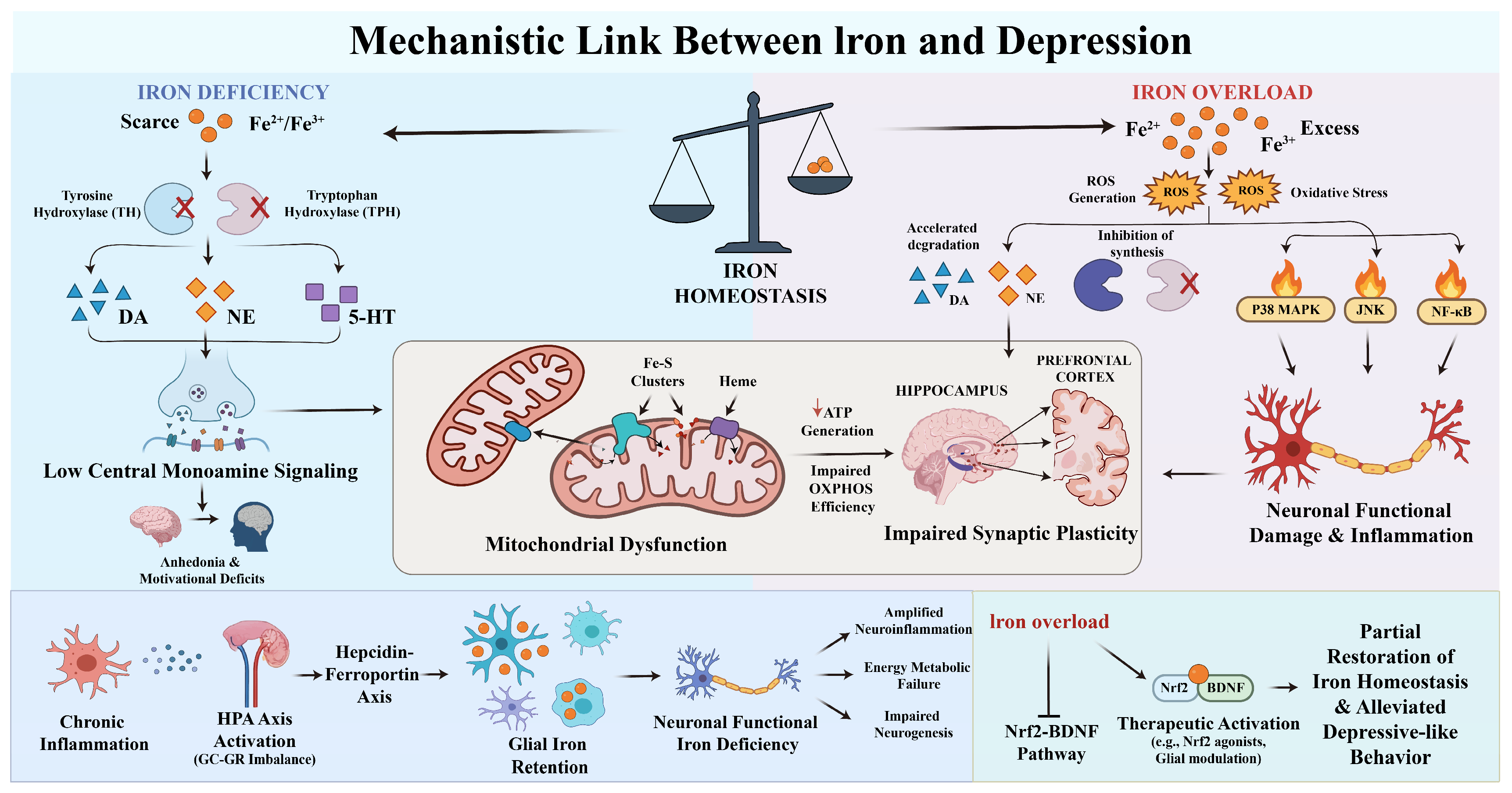
2.1. Iron (Fe)
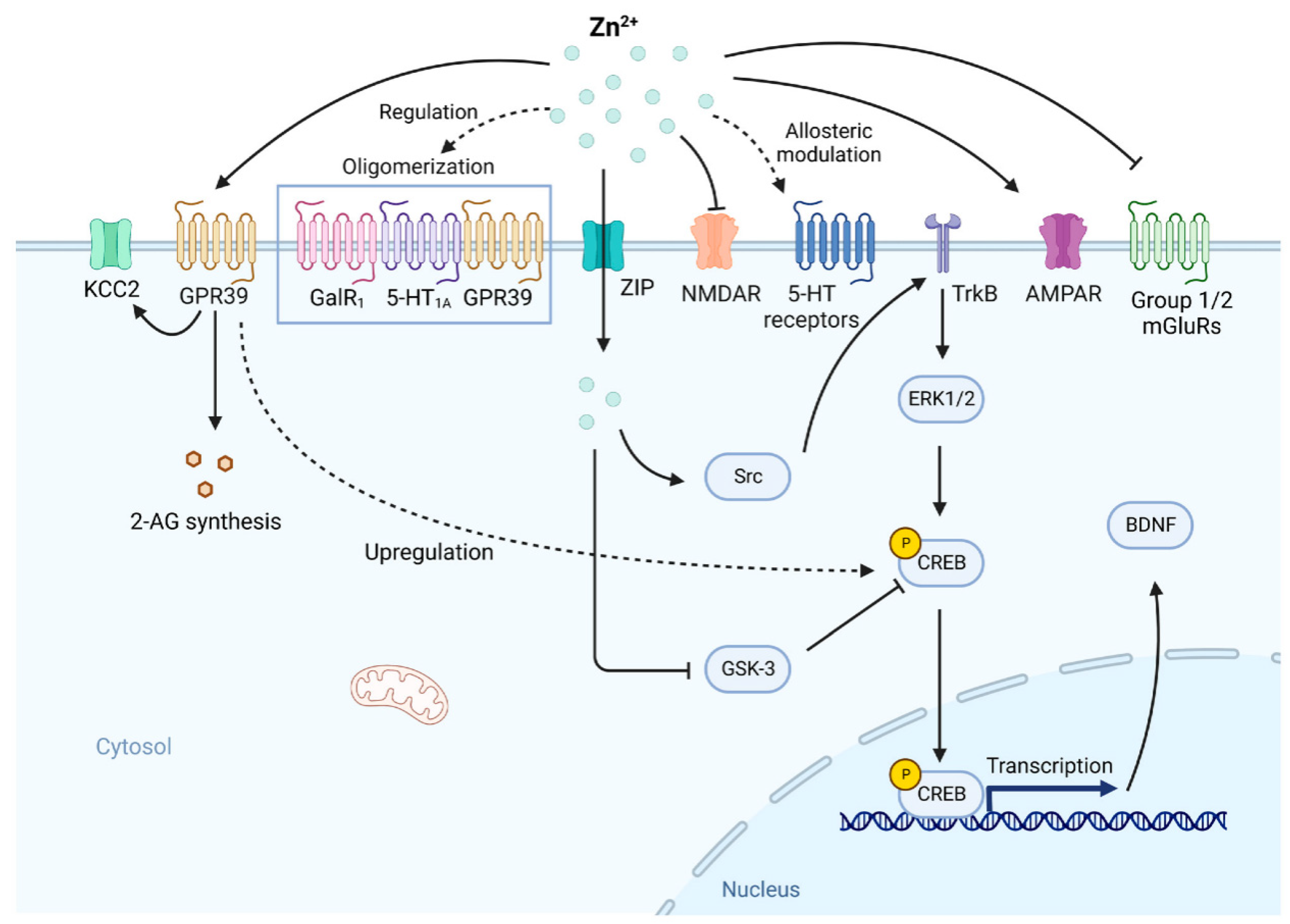
2.2. Zinc (Zn)
2.3. Selenium (Se)
2.4. Iodine (I)
3. Potentially Harmful Trace Elements in Depression
3.1. Lead (Pb)
3.2. Arsenic (As)
4. Other Trace Elements
5. Network Pharmacology–Based Prediction of Trace Element-Mediated Mechanisms in Depression
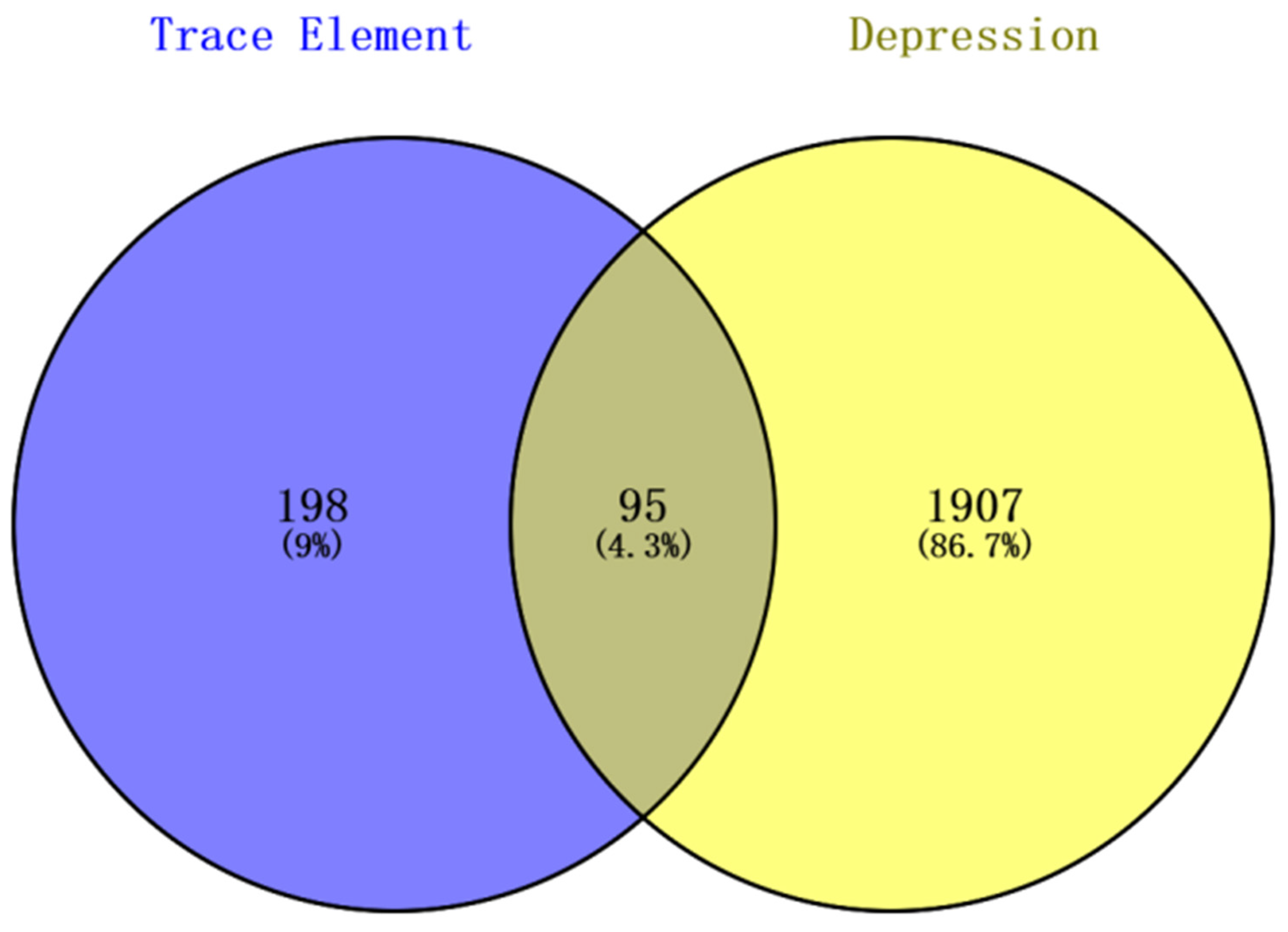
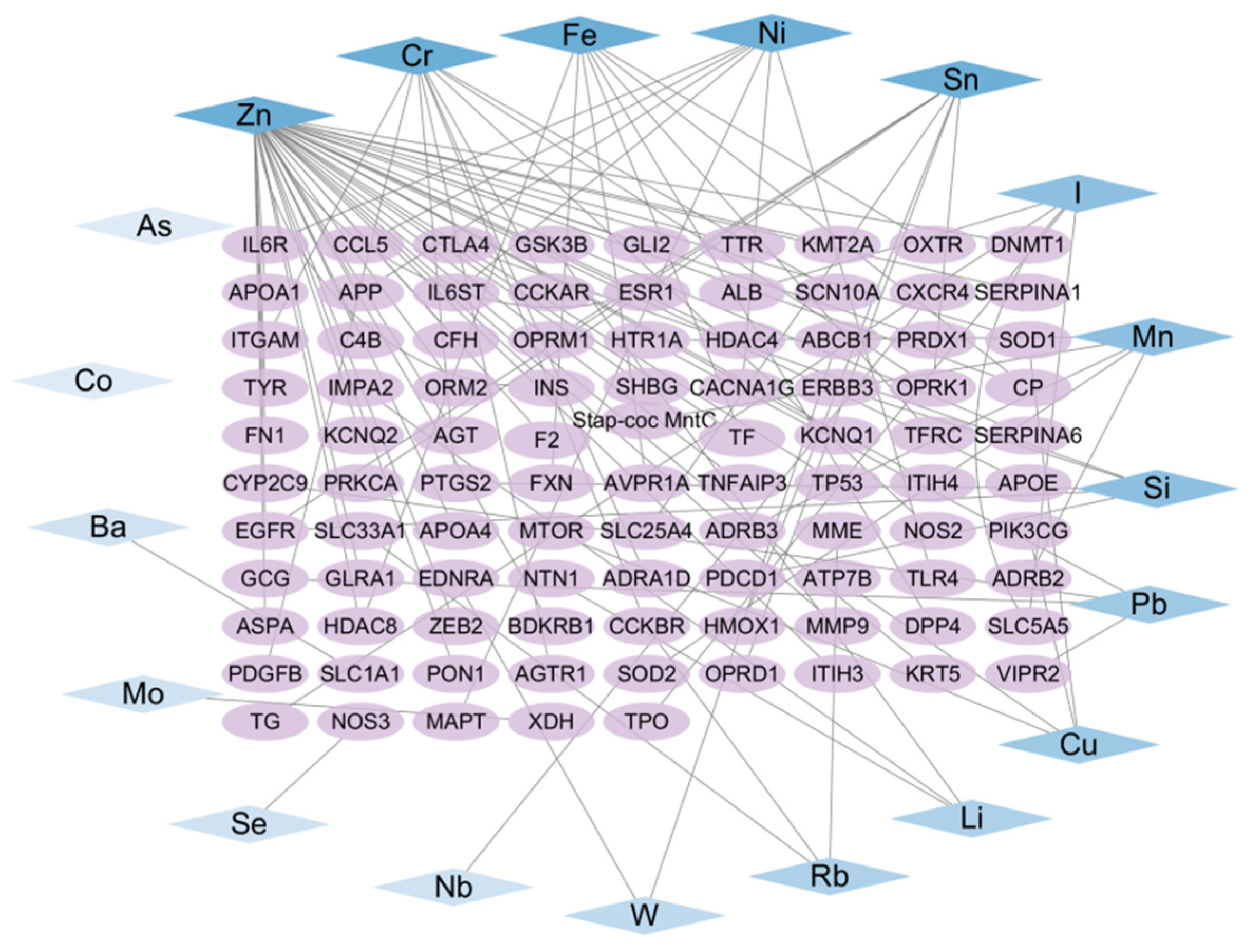
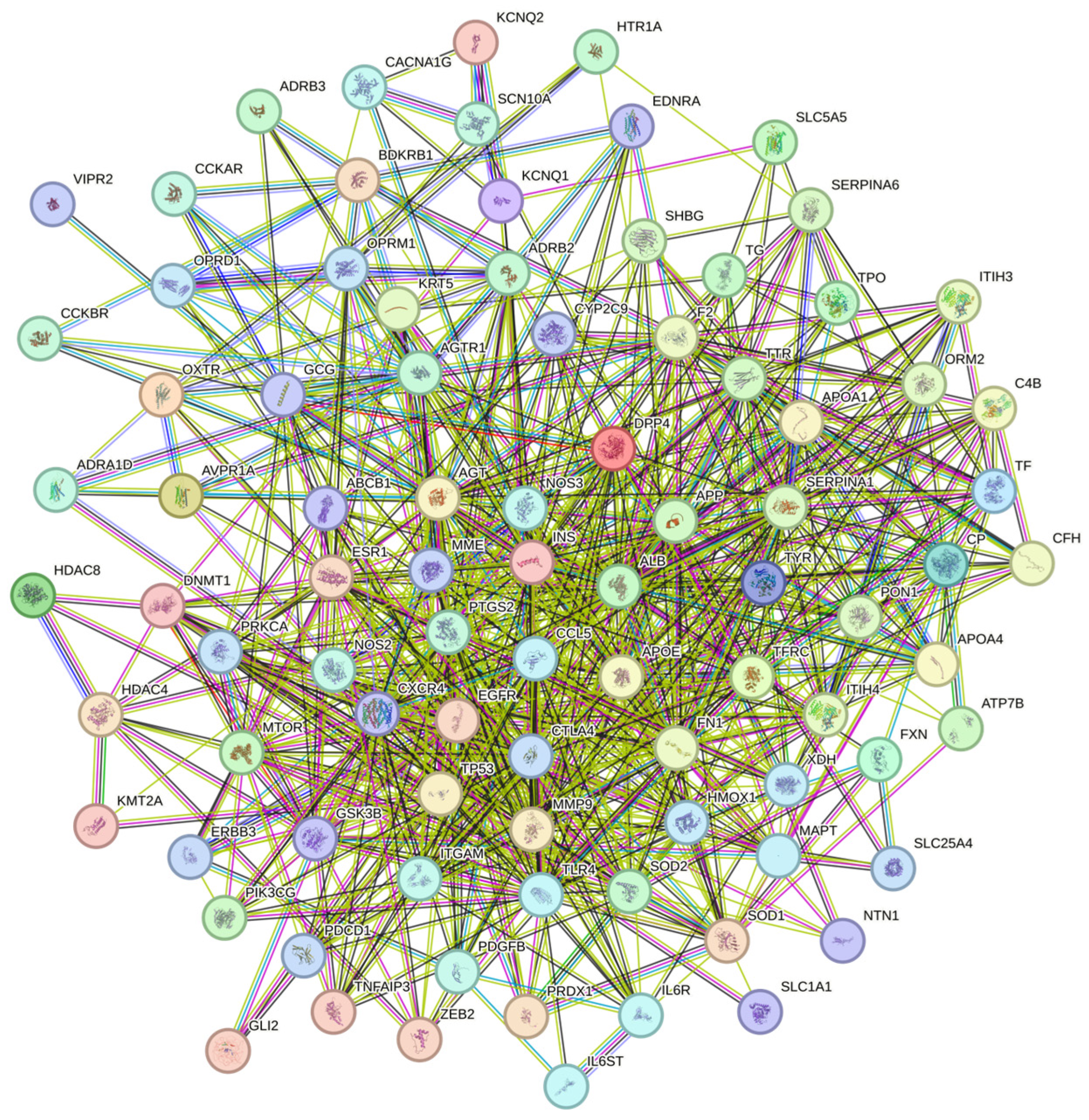
5.1. Screening of Trace Element–Related Targets and Construction of the Interaction Network with Depression
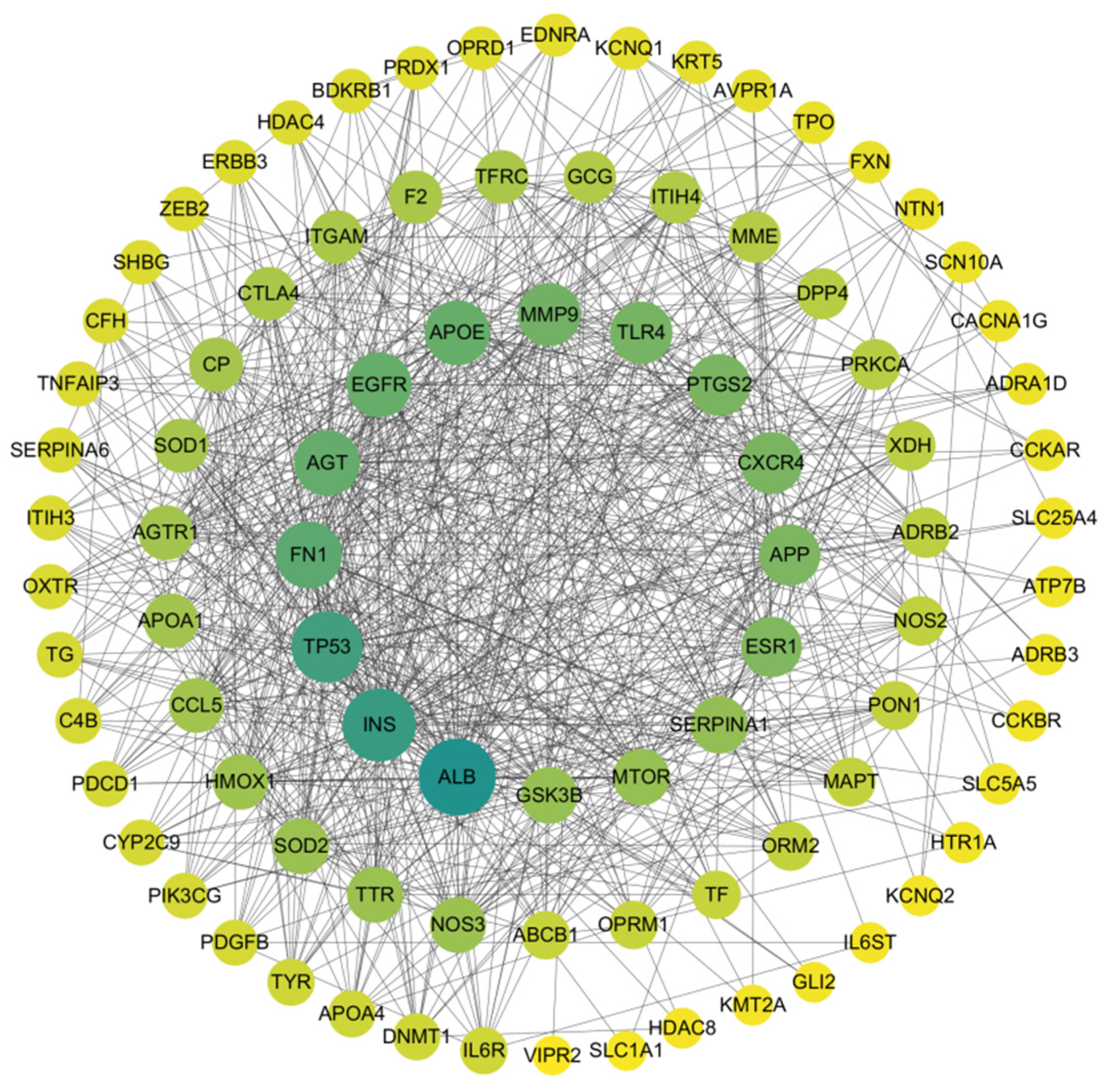
5.2. Protein–Protein Interaction Network Analysis and Hub Node Identification
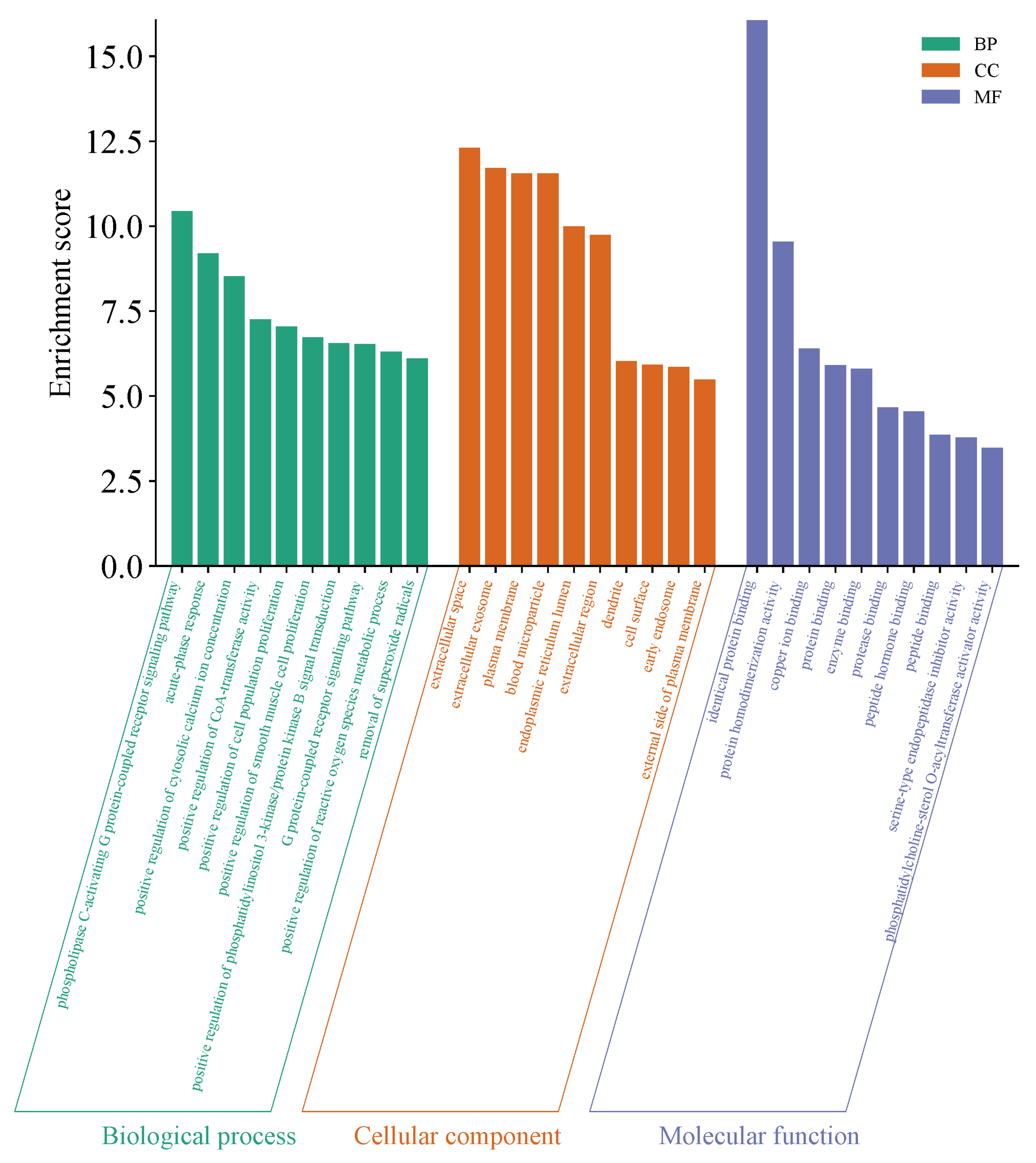
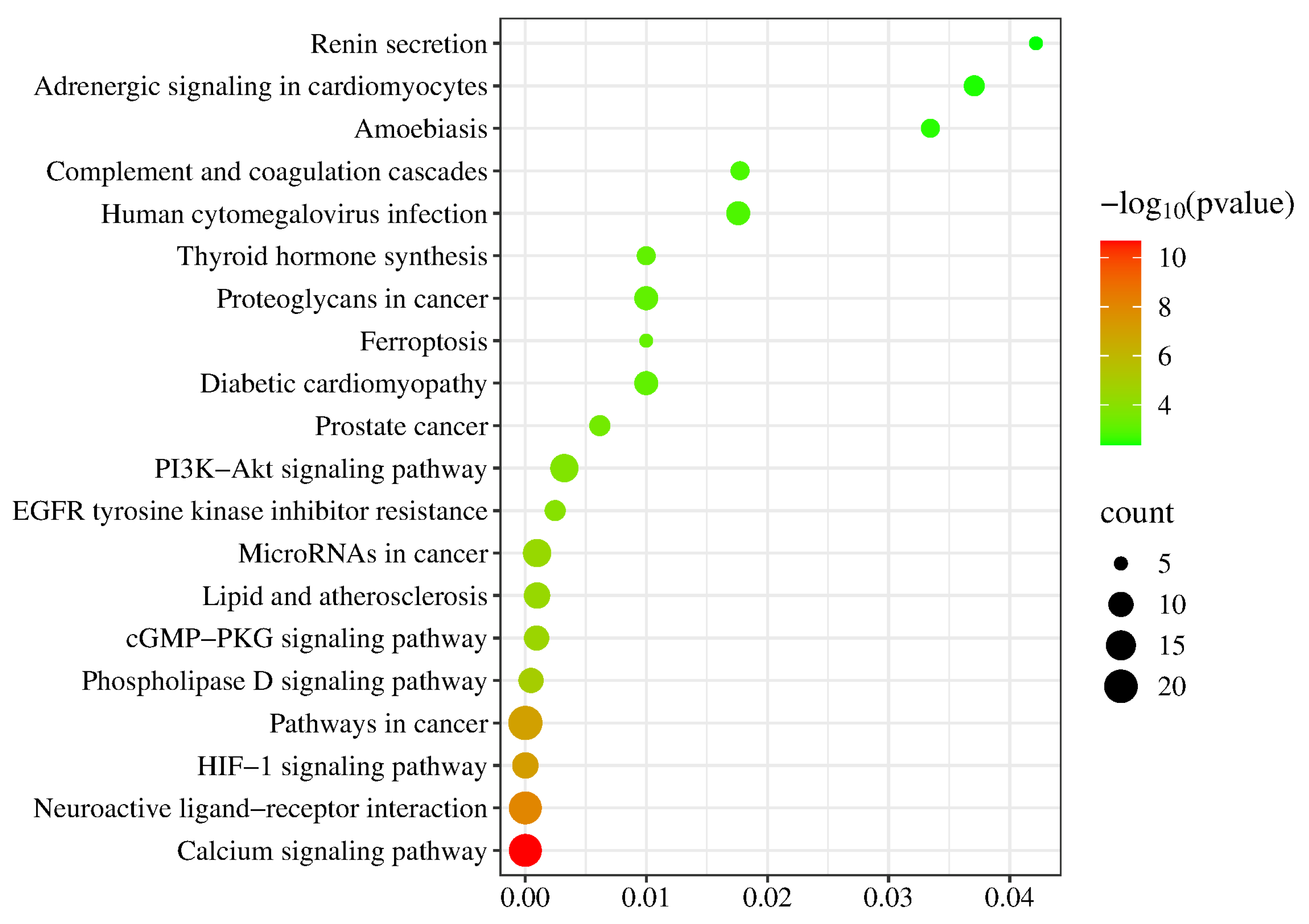
5.3. GO Functional Enrichment and KEGG Pathway Analysis
5.4. Advantages and Limitations of Network Pharmacology Analysis
6. Discussion and Conclusions
Author Contributions
Funding
Data Availability Statement
Acknowledgments
Conflicts of Interest
References
- Malhi, G.S.; Mann, J.J. Depression. Lancet 2018, 392, 2299–2312. [Google Scholar] [CrossRef] [PubMed]
- Wang, B.; Lan, C.; Liu, K.; Fu, L.; Zhang, P.; Ao, C.; Zhang, Q.; Wu, Q.; Yang, F.; Li, Y.; et al. Global, Regional, and National Burden and Attributable Risk Factors of Depressive Disorders among Older Adults, 1990–2021. Int. Psychogeriatr. 2025, 37, 100069. [Google Scholar] [CrossRef] [PubMed]
- Simon, G.E.; Moise, N.; Mohr, D.C. Management of Depression in Adults: A Review. JAMA 2024, 332, 141–152. [Google Scholar] [CrossRef] [PubMed]
- Tian, W.; Yan, G.; Xiong, S.; Zhang, J.; Peng, J.; Zhang, X.; Zhou, Y.; Liu, T.; Zhang, Y.; Ye, P.; et al. Burden of Depressive and Anxiety Disorders in China and Its Provinces, 1990–2021: Findings from the Global Burden of Disease Study 2021. Br. J. Psychiatry 2025, 228, 18–28. [Google Scholar] [CrossRef]
- Han, S.-S.; Zhang, Y.-S.; Zhu, W.; Ye, Y.-P.; Li, Y.-X.; Meng, S.-Q.; Feng, S.; Li, H.; Cui, Z.-L.; Zhang, Y.; et al. Status and Epidemiological Characteristics of Depression and Anxiety among Chinese University Students in 2023. BMC Public Health 2025, 25, 1189. [Google Scholar] [CrossRef]
- Fan, Y.; Fan, A.; Yang, Z.; Fan, D. Global Burden of Mental Disorders in 204 Countries and Territories, 1990–2021: Results from the Global Burden of Disease Study 2021. BMC Psychiatry 2025, 25, 486. [Google Scholar] [CrossRef]
- Zhang, L.; Qin, K.; Pan, N.; Xu, H.; Gong, Q. Shared and Distinct Patterns of Default Mode Network Dysfunction in Major Depressive Disorder and Bipolar Disorder: A Comparative Meta-Analysis. J. Affect. Disord. 2025, 368, 23–32. [Google Scholar] [CrossRef]
- Gong, J.; Wang, J.; Qiu, S.; Chen, P.; Luo, Z.; Wang, J.; Huang, L.; Wang, Y. Common and Distinct Patterns of Intrinsic Brain Activity Alterations in Major Depression and Bipolar Disorder: Voxel-Based Meta-Analysis. Transl. Psychiatry 2020, 10, 353. [Google Scholar] [CrossRef]
- Vieta, E.; Berk, M.; Schulze, T.G.; Carvalho, A.F.; Suppes, T.; Calabrese, J.R.; Gao, K.; Miskowiak, K.W.; Grande, I. Bipolar disorders. Nat. Rev. Dis. Primers 2018, 4, 18008. [Google Scholar] [CrossRef]
- Beijers, L.; Wardenaar, K.J.; van Loo, H.M.; Schoevers, R.A. Data-Driven Biological Subtypes of Depression: Systematic Review of Biological Approaches to Depression Subtyping. Mol. Psychiatry 2019, 24, 888–900. [Google Scholar] [CrossRef]
- Wylie, A.C.; Short, S.J.; Fry, R.C.; Mills-Koonce, W.R.; Propper, C. Maternal Prenatal Lead Levels and Neonatal Brain Volumes: Testing Moderations by Maternal Depressive Symptoms and Family Income. Neurotoxicol. Teratol. 2024, 102, 107322. [Google Scholar] [CrossRef]
- Martinez, E.J.; Kolb, B.L.; Bell, A.; Savage, D.D.; Allan, A.M. Moderate Perinatal Arsenic Exposure Alters Neuroendocrine Markers Associated with Depression and Increases Depressive-like Behaviors in Adult Mouse Offspring. Neurotoxicology 2008, 29, 647–655. [Google Scholar] [CrossRef] [PubMed]
- Haider, S.; Saleem, S.; Tabassum, S.; Khaliq, S.; Shamim, S.; Batool, Z.; Parveen, T.; Inam, Q.; Haleem, D.J. Alteration in Plasma Corticosterone Levels Following Long Term Oral Administration of Lead Produces Depression like Symptoms in Rats. Metab. Brain Dis. 2013, 28, 85–92. [Google Scholar] [CrossRef] [PubMed]
- Tang, L.; Tang, R.; Zheng, J.; Zhao, P.; Zhu, R.; Tang, Y.; Zhang, X.; Gong, X.; Wang, F. Dissecting Biological Heterogeneity in Major Depressive Disorder Based on Neuroimaging Subtypes with Multi-Omics Data. Transl. Psychiatry 2025, 15, 72. [Google Scholar] [CrossRef] [PubMed]
- Liu, Q.; Zhou, X.; Lan, C.; Xu, X.; Chen, Y.; Chen, T.; Wang, J.; Zhou, B.; Yao, D.; Kendrick, K.M.; et al. Multilevel Brain Functional Connectivity and Task-Based Representations Explaining Heterogeneity in Major Depressive Disorder. Transl. Psychiatry 2025, 15, 199. [Google Scholar] [CrossRef]
- Yin, Y.; Ju, T.; Zeng, D.; Duan, F.; Zhu, Y.; Liu, J.; Li, Y.; Lu, W. “Inflamed” Depression: A Review of the Interactions between Depression and Inflammation and Current Anti-Inflammatory Strategies for Depression. Pharmacol. Res. 2024, 207, 107322. [Google Scholar] [CrossRef]
- Krishnan, V.; Nestler, E.J. The Molecular Neurobiology of Depression. Nature 2008, 455, 894–902. [Google Scholar] [CrossRef]
- Folstein, M.; Liu, T.; Peter, I.; Buel, J.; Arsenault, L.; Scott, T.; Qiu, W.W. The Homocysteine Hypothesis of Depression. Am. J. Psychiatry 2007, 164, 861–867. [Google Scholar] [CrossRef]
- Luscher, B.; Shen, Q.; Sahir, N. The GABAergic Deficit Hypothesis of Major Depressive Disorder. Mol. Psychiatry 2011, 16, 383–406. [Google Scholar] [CrossRef]
- Page, C.E.; Epperson, C.N.; Novick, A.M.; Duffy, K.A.; Thompson, S.M. Beyond the Serotonin Deficit Hypothesis: Communicating a Neuroplasticity Framework of Major Depressive Disorder. Mol. Psychiatry 2024, 29, 3802–3813. [Google Scholar] [CrossRef]
- Gold, P.W.; Wong, M.-L. Re-Assessing the Catecholamine Hypothesis of Depression: The Case of Melancholic Depression. Mol. Psychiatry 2021, 26, 6121–6124. [Google Scholar] [CrossRef] [PubMed]
- Wang, H.-Q.; Wang, Z.-Z.; Chen, N.-H. The Receptor Hypothesis and the Pathogenesis of Depression: Genetic Bases and Biological Correlates. Pharmacol. Res. 2021, 167, 105542. [Google Scholar] [CrossRef]
- Taylor, W.D.; Aizenstein, H.J.; Alexopoulos, G.S. The Vascular Depression Hypothesis: Mechanisms Linking Vascular Disease with Depression. Mol. Psychiatry 2013, 18, 963–974. [Google Scholar] [CrossRef] [PubMed]
- Kendrick, T.; Collinson, S. Antidepressants and the Serotonin Hypothesis of Depression. BMJ 2022, 378, o1993. [Google Scholar] [CrossRef] [PubMed]
- Singh, N.; Hazari, P.P.; Mittal, P.; Yadav, S.K.; Kumar, N.; Mishra, G.; Dahiya, S.; Mishra, A.K. Role of Selective Serotonin Reuptake Inhibitors, Serotonin-Norepinephrine Reuptake Inhibitors and Psychedelics in the Treatment of Major Depressive Disorder: A Perspective on Mechanistic Insight and Current Status. Eur. J. Pharmacol. 2025, 1001, 177737. [Google Scholar] [CrossRef]
- Gosmann, N.P.; de Abreu Costa, M.; de Barros Jaeger, M.; Frozi, J.; Spanemberg, L.; Manfro, G.G.; Cortese, S.; Cuijpers, P.; Pine, D.S.; Salum, G.A. Incidence of Adverse Events and Comparative Tolerability of Selective Serotonin Reuptake Inhibitors, and Serotonin and Norepinephrine Reuptake Inhibitors for the Treatment of Anxiety, Obsessive-Compulsive, and Stress Disorders: A Systematic Review and Network Meta-Analysis. Psychol. Med. 2023, 53, 3783–3792. [Google Scholar] [CrossRef]
- Huang, C.; Hu, L.; Liu, W.; Geng, F.; Wong, G.T.C.; Zhang, Y.; Reif, A.; Bao, Y.; Xue, Q.; Lu, L. Efficacy and Safety of Esketamine on Major Depression, Postpartum Depression and Perioperative Depression: A Systematic Review and Meta-Analysis. Mol. Psychiatry 2025, 31, 545–558. [Google Scholar] [CrossRef]
- de Laportalière, T.T.; Jullien, A.; Yrondi, A.; Cestac, P.; Montastruc, F. Reporting of Harms in Clinical Trials of Esketamine in Depression: A Systematic Review. Psychol. Med. 2023, 53, 4305–4315. [Google Scholar] [CrossRef]
- Kalin, N.H. Adolescent Suicidality and Depression, Premenstrual Dysphoric Disorder, and Safety Issues Related to Ketamine and Esketamine Treatment. Am. J. Psychiatry 2025, 182, 889–891. [Google Scholar] [CrossRef]
- Li, Z.; Wang, W.; Xin, X.; Song, X.; Zhang, D. Association of Total Zinc, Iron, Copper and Selenium Intakes with Depression in the US Adults. J. Affect. Disord. 2018, 228, 68–74. [Google Scholar] [CrossRef]
- Uzungil, V.; Tran, H.; Aitken, C.; Wilson, C.; Opazo, C.M.; Li, S.; Payet, J.M.; Mawal, C.H.; Bush, A.I.; Hale, M.W.; et al. Novel Antidepressant-like Properties of the Iron Chelator Deferiprone in a Mouse Model of Depression. Neurotherapeutics 2022, 19, 1662–1685. [Google Scholar] [CrossRef]
- Młyniec, K.; Budziszewska, B.; Holst, B.; Ostachowicz, B.; Nowak, G. GPR39 (Zinc Receptor) Knockout Mice Exhibit Depression-like Behavior and CREB/BDNF down-Regulation in the Hippocampus. Int. J. Neuropsychopharmacol. 2015, 18, pyu002. [Google Scholar] [CrossRef]
- Mlyniec, K. Interaction between Zinc, GPR39, BDNF and Neuropeptides in Depression. Curr. Neuropharmacol. 2021, 19, 2012. [Google Scholar] [CrossRef] [PubMed]
- Sartori, S.B.; Whittle, N.; Hetzenauer, A.; Singewald, N. Magnesium Deficiency Induces Anxiety and HPA Axis Dysregulation: Modulation by Therapeutic Drug Treatment. Neuropharmacology 2012, 62, 304–312. [Google Scholar] [CrossRef] [PubMed]
- Ryszewska-Pokraśniewicz, B.; Mach, A.; Skalski, M.; Januszko, P.; Wawrzyniak, Z.M.; Poleszak, E.; Nowak, G.; Pilc, A.; Radziwoń-Zaleska, M. Effects of Magnesium Supplementation on Unipolar Depression: A Placebo-Controlled Study and Review of the Importance of Dosing and Magnesium Status in the Therapeutic Response. Nutrients 2018, 10, 1014. [Google Scholar] [CrossRef] [PubMed]
- Mao, Y.; Zhang, L.; Zhang, C.; Qin, L.; Liao, X.; Zhao, L. The close relationship between trace elements (Cu, Fe, Zn, Se, Rb, Si, Cr, and V) and Alzheimer’s disease: Research progress and insights. J. Trace Elem. Med. Biol. 2025, 90, 127692. [Google Scholar] [CrossRef]
- Karkoszka, N.; Gibula-Tarlowska, E.; Kotlinska, J.; Bielenica, A.; Gawel, K.; Kedzierska, E. Selenium Intake and Postnatal Depression—A Short Review. Nutrients 2024, 16, 1926. [Google Scholar] [CrossRef]
- Noormohammadi, M.; Etesam, F.; Amini, A.; Dehkordi, P.K.; Mohammadzadeh, M.; Shidfar, F. Impact of Nano-Selenium Supplementation on the JAK/STAT Signaling Pathway in Major Depressive Disorder: A Triple-Blind, Randomized Controlled Trial. BMC Psychiatry 2025, 25, 785. [Google Scholar] [CrossRef]
- Quan, Z.; Li, H.; Quan, Z.; Qing, H. Appropriate Macronutrients or Mineral Elements Are Beneficial to Improve Depression and Reduce the Risk of Depression. Int. J. Mol. Sci. 2023, 24, 7098. [Google Scholar] [CrossRef]
- Nogales, C.; Mamdouh, Z.M.; List, M.; Kiel, C.; Casas, A.I.; Schmidt, H.H.H.W. Network Pharmacology: Curing Causal Mechanisms Instead of Treating Symptoms. Trends Pharmacol. Sci. 2022, 43, 136–150. [Google Scholar] [CrossRef]
- Noor, F.; Asif, M.; Ashfaq, U.A.; Qasim, M.; ul Qamar, M.T. Machine Learning for Synergistic Network Pharmacology: A Comprehensive Overview. Brief. Bioinf. 2023, 24, bbad120. [Google Scholar] [CrossRef]
- Zhao, L.; Zhang, H.; Li, N.; Chen, J.; Xu, H.; Wang, Y.; Liang, Q. Network Pharmacology, a Promising Approach to Reveal the Pharmacology Mechanism of Chinese Medicine Formula. J. Ethnopharmacol. 2023, 309, 116306. [Google Scholar] [CrossRef] [PubMed]
- Levi, S.; Ripamonti, M.; Moro, A.S.; Cozzi, A. Iron Imbalance in Neurodegeneration. Mol. Psychiatry 2024, 29, 1139–1152. [Google Scholar] [CrossRef] [PubMed]
- Kenkhuis, B.; Bush, A.I.; Ayton, S. How Iron Can Drive Neurodegeneration. Trends Neurosci. 2023, 46, 333–335. [Google Scholar] [CrossRef] [PubMed]
- Bogdan, A.R.; Miyazawa, M.; Hashimoto, K.; Tsuji, Y. Regulators of Iron Homeostasis: New Players in Metabolism, Cell Death, and Disease. Trends Biochem. Sci. 2016, 41, 274–286. [Google Scholar] [CrossRef]
- Kupershmidt, L.; Youdim, M.B.H. The Neuroprotective Activities of the Novel Multi-Target Iron-Chelators in Models of Alzheimer’s Disease, Amyotrophic Lateral Sclerosis and Aging. Cells 2023, 12, 763. [Google Scholar] [CrossRef]
- Gao, M.; Monian, P.; Pan, Q.; Zhang, W.; Xiang, J.; Jiang, X. Ferroptosis Is an Autophagic Cell Death Process. Cell Res. 2016, 26, 1021–1032. [Google Scholar] [CrossRef]
- Arredondo, M.; Núñez, M.T. Iron and Copper Metabolism. Mol. Asp. Med. 2005, 26, 313–327. [Google Scholar] [CrossRef]
- Verduzco-Mendoza, A.; Mota-Rojas, D.; Olmos-Hernández, A.; Avila-Luna, A.; García-García, K.; Gálvez-Rosas, A.; Hidalgo-Bravo, A.; Ríos, C.; Parra-Cid, C.; Montes, S.; et al. Changes in Noradrenergic Synthesis and Dopamine Beta-Hydroxylase Activity in Response to Oxidative Stress after Iron-Induced Brain Injury. Neurochem. Res. 2024, 49, 3043–3059. [Google Scholar] [CrossRef]
- Ponting, C.P. Domain Homologues of Dopamine β-Hydroxylase and Ferric Reductase: Roles for Iron Metabolism in Neurodegenerative Disorders? Hum. Mol. Genet. 2001, 10, 1853–1858. [Google Scholar] [CrossRef]
- Beard, J.L.; Connor, J.R. Iron Status and Neural Functioning. Annu. Rev. Nutr. 2003, 23, 41–58. [Google Scholar] [CrossRef]
- Erikson, K.M.; Jones, B.C.; Beard, J.L. Iron Deficiency Alters Dopamine Transporter Functioning in Rat Striatum. J. Nutr. 2000, 130, 2831–2837. [Google Scholar] [CrossRef] [PubMed]
- Cheli, V.; Santiago González, D.; Wan, Q.; Denaroso, G.; Wan, R.; Rosenblum, S.; Paez, P. H-Ferritin Expression in Astrocytes Is Necessary for Proper Oligodendrocyte Development and Myelination. Glia 2021, 69, 2981–2998. [Google Scholar] [CrossRef] [PubMed]
- Cheli, V.T.; Santiago González, D.A.; Marziali, L.N.; Zamora, N.N.; Guitart, M.E.; Spreuer, V.; Pasquini, J.M.; Paez, P.M. The Divalent Metal Transporter 1 (DMT1) Is Required for Iron Uptake and Normal Development of Oligodendrocyte Progenitor Cells. J. Neurosci. 2018, 38, 9142–9159. [Google Scholar] [CrossRef] [PubMed]
- Ayton, S.; Moreau, C.; Devos, D.; Bush, A.I. Iron on Trial: Recasting the Role of Iron in Neurodegeneration. Brain 2025, 148, 4241–4247. [Google Scholar] [CrossRef]
- Yao, S.; Zhong, Y.; Xu, Y.; Qin, J.; Zhang, N.; Zhu, X.; Li, Y. Quantitative Susceptibility Mapping Reveals an Association between Brain Iron Load and Depression Severity. Front. Hum. Neurosci. 2017, 11, 442. [Google Scholar] [CrossRef]
- Steffens, D.C.; Tupler, L.A.; Ranga, K.; Krishnan, R. Magnetic Resonance Imaging Signal Hypointensity and Iron Content of Putamen Nuclei in Elderly Depressed Patients. Psychiatry Res. Neuroimaging 1998, 83, 95–103. [Google Scholar] [CrossRef]
- Liang, W.; Zhou, B.; Miao, Z.; Liu, X.; Liu, S. Abnormality in Peripheral and Brain Iron Contents and the Relationship with Grey Matter Volumes in Major Depressive Disorder. Nutrients 2024, 16, 2073. [Google Scholar] [CrossRef]
- Du, W.; Tang, B.; Liu, S.; Zhang, W.; Lui, S. Causal Associations between Iron Levels in Subcortical Brain Regions and Psychiatric Disorders: A Mendelian Randomization Study. Transl. Psychiatry 2025, 15, 19. [Google Scholar] [CrossRef]
- Zhang, W.; Zhou, Y.; Li, Q.; Xu, J.; Yan, S.; Cai, J.; Jiaerken, Y.; Lou, M. Brain Iron Deposits in Thalamus Is an Independent Factor for Depressive Symptoms Based on Quantitative Susceptibility Mapping in an Older Adults Community Population. Front. Psychiatry 2019, 10, 734. [Google Scholar] [CrossRef]
- Möller, H.E.; Bossoni, L.; Connor, J.R.; Crichton, R.R.; Does, M.D.; Ward, R.J.; Zecca, L.; Zucca, F.A.; Ronen, I. Iron, Myelin, and the Brain: Neuroimaging Meets Neurobiology. Trends Neurosci. 2019, 42, 384–401. [Google Scholar] [CrossRef]
- Ke, Y.; Qian, Z.M. Brain Iron Metabolism: Neurobiology and Neurochemistry. Prog. Neurobiol. 2007, 83, 149–173. [Google Scholar] [CrossRef] [PubMed]
- Stewart, R.; Hirani, V. Relationship Between Depressive Symptoms, Anemia, and Iron Status in Older Residents From a National Survey Population. Biopsychosoc. Sci. Med. 2012, 74, 208. [Google Scholar] [CrossRef] [PubMed]
- Leung, B.M.Y.; Kaplan, B.J. Perinatal Depression: Prevalence, Risks, and the Nutrition Link—A Review of the Literature. J. Am. Diet. Assoc. 2009, 109, 1566–1575. [Google Scholar] [CrossRef] [PubMed]
- Lee, H.-S.; Chao, H.-H.; Huang, W.-T.; Chen, S.C.-C.; Yang, H.-Y. Psychiatric Disorders Risk in Patients with Iron Deficiency Anemia and Association with Iron Supplementation Medications: A Nationwide Database Analysis. BMC Psychiatry 2020, 20, 216. [Google Scholar] [CrossRef]
- Tan, H.S.; Guinn, N.R.; Fuller, M.E.; Habib, A.S. The Association between Intravenous Iron for Antenatal Anemia and Postnatal Depression: A Retrospective Cohort Study. Arch. Gynecol. Obstet. 2022, 306, 1477–1484. [Google Scholar] [CrossRef]
- Babah, O.A.; Beňová, L.; Larsson, E.C.; Hanson, C.; Afolabi, B.B. Is an Improvement in Anaemia and Iron Levels Associated with the Risk of Early Postpartum Depression? A Cohort Study from Lagos, Nigeria. BMC Public Health 2025, 25, 808. [Google Scholar] [CrossRef]
- Osuna, E.; Baumgartner, J.; Wunderlin, O.; Emery, S.; Albermann, M.; Baumgartner, N.; Schmeck, K.; Walitza, S.; Strumberger, M.; Hersberger, M.; et al. Iron Status in Swiss Adolescents with Paediatric Major Depressive Disorder and Healthy Controls: A Matched Case–Control Study. Eur. J. Nutr. 2024, 63, 951–963. [Google Scholar] [CrossRef]
- Knyszyńska, A.; Radecka, A.; Zabielska, P.; Łuczak, J.; Karakiewicz, B.; Lubkowska, A. The Role of Iron Metabolism in Fatigue, Depression, and Quality of Life in Multiple Sclerosis Patients. Int. J. Environ. Res. Public Health 2020, 17, 6818. [Google Scholar] [CrossRef]
- Xu, W.; Zhi, Y.; Yuan, Y.; Zhang, B.; Shen, Y.; Zhang, H.; Zhang, K.; Xu, Y. Correlations between Abnormal Iron Metabolism and Non-Motor Symptoms in Parkinson’s Disease. J. Neural Transm. 2018, 125, 1027–1032. [Google Scholar] [CrossRef]
- Still, C.N. Postmenopausal Parkinsonism: Brain Iron Overload? In Parkinson’s Disease; Messiha, F.S., Kenny, A.D., Eds.; Advances in Experimental Medicine and Biology; Springer: New York, NY, USA, 1977; Volume 90, pp. 291–296. [Google Scholar]
- Richardson, A.C.; Heath, A.-L.M.; Haszard, J.J.; Polak, M.A.; Houghton, L.A.; Conner, T.S. Higher Body Iron Is Associated with Greater Depression Symptoms among Young Adult Men but Not Women: Observational Data from the Daily Life Study. Nutrients 2015, 7, 6055–6072. [Google Scholar] [CrossRef] [PubMed]
- Ferreira, A.; Neves, P.; Gozzelino, R. Multilevel Impacts of Iron in the Brain: The Cross Talk between Neurophysiological Mechanisms, Cognition, and Social Behavior. Pharmaceuticals 2019, 12, 126. [Google Scholar] [CrossRef] [PubMed]
- Kim, J.; Wessling-Resnick, M. Iron and Mechanisms of Emotional Behavior. J. Nutr. Biochem. 2014, 25, 1101–1107. [Google Scholar] [CrossRef] [PubMed]
- Berthou, C.; Iliou, J.P.; Barba, D. Iron, Neuro-Bioavailability and Depression. EJHaem 2021, 3, 263–275. [Google Scholar] [CrossRef]
- Shukla, A.; Agarwal, K.N.; Shukla, G.S. Latent Iron Deficiency Alters Gamma-Aminobutyric Acid and Glutamate Metabolism in Rat Brain. Experientia 1989, 45, 343–345. [Google Scholar] [CrossRef]
- Mittal, R.D.; Pandey, A.; Mittal, B.; Agarwal, K.N. Effect of Latent Iron Deficiency on GABA and Glutamate Neuroreceptors in Rat Brain. Indian J. Clin. Biochem. 2003, 18, 111–116. [Google Scholar] [CrossRef]
- Song, Y.; Cao, H.; Zuo, C.; Gu, Z.; Huang, Y.; Miao, J.; Fu, Y.; Guo, Y.; Jiang, Y.; Wang, F. Mitochondrial Dysfunction: A Fatal Blow in Depression. Biomed. Pharmacother. 2023, 167, 115652. [Google Scholar] [CrossRef]
- Xia, X.; Li, K.; Jiang, B.; Zou, W.; Wang, L. Mitochondrial Dysfunction in Depression: Mechanisms and Targeted Therapy Strategies. Asian J. Psychiatry 2025, 112, 104694. [Google Scholar] [CrossRef]
- Boeck, C.; Karabatsiakis, A.; Salinas-Manrique, J.; Calzia, E.; Kolassa, S.; Dietrich, D.E.; Kolassa, I.T. Abstract # 1746 Inflammation and Mitochondrial Dysfunction in Elderly Women with Major Depressive Disorder. Brain. Behav. Immun. 2016, 57, e11–e12. [Google Scholar] [CrossRef]
- Alshial, E.E.; Abdulghaney, M.I.; Wadan, A.-H.S.; Abdellatif, M.A.; Ramadan, N.E.; Suleiman, A.M.; Waheed, N.; Abdellatif, M.; Mohammed, H.S. Mitochondrial Dysfunction and Neurological Disorders: A Narrative Review and Treatment Overview. Life Sci. 2023, 334, 122257. [Google Scholar] [CrossRef]
- Del Vecchio, L.; Girelli, D.; Vinchi, F.; Cozzolino, M.; Elliott, S.; Mark, P.B.; Valenti, L.; Qian, C.; Guo, Q.; Qian, Z.-M.; et al. Iron Biology. Nephrol. Dial. Transpl. 2024, 39, 1404–1415. [Google Scholar] [CrossRef]
- La, P.; Ghiaccio, V.; Zhang, J.; Rivella, S. An Orchestrated Balance between Mitochondria Biogenesis, Iron-Sulfur Cluster Synthesis and Cellular Iron Acquisition. Blood 2018, 132, 1048. [Google Scholar] [CrossRef]
- Koleini, N.; Shapiro, J.S.; Geier, J.; Ardehali, H. Ironing out Mechanisms of Iron Homeostasis and Disorders of Iron Deficiency. J. Clin. Invest. 2021, 131, e148671. [Google Scholar] [CrossRef] [PubMed]
- Zeng, T.; Li, J.; Xie, L.; Dong, Z.; Chen, Q.; Huang, S.; Xie, S.; Lai, Y.; Li, J.; Yan, W.; et al. Nrf2 Regulates Iron-Dependent Hippocampal Synapses and Functional Connectivity Damage in Depression. J. Neuroinflamm. 2023, 20, 212. [Google Scholar] [CrossRef] [PubMed]
- Wang, L.; Xu, R.; Huang, C.; Yi, G.; Li, Z.; Zhang, H.; Ye, R.; Qi, S.; Huang, G.; Qu, S. Targeting the Ferroptosis Crosstalk: Novel Alternative Strategies for the Treatment of Major Depressive Disorder. Gen. Psychiatry 2023, 36, e101072. [Google Scholar] [CrossRef]
- Zhang, G.; Lv, S.; Zhong, X.; Li, X.; Yi, Y.; Lu, Y.; Yan, W.; Li, J.; Teng, J. Ferroptosis: A New Antidepressant Pharmacological Mechanism. Front. Pharmacol. 2024, 14, 1339057. [Google Scholar] [CrossRef]
- Stiban, J.; So, M.; Kaguni, L.S. Iron-Sulfur Clusters in Mitochondrial Metabolism: Multifaceted Roles of a Simple Cofactor. Biochemistry 2016, 81, 1066–1080. [Google Scholar] [CrossRef]
- Hauck, S. Functional Iron Blockade in Chronic Stress and Neurodivergence: A Perspective on Adaptive Stress Physiology. Front. Psychiatry 2025, 16, 1701625. [Google Scholar] [CrossRef]
- Dong, K.; Liu, B.; Cheng, G.; Li, Y.; Xie, F.; Zhang, J.; Qian, L. Stress-Induced Dysregulation of Brain Iron Metabolism and Its Links to Neurological Disorders. Biology 2025, 14, 1575. [Google Scholar] [CrossRef]
- Maes, M.; Van de Vyvere, J.; Vandoolaeghe, E.; Bril, T.; Demedts, P.; Wauters, A.; Neels, H. Alterations in Iron Metabolism and the Erythron in Major Depression: Further Evidence for a Chronic Inflammatory Process. J. Affect. Disord. 1996, 40, 23–33. [Google Scholar] [CrossRef]
- Recalcati, S.; Locati, M.; Gammella, E.; Invernizzi, P.; Cairo, G. Iron Levels in Polarized Macrophages: Regulation of Immunity and Autoimmunity. Autoimmun. Rev. 2012, 11, 883–889. [Google Scholar] [CrossRef] [PubMed]
- Zhang, H.; He, L.; Li, S.; Zhai, M.; Ma, S.; Jin, G.; Li, M.; Zhou, F.; Tian, H.; Nuerkaman, T.; et al. Cerebral Iron Deficiency May Induce Depression through Downregulation of the Hippocampal Glucocorticoid-Glucocorticoid Receptor Signaling Pathway. J. Affect. Disord. 2023, 332, 125–135. [Google Scholar] [CrossRef] [PubMed]
- Chen, L.; Yang, Y.; Zhang, N.; Che, H.; Wang, Z.; Han, J.; Wen, M. DHA and EPA Alleviate Depressive-like Behaviors in Chronic Sleep-Deprived Mice: Involvement of Iron Metabolism, Oligodendrocyte-Lipids Peroxidation and the LCN2-NLRP3 Signaling Axis. Free Radic. Biol. Med. 2024, 225, 654–664. [Google Scholar] [CrossRef] [PubMed]
- Fischer, K.; Thewes, L.; Prozorovski, T.; Bayer, M.; Dietrich, M.; Lowin, T.; Albrecht, P.; Hartung, H.-P.; Meuth, S.G.; Aktas, O.; et al. Fumarate-Based Drugs Protect against Neuroinflammation via Upregulation of Anti-Ferroptotic Pathways. J. Neuroinflamm. 2025, 22, 241. [Google Scholar] [CrossRef]
- Costa, M.I.; Sarmento-Ribeiro, A.B.; Gonçalves, A.C. Zinc: From Biological Functions to Therapeutic Potential. Int. J. Mol. Sci. 2023, 24, 4822. [Google Scholar] [CrossRef]
- Kumar, V.; Kumar, A.; Singh, K.; Avasthi, K.; Kim, J.-J. Neurobiology of Zinc and Its Role in Neurogenesis. Eur. J. Nutr. 2021, 60, 55–64. [Google Scholar] [CrossRef]
- Fan, Y.-G.; Wu, T.-Y.; Zhao, L.-X.; Jia, R.-J.; Ren, H.; Hou, W.-J.; Wang, Z.-Y. From Zinc Homeostasis to Disease Progression: Unveiling the Neurodegenerative Puzzle. Pharmacol. Res. 2024, 199, 107039. [Google Scholar] [CrossRef]
- Zhang, Z.; Deng, W.; Hu, L.; Hu, Y.; Zhang, S.; Xiong, Y.; Liu, X.; Yu, P.; Yu, S.; Yuan, L.; et al. Zinc homeostasis imbalance: Potential therapeutic value in neurodegenerative diseases. Neural Regen. Res. 2025. advance online publication. [Google Scholar] [CrossRef]
- Petrilli, M.A.; Kranz, T.M.; Kleinhaus, K.; Joe, P.; Getz, M.; Johnson, P.; Chao, M.V.; Malaspina, D. The Emerging Role for Zinc in Depression and Psychosis. Front. Pharmacol. 2017, 8, 414. [Google Scholar] [CrossRef]
- Siwek, M.; Dudek, D.; Schlegel-Zawadzka, M.; Morawska, A.; Piekoszewski, W.; Opoka, W.; Zięba, A.; Pilc, A.; Popik, P.; Nowak, G. Serum Zinc Level in Depressed Patients during Zinc Supplementation of Imipramine Treatment. J. Affect. Disord. 2010, 126, 447–452. [Google Scholar] [CrossRef]
- Jung, A.; Spira, D.; Steinhagen-Thiessen, E.; Demuth, I.; Norman, K. Zinc Deficiency Is Associated with Depressive Symptoms—Results from the Berlin Aging Study II. J. Gerontol. A 2017, 72, 1149–1154. [Google Scholar] [CrossRef] [PubMed]
- Xu, Q.; Qian, X.; Sun, F.; Liu, H.; Dou, Z.; Zhang, J. Independent and Joint Associations of Dietary Antioxidant Intake with Risk of Post-Stroke Depression and All-Cause Mortality. J. Affect. Disord. 2023, 322, 84–90. [Google Scholar] [CrossRef] [PubMed]
- Stanisławska, M.; Szkup-Jabłońska, M.; Jurczak, A.; Wieder-Huszla, S.; Samochowiec, A.; Jasiewicz, A.; Noceń, I.; Augustyniuk, K.; Brodowska, A.; Karakiewicz, B.; et al. The Severity of Depressive Symptoms vs. Serum Mg and Zn Levels in Postmenopausal Women. Biol. Trace Elem. Res. 2014, 157, 30–35. [Google Scholar] [CrossRef] [PubMed]
- Nikseresht, S.; Etebary, S.; Karimian, M.; Nabavizadeh, F.; Zarrindast, M.R.; Sadeghipour, H.R. Acute Administration of Zn, Mg, and Thiamine Improves Postpartum Depression Conditions in Mice. Arch. Iran. Med. 2012, 15, 306–311. [Google Scholar]
- Lomagno, K.A.; Hu, F.; Riddell, L.J.; Booth, A.O.; Szymlek-Gay, E.A.; Nowson, C.A.; Byrne, L.K. Increasing Iron and Zinc in Pre-Menopausal Women and Its Effects on Mood and Cognition: A Systematic Review. Nutrients 2014, 6, 5117–5141. [Google Scholar] [CrossRef]
- Maserejian, N.N.; Hall, S.A.; McKinlay, J.B. Low Dietary or Supplemental Zinc Is Associated with Depression Symptoms among Women, but Not Men, in a Population-Based Epidemiological Survey. J. Affect. Disord. 2012, 136, 781–788. [Google Scholar] [CrossRef]
- Lehto, S.M.; Ruusunen, A.; Tolmunen, T.; Voutilainen, S.; Tuomainen, T.-P.; Kauhanen, J. Dietary Zinc Intake and the Risk of Depression in Middle-Aged Men: A 20-Year Prospective Follow-up Study. J. Affect. Disord. 2013, 150, 682–685. [Google Scholar] [CrossRef]
- Solati, Z.; Jazayeri, S.; Tehrani-Doost, M.; Mahmoodianfard, S.; Gohari, M.R. Zinc Monotherapy Increases Serum Brain-Derived Neurotrophic Factor (BDNF) Levels and Decreases Depressive Symptoms in Overweight or Obese Subjects: A Double-Blind, Randomized, Placebo-Controlled Trial. Nutr. Neurosci. 2015, 18, 162–168. [Google Scholar] [CrossRef]
- da Silva, L.E.M.; de Santana, M.L.P.; de Farias Costa, P.R.; Pereira, E.M.; Nepomuceno, C.M.M.; de Oliveira Queiroz, V.A.; de Oliveira, L.P.M.; da Conceição-Machado, M.E.P.; de Sena, E.P. Zinc Supplementation Combined with Antidepressant Drugs for Treatment of Patients with Depression: A Systematic Review and Meta-Analysis. Nutr. Rev. 2021, 79, 1–12. [Google Scholar] [CrossRef]
- Amini, Z.; HeidariFarsani, E. Investigating the Effect of Zinc Supplementation on Probability of Relapse and Mental Health in Patients with Opioid Use Disorder Undergoing Methadone Maintenance Treatment. Subst. Abus. Treat. Prev. Policy 2023, 18, 1. [Google Scholar] [CrossRef]
- Li, Z.; Li, B.; Song, X.; Zhang, D. Dietary Zinc and Iron Intake and Risk of Depression: A Meta-Analysis. Psychiatry Res. 2017, 251, 41–47. [Google Scholar] [CrossRef] [PubMed]
- Yosaee, S.; Clark, C.C.T.; Keshtkaran, Z.; Ashourpour, M.; Keshani, P.; Soltani, S. Zinc in Depression: From Development to Treatment: A Comparative/Dose Response Meta-Analysis of Observational Studies and Randomized Controlled Trials. Gen. Hosp. Psychiatry 2022, 74, 110–117. [Google Scholar] [CrossRef] [PubMed]
- Levenson, C.W. Zinc: The New Antidepressant? Nutr. Rev. 2006, 64, 39–42. [Google Scholar] [CrossRef] [PubMed]
- Wang, J.; Um, P.; Dickerman, B.A.; Liu, J. Zinc, Magnesium, Selenium and Depression: A Review of the Evidence, Potential Mechanisms and Implications. Nutrients 2018, 10, 584. [Google Scholar] [CrossRef]
- Młyniec, K.; Budziszewska, B.; Reczyński, W.; Doboszewska, U.; Pilc, A.; Nowak, G. Zinc Deficiency Alters Responsiveness to Antidepressant Drugs in Mice. Pharmacol. Rep. 2013, 65, 579–592. [Google Scholar] [CrossRef]
- Takeda, A.; Tamano, H.; Nishio, R.; Murakami, T. Behavioral Abnormality Induced by Enhanced Hypothalamo-Pituitary-Adrenocortical Axis Activity under Dietary Zinc Deficiency and Its Usefulness as a Model. Int. J. Mol. Sci. 2016, 17, 1149. [Google Scholar] [CrossRef]
- Pilc, A.; Wierońska, J.M.; Skolnick, P. Glutamate-Based Antidepressants: Preclinical Psychopharmacology. Biol. Psychiatry 2013, 73, 1125–1132. [Google Scholar] [CrossRef]
- Takeda, A.; Tamano, H. Insight into Zinc Signaling from Dietary Zinc Deficiency. Brain Res. Rev. 2009, 62, 33–44. [Google Scholar] [CrossRef]
- Doboszewska, U.; Szewczyk, B.; Sowa-Kućma, M.; Noworyta-Sokołowska, K.; Misztak, P.; Gołębiowska, J.; Młyniec, K.; Ostachowicz, B.; Krośniak, M.; Wojtanowska-Krośniak, A.; et al. Alterations of Bio-Elements, Oxidative, and Inflammatory Status in the Zinc Deficiency Model in Rats. Neurotox. Res. 2016, 29, 143–154. [Google Scholar] [CrossRef]
- Berg, J.; Grant, R.; Siervo, M.; Stephan, B.C.M.; Tully, P.J. Efficacy of B Vitamin Supplementation on Global Cognitive Function in Older Adults: A Systematic Review and Meta-Analysis. Nutr. Rev. 2025, 83, 2256–2267. [Google Scholar] [CrossRef]
- Lee, R.G.; Rains, T.M.; Tovar-Palacio, C.; Beverly, J.L.; Shay, N.F. Zinc Deficiency Increases Hypothalamic Neuropeptide Y and Neuropeptide Y mRNA Levels and Does Not Block Neuropeptide Y-Induced Feeding in Rats. J. Nutr. 1998, 128, 1218–1223. [Google Scholar] [CrossRef]
- Rafalo-Ulinska, A.; Piotrowska, J.; Kryczyk, A.; Opoka, W.; Sowa-Kucma, M.; Misztak, P.; Rajkowska, G.; Stockmeier, C.A.; Datka, W.; Nowak, G.; et al. Zinc Transporters Protein Level in Postmortem Brain of Depressed Subjects and Suicide Victims. J. Psychiatr. Res. 2016, 83, 220–229. [Google Scholar] [CrossRef]
- Jackson, V.R.; Nothacker, H.-P.; Civelli, O. GPR39 Receptor Expression in the Mouse Brain. Neuroreport 2006, 17, 813. [Google Scholar] [CrossRef] [PubMed]
- Mitsuya, H.; Omata, N.; Kiyono, Y.; Mizuno, T.; Murata, T.; Mita, K.; Okazawa, H.; Wada, Y. The Co-Occurrence of Zinc Deficiency and Social Isolation Has the Opposite Effects on Mood Compared with Either Condition Alone Due to Changes in the Central Norepinephrine System. Behav. Brain Res. 2015, 284, 125–130. [Google Scholar] [CrossRef] [PubMed]
- Huang, Y.; Xu, D.; Xiang, H.; Yan, S.; Sun, F.; Wei, Z. Rapid Antidepressant Actions of Imipramine Potentiated by Zinc through PKA-Dependented Regulation of mTOR and CREB Signaling. Biochem. Biophys. Res. Commun. 2019, 518, 337–343. [Google Scholar] [CrossRef] [PubMed]
- Misztak, P.; Sowa-Kućma, M.; Pańczyszyn-Trzewik, P.; Szewczyk, B.; Nowak, G. Antidepressant-like Effects of Combined Fluoxetine and Zinc Treatment in Mice Exposed to Chronic Restraint Stress Are Related to Modulation of Histone Deacetylase. Molecules 2022, 27, 22. [Google Scholar] [CrossRef]
- Sălcudean, A.; Bodo, C.-R.; Popovici, R.-A.; Cozma, M.-M.; Păcurar, M.; Crăciun, R.-E.; Crisan, A.-I.; Enatescu, V.-R.; Marinescu, I.; Cimpian, D.-M.; et al. Neuroinflammation—A Crucial Factor in the Pathophysiology of Depression—A Comprehensive Review. Biomolecules 2025, 15, 502. [Google Scholar] [CrossRef]
- Sălcudean, A.; Popovici, R.-A.; Pitic, D.E.; Sârbu, D.; Boroghina, A.; Jomaa, M.; Salehi, M.A.; Kher, A.A.M.; Lica, M.M.; Bodo, C.R.; et al. Unraveling the Complex Interplay Between Neuroinflammation and Depression: A Comprehensive Review. Int. J. Mol. Sci. 2025, 26, 1645. [Google Scholar] [CrossRef]
- Li, C.; Miao, G.; Shi, W.; Gu, Y.; Li, W.; Cai, M.; Qu, Y.; Tang, Y.; Lu, H.; Li, H.; et al. Zinc Ameliorates LPS-Induced Depressive-Like Behaviors Via Modulating Microglial Polarization. Biol. Trace Elem. Res. 2025. advance online publication. [Google Scholar] [CrossRef]
- Wang, B.; Fang, T.; Chen, H. Zinc and Central Nervous System Disorders. Nutrients 2023, 15, 2140. [Google Scholar] [CrossRef]
- Alexander, J.; Olsen, A.-K. Selenium—A Scoping Review for Nordic Nutrition Recommendations 2023. Food Nutr. Res. 2023, 67, 10320. [Google Scholar] [CrossRef]
- Cao, M.; Zheng, S.; Zhang, W.; Hu, G. Progress in the Study of Nutritional Status and Selenium in Dialysis Patients. Ann. Med. 2023, 55, 2197296. [Google Scholar] [CrossRef]
- Schrauzer, G.N.; Surai, P.F. Selenium in Human and Animal Nutrition: Resolved and Unresolved Issues. A Partly Historical Treatise in Commemoration of the Fiftieth Anniversary of the Discovery of the Biological Essentiality of Selenium, Dedicated to the Memory of Klaus Schwarz (1914–1978) on the Occasion of the Thirtieth Anniversary of His Death. Crit. Rev. Biotechnol. 2009, 29, 2–9. [Google Scholar] [CrossRef]
- Shreenath, A.P.; Hashmi, M.F.; Dooley, J. Selenium Deficiency. In Statpearls; StatPearls Publishing: Treasure Island, FL, USA, 2025. [Google Scholar]
- Conner, T.S.; Richardson, A.C.; Miller, J.C. Optimal Serum Selenium Concentrations Are Associated with Lower Depressive Symptoms and Negative Mood among Young Adults1, 2, 3. J. Nutr. 2015, 145, 59–65. [Google Scholar] [CrossRef]
- Colangelo, L.A.; He, K.; Whooley, M.A.; Daviglus, M.L.; Morris, S.; Liu, K. Selenium Exposure and Depressive Symptoms: The Coronary Artery Risk Development in Young Adults Trace Element Study. Neurotoxicology 2014, 41, 167–174. [Google Scholar] [CrossRef] [PubMed]
- Pasco, J.A.; Jacka, F.N.; Williams, L.J.; Evans-Cleverdon, M.; Brennan, S.L.; Kotowicz, M.A.; Nicholson, G.C.; Ball, M.J.; Berk, M. Dietary Selenium and Major Depression: A Nested Case-Control Study. Complement. Ther. Med. 2012, 20, 119–123. [Google Scholar] [CrossRef] [PubMed]
- Sajjadi, S.S.; Foshati, S.; Haddadian-Khouzani, S.; Rouhani, M.H. The Role of Selenium in Depression: A Systematic Review and Meta-Analysis of Human Observational and Interventional Studies. Sci. Rep. 2022, 12, 1045. [Google Scholar] [CrossRef] [PubMed]
- Ferreira de Almeida, T.L.; Petarli, G.B.; Cattafesta, M.; Zandonade, E.; Bezerra, O.M.P.A.; Tristão, K.G.; Salaroli, L.B. Association of Selenium Intake and Development of Depression in Brazilian Farmers. Front. Nutr. 2021, 8, 671377. [Google Scholar] [CrossRef]
- Santos, A.C.; Passos, A.F.F.; Holzbach, L.C.; Cardoso, B.R.; Santos, M.A.; Coelho, A.S.G.; Cominetti, C.; Almeida, G.M. Lack of Sufficient Evidence to Support a Positive Role of Selenium Status in Depression: A Systematic Review. Nutr. Rev. 2025, 83, e211–e222. [Google Scholar] [CrossRef]
- Tutan, D.; Eser, B.; Dogan, I.; Aydemir, N.; Kayadibi, H. The Relationship between Serum Selenium Level, Cognitive Functions, and Depression in Patients with Chronic Kidney Disease. Cureus 2023, 15, e37233. [Google Scholar] [CrossRef]
- Hariharan, S.; Dharmaraj, S. Selenium and Selenoproteins: It’s Role in Regulation of Inflammation. Inflammopharmacology 2020, 28, 667–695. [Google Scholar] [CrossRef] [PubMed]
- Kipp, A.P. L-2 Selenium and Selenoproteins in Redox Signaling. Free Radic. Biol. Med. 2017, 108, S1. [Google Scholar] [CrossRef]
- Jia, Y.; Zhang, X.; Wang, Y.; Liu, Y.; Dai, J.; Zhang, L.; Wu, X.; Zhang, J.; Xiang, H.; Yang, Y.; et al. Knocking out Selenium Binding Protein 1 Induces Depressive-like Behavior in Mice. Biol. Trace Elem. Res. 2024, 202, 3149–3162. [Google Scholar] [CrossRef] [PubMed]
- Bampi, S.R.; Casaril, A.M.; Sabedra Sousa, F.S.; Pesarico, A.P.; Vieira, B.; Lenardão, E.J.; Savegnago, L. Repeated Administration of a Selenium-Containing Indolyl Compound Attenuates Behavioural Alterations by Streptozotocin through Modulation of Oxidative Stress in Mice. Pharmacol. Biochem. Behav. 2019, 183, 46–55. [Google Scholar] [CrossRef]
- Di Lisi, A.; Dalla Valle, A.; Menchetti, M.; Crisafulli, C.; Fabbri, C. The Potential Benefits of Chromium and Selenium Supplementation across Psychiatric Disorders and Symptoms. J. Clin. Psychopharmacol. 2025, 45, 376–387. [Google Scholar] [CrossRef]
- Bauer, M.; Whybrow, P.C. Role of Thyroid Hormone Therapy in Depressive Disorders. J. Endocrinol. Investig. 2021, 44, 2341–2347. [Google Scholar] [CrossRef]
- Giannocco, G.; Kizys, M.M.L.; Maciel, R.M.; de Souza, J.S. Thyroid Hormone, Gene Expression, and Central Nervous System: Where We Are. Semin. Cell Dev. Biol. 2021, 114, 47–56. [Google Scholar] [CrossRef]
- Köhrle, J. Selenium, Iodine and Iron–Essential Trace Elements for Thyroid Hormone Synthesis and Metabolism. Int. J. Mol. Sci. 2023, 24, 3393. [Google Scholar] [CrossRef]
- Zhou, Q.; Xue, S.; Zhang, L.; Chen, G. Trace Elements and the Thyroid. Front. Endocrinol. 2022, 13, 904889. [Google Scholar] [CrossRef]
- Hatch-McChesney, A.; Lieberman, H.R. Iodine and Iodine Deficiency: A Comprehensive Review of a Re-Emerging Issue. Nutrients 2022, 14, 3474. [Google Scholar] [CrossRef]
- Guo, J.; Garshick, E.; Si, F.; Tang, Z.; Lian, X.; Wang, Y.; Li, J.; Koutrakis, P. Environmental Toxicant Exposure and Depressive Symptoms. JAMA Netw. Open 2024, 7, e2420259. [Google Scholar] [CrossRef] [PubMed]
- Zimmermann, M.B.; Boelaert, K. Iodine Deficiency and Thyroid Disorders. Lancet Diabetes Endocrinol. 2015, 3, 286–295. [Google Scholar] [CrossRef] [PubMed]
- Brantsæter, A.L.; Garthus-Niegel, S.; Brandlistuen, R.E.; Caspersen, I.H.; Meltzer, H.M.; Abel, M.H. Mild-to-Moderate Iodine Deficiency and Symptoms of Emotional Distress and Depression in Pregnancy and Six Months Postpartum—Results from a Large Pregnancy Cohort. J. Affect. Disord. 2022, 318, 347–356. [Google Scholar] [CrossRef] [PubMed]
- Chen, S.; Cui, K.; Luo, J.; Zhang, D. Association of Urinary Iodine Concentration with Depressive Symptoms among Adults: NHANES 2007–2018. Nutrients 2022, 14, 4165. [Google Scholar] [CrossRef]
- Akinkugbe, A.A.; Chiu, Y.-H.M.; Kannan, S.; Bergink, V.; Wright, R.J. Prenatal Iodine Intake and Maternal Pregnancy and Postpartum Depressive and Anhedonia Symptoms: Findings from a Multiethnic US Cohort. Nutrients 2024, 16, 1771. [Google Scholar] [CrossRef]
- Shan, Q.; Liu, Q.; He, Y. Age-Dependent Association of High Urinary Iodine Concentration with Major Depression in Adults: NHANES 2007–2020. J. Affect. Disord. 2023, 340, 189–196. [Google Scholar] [CrossRef]
- Osuna, E.; Baumgartner, J.; Walther, A.; Emery, S.; Albermann, M.; Baumgartner, N.; Schmeck, K.; Walitza, S.; Strumberger, M.; Hersberger, M.; et al. Investigating Thyroid Function and Iodine Status in Adolescents with and without Paediatric Major Depressive Disorder. Br. J. Nutr. 2024, 132, 725–737. [Google Scholar] [CrossRef]
- Jiang, M.; Zhao, H. Joint Association of Heavy Metals and Polycyclic Aromatic Hydrocarbons Exposure with Depression in Adults. Environ. Res. 2024, 242, 117807. [Google Scholar] [CrossRef]
- Soltani, N.; Sadeghi, T.; Khalili, P.; Mahmoodi, M.R.; Saadloo, M.; Baneshi, M.R.; Chermahini, S.A.; Shamsizade, A. Comparing the Association between Heavy Metals and Cognitive Status and Depression in Miners and Non-Miners: A Study from Southeast of Iran. Neurotoxicology 2023, 99, 97–103. [Google Scholar] [CrossRef]
- Golub, N.I.; Winters, P.C.; van Wijngaarden, E. A Population-Based Study of Blood Lead Levels in Relation to Depression in the United States. Int. Arch. Occup. Env. Health 2010, 83, 771–777. [Google Scholar] [CrossRef]
- Sogutlu, L.; Nacar, S.; Alaca, N.; Bilge, Y.; Göktaş, S.Ş. Research on the Relationship between Blood Lead Level and Depression, Anxiety, and Anger-in Patients with Occupational Lead Exposure. Psychiatry Clin. Psychopharmacol. 2021, 31, 181–188. [Google Scholar] [CrossRef]
- Fatima, G.; Raza, A.M.; Dhole, P. Heavy Metal Exposure and Its Health Implications: A Comprehensive Review. Indian J. Clin. Biochem. 2025. advance online publication. [Google Scholar] [CrossRef]
- Jomova, K.; Alomar, S.Y.; Nepovimova, E.; Kuca, K.; Valko, M. Heavy Metals: Toxicity and Human Health Effects. Arch. Toxicol. 2024, 99, 153. [Google Scholar] [CrossRef] [PubMed]
- Sanders, T.; Liu, Y.; Buchner, V.; Tchounwou, P.B. Neurotoxic Effects and Biomarkers of Lead Exposure: A Review. Rev. Environ. Health 2009, 24, 15–45. [Google Scholar] [CrossRef]
- Zhou, R.; Huang, C.; Bi, N.; Li, L.; Li, C.; Gu, X.; Song, Y.; Wang, H.-L. Chronic Pb Exposure Induces Anxiety and Depression-like Behaviors in Mice via Excitatory Neuronal Hyperexcitability in Ventral Hippocampal Dentate Gyrus. Environ. Sci. Technol. 2023, 57, 12222–12233. [Google Scholar] [CrossRef]
- Shi, J.-X.; Cheng, C.; Ruan, H.-N.; Li, J.; Liu, C.-M. Isochlorogenic Acid B Alleviates Lead-Induced Anxiety, Depression and Neuroinflammation in Mice by the BDNF Pathway. Neurotoxicology 2023, 98, 1–8. [Google Scholar] [CrossRef]
- Shi, F.; Wang, Y.; Hao, H.; Zhao, Y.; Wu, F.; Ge, Y.; Liu, S.-C.; Liu, P.; Wang, W.; Zhang, Y. Lead Binds HIF-1α Contributing to Depression-like Behaviour through Modulating Mitochondria-Associated Astrocyte Ferroptosis. Commun. Biol. 2025, 8, 1342. [Google Scholar] [CrossRef]
- Chen, X.; Meng, S.; Yu, Y.; Li, S.; Wu, L.; Zhang, Y. The Role of Probiotic Intervention in Regulating Gut Microbiota, Short-Chain Fatty Acids and Depression-like Behavior in Lead-Exposed Rats. Int. J. Occup. Med. Environ. Health 2022, 35, 95–106. [Google Scholar] [CrossRef]
- McGregor, D.B.; Baan, R.A.; Partensky, C.; Rice, J.M.; Wilbourn, J.D. Evaluation of the Carcinogenic Risks to Humans Associated with Surgical Implants and Other Foreign Bodies—A Report of an IARC Monographs Programme Meeting. Eur. J. Cancer 2000, 36, 307–313. [Google Scholar] [CrossRef]
- Shakoor, M.B.; Nawaz, R.; Hussain, F.; Raza, M.; Ali, S.; Rizwan, M.; Oh, S.-E.; Ahmad, S. Human Health Implications, Risk Assessment and Remediation of As-Contaminated Water: A Critical Review. Sci. Total Environ. 2017, 601–602, 756–769. [Google Scholar] [CrossRef]
- Zhang, B.; Chen, J.; Wang, J.; Pan, X. Arsenic Exposure Induces Neural Cells Senescence and Abnormal Lipid Droplet Accumulation Leading to Social Memory Impairment in Mice. Environ. Pollut. 2025, 368, 125779. [Google Scholar] [CrossRef]
- Rahman, H.H.; Yusuf, K.K.; Niemann, D.; Dipon, S.R. Urinary Speciated Arsenic and Depression among US Adults. Env. Sci. Pollut. Res. 2020, 27, 23048–23053. [Google Scholar] [CrossRef] [PubMed]
- Yang, R.; Xu, H.; Hu, S.; Xiao, X.; Wu, Q.; Dai, Z. Urinary Arsenic and Depressive Symptoms among Adults: A Moderated Mediation Analysis of Folate and Dietary Inflammation Index. J. Affect. Disord. 2025, 373, 265–272. [Google Scholar] [CrossRef] [PubMed]
- Chang, C.-Y.; Guo, H.-R.; Tsai, W.-C.; Yang, K.-L.; Lin, L.-C.; Cheng, T.-J.; Chuu, J.-J. Subchronic Arsenic Exposure Induces Anxiety-like Behaviors in Normal Mice and Enhances Depression-like Behaviors in the Chemically Induced Mouse Model of Depression. Biomed. Res. Int. 2015, 2015, 159015. [Google Scholar] [CrossRef] [PubMed]
- Zhu, Y.; Yang, Q.; Gu, J.; Chen, Z.; Jing, N.; Jin, T.; Lin, J.; Wang, X.; Hu, J.; Ji, G.; et al. ‘Environmental Standard Limit Concentration’ Arsenic Exposure Is Associated with Anxiety, Depression, and Autism-Like Changes in Ear-ly-Life Stage Zebrafish. J. Hazard. Mater. 2024, 469, 133953. [Google Scholar] [CrossRef]
- Liu, X.; Zhang, R.; Fan, J.; Chen, Y.; Wang, H.; Ge, Y.; Liang, H.; Li, W.; Liu, H.; Lv, Z.; et al. The Role of ROS/P38 MAPK/NLRP3 Inflammasome Cascade in Arsenic-Induced Depression-/Anxiety-like Behaviors of Mice. Ecotoxicol. Environ. Saf. 2023, 261, 115111. [Google Scholar] [CrossRef]
- Bartos, M.; Gallegos, C.E.; Mónaco, N.; Lencinas, I.; Dominguez, S.; Bras, C.; del Carmen Esandi, M.; Bouzat, C.; Gumilar, F. Developmental Exposure to Arsenic Reduces Anxiety Levels and Leads to a Depressive-like Behavior in Female Offspring Rats: Molecular Changes in the Prefrontal Cortex. Neurotoxicology 2024, 104, 85–94. [Google Scholar] [CrossRef]
- Tyler, C.R.; Solomon, B.R.; Ulibarri, A.L.; Allan, A.M. Fluoxetine Treatment Ameliorates Depression Induced by Perinatal Arsenic Exposure via a Neurogenic Mechanism. Neurotoxicology 2014, 44, 98–109. [Google Scholar] [CrossRef]
- Chen, H.; Wu, J.; Zhu, X.; Ma, Y.; Li, Z.; Lu, L.; Aschner, M.; Su, P.; Luo, W. Manganese-Induced miR-125b-2-3p Promotes Anxiety-like Behavior via TFR1-Mediated Ferroptosis. Environ. Pollut. 2024, 344, 123255. [Google Scholar] [CrossRef]
- Wu, L.-L.; Gong, W.; Shen, S.-P.; Wang, Z.-H.; Yao, J.-X.; Wang, J.; Yu, J.; Gao, R.; Wu, G. Multiple Metal Exposures and Their Correlation with Monoamine Neurotransmitter Metabolism in Chinese Electroplating Workers. Chemosphere 2017, 182, 745–752. [Google Scholar] [CrossRef]
- Adeleke, P.A.; Ajayi, A.M.; Ben-Azu, B.; Umukoro, S. Involvement of Oxidative Stress and Pro-Inflammatory Cytokines in Copper Sulfate-Induced Depression-like Disorders and Abnormal Neuronal Morphology in Mice. Naunyn-Schmiedeberg’s Arch. Pharmacol. 2023, 396, 3123–3133. [Google Scholar] [CrossRef]
- Lei, Y.; Chen, Y.; Zhang, R.; Li, Y.; Yan, Q.; Lee, S.; Yu, Y.; Tsai, H.; Choi, W.; Wang, K.; et al. A Fabrication Process for Flexible Single-Crystal Perovskite Devices. Nature 2020, 583, 790–795. [Google Scholar] [CrossRef] [PubMed]
- Mravunac, M.; Szymlek-Gay, E.A.; Daly, R.M.; Roberts, B.R.; Formica, M.; Gianoudis, J.; O’Connell, S.L.; Nowson, C.A.; Cardoso, B.R. Greater Circulating Copper Concentrations and Copper/Zinc Ratios Are Associated with Lower Psychological Distress, but Not Cognitive Performance, in a Sample of Australian Older Adults. Nutrients 2019, 11, 2503. [Google Scholar] [CrossRef] [PubMed]
- Kashanian, M.; Hadizadeh, H.; Faghankhani, M.; Nazemi, M.; Sheikhansari, N. Evaluating the Effects of Copper Supplement during Pregnancy on Premature Rupture of Membranes and Pregnancy Outcome. J. Matern. Fetal Neonatal Med. 2018, 31, 39–46. [Google Scholar] [CrossRef] [PubMed]
- Hongrong, W.; Qingqi, L.; Rong, G.; Shuangyang, T.; Kaifang, Z.; Jianfeng, Z. BMI Modifies the Association Between Depression Symptoms and Serum Copper Levels. Biol. Trace Elem. Res. 2023, 201, 4216–4229. [Google Scholar] [CrossRef]
- Chen, J.; Song, W.; Zhang, W. The Emerging Role of Copper in Depression. Front. Neurosci. 2023, 17, 1230404. [Google Scholar] [CrossRef]
- Szkup, M.; Jurczak, A.; Brodowska, A.; Brodowska, A.; Noceń, I.; Chlubek, D.; Laszczyńska, M.; Karakiewicz, B.; Grochans, E. Analysis of Relations between the Level of Mg, Zn, Ca, Cu, and Fe and Depressiveness in Postmenopausal Women. Biol. Trace Elem. Res. 2017, 176, 56–63. [Google Scholar] [CrossRef]
- Zhao, W.; Jin, H. Magnesium Depletion Score and Depression: A Positive Correlation among US Adults. Front. Public Health 2024, 12, 1486434. [Google Scholar] [CrossRef]
- Cai, Z.; She, J.; Liu, X.; Li, R.; Guo, S.; Han, Z.; Zhou, J.; Zhang, H.; Xu, Y.; Zhang, G.; et al. Associations between Magnesium Depletion Score Depression among Individuals Aged 20 to 60 Years. J. Trace Elem. Med. Biol. 2024, 86, 127543. [Google Scholar] [CrossRef]
- Rajizadeh, A.; Mozaffari-Khosravi, H.; Yassini-Ardakani, M.; Dehghani, A. Effect of Magnesium Supplementation on Depression Status in Depressed Patients with Magnesium Deficiency: A Randomized, Double-Blind, Placebo-Controlled Trial. Nutrition 2017, 35, 56–60. [Google Scholar] [CrossRef]
- Cardoso, C.C.; Lobato, K.R.; Binfaré, R.W.; Ferreira, P.K.; Rosa, A.O.; Santos, A.R.S.; Rodrigues, A.L.S. Evidence for the Involvement of the Monoaminergic System in the Antidepressant-like Effect of Magnesium. Prog. Neuro-Psychopharmacol. Biol. Psychiatry 2009, 33, 235–242. [Google Scholar] [CrossRef] [PubMed]
- Khodavirdipour, A.; Haddadi, F.; Keshavarzi, S. Chromium Supplementation; Negotiation with Diabetes Mellitus, Hyperlipidemia and Depression. J. Diabetes Metab. Disord. 2020, 19, 585–595. [Google Scholar] [CrossRef] [PubMed]
- Dubey, V.K.; Ansari, F.; Vohora, D.; Khanam, R. Possible Involvement of Corticosterone and Serotonin in Antidepressant and Antianxiety Effects of Chromium Picolinate in Chronic Unpredictable Mild Stress Induced Depression and Anxiety in Rats. J. Trace Elem. Med. Biol. 2015, 29, 222–226. [Google Scholar] [CrossRef] [PubMed]
- McLeod, M.N.; Golden, R.N. Chromium Treatment of Depression. Int. J. Neuropsychopharmacol. 2000, 3, 311–314. [Google Scholar] [CrossRef]
- Mccarty, M.F. Enhancing Central and Peripheral Insulin Activity as a Strategy for the Treatment of Endogenous Depression—an Adjuvant Role for Chromium Picolinate? Med. Hypotheses 1994, 43, 247–252. [Google Scholar] [CrossRef]
- Piotrowska, A.; Siwek, A.; Wolak, M.; Nowak, G. Analysis of Density Changes of Selected Brain Receptors After a 14-Day Supply of Chromium(III) and Evaluation of Chromium(III) Affinity to Selected Receptors and Transporters. Biol. Trace Elem. Res. 2020, 196, 359–364. [Google Scholar] [CrossRef]
- Krikorian, R.; Eliassen, J.C.; Boespflug, E.L.; Nash, T.A.; Shidler, M.D. Improved Cognitive-Cerebral Function in Older Adults with Chromium Supplementation. Nutr. Neurosci. 2010, 13, 116–122. [Google Scholar] [CrossRef]
- Brownley, K.A.; Boettiger, C.A.; Young, L.; Cefalu, W.T. Dietary Chromium Supplementation for Targeted Treatment of Diabetes Patients with Comorbid Depression and Binge Eating. Med. Hypotheses 2015, 85, 45–48. [Google Scholar] [CrossRef]
- McLeod, M.N.; Gaynes, B.N.; Golden, R.N. Chromium Potentiation of Antidepressant Pharmacotherapy for Dysthymic Disorder in 5 Patients. J. Clin. Psychiatry 1999, 60, 237–240. [Google Scholar] [CrossRef]
- Davidson, J.R.T.; Abraham, K.; Connor, K.M.; McLeod, M.N. Effectiveness of Chromium in Atypical Depression: A Placebo-Controlled Trial. Biol. Psychiatry 2003, 53, 261–264. [Google Scholar] [CrossRef]
- Docherty, J.P.; Sack, D.A.; Roffman, M.; Finch, M.; Komorowski, J.R. A Double-Blind, Placebo-Controlled, Exploratory Trial of Chromium Picolinate in Atypical Depression: Effect on Carbohydrate Craving. J. Psychiatr. Pract. 2005, 11, 302. [Google Scholar] [CrossRef]
- Miyake, Y.; Tanaka, K.; Okubo, H.; Sasaki, S.; Furukawa, S.; Arakawa, M. Manganese Intake Is Inversely Associated with Depressive Symptoms during Pregnancy in Japan: Baseline Data from the Kyushu Okinawa Maternal and Child Health Study. J. Affect. Disord. 2017, 211, 124–129. [Google Scholar] [CrossRef] [PubMed]
- Rocha, T.V.M.; Ortiz, M.T.Y.; Romero, M.; Pantic, I.; Schnaas, L.; Bellinger, D.; Henn, B.C.; Wright, R.; Wright, R.O.; Téllez-Rojo, M. Prenatal Co-Exposure to Manganese and Depression and 24-Months Neurodevelopment. Neurotoxicology 2018, 64, 134–141. [Google Scholar] [CrossRef] [PubMed]
- Li, D.; Wu, Q.; Xu, W.; Zheng, H.; Tong, Y.; Li, Y. Dietary Manganese Intake Is Inversely Associated with Depressive Symptoms in Midlife Women: A Cross-Sectional Study. J. Affect. Disord. 2020, 276, 914–919. [Google Scholar] [CrossRef] [PubMed]
- Racette, B.A.; Nelson, G.; Dlamini, W.W.; Hershey, T.; Prathibha, P.; Turner, J.R.; Checkoway, H.; Sheppard, L.; Nielsen, S.S. Depression and Anxiety in a Manganese-Exposed Community. Neurotoxicology 2021, 85, 222–233. [Google Scholar] [CrossRef]
- Arroyo, V. Human Serum Albumin: Not Just a Plasma Volume Expander. Hepatology 2009, 50, 355. [Google Scholar] [CrossRef]
- Roche, M.; Rondeau, P.; Singh, N.R.; Tarnus, E.; Bourdon, E. The Antioxidant Properties of Serum Albumin. FEBS Lett. 2008, 582, 1783–1787. [Google Scholar] [CrossRef]
- Wang, L.; Xu, H.; Ren, W.; Zhu, L.; Chang, Y.; Gu, Y.; Yan, M.; He, J. Low Serum Prealbumin Levels in Post-Stroke Depression. Psychiatry Res. 2016, 246, 149–153. [Google Scholar] [CrossRef]
- Liu, H.; Xiang, R.; Chen, Z. The Association between Red Blood Cell Distribution Width-to-Albumin Ratio and Risk of Depression: A Cross-Sectional Analysis of NHANES. J. Affect. Disord. 2025, 379, 250–257. [Google Scholar] [CrossRef]
- Cao, J.; Qiu, W.; Yu, Y.; Li, N.; Wu, H.; Chen, Z. The Association between Serum Albumin and Depression in Chronic Liver Disease May Differ by Liver Histology. BMC Psychiatry 2022, 22, 5. [Google Scholar] [CrossRef]
- Maes, M.; Wauters, A.; Neels, H.; Scharpé, S.; Van Gastel, A.; D’Hondt, P.; Peeters, D.; Cosyns, P.; Desnyder, R. Total Serum Protein and Serum Protein Fractions in Depression: Relationships to Depressive Symptoms and Glucocorticoid Activity. J. Affect. Disord. 1995, 34, 61–69. [Google Scholar] [CrossRef]
- Uzbekov, M.; Syrejshchikova, T.; Smolina, N.; Brilliantova, V.; Dobretsov, G.; Krujkov, V.; Emel’yanova, I.; Krasnov, V. Disturbance of Serum Albumin Conformation in Patients with Melancholic Depression. Eur. Psychiatry 2016, 33, S160–S161. [Google Scholar] [CrossRef]
- Chen, S.; Xia, H.S.; Zhu, F.; Yin, G.Z.; Qian, Z.K.; Jiang, C.X.; Gu, X.C.; Yin, X.Y.; Tang, W.J.; Zhang, T.H.; et al. Association between Decreased Serum Albumin Levels and Depressive Symptoms in Patients with Schizophrenia in a Chinese Han Population: A Pilot Study. Psychiatry Res. 2018, 270, 438–442. [Google Scholar] [CrossRef] [PubMed]
- Hung, K.-C.; Wu, C.-C.; Chen, H.-S.; Ma, W.-Y.; Tseng, C.-F.; Yang, L.-K.; Hsieh, H.-L.; Lu, K.-C. Serum IL-6, Albumin and Comorbidities Are Closely Correlated with Symptoms of Depression in Patients on Maintenance Haemodialysis. Nephrol. Dial. Transplant. 2011, 26, 658–664. [Google Scholar] [CrossRef] [PubMed]
- Mlyniec, K. Zinc in the Glutamatergic Theory of Depression. Curr. Neuropharmacol. 2015, 13, 505–513. [Google Scholar] [CrossRef]
- Prasad, A.S.; Oberleas, D.; Oberleas, D. Binding of Zinc to Amino Acids and Serum Proteins in Vitro. J. Lab. Clin. Med. 1970, 138, 932–935. [Google Scholar]
- Nakatani, S.; Shoji, T.; Morioka, F.; Nakaya, R.; Ueda, M.; Uedono, H.; Tsuda, A.; Morioka, T.; Fujii, H.; Yoshida, H.; et al. Association between Serum Zinc and All-Cause Mortality in Patients Undergoing Maintenance Hemodialysis: The Osaka Dialysis Complication Study (ODCS). Nutrients 2024, 16, 3270. [Google Scholar] [CrossRef]
- Maes, M.; De Vos, N.; Demedts, P.; Wauters, A.; Neels, H. Lower Serum Zinc in Major Depression in Relation to Changes in Serum Acute Phase Proteins. J. Affect. Disord. 1999, 56, 189–194. [Google Scholar] [CrossRef]
- Al-Harthi, S.; Kharchenko, V.; Mandal, P.; Gourdoupis, S.; Jaremko, Ł. Zinc Ions Prevent α-Synuclein Aggregation by Enhancing Chaperone Function of Human Serum Albumin. Int. J. Biol. Macromol. 2022, 222, 2878–2887. [Google Scholar] [CrossRef]
- Rabbani, G.; Ahn, S.N. Structure, Enzymatic Activities, Glycation and Therapeutic Potential of Human Serum Albumin: A Natural Cargo. Int. J. Biol. Macromol. 2019, 123, 979–990. [Google Scholar] [CrossRef]
- Zou, X.H.; Sun, L.H.; Yang, W.; Li, B.J.; Cui, R.J. Potential Role of Insulin on the Pathogenesis of Depression. Cell Prolif. 2020, 53, e12806. [Google Scholar] [CrossRef] [PubMed]
- Watson, K.T.; Simard, J.F.; Henderson, V.W.; Nutkiewicz, L.; Lamers, F.; Rasgon, N.; Penninx, B. Association of Insulin Resistance With Depression Severity and Remission Status: Defining a Metabolic Endophenotype of Depression. JAMA Psychiatry 2021, 78, 439–441. [Google Scholar] [CrossRef] [PubMed]
- Lyra e Silva, N.d.M.; Lam, M.P.; Soares, C.N.; Munoz, D.P.; Milev, R.; De Felice, F.G. Insulin Resistance as a Shared Pathogenic Mechanism between Depression and Type 2 Diabetes. Front. Psychiatry 2019, 10, 57. [Google Scholar] [CrossRef] [PubMed]
- Martin, H.; Bullich, S.; Martinat, M.; Chataigner, M.; Di Miceli, M.; Simon, V.; Clark, S.; Butler, J.; Schell, M.; Chopra, S.; et al. Insulin Modulates Emotional Behavior through a Serotonin-Dependent Mechanism. Mol. Psychiatry 2024, 29, 1610–1619. [Google Scholar] [CrossRef]
- Woo, Y.S.; Lim, H.K.; Wang, S.-M.; Bahk, W.-M. Clinical Evidence of Antidepressant Effects of Insulin and Anti-Hyperglycemic Agents and Implications for the Pathophysiology of Depression—A Literature Review. Int. J. Mol. Sci. 2020, 21, 6969. [Google Scholar] [CrossRef]
- Ehrmann, D.; Krause-Steinrauf, H.; Uschner, D.; Wen, H.; Hoogendoorn, C.J.; Crespo-Ramos, G.; Presley, C.; Arends, V.L.; Cohen, R.M.; Garvey, W.T.; et al. Differential Associations of Somatic and Cognitive-Affective Symptoms of Depression with Inflammation and Insulin Resistance: Cross-Sectional and Longitudinal Results from the Emotional Distress Sub-Study of the GRADE Study. Diabetologia 2025, 68, 1403–1415. [Google Scholar] [CrossRef]
- Murck, H. Magnesium and Affective Disorders. Nutr. Neurosci. 2002, 5, 375–389. [Google Scholar] [CrossRef]
- de Sousa Melo, S.R.; dos Santos, L.R.; da Cunha Soares, T.; Cardoso, B.E.P.; da Silva Dias, T.M.; Morais, J.B.S.; de Paiva Sousa, M.; de Sousa, T.G.V.; da Silva, N.C.; da Silva, L.D.; et al. Participation of Magnesium in the Secretion and Signaling Pathways of Insulin: An Updated Review. Biol. Trace Elem. Res. 2022, 200, 3545–3553. [Google Scholar] [CrossRef]
- Cruz, K.J.C.; de Oliveira, A.R.S.; Morais, J.B.S.; Severo, J.S.; Mendes, P.M.V.; de Sousa Melo, S.R.; de Sousa, G.S.; do Nascimento Marreiro, D. Zinc and Insulin Resistance: Biochemical and Molecular Aspects. Biol. Trace Elem. Res. 2018, 186, 407–412. [Google Scholar] [CrossRef]
- Moisan, M.-P.; Foury, A.; Dexpert, S.; Cole, S.W.; Beau, C.; Forestier, D.; Ledaguenel, P.; Magne, E.; Capuron, L. Transcriptomic Signaling Pathways Involved in a Naturalistic Model of Inflammation-Related Depression and Its Remission. Transl. Psychiatry 2021, 11, 203. [Google Scholar] [CrossRef]
- Zhang, K.; Zhao, Y.; Chen, X.; Li, Y.; Lan, T.; Chang, M.; Wang, W.; Wang, C.; Zhuang, X.; Zhang, B.; et al. P53 Promote Oxidative Stress, Neuroinflammation and Behavioral Disorders via DDIT4-NF-κB Signaling Pathway. Redox Biol. 2025, 86, 103836. [Google Scholar] [CrossRef] [PubMed]
- Turnquist, C.; Horikawa, I.; Foran, E.; Major, E.O.; Vojtesek, B.; Lane, D.P.; Lu, X.; Harris, B.T.; Harris, C.C. P53 Isoforms Regulate Astrocyte-Mediated Neuroprotection and Neurodegeneration. Cell Death Differ. 2016, 23, 1515–1528. [Google Scholar] [CrossRef] [PubMed]
- Formigari, A.; Gregianin, E.; Irato, P. The Effect of Zinc and the Role of P53 in Copper-Induced Cellular Stress Responses. J. Appl. Toxicol. 2013, 33, 527–536. [Google Scholar] [CrossRef] [PubMed]
- VanLandingham, J.W.; Fitch, C.A.; Levenson, C.W. Zinc Inhibits the Nuclear Translocation of the Tumor Suppressor Protein P53 and Protects Cultured Human Neurons from Copper-Induced Neurotoxicity. Neuromol Med. 2002, 1, 171–182. [Google Scholar] [CrossRef]
- Kogan, S.; Carpizo, D.R. Zinc Metallochaperones as Mutant P53 Reactivators: A New Paradigm in Cancer Therapeutics. Cancers 2018, 10, 166. [Google Scholar] [CrossRef]
- Formigari, A.; Irato, P.; Santon, A. Zinc, Antioxidant Systems and Metallothionein in Metal Mediated-Apoptosis: Biochemical and Cytochemical Aspects. Comp. Biochem. Physiol. Part C Toxicol. Pharmacol. 2007, 146, 443–459. [Google Scholar] [CrossRef]
- Li, H.; Zhang, J.; Niswander, L. Zinc Deficiency Causes Neural Tube Defects through Attenuation of P53 Ubiquitylation. Development 2018, 145, dev169797. [Google Scholar] [CrossRef]
- Yin, L.; Yu, X. Arsenic-Induced Apoptosis in the P53-Proficient and P53-Deficient Cells through Differential Modulation of NFkB Pathway. Food Chem. Toxicol. 2018, 118, 849–860. [Google Scholar] [CrossRef]
- Godon, C.; Coullet, S.; Baus, B.; Alonso, B.; Davin, A.H.; Delcuze, Y.; Marchetti, C.; Hainaut, P.; Kazmaier, M.; Quemeneur, E. Quantitation of P53 Nuclear Relocation in Response to Stress Using a Yeast Functional Assay: Effects of Irradiation and Modulation by Heavy Metal Ions. Oncogene 2005, 24, 6459–6464. [Google Scholar] [CrossRef][Green Version]
- Wang, Y.; Xu, T.; Zhang, Y.; He, Y.; Fang, J.; Xu, Y.; Jin, L. Interaction between Depression and Non-Essential Heavy Metals (Cd, Pb, and Hg) on Metabolic Diseases. J. Trace Elem. Med. Biol. 2024, 85, 127484. [Google Scholar] [CrossRef]
- Rong, J.; Chang, W.; Lv, L.; Chen, J. Study on the Roles of Nuclear Factor-kappaB, P53 and Bcl-2 Gene in Lead Acetate Induced Apoptosis in PC12 Cells. J. Hyg. Res. 2008, 37, 262–263, 268. [Google Scholar]
- Blanco, I.; Conant, K. Extracellular Matrix Remodeling with Stress and Depression: Studies in Human, Rodent, and Zebrafish Models. Eur. J. Neurosci. 2021, 53, 3879–3888. [Google Scholar] [CrossRef] [PubMed]
- Spijker, S.; Koskinen, M.-K.; Riga, D. Incubation of Depression: ECM Assembly and Parvalbumin Interneurons after Stress. Neurosci. Biobehav. Rev. 2020, 118, 65–79. [Google Scholar] [CrossRef] [PubMed]
- Bhattarai, P.; Gunasekaran, T.I.; Belloy, M.E.; Reyes-Dumeyer, D.; Jülich, D.; Tayran, H.; Yilmaz, E.; Flaherty, D.; Turgutalp, B.; Sukumar, G.; et al. Rare Genetic Variation in Fibronectin 1 (FN1) Protects against APOEε4 in Alzheimer’s Disease. Acta Neuropathol. 2024, 147, 70. [Google Scholar] [CrossRef]
- Dunnett, S.L.; Cheung, K.K.; Chang, R.C.-C. Investigating the Pathological Mechanisms Linking Depression and Alzheimer’s Disease. Alzheimer’s Dement. 2020, 16, e047528. [Google Scholar] [CrossRef]
- Kahlon, T.; Carlisle, S.; Otero Mostacero, D.; Williams, N.; Trainor, P.; DeFilippis, A.P. Angiotensinogen: More Than Its Downstream Products: Evidence from Population Studies and Novel Therapeutics. JACC Heart Fail. 2022, 10, 699–713. [Google Scholar] [CrossRef]
- Lenart, L.; Balogh, D.B.; Lenart, N.; Barczi, A.; Hosszu, A.; Farkas, T.; Hodrea, J.; Szabo, A.J.; Szigeti, K.; Denes, A.; et al. Novel Therapeutic Potential of Angiotensin Receptor 1 Blockade in a Rat Model of Diabetes-Associated Depression Parallels Altered BDNF Signalling. Diabetologia 2019, 62, 1501–1513. [Google Scholar] [CrossRef]
- Ali, N.H.; Al-Kuraishy, H.M.; Al-Gareeb, A.I.; Albuhadily, A.K.; Hamad, R.S.; Alexiou, A.; Papadakis, M.; Saad, H.M.; Batiha, G.E.-S. Role of Brain Renin–Angiotensin System in Depression: A New Perspective. CNS Neurosci. Ther. 2023, 30, e14525. [Google Scholar] [CrossRef]
- Vian, J.; Pereira, C.; Chavarria, V.; Köhler, C.; Stubbs, B.; Quevedo, J.; Kim, S.-W.; Carvalho, A.F.; Berk, M.; Fernandes, B.S. The Renin–Angiotensin System: A Possible New Target for Depression. BMC Med. 2017, 15, 144. [Google Scholar] [CrossRef]
- Inaba, H.; Li, H.; Kawatake-Kuno, A.; Dewa, K.; Nagai, J.; Oishi, N.; Murai, T.; Uchida, S. GPCR-Mediated Calcium and cAMP Signaling Determines Psychosocial Stress Susceptibility and Resiliency. Sci. Adv. 2023, 9, eade5397. [Google Scholar] [CrossRef]
- Di Liberto, V.; Mudò, G.; Belluardo, N. Crosstalk between Receptor Tyrosine Kinases (RTKs) and G Protein-Coupled Receptors (GPCR) in the Brain: Focus on Heteroreceptor Complexes and Related Functional Neurotrophic Effects. Neuropharmacology 2019, 152, 67–77. [Google Scholar] [CrossRef] [PubMed]
- Brands, J.; Bravo, S.; Jürgenliemke, L.; Grätz, L.; Schihada, H.; Frechen, F.; Alenfelder, J.; Pfeil, C.; Ohse, P.G.; Hiratsuka, S.; et al. A Molecular Mechanism to Diversify Ca2+ Signaling Downstream of Gs Protein-Coupled Receptors. Nat. Commun. 2024, 15, 7684. [Google Scholar] [CrossRef] [PubMed]
- Du, Y.; Gao, F.; Sun, H.; Wu, C.; Zhu, G.; Zhu, M. Novel substituted 4-(Arylethynyl)-Pyrrolo[2,3-d]pyrimidines negative allosteric modulators (NAMs) of the metabotropic glutamate receptor subtype 5 (mGlu5) Treat depressive disorder in mice. Eur. J. Med. Chem. 2023, 261, 115855. [Google Scholar] [CrossRef] [PubMed]
- Baj, J.; Bargieł, J.; Cabaj, J.; Skierkowski, B.; Hunek, G.; Portincasa, P.; Flieger, J.; Smoleń, A. Trace Elements Levels in Major Depressive Disorder—Evaluation of Potential Threats and Possible Therapeutic Approaches. Int. J. Mol. Sci. 2023, 24, 15071. [Google Scholar] [CrossRef]
- Liu, X.; Luo, Q.; Zhao, Y.; Ren, P.; Jin, Y.; Zhou, J. The Ferroptosis–Mitochondrial Axis in Depression: Unraveling the Feedforward Loop of Oxidative Stress, Metabolic Homeostasis Dysregulation, and Neuroinflammation. Antioxidants 2025, 14, 613. [Google Scholar] [CrossRef]
- Zhang, A.; Sun, B.; Nan, C.; Cong, L.; Zhao, Z.; Liu, L. Effects of 3D-Printed Exosome-Functionalized Brain Acellular Matrix Hydrogel on Neuroinflammation in Rats Following Cerebral Hemorrhage. Stem Cell Res. Ther. 2025, 16, 196. [Google Scholar] [CrossRef]
- He, J.; Chen, H.; Duan, K.; Wushouer, S.; Wang, X.; Li, Y.; Qin, X. Gene Signatures Associated with Exosomes as Diagnostic Markers of Postpartum Depression and Their Role in Immune Infiltration. Front. Endocrinol. 2025, 16, 1542327. [Google Scholar] [CrossRef]
- Maret, W. Crosstalk of the Group IIa and IIb Metals Calcium and Zinc in Cellular Signaling. Proc. Natl. Acad. Sci. USA 2001, 98, 12325–12327. [Google Scholar] [CrossRef]
- Jolly, J.T.; Blackburn, J.S. The PACT Network: PRL, ARL, CNNM, and TRPM Proteins in Magnesium Transport and Disease. Int. J. Mol. Sci. 2025, 26, 1528. [Google Scholar] [CrossRef]
- Baksheeva, V.E.; Tsvetkov, P.O.; Zalevsky, A.O.; Vladimirov, V.I.; Gorokhovets, N.V.; Zinchenko, D.V.; Permyakov, S.E.; Devred, F.; Zernii, E.Y. Zinc Modulation of Neuronal Calcium Sensor Proteins: Three Modes of Interaction with Different Structural Outcomes. Biomolecules 2022, 12, 956. [Google Scholar] [CrossRef]
- Payandeh, J.; Pfoh, R.; Pai, E.F. The Structure and Regulation of Magnesium Selective Ion Channels. Biochim. Biophys. Acta (BBA)-Biomembr. 2013, 1828, 2778–2792. [Google Scholar] [CrossRef] [PubMed]
- Genchi, G.; Catalano, A.; Carocci, A.; Sinicropi, M.S.; Lauria, G. Copper, Cuproptosis, and Neurodegenerative Diseases. Int. J. Mol. Sci. 2025, 26, 9173. [Google Scholar] [CrossRef] [PubMed]
- McCarthy, C.I.; Zack Ma, Z.; Monteggia, L.M.; Kavalali, E.T. Spontaneous Glutamate Release Activates mGluR Signaling to Drive Rapid Antidepressant Responses. Proc. Natl. Acad. Sci. USA 2025, 122, e2510642122. [Google Scholar] [CrossRef] [PubMed]
- Rupprecht, R. Neuroactive Steroids Role in Mood Disorders and PTSD. Neurosci. Biobehav. Rev. 2025, 178, 106361. [Google Scholar] [CrossRef]
- Kawahara, M.; Kato-Negishi, M.; Tanaka, K.-I. Dietary Trace Elements and the Pathogenesis of Neurodegenerative Diseases. Nutrients 2023, 15, 2067. [Google Scholar] [CrossRef]
- Kawahara, M.; Tanaka, K.; Kato-Negishi, M. Zinc, Carnosine, and Neurodegenerative Diseases. Nutrients 2018, 10, 147. [Google Scholar] [CrossRef]
- Noor, F.; Tahir ul Qamar, M.; Ashfaq, U.A.; Albutti, A.; Alwashmi, A.S.S.; Aljasir, M.A. Network Pharmacology Approach for Medicinal Plants: Review and Assessment. Pharmaceuticals 2022, 15, 572. [Google Scholar] [CrossRef]
- Wishart, D.S.; Knox, C.; Guo, A.C.; Cheng, D.; Shrivastava, S.; Tzur, D.; Gautam, B.; Hassanali, M. DrugBank: A Knowledgebase for Drugs, Drug Actions and Drug Targets. Nucleic Acids Res. 2008, 36, D901–D906. [Google Scholar] [CrossRef]
- Zhang, Y.; Zhou, Y.; Xu, H.; Jiang, W.; Li, B.; Lai, D.; Wan, C.; Wang, S.; Zhao, M.; Tan, Y.; et al. Therapeutic Target Database 2026: Facilitating Targeted Therapies and Precision Medicine. Nucleic Acids Res. 2025, 54, gkaf1154. [Google Scholar] [CrossRef]


Disclaimer/Publisher’s Note: The statements, opinions and data contained in all publications are solely those of the individual author(s) and contributor(s) and not of MDPI and/or the editor(s). MDPI and/or the editor(s) disclaim responsibility for any injury to people or property resulting from any ideas, methods, instructions or products referred to in the content. |
© 2026 by the authors. Licensee MDPI, Basel, Switzerland. This article is an open access article distributed under the terms and conditions of the Creative Commons Attribution (CC BY) license.
Share and Cite
Zhong, Y.; Nie, Y.; Mao, Y.; Liu, Y.; Zou, T.; Liao, X.; Zhao, L. The Relationship Between Trace Elements and Depression. Nutrients 2026, 18, 484. https://doi.org/10.3390/nu18030484
Zhong Y, Nie Y, Mao Y, Liu Y, Zou T, Liao X, Zhao L. The Relationship Between Trace Elements and Depression. Nutrients. 2026; 18(3):484. https://doi.org/10.3390/nu18030484
Chicago/Turabian StyleZhong, Yuanjian, Yuxiang Nie, Yuanhui Mao, Yinting Liu, Tong Zou, Xiayun Liao, and Lichun Zhao. 2026. "The Relationship Between Trace Elements and Depression" Nutrients 18, no. 3: 484. https://doi.org/10.3390/nu18030484
APA StyleZhong, Y., Nie, Y., Mao, Y., Liu, Y., Zou, T., Liao, X., & Zhao, L. (2026). The Relationship Between Trace Elements and Depression. Nutrients, 18(3), 484. https://doi.org/10.3390/nu18030484