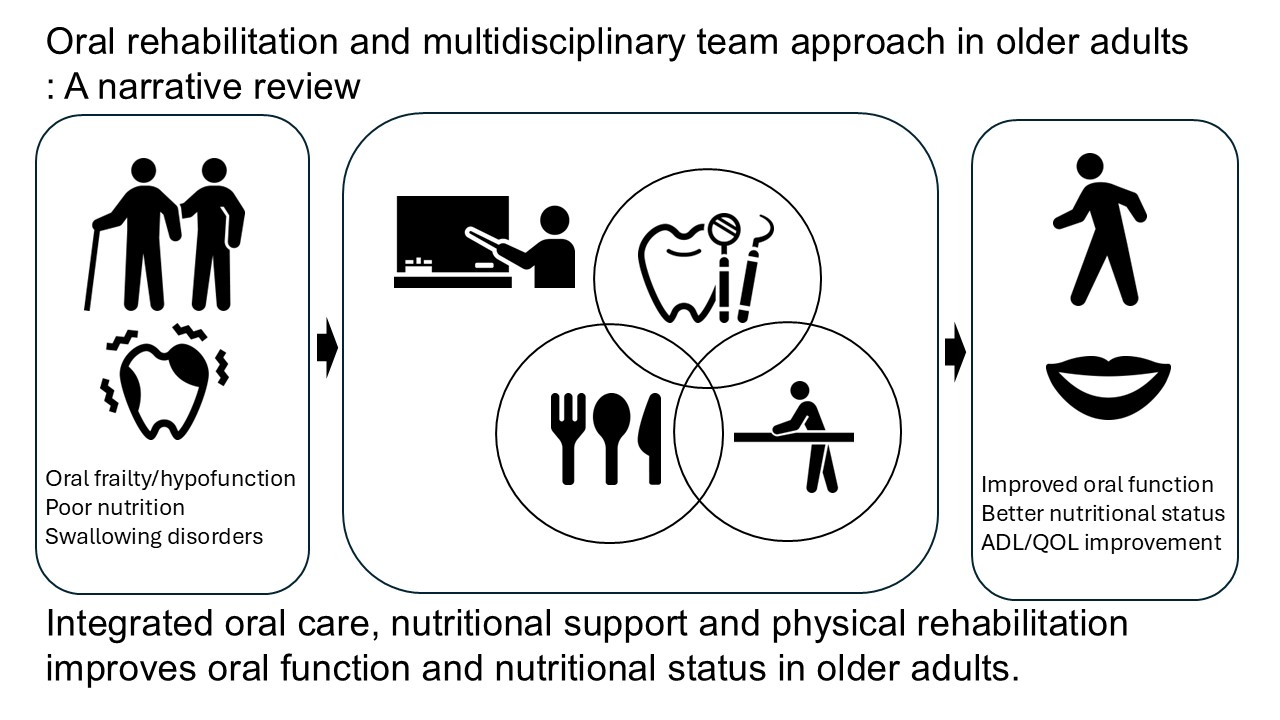
Oral Rehabilitation and Multidisciplinary Team Approach in Older Adult: A Narrative Review

Abstract
1. Introduction
2. Materials and Methods
2.1. Search Strategy
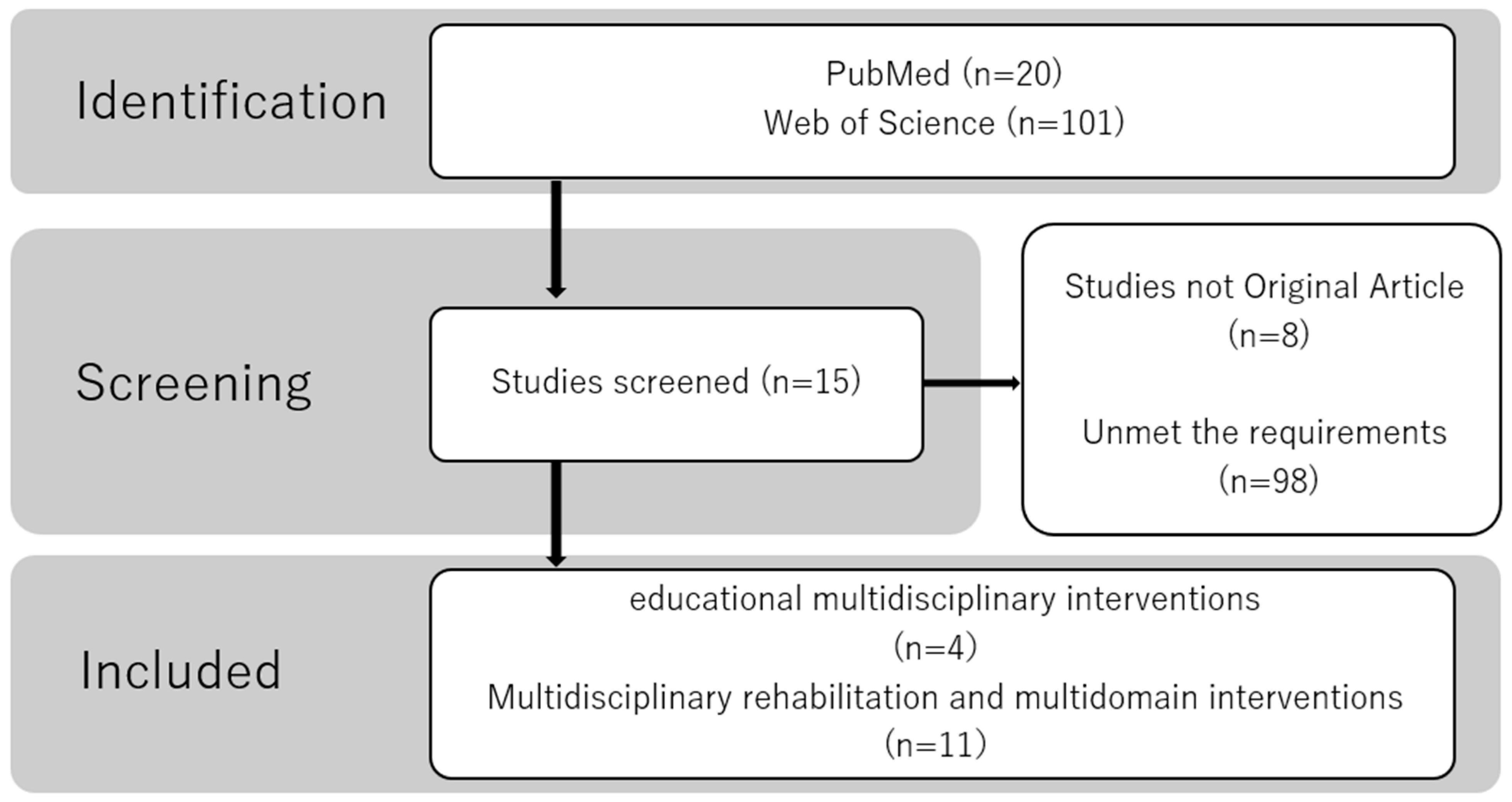
2.2. Study Selection
2.3. Data Extraction and Synthesis
2.4. Risk of Bias Assessment
3. Results
3.1. Educational Multidisciplinary Interventions
3.2. Multidisciplinary Rehabilitation and Multidomain Interventions
3.3. Risk of Bias Assessment
4. Discussion
4.1. Educational Approach
4.2. A Trinity Approach
4.3. From OF and Nutritional Management to Dysphagia Rehabilitation and Oral Intake Resumption
4.4. Multidisciplinary Approaches in Various Medical and Nursing Care Settings
4.4.1. Multidisciplinary Approaches in Community Interventions
4.4.2. The Effectiveness of Multidisciplinary Collaboration in Hospitals
4.4.3. Interventions and Collaboration in Long-Term Care Facilities
4.4.4. Interventions for Older Adults Living at Home and Their Family Caregivers
4.4.5. Various Oral Approaches
4.5. Comparison with Previous Studies
4.6. Limitations
5. Conclusions
Author Contributions
Funding
Institutional Review Board Statement
Informed Consent Statement
Data Availability Statement
Conflicts of Interest
Abbreviations
| WHO | World Health Organization |
| NICE | National Institute for Health and Care Excellence |
| OF | Oral function |
| OH | Oral hygiene |
| ADL | Activities of daily living. |
| PICO | Population, Intervention, Control, Outcome |
| RoB1 | Cochrane risk of bias tool |
| NOS | Newcastle-Ottawa scale |
| NST | Nutrition support team |
| MNA | Mini nutritional assessment |
| BMI | Body mass index |
| RCT | Randomized controlled trial |
References
- Tanaka, T.; Hirano, H.; Ikebe, K.; Ueda, T.; Iwasaki, M.; Minakuchi, S.; Arai, H.; Akishita, M.; Kozaki, K.; Iijima, K. Consensus statement on “Oral frailty” from the Japan Geriatrics Society, the Japanese Society of Gerodontology, and the Japanese Association on Sarcopenia and Frailty. Geriatr. Gerontol. Int. 2024, 24, 1111–1119. [Google Scholar] [CrossRef]
- Minakuchi, S.; Tsuga, K.; Ikebe, K.; Ueda, T.; Tamura, F.; Nagao, K.; Furuya, J.; Matsuo, K.; Yamamoto, K.; Kanazawa, M.; et al. Oral hypofunction in the older population: Position paper of the Japanese Society of Gerodontology in 2016. Gerodontology 2018, 35, 317–324. [Google Scholar] [CrossRef]
- Fried, L.P.; Tangen, C.M.; Walston, J.; Newman, A.B.; Hirsch, C.; Gottdiener, J.; Seeman, T.; Tracy, R.; Kop, W.J.; Burke, G.; et al. Frailty in Older Adults: Evidence for a Phenotype. J. Gerontol. Ser. A Biol. Sci. Med. Sci. 2001, 56, M146–M157. [Google Scholar] [CrossRef]
- Cruz-Jentoft, A.J.; Bahat, G.; Bauer, J.; Boirie, Y.; Bruyère, O.; Cederholm, T.; Cooper, C.; Landi, F.; Rolland, Y.; Sayer, A.A.; et al. Sarcopenia: Revised European consensus on definition and diagnosis. Age Ageing 2019, 48, 16–31. [Google Scholar] [CrossRef]
- Chen, L.K.; Woo, J.; Assantachai, P.; Auyeung, T.W.; Chou, M.Y.; Iijima, K.; Jang, H.C.; Kang, L.; Kim, M.; Kim, S.; et al. Asian Working Group for Sarcopenia: 2019 Consensus Update on Sarcopenia Diagnosis and Treatment. J. Am. Med. Dir. Assoc. 2020, 21, 300–307 e302. [Google Scholar] [CrossRef]
- World Health Organization. Global Strategy and Action Plan on Oral Health 2023–2030; World Health Organization: Geneva, Switzerland, 2023; Available online: https://www.who.int/publications/i/item/9789240090538 (accessed on 17 January 2026).
- National Institute for Health and Care Excellence. Oral Health for Adults in Care Homes (NICE Guideline NG48); NICE: London, UK, 2016; Available online: https://www.nice.org.uk/guidance/ng48 (accessed on 17 January 2026).
- Dibello, V.; Zupo, R.; Sardone, R.; Lozupone, M.; Castellana, F.; Dibello, A.; Daniele, A.; De Pergola, G.; Bortone, I.; Lampignano, L.; et al. Oral frailty and its determinants in older age: A systematic review. Lancet Healthy Longev. 2021, 2, e507–e520. [Google Scholar] [CrossRef]
- Limpuangthip, N.; Komin, O. Association between oral hypofunction and general health: A systematic review. BMC Oral Health 2023, 23, 591. [Google Scholar] [CrossRef]
- de Smit, M.J.; Nijholt, W.; Bakker, M.H.; Visser, A. The predictive value of masticatory function for adverse health outcomes in older adults: A systematic review. J. Nutr. Health Aging 2024, 28, 100210. [Google Scholar] [CrossRef] [PubMed]
- Higgins, J.P.T.; Thomas, J.; Chandler, J.; Cumpston, M.; Li, T.; Page, M.J.; Welch, V. Cochrane Handbook for Systematic Reviews of Interventions; Version 6.5, Updated August 2024; Cochrane: London, UK, 2024. [Google Scholar]
- Wells, G.A.; Shea, B.; O’Connell, D.; Peterson, J.; Welch, V.; Losos, M.; Tugwell, P. The Newcastle–Ottawa Scale (NOS) for Assessing the Quality of Nonrandomised Studies in Meta-Analyses; Ottawa Hospital Research Institute: Ottawa, ON, Canada, 2000; Available online: http://www.ohri.ca/programs/clinical_epidemiology/oxford.asp (accessed on 8 January 2026).
- Beck, A.M.; Damkjaer, K.; Beyer, N. Multifaceted nutritional intervention among nursing-home residents has a positive influence on nutrition and function. Nutrition 2008, 24, 1073–1080. [Google Scholar] [CrossRef] [PubMed]
- Portella, F.F.; Rocha, A.W.; Haddad, D.C.; Fortes, C.B.; Hugo, F.N.; Padilha, D.M.; Samuel, S.M. Oral hygiene caregivers’ educational programme improves oral health conditions in institutionalised independent and functional elderly. Gerodontology 2015, 32, 28–34. [Google Scholar] [CrossRef] [PubMed]
- McNally, M.; Martin-Misener, R.; McNeil, K.; Brillant, M.; Moorhouse, P.; Crowell, S.; Matthews, D.; Clovis, J. Implementing oral care practices and policy into long-term care: The Brushing up on Mouth Care project. J. Am. Med. Dir. Assoc. 2015, 16, 200–207. [Google Scholar] [CrossRef]
- Kito, N.; Matsuo, K.; Ogawa, K.; Izumi, A.; Kishima, M.; Itoda, M.; Masuda, Y. Positive Effects of “Textured Lunches” Gatherings and Oral Exercises Combined with Physical Exercises on Oral and Physical Function in Older Individuals: A Cluster Randomized Controlled Trial. J. Nutr. Health Aging 2019, 23, 669–676. [Google Scholar] [CrossRef]
- Nagano, A.; Maeda, K.; Koike, M.; Murotani, K.; Ueshima, J.; Shimizu, A.; Inoue, T.; Sato, K.; Suenaga, M.; Ishida, Y.; et al. Effects of Physical Rehabilitation and Nutritional Intake Management on Improvement in Tongue Strength in Sarcopenic Patients. Nutrients 2020, 12, 3104. [Google Scholar] [CrossRef] [PubMed]
- Furuya, H.; Kikutani, T.; Igarashi, K.; Sagawa, K.; Yajima, Y.; Machida, R.; Tohara, T.; Takahashi, N.; Tamura, F. Effect of dysphagia rehabilitation in patients receiving enteral nutrition at home nursing care: A retrospective cohort study. J. Oral Rehabil. 2020, 47, 977–982. [Google Scholar] [CrossRef]
- Matsuo, K.; Kito, N.; Ogawa, K.; Izumi, A.; Kishima, M.; Itoda, M.; Masuda, Y. Improvement of oral hypofunction by a comprehensive oral and physical exercise programme including textured lunch gatherings. J. Oral Rehabil. 2021, 48, 411–421. [Google Scholar] [CrossRef]
- Suzuki, H.; Furuya, J.; Nakagawa, K.; Hidaka, R.; Nakane, A.; Yoshimi, K.; Shimizu, Y.; Saito, K.; Itsui, Y.; Tohara, H.; et al. Changes in Nutrition-Intake Method and Oral Health through a Multidisciplinary Team Approach in Malnourished Older Patients Admitted to an Acute Care Hospital. Int. J. Environ. Res. Public Health 2022, 19, 9784. [Google Scholar] [CrossRef]
- Hidaka, R.; Masuda, Y.; Ogawa, K.; Tanaka, T.; Kanazawa, M.; Suzuki, K.; Stading, M.; Iijima, K.; Matsuo, K. Impact of the Comprehensive Awareness Modification of Mouth, Chewing and Meal (CAMCAM) Program on the Attitude and Behavior Towards Oral Health and Eating Habits as Well as the Condition of Oral Frailty: A Pilot Study. J. Nutr. Health Aging 2023, 27, 340–347. [Google Scholar] [CrossRef] [PubMed]
- Yoshimura, Y.; Shimazu, S.; Shiraishi, A.; Wakabayashi, H.; Nagano, F.; Matsumoto, A.; Kido, Y.; Bise, T.; Kuzuhara, A.; Hamada, T.; et al. Triad of rehabilitation, nutrition support, and oral management improves activities of daily living and muscle health in hospitalized patients after stroke. Clin. Nutr. ESPEN 2024, 63, 837–844. [Google Scholar] [CrossRef] [PubMed]
- Suzuki, H.; Furuya, J.; Nakagawa, K.; Hidaka, R.; Yoshimi, K.; Shimizu, Y.; Saito, K.; Hatanaka, Y.; Mukai, T.; Itsui, Y.; et al. Impact of oral health management by nurses and dental professionals on oral health status in inpatients eligible for the Nutrition Support Team: A longitudinal study. J. Oral Rehabil. 2024, 51, 938–946. [Google Scholar] [CrossRef]
- Tuuliainen, E.; Nihtila, A.; Komulainen, K.; Nykanen, I.; Hartikainen, S.; Tiihonen, M.; Suominen, A.L. Use of oral health care services among older home care clients in the context of an intervention study. Scand. J. Caring Sci. 2024, 38, 426–437. [Google Scholar] [CrossRef]
- Ko, C.H.; Feng, M.C.; Chao, C.L.; Hung, C.H.; Hou, M.L.; Wu, M.F.; Wu, S.H. Effects of oral hygiene and oral exercise on oral hypofunction in residents of long-term care facilities. Sci. Rep. 2025, 15, 20612. [Google Scholar] [CrossRef]
- Annina, S.; Irma, N.; Tarja, V.; Sohvi, K.; Roosa-Maria, S.; Ursula, S.; Liisa, S.A. The Effect of an Individually Tailored Oral Health Intervention on Dental Plaque and Caries Among Family Caregivers and Their Care Recipients. Gerodontology 2025, 42, 495–506. [Google Scholar] [CrossRef]
- Hori, A.; Ohta, M.; Horibe, Y.; Ryu, M.; Ueda, T. Efficacy of a 3-Month OF Management Protocol Incorporating Provision of Dietary Advice for Older Outpatients: A Randomised Controlled Trial. Gerodontology 2025, 42, 351–361. [Google Scholar] [CrossRef] [PubMed]
- Pruntel, S.M.; Vissink, A.; Visser, A. Patient compliance with oral health care advice: A prospective study of older people with memory complaints. Int. Dent. J. 2025, 75, 103900. [Google Scholar] [CrossRef] [PubMed]
- Mori, T.; Yoshikawa, M.; Maruyama, M.; Hiraoka, A.; Nakamori, M.; Yoshida, M.; Tsuga, K. Development of a candy-sucking test for evaluating oral function in elderly patients with dementia: A pilot study. Geriatr. Gerontol. Int. 2017, 17, 1977–1981. [Google Scholar] [CrossRef]
- Kawano, H.; Mori, T.; Kuroki, A.; Nagasaka, T.; Maruyama, M.; Yoshikawa, M.; Yoshida, M.; Tsuga, K. Candy eating behaviour to improve swallowing function in dementia subjects. Arch. Gerontol. Geriatr. 2018, 75, 181–184. [Google Scholar] [CrossRef]
- Yamawaki, K.; Mori, T.; Itaki, S.; Haruta, A.; Takeda, C.; Hiraoka, A.; Maruyama, M.; Yoshikawa, M.; Yoshida, M.; Tsuga, K. Relationship between food crushing and oral function in older adults requiring nursing home care: A pilot study. Int. J. Environ. Res. Public Health 2022, 19, 3419. [Google Scholar] [CrossRef] [PubMed]
- Aoki, S.; Hosomi, N.; Hirayama, J.; Nakamori, M.; Yoshikawa, M.; Nezu, T.; Kubo, S.; Nagano, Y.; Nagao, A.; Yamane, N.; et al. The Multidisciplinary Swallowing Team Approach Decreases Pneumonia Onset in Acute Stroke Patients. PLoS ONE 2016, 11, e0154608. [Google Scholar] [CrossRef]
- Yoshikawa, M.; Nishikawa, Y.; Kitagawa, M.; Nagao, A.; Hiraoka, A.; Haruta, A.; Takeuchi, M.; Yoshida, M.; Tsuga, K. Low tongue pressure and depression using Kihon Checklist for assessing frailty status among community-dwelling Japanese older adults: A pilot study. J. Oral Rehabil. 2024, 51, 334–342. [Google Scholar] [CrossRef]
- Wakabayashi, H.; Mori, T.; Nishioka, S.; Maeda, K.; Yoshimura, Y.; Iida, Y.; Shiraishi, A.; Fujiwara, D. Psychological aspects of rehabilitation nutrition: A position paper by the Japanese Association of Rehabilitation Nutrition (secondary publication). J. Gen. Fam. Med. 2024, 25, 1–9. [Google Scholar] [CrossRef]
- Wakabayashi, H. The rehabilitation nutrition oral care process: Implementing the triad of rehabilitation, nutrition, and oral management. J. Gen. Fam. Med. 2025, 26, 114–115. [Google Scholar] [CrossRef]
- Haumschild, M.S.; Haumschild, R.J. The importance of oral health in long-term care. J. Am. Med. Dir. Assoc. 2009, 10, 667–671. [Google Scholar] [CrossRef]
- Sakayori, T.; Maki, Y.; Hirata, S.; Okada, M.; Ishii, T. Evaluation of a Japanese “Prevention of Long-term Care” project for the improvement in OF in the high-risk elderly. Geriatr. Gerontol. Int. 2013, 13, 451–457. [Google Scholar] [CrossRef]
- Rapp, L.; Sourdet, S.; Vellas, B.; Lacoste-Ferré, M.H. Oral Health and the Frail Elderly. J. Frailty Aging 2017, 6, 154–160. [Google Scholar] [CrossRef] [PubMed]
- Wada, S.; Tohara, H.; Iida, T.; Inoue, M.; Sato, M.; Ueda, K. Jaw-opening exercise for insufficient opening of upper esophageal sphincter. Arch. Phys. Med. Rehabil. 2012, 93, 1995–1999. [Google Scholar] [CrossRef]
- Hakuta, C.; Mori, C.; Ueno, M.; Shinada, K.; Kawaguchi, Y. Evaluation of an OF promotion programme for the independent elderly in Japan. Gerodontology 2009, 26, 250–258. [Google Scholar] [CrossRef]
- Kuo, Y.W.; Yen, M.; Fetzer, S.; Lee, J.D. Toothbrushing versus toothbrushing plus tongue cleaning in reducing halitosis and tongue coating: A systematic review and meta-analysis. Nurs Res. 2013, 62, 422–429. [Google Scholar] [CrossRef] [PubMed]
- Iwasaki, M.; Ohara, Y.; Motokawa, K.; Hayakawa, M.; Shirobe, M.; Edahiro, A.; Watanabe, Y.; Awata, S.; Okamura, T.; Inagaki, H.; et al. Population-based reference values for tongue pressure in Japanese older adults: A pooled analysis of over 5000 participants. J. Prosthodont. Res. 2023, 67, 62–69. [Google Scholar] [CrossRef] [PubMed]
- Utanohara, Y.; Hayashi, R.; Yoshikawa, M.; Yoshida, M.; Tsuga, K.; Akagawa, Y. Standard Values of Maximum Tongue Pressure Taken Using Newly Developed Disposable Tongue Pressure Measurement Device. Dysphagia 2008, 23, 286–290. [Google Scholar] [CrossRef]
- Higa, C.; Mori, T.; Hiraoka, A.; Takeda, C.; Kuroki, A.; Yoshikawa, M.; Yoshida, M.; Tsuga, K. Five-year change in maximum tongue pressure and physical function in community-dwelling elderly adults. J. Dent. Sci. 2020, 15, 265–269. [Google Scholar] [CrossRef]
- Tsuga, K.; Yoshikawa, M.; Oue, H.; Okazaki, Y.; Tsuchioka, H.; Maruyama, M.; Yoshida, M.; Akagawa, Y. Maximal voluntary tongue pressure is decreased in Japanese frail elderly persons. Gerodontology 2012, 29, e1078–e1085. [Google Scholar] [CrossRef]
- Machida, N.; Tohara, H.; Hara, K.; Kumakura, A.; Wakasugi, Y.; Nakane, A.; Minakuchi, S. Effects of aging and sarcopenia on tongue pressure and jaw-opening force. Geriatr. Gerontol. Int. 2017, 17, 295–301. [Google Scholar] [CrossRef]
- Yano, J.; Yamamoto-Shimizu, S.; Yokoyama, T.; Kumakura, I.; Hanayama, K.; Tsubahara, A. Effects of Tongue-Strengthening Exercise on the Geniohyoid Muscle in Young Healthy Adults. Dysphagia 2020, 35, 110–116. [Google Scholar] [CrossRef]
- Yano, J.; Nagami, S.; Yokoyama, T.; Nakamura, K.; Kobayashi, M.; Odan, Y.; Hikasa, M.; Hanayama, K.; Fukunaga, S. Effects of Tongue-Strengthening Self-Exercises in Healthy Older Adults: A Non-Randomized Controlled Trial. Dysphagia 2021, 36, 925–935. [Google Scholar] [CrossRef]
- Hatanaka, Y.; Furuya, J.; Sato, Y.; Uchida, Y.; Osawa, T.; Shichita, T.; Suzuki, H.; Minakuchi, S. Impact of oral health guidance on the tongue-lip motor function of outpatients at a dental hospital. Gerodontology 2022, 39, 83–89. [Google Scholar] [CrossRef] [PubMed]
- Robbins, J.; Gangnon, R.E.; Theis, S.M.; Kays, S.A.; Hewitt, A.L.; Hind, J.A. The Effects of Lingual Exercise on Swallowing in Older Adults. J. Am. Geriatr. Soc. 2005, 53, 1483–1489. [Google Scholar] [CrossRef] [PubMed]
- Kashiwazaki, K.; Komagamine, Y.; Uehara, Y.; Yamamoto, M.; Nakai, H.; Bui, N.H.T.; Liu, H.; Namano, S.; Tonprasong, W.; Kanazawa, M.; et al. Effect of gum-chewing exercise on maintaining and improving OF in older adults: A pilot randomized controlled trial. J. Dent. Sci. 2024, 19, 1021–1027. [Google Scholar] [CrossRef]
- Nakayama, E.; Tohara, H.; Kimura, M.; Koide, I.; Abe, K.; Yonenaga, K. Effect of Cognitive Decline on Mandibular Movement during Mastication in Nursing Home Residents. J. Clin. Med. 2024, 13, 6040. [Google Scholar] [CrossRef] [PubMed]
- Jung, H.J.; Hwangbo, N.K.; Park, Y.; Ahn, H.J. Effects of gum chewing training on occlusal force, masseter muscle thickness and mandibular shape: A randomised controlled clinical trial. J. Oral Rehabil. 2024, 51, 2529–2536. [Google Scholar] [CrossRef]
- Kosaka, T.; Ono, T.; Kida, M.; Fushida, S.; Nokubi, T.; Kokubo, Y.; Watanabe, M.; Higashiyama, A.; Miyamoto, Y.; Ikebe, K. A prediction model of masticatory performance change in 50- to 70-year-old Japanese: The Suita study. J. Dent. 2021, 104, 103535. [Google Scholar] [CrossRef]
- Higashi, K.; Hatta, K.; Mameno, T.; Takahashi, T.; Gondo, Y.; Kamide, K.; Masui, Y.; Ishizaki, T.; Arai, Y.; Kabayama, M.; et al. The relationship between changes in occlusal support and masticatory performance using 6-year longitudinal data from the SONIC study. J. Dent. 2023, 139, 104763. [Google Scholar] [CrossRef] [PubMed]
- Iwasaki, M.; Yoshihara, A.; Sato, N.; Sato, M.; Minagawa, K.; Shimada, M.; Nishimuta, M.; Ansai, T.; Yoshitake, Y.; Ono, T.; et al. A 5-year longitudinal study of association of maximum bite force with development of frailty in community-dwelling older adults. J. Oral Rehabil. 2018, 45, 17–24. [Google Scholar] [CrossRef]
- Komoda, Y.; Iida, T.; Kothari, M.; Komiyama, O.; Baad-Hansen, L.; Kawara, M.; Sessle, B.; Svensson, P. Repeated tongue lift movement induces neuroplasticity in corticomotor control of tongue and jaw muscles in humans. Brain Res. 2015, 1627, 70–79. [Google Scholar] [CrossRef]
- Iida, T.; Komiyama, O.; Obara, R.; Baad-Hansen, L.; Kawara, M.; Svensson, P. Repeated clenching causes plasticity in corticomotor control of jaw muscles. Eur. J. Oral Sci. 2014, 122, 42–48. [Google Scholar] [CrossRef]
- Kromann, C.B.; Jensen, M.L.; Ringsted, C. The effect of testing on skills learning. Med. Educ. 2009, 43, 21–27. [Google Scholar] [CrossRef] [PubMed]
- Xeroulis, G.J.; Park, J.; Moulton, C.-A.; Reznick, R.K.; Leblanc, V.; Dubrowski, A. Teaching suturing and knot-tying skills to medical students: A randomized controlled study comparing computer-based video instruction and (concurrent and summary) expert feedback. Surgery 2007, 141, 442–449. [Google Scholar] [CrossRef]
- Kaurani, P.; Kakodkar, P.; Bhowmick, A.; Samra, R.K.; Bansal, V. Association of tooth loss and nutritional status in adults: An overview of systematic reviews. BMC Oral Health 2024, 24, 838. [Google Scholar] [CrossRef]
- Nitsuwat, S.; Webster, J.; Sarkar, A.; Cade, J. The association of oral processing factors and nutrient intake in community-dwelling older adults: A systematic review and meta-analysis. Nutr. Rev. 2025, 83, e762–e777. [Google Scholar] [CrossRef]
- Watanabe, Y.; Okada, K.; Kondo, M.; Matsushita, T.; Nakazawa, S.; Yamazaki, Y. Oral health for achieving longevity. Geriatr. Gerontol. Int. 2020, 20, 526–538. [Google Scholar] [CrossRef]
- Chen, H.H.; Lin, P.Y.; Lin, C.K.; Lin, P.Y.; Chi, L.Y. Effects of oral exercise on tongue pressure in Taiwanese older adults in community day care centers. J. Dent. Sci. 2022, 17, 338–344. [Google Scholar] [CrossRef] [PubMed]
- Shirobe, M.; Watanabe, Y.; Tanaka, T.; Hirano, H.; Kikutani, T.; Nakajo, K.; Sato, T.; Furuya, J.; Minakuchi, S.; Iijima, K. Effect of an Oral Frailty Measures Program on Community-Dwelling Elderly People: A Cluster-Randomized Controlled Trial. Gerontology 2022, 68, 377–386. [Google Scholar] [CrossRef]
- Morishita, M.; Ikeda, T.; Saito, N.; Sanou, M.; Yasuda, M.; Takao, S. Relationship between OF and life-space mobility or social networks in community-dwelling older people: A cross-sectional study. Clin. Exp. Dent. Res. 2021, 7, 552–560. [Google Scholar] [CrossRef] [PubMed]
- Tani, A.; Mizutani, S.; Kishimoto, H.; Oku, S.; Iyota, K.; Chu, T.; Liu, X.; Kashiwazaki, H. The Impact of Nutrition and OF Exercise on among Community-Dwelling Older People. Nutrients 2023, 15, 1607. [Google Scholar] [CrossRef] [PubMed]
- Watanabe, Y.; Hirano, H.; Arai, H.; Morishita, S.; Ohara, Y.; Edahiro, A.; Murakami, M.; Shimada, H.; Kikutani, T.; Suzuki, T. Relationship Between Frailty and OF in Community-Dwelling Elderly Adults. J. Am. Geriatr. Soc. 2017, 65, 66–76. [Google Scholar] [CrossRef]
- Tanaka, T.; Takahashi, K.; Hirano, H.; Kikutani, T.; Watanabe, Y.; Ohara, Y.; Furuya, H.; Tetsuo, T.; Akishita, M.; Iijima, K. Oral Frailty as a Risk Factor for Physical Frailty and Mortality in Community-Dwelling Elderly. J. Gerontol. Ser. A 2018, 73, 1661–1667. [Google Scholar] [CrossRef] [PubMed]
- Tanaka, T.; Hirano, H.; Ohara, Y.; Nishimoto, M.; Iijima, K. Oral Frailty Index-8 in the risk assessment of new-onset oral frailty and functional disability among community-dwelling older adults. Arch. Gerontol. Geriatr. 2021, 94, 104340. [Google Scholar] [CrossRef]
- Iwasaki, M.; Watanabe, Y.; Motokawa, K.; Shirobe, M.; Inagaki, H.; Motohashi, Y.; Mikami, Y.; Taniguchi, Y.; Osuka, Y.; Seino, S.; et al. Oral frailty and gait performance in community-dwelling older adults: Findings from the Takashimadaira study. J. Prosthodont. Res. 2021, 65, 467–473. [Google Scholar] [CrossRef]
- Nagatani, M.; Tanaka, T.; Son, B.K.; Kawamura, J.; Tagomori, J.; Hirano, H.; Shirobe, M.; Iijima, K. Oral frailty as a risk factor for mild cognitive impairment in community-dwelling older adults: Kashiwa study. Exp. Gerontol. 2023, 172, 112075. [Google Scholar] [CrossRef]
- Tanaka, T.; Hirano, H.; Ikebe, K.; Ueda, T.; Iwasaki, M.; Shirobe, M.; Minakuchi, S.; Akishita, M.; Arai, H.; Iijima, K. Oral frailty five-item checklist to predict adverse health outcomes in community-dwelling older adults: A Kashiwa cohort study. Geriatr. Gerontol. Int. 2023, 23, 651–659. [Google Scholar] [CrossRef]
- Iwasaki, M.; Shirobe, M.; Motokawa, K.; Tanaka, T.; Ikebe, K.; Ueda, T.; Minakuchi, S.; Akishita, M.; Arai, H.; Iijima, K.; et al. Prevalence of oral frailty and its association with dietary variety, social engagement, and physical frailty: Results from the Oral Frailty 5-Item Checklist. Geriatr. Gerontol. Int. 2024, 24, 371–377. [Google Scholar] [CrossRef]
- Yang, C.-C.; Chen, H.-T.; Iijima, K.; Tanaka, T.; Dai, C.-Y.; Yu, S.-J.; Chuang, H.-Y. Establishment of a Mandarin Chinese Version of the Oral Frailty Index-8 and Exploration of the Association Between Oral Frailty and Sarcopenia. Geriatrics 2025, 10, 47. [Google Scholar] [CrossRef] [PubMed]
- Sakai, K.; Nakayama, E.; Yoneoka, D.; Sakata, N.; Iijima, K.; Tanaka, T.; Hayashi, K.; Sakuma, K.; Hoshino, E. Association of OF and Dysphagia with Frailty and Sarcopenia in Community-Dwelling Older Adults: A Systematic Review and Meta-Analysis. Cells 2022, 11, 2199. [Google Scholar] [CrossRef]
- Kugimiya, Y.; Iwasaki, M.; Ohara, Y.; Motokawa, K.; Edahiro, A.; Shirobe, M.; Watanabe, Y.; Taniguchi, Y.; Seino, S.; Abe, T.; et al. Association between sarcopenia and OFs in community-dwelling older adults: A cross-sectional study. J. Cachexia Sarcopenia Muscle 2023, 14, 429–438. [Google Scholar] [CrossRef] [PubMed]
- Yoshida, M.; Hiraoka, A.; Takeda, C.; Mori, T.; Maruyama, M.; Yoshikawa, M.; Tsuga, K. Oral hypofunction and its relation to frailty and sarcopenia in community-dwelling older people. Gerodontology 2022, 39, 26–32. [Google Scholar] [CrossRef] [PubMed]


| Authors, Year Ref No. | Country | Study Design | Age | Number (Male, %) | Environment | Physical and Mental Condition | Exclusion |
|---|---|---|---|---|---|---|---|
| Beck et al., 2008 [13] | Denmark | Randomized controlled intervention study | Intervention group: 87 (mean 84–90), Control group: 86 (mean 84–87) | 121 (33, 22%) | Nursing home | NA | Terminal condition, hospitalized |
| Portella et al., 2015 [14] | Brazil | Intervention study | 60–69 (4.2%), 70–79 (36.6%), 80–89 (43.4%) ≥90 (15.8%) | 120 (34, 28.3%) | Nursing home | Good cognitive status | NA |
| McNally et al., 2015 [15] | Canada | Case study | 98 Personal care staffs | Long-term care facility residents | Personal care providers, Nurse managers, Directors of care | NA | |
| Kito et al., 2019 [16] | Japan | A cluster randomized controlled trial | 75.6 ± 5.6 | 86 (6, 7%) | Community-dwelling | NA | Edentulous without using dentures, food allergies, severe kidney failure, and severe dysphagia |
| Nagano et al., 2020 [17] | Japan | Single-arm intervention study | 83.4 ± 6.5 | 95 (19, 20%) | Admitted for rehabilitation for orthopedic diseases/conditions | Sarcopenia | Dysphagia rehabilitation in progress, BIA contraindicated measurement, BIA measurement, error, Disability affecting tongue strength and swallowing assessment |
| Furuya et al., 2020 [18] | Japan | Retrospective cohort study | 79.7 ± 8.9 years | 116 (66, 56.9%) | Receiving home nursing care | Not eating by mouth (eternal nutrition) | Progressive neuromuscular diseases, Death or hospital admission (lost to follow-up) |
| Matsuo et al., 2021 [19] | Japan | A randomized controlled trial | 75.6 ± 5.6 | 86 (6, 7%) | Community-dwelling | NA | Edentulous without dentures, Food allergy, Severe kidney failure, Severe dysphagia |
| Suzuki et al., 2022 [20] | Japan | Longitudinal study | 71.9 ± 12.5 | 117 (66, 56.4%) | Consecutive inpatients | Received nutrition and oral care during NST period | <20 y, No NST nutritional care, No multidisciplinary oral care during the NST |
| Hidaka et al., 2023 [21] | Japan | Single-arm pre-post comparison study | 72.3 ± 5.7 | 271 (112, 41.3%) | Community-dwelling | NA | Edentulous without dentures, Food allergy, Severe kidney failure, Severe dysphagia |
| Yoshimura et al., 2024 [22] | Japan | A retrospective cohort study | 75.6 | 1012 (54.1%) | Consecutively admitted and discharged | Post-stroke | Altered consciousness at admission, Incomplete data, Consent declined |
| Suzuki et al., 2024 [23] | Japan | Longitudinal study | 71.9 ± 12.5 | 117 (66, 56.4%) | Inpatients eligible for NST at an acute-care hospital | Multidisciplinary oral health management during NST | NA |
| Tuuliainen et al., 2024 [24] | Finland | Based on data from the population-based Nutrition, Oral Health and Medication intervention study | 84.3 | 245 (26%) | Home care clients | (Aged 75 years or more) | NA |
| Ko et al., 2025 [25] | Taiwan | Intervention study | 83.44 ± 10.59 (51–102) | 295 (223, 75.6%) | Long-term care facility residents | NA | Mental illness, unstable vital signs, medical conditions, impaired consciousness |
| Annina et al., 2025 [26] | Finland | Intervention study | Caregivers: Intervention group 74.2 ± 7.7, Control group 74.6 ± 8.7, Care recipients: Intervention group 80.6 ± 6.7, Control group 79.2 ± 7.8 | 239 (111, 46.4%) (124 family caregivers (35, 28.2%), 115 care recipients (72, 62.6%) | Family caregivers > 60 y Dependent older adults > 65 y, Valid carer allowance | NA | Presence of end-of-life care |
| Hori et al., 2025 [27] | Japan | Quasi-randomized controlled trial | 79 (75–85) | 80 (32, 40%) | Outpatients | Oral hypofunction, periodic prosthodontic visit, training contents understood | Dysphagia, ongoing nutritional guidance, severe autoimmune xerostomia |
| Authors, Year Ref. No. | Professionals Involved in Interdisciplinary Team | Oral Rehabilitation | Other Rehabilitation | Rehabilitation of Control Group | Period of Intervention | Comparison |
|---|---|---|---|---|---|---|
| Beck et al., 2008 [13] | Physiotherapists, dental hygienists, nurses, dietitians | Oral care intervention (1–2×/week) | Nutrition, Group exercise (2×/week, 45–60 min, moderate intensity) | Normal nutrition care including oral supplements, Standard physiotherapy, Standard oral care | 11 weeks | 62 subjects were randomized to the intervention group |
| Portella et al., 2015 [14] | Dental students and a professor | Caregiver lecture (oral and body hygiene), OH instruction video Hands-on OH training (models and dentures), Image-based OH poster, Supply of toothbrushes, denture brushes and toothpaste | NA | NA | 1 year | NA |
| McNally et al., 2015 [15] | Health professionals and researchers, Government stakeholders, Community college system, Provincial health and community association | Staff education topics and OH aids manual, Oral health promotion posters, educational videos for absent staff, mouth care toolkit selected and installed, resident-specific laminated care cards, validated nursing/OH assessment tools, oral care guiding principles and roles | NA | NA | 12-month | NA |
| Kito et al., 2019 [16] | Principal investigator, dentists | Home oral exercises (tongue muscle strength training (Peko-panda), tongue rotation and swallowing exercise) | Physical exercises, “Munchy textured lunch” sessions, Post-exercise group meals(2×/week), Basic dietary instruction | Group physical exercise sessions for 2×/week | 12 weeks | Randomly assigned into control (n = 43) or intervention (n = 43) groups |
| Nagano et al., 2020 [17] | Physical therapists, occupational therapists, nurses, speech therapists, dieticians | Usual physical and occupational therapy for hospitalized patients based on the Japanese health insurance system | NA | 2 months | NA | |
| Furuya et al., 2020 [18] | Dysphagia rehabilitation | NA | NA | 6 months | NA | |
| Matsuo et al., 2021 [19] | Principal investigator | COPE-TeL program (home oral exercises (tongue muscle strength training using Peko-pandaTM), tongue rotation and swallowing exercise | COPE-TeL program (Group physical exercises, “Munchy textured lunch” session, Post- exercises group meals, Basic dietary instruction | Only the physical exercise regimen | 12 weeks | Randomized to control or intervention, Subgrouped (OHF/NOF) by baseline oral examination |
| Suzuki et al., 2022 [20] | NST team (physicians, nurses, dentists, dental hygienists, dietitians, pharmacists, physical therapists, speech therapists, and other professionals) | Dental treatment by dentists, professional oral care by dental hygienists, trained ward nurses’ oral care, dysphagia rehabilitation by speech therapists | NA | NA | During NST intervention period | Compare nutrition-intake swallowing and oral status, At NST referral vs. post intervention |
| Hidaka et al., 2023 [21] | Dieticians, dental professionals | Comprehensive awareness modification of mouth | CAMCAM program (gather once a month at community centers to learn about oral health and nutrition while eating a “munchy” textured lunch containing proper nutrition) | Same | 6 months | Grouped by OFI-8 (oral frailty vs. robust), Tested KCL and CAMCAM differences and score changes |
| Yoshimura et al., 2024 [22] | Rehabilitation therapists, dietitians, dental hygienists | Oral management by dental professionals | Intensive rehabilitation, personalized nutrition support | NA | During the inpatient recovery period | FIM-motor at discharge and its gain, and discharge scores of SMI and HGS |
| Suzuki et al., 2024 [23] | Nurses, dental health care professionals | Oral health management by trained nurses (Ns), oral health management by dental professionals (D) | NA | NA | until NST end | At the start and the end of the NST intervention |
| Tuuliainen et al., 2024 [24] | Trained home care nurses, pharmacists, nutritionists and dental hygienists | OH instructions (written and verbal), plaque and interdental cleaning guidance, Denture cleaning and storage guidance, symptoms management instructions | Individualized nutritional plan increasing meals, energy, protein, fluids | NA | 6 months | Baseline and after a 6-month follow-up comparison, health and oral characteristics, oral care use in prior 12 months |
| Ko et al., 2025 [25] | Research staff, caregivers, nursing staffs | OH education, tongue–lip exercises, oral cleaning methods, increasing oral cleaning frequency, daily oral/bedside speech exercises | NA | NA | 6 months | NA |
| Annina et al., 2025 [26] | Nurse, clinical nutritionist, dental hygienist | Tailored oral health intervention for family caregivers, verbal and written instructions, brushing, interdental cleaning, dentures, oral mucosa and dry mouth care | NA | Control: baseline interviews and examinations only, No caregiver intervention | 6 months (oral health guidance at baseline and 2 months visits) | Randomized to intervention or control, caregivers and care recipient groups |
| Hori et al., 2025 [27] | Dentist | daily OF training, OH, dryness, occlusal force, tongue–lip, tongue pressure, mastication and swallowing decline | Dietary Advice | None (only examined and explained all findings) | 3 months | Oral hypofunction patients divided into intervention vs. control |
| Authors, Year | Assessment Items (OF, Oral Health) | Assessment Items (Other) | Timing of Assessment | Main Results |
|---|---|---|---|---|
| Beck et al., 2008 [13] | Prevalence of plaque | MDS (height and weight, BMI, dietary intake, HGS, Senior Fitness Test, Berg’s Balance Scale) | 4 months after the end of the intervention | After 11 weeks the change in percentage of weight (p = 0.005), percentage of BMI (p = 0.003), energy intake (p = 0.084), protein intake (p = 0.012), and Berg’s Balance Scale (p = 0.004) was higher in the intervention group than in the control group. The percentage of subjects whose functional tests improved was higher in the intervention group. Both groups lost the same percentage of weight after the intervention (p = 0.908). The total percentage of weight loss from baseline to follow-up was higher in the control group (p = 0.019). |
| Portella et al., 2015 [14] | MPS | Katz Index for activities of daily living, HGS | Baseline and 1 year after intervention | The MPS was significantly reduced (p = 0.001) at follow-up; however, a separate analysis showed that only the independent elderly (p = 0.002) and those with normal muscle strength (p = 0.006) showed a reduction in MPS during the follow-up examination. |
| McNally et al., 2015 [15] | Oral care activities records | Brief targeted interview, Education evaluations | 12-week intervals | The oral care intervention resulted in heightened awareness, support and greater efficiency amongst the care team. The presence of a “champion” was a key feature for sustaining processes. Management had a clear role to play to ensure support and accountability for the intervention |
| Kito et al., 2019 [16] | Occlusal force, tongue pressure, tongue–lip motor function, masticatory function | BMI, body fat percentage, SMI, HGS, UWS, TUG | Baseline, after 12 weeks | OF as measured by tongue pressure increased significantly in the intervention group (p = 0.031), but not in the control group. |
| Nagano et al., 2020 [17] | Tongue strength, MASA | FIM, BMI, MNA-SF, SMI, HGS, the amount of energy and protein intake, intervention time | Baseline and after two months of intervention or discharge within two months | The mean tongue strength after the intervention was significantly increased from 25.4 ± 8.9 kPa to 30.5 ± 7.6 kPa as a result of the treatment (p < 0.001). |
| Furuya et al., 2020 [18] | FOIS, history of pneumonia, duration of enteral nutrition, BMI, alertness, physical function, swallowing function | The initial examination, after 6 months of rehabilitation | FOIS scores increased significantly after 6 months rather than those at the initial evaluation (p < 0.001). | |
| Matsuo et al., 2021 [19] | OF (OH, oral wetness, occlusal force, tongue–lip motor function, tongue pressure, masticatory function, EAT-10) | Body composition, BMI, SMI, body fat mass percentage (BFM%), HGS, UWS, CNAQ, MNA-SF | 12 weeks | Physical function, such as hand grip strength and walking speed, was significantly lower in the OHF group at the initial assessment. The proportion of participants with OHF was 56% in the intervention group and 67% in the control group before the trial, which became significantly reduced after completing the COPE-TeL program in the intervention group (26%, p = 0.002), but not in the controls (61%, p = 0.549). |
| Suzuki et al., 2022 [20] | FOIS, DSS, OHAT | Demographic data, CCI, JCS | At the time of referral and completion of the NST intervention | FOIS, DSS, and OHAT scores showed significant improvements (p < 0.001). Even after adjusting the results for systemic parameters, FOIS score improvement correlated positively with the length of NST intervention (p = 0.030) and DSS score improvement (p < 0.001) as well as OHAT score improvement (p = 0.047). |
| Hidaka et al., 2023 [21] | CAMCAM checklist, OFI-8, Chew 20 | SNAQ, KCL | Before and after the 6-month CAMCAM program | KCL and CAMCAM checklist scores were significantly lower in the oral frailty group at the initial assessment. OFI-8 and KCL findings were significantly improved in the oral frailty group after completing the program (all p < 0.05). |
| Yoshimura et al., 2024 [22] | ROAG, FIM | HGS, SMI | At admission, at discharge | The combination of all three interventions demonstrated the strongest association with improved ADL. |
| Suzuki et al., 2024 [23] | OHAT | CCI, JCS, PS | Until the end of the NST intervention | The participants received oral health management from nurses and dental professionals showed significant improvements in the total OHAT scores at the end of the NST intervention. |
| Tuuliainen et al., 2024 [24] | Asked about the following factors related to need for care; subjective oral health, self-perceived need for dental care, whether the participant had experienced toothache or other oral discomfort over the past 12 months, difficulties in cleaning mouth or teeth, and/or whether they had difficulties in eating, denture status | MMSE, ADL, IADL | Within the previous year at baseline and after the 6-month follow-up | At baseline, 43% of participants reported visits to oral health care within the previous year. At 6-month follow-up, this proportion was 51%. In the intervention group, the corresponding figures were 46% and 53%, and in the controls 39% and 48%. Adjusted regression analyses showed that this change was statistically significant (p = 0.008). |
| Ko et al., 2025 [25] | Oral health, swallowing function (EAT-10, TCI, OHAT, tongue pressure, tongue–lip motor function, MNA-SF) | BMI, nutritional status, frailty (SOF, HGS, cheek bulging) | The first evaluation, after 3 months, after 6 months | The prevalence of oral hypofunction in the participants was 58.3%. The intervention led to significant improvements in swallowing function 6 months later and in OH and tongue–lip motor function 3 months later in the participants with oral hypofunction. |
| Annina et al., 2025 [26] | Information on brushing of teeth and dentures, Information on interdental cleaning, cleaning, and storing of dental prostheses, cleaning of oral mucosa, and dry mouth care, periodontal probing and measuring, the presence, type, and location of removable dental prostheses, denture hygiene, examination the oral mucosa, The number and condition of the teeth, modified Silness and Löe Index (the presence of plaque) | MNA, weight, height, daily eating routines, information on sociodemographic factors, medication, health status, IADL, ADL, depressive symptoms, and cognitive functioning, FCI, GDS-15, MMSE | 6-month, 12- month visits | The number of teeth with plaque decreased among family caregivers (β = −2.1, CI −4.0–(−1.2), p = 0.015) and their care recipients (β = −0.6, CI −0.0–(−2.1), p = 0.050). The number of teeth with caries decreased among family caregivers who participated in the intervention (β = −0.6, CI −1.1–(−0.1), p = 0.015), but not among their care recipients. |
| Hori et al., 2025 [27] | OF tests (OH, oral dryness, occlusal force, tongue–lip motor function, tongue pressure, masticatory function, swallowing function) | BMI, DVS, MNA score, CNAQ | Baseline, after 1.5 months, after 3 months | The intervention group exhibited a significant increase in the mean MNA score over the study period (baseline: 25.4 ± 3.2; after 3 months: 26.3 ± 3.0), whereas no significant difference was observed in the control group (baseline: 26.4 ± 2.4; after 3 months: 26.4 ± 2.7). |
| Authors, Year Ref. No. | Nutritional Assessment Index | The Role of Nutritional Assessment | Treatment of Nutritional Outcomes |
|---|---|---|---|
| Beck et al., 2008 [13] | Weight, BMI, energy/protein intake | Primary outcome | Significant improvement in nutritional status |
| Portella et al., 2015 [14] | None | Theoretical background | No nutritional outcomes |
| McNally et al., 2015 [15] | None | Theoretical background | Nutrition described conceptually only |
| Kito et al., 2019 [16] | Food education lecture | Assumption/background | No nutritional outcomes |
| Nagano et al., 2020 [17] | Energy, protein intake | Effect modifier | Nutritional intake correlates with improved tongue pressure |
| Furuya et al., 2020 [18] | BMI (baseline characteristic) | Background factor | Changes in nutritional status not evaluated |
| Matsuo et al., 2021 [19] | Food education lecture | Assumption/background | No nutritional outcomes |
| Suzuki et al., 2022 [20] | FOIS | Primary outcome | Improved oral intake levels |
| Hidaka et al., 2023 [21] | Food education lecture | Assumption/background | No nutritional outcomes |
| Yoshimura et al., 2024 [22] | Individual nutrition support | Intervention | Secondarily, improvements in ADL and HG |
| Suzuki et al. 2024 [23] | BMI (baseline characteristic) | Background factor | No nutritional outcomes |
| Tuuliainen et al. 2024 [24] | MNA, albumin, prealbmin, dietary survey | Indicator for intervention design | Behavioral outcomes (raising nutrition awareness) |
| Ko et al., 2025 [25] | Nutritional status (e.g., BMI.) | Secondary outcomes | Improvement in nutritional status |
| Annina et al., 2025 [26] | MNA, 3-day dietary record | Supplementary assessments | Nutritional changes reported separately |
| Hori et al. 2025 [27] | MNA, BMI, DVS, CNAQ | Primary outcome |
| Authors, Year Ref. No. | Design | RoB Tool | Selection Bias | Comparability/Allocation | Performance Bias | Detection Bias | Attrition Bias | Reporting Bias | Other Bias | Overall Judgment |
|---|---|---|---|---|---|---|---|---|---|---|
| Beck et al., 2008 [13] | RCT | RoB 1 | High | High | High | Low | Low | Unclear | High | High |
| Portella et al., 2015 [14] | Before–after study | Not assessed | NA | NA | NA | NA | NA | NA | NA | NA |
| McNally et al., 2015 [15] | Case study | Not assessed | NA | NA | NA | NA | NA | NA | NA | NA |
| Kito et al., 2019 [16] | Cluster RCT | RoB 1 | Low | Low | High | Low | Low | Low | Unclear | High |
| Nagano et al., 2020 [17] | Before–after study | Not assessed | NA | NA | NA | NA | NA | NA | NA | NA |
| Furuya et al., 2020 [18] | Retrospective cohort study | NOS | ★★★ | ★ | ★★ | NA | NA | NA | NA | 6 |
| Matsuo et al., 2021 [19] | Cluster RCT | RoB 1 | Low | Low | High | Low | Low | Low | Unclear | High |
| Suzuki et al., 2022 [20] | Before–after study | Not assessed | NA | NA | NA | NA | NA | NA | NA | NA |
| Hidaka et al., 2023 [21] | Before–after study | Not assessed | NA | NA | NA | NA | NA | NA | NA | NA |
| Yoshimura et al., 2024 [22] | Retrospective cohort study | NOS | ★★★ | ★★ | ★★★ | NA | NA | NA | NA | 8 |
| Suzuki et al. 2024 [23] | Before–after study | Not assessed | NA | NA | NA | NA | NA | NA | NA | NA |
| Tuuliainen et al. 2024 [24] | RCT | RoB 1 | High | High | High | High | High | Low | High | High |
| Ko et al., 2025 [25] | Before–after study | Not assessed | NA | NA | NA | NA | NA | NA | NA | NA |
| Annina et al., 2025 [26] | RCT | RoB 1 | Unclear | High | High | High | High | Unclear | High | High |
| Hori et al. 2025 [27] | RCT | RoB 1 | High | High | High | Unclear | Low | Low | Unclear | High |
Disclaimer/Publisher’s Note: The statements, opinions and data contained in all publications are solely those of the individual author(s) and contributor(s) and not of MDPI and/or the editor(s). MDPI and/or the editor(s) disclaim responsibility for any injury to people or property resulting from any ideas, methods, instructions or products referred to in the content. |
© 2026 by the authors. Licensee MDPI, Basel, Switzerland. This article is an open access article distributed under the terms and conditions of the Creative Commons Attribution (CC BY) license.
Share and Cite
Yoshikawa, M.; Haruta, A.; Takahashi, Y.; Maruyama, S.; Tsuga, K. Oral Rehabilitation and Multidisciplinary Team Approach in Older Adult: A Narrative Review. Nutrients 2026, 18, 410. https://doi.org/10.3390/nu18030410
Yoshikawa M, Haruta A, Takahashi Y, Maruyama S, Tsuga K. Oral Rehabilitation and Multidisciplinary Team Approach in Older Adult: A Narrative Review. Nutrients. 2026; 18(3):410. https://doi.org/10.3390/nu18030410
Chicago/Turabian StyleYoshikawa, Mineka, Azusa Haruta, Yutaro Takahashi, Shion Maruyama, and Kazuhiro Tsuga. 2026. "Oral Rehabilitation and Multidisciplinary Team Approach in Older Adult: A Narrative Review" Nutrients 18, no. 3: 410. https://doi.org/10.3390/nu18030410
APA StyleYoshikawa, M., Haruta, A., Takahashi, Y., Maruyama, S., & Tsuga, K. (2026). Oral Rehabilitation and Multidisciplinary Team Approach in Older Adult: A Narrative Review. Nutrients, 18(3), 410. https://doi.org/10.3390/nu18030410