Integrating Sensory Perception and Wearable Monitoring to Promote Healthy Aging: A New Frontier in Nutritional Personalization




Abstract
1. Introduction
2. Review Methodology
3. Sensory Perception and the Aging Process
3.1. Age-Related Sensory Systems Modifications
3.2. Sensory Modifications, Appetite, and Food Choices
3.3. Sensory Plasticity and Related Interventions
3.4. Sensory Evaluation Methods for Food Products Targeting Elderly Population
4. Metabolic Adaptation in Aging
4.1. Physiological Changes Impacting Metabolism
4.2. Markers of Metabolic Resilience
4.3. Interplay Between Sensory Changes and Metabolism
5. Wearable Technologies in Nutrition and Health Monitoring
5.1. Wearables Overview and Measurement Types
- Consumer smartwatches for the detection of physical activity, step counts, estimated energy expenditure, heart rate (HR), heart rate variability (HRV), and sleep metrics.
- Chest straps and patches, capable of estimating cardiac measures and respiratory rate with higher accuracy.
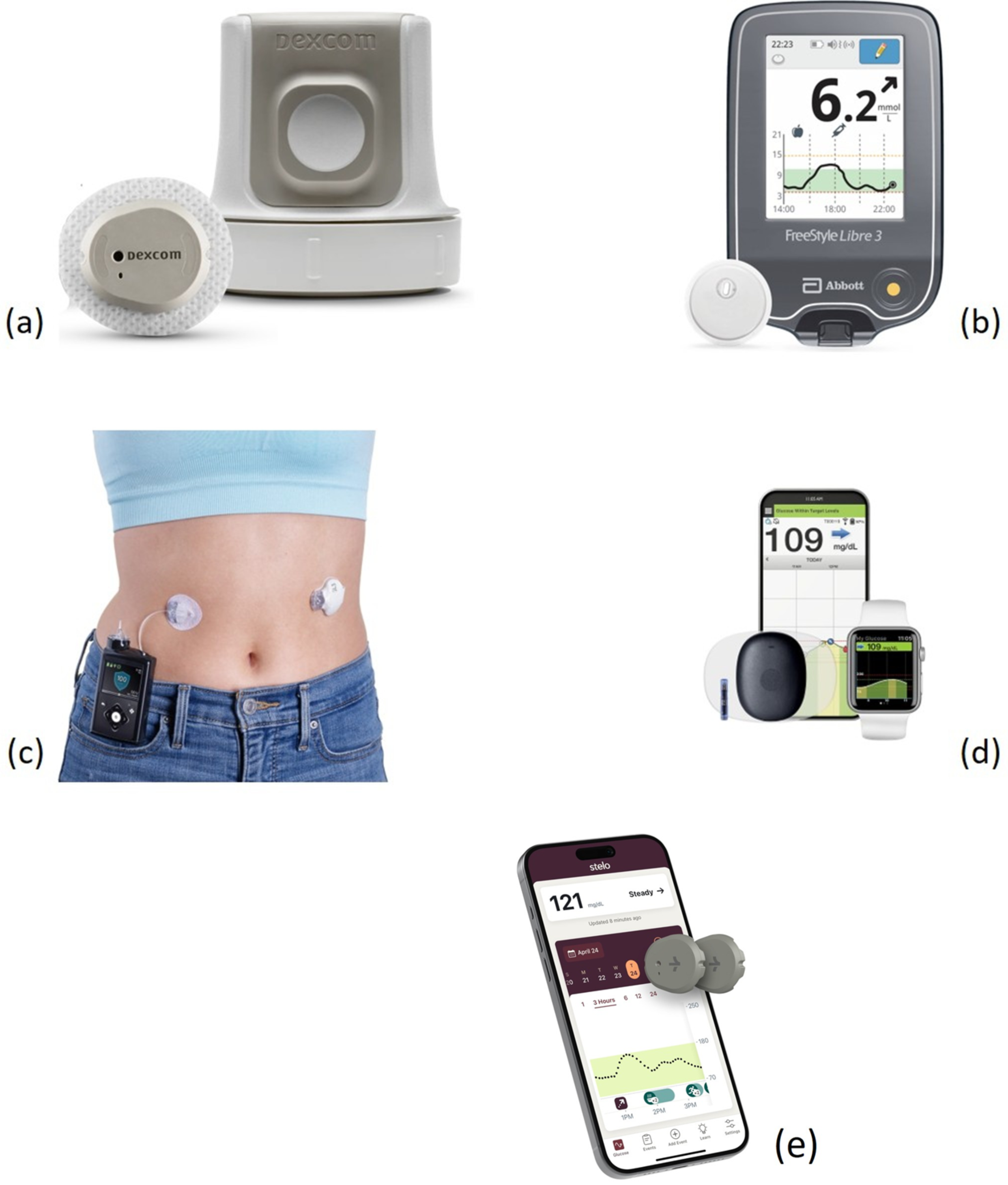
- Continuous Glucose Monitoring (CGM) for assessing interstitial glucose trends and post-prandial responses.
- Temperature and skin conductance sensors to investigate thermoregulation and arousal/stress.
- Ingestible biosensors as emerging approaches to evaluate metabolic parameters.
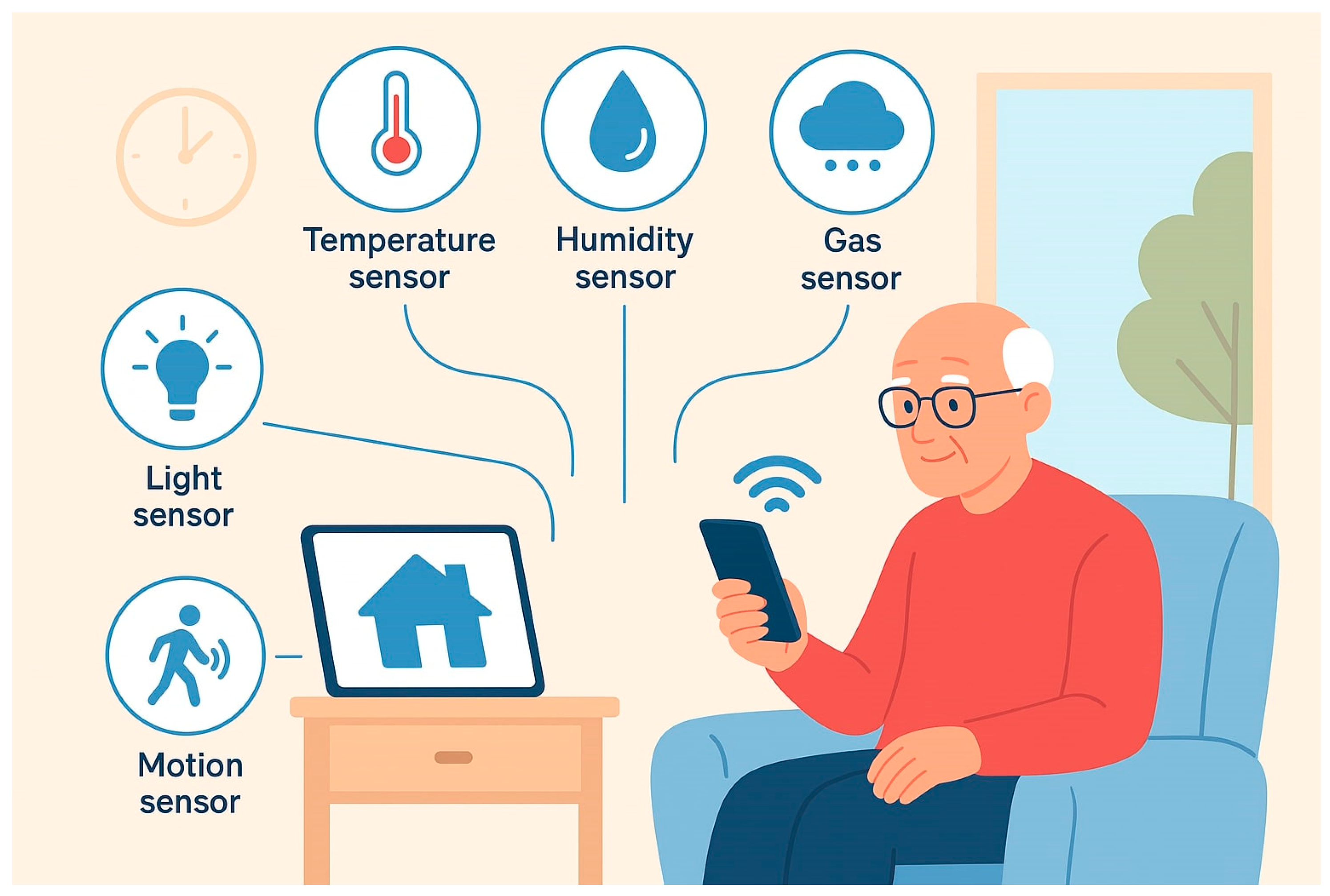
- Environmental sensors.
5.1.1. Consumer Smartwatches
5.1.2. Chest Straps and Patches
- Polar H7 chest strap (Polar Electro Oy, Kempele, Finland) [112];
- Polar H10 cardiac belt (Polar Electro Oy, Kempele, Finland) [113];
- Polar T31 device (Polar Electro Oy, Kempele, Finland) [114];
- Zephyr Bioharness 3.0 chest strap (Medtronic plc, Galway, Republic of Ireland) [115];
- Movesense HR+ sensor (Movesense Oy, Vantaa, Finland) [116];
- Garmin HRM-Dual (Garmin, Schaffhausen, Switzerland) [117].
5.1.3. Continuous Glucose Monitors
- Dexcom G7 (Dexcom, Inc., San Diego, CA, USA) [121];
- Abbott FreeStyle Libre 3 (Abbott Laboratories, North Chicago, IL, USA) [122];
- Medtronic Guardian 4 (Medtronic plc, Galway, Republic of Ireland) [123];
- Eversense 365° (Senseonics, Inc., Germantown, MD, USA) [124];
- Dexcom Stelo (Dexcom, Inc., San Diego, CA, USA) [125].
5.1.4. Temperature and Skin Conductance Sensors
5.1.5. Ingestible Biosensors
5.1.6. Environmental Sensors
- Temperature sensors to monitor thermal conditions at home and eventually intervene in extreme cases of climate issues that are potentially harmful for the individual’s health.
- Humidity sensors to measure the amount of water vapor in the air to be combined with temperature sensors for complete climate monitoring.
- Gas sensors capable of detecting different gases, including carbon monoxide, volatile organic compounds (VOCs), smoke, etc., in home environments, possibly triggering alarms in case certain thresholds are reached or exceeded.
- Light sensors to measure ambient light levels to optimally manage automated lighting and smart home applications.
- Motion sensors, like those relying on Passive InfraRed (PIR) technology, to build up security systems for anti-intrusion or environmental monitoring.
5.2. Applications for Nutritional Personalization
5.3. Limitations and Challenges
6. Sensory and Physiological Data: Toward an Integrative Model
6.1. Integration Background
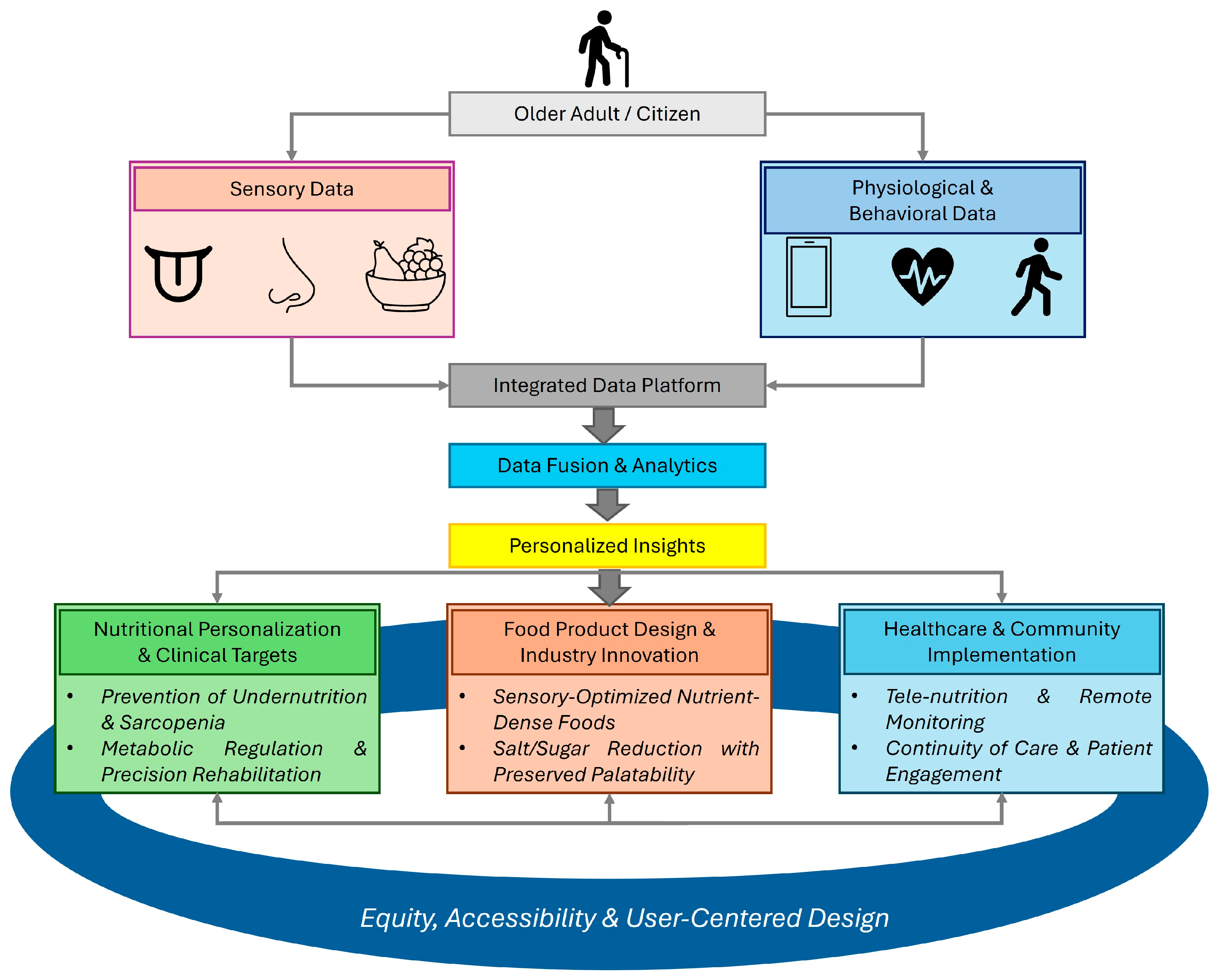
6.2. The Integrated Sensory–Physiological System: Practical Steps and Applications
- Basal sensory profiling. A standardized assessment is necessary to draw both the individual’s sensory profile in terms of taste, smell, and texture, and hedonics, in terms of responsiveness and sensitivity. This may serve as a reference for individualized interventions.
- Physiological monitoring. Through wearables, on all parts of the body previously indicated, it is possible to detect and record the body metabolic state to precisely characterize the physiological effects brought by specific sensory stimulations or the consumption of specific meals on the individual.
- Event-based sensory logging. User-friendly interfaces can allow users to record their sensory experiences, during or after sensory experiences or events in order to minimize recall biases and provide useful contextual information about the experience or the food consumption.
- Data analysis. Intelligent algorithms and models can integrate subjective sensory reports and implicit, objective physiological data to discover patterns and relationships such as, for example, those existing between sensory properties and personal feelings for satiety or other transient conditions. In such a framework, AI has been employed to suggest food and beverage pairings based on flavor profiles, enhancing the overall dining or drinking experience [156,157], and this approach probably represents the next big revolution in the field.
- Adaptive feedback. Analyses can be transformed into feedback in real-time or near-real-time, with the possibility to become real personalized recommendations for all consumers, for example, to optimize meal timing and ingredients and adapt these to the specificities of the individual.
6.3. Artificial Intelligence and Digital Twin
7. Applications and Perspectives for Healthy Aging
7.1. Nutritional Personalization and Clinical Targets
7.2. Food Product Design and Industry Implications
7.3. Implementation in Healthcare and Community Settings
7.4. Equity, Accessibility, and User-Centered Design
7.5. Privacy and Data Protection
8. Conclusions and Future Directions
Author Contributions
Funding
Institutional Review Board Statement
Informed Consent Statement
Data Availability Statement
Conflicts of Interest
Abbreviations
| AI | Artificial Intelligence |
| ANS | Autonomic Nervous System |
| B2C | Business-to-Client |
| BLE | Bluetooth Low Energy |
| CATA | Check-all-that-apply |
| CGM | Continuous glucose monitoring |
| HR | Heart Rate |
| HRV | Heart rate variability |
| IDDSI | International Dysphagia Diet Standardisation Initiative |
| ML | Machine Learning |
| PIR | Passive InfraRed |
| PM | Particulate Matter |
| PPG | Photoplethysmogram |
| SaaS | Software-as-a-Service |
| SpO2 | Oxygen Saturation |
| TDS | Temporal Dominance of Sensations |
| VOC | Volatile organic compounds |
References
- Partridge, L.; Deelen, J.; Slagboom, P.E. Facing up to the global challenges of ageing. Nature 2018, 561, 45–56. [Google Scholar] [CrossRef] [Scilit]
- Mitchell, E.; Walker, R. Global ageing: Successes, challenges and opportunities. Br. J. Hosp. Med. 2020, 81, 1–9. [Google Scholar] [CrossRef] [Scilit]
- Feng, Z.; Glinskaya, E.; Chen, H.; Gong, S.; Qiu, Y.; Xu, J.; Yip, W. Long-term care system for older adults in China: Policy landscape, challenges, and future prospects. Lancet 2020, 396, 1362–1372. [Google Scholar] [CrossRef] [Scilit]
- Franco, P. Older consumers and technology: A critical systematic literature review. AMS Rev. 2023, 13, 92–121. [Google Scholar] [CrossRef] [Scilit]
- Malik, S.; Wong, N.D.; Franklin, S.S.; Kamath, T.V.; L’Italien, G.J.; Pio, J.R.; Williams, G.R. Impact of the metabolic syndrome on mortality from coronary heart disease, cardiovascular disease, and all causes in United States adults. Circulation 2004, 110, 1245–1250. [Google Scholar] [CrossRef] [Scilit]
- Saboya, P.P.; Bodanese, L.C.; Zimmermann, P.R.; Gustavo, A.D.; Assumpção, C.M.; Londero, F. Metabolic syndrome and quality of life: A systematic review. Rev. Lat.-Am. Enferm. 2016, 24, e2848. [Google Scholar] [CrossRef] [Scilit] [PubMed]
- Gholami, A.; Doustmohammadian, A.; Shamshirgaran, S.M.; Aminisani, N.; Azimi-Nezhad, M.; Abasi, H.; Hariri, M. Association Between Metabolic Syndrome and Health-Related Quality of Life in Older Adults: Findings from the IRanian Longitudinal Study on Ageing. Metab. Syndr. Relat. Disord. 2024, 22, 575–582. [Google Scholar] [CrossRef] [Scilit]
- Nakajima, C.; Tomida, K.; Shimoda, T.; Kawakami, A.; Shimada, H. Association between willingness to exercise and incident disability in older adults: A prospective longitudinal cohort study. Eur. Geriatr. Med. 2024, 15, 1683–1689. [Google Scholar] [CrossRef] [Scilit] [PubMed]
- Kell, R.T.; Bell, G.; Quinney, A. Musculoskeletal fitness, health outcomes and quality of life. Sports Med. 2001, 31, 863–873. [Google Scholar] [CrossRef] [Scilit]
- Lamb, S.E.; Sheehan, B.; Atherton, N.; Nichols, V.; Collins, H.; Mistry, D.; Dosanjh, S.; Slowther, A.M.; Khan, I.; Petrou, S.; et al. Dementia And Physical Activity (DAPA) trial of moderate to high intensity exercise training for people with dementia: Randomised controlled trial. BMJ 2018, 361, k1675. [Google Scholar] [CrossRef] [Scilit]
- Izquierdo, M.; de Souto Barreto, P.; Arai, H.; Bischoff-Ferrari, H.A.; Cadore, E.L.; Cesari, M.; Chen, L.K.; Coen, P.M.; Courneya, K.S.; Duque, G.; et al. Global consensus on optimal exercise recommendations for enhancing healthy longevity in older adults (ICFSR). J. Nutr. Health Aging 2025, 29, 100401. [Google Scholar] [CrossRef] [Scilit] [PubMed]
- Lane, M.M.; Gamage, E.; Du, S.; Ashtree, D.N.; McGuinness, A.J.; Gauci, S.; Baker, P.; Lawrence, M.; Rebholz, C.M.; Srour, B.; et al. Ultra-processed food exposure and adverse health outcomes: Umbrella review of epidemiological meta-analyses. BMJ 2024, 384, e077310. [Google Scholar] [CrossRef] [Scilit] [PubMed]
- Hurtado, M.D.; Saadedine, M.; Kapoor, E.; Shufelt, C.L.; Faubion, S.S. Weight Gain in Midlife Women. Curr. Obes. Rep. 2024, 13, 352–363. [Google Scholar] [CrossRef] [Scilit] [PubMed]
- Colleluori, G.; Villareal, D.T. Aging, obesity, sarcopenia and the effect of diet and exercise intervention. Exp. Gerontol. 2021, 155, 111561. [Google Scholar] [CrossRef] [Scilit]
- Brai, E.; Hummel, T.; Alberi, L. Smell, an Underrated Early Biomarker for Brain Aging. Front. Neurosci. 2020, 14, 792. [Google Scholar] [CrossRef] [Scilit]
- Lord, S.R.; Delbaere, K.; Sturnieks, D.L. Aging. In Handbook of Clinical Neurology; Elsevier: Amsterdam, The Netherlands, 2018; Volume 159, pp. 157–171. [Google Scholar] [CrossRef] [Scilit]
- Bathini, P.; Brai, E.; Balin, B.J.; Bimler, L.; Corry, D.B.; Devanand, D.P.; Doty, R.L.; Ehrlich, G.D.; Eimer, W.A.; Fulop, T.; et al. Sensory Dysfunction, Microbial Infections, and Host Responses in Alzheimer’s Disease. J. Infect. Dis. 2024, 230, S150–S164. [Google Scholar] [CrossRef] [Scilit]
- Tonacci, A.; Bruno, R.M.; Ghiadoni, L.; Pratali, L.; Berardi, N.; Tognoni, G.; Cintoli, S.; Volpi, L.; Bonuccelli, U.; Sicari, R.; et al. Olfactory evaluation in Mild Cognitive Impairment: Correlation with neurocognitive performance and endothelial function. Eur. J. Neurosci. 2017, 45, 1279–1288. [Google Scholar] [CrossRef] [Scilit]
- Landi, F.; Calvani, R.; Tosato, M.; Martone, A.M.; Ortolani, E.; Savera, G.; Sisto, A.; Marzetti, E. Anorexia of Aging: Risk Factors, Consequences, and Potential Treatments. Nutrients 2016, 8, 69. [Google Scholar] [CrossRef] [Scilit]
- Rolls, B.J. Aging and appetite. Nutr. Rev. 1992, 50, 422–426. [Google Scholar] [CrossRef] [Scilit]
- Clegg, M.E.; Williams, E.A. Optimizing nutrition in older people. Maturitas 2018, 112, 34–38. [Google Scholar] [CrossRef] [Scilit]
- Fielding, R.A.; Landi, F.; Smoyer, K.E.; Tarasenko, L.; Groarke, J. Association of anorexia/appetite loss with malnutrition and mortality in older populations: A systematic literature review. J. Cachexia Sarcopenia Muscle 2023, 14, 706–729. [Google Scholar] [CrossRef] [Scilit]
- Dai, Z.; Lee, S.Y.; Sharma, S.; Ullah, S.; Tan, E.C.K.; Brodaty, H.; Schutte, A.E.; Sachdev, P.S. A systematic review of diet and medication use among centenarians and near-centenarians worldwide. GeroScience 2024, 46, 6625–6639. [Google Scholar] [CrossRef] [Scilit]
- Shariati, M.; Touranlou, F.A.; Rezaie, M. Sensory evaluation methods for food products targeting different age groups: A review. Food Res. Int. 2025, 221, 117608. [Google Scholar] [CrossRef] [Scilit]
- Oeser, G. Age-specific differences in food and stimulant consumption in Germany and their marketing implications. J. Int. Food Agribus. Mark. 2022, 34, 488–517. [Google Scholar] [CrossRef] [Scilit]
- Harris, M.T.; Blocker, K.A.; Rogers, W.A. Older adults and smart technology: Facilitators and barriers to use. Front. Comput. Sci. 2022, 4, 835927. [Google Scholar] [CrossRef] [Scilit]
- Schroeder, T.; Dodds, L.; Georgiou, A.; Gewald, H.; Siette, J. Older adults and new technology: Mapping review of the factors associated with older adults’ intention to adopt digital technologies. JMIR Aging 2023, 6, e44564. [Google Scholar] [CrossRef] [Scilit] [PubMed]
- Zhu, L.; Samsudin, N.A.; Hamid, Z.J.M.H.; Xu, H. An Intelligent Framework for Optimal Consumer Electronics’ Management in Smart Pocket Parks for Stimulating the Vitality of the Elderly. IEEE Trans. Consum. Electron. 2025, 71, 4670–4676. [Google Scholar] [CrossRef] [Scilit]
- Sazonov, E.; Hegde, N.; Browning, R.C.; Melanson, E.L.; Sazonova, N.A. Posture and activity recognition and energy expenditure estimation in a wearable platform. IEEE J. Biomed. Health Inform. 2015, 19, 1339–1346. [Google Scholar] [CrossRef] [Scilit] [PubMed]
- Leone, A.; Rescio, G.; Diraco, G.; Manni, A.; Siciliano, P.; Caroppo, A. Ambient and wearable sensor technologies for energy expenditure quantification of ageing adults. Sensors 2022, 22, 4893. [Google Scholar] [CrossRef] [Scilit]
- Lin, S.Y.; Lai, Y.C.; Hsia, C.C.; Su, P.F.; Chang, C.H. Validation of energy expenditure prediction models using real-time shoe-based motion detectors. IEEE Trans. Biomed. Eng. 2016, 64, 2152–2162. [Google Scholar] [CrossRef] [PubMed]
- Mohapatra, A.G.; Mohanty, A.; Khanna, A.; Gupta, D.; Dutta, A.K.; Alkhayyat, A. Enhancing Consumer Electronics in Healthcare 4.0: Integrating Passive FBG Sensor and IoMT Technology for Remote HRV Monitoring. IEEE Trans. Consum. Electron. 2024, 71, 1513–1520. [Google Scholar] [CrossRef] [Scilit]
- Choksatchawathi, T.; Ponglertnapakorn, P.; Ditthapron, A.; Leelaarporn, P.; Wisutthisen, T.; Piriyajitakonkij, M.; Wilaiprasitporn, T. Improving heart rate estimation on consumer grade wrist-worn device using post-calibration approach. IEEE Sens. J. 2020, 20, 7433–7446. [Google Scholar] [CrossRef] [Scilit]
- Umair, M.; Chalabianloo, N.; Sas, C.; Ersoy, C. HRV and stress: A mixed-methods approach for comparison of wearable heart rate sensors for biofeedback. IEEE Access 2021, 9, 14005–14024. [Google Scholar] [CrossRef] [Scilit]
- Roomkham, S.; Lovell, D.; Cheung, J.; Perrin, D. Promises and challenges in the use of consumer-grade devices for sleep monitoring. IEEE Rev. Biomed. Eng. 2018, 11, 53–67. [Google Scholar] [CrossRef] [Scilit]
- Cay, G.; Ravichandran, V.; Sadhu, S.; Zisk, A.H.; Salisbury, A.L.; Solanki, D.; Mankodiya, K. Recent advancement in sleep technologies: A literature review on clinical standards, sensors, apps, and AI methods. IEEE Access 2022, 10, 104737–104756. [Google Scholar] [CrossRef] [Scilit]
- Olsen, M.; Zeitzer, J.M.; Nakase-Richardson, R.; Musgrave, V.H.; Sørensen, H.B.; Mignot, E.; Jennum, P.J. A deep transfer learning approach for sleep stage classification and sleep apnea detection using wrist-worn consumer sleep technologies. IEEE Trans. Biomed. Eng. 2024, 71, 2506–2517. [Google Scholar] [CrossRef] [Scilit]
- Jain, P.; Joshi, A.M.; Mohanty, S.P.; Cenkeramaddi, L.R. Non-invasive glucose measurement technologies: Recent advancements and future challenges. IEEE Access 2024, 12, 61907–61936. [Google Scholar] [CrossRef] [Scilit]
- Jia, M.; Choi, J.H.; Liu, H.; Susman, G. Development of facial-skin temperature driven thermal comfort and sensation modeling for a futuristic application. Build. Environ. 2022, 207, 108479. [Google Scholar] [CrossRef] [Scilit]
- Aslan, S.; Ciocca, G.; Schettini, R. Semantic food segmentation for automatic dietary monitoring. In Proceedings of the 2018 IEEE 8th International Conference on Consumer Electronics-Berlin (ICCE-Berlin), Berlin, Germany, 2–5 September 2018; pp. 1–6. [Google Scholar]
- Bianco, S.; Buzzelli, M.; Chiriaco, G.; Napoletano, P.; Piccoli, F. Food recognition with visual transformers. In Proceedings of the 2023 IEEE 13th International Conference on Consumer Electronics-Berlin (ICCE-Berlin), Berlin, Germany, 3–5 September 2023; pp. 82–87. [Google Scholar]
- Zarnowiecki, D.; Mauch, C.E.; Middleton, G.; Matwiejczyk, L.; Watson, W.L.; Dibbs, J.; Golley, R.K. A systematic evaluation of digital nutrition promotion websites and apps for supporting parents to influence children’s nutrition. Int. J. Behav. Nutr. Phys. Act. 2020, 17, 17. [Google Scholar] [CrossRef] [Scilit] [PubMed]
- Sharma, P.; Rani, M.U. Effect of digital nutrition education intervention on the nutritional knowledge levels of information technology professionals. Ecol. Food Nutr. 2016, 55, 442–455. [Google Scholar] [CrossRef] [Scilit]
- Cosme, F.; Rocha, T.; Marques, C.; Barroso, J.; Vilela, A. Innovative approaches in sensory food science: From digital tools to virtual reality. Appl. Sci. 2025, 15, 4538. [Google Scholar] [CrossRef] [Scilit]
- Low, J.Y.; Antlej, K.; Garvey, E.C.; Wang, Q.J. Recreating digital context: Navigating the future of food sensory studies through recent advances and applications. Curr. Opin. Food Sci. 2024, 57, 101176. [Google Scholar] [CrossRef] [Scilit]
- Spence, C.; Youssef, J. Aging and the (chemical) senses: Implications for food behaviour amongst elderly consumers. Foods 2021, 10, 168. [Google Scholar] [CrossRef] [Scilit] [PubMed]
- Tonacci, A.; Billeci, L.; Sansone, F.; Masci, A.; Pala, A.P.; Domenici, C.; Conte, R. An innovative, unobtrusive approach to investigate smartphone interaction in nonaddicted subjects based on wearable sensors: A pilot study. Medicina 2019, 55, 37. [Google Scholar] [CrossRef] [Scilit]
- Billeci, L.; Sanmartin, C.; Tonacci, A.; Taglieri, I.; Bachi, L.; Ferroni, G.; Venturi, F. Wearable sensors to evaluate autonomic response to olfactory stimulation: The influence of short, intensive sensory training. Biosensors 2023, 13, 478. [Google Scholar] [CrossRef] [Scilit]
- Amancharla, A.; Shanbhag, A.A. Analysis of EEG and ECG time series in response to olfactory and cognitive tasks. Procedia Comput. Sci. 2024, 235, 745–756. [Google Scholar] [CrossRef] [Scilit]
- Laohakangvalvit, T.; Sripian, P.; Nakagawa, Y.; Feng, C.; Tazawa, T.; Sakai, S.; Sugaya, M. Study on the psychological states of olfactory stimuli using electroencephalography and heart rate variability. Sensors 2023, 23, 4026. [Google Scholar] [CrossRef] [Scilit]
- Tang, B.; Zhu, M.; Wu, Y.; Guo, G.; Hu, Z.; Ding, Y. Autonomic responses associated with olfactory preferences of fragrance consumers: Skin conductance, respiration, and heart rate. Sensors 2024, 24, 5604. [Google Scholar] [CrossRef] [Scilit]
- Torrico, D.D.; Mehta, A.; Borssato, A.B. New methods to assess sensory responses: A brief review of innovative techniques in sensory evaluation. Curr. Opin. Food Sci. 2023, 49, 100978. [Google Scholar] [CrossRef] [Scilit]
- Bland, J. Treating Metabolic Syndrome: P4 Medicine Meets Functional Medicine. Phenomics 2025, 1–4. [Google Scholar] [CrossRef] [Scilit]
- Hong, S.; Baek, S.H.; Lai, M.K.P.; Arumugam, T.V.; Jo, D.G. Aging-associated sensory decline and Alzheimer’s disease. Mol. Neurodegener. 2024, 19, 93. [Google Scholar] [CrossRef] [Scilit]
- Lin, C.Y.; Tsai, Y.S.; Chang, M.H. Impact of olfactory function on the trajectory of cognition, motor function, and quality of life in Parkinson’s disease. Front. Aging Neurosci. 2024, 16, 1329551. [Google Scholar] [CrossRef] [Scilit] [PubMed]
- Mattos, J.L.; Hasan, S.; Schlosser, R.J.; Payne, S.C.; Soler, Z.M. The association of gustatory dysfunction, olfactory dysfunction, and cognition in older adults. Int. Forum Allergy Rhinol. 2023, 13, 1577–1583. [Google Scholar] [CrossRef] [Scilit]
- Huang, A.R.; Suen, J.J.; Almidani, L.; Chen, Z. Sensory Loss and Social Connection in Older Adults: A Narrative Review. Clin. Geriatr. Med. 2025, 41, 329–341. [Google Scholar] [CrossRef] [Scilit]
- Hoppu, U.; Puputti, S.; Sandell, M. Factors related to sensory properties and consumer acceptance of vegetables. Crit. Rev. Food Sci. Nutr. 2021, 61, 1751–1761. [Google Scholar] [CrossRef] [Scilit] [PubMed]
- Thomas, J.J.; Holsen, L.; Van De Water, A.L.; Becker, K.R.; Breithaupt, L.; Burton-Murray, H.; Asanza, E.; Gydus, J.; Palmer, L.P.; Stern, C.M.; et al. Neural Response to Food Cues in Avoidant/Restrictive Food Intake Disorder. JAMA Netw. Open 2025, 8, e2460101. [Google Scholar] [CrossRef] [Scilit]
- Jeon, S.; Kim, Y.; Min, S.; Song, M.; Son, S.; Lee, S. Taste Sensitivity of Elderly People Is Associated with Quality of Life and Inadequate Dietary Intake. Nutrients 2021, 13, 1693. [Google Scholar] [CrossRef] [Scilit]
- Braun, T.; Doerr, J.M.; Peters, L.; Viard, M.; Reuter, I.; Prosiegel, M.; Weber, S.; Yeniguen, M.; Tschernatsch, M.; Gerriets, T.; et al. Age-related changes in oral sensitivity, taste and smell. Sci. Rep. 2022, 12, 1533. [Google Scholar] [CrossRef] [Scilit]
- Hummel, T.; Sekinger, B.; Wolf, S.R.; Pauli, E.; Kobal, G. ‘Sniffin’ sticks’: Olfactory performance assessed by the combined testing of odor identification, odor discrimination and olfactory threshold. Chem. Senses 1997, 22, 39–52. [Google Scholar] [CrossRef] [Scilit]
- Deflorio, D.; Di Luca, M.; Wing, A.M. Skin properties and afferent density in the deterioration of tactile spatial acuity with age. J. Physiol. 2023, 601, 517–533. [Google Scholar] [CrossRef] [Scilit] [PubMed]
- Cichero, J.A. Unlocking opportunities in food design for infants, children, and the elderly: Understanding milestones in chewing and swallowing across the lifespan for new innovations. J. Texture Stud. 2017, 48, 271–279. [Google Scholar] [CrossRef] [Scilit] [PubMed]
- Feit, N.Z.; Kloosterman, N.; LaPointe, K.A.; Pitiranggon, C.; Finnegan, I.E.; Smith, C.D.; Schlosser, R.J. Intranasal trigeminal function in aging adults. Am. J. Rhinol. Allergy 2024, 38, 413–420. [Google Scholar] [CrossRef] [Scilit] [PubMed]
- Braud, A.; Boucher, Y. Intra-oral trigeminal-mediated sensations influencing taste perception: A systematic review. J. Oral Rehabil. 2020, 47, 258–269. [Google Scholar] [CrossRef] [Scilit]
- Tomasiewicz, A.; Polański, J.; Tański, W. Advancing the Understanding of Malnutrition in the Elderly Population: Current Insights and Future Directions. Nutrients 2024, 16, 2502. [Google Scholar] [CrossRef] [Scilit]
- Sergi, G.; Bano, G.; Pizzato, S.; Veronese, N.; Manzato, E. Taste loss in the elderly: Possible implications for dietary habits. Crit. Rev. Food Sci. Nutr. 2017, 57, 3684–3689. [Google Scholar] [CrossRef] [Scilit]
- Schamarek, I.; Richter, F.C.; Finlayson, G.; Tönjes, A.; Stumvoll, M.; Blüher, M.; Rohde-Zimmermann, K. Association of Salty and Sweet Taste Recognition with Food Reward and Subjective Control of Eating Behavior. Nutrients 2024, 16, 2661. [Google Scholar] [CrossRef] [Scilit]
- Faraco, G.; Hochrainer, K.; Segarra, S.G.; Schaeffer, S.; Santisteban, M.M.; Menon, A.; Jiang, H.; Holtzman, D.M.; Anrather, J.; Iadecola, C. Dietary salt promotes cognitive impairment through tau phosphorylation. Nature 2019, 574, 686–690. [Google Scholar] [CrossRef] [Scilit]
- Umesawa, M.; Iso, H.; Fujino, Y.; Kikuchi, S.; Tamakoshi, A. Salty Food Preference and Intake and Risk of Gastric Cancer: The JACC Study. J. Epidemiol. 2016, 26, 92–97. [Google Scholar] [CrossRef] [Scilit]
- Tian, C.; Schrack, J.A.; Agrawal, Y.; An, Y.; Cai, Y.; Wang, H.; Gross, A.L.; Tian, Q.; Simonsick, E.M.; Ferrucci, L.; et al. Cross-sectional associations between multisensory impairment and brain volumes in older adults: Baltimore Longitudinal Study of Aging. Sci. Rep. 2024, 14, 9339. [Google Scholar] [CrossRef] [Scilit] [PubMed]
- Peters, R.; White, D.J.; Scholey, A. Resting state fMRI reveals differential effects of glucose administration on central appetite signalling in young and old adults. J. Psychopharmacol. 2020, 34, 304–314. [Google Scholar] [CrossRef] [Scilit]
- Hebert, K.R. Sensory processing styles and eating behaviors in healthy adults. Br. J. Occup. Ther. 2018, 81, 162–170. [Google Scholar] [CrossRef] [Scilit]
- Cox, N.J.; Morrison, L.; Ibrahim, K.; Robinson, S.M.; Sayer, A.A.; Roberts, H.C. New horizons in appetite and the anorexia of ageing. Age Ageing 2020, 49, 526–534. [Google Scholar] [CrossRef] [Scilit] [PubMed]
- Gadkaree, S.K.; Sun, D.Q.; Li, C.; Lin, F.R.; Ferrucci, L.; Simonsick, E.M.; Agrawal, Y. Does Sensory Function Decline Independently or Concomitantly with Age? Data from the Baltimore Longitudinal Study of Aging. J. Aging Res. 2016, 2016, 1865038. [Google Scholar] [CrossRef] [Scilit] [PubMed]
- Vance, D.E.; Del Bene, V.A.; Kamath, V.; Frank, J.S.; Billings, R.; Cho, D.Y.; Byun, J.Y.; Jacob, A.; Anderson, J.N.; Visscher, K.; et al. Does Olfactory Training Improve Brain Function and Cognition? A Systematic Review. Neuropsychol. Rev. 2024, 34, 155–191. [Google Scholar] [CrossRef] [Scilit]
- Wegener, B.; Croy, I.; Haehner, A.; Hummel, T. Olfactory training with older people. Int. J. Geriatr. Psychiatry 2018, 33, 212–220. [Google Scholar] [CrossRef] [Scilit]
- Loughnane, M.; Tischler, V.; Khalid Saifeldeen, R.; Kontaris, E. Aging and Olfactory Training: A Scoping Review. Innov. Aging 2024, 8, igae044. [Google Scholar] [CrossRef] [Scilit]
- Li, Y.; Wang, S.; Zhang, L.; Dong, Q.; Hu, X.; Yang, Y.; Liu, T.; Wu, B.; Shan, B.; Yin, C.; et al. Sensory Insights in Aging: Exploring the Impact on Improving Dietary Through Sensory Enhancement. Food Sci. Nutr. 2025, 13, e70074. [Google Scholar] [CrossRef] [Scilit]
- Mathieu, M.E.; Reid, R.E.R.; King, N.A. Sensory Profile of Adults with Reduced Food Intake and the Potential Roles of Nutrition and Physical Activity Interventions. Adv. Nutr. 2019, 10, 1120–1125. [Google Scholar] [CrossRef] [Scilit]
- Schiffman, S.S. Effects of aging on the human taste system. Ann. N. Y. Acad. Sci. 2009, 1170, 725–729. [Google Scholar] [CrossRef] [Scilit]
- Wysocki, C.J.; Pelchat, M.L. The effects of aging on the human sense of smell and its relationship to food choice. Crit. Rev. Food Sci. Nutr. 1993, 33, 63–82. [Google Scholar] [CrossRef] [Scilit]
- Song, X.; Giacalone, D.; Johansen, S.M.B.; Frøst, M.B.; Bredie, W.L. Changes in orosensory perception related to aging and strategies for counteracting its influence on food preferences among older adults. Trends Food Sci. Technol. 2016, 53, 49–59. [Google Scholar] [CrossRef] [Scilit]
- Kremer, S.; Mojet, J.; Kroeze, J.H. Perception of texture and flavor in soups by elderly and young subjects. J. Texture Stud. 2005, 36, 255–272. [Google Scholar] [CrossRef] [Scilit]
- Mojet, J.; Heidema, J.; Christ-Hazelhof, E. Taste perception with age: Generic or specific losses in supra-threshold intensities of five taste qualities? Chem. Senses 2003, 28, 397–413. [Google Scholar] [CrossRef] [Scilit] [PubMed]
- World Health Organization. World Report on Ageing and Health; World Health Organization: Geneva, Switzerland, 2015. [Google Scholar]
- Doty, R.L. The olfactory vector hypothesis of neurodegenerative disease: Is it viable? Ann. Neurol. 2008, 63, 7–15. [Google Scholar] [CrossRef] [Scilit] [PubMed]
- Imoscopi, A.; Inelmen, E.M.; Sergi, G.; Miotto, F.; Manzato, E. Taste loss in the elderly: Epidemiology, causes and consequences. Aging Clin. Exp. Res. 2012, 24, 570–579. [Google Scholar] [CrossRef] [Scilit] [PubMed]
- Scott, N.; Grygorczyk, A.; Gilbert, C.C.; Duizer, L.M. Exploring the use of rapid profiling techniques for use in older adult populations. Food Qual. Prefer. 2017, 62, 199–207. [Google Scholar] [CrossRef] [Scilit]
- Jung, S.; Oh, J.; Cho, M.S. Comparison of preferences among older adults using rapid sensory methods: A case study on chicken porridges. Int. J. Gastron. Food Sci. 2024, 38, 101060. [Google Scholar] [CrossRef] [Scilit]
- Regan, E.; Feeney, E.; Schlich, P.; Hutchings, S.; O’Neill, G.; O’Riordan, E. Measuring the effectiveness of the temporal dominance of sensations technique to investigate the dynamic perception of oral nutritional supplements by older adults. Food Qual. Prefer. 2023, 104, 104720. [Google Scholar] [CrossRef] [Scilit]
- Maitre, I.; Symoneaux, R.; Sulmont-Rossé, C. Sensory testing in new product development: Working with older people. In Rapid Sensory Profiling Techniques; Elsevier: Amsterdam, The Netherlands, 2015; pp. 485–508. [Google Scholar]
- Gana, K.; Bailly, N.; Saada, Y.; Joulain, M.; Alaphilippe, D. Does life satisfaction change in old age: Results from an 8-year longitudinal study. J. Gerontol. Ser. B Psychol. Sci. Social. Sci. 2013, 68, 540–552. [Google Scholar] [CrossRef] [Scilit]
- Methven, L.; Jiménez-Pranteda, M.L.; Lawlor, J.B. Sensory and consumer science methods used with older adults: A review of current methods and recommendations for the future. Food Qual. Prefer. 2016, 48, 333–344. [Google Scholar] [CrossRef] [Scilit]
- Walston, J.D. Sarcopenia in older adults. Curr. Opin. Rheumatol. 2012, 24, 623–627. [Google Scholar] [CrossRef] [Scilit]
- Ponti, F.; Santoro, A.; Mercatelli, D.; Gasperini, C.; Conte, M.; Martucci, M.; Sangiorgi, L.; Franceschi, C.; Bazzocchi, A. Aging and Imaging Assessment of Body Composition: From Fat to Facts. Front. Endocrinol. 2020, 10, 861. [Google Scholar] [CrossRef] [Scilit]
- Galgani, J.E.; Moro, C.; Ravussin, E. Metabolic flexibility and insulin resistance. Am. J. Physiol. Endocrinol. Metab. 2008, 295, E1009–E1017. [Google Scholar] [CrossRef] [Scilit]
- Amorim, J.A.; Coppotelli, G.; Rolo, A.P.; Palmeira, C.M.; Ross, J.M.; Sinclair, D.A. Mitochondrial and metabolic dysfunction in ageing and age-related diseases. Nat. Rev. Endocrinol. 2022, 18, 243–258. [Google Scholar] [CrossRef] [Scilit]
- O’Donovan, S.D.; Erdős, B.; Jacobs, D.M.; Wanders, A.J.; Thomas, E.L.; Bell, J.D.; Rundle, M.; Frost, G.; Arts, I.C.W.; Afman, L.A.; et al. Quantifying the contribution of triglycerides to metabolic resilience through the mixed meal model. iScience 2022, 25, 105206. [Google Scholar] [CrossRef] [Scilit]
- Jasbi, P.; Mohr, A.E.; Murthy, M.H.S.; Klein-Seetharaman, J. Understanding metabolic resilience by unraveling temporal dynamics of cellular responses. Trends Endocrinol. Metab. 2025, 36, 1084–1098. [Google Scholar] [CrossRef] [Scilit]
- Shaffer, F.; Ginsberg, J.P. An Overview of Heart Rate Variability Metrics and Norms. Front. Public Health 2017, 5, 258. [Google Scholar] [CrossRef] [Scilit]
- Di Palma, S.; Tonacci, A.; Narzisi, A.; Domenici, C.; Pioggia, G.; Muratori, F.; Billeci, L.; MICHELANGELO Study Group. Monitoring of autonomic response to sociocognitive tasks during treatment in children with Autism Spectrum Disorders by wearable technologies: A feasibility study. Comput. Biol. Med. 2017, 85, 143–152. [Google Scholar] [CrossRef] [Scilit] [PubMed]
- Gouveri, E.; Papanas, N. Olfactory Dysfunction: A Complication of Diabetes or a Factor That Complicates Glucose Metabolism? A Narrative Review. J. Clin. Med. 2021, 10, 5637. [Google Scholar] [CrossRef] [Scilit] [PubMed]
- Catamo, E.; Tornese, G.; Concas, M.P.; Gasparini, P.; Robino, A. Differences in taste and smell perception between type 2 diabetes mellitus patients and healthy controls. Nutr. Metab. Cardiovasc. Dis. 2021, 31, 193–200. [Google Scholar] [CrossRef] [Scilit] [PubMed]
- Accio. Top Selling Smartwatch. Available online: https://www.accio.com/business/topsellingsmartwatch (accessed on 20 October 2025).
- Apple Support. Available online: https://support.apple.com/en-us/111848 (accessed on 22 October 2025).
- Samsung Galaxy Watch 5 Pro. Available online: https://www.samsung.com/ie/watches/galaxy-watch/galaxy-watch5-pro-black-titanium-bt-sm-r920nzkaeua/ (accessed on 22 October 2025).
- GSMArena. Amazfit GTR 3 Pro Review. Available online: https://www.gsmarena.com/amazfit_gtr_3_pro_review-news-51427.php (accessed on 22 October 2025).
- Google Store. Fitbit Versa 4 Specifications. Available online: https://store.google.com/gb/product/fitbit_versa_4_specs?hl=en-GB (accessed on 22 October 2025).
- Machado, A.; Ferreira, D.F.; Ferreira, S.; Almeida-Antunes, N.; Carvalho, P.; Melo, P.; Rocha, N.; Rodrigues, M.A. A Systematic Review of Chest-Worn Sensors in Cardiac Assessment: Technologies, Advantages, and Limitations. Sensors 2025, 25, 6049. [Google Scholar] [CrossRef] [Scilit]
- Polar H7 Heart Rate Sensor Accessory Manual. Available online: https://support.polar.com/e_manuals/H7_Heart_Rate_Sensor/Polar_H7_Heart_Rate_Sensor_accessory_manual_English.pdf (accessed on 22 October 2025).
- Polar H10 User Manual. Available online: https://support.polar.com/e_manuals/h10-heart-rate-sensor/polar-h10-user-manual-english/technical-specifications.htm (accessed on 22 October 2025).
- Polar T31. Available online: https://support.polar.com/en/t31 (accessed on 22 October 2025).
- Zephyr BioHarness 3 User Manual. Available online: https://www.zephyranywhere.com/media/download/bioharness3-user-manual.pdf (accessed on 22 October 2025).
- Movesense Sensor HR. Available online: https://www.movesense.com/product/movesense-sensor-hr/ (accessed on 22 October 2025).
- Garmin HRM-Dual Manual. Available online: https://www8.garmin.com/manuals/webhelp/hrm-dual/EN-US/GUID-ACE86E1D-9499-4D84-9BC2-00C4F06B0614.html (accessed on 22 October 2025).
- Sibomana, O.; Hakayuwa, C.M.; Obianke, A.; Gahire, H.; Munyantore, J.; Chilala, M.M. Diagnostic accuracy of ECG smart chest patches versus PPG smartwatches for atrial fibrillation detection: A systematic review and meta-analysis. BMC Cardiovasc. Disord. 2025, 25, 132. [Google Scholar] [CrossRef] [Scilit]
- Kim, H.A.; Lee, H.; Park, H.S.; Ahn, J.; Lee, S.M.; Choi, S.Y.; Oh, E.H.; Choi, J.H.; Park, J.Y.; Choi, K.D. Wearable ECG patch monitoring for 72 h is comparable to conventional Holter monitoring for 24 h to detect cardiogenic vertigo. Sci. Rep. 2025, 15, 7744. [Google Scholar] [CrossRef] [Scilit] [PubMed]
- SmartCardia. Available online: https://www.smartcardia.com/ (accessed on 22 October 2025).
- Dexcom G7 CGM System. Available online: https://www.dexcom.com/g7-cgm-system (accessed on 22 October 2025).
- FreeStyle Libre 3. Available online: https://www.freestyle.abbott/us-en/products/freestyle-libre-3.html (accessed on 22 October 2025).
- Medtronic Guardian 4 Sensor IFU. Available online: https://hcp.medtronic-diabetes.com.au/sites/default/files/guardian_4_sonsor_ifu.pdf (accessed on 22 October 2025).
- Eversense 365. Available online: https://www.eversensecgm.com/eversense-365/ (accessed on 22 October 2025).
- ADCES Dexcom Stelo CGM. Available online: https://www.adces.org/education/danatech/glucose-monitoring/continuous-glucose-monitors-(cgm)/view-compare-cgms/product-detail/dexcom-stelo (accessed on 22 October 2025).
- Core Body Temp. Available online: https://corebodytemp.com/?srsltid=AfmBOopovQOr0IXg7HBMJAwrxx5jFlLEuTy4QpxFW8iymoB1UfcqPx24 (accessed on 24 October 2025).
- AMS AS6221 Temperature Sensor. Available online: https://ams-osram.com/products/sensor-solutions/temperature-sensors/ams-as6221-temperature-sensor (accessed on 24 October 2025).
- Empatica E4. Available online: https://www.empatica.com/en-eu/research/e4/ (accessed on 24 October 2025).
- Tempdrop. Available online: https://www.tempdrop.com/?srsltid=AfmBOoqpz3uWAwICeYRkSr4yuQaQHwBMvhf4T2dfWv8q-BvgxuOZshpS (accessed on 24 October 2025).
- Shimmer3 GSR Unit. Available online: https://www.shimmersensing.com/product/shimmer3-gsr-unit/ (accessed on 24 October 2025).
- Asci, C.; Sharma, A.; Del-Rio-Ruiz, R.; Sonkusale, S. Ingestible pH sensing device for gastrointestinal health monitoring based on thread-based electrochemical sensors. Microchim. Acta 2023, 190, 385. [Google Scholar] [CrossRef] [Scilit]
- Ruiz-Valdepeñas Montiel, V.; Sempionatto, J.R.; Campuzano, S.; Pingarrón, J.M.; Esteban Fernández de Ávila, B.; Wang, J. Direct electrochemical biosensing in gastrointestinal fluids. Anal. Bioanal. Chem. 2019, 411, 4597–4604. [Google Scholar] [CrossRef] [Scilit]
- Mc Caffrey, C.; Twomey, K.; Ogurtsov, V.I. Development of a wireless swallowable capsule with potentiostatic electrochemical sensor for gastrointestinal track investigation. Sens. Actuators B Chem. 2015, 218, 8–15. [Google Scholar] [CrossRef] [Scilit]
- Marchianò, V.; Tricase, A.; Cimino, A.; Cassano, B.; Catacchio, M.; Macchia, E.; Torsi, L.; Bollella, P. Inside out: Exploring edible biocatalytic biosensors for health monitoring. Bioelectrochemistry 2025, 161, 108830. [Google Scholar] [CrossRef] [Scilit] [PubMed]
- Airthings View Plus. Available online: https://www.airthings.com/view-plus (accessed on 24 October 2025).
- van den Brink, W.J.; van den Broek, T.J.; Palmisano, S.; Wopereis, S.; de Hoogh, I.M. Digital Biomarkers for Personalized Nutrition: Predicting Meal Moments and Interstitial Glucose with Non-Invasive, Wearable Technologies. Nutrients 2022, 14, 4465. [Google Scholar] [CrossRef] [Scilit]
- Miyakoshi, T.; Ito, Y.M. Association of Blood Glucose Data with Physiological and Nutritional Data from Dietary Surveys and Wearable Devices: Database Analysis. JMIR Diabetes 2024, 9, e62831. [Google Scholar] [CrossRef] [Scilit]
- Luo, J.; Zhang, K.; Xu, Y.; Tao, Y.; Zhang, Q. Effectiveness of Wearable Device-based Intervention on Glycemic Control in Patients with Type 2 Diabetes: A System Review and Meta-Analysis. J. Med. Syst. 2021, 46, 11. [Google Scholar] [CrossRef] [Scilit]
- Sempionatto, J.R.; Montiel, V.R.; Vargas, E.; Teymourian, H.; Wang, J. Wearable and Mobile Sensors for Personalized Nutrition. ACS Sens. 2021, 6, 1745–1760. [Google Scholar] [CrossRef] [Scilit] [PubMed]
- Tushir, S.; Aggarwal, N.; Sehrawat, H.; Yasmin, S. Empowering Nutrition and Diet of Elderly People Using Digital Technology. In Artificial Intelligence in Healthcare for the Elderly; Scrivener Publishing: Beverly, MA, USA, 2025; pp. 251–280. [Google Scholar]
- Romero-Tapiador, S.; Lacruz-Pleguezuelos, B.; Tolosana, R.; Freixer, G.; Daza, R.; Fernández-Díaz, C.M.; Aguilar-Aguilar, E.; Fernández-Cabezas, J.; Cruz-Gil, S.; Molina, S.; et al. AI4FoodDB: A database for personalized e-Health nutrition and lifestyle through wearable devices and artificial intelligence. Database 2023, 2023, baad049. [Google Scholar] [CrossRef] [Scilit] [PubMed]
- Kouaho, W.J.; Epstein, D.A. Investigating perspectives of and experiences with low cost commercial fitness wearables. Proc. ACM Interact. Mob. Wearable Ubiquitous Technol. 2024, 8, 193. [Google Scholar] [CrossRef] [Scilit]
- Canali, S.; Schiaffonati, V.; Aliverti, A. Challenges and recommendations for wearable devices in digital health: Data quality, interoperability, health equity, fairness. PLoS Digit. Health 2022, 1, e0000104. [Google Scholar] [CrossRef] [Scilit] [PubMed]
- Cho, S.; Ensari, I.; Weng, C.; Kahn, M.G.; Natarajan, K. Factors affecting the quality of person-generated wearable device data and associated challenges: Rapid systematic review. JMIR mHealth uHealth 2021, 9, e20738. [Google Scholar] [CrossRef] [Scilit]
- Keogh, A.; Argent, R.; Anderson, A.; Caulfield, B.; Johnston, W. Assessing the usability of wearable devices to measure gait and physical activity in chronic conditions: A systematic review. J. Neuroeng. Rehabil. 2021, 18, 138. [Google Scholar] [CrossRef] [Scilit]
- Toh, S.F.M.; Gonzalez, P.C.; Fong, K.N.K. Usability of a wearable device for home-based upper limb telerehabilitation in persons with stroke: A mixed-methods study. Digit. Health 2023, 9, 20552076231153737. [Google Scholar] [CrossRef] [Scilit]
- Rocha, I.C.; Arantes, M.; Moreira, A.; Vilaça, J.L.; Morais, P.; Matos, D.; Carvalho, V. Monitoring Wearable Devices for Elderly People with Dementia: A Review. Designs 2024, 8, 75. [Google Scholar] [CrossRef] [Scilit]
- Martinato, M.; Lorenzoni, G.; Zanchi, T.; Bergamin, A.; Buratin, A.; Azzolina, D.; Gregori, D. Usability and Accuracy of a Smartwatch for the Assessment of Physical Activity in the Elderly Population: Observational Study. JMIR mHealth uHealth 2021, 9, e20966. [Google Scholar] [CrossRef] [Scilit]
- Rolls, E.T.; Rolls, B.J.; Rowe, E.A. Sensory-specific and motivation-specific satiety for the sight and taste of food and water in man. Physiol. Behav. 1983, 30, 185–192. [Google Scholar] [CrossRef] [Scilit]
- Booth, D.A. Sensory, digestive and metabolic influences on preference and intake. Appetite 2001, 36, 63–69. [Google Scholar] [CrossRef] [Scilit]
- Labbe, D.; Almiron-Roig, E.; Hudry, J.; Leathwood, P.; Schifferstein, H.N.; Martin, N. Sensory basis of refreshing perception: Role of psychophysiological factors and food experience. Physiol. Behav. 2009, 98, 1–9. [Google Scholar] [CrossRef] [Scilit]
- Bray, G.A. Autonomic and endocrine factors in the regulation of food intake. Brain Res. Bull. 1985, 14, 505–510. [Google Scholar] [CrossRef] [Scilit]
- Kreier, F.; Yilmaz, A.; Kalsbeek, A.; Romijn, J.A.; Sauerwein, H.P.; Fliers, E.; Buijs, R.M. Hypothesis: Shifting the equilibrium from activity to food leads to autonomic unbalance and the metabolic syndrome. Diabetes 2003, 52, 2652–2656. [Google Scholar] [CrossRef] [Scilit]
- Silva, D.; Mendes, F.C.; Stanzani, V.; Moreira, R.; Pinto, M.; Beltrão, M.; Sokhatska, O.; Severo, M.; Padrão, P.; Garcia-Larsen, V.; et al. The Acute Effects of a Fast-Food Meal Versus a Mediterranean Food Meal on the Autonomic Nervous System, Lung Function, and Airway Inflammation: A Randomized Crossover Trial. Nutrients 2025, 17, 614. [Google Scholar] [CrossRef] [Scilit]
- Gibson, E.L. Emotional influences on food choice: Sensory, physiological and psychological pathways. Physiol. Behav. 2006, 89, 53–61. [Google Scholar] [CrossRef] [Scilit] [PubMed]
- Yang, H.; Wang, Y.; Zhao, J.; Li, P.; Li, L.; Wang, F. A machine learning method for juice human sensory hedonic prediction using electronic sensory features. Curr. Res. Food Sci. 2023, 7, 100576. [Google Scholar] [CrossRef] [Scilit] [PubMed]
- Hiregoudar, S.; Ashoka, S.; Akouz, A.; Raju, C.A.; Patiballa, M.; Hasib, A.; Revanna, M.L. Flavor profiling and sensory analysis using artificial intelligence and machine learning. In Artificial Intelligence in Food Science; Academic Press: Cambridge, MA, USA, 2026; pp. 263–277. [Google Scholar]
- Tsolakidis, D.; Gymnopoulos, L.P.; Dimitropoulos, K. Artificial intelligence and machine learning technologies for personalized nutrition: A review. Informatics 2024, 11, 62. [Google Scholar] [CrossRef] [Scilit]
- Burgermaster, M.; Desai, P.M.; Heitkemper, E.M.; Juul, F.; Mitchell, E.G.; Turchioe, M.; Albers, D.J.; Levine, M.E.; Larson, D.; Mamykina, L. Who Needs What (Features) When? Personalizing Engagement with Data-Driven Self-Management to Improve Health Equity. J. Biomed. Inform. 2023, 144, 104419. [Google Scholar] [CrossRef] [Scilit]
- Sahal, R.; Alsamhi, S.H.; Brown, K.N. Personal Digital Twin: A Close Look into the Present and a Step towards the Future of Personalised Healthcare Industry. Sensors 2022, 22, 5918. [Google Scholar] [CrossRef] [Scilit] [PubMed]
- Chivukula, R.; Lakshmi, T.J.; Sumalatha, S.; Reddy, K.L.R. Ontology Based Food Recommendation. In IoT with Smart Systems; Senjyu, T., Mahalle, P., Perumal, T., Joshi, A., Eds.; Springer Nature: Singapore, 2022; Volume 251, pp. 751–759. ISBN 9789811639449. [Google Scholar]
- Ganapathy, A.; Nieves, J.W. Nutrition and sarcopenia—What do we know? Nutrients 2020, 12, 1755. [Google Scholar] [CrossRef] [Scilit] [PubMed]
- Torrico, D.D. Novel techniques to measure the sensory, emotional, and physiological responses of consumers toward foods. Foods 2021, 10, 2620. [Google Scholar] [CrossRef] [Scilit]
- Shu, N.; Chen, X.; Sun, X.; Cao, X.; Liu, Y.; Xu, Y.J. Metabolomics identify landscape of food sensory properties. Crit. Rev. Food Sci. Nutr. 2023, 63, 8478–8488. [Google Scholar] [CrossRef] [Scilit] [PubMed]
- Saldaña, E.; Eduardo, K.; Mayta-Hancco, J.; Huamán-Castilla, N.L.; Escobedo-Pacheco, E. Application of sensory and consumer science for the development of novel food products. Curr. Food Sci. Technol. Rep. 2024, 2, 183–199. [Google Scholar] [CrossRef] [Scilit]
- Lutz, M.; Petzold, G.; Albala, C. Considerations for the development of innovative foods to improve nutrition in older adults. Nutrients 2019, 11, 1275. [Google Scholar] [CrossRef] [Scilit]
- Sansone, F.; Gorini, F.; Tonacci, A.; Venturi, F. Tailoring In-Flight Food Consumption to Alleviate Fear of Flying Through Sensory Stimulation. Appl. Sci. 2025, 15, 8057. [Google Scholar] [CrossRef] [Scilit]
- Gonera, A.; Milford, A.B.; Prexl, K.M.; Romm, J.; Berget, I.; Varela, P. Design-led innovation for more plant-based food: An interdisciplinary approach to more consumer-centric product development. Int. J. Food Des. 2024, 9, 101–128. [Google Scholar] [CrossRef] [Scilit]
- Conte, R.; Sansone, F.; Tonacci, A.; Pala, A.P. Privacy-by-design and minimization within a small Electronic Health Record: The Health360 case study. Appl. Sci. 2022, 12, 8441. [Google Scholar] [CrossRef] [Scilit]
- Curbach, J.; Warrelmann, B.; Brandstetter, S.; Lindacher, V.; Rueter, J.; Loss, J. Empowering senior citizens for healthy nutrition in Germany: A pilot study. Health Soc. Care Community 2018, 26, 675–684. [Google Scholar] [CrossRef] [Scilit]
- Ghorayeb, A.; Comber, R.; Gooberman-Hill, R. Development of a smart home interface with older adults: Multi-method co-design study. JMIR Aging 2023, 6, e44439. [Google Scholar] [CrossRef] [Scilit]
- Constantin, N.; Edward, H.; Ng, H.; Radisic, A.; Yule, A.; D’Asti, A.; D’Amore, C.; Reid, J.C.; Beauchamp, M. The use of co-design in developing physical activity interventions for older adults: A scoping review. BMC Geriatr. 2022, 22, 647. [Google Scholar] [CrossRef] [Scilit]
- Nguyen, T.; Tran, T.; Luo, W.; Gupta, S.; Rana, S.; Phung, D.; Nichols, M.; Millar, L.; Venkatesh, S.; Allender, S. Web search activity data accurately predict population chronic disease risk in the USA. J. Epidemiol. Community Health 2015, 69, 693–699. [Google Scholar] [CrossRef] [Scilit]
- Park, S.; Lee, S.W.; Kwak, J.; Cha, M.; Jeong, B. Activities on Facebook reveal the depressive state of users. J. Med. Internet Res. 2013, 15, e217. [Google Scholar] [CrossRef] [Scilit]
- Prieto, V.M.; Matos, S.; Álvarez, M.; Cacheda, F.; Oliveira, J.L. Twitter: A good place to detect health conditions. PLoS ONE 2014, 9, e86191. [Google Scholar] [CrossRef] [Scilit]
- Merchant, R.M.; Asch, D.A.; Crutchley, P.; Ungar, L.H.; Guntuku, S.C.; Eichstaedt, J.C.; Hill, S.; Padrez, K.; Smith, R.J.; Schwartz, H.A. Evaluating the predictability of medical conditions from social media posts. PLoS ONE 2019, 14, e0215476. [Google Scholar] [CrossRef] [Scilit] [PubMed]
- Eichstaedt, J.C.; Smith, R.J.; Merchant, R.M.; Ungar, L.H.; Crutchley, P.; Preoţiuc-Pietro, D.; Asch, D.A.; Schwartz, H.A. Facebook language predicts depression in medical records. Proc. Natl. Acad. Sci. USA 2018, 115, 11203–11208. [Google Scholar] [CrossRef] [Scilit] [PubMed]
- Bari, L.; O’Niell, D.P. Rethinking Patient Data Privacy in the Era of Digital Health. Available online: https://www.healthaffairs.org/do/10.1377/hblog20191210.216658/full/ (accessed on 4 January 2026).
- Glenn, T.; Monteith, S. Privacy in the digital world: Medical and health data outside of HIPAA protections. Curr. Psychiatry Rep. 2014, 16, 494. [Google Scholar] [CrossRef] [Scilit] [PubMed]
- Hudson, K.L.; Holohan, M.K.; Collins, F.S. Keeping pace with the times—The Genetic Information Nondiscrimination Act of 2008. N. Engl. J. Med. 2008, 358, 2661–2663. [Google Scholar] [CrossRef] [Scilit]
- Modesti, M.; Tonacci, A.; Sansone, F.; Billeci, L.; Bellincontro, A.; Cacopardo, G.; Sanmartin, C.; Taglieri, I.; Venturi, F. E-Senses, Panel Tests and Wearable Sensors: A Teamwork for Food Quality Assessment and Prediction of Consumer’s Choices. Chemosensors 2022, 10, 244. [Google Scholar] [CrossRef] [Scilit]
- Sipos, L.; Nyitrai, Á.; Hitka, G.; Friedrich, L.F.; Kókai, Z. Sensory Panel Performance Evaluation—Comprehensive Review of Practical Approaches. Appl. Sci. 2021, 11, 11977. [Google Scholar] [CrossRef] [Scilit]



| Main Goal | Age-Related Sensory Issues | Recommended Sensory Methods | Strengths | Limitations | Key References |
|---|---|---|---|---|---|
| Age-related food preferences | Decline in olfactory and gustatory sensitivity; selective loss of complex aromas; reduced salt, sour, bitter, and umami perception | Simplified hedonic scales; adapted descriptive analysis; aroma-enhanced testing | Allows identification of sensory shifts associated with aging; supports targeted reformulation | High inter-individual variability; sensory losses often unperceived by assessors | [82,83,84] |
| Dietary preferences | Reduced appetite; texture sensitivity; chewing and swallowing difficulties; dysphagia | Hedonic testing; texture-focused sensory evaluation; IDDSI-compliant assessments | Directly links sensory properties to nutritional intake and acceptability | Preferences strongly influenced by health status, autonomy, and living conditions | [85,86,87] |
| Medication effects on sensory perception | Polypharmacy-related taste and smell disorders; oral dryness; depression-related sensory impairment | Pre-screening questionnaires; controlled sensory testing | Improves interpretation of sensory data by accounting for confounders | Difficult to isolate drug effects; high heterogeneity | [82,88,89] |
| Tests for rapid sensory profiling | Cognitive fatigue; reduced attention span; sensory decline | CATA; TDS; ranking-based methods | Low cognitive demand; suitable for elderly with sensory and cognitive limitations | Reduced sensory detail compared to full descriptive analysis | [90,91,92] |
| Practical considerations for experimental setup | Decline in memory, attention, and processing speed; fatigue | Visual or auditory scales; assisted testing; reduced sample numbers | Enhances feasibility, comfort, and compliance | Increased testing time and costs | [93,94] |
| Optimal assessment strategies | Sensory and cognitive heterogeneity; technological barriers | Hybrid approaches (trained panels + elderly consumers); simplified protocols | Balances methodological rigor and ecological validity | Requires tailored logistics and trained personnel | [93,95] |
| Biomedical Signal(s) | Device | |||
|---|---|---|---|---|
| Apple Watch Series 8 (EUR 297) | Samsung Galaxy Watch 5 Pro (EUR 195) | Amazfit GTR 3 Pro (EUR 99) | Fitbit Versa 4 (EUR 195) | |
| ECG | Yes | Yes | No | No |
| Heart Rate | Yes | Yes | Yes | Yes |
| SpO2 | Yes | Yes | Yes | Yes |
| Inertials | Yes | Yes | Yes | Yes |
| Physical activity | Yes | Yes | Yes | Yes |
| Stress detection | Partially | Yes | Yes | Yes |
| Sleep monitoring | Yes | Yes | Yes | Yes |
| Fall detection | Yes | Yes | Not declared | No |
| Respiration | Yes | Yes | Yes | Yes |
| Skin bioimpedance | Not declared | Yes | No | No |
Disclaimer/Publisher’s Note: The statements, opinions and data contained in all publications are solely those of the individual author(s) and contributor(s) and not of MDPI and/or the editor(s). MDPI and/or the editor(s) disclaim responsibility for any injury to people or property resulting from any ideas, methods, instructions or products referred to in the content. |
© 2026 by the authors. Licensee MDPI, Basel, Switzerland. This article is an open access article distributed under the terms and conditions of the Creative Commons Attribution (CC BY) license.
Share and Cite
Tonacci, A.; Gorini, F.; Sansone, F.; Venturi, F. Integrating Sensory Perception and Wearable Monitoring to Promote Healthy Aging: A New Frontier in Nutritional Personalization. Nutrients 2026, 18, 214. https://doi.org/10.3390/nu18020214
Tonacci A, Gorini F, Sansone F, Venturi F. Integrating Sensory Perception and Wearable Monitoring to Promote Healthy Aging: A New Frontier in Nutritional Personalization. Nutrients. 2026; 18(2):214. https://doi.org/10.3390/nu18020214
Chicago/Turabian StyleTonacci, Alessandro, Francesca Gorini, Francesco Sansone, and Francesca Venturi. 2026. "Integrating Sensory Perception and Wearable Monitoring to Promote Healthy Aging: A New Frontier in Nutritional Personalization" Nutrients 18, no. 2: 214. https://doi.org/10.3390/nu18020214
APA StyleTonacci, A., Gorini, F., Sansone, F., & Venturi, F. (2026). Integrating Sensory Perception and Wearable Monitoring to Promote Healthy Aging: A New Frontier in Nutritional Personalization. Nutrients, 18(2), 214. https://doi.org/10.3390/nu18020214