

Human Milk-Derived Versus Bovine Protein-Based Fortifiers for Preterm Infants Fed Human Milk: A Systematic Review and Meta-Analysis
 , , , and
Abstract
1. Introduction
2. Methods
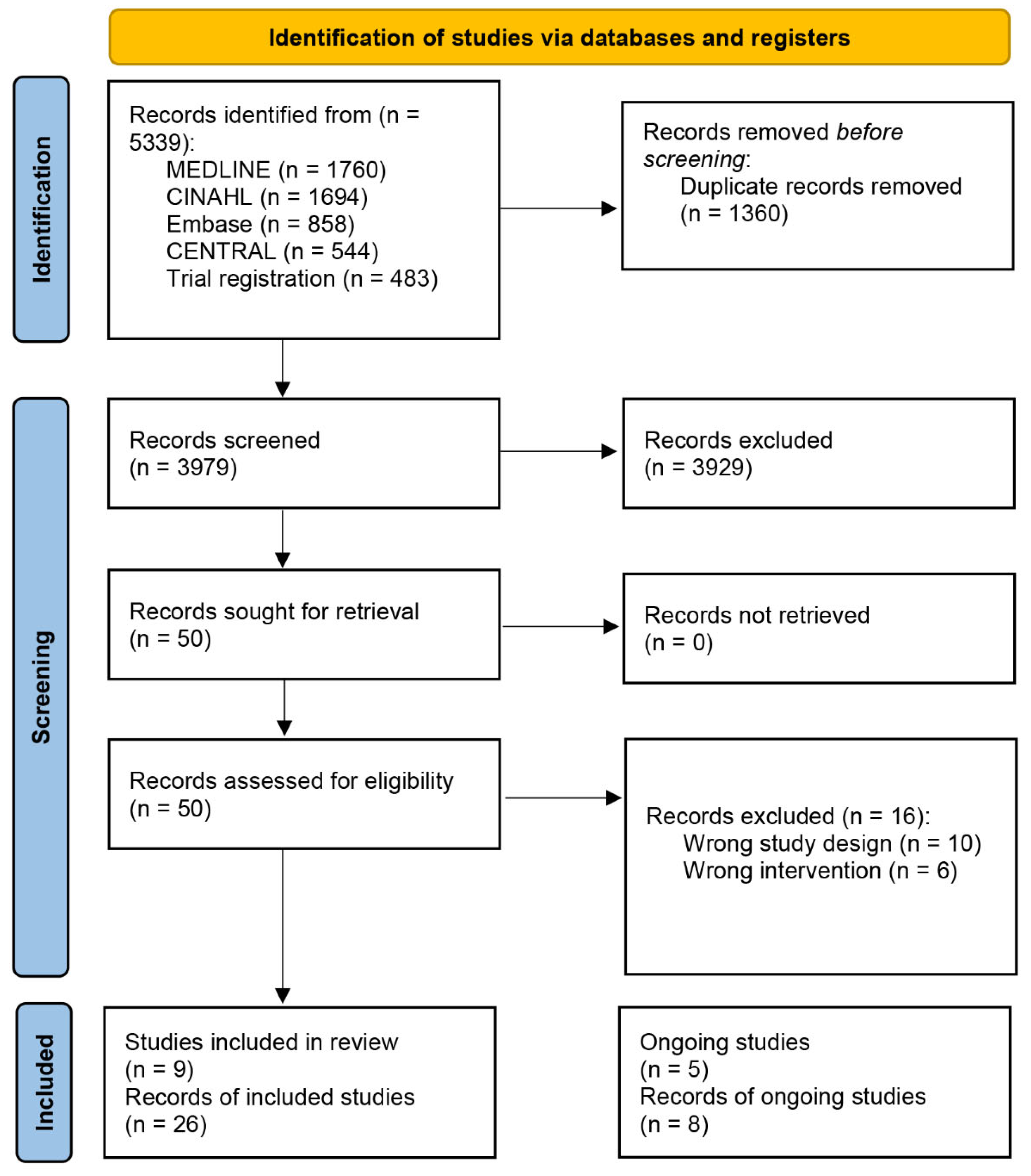
2.1. Search Strategy and Selection Criteria
2.2. Data Collection and Analysis
2.3. Data Synthesis
2.4. Certainty of Evidence
2.5. Subgroup Analyses
3. Results
3.1. Characteristics of Included Studies
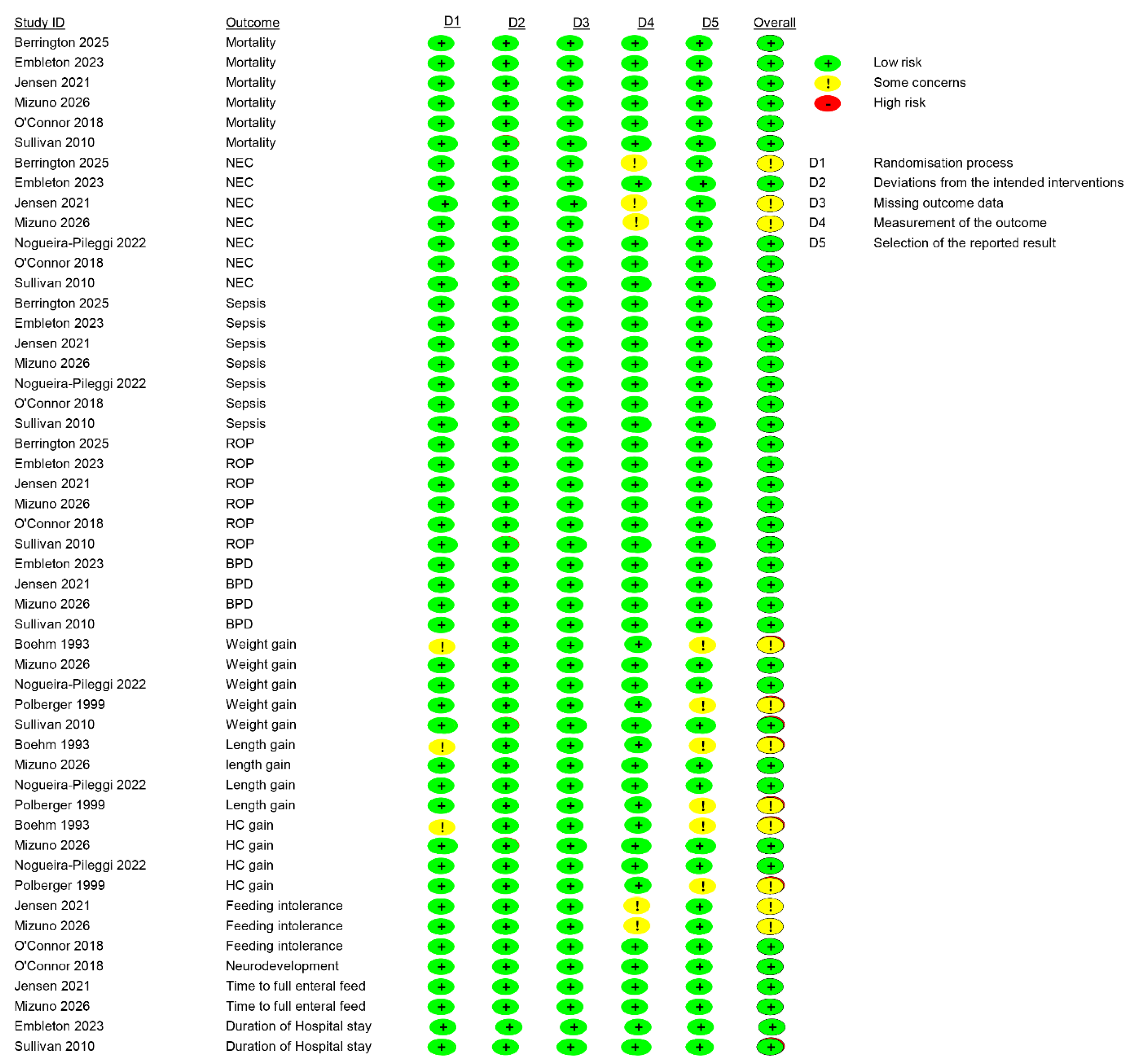
3.2. Risk of Bias
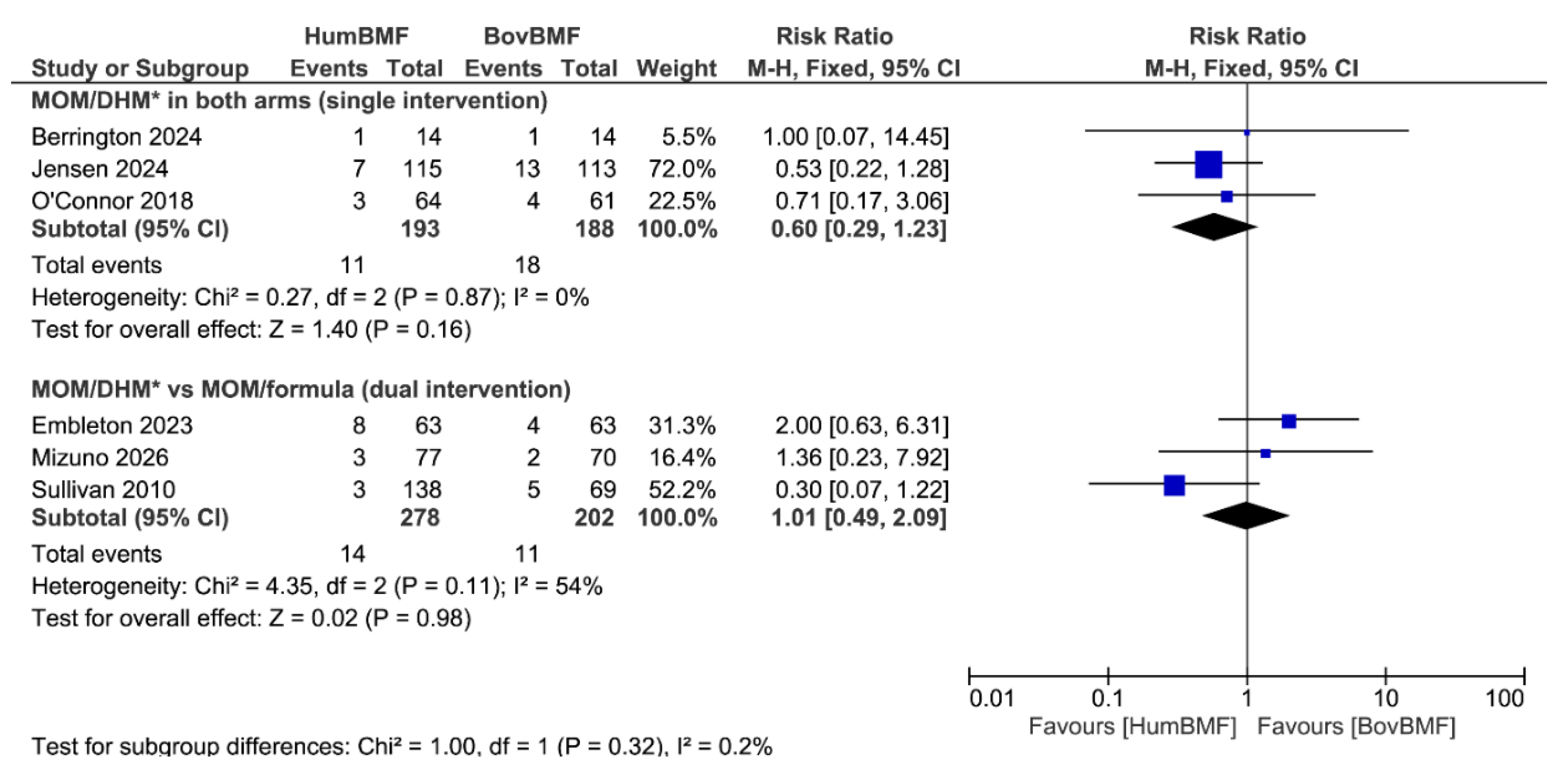
3.3. Primary Outcome—Mortality
3.4. Secondary Outcomes
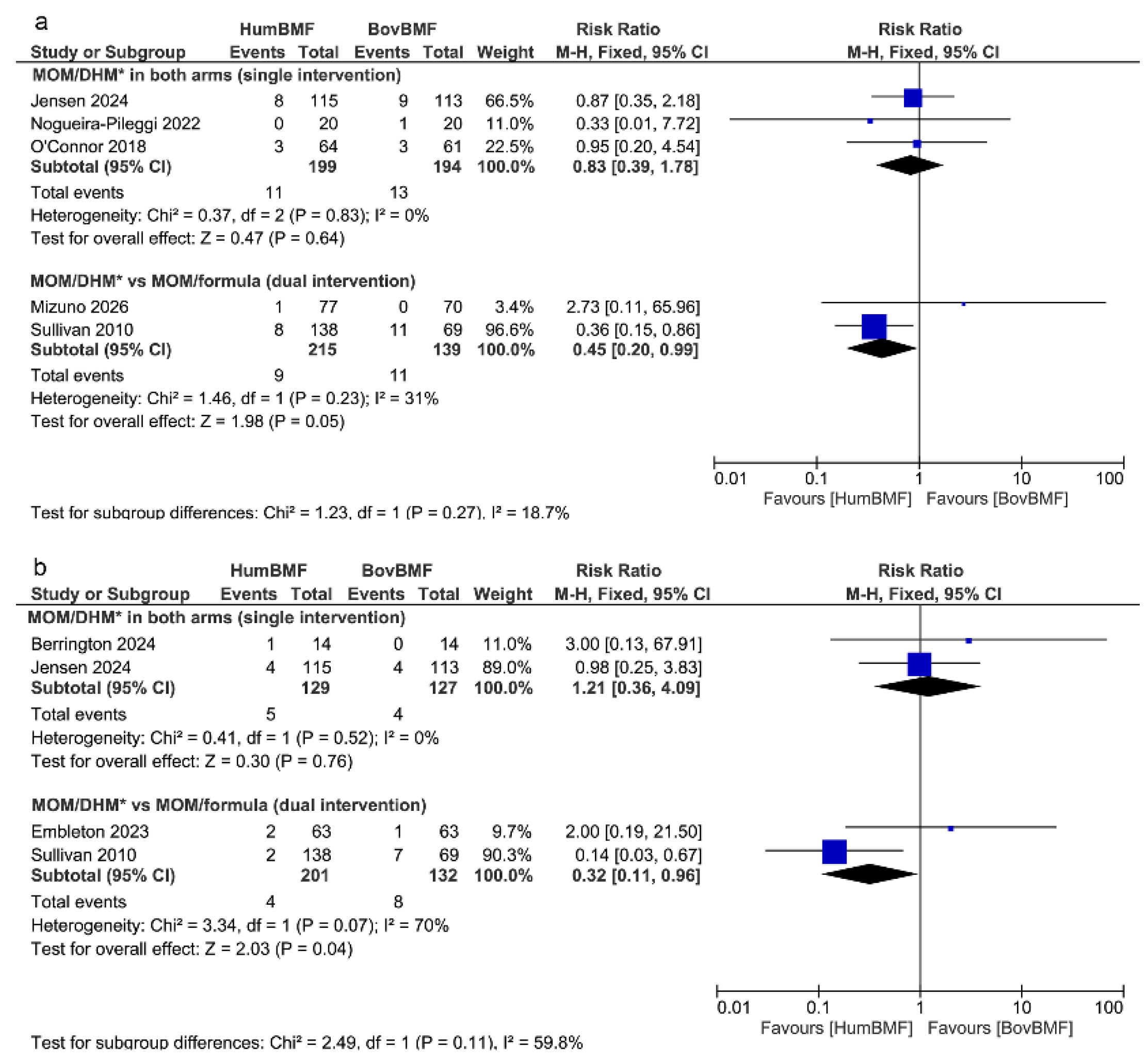
3.4.1. Clinical Outcomes
3.4.2. Neurodevelopmental Outcomes
3.4.3. Feeding Outcomes
3.4.4. Growth Outcomes
3.4.5. Duration of Hospital Stay
3.5. Subgroup Analysis
3.6. GRADE Assessment
3.7. Post Hoc Sensitivity Analysis
4. Discussion
4.1. Summary of Main Results
4.2. Possible Mechanisms
4.3. Strengths and Limitations of This Review
4.4. Overall Completeness and Applicability of Evidence
4.5. Certainty (Quality) of the Evidence
5. Conclusions
Supplementary Materials
Author Contributions
Funding
Institutional Review Board Statement
Informed Consent Statement
Data Availability Statement
Conflicts of Interest
References
- Embleton, N.D.; Jennifer Moltu, S.; Lapillonne, A.; van den Akker, C.H.P.; Carnielli, V.; Fusch, C.; Gerasimidis, K.; van Goudoever, J.B.; Haiden, N.M.; Iacobelli, S.; et al. Enteral nutrition in preterm infants (2022): A position paper from the ESPGHAN Committee on nutrition and invited experts. J. Pediatr. Gastroenterol. Nutr. 2023, 76, 248–268. [Google Scholar] [CrossRef] [Scilit]
- Miller, J.; Tonkin, E.; Damarell, R.A.; McPhee, A.J.; Suganuma, M.; Suganuma, H.; Middleton, P.F.; Makrides, M.; Collins, C.T. A systematic review and meta-analysis of human milk feeding and morbidity in very low birth weight infants. Nutrients 2018, 10, 707. [Google Scholar] [CrossRef] [Scilit]
- Belfort, M.B.; Rifas-Shiman, S.L.; Kleinman, K.P.; Guthrie, L.B.; Bellinger, D.C.; Taveras, E.M.; Gillman, M.W.; Oken, E. Infant feeding and childhood cognition at ages 3 and 7 years: Effects of breastfeeding duration and exclusivity. JAMA Pediatr. 2013, 167, 836–844. [Google Scholar] [CrossRef] [Scilit]
- Quigley, M.; Embleton, N.D.; Meader, N.; McGuire, W. Donor human milk for preventing necrotising enterocolitis in very preterm or very low-birthweight infants. Cochrane Database Syst. Rev. 2024, 9, CD002971. [Google Scholar] [CrossRef] [Scilit]
- Arslanoglu, S.; Boquien, C.Y.; King, C.; Lamireau, D.; Tonetto, P.; Barnett, D.; Bertino, E.; Gaya, A.; Gebauer, C.; Grovslien, A.; et al. Fortification of human milk for preterm infants: Update and recommendations of the European Milk Bank Association (EMBA) working group on human milk fortification. Front. Pediatr. 2019, 7, 76. [Google Scholar] [CrossRef] [Scilit]
- Brown, J.V.; Lin, L.; Embleton, N.D.; Harding, J.E.; McGuire, W. Multi-nutrient fortification of human milk for preterm infants. Cochrane Database Syst. Rev. 2020, 6, CD000343. [Google Scholar] [CrossRef] [Scilit]
- Cormack, B.; Oliver, C.; Anscombe, Y.; Carson, G.; Allworth, S.; Gilroy, M.; Page, D.; Little, H.; Alexander, T. Australasian Neonatal Dietitians Network (ANDiN). Progress and variation in nutrition care for preterm infants in Australasia: Results from the 2024 Australasian neonatal dietitians network survey. J. Paediatr. Child Health 2026, 62, 406–421. [Google Scholar] [CrossRef] [Scilit]
- James-Davis, L.I.; Drumm, C.M.; Krick, J.A.; Ulrich, A.; Tyrrell, H.; Phillipi, C.A.; Aden, J.K.; Vereen, R.J. Examination of donor human milk practices within well newborn nurseries and neonatal intensive care units across the United States. Hosp. Pediatr. 2025, 15, 616–622. [Google Scholar] [CrossRef] [Scilit]
- Yeung, T.; Rolnitsky, A.; Bando, N.; Trang, S.; Geer, A.; Kiss, A.; O’cOnnor, D.L.; Unger, S. A comparison of tertiary level NICU costs for infants born <1250 g supplemented with human versus bovine milk-based fortifiers. J. Perinatol. 2023, 43, 1113–1118. [Google Scholar] [CrossRef] [Scilit]
- Cohen, M. Should human milk be regulated? UC Irvine Law Rev. 2019, 9, 557–634. [Google Scholar]
- Muelbert, M.; Bloomfield, F.H.; Pundir, S.; Harding, J.E.; Pook, C. Olfactory cues in infant feeds: Volatile profiles of different milks fed to preterm infants. Front. Nutr. 2020, 7, 603090. [Google Scholar] [CrossRef] [Scilit]
- Prouse, C. Mining liquid gold: The lively, contested terrain of human milk valuations. Environ. Plan. A 2021, 53, 958–976. [Google Scholar] [CrossRef] [Scilit]
- Hair, A.B.; Peluso, A.M.; Hawthorne, K.M.; Perez, J.; Smith, D.P.; Khan, J.Y.; O’DOnnell, A.; Powers, R.J.; Lee, M.L.; Abrams, S.A. Beyond necrotizing enterocolitis prevention: Improving outcomes with an exclusive human milk-based diet. Breastfeed. Med. 2016, 11, 70–74, Erratum in Breastfeed. Med. 2017, 12, 663. [Google Scholar] [CrossRef] [Scilit]
- Herrmann, K.; Carroll, K. An exclusively human milk diet reduces necrotizing enterocolitis. Breastfeed. Med. 2014, 9, 184–190. [Google Scholar] [CrossRef] [Scilit]
- Ackley, D.; Yin, J.; D’Angio, C.; Meyers, J.; Young, B. Human milk derived fortifiers are associated with glucose, phosphorus, and calcium derangements. J. Perinatol. 2024, 44, 1320–1324, Correction in J. Perinatol. 2025, 45, 698. [Google Scholar] [CrossRef] [Scilit]
- Higgins, J.; Thomas, J.; Chandler, J.; Cumpston, M.; Li, T.; Page, M.; Welch, V. (Eds.) Cochrane Handbook for Systematic Reviews of Interventions; Cochrane: London, UK, 2024; Available online: www.cochrane.org/handbook (accessed on 3 March 2026).
- Page, M.J.; McKenzie, J.E.; Bossuyt, P.M.; Boutron, I.; Hoffmann, T.C.; Mulrow, C.D.; Shamseer, L.; Tetzlaff, J.M.; Akl, E.A.; Brennan, S.E.; et al. The PRISMA 2020 statement: An updated guideline for reporting systematic reviews. BMJ 2021, 372, n71. [Google Scholar] [CrossRef] [Scilit]
- Covidence Systematic Review Software; Veritas Health Innovation: Melbourne, Australia; Available online: www.covidence.org (accessed on 3 March 2026).
- Sterne, J.A.C.; Savovic, J.; Page, M.J.; Elbers, R.G.; Blencowe, N.S.; Boutron, I.; Cates, C.J.; Cheng, H.Y.; Corbett, M.S.; Eldridge, S.M.; et al. RoB 2: A revised tool for assessing risk of bias in randomised trials. BMJ 2019, 366, l4898. [Google Scholar] [CrossRef] [Scilit]
- Review Manager (RevMan) [Computer Program], 5.4.1 ed.; The Cochrane Collaboration: Copenhagen, Denmark, 2020.
- Schünemann, H.; Brożek, J.; Guyatt, G.; Oxman, A. (Eds.) GRADE Handbook for Grading Quality of Evidence and Strength of Recommendations; The GRADE Working Group: Philadelphia, PA, USA, 2013; Updated October 2013; Available online: https://gdt.gradepro.org/app/handbook/handbook.html (accessed on 3 March 2026).
- GRADEpro GDT: GRADEpro Guideline Development Tool; McMaster University and Evidence Prime: Hamilton, ON, Canada, 2024.
- Berrington, J.; Johnson, M.; Garg, S.; Stewart, C.; Lamb, C.; Palmer, J.; Embleton, N. Powdered human milk-derived versus bovine milk-derived breastmilk fortification: A multi-centre preterm randomised controlled trial. J. Pediatr. Gastroenterol. Nutr. 2025, 80, 336–344. [Google Scholar] [CrossRef] [Scilit]
- Boehm, G.; Borte, M.; Bellstedt, K.; Moro, G.; Minoli, I. Protein quality of human milk fortifier in low birth weight infants: Effects on growth and plasma amino acid profiles. Eur. J. Pediatr. 1993, 152, 1036–1039. [Google Scholar] [CrossRef] [Scilit]
- Jensen, G.B.; Domellof, M.; Ahlsson, F.; Elfvin, A.; Naver, L.; Abrahamsson, T. Effect of human milk-based fortification in extremely preterm infants fed exclusively with breast milk: A randomised controlled trial. eClinicalMedicine 2024, 68, 102375, Erratum in eClinicalMedicine 2025, 84, 103301. [Google Scholar] [CrossRef] [Scilit]
- Nogueira-Pileggi, V.; Achcar, M.C.; Carmona, F.; Carnevale da Silva, A.; Aragon, D.C.; da Veiga Ued, F.; de Oliveira, M.M.; Fonseca, L.M.M.; Alves, L.G.; Bomfim, V.S.; et al. LioNeo project: A randomised double-blind clinical trial for nutrition of very-low-birth-weight infants. Br. J. Nutr. 2022, 128, 2490–2497. [Google Scholar] [CrossRef] [Scilit]
- O’Connor, D.L.; Kiss, A.; Tomlinson, C.; Bando, N.; Bayliss, A.; Campbell, D.M.; Daneman, A.; Francis, J.; Kotsopoulos, K.; Shah, P.S.; et al. Nutrient enrichment of human milk with human and bovine milk-based fortifiers for infants born weighing <1250 g: A randomized clinical trial. Am. J. Clin. Nutr. 2018, 108, 108–116, Erratum in Am. J. Clin. Nutr. 2019, 110, 529. [Google Scholar] [CrossRef] [Scilit]
- Polberger, S.; Raiha, N.C.; Juvonen, P.; Moro, G.E.; Minoli, I.; Warm, A. Individualized protein fortification of human milk for preterm infants: Comparison of ultrafiltrated human milk protein and a bovine whey fortifier. J. Pediatr. Gastroenterol. Nutr. 1999, 29, 332–338. [Google Scholar] [CrossRef] [Scilit]
- Embleton, N.D.; Sproat, T.; Uthaya, S.; Young, G.R.; Garg, S.; Vasu, V.; Masi, A.C.; Beck, L.; Modi, N.; Stewart, C.J.; et al. Effect of an exclusive human milk diet on the gut microbiome in preterm infants: A randomized clinical trial. JAMA Netw. Open 2023, 6, e231165. [Google Scholar] [CrossRef] [Scilit]
- Mizuno, K.; Miyazawa, T.; Kondo, U.; Nishikubo, T.; Yamamoto, Y.; Nakano, Y.; Hiroma, T.; Ikeda, K.; Murase, M.; Jimi, H.; et al. Growth and safety evaluation in very low birth weight infants receiving an exclusive human milk diet: A phase III randomized control trial in Japan. J. Perinatol. 2026, 1–10. [Google Scholar] [CrossRef] [Scilit]
- Sullivan, S.; Schanler, R.J.; Kim, J.H.; Patel, A.L.; Trawöger, R.; Kiechl-Kohlendorfer, U.; Chan, G.M.; Blanco, C.L.; Abrams, S.; Cotten, C.M.; et al. An exclusively human milk-based diet is associated with a lower rate of necrotizing nnterocolitis than a diet of human milk and bovine milk-based products. J. Pediatr. 2010, 156, 562–567.e1. [Google Scholar] [CrossRef] [Scilit]
- Garg, P.M.; Shenberger, J.; Martin, C.R.; Neu, J. “Necrotizing enterocolitis”: A paradigm shift. Pediatr. Res. 2026. [Google Scholar] [CrossRef] [Scilit]
- Hopperton, K.E.; O’Connor, D.L.; Bando, N.; Conway, A.M.; Ng, D.V.Y.; Kiss, A.; Jackson, J.; Ly, L.; Unger, S.L. Nutrient enrichment of human milk with human and bovine milk-based fortifiers for infants born <1250 g: 18-month neurodevelopment follow-up of a randomized clinical trial. Curr. Dev. Nutr. 2019, 3, nzz129. [Google Scholar] [CrossRef] [Scilit]
- Abbas, S.; Keir, A.K.; Makrides, M.; Klein, L.D.; Grzeskowiak, L.E.; McPhee, A.J.; Rumbold, A.R. Tailoring human milk oligosaccharides to prevent necrotising enterocolitis among preterm infants. Front. Nutr. 2021, 8, 702888. [Google Scholar] [CrossRef] [Scilit]
- Zhang, S.; Li, T.; Xie, J.; Zhang, D.; Pi, C.; Zhou, L.; Yang, W. Gold standard for nutrition: A review of human milk oligosaccharide and its effects on infant gut microbiota. Microb. Cell Factories 2021, 20, 108, Correction in Microb. Cell Factories 2021, 20, 140. [Google Scholar] [CrossRef] [Scilit]
- Masi, A.C.; Embleton, N.D.; Lamb, C.A.; Young, G.; Granger, C.L.; Najera, J.; Smith, D.P.; Hoffman, K.L.; Petrosino, J.F.; Bode, L.; et al. Human milk oligosaccharide DSLNT and gut microbiome in preterm infants predicts necrotising enterocolitis. Gut 2021, 70, 2273–2282. [Google Scholar] [CrossRef] [Scilit]
- Nolan, L.S.; Rimer, J.M.; Good, M. The role of human milk oligosaccharides and probiotics on the neonatal microbiome and risk of necrotizing enterocolitis: A narrative review. Nutrients 2020, 12, 3052. [Google Scholar] [CrossRef] [Scilit]
- Reyes, S.M.; Paul, T.L.; Ferry, J. Human Milk Fortification and Necrotizing Enterocolitis in Very Low Birthweight Infants: State of Evidence and Systematic Review with Meta-Analysis. Nutrients 2025, 17, 3384. [Google Scholar] [CrossRef] [Scilit]
- Huizing, M.J.; Vizzari, G.; Bartos, F.; Cavallaro, G.; Gianni, M.L.; Villamor, E. Absence of evidence of beneficial effects of human milk-based fortifier: A bayesian model-averaged meta-analysis. Acta Paediatr. 2025, 114, 3309–3316. [Google Scholar] [CrossRef] [Scilit]
- Galis, R.; Trif, P.; Mudura, D.; Mazela, J.; Daly, M.C.; Kramer, B.W.; Diggikar, S. Association of Fortification with Human Milk versus Bovine Milk-Based Fortifiers on Short-Term Outcomes in Preterm Infants—A Meta-Analysis. Nutrients 2024, 16, 910. [Google Scholar] [CrossRef] [Scilit]
- Ananthan, A.; Balasubramanian, H.; Rao, S.; Patole, S. Human Milk-Derived Fortifiers Compared with Bovine Milk-Derived Fortifiers in Preterm Infants: A Systematic Review and Meta-Analysis. Adv. Nutr. 2020, 11, 1325–1333. [Google Scholar] [CrossRef] [Scilit]



| Study Authors, Year | Country, Participants | Intervention and Control | Baseline Characteristics (Birthweight, Gestational Age) | Funding Sources |
|---|---|---|---|---|
| Berrington 2024 [23] | UK April 2022 and December 2022 N = 31 GA < 32 weeks or BW < 1500 g across two sites who had received MOM or DHM or both and had not commenced fortification. | Intervention (n = 16): Fortifier: Freeze-dried powdered HumBMF (Neokare Ltd., Worcestershire, UK) MOM shortfall replacement: DHM (first 21 days only; Principal investigator’s discretion thereafter) Control (n = 15): Fortifier: Powdered BovBMF (Nutriprem [Nutricia Ltd.] or SMA Fortifier [SMA Nutrition] MOM shortfall replacement: DHM (first 21 days only; Principal investigator’s discretion thereafter) | Intervention: BW 955 [633–1288] g; GA 27.6 [24.3–28.8] weeks Control: BW 1040 [810–1480] g; GA 27.3 [26.1–30.4] weeks | Sponsored by Newcastle upon Tyne Hospitals NHS Foundation Trust and funded by Neokare Ltd., which also provided the HumBMF. The trial stopped early after the manufacturer’s withdrawal of powdered HumBMF. |
| Boehm 1993 [24] | Italy, Germany N = 53 GA < 32 weeks, BW appropriate for GA; tolerance of enteral feeding of at least 150 mL/kg per day; no obvious disease or malformation; no oxygen requirement. | Intervention (n = 17): Fortifier: Human milk protein, 0.6 g/100 mL plus minerals MOM shortfall replacement: DHM Control 1 (n = 18): Fortifier: Eoprot (mixture of bovine proteins, peptides and amino acids), 3 g/100 mL MOM shortfall replacement: DHM Control 2 (n = 18), Fortifier: FM85 (whey protein hydrolysate), 4 g/100 mL MOM shortfall replacement: DHM Control 1 and control 2 have been merged for analysis All formulations were designed to achieve a similar macronutrient composition across groups. Infants received 170–180 mL/kg/day of the allocated feeding regimen for 3 weeks. | Intervention: BW 1295 ± 155 g; GA 30.1 ± 1.2 weeks Control: BW 1345 ± 130 g; GA age 30.3 ± 1.7 weeks | Supported in part by the Consiglio Nazionale delle Ricerche, Progetto Finalizzato, Italy, Target Project on Biotechnology and Bioinstrumentation. |
| Embleton 2023 [29] | UK March 2018 and September 2019 N = 126 GA < 30 weeks who had only received MOM before 72 h of age | Intervention (n = 63): Fortifier: Liquid HumBMF (P+6, Prolacta Biosciences) (n = 63). MOM shortfall replacement: pasteurised human milk product (RTF 26, Prolacta Biosciences) Control (n = 63): Fortifier: BovBMF (Nutriprem, Nutricia Ltd., or SMA Fortifier, SMA Nutrition UK (Gatwick, UK)) MOM shortfall replacement: Preterm formula | Intervention: BW: 930 [733–1095] g; GA: 27.1 [25.7–28.1] weeks Control: BW: 910 [704–1054] g; GA: 27.0 [26.0–28.1] weeks | Sponsored by Newcastle Hospitals NHS Foundation Trust, Newcastle-upon-Tyne, UK, and funded by Prolacta Biosciences, California, US, which also provided human milk formula and fortifier. |
| Jensen 2024 [25] | Sweden February 2019 and May 2021 N = 228 Extremely preterm infants with GA between 22 + 0 and 27 + 6 weeks | Intervention (n = 115): Fortifier: Liquid HumBMF (Humavant +6, Prolacta Bioscience) MOM shortfall replacement: DHM Control (n = 113): Fortifier: BovBMF (Brand not specified) MOM shortfall replacement: DHM Infants in both groups were not fed with formula during the intervention period, which ended at postmenstrual week 34 + 0. | Intervention: BW: 793 ± 212 g; GA: 25.6 [24.6–26.7] weeks Control: BW: 787 ± 207 g; GA: 26.0 [24.5–27.1] weeks | Funded by grants from the Swedish Research Council (2020-01111 and 2019-01005), the Research Council for Southeast Sweden, ALF Grants, Prolacta Bioscience, CA, USA. |
| Mizuno 2026 [30] | Japan 28 October 2021, and 18 March 2023 N = 147 GA < 31 weeks and BW < 1500 g | Intervention (n = 77): Fortifier: Liquid HumBMF (Prolacta Bioscience Inc., Duarte, CA, USA) MOM shortfall replacement: DHM Control (n = 70): Fortifier: Powdered BovBMF (HMS-1/HMS-2, Morinaga Ltd., Tokyo, Japan) MOM shortfall replacement: DHM or preterm infant formula | Intervention: BW: 908 ± 264 g; GA: 27.1 ± 2.6 weeks Control: BW: 948 ± 276 g; GA: 27.6 ± 2.3 weeks | Funded by Prolacta Bioscience Inc. Biostatistical and data analysis programming was provided by Innovative Analytics Inc. and the statistical design of the study was performed by Prolacta Bioscience Inc. Medical writing services were funded by Clinigen K.K. and provided by MIMS Co., Ltd. Prolacta Bioscience Inc. supplied the fortification materials, specifically the HumBMF, and covered the Institutional Review Board (IRB) fees through a Contract Research Organization (CRO). |
| Nogueira-Pileggi 2022 [26] | Brazil N = 40 BW between 750 and 1500 g | Intervention: Human milk + human milk lyophilisate (LioNeo) (n = 20) Control: Human milk + cows’ milk protein origin (FM 85®, Nestlé®) (n = 20) | Intervention: BW: 1220 ± 201 g; GA: 30.5 ± 2.7 weeks Control: BW: 1219 ± 205 g; GA: 29.7 ± 1.8 weeks | Supported by the Conselho Nacional de Desenvolvimento Científico e Tecnológico (CNPq), Grant #: 421721/2017-0 to JSC Jr., Bill and Melinda Gates Foundation, Grant # OPP1107597 to JSC Jr. |
| O’Connor 2018 [27] | Canada August 2014 and November 2015 N = 125 BW < 1250 g | Intervention (n = 64): Fortifier: HumBMF (Prolact+4, Prolact+6 and Prolact+8, Prolacta Bioscience) MOM shortfall replacement: DHM Control (n = 61): Fortifier: Powdered BovBMF (Similac Human Milk Fortifier Powder, Abbott Nutrition, Hoofddorp, The Netherlands) MOM shortfall replacement: DHM | Intervention: BW: 887 ± 208 g; GA: 27.9 ± 2.7 weeks Control: BW: 889 ± 196 g; GA: 27.5 ± 2.3 weeks | Funded by a Programmatic Grant in Food and Health from the Canadian Institutes of Health Research (OptiMoM, FHG 129919). Feeding supplies used as part of routine clinical care (e.g., donor milk, BovBMF) were provided by participating centres. Prolacta Bioscience provided the HumBMF at manufacturing cost. |
| Polberger 1999 [28] | Sweden August 1994 and October 1995 N = 32 BW between 900 and 1750 g | Intervention: Ultrafiltrated human milk protein (n = 16) Control: Bovine whey protein fortifier Wyeth Nutritionals International (Philadelphia, PA, USA) (n =16) Infants were fed exclusively human milk. | Intervention: BW: 1448 ± 244 g; GA: 30.6 ± 1.8 weeks Control: BW: 1447 ± 231 g; GA: 30.7 ± 2.2 weeks | Supported by Wyeth Nutritionals International, Philadelphia, PA, USA, for providing the whey protein fortifier; and the Nestlé R&D Center in Bjuv, Sweden, for producing the human milk protein preparations. |
| Sullivan 2010 [31] | USA/Austria N = 207 Preterm infants with BW between 500 and 1250 g | Intervention (n = 138): Fortifier: Liquid HumBMF (Prolact+ H2MF, Prolacta Bioscience) MOM shortfall replacement: DHM Control (n = 69): Fortifier: Powdered/liquid BovBMF MOM shortfall replacement: Preterm formula | Intervention: BW: 927 ± 198 g; GA: 27.2 ± 2.3 weeks Control: BW: 922 ± 197 g; GA 27.3 ± 2.0 weeks | Supported by Prolacta Bioscience. |
| Outcomes | № of Participants (Studies) Follow-Up | Certainty of the Evidence (GRADE) | Relative Effect (95% CI) | Anticipated Absolute Effects | |
|---|---|---|---|---|---|
| Risk with Bovine Protein-Based Fortifier | Risk Difference with Human Milk-Derived | ||||
| Mortality | 381 (3 RCTs) | ⨁⨁◯◯ Low a | RR 0.60 (0.29 to 1.23) | 57 per 1000 | 23 fewer per 1000 (from 40 fewer to 13 more) |
| Necrotising enterocolitis (modified Bell’s stage ≥ 2) | 393 (3 RCTs) | ⨁◯◯◯ Very low b,c | RR 0.83 (0.39 to 1.78) | 55 per 1000 | 9 fewer per 1000 (from 34 fewer to 43 more) |
| Necrotising enterocolitis required surgery | 256 (2 RCTs) | ⨁◯◯◯ Very low b,d | RR 1.21 (0.36 to 4.09) | 94 per 1000 | 20 more per 1000 (from 60 fewer to 292 more) |
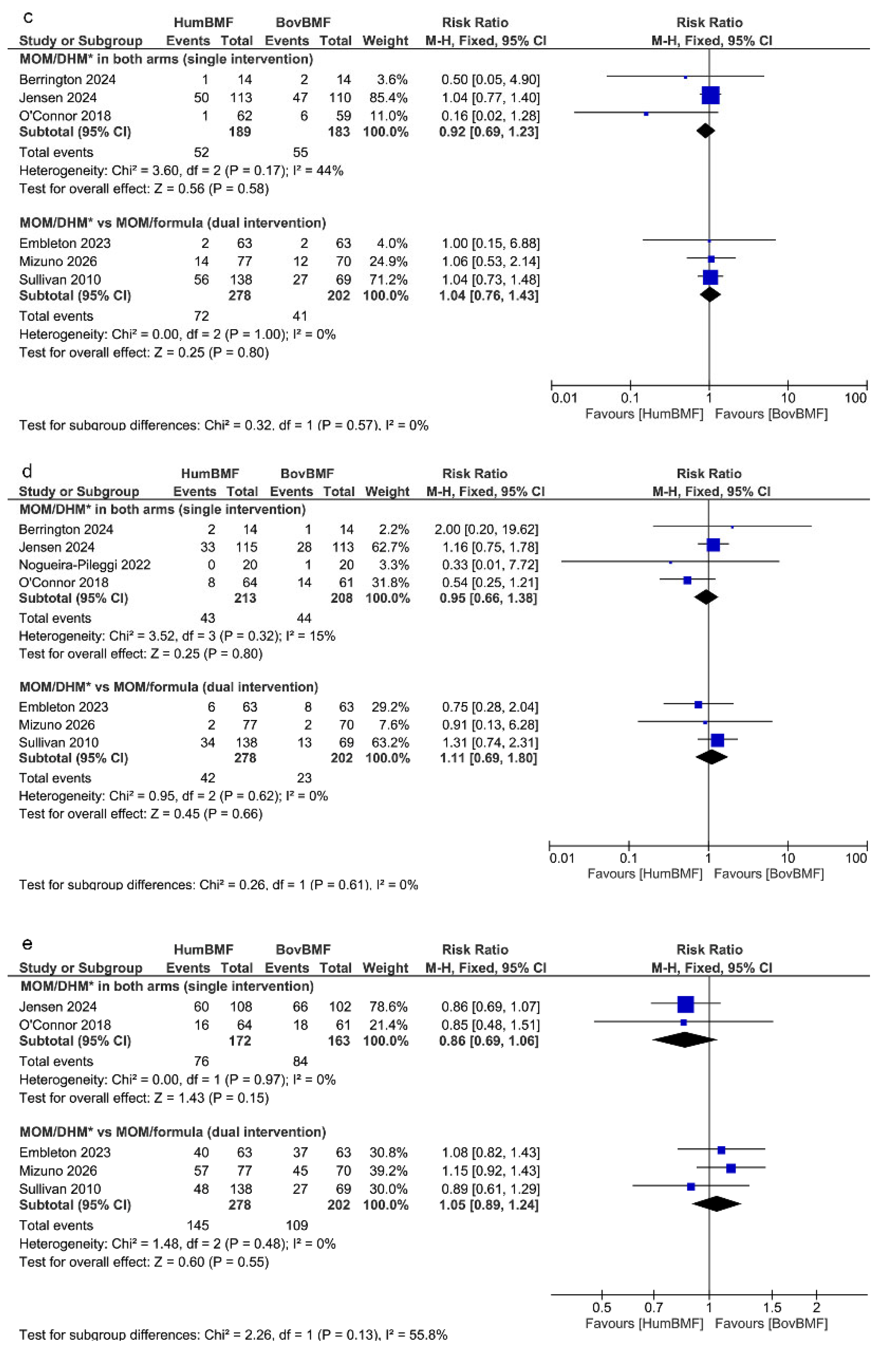
| Retinopathy of prematurity | 372 (3 RCTs) | ⨁⨁⨁◯ Moderate e | RR 0.92 (0.69 to 1.23) | 27 per 1000 | 2 fewer per 1000 (from 8 fewer to 69 more) |
| Sepsis | 421 (4 RCTs) | ⨁⨁⨁◯ Moderate e | RR 0.95 (0.66 to 1.38) | 202 per 1000 | 10 fewer per 1000 (from 69 fewer to 77 more) |
| Bronchopulmonary dysplasia | 335 (2 RCTs) | ⨁⨁⨁◯ Moderate e | RR 0.86 (0.69 to 1.06) | 442 per 1000 | 62 fewer per 1000 (from 137 fewer to 27 more) |
| Neurodevelopmental impairment at 18 months (cognitive score < 70) | 116 (1 RCT) | ⨁⨁◯◯ Low f | RR 0.87 (0.37 to 2.04) | 167 per 1000 | 22 fewer per 1000 (from 105 fewer to 173 more) |
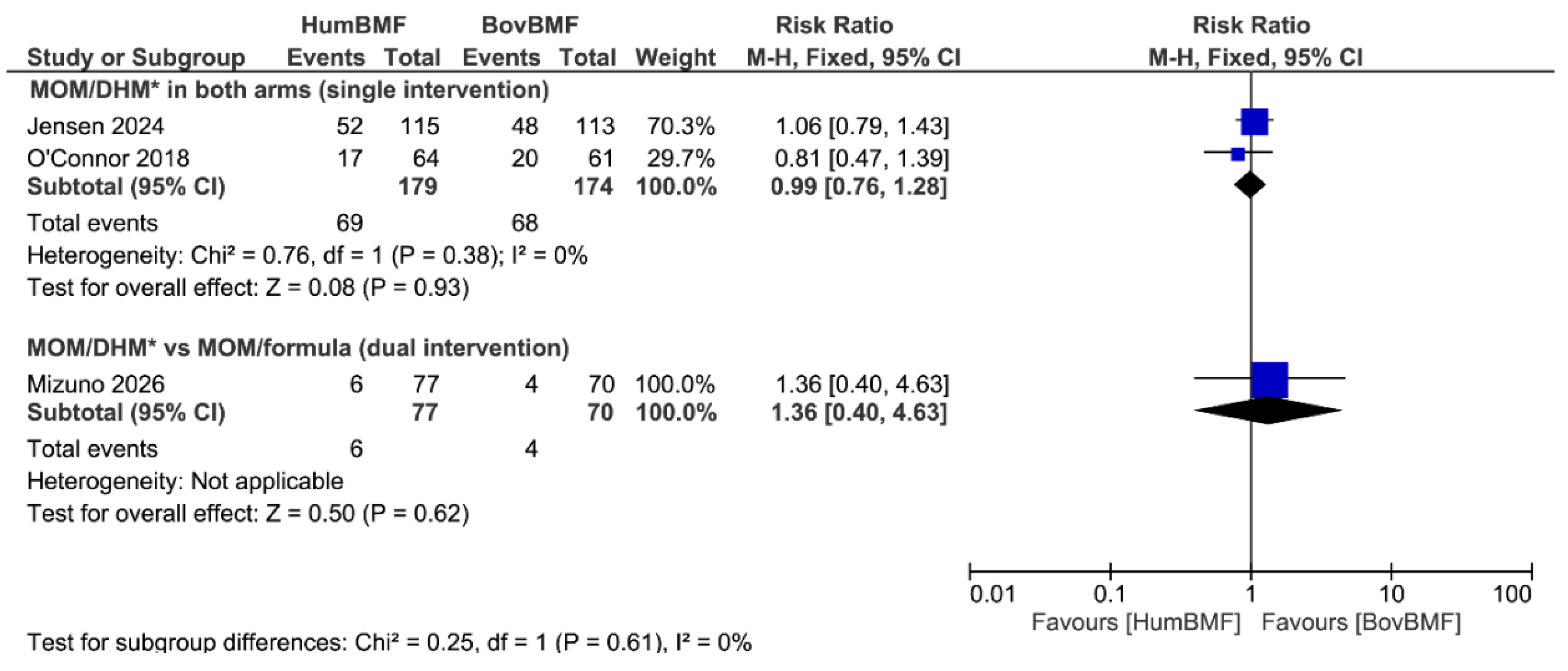
| Feeding intolerance | 353 (2 RCTs) | ⨁⨁◯◯ Low e,g | RR 0.99 (0.76 to 1.28) | 385 per 1000 | 4 fewer per 1000 (from 93 fewer to 108 more) |
| * The risk in the intervention group (and its 95% confidence interval) is based on the assumed risk in the comparison group and the relative effect of the intervention (and its 95% CI). CI: confidence interval; RR: risk ratio | |||||
| GRADE Working Group grades of evidence High certainty (⨁⨁⨁⨁): we are very confident that the true effect lies close to that of the estimate of the effect. Moderate certainty (⨁⨁⨁◯): we are moderately confident in the effect estimate: the true effect is likely to be close to the estimate of the effect, but there is a possibility that it is substantially different. Low certainty (⨁⨁◯◯): our confidence in the effect estimate is limited: the true effect may be substantially different from the estimate of the effect. Very low certainty (⨁◯◯◯): we have very little confidence in the effect estimate: the true effect is likely to be substantially different from the estimate of effect. | |||||
| Outcomes | № of Participants (Studies) Follow-Up | Certainty of the Evidence (GRADE) | Relative Effect (95% CI) | Anticipated Absolute Effects | |
|---|---|---|---|---|---|
| Risk with Bovine Protein-Based Fortifier | Risk Difference with Human Milk-Derived | ||||
| Mortality | 480 (3 RCTs) | ⨁◯◯◯ Very low a,b | RR 1.01 (0.49 to 2.09) | 50 per 1000 | 1 more per 1000 (from 26 fewer to 55 more) |
| Necrotising enterocolitis (modified Bell’s stage ≥ 2) | 354 (2 RCTs) | ⨁⨁⨁◯ Moderate c | RR 0.45 (0.20 to 0.99) | 42 per 1000 | 23 fewer per 1000 (from 33 fewer to 0 fewer) |
| Necrotising enterocolitis required surgery | 333 (2 RCTs) | ⨁⨁◯◯ Low c,d | RR 0.32 (0.11 to 0.96) | 20 per 1000 | 14 fewer per 1000 (from 18 fewer to 1 fewer) |
| Retinopathy of prematurity | 480 (3 RCTs) | ⨁⨁⨁◯ Moderate e | RR 1.04 (0.76 to 1.43) | 259 per 1000 | 10 more per 1000 (from 62 fewer to 111 more) |
| Sepsis | 480 (3 RCTs) | ⨁⨁⨁◯ Moderate e | RR 1.11 (0.69 to 1.80) | 151 per 1000 | 17 more per 1000 (from 47 fewer to 121 more) |
| Bronchopulmonary dysplasia | 480 (3 RCTs) | ⨁⨁⨁⨁ High f | RR 1.05 (0.89 to 1.24) | 522 per 1000 | 26 more per 1000 (from 57 fewer to 125 more) |
| Neurodevelopmental impairment—not measured | - | - | - | - | - |
| Feeding intolerance | 147 (1 RCT) | ⨁◯◯◯ Very low b,g,h | RR 1.36 (0.40 to 4.63) | 78 per 1000 | 28 more per 1000 (from 47 fewer to 283 more) |
| * The risk in the intervention group (and its 95% confidence interval) is based on the assumed risk in the comparison group and the relative effect of the intervention (and its 95% CI). CI: confidence interval; RR: risk ratio “-” None of the included studies report this outcome. | |||||
| GRADE Working Group grades of evidence High certainty (⨁⨁⨁⨁): we are very confident that the true effect lies close to that of the estimate of the effect. Moderate certainty (⨁⨁⨁◯): we are moderately confident in the effect estimate: the true effect is likely to be close to the estimate of the effect, but there is a possibility that it is substantially different. Low certainty (⨁⨁◯◯): our confidence in the effect estimate is limited: the true effect may be substantially different from the estimate of the effect. Very low certainty (⨁◯◯◯): we have very little confidence in the effect estimate: the true effect is likely to be substantially different from the estimate of effect. | |||||
| Outcome | Comparison | Trial (N) | Fixed-Effect RR (95% CI) | Random-Effects RR (95% CI) |
|---|---|---|---|---|
| Mortality | Fortifier-only | 3 trials | 0.60 (0.29, 1.23) | 0.60 (0.29, 1.23) |
| Dual-intervention | 3 trials | 1.01 (0.49, 2.09) | 0.95 (0.29, 3.18) | |
| NEC ≥ stage 2 | Fortifier-only | 3 trials | 0.83 (0.39, 1.78) | 0.84 (0.39, 1.81) |
| Dual-intervention | 2 trials | 0.45 (0.20, 0.99) | 0.55 (0.11, 2.73) | |
| Surgical NEC | Fortifier-only | 2 trials | 1.21 (0.36, 4.09) | 1.17 (0.34, 4.09) |
| Dual-intervention | 2 trials | 0.32 (0.11, 0.96) | 0.46 (0.03, 5.94) | |
| Sepsis | Fortifier-only | 4 trials | 0.95 (0.66, 1.38) | 0.93 (0.57, 1.50) |
| Dual-intervention | 2 trials | 1.11 (0.69, 1.80) | 1.12 (0.70, 1.82) | |
| ROP | Fortifier-only | 3 trials | 0.92 (0.69, 1.23) | 0.62 (0.20, 1.93) |
| Dual-intervention | 3 trials | 1.04 (0.76, 1.43) | 1.04 (0.76, 1.42) | |
| BPD | Fortifier-only | 2 trials | 0.86 (0.69, 1.06) | 0.86 (0.70, 1.05) |
| Dual-intervention | 3 trials | 1.05 (0.89, 1.24) | 1.08 (0.92, 1.26) | |
| Feeding intolerance | Fortifier-only | 2 trials | 0.99 (0.76, 1.28) | 1.00 (0.77, 1.30) |
| Dual-intervention | 1 trial | 1.36 (0.40, 4.63) | 1.36 (0.40, 4.63) |
Disclaimer/Publisher’s Note: The statements, opinions and data contained in all publications are solely those of the individual author(s) and contributor(s) and not of MDPI and/or the editor(s). MDPI and/or the editor(s) disclaim responsibility for any injury to people or property resulting from any ideas, methods, instructions or products referred to in the content. |
© 2026 by the authors. Licensee MDPI, Basel, Switzerland. This article is an open access article distributed under the terms and conditions of the Creative Commons Attribution (CC BY) license.
Share and Cite
Lin, L.; Embleton, N.D.; Van Den Akker, C.H.P.; Brown, J.; Delgado Paramo, L.; Cormack, B.E. Human Milk-Derived Versus Bovine Protein-Based Fortifiers for Preterm Infants Fed Human Milk: A Systematic Review and Meta-Analysis. Nutrients 2026, 18, 3288. https://doi.org/10.3390/nu18193288
Lin L, Embleton ND, Van Den Akker CHP, Brown J, Delgado Paramo L, Cormack BE. Human Milk-Derived Versus Bovine Protein-Based Fortifiers for Preterm Infants Fed Human Milk: A Systematic Review and Meta-Analysis. Nutrients. 2026; 18(19):3288. https://doi.org/10.3390/nu18193288
Chicago/Turabian StyleLin, Luling, Nicholas D. Embleton, Chris H. P. Van Den Akker, Julie Brown, Lilia Delgado Paramo, and Barbara E. Cormack. 2026. "Human Milk-Derived Versus Bovine Protein-Based Fortifiers for Preterm Infants Fed Human Milk: A Systematic Review and Meta-Analysis" Nutrients 18, no. 19: 3288. https://doi.org/10.3390/nu18193288
APA StyleLin, L., Embleton, N. D., Van Den Akker, C. H. P., Brown, J., Delgado Paramo, L., & Cormack, B. E. (2026). Human Milk-Derived Versus Bovine Protein-Based Fortifiers for Preterm Infants Fed Human Milk: A Systematic Review and Meta-Analysis. Nutrients, 18(19), 3288. https://doi.org/10.3390/nu18193288