


Consumer Trust and Attitudes Towards Advertisements for Dietary Supplements



Abstract
1. Introduction
2. Materials and Methods
2.1. Study Design
2.2. Statistical Analysis
3. Results
3.1. Respondents’ Knowledge of Dietary Supplements
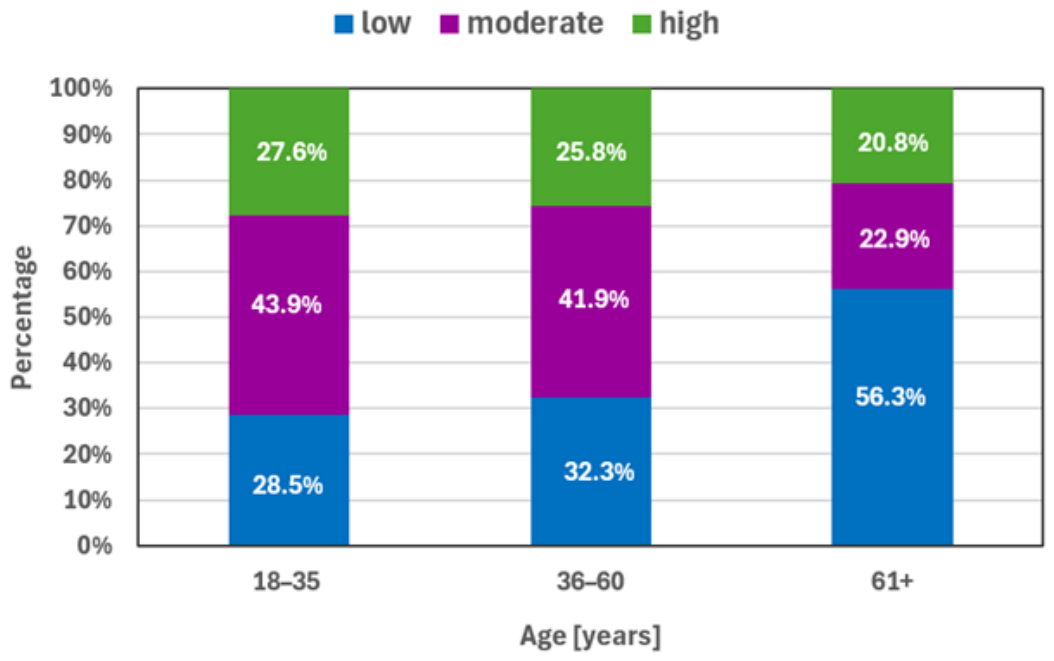
3.2. Trust in Advertising
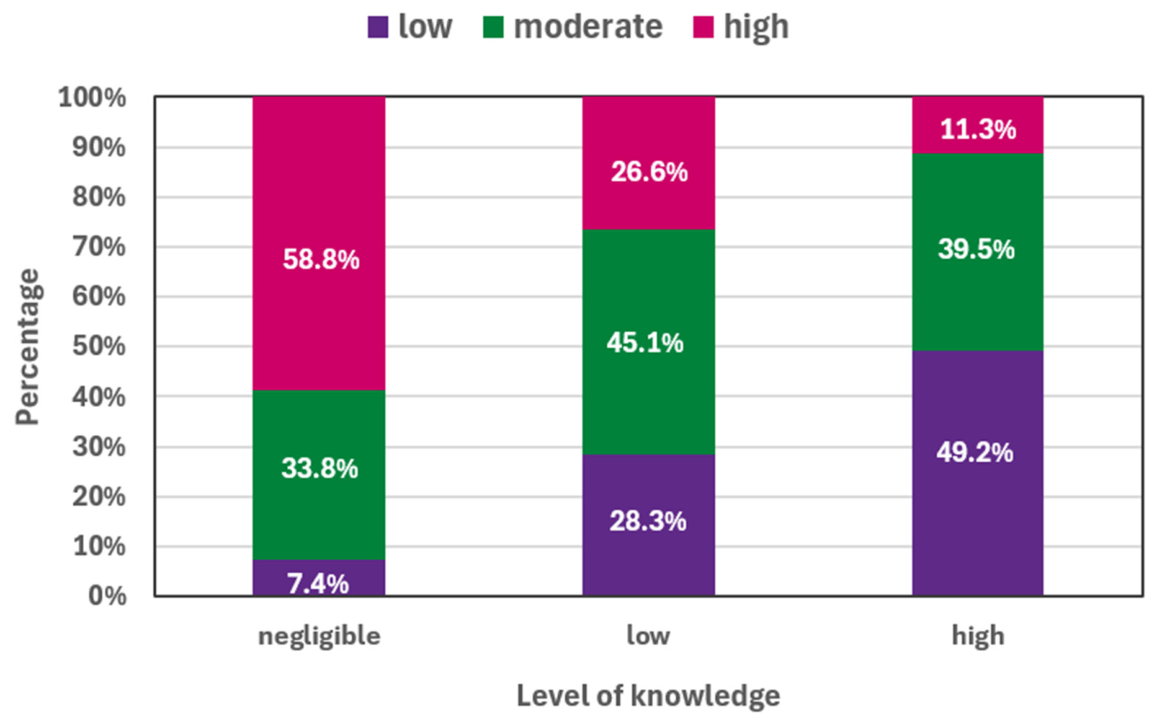
3.3. Expectations Regarding the Efficacy of Advertised Dietary Supplements
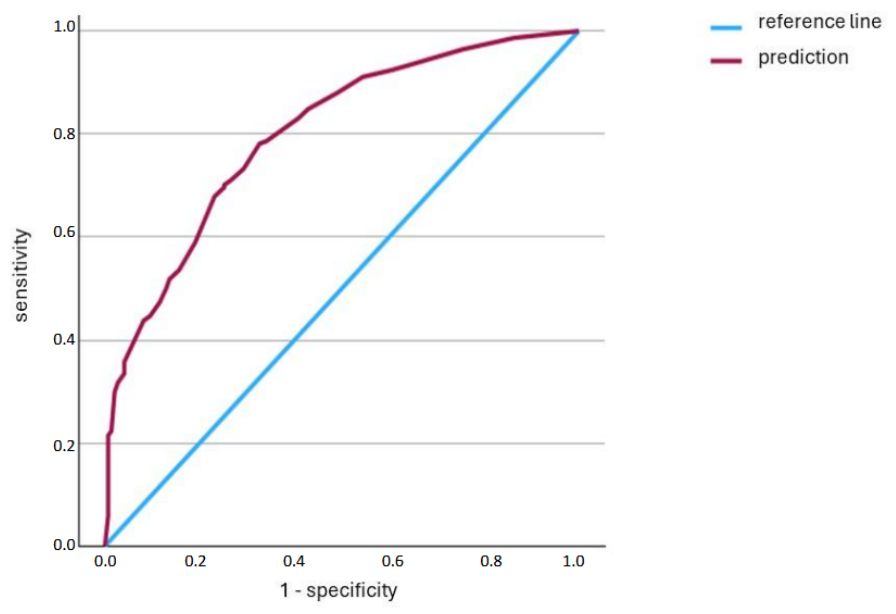
3.4. The Potential Use of Advertised Supplements
4. Discussion
5. Conclusions
Supplementary Materials
Author Contributions
Funding
Institutional Review Board Statement
Informed Consent Statement
Data Availability Statement
Conflicts of Interest
References
- Crawford, C.; Avula, B.; Lindsey, A.T.; Katragunta, K.; Khan, I.A.; Deuster, P.A. Label accuracy of weight loss dietary supplements marketed online with military discounts. JAMA Netw. Open 2024, 7, e249131. [Google Scholar] [CrossRef] [PubMed]
- Djaoudene, O.; Romano, A.; Bradai, Y.D.; Zebiri, F.; Ouchene, A.; Yousfi, Y.; Amrane-Abider, M.; Sahraoui-Remini, Y.; Madani, K. A global overview of dietary supplements: Regulation, market trends, usage during the COVID-19 pandemic, and health effects. Nutrients 2023, 15, 3320. [Google Scholar] [CrossRef] [PubMed]
- Fravel, M.A.; Ernst, M.E.; Gilmartin-Thomas, J.; Woods, R.L.; Orchard, S.G.; Owen, A.J. Aspirin in reducing events in the elderly investigator group. Dietary supplement and complementary and alternative medicine use among older adults in Australia and the United States. J. Am. Geriatr. Soc. 2023, 71, 2219–2228. [Google Scholar] [CrossRef] [PubMed]
- Hersant, H.; He, S.; Maliha, P.; Grossberg, G. Over the counter supplements for memory: A review of available evidence. CNS Drugs 2023, 37, 797–817. [Google Scholar] [CrossRef] [PubMed]
- Denham, B.E. Dietary supplements in the USA: Problematic trends. Public Health Nutr. 2021, 24, 2771–2775. [Google Scholar] [CrossRef] [PubMed]
- Wierzejska, R.E. Dietary supplements—For whom? The current state of knowledge about the health effects of selected supplement use. Int. J. Environ. Res. Public Health 2021, 18, 8897. [Google Scholar] [CrossRef] [PubMed]
- The Lancet Gastroenterology Hepatology. Dietary supplements: Improving education is not enough. Lancet Gastroenterol. Hepatol. 2022, 7, 689. [Google Scholar] [CrossRef] [PubMed]
- Wierzejska, R.; Jarosz, M.; Siuba, M.; Rambuszek, M. Assessing patients’ attitude towards dietary supplements. Rocz. Panstw. Zakl. Hig. 2014, 65, 317–323. [Google Scholar] [PubMed]
- Sirico, F.; Miressi, S.; Costaldo, C.; Spera, R.; Montagnani, S.; Di Meglio, F.; Nurzynska, D. Habits and beliefs related to food supplements: Results of a survey among Italian students of different education fields and levels. PLoS ONE 2018, 13, e0191424. [Google Scholar] [CrossRef] [PubMed]
- Karbownik, M.S.; Paul, E.; Nowicka, M.; Nowicka, Z.; Kowalczyk, R.P.; Kowalczyk, E.; Pietras, T. Knowledge about dietary supplements and trust in advertising them: Development and validation of the questionnaires and preliminary results of the association between the constructs. PLoS ONE 2019, 14, e0218398. [Google Scholar] [CrossRef] [PubMed]
- Strocka, J.; Religioni, U.; Plagens-Rotman, K.; Drab, A.; Merks, P.; Kaźmierczak, J.; Blicharska, E.; Pinkas, J. Knowledge and practices regarding dietary supplements among healthcare professionals in Poland. Nutrients 2024, 16, 3691. [Google Scholar] [CrossRef] [PubMed]
- Cellini, M.; Attipoe, S.; Seales, P.; Gray, R.; Ward, A.; Stephens, M.; Deuster, P.A. Dietary supplements: Physician knowledge and adverse event reporting. Med. Sci. Sports Exerc. 2013, 45, 23–28. [Google Scholar] [CrossRef] [PubMed]
- Wierzejska, R.E.; Wiosetek-Reske, A.; Siuba-Strzelińska, M.; Wojda, B. Health-related content of tv and radio advertising of dietary supplements—Analysis of legal aspects after introduction of self-regulation for advertising of these products in Poland. Int. J. Environ. Res. Public Health 2022, 19, 8037. [Google Scholar] [CrossRef] [PubMed]
- Iye, R.; Okuhara, T.; Okada, H.; Yokota, R.; Kiuchi, T.A. Content analysis of video advertisements for dietary supplements in Japan. Healthcare 2021, 9, 742. [Google Scholar] [CrossRef] [PubMed]
- Avery, R.J.; Eisenberg, M.D.; Cantor, J.H. An examination of structure-function claims in dietary supplement advertising in the U.S.: 2003–2009. Prev. Med. 2017, 97, 86–92. [Google Scholar] [CrossRef] [PubMed]
- Manore, M.M.; Patton-Lopez, M. Should clinicians ever recommend supplements to patients trying to lose weight? AMA J. Ethics 2022, 24, 345–352. [Google Scholar] [CrossRef] [PubMed]
- Kaczoruk, M.; Szpak, A. Dietary supplement use among seniors: The opinions of pharmacists. J. Health Inequal. 2025, 11, 127–138. [Google Scholar] [CrossRef]
- Sax, J.K. Dietary supplements are not all safe and not all food: How the low cost of dietary supplements preys on the consumer. Am. J. Law Med. 2015, 41, 375–394. [Google Scholar] [CrossRef] [PubMed]
- Klein, J.J.; Schweikart, S.J. Does regulating dietary supplements as food in a world of social media influencers promote public safety? AMA J. Ethics 2022, 24, 396–401. [Google Scholar] [CrossRef] [PubMed]
- Bernstein, I.B.G.; Bolte, K.L. Is my patient taking an unsafe dietary supplement? AMA J. Ethics 2022, 24, 390–395. [Google Scholar] [CrossRef] [PubMed]
- American Pharmacists Association. Using Vitamins, Herbals, and Other Dietary Supplements Wisely. Available online: https://aphanet.pharmacist.com/sites/default/files/files/APhA-DietarySupplements-Brochure-14x8%205-A7.pdf (accessed on 10 March 2026).
- NBC News. Nutritional Supplements and Vitamins are More Popular Than Ever. Do They Work? Available online: https://www.nbcnews.com/health/health-news/do-nutritional-supplements-really-work-regulation-rcna186045 (accessed on 5 January 2026).
- Stoś, K.; Wierzejska, R.; Siuba-Strzelińska, M. Suplementy Diety—Czy potrzebujesz? Instytut Żywności i Żywienia. 2019. Available online: https://ncez.pzh.gov.pl/wp-content/uploads/2021/03/broszura_suplementy.pdf (accessed on 7 January 2026).
- Polish Supreme Audit Office. On the Authorization of Dietary Supplements. 2017. Available online: https://www.nik.gov.pl/plik/id,13031,vp,15443.pdf (accessed on 10 April 2026).
- Judgment of the Court (Fifth Chamber) of 30 November 1983. Case 227/82. Available online: https://eur-lex.europa.eu/legal-content/PL/TXT/?uri=CELEX%3A61982CJ0227 (accessed on 5 March 2026).
- National Broadcasting Council. Available online: http://www.krrit.gov.pl/Data/Files/_public/Portals/0/samoregulacja-nadawcow/porozumienie-nadawcow---skan.pdf (accessed on 12 April 2026).
- Consumer Survey on Food Supplements in the EU. Ipsos, European Public Affairs. 2022. Available online: https://www.foodsupplementseurope.org/_files/ugd/9d1238_2ab2a7c45cb74aa8babf85e8d472872a.pdf (accessed on 15 April 2026).
- Sierpiński, R.; Jankowski, M.; Raciborski, F.; Kamińska, A. Sociodemographic differences in the use of dietary supplements in a representative sample of adults in Poland-a secondary analysis. Front. Nutr. 2025, 12, 1724264. [Google Scholar] [CrossRef] [PubMed]
- Zalewski, A. Pharmaceutical marketing in Poland—Research on advertising messages of medicines, dietary supplements and medical devices. Soc. Diss. 2020, 14, 107–127. [Google Scholar] [CrossRef]
- Vojvodić, S.; Kobiljski, D.; Srđenović Čonić, B.; Torović, L. Landscape of herbal food supplements: Where do we stand with health claims? Nutrients 2025, 17, 1571. [Google Scholar] [CrossRef] [PubMed]
- Karbownik, M.S.; Horne, R.; Paul, E.; Kowalczyk, E.; Szemraj, J. Determinants of knowledge about dietary supplements among Polish internet users: Nationwide cross-sectional study. J. Med. Internet Res. 2021, 23, e25228. [Google Scholar] [CrossRef] [PubMed]
- Regulation (EU) No 1169/2011 of the European Parliament and of the Council of 25 October 2011 on the Provision of Food Information to Consumers. 2011. Available online: https://eur-lex.europa.eu/eli/reg/2011/1169/oj/eng (accessed on 28 June 2026).
- Regulation (EC) No 178/2002 of the European Parliament and of the Council of 28 January 2002 Laying Down the General Principles and Requirements of Food Law, Establishing the European Food Safety Authority and Laying Down Procedures in Matters of Food Safety. 2002. Available online: https://eur-lex.europa.eu/eli/reg/2002/178/oj/eng (accessed on 28 June 2026).
- Regulation (EC) No 1924/2006 of the European Parliament and of the Council of 20 December 2006 on Nutrition and Health Claims Made on Foods. 2006. Available online: https://eur-lex.europa.eu/eli/reg/2006/1924/oj/eng (accessed on 28 June 2026).
- Commission Regulation (EU) No 432/2012 of 16 May 2012 Establishing a List of Permitted Health Claims Made on Foods, Other Than Those Referring to the Reduction of Disease Risk and to Children’s Development and Health. 2012. Available online: https://eur-lex.europa.eu/eli/reg/2012/432/oj/eng (accessed on 28 June 2026).
- Wierzejska, R. Whether the advertisement of dietary supplements is objective source of data about their impact on health? Analysis of broadcasting advertisements in the terms of the food law. Wiad. Lek. 2016, 69, 14–18. [Google Scholar] [PubMed]
- Nagel, P. Disinformation in Medicine and Dietetics as a Real Problem Nowadays. Available online: https://ncez.pzh.gov.pl/psychodietetyka/dezinformacja-w-swiecie-medycyny-i-dietetyki-jako-realny-problem-wspolczesnego-swiata/ (accessed on 4 May 2026). (In Polish)
- Raffoul, A.; Santoso, M.; Lu, J.; Duran, V.; Austin, S.B. Diet pills and deception: A content analysis of weight-loss, muscle-building, and cleanse and detox supplements videos on TikTok. Eat. Behav. 2024, 55, 101911. [Google Scholar] [CrossRef] [PubMed]
- Zamil, D.H.; Ameri, M.; Fu, S.; Abughosh, F.M.; Katta, R. Skin, hair, and nail supplements advertised on Instagram. Proc. (Bayl. Univ. Med. Cent.) 2022, 36, 38–40. [Google Scholar] [CrossRef] [PubMed]
- Wojtaszek, A. What you’ll never manage to read: The small print component of televised commercials for erection stimulants. Linguist. Silesiana 2017, 38, 209–225. [Google Scholar]
- Kołodziej, G.; Cyran-Grzebyk, B.; Majewska, J.; Kołodziej, K. Knowledge concerning dietary supplements among general public. BioMed Res. Int. 2019, 2019, 9629531. [Google Scholar] [CrossRef] [PubMed]
- Kvæl, L.A.H.; Løchting, I.; Molin, M. Use of dietary supplements and perceived knowledge among adults living with fibromyalgia in Norway: A cross-sectional study. Nutrients 2022, 14, 5. [Google Scholar] [CrossRef] [PubMed]
- Obstfeld, H.; Lohmann, M. Food supplements in the context of social media: Results from a survey on use and perceptions in Germany. Bundesgesundheitsbl. Gesundheitsforsch. Gesundheitsschutz 2025, 68, 1272–1282. [Google Scholar] [CrossRef] [PubMed]
- Chiba, T.; Tanemura, N. Differences in the perception of dietary supplements between dietary supplement/medicine users and non-users. Nutrients 2022, 4, 4114. [Google Scholar] [CrossRef] [PubMed]
- Pillitteri, J.L.; Shiffman, S.; Rohay, J.M.; Harkins, A.M.; Burton, S.L.; Wadden, T.A. Use of dietary supplements for weight loss in the United States: Results of a national survey. Obesity 2008, 16, 790–796. [Google Scholar] [CrossRef] [PubMed]
- FDA “Supplement Your Knowledge”. Dietary Supplement Education Initiative. Available online: https://www.fda.gov/food/information-consumers-using-dietary-supplements/supplement-your-knowledge (accessed on 20 April 2026).
- Kwan, D.; Hirschkorn, K.; Boon, H. U.S. and Canadian pharmacists’ attitudes, knowledge, and professional practice behaviors toward dietary supplements: A systematic review. BMC Complement. Altern. Med. 2006, 6, 31. [Google Scholar] [CrossRef] [PubMed]
- Tsartsou, E.; Proutsos, N.; Papadopoulos, I.; Tzouvelekas, V.; Castanas, E.; Kampa, M. Consumers’ attitude toward dietary supplements and functional food: A prospective survey in a Greek population sample. Hormones 2021, 20, 177–188. [Google Scholar] [CrossRef] [PubMed]
- Makowska, M.; Jasiński, Ł. A discussion of the unresolved 2016/17 plans for regulating the Polish dietary supplements market. Health Policy 2019, 123, 544–549. [Google Scholar] [CrossRef] [PubMed]
- Toma, A.; Crișan, O. Addressing activities related to food supplements in European pharmacists’ codes of ethics: Textual analysis and proposals for ethical standards. BMC Med. Ethics 2026, 27, 15. [Google Scholar] [CrossRef] [PubMed]
- Slavcheva, K.; Staynova, R.; Neycheva, N.; Kafalova, D. Community pharmacists’ knowledge, attitudes, and readiness to provide counseling on food supplements-a scoping review. Nutrients 2025, 17, 3754. [Google Scholar] [CrossRef] [PubMed]
- Strocka, J.; Religioni, U.; Kaźmierczak, J.; Drab, A.; Plagens-Rotman, K.; Merks, P.; Pinkas, J.; Ostrowski, J. Gender and education influences on dietary supplement awareness in Poland: A nationally representative survey. Med. Sci. Monit. 2025, 31, e946704. [Google Scholar] [CrossRef] [PubMed]

| Type of Dietary Supplement | Text of the Radio Advertisement |
|---|---|
| For memory | “I teach history at school. In my job, knowledge and a good memory are essential. There are so many things I have to remember—important dates, events, facts, and the names of rulers and kings. That’s why I use (product name) to keep my memory in top condition. The ingredients in the dietary supplement (product name) help to maintain concentration and mental alertness. “(Product name) and I remember everything.” |
| For weight loss | (Product name)—a dietary supplement for weight loss. Tried and tested, safe, effective. |
| For immunity | I use (product name). Why? (Product name) supports the immune system. (Product name) is a dietary supplement containing the maximum permitted amount of vitamin C in a sustained-release form. And on top of that, it’s rich in zinc and vitamin D. This combination is a powerhouse for the immune system. |
| For sleep | Can’t get to sleep? (Product name) means a good night’s sleep for me. Contains natural ingredients. I’m taking (product name)—there’s no point in waiting. Dietary supplement (product name): A healthy dose of sleep. Hop cone extract helps promote restful sleep, whilst extract of saffron crocus helps promote emotional balance. Your racing thoughts no longer prevent you from falling asleep. |
| Factor | Number of Respondents Included in the Analysis, (%) | Percentage of Respondents Declaring that they Would Use Supplements if Needed, (%) |
|---|---|---|
| Age [in years] | ||
| 18–35 | 313 (79.8%) | 63.9% |
| 36–60 | 31 (7.9%) | 54.8% |
| >61 | 48 (12.2%) | 43.7% |
| Respondents’ level of knowledge | ||
| high | 123 (32.7%) | 41.5% |
| low | 187 (49.3%) | 63.6% |
| negligible | 67 (17.9%) | 85.1% |
| Place of residence | ||
| urban | 201 (50.6%) | 54.5% |
| rural | 193 (48.6%) | 67.0% |
| The belief that scientific research has confirmed the efficacy of the advertised supplements | ||
| yes | 179 (45.7%) | 74.3% |
| no | 213 (54.3%) | 48.8% |
| Expectations regarding the efficacy of advertised supplements | ||
| low | 127 (32.6%) | 31.5% |
| moderate | 160 (41.0%) | 66.3% |
| high | 103 (26.4%) | 88.3% |
| Factor | Odds Ratio (OR) | Standard Error OR–SE (OR) | 95% Confidence Interval (95% CI) | Statistical Significance (p-Value) |
|---|---|---|---|---|
| Level of knowledge about dietary supplements: | ||||
| 2.85 | 1.23 | 1.23–6.62 | 0.015 |
| 1.72 | 0.46 | 1.01–2.92 | 0.045 |
| Expectations regarding the efficacy of advertised supplements: | ||||
| 3.47 | 0.96 | 2.03–5.95 | <0.001 |
| 11.13 | 4.36 | 5.16–23.99 | <0.001 |
| The belief that the efficacy of supplements has been proven in scientific studies | 1.93 | 0.50 | 1.16–3.20 | 0.011 |
| Rural place of residence | 1.89 | 0.47 | 1.15–3.08 | 0.012 |
Disclaimer/Publisher’s Note: The statements, opinions and data contained in all publications are solely those of the individual author(s) and contributor(s) and not of MDPI and/or the editor(s). MDPI and/or the editor(s) disclaim responsibility for any injury to people or property resulting from any ideas, methods, instructions or products referred to in the content. |
© 2026 by the authors. Licensee MDPI, Basel, Switzerland. This article is an open access article distributed under the terms and conditions of the Creative Commons Attribution (CC BY) license.
Share and Cite
Wierzejska, R.E.; Wiosetek-Reske, A.; Poznańska, A.; Stoś, K. Consumer Trust and Attitudes Towards Advertisements for Dietary Supplements. Nutrients 2026, 18, 2518. https://doi.org/10.3390/nu18152518
Wierzejska RE, Wiosetek-Reske A, Poznańska A, Stoś K. Consumer Trust and Attitudes Towards Advertisements for Dietary Supplements. Nutrients. 2026; 18(15):2518. https://doi.org/10.3390/nu18152518
Chicago/Turabian StyleWierzejska, Regina Ewa, Agnieszka Wiosetek-Reske, Anna Poznańska, and Katarzyna Stoś. 2026. "Consumer Trust and Attitudes Towards Advertisements for Dietary Supplements" Nutrients 18, no. 15: 2518. https://doi.org/10.3390/nu18152518
APA StyleWierzejska, R. E., Wiosetek-Reske, A., Poznańska, A., & Stoś, K. (2026). Consumer Trust and Attitudes Towards Advertisements for Dietary Supplements. Nutrients, 18(15), 2518. https://doi.org/10.3390/nu18152518

