A Donkey Blood-Derived Bioactive Peptide (YPWTQ) Alleviates Insulin Resistance in HepG2 Cells Through Multi-Target Regulation of Glucose and Lipid Metabolism and Oxidative Stress


Abstract
1. Introduction
2. Materials and Methods
2.1. Materials
2.2. Evaluation of Hemolysis, Stability and In Vitro Biological Activity of CP4
2.2.1. Hemolysis of CP4
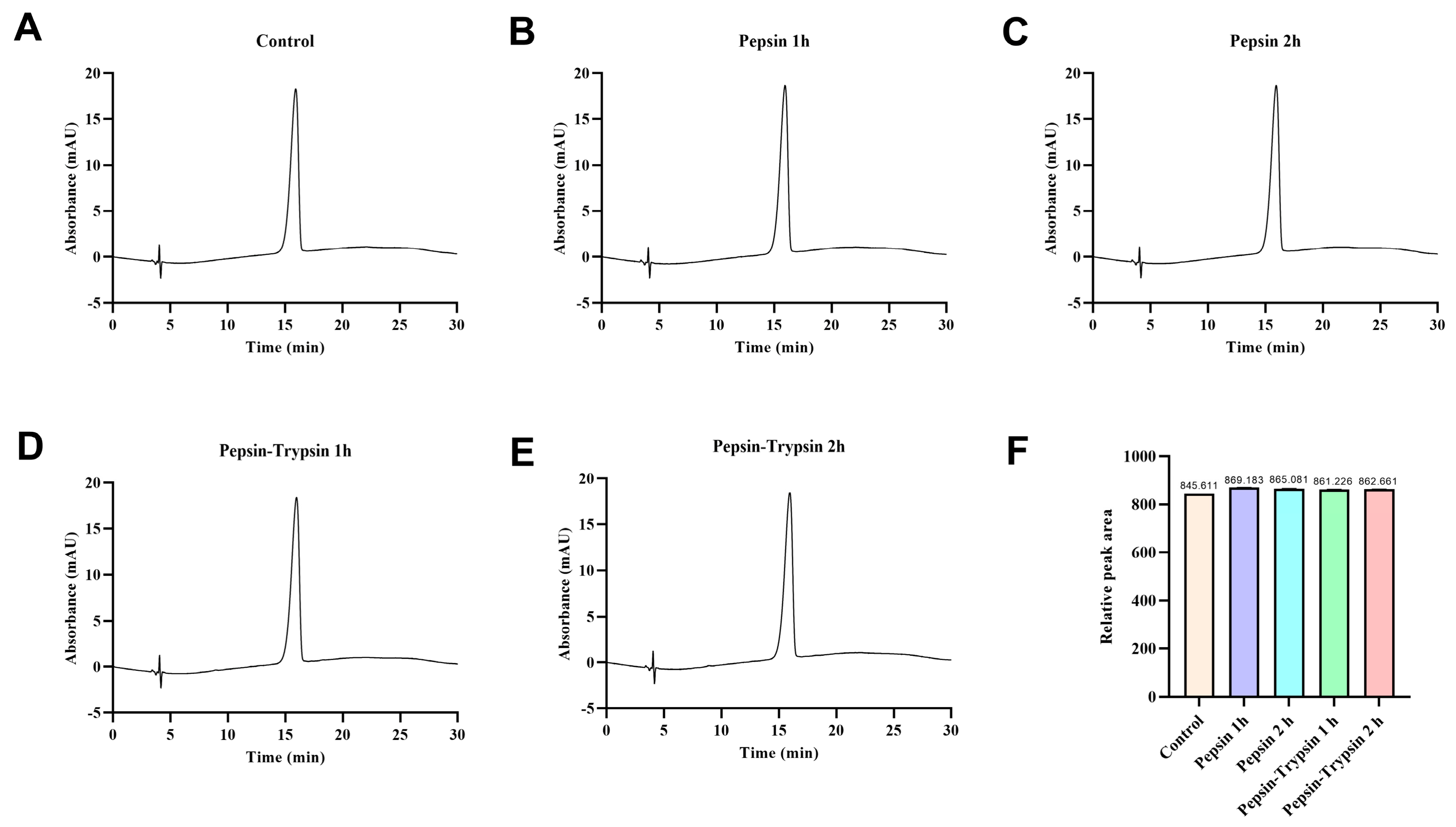
2.2.2. Gastrointestinal Stability of CP4
2.2.3. In Vitro Functional Activity of CP4
- (1)
- α-Glucosidase inhibition rate
- (2)
- Pancreatic lipase inhibition rate
- (3)
- DPPH· scavenging rate
- (4)
- ABTS+· scavenging rate
- (5)
- O2−· scavenging rate
2.3. Cell Experiments
2.3.1. Cell Culture and Viability of HepG2 Cells
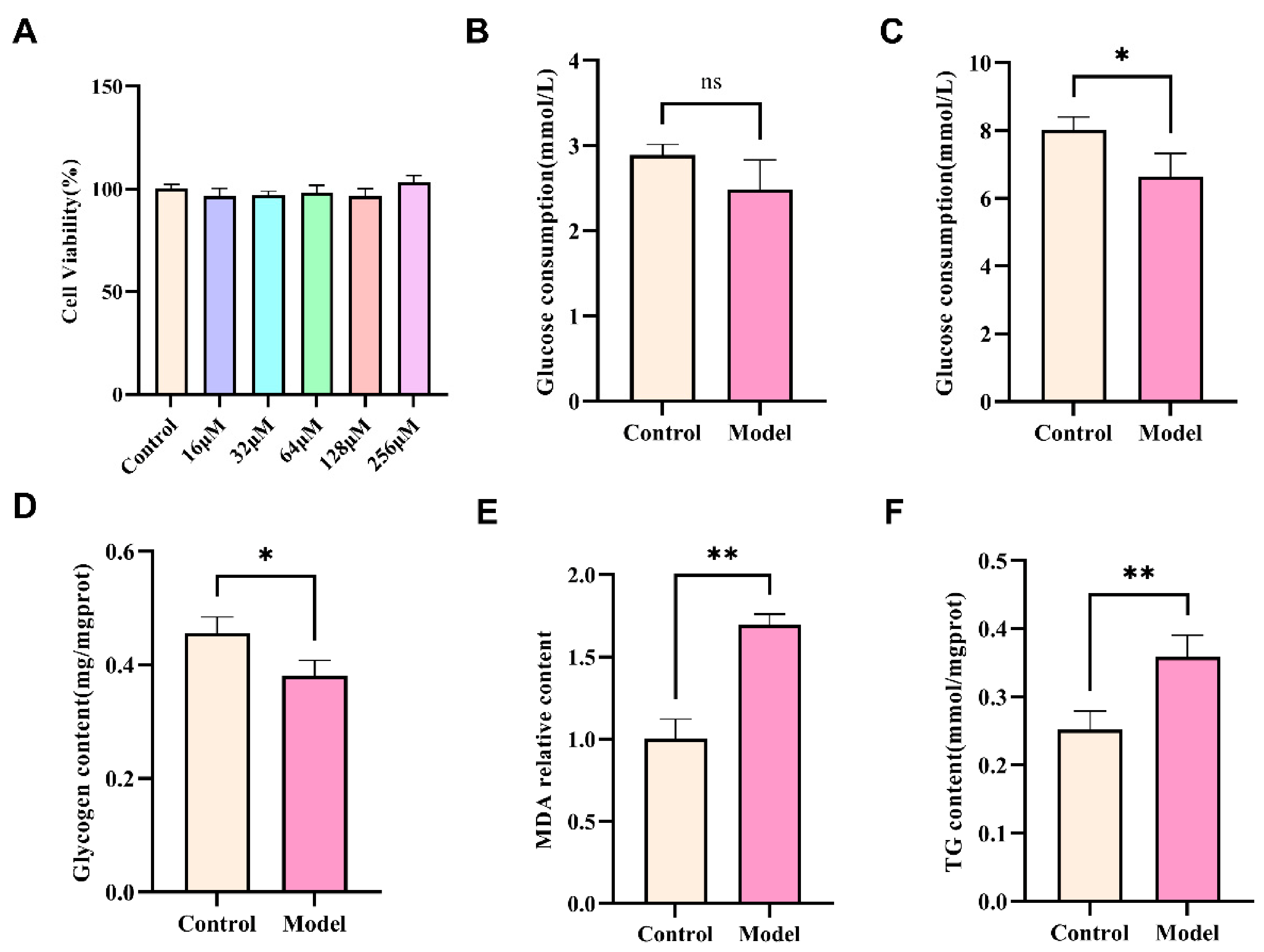
2.3.2. Establishment of the IR-HepG2 Model
2.3.3. Measurement of Glucose Consumption, Glycogen, TG, MDA, and ROS
2.3.4. Cellular Localization of FITC-Labelled CP4
2.4. Transcriptomics
2.5. Metabolomics
2.6. Integrated Analysis of Transcriptomics and Metabolomics
2.7. Real-Time Quantitative PCR
2.8. Data Analysis
3. Results
3.1. In Vitro Characterization of CP4
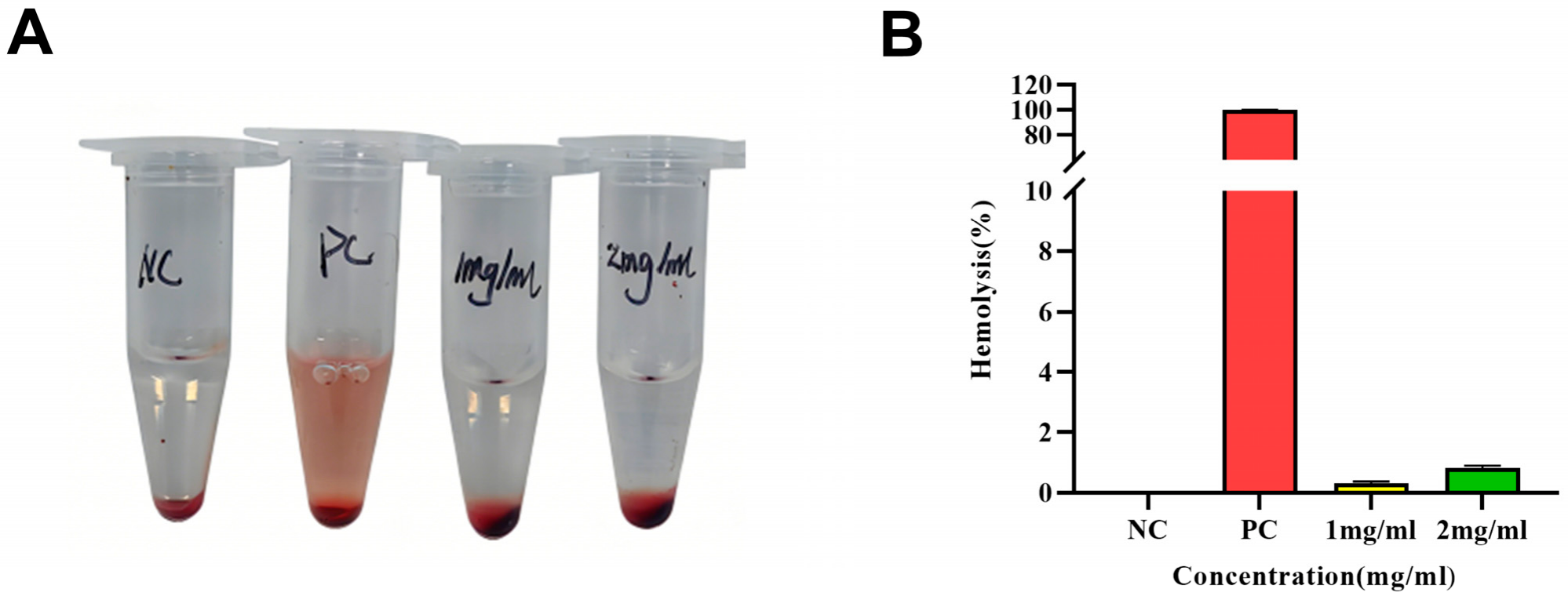
3.1.1. Hemolytic Properties of CP4
3.1.2. Gastrointestinal Stability of CP4
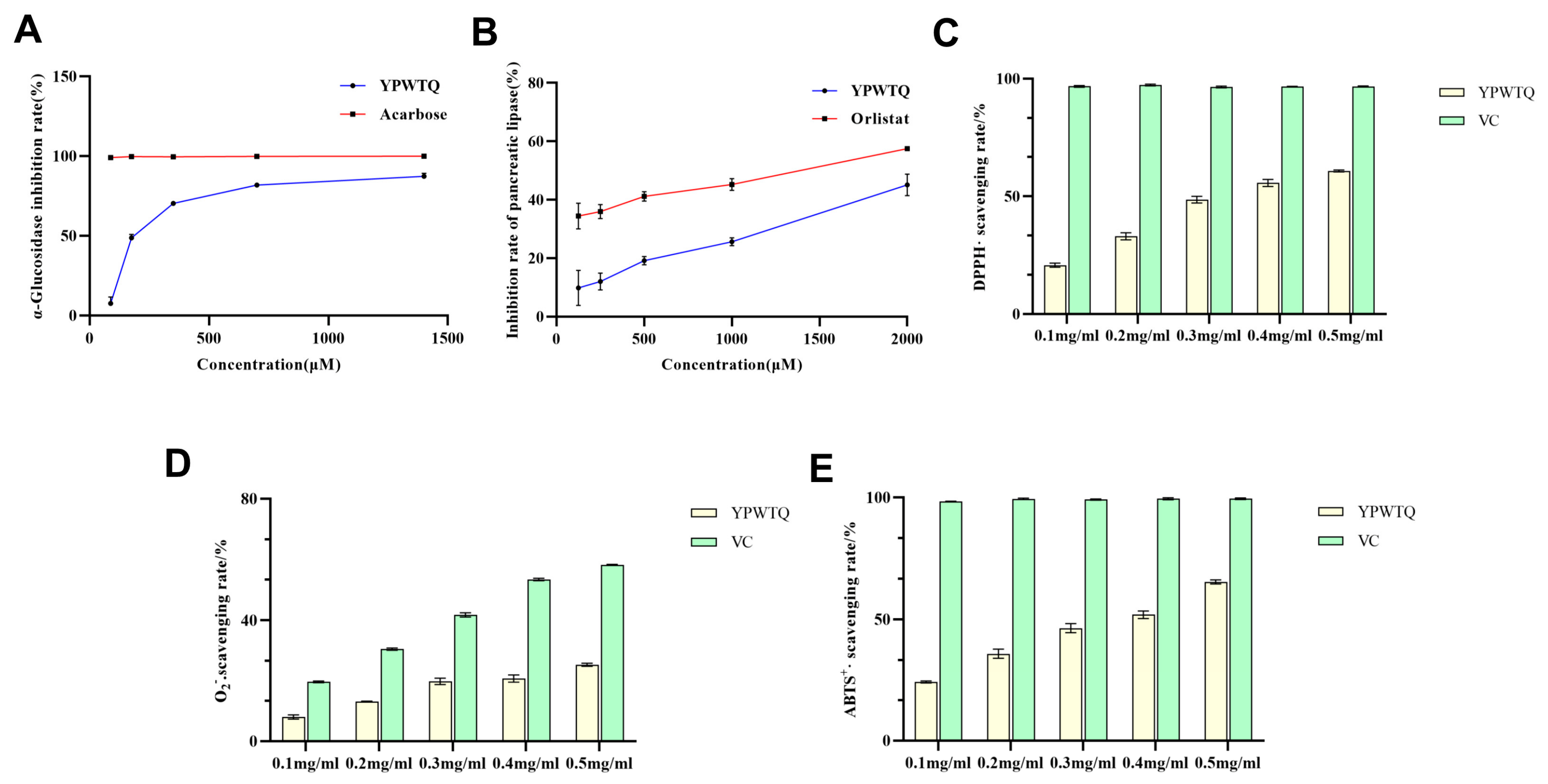
3.1.3. Inhibitory Effect of CP4 on α-Glucosidase
3.1.4. Inhibitory Effect of CP4 on Pancreatic Lipase
3.1.5. The Antioxidant Activity of CP4
3.2. Cell Experiments
3.2.1. Selection of Active Peptide Concentration
3.2.2. Establishment of IR-HepG2 Cell Model
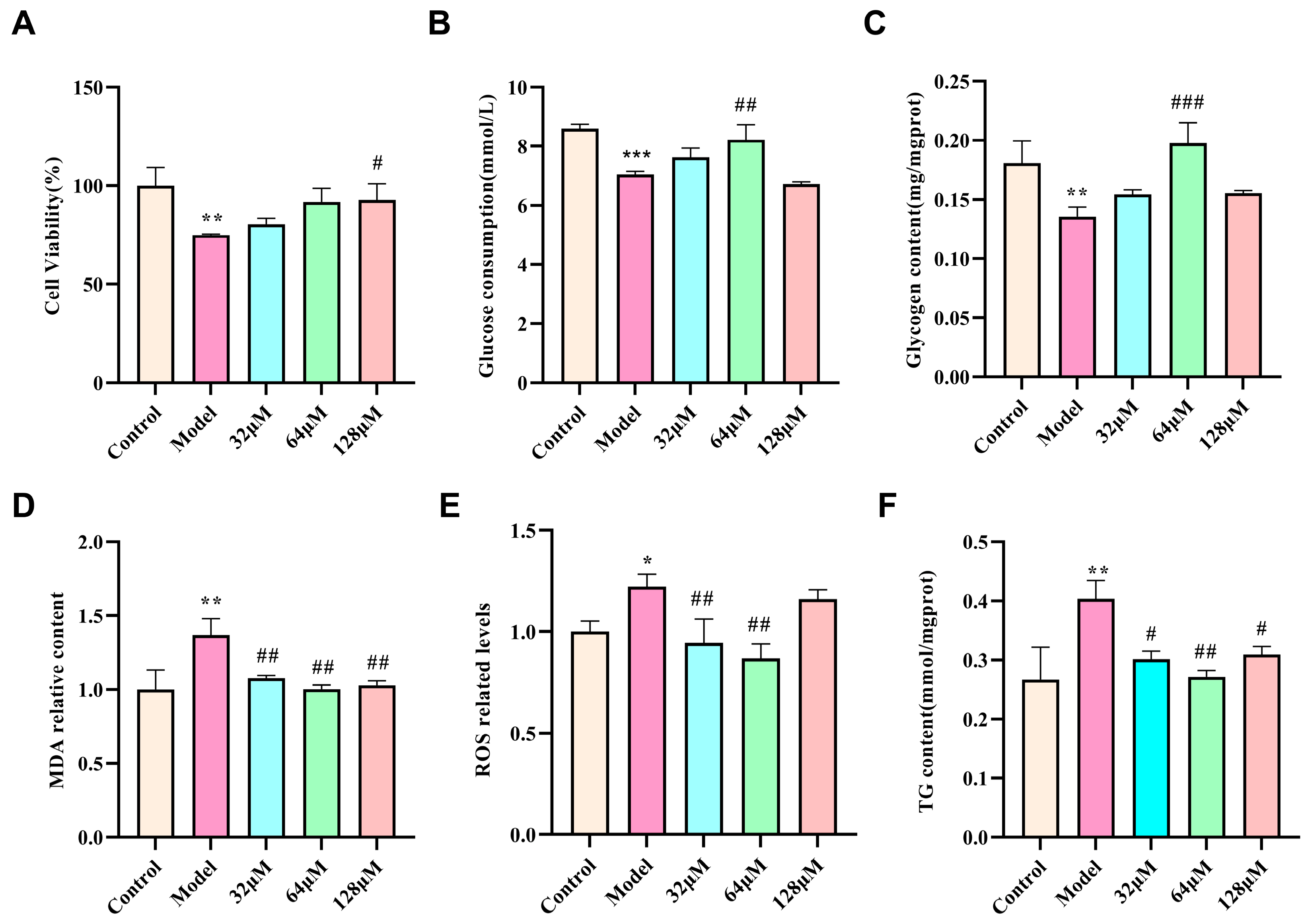
3.2.3. Cytotoxic Evaluation of CP4 in Insulin-Resistant HepG2 Cells
3.2.4. Effect of CP4 on Glucose Consumption in Cells
3.2.5. Effect of CP4 on Glycogen Content in Cells
3.2.6. Effect of CP4 on MDA and ROS Content in Cells
3.2.7. Effect of CP4 on TG Content in Cells
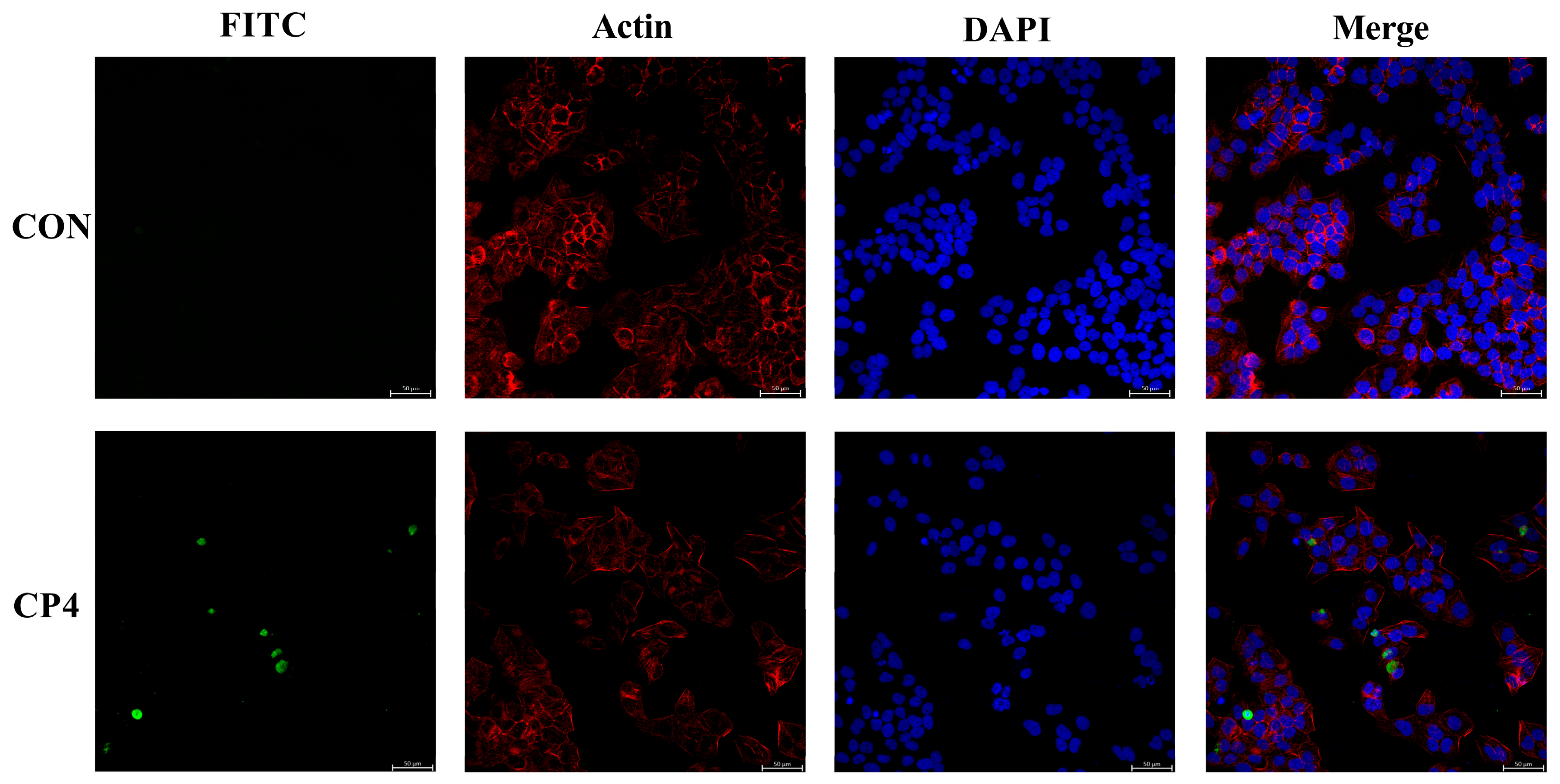
3.2.8. Dynamic Observation of the Effect of CP4 on HepG2 Cells
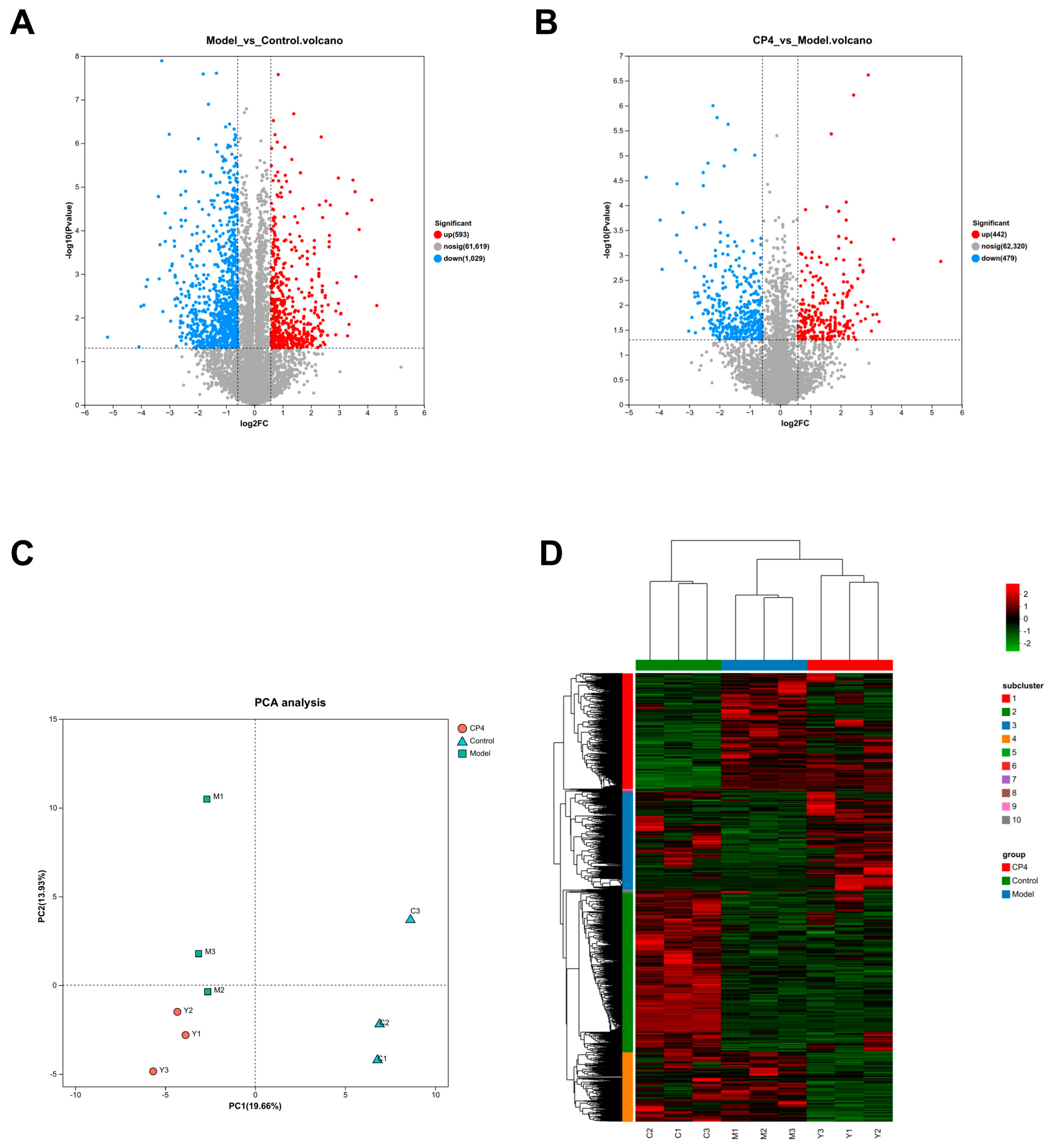
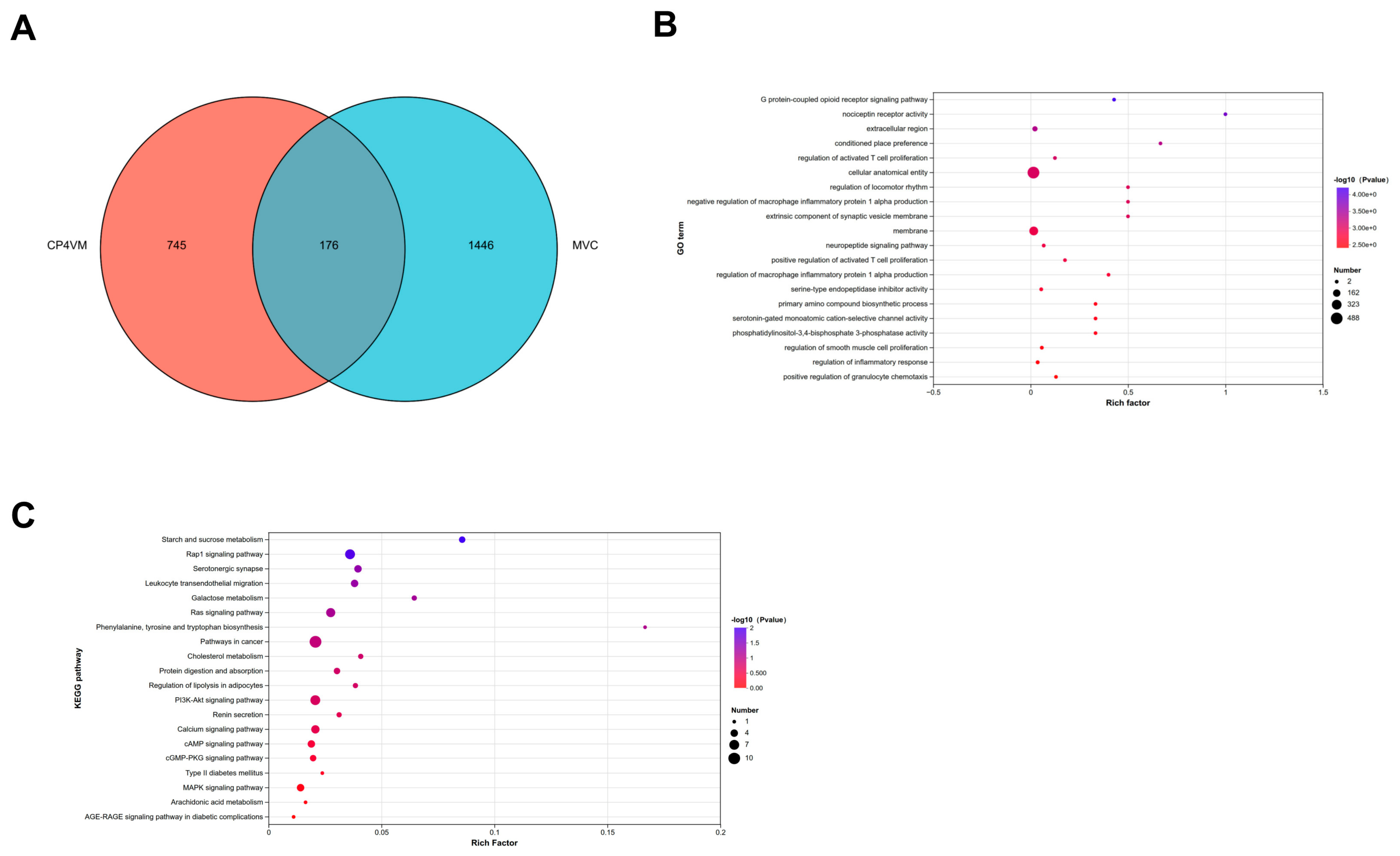
3.3. Transcriptomics
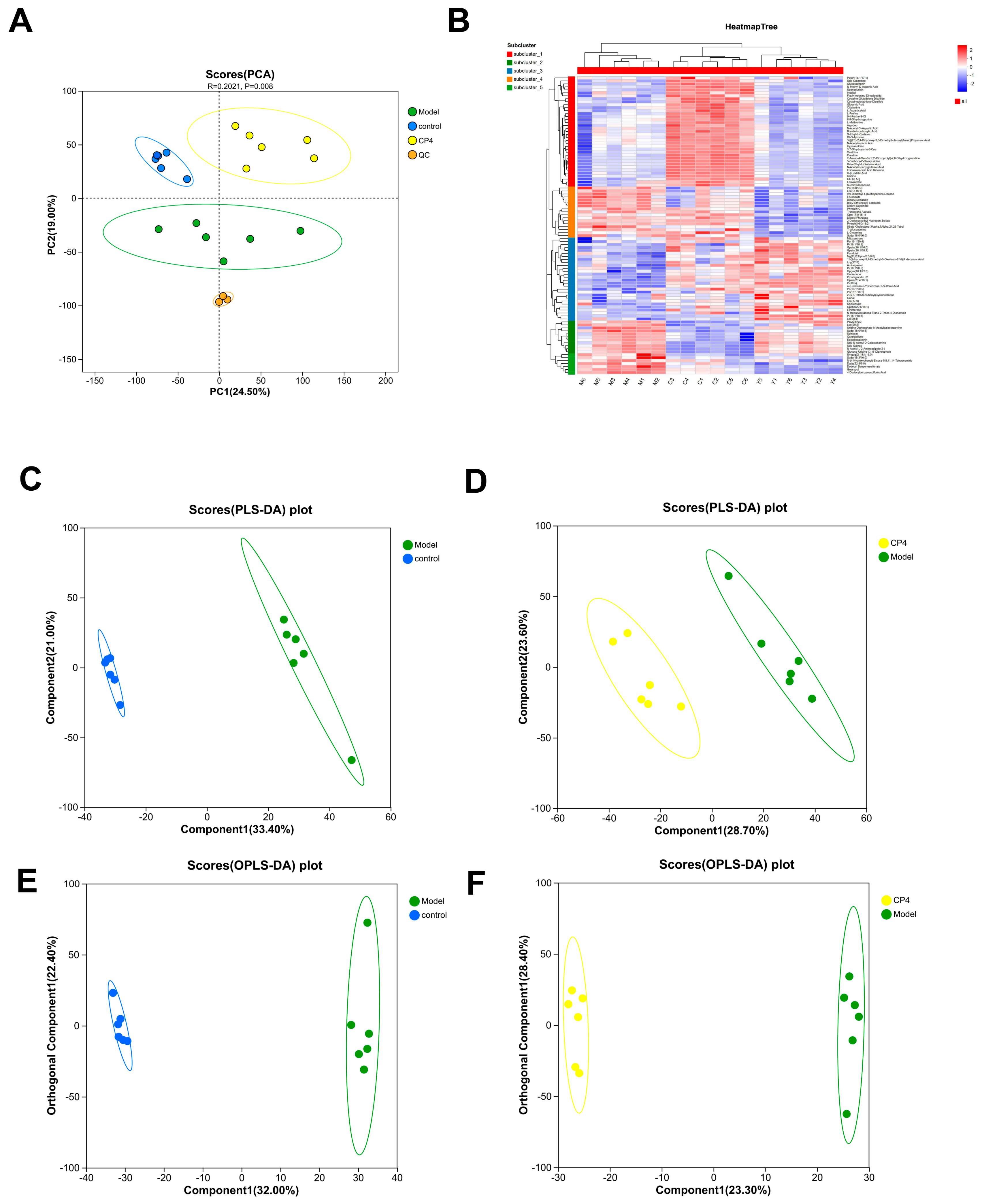
3.4. Metabolomics
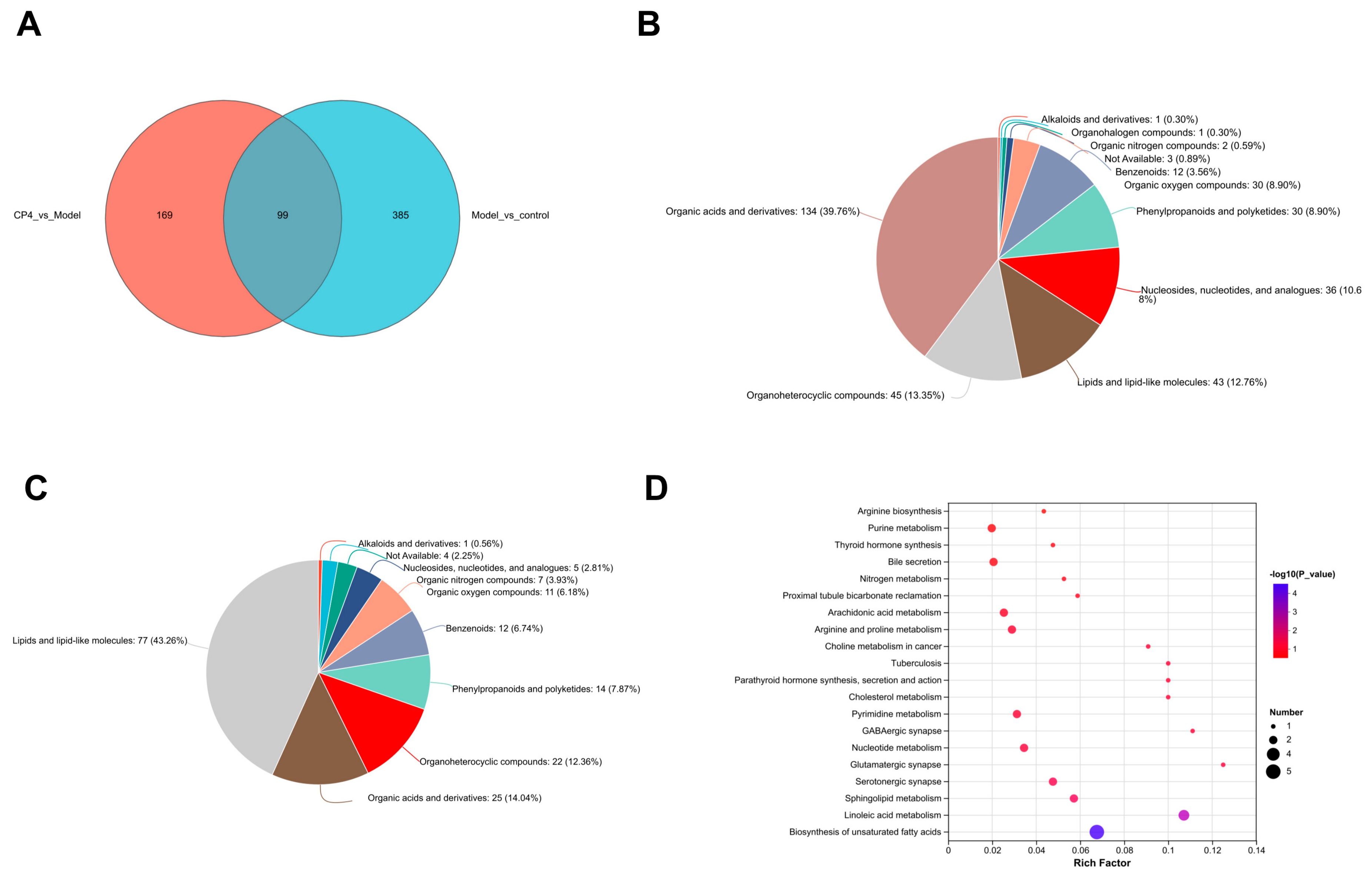
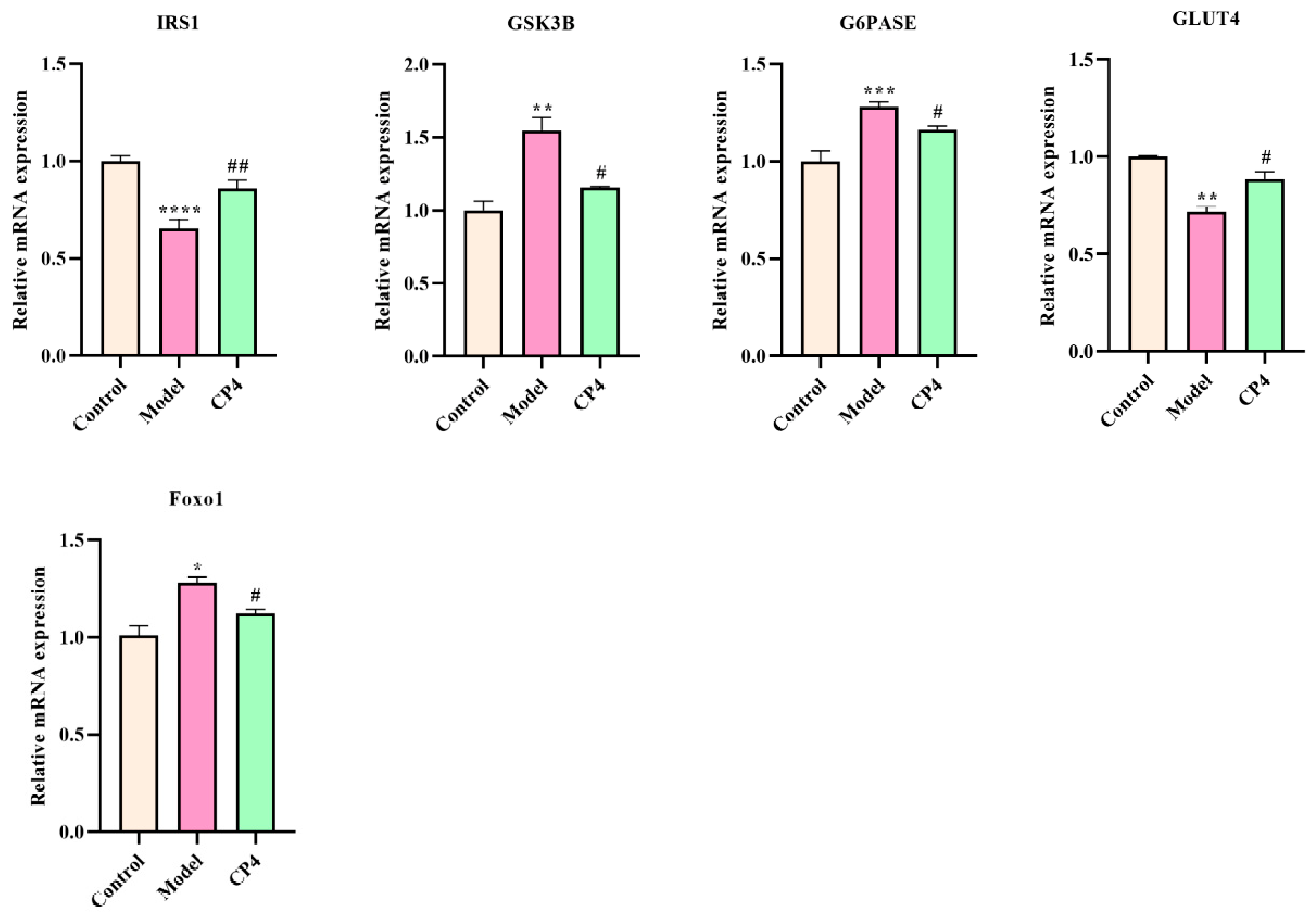
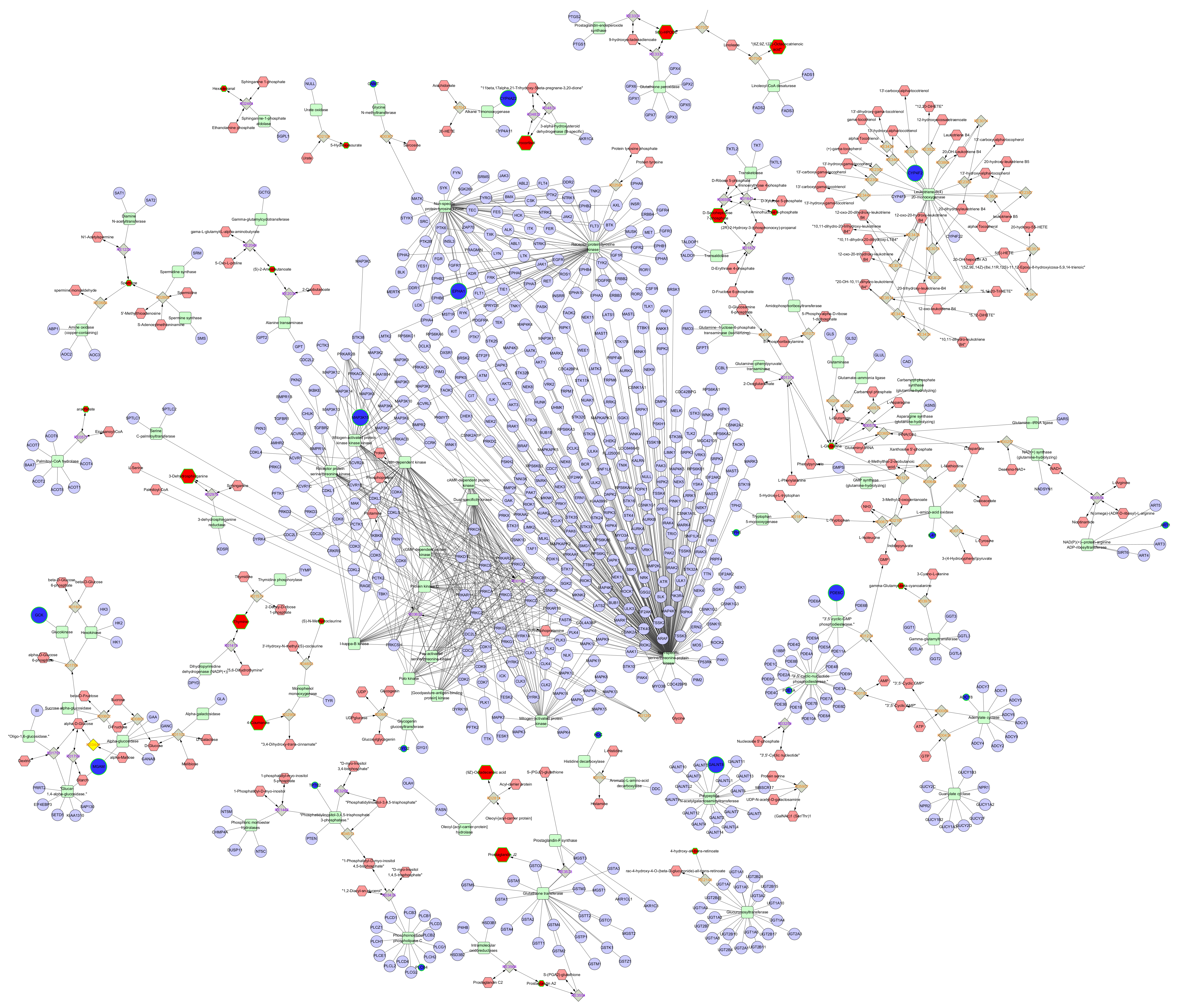
3.5. Multi-Omics Analysis
4. Discussion
5. Conclusions
Supplementary Materials
Author Contributions
Funding
Institutional Review Board Statement
Informed Consent Statement
Data Availability Statement
Conflicts of Interest
Abbreviations
| CP4 | YPWTQ |
| DPP-IV | dipeptidyl peptidase-IV |
| T2DM | type 2 diabetes mellitus |
| IR | Insulin Resistance |
| ROS | Reactive oxygen species |
| MDA | Malondialdehyde |
| TG | Triglyceride |
| DAPI | 4′,6-diamidino-2-phenylindole |
| BCA | bicinchoninic acid |
| GO | Gene Ontology |
| KEGG | Kyoto Encyclopedia of Genes and Genomes |
| GLP-1 | Glucagon-like peptide-1 |
| GlcN | Glucosamine |
| DN | diabetic nephropathy |
| PGJ2 | prostaglandin J2 |
| GLA | γ-linolenic acid |
| LA | linoleic acid |
| DiHOME | 12,13-dihydroxyoleic acid |
References
- Zhao, X.; An, X.; Yang, C.; Sun, W.; Ji, H.; Lian, F. The crucial role and mechanism of insulin resistance in metabolic disease. Front. Endocrinol. 2023, 14, 1149239. [Google Scholar] [CrossRef] [Scilit] [PubMed]
- Bolen, S.; Feldman, L.; Vassy, J.; Wilson, L.; Yeh, H.-C.; Marinopoulos, S.; Wiley, C.; Selvin, E.; Wilson, R.; Bass, E.B. Systematic review: Comparative effectiveness and safety of oral medications for type 2 diabetes mellitus. Ann. Intern. Med. 2007, 147, 386–399. [Google Scholar] [CrossRef] [Scilit] [PubMed]
- Zhang, Y. Preparation, Identification, and Mechanism of Action of DPP-IV Inhibitory Peptides Derived from Bovine and Sheep Milk Proteins. Ph.D. Thesis, China Agricultural University, Beijing, China, 2016. [Google Scholar]
- Huang, J.J.; Zhou, Y.Q.; Cheng, X.F.; Luo, Z.; Liu, Z.D.; Xie, N.N. Research Progress on Food Derived Blood Glucose Regulating Peptides. Food Ind. Sci. Technol. 2023, 44, 431–441. [Google Scholar] [CrossRef]
- Li, Y.; Zhang, Y.H.; Dong, H.; Chen, W.B.; Zeng, X.F. Progress in Research on Animal Blood Proteins and Bioactive Peptides. J. Food Saf. Qual. Test. 2023, 14, 39–47. [Google Scholar] [CrossRef]
- Ma, Z.Y.; Ming, L.; Yi, L.; Ji, T.M. Isolation of Lipid-Lowering Peptides from Camel Blood. Food Sci. Technol. 2019, 44, 128–132. [Google Scholar] [CrossRef]
- Wang, L.; Li, Z.Y.; Fan, X.; Zhang, T.; Wang, H.; Ye, K.P. Novel antioxidant peptides from bovine blood: Purification, identification and mechanism of action. LWT-Food Sci. Technol. 2024, 205, 116499. [Google Scholar] [CrossRef] [Scilit]
- Li, X.; Wang, L.; Ding, A.Z.; Wu, W.J.; Sun, J.; Qiao, Y.; Shi, L. Study on the Isolation and Antioxidation of Hemepeptide from Chicken Blood. Food Res. Dev. 2021, 42, 86–91. [Google Scholar]
- Lafarga, T.; Alvarez, C.; Hayes, M. Bioactive peptides derived from bovine and porcine co-products: A review. J. Food Biochem. 2017, 41, e12418. [Google Scholar] [CrossRef] [Scilit]
- Wang, S.; Liu, X.S.; Jiang, B.T. Optimization of Enzymatic Hydrolysis on Donkey Blood to Prepare antioxidant Peptides. J. Biol. 2023, 40, 109–114. [Google Scholar] [CrossRef]
- Jiang, B.T.; Liu, X.S.; Zhang, Y.; Wang, S.; Li, L.; Xu, T.T.; Wang, J.H.; Wu, X.; Shi, T.R. Research Progress on the Classification, Preparation Methods, and Applications of Bioactive Peptides from Donkeys. Heilongjiang Anim. Husb. Vet. Med. 2022, 36–40. [Google Scholar] [CrossRef]
- Wang, S. Development of Antioxidant Peptides from Donkey Blood; Animal Husbandry and Veterinary Medicine Branch of the Heilongjiang Academy of Agricultural Sciences: Qiqihar, China, 2024. [Google Scholar]
- Liu, D. Preparation and Identification of DPP-IV Inhibitory Peptide and Its Effect on the Intestinal Microecology of Diabetic Mice. Master’s Thesis, Inner Mongolia University, Hohhot, China, 2021. [Google Scholar]
- Lu, M.; Lan, Y.; Xiao, J.; Song, M.; Chen, C.; Liang, C.; Huang, Q.; Cao, Y.; Ho, C.T. Capsaicin Ameliorates the Redox Imbalance and Glucose Metabolism Disorder in an Insulin-Resistance Model via Circadian Clock-Related Mechanisms. J. Agric. Food Chem. 2019, 67, 10089–10096. [Google Scholar] [CrossRef] [Scilit] [PubMed]
- Sefried, S.; Häring, H.U.; Weigert, C.; Eckstein, S.S. Suitability of hepatocyte cell lines HepG2, AML12 and THLE-2 for investigation of insulin signalling and hepatokine gene expression. Open Biol. 2018, 8, 180147. [Google Scholar] [CrossRef] [Scilit] [PubMed]
- Molinaro, A.; Becattini, B.; Solinas, G. Insulin signaling and glucose metabolism in different hepatoma cell lines deviate from hepatocyte physiology toward a convergent aberrant phenotype. Sci. Rep. 2020, 10, 12031. [Google Scholar] [CrossRef] [Scilit] [PubMed]
- Bi, S.J.; Xu, Z.Z.; Wang, Z.W.; Liu, Y.X.; Yu, B.; Tian, J.Y.; Liu, C.Q.; Qiao, L.S.; Zhang, Y.L. Polydatin from Polygoni Cuspidati Rhizoma et Radix regulates glucolipid metabolism in the liver of diabetic rats: Multiscale analysis of network pharmacology and multiomics. Phytomedicine 2024, 134, 155992. [Google Scholar] [CrossRef] [Scilit] [PubMed]
- Li, Y.; Fan, Y.; Liu, J.; Meng, Z.; Huang, A.; Xu, F.; Wang, X. Identification, characterization and in vitro activity of hypoglycemic peptides in whey hydrolysates from rubing cheese by-product. Food Res. Int. 2023, 164, 112382. [Google Scholar] [CrossRef] [Scilit] [PubMed]
- Wu, T. Isolation, Purification, and Structural Characterization of Blood-Glucose-Lowering Peptides from Walnuts, and a Study on Their Mechanism of Action. Master’s Thesis, Jilin Agricultural University, Changchun, China, 2020. [Google Scholar]
- Wan, L. Extraction of Active Compounds from Polygonum multiflorum Stems and a Study on Their Weight-Loss and Lipid-Lowering Effects. Master’s Thesis, South China University of Technology, Guangzhou, China, 2019. [Google Scholar]
- Chen, K.; Qu, Q.W.; Chen, X.L.; Bai, J.; Chen, F. The antioxidant activity in vitro of crude polysaccharide from Crocus sativus petals. J. Sichuan Univ. (Nat. Sci. Ed.) 2016, 53, 448–452. [Google Scholar]
- Ding, J.F. An In Vitro Study on the Mechanisms by Which Zichun Improves β-Cell Function and Liver Insulin Resistance. Master’s Thesis, Jiangxi University of Traditional Chinese Medicine, Nanchang, China, 2023. [Google Scholar]
- Ul-Islam, M.; Alabbosh, K.F.; Manan, S.; Khan, S.; Ahmad, F.; Ullah, M.W. Chitosan-based nanostructured biomaterials: Synthesis, properties, and biomedical applications. Adv. Ind. Eng. Polym. Res. 2024, 7, 79–99. [Google Scholar] [CrossRef] [Scilit]
- Escott, G.M.; da Silveira, L.G.; Cancelier, V.D.A.; Dall’Agnol, A.; Silveiro, S.P. Monitoring and management of hyperglycemia in patients with advanced diabetic kidney disease. J. Diabetes Its Complicat. 2021, 35, 107774. [Google Scholar] [CrossRef] [Scilit] [PubMed]
- Fu, Y.X.; Liu, Z.Y.; Wang, H.; Zhang, F.; Guo, S.; Shen, Q. Comparison of the generation of α-glucosidase inhibitory peptides derived from prolamins of raw and cooked foxtail millet: In vitro activity, de novo and in silico. Food Chem. 2023, 411, 135378. [Google Scholar] [CrossRef] [Scilit] [PubMed]
- Subramaniyan, V.; Hanim, Y.U. Role of pancreatic lipase inhibition in obesity treatment: Mechanisms and challenges towards current insights and future directions. Int. J. Obes. 2025, 49, 492–506. [Google Scholar] [CrossRef] [Scilit] [PubMed]
- Liu, H.; Liang, J.; Xiao, G.; Vargas-De-La-Cruz, C.; Simal-Gandara, J.; Xiao, J.; Wang, Q. Active sites of peptides Asp-Asp-Asp-Tyr and Asp-Tyr-Asp-Asp protect against cellular oxidative stress. Food Chem. 2022, 366, 130626. [Google Scholar] [CrossRef] [Scilit] [PubMed]
- Torres Dominguez, E.A.; Meza Peñafiel, A.; Gómez Pedraza, A.; Martínez Leo, E.E. Molecular mechanisms from insulin-mimetic effect of vitamin D: Treatment alternative in Type 2 diabetes mellitus. Food Funct. 2021, 12, 6682–6690. [Google Scholar] [CrossRef] [Scilit] [PubMed]
- Cao, C.; Li, C.; Chen, Q.; Huang, Q.; Pérez, M.E.M.; Fu, X. Physicochemical characterization, potential antioxidant and hypoglycemic activity of polysaccharide from Sargassum pallidum. Int. J. Biol. Macromol. 2019, 139, 1009–1017. [Google Scholar] [CrossRef] [Scilit] [PubMed]
- Wang, J.; Wu, T.; Fang, L.; Liu, C.; Liu, X.; Li, H.; Shi, J.; Li, M.; Min, W. Peptides from walnut (Juglans mandshurica Maxim.) protect hepatic HepG2 cells from high glucose-induced insulin resistance and oxidative stress. Food Funct. 2020, 11, 8112–8121. [Google Scholar] [CrossRef] [Scilit] [PubMed]
- Liu, L.; Tang, D.; Zhao, H.; Xin, X.; Aisa, H.A. Hypoglycemic effect of the polyphenols rich extract from Rose rugosa Thunb on high fat diet and STZ induced diabetic rats. J. Ethnopharmacol. 2017, 200, 174–181. [Google Scholar] [CrossRef] [Scilit] [PubMed]
- Kojta, I.; Chacinska, M.; Blachnio-Zabielska, A. Obesity, Bioactive Lipids, and Adipose Tissue Inflammation in Insulin Resistance. Nutrients 2020, 12, 1305. [Google Scholar] [CrossRef] [Scilit] [PubMed]
- Guo, Q.W.; Chen, Z.Q.; Santhanam, R.K.; Xu, L.L.; Gao, X.D.; Ma, Q.Q.; Xue, Z.H.; Chen, H.X. Hypoglycemic effects of polysaccharides from corn silk (Maydis stigma) and their beneficial roles via regulating the PI3K/Akt signaling pathway in L6 skeletal muscle. Int. J. Biol. Macromol. 2019, 121, 981–988. [Google Scholar] [CrossRef] [Scilit] [PubMed]
- Xia, T.; Duan, W.H.; Zhang, Z.J.; Fang, B.; Zhang, B.; Xu, B.C.; de la Cruz, C.B.V.; El-Seedi, H.; Simal-Gandara, J.; Wang, S.Y.; et al. Polyphenol-rich extract of Zhenjiang aromatic vinegar ameliorates high glucose-induced insulin resistance by regulating JNK-IRS-1 and PI3K/Akt signaling pathways. Food Chem. 2021, 335, 127513. [Google Scholar] [CrossRef] [Scilit] [PubMed]
- Jiang, L.J. A Study on the Effects and Mechanisms of the Classical Formula “Yu Ye Tang” in Improving Insulin Resistance in Type 2 Diabetes via the PI3K/AKT Signaling Pathway. Doctoral Dissertation, Changchun University of Traditional Chinese Medicine, Changchun, China, 2021. [Google Scholar]
- Park, S.; Cha, H.N.; Shin, M.G.; Park, S.; Kim, Y.; Kim, M.S.; Shin, K.H.; Thoudam, T.; Lee, E.J.; Wolfe, R.R.; et al. Inhibitory Regulation of FOXO1 in PPARδ Expression Drives Mitochondrial Dysfunction and Insulin Resistance. Diabetes 2024, 73, 1084–1098. [Google Scholar] [CrossRef] [Scilit] [PubMed]
- Gu, L.P.; Ding, X.Y.; Wang, Y.F.; Gu, M.Y.; Zhang, J.L.; Yan, S.; Li, N.; Song, Z.Y.; Yin, J.J.; Lu, L.L.; et al. Spexin alleviates insulin resistance and inhibits hepatic gluconeogenesis via the FoxO1/PGC-1α pathway in high-fat-diet-induced rats and insulin resistant cells. Int. J. Biol. Sci. 2019, 15, 2815–2829. [Google Scholar] [CrossRef] [Scilit] [PubMed]
- Xia, T.; Xu, W.J.; Hu, Y.N.; Luo, Z.Y.; He, W.; Liu, C.S.; Tan, X.M. Simiao Wan and its ingredients alleviate type 2 diabetes mellitus via IRS1/AKT2/FOXO1/GLUT2 signaling. Front. Nutr. 2022, 9, 1012961. [Google Scholar] [CrossRef] [Scilit] [PubMed]
- Abu Aqel, Y.; Alnesf, A.; Aigha, I.I.; Islam, Z.; Kolatkar, P.R.; Teo, A.; Abdelalim, E.M. Glucokinase (GCK) in diabetes: From molecular mechanisms to disease pathogenesis. Cell. Mol. Biol. Lett. 2024, 29, 120. [Google Scholar] [CrossRef] [Scilit] [PubMed]
- Rao, J.H.; Ma, Y.S.; Long, J.N.; Guo, Z.G. Research Progress on Cholesterol Ester Transfer Protein Inhibitors. J. Med. Grad. Stud. 2019, 32, 776–779. [Google Scholar] [CrossRef]
- Duell, P.B.; Maki, K.C. From the Editors: Inhibition of cholesteryl ester transfer protein (CETP): Still a promising therapeutic strategy? J. Clin. Lipidol. 2023, 17, 425–426. [Google Scholar] [CrossRef] [Scilit] [PubMed]
- Kim, W.; Jang, J.H.; Zhong, X.; Seo, H.; Surh, Y.J. 15-Deoxy-∆(12,14)-Prostaglandin J(2) Promotes Resolution of Experimentally Induced Colitis. Front. Immunol. 2021, 12, 615803. [Google Scholar] [CrossRef] [Scilit] [PubMed]
- Liang, Y.; Zhang, Z.; Tu, J.; Wang, Z.; Gao, X.; Deng, K.; El-Samahy, M.; You, P.; Fan, Y.; Wang, F. γ-Linolenic acid prevents lipid metabolism disorder in palmitic acid-treated alpha mouse liver-12 cells by balancing autophagy and apoptosis via the LKB1-AMPK-mTOR pathway. J. Agric. Food Chem. 2021, 69, 8257–8267. [Google Scholar] [CrossRef] [Scilit] [PubMed]
- Yoon, S.-Y.; Ahn, D.; Hwang, J.Y.; Kang, M.J.; Chung, S.J. Linoleic acid exerts antidiabetic effects by inhibiting protein tyrosine phosphatases associated with insulin resistance. J. Funct. Foods 2021, 83, 104532. [Google Scholar] [CrossRef] [Scilit]
- Rehman, K.; Haider, K.; Jabeen, K.; Akash, M.S.H. Current perspectives of oleic acid: Regulation of molecular pathways in mitochondrial and endothelial functioning against insulin resistance and diabetes. Rev. Endocr. Metab. Disord. 2020, 21, 631–643. [Google Scholar] [CrossRef] [Scilit] [PubMed]
- Santos, P.P.d.; Fujimori, A.S.S.; Polegato, B.F.; Okoshi, M.P. The Therapeutic Potential of Orange Juice in Cardiac Remodeling: A Metabolomics Approach. Metabolites 2025, 15, 198. [Google Scholar] [CrossRef] [Scilit] [PubMed]
- Karnaukhova, E.; Owczarek, C.; Schmidt, P.; Schaer, D.J.; Buehler, P.W. Human plasma and recombinant hemopexins: Heme binding revisited. Int. J. Mol. Sci. 2021, 22, 1199. [Google Scholar] [CrossRef] [Scilit] [PubMed]
- Amigo, L.; Hernández-Ledesma, B. Current Evidence on the Bioavailability of Food Bioactive Peptides. Molecules 2020, 25, 4479. [Google Scholar] [CrossRef] [Scilit] [PubMed]








| Chromatographic Parameters | Detailed Parameter Settings |
|---|---|
| Detection wavelength | 280 nm |
| Column temperature | 25 °C |
| Mobile phase flow rate | 0.7 mL/min |
| Mobile phase A | A 2% aqueous acetonitrile solution containing 0.05% trifluoroacetic acid (TFA) (acetonitrile:water = 2:98, v/v) |
| Mobile phase B | A 90% aqueous acetonitrile solution containing 0.05% trifluoroacetic acid (TFA) (acetonitrile:water = 90:10, v/v) |
| Elution Protocol | 0–15 min: 12% → 27% Phase B, linear gradient elution; 15–20 min: 27% Phase B, isocratic elution; 20–30 min: 27% → 12% Phase B, linear gradient elution. |
| Gene Name | Primers |
|---|---|
| β-actin | F CATGTACGTTGCTATCCAGGC |
| R CTCCTTAATGTCACGCACGAT | |
| MGAM | F ACAGCCCGGTTGAAAAATCTG R CAGCAGCATTTCCACTGAAGG |
| PDGFC | F ATTCACAGCCCAAGGTTTCCT R GGGTCTTCAAGCCCAAATCTT |
| FGF18 | F CACCAGCAAGGAGTGTGTGTT R CACCGTCGTGTACTTGAAGGG |
| FYB1 | F GGATGTCTCAGTCAATAGCCG R GGTTCCTTGTCAGGCTTTTCC |
| LAT | F GATGAGGACGACTATCACAACCC R GAAGGCACTGTCTCGGATGC |
| ADCY8 | F CAGGCAGTGCTATTCATGTGT R ACCTCCGAGTCTCCAGGAAAG |
| IL4I1 | F GCCAAGACCCCTTCGAGAAAT R CCGATCCTGTTATCTGCCTCC |
| GNGT1 | F ATTACGTTGAAGAACGATCTGGC R GGATGCCCTTTACCAGTGGA |
| IGF2 | F GTGGCATCGTTGAGGAGTG R CACGTCCCTCTCGGACTTG |
| MMP2 | F TACAGGATCATTGGCTACACACC R GGTCACATCGCTCCAGACT |
| IRS1 | F AGCTCTGGTCGCCTTCTCTA R AGCTGTGTCCACCTTTCGAG |
| GLUT4 | F ATAGGCTCCGAAGATGGGGA R CCCAGCCACGTCTCATTGTA |
| PIK3R1 | F CAGAACACAGAGCTCCAGCA R TGAAAGCGTCAGCCAAAACG |
| AKT2 | F GCCACCATGAATGAGGTGAA R GTACCCAATGAAGGAGCCGT |
| FOXO1 | F GAGGGTTAGTGAGCAGGTTACA R TTGCTGCCAAGTCTGACGAA |
| G6Pase | F GGCTCTCAACTCCAGCATGT RAGGACGAGGGAGGCTACAAT |
| GSK3β | F CCTGGGAACTCCAACAAGGG R GGGGTCGGAAGACCTTAGTC |
Disclaimer/Publisher’s Note: The statements, opinions and data contained in all publications are solely those of the individual author(s) and contributor(s) and not of MDPI and/or the editor(s). MDPI and/or the editor(s) disclaim responsibility for any injury to people or property resulting from any ideas, methods, instructions or products referred to in the content. |
© 2026 by the authors. Licensee MDPI, Basel, Switzerland. This article is an open access article distributed under the terms and conditions of the Creative Commons Attribution (CC BY) license.
Share and Cite
Zhang, Q.; Wu, X. A Donkey Blood-Derived Bioactive Peptide (YPWTQ) Alleviates Insulin Resistance in HepG2 Cells Through Multi-Target Regulation of Glucose and Lipid Metabolism and Oxidative Stress. Nutrients 2026, 18, 2445. https://doi.org/10.3390/nu18152445
Zhang Q, Wu X. A Donkey Blood-Derived Bioactive Peptide (YPWTQ) Alleviates Insulin Resistance in HepG2 Cells Through Multi-Target Regulation of Glucose and Lipid Metabolism and Oxidative Stress. Nutrients. 2026; 18(15):2445. https://doi.org/10.3390/nu18152445
Chicago/Turabian StyleZhang, Qian, and Xiaotong Wu. 2026. "A Donkey Blood-Derived Bioactive Peptide (YPWTQ) Alleviates Insulin Resistance in HepG2 Cells Through Multi-Target Regulation of Glucose and Lipid Metabolism and Oxidative Stress" Nutrients 18, no. 15: 2445. https://doi.org/10.3390/nu18152445
APA StyleZhang, Q., & Wu, X. (2026). A Donkey Blood-Derived Bioactive Peptide (YPWTQ) Alleviates Insulin Resistance in HepG2 Cells Through Multi-Target Regulation of Glucose and Lipid Metabolism and Oxidative Stress. Nutrients, 18(15), 2445. https://doi.org/10.3390/nu18152445