5.1. Household Food Security and Environmental Determinants
The results indicate that agricultural production practices, food handling, and food choice and variability were positively associated with household food access and consumption in Riobamba, Ecuador. These findings are consistent with contemporary food security frameworks, which recognize that food security encompasses not only food availability but also environmental sustainability, food safety, dietary quality, and food system resilience [
77,
78,
79,
80,
81]. Overall, the results suggest that environmental conditions may play an important role in shaping household food security and nutrition-related outcomes.
The positive association observed for agricultural production practices is consistent with evidence indicating that sustainable production systems may enhance food availability and strengthen the resilience of local food systems [
79,
80,
81]. In urban settings, these practices may also reflect household engagement in food production activities that complement conventional food acquisition strategies. Households involved in agricultural production may have greater opportunities to diversify food sources, strengthen resource management capacities, and increase their engagement with local food systems. In some cases, small-scale food production may contribute to household food availability and reduce dependence on market purchases. However, given the cross-sectional nature of this study, these potential mechanisms should be interpreted as plausible explanations rather than causal pathways.
Food handling was also positively associated with food access and consumption. Previous studies have highlighted the importance of appropriate food handling practices in preserving food quality, reducing food losses, and supporting food safety throughout the food supply chain [
82,
83]. Improved food handling may therefore contribute to maintaining the availability and quality of foods consumed by households, thereby supporting food security outcomes.
Similarly, food choice and variability were associated with better food access and consumption outcomes. Dietary diversity is widely recognized as a key component of nutrition security and has been linked to improved nutrient adequacy and overall dietary quality [
84,
85]. In the present study, food choice and variability should be interpreted as indicators of dietary diversity and food selection practices rather than as direct measures of food security. Nevertheless, the observed association suggests that households with more diverse food choices may be better positioned to achieve adequate food access and consumption.
Consistent with previous research, the findings suggest that food security is influenced by multiple environmental, social, and economic factors operating simultaneously [
86,
87,
88]. However, waste management practices were not significantly associated with food access and consumption. This lack of association may reflect measurement limitations or the fact that waste management in urban areas is largely determined by municipal infrastructure and collective service provision, thereby reducing variability at the household level. Consequently, differences in household waste management behaviors may not directly translate into observable differences in food access and consumption outcomes.
Overall, these findings support the importance of considering environmental determinants when examining household food security. The observed associations may help inform food security strategies that integrate environmental sustainability, food safety, and dietary diversity, while recognizing the complex interactions among environmental, social, and economic factors that influence household food access and consumption.
5.2. Socioeconomic Determinants of Food Access and Consumption
In addition to environmental variables, household income, household size, and gender were significantly associated with household food access and consumption, highlighting the multidimensional nature of food insecurity.
Household income showed the strongest positive association with food access and consumption, consistent with extensive evidence identifying income as a key determinant of food security [
89,
90,
91]. Higher income levels may generally strengthen purchasing capacity and facilitate access to a wider variety of foods, whereas limited resources may constrain food choices and dietary quality [
92,
93].
Household size was negatively associated with food access and consumption. This finding agrees with previous studies showing that larger households often face greater pressure on available resources, which may reduce per capita food availability and may strengthen vulnerability to food insecurity [
94,
95].
Gender was also significantly associated with food access and consumption. Previous research suggests that gender-related differences in access to economic resources, employment opportunities, household decision making, and caregiving responsibilities may be associated with food security outcomes [
96,
97].
Together, these findings reinforce evidence that food security is closely associated with broader socioeconomic conditions, including economic resources, household composition, and social inequalities [
98,
99]. Therefore, interventions addressing food insecurity should consider both environmental and socioeconomic dimensions.
5.3. Implications for Nutrition Security and Public Health
The findings of the present study have important implications for nutrition security and public health. While food security has traditionally focused on ensuring access to sufficient quantities of food, increasing attention has been directed toward nutrition security, which emphasizes regular access to safe, nutritious, and diverse foods that promote health and well-being throughout the life course [
100,
101].
The positive association identified between food choice and variability and household food access and consumption reinforces the importance of dietary diversity as a fundamental component of nutrition security. Diverse diets are associated with support nutrient adequacy, better overall diet quality, and a lower risk of micronutrient deficiencies [
102,
103]. Consequently, interventions aimed at improving food security should move beyond food availability alone and promote access to nutritionally adequate diets capable of supporting healthy lifestyles.
The results also highlight the importance of integrating environmental sustainability into food and nutrition policies. Sustainable food systems are increasingly recognized as essential to achieving both population health and environmental objectives. Agricultural sustainability, food safety, dietary diversity, and responsible resource management are interconnected dimensions that be linked to healthier and more resilient food systems [
104,
105].
Food insecurity is also associated with a broad range of adverse health outcomes. Previous studies have reported significant associations between food insecurity and poor physical health, mental health disorders, psychological distress, reduced well-being, and possibly increased healthcare utilization [
106,
107]. Therefore, improving household food access and consumption may be linked not only to better nutritional outcomes but also to broader support of population health.
These findings are particularly relevant in Latin American contexts, where food insecurity frequently coexists with overweight, obesity, and other diet-related non-communicable diseases. This double burden of malnutrition represents one of the major public health challenges facing the region and requires integrated approaches that simultaneously address food access, dietary quality, nutrition education, and sustainable food systems [
108].
Overall, the results suggest that food security interventions should incorporate nutrition-sensitive and environmentally sustainable strategies. Such approaches may be linked to healthier dietary patterns, support nutrition security, and better public health outcomes among vulnerable populations.
5.4. Policy Implications
The findings of this study have important implications for the development of food security, nutrition, and public health policies in Ecuador and other low- and middle-income settings facing similar environmental and socioeconomic challenges. The results demonstrate that household food access and consumption are associated with a combination of environmental and socioeconomic determinants, highlighting the need for integrated and multisectoral policy approaches.
First, interventions aimed at strengthening sustainable agricultural production should be considered a priority. Policies that support climate-resilient agricultural practices, sustainable land management, and environmentally responsible food production systems may be linked to improving food availability while simultaneously enhancing environmental sustainability [
109,
110]. Such strategies may also strengthen the resilience of local food systems to environmental and economic shocks.
Second, the positive association observed between food handling practices and food access highlights the importance of strengthening food safety and food loss reduction initiatives. Investments in food storage infrastructure, transportation systems, food safety education, and post-harvest management may support food quality and reduce losses throughout the food supply chain [
111]. These interventions may be particularly beneficial in vulnerable populations where food losses can substantially reduce household food availability.
Third, the significant role of food choice and variability suggests that nutrition-sensitive policies should promote access to diverse and nutritionally adequate diets. Nutrition education programs, healthy food subsidies, school feeding programs, and initiatives aimed at increasing the affordability of healthy foods may be linked to improving dietary quality and nutrition security [
112,
113].
The results also emphasize the importance of addressing socioeconomic inequalities. Policies designed to support household income, strengthen social protection systems, and support economically vulnerable households may reduce barriers to food access and be linked to support of food security outcomes [
114]. Given the strong association between income and food access identified in this study, economic interventions may have substantial benefits for household nutrition and well-being.
In addition, integrated multisectoral actions involving local governments, public health agencies, agricultural extension services, educational institutions, and community organizations may further strengthen household food security. Coordinated interventions could include expanding urban agriculture initiatives, promoting food safety and food handling education, encouraging dietary diversity, and implementing targeted programs to improve food access among vulnerable households. Such collaborative efforts may contribute to addressing the multiple environmental, social, and economic factors that influence household food access and consumption.
Finally, food security policies should be integrated within broader public health and sustainable development strategies. The achievement of food security, nutrition security, environmental sustainability, and health equity requires coordinated actions across agriculture, health, education, social protection, and environmental sectors [
115]. Such integrated approaches may be linked to the development of more resilient food systems and healthier populations.
Overall, the findings support the implementation of comprehensive policies that simultaneously address environmental sustainability, socioeconomic vulnerability, and nutrition security in order to support household food access and consumption.
5.5. Strengths and Limitations
This study presents several strengths that be linked to the understanding of food security determinants in urban Ecuadorian households. First, the study simultaneously examined environmental and socioeconomic factors associated with household food access and consumption, providing a more comprehensive perspective on food security than approaches focused exclusively on economic determinants. Second, the use of the ELCSA, a widely used and validated instrument for assessing food security in the region, enhances the comparability of the findings with previous studies conducted in Latin America. Third, the application of both Logit and Probit econometric models allowed for the evaluation of the robustness and consistency of the estimated associations. Finally, the inclusion of environmental variables related to agricultural production, food handling, waste management, and food choice and variability can be linked to the growing literature linking environmental sustainability, food systems, and nutrition security.
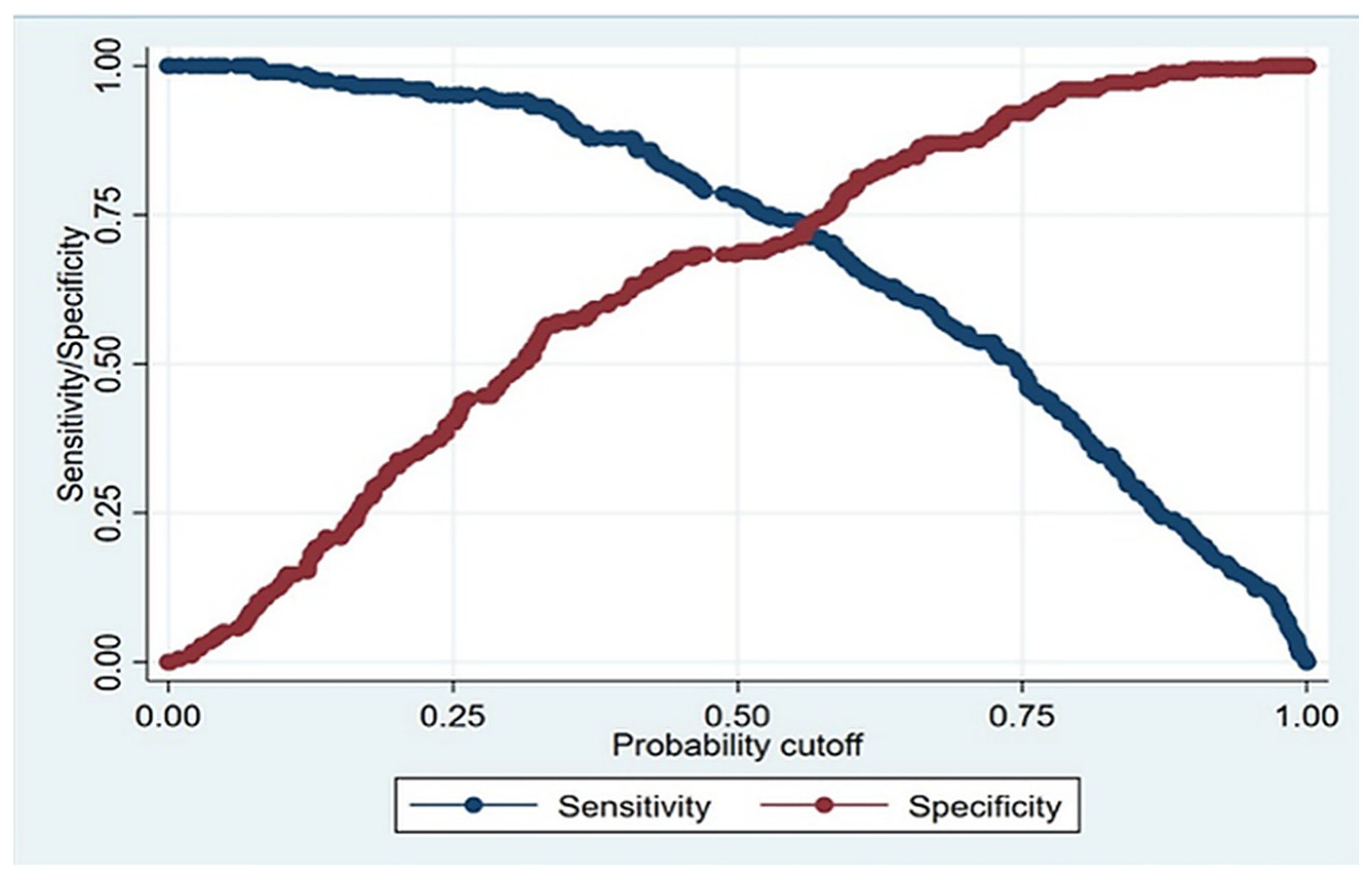
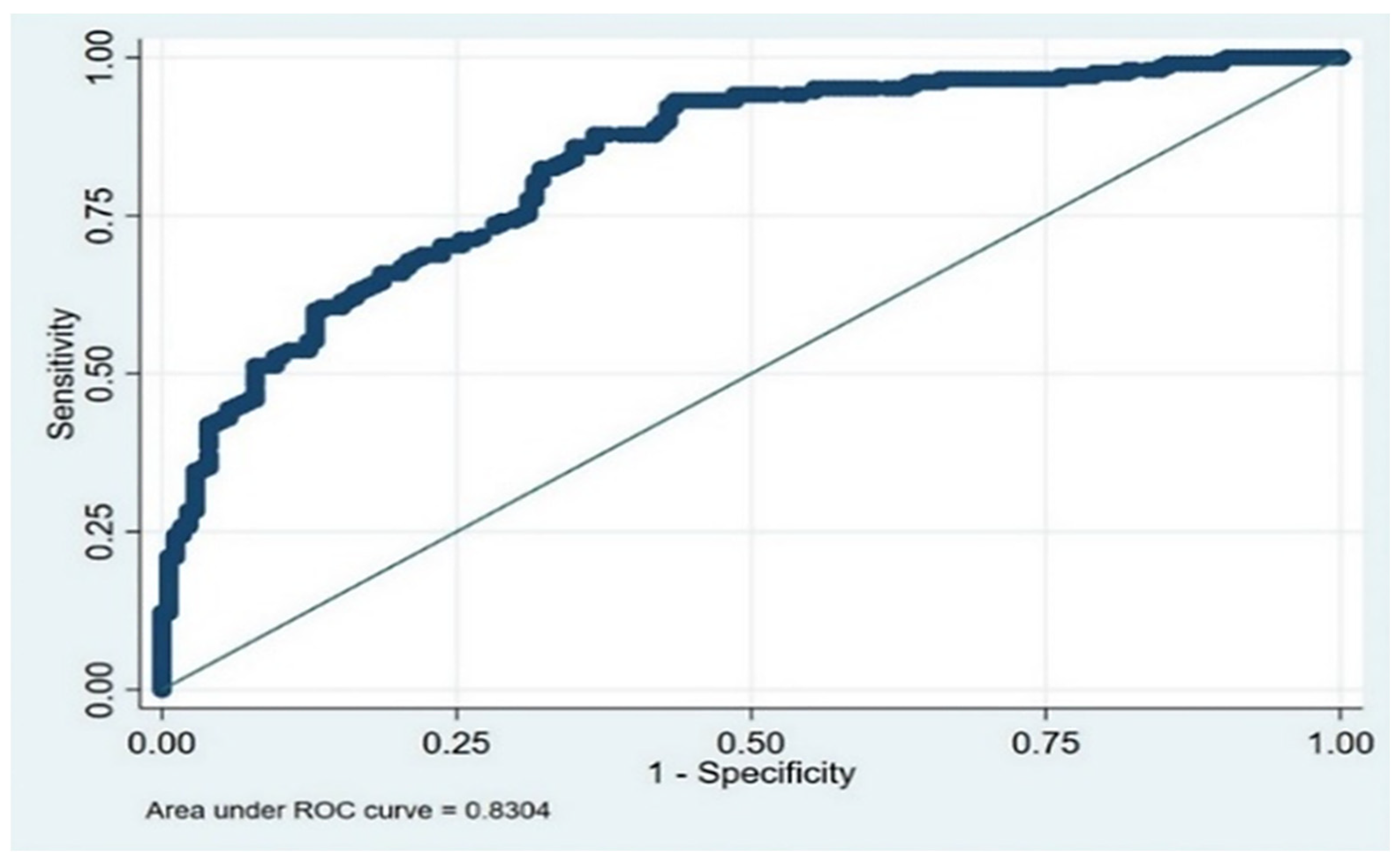
Despite these strengths, several limitations should be acknowledged. The cross-sectional design of this study does not allow causal relationships to be established between the explanatory variables and food access and consumption. Consequently, the observed associations should be interpreted as correlational rather than causal. In addition, this study relied on self-reported information, which may be subject to recall bias and reporting bias. Furthermore, detailed information regarding item-level missing responses and non-response patterns was not available in the original dataset. Consequently, the potential influence of missing data on the reported associations could not be formally evaluated. Another limitation is that the present research study was conducted exclusively in the city of Riobamba; therefore, the findings may not be fully generalizable to other regions of Ecuador with different socioeconomic, cultural, and environmental characteristics. The binary classification of food security simplified the interpretation of household food access outcomes and facilitated estimation using Logit and Probit models. However, this approach may have reduced information regarding differences between moderate and severe food insecurity. Consequently, the findings should be interpreted as reflecting broader patterns of household food access rather than distinctions across all levels of food insecurity. Although classification accuracy exceeded 73%, a proportion of households remained incorrectly classified. Consequently, the models should be interpreted primarily as explanatory tools for examining associations rather than as instruments for individual-level targeting or prediction. In addition, the original analytical database did not permit recalculation of reliability indicators such as Cronbach’s alpha or the implementation of additional psychometric analyses for individual questionnaire dimensions. Therefore, the measurement properties of specific constructs could not be reassessed within the scope of the present study.
Furthermore, although this study incorporated several relevant environmental and socioeconomic determinants, other factors potentially associated with household food security—such as food prices, market accessibility, educational attainment, dietary behaviors, social support networks, household nutritional knowledge, employment conditions, and access to credit—were not available in the original dataset and therefore could not be included in the econometric models. Similarly, the probability simulations presented in this study were intended for illustrative purposes and were based on representative combinations of observed household characteristics. Consequently, they should not be interpreted as predictions applicable to all household profiles. Future studies should explore these dimensions and consider longitudinal approaches to better understand the dynamic relationships between environmental conditions, socioeconomic factors, and food security outcomes. Additional model comparison statistics such as AIC and BIC could not be recalculated because the original analytical database was unavailable.
Nevertheless, this study provides valuable evidence regarding environmental and socioeconomic factors associated with household food access and consumption in an urban Ecuadorian context and offers useful insights for the development of food security, nutrition, and public health policies. Future longitudinal and prospective studies are needed to better understand the temporal relationships between environmental conditions, socioeconomic characteristics, and household food security outcomes. Additional research incorporating broader socioeconomic variables, psychometric validation procedures, and alternative modeling approaches may further strengthen our understanding of household food security dynamics in Ecuadorian urban settings. The urban focus of this study should also be considered when interpreting the findings. Household food access dynamics in Riobamba may differ from those observed in rural or other urban contexts with distinct socioeconomic, cultural, and environmental conditions. Consequently, the generalizability of the results beyond the study area may be limited.
Additionally, the reliance on self-reported information may have introduced recall bias, reporting bias, and social desirability bias. These factors may affect the accuracy of responses related to environmental practices and household food access.
Finally, the possibility of omitted-variable bias cannot be excluded. Variables such as educational attainment, market accessibility, employment conditions, access to credit, food prices, and nutrition knowledge were not available in the original dataset and therefore could not be incorporated into the econometric models. As a result, some observed associations may partially reflect the influence of unmeasured factors.




 ,
,