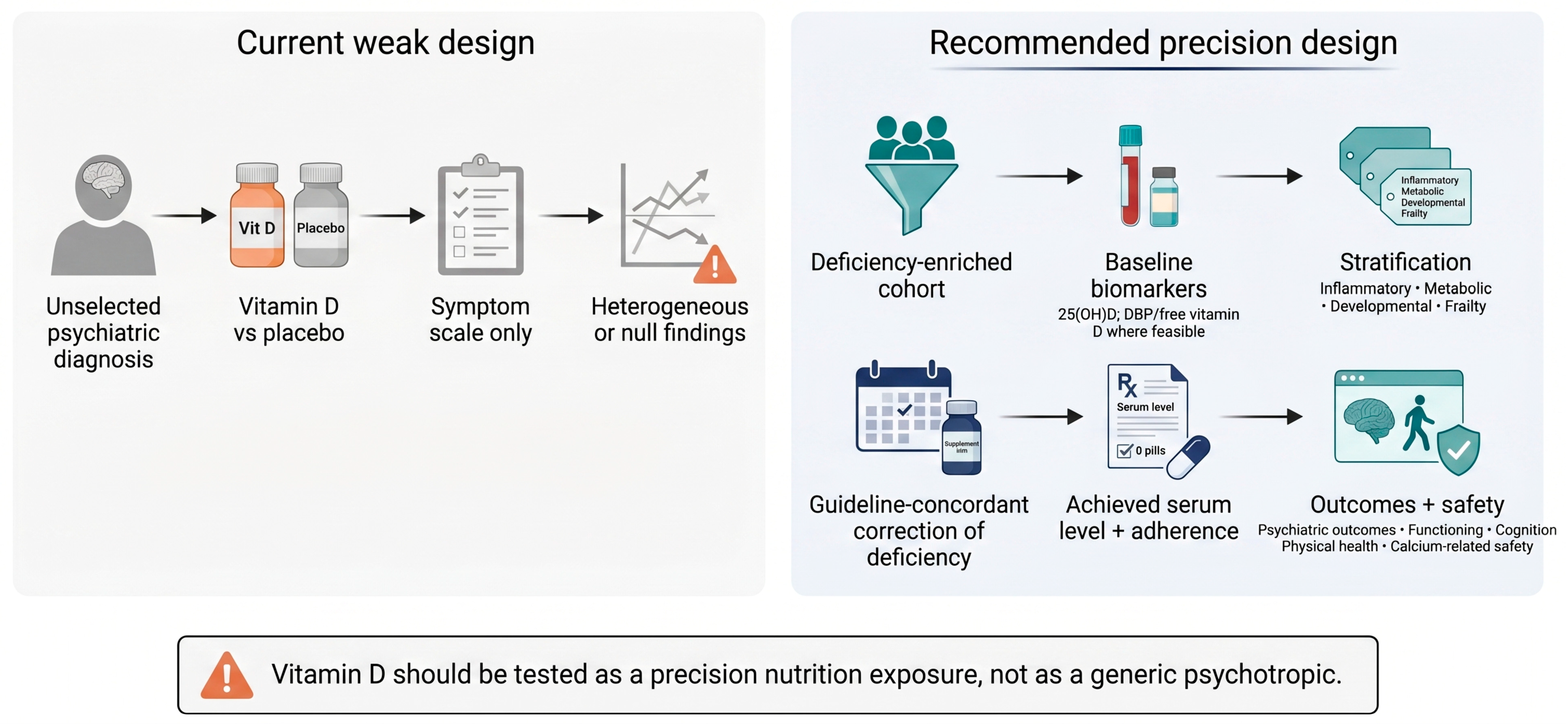
Vitamin D as a Lifespan Neuroimmune Signal in Psychiatry: From Developmental Risk to Precision Nutrition

 , ,
, ,  and
and 
Abstract
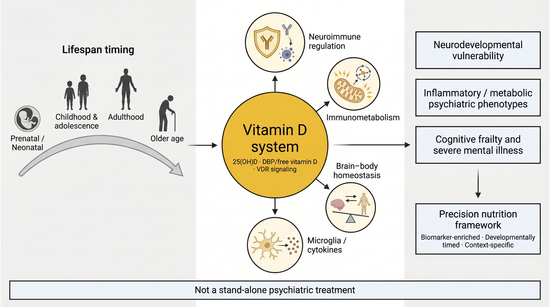
1. Introduction
2. Methods: Literature Search Strategy for a Narrative Review
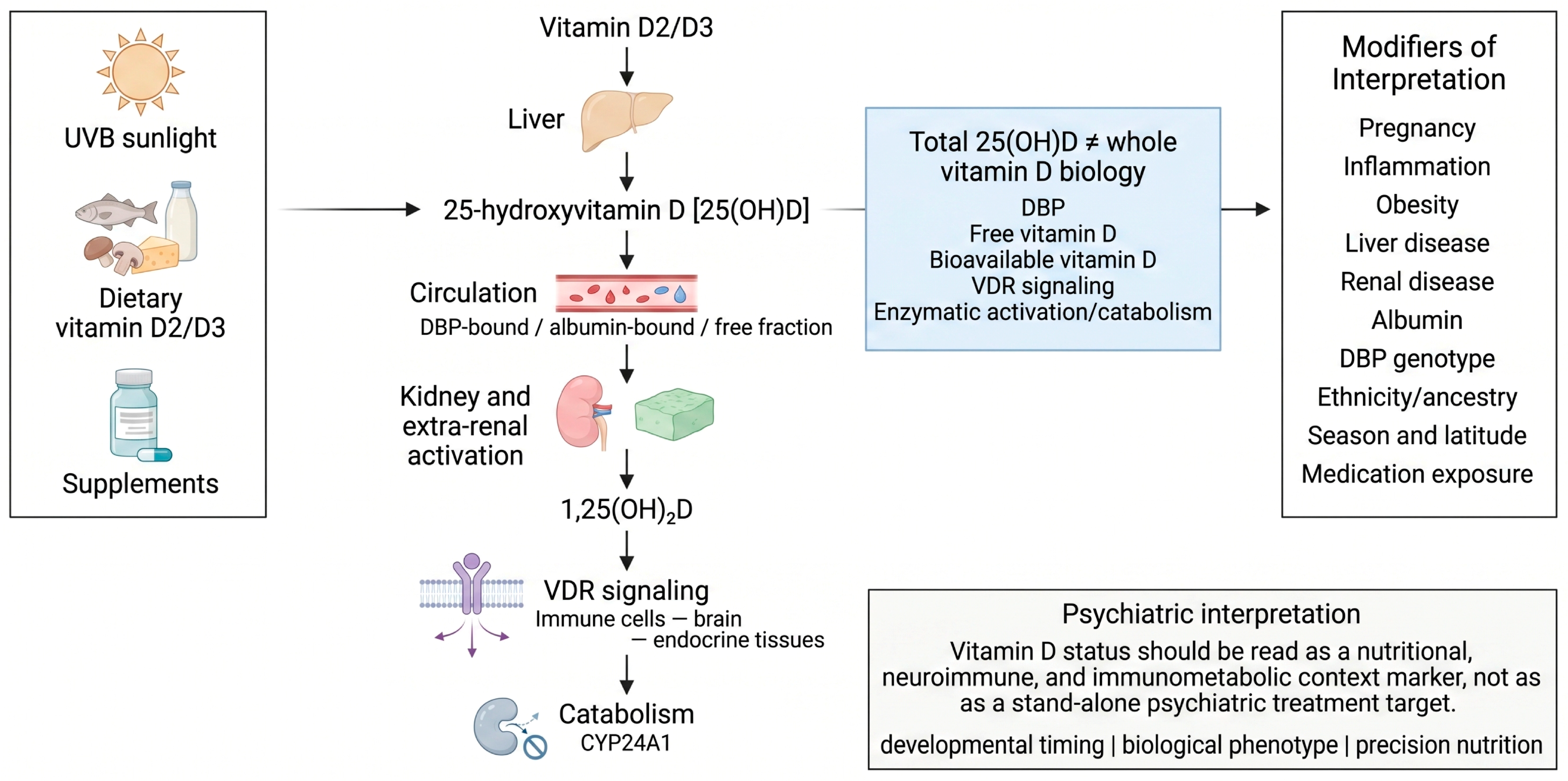
3. Vitamin D Biology: Why Total 25(OH)D Is Necessary but Not Sufficient
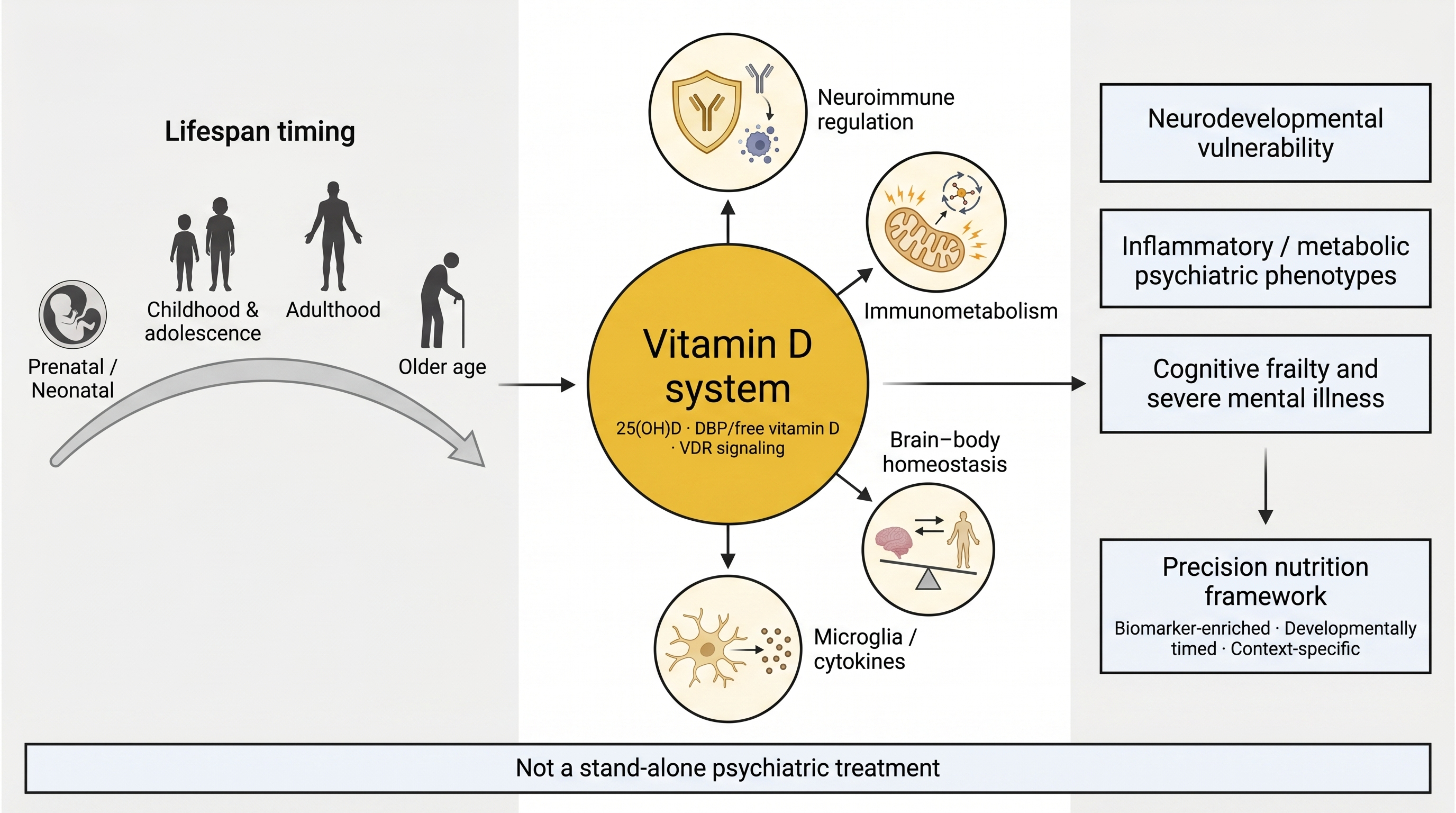
4. Why Psychiatry Needs a Lifespan Vitamin D Framework
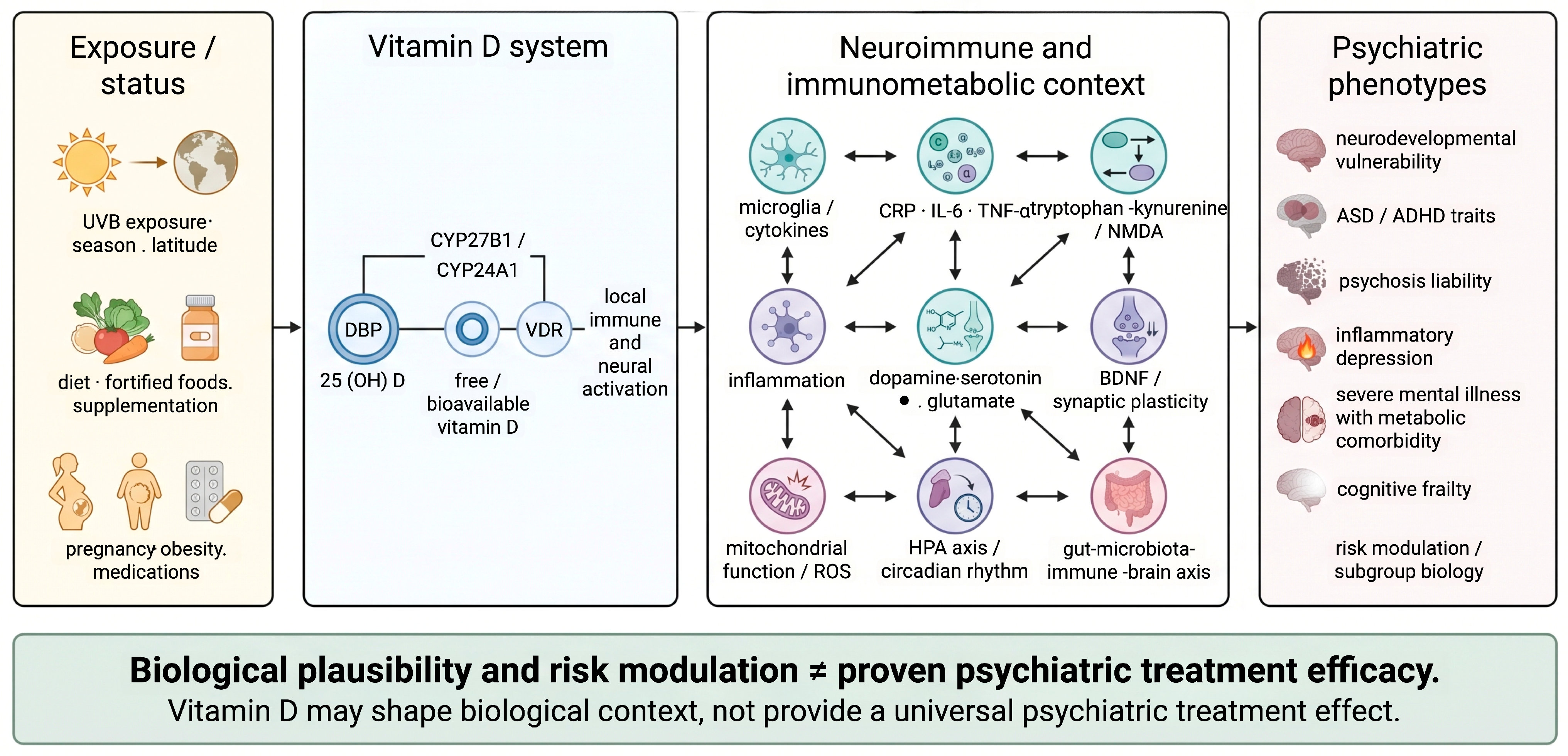
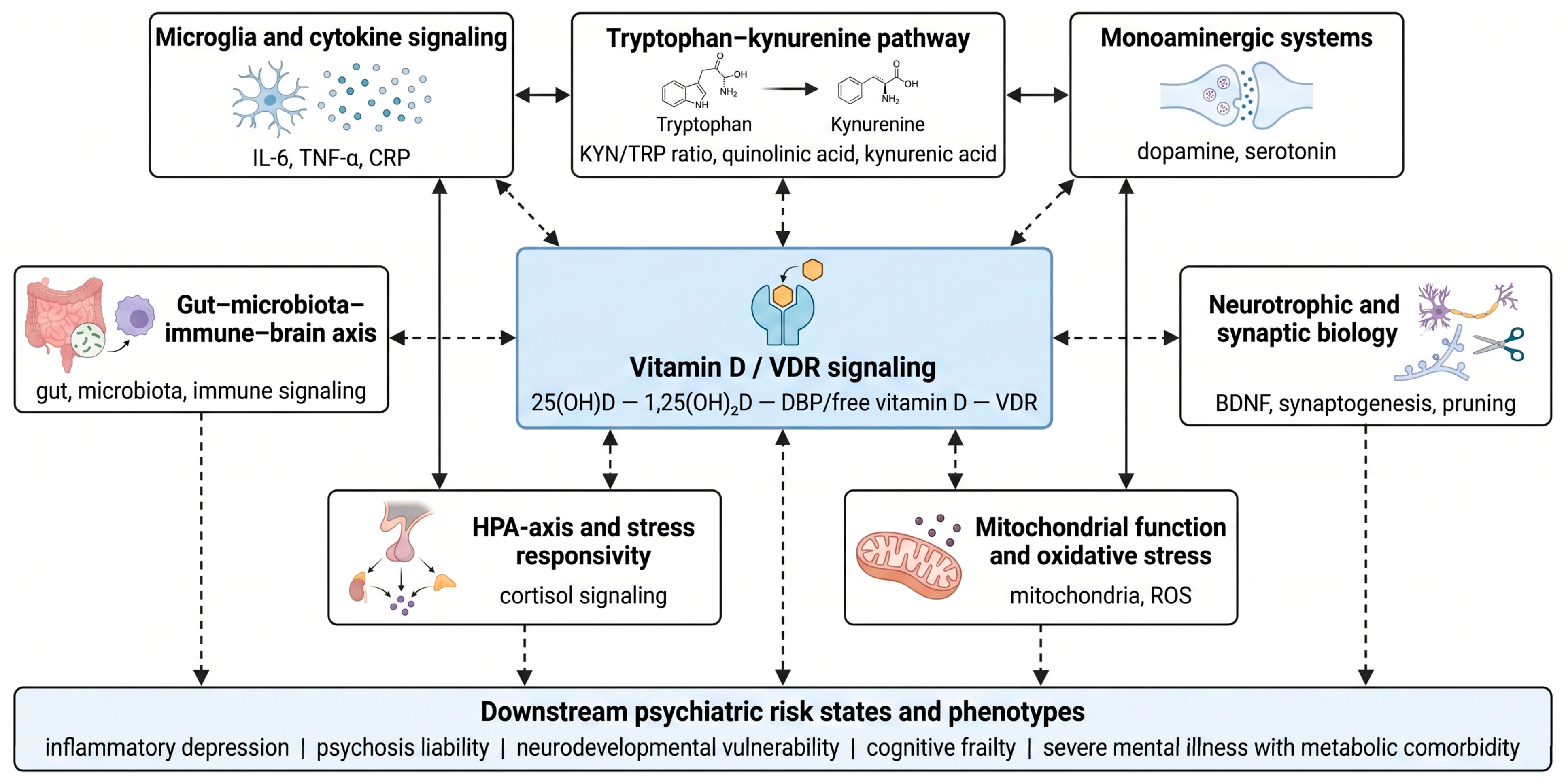
5. Mechanistic Convergence: Neuroimmune and Immunometabolic Pathways
6. Depressive Disorders: Separating Treatment Signal from Prevention Signal
7. Schizophrenia and Psychosis: Developmental Liability More than Late Symptom Treatment
8. Vitamin D, ADHD, and Autism Spectrum Disorder: Probabilistic Risk Modulation
9. Bipolar Disorder, Anxiety, Suicidality, Cognition, and Severe Mental Illness
10. Vitamin D as a Transdiagnostic Biomarker in Psychiatry
11. Clinical and Public Health Implications
12. Controversies and Limitations
13. Future Directions
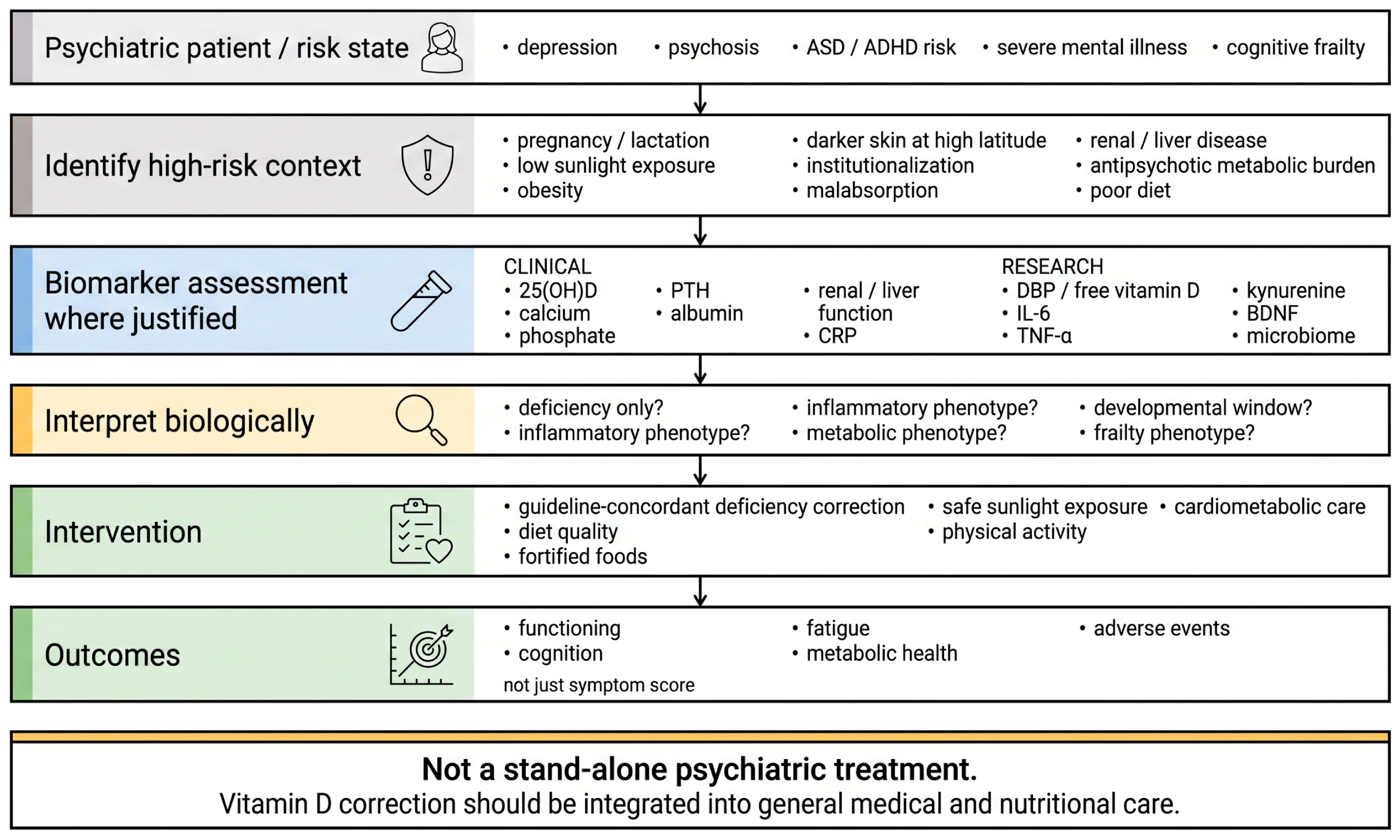
14. Evidence-to-Action Framework for Nutritional Psychiatry
15. Conclusions
Supplementary Materials
Author Contributions
Funding
Institutional Review Board Statement
Informed Consent Statement
Data Availability Statement
Acknowledgments
Conflicts of Interest
Abbreviations
| 1,25(OH)2D | 1,25-dihydroxyvitamin D |
| 25(OH)D | 25-hydroxyvitamin D |
| ADHD | attention-deficit/hyperactivity disorder |
| AI | artificial intelligence |
| ASD | autism spectrum disorder |
| BDNF | brain-derived neurotrophic factor |
| BMI | body mass index |
| CC BY | Creative Commons Attribution license |
| CI | confidence interval |
| CNS | central nervous system |
| COPSAC | Copenhagen Prospective Studies on Asthma in Childhood |
| COPYCH | Copenhagen Prospective Study on Neuro-PSYCHiatric Development |
| CRP | C-reactive protein |
| CYP2R1 | cytochrome P450 family 2 subfamily R member 1 |
| CYP24A1 | cytochrome P450 family 24 subfamily A member 1 |
| CYP27B1 | cytochrome P450 family 27 subfamily B member 1 |
| DBP | vitamin D-binding protein |
| DFEND | randomized clinical trial of vitamin D supplementation in early psychosis |
| DHCR7 | 7-dehydrocholesterol reductase |
| DSM | Diagnostic and Statistical Manual of Mental Disorders |
| GC | group-specific component gene |
| HbA1c | glycated hemoglobin |
| HPA | hypothalamic–pituitary–adrenal |
| ICD | International Classification of Diseases |
| IDO | indoleamine 2,3-dioxygenase |
| IL-6 | interleukin-6 |
| IU | international unit |
| MEDLINE | Medical Literature Analysis and Retrieval System Online |
| MR | Mendelian randomization |
| NADSYN1 | NAD synthetase 1 |
| NMDA | N-methyl-D-aspartate |
| OR | odds ratio |
| PANSS | Positive and Negative Syndrome Scale |
| PHQ-8 | Patient Health Questionnaire-8 |
| PRISMA | Preferred Reporting Items for Systematic Reviews and Meta-Analyses |
| PTH | parathyroid hormone |
| RCT | randomized controlled trial |
| ROS | reactive oxygen species |
| TDO | tryptophan 2,3-dioxygenase |
| TNF-α | tumor necrosis factor-alpha |
| UVB | ultraviolet B |
| VDR | vitamin D receptor |
| VITAL | Vitamin D and Omega-3 Trial |
| VITAL-DEP | Vitamin D and Omega-3 Trial-Depression Endpoint Prevention |
| Vitamin D2 | ergocalciferol |
| Vitamin D3 | cholecalciferol |
References
- Demay, M.B.; Pittas, A.G.; Bikle, D.D.; Diab, D.L.; Kiely, M.E.; Lazaretti-Castro, M.; Lips, P.; Mitchell, D.M.; Murad, M.H.; Powers, S.; et al. Vitamin D for the Prevention of Disease: An Endocrine Society Clinical Practice Guideline. J. Clin. Endocrinol. Metab. 2024, 109, 1907–1947. [Google Scholar] [CrossRef]
- Meza-Meza, M.R.; Ruiz-Ballesteros, A.I.; de la Cruz-Mosso, U. Functional effects of vitamin D: From nutrient to immunomodulator. Crit. Rev. Food Sci. Nutr. 2022, 62, 3042–3062. [Google Scholar] [CrossRef]
- Del Giudice, M.M.; Indolfi, C.; Strisciuglio, C. Vitamin D: Immunomodulatory Aspects. J. Clin. Gastroenterol. 2018, 52, S86–S88. [Google Scholar] [CrossRef] [PubMed]
- Artusa, P.; White, J.H. Vitamin D and its analogs in immune system regulation. Pharmacol. Rev. 2025, 77, 100032. [Google Scholar] [CrossRef]
- Giustina, A.; Bilezikian, J.P.; Adler, R.A.; Banfi, G.; Bikle, D.D.; Binkley, N.C.; Bollerslev, J.; Bouillon, R.; Brandi, M.L.; Casanueva, F.F.; et al. Consensus Statement on Vitamin D Status Assessment and Supplementation: Whys, Whens, and Hows. Endocr. Rev. 2024, 45, 625–654. [Google Scholar] [CrossRef]
- Liu, Q.; Li, Z.; Li, S.; Li, Y.; Pan, H.; Tao, Y. Vitamin D3 as an immunomodulatory agent: Molecular mechanisms, clinical translation, and precision therapeutic strategies. Front. Immunol. 2026, 17, 1770141. [Google Scholar] [CrossRef] [PubMed]
- Jaroslawska, J.; Ghosh Dastidar, R.; Carlberg, C. In vivo vitamin D target genes interconnect key signaling pathways of innate immunity. PLoS ONE 2024, 19, e0306426. [Google Scholar] [CrossRef]
- Michos, E.D.; Cainzos-Achirica, M.; Heravi, A.S.; Appel, L.J. Vitamin D, Calcium Supplements, and Implications for Cardiovascular Health: JACC Focus Seminar. J. Am. Coll. Cardiol. 2021, 77, 437–449. [Google Scholar] [CrossRef] [PubMed]
- Chun, R.F.; Peercy, B.E.; Adams, J.S.; Hewison, M. Vitamin D binding protein and monocyte response to 25-hydroxyvitamin D and 1,25-dihydroxyvitamin D: Analysis by mathematical modeling. PLoS ONE 2012, 7, e30773. [Google Scholar] [CrossRef] [PubMed]
- Meng, L.; Shapses, S.A.; Bikle, D.D.; Wang, X. Use of Vitamin D Binding Protein and 25-Hydroxyvitamin D Levels in Clinical Practice for Endocrinologists. Endocr. Pract. 2026, 32, 427–441. [Google Scholar] [CrossRef]
- Bikle, D.D.; Schwartz, J. Vitamin D Binding Protein, Total and Free Vitamin D Levels in Different Physiological and Pathophysiological Conditions. Front. Endocrinol. 2019, 10, 317. [Google Scholar] [CrossRef]
- Morris, G.; Puri, B.K.; Walker, A.J.; Maes, M.; Carvalho, A.F.; Bortolasci, C.C.; Walder, K.; Berk, M. Shared pathways for neuroprogression and somatoprogression in neuropsychiatric disorders. Neurosci. Biobehav. Rev. 2019, 107, 862–882. [Google Scholar] [CrossRef] [PubMed]
- Zeng, Y.; Chourpiliadis, C.; Hammar, N.; Seitz, C.; Valdimarsdóttir, U.A.; Fang, F.; Song, H.; Wei, D. Inflammatory Biomarkers and Risk of Psychiatric Disorders. JAMA Psychiatry 2024, 81, 1118–1129. [Google Scholar] [CrossRef] [PubMed]
- Thylur, D.S.; Goldsmith, D.R. Brick by Brick: Building a Transdiagnostic Understanding of Inflammation in Psychiatry. Harv. Rev. Psychiatry 2022, 30, 40–53. [Google Scholar] [CrossRef]
- Usemann, P.L.; David, F.S.; Brosch, K.; Stein, F.; Wroblewski, A.; Thomas-Odenthal, F.; Teutenberg, L.; Pfarr, J.-K.; Evermann, U.; Flinkenflügel, K.; et al. Genetic predisposition to inflammation and psychopathology: A transdiagnostic network analysis. J. Affect. Disord. 2026, 403, 121424. [Google Scholar] [CrossRef] [PubMed]
- Ronaldson, A.; de la Torre, J.A.; Gaughran, F.; Bakolis, I.; Hatch, S.L.; Hotopf, M.; Dregan, A. Prospective associations between vitamin D and depression in middle-aged adults: Findings from the UK Biobank cohort. Psychol. Med. 2022, 52, 1866–1874. [Google Scholar] [CrossRef]
- Horsdal, H.T.; Albiñana, C.; Zhu, Z.; Boelt, S.G.; Borbye-Lorenzen, N.; Cohen, A.S.; Skogstrand, K.; Melgaard, L.; MacSween, N.J.; Thorbek, M.J.; et al. Convergent evidence linking neonatal vitamin D status and risk of neurodevelopmental disorders: A Danish case-cohort study. Lancet Psychiatry 2025, 12, 410–420. [Google Scholar] [CrossRef]
- Okereke, O.I.; Reynolds, C.F., III; Mischoulon, D.; Chang, G.; Vyas, C.M.; Cook, N.R.; Weinberg, A.; Bubes, V.; Copeland, T.; Friedenberg, G.; et al. Effect of Long-term Vitamin D3 Supplementation vs Placebo on Risk of Depression or Clinically Relevant Depressive Symptoms and on Change in Mood Scores: A Randomized Clinical Trial. JAMA 2020, 324, 471–480. [Google Scholar] [CrossRef]
- Menéndez, S.G.; Manucha, W. Vitamin D as a Modulator of Neuroinflammation: Implications for Brain Health. Curr. Pharm. Des. 2024, 30, 323–332. [Google Scholar] [CrossRef] [PubMed]
- Li, Y.; Ma, Y.; Gao, L.; Wang, T.; Zhuang, Y.; Zhang, Y.; Zheng, L.; Liu, X. Upregulation of Microglial Sirt6 and Inhibition of Microglial Activation by Vitamin D3 in Lipopolysaccharide-stimulated Mice and BV-2 Cells. Neuroscience 2023, 526, 85–96. [Google Scholar] [CrossRef] [PubMed]
- Hu, Z.; Liu, R.; Zhang, B.; Zhang, Z.; Wang, S.; Dong, N.; Jiang, X.; Xu, J.; Su, A.; Zheng, D. FTO-dependent m6A Demethylation Activates Mxd1 to Enhance Vitamin D-induced Suppression of Neuroinflammation Via PTEN/AKT/PGC-1α Signaling Pathways in Microglia. Inflammation 2026, 49, 77. [Google Scholar]
- Kasatkina, L.A.; Tarasenko, A.S.; Krupko, O.O.; Kuchmerovska, T.M.; Lisakovska, O.O.; Trikash, I.O. Vitamin D deficiency induces the excitation/inhibition brain imbalance and the proinflammatory shift. Int. J. Biochem. Cell Biol. 2020, 119, 105665. [Google Scholar] [CrossRef] [PubMed]
- Gaughran, F.; Stringer, D.; Wojewodka, G.; Landau, S.; Smith, S.; Gardner-Sood, P.; Taylor, D.; Jordan, H.; Whiskey, E.; Krivoy, A.; et al. Effect of Vitamin D Supplementation on Outcomes in People with Early Psychosis: The DFEND Randomized Clinical Trial. JAMA Netw. Open 2021, 4, e2140858. [Google Scholar] [CrossRef]
- Ghaemi, S.; Zeraattalab-Motlagh, S.; Jayedi, A.; Shab-Bidar, S. The effect of vitamin D supplementation on depression: A systematic review and dose-response meta-analysis of randomized controlled trials. Psychol. Med. 2024, 54, 3999–4008. [Google Scholar] [CrossRef]
- Srifuengfung, M.; Srifuengfung, S.; Pummangura, C.; Pattanaseri, K.; Oon-Arom, A.; Srisurapanont, M. Efficacy and acceptability of vitamin D supplements for depressed patients: A systematic review and meta-analysis of randomized controlled trials. Nutrition 2023, 108, 111968. [Google Scholar] [CrossRef]
- Mikola, T.; Marx, W.; Lane, M.M.; Hockey, M.; Loughman, A.; Rajapolvi, S.; Rocks, T.; O’Neil, A.; Mischoulon, D.; Valkonen-Korhonen, M.; et al. The effect of vitamin D supplementation on depressive symptoms in adults: A systematic review and meta-analysis of randomized controlled trials. Crit. Rev. Food Sci. Nutr. 2023, 63, 11784–11801. [Google Scholar]
- Henderson, C.M.; Fink, S.L.; Bassyouni, H.; Argiropoulos, B.; Brown, L.; Laha, T.J.; Jackson, K.J.; Lewkonia, R.; Ferreira, P.; Hoofnagle, A.N.; et al. Vitamin D-Binding Protein Deficiency and Homozygous Deletion of the GC Gene. N. Engl. J. Med. 2019, 380, 1150–1157. [Google Scholar]
- Cesareo, R.; Attanasio, R.; Caputo, M.; Castello, R.; Chiodini, I.; Falchetti, A.; Guglielmi, R.; Papini, E.; Santonati, A.; Scillitani, A.; et al. Italian Association of Clinical Endocrinologists (AME) and Italian Chapter of the American Association of Clinical Endocrinologists (AACE) Position Statement: Clinical Management of Vitamin D Deficiency in Adults. Nutrients 2018, 10, 546. [Google Scholar] [CrossRef]
- Cui, X.; Gooch, H.; Petty, A.; McGrath, J.J.; Eyles, D. Vitamin D and the brain: Genomic and non-genomic actions. Mol. Cell. Endocrinol. 2017, 453, 131–143. [Google Scholar] [CrossRef] [PubMed]
- El-Atifi, M.; Dreyfus, M.; Berger, F.; Wion, D. Expression of CYP2R1 and VDR in human brain pericytes: The neurovascular vitamin D autocrine/paracrine model. Neuroreport 2015, 26, 245–248. [Google Scholar] [CrossRef] [PubMed]
- Stephenson, A.; Mamo, J.C.L.; Takechi, R.; Hackett, M.J.; Lam, V. Genetic, environmental and biomarker considerations delineating the regulatory effects of vitamin D on central nervous system function. Br. J. Nutr. 2020, 123, 41–58. [Google Scholar] [CrossRef]
- Ahmad, R.; Chowdhury, K.; Sinha, S.; Haque, M. Vitamin D and Brain Health. Adv. Exp. Med. Biol. 2026, 1493, 51–67. [Google Scholar]
- Lang, F.; Ma, K.; Leibrock, C.B. 1,25(OH)2D3 in Brain Function and Neuropsychiatric Disease. Neurosignals 2019, 27, 40–49. [Google Scholar] [PubMed]
- Kimura, S.; Tagami, S.; Mano, H.; Kittaka, A.; Ida, Y.; Takagi, Y.; Nakagawa, K.; Arai, T.; Yokota, S.; Tsugawa, N.; et al. Divergent roles of 25-hydroxyvitamin D3 and 1α,25-dihydroxyvitamin D3 in neural fate determination: A CYP27B1-dependent neuron formation and VDR-dependent astrocyte development. Biochem. Biophys. Res. Commun. 2025, 755, 151547. [Google Scholar] [CrossRef]
- Jiménez-Ortega, R.F.; López-Pérez, T.V.; Aparicio-Bautista, D.I.; Becerra-Cervera, A.; Patiño, N.; Aquino-Gálvez, A.; Hidalgo-Bravo, A.; Salmerón, J.; Rivera-Paredez, B.; Velázquez-Cruz, R. Genetic risk score constructed with common genetic variants in GCKR, FADS1, BCO1, and FGF21 is associated with lipid profile in Mexican adults. Nutr. Metab. Cardiovasc. Dis. 2026; in press. [CrossRef]
- Nissen, J.; Rasmussen, L.B.; Ravn-Haren, G.; Andersen, E.W.; Hansen, B.; Andersen, R.; Mejborn, H.; Madsen, K.H.; Vogel, U. Common variants in CYP2R1 and GC genes predict vitamin D concentrations in healthy Danish children and adults. PLoS ONE 2014, 9, e89907. [Google Scholar] [CrossRef]
- Jolliffe, D.A.; Walton, R.T.; Griffiths, C.J.; Martineau, A.R. Single nucleotide polymorphisms in the vitamin D pathway associating with circulating concentrations of vitamin D metabolites and non-skeletal health outcomes: Review of genetic association studies. J. Steroid Biochem. Mol. Biol. 2016, 164, 18–29. [Google Scholar] [CrossRef] [PubMed]
- Kämpe, A.; Enlund-Cerullo, M.; Valkama, S.; Holmlund-Suila, E.; Rosendahl, J.; Hauta-Alus, H.; Pekkinen, M.; Andersson, S.; Mäkitie, O. Genetic variation in GC and CYP2R1 affects 25-hydroxyvitamin D concentration and skeletal parameters: A genome-wide association study in 24-month-old Finnish children. PLoS Genet. 2019, 15, e1008530. [Google Scholar] [CrossRef] [PubMed]
- Moon, R.J.; Harvey, N.C.; Cooper, C.; D’Angelo, S.; Curtis, E.M.; Crozier, S.R.; Barton, S.J.; Robinson, S.M.; Godfrey, K.M.; Graham, N.J. Response to Antenatal Cholecalciferol Supplementation Is Associated with Common Vitamin D-Related Genetic Variants. J. Clin. Endocrinol. Metab. 2017, 102, 2941–2949. [Google Scholar] [CrossRef]
- Manousaki, D.; Mitchell, R.; Dudding, T.; Haworth, S.; Harroud, A.; Forgetta, V.; Shah, R.L.; Luan, J.; Langenberg, C.; Timpson, N.J.; et al. Genome-wide Association Study for Vitamin D Levels Reveals 69 Independent Loci. Am. J. Hum. Genet. 2020, 106, 327–337. [Google Scholar] [CrossRef]
- De Santana, K.V.d.S.; Oliver, S.L.; Mendes, M.M.; Lanham-New, S.; Charlton, K.E.; Ribeiro, H. Association between vitamin D status and lifestyle factors in Brazilian women: Implications of Sun Exposure Levels, Diet, and Health. EClinicalMedicine 2022, 47, 101400. [Google Scholar]
- Alcalá-Santiago, Á.; García-Villanova, B.; Ruíz-López, M.D.; Gil, Á.; Rodriguez-Barranco, M.; Sánchez, M.J.; Molina-Montes, E. Dietary and lifestyle determinants of vitamin D status in the UK Biobank Cohort study for predictive modeling. J. Nutr. Biochem. 2025, 142, 109919. [Google Scholar] [CrossRef]
- Scully, H.; Laird, E.J.; Healy, M.; Crowley, V.; Walsh, J.B.; McCarroll, K. Vitamin D: Determinants of status, indications for testing and knowledge in a convenience sample of Irish adults. Br. J. Nutr. 2023, 130, 1144–1154. [Google Scholar] [CrossRef]
- Melough, M.M.; Murphy, L.E.; Graff, J.C.; Derefinko, K.J.; LeWinn, K.Z.; Bush, N.R.; Enquobahrie, D.A.; Loftus, C.T.; Kocak, M.; Sathyanarayana, S. Maternal Plasma 25-Hydroxyvitamin D during Gestation Is Positively Associated with Neurocognitive Development in Offspring at Age 4–6 Years. J. Nutr. 2021, 151, 132–139. [Google Scholar] [CrossRef]
- García-Serna, A.M.; Morales, E. Neurodevelopmental effects of prenatal vitamin D in humans: Systematic review and meta-analysis. Mol. Psychiatry 2020, 25, 2468–2481. [Google Scholar]
- Palacios, C.; Trak-Fellermeier, M.A.; Martinez, R.X.; Lopez-Perez, L.; Lips, P.; Salisi, J.A.; John, J.C.; Peña-Rosas, J.P. Regimens of vitamin D supplementation for women during pregnancy. Cochrane Database Syst. Rev. 2019, 10, CD013446. [Google Scholar]
- Sass, L.; Vinding, R.K.; Stokholm, J.; Bjarnadóttir, E.; Noergaard, S.; Thorsen, J.; Sunde, R.B.; McGrath, J.; Bønnelykke, K.; Chawes, B. High-Dose Vitamin D Supplementation in Pregnancy and Neurodevelopment in Childhood: A Prespecified Secondary Analysis of a Randomized Clinical Trial. JAMA Netw. Open 2020, 3, e2026018. [Google Scholar]
- Lisi, G.; Ribolsi, M.; Siracusano, A.; Niolu, C. Maternal Vitamin D and its Role in Determining Fetal Origins of Mental Health. Curr. Pharm. Des. 2020, 26, 2497–2509. [Google Scholar] [CrossRef] [PubMed]
- Melough, M.M.; McGrath, M.; Palmore, M.; Collett, B.R.; Kerver, J.M.; Hockett, C.W.; Schmidt, R.J.; Kelly, R.S.; Lyall, K.; Zhao, Q.; et al. Gestational vitamin D concentration and child cognitive development: A longitudinal cohort study in the Environmental influences on Child Health Outcomes Program. Am. J. Clin. Nutr. 2025, 122, 571–581. [Google Scholar] [CrossRef]
- Albiñana, C.; Boelt, S.G.; Cohen, A.S.; Zhu, Z.; Musliner, K.L.; Vilhjálmsson, B.J.; McGrath, J.J. Developmental exposure to vitamin D deficiency and subsequent risk of schizophrenia. Schizophr. Res. 2022, 247, 26–32. [Google Scholar] [CrossRef] [PubMed]
- Cui, X.; McGrath, J.J.; Burne, T.H.J.; Eyles, D.W. Vitamin D and schizophrenia: 20 years on. Mol. Psychiatry 2021, 26, 2708–2720. [Google Scholar] [CrossRef]
- Eyles, D.W.; Trzaskowski, M.; Vinkhuyzen, A.A.E.; Mattheisen, M.; Meier, S.; Gooch, H.; Anggono, V.; Cui, X.; Tan, M.C.; Burne, T.H.J.; et al. The association between neonatal vitamin D status and risk of schizophrenia. Sci. Rep. 2018, 8, 17692. [Google Scholar] [CrossRef]
- McGrath, J.J.; Eyles, D.W.; Pedersen, C.B.; Anderson, C.; Ko, P.; Burne, T.H.; Norgaard-Pedersen, B.; Hougaard, D.M.; Mortensen, P.B. Neonatal vitamin D status and risk of schizophrenia: A population-based case-control study. Arch. Gen. Psychiatry 2010, 67, 889–894. [Google Scholar]
- Aagaard, K.; Jepsen, J.R.M.; Sevelsted, A.; Horner, D.; Vinding, R.; Rosenberg, J.B.; Brustad, N.; Eliasen, A.; Mohammadzadeh, P.; Følsgaard, N.; et al. High-dose vitamin D3 supplementation in pregnancy and risk of neurodevelopmental disorders in the children at age 10: A randomized clinical trial. Am. J. Clin. Nutr. 2024, 119, 362–370. [Google Scholar]
- Sucksdorff, M.; Brown, A.S.; Chudal, R.; Surcel, H.-M.; Hinkka-Yli-Salomäki, S.; Cheslack-Postava, K.; Gyllenberg, D.; Sourander, A. Maternal Vitamin D Levels and the Risk of Offspring Attention-Deficit/Hyperactivity Disorder. J. Am. Acad. Child Adolesc. Psychiatry 2021, 60, 142–151.e2. [Google Scholar] [CrossRef]
- López-Vicente, M.; Sunyer, J.; Lertxundi, N.; González, L.; Rodríguez-Dehli, C.; Espada Saenz-Torre, M.; Vrijheid, M.; Tardón, A.; Llop, S.; Torrent, M.; et al. Maternal circulating Vitamin D3 levels during pregnancy and behaviour across childhood. Sci. Rep. 2019, 9, 14792. [Google Scholar] [CrossRef]
- Lee, B.K.; Eyles, D.W.; Magnusson, C.; Newschaffer, C.J.; McGrath, J.J.; Kvaskoff, D.; Ko, P.; Dalman, C.; Karlsson, H.; Gardner, R.M. Developmental vitamin D and autism spectrum disorders: Findings from the Stockholm Youth Cohort. Mol. Psychiatry 2021, 26, 1578–1588. [Google Scholar] [CrossRef] [PubMed]
- Lee, J.Y.; Jung, S.H.; Ahn, E.H.; Ryu, H.M. Assessing the influence of maternal vitamin D deficiency in early pregnancy and subsequent improvement on perinatal outcomes and long-term child development: A retrospective cohort study. PLoS ONE 2025, 20, e0323146. [Google Scholar]
- Stroehlein, J.K.; Wallqvist, J.; Iannizzi, C.; Mikolajewska, A.; Metzendorf, M.-I.; Benstoem, C.; Meybohm, P.; Becker, M.; Skoetz, N.; Stegemann, M.; et al. Vitamin D supplementation for the treatment of COVID-19: A living systematic review. Cochrane Database Syst. Rev. 2021, 5, CD015043. [Google Scholar] [PubMed]
- Cutolo, M.; Smith, V.; Paolino, S.; Gotelli, E. Involvement of the secosteroid vitamin D in autoimmune rheumatic diseases and COVID-19. Nat. Rev. Rheumatol. 2023, 19, 265–287. [Google Scholar] [CrossRef] [PubMed]
- Lauretani, F.; Salvi, M.; Zucchini, I.; Testa, C.; Cattabiani, C.; Arisi, A.; Maggio, M. Relationship between Vitamin D and Immunity in Older People with COVID-19. Int. J. Environ. Res. Public Health 2023, 20, 5432. [Google Scholar] [CrossRef] [PubMed]
- Patchen, B.K.; Best, C.M.; Boiteau, J.; Solvik, B.S.; Vonderschmidt, A.; Xu, J.; Cohen, R.T.; Cassano, P.A. Vitamin D supplementation in pregnant or breastfeeding women or young children for preventing asthma. Cochrane Database Syst. Rev. 2025, 8, CD013396. [Google Scholar]
- Teymoori-Rad, M.; Shokri, F.; Salimi, V.; Marashi, S.M. The interplay between vitamin D and viral infections. Rev. Med. Virol. 2019, 29, e2032. [Google Scholar] [CrossRef] [PubMed]
- Kaviani, M.; Nikooyeh, B.; Etesam, F.; Behnagh, S.J.; Kangarani, H.M.; Arefi, M.; Yaghmaei, P.; Neyestani, T.R. Effects of vitamin D supplementation on depression and some selected pro-inflammatory biomarkers: A double-blind randomized clinical trial. BMC Psychiatry 2022, 22, 694. [Google Scholar] [CrossRef]
- Jamilian, H.; Amirani, E.; Milajerdi, A.; Kolahdooz, F.; Mirzaei, H.; Zaroudi, M.; Ghaderi, A.; Asemi, Z. The effects of vitamin D supplementation on mental health, and biomarkers of inflammation and oxidative stress in patients with psychiatric disorders: A systematic review and meta-analysis of randomized controlled trials. Prog. Neuropsychopharmacol. Biol. Psychiatry 2019, 94, 109651. [Google Scholar] [CrossRef] [PubMed]
- Schlarbaum, L.; Jankovic, N.; Bühlmeier, J.; Hohoff, E.; Dankers, R.; Engler, H.; Hirtz, R.; Zwanziger, D.; Grasemann, C.; Peters, T.; et al. Does inflammation moderate the effect of vitamin D supplementation on depressive symptoms? Results of an interventional study in children and adolescents. Eur. J. Nutr. 2026, 65, 109. [Google Scholar] [CrossRef]
- Grudet, C.; Wolkowitz, O.M.; Mellon, S.H.; Malm, J.; Reus, V.I.; Brundin, L.; Nier, B.M.; Dhabhar, F.S.; Hough, C.M.; Westrin, Å.; et al. Vitamin D and inflammation in major depressive disorder. J. Affect. Disord. 2020, 267, 33–41. [Google Scholar] [CrossRef]
- Boontanrart, M.; Hall, S.D.; Spanier, J.A.; Hayes, C.E.; Olson, J.K. Vitamin D3 alters microglia immune activation by an IL-10 dependent SOCS3 mechanism. J. Neuroimmunol. 2016, 292, 126–136. [Google Scholar] [CrossRef]
- Dulla, Y.A.T.; Kurauchi, Y.; Hisatsune, A.; Seki, T.; Shudo, K.; Katsuki, H. Regulatory Mechanisms of Vitamin D3 on Production of Nitric Oxide and Pro-inflammatory Cytokines in Microglial BV-2 Cells. Neurochem. Res. 2016, 41, 2848–2858. [Google Scholar] [CrossRef]
- Lee, P.W.; Selhorst, A.; Lampe, S.G.; Liu, Y.; Yang, Y.; Lovett-Racke, A.E. Neuron-Specific Vitamin D Signaling Attenuates Microglia Activation and CNS Autoimmunity. Front. Neurol. 2020, 11, 19. [Google Scholar] [CrossRef] [PubMed]
- Terock, J.; Hannemann, A.; Van der Auwera, S.; Janowitz, D.; Spitzer, C.; Bonk, S.; Völzke, H.; Grabe, H.J. Posttraumatic stress disorder is associated with reduced vitamin D levels and functional polymorphisms of the vitamin D binding-protein in a population-based sample. Prog. Neuropsychopharmacol. Biol. Psychiatry 2020, 96, 109760. [Google Scholar]
- Casseb, G.A.S.; Kaster, M.P.; Rodrigues, A.L.S. Potential Role of Vitamin D for the Management of Depression and Anxiety. CNS Drugs 2019, 33, 619–637. [Google Scholar] [CrossRef]
- Marazziti, D.; Parra, E.; Palermo, S.; Barberi, F.M.; Buccianelli, B.; Ricciardulli, S.; Cappelli, A.; Mucci, F.; Dell’Osso, L. Vitamin D: A Pleiotropic Hormone with Possible Psychotropic Activities. Curr. Med. Chem. 2021, 28, 3843–3864. [Google Scholar] [CrossRef]
- Sales, P.M.G.; Schrage, E.; Coico, R.; Pato, M. Linking nervous and immune systems in psychiatric illness: A meta-analysis of the kynurenine pathway. Brain Res. 2023, 1800, 148190. [Google Scholar] [CrossRef]
- Marx, W.; McGuinness, A.J.; Rocks, T.; Ruusunen, A.; Cleminson, J.; Walker, A.J.; Gomes-da-Costa, S.; Lane, M.; Sanches, M.; Diaz, A.P.; et al. The kynurenine pathway in major depressive disorder, bipolar disorder, and schizophrenia: A meta-analysis of 101 studies. Mol. Psychiatry 2021, 26, 4158–4178. [Google Scholar] [PubMed]
- Majewski, M.; Kozłowska, A.; Thoene, M.; Lepiarczyk, E.; Grzegorzewski, W.J. Overview of the role of vitamins and minerals on the kynurenine pathway in health and disease. J. Physiol. Pharmacol. 2016, 67, 3–19. [Google Scholar]
- Savitz, J. The kynurenine pathway: A finger in every pie. Mol. Psychiatry 2020, 25, 131–147. [Google Scholar] [CrossRef]
- Rihal, V.; Khan, H.; Kaur, A.; Singh, T.G.; Abdel-Daim, M.M. Therapeutic and mechanistic intervention of vitamin D in neuropsychiatric disorders. Psychiatry Res. 2022, 317, 114782. [Google Scholar] [CrossRef] [PubMed]
- Khairy, E.Y.; Attia, M.M. Protective effects of vitamin D on neurophysiologic alterations in brain aging: Role of brain-derived neurotrophic factor (BDNF). Nutr. Neurosci. 2021, 24, 650–659. [Google Scholar] [CrossRef] [PubMed]
- Kouba, B.R.; Rodrigues, A.L.S. Neuroplasticity-related effects of vitamin D relevant to its neuroprotective effects: A narrative review. Pharmacol. Biochem. Behav. 2024, 245, 173899. [Google Scholar] [CrossRef]
- Sosa-Díaz, E.; Hernández-Cruz, E.Y.; Pedraza-Chaverri, J. The role of vitamin D on redox regulation and cellular senescence. Free Radic. Biol. Med. 2022, 193, 253–273. [Google Scholar] [CrossRef]
- Dzik, K.P.; Kaczor, J.J. Mechanisms of vitamin D on skeletal muscle function: Oxidative stress, energy metabolism and anabolic state. Eur. J. Appl. Physiol. 2019, 119, 825–839. [Google Scholar] [CrossRef]
- Marón, F.J.M.; Ferder, L.; Reiter, R.J.; Manucha, W. Daily and seasonal mitochondrial protection: Unraveling common possible mechanisms involving vitamin D and melatonin. J. Steroid Biochem. Mol. Biol. 2020, 199, 105595. [Google Scholar] [CrossRef] [PubMed]
- Matsumoto, M.; Yanagisawa, N.; Iida, K. Vitamin D deficiency selectively exacerbates mitochondrial dysfunction in receptor-rich soleus muscle during disuse-induced atrophy. J. Steroid Biochem. Mol. Biol. 2026, 260, 106999. [Google Scholar] [CrossRef]
- Ashcroft, S.P.; Fletcher, G.; Philp, A.M.; Jenkinson, C.; Das, S.; Hansbro, P.M.; Atherton, P.J.; Philp, A. Diet-induced vitamin D deficiency reduces skeletal muscle mitochondrial respiration. J. Endocrinol. 2021, 249, 113–124. [Google Scholar] [CrossRef] [PubMed]
- Mohd Ghozali, N.; Giribabu, N.; Salleh, N. Mechanisms Linking Vitamin D Deficiency to Impaired Metabolism: An Overview. Int. J. Endocrinol. 2022, 2022, 6453882. [Google Scholar] [CrossRef]
- Zhu, J.-L.; Luo, W.-W.; Cheng, X.; Li, Y.; Zhang, Q.-Z.; Peng, W.-X. Vitamin D deficiency and Schizophrenia in Adults: A Systematic Review and Meta-analysis of Observational Studies. Psychiatry Res. 2020, 288, 112959. [Google Scholar] [CrossRef] [PubMed]
- US Preventive Services Task Force; Krist, A.H.; Davidson, K.W.; Mangione, C.M.; Cabana, M.; Caughey, A.B.; Davis, E.M.; Donahue, K.E.; Doubeni, C.A.; Epling, J.W., Jr.; et al. Screening for Vitamin D Deficiency in Adults: US Preventive Services Task Force Recommendation Statement. JAMA 2021, 325, 1436–1442. [Google Scholar]
- Musazadeh, V.; Keramati, M.; Ghalichi, F.; Kavyani, Z.; Ghoreishi, Z.; Alras, K.A.; Albadawi, N.; Salem, A.; Albadawi, M.I.; Salem, R.; et al. Vitamin D protects against depression: Evidence from an umbrella meta-analysis on interventional and observational meta-analyses. Pharmacol. Res. 2023, 187, 106605. [Google Scholar] [CrossRef]
- Anglin, R.E.S.; Samaan, Z.; Walter, S.D.; McDonald, S.D. Vitamin D deficiency and depression in adults: Systematic review and meta-analysis. Br. J. Psychiatry 2013, 202, 100–107. [Google Scholar] [CrossRef]
- Di Gessa, G.; Biddulph, J.P.; Zaninotto, P.; de Oliveira, C. Changes in vitamin D levels and depressive symptoms in later life in England. Sci. Rep. 2021, 11, 7724. [Google Scholar] [CrossRef]
- Xie, F.; Huang, T.; Lou, D.; Fu, R.; Ni, C.; Hong, J.; Ruan, L. Effect of vitamin D supplementation on the incidence and prognosis of depression: An updated meta-analysis based on randomized controlled trials. Front. Public Health 2022, 10, 903547. [Google Scholar] [CrossRef] [PubMed]
- Department of Veterans Affairs; Department of Defense. VA/DoD Clinical Practice Guideline for the Management of Major Depressive Disorder; Provider Summary; Version 4.0.; Department of Veterans Affairs: Washington, DC, USA; Department of Defense: Washington, VA, USA, 2022. [Google Scholar]
- Płudowski, P.; Kos-Kudła, B.; Walczak, M.; Fal, A.; Zozulińska-Ziółkiewicz, D.; Sieroszewski, P.; Peregud-Pogorzelski, J.; Lauterbach, R.; Targowski, T.; Lewiński, A.; et al. Guidelines for Preventing and Treating Vitamin D Deficiency: A 2023 Update in Poland. Nutrients 2023, 15, 695. [Google Scholar] [CrossRef]
- Suneson, K.; Grudet, C.; Ventorp, F.; Malm, J.; Asp, M.; Westrin, Å.; Lindqvist, D. An inflamed subtype of difficult-to-treat depression. Prog. Neuropsychopharmacol. Biol. Psychiatry 2023, 125, 110763. [Google Scholar] [CrossRef]
- Firth, J.; Carney, R.; Stubbs, B.; Teasdale, S.B.; Vancampfort, D.; Ward, P.B.; Berk, M.; Sarris, J. Nutritional Deficiencies and Clinical Correlates in First-Episode Psychosis: A Systematic Review and Meta-analysis. Schizophr. Bull. 2018, 44, 1275–1292. [Google Scholar] [CrossRef]
- Lally, J.; Ajnakina, O.; Singh, N.; Gardner-Sood, P.; Stubbs, B.; Stringer, D.; Di Forti, M.; David, A.S.; Smith, S.; Murray, R.M.; et al. Vitamin D and clinical symptoms in First Episode Psychosis (FEP): A prospective cohort study. Schizophr. Res. 2019, 204, 381–388. [Google Scholar] [CrossRef] [PubMed]
- Valipour, G.; Saneei, P.; Esmaillzadeh, A. Serum vitamin D levels in relation to schizophrenia: A systematic review and meta-analysis of observational studies. J. Clin. Endocrinol. Metab. 2014, 99, 3863–3872. [Google Scholar] [CrossRef] [PubMed]
- van der Leeuw, C.; de Witte, L.D.; Stellinga, A.; van der Ley, C.; Bruggeman, R.; Kahn, R.S.; van Os, J.; Marcelis, M.; for G.R.O.U.P. Vitamin D concentration and psychotic disorder: Associations with disease status, clinical variables and urbanicity. Psychol. Med. 2020, 50, 1680–1686. [Google Scholar] [CrossRef]
- Tsiglopoulos, J.; Pearson, N.; Mifsud, N.; Castagnini, E.; Allott, K.; Thompson, A.; Killackey, E.; McGorry, P.; O’Donoghue, B. The prevalence of vitamin D deficiency and associated factors in first-episode psychosis. Early Interv. Psychiatry 2024, 18, 237–242. [Google Scholar] [CrossRef]
- Cereda, G.; Enrico, P.; Ciappolino, V.; Delvecchio, G.; Brambilla, P. The role of vitamin D in bipolar disorder: Epidemiology and influence on disease activity. J. Affect. Disord. 2021, 278, 209–217. [Google Scholar] [CrossRef]
- Pavlović, Z.; Stevanović, M.; Krstić, A.; Ivković, I.; Vujčić, M.; Bukurecki, Z.; Jakovljević, B.; Latas, M. Vitamin D Deficiency in Bipolar Disorder: Prevalence, Sociodemographic and Clinical Characteristics. Hum. Psychopharmacol. Clin. Exp. 2026, 41, e70045. [Google Scholar] [CrossRef]
- Van Rheenen, T.E.; Ringin, E.; Karantonis, J.A.; Furlong, L.; Bozaoglu, K.; Rossell, S.L.; Berk, M.; Balanzá-Martínez, V. A preliminary investigation of the clinical and cognitive correlates of circulating vitamin D in bipolar disorder. Psychiatry Res. 2023, 320, 115013. [Google Scholar] [CrossRef]
- Silva, M.R.M.; Barros, W.M.A.; da Silva, M.L.; da Silva, J.M.L.; da Silva Souza, A.P.; da Silva, A.B.J.; de Sousa Fernandes, M.S.; de Souza, S.L.; de Oliveira, V.N.S. Relationship between vitamin D deficiency and psychophysiological variables: A systematic review of the literature. Clinics 2021, 76, e3155. [Google Scholar] [CrossRef]
- Borges-Vieira, J.G.; Cardoso, C.K.S. Efficacy of B-vitamins and vitamin D therapy in improving depressive and anxiety disorders: A systematic review of randomized controlled trials. Nutr. Neurosci. 2023, 26, 187–207. [Google Scholar] [CrossRef]
- Yu, J.; Mohammad, S.N.; Khachatryan, L.G.; Mohammed, J.S.; Menon, S.V.; Kaur, M.; Sapaev, I.; Jabir, M.S.; Husseen, B.; Azizi, H. Risk of suicide, suicide attempt, and suicidal ideation among people with vitamin D deficiency: A systematic review and meta-analysis. BMC Psychiatry 2025, 25, 177. [Google Scholar] [CrossRef]
- Lavigne, J.E.; Gibbons, J.B. The association between vitamin D serum levels, supplementation, and suicide attempts and intentional self-harm. PLoS ONE 2023, 18, e0279166. [Google Scholar] [CrossRef] [PubMed]
- Ceolin, G.; Mano, G.P.R.; Hames, N.S.; Antunes, L.D.C.; Brietzke, E.; Rieger, D.K.; Moreira, J.D. Vitamin D, Depressive Symptoms, and Covid-19 Pandemic. Front. Neurosci. 2021, 15, 670879. [Google Scholar] [CrossRef]
- Umhau, J.C.; George, D.T.; Heaney, R.P.; Lewis, M.D.; Ursano, R.J.; Heilig, M.; Hibbeln, J.R.; Schwandt, M.L. Low vitamin D status and suicide: A case-control study of active duty military service members. PLoS ONE 2013, 8, e51543. [Google Scholar] [CrossRef]
- Grudet, C.; Malm, J.; Westrin, A.; Brundin, L. Suicidal patients are deficient in vitamin D, associated with a pro-inflammatory status in the blood. Psychoneuroendocrinology 2014, 50, 210–219. [Google Scholar] [CrossRef] [PubMed]
- Postolache, T.T.; Akram, F.; Lee, E.E.; Lowry, C.A.; Stiller, J.W.; Brenner, L.A.; Streeten, E.A.; Turecki, G.; Dwivedi, Y. Increased brain vitamin D receptor expression and decreased expression of cathelicidin antimicrobial peptide in individuals who died by suicide. J. Psychiatr. Res. 2020, 125, 75–84. [Google Scholar] [CrossRef]
- Kang, J.H.; Vyas, C.M.; Okereke, O.I.; Ogata, S.; Albert, M.; Lee, I.-M.; D’Agostino, D.; Buring, J.E.; Cook, N.R.; Grodstein, F.; et al. Effect of vitamin D on cognitive decline: Results from two ancillary studies of the VITAL randomized trial. Sci. Rep. 2021, 11, 23253. [Google Scholar] [CrossRef]
- Pham, H.; Waterhouse, M.; Rahman, S.; Baxter, C.; Romero, B.D.; McLeod, D.S.A.; Armstrong, B.K.; Ebeling, P.R.; English, D.R.; Hartel, G.; et al. Vitamin D supplementation and cognition-Results from analyses of the D-Health trial. J. Am. Geriatr. Soc. 2023, 71, 1773–1784. [Google Scholar] [CrossRef]
- Behrouzi, R.; Shahinfar, H.; Jazayeri, S. Effects of Vitamin D Supplementation on Cognitive Function in Older Adults: A Grading of Recommendations Assessment, Development, and Evaluation (GRADE) Methodology-Assessed Systematic Review and Meta-Analysis of Randomized Clinical Trials. Nutr. Rev. 2026, nuaf284. [Google Scholar] [CrossRef] [PubMed]
- Chen, L.-J.; Sha, S.; Stocker, H.; Brenner, H.; Schöttker, B. The associations of serum vitamin D status and vitamin D supplements use with all-cause dementia, Alzheimer’s disease, and vascular dementia: A UK Biobank based prospective cohort study. Am. J. Clin. Nutr. 2024, 119, 1052–1064. [Google Scholar] [CrossRef] [PubMed]
- Chen, W.-Y.; Cheng, Y.-C.; Chiu, C.-C.; Liu, H.-C.; Huang, M.-C.; Tu, Y.-K.; Kuo, P.-H. Effects of Vitamin D Supplementation on Cognitive Outcomes: A Systematic Review and Meta-Analysis. Neuropsychol. Rev. 2024, 34, 568–580. [Google Scholar] [CrossRef] [PubMed]
- Schlarbaum, L.; Jankovic, N.; Bühlmeier, J.; Engler, H.; Hirtz, R.; Grasemann, C.; Peters, T.; Hinney, A.; Antel, J.; Hebebrand, J.; et al. Does inflammation explain the association between vitamin D and depression? Results of a cross-sectional study in children and adolescents. Br. J. Nutr. 2026, 1–13. [Google Scholar] [CrossRef] [PubMed]
- Yang, X.; Chen, C.; Wang, J.; Gao, Z.; Yuan, W.; Gao, B. Vitamin D deficiency and depression: A neuroimmune review of complement-associated synaptic remodeling and VDBP–megalin signaling. Neurobiol. Dis. 2026, 224, 107425. [Google Scholar] [CrossRef]
- Moslemi, E.; Musazadeh, V.; Kavyani, Z.; Naghsh, N.; Shoura, S.M.S.; Dehghan, P. Efficacy of vitamin D supplementation as an adjunct therapy for improving inflammatory and oxidative stress biomarkers: An umbrella meta-analysis. Pharmacol. Res. 2022, 186, 106484. [Google Scholar] [CrossRef]
- Al Mheid, I.; Quyyumi, A.A. Vitamin D and Cardiovascular Disease: Controversy Unresolved. J. Am. Coll. Cardiol. 2017, 70, 89–100. [Google Scholar] [CrossRef]
- Lips, P.; Cashman, K.D.; Lamberg-Allardt, C.; Bischoff-Ferrari, H.A.; Obermayer-Pietsch, B.; Bianchi, M.L.; Stepan, J.; El-Hajj Fuleihan, G.; Bouillon, R. Current vitamin D status in European and Middle East countries and strategies to prevent vitamin D deficiency: A position statement of the European Calcified Tissue Society. Eur. J. Endocrinol. 2019, 180, P23–P54. [Google Scholar] [CrossRef]
- Camacho, P.M.; Petak, S.M.; Binkley, N.; Diab, D.L.; Eldeiry, L.S.; Farooki, A.; Harris, S.T.; Hurley, D.L.; Kelly, J.; Lewiecki, E.M.; et al. American Association of Clinical Endocrinologists/American College of Endocrinology Clinical Practice Guidelines for the Diagnosis and Treatment of Postmenopausal Osteoporosis—2020 Update. Endocr. Pract. 2020, 26, 1–46. [Google Scholar] [CrossRef]
- Wimalawansa, S.J.; Razzaque, M.S.; Al-Daghri, N.M. Calcium and vitamin D in human health: Hype or real? J. Steroid Biochem. Mol. Biol. 2018, 180, 4–14. [Google Scholar] [CrossRef]
- Allen, L.H. Micronutrients—Assessment, Requirements, Deficiencies, and Interventions. N. Engl. J. Med. 2025, 392, 1006–1016. [Google Scholar] [CrossRef]
- Billington, E.O.; Burt, L.A.; Rose, M.S.; Davison, E.M.; Gaudet, S.; Kan, M.; Boyd, S.K.; Hanley, D.A. Safety of High-Dose Vitamin D Supplementation: Secondary Analysis of a Randomized Controlled Trial. J. Clin. Endocrinol. Metab. 2020, 105, 1261–1273. [Google Scholar] [CrossRef] [PubMed]
- Chibuzor, M.T.; Graham-Kalio, D.; Osaji, J.O.; Meremikwu, M.M. Vitamin D, calcium or a combination of vitamin D and calcium for the treatment of nutritional rickets in children. Cochrane Database Syst. Rev. 2020, 4, CD012581. [Google Scholar] [CrossRef]
- Chakhtoura, M.T.; Nakhoul, N.F.; Akl, E.A.; Safadi, B.Y.; Mantzoros, C.S.; Metzendorf, M.-I.; Fuleihan, G.E.-H. Oral vitamin D supplementation for adults with obesity undergoing bariatric surgery. Cochrane Database Syst. Rev. 2024, 10, CD011800. [Google Scholar] [PubMed]
- Rosen, C.J. Clinical practice. Vitamin D insufficiency. N. Engl. J. Med. 2011, 364, 248–254. [Google Scholar] [CrossRef]
- Tóth, B.E.; Takács, I.; Kádár, K.; Mirani, S.; Vecsernyés, M.; Lakatos, P. Safety and Efficacy of Loading Doses of Vitamin D: Recommendations for Effective Repletion. Pharmaceuticals 2024, 17, 1620. [Google Scholar] [CrossRef]
- Goh, X.X.; Tee, S.F.; Tang, P.Y.; Chee, K.Y.; Loh, K.K.W. Impact of body mass index elevation, Vitamin D receptor polymorphisms and antipsychotics on the risk of Vitamin D deficiency in schizophrenia patients. J. Psychiatr. Res. 2024, 175, 350–358. [Google Scholar] [CrossRef]
- Kovacs, Z.; Lafferty, M.J.; Rinne, T.; Tondo, L.; Baldessarini, R.J. Lithium induced hypercalcemia: An expert opinion and management algorithm. Int. J. Bipolar Disord. 2022, 10, 23. [Google Scholar] [CrossRef] [PubMed]
- Lips, P.; van Schoor, N.M.; de Jongh, R.T. Diet, sun, and lifestyle as determinants of vitamin D status. Ann. N. Y. Acad. Sci. 2014, 1317, 92–98. [Google Scholar] [CrossRef]
- Ascherio, A.; Munger, K.L.; Simon, K.C. Vitamin D and multiple sclerosis. Lancet Neurol. 2010, 9, 599–612. [Google Scholar] [CrossRef] [PubMed]
- Cuomo, A.; Maina, G.; Bolognesi, S.; Rosso, G.; Beccarini Crescenzi, B.; Zanobini, F.; Goracci, A.; Facchi, E.; Favaretto, E.; Baldini, I.; et al. Prevalence and Correlates of Vitamin D Deficiency in a Sample of 290 Inpatients With Mental Illness. Front. Psychiatry 2019, 10, 167. [Google Scholar] [CrossRef] [PubMed]
- Cervenka, I.; Agudelo, L.Z.; Ruas, J.L. Kynurenines: Tryptophan’s metabolites in exercise, inflammation, and mental health. Science 2017, 357, eaaf9794. [Google Scholar] [CrossRef] [PubMed]



| Evidence Layer | Preferred Sources and Study Designs | Permissible Inference | Main Interpretive Constraint |
|---|---|---|---|
| Vitamin D biology and measurement | Endocrine guidelines, clinical nutrition guidance, assay standardization papers, reviews of vitamin D metabolism, DBP/free vitamin D biology, VDR signaling, and 25(OH)D interpretation | Defines vitamin D status as a biological system involving total 25(OH)D, DBP, albumin-bound, free/bioavailable fractions, activation/catabolism, and VDR signaling | Thresholds vary by outcome, assay, population, pregnancy status, inflammatory state, and comorbidity; total 25(OH)D alone may misclassify biologically relevant exposure |
| Developmental and perinatal risk evidence | Birth cohorts, maternal pregnancy cohorts, cord-blood studies, neonatal dried-blood-spot studies, sibling or registry designs, long-term neurodevelopmental follow-up | Supports temporality and timing-sensitive risk-modulation hypotheses for ASD, ADHD, psychosis liability, and broader neurodevelopmental vulnerability | Long latency, residual confounding, maternal health, seasonality, socioeconomic factors, nutrition, inflammation, and genetic liability limit causal attribution |
| Genetic triangulation | Mendelian randomization, genome-wide association studies of 25(OH)D/DBP, genetic correlates of neonatal vitamin D biology, polygenic-risk-integrated analyses | Helps test whether genetically proxied vitamin D biology is compatible with causal or risk-modifying hypotheses | Genetic instruments may be weak, context-insensitive, developmentally non-specific, or pleiotropic; MR does not replace measured exposure during critical windows |
| Adult psychiatric observational evidence | Cross-sectional and longitudinal psychiatric cohorts, population cohorts, severe mental illness cohorts, metabolic and inflammatory phenotype studies | Identifies deficiency prevalence, illness ecology, comorbidity patterns, and candidate phenotype-enrichment strategies | Reverse causality is substantial: psychiatric symptoms may reduce sunlight exposure, diet quality, activity, and preventive care while increasing obesity, medication burden, and inflammation |
| Intervention and prevention evidence | Randomized controlled trials, meta-analyses, dose–response meta-analyses, pragmatic trials, large universal-prevention studies, adjunctive supplementation trials | Determines whether supplementation corrects deficiency, modifies symptoms, improves physical-health outcomes, or prevents incident psychiatric illness | Trials often include heterogeneous diagnoses, variable baseline vitamin D status, short duration, inconsistent dosing, weak adherence assessment, and limited inflammatory/metabolic stratification |
| Mechanistic and translational neuroscience | Human biomarker studies, immune/metabolic studies, neurodevelopmental models, experimental VDR/DBP studies, microglial, kynurenine, mitochondrial, HPA-axis, and microbiome research | Establishes biological plausibility and identifies candidate biomarkers, pathways, and stratification targets | Mechanistic plausibility does not establish psychiatric efficacy; peripheral biomarkers may not reflect CNS activity; pathways are transdiagnostic and non-specific |
| Clinical guidelines and public-health recommendations | Endocrine, nutrition, obstetric, pediatric, geriatric, and preventive-medicine guidance | Defines clinically defensible testing, deficiency correction, safety monitoring, and supplementation boundaries | Guidelines usually address skeletal, endocrine, nutritional, or public-health outcomes rather than psychiatric efficacy; they should not be overextended into unsupported psychiatric indications |
| Evidence synthesis and clinical interpretation | Systematic reviews, umbrella reviews, meta-analyses, narrative synthesis, evidence-to-action frameworks | Integrates heterogeneous evidence into a lifespan precision-nutrition model distinguishing risk modulation, association, treatment response, and deficiency correction | Pooled estimates can obscure baseline deficiency, achieved serum response, developmental timing, phenotype heterogeneity, dose, duration, seasonality, and comorbidity |
| Mechanistic Domain and Key Markers | Most Relevant Psychiatric Context | Evidence-Calibrated Translational Interpretation |
|---|---|---|
| Developmental vitamin D signaling: maternal 25(OH)D, neonatal 25(OH)D, DBP, placental transfer, fetal VDR signaling | Neurodevelopmental vulnerability; ASD/ADHD traits; later psychosis liability | Strongest relevance lies in timing-sensitive developmental risk modulation, not adult symptom treatment. Prioritize pregnancy, cord-blood, neonatal dried-blood-spot, and long-term birth-cohort designs. |
| VDR signaling and local activation: VDR, CYP27B1, CYP24A1, 1,25(OH)2D, neural and immune-cell expression | Broad biological plausibility across neurodevelopment, inflammation, synaptic biology, cognition, and affective phenotypes | Mechanistically credible but clinically non-specific. Interpret as a system-level pathway, not as evidence that total 25(OH)D alone captures psychiatric relevance. |
| DBP, free, and bioavailable vitamin D biology: GC gene, DBP, albumin, free/bioavailable 25(OH)D | Pregnancy, inflammation, obesity, liver/renal disease, severe mental illness, diverse ancestry groups | Total 25(OH)D may misclassify biologically available vitamin D in key psychiatric populations. Add DBP/free or bioavailable vitamin D in perinatal, psychosis, and inflammatory-depression studies. |
| Immune regulation and neuroinflammation: CRP, IL-6, TNF-α, innate/adaptive immunity, microglia | Inflammatory depression; psychosis with metabolic comorbidity; suicidality; cognitive impairment with systemic inflammation | Best viewed as a stratification pathway. Trials should enrich for low 25(OH)D plus inflammatory phenotype rather than broad DSM/ICD diagnosis alone. |
| Tryptophan–kynurenine/NMDA pathway: IDO/TDO, tryptophan, kynurenine, kynurenic acid, quinolinic acid, NMDA signaling | Depression with fatigue or inflammation; psychosis; suicidality; cognitive dysfunction | Psychiatric relevance is strong, but vitamin D-specific causality remains uncertain. Use kynurenine markers as part of multi-biomarker panels, not as stand-alone surrogate endpoints. |
| Monoaminergic, glutamatergic, and synaptic pathways: dopamine, serotonin, glutamate/NMDA balance, BDNF, synaptic plasticity, myelination | ADHD traits; psychosis liability; affective symptoms; negative symptoms; cognition | Mostly mechanistic and preclinical. Avoid simplified claims that vitamin D “corrects neurotransmitters”; test these pathways in developmental and high-risk cohorts. |
| Oxidative stress and mitochondrial bioenergetics: ROS, antioxidant pathways, mitochondrial respiration, cellular energetics | Fatigue-dominant depression; bipolar disorder; psychosis; severe mental illness with metabolic syndrome | Biologically plausible but clinically non-specific. Most relevant in metabolically vulnerable or inflamed patients, ideally within broader nutritional and cardiometabolic interventions. |
| HPA-axis, circadian, and stress-system regulation: cortisol, glucocorticoid signaling, sleep–circadian disruption, inflammatory stress response | Stress-related depression; anxiety traits; adolescent vulnerability; perinatal stress | Hypothesis-generating pathway. Future studies should measure seasonality, sleep, stress exposure, inflammation, and sunlight exposure to reduce reverse-causality bias. |
| Gut–microbiota–immune–brain axis: gut barrier function, microbiota, microbial metabolites, mucosal immunity, diet quality | Transdiagnostic nutritional vulnerability; depression with metabolic dysfunction; ASD-related traits; severe mental illness | Emerging translational pathway. Vitamin D should be studied as part of broader nutritional ecology, not as an isolated supplement exposure. |
| Precision Phenotype/Enrichment Context | Context-Specific Biomarker Emphasis | Actionable Interpretation | Preferred Clinical or Research Endpoint |
|---|---|---|---|
| Inflammatory/metabolic depression | CRP, IL-6, TNF-α, HbA1c, lipids, BMI/waist; research add-ons: DBP/free 25(OH)D, kynurenine/tryptophan ratio | Vitamin D is best treated as an adjunctive nutritional hypothesis when deficiency coexists with inflammation, adiposity, poor diet, or metabolic risk. This phenotype is suitable for deficiency- and inflammation-enriched clinical trials, but current evidence does not establish vitamin D as an antidepressant intervention. | High priority: deficiency- and inflammation-enriched RCTs measuring remission, fatigue, function, inflammatory markers, achieved 25(OH)D, adherence, and adverse events |
| Perinatal/neonatal developmental risk | Preconception or early-pregnancy 25(OH)D, DBP/free vitamin D, PTH/calcium, maternal inflammation, cord or neonatal 25(OH)D/DBP, season, diet, genetic liability | This is the most timing-sensitive phenotype. Vitamin D should be interpreted as a developmental exposure and risk-modifying signal, not as a deterministic cause of later psychiatric illness. | Very high priority: birth cohorts and long-term trials with ASD/ADHD traits, cognition, emotional regulation, sleep, motor development, and later psychiatric outcomes |
| Neurodevelopmental vulnerability: ADHD/ASD traits | Early-life 25(OH)D, DBP, diet quality, inflammatory markers, microbiome, perinatal risk factors, polygenic liability | Current evidence supports probabilistic risk modulation. Correct deficiency and ensure nutritional adequacy, but avoid claims that vitamin D prevents or treats ADHD/ASD. | High priority: longitudinal developmental cohorts and targeted trials in deficient or biologically enriched children, focused on trajectories rather than binary diagnosis alone |
| Clinical high risk/first-episode psychosis | 25(OH)D, DBP/free 25(OH)D, CRP, metabolic profile, BMI/waist, cognition, negative symptoms, antipsychotic exposure | Low vitamin D is common and clinically relevant, but psychiatric symptom efficacy remains unproven. The main value is nutritional, metabolic, bone-health, and physical-health risk management. | Moderate–high priority: pragmatic early-psychosis studies assessing deficiency correction, metabolic health, cognition, negative symptoms, function, adherence, and safety |
| Severe mental illness with nutritional deprivation | Calcium/PTH, metabolic profile, diet quality, food insecurity, institutionalization, medication burden, smoking, physical activity, sunlight exposure | Vitamin D status is a marker of physical-health inequality and nutritional vulnerability. Management should be embedded in a clinical nutrition pathway rather than isolated supplementation. | High priority: implementation studies in inpatient, community, and long-term care settings; endpoints should include deficiency correction, cardiometabolic health, falls, bone health, and service-level uptake |
| Metabolic syndrome-associated psychiatric illness | HbA1c, fasting glucose/insulin resistance, lipids, liver enzymes, CRP, waist circumference, sleep apnea risk, antipsychotic or mood-stabilizer exposure | Obesity and inflammation can alter vitamin D status and psychiatric morbidity. The intervention model should be metabolic and nutritional, not supplement-only. | Moderate–high priority: combined diet, weight, activity, cardiometabolic, and deficiency-correction studies with mood, fatigue, metabolic, and inflammatory endpoints |
| Older-age cognitive frailty | Frailty score, falls history, gait speed, grip strength, cognition, albumin, renal function, polypharmacy, sarcopenia markers | Vitamin D is best viewed as one component of frailty, musculoskeletal vulnerability, cognition, and multimorbidity care, not as a cognitive enhancer. | Moderate priority: multimodal geriatric trials assessing falls, function, cognition, institutionalization risk, muscle outcomes, safety, and quality of life |
| Clinical Context | When Vitamin D Assessment Is Most Defensible | Clinically Reasonable Action | Boundary Condition/Research Priority |
|---|---|---|---|
| Pregnancy and perinatal care | Deficiency risk, limited sunlight exposure, darker skin at high latitude, obesity, dietary restriction, malabsorption, prior deficiency, or other antenatal nutritional risk | Ensure guideline-concordant prenatal nutrition; assess and correct deficiency when clinically indicated; integrate vitamin D with broader maternal nutrition, inflammation, and fetal-development risk assessment | Do not claim that supplementation alone prevents ASD, ADHD, or schizophrenia. Priority: preconception/early-pregnancy cohorts, cord/neonatal biomarkers, DBP/free vitamin D, and long-term neurodevelopmental follow-up. |
| Children and adolescents with neurodevelopmental vulnerability | Dietary selectivity, restricted diets, low outdoor activity, obesity, chronic illness, anticonvulsant exposure, ASD/ADHD traits with nutritional risk, or documented deficiency | Perform nutritional assessment; correct confirmed deficiency; support diet quality, fortified foods where appropriate, safe outdoor activity, and family-centered nutritional care | Do not attribute neurodevelopmental disorders to vitamin D deficiency. Priority: longitudinal cohorts integrating diet, sunlight exposure, DBP, inflammatory markers, microbiome, genetics, and dimensional developmental outcomes. |
| Depression with deficiency, inflammation, or metabolic risk | Depression coexisting with low sunlight exposure, obesity, poor diet, fatigue, elevated CRP, diabetes/prediabetes, metabolic syndrome, pregnancy/postpartum status, or recurrent deficiency | Correct deficiency according to clinical guidance; address diet, weight, activity, sleep, and cardiometabolic risk; consider vitamin D as an adjunctive nutritional target only in biologically enriched patients | Do not use vitamin D as antidepressant monotherapy or universal prevention. Priority: deficiency- and inflammation-enriched RCTs measuring remission, fatigue, function, inflammatory markers, achieved 25(OH)D, adherence, and safety. |
| First-episode psychosis and severe mental illness | Indoor lifestyle, negative symptoms, institutionalization, antipsychotic-associated weight gain, poor diet, smoking, low preventive care access, metabolic syndrome, bone-health risk, or previous deficiency | Screen when clinically justified; correct deficiency; integrate with physical-health monitoring, metabolic care, dietetic input, exercise support, bone-health assessment, and social interventions | Do not assume supplementation improves psychotic symptoms. Priority: pragmatic trials and implementation studies using physical-health, metabolic, cognitive, functional, falls, bone-health, and adherence outcomes. |
| Older adults with cognitive frailty or functional decline | Frailty, falls risk, sarcopenia, low sunlight exposure, institutional care, multimorbidity, renal disease, poor nutrition, polypharmacy, or cognitive symptoms with nutritional vulnerability | Individualize testing and supplementation; correct deficiency cautiously; monitor calcium/PTH/renal function when indicated; combine with falls prevention, resistance exercise, protein adequacy, medication review, and geriatric care | Do not use high-dose empirical therapy without monitoring or frame vitamin D as a cognitive enhancer. Priority: multimodal geriatric trials assessing falls, function, cognition, institutionalization, muscle outcomes, quality of life, and toxicity. |
| Generally healthy adults without risk factors | Usually not indicated for psychiatric reasons alone; consider only if general medical risk factors for deficiency are present | Follow dietary reference intakes, public-health guidance, and standard clinical indications rather than psychiatric screening | Avoid routine 25(OH)D screening or high-dose supplementation for psychiatric prevention. Priority: population prevention claims require stronger evidence and should distinguish deficiency correction from disease prevention. |
Disclaimer/Publisher’s Note: The statements, opinions and data contained in all publications are solely those of the individual author(s) and contributor(s) and not of MDPI and/or the editor(s). MDPI and/or the editor(s) disclaim responsibility for any injury to people or property resulting from any ideas, methods, instructions or products referred to in the content. |
© 2026 by the authors. Licensee MDPI, Basel, Switzerland. This article is an open access article distributed under the terms and conditions of the Creative Commons Attribution (CC BY) license.
Share and Cite
Ducki, C.; Jach, M.; Pruc, M.; Kaminska, H.; Pludowski, P.; Szarpak, L. Vitamin D as a Lifespan Neuroimmune Signal in Psychiatry: From Developmental Risk to Precision Nutrition. Nutrients 2026, 18, 1877. https://doi.org/10.3390/nu18121877
Ducki C, Jach M, Pruc M, Kaminska H, Pludowski P, Szarpak L. Vitamin D as a Lifespan Neuroimmune Signal in Psychiatry: From Developmental Risk to Precision Nutrition. Nutrients. 2026; 18(12):1877. https://doi.org/10.3390/nu18121877
Chicago/Turabian StyleDucki, Czeslaw, Monika Jach, Michal Pruc, Halla Kaminska, Pawel Pludowski, and Lukasz Szarpak. 2026. "Vitamin D as a Lifespan Neuroimmune Signal in Psychiatry: From Developmental Risk to Precision Nutrition" Nutrients 18, no. 12: 1877. https://doi.org/10.3390/nu18121877
APA StyleDucki, C., Jach, M., Pruc, M., Kaminska, H., Pludowski, P., & Szarpak, L. (2026). Vitamin D as a Lifespan Neuroimmune Signal in Psychiatry: From Developmental Risk to Precision Nutrition. Nutrients, 18(12), 1877. https://doi.org/10.3390/nu18121877