Abstract
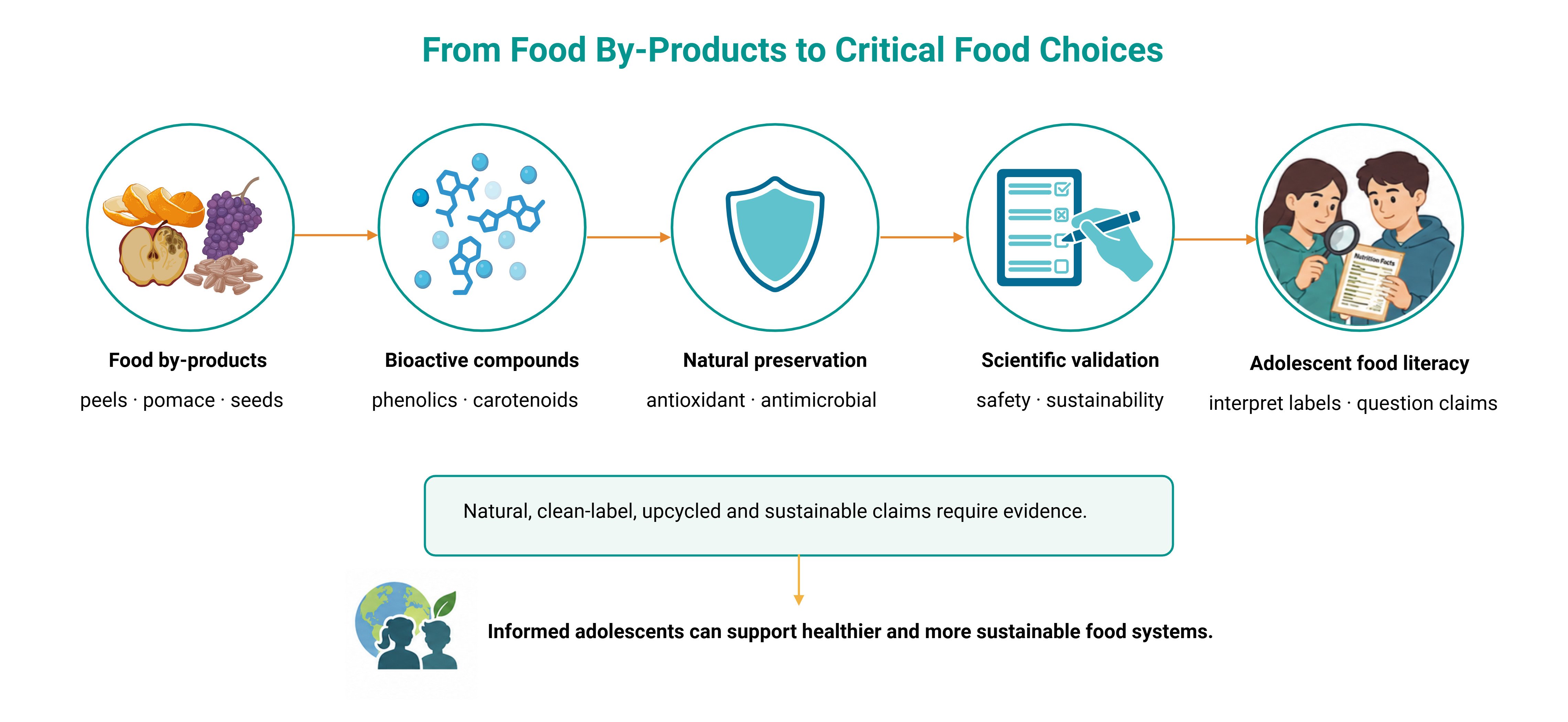
This review aims to critically examine food industry by-products as potential sources of natural preservatives and to discuss how this evidence can be translated into adolescent food literacy, label interpretation, and critical food choices. Adolescents are increasingly exposed to food labels and claims about “natural,” “clean-label,” “upcycled,” “sustainable,” and “circular” foods, which may not always be transparent or supported by sufficient evidence regarding their safety, efficacy, sensory quality, consumer acceptance, or environmental benefit. Therefore, they need more than nutritional information; they need to interpret labels, question sustainability claims, and understand how food innovations are produced, tested, communicated, and regulated. Food by-products such as fruit and vegetable pomaces, peels, seeds, skins, olive and wine residues, cereal by-products, coffee silverskin, and cocoa residues are promising resources for clean-label preservation and circular food systems because they may contain phenolics, flavonoids, carotenoids, anthocyanins, essential oils, pectin, dietary fibers, and other compounds with antioxidant, antimicrobial, coloring, stabilizing, and texturizing properties. However, the bioactive potential alone does not guarantee that a by-product-derived ingredient is safe, effective, acceptable, scalable, or sustainable. Its use requires extraction, stabilization, real-food validation, safety assessment, sensory optimization, regulatory compliance, and sustainability evaluation. The review concludes that by-product-derived natural preservatives are both technological resources and educational tools. Future research and education should connect food preservation, label interpretation, food safety, sensory quality, sustainability evidence, and consumer decision-making to empower adolescents as critical consumers and informed agents of change in sustainable food systems.