Reassessing Mandatory Folic Acid Fortification for Neural Tube Defect Prevention: Evidence, Uncertainty, and Policy Implications


Abstract
1. Introduction
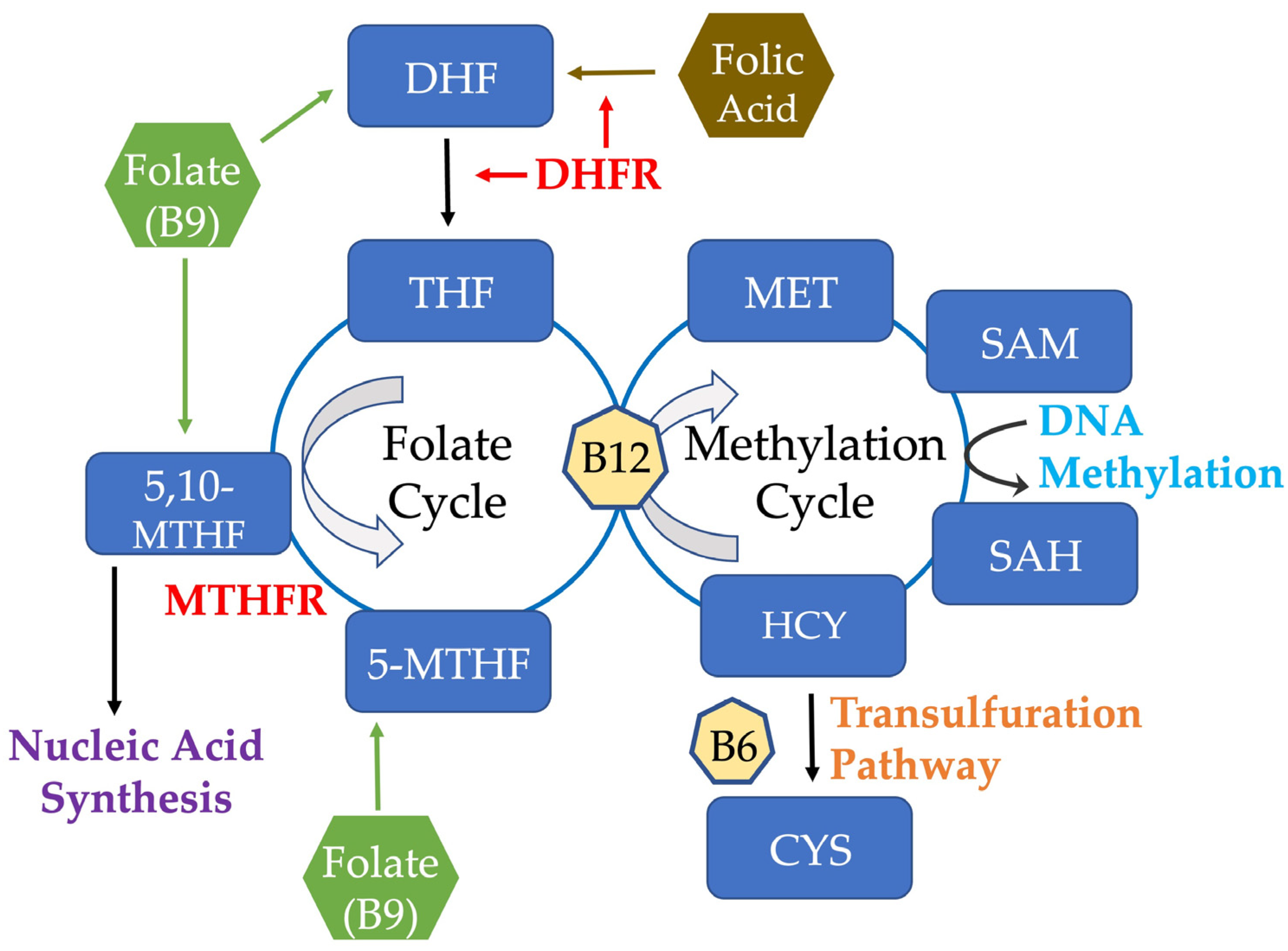
2. Folate Versus Folic Acid
3. Neural Tube Defects
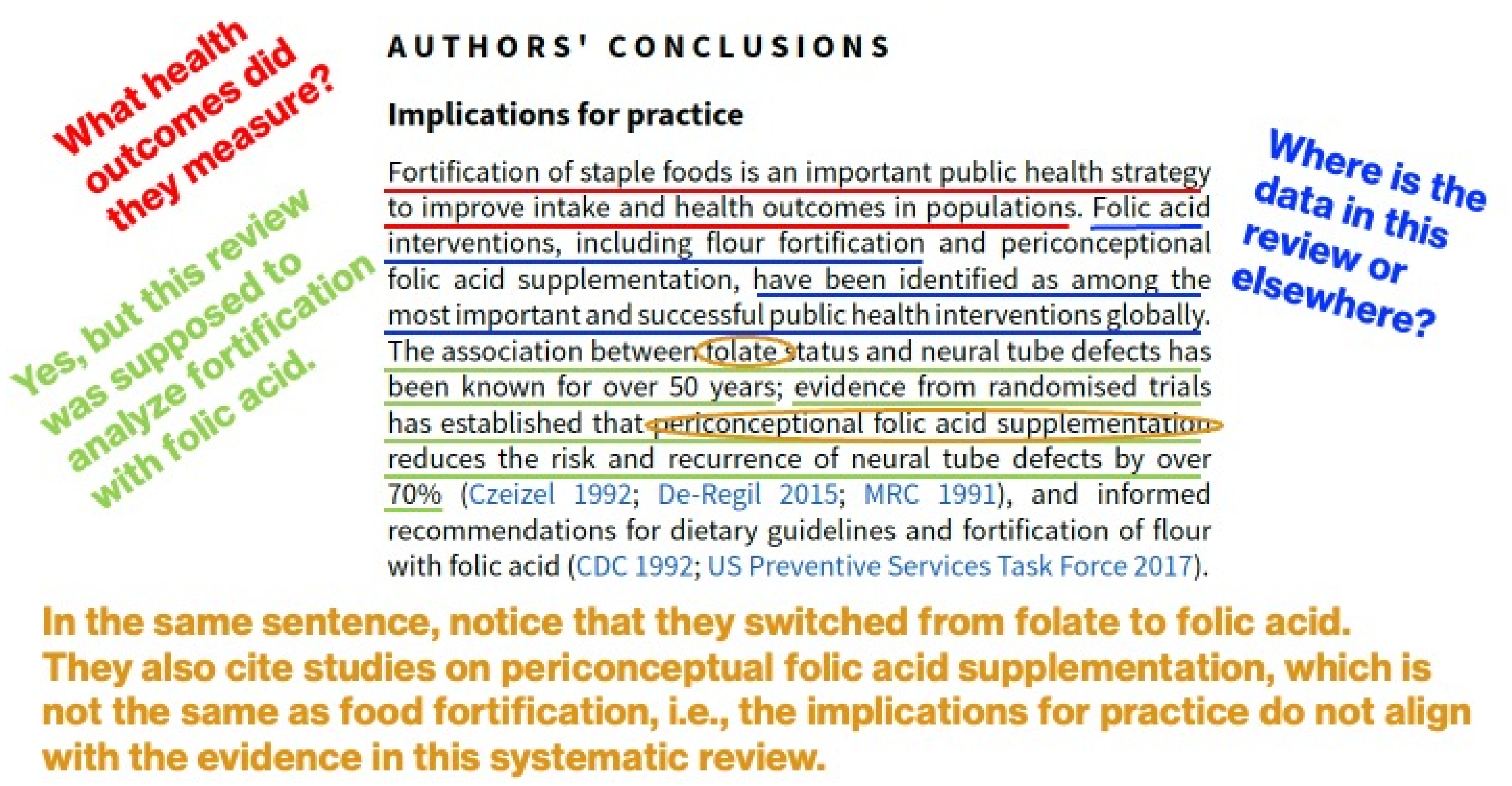
4. Public Health Policy
5. The Evidence
5.1. NTD Prevalence Pre- and Post-Fortification
5.2. Seminal Studies Used to Support Fortification
5.3. The Cochrane Library and Folic Acid Fortification
5.4. Knowledge Gaps
5.5. Methods
5.6. Cochrane Response
5.7. Socioeconomic Factors Are Confounding
5.8. White Paper by National Academy of Medical Sciences
5.9. Systematic Review Covering Pre- and Post-Fortification Periods
5.10. Cochrane Reviews
6. Need for Reevaluation of the Existing Literature
7. Personalized Medicine
7.1. The Goldilocks Effect
7.2. Reasons to Promote Personalized Medicine
7.3. Moving Foward
8. Conclusions
Funding
Data Availability Statement
Acknowledgments
Conflicts of Interest
Abbreviations
| CAGR | Compound annual growth rate |
| CDC | Centers for Disease Control and Prevention |
| DFE | Dietary folate equivalents |
| DHF | Dihydrofolate |
| DHFR | Dihydrofolate reductase |
| EBL | Evidence-based literature |
| FFI | Food fortification initiative |
| GDP | Gross domestic product |
| Hcy | Homocysteine |
| Met | Methionine |
| MRC | Medical Research Council |
| 5-MTHF | 5-methyltetrahydrofolate |
| 5,10-MTHF | 5,10-methylenetetrahydrofolate |
| MTHFR | MTHF reductase |
| NAMS | National Academy of Medical Sciences |
| NCGWS | Non-celiac gluten/wheat sensitivity |
| NPRM | Notice of proposed rulemaking |
| NTDs | Neural tube defects |
| PABA | Para-aminobenzoic acid |
| RCT | Randomized clinical trial |
| RBC | Red blood cell |
| SAH | S-adenosylhomocysteine |
| SAM | S-adenyl-methionine |
| SES | Socioeconomic status |
| THF | Tetrahydrofolate |
| UL | Upper tolerable limit |
| UMFA | Unmetabolized folic acid |
| USD | United States dollars |
| WHO | World Health Organization |
References
- Food and Drug Administration. 21 CFR Parts 136, 137, and 139 Food Standards: Amendment of Standards of Identity for Enriched Grain Products to Require Addition of Folic Acid; Food and Drug Administration: Silver Spring, MD, USA, 1996.
- Bailey, L.B.; Gregory, J.F. Folate metabolism and requirements. J. Nutr. 1999, 129, 779–782. [Google Scholar] [CrossRef]
- Scaglione, F.; Panzavolta, G. Folate, folic acid and 5-methyltetrahydrofolate are not the same thing. Xenobiotica 2014, 44, 480–488. [Google Scholar] [CrossRef]
- Menezo, Y.; Elder, K.; Clement, A.; Clement, P. Folic Acid, Folinic Acid, 5 Methyl TetraHydroFolate Supplementation for Mutations That Affect Epigenesis through the Folate and One-Carbon Cycles. Biomolecules 2022, 12, 197. [Google Scholar] [CrossRef]
- Alam, C.; Kondo, M.; O’Connor, D.L.; Bendayan, R. Clinical Implications of Folate Transport in the Central Nervous System. Trends Pharmacol. Sci. 2020, 41, 349–361. [Google Scholar] [CrossRef] [PubMed]
- Bhasker, A.; Veleri, S. Fundamental origins of neural tube defects with a basis in genetics and nutrition. Exp. Brain Res. 2025, 243, 79. [Google Scholar] [CrossRef]
- MRC Vitamin Study Research Group. Prevention of neural tube defects: Results of the Medical Research Council Vitamin Study. Lancet 1991, 338, 131–137. [Google Scholar] [CrossRef]
- CDC. Folic Acid: Sources and Recommended Intake. Available online: https://www.cdc.gov/folic-acid/about/intake-and-sources.html (accessed on 18 April 2026).
- Food Standards New Zealand. Final Assessment Report Proposal P295 Consumption of Mandatory Fortification with Folic Acid; Food Standards New Zealand: Wellington, New Zealand, 2006. [Google Scholar]
- Garrett, G.S.; Bailey, L.B. Global Status of Folic Acid Fortification—Progress and Gaps, Chapter in Food Fortification in a Globalized World, 1st Edition. Available online: https://www.gainhealth.org/resources/reports-and-publications/global-status-folic-acid-fortification-progress-and-gaps-chapter (accessed on 18 April 2026).
- Health Canada. Fortified Foods: About Fortification. Available online: https://www.canada.ca/en/health-canada/services/fortified-food.html (accessed on 18 April 2026).
- Caceres, A.; Blount, J.P.; Messing-Jünger, M.; Chatterjee, S.; Fieggen, G.; Salomao, J.F. The International Society for Pediatric Neurosurgery resolution on mandatory folic acid fortification of staple foods for prevention of spina bifida and anencephaly and associated disability and child mortality. Child’s Nerv. Syst. 2021, 37, 1809–1812. [Google Scholar] [CrossRef] [PubMed]
- National Academies. Dietary Reference Intakes for Thiamin, Riboflavin, Niacin, Vitamin B6, Folate, Vitamin B12, Pantothenic Acid, Biotin, and Choline. 1998. Available online: https://www.nationalacademies.org/read/6015/chapter/10 (accessed on 18 April 2026).
- Junod, S.W. Folic Acid Fortification: Fact and Folly. Available online: www.fda.gov (accessed on 18 April 2026).
- UNICEF. Large-Scale Food Fortification for the Prevention of Micronutrient Deficiencies in Children, Women and Communities Guidance Note Guidance Note; UNICEF: New York, NY, USA, 2023. [Google Scholar]
- Food Standards Agency. Folic Acid. Available online: https://www.food.gov.uk/safety-hygiene/folic-acid (accessed on 18 April 2026).
- USAID. USAID AFFORD: Fighting Malnutrition through Large-Scale Food Fortification. Available online: https://www.technoserve.org/fight-poverty/projects/usaid-afford-fighting-malnutrition-through-large-scale-food-fortification/ (accessed on 18 April 2026).
- Barry, M.J.; Nicholson, W.K.; Silverstein, M.; Chelmow, D.; Coker, T.R.; Davis, E.M.; Donahue, K.E.; Jaén, C.R.; Li, L.; Ogedegbe, G.; et al. Folic Acid Supplementation to Prevent Neural Tube Defects: US Preventive Services Task Force Reaffirmation Recommendation Statement. JAMA 2023, 330, 454–459. [Google Scholar] [CrossRef]
- World Health Organization. Periconceptional Folic Acid Supplementation to Prevent Neural Tube Defects. Available online: https://www.who.int/tools/elena/interventions/folate-periconceptional (accessed on 18 April 2026).
- World Bank Group. Afghanistan Nutrition Solution Series. Available online: https://documents.worldbank.org/en/publication/documents-reports/documentdetail/800221491325919778 (accessed on 18 April 2026).
- Crider, K.S.; Bailey, L.B.; Berry, R.J. Folic acid food fortification-its history, effect, concerns, and future directions. Nutrients 2011, 3, 370–384. [Google Scholar] [CrossRef]
- Choumenkovitch, S.F.; Selhub, J.; Wilson, P.W.; Rader, J.I.; Rosenberg, I.H.; Jacques, P.F. Folic acid intake from fortification in United States exceeds predictions. J. Nutr. 2002, 132, 2792–2798. [Google Scholar] [CrossRef] [PubMed]
- Patti, M.A.; Braun, J.M.; Arbuckle, T.E.; MacFarlane, A.J. Associations between folic acid supplement use and folate status biomarkers in the first and third trimesters of pregnancy in the Maternal-Infant Research on Environmental Chemicals (MIREC) Pregnancy Cohort Study. Am. J. Clin. Nutr. 2022, 116, 1852–1863. [Google Scholar] [CrossRef]
- Patel, K.R.; Sobczyńska-Malefora, A. The adverse effects of an excessive folic acid intake. Eur. J. Clin. Nutr. 2017, 71, 159–163. [Google Scholar] [CrossRef]
- Reynolds, E.H.; Sobczyńska-Malefora, A.; Green, R. Fortification, folate and vitamin B12 balance, and the nervous system. Is folic acid excess potentially harmful? Eur. J. Clin. Nutr. 2025, 79, 1073–1077. [Google Scholar] [CrossRef] [PubMed]
- Lucock, M.; Yates, Z. Folic acid—Vitamin and panacea or genetic time bomb? Nat. Rev. Genet. 2005, 6, 235–240. [Google Scholar] [CrossRef]
- Lucock, M.; Yates, Z. Folic acid fortification: A double-edged sword. Curr. Opin. Clin. Nutr. Metab. Care 2009, 12, 555–564. [Google Scholar] [CrossRef]
- Rogers, E.J. Has enhanced folate status during pregnancy altered natural selection and possibly Autism prevalence? A closer look at a possible link. Med. Hypotheses 2008, 71, 406–410. [Google Scholar] [CrossRef]
- Yang, R.; Li, G. The roles of folate, MTHFR genetics, vitamin B12 in pregnancy outcomes. Front. Nutr. 2026, 13, 1785263. [Google Scholar] [CrossRef] [PubMed]
- Williams, J.; Mai, C.T.; Mulinare, J.; Isenburg, J.; Flood, T.J.; Ethen, M.; Frohnert, B.; Kirby, R.S.; Centers for Disease Control and Prevention. Updated estimates of neural tube defects prevented by mandatory folic Acid fortification—United States, 1995–2011. MMWR Morb. Mortal. Wkly. Rep. 2015, 64, 1–5. [Google Scholar]
- Crider, K.S.; Qi, Y.P.; Devine, O.; Tinker, S.C.; Berry, R.J. Modeling the impact of folic acid fortification and supplementation on red blood cell folate concentrations and predicted neural tube defect risk in the United States: Have we reached optimal prevention? Am. J. Clin. Nutr. 2018, 107, 1027–1034. [Google Scholar] [CrossRef] [PubMed]
- March of Dimes. Neural Tube Defects. Available online: https://www.marchofdimes.org/find-support/topics/planning-baby/neural-tube-defects (accessed on 18 April 2026).
- CDC. Spina bifida incidence at birth—United States, 1983–1990. MMWR Morb. Mortal. Wkly. Rep. 1992, 41, 497–500. [Google Scholar]
- Czeizel, A.E.; Dobó, M.; Vargha, P. Hungarian cohort-controlled trial of periconceptional multivitamin supplementation shows a reduction in certain congenital abnormalities. Birth Defects Res. A Clin. Mol. Teratol. 2004, 70, 853–861. [Google Scholar] [CrossRef]
- Werler, M.M.; Shapiro, S.; Mitchell, A.A. Periconceptional folic acid exposure and risk of occurrent neural tube defects. JAMA 1993, 269, 1257–1261. [Google Scholar] [CrossRef]
- CDC. CDC Grand Rounds: Additional opportunities to prevent neural tube defects with folic acid fortification. MMWR Morb. Mortal. Wkly. Rep. 2010, 59, 980–984. [Google Scholar]
- Berry, R.J.; Bailey, L.; Mulinare, J.; Bower, C.; Folic Acid Working Group. Fortification of flour with folic acid. Food Nutr. Bull. 2010, 31, S22–S35. [Google Scholar] [CrossRef]
- Arth, A.; Kancherla, V.; Pachón, H.; Zimmerman, S.; Johnson, Q.; Oakley, G.P. A 2015 global update on folic acid-preventable spina bifida and anencephaly. Birth Defects Res. Part A Clin. Mol. Teratol. 2016, 106, 520–529. [Google Scholar] [CrossRef]
- Williams, L.J.; Mai, C.T.; Edmonds, L.D.; Shaw, G.M.; Kirby, R.S.; Hobbs, C.A.; Sever, L.E.; Miller, L.A.; Meaney, F.J.; Levitt, M. Prevalence of spina bifida and anencephaly during the transition to mandatory folic acid fortification in the United States. Teratology 2002, 66, 33–39. [Google Scholar] [CrossRef]
- De Wals, P.; Tairou, F.; Van Allen, M.I.; Uh, S.H.; Lowry, R.B.; Sibbald, B.; Evans, J.A.; Van den Hof, M.C.; Zimmer, P.; Crowley, M.; et al. Reduction in neural-tube defects after folic acid fortification in Canada. N. Engl. J. Med. 2007, 357, 135–142. [Google Scholar] [CrossRef]
- Hertrampf, E.; Cortés, F. Folic acid fortification of wheat flour: Chile. Nutr. Rev. 2004, 62, S44–S48; discussion S49. [Google Scholar] [CrossRef]
- CDC. Economic burden of spina bifida—United States, 1980–1990. MMWR Morb. Mortal. Wkly. Rep. 1989, 38, 264–267. [Google Scholar]
- Reynolds, E.H. What is the safe upper intake level of folic acid for the nervous system? Implications for folic acid fortification policies. Eur. J. Clin. Nutr. 2016, 70, 537–540. [Google Scholar] [CrossRef]
- Ray, J.G. Folic acid food fortification in Canada. Nutr. Rev. 2004, 62, S35–S39. [Google Scholar] [CrossRef]
- Hilder, L. Neural Tube Defects in Australia, 2007–2011: Before and After Implementation of the Mandatory Folic Acid Fortification Standard; University of New South Wales: Sydney, Australia, 2016. [Google Scholar]
- Murphy, M.E.; Westmark, C.J. Folic Acid Fortification and Neural Tube Defect Risk: Analysis of the Food Fortification Initiative Dataset. Nutrients 2020, 12, 247. [Google Scholar] [CrossRef]
- Pruitt Evans, S.; Ailes, E.C.; Kramer, M.R.; Shumate, C.J.; Reefhuis, J.; Insaf, T.Z.; Yazdy, M.M.; Carmichael, S.L.; Romitti, P.A.; Feldkamp, M.L.; et al. Neighborhood Deprivation and Neural Tube Defects. Epidemiology 2023, 34, 774–785. [Google Scholar] [CrossRef]
- Centeno Tablante, E.; Pachón, H.; Guetterman, H.M.; Finkelstein, J.L. Fortification of wheat and maize flour with folic acid for population health outcomes. Cochrane Database Syst. Rev. 2019, 7, CD012150. [Google Scholar] [CrossRef]
- Cogo, E.; Pelone, F.; Pachón, H.; Buckley, B.; Christou, M.; Villanueva, G.; Woldt, M.; Henschke, N.; Tsang, B.L. Cost-Effectiveness of Food Fortification for Reducing Global Malnutrition: A Systematic Review of Economic Evaluations Across 63 Countries. J. Nutr. 2026, 156, 101381. [Google Scholar] [CrossRef]
- Das, J.K.; Salam, R.A.; Mahmood, S.B.; Moin, A.; Kumar, R.; Mukhtar, K.; Lassi, Z.S.; Bhutta, Z.A. Food fortification with multiple micronutrients: Impact on health outcomes in general population. Cochrane Database Syst. Rev. 2019, 12, CD011400. [Google Scholar] [CrossRef]
- Keats, E.C.; Neufeld, L.M.; Garrett, G.S.; Mbuya, M.N.N.; Bhutta, Z.A. Improved micronutrient status and health outcomes in low- and middle-income countries following large-scale fortification: Evidence from a systematic review and meta-analysis. Am. J. Clin. Nutr. 2019, 109, 1696–1708. [Google Scholar] [CrossRef]
- Westmark, C.J.; Murphy, M.E. Reply to “The Fallacy of Using Administrative Data in Assessing the Effectiveness of Food Fortification. Comment on: Folic Acid Fortification and Neural Tube Defect Risk: Analysis of the Food Fortification Initiative Dataset. Nutrients 2020, 12, 247”. Nutrients 2020, 12, 1335. [Google Scholar] [CrossRef]
- Sharma, A.K.; Vora, R.M.; Dutta, H.K.; Karmarkar, S.J.; Modi, J.; Vishnubhatla, S.; Reddy, G.B.; Kabra, M.; Kancherla, V.; Rao, S.; et al. Prevention of Neural Tube Defects in India. Ann. Natl. Acad. Med. Sci. 2026; in press. [CrossRef]
- Field, M.S.; Stover, P.J. Safety of folic acid. Ann. N. Y. Acad. Sci. 2018, 1414, 59–71. [Google Scholar] [CrossRef]
- Richmond, R.C.; Sharp, G.C.; Herbert, G.; Atkinson, C.; Taylor, C.; Bhattacharya, S.; Campbell, D.; Hall, M.; Kazmi, N.; Gaunt, T.; et al. The long-term impact of folic acid in pregnancy on offspring DNA methylation: Follow-up of the Aberdeen Folic Acid Supplementation Trial (AFAST). Int. J. Epidemiol. 2018, 47, 928–937. [Google Scholar] [CrossRef]
- Johansson, I.; Van Guelpen, B.; Hultdin, J.; Johansson, M.; Hallmans, G.; Stattin, P. Validity of food frequency questionnaire estimated intakes of folate and other B vitamins in a region without folic acid fortification. Eur. J. Clin. Nutr. 2010, 64, 905–913. [Google Scholar] [CrossRef]
- Moges, S.; Kotiso, K.S.; Jaldo, M.M. The effectiveness of mandatory folic acid fortification compared with pre-fortification periods on reducing neural tube defects (NTDs): A systematic review and meta-analysis. BMC Nutr. 2026, 12, 31. [Google Scholar] [CrossRef]
- Poletta, F.A.; Rittler, M.; Saleme, C.; Campaña, H.; Gili, J.A.; Pawluk, M.S.; Gimenez, L.G.; Cosentino, V.R.; Castilla, E.E.; López-Camelo, J.S. Neural tube defects: Sex ratio changes after fortification with folic acid. PLoS ONE 2018, 13, e0193127. [Google Scholar] [CrossRef]
- Amarin, Z.O.; Obeidat, A.Z. Effect of folic acid fortification on the incidence of neural tube defects. Paediatr. Perinat. Epidemiol. 2010, 24, 349–351. [Google Scholar] [CrossRef]
- Cortés, F.; Mellado, C.; Pardo, R.A.; Villarroel, L.A.; Hertrampf, E. Wheat flour fortification with folic acid: Changes in neural tube defects rates in Chile. Am. J. Med. Genet. A 2012, 158A, 1885–1890. [Google Scholar] [CrossRef]
- Santos, L.M.; Lecca, R.C.; Cortez-Escalante, J.J.; Sanchez, M.N.; Rodrigues, H.G. Prevention of neural tube defects by the fortification of flour with folic acid: A population-based retrospective study in Brazil. Bull. World Health Organ. 2016, 94, 22–29. [Google Scholar] [CrossRef]
- Ray, J.G.; Meier, C.; Vermeulen, M.J.; Boss, S.; Wyatt, P.R.; Cole, D.E. Association of neural tube defects and folic acid food fortification in Canada. Lancet 2002, 360, 2047–2048. [Google Scholar] [CrossRef]
- Godwin, K.A.; Sibbald, B.; Bedard, T.; Kuzeljevic, B.; Lowry, R.B.; Arbour, L. Changes in frequencies of select congenital anomalies since the onset of folic acid fortification in a Canadian birth defect registry. Can. J. Public. Health 2008, 99, 271–275. [Google Scholar] [CrossRef]
- Liu, S.; West, R.; Randell, E.; Longerich, L.; O’connor, K.S.; Scott, H.; Crowley, M.; Lam, A.; Prabhakaran, V.; McCourt, C. A comprehensive evaluation of food fortification with folic acid for the primary prevention of neural tube defects. BMC Pregnancy Childbirth 2004, 4, 20. [Google Scholar] [CrossRef]
- López-Camelo, J.S.; Orioli, I.M.; da Graça Dutra, M.; Nazer-Herrera, J.; Rivera, N.; Ojeda, M.E.; Canessa, A.; Wettig, E.; Fontannaz, A.M.; Mellado, C.; et al. Reduction of birth prevalence rates of neural tube defects after folic acid fortification in Chile. Am. J. Med. Genet. A 2005, 135, 120–125. [Google Scholar] [CrossRef] [PubMed]
- Persad, V.L.; Van den Hof, M.C.; Dubé, J.M.; Zimmer, P. Incidence of open neural tube defects in Nova Scotia after folic acid fortification. Can. Med. Assoc. J. 2002, 167, 241–245. [Google Scholar]
- de la Paz Barboza-Argüello, M.; Umaña-Solís, L.M.; Azofeifa, A.; Valencia, D.; Flores, A.L.; Rodríguez-Aguilar, S.; Alfaro-Calvo, T.; Mulinare, J. Neural tube defects in Costa Rica, 1987–2012: Origins and development of birth defect surveillance and folic acid fortification. Matern. Child Health J. 2015, 19, 583–590. [Google Scholar] [CrossRef]
- Castilla, E.E.; Orioli, I.M.; Lopez-Camelo, J.S.; da Graça Dutra, M.; Nazer-Herrera, J. Preliminary data on changes in neural tube defect prevalence rates after folic acid fortification in South America. Am. J. Med. Genet. A 2003, 123A, 123–128. [Google Scholar] [CrossRef]
- Tarqui-Mamani, C.; Rossi de Chiarella, G.; Sanabria-Rojas, H.; Altamirano, H.; Vargas-Herrera, J.; Arana-Panduro, M. Impact of Wheat Flour Folic Acid Fortification on Neural Tube Defects in Three Cities in Peru. J. Glob. Health 2016, 6, 22–26. [Google Scholar]
- De-Regil, L.M.; Peña-Rosas, J.P.; Fernández-Gaxiola, A.C.; Rayco-Solon, P. Effects and safety of periconceptional oral folate supplementation for preventing birth defects. Cochrane Database Syst. Rev. 2015, 2015, CD007950. [Google Scholar] [CrossRef]
- Kirke, P.N.; Daly, L.E.; Elwood, J.H. A randomised trial of low dose folic acid to prevent neural tube defects. The Irish Vitamin Study Group. Arch. Dis. Child. 1992, 67, 1442–1446. [Google Scholar] [CrossRef]
- Laurence, K.M.; James, N.; Miller, M.H.; Tennant, G.B.; Campbell, H. Double-blind randomised controlled trial of folate treatment before conception to prevent recurrence of neural-tube defects. Br. Med. J. (Clin. Res. Ed.) 1981, 282, 1509–1511. [Google Scholar] [CrossRef]
- Pfeiffer, C.M.; Sternberg, M.R.; Fazili, Z.; Yetley, E.A.; Lacher, D.A.; Bailey, R.L.; Johnson, C.L. Unmetabolized folic acid is detected in nearly all serum samples from US children, adolescents, and adults. J. Nutr. 2015, 145, 520–531. [Google Scholar] [CrossRef] [PubMed]
- Lehman, P.C.; Cady, N.; Ghimire, S.; Shahi, S.K.; Shrode, R.L.; Lehmler, H.J.; Mangalam, A.K. Low-dose glyphosate exposure alters gut microbiota composition and modulates gut homeostasis. Environ. Toxicol. Pharmacol. 2023, 100, 104149. [Google Scholar] [CrossRef] [PubMed]
- Samsel, A.; Seneff, S. Glyphosate, pathways to modern diseases III: Manganese, neurological diseases, and associated pathologies. Surg. Neurol. Int. 2015, 6, 45. [Google Scholar] [CrossRef] [PubMed]
- Li, J.; Chen, B.; Liu, N.; Dong, W.; Lv, D.; Li, S.; Zhu, X. Best Evidence Summary of Folic Acid Supplementation for Prevention of Neural Tube Defects in Women of Childbearing Age. Nutrients 2026, 18, 641. [Google Scholar] [CrossRef]
- Boeck, B.; Westmark, C.J. Bibliometric Analysis and a Call for Increased Rigor in Citing Scientific Literature: Folic Acid Fortification and Neural Tube Defect Risk as an Example. Nutrients 2024, 16, 2503. [Google Scholar] [CrossRef]
- Guo, X.; Zhang, F.; Hao, G. Causal relationship between folic acid and prostate cancer risk: Insights from Mendelian randomization analysis. Int. J. Urol. 2024, 31, 1356–1364. [Google Scholar] [CrossRef]
- Tinker, S.C.; Hamner, H.C.; Qi, Y.P.; Crider, K.S. U.S. women of childbearing age who are at possible increased risk of a neural tube defect-affected pregnancy due to suboptimal red blood cell folate concentrations, National Health and Nutrition Examination Survey 2007 to 2012. Birth Defects Res. A Clin. Mol. Teratol. 2015, 103, 517–526. [Google Scholar] [CrossRef]
- Bailey, A.D.; Miketinas, D.C.; London, H.E.; Houslay, T.; Bender, T.M.; Patterson, A.C. Usual Nutrient Intake Adequacy and Nutritional Status of United States Children and Adolescents: National Health and Nutrition Examination Survey 2001–March 2020. J. Nutr. 2026, 156, 101377. [Google Scholar] [CrossRef] [PubMed]
- Reynolds, E.H. The neurology of folic acid deficiency. In Handbook of Clinical Neurology; Elsevier: Amsterdam, The Netherlands, 2014; Volume 120, pp. 927–943. [Google Scholar] [CrossRef]
- Drugs.com. Folic Acid Interactions. Available online: https://www.drugs.com/drug-interactions/folic-acid.html (accessed on 18 April 2026).
- Morris, M.S.; Jacques, P.F.; Rosenberg, I.H.; Selhub, J. Folate and vitamin B-12 status in relation to anemia, macrocytosis, and cognitive impairment in older Americans in the age of folic acid fortification. Am. J. Clin. Nutr. 2007, 85, 193–200. [Google Scholar] [CrossRef]
- Morris, M.C.; Evans, D.A.; Bienias, J.L.; Tangney, C.C.; Hebert, L.E.; Scherr, P.A.; Schneider, J.A. Dietary folate and vitamin B12 intake and cognitive decline among community-dwelling older persons. Arch. Neurol. 2005, 62, 641–645. [Google Scholar] [CrossRef]
- Moore, E.M.; Ames, D.; Mander, A.G.; Carne, R.P.; Brodaty, H.; Woodward, M.C.; Boundy, K.; Ellis, K.A.; Bush, A.I.; Faux, N.G.; et al. Among vitamin B12 deficient older people, high folate levels are associated with worse cognitive function: Combined data from three cohorts. J. Alzheimer’s Dis. 2014, 39, 661–668. [Google Scholar] [CrossRef] [PubMed]
- Selhub, J.; Rosenberg, I.H. Excessive folic acid intake and relation to adverse health outcome. Biochimie 2016, 126, 71–78. [Google Scholar] [CrossRef]
- Mikael, L.G.; Deng, L.; Paul, L.; Selhub, J.; Rozen, R. Moderately high intake of folic acid has a negative impact on mouse embryonic development. Birth Defects Res. A Clin. Mol. Teratol. 2013, 97, 47–52. [Google Scholar] [CrossRef]
- Iskandar, B.J.; Rizk, E.; Meier, B.; Hariharan, N.; Bottiglieri, T.; Finnell, R.H.; Jarrard, D.F.; Banerjee, R.V.; Skene, J.H.; Nelson, A.; et al. Folate regulation of axonal regeneration in the rodent central nervous system through DNA methylation. J. Clin. Investig. 2010, 120, 1603–1616. [Google Scholar] [CrossRef]
- Meethal, S.V.; Hogan, K.J.; Mayanil, C.S.; Iskandar, B.J. Folate and epigenetic mechanisms in neural tube development and defects. Child’s Nerv. Syst. 2013, 29, 1427–1433. [Google Scholar] [CrossRef]
- Menezo, Y.; Clement, P.; Elder, K. Are UMFA (un-metabolized folic acid) and endocrine disruptor chemicals (EDCs) co-responsible for sperm degradation? An epigenetic/methylation perspective. Andrologia 2022, 54, e14400. [Google Scholar] [CrossRef]
- Bae, S.; Ulrich, C.M.; Bailey, L.B.; Malysheva, O.; Brown, E.C.; Maneval, D.R.; Neuhouser, M.L.; Cheng, T.Y.; Miller, J.W.; Zheng, Y.; et al. Impact of folic acid fortification on global DNA methylation and one-carbon biomarkers in the Women’s Health Initiative Observational Study cohort. Epigenetics 2014, 9, 396–403. [Google Scholar] [CrossRef]
- Raghavan, R.; Selhub, J.; Paul, L.; Ji, Y.; Wang, G.; Hong, X.; Zuckerman, B.; Fallin, M.D.; Wang, X. A prospective birth cohort study on cord blood folate subtypes and risk of autism spectrum disorder. Am. J. Clin. Nutr. 2020, 112, 1304–1317. [Google Scholar] [CrossRef]
- Iglesias Vázquez, L.; Canals, J.; Arija, V. Review and meta-analysis found that prenatal folic acid was associated with a 58% reduction in autism but had no effect on mental and motor development. Acta Paediatr. 2019, 108, 600–610. [Google Scholar] [CrossRef] [PubMed]
- Wiens, D.; DeSoto, M.C. Is High Folic Acid Intake a Risk Factor for Autism?—A Review. Brain Sci. 2017, 7, 149. [Google Scholar] [CrossRef] [PubMed]
- O’Neill, R.J.; Vrana, P.B.; Rosenfeld, C.S. Maternal methyl supplemented diets and effects on offspring health. Front. Genet. 2014, 5, 289. [Google Scholar] [CrossRef] [PubMed]
- Hoxha, B.; Hoxha, M.; Domi, E.; Gervasoni, J.; Persichilli, S.; Malaj, V.; Zappacosta, B. Folic Acid and Autism: A Systematic Review of the Current State of Knowledge. Cells 2021, 10, 1976. [Google Scholar] [CrossRef]
- Li, Y.; Qiu, S.; Shi, J.; Guo, Y.; Li, Z.; Cheng, Y.; Liu, Y. Association between MTHFR C677T/A1298C and susceptibility to autism spectrum disorders: A meta-analysis. BMC Pediatr. 2020, 20, 449. [Google Scholar] [CrossRef]
- Sadeghiyeh, T.; Dastgheib, S.A.; Mirzaee-Khoramabadi, K.; Morovati-Sharifabad, M.; Akbarian-Bafghi, M.J.; Poursharif, Z.; Mirjalili, S.R.; Neamatzadeh, H. Association of MTHFR 677C>T and 1298A>C polymorphisms with susceptibility to autism: A systematic review and meta-analysis. Asian J. Psychiatry 2019, 46, 54–61. [Google Scholar] [CrossRef]
- Rozen, R. Genetic predisposition to hyperhomocysteinemia: Deficiency of methylenetetrahydrofolate reductase (MTHFR). Thromb. Haemost. 1997, 78, 523–526. [Google Scholar] [CrossRef]
- Yan, L.; Zhao, L.; Long, Y.; Zou, P.; Ji, G.; Gu, A.; Zhao, P. Association of the maternal MTHFR C677T polymorphism with susceptibility to neural tube defects in offsprings: Evidence from 25 case-control studies. PLoS ONE 2012, 7, e41689. [Google Scholar] [CrossRef]
- Bailey, L.B.; Gregory, J.F. Polymorphisms of methylenetetrahydrofolate reductase and other enzymes: Metabolic significance, risks and impact on folate requirement. J. Nutr. 1999, 129, 919–922. [Google Scholar] [CrossRef]
- Molloy, A.M.; Daly, S.; Mills, J.L.; Kirke, P.N.; Whitehead, A.S.; Ramsbottom, D.; Conley, M.R.; Weir, D.G.; Scott, J.M. Thermolabile variant of 5,10-methylenetetrahydrofolate reductase associated with low red-cell folates: Implications for folate intake recommendations. Lancet 1997, 349, 1591–1593. [Google Scholar] [CrossRef]
- Phunsawat, P.; Chiangjong, W.; Chutipongtanate, S.; Dumrongwongsiri, O.; Thommachot, P.; Butdawong, W.; Chuthapisith, J. Folate receptor alpha autoantibodies in children with autism spectrum disorder. Biomarkers 2022, 27, 715–719. [Google Scholar] [CrossRef]
- Sacco, J.E.; Dodd, K.W.; Kirkpatrick, S.I.; Tarasuk, V. Voluntary food fortification in the United States: Potential for excessive intakes. Eur. J. Clin. Nutr. 2013, 67, 592–597. [Google Scholar] [CrossRef]
- Pfeiffer, C.M.; Sternberg, M.R.; Fazili, Z.; Lacher, D.A.; Zhang, M.; Johnson, C.L.; Hamner, H.C.; Bailey, R.L.; Rader, J.I.; Yamini, S.; et al. Folate status and concentrations of serum folate forms in the US population: National Health and Nutrition Examination Survey 2011-2. Br. J. Nutr. 2015, 113, 1965–1977. [Google Scholar] [CrossRef]
- Bailey, R.L.; Mills, J.L.; Yetley, E.A.; Gahche, J.J.; Pfeiffer, C.M.; Dwyer, J.T.; Dodd, K.W.; Sempos, C.T.; Betz, J.M.; Picciano, M.F. Unmetabolized serum folic acid and its relation to folic acid intake from diet and supplements in a nationally representative sample of adults aged > or =60 y in the United States. Am. J. Clin. Nutr. 2010, 92, 383–389. [Google Scholar] [CrossRef]
- Folic Acid and the Prevention of Disease: Report of the Committee on Medical Aspects of Food and Nutrition Policy; Reports on Health and Social Subjects; The Stationery Office: London, UK, 2000; Volume 50, p. i–xv, 1–101.
- Maruvada, P.; Stover, P.J.; Mason, J.B.; Bailey, R.L.; Davis, C.D.; Field, M.S.; Finnell, R.H.; Garza, C.; Green, R.; Gueant, J.L.; et al. Knowledge gaps in understanding the metabolic and clinical effects of excess folates/folic acid: A summary, and perspectives, from an NIH workshop. Am. J. Clin. Nutr. 2020, 112, 1390–1403. [Google Scholar] [CrossRef]
- Shiha, M.G.; Manza, F.; Figueroa-Salcido, O.G.; Ontiveros, N.; Caio, G.; Jansson-Knodell, C.L.; Rubio-Tapia, A.; Aziz, I.; Sanders, D.S. Global prevalence of self-reported non-coeliac gluten and wheat sensitivity: A systematic review and meta-analysis. Gut 2026, 75, 502–510. [Google Scholar] [CrossRef]
- Janet, W. Gluten-Free: A Large Misconception in American Diet Culture. Platf. Maganzine 2024, 18. [Google Scholar]
- Food Broker News. Understanding the Gluten-Free Trend and Its Impact. Available online: https://www.itsallgoodsinc.com/insights/the-gluten-free-trend-why-its-more-than-just-a-fad (accessed on 18 April 2026).
- World Market Reports. Vitamin B9 (Folic Acid) Market Overview. Available online: https://www.marketreportsworld.com/market-reports/vitamin-b9-folic-acid-market-14716972 (accessed on 18 April 2026).
- Reisch, L.A.; Zhao, M. Behavioural Economics, Consumer Behaviour, and Consumer Policy State of the Art. Behav. Public Policy 2017, 1, 190–206. [Google Scholar] [CrossRef]
- Herter-Aeberli, I.; Wehrli, N.; Bärlocher, K.; Andersson, M.; Sych, J. Inadequate Status and Low Awareness of Folate in Switzerland—A Call to Strengthen Public Health Measures to Ensure Sufficient Intakes. Nutrients 2020, 12, 3729. [Google Scholar] [CrossRef]


| Agency | Position |
|---|---|
| CDC | Recommends all women capable of becoming pregnant consume 400 mcg folic acid daily to prevent NTDs through supplements or fortified foods. It is also important to consume a varied diet with folate-rich foods. |
| FDA | Issued regulation §136.115 in 1996 requiring all enriched cereal grain products be fortified with folic acid by January of 1998 at levels ranging from 0.43 mg to 1.4 mg per pound. |
| Food Standards Australia New Zealand | Mandatory fortification of bread with folic acid is the preferred approach in Australia and New Zealand to further reduce the incidence of NTDs. The proposed level of mandatory fortification is 80–180 mcg of folic acid per 100 g of bread. (Equates to 363–816 mcg/pound.) |
| Global Alliance for Improved Nutrition | Folic acid fortification is an evidence-based intervention that reduces the prevalence of NTDs, and large-scale food fortification with folic acid is underutilized. |
| Health Canada | Canda mandates fortification of white flour with folic acid. |
| International Society for Pediatric Neurosurgery | Recommends that all governments require mandatory folic acid fortification of centrally produced food staples to provide almost all women of reproductive age who eat fortified foods with at least an additional 150 mcg/day of folic acid as recommended by the WHO. |
| Institute of Medicine (National Academy of Medicine) | All women capable of becoming pregnant should consume 400 mcg of synthetic folic acid daily from fortified foods or supplements in addition to a healthy diet. |
| Public Health Service | Recognized the link between folic acid intake and NTDs as a compelling health issue in 1992 and recommended that all women of childbearing age should have adequate folate intakes (0.4 mg daily) throughout their childbearing years, but warned that the total intakes should not exceed 1 mg. |
| UNICEF | UNICEF states they improve the quality of women’s diets through large-scale food fortification programs like salt iodization and the fortification of white flour, rice, and cooking oil with vitamins and nutrients. |
| United Kingdom Food Standards Agency | Government advice for women who are pregnant or trying to conceive is that they consume a folic acid supplement of 400 mcg per day ideally 3 months before and for at least the first 12 weeks of pregnancy. Under new requirements, non-wholemeal wheat flour will be fortified with folic acid by law from December 2026. Fortification is intended to support, not replace, current advice on folic acid supplementation. Individuals who cannot or choose not to eat fortified products can choose products made from wholemeal flour, gluten-free products and other types of four such as soya or ancient grains like spelt. |
| United States Agency for International Development (USAID) | Strongly supports folic acid interventions primarily through large-scale food fortification and maternal supplementation in alignment with WHO and U.S. Public Health Service recommendations with an emphasis on population-level delivery over individual supplementation alone. |
| U.S. Preventive Services Task Force (USPSTF) | Recommends that women planning to or who could become pregnant take a daily supplement containing 0.4 to 0.8 mg of folic acid. |
| WHO | Recommends daily folic acid supplementation with 400 mcg folic acid for pregnant women ideally commencing before conception and until 12 weeks’ gestation to prevent NTDs. |
| World Bank/Ministry of Public Health | Recommends 400–800 mcg folic acid per day for antenatal care. |
| SES Quintile | With Fortification | No Fortification |
|---|---|---|
| 1 (highest) | 8.90 | 11.74 |
| 2 | 10.87 | 12.45 |
| 3 | 13.11 | 10.50 |
| 4 | 15.38 | 16.19 |
| 5 | 16.90 | 15.82 |
| Study | Country | Time Period | NTDs per 10,000 Births | GDP in Billions of US Dollars |
|---|---|---|---|---|
| 1. Amarin | Jordan | 2000–2001 (pre-fortification) | 18.5 | 8.46–8.98 |
| 2002–2004 (transition) | 10.7 | 9.58–11.41 | ||
| 2005–2006 (post-fortification) | 9.5 | 12.59–15.06 | ||
| 2. Barboza-Arguello | Costa Rica | 1987–1991 (pre) | 4.53–7.22 | |
| 1996–1998 (pre) | 9.8 | 11.68–13.68 | ||
| 2003–2012 (post) | 4.8 | 17.27–47.23 | ||
| 3. Castilla | Chile | 1999 (pre) | 26 | 75.58 |
| 2000 (transition) | 21 | 78.34 | ||
| 2001 (post) | 16 | 71.57 | ||
| 4. Cortes | Chile | 1999–2000 (pre) | 17.1 | 75.58–78.34 |
| 2001–2009 (post) | 8.6 | 71.57–171.78 | ||
| 5. Godwin | Canada | 1992–1996 (pre) | 4.9 (spina bifida) | 594.39–630.61 |
| 1999–2003 (post) | 2.5 | 678.41–895.54 | ||
| 6. Hilder | Australia | Oct 2006-Dec 2008 (pre) | 12.8 | 749.71–1.06 × 10³ |
| Jan-Sept 2009 (transition) | 11.8 | 931.76 | ||
| Oct 2009–Mar 2011 (post) | 11.2 (not significant) | 931.76–1.4 × 10³ | ||
| 7. Liu | Canada (Newfoundland) | 1991–1997 (pre) | 43.6 | deep recession early 1990s |
| 1998–2001 (post) | 9.6 | new industries late 1990s | ||
| 8. Lopez-Camelo | Chile | 1982–1989 (pre) | 9.31 (spina bifida) | 19.71–30.1 |
| 1990–2000 (pre) | 9.32 | 33.43–78.34 | ||
| 2001–2002 (post) | 4.77 | 71.57–70.26 | ||
| 9. Persad | Canada | 1991–1997 (pre) | 25.8 | deep recession early 1990s |
| (Nova Scotia) | 1998–2000 (post) | 11.7 | improved economy late 1990s | |
| 10. Poletta | Chile Argentina | 1990–2000 (pre) 2001–2013 (post) 1990–2004 (pre) 2005–2013 (post) | 10.85 males 18.90 females 5.54 males 5.55 females 10.20 males 18.59 females 7.25 males 7.56 females | 33.43–78.34 71.57–277.4 141.35–164.66 198.74–552.03 |
| 11. Ray | Canada | Jan 1994–Dec 1997 (pre) | 11.3 | recession early 1990s; NAFTA 1994; Common Sense Revolution 1995–2002 |
| (Ontario) | Jan 1998–May 2000 (post) | 5.8 | ||
| 12. Santos | Brazil | 2001–2004 (pre) | 7.9 | 559.58–669.29 |
| 2005–2014 (post) | 5.5 | 891.63–2.46 × 10³ | ||
| 13. Tarqui-Mamani | Peru | 2001–2005 (pre) | 12.1 | 52.03–76.05 |
| 2006–2010 (post) | 10.1 | 88.64–147.53 | ||
| 14. Williams | United States | 1995–1996 (pre) | 6.5 | 7.64 × 10³–8.07 × 10³ |
| 1999–2011 (post) | 4.0 | 9.63 × 10³–15.6 × 10³ |
| Citation | Year | Country | Controls | Treated | Chi Square, p |
|---|---|---|---|---|---|
| Czeizel | 1992 | Hungary (no prior history NTD pregnancy) -folic acid plus other micronutrients | 6/2052, 0.29% | 0/2104, 0% | 0.013 |
| ICMR | 2000 | India (prior history NTD pregnancy) -folic acid plus other micronutrients | 10/142, 7.0% | 4/137, 2.9% | 0.11 |
| Kirke | 1992 | Ireland (prior history NTD pregnancy) | 3/103, 2.9% | ||
| -multivitamin without folic acid | 1/89, 1.1% | 0.39 | |||
| -folic acid | 1/85, 1.2% | 0.41 | |||
| -folic acid plus multivitamin | 2/87, 2.3% | 0.79 | |||
| Laurence | 1981 | Wales (prior history NTD pregnancy) | 4/51, 7.8% | 2/60, 3.3% | 0.30 |
| -folic acid compliant | 0/44, 0% | 0.058 | |||
| -non-compliant | 2/16, 12.5% | 0.57 | |||
| MRC | 1991 | Australia, Canada, France, Hungary, Israel, | 10/243, 4.1% | ||
| Russia, UK (prior history NTD pregnancy) | |||||
| -control: Fe sulfate and Ca phosphate | |||||
| -folic acid | 1/242, 0.41% | 0.0062 | |||
| -vitamin mix without folic acid | 7/234, 3.0% | 0.51 | |||
| -folic acid plus vitamin mix | 2/241, 0.83% | 0.020 |
Disclaimer/Publisher’s Note: The statements, opinions and data contained in all publications are solely those of the individual author(s) and contributor(s) and not of MDPI and/or the editor(s). MDPI and/or the editor(s) disclaim responsibility for any injury to people or property resulting from any ideas, methods, instructions or products referred to in the content. |
© 2026 by the author. Licensee MDPI, Basel, Switzerland. This article is an open access article distributed under the terms and conditions of the Creative Commons Attribution (CC BY) license.
Share and Cite
Westmark, C.J. Reassessing Mandatory Folic Acid Fortification for Neural Tube Defect Prevention: Evidence, Uncertainty, and Policy Implications. Nutrients 2026, 18, 1758. https://doi.org/10.3390/nu18111758
Westmark CJ. Reassessing Mandatory Folic Acid Fortification for Neural Tube Defect Prevention: Evidence, Uncertainty, and Policy Implications. Nutrients. 2026; 18(11):1758. https://doi.org/10.3390/nu18111758
Chicago/Turabian StyleWestmark, Cara J. 2026. "Reassessing Mandatory Folic Acid Fortification for Neural Tube Defect Prevention: Evidence, Uncertainty, and Policy Implications" Nutrients 18, no. 11: 1758. https://doi.org/10.3390/nu18111758
APA StyleWestmark, C. J. (2026). Reassessing Mandatory Folic Acid Fortification for Neural Tube Defect Prevention: Evidence, Uncertainty, and Policy Implications. Nutrients, 18(11), 1758. https://doi.org/10.3390/nu18111758