Systematic Review

Vitamin D Supplementation in Children with Asthma: An Umbrella Review

1
Department of Biomedical Engineering, Southern University of Science and Technology, Shenzhen 518055, China
2
Department of Computational Biology and Medical Big Data, Faculty of Computer Science and Artificial Intelligence, Shenzhen University of Advanced Technology, Shenzhen 518107, China
3
Shenzhen Institutes of Advanced Technology, Chinese Academy of Sciences, Shenzhen 518055, China
4
University of Chinese Academy of Sciences, Beijing 100049, China
5
Center for AI in Medicine, Artificial Intelligence Research Institute, Shenzhen University of Advanced Technology, Shenzhen 518107, China
*
Author to whom correspondence should be addressed.
These authors contributed equally to this work.
Nutrients 2026, 18(10), 1560; https://doi.org/10.3390/nu18101560
Submission received: 21 February 2026 / Revised: 27 April 2026 / Accepted: 29 April 2026 / Published: 14 May 2026
(This article belongs to the Special Issue Vitamins and Human Health: 3rd Edition)

Highlights

  1. This umbrella review synthesizes evidence from systematic reviews and meta-analyses of vitamin D supplementation in children with asthma.
  2. No convincing evidence supports its therapeutic use for improving asthma outcomes.
  3. Preliminary evidence indicates a possible preventive effect on asthma recurrence.
  4. The evidence base is constrained by methodological limitations and substantial overlap across reviews.
  5. Future high-quality studies are needed to identify subgroups most likely to benefit from supplementation.

Abstract

Background: Growing evidence suggests that vitamin D plays a role in the pathophysiology of childhood asthma. However, its effectiveness in reducing asthma exacerbations and improving asthma-related outcomes remains controversial. Methods: We systematically searched PubMed, Embase, and the Cochrane Library from inception to 25 February 2026. Meta-analyses of randomized controlled trials (RCTs) evaluating the effects of vitamin D supplementation on any health outcomes in children with asthma were included. Methodological quality was assessed using the AMSTAR 2 tool. The credibility of evidence was evaluated using pre-specified evidence classification criteria, and the certainty of evidence was graded using the GRADE approach. Results: A total of 14 systematic reviews were included, of which one was rated as high quality, six as low quality, and seven as critically low quality according to AMSTAR 2. Vitamin D supplementation significantly increased serum 25-hydroxyvitamin D levels in children with asthma (MD = 10.68 ng/mL; 95% CI, 6.30 to 15.05; n = 8 RCTs), although the evidence was of low credibility (class IV) and very low certainty. No significant improvements were observed in Childhood Asthma Control Test scores (MD = 0.15; 95% CI, −0.43 to 0.74; n = 3 RCTs; class V; moderate), overall asthma exacerbations (RR = 0.84; 95% CI, 0.65 to 1.08; n = 11 RCTs; class V; low), or lung function as measured by percent predicted forced expiratory volume in 1 second (SMD = 0.49; 95% CI, −0.05 to 1.04; n = 5 RCTs; class V; moderate). One meta-analysis suggested a possible reduction in asthma recurrence (RR = 0.53; 95% CI, 0.35 to 0.79; n = 6 RCTs; class IV; moderate). Conclusions: This umbrella review found no convincing evidence that vitamin D supplementation improves asthma control, reduces exacerbations, or enhances lung function in children with asthma, despite its effect on increasing serum 25-hydroxyvitamin D levels and a possible benefit for asthma recurrence. However, these findings should be interpreted with caution, considering that the available evidence was limited by generally low methodological quality, substantial overlap among meta-analyses, and incomplete reporting of clinically relevant modifiers.

1. Introduction

Asthma is one of the most common chronic respiratory diseases affecting individuals across all age groups, with a peak incidence occurring in childhood [1]. It is characterized by chronic airway inflammation, variable airflow limitation, and recurrent symptoms such as wheeze, cough, and shortness of breath [2]. Despite advances in pharmacological management, a substantial proportion of children continue to experience poor symptom control and recurrent exacerbations, highlighting the need for safe and effective adjunctive strategies to improve asthma outcomes.
Vitamin D has attracted increasing attention as a potentially modifiable factor in asthma because of its immunomodulatory and anti-inflammatory properties. Beyond its established role in calcium and phosphate homeostasis, vitamin D may influence several pathways relevant to asthma pathogenesis. Experimental and mechanistic studies suggest that vitamin D can suppress type 2 helper (Th2) cell responses, which play a central role in the pathophysiology of asthma [3]. In addition, vitamin D inhibits B-cell proliferation and differentiation into plasma cells, leading to reduced secretion of immunoglobulin E (IgE), a key mediator of allergic airway inflammation [4]. Vitamin D may also affect airway remodeling, susceptibility to respiratory infections, and responsiveness to corticosteroid therapy, all of which are clinically relevant in pediatric asthma. Observational studies have reported that lower serum 25-hydroxyvitamin D (25(OH)D) concentrations are associated with a higher risk of asthma, poorer asthma control, and increased exacerbation risk in children [5,6].
However, evidence regarding the clinical benefits of vitamin D supplementation for childhood asthma remains inconsistent. Earlier studies and meta-analyses suggested a favorable effect of vitamin D supplementation [7,8], whereas several subsequent randomized controlled trials (RCTs) failed to demonstrate significant benefits in children with asthma [9,10]. Several factors may contribute to these inconsistencies, including differences in baseline vitamin D status, asthma severity, supplementation dose and regimen, treatment duration, and outcome definitions. Given these conflicting findings, a comprehensive and up-to-date synthesis of the available evidence, together with a rigorous assessment of evidence credibility and certainty, is warranted.
Existing reviews have primarily focused on pooled efficacy estimates, but have paid less attention to differences in methodological quality across reviews, the degree of overlap among included primary trials, and the overall credibility and certainty of the reported associations. As a result, it remains unclear whether the apparent benefits of vitamin D supplementation are consistent, robust, and clinically actionable. An umbrella review can address these limitations by synthesizing evidence across published reviews, systematically assessing methodological quality, evaluating the certainty of evidence, classifying the credibility of associations, and quantifying overlap across reviews. Together, these approaches provide insight into the reliability, independence, and potential redundancy of the existing evidence base and may generate more actionable conclusions for clinical practice and future research.
Therefore, we conducted this umbrella review to evaluate the efficacy of vitamin D supplementation as an adjunctive therapy in children with asthma. To our knowledge, this is the first comprehensive synthesis of existing evidence on this topic and aims to provide a robust evidence base to inform clinical practice and guideline development.

2. Methods

2.1. Study Design

This umbrella review was reported following the Preferred Reporting Items for Overviews of Reviews (PRIOR) statement for healthcare interventions [11]. The protocol was prospectively registered in the International Prospective Register of Systematic Reviews (PROSPERO; Registration ID: CRD420261294673).

2.2. Literature Search

A comprehensive systematic literature search was performed in PubMed, Embase, and the Cochrane Library, using predefined search terms, from database inception to 25 February 2026. Full search strategies are available in Supplementary Table S1.

2.3. Inclusion and Exclusion Criteria

The systematic reviews incorporating meta-analyses were included if they satisfied the following criteria: (1) focusing on children (0–18 years) with asthma; (2) evaluating vitamin D supplementation versus placebo, regardless of the type, dosage, or duration; (3) reporting health-related outcomes such as asthma control, pulmonary function tests, serum vitamin D levels, or inflammatory biomarkers; and (4) including randomized controlled trials.
Reviews that exclusively focused on the prevention of childhood asthma were excluded. We did not exclude studies based on the publication language.
All eligible meta-analyses within the included reviews were initially considered. To avoid duplication of evidence, when multiple meta-analyses addressed the same health outcome, only one was selected for GRADE assessment. In such cases, the most recent and/or largest meta-analysis was selected (Supplementary Methods S1), on the assumption that newer and larger meta-analyses were more likely to encompass the same randomized controlled trials as earlier and smaller ones addressing the same research question [12,13]. AMSTAR 2 was used to evaluate the methodological quality of all included systematic reviews; however, it was not applied as a formal prespecified criterion for selecting the meta-analysis for GRADE assessment. This approach was adopted to prioritize the most up-to-date and comprehensive direct evidence synthesis while minimizing redundant grading of overlapping review-level evidence. We excluded network meta-analyses because we prioritized evidence derived from direct comparisons.
The literature screening was performed independently by two authors (J.L. and Y.L.), with any disagreements resolved through consensus with a third reviewer (Z.Y.).

2.4. Data Extraction

A standardized extraction template was used to summarize review characteristics. For each included study, data on the first author, year of publication, intervention and comparator, outcomes assessed, study duration, sample size, age range, and the number and design of RCTs were collected. Summary effect estimates, including mean difference (MD), standardized mean difference (SMD), odds ratio (OR), or risk ratio (RR), together with their corresponding 95% confidence intervals (CIs) and I2 statistics, were extracted.
Data extraction was performed by one reviewer (J.L.) and independently verified by a second reviewer (Y.L.). Any disagreements were resolved through discussion, with a third reviewer (Z.Y.) consulted when necessary.

2.5. Overlap of Primary Trials Across Included Reviews

To assess the degree of overlap among the included systematic reviews, we applied the Corrected Covered Area (CCA) method [14]. A citation matrix was constructed with unique randomized controlled trials listed in rows and included reviews listed in columns. The CCA was calculated using the following formula:
CCA = N r r × c r
where N is the total number of trials included across all reviews (counting repeated occurrences), r is the number of unique primary studies, and c is the number of included reviews. According to established criteria, overlap was categorized as slight (0–5%), moderate (6–10%), high (11–15%), or very high (>15%).

2.6. Quality, Certainty and Credibility Assessment

The methodological quality of the included reviews was independently evaluated by two reviewers (J.L. and Y.L.) using the validated A Measurement Tool to Assess Systematic Reviews 2 (AMSTAR 2) [15]. The tool assesses 16 methodological domains, including study design, literature search, statistical methods applied in meta-analyses, interpretation of findings, consideration of risk of bias, exploration and explanation of heterogeneity, and assessment of publication bias. Based on the presence of critical and non-critical weaknesses, reviews with critical flaws were judged to be of low or critically low quality, whereas those with no or only one non-critical weakness were classified as high quality.
The certainty of evidence for each distinct pooled estimate was evaluated using the Grading of Recommendations, Assessment, Development and Evaluation (GRADE) approach and categorized into four levels: high, moderate, low, or very low [16,17]. Within this framework, evidence derived from randomized controlled trials is initially rated as high certainty and may be downgraded according to five prespecified domains, including risk of bias, inconsistency, indirectness, imprecision, and publication bias [18].
In addition, the credibility of evidence for each outcome was classified into five categories according to evidence classification criteria used in previous umbrella reviews: convincing (class I), highly suggestive (class II), suggestive (class III), weak (class IV), or no evidence (class V) [12,19]. These classifications were determined based on predefined criteria, as detailed in Supplementary Table S2.

2.7. Data Analysis

Pooled effect estimates and heterogeneity were recalculated using a random-effects model, if I2 statistics were not reported in the original meta-analyses. Data on publication bias were retrieved from the included studies; when unavailable, publication bias was evaluated using funnel plot inspection and Egger’s regression test. A p-value < 0.05 was considered statistically significant.

3. Results

3.1. Literature Retrieval

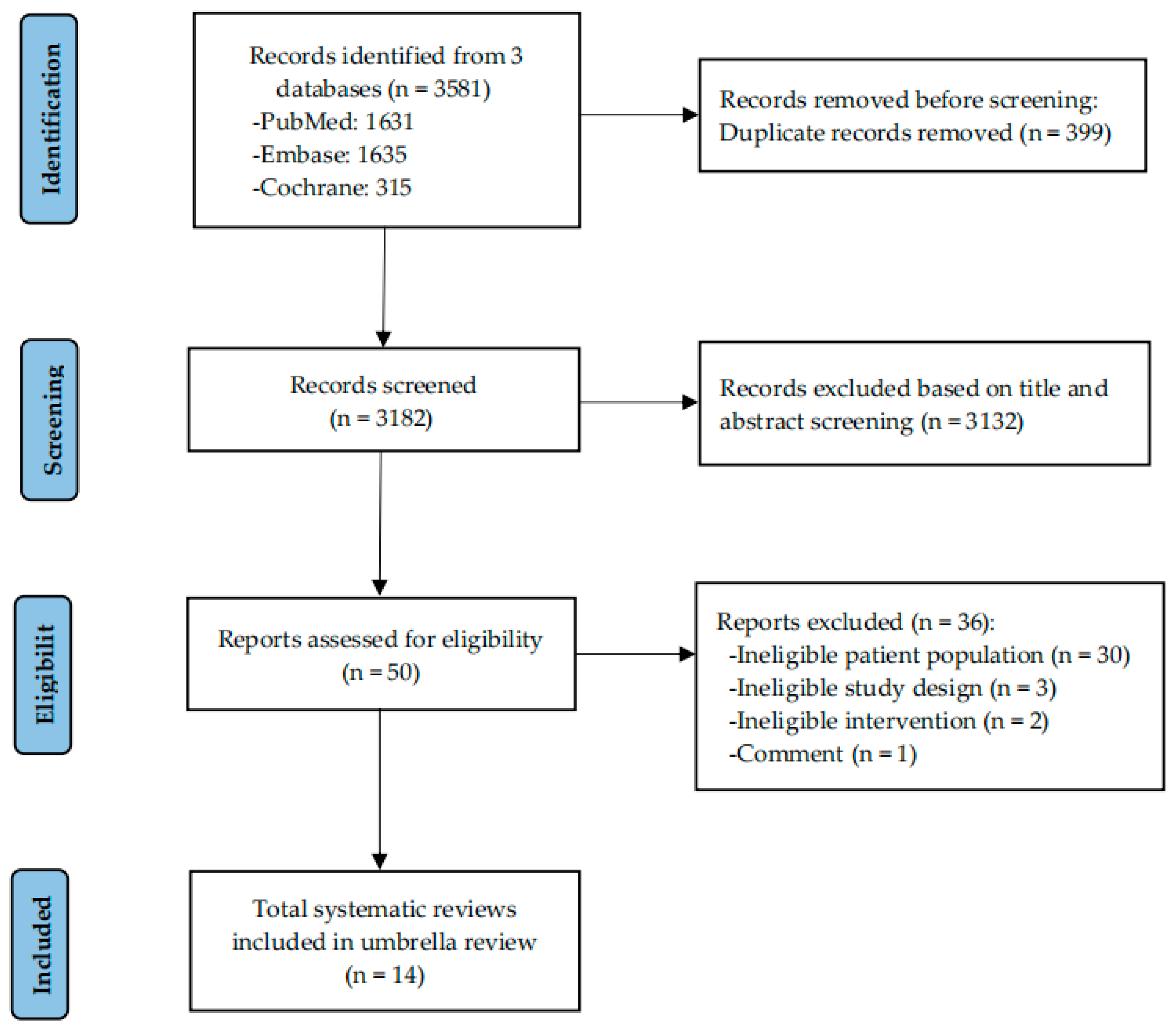
A total of 3581 records were identified through database searches. After duplicate removal and title/abstract screening, 50 full-text reports were assessed for eligibility, and 14 systematic reviews were ultimately included in this umbrella review [20,21,22,23,24,25,26,27,28,29,30,31,32,33]. The study selection process is illustrated in Figure 1 using a PRIOR flow chart.
The eligible articles were published between 2014 and 2024, with 10 studies published within the past five years. The number of RCTs included in each review ranged from 3 to 18, with sample sizes ranging from 149 to 1579 participants. Regarding methodological assessment of the primary trials, 12 studies applied the Cochrane risk of bias assessment tool. Detailed characteristics of the reviews included are summarized in Table 1.

3.2. Quality Assessment

The results of the methodological quality assessments were displayed in Table 2. Only one review was rated as high methodological quality [21], while all remaining reviews were assessed as having low to critically low quality. Regarding individual AMSTAR 2 criteria, key concerns emerged primarily in items 2, 7 and 13. Specifically, 36% of the reviews did not report protocol registration (item 2), 86% failed to provide a list of excluded studies with justification (item 7), and 29% did not adequately account for the risk of bias of individual studies when interpreting or discussing the review findings (item 13).
One health outcome was supported by suggestive evidence (class III), whereas all other outcomes were classified as weak (class IV) or non-significant evidence (class V) (Supplementary Table S3).

3.3. Overlap of Included Studies

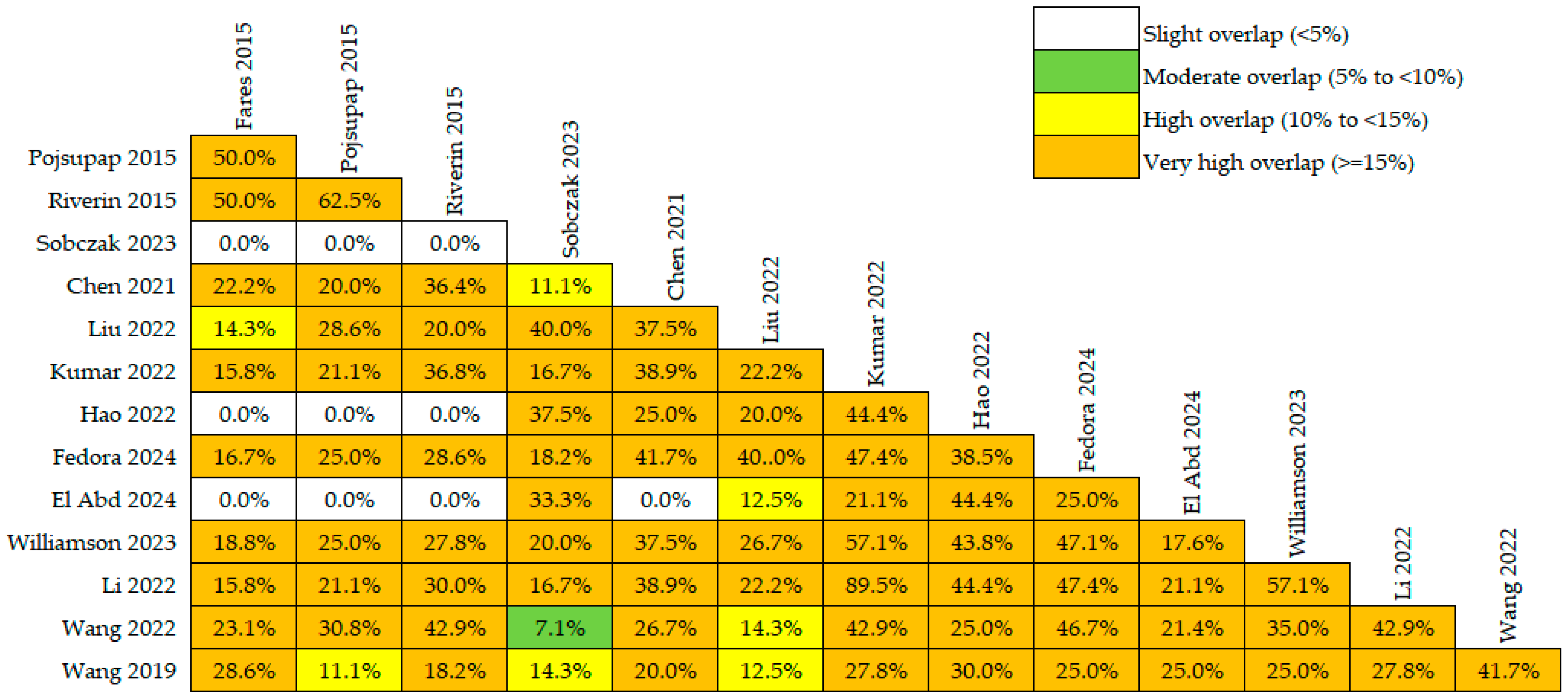
Among the 14 included systematic reviews, 26 unique primary randomized controlled trials were identified (Supplementary Table S4) [7,8,9,10,34,35,36,37,38,39,40,41,42,43,44,45,46,47,48,49,50,51,52,53,54,55]. The overlap analysis showed a substantial degree of overlap across reviews, indicating that many reviews relied on the same set of primary trials. The calculated CCA was 28.4%, suggesting very high overlap among the included reviews. A graphical overview of pairwise overlap across reviews is shown in Figure 2.

3.4. Asthma Control and Exacerbation Related Outcomes

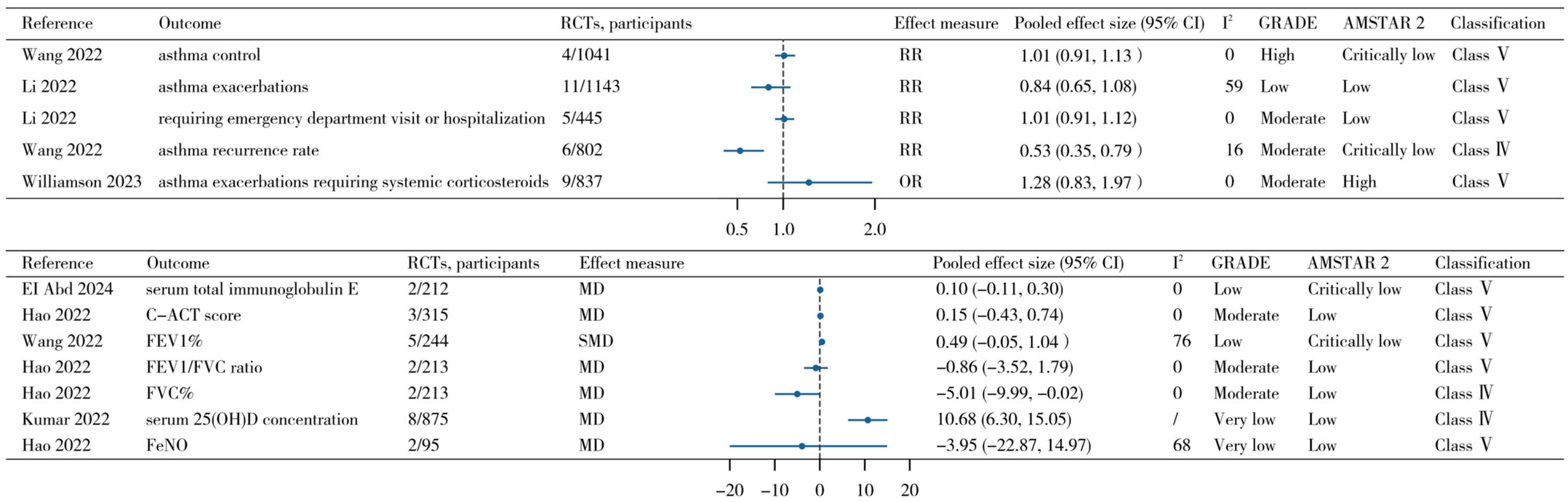
Vitamin D supplementation showed no statistically significant effect on childhood asthma control (RR = 1.01; 95% CI, 0.91 to 1.13; n = 4 RCTs; credibility of evidence: class V; certainty of evidence: high). Likewise, no significant improvement was observed in the Childhood Asthma Control Test (C-ACT) score (MD = 0.15; 95% CI, −0.43 to 0.74; n = 3 RCTs; class V; moderate).
No significant association was observed for asthma exacerbations overall (RR = 0.84; 95% CI, 0.65 to 1.08; n = 11 RCTs; class V; low). Vitamin D supplementation was also not significantly associated with asthma exacerbations requiring systemic corticosteroids (OR = 1.28; 95% CI, 0.83 to 1.97; n = 9 RCTs; class V; moderate) or exacerbations requiring emergency department visits or hospitalization (RR = 1.01; 95% CI, 0.91 to 1.12; n = 5 RCTs; class V; moderate). However, one meta-analysis suggested that vitamin D supplementation was associated with a reduced asthma recurrence rate (RR = 0.53; 95% CI, 0.35 to 0.79; n = 6 RCTs; class IV; moderate).

3.5. Lung Function

Low-certainty evidence suggested that vitamin D supplementation had no significant effect on percent predicted forced expiratory volume in 1 second (FEV1%) (SMD = 0.49; 95% CI, −0.05 to 1.04; n = 5 RCTs; class V) or fractional exhaled nitric oxide (FeNO) levels (MD = −3.95; 95% CI, −22.87 to 14.97; n = 2 RCTs; class V; very low) in children with asthma. No significant association was also observed for the FEV1/FVC ratio (MD = −0.86; 95% CI, −3.52 to 1.79; n = 2 RCTs; class V; moderate). In contrast, moderate certainty evidence indicated that vitamin D supplementation was associated with a change in percent predicted forced vital capacity (FVC%) (MD = −5.01; 95% CI, −9.99 to −0.02; n = 2 RCTs; class IV).

3.6. Other Outcomes

Vitamin D supplementation significantly increased serum 25(OH)D levels in children with asthma (MD = 10.68 ng/mL; 95% CI, 6.30 to 15.05; n = 8 RCTs; class IV; very low). No significant effect was observed on serum total immunoglobulin E (IgE) levels (MD = 0.10; 95% CI, −0.11 to 0.30; n = 2 RCTs; class V; low). All pooled meta-analytic estimates extracted from the included reviews are summarized in Figure 3 and Supplementary Table S5.

4. Discussion

Overall, there is insufficient evidence to support vitamin D supplementation for reducing asthma exacerbation, improving asthma control or enhancing lung function in children, while some evidence suggests that the supplementation may reduce asthma recurrence. Although vitamin D supplementation significantly increased serum 25(OH)D concentrations, this biochemical improvement did not translate into consistent clinical benefits. This suggests that correction of vitamin D status alone may be insufficient to modify the complex inflammatory and clinical course of childhood asthma.
The observed reduction in asthma recurrence should be interpreted cautiously and may reflect a more preventive rather than therapeutic role of vitamin D. Clinically, recurrence may refer more broadly to the return of asthma symptoms or episodes after a period of relative stability, whereas outcomes such as exacerbations requiring systemic corticosteroids, emergency department visits, or hospitalization generally represent more acute and severe deteriorations. In addition, recurrence-related outcomes may also have been defined more broadly or less stringently across primary trials and reviews, making them more likely to capture earlier or milder events. Vitamin D supplementation may therefore be more likely to influence susceptibility to recurrent or infection-triggered episodes through immunomodulatory effects and enhanced host defense, while having a limited impact on more severe exacerbations that reflect established airway inflammation, disease severity, and background controller treatment. This difference in clinical meaning and outcome definition may partly explain why a signal was observed for asthma recurrence but not for most other exacerbation endpoints. However, the evidence for asthma recurrence was limited and classified as weak (class IV), and definitions were not standardized across studies (Supplementary Table S6). Therefore, this result should be considered hypothesis-generating evidence of clinical benefit requiring further confirmation.
The absence of a clear benefit should not necessarily be interpreted as definitive evidence of ineffectiveness in all pediatric patients. For example, one subgroup analysis showed a significantly reduced risk of asthma exacerbation among children with baseline serum 25(OH)D levels below 10 ng/mL (RR = 0.48, 95%CI, 0.28 to 0.83) [22]. This finding is biologically plausible, as children with profound vitamin D deficiency may be more likely to benefit from supplementation than those with sufficient levels. However, such high-risk populations were underrepresented in many of the included reviews and primary trials, limiting the robustness and generalizability of subgroup-specific conclusions. Future randomized controlled trials should therefore focus more explicitly on children with severe deficiency, poor asthma control, frequent exacerbations, or more severe asthma phenotypes. Thus, the absence of a consistent overall benefit should not be interpreted as evidence against a possible benefit in specific subgroups, but rather as a reflection of the limitations of the current review-level evidence base.
Several factors may explain the inconsistency of findings across trials and reviews. First, the included RCTs were clinically heterogeneous with respect to participant age, baseline vitamin D status, asthma severity, background therapy, supplementation dose, administration regimen, and follow-up duration. These differences are likely to have influenced treatment responsiveness and contributed to the moderate heterogeneity observed for exacerbation outcomes. Second, outcome definitions were not fully consistent across studies (Supplementary Table S6). Asthma exacerbations were variably defined as overall exacerbation events, exacerbations requiring systemic corticosteroids, or exacerbations leading to emergency department visits or hospitalization. Likewise, asthma control and lung function were measured using different tools and indicators, making direct comparison across studies more difficult. Third, pediatric asthma itself is a heterogeneous disease, and vitamin D may plausibly exert different effects across allergic, infection-prone, or more severe inflammatory phenotypes. Such complexity is not easily captured in pooled analyses based on broad clinical categories.
Another possible explanation is the temporal evolution of both asthma management and vitamin D exposure in the general population [56]. Earlier randomized trials and meta-analyses tended to suggest more favorable effects of vitamin D supplementation [7,35], whereas more recent studies have more often reported null results [10,42]. One possible reason is that background vitamin D intake from diet may have increased over time, thereby reducing between-group contrasts in later trials. In addition, modern asthma care has become more standardized and effective, with broader use of inhaled corticosteroids and other controller medications. Under these circumstances, the incremental benefit of vitamin D supplementation as an adjunctive therapy may be too small to detect unless studied in carefully selected high-risk populations. This may also help explain why vitamin D increased circulating 25(OH)D levels without producing corresponding improvements in clinical endpoints. However, most included trials did not stratify results according to concomitant asthma medications, baseline inflammatory characteristics, or infection-related triggers. As a result, pooled estimates may have obscured clinically relevant interactions between vitamin D supplementation and existing anti-inflammatory therapies.
The certainty and credibility of the evidence further limit confidence in the observed findings. Most outcomes were supported by low or very low certainty evidence, and the methodological quality of the included systematic reviews was often suboptimal. Many meta-analyses were based on a small number of trials with limited sample sizes, increasing vulnerability to imprecision and unstable pooled estimates. In addition, substantial variation in study design, intervention protocols, and outcome measurement reduced comparability across studies. Therefore, the absence of convincing evidence for benefit should be interpreted as reflecting both a likely lack of large, consistent clinical effects and important limitations in the current evidence base. These findings should also be interpreted in the context of current asthma guidance. GINA recognizes that low vitamin D status is associated with worse asthma-related outcomes and notes that supplementation may be beneficial in some patients with low baseline 25(OH)D levels; however, it also states that there is no good-quality evidence that vitamin D supplementation consistently improves asthma control or reduces exacerbations overall [57]. Our findings are therefore broadly aligned with this guidance, rather than contradictory to it.
Another important finding of this umbrella review is that the evidence was extensive in appearance but limited in independence. Although 14 systematic reviews were included, they were based on only 26 unique primary randomized controlled trials, and the CCA indicated very high overlap across reviews. This suggests that the field has generated repeated syntheses of a relatively small and highly overlapping body of evidence. Consequently, future research efforts should shift from conducting yet another systematic review to funding innovative primary studies designed to answer the remaining uncertainties, and promoting data sharing and individual patient data meta-analyses to maximize the value of existing trials. Only by expanding the high-quality evidence base can the field move beyond this cycle of redundancy.
To our knowledge, this is the first umbrella review to comprehensively synthesize evidence on vitamin D supplementation in childhood asthma. In addition, we systematically evaluated methodological quality, certainty of evidence, and credibility of outcomes using AMSTAR 2, the GRADE approach, and evidence classification criteria, providing a transparent and hierarchical assessment of the available evidence. Nevertheless, several limitations should be acknowledged. First, as with all umbrella reviews, our conclusions depend on the quality of the included systematic reviews and the primary RCTs on which they were based. Second, we extracted all eligible meta-analytic estimates, but for evidence grading, we relied on the most comprehensive meta-analysis for each outcome, which may not fully capture all nuances across competing analyses. This pragmatic approach may have favored more recent or larger reviews over methodologically stronger but older reviews. However, most reviews included were rated as low or critically low quality, and the meta-analyses selected for GRADE assessment were also predominantly from the low-quality category when duplicate outcomes were present. Therefore, restricting GRADE assessment to only high- or moderate-quality reviews would not materially alter the overall interpretation of the evidence. Finally, some potentially important subgroup effects, such as those related to baseline vitamin D deficiency, asthma phenotype, or concomitant treatment, could not be robustly examined because of limited and inconsistent reporting in the underlying reviews. Several clinically important modifiers, such as residence-related sun exposure, lifestyle, diet or nutritional status, and social background, were also absent across the included systematic reviews. Therefore, our findings should be interpreted as a synthesis of the current review-level evidence base rather than as a definitive assessment of vitamin D supplementation across all clinically relevant pediatric asthma subgroups. This limitation also underscores an important gap in the current evidence base, highlighting the need for future primary trials and more detailed evidence syntheses that explicitly account for clinically relevant effect modifiers.

5. Conclusions

In conclusion, current evidence does not support routine vitamin D supplementation as an effective strategy to improve asthma control, reduce exacerbation, or enhance lung function in children with asthma despite its effect on increasing serum 25-hydroxyvitamin D levels and a possible benefit for asthma recurrence. However, the possibility of benefit in selected high-risk subgroups, particularly children with profound vitamin D deficiency or more severe disease, remains open. Future trials should prioritize clearly defined target populations, standardized supplementation regimens, consistent outcome definitions, and adequate follow-up to determine whether vitamin D has a clinically meaningful role in precision management of childhood asthma.

Supplementary Materials

The following supporting information can be downloaded at: https://www.mdpi.com/article/10.3390/nu18101560/s1. Methods S1: Selection process for meta-analyses addressing the same outcome; Table S1: Detailed search strategies; Table S2: Classification of evidence in meta-analysis; Table S3: Results of meta-analyses of RCTs on effects of vitamin D supplementation in children with asthma; Table S4: Primary randomized controlled trials included in each systematic review; Table S5: Certainty of evidence of the included meta-analyses of RCTs on effects of vitamin D supplementation in children with asthma by using the GRADE; Table S6: Definitions of key asthma-related outcomes across included reviews.

Author Contributions

Conceptualization, Z.Y. and J.L.; methodology, J.L. and Y.L.; formal analysis, J.L. and Z.Y.; writing—original draft preparation, J.L.; writing—review and editing, Y.L. and Z.Y.; supervision, Z.Y.; funding acquisition, Z.Y. All authors have read and agreed to the published version of the manuscript.

Funding

This research was funded by Shenzhen Medical Research Fund (A2403063), Shenzhen Science and Technology Program (JCYJ20220530154409021) and National Natural Science Foundation of China (72274193).

Institutional Review Board Statement

Not applicable.

Informed Consent Statement

Not applicable.

Data Availability Statement

All data relevant to this study are included in the published article and its Supplementary Materials, which are fully available and accessible.

Conflicts of Interest

The authors declare no conflicts of interest.

References

  1. Ferrante, G.; La Grutta, S. The burden of pediatric asthma. Front. Pediatr. 2018, 6, 186. [Google Scholar] [CrossRef]
  2. Martin, J.; Townshend, J.; Brodlie, M. Diagnosis and management of asthma in children. BMJ Paediatr. Open 2022, 6, e001277. [Google Scholar] [CrossRef]
  3. Vasiliou, J.E.; Lui, S.; Walker, S.A.; Chohan, V.; Xystrakis, E.; Bush, A.; Hawrylowicz, C.M.; Saglani, S.; Lloyd, C.M. Vitamin D deficiency induces Th2 skewing and eosinophilia in neonatal allergic airways disease. Allergy 2014, 69, 1380–1389. [Google Scholar] [CrossRef] [PubMed]
  4. Rolf, L.; Muris, A.H.; Hupperts, R.; Damoiseaux, J. Vitamin D effects on B cell function in autoimmunity. Ann. N. Y. Acad. Sci. 2014, 1317, 84–91. [Google Scholar] [CrossRef]
  5. Jat, K.R.; Khairwa, A. Vitamin D and asthma in children: A systematic review and meta-analysis of observational studies. Lung India 2017, 34, 355–363. [Google Scholar] [CrossRef]
  6. Al-Zayadneh, E.; Alnawaiseh, N.A.; Ajarmeh, S.; Altarawneh, A.H.; Albataineh, E.M.; AlZayadneh, E.; Shatanawi, A.; Alzayadneh, E.M. Vitamin D deficiency in children with bronchial asthma in southern Jordan: A cross-sectional study. J. Int. Med. Res. 2020, 48, 300060520974242. [Google Scholar] [CrossRef]
  7. Yadav, M.; Mittal, K. Effect of vitamin D supplementation on moderate to severe bronchial asthma. Indian J. Pediatr. 2014, 81, 650–654. [Google Scholar] [CrossRef] [PubMed]
  8. Majak, P.; Olszowiec-Chlebna, M.; Smejda, K.; Stelmach, I. Vitamin D supplementation in children may prevent asthma exacerbation triggered by acute respiratory infection. J. Allergy Clin. Immunol. 2011, 127, 1294–1296. [Google Scholar] [CrossRef]
  9. Jat, K.R.; Goel, N.; Gupta, N.; Gupta, C.P.; Datta, S.; Lodha, R.; Kabra, S.K. Efficacy of vitamin D supplementation in asthmatic children with vitamin D deficiency: A randomized controlled trial (ESDAC trial). Pediatr. Allergy Immunol. 2021, 32, 479–488. [Google Scholar] [CrossRef]
  10. Thakur, C.; Kumar, J.; Kumar, P.; Goyal, J.P.; Singh, K.; Gupta, A. Vitamin-D supplementation as an adjunct to standard treatment of asthma in children: A randomized controlled trial (ViDASTA Trial). Pediatr. Pulmonol. 2021, 56, 1427–1433. [Google Scholar] [CrossRef] [PubMed]
  11. Gates, M.; Gates, A.; Pieper, D.; Fernandes, R.M.; Tricco, A.C.; Moher, D.; Brennan, S.E.; Li, T.; Pollock, M.; Lunny, C.; et al. Reporting guideline for overviews of reviews of healthcare interventions: Development of the PRIOR statement. BMJ 2022, 378, e070849. [Google Scholar] [CrossRef]
  12. Lane, M.M.; Gamage, E.; Du, S.; Ashtree, D.N.; McGuinness, A.J.; Gauci, S.; Baker, P.; Lawrence, M.; Rebholz, C.M.; Srour, B.; et al. Ultra-processed food exposure and adverse health outcomes: Umbrella review of epidemiological meta-analyses. BMJ 2024, 384, e077310. [Google Scholar] [CrossRef]
  13. Huang, Y.; Chen, Z.; Chen, B.; Li, J.; Yuan, X.; Li, J.; Wang, W.; Dai, T.; Chen, H.; Wang, Y.; et al. Dietary sugar consumption and health: Umbrella review. BMJ 2023, 381, e071609. [Google Scholar] [CrossRef]
  14. Kirvalidze, M.; Abbadi, A.; Dahlberg, L.; Sacco, L.B.; Calderón-Larrañaga, A.; Morin, L. Estimating pairwise overlap in umbrella reviews: Considerations for using the corrected covered area (CCA) index methodology. Res. Synth. Methods 2023, 14, 764–767. [Google Scholar] [CrossRef]
  15. Shea, B.J.; Reeves, B.C.; Wells, G.; Thuku, M.; Hamel, C.; Moran, J.; Moher, D.; Tugwell, P.; Welch, V.; Kristjansson, E.; et al. AMSTAR 2: A critical appraisal tool for systematic reviews that include randomised or non-randomised studies of healthcare interventions, or both. BMJ 2017, 358, j4008. [Google Scholar] [CrossRef]
  16. Guyatt, G.H.; Oxman, A.D.; Vist, G.E.; Kunz, R.; Falck-Ytter, Y.; Alonso-Coello, P.; Schünemann, H.J. GRADE Working Group. GRADE: An emerging consensus on rating quality of evidence and strength of recommendations. BMJ 2008, 336, 924–926. [Google Scholar] [CrossRef] [PubMed]
  17. Guyatt, G.; Oxman, A.D.; Akl, E.A.; Kunz, R.; Vist, G.; Brozek, J.; Norris, S.; Falck-Ytter, Y.; Glasziou, P.; deBeer, H.; et al. GRADE guidelines: 1. Introduction—GRADE evidence profiles and summary of findings tables. J. Clin. Epidemiol. 2011, 64, 383–394. [Google Scholar] [CrossRef]
  18. Oliveira Dos Santos, A.; Belo, V.S.; Mota Machado, T.; da Silva, E.S. Toward automating GRADE classification: A proof-of-concept evaluation of an artificial intelligence-based tool for semiautomated evidence quality rating in systematic reviews. BMJ Evid. Based Med. 2026, 31, 36–45. [Google Scholar] [CrossRef]
  19. Fusar-Poli, P.; Radua, J. Ten simple rules for conducting umbrella reviews. Evid. Based Ment. Health 2018, 21, 95–100. [Google Scholar] [CrossRef] [PubMed]
  20. Pojsupap, S.; Iliriani, K.; Sampaio, T.Z.A.L.; O’Hearn, K.; Kovesi, T.; Menon, K.; McNally, J.D. Efficacy of high-dose vitamin D in pediatric asthma: A systematic review and meta-analysis. J. Asthma 2015, 52, 382–390. [Google Scholar] [CrossRef] [PubMed]
  21. Williamson, A.; Martineau, A.R.; Sheikh, A.; Jolliffe, D.; Griffiths, C.J. Vitamin D for the management of asthma. Cochrane Database Syst. Rev. 2023, 2, CD011511. [Google Scholar] [CrossRef] [PubMed]
  22. Li, Q.; Zhou, Q.; Zhang, G.; Tian, X.; Li, Y.; Wang, Z.; Zhao, Y.; Chen, Y.; Luo, Z. Vitamin D supplementation and allergic diseases during childhood: A systematic review and meta-analysis. Nutrients 2022, 14, 3947. [Google Scholar] [CrossRef] [PubMed]
  23. Wang, Q.; Ying, Q.; Zhu, W.; Chen, J. Vitamin D and asthma occurrence in children: A systematic review and meta-analysis. J. Pediatr. Nurs. 2022, 62, e60–e68. [Google Scholar] [CrossRef] [PubMed]
  24. Fares, M.M.; Alkhaled, L.H.; Mroueh, S.M.; Akl, E.A. Vitamin D supplementation in children with asthma: A systematic review and meta-analysis. BMC Res. Notes 2015, 8, 23. [Google Scholar] [CrossRef]
  25. Riverin, B.D.; Maguire, J.L.; Li, P. Vitamin D supplementation for childhood asthma: A systematic review and meta-analysis. PLoS ONE 2015, 10, e0136841. [Google Scholar] [CrossRef]
  26. Sobczak, M.; Pawliczak, R. Relationship between vitamin D and asthma from gestational to adulthood period: A meta-analysis of randomized clinical trials. BMC Pulm. Med. 2023, 23, 212. [Google Scholar] [CrossRef]
  27. Chen, Z.; Peng, C.; Mei, J.; Zhu, L.; Kong, H. Vitamin D can safely reduce asthma exacerbations among corticosteroid-using children and adults with asthma: A systematic review and meta-analysis of randomized controlled trials. Nutr. Res. 2021, 92, 49–61. [Google Scholar] [CrossRef]
  28. Liu, M.; Wang, J.; Sun, X. A meta-analysis on vitamin D supplementation and asthma treatment. Front. Nutr. 2022, 9, 860628. [Google Scholar] [CrossRef]
  29. Kumar, J.; Kumar, P.; Goyal, J.P.; Thakur, C.; Choudhary, P.; Meena, J.; Charan, J.; Singh, K.; Gupta, A. Vitamin D supplementation in childhood asthma: A systematic review and meta-analysis of randomised controlled trials. ERJ Open Res. 2022, 8, 00662-2021. [Google Scholar] [CrossRef]
  30. Hao, M.; Xu, R.; Luo, N.; Liu, M.; Xie, J.; Zhang, W. The Effect of vitamin D supplementation in children with asthma: A meta-analysis. Front. Pediatr. 2022, 10, 840617. [Google Scholar] [CrossRef]
  31. Fedora, K.; Setyoningrum, R.A.; Aina, Q.; Rosyidah, L.N.; Ni’mah, N.L.; Titiharja, F.F. Vitamin D supplementation decrease asthma exacerbations in children: A systematic review and meta-analysis of randomized controlled trials. Ann. Med. 2024, 56, 2400313. [Google Scholar] [CrossRef] [PubMed]
  32. El Abd, A.; Dasari, H.; Dodin, P.; Trottier, H.; Ducharme, F.M. The effects of vitamin D supplementation on inflammatory biomarkers in patients with asthma: A systematic review and meta-analysis of randomized controlled trials. Front. Immunol. 2024, 15, 1335968. [Google Scholar] [CrossRef]
  33. Wang, M.; Liu, M.; Wang, C.; Xiao, Y.; An, T.; Zou, M.; Cheng, G. Association between vitamin D status and asthma control: A meta-analysis of randomized trials. Respir. Med. 2019, 150, 85–94. [Google Scholar] [CrossRef]
  34. Schou, A.J.; Heuck, C.; Wolthers, O.D. Does vitamin D administered to children with asthma treated with inhaled glucocorticoids affect short-term growth or bone turnover? Pediatr. Pulmonol. 2003, 36, 399–404. [Google Scholar] [CrossRef]
  35. Urashima, M.; Segawa, T.; Okazaki, M.; Kurihara, M.; Wada, Y.; Ida, H. Randomized trial of vitamin D supplementation to prevent seasonal influenza A in schoolchildren. Am. J. Clin. Nutr. 2010, 91, 1255–1260. [Google Scholar] [CrossRef]
  36. Lewis, E.; Fernandez, C.; Nella, A.; Hopp, R.; Gallagher, J.C.; Casale, T.B. Relationship of 25-hydroxyvitamin D and asthma control in children. Ann. Allergy Asthma Immunol. 2012, 108, 281–282. [Google Scholar] [CrossRef] [PubMed]
  37. Darabi, B.; Moin, M.; Purpbak, Z. The effect of vitamin D supplementation over asthma outcome. Iran. J. Allergy Asthma Immunol. 2013, 12, S87. [Google Scholar]
  38. Majak, P.; Rychlik, B.; Stelmach, I. The effect of oral steroids with and without vitamin D3 on early efficacy of immunotherapy in asthmatic children. Clin. Exp. Allergy 2009, 39, 1830–1841. [Google Scholar] [CrossRef]
  39. Baris, S.; Kiykim, A.; Ozen, A.; Tulunay, A.; Karakoc-Aydiner, E.; Barlan, I.B. Vitamin D as an adjunct to subcutaneous allergen immunotherapy in asthmatic children sensitized to house dust mite. Allergy 2013, 69, 246–253. [Google Scholar] [CrossRef]
  40. Kerley, C.P.; Hutchinson, K.; Cormican, L.; Faul, J.; Greally, P.; Coghlan, D.; Elnazir, B. Vitamin D3for uncontrolled childhood asthma: A pilot study. Pediatr. Allergy Immunol. 2016, 27, 404–412. [Google Scholar] [CrossRef]
  41. Ducharme, F.M.; Jensen, M.; Mailhot, G.; Alos, N.; White, J.; Rousseau, E.; Tse, S.M.; Khamessan, A.; Vinet, B. Impact of two oral doses of 100,000 IU of vitamin D3 in preschoolers with viral-induced asthma: A pilot randomised controlled trial. Trials 2019, 20, 138. [Google Scholar] [CrossRef]
  42. Forno, E.; Bacharier, L.B.; Phipatanakul, W.; Guilbert, T.W.; Cabana, M.D.; Ross, K.; Covar, R.; Gern, J.E.; Rosser, F.J.; Blatter, J.; et al. Effect of vitamin D3 supplementation on severe asthma exacerbations in children with asthma and low vitamin D levels: The VDKA randomized clinical trial. JAMA 2020, 324, 752–760. [Google Scholar] [CrossRef] [PubMed]
  43. Aglipay, M.; Birken, C.S.; Parkin, P.C.; Loeb, M.B.; Thorpe, K.; Chen, Y.; Laupacis, A.; Mamdani, M.; Macarthur, C.; Hoch, J.S.; et al. Effect of High-Dose vs Standard-Dose Wintertime Vitamin D Supplementation on Viral Upper Respiratory Tract Infections in Young Healthy Children. JAMA 2017, 318, 245–254, Erratum in JAMA 2021, 326, 90. https://doi.org/10.1001/jama.2021.9465. [Google Scholar] [CrossRef] [PubMed]
  44. Jensen, M.E.; Mailhot, G.; Alos, N.; Rousseau, E.; White, J.H.; Khamessan, A.; Ducharme, F.M. Vitamin D intervention in preschoolers with viral-induced asthma (DIVA): A pilot randomised controlled trial. Trials 2016, 17, 353. [Google Scholar] [CrossRef]
  45. Tachimoto, H.; Mezawa, H.; Segawa, T.; Akiyama, N.; Ida, H.; Urashima, M. Improved control of childhood asthma with low-dose, short-term vitamin D supplementation: A randomized, double-blind, placebo-controlled trial. Allergy 2016, 71, 1001–1009. [Google Scholar] [CrossRef]
  46. Najmuddin, F.; Lahiri, K. Vitamin D in Pediatric Asthma and Allergic Rhinitis: Benefits Beyond Skeletal Health. Insights Allergy Asthma Bronchitis 2017, 3. [Google Scholar] [CrossRef][Green Version]
  47. Bar Yoseph, R.; Livnat, G.; Schnapp, Z.; Hakim, F.; Dabbah, H.; Goldbart, A.; Bentur, L. The effect of vitamin D on airway reactivity and inflammation in asthmatic children: A double-blind placebo-controlled trial. Pediatr. Pulmonol. 2014, 50, 747–753. [Google Scholar] [CrossRef]
  48. Swangtrakul, N.; Manuyakorn, W.; Mahachoklertwattana, P.; Kiewngam, P.; Sasisakulporn, C.; Jotikasthirapa, W.; Kamchaisatian, W.; Benjaponpitak, S. Effect of vitamin D on lung function assessed by forced oscillation technique in asthmatic children with vitamin D deficiency: A randomized double-blind placebo-controlled trial. Asian Pac. J. Allergy Immunol. 2020, 40, 22–30. [Google Scholar] [CrossRef]
  49. Kang, Q.; Zhang, X.; Liu, S.; Huang, F. Correlation between the vitamin D levels and asthma attacks in children: Evaluation of the effects of combination therapy of atomization inhalation of budesonide, albuterol and vitamin D supplementation on asthmatic patients. Exp. Ther. Med. 2017, 15, 727–732. [Google Scholar] [CrossRef]
  50. Rosser, F.J.; Han, Y.-Y.; Forno, E.; Bacharier, L.B.; Phipatanakul, W.; Guilbert, T.W.; Cabana, M.D.; Ross, K.; Blatter, J.; Durrani, S.; et al. Effect of vitamin D supplementation on total and allergen-specific IgE in children with asthma and low vitamin D levels. J. Allergy Clin. Immunol. 2021, 149, 440–444.e2. [Google Scholar] [CrossRef]
  51. Aglipay, M.; Birken, C.; Dai, D.; Parkin, P.; Maguire, J. 70 High Dose Vitamin D for the Prevention of Wheezing in Preschoolers: A Secondary Analysis of a Randomized Clinical Trial. J. Paediatr. Child Health 2019, 24, e27–e28. [Google Scholar] [CrossRef]
  52. Jerzynska, J.; Stelmach, W.; Rychlik, B.; Lechańska, J.; Podlecka, D.; Stelmach, I. The clinical effect of vitamin D supplementation combined with grass-specific sublingual immunotherapy in children with allergic rhinitis. Allergy Asthma Proc. 2016, 37, 105–114. [Google Scholar] [CrossRef]
  53. Chen, J.; Ren, Y.; He, N.; Shi, L. A randomized controlled study of vitamin D3 supplementation on childhood asthma control. Chongqing Med. 2017, 46, 4505–4507+4510. [Google Scholar]
  54. El-Korashi, L.A.; Nafea, O.E.; Zake, L.G.; Arab, F.; Anis, R.H. Effect of Vitamin D Adjuvant and Allergen Specific Immunotherapy on Serum IL-10 and IL-17 Levels in Childhood Asthma: A Controlled Clinical Trial. Egypt. J. Med. Microbiol. 2021, 30, 175–181. [Google Scholar] [CrossRef]
  55. Litonjua, A.A.; Carey, V.J.; Laranjo, N.; Stubbs, B.J.; Mirzakhani, H.; O’Connor, G.T.; Sandel, M.; Beigelman, A.; Bacharier, L.B.; Zeiger, R.S.; et al. Six-Year Follow-Up of a Trial of Antenatal Vitamin D for Asthma Reduction. N. Engl. J. Med. 2020, 382, 525–533. [Google Scholar] [CrossRef] [PubMed]
  56. Kantor, E.D.; Rehm, C.D.; Du, M.; White, E.; Giovannucci, E.L. Trends in dietary supplement use among US adults from 1999–2012. JAMA 2016, 316, 1464–1474. [Google Scholar] [CrossRef]
  57. Global Initiative for Asthma. Global Strategy for Asthma Management and Prevention; 2025 Update. Available online: https://ginasthma.org/ (accessed on 20 April 2026).
Figure 1. Flowchart of the study selection for the umbrella review.
Nutrients 18 01560 g001
Figure 2. Heatmap of pairwise overlap of primary studies across the included systematic reviews [21,22,23,24,25,26,27,28,29,30,31,32,33,34].
Nutrients 18 01560 g002
Figure 3. Effects of vitamin D supplementation in children with asthma [21,22,23,29,30,32]. Abbreviations: C-ACT score: Childhood Asthma Control Test score; FEV1%: forced expiratory volume in 1 s percent predicted; FVC%: forced vital capacity percent; FeNO: fractional exhaled nitric oxide.
Nutrients 18 01560 g003
Table 1. Characteristics of the systematic reviews included in this umbrella review.
Author (Year)PopulationBaseline
25(OH)D
n, RCTs/
No., Participants
Follow-UpDosageOutcomeRisk of Bias
Assessment Tool
Pojsupap 2015 [20]children with asthma; 5–18 years13.0–35.6 ng/mL5/6254–52 weeks500–2000 IU/dayasthma exacerbationsCochrane
Williamson 2023 [21] †children with asthma; 0–18 years11.2–35.6 ng/mL15/11553–40 months400–4000 IU/dayasthma exacerbationsCochrane
Li
2022 [22]
children with asthma; 1–18 years11.2–31.7 ng/mL18/14786 weeks–12 months1000–60,000 IU/weekasthma exacerbations, asthma control, pulmonary function test, serum vitamin D levelsCochrane
Wang
2022 [23]
children with asthma; 0–18 years19.0–76.3 ng/mL12/18716 weeks–6 months200–2000 IU/dayasthma exacerbations, asthma control, pulmonary function testJadad
Fares
2015 [24]
children with asthma; 5–18 years31.3–36.1 ng/mL4/1496 weeks–19 months1000–4200 IU/weekFEV1%, serum vitamin D levelsCochrane
Riverin 2015 [25]children with asthma; 3–18 years-8/5731–12 months1000 IU/week–60,000 IU/monthasthma exacerbations, FEV1%, serum vitamin D levelsCochrane
Sobczak 2023 [26] †children with asthma; 4–16 years10.8–23.2 ng/mL3/3543–9 months1000–2000 IU/dayasthma control, FEV1%Cochrane
Chen
2021 [27] †
children with asthma; 3–10 years10.8–36.1 ng/mL7/7052–12 months1000–28,000 IU/weekasthma exacerbationsCochrane
Liu
2022 [28] †
children with asthma; 3–18 years10.8–16.5 ng/mL4/4581–9 months1000–2000 IU/dayasthma exacerbations, FEV1%Cochrane
Kumar 2022 [29]children with asthma; 1–18 years10.8–36.1 ng/mL18/15791–12 months1000–60,000 IU/weekasthma exacerbations, asthma control, pulmonary function test, serum vitamin D levelsCochrane
Hao
2022 [30]
children with asthma; 3–14 years10.8–29.4 ng/mL8/7386 weeks–12 months400–4000 IU/dayasthma exacerbations, pulmonary function test, serum vitamin D levels, adverse effectsCochrane
Fedora 2024 [31]children with asthma; 0–18 years10.8–36.1 ng/mL10/12433–12 months150–4000 IU/dayasthma exacerbations, FEV1%, serum vitamin D levelsJBI
El Abd
2024 [32] †
children with asthma; 6–18 years15.8–29.0 ng/mL5/4066–48 weeks800–4000 IU/dayserum IgE, blood eosinophilsCochrane
Wang
2019 [33] †
children with asthma; 1–18 years20.0–36.1 ng/mL5/1836 weeks–12 months400–2000 IU/dayasthma exacerbations, FEV1%Cochrane
† Studies also included adults; however, only data for children’s subgroups were extracted. Abbreviations: FEV1%, precent predicted forced expiratory volume in 1 second; IgE, immunoglobulin E in serum; JBI, the Joanne Briggs Institute Critical Appraisal tools.
Table 2. Results of the quality assessment of systematic reviews with the AMSTAR 2 Tool.
Reference1. PICO2. A Priori Study
Protocol
3. Choice Study Design4. Search Strategy5. Duplicate Study
Selection
6. Duplicate Data Extraction7. List of Excluded Studies8. Description
Included Studies
9. Technique RoB10. Funding Sources
of Included Studies
11. Statistical
Methods
12. Impact of RoB on Results13. RoB Discussion14. Heterogeneity
Discussion
15. Publication Bias16. Conflict of InterestOverall
Pojsupap 2015 [20]YNYPYYYNYYNYYYYYYCritically low
Williamson 2023 [21]YPYNYYYYYYYYYYYYYHigh
Li 2022 [22]YPYNPYYYNPYYNYYYYYYLow
Wang 2022 [23]YNNPYYYNPYYNYNNYNYCritically low
Fares 2015 [24]YPYNPYYYNYYYYYYYYYLow
Riverin 2015 [25]YNNPYYYYYPYNYNYYYYLow
Sobczak 2023 [26]YNNPYNNNPYYNYNNYYYCritically low
Chen 2021 [27]YNNPYYYNPYYNYYYYYYCritically low
Liu 2022 [28]YPYNPYYYNPYYNYNNYYYCritically low
Kumar 2022 [29]YPYYPYYYNYYNYYYYYYLow
Hao 2022 [30]YPYNPYYYNPYYNYYYYYYLow
Fedora 2024 [31]YPYYPYYYNPYPYNYNNNYYCritically low
El Abd 2024 [32]YPYYPYYYNPYYNYYYYNYCritically low
Wang 2019 [33]YPYNPYYYNPYYNYYYYYYLow
Abbreviations: Y = yes, N = no, PY = partial yes.
Disclaimer/Publisher’s Note: The statements, opinions and data contained in all publications are solely those of the individual author(s) and contributor(s) and not of MDPI and/or the editor(s). MDPI and/or the editor(s) disclaim responsibility for any injury to people or property resulting from any ideas, methods, instructions or products referred to in the content.