Alpha-Lipoic Acid and Benfotiamine in Diabetic Peripheral Neuropathy: A Critical Review of Mechanistic Rationale and Clinical Evidence Within a Nutritional Therapeutic Framework

 ,
,  , , ,
, , , 
Abstract
1. Introduction
2. Aims, Objectives, and Rationale of the Review
2.1. Aim
2.2. Specific Objectives
- To synthesize current understanding of the metabolic and oxidative pathways involved in DPN pathogenesis and to identify therapeutic targets relevant to ALA and benfotiamine.
- To analyze preclinical evidence supporting the biological plausibility of these agents.
- To critically appraise randomized controlled trials and long-term clinical studies evaluating symptomatic and structural outcomes.
- To assess the strength, consistency, and limitations of the available evidence.
- To clarify the clinical positioning of these compounds within a nutritional therapeutic context.
2.3. Rationale and Novelty
3. Materials and Methods
3.1. Literature Search Strategy
- Population/Problem: “diabetic peripheral neuropathy,” “diabetic polyneuropathy,” and “diabetic neuropathies”
- Intervention: “alpha-lipoic acid,” “thioctic acid,” “benfotiamine,” “thiamine derivatives,” and “vitamin B1”
- Mechanism/Context: “oxidative stress,” “advanced glycation end products,” “transketolase,” “metabolic therapy,” and “antioxidant therapy”
3.2. Eligibility Criteria
- Publication Type: Peer-reviewed original research (randomized controlled trials, controlled clinical trials, long-term prospective follow-up studies, and preclinical in vivo/in vitro studies for mechanistic background). Systematic reviews and meta-analyses were not included as primary evidence sources to avoid double-counting of original studies; however, their reference lists were screened for additional primary studies (snowballing).
- Study Design: For clinical evidence, randomized controlled trials (RCTs), controlled clinical trials, and long-term prospective follow-up studies were included. For mechanistic background, preclinical (in vivo and in vitro) studies and human translational research were considered.
- Population (P): Studies involving human participants aged > 18 years with diagnosed Type 1 or Type 2 diabetes mellitus and confirmed diabetic peripheral neuropathy. Preclinical studies using animal models of diabetic neuropathy were also included for mechanistic rationale.
- Intervention (I): Studies evaluating alpha-lipoic acid or benfotiamine as a therapeutic intervention, administered orally or intravenously, either as monotherapy or in combination, provided the effect of the specific agent could be discerned.
- Comparison (C): Studies with placebo, no treatment, active comparator, or dose-comparison designs were eligible.
- Outcomes (O): Studies reporting on clinical outcomes (e.g., neuropathic pain scales, Total Symptom Score [TSS]), neurophysiological outcomes (e.g., nerve conduction studies), validated symptom-based outcomes, quality of life measures, or mechanistic endpoints (e.g., markers of oxidative stress, AGEs).
- Language: Publications in English.
- Studies involving non-diabetic neuropathy populations.
- Studies using combination therapies where the independent clinical effect of ALA or benfotiamine could not be distinguished (e.g., fixed-dose combinations with other B-vitamins without a monotherapy arm), although such studies were noted for context.
- Studies that lacked defined neuropathy-specific endpoints.
- Publications such as narrative opinions, commentaries, conference abstracts, or letters to the editor without primary data.
- Articles not published in English.
3.3. Study Selection and Data Extraction
3.4. Data Synthesis and Analysis
- Biological Plausibility: The strength and consistency of the mechanistic rationale.
- Strength and Consistency of Clinical Evidence: The volume, quality, and reproducibility of findings from clinical trials.
- Duration of Intervention: The distinction between short-term (weeks) and long-term (months to years) studies.
- Type of Outcome: The differentiation between symptomatic improvement (patient-reported outcomes) and evidence of structural or disease-modifying effects (e.g., nerve conduction studies, morphological biomarkers).
- Methodological Rigor: Sample size, study design (RCT vs. open-label), and risk of bias.
3.5. Methodological Quality Assessment
- Randomization method (explicitly described or not);
- Blinding (double-blind, single-blind, or open-label);
- Sample size (adequacy for primary endpoint);
- Treatment duration (short-term ≤ 12 weeks vs. long-term ≥ 1 year);
- Type of outcome measures (symptom-based scales only vs. inclusion of structural or neurophysiological endpoints);
- Use of intention-to-treat (ITT) analysis;
- Completeness of follow-up (attrition rate).
4. Results
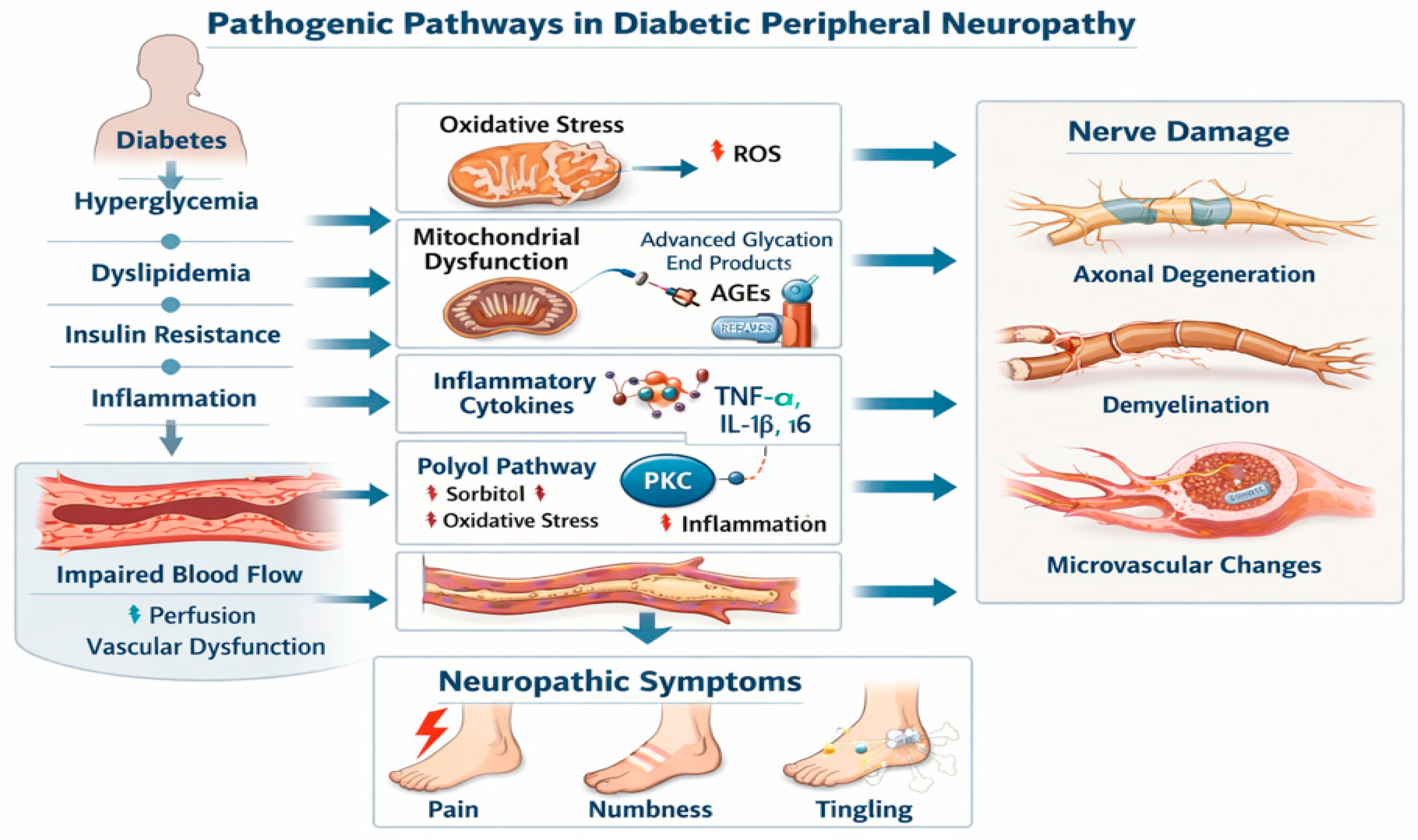
4.1. Metabolic and Molecular Basis of Diabetic Peripheral Neuropathy
4.1.1. Mitochondrial Dysfunction and Oxidative Stress as Central Drivers
4.1.2. Polyol Pathway Activation
4.1.3. Advanced Glycation End Products (AGEs) and RAGE Signaling
4.1.4. Protein Kinase C Activation and Microvascular Dysfunction
4.1.5. Hexosamine Pathway and Gene Expression Modulation
4.1.6. Neurotrophic Factor Deficiency and Impaired Regeneration
- Metabolic effects: Changes in biochemical pathways (e.g., reduced oxidative stress, increased transketolase activity, decreased AGE formation). These are measured in preclinical or translational studies and may not directly correlate with clinical improvement.
- Symptomatic effects: Patient-reported outcomes such as pain, paresthesia, numbness, and Total Symptom Score (TSS). These are the primary endpoints in most DPN trials.
- Structural effects: Objective measures of nerve integrity, including nerve conduction velocity, intraepidermal nerve fiber density (IENFD), and corneal confocal microscopy (CCM). Improvement in these measures would indicate nerve regeneration or repair, which has not been demonstrated for either agent.
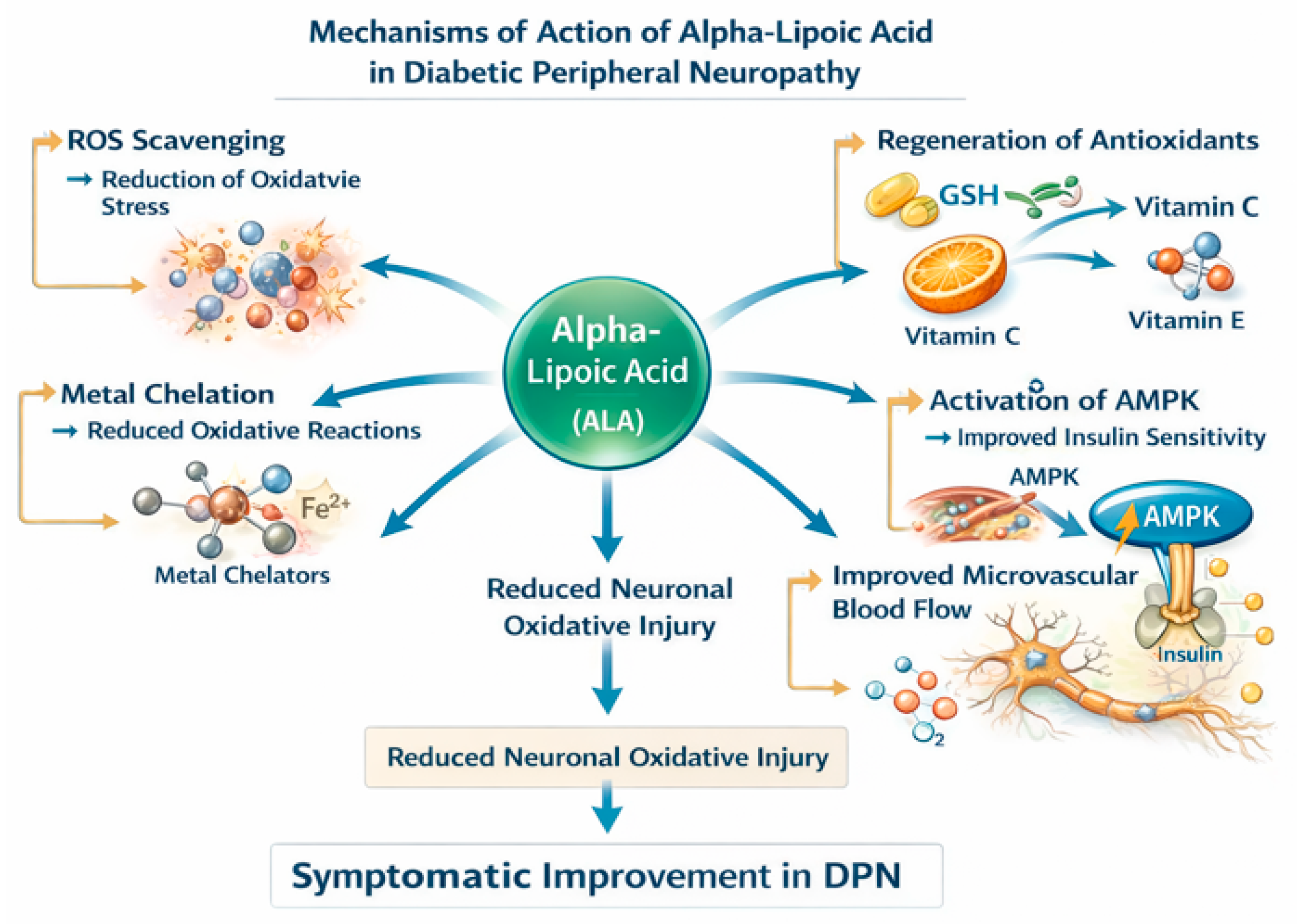
4.2. Alpha-Lipoic Acid: Biochemical Rationale and Clinical Evidence
4.2.1. Biochemical and Pharmacological Properties
4.2.2. Evidence from Randomized Controlled Trials
4.2.3. Meta-Analytical Evidence
4.2.4. Safety and Tolerability
4.2.5. Critical Appraisal
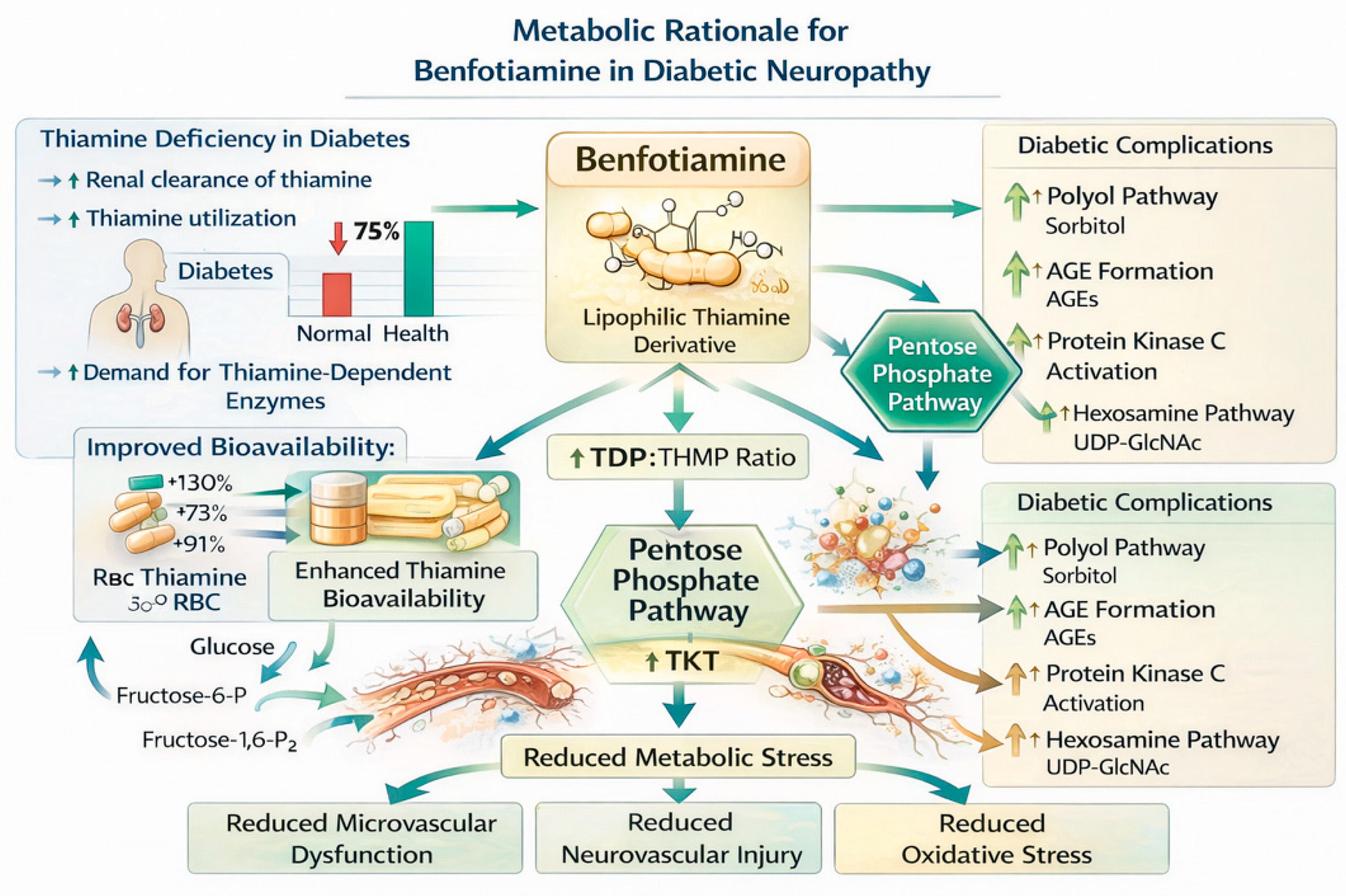
4.3. Benfotiamine: Metabolic Modulation and Clinical Evidence
4.3.1. Thiamine Metabolism and Mechanistic Rationale
4.3.2. Preclinical Evidence in Neuropathy Models
4.3.3. Clinical Trials in Diabetic Peripheral Neuropathy
4.3.4. Clinical Interpretation and Limitations
4.4. Comparative Mechanistic and Clinical Analysis
5. Discussion
5.1. Clinical Applications and Practical Considerations
5.1.1. Alpha-Lipoic Acid in Clinical Practice
5.1.2. Benfotiamine in Clinical Practice
5.2. Comparison with Other Nutritional Interventions
5.3. Translational Gap: Why Mechanistic Plausibility Does Not Guarantee Clinical Efficacy
Comparison with Previously Published Reviews
5.4. Limitations of the Available Evidence
Limitations of This Review
5.5. Future Directions
- Long-Term Randomized Controlled Trials: Studies of ≥2–3 years’ duration evaluating structural endpoints (IENFD, CCM) are urgently needed, particularly for benfotiamine.
- Standardized Outcome Measures: The adoption of core outcome sets for DPN trials would facilitate meta-analysis and cross-study comparisons. Regulatory agencies and academic consortia should work toward harmonizing endpoint selection.
- Biomarker-Guided Stratification: Assessment of oxidative stress indices, AGE levels, mitochondrial function, and thiamine status [41] may identify subgroups most likely to benefit. Pharmacogenomic approaches could also identify genetic determinants of treatment response.
- Early Intervention Models: Investigating metabolic therapy in early or preclinical neuropathy (e.g., patients with impaired glucose tolerance or recently diagnosed diabetes) may clarify preventive potential before irreversible structural damage occurs.
- Combination Metabolic Approaches: Given the multifactorial pathogenesis of DPN, multi-target strategies combining redox modulation (ALA), metabolic correction (benfotiamine), and anti-inflammatory mechanisms warrant exploration in factorial design trials.
- Integration with Nutritional Optimization: Broader dietary and micronutrient interventions should be studied in conjunction with targeted supplementation to assess synergistic effects. Mediterranean diet patterns, for example, may enhance the effects of metabolic modulators.
- Wearable Technology Integration: Continuous glucose monitoring and actigraphy could provide objective measures of glycemic variability and physical activity as covariates or surrogate endpoints in clinical trials.
- Health Economics Evaluation: Healthcare utilization, quality-adjusted life years, and cost-effectiveness should be assessed to inform reimbursement decisions and guideline recommendations.
- Epigenetic and Transcriptomic Studies: Investigate whether metabolic interventions influence DNA methylation patterns, microRNA expression, or gene expression profiles in accessible tissues (e.g., peripheral blood mononuclear cells) as potential biomarkers of response.
5.5.1. Chemical Structure, Metabolites, and Natural Sources of Alpha-Lipoic Acid
5.5.2. Recent Evidence
6. Conclusions
Author Contributions
Funding
Data Availability Statement
Conflicts of Interest
Abbreviations
References
- Feldman, E.L.; Callaghan, B.C.; Pop-Busui, R.; Zochodne, D.W.; Wright, D.E.; Bennett, D.L.; Bril, V.; Russell, J.W.; Viswanathan, V. Diabetic neuropathy. Nat. Rev. Dis. Primers 2019, 5, 41. [Google Scholar] [CrossRef]
- Pop-Busui, R.; Boulton, A.J.M.; Feldman, E.L.; Bril, V.; Freeman, R.; Malik, R.A.; Sosenko, J.M.; Ziegler, D. Diabetic neuropathy: A position statement by the American Diabetes Association. Diabetes Care 2017, 40, 136–154. [Google Scholar] [CrossRef]
- Brownlee, M. Biochemistry and molecular cell biology of diabetic complications. Nature 2001, 414, 813–820. [Google Scholar] [CrossRef]
- Ziegler, D.; Hanefeld, M.; Ruhnau, K.J.; Meissner, H.P.; Lobisch, M.; Schütte, K.; Gries, F.A. Treatment of symptomatic diabetic peripheral neuropathy with the antioxidant alpha-lipoic acid: A 3-week multicentre randomized controlled trial (ALADIN Study). Diabetologia 1995, 38, 1425–1433. [Google Scholar] [CrossRef]
- Ziegler, D.; Hanefeld, M.; Ruhnau, K.J.; Hasche, H.; Lobisch, M.; Schütte, K.; Kerum, G.; Malessa, R. Treatment of symptomatic diabetic polyneuropathy with the antioxidant alpha-lipoic acid: A 7-month multicenter randomized controlled trial (ALADIN III Study). Diabetes Care 1999, 22, 1296–1301. [Google Scholar] [CrossRef] [PubMed]
- Ametov, A.S.; Barinov, A.; Dyck, P.J.; Hermann, R.; Kozlova, N.; Litchy, W.J.; Low, P.A.; Nehrdich, D.; Novosadova, M.; O’Brien, P.C.; et al. The sensory symptoms of diabetic polyneuropathy are improved with alpha-lipoic acid: The SYDNEY trial. Diabetes Care 2003, 26, 770–776. [Google Scholar] [CrossRef] [PubMed]
- Ziegler, D.; Ametov, A.; Barinov, A.; Dyck, P.J.; Gurieva, I.; Low, P.A.; Munzel, U.; Yakhno, N.; Raz, I.; Novosadova, M.; et al. Oral treatment with alpha-lipoic acid improves symptomatic diabetic polyneuropathy: The SYDNEY 2 trial. Diabetes Care 2006, 29, 2365–2370. [Google Scholar] [CrossRef]
- Balakumar, P.; Rohilla, A.; Krishan, P.; Solairaj, P.; Thangathirupathi, A. The multifaceted therapeutic potential of benfotiamine. Pharmacol. Res. 2010, 61, 482–488. [Google Scholar] [CrossRef]
- Hammes, H.P.; Du, X.; Edelstein, D.; Taguchi, T.; Matsumura, T.; Ju, Q.; Lin, J.; Bierhaus, A.; Nawroth, P.; Hannak, D.; et al. Benfotiamine blocks three major pathways of hyperglycemic damage and prevents experimental diabetic retinopathy. Nat. Med. 2003, 9, 294–299. [Google Scholar] [CrossRef]
- Beltramo, E.; Berrone, E.; Tarallo, S.; Porta, M. Effects of thiamine and benfotiamine on intracellular glucose metabolism and relevance in the prevention of diabetic complications. Acta Diabetol. 2008, 45, 131–141. [Google Scholar] [CrossRef] [PubMed]
- Stracke, H.; Lindemann, A.; Federlin, K. A benfotiamine-vitamin B combination in treatment of diabetic polyneuropathy. Exp. Clin. Endocrinol. Diabetes 1996, 104, 311–316. [Google Scholar] [CrossRef] [PubMed]
- Stracke, H.; Gaus, W.; Achenbach, U.; Federlin, K.; Bretzel, R.G. Benfotiamine in diabetic polyneuropathy (BENDIP): Results of a randomized, double-blind, placebo-controlled clinical study. Exp. Clin. Endocrinol. Diabetes 2008, 116, 600–605. [Google Scholar] [CrossRef]
- Singh, R.; Barden, A.; Mori, T.; Beilin, L. Advanced glycation end-products: A review. Diabetologia 2001, 44, 129–146. [Google Scholar] [CrossRef] [PubMed]
- Callaghan, B.C.; Cheng, H.T.; Stables, C.L.; Smith, A.L.; Feldman, E.L. Diabetic neuropathy: Clinical manifestations and current treatments. Lancet Neurol. 2012, 11, 521–534. [Google Scholar] [CrossRef]
- Armstrong, D.G.; Boulton, A.J.M.; Bus, S.A. Diabetic foot ulcers and their recurrence. N. Engl. J. Med. 2017, 376, 2367–2375. [Google Scholar] [CrossRef]
- DCCT/EDIC Research Group. Effect of intensive diabetes therapy on the progression of diabetic peripheral neuropathy in the DCCT/EDIC. Diabetes 2021, 70, 1046–1055. [Google Scholar] [CrossRef]
- Giacco, F.; Brownlee, M. Oxidative stress and diabetic complications. Circ. Res. 2010, 107, 1058–1070. [Google Scholar] [CrossRef]
- Oates, P.J. Aldose reductase, still a compelling target for diabetic neuropathy. Curr. Drug Targets 2008, 9, 14–36. [Google Scholar] [CrossRef]
- Geraldes, P.; King, G.L. Activation of protein kinase C isoforms and its impact on diabetic complications. Circ. Res. 2010, 106, 1319–1331. [Google Scholar] [CrossRef]
- Vincent, A.M.; Russell, J.W.; Low, P.; Feldman, E.L. Oxidative stress in the pathogenesis of diabetic neuropathy. Endocr. Rev. 2004, 25, 612–628. [Google Scholar] [CrossRef] [PubMed]
- Feldman, E.L.; Nave, K.A.; Jensen, T.S.; Bennett, D.L.H. New horizons in diabetic neuropathy: Mechanisms, bioenergetics, and pain. Neuron 2017, 93, 1296–1313. [Google Scholar] [CrossRef]
- Maritim, A.C.; Sanders, R.A.; Watkins, J.B. Diabetes, oxidative stress, and antioxidants: A review. J. Biochem. Mol. Toxicol. 2003, 17, 24–38. [Google Scholar] [CrossRef] [PubMed]
- Bierhaus, A.; Schiekofer, S.; Schwaninger, M.; Andrassy, M.; Humpert, P.M.; Chen, J.; Hong, M.; Luther, T.; Henle, T.; Kloting, I.; et al. Diabetes-associated sustained activation of the transcription factor nuclear factor-κB. Diabetes 2001, 50, 2792–2808. [Google Scholar] [CrossRef]
- Apfel, S.C. Neurotrophic factors and diabetic peripheral neuropathy. Eur. Neurol. 1999, 41, 27–34. [Google Scholar] [CrossRef] [PubMed]
- Tomlinson, D.R.; Fernyhough, P.; Diemel, L.T. Role of neurotrophins in diabetic neuropathy and treatment with nerve growth factors. Diabetes 1997, 46, S43–S49. [Google Scholar] [CrossRef]
- Reed, L.J. A trail of research from lipoic acid to alpha-keto acid dehydrogenase complexes. J. Biol. Chem. 2001, 276, 38329–38336. [Google Scholar] [CrossRef]
- Scott, B.C.; Aruoma, O.I.; Evans, P.J.; O’Neill, C.; Van der Vliet, A.; Cross, C.E.; Tritschler, H.; Halliwell, B. Lipoic and dihydrolipoic acids as antioxidants. Free Radic. Res. 1994, 20, 119–133. [Google Scholar] [CrossRef]
- Busse, E.; Zimmer, G.; Schopohl, B.; Kornhuber, B. Influence of alpha-lipoic acid on intracellular glutathione in vitro and in vivo. Arzneimittelforschung 1992, 42, 829–831. [Google Scholar] [PubMed]
- Ou, P.; Tritschler, H.J.; Wolff, S.P. Thioctic acid: A therapeutic metal-chelating antioxidant? Biochem. Pharmacol. 1995, 50, 123–126. [Google Scholar] [CrossRef]
- Suzuki, Y.J.; Aggarwal, B.B.; Packer, L. Alpha-lipoic acid is a potent inhibitor of NF-kappa B activation in human T cells. Biochem. Biophys. Res. Commun. 1992, 189, 1709–1715. [Google Scholar] [CrossRef]
- Haak, E.; Usadel, K.H.; Kusterer, K.; Amini, P.; Frommeyer, R.; Tritschler, H.J.; Haak, T. Effects of alpha-lipoic acid on microcirculation in patients with peripheral diabetic neuropathy. Exp. Clin. Endocrinol. Diabetes 2000, 108, 168–174. [Google Scholar] [CrossRef]
- Mizukami, H.; Osonoi, S. Pathogenesis and molecular treatment strategies of diabetic neuropathy. J. Diabetes Investig. 2021, 12, 742–752. [Google Scholar]
- Ziegler, D.; Low, P.A.; Litchy, W.J.; Boulton, A.J.M.; Vinik, A.I.; Freeman, R.; Samigullin, R.; Tritschler, H.; Munzel, U.; Maus, J.; et al. Efficacy and safety of antioxidant treatment with alpha-lipoic acid over 4 years in diabetic polyneuropathy: The NATHAN 1 trial. Diabetes Care 2011, 34, 2054–2060. [Google Scholar] [CrossRef]
- Mijnhout, G.S.; Kollen, B.J.; Alkhalaf, A.; Kleefstra, N.; Bilo, H.J.G. Alpha lipoic acid for symptomatic peripheral neuropathy in patients with diabetes: A meta-analysis. Diabet. Med. 2012, 29, 334–340. [Google Scholar]
- Vallianou, N.; Evangelopoulos, A.; Koutalas, P. Alpha-lipoic acid and diabetic neuropathy. Rev. Diabet. Stud. 2009, 6, 230–236. [Google Scholar] [CrossRef]
- Loew, D. Pharmacokinetics of thiamine derivatives especially of benfotiamine. Int. J. Clin. Pharmacol. Ther. 1996, 34, 47–50. [Google Scholar] [PubMed]
- Stirban, A.; Negrean, M.; Stratmann, B.; Gawlowski, T.; Horstmann, T.; Götting, C.; Kleesiek, K.; Mueller-Roesel, M.; Koschinsky, T.; Uribarri, J.; et al. Benfotiamine prevents macro- and microvascular endothelial dysfunction following a meal rich in advanced glycation end products in individuals with type 2 diabetes. Diabetes Care 2006, 29, 2064–2071. [Google Scholar] [CrossRef] [PubMed]
- Stracke, H.; Hammes, H.P.; Werkmann, D.; Mavrakis, K.; Bitsch, I.; Netzel, M.; Geyer, J.; Köpcke, W.; Sauerland, C.; Bretzel, R.G.; et al. Efficacy of benfotiamine versus thiamine on function and glycation products of peripheral nerves in diabetic rats. Exp. Clin. Endocrinol. Diabetes 2001, 109, 330–336. [Google Scholar] [CrossRef]
- Babaei-Jadidi, R.; Karachalias, N.; Ahmed, N.; Battah, S.; Thornalley, P.J. Prevention of incipient diabetic nephropathy by high-dose thiamine and benfotiamine. Diabetes 2003, 52, 2110–2120. [Google Scholar] [CrossRef]
- Winkler, G.; Pál, B.; Nagybéganyi, E.; Ory, I.; Porochnavec, M.; Kempler, P. Effectiveness of different benfotiamine dosage regimens in painful diabetic neuropathy. Arzneimittelforschung 1999, 49, 220–224. [Google Scholar] [CrossRef][Green Version]
- Ang, C.D.; Alviar, M.J.; Dans, A.L.; Bautista-Velez, G.G.; Villaruz-Sulit, M.V.; Tan, J.J.; Co, H.U.; Bautista, M.R.; Roxas, A.A. Vitamin B for treating peripheral neuropathy. Cochrane Database Syst. Rev. 2008, 3, CD004573. [Google Scholar] [CrossRef]
- Shillo, P.; Selvarajah, D.; Greig, M.; Gandhi, R.; Rao, G.; Wilkinson, I.D.; Anand, P.; Tesfaye, S. Reduced vitamin D levels in painful diabetic peripheral neuropathy. Diabet. Med. 2019, 36, 44–51. [Google Scholar] [CrossRef] [PubMed]
- Alam, U.; Petropoulos, I.N.; Ponirakis, G.; Ferdousi, M.; Asghar, O.; Jeziorska, M.; Marshall, A.; Boulton, A.J.M.; Efron, N.; Malik, R.A. Vitamin D deficiency is associated with painful diabetic neuropathy. Diabetes Metab. Res. Rev. 2021, 37, e3361. [Google Scholar] [CrossRef] [PubMed]
- Koufaki, M. Therapeutic applications of lipoic acid: A patent review (2011–2014). Expert Opin. Ther. Pat. 2014, 24, 993–1005. [Google Scholar] [CrossRef]
- Teichert, J.; Preiss, R. High-performance liquid chromatographic assay for alpha-lipoic acid and five of its metabolites in human plasma and urine. J. Chromatogr. B 2002, 769, 269–281. [Google Scholar] [CrossRef] [PubMed]
- Hsieh, R.-Y.; Huang, I.-C.; Chen, C.; Sung, J.-Y. Effects of Oral Alpha-Lipoic Acid Treatment on Diabetic Polyneuropathy: A Meta-Analysis and Systematic Review. Nutrients 2023, 15, 3634. [Google Scholar] [CrossRef]
- Baicus, C.; Purcarea, A.; von Elm, E.; Delcea, C.; Furtunescu, F.L. Alpha-lipoic acid for diabetic peripheral neuropathy. Cochrane Database Syst. Rev. 2024, 1, CD012967. [Google Scholar] [CrossRef] [PubMed]



| Feature | Alpha-Lipoic Acid (ALA) | Benfotiamine |
|---|---|---|
| Primary Mechanism of Action | Direct and indirect antioxidant; mitochondrial cofactor | Enhances transketolase activity; diverts glycolytic flux |
| Level of Pathogenic Targeting | Downstream: attenuates oxidative stress and its consequences | Upstream: reduces substrate supply for damage pathways |
| Key Molecular Targets | ROS (direct scavenger); regenerates glutathione, vitamins C and E; chelates metals; modulates NF-κB [25,26,27,28,29] | Transketolase (pentose phosphate pathway); indirectly reduces AGE formation, PKC activation, and hexosamine flux [8,36] |
| Pharmacokinetic Properties | Amphipathic (water and lipid soluble); good tissue penetration, including mitochondria [25] | Lipid-soluble pro-drug of thiamine; high bioavailability compared to thiamine salts [35,36] |
| Effect on Glucose Metabolism | May improve insulin sensitivity via AMPK activation [31] | Corrects intracellular thiamine deficiency; optimizes glucose utilization [8] |
| Feature | Alpha-Lipoic Acid (ALA) | Benfotiamine |
|---|---|---|
| Volume of Clinical Evidence | Large; multiple large-scale RCTs and a 4-year long-term study [4,5,6,7,32] | Limited; small, short-duration RCTs [10,11,39] |
| Key Landmark Trials | ALADIN I [4], ALADIN III [5], SYDNEY [6], SYDNEY 2 [7], NATHAN 1 [32] | BENDIP [11]; early combination studies [10,39] |
| Consistency of Symptomatic Benefit | Consistent across multiple trials; consistent improvement in TSS and other symptom scores | Suggestive but less consistent; some evidence for symptom improvement but less consistent |
| Some evidence from one long-term trial (NATHAN 1) | Moderate; NATHAN showed a marginal, borderline significant effect [32] | Insufficient; no long-term trials available |
| Evidence for Structural Modification | Low; no improvement in nerve conduction studies in NATHAN 1 [32]; none; no improvement in nerve conduction studies in NATHAN 1 [32]; IENFD not assessed; no evidence of nerve regeneration | None; structural endpoints not evaluated in published trials |
| Safety and Tolerability | Well-tolerated; mild GI side effects at higher doses [7] | Well-tolerated; favorable safety profile [11] |
| Criterion | Alpha-Lipoic Acid (ALA) | Benfotiamine |
|---|---|---|
| Strength of Mechanistic Rationale | Well-established; supported by extensive in vitro and in vivo data [25,26,27,28,29,30,31] | Well-established; strong biochemical and preclinical rationale [8,35,36,37,38] |
| Strength of Clinical Evidence (Symptomatic) | Consistent across multiple RCTs, including short-term and one long-term trial [4,5,6,7,32,33,34] | Limited; derived from short-duration (≤6 weeks), symptom-only studies [10,11,39] |
| Strength of Clinical Evidence (Disease-Modifying) | Insufficient; no demonstration of structural regeneration or consistent neurophysiological improvement [32] | Absent; no long-term or structural endpoint trials published |
| Overall Level of Clinical Support | More mature evidence base, but still inconclusive for disease modification | Promising based on mechanism, but clinically unconfirmed |
| Current Therapeutic Positioning | Adjunctive option for symptomatic relief in mild-to-moderate DPN; possible stabilization role | Not recommended for routine clinical use; may be considered only in documented thiamine deficiency or as part of an experimental nutritional strategy |
| Key Evidence Gaps | Effect on structural endpoints (IENFD, CCM); efficacy in advanced DPN | Long-term RCTs with structural and functional endpoints; identification of responder populations (e.g., based on thiamine status) |
| Trial Name (Year) | Sample Size (n) | Diabetes Type | Intervention (Dose, Route, Duration) | Primary Endpoint | Main Results | Adverse Events | Risk of Bias/Limitations |
|---|---|---|---|---|---|---|---|
| ALADIN I (1995) [5] | 328 (260 completers) | Type 2 | IV ALA 1200 mg, 600 mg, 100 mg, or placebo daily for 3 weeks | Total Symptom Score (TSS) | TSS reduction: 600 mg: –5.0 (–63.5%, p < 0.001); 1200 mg: –4.5 (–58.6%, p = 0.003) vs. placebo | AEs: 32.6% (1200 mg), 18.2% (600 mg), 13.6% (100 mg), 20.7% (placebo) | Short duration (3 weeks); no long-term follow-up |
| ALADIN III (1999) [6] | 509 (ITT: 509) | Type 2 | IV 600 mg/day for 3 weeks, then oral 600 mg t.i.d. for 6 months vs. placebo | TSS; NIS | No significant difference in TSS at 7 months; NIS improvement after 19 days (p = 0.02) but not at 7 months (p = 0.09) | No difference in AE rates between groups | High intercenter variability; primary outcome negative |
| SYDNEY (2003) [7] | 120 | Type 1 and 2 | IV ALA 600 mg vs. placebo, 5 days/week for 14 treatments (3 weeks) | Change in daily TSS | TSS improved by 5.7 points (ALA) vs. 1.8 points (placebo) (p < 0.001); all TSS items improved | Not reported in abstract; described as safe | Short duration; no long-term follow-up |
| SYDNEY 2 (2006) [8] | 181 (ITT: 181) | Type 1 and 2 | Oral ALA 600 mg, 1200 mg, 1800 mg, or placebo once daily for 5 weeks | Change from baseline in TSS | TSS reduction: 600 mg: −4.9 (51%); 1200 mg: −4.5 (48%); 1800 mg: −4.7 (52%) vs. placebo: −2.9 (32%) (all p < 0.05) | Dose-dependent nausea, vomiting, vertigo; 600 mg best risk–benefit | Short duration (5 weeks); no structural endpoints |
| NATHAN 1 (2011) [9] | 460 (ITT: 460) | Type 1 and 2 | Oral ALA 600 mg once daily vs. placebo for 4 years | Composite: NIS-LL + 7 neurophysiological tests |
| Trial Name (Year) | Sample Size | Diabetes Type | Intervention | Duration | Primary Endpoint | Main Results | Limitations |
|---|---|---|---|---|---|---|---|
| Stracke et al. (1996) [11] | 24 | Type 1 and 2 | Benfotiamine + B6/B12 vs. placebo | 12 weeks | Nerve conduction velocity | Improved peroneal NCV (p = 0.006) | Very small sample; combination therapy |
| Winkler et al. (1999) [40] | 36 | Type 1 and 2 | Various benfotiamine regimens | 3 weeks | Symptom scores | Improvement in all groups (p < 0.01) | Small sample; very short duration; no placebo in all arms |
| BENDIP (2008) [12] | 165 (ITT:133) | Type 1 and 2 | Benfotiamine 600 mg, 300 mg, or placebo | 6 weeks | NSS | NSS p = 0.033 (PP)/p = 0.055 (ITT); TSS not significant | Short duration; no structural endpoints; ITT borderline |
Disclaimer/Publisher’s Note: The statements, opinions and data contained in all publications are solely those of the individual author(s) and contributor(s) and not of MDPI and/or the editor(s). MDPI and/or the editor(s) disclaim responsibility for any injury to people or property resulting from any ideas, methods, instructions or products referred to in the content. |
© 2026 by the authors. Licensee MDPI, Basel, Switzerland. This article is an open access article distributed under the terms and conditions of the Creative Commons Attribution (CC BY) license.
Share and Cite
Ciubotaru, A.; Grosu, C.; Alexa, D.; Cucu, L.-E.; Schreiner, T.G.; Bistriceanu, C.E.; Maştaleru, A.; Azoicāi, D.; Vamanu, A.; Patrascu, A.; et al. Alpha-Lipoic Acid and Benfotiamine in Diabetic Peripheral Neuropathy: A Critical Review of Mechanistic Rationale and Clinical Evidence Within a Nutritional Therapeutic Framework. Nutrients 2026, 18, 1538. https://doi.org/10.3390/nu18101538
Ciubotaru A, Grosu C, Alexa D, Cucu L-E, Schreiner TG, Bistriceanu CE, Maştaleru A, Azoicāi D, Vamanu A, Patrascu A, et al. Alpha-Lipoic Acid and Benfotiamine in Diabetic Peripheral Neuropathy: A Critical Review of Mechanistic Rationale and Clinical Evidence Within a Nutritional Therapeutic Framework. Nutrients. 2026; 18(10):1538. https://doi.org/10.3390/nu18101538
Chicago/Turabian StyleCiubotaru, Alin, Cristina Grosu, Daniel Alexa, Laura-Elena Cucu, Thomas Gabriel Schreiner, Cătălina Elena Bistriceanu, Alexandra Maştaleru, Doina Azoicāi, Albert Vamanu, Alexandru Patrascu, and et al. 2026. "Alpha-Lipoic Acid and Benfotiamine in Diabetic Peripheral Neuropathy: A Critical Review of Mechanistic Rationale and Clinical Evidence Within a Nutritional Therapeutic Framework" Nutrients 18, no. 10: 1538. https://doi.org/10.3390/nu18101538
APA StyleCiubotaru, A., Grosu, C., Alexa, D., Cucu, L.-E., Schreiner, T. G., Bistriceanu, C. E., Maştaleru, A., Azoicāi, D., Vamanu, A., Patrascu, A., Cuciureanu, D. I., & Ignat, E. B. (2026). Alpha-Lipoic Acid and Benfotiamine in Diabetic Peripheral Neuropathy: A Critical Review of Mechanistic Rationale and Clinical Evidence Within a Nutritional Therapeutic Framework. Nutrients, 18(10), 1538. https://doi.org/10.3390/nu18101538