A Review of the Properties of Clinically Evaluated Plant-Derived Agents in the Treatment of Respiratory Infections



Abstract
1. Introduction
2. Materials and Methods
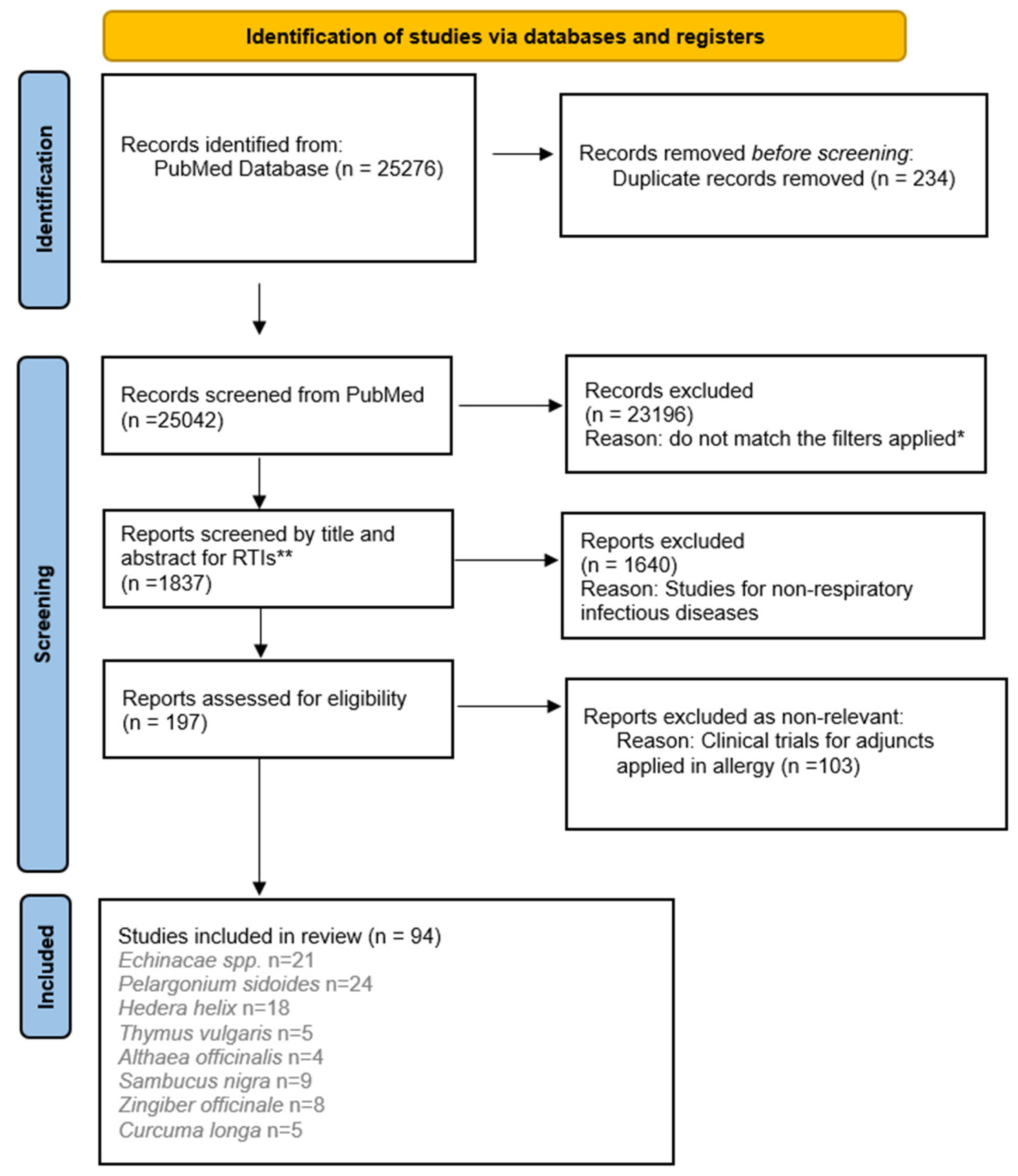
Search Strategy, Eligibility Criteria, and Selection
3. Results
- -
- Level II: Well-designed Randomized Controlled Trials (RCTs).
- -
- Level III: Controlled trials without randomization (Quasi-experimental).
- -
- Level IV: Well-designed case–control or cohort studies.

| Plant (Scientific Name) | Indications for Use | RTI Type 1 Most Common Use | Type of Study (Categorization) 2 | Authors | Country | Evidence Level 4 |
|---|---|---|---|---|---|---|
| Echinacea spp. | Recurrent URTIs (Sore throat Nasal congestion Cough) Flu-like symptoms (Runny nose Mild fever Body aches) Immune support | URTIs | Randomized, controlled and blinded CT 3 (1) | [35] | Switzerland | High to Moderate |
| Randomized, double-blind, placebo-controlled (1) | [36] | Poland | ||||
| Randomized, double-blind, placebo-controlled CT (1) | [37] | USA | ||||
| Randomized, double-blind, placebo-controlled CT (1) | [38] | USA | ||||
| Randomized, double-blind, placebo-controlled parallel group (1) | [39] | USA | ||||
| Observational, prospective, monocentric CT (2) | [40] | Bulgaria | ||||
| Randomized, controlled CT (1) | [41] | USA | ||||
| Single-blind randomized CT (1) | [42] | Iran | ||||
| Controlled, double blind, randomized CT (1) | [43] | Armenia | ||||
| Randomized, double-blind, placebo-controlled, multicenter CT (1) | [44] | Israel | ||||
| Comparative controlled study (3) | [45] | Russia | ||||
| Parallel-group, randomized, double-blinded, placebo-controlled CT (1) | [46] | Armenia | ||||
| Double-blind, randomized, placebo-controlled CT (1) | [47] | Indonesia | ||||
| Comparative Study, in vitro (3) | [48] | Italy | ||||
| Randomized, double-blind, placebo-controlled CT (1) | [49] | USA | ||||
| Randomized, double-blind, placebo-controlled CT (1) | [50] | USA | ||||
| Randomized, double-blind, placebo-controlled CT (1) | [51] | Korea | ||||
| Randomized, double-blind, placebo-controlled trial (1) | [52] | Canada | ||||
| Randomized, double-blind and placebo-controlled trial (1) | [53] | Canada | ||||
| Randomized, double-blind, placebo-controlled, clinical dose–response CT (1) | [54] | Germany | ||||
| Non-randomized, multicentre, nationwide, two-armed research study (2) | [55] | Germany | ||||
| Pelargonium sidoides | URTI symptoms (Runny nose Nasal congestion Sore throat) Bronchitis symptoms (Cough Difficulty clearing mucus Shortness of breath Thick bronchial secretions, Increased sputum) | URTIs/ LRTIs | Single-blind, randomized, placebo-controlled CT (1) | [56] | Turkey | High to Moderate |
| Double-blind, placebo-controlled randomized CT (1) | [57] | UK | ||||
| Randomized, double-blind, placebo-controlled, parallel-group (1) | [58] | Germany | ||||
| Multicenter, randomized, double-blinded, active-controlled CT (1) | [59] | South Korea | ||||
| In vitro experimental CT (3) | [60] | Switzerland | ||||
| Randomized, double-blind, placebo-controlled CT (1) | [61] | Ukraine | ||||
| Prospective, double-blind, parallel-group, placebo-controlled CT (1) | [62] | USA | ||||
| Randomized, double-blind, placebo-controlled clinical dose-finding (1) | [63] | Germany | ||||
| Comparative study, in vitro (3) | [64] | Italy | ||||
| Comparative study, in vitro (3) | [65] | Lithuania | ||||
| Multi-centre, prospective, open observational study (2) | [66] | Germany | ||||
| Randomized, double-blind, placebo-controlled, dose-finding (1) | [67] | Germany | ||||
| Multi-centre, randomized, double-blind CT (1) | [68] | Korea | ||||
| Randomized, double blind, placebo-controlled CT (1) | [69] | Ukraine | ||||
| Randomized, double-blind, placebo-controlled CT (1) | [70] | Germany | ||||
| Randomized, double-blind, placebo-controlled CT (1) | [71] | Belgium | ||||
| Randomized, double-blind, controlled CT (1) | [72] | Germany | ||||
| Randomized, double-blind, placebo-controlled, multicentre CT (1) | [32] | Germany | ||||
| Randomized, double-blind, placebo-controlled CT (1) | [73] | Russia | ||||
| Randomized, double-blind, placebo-controlled CT (1) | [74] | Germany | ||||
| Randomized double-blind, placebo-controlled CT (1) | [75] | Germany | ||||
| Randomized, double-blind, placebo-controlled, multi-centre CT (1) | [76] | Germany | ||||
| Randomized, Open-Label Study (1) | [77] | Germany | ||||
| Prospective, open, multicentric, non-randomized CT (2) | [78] | Germany | ||||
| Hedera helix (Ivy leaf) | Productive cough, Persistent cough Irritative cough with mucus Acute bronchitis bronchial spasms | LRTIs | Randomized controlled CT (1) | [79] | Pakistan | Moderate |
| Randomized, double-blind, placebo-controlled, multicenter CT (1) | [80] | Spain | ||||
| Non-controlled, observational CT (4) | [81] | Germany | ||||
| Open-label, prospective, randomized CT (1) | [82] | Serbia | ||||
| Randomized, placebo-controlled, double-blind CT (1) | [83] | Germany | ||||
| PMSS—Observational, non-interventional study (4) | [84] | Germany | ||||
| Double-blind, randomized CT (1) | [85] | Germany | ||||
| Randomized controlled CT (1) | [86] | Pakistan | ||||
| Multicenter, randomized, double-blinded, active-controlled, parallel, therapeutic confirmatory CT (1) | [59] | South Korea | ||||
| Multicenter, observational survey (2) | [87] | Poland | ||||
| Multicenter, open-label, prospective, single-arm, observational study (4) | [88] | Korea | ||||
| PMSS—Multicenter, non-interventional, observational (4) | [89] | Germany | ||||
| Non-randomized, non-interventional, multicenter, open-label, post-authorization effectiveness study (PAES) (2) | [90] | Poland | ||||
| Double blind, placebo-controlled, randomized cross-over study (1) | [91] | Germany | ||||
| Uncontrolled, open, multicenter study (4) | [92] | Switzerland | ||||
| Prospective, double-blind, placebo-controlled CT (1) | [93] | Germany | ||||
| Prospective, open, multi-centre PMSS (4) | [94] | Uruguay | ||||
| PMSS (4) | [95] | Germany | ||||
| Thymus vulgaris (Thyme) | Sore throat, Productive cough, Difficulty expectorating mucus, bronchial irritation, reduce bronchial spasms | URTIs/ LRTIs | Observational, prospective, uncontrolled study (4) | [33] | Germany | Moderate |
| Randomized controlled CT (1) | [96] | Turkey | ||||
| Uncontrolled, open, multicenter study (4) | [92] | Switzerland | ||||
| Comparative in vitro analysis (3) | [97] | Germany | ||||
| Prospective, double-blind, placebo-controlled multi-centre CT (1) | [98] | Germany | ||||
| Althaea officinalis (Marshmallow root) | Non-productive dry cough, Sore throat, Irritated pharynx/ larynx | URTIs | Randomized, open-label, multicenter, comparative study (1) | [99] | Ukraine | Low to moderate |
| Uncontrolled, open, multicenter study (4) | [93] | Germany | ||||
| Randomized controlled CT (1) | [86] | Pakistan | ||||
| Randomized controlled CT (1) | [79] | Pakistan | ||||
| Sambucus nigra (Elderberry) | URTI symptoms Runny nose Nasal congestion Sore throat Sinus discomfort Cough Immune support | URTIs | Randomized, Double-Blind Placebo-Controlled CT (1) | [100] | Australia | High to Moderate |
| Randomized, double-blind, placebo-controlled study (1) | [101] | Israel | ||||
| Randomized, Double-Blind, Placebo-Controlled CT (1) | [102] | USA | ||||
| Comparative in vitro study (3) | [103] | Germany/ Canada | ||||
| Randomized Case–Control Study (1) | [104] | Italy | ||||
| Comparative in vitro study (3) | [105] | Italy | ||||
| Randomized CT (1) | [106] | Italy | ||||
| Comparative in vitro study (3) | [107] | USA | ||||
| Comparative in vitro study (3) | [108] | Israel | ||||
| Zingiber officinale (Ginger) | URTI symptoms Sore Throat, Cough, Inflammation Immune support | URTIs | Randomized double-blind placebo-controlled CT (1) | [109] | Iran | High to Moderate |
| Randomized placebo-controlled CT (1) | [110] | Iran | ||||
| Randomized, placebo-Controlled, double-Blind Crossover CT (1) | [111] | Turkey | ||||
| Randomized, placebo-Controlled CT (1) | [112] | Iran | ||||
| Single centre, randomized, double-blind, placebo-controlled CT (1) | [113] | Iran | ||||
| Comparative in vitro study (3) | [114] | South Korea | ||||
| Single centre, randomized, 2-arm, parallel group, double blind, controlled CT (1) | [115] | India | ||||
| Randomized, double-blind, placebo-controlled CT (1) | [116] | UK | ||||
| Curcuma longa (Turmeric) | RTIs symptoms Throat irritation Bronchial irritation Immune support Immune modulation | URTIs/LRTIs | Randomized, double-blind CT (1) | [117] | Iran | High |
| Randomized, double-blind CT (1) | [118] | Iran | ||||
| Randomized controlled CT (1) | [119] | China | ||||
| Randomized, Double-Blind, Placebo-Controlled CT (1) | [120] | Japan | ||||
| Randomized Triple-blind CT (1) | [121] | Iran |
4. Plant-Derived Agents
4.1. Echinacea spp.
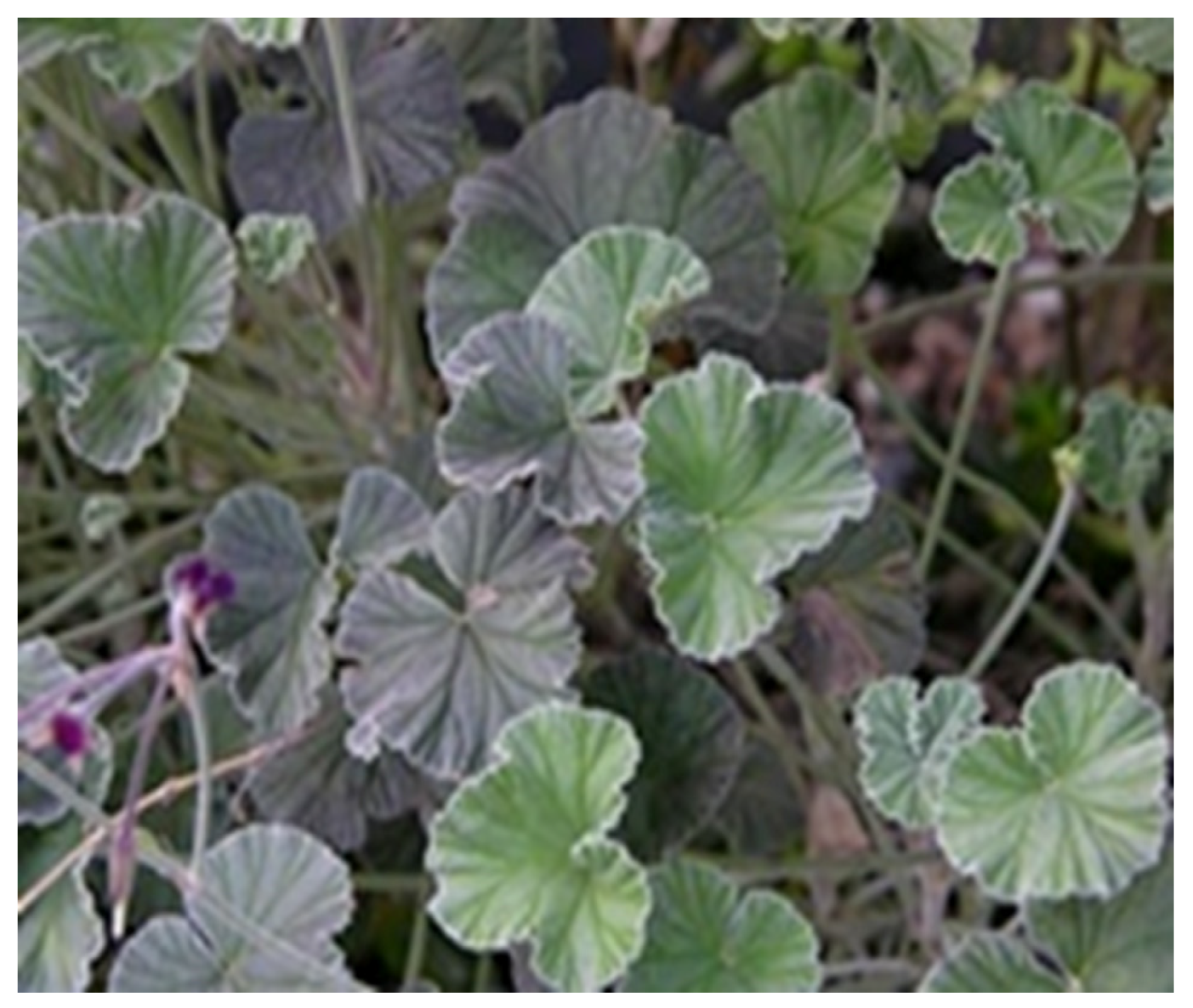
4.2. Pelargonium sidoides
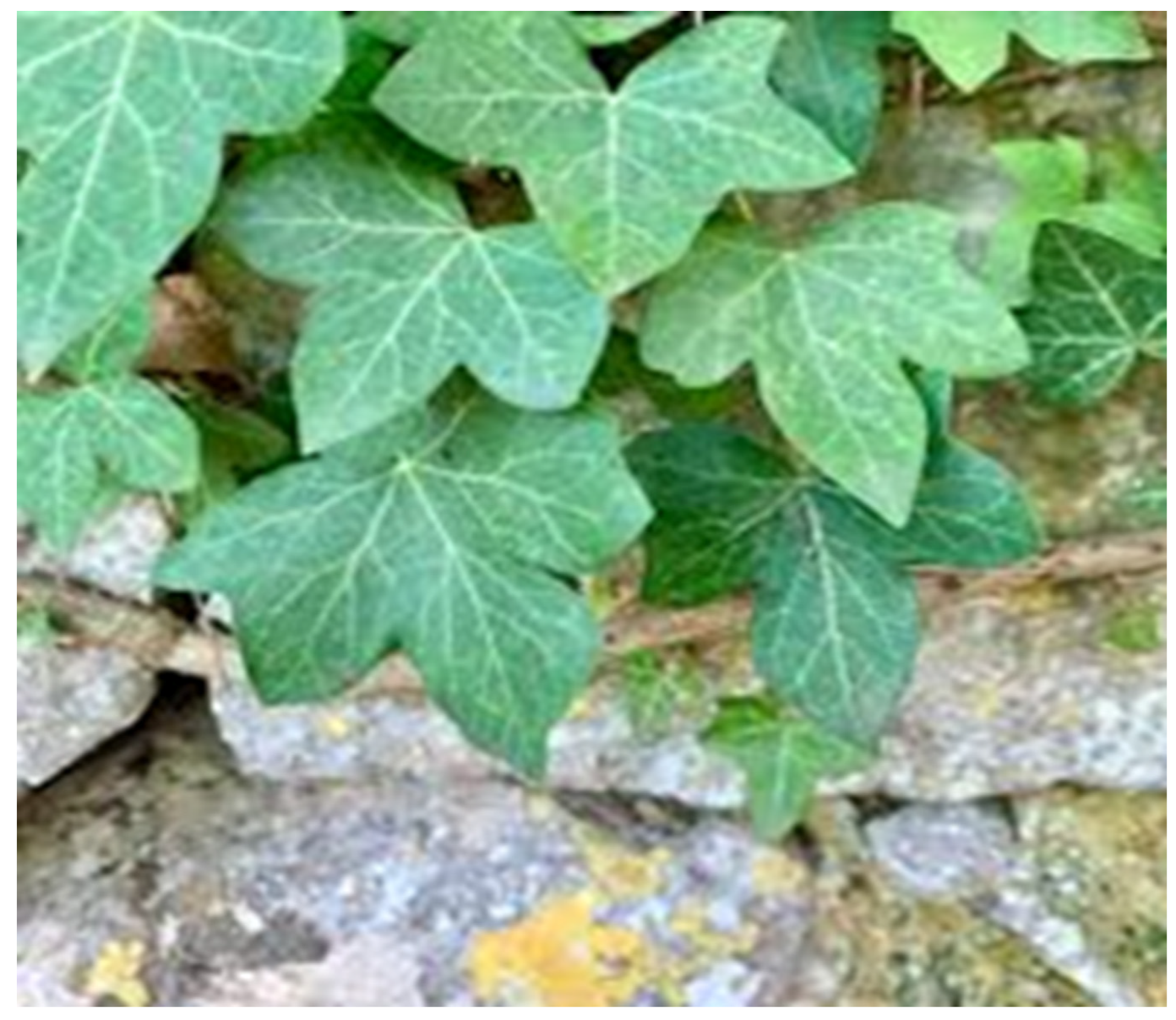
4.3. Hedera helix
| Plant | Properties | Contribution | References |
|---|---|---|---|
| Hedera helix | Immunomodulatory properties | Stimulates NK cells, promotes anti-inflammatory cytokines, modulates T-cell immune response | [157,168,169,170] |
| Antibacterial properties | Minor activity | [173] | |
| Antiviral activity | Enhanced activity | [174,175] | |
| Anti-inflammatory effects | Reduces pro-inflammatory mediator release Limits the irritation of the respiratory mucosa | [166,167] | |
| Expectorant activity by mucus clearance | Reduces mucus viscosity Enhances mucociliary transport Facilitates expectoration | [160,163,165] |
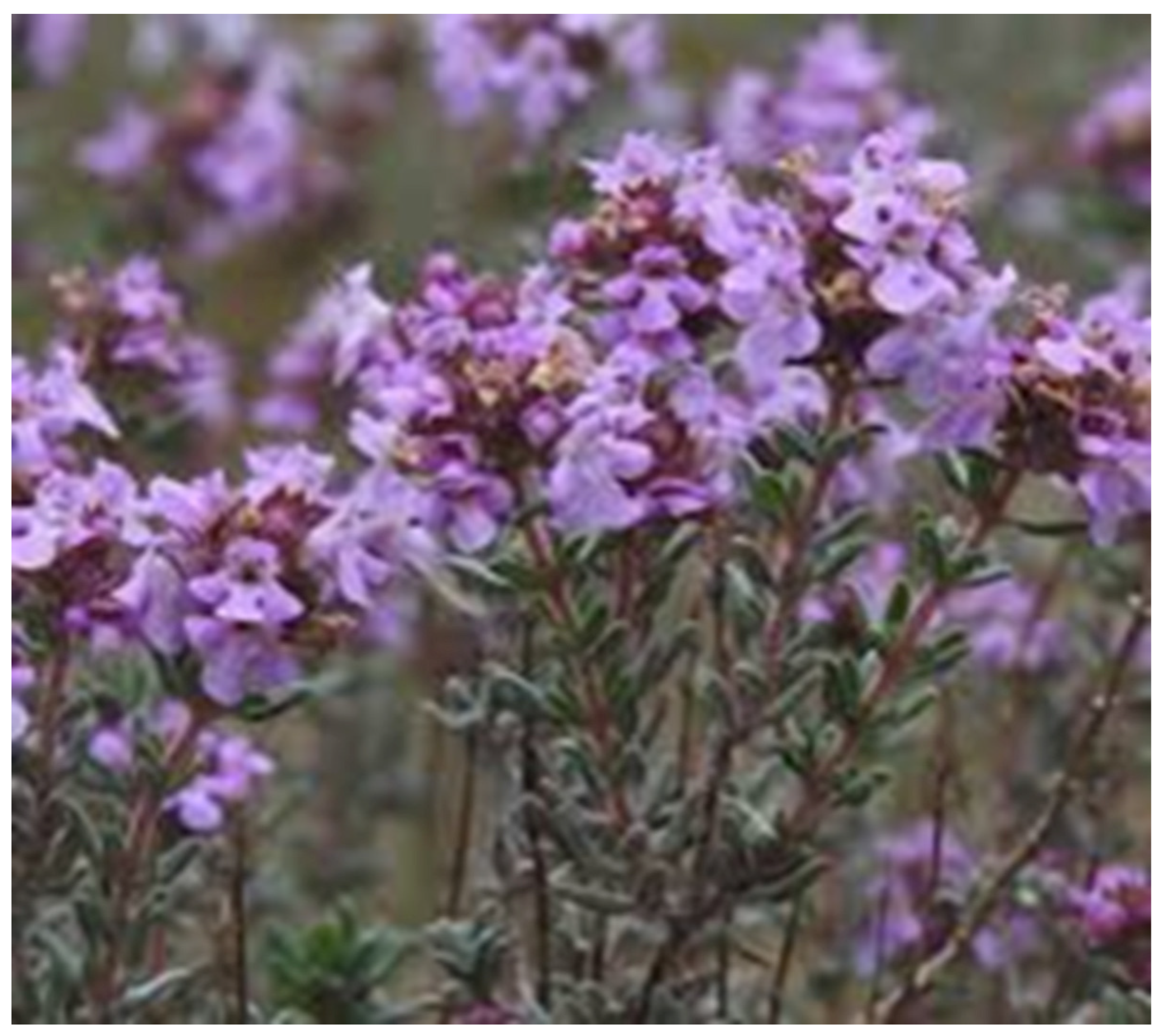
4.4. Thymus vulgaris
| Plant | Properties | Contribution | References |
|---|---|---|---|
| Thymus spp. | Immunomodulatory properties | Promotes phagocytosis and anti-inflammatory cytokines | [182,183] |
| Antibacterial properties | Disruption of microbial cell membranes, cell lysis. Affects microbial gene expression and metabolic processes | [188] | |
| Antiviral activity | Inhibits the growth of certain respiratory viruses in vitro | [176,194] | |
| Anti-inflammatory effects | Reduces pro-inflammatory mediators. Antioxidant protection to the respiratory epithelium. | [180,183] | |
| Antitussive and spasmolytic action | Thymol and carvacrol reduce the mucus viscosity, enhance bronchial secretions, promote expectoration | [189,191] | |
| Broncho-spasmolytic activity | Smooth muscle relaxant effects Reduces bronchial spasm Improves airflow | [190] |
4.5. Althaea officinalis
| Plant | Properties | Contribution | References |
|---|---|---|---|
| Althaea officinalis | Immunomodulatory Properties | Promotes anti-inflammatory cytokines and macrophage accumulation | [203] |
| Antibacterial properties | Activity in the early stages of bacterial infection | [204,205] | |
| Antiviral activity | Minor activity | [196] | |
| Anti-inflammatory effects | Reduces pro-inflammatory mediator releasing Limits irritation of respiratory mucosa | [200,201,202] | |
| Expectorant activity by mucus clearance | Reduces mucus viscosity Facilitates expectoration | [195] |
4.6. Sambucus nigra
4.7. Zingiber officinale
| Plant | Properties | Contribution | References |
|---|---|---|---|
| Zingiber officinale | Immunomodulatory Properties | Stimulates cytokine production (IL-1, IL-8, TNF-α) | [245,246,247] |
| Antiviral activity | Supportive role in mild RTIs | [238,239] | |
| Antibacterial activity | Supportive role in mild RTIs | [252] | |
| Anti-inflammatory effects | Limits the production of phoshatidylinositol-3-kinase, protein kinase B, and NF-κB | [244] | |
| Antitussive effect | Lowers sensitivity of the cough reflex and alleviates throat irritation | [237] |
4.8. Curcuma longa
| Plant | Properties | Contribution | References |
|---|---|---|---|
| Curcuma longa | Antiviral activity | Supportive role in mild RTIs | [259,260] |
| Antibacterial activity | Moderate activity in RTIs | [258] | |
| Anti-inflammatory effects | Inhibits pro-inflammatory cytokines (TNF-α, IL-1, IL-6), NF-κB signalling | [261,264,265] | |
| Antioxidant | Protection from oxidative stress during infection | [255] |
5. Conclusions
Author Contributions
Funding
Institutional Review Board Statement
Informed Consent Statement
Data Availability Statement
Conflicts of Interest
References
- Calderaro, A.; Buttrini, M.; Farina, B.; Montecchini, S.; De Conto, F.; Chezzi, C. Respiratory tract infections and laboratory diagnostic methods: A review with a focus on syndromic panel-based assays. Microorganisms 2022, 10, 1856. [Google Scholar] [CrossRef] [PubMed]
- Alexandrova, A.S.; Boyanov, V.S.; Mihova, K.Y.; Gergova, R.T. Phylogenetic lineages and diseases associated with Moraxella catarrhalis isolates recovered from Bulgarian patients. Int. J. Mol. Sci. 2024, 25, 9769. [Google Scholar] [CrossRef]
- Gergova, R.; Boyanov, V.; Muhtarova, A.; Alexandrova, A. A review of the impact of streptococcal infections and antimicrobial resistance on human health. Antibiotics 2024, 13, 360. [Google Scholar] [CrossRef] [PubMed]
- Alexandrova, A.S.; Boyanov, V.S.; Mihova, K.Y.; Hristova, P.M.; Hitkova, H.Y.; Marteva-Proevska, Y.; Gergova, R.T. Population genetic structure of invasive and non-invasive Streptococcus pneumoniae isolates after fifteen years of routine PCV10 vaccination in Bulgaria. Int. J. Mol. Sci. 2025, 26, 9028. [Google Scholar] [CrossRef]
- Boyanov, V.S.; Alexandrova, A.S.; Gergova, R.T. Genetic determinants and clonal composition of levofloxacin-resistant Streptococcus agalactiae isolates from Bulgaria. Antibiotics 2025, 14, 1121. [Google Scholar] [CrossRef]
- Premuda, C.; Santambrogio, M.; Misuraca, S.; Putti, G.; Maraz, F.; Sarassi, A.; Bulfamante, A.; Blasi, F.; Gramegna, A. Nonpharmacological interventions for managing infections in chronic respiratory diseases: A comprehensive overview. Breathe 2026, 22, 250058. [Google Scholar] [CrossRef]
- Huemer, M.; Shambat, S.M.; Brugger, S.D.; Zinkernagel, A.S. Antibiotic resistance and persistence-Implications for human health and treatment perspectives. EMBO Rep. 2020, 21, e51034. [Google Scholar] [CrossRef]
- Catalano, A.; Iacopetta, D.; Ceramella, J.; Scumaci, D.; Giuzio, F.; Saturnino, C.; Aquaro, S.; Rosano, C.; Sinicropi, M.S. Multidrug resistance (MDR): A widespread phenomenon in pharmacological therapies. Molecules 2022, 27, 616. [Google Scholar] [CrossRef]
- Javed, H.; Tabassum, S.; Erum, S.; Murtaza, I.; Muhammad, A.; Amin, F.; Nisar, M.F. Screening and characterization of selected drugs having antibacterial potential. Pak. J. Pharm. Sci. 2018, 31, 933–939. [Google Scholar] [PubMed]
- Barnes, L.A.; Leach, M.; Anheyer, D.; Brown, D.; Carè, J.; Lauche, R.; Medina, D.N.; Pinder, T.A.; Bugarcic, A.; Steel, A. The effects of Hedera helix on viral respiratory infections in humans: A rapid review. Adv. Integr. Med. 2020, 7, 222–226. [Google Scholar] [CrossRef]
- Iseppi, R.; Di Cerbo, A.; Aloisi, P.; Manelli, M.; Pellesi, V.; Provenzano, C.; Camellini, S.; Messi, P.; Sabia, C. In vitro activity of essential oils against planktonic and biofilm cells of extended-spectrum β-lactamase (ESBL)/carbapenamase-producing gram-negative bacteria involved in human nosocomial infections. Antibiotics 2020, 9, 272. [Google Scholar] [CrossRef]
- Kim, C.E.; Griffiths, W.J.; Taylor, P.W. Components derived from Pelargonium stimulate macrophage killing of Mycobacterium species. J. Appl. Microbiol. 2009, 106, 1184–1193. [Google Scholar] [CrossRef]
- Baharara, H.; Moghadam, A.T.; Sahebkar, A.; Emami, S.A.; Tayebi, T.; Mohammadpour, A.H. The effects of Ivy (Hedera helix) on respiratory problems and cough in humans: A review. Adv. Exp. Med. Biol. 2021, 1328, 361–376. [Google Scholar] [CrossRef]
- Roth, M.; Sun, Q.; Tamm, M. Up-Regulated Vitamin D Receptor by Pelargonium sidoides extract EPs® 7630 contributes to Rhinovirus defense in bronchial epithelial cells. Pharmaceuticals 2021, 14, 172. [Google Scholar] [CrossRef] [PubMed]
- Reina, B.D.; Malheiros, S.S.; Vieira, S.M.; de Andrade, P.F.; Dovigo, L.N. Unlocking the therapeutic potential of Pelargonium sidoides natural extract: A scoping review. Heliyon 2024, 10, e40554. [Google Scholar] [CrossRef]
- Agbabiaka, T.B.; Guo, R.; Ernst, E. Pelargonium sidoides for acute bronchitis: A systematic review and meta-analysis. Phytomedicine 2008, 15, 378–385. [Google Scholar] [CrossRef]
- Timmer, A.; Günther, J.; Motschall, E.; Rücker, G.; Antes, G.; Kern, W.V. Pelargonium sidoides extract for treating acute respiratory tract infections. Cochrane Database Syst. Rev. 2013, 2013, CD006323. [Google Scholar] [CrossRef]
- Veldman, L.B.M.; Belt-Van Zoen, E.; Baars, E.W. Mechanistic evidence of Andrographis paniculata (Burm. f.) Wall. ex Nees, Pelargonium sidoides DC., Echinacea Species and a combination of Hedera helix L., Primula veris L./Primula elatior L. and Thymus vulgaris L./Thymus zygis L. in the treatment of acute, uncomplicated respiratory tract infections: A systematic literature review and expert interviews. Pharmaceuticals 2023, 16, 1206. [Google Scholar] [CrossRef]
- Sütçü, M.; Kara, M.; Yıldız, F.; Kılıç, Ö.; Kara, T.T.; Akkoc, G.; Büyükçam, A.; Bozdemir, Ş.E.; Gündeşlioğlu, Ö.Ö.; Gül, D.; et al. Hand, foot, and mouth disease: Could EPs® 7630 be a treatment option? A prospective randomized open-label multicenter clinical study. Front. Pediatr. 2024, 12, 1274010. [Google Scholar] [CrossRef]
- van Wyk, A.V.; Prinsloo, G. Health, safety and quality concerns of plant-based traditional medicines and herbal remedies. S. Afr. J. Bot. 2020, 133, 54–62. [Google Scholar] [CrossRef]
- Timalsina, D.; Pokhrel, K.P.; Bhusal, D. Pharmacologic activities of plant-derived natural products on respiratory diseases and inflammations. Biomed. Res. Int. 2021, 2021, 1636816. [Google Scholar] [CrossRef]
- Liu, J.; Bai, C.; Ding, L.; Lai, H.; Pan, B.; Shi, J.; Huang, J.; Wang, W.; Sun, X.; Ge, L. Therapeutic potential of traditional herbal medicine against multidrug-resistant pulmonary infections: Based on clinical and pharmacodynamic evidence. J. Ethnopharmacol. 2026, 355, 120684. [Google Scholar] [CrossRef]
- Hughes, G.D.; Aboyade, O.M.; Okonji, C.O.; Clark, B.; Mabweazara, S.Z. Comparison of the prevalence of non-communicable diseases and traditional herbal medicine use in urban and rural communities in South Africa. Adv. Integr. Med. 2021, 8, 136–143. [Google Scholar] [CrossRef]
- Odebunmi, C.A.; Adetunji, T.L.; Adetunji, A.E.; Olatunde, A.; Oluwole, O.E.; Adewale, I.A.; Ejiwumi, A.O.; Iheme, C.E.; Aremu, T.O. Ethnobotanical survey of medicinal plants used in the treatment of COVID-19 and related respiratory infections in Ogbomosho South and North Local Government Areas, Oyo State, Nigeria. Plants 2022, 11, 2667. [Google Scholar] [CrossRef]
- Sen, S.; Chakraborty, R. Revival, modernization and integration of Indian traditional herbal medicine in clinical practice: Importance, challenges and future. J. Tradit. Complement. Med. 2016, 7, 234–244. [Google Scholar] [CrossRef]
- Welz, A.N.; Emberger-Klein, A.; Menrad, K. The importance of herbal medicine use in the German health-care system: Prevalence, usage pattern, and influencing factors. BMC Health Serv. Res. 2019, 19, 952. [Google Scholar] [CrossRef] [PubMed]
- Cherneva, D.; Nikolova, N.; Dimitrova, T.; Ivanov, D.; Iliev, I.; Georgieva, S.; Yaneva, G. Traditional use of medicinal plants for symptom relief during the COVID-19 pandemic in Bulgaria. Plants 2025, 14, 3692. [Google Scholar] [CrossRef]
- Seifert, G.; Brandes-Schramm, J.; Zimmermann, A.; Lehmacher, W.; Kamin, W. Faster recovery and reduced paracetamol use—A meta-analysis of EPs 7630 in children with acute respiratory tract infections. BMC Pediatr. 2019, 19, 119. [Google Scholar] [CrossRef]
- Ciprandi, G.; Tosca, M.A. Non-pharmacological remedies for post-viral acute cough. Monaldi Arch. Chest Dis. 2021, 92. [Google Scholar] [CrossRef] [PubMed]
- Adeleye, O.A.; Bamiro, O.A.; Bakre, L.G.; Odeleye, F.O.; Adebowale, M.N.; Okunye, O.L.; Sodeinde, M.A.; Adebona, A.C.; Menaa, F. Medicinal plants with potential inhibitory bioactive compounds against coronaviruses. Adv. Pharm. Bull. 2022, 12, 7–16. [Google Scholar] [CrossRef]
- Mammari, N.; Albert, Q.; Devocelle, M.; Kenda, M.; Kočevar Glavač, N.; Sollner Dolenc, M.; Mercolini, L.; Tóth, J.; Milan, N.; Czigle, S.; et al. Natural products for the prevention and treatment of common cold and viral respiratory infections. Pharmaceuticals 2023, 16, 662. [Google Scholar] [CrossRef] [PubMed]
- Matthys, H.; Heger, M. Treatment of acute bronchitis with a liquid herbal drug preparation from Pelargonium sidoides (EPs 7630): A randomised, double-blind, placebo-controlled, multicentre study. Curr. Med. Res. Opin. 2007, 23, 323–331. [Google Scholar] [CrossRef] [PubMed]
- Kardos, P.; Bittner, C.B.; Seibel, J.; Abramov-Sommariva, D.; Birring, S.S. Effectiveness and tolerability of the thyme/ivy herbal fluid extract BNO 1200 for the treatment of acute cough: An observational pharmacy-based study. Curr. Med. Res. Opin. 2021, 37, 1837–1844. [Google Scholar] [CrossRef]
- Melnyk, B.M.; Fineout-Overholt, E. Evidence-Based Practice in Nursing & Healthcare: A Guide to Best Practice, 5th ed.; Lippincott Williams & Wilkins: Philadelphia, PA, USA, 2022. [Google Scholar]
- Ogal, M.; Johnston, S.L.; Klein, P.; Schoop, R. Echinacea reduces antibiotic usage in children through respiratory tract infection prevention: A randomized, blinded, controlled clinical trial. Eur. J. Med. Res. 2021, 26, 33. [Google Scholar] [CrossRef]
- Zima, K.; Sochocka, M.; Ochnik, M.; Khaidakov, B.; Lemke, K.; Kowalczyk, P. Therapeutic potential of a natural blend of Aronia melancarpa, Lonicera caerulea, and Echinacea purpurea extracts in treating upper respiratory tract infections: Preliminary clinical and in vitro immunomodulatory insights. Int. J. Mol. Sci. 2024, 25, 13436. [Google Scholar] [CrossRef]
- O’Neil, J.; Hughes, S.; Lourie, A.; Zweifler, J. Effects of echinacea on the frequency of upper respiratory tract symptoms: A randomized, double-blind, placebo-controlled trial. Ann. Allergy Asthma Immunol. 2008, 100, 384–388. [Google Scholar] [CrossRef]
- Taylor, J.A.; Weber, W.; Standish, L.; Quinn, H.; Goesling, J.; McGann, M.; Calabrese, C. Efficacy and safety of echinacea in treating upper respiratory tract infections in children: A randomized controlled trial. JAMA 2003, 290, 2824–2830. [Google Scholar] [CrossRef]
- Hall, H.; Fahlman, M.M.; Engels, H.J. Echinacea purpurea and mucosal immunity. Int. J. Sports Med. 2007, 28, 792–797. [Google Scholar] [CrossRef]
- Weishaupt, R.; Buchkov, A.; Kolev, E.; Klein, P.; Schoop, R. Reduction of viral load in patients with acute sore throats: Results from an observational clinical trial with Echinacea/Salvia Lozenges. Complement. Med. Res. 2023, 30, 299–306. [Google Scholar] [CrossRef]
- Barrett, B.; Brown, R.; Rakel, D.; Mundt, M.; Bone, K.; Barlow, S.; Ewers, T. Echinacea for treating the common cold: A randomized trial. Ann. Intern. Med. 2010, 153, 769–777. [Google Scholar] [CrossRef]
- Kheirandish, E.; Mahdizadeh, M.; Mahdizadeh, M.; Rezaeitalab, F.; Yousefi, M.; Shojaee, S.S.R. Investigating the effect of echinacea extraction syrup on the outcomes of lower respiratory infections in patients with COVID-19: A randomized clinical trial study. Virol. J. 2024, 21, 319. [Google Scholar] [CrossRef]
- Narimanian, M.; Badalyan, M.; Panosyan, V.; Gabrielyan, E.; Panossian, A.; Wikman, G.; Wagner, H. Randomized trial of a fixed combination (KanJang) of herbal extracts containing Adhatoda vasica, Echinacea purpurea and Eleutherococcus senticosus in patients with upper respiratory tract infections. Phytomedicine 2005, 12, 539–547. [Google Scholar] [CrossRef]
- Cohen, H.A.; Varsano, I.; Kahan, E.; Sarrell, E.M.; Uziel, Y. Effectiveness of an herbal preparation containing echinacea, propolis, and vitamin C in preventing respiratory tract infections in children: A randomized, double-blind, placebo-controlled, multicenter study. Arch. Pediatr. Adolesc. Med. 2004, 158, 217–221. [Google Scholar] [CrossRef]
- Spasov, A.A.; Ostrovskij, O.V.; Chernikov, M.V.; Wikman, G. Comparative controlled study of Andrographis paniculata fixed combination, Kan Jang and an Echinacea preparation as adjuvant, in the treatment of uncomplicated respiratory disease in children. Phytother. Res. 2004, 18, 47–53. [Google Scholar] [CrossRef] [PubMed]
- Barth, A.; Hovhannisyan, A.; Jamalyan, K.; Narimanyan, M. Antitussive effect of a fixed combination of Justicia adhatoda, Echinacea purpurea and Eleutherococcus senticosus extracts in patients with acute upper respiratory tract infection: A comparative, randomized, double-blind, placebo-controlled study. Phytomedicine 2015, 22, 1195–1200. [Google Scholar] [CrossRef]
- Isbaniah, F.; Wiyono, W.H.; Yunus, F.; Setiawati, A.; Totzke, U.; Verbruggen, M.A. Echinacea purpurea along with zinc, selenium and vitamin C to alleviate exacerbations of chronic obstructive pulmonary disease: Results from a randomized controlled trial. J. Clin. Pharm. Ther. 2011, 36, 568–576. [Google Scholar] [CrossRef]
- Di Pierro, F.; Rapacioli, G.; Ferrara, T.; Togni, S. Use of a standardized extract from Echinacea angustifolia (Polinacea) for the prevention of respiratory tract infections. Altern. Med. Rev. 2012, 17, 36–41. [Google Scholar]
- Yale, S.H.; Liu, K. Echinacea purpurea therapy for the treatment of the common cold: A randomized, double-blind, placebo-controlled clinical trial. Arch. Intern. Med. 2004, 164, 1237–1241. [Google Scholar] [CrossRef] [PubMed]
- Barrett, B.P.; Brown, R.L.; Locken, K.; Maberry, R.; Bobula, J.A.; D’Alessio, D. Treatment of the common cold with unrefined echinacea. A randomized, double-blind, placebo-controlled trial. Ann. Intern. Med. 2002, 137, 939–946. [Google Scholar] [CrossRef] [PubMed]
- Lee, S.K.; Lee, D.R.; Kim, H.L.; Choi, B.K.; Kwon, K.B. A randomized, double-blind, placebo-controlled study on immune improvement effects of ethanolic extract of Echinacea purpurea (L.) Moench in Korean adults. Phytother. Res. 2024, 38, 3645–3659. [Google Scholar] [CrossRef]
- Goel, V.; Lovlin, R.; Barton, R.; Lyon, M.R.; Bauer, R.; Lee, T.D.; Basu, T.K. Efficacy of a standardized echinacea preparation (Echinilin) for the treatment of the common cold: A randomized, double-blind, placebo-controlled trial. J. Clin. Pharm. Ther. 2004, 29, 75–83. [Google Scholar] [CrossRef] [PubMed]
- Goel, V.; Lovlin, R.; Chang, C.; Slama, J.V.; Barton, R.; Gahler, R.; Bauer, R.; Goonewardene, L.; Basu, T.K. A proprietary extract from the echinacea plant (Echinacea purpurea) enhances systemic immune response during a common cold. Phytother. Res. 2005, 19, 689–694. [Google Scholar] [CrossRef]
- Naser, B.; Lund, B.; Henneicke-von Zepelin, H.H.; Köhler, G.; Lehmacher, W.; Scaglione, F. A randomized, double-blind, placebo-controlled, clinical dose-response trial of an extract of Baptisia, Echinacea and Thuja for the treatment of patients with common cold. Phytomedicine 2005, 12, 715–722. [Google Scholar] [CrossRef]
- Heinen-Kammerer, T.; Holtmannspötter, C.; Schnabel, S.; Motzkat, K.; Kiencke, P.; Rychlik, R. Effectiveness of echinacin in therapy of chronic recurrent respiratory disease. Gesundheitswesen 2005, 67, 296–301. [Google Scholar] [CrossRef]
- Gökçe, Ş.; Dörtkardeşler, B.E.; Yurtseven, A.; Kurugöl, Z. Effectiveness of Pelargonium sidoides in pediatric patients diagnosed with uncomplicated upper respiratory tract infection: A single-blind, randomized, placebo-controlled study. Eur. J. Pediatr. 2021, 180, 3019–3028. [Google Scholar] [CrossRef]
- Willcox, M.; Simpson, C.; Wilding, S.; Stuart, B.; Soilemezi, D.; Whitehead, A.; Morgan, A.; Wrixon, E.; Zhu, S.; Yao, G.; et al. Pelargonium sidoides root extract for the treatment of acute cough due to lower respiratory tract infection in adults: A feasibility double-blind, placebo-controlled randomised trial. BMC Complement. Med. Ther. 2021, 21, 48. [Google Scholar] [CrossRef]
- Matthys, H.; Funk, P. Pelargonium sidoides preparation EPs 7630 in COPD: Health-related quality-of-life and other patient-reported outcomes in adults receiving add-on therapy. Curr. Med. Res. Opin. 2018, 34, 1245–1251. [Google Scholar] [CrossRef]
- Han, K.I.; Kim, T.H.; Ra, S.W.; Yoon, H.K.; Kim, D.K.; Rhee, C.K.; Park, J.W.; Hwang, Y.I.; Park, H.Y.; Kim, Y.H.; et al. Efficacy and safety of mixture of ivy leaf extract and coptidis rhizome in the treatment of acute bronchitis: Multicenter, randomized, double-blinded, active-controlled, parallel, therapeutic confirmatory clinical trial. Curr. Med. Res. Opin. 2024, 40, 1235–1243. [Google Scholar] [CrossRef] [PubMed]
- Roth, M.; Fang, L.; Stolz, D.; Tamm, M. Pelargonium sidoides radix extract EPs 7630 reduces rhinovirus infection through modulation of viral binding proteins on human bronchial epithelial cells. PLoS ONE 2019, 14, e0210702. [Google Scholar] [CrossRef]
- Bereznoy, V.V.; Riley, D.S.; Wassmer, G.; Heger, M. Efficacy of extract of Pelargonium sidoides in children with acute non-group A beta-hemolytic streptococcus tonsillopharyngitis: A randomized, double-blind, placebo-controlled trial. Altern. Ther. Health Med. 2003, 9, 68–79. [Google Scholar] [PubMed]
- Riley, D.S.; Lizogub, V.G.; Zimmermann, A.; Funk, P.; Lehmacher, W. Efficacy and tolerability of high-dose Pelargonium extract in patients with the common cold. Altern. Ther. Health Med. 2018, 24, 16–26. [Google Scholar] [PubMed]
- Kamin, W.; Maydannik, V.G.; Malek, F.A.; Kieser, M. Efficacy and tolerability of EPs 7630 in patients (aged 6–18 years old) with acute bronchitis. Acta Paediatr. 2010, 99, 537–543. [Google Scholar] [CrossRef]
- Terlizzi, M.; Colarusso, C.; Di Maio, U.; Bagnulo, A.; Pinto, A.; Sorrentino, R. Antioxidant and antimicrobial properties of Pelargonium sidoides DC and lactoferrin combination. Biosci. Rep. 2020, 40, BSR20203284. [Google Scholar] [CrossRef] [PubMed]
- Jekabsone, A.; Sile, I.; Cochis, A.; Makrecka-Kuka, M.; Laucaityte, G.; Makarova, E.; Rimondini, L.; Bernotiene, R.; Raudone, L.; Vedlugaite, E.; et al. Investigation of antibacterial and antiinflammatory activities of Proanthocyanidins from Pelargonium sidoides DC Root Extract. Nutrients 2019, 11, 2829. [Google Scholar] [CrossRef]
- Matthys, H.; Kamin, W.; Funk, P.; Heger, M. Pelargonium sidoides preparation (EPs 7630) in the treatment of acute bronchitis in adults and children. Phytomedicine 2007, 14, 69–73. [Google Scholar] [CrossRef]
- Matthys, H.; Lizogub, V.G.; Funk, P.; Malek, F.A. Pelargonium sidoides in acute bronchitis—Health-related quality of life and patient-reported outcome in adults receiving EPs 7630 treatment. Wien. Med. Wochenschr. 2010, 160, 564–570. [Google Scholar] [CrossRef]
- Lee, Y.S.; Lim, S.Y.; Min, K.H.; Kim, D.J.; Yoo, K.H.; Kim, T.B.; Kim, H.R.; Shim, J.J. The efficacy and safety of DW1601 in patients with acute bronchitis: A multi-center, randomized, double-blind, phase III clinical trial. Korean J. Intern Med. 2022, 37, 1195–1204. [Google Scholar] [CrossRef]
- Lizogub, V.G.; Riley, D.S.; Heger, M. Efficacy of a Pelargonium sidoides preparation in patients with the common cold: A randomized, double blind, placebo-controlled clinical trial. Explore 2007, 3, 573–584. [Google Scholar] [CrossRef]
- Matthys, H.; Eisebitt, R.; Seith, B.; Heger, M. Efficacy and safety of an extract of Pelargonium sidoides (EPs 7630) in adults with acute bronchitis. A randomised, double-blind, placebo-controlled trial. Phytomedicine 2003, 10, 7–17. [Google Scholar] [CrossRef]
- Bachert, C.; Schapowal, A.; Funk, P.; Kieser, M. Treatment of acute rhinosinusitis with the preparation from Pelargonium sidoides EPs 7630: A randomized, double-blind, placebo-controlled trial. Rhinology 2009, 47, 51–58. [Google Scholar] [PubMed]
- Schulz, V. Liquid herbal drug preparation from the root of Pelargonium sidoides is effective against acute bronchitis: Results of a double-blind study with 124 patients. Phytomedicine 2007, 14, 74–75. [Google Scholar] [CrossRef] [PubMed]
- Chuchalin, A.G.; Berman, B.; Lehmacher, W. Treatment of acute bronchitis in adults with a Pelargonium sidoides preparation (EPs 7630): A randomized, double-blind, placebo-controlled trial. Explore 2005, 1, 437–445. [Google Scholar] [CrossRef]
- Matthys, H.; Pliskevich, D.A.; Bondarchuk, O.M.; Malek, F.A.; Tribanek, M.; Kieser, M. Randomised, double-blind, placebo-controlled trial of EPs 7630 in adults with COPD. Respir. Med. 2013, 107, 691–701. [Google Scholar] [CrossRef]
- Kamin, W.; Ilyenko, L.I.; Malek, F.A.; Kieser, M. Treatment of acute bronchitis with EPs 7630: Randomized, controlled trial in children and adolescents. Pediatr. Int. 2012, 54, 219–226. [Google Scholar] [CrossRef]
- Matthys, H.; Funk, P. EPs 7630 improves acute bronchitic symptoms and shortens time to remission. Results of a randomised, double-blind, placebo-controlled, multicentre trial. Planta Med. 2008, 74, 686–692. [Google Scholar] [CrossRef]
- Perić, A.; Gaćeša, D.; Barać, A.; Sotirović, J.; Perić, A.V. Herbal drug EPs 7630 versus amoxicillin in patients with uncomplicated acute bacterial rhinosinusitis: A randomized, open-label study. Ann. Otol. Rhinol. Laryngol. 2020, 129, 969–976. [Google Scholar] [CrossRef]
- Matthys, H.; Heger, M. EPs 7630-solution--an effective therapeutic option in acute and exacerbating bronchitis. Phytomedicine 2007, 14, 65–68. [Google Scholar] [CrossRef] [PubMed]
- Khan, M.F.; Akram, M.; Akhter, N.; Mukhtiar, M.; Zahid, R.; Khan, F.S.; Daniyal, M.; Tahir, I.M.; Ahmed, K.; Sharif, A.; et al. The evaluation of efficacy and safety of Cough (EMA) granules used for upper respiratory disorders. Pak. J. Pharm. Sci. 2018, 31, 2617–2622. [Google Scholar]
- Núñez, C.; Chiatti, M.C.; Tansella, F.; Coronel-Rodríguez, C.; Risco, E. Efficacy and tolerability of SEDIFLÙ in treating dry or productive cough in the pediatric population (SEPEDIA): A pilot, randomized, double-blind, placebo-controlled, multicenter clinical trial. Clin. Pediatr. 2024, 63, 1510–1519. [Google Scholar] [CrossRef] [PubMed]
- Schmidt, M.; Thomsen, M.; Schmidt, U. Suitability of ivy extract for the treatment of paediatric cough. Phytother. Res. 2012, 26, 1942–1947. [Google Scholar] [CrossRef]
- Savović, S.; Paut, M.; Kljajić, V.; Buljčik, M.; Jovančević, L.; Pavlović, V.; Rašković, A. The influence of standardized dry ivy leaf extract on the proportion of nasal secretion after post-septoplasty nasal packing removal. Braz. J. Otorhinolaryngol. 2019, 85, 685–689. [Google Scholar] [CrossRef]
- Schaefer, A.; Kehr, M.S.; Giannetti, B.M.; Bulitta, M.; Staiger, C. A randomized, controlled, double-blind, multi-center trial to evaluate the efficacy and safety of a liquid containing ivy leaves dry extract (EA 575®) vs. placebo in the treatment of adults with acute cough. Pharmazie 2016, 71, 504–509. [Google Scholar] [CrossRef]
- Stauss-Grabo, M.; Atiye, S.; Warnke, A.; Wedemeyer, R.S.; Donath, F.; Blume, H.H. Observational study on the tolerability and safety of film-coated tablets containing ivy extract (Prospan® Cough Tablets) in the treatment of colds accompanied by coughing. Phytomedicine 2011, 18, 433–436. [Google Scholar] [CrossRef]
- Cwientzek, U.; Ottillinger, B.; Arenberger, P. Acute bronchitis therapy with ivy leaves extracts in a two-arm study. A double-blind, randomised study vs. another ivy leaves extract. Phytomedicine 2011, 18, 1105–1109. [Google Scholar] [CrossRef]
- Ali, Z.; Daniyal, M.; Adhia, M.K.; Alam, A.; Sarfaraz, B.; Sattar, A.; Usmanghani, K. To evaluate the efficacy and safety of CofNovex plus (EMA) syrup. Pak. J. Pharm. Sci. Pak. 2017, 30, 591–596. [Google Scholar]
- Olszanecka-Glinianowicz, M.; Doniec, Z.; Schönknecht, K.; Almgren-Rachtan, A. The herbal medicine containing of ivy leaf dry extract in the treatment of productive cough in children. Wiad. Lek. 2020, 73, 668–673. [Google Scholar] [CrossRef] [PubMed]
- Hong, G.; Kim, Y.-I.; Park, S.J.; Lee, S.Y.; Kim, J.W.; Yoon, S.H.; Lee, K.S.; Byun, M.K.; Kim, H.-R.; Chung, J. Effects of a mixture of ivy leaf extract and Coptidis rhizome on patients with chronic bronchitis and bronchiectasis. Int. J. Environ. Res. Public Health 2021, 18, 4024. [Google Scholar] [CrossRef] [PubMed]
- Hecker, M.; Runkel, F.; Voelp, A. Treatment of chronic bronchitis with ivy leaf special extract--multicenter post-marketing surveillance study in 1350 patients. Res. Complement. Class. Nat. Med. 2002, 9, 77–84. [Google Scholar] [CrossRef] [PubMed]
- Schönknecht, K.; Fal, A.M.; Mastalerz-Migas, A.; Joachimiak, M.; Doniec, Z. efficacy of dry extract of ivy leaves in the treatment of productive cough. Wiad. Lek. 2017, 70, 1026–1033. [Google Scholar]
- Zeil, S.; Schwanebeck, U.; Vogelberg, C. Tolerance and effect of an add-on treatment with a cough medicine containing ivy leaves dry extract on lung function in children with bronchial asthma. Phytomedicine 2014, 21, 1216–1220. [Google Scholar] [CrossRef]
- Büechi, S.; Vögelin, R.; von Eiff, M.M.; Ramos, M.; Melzer, J. Open trial to assess aspects of safety and efficacy of a combined herbal cough syrup with ivy and thyme. Res. Complement. Class. Nat. Med. 2005, 12, 328–332. [Google Scholar] [CrossRef] [PubMed]
- Kemmerich, B.; Eberhardt, R.; Stammer, H. Efficacy and tolerability of a fluid extract combination of thyme herb and ivy leaves and matched placebo in adults suffering from acute bronchitis with productive cough. A prospective, double-blind, placebo-controlled clinical trial. Arzneimittelforschung 2006, 56, 652–660. [Google Scholar] [CrossRef] [PubMed]
- Fazio, S.; Pouso, J.; Dolinsky, D.; Fernandez, A.; Hernandez, M.; Clavier, G.; Hecker, M. Tolerance, safety and efficacy of Hedera helix extract in inflammatory bronchial diseases under clinical practice conditions: A prospective, open, multicentre postmarketing study in 9657 patients. Phytomedicine 2009, 16, 17–24. [Google Scholar] [CrossRef]
- Marzian, O. Treatment of acute bronchitis in children and adolescents. Non-interventional postmarketing surveillance study confirms the benefit and safety of a syrup made of extracts from thyme and ivy leaves. MMW Fortschr. Med. 2007, 149, 69–74. [Google Scholar]
- Öner, U.; Cengiz, Z. The effects of aromatherapy with thyme oil on disease symptoms, vital findings, and hemodynamic parameters in COVID-19 patients. Explore 2024, 20, 544–553. [Google Scholar] [CrossRef]
- Walther, C.; Döring, K.; Schmidtke, M. Comparative in vitro analysis of inhibition of rhinovirus and influenza virus replication by mucoactive secretolytic agents and plant extracts. BMC Complement. Med. Ther. 2020, 20, 380. [Google Scholar] [CrossRef]
- Kemmerich, B. Evaluation of efficacy and tolerability of a fixed combination of dry extracts of thyme herb and primrose root in adults suffering from acute bronchitis with productive cough. A prospective, double-blind, placebo-controlled multicentre clinical trial. Arzneimittelforschung 2007, 57, 607–615. [Google Scholar] [CrossRef] [PubMed]
- Popovych, V.; Koshel, I.; Malofiichuk, A.; Pyletska, L.; Semeniuk, A.; Filippova, O.; Orlovska, R. A randomized, open-label, multicenter, comparative study of therapeutic efficacy, safety and tolerability of BNO 1030 extract, containing marshmallow root, chamomile flowers, horsetail herb, walnut leaves, yarrow herb, oak bark, dandelion herb in the treatment of acute non-bacterial tonsillitis in children aged 6 to 18 years. Am. J. Otolaryngol. 2019, 40, 265–273. [Google Scholar] [CrossRef]
- Tiralongo, E.; Wee, S.S.; Lea, R.A. Elderberry supplementation reduces cold duration and symptoms in air-travellers: A randomized, double-blind placebo-controlled clinical trial. Nutrients 2016, 8, 182. [Google Scholar] [CrossRef]
- Zakay-Rones, Z.; Thom, E.; Wollan, T.; Wadstein, J. Randomized study of the efficacy and safety of oral elderberry extract in the treatment of influenza A and B virus infections. J. Int. Med. Res. 2004, 32, 132–140. [Google Scholar] [CrossRef]
- Macknin, M.; Wolski, K.; Negrey, J.; Mace, S. Elderberry extract outpatient influenza treatment for emergency room patients ages 5 and above: A randomized, double-blind, placebo-controlled trial. J. Gen. Intern. Med. 2020, 35, 3271–3277. [Google Scholar] [CrossRef]
- Gluhovic, V.; Timm, S.; Kuebler, W.M.; Lopez-Rodriguez, E.; Ochs, M. Comparative electron microscopic visualization of the lung alveolar epithelial glycocalyx with different staining and labeling methods. J. Anat. 2025, 246, 770–781. [Google Scholar] [CrossRef]
- Maselli del Giudice, A.; La Mantia, I.; Barbara, F.; Ciccarone, S.; Ragno, M.S.; de Robertis, V.; Cariti, F.; Barbara, M.; D’Ascanio, L.; Di Stadio, A. Use of nutraceuticals in elderly to fight inflammation and immuno-senescence: A randomized case-control study. Nutrients 2022, 14, 3476. [Google Scholar] [CrossRef]
- Aguzzi, C.; Marinelli, O.; Zeppa, L.; Santoni, G.; Maggi, F.; Nabissi, M. Evaluation of anti-inflammatory and immunoregulatory activities of Stimunex® and Stimunex D3® in human monocytes/macrophages stimulated with LPS or IL-4/IL-13. Biomed. Pharmacother. 2020, 132, 110845. [Google Scholar] [CrossRef] [PubMed]
- Giannattasio, A.; Poggi, E.; Trapani, G.; Muia, C.; Zanino, L.; Landi, M.; Ciprandi, G. Primary care experience on Stimunex® gocce in children with recurrent respiratory infections: A real-world study during the COVID-19 pandemic era. Allergol. Immunopathol. 2022, 50, 8–14. [Google Scholar] [CrossRef] [PubMed]
- Tong, H.H.; James, M.; Grants, I.; Liu, X.; Shi, G.; DeMaria, T.F. Comparison of structural changes of cell surface carbohydrates in the eustachian tube epithelium of chinchillas infected with a Streptococcus pneumoniae neuraminidase-deficient mutant or its isogenic parent strain. Microb. Pathog. 2001, 31, 309–317. [Google Scholar] [CrossRef]
- Barak, V.; Birkenfeld, S.; Halperin, T.; Kalickman, I. The effect of herbal remedies on the production of human inflammatory and anti-inflammatory cytokines. Isr. Med. Assoc. J. 2002, 4, 919–922. [Google Scholar]
- Ameri, A.; Farashahinejad, M.; Davoodian, P.; Safa, O.; Hassaniazad, M.; Parsaii, M.; Heidari, B.; Hassanipour, S.; Akhlaghi, B.; Fathalipour, M. The efficacy and safety of ginger (Zingiber officinale) rhizome extract in outpatients with COVID-19: A randomized double-blind placebo-control clinical trial. Medicine 2024, 103, e38289. [Google Scholar] [CrossRef] [PubMed]
- Shariatpanahi, Z.V.; Mokhtari, M.; Taleban, F.A.; Alavi, F.; Surmaghi, M.H.; Mehrabi, Y.; Shahbazi, S. Effect of enteral feeding with ginger extract in acute respiratory distress syndrome. J. Crit. Care. 2013, 28, 217.e1–217.e6. [Google Scholar] [CrossRef]
- Demirli, A.; Ulupınar, S.; Terzi, M.; Özbay, S.; Özkara, A.B.; Gençoğlu, C.; Ouergui, I.; Ardigò, L.P. Synergistic effects of green tea extract and ginger supplementation on endurance performance and thermal perception in normothermic and cold environments: A randomized, placebo-controlled, double-blind crossover trial. Nutrients 2025, 17, 2949. [Google Scholar] [CrossRef]
- Shariatpanahi, Z.V.; Taleban, F.A.; Mokhtari, M.; Shahbazi, S. Ginger extract reduces delayed gastric emptying and nosocomial pneumonia in adult respiratory distress syndrome patients hospitalized in an intensive care unit. J. Crit. Care. 2010, 25, 647–650. [Google Scholar] [CrossRef] [PubMed]
- Safa, O.; Hassaniazad, M.; Farashahinejad, M.; Davoodian, P.; Dadvand, H.; Hassanipour, S.; Fathalipour, M. Effects of Ginger on clinical manifestations and paraclinical features of patients with Severe Acute Respiratory Syndrome due to COVID-19: A structured summary of a study protocol for a randomized controlled trial. Trials 2020, 21, 841. [Google Scholar] [CrossRef]
- Kim, J.H.; Chang, J.H.; Yoon, J.H.; Kwon, S.H.; Bae, J.H.; Kim, K.S. [6]-Gingerol suppresses interleukin-1 beta-induced MUC5AC gene expression in human airway epithelial cells. Am. J. Rhinol. Allergy. 2009, 23, 385–391. [Google Scholar] [CrossRef]
- Rangnekar, H.; Patankar, S.; Suryawanshi, K.; Soni, P. Safety and efficacy of herbal extracts to restore respiratory health and improve innate immunity in COVID-19 positive patients with mild to moderate severity: A structured summary of a study protocol for a randomised controlled trial. Trials 2020, 21, 943. [Google Scholar] [CrossRef]
- Brockwell, C.; Ampikaipakan, S.; Sexton, D.W.; Price, D.; Freeman, D.; Thomas, M.; Ali, M.; Wilson, A.M. Adjunctive treatment with oral AKL1, a botanical nutraceutical, in chronic obstructive pulmonary disease. Int. J. Chron. Obstruct. Pulmon. Dis. 2014, 9, 715–721. [Google Scholar] [CrossRef]
- Ahmadi, S.; Mehrabi, Z.; Zare, M.; Ghadir, S.; Masoumi, S.J. Efficacy of nanocurcumin as an add-on treatment for patients hospitalized with COVID-19: A double-blind, randomized clinical trial. Int. J. Clin. Pract. 2023, 2023, 5734675. [Google Scholar] [CrossRef]
- Panahi, Y.; Ghanei, M.; Hajhashemi, A.; Sahebkar, A. Effects of curcuminoids-piperine combination on systemic oxidative stress, clinical symptoms and quality of life in subjects with chronic pulmonary complications due to sulfur mustard: A randomized controlled trial. J. Diet. Suppl. 2016, 13, 93–105. [Google Scholar] [CrossRef]
- Zeng, C.; Yuan, Z.; Pan, X.; Zhang, J.; Zhu, J.; Zhou, F.; Shan, Z.; Yuan, Y.; Ye, R.; Cheng, J. Efficacy of traditional Chinese medicine, maxingshigan-weijing in the management of COVID-19 patients with severe acute respiratory syndrome: A structured summary of a study protocol for a randomized controlled trial. Trials 2020, 21, 1029. [Google Scholar] [CrossRef]
- Uchio, R.; Okuda-Hanafusa, C.; Saji, R.; Kawasaki, K.; Muroyama, K.; Murosaki, S.; Yamamoto, Y.; Hirose, Y. A Hot water extract of Curcuma longa L. improves fasting serum glucose levels in participants with low-grade inflammation: Reanalysis of data from two randomized, double-blind, placebo-controlled trials. Nutrients 2022, 14, 3763. [Google Scholar] [CrossRef] [PubMed]
- Saleh, Z.; Asgari, M.R.; Ghorbani, R.; Babamohamadi, H. A Triple-blind randomized controlled trial on the effects of turmeric versus ginger on inflammatory biomarkers in patients with COVID-19. Sci. Rep. 2025, 15, 30793. [Google Scholar] [CrossRef] [PubMed]
- Burlou-Nagy, C.; Bănică, F.; Jurca, T.; Vicaș, L.G.; Marian, E.; Muresan, M.E.; Bácskay, I.; Kiss, R.; Fehér, P.; Pallag, A. Echinacea purpurea (L.) Moench: Biological and pharmacological properties. A review. Plants 2022, 11, 1244. [Google Scholar] [CrossRef] [PubMed]
- Ahmadi, F.; Kariman, K.; Mousavi, M.; Rengel, Z. Echinacea: Bioactive compounds and agronomy. Plants 2024, 13, 1235. [Google Scholar] [CrossRef]
- Percival, S.S. Use of echinacea in medicine. Biochem. Pharmacol. 2000, 60, 155–158. [Google Scholar] [CrossRef]
- Sharma, M.; Anderson, S.A.; Schoop, R.; Hudson, J.B. Induction of multiple pro-inflammatory cytokines by respiratory viruses and reversal by standardized Echinacea, a potent antiviral herbal extract. Antivir. Res. 2009, 83, 165–170. [Google Scholar] [CrossRef]
- Trivadila, T.; Iswantini, D.; Rahminiwati, M.; Rafi, M.; Salsabila, A.P.; Sianipar, R.N.R.; Indariani, S.; Murni, A. Herbal immunostimulants and their phytochemicals: Exploring Morinda citrifolia, Echinacea purpurea, and Phyllanthus niruri. Plants 2025, 14, 897. [Google Scholar] [CrossRef]
- Luettig, B.; Steinmüller, C.; Gifford, G.E.; Wagner, H.; Lohmann-Matthes, M.L. Macrophage activation by the polysaccharide arabinogalactan isolated from plant cell cultures of Echinacea purpurea. J. Natl. Cancer Inst. 1989, 81, 669–675. [Google Scholar] [CrossRef] [PubMed]
- Ahmadi, F. Phytochemistry, mechanisms, and preclinical studies of Echinacea extracts in modulating immune responses to bacterial and viral infections: A comprehensive review. Antibiotics 2024, 13, 947. [Google Scholar] [CrossRef] [PubMed]
- Blumenthal, M.; Farnsworth, N.R. Echinacea angustifolia in rhinovirus infections. N. Engl. J. Med. 2005, 353, 1971–1972. [Google Scholar] [CrossRef]
- Mousa, H.A. Prevention and treatment of influenza, influenza-like illness, and common cold by herbal, complementary, and natural therapies. J. Evid. Based Complement. Altern. Med. 2017, 22, 166–174. [Google Scholar] [CrossRef]
- Puchalski, K.; Gerstel, J.A.; Jimoh, A.; Shokoohinia, Y.; Langland, J. Effects of Echinacea purpurea and alkylamides on respiratory virus replication and IL-8 expression in vitro. Molecules 2025, 30, 386. [Google Scholar] [CrossRef]
- Fashner, J.; Ericson, K.; Werner, S. Treatment of the common cold in children and adults. Am. Fam. Physician 2012, 86, 153–159. [Google Scholar]
- Hudson, J.; Vimalanathan, S. Echinacea—A source of potent antivirals for respiratory virus infections. Pharmaceuticals 2011, 4, 1019–1031. [Google Scholar] [CrossRef]
- Meeran, M.F.N.; Javed, H.; Sharma, C.; Goyal, S.N.; Kumar, S.; Jha, N.K.; Ojha, S. Can Echinacea be a potential candidate to target immunity, inflammation, and infection—The trinity of coronavirus disease 2019. Heliyon 2021, 7, e05990. [Google Scholar] [CrossRef]
- Percaccio, E.; De Angelis, M.; Acquaviva, A.; Nicotra, G.; Ferrante, C.; Mazzanti, G.; Di Giacomo, S.; Nencioni, L.; Di Sotto, A. ECHOPvir: A mixture of Echinacea and hop extracts endowed with cytoprotective, immunomodulatory and antiviral properties. Nutrients 2023, 15, 4380. [Google Scholar] [CrossRef]
- Lewu, F.B.; Adebola, P.O.; Afolayan, A.J. Commercial harvesting of Pelargonium sidoides in the Eastern Cape, South Africa: Striking a balance between resource conservation and rural livelihoods. J. Arid. Environ. 2007, 70, 380–388. [Google Scholar] [CrossRef]
- Brendler, T.; van Wyk, B.E. A historical, scientific and commercial perspective on the medicinal use of Pelargonium sidoides (Geraniaceae). J. Ethnopharmacol. 2008, 119, 420–433. [Google Scholar] [CrossRef]
- Schötz, K.; Nöldner, M. Mass spectroscopic characterisation of oligomeric proanthocyanidins derived from an extract of Pelargonium sidoides roots (EPs 7630) and pharmacological screening in CNS models. Phytomedicine 2007, 14, 32–39. [Google Scholar] [CrossRef] [PubMed]
- Schoetz, K.; Erdelmeier, C.; Germer, S.; Hauer, H. A detailed view on the constituents of EPs 7630. Planta Med. 2008, 74, 667–674. [Google Scholar] [CrossRef]
- Terlizzi, M.; Colarusso, C.; Di Maio, U.; Pinto, A.; Sorrentino, R. The combination of N-Acetyl-L-Cysteine, Pelargonium sidoides and Justicia adhatoda (NAXX) exerts bacteriostatic activity against S. aureus and E. coli. Nat. Prod. Res. 2021, 35, 5360–5363. [Google Scholar] [CrossRef] [PubMed]
- Mativandlela, S.P.N.; Meyer, J.J.M.; Hussein, A.A.; Lall, N. Antitubercular activity of compounds isolated from Pelargonium sidoides. Pharm. Biol. 2007, 45, 645–650. [Google Scholar] [CrossRef]
- Uslu, H.; Yoruk, O.; Ayyıldız, A.; Aktan, B. Antibacterial spectrum of umckaloabo (Pelargonium sidoides) on upper airway infectıon agents. Eur. J. Gen. Med. 2009, 6, 245–248. [Google Scholar] [CrossRef]
- Kgatshe, M.; Aremu, O.S.; Katata-Seru, L.; Gopane, R. Characterization and antibacterial activity of biosynthesized silver nanoparticles using the ethanolic extract of Pelargonium sidoides DC. J. Nanomater. 2019, 2019, 3501234. [Google Scholar] [CrossRef]
- Kolodziej, H.; Kayser, O.; Radtke, O.A.; Kiderlen, A.F.; Koch, E. Pharmacological profile of extracts of Pelargonium sidoides and their constituents. Phytomedicine 2003, 10, 18–24. [Google Scholar] [CrossRef] [PubMed]
- Lewu, F.B.; Grierson, D.S.; Afolayan, A.J. The leaves of Pelargonium sidoides may substitute for its roots in the treatment of bacterial infections. Biol. Conserv. 2006, 128, 582–584. [Google Scholar] [CrossRef]
- Bisi-Johnson, M.A.; Obi, C.L.; Samuel, B.B.; Eloff, J.N.; Okoh, A.I. Antibacterial activity of crude extracts of some South African medicinal plants against multidrug resistant etiological agents of diarrhoea. BMC Complement. Altern. Med. 2017, 17, 321. [Google Scholar] [CrossRef]
- Mona, M.I.; Abd El Ghani, S.; Abd El-Moez, S.I. Phytochemical analysis and antimicrobial activities of different callus extracts of Pelargonium sidoides DC. against food borne pathogenic bacteria. J. Appl. Pharm. Sci. 2018, 8, 109–118. [Google Scholar] [CrossRef][Green Version]
- Kayser, O.; Kolodziej, H. Antibacterial activity of extracts and constituents of Pelargonium sidoides and Pelargonium reniforme. Planta Med. 1997, 63, 508–510. [Google Scholar] [CrossRef]
- Ozçelik, B.; Ozgen, S.; Oztürk, S.; Küsmenoğlu, S. Evaluation of antibacterial and antifungal activities of Geranium pyrenaicum L. Turk. J. Pharm. Sci. 2010, 7, 99–110. [Google Scholar]
- Savickiene, N.; Jekabsone, A.; Raudone, L.; Abdelgeliel, A.S.; Cochis, A.; Rimondini, L.; Makarova, E.; Grinberga, S.; Pugovics, O.; Dambrova, M.; et al. Efficacy of proanthocyanidins from Pelargonium sidoides root extract in reducing P. gingivalis viability while preserving oral commensal S. salivarius. Materials 2018, 11, 1499. [Google Scholar] [CrossRef]
- Juárez, Z.N.; Bach, H.; Sánchez-Arreola, E.; Bach, H.; Hernández, L.R. Protective antifungal activity of essential oils extracted from Buddleja perfoliata and Pelargonium graveolens against fungi isolated from stored grains. J. Appl. Microbiol. 2016, 120, 1264–1270. [Google Scholar] [CrossRef]
- Schnitzler, P.; Schneider, S.; Stintzing, F.C.; Carle, R.; Reichling, J. Efficacy of an aqueous Pelargonium sidoides extract against herpesvirus. Phytomedicine 2008, 15, 1108–1116. [Google Scholar] [CrossRef] [PubMed]
- Theisen, L.L.; Muller, C.P. EPs® 7630 (Umckaloabo®), an extract from Pelargonium sidoides roots, exerts anti-influenza virus activity in vitro and in vivo. Antivir. Res. 2012, 94, 147–156. [Google Scholar] [CrossRef]
- Conrad, A.; Hansmann, C.; Engels, I.; Daschner, F.D.; Frank, U. Extract of Pelargonium sidoides (EPs 7630) improves phagocytosis, oxidative burst, and intracellular killing of human peripheral blood phagocytes in vitro. Phytomedicine 2007, 14, 46–51. [Google Scholar] [CrossRef]
- Cinatl, J., Jr.; Wass, M.N.; Michaelis, M. Multiple mechanisms enable broad-spectrum activity of the Pelargonium sidoides root extract EPs 7630 against acute respiratory tract infections. Front. Pharmacol. 2024, 15, 1455870. [Google Scholar] [CrossRef]
- Völp, A.; Schmitz, J.; Bulitta, M.; Raskopf, E.; Acikel, C.; Mösges, R. Ivy leaves extract EA 575 in the treatment of cough during acute respiratory tract infections: Meta-analysis of double-blind, randomized, placebo-controlled trials. Sci. Rep. 2022, 12, 20041. [Google Scholar] [CrossRef] [PubMed]
- Čolić, M.; Tomić, S.; Bekić, M.; Dubovina, A.; Häberlein, H.; Rademaekers, A.; Mašić, S.; Bokonjić, D. Ivy leaf dry extract EA 575® is a potent immunomodulator acting on dendritic cells. Pharmaceutics 2025, 17, 773. [Google Scholar] [CrossRef]
- Lang, C.; Röttger-Lüer, P.; Staiger, C. A valuable option for the treatment of respiratory diseases: Review on the clinical evidence of the ivy leaves dry extract EA 575®. Planta Med. 2015, 81, 968–974. [Google Scholar] [CrossRef] [PubMed]
- Schaefer, A.; Ludwig, F.; Giannetti, B.M.; Bulitta, M.; Wacker, A. Efficacy of two dosing schemes of a liquid containing ivy leaves dry extract EA 575 versus placebo in the treatment of acute bronchitis in adults. ERJ Open Res. 2019, 5, 00019–2019. [Google Scholar] [CrossRef]
- Seifert, G.; Upstone, L.; Watling, C.P.; Vogelberg, C. Ivy leaf dry extract EA 575 for the treatment of acute and chronic cough in pediatric patients: Review and expert survey. Curr. Med. Res. Opin. 2023, 39, 1407–1417. [Google Scholar] [CrossRef]
- Wichtl, M. Hederae folium. In Herbal Drugs and Phytopharmaceuticals, 3rd ed.; Wichtl, M., Ed.; MedPharm GmbH Scientific Publishers: Stuttgart, Germany, 2004; pp. 274–277. [Google Scholar]
- Sieben, A.; Prenner, L.; Sorkalla, T.; Wolf, A.; Jakobs, D.; Runkel, F.; Häberlein, H. Alpha-hederin, but not hederacoside C and hederagenin from Hedera helix, affects the binding behavior, dynamics, and regulation of beta 2-adrenergic receptors. Biochemistry 2009, 48, 3477–3482. [Google Scholar] [CrossRef]
- Greunke, C.; Hage-Hülsmann, A.; Sorkalla, T.; Keksel, N.; Häberlein, F.; Häberlein, H. A systematic study on the influence of the main ingredients of an ivy leaves dry extract on the β2-adrenergic responsiveness of human airway smooth muscle cells. Pulm. Pharmacol. Ther. 2015, 31, 92–98. [Google Scholar] [CrossRef] [PubMed][Green Version]
- Meurer, F.; Schulte-Michels, J.; Häberlein, H.; Franken, S. Ivy leaves dry extract EA 575® mediates biased β2-adrenergic receptor signaling. Phytomedicine 2021, 90, 153645. [Google Scholar] [CrossRef]
- Button, B.; Goodell, H.P.; Atieh, E.; Chen, Y.C.; Williams, R.; Shenoy, S.; Lackey, E.; Shenkute, N.T.; Cai, L.H.; Dennis, R.G.; et al. Roles of mucus adhesion and cohesion in cough clearance. Proc. Natl. Acad. Sci. USA 2018, 115, 12501–12506. [Google Scholar] [CrossRef]
- Schulte-Michels, J.; Runkel, F.; Gokorsch, S.; Häberlein, H. Ivy leaves dry extract EA 575® decreases LPS-induced IL-6 release from murine macrophages. Pharmazie 2016, 71, 158–161. [Google Scholar] [CrossRef]
- Schulte-Michels, J.; Keksel, C.; Häberlein, H.; Franken, S. Anti-inflammatory effects of ivy leaves dry extract: Influence on transcriptional activity of NFκB. Inflammopharmacology 2019, 27, 339–347. [Google Scholar] [CrossRef]
- Hussain, T.; Tan, B.; Yin, Y.; Blachier, F.; Tossou, M.C.; Rahu, N. Oxidative stress and inflammation: What polyphenols can do for us? Oxidative Med. Cell. Longev. 2016, 2016, 7432797. [Google Scholar] [CrossRef]
- Passos, F.R.S.; Araújo-Filho, H.G.; Monteiro, B.S.; Shanmugam, S.; Araújo, A.A.S.; Almeida, J.R.G.d.S.; Thangaraj, P.; Júnior, L.J.Q.; Quintans, J.S.S. Anti-inflammatory and modulatory effects of steroidal saponins and sapogenins on cytokines: A review of pre-clinical research. Phytomedicine 2022, 96, 153842. [Google Scholar] [CrossRef] [PubMed]
- Mamun, M.A.A.; Rakib, A.; Mandal, M.; Kumar, S.; Singla, B.; Singh, U.P. Polyphenols: Role in modulating immune function and obesity. Biomolecules 2024, 14, 221. [Google Scholar] [CrossRef]
- Meurer, F.; Häberlein, H.; Franken, S. Ivy leaf dry extract EA 575® has an inhibitory effect on the signalling cascade of adenosine receptor A2B. Int. J. Mol. Sci. 2023, 24, 12373. [Google Scholar] [CrossRef] [PubMed]
- Rincon, M.; Irvin, C.G. Role of IL-6 in asthma and other inflammatory pulmonary diseases. Int. J. Biol. Sci. 2012, 8, 1281–1290. [Google Scholar] [CrossRef]
- Qabaha, K.; Abbadi, J.; Yaghmour, R.; Hijawi, T.; Naser, S.A.; Al-Rimawi, F. Unveiling the antibacterial and antioxidant potential of Hedera helix leaf extracts: Recent findings. Can. J. Physiol. Pharmacol. 2024, 102, 26–32. [Google Scholar] [CrossRef] [PubMed]
- Song, J.; Yeo, S.G.; Hong, E.H.; Lee, B.R.; Kim, J.W.; Kim, J.; Jeong, H.; Kwon, Y.; Kim, H.; Lee, S.; et al. Antiviral activity of hederasaponin B from Hedera helix against enterovirus 71 subgenotypes C3 and C4a. Biomol. Ther. 2014, 22, 41–46. [Google Scholar] [CrossRef]
- Hong, E.H.; Song, J.H.; Shim, A.; Lee, B.R.; Kwon, B.E.; Song, H.H.; Kim, Y.J.; Chang, S.Y.; Jeong, H.G.; Kim, J.G.; et al. Coadministration of Hedera helix L. extract enabled mice to overcome insufficient protection against influenza A/PR/8 virus infection under suboptimal treatment with oseltamivir. PLoS ONE 2015, 10, e0131089. [Google Scholar] [CrossRef]
- Kowalczyk, A.; Przychodna, M.; Sopata, S.; Bodalska, A.; Fecka, I. Thymol and thyme essential oil—New insights into selected therapeutic applications. Molecules 2020, 25, 4125. [Google Scholar] [CrossRef]
- Sharangi, A.B.; Guha, S. Wonders of leafy spices: Medicinal properties ensuring human health. Sci. Int. 2013, 1, 312–317. [Google Scholar] [CrossRef][Green Version]
- Dauqan, E.M.; Abdullah, A. Medicinal and Functional Values of Thyme (Thymus vulgaris L.) Herb. J. Appl. Biol. Biotechnol. 2017, 5, 17–22. [Google Scholar] [CrossRef]
- Reddy, U.K.T.; Sindhu, G.; Rajesh, S.; Aruna, B. A review on Thymus vulgaris for its reported pharmacological activities and major chemical constituents. Indo Am. J. Pharm. Sci. 2017, 4, 1372–1376. [Google Scholar]
- Venturini, M.E.; Blanco, D.; Oria, R. In vitro antifungal activity of several antimicrobial compounds against Penicillium expansum. J. Food Prot. 2002, 65, 834–839. [Google Scholar] [CrossRef]
- Jamali, C.A.; El Bouzidi, L.; Bekkouche, K.; Lahcen, H.; Markouk, M.; Wohlmuth, H.; Leach, D.; Abbad, A. Chemical composition and antioxidant and anticandidal activities of essential oils from different wild Moroccan Thymus species. Chem. Biodivers. 2012, 9, 1188–1197. [Google Scholar] [CrossRef] [PubMed]
- Gierlikowska, B.; Stachura, A.; Gierlikowski, W.; Demkow, U. Phagocytosis, degranulation and extracellular traps release by neutrophils-the current knowledge, pharmacological modulation and future prospects. Front. Pharmacol. 2021, 12, 666732. [Google Scholar] [CrossRef]
- Chan, A.T.; Leung, S.F.; Ngan, R.K.; Teo, P.M.; Lau, W.H.; Kwan, W.H.; Hui, E.P.; Yiu, H.Y.; Yeo, W.; Cheung, F.Y.; et al. Overall survival after concurrent cisplatin-radiotherapy compared with radiotherapy alone in locoregionally advanced nasopharyngeal carcinoma. J. Natl. Cancer Inst. 2005, 97, 536–539. [Google Scholar] [CrossRef]
- Amirghofran, Z.; Ahmadi, H.; Karimi, M.H. Immunomodulatory activity of the water extract of Thymus vulgaris, Thymus daenensis, and Zataria multiflora on dendritic cells and T cells responses. J. Immunoass. Immunochem. 2012, 33, 388–402. [Google Scholar] [CrossRef]
- Vigo, E.; Cepeda, A.; Gualillo, O.; Perez-Fernandez, R. In-vitro anti-inflammatory effect of Eucalyptus globulus and Thymus vulgaris: Nitric oxide inhibition in J774A.1 murine macrophages. J. Pharm. Pharmacol. 2004, 56, 257–263. [Google Scholar] [CrossRef]
- Gabbai-Armelin, P.R.; Sales, L.S.; Ferrisse, T.M.; De Oliveira, A.B.; De Oliveira, J.R.; Giro, E.M.A.; Brighenti, F.L. A systematic review and meta-analysis of the effect of thymol as an anti-inflammatory and wound healing agent: A review of thymol effect on inflammation and wound healing. Phytother. Res. 2022, 36, 3415–3443. [Google Scholar] [CrossRef] [PubMed]
- Reddy, V.; Ravi Vital, K.; Varsha, P.V.; Satyam, S. Review on Thymus vulgaris traditional uses and pharmacological properties. Med. Aromat. Plants 2014, 3, 1–3. [Google Scholar] [CrossRef]
- Yuan, W.; Seng, Z.J.; Kohli, G.S.; Yang, L.; Yuk, H.G. Stress resistance development and genome-wide transcriptional response of Escherichia coli O157:H7 adapted to sublethal thymol, carvacrol, and trans-cinnamaldehyde. Appl. Environ. Microbiol. 2018, 84, e01616–e01618. [Google Scholar] [CrossRef]
- Basch, E.; Ulbricht, C.; Hammerness, P.; Bevins, A.; Sollars, D. Thyme (Thymus vulgaris L.), thymol. J. Herb. Pharmacother. 2004, 4, 49–67. [Google Scholar] [CrossRef]
- Gairola, S.; Gupta, V.; Bansal, P.; Singh, R.; Maithani, M. Herbal Antitussives and Expectorants-A Review. Int. J. Pharm. Sci. Rev. Res. 2010, 5, 5–9. [Google Scholar]
- Al-Khalaf, M.I. Thyme and thymol effects on induced bronchial asthma in mice. Life Sci. J. 2013, 10, 693–699. [Google Scholar]
- Baniamerian, R.; Tahermohammadi, H.; Daneshfard, B.; Agin, K.; Sadr, S.; Kaveh, S.; Shakeri, N.; Ilkhani, R. Herbal treatment of COPD and asthma according to Persian medicine: A review of current evidence. Tanaffos 2023, 22, 187–199. [Google Scholar] [PubMed]
- Waheed, M.; Hussain, M.B.; Saeed, F.; Afzaal, M.; Ahmed, A.; Irfan, R.; Akram, N.; Ahmed, F.; Hailu, G.G. Phytochemical profiling and therapeutic potential of Thyme (Thymus spp.): A medicinal herb. Food Sci. Nutr. 2024, 12, 9893–9912. [Google Scholar] [CrossRef] [PubMed]
- Mostafa-Hedeab, G.; Hegazy, A.; Mostafa, I.; Eissa, I.H.; Metwaly, A.M.; Elhady, H.A.; Eledrdery, A.Y.; Alruwaili, S.H.; Alibrahim, A.O.E.; Alenazy, F.O.; et al. In vitro antiviral activities of thymol and Limonin against influenza a viruses and SARS-CoV-2. Sci. Rep. 2025, 15, 22587. [Google Scholar] [CrossRef]
- Bonaterra, G.A.; Bronischewski, K.; Hunold, P.; Schwarzbach, H.; Heinrich, E.U.; Fink, C.; Aziz-Kalbhenn, H.; Müller, J.; Kinscherf, R. Anti-inflammatory and anti-oxidative effects of Phytohustil® and root extract of Althaea officinalis L. on macrophages in vitro. Front. Pharmacol. 2020, 11, 290. [Google Scholar] [CrossRef]
- Mahboubi, M. Marsh mallow (Althaea officinalis L.) and its potency in the treatment of cough. Complement. Med. Res. 2020, 27, 174–183. [Google Scholar] [CrossRef]
- Gudej, J. Flavonoids, phenolic acids and coumarins from the roots of Althaea officinalis. Planta Med. 1991, 57, 284–285. [Google Scholar] [CrossRef]
- Bradley, P.R. Marshmallow Root. In British Herbal Compendium, 1st ed.; Bradley, P.R., Ed.; British Herbal Medicine Association: Bournemouth, UK, 1992; Volume 1, pp. 151–153. [Google Scholar]
- Capek, P.; Rosík, J.; Kardošová, A.; Toman, R. Polysaccharides from the roots of the marshmallow (Althaea officinalis L. var. robusta): Structural features of an acidic polysacharide. Carbohydr. Res. 1987, 164, 443–452. [Google Scholar] [CrossRef]
- Sendker, J.; Böker, I.; Fink, C.; Kelber, O.; Hensel, A. Phytochemische untersuchung von eibischwurzel aus Althaea officinalis L.: Alte arzneidroge mit neuen inhaltsstoffen. Z. Phytother. 2015, 36, 225–232. [Google Scholar] [CrossRef]
- Elmastas, M.; Ozturk, L.; Gokce, I.; Erenler, R.; Aboul−Enein, H.-E. Determination of antioxidant activity of marshmallow flower (Althaea officinalis L.). Anal. Lett. 2004, 37, 1859–1869. [Google Scholar] [CrossRef]
- Korpos, E.; Wu, C.; Song, J.; Hallmann, R.; Sorokin, L. Role of the extracellular matrix in lymphocyte migration. Cell Tissue Res. 2010, 339, 47–57. [Google Scholar] [CrossRef] [PubMed]
- Nathan, C. Neutrophils and immunity: Challenges and opportunities. Nat. Rev. Immunol. 2006, 6, 173–182. [Google Scholar] [CrossRef] [PubMed]
- Adams, D.O.; Hamilton, T.A. The cell biology of macrophage activation. Annu. Rev. Immunol. 1984, 2, 283–318. [Google Scholar] [CrossRef]
- Bochsler, P.N.; Maddux, J.M.; Neilsen, N.R.; Slauson, D.O. Differential binding of bacterial lipopolysaccharide to bovine peripheral-blood leukocytes. Inflammation 1993, 17, 47–56. [Google Scholar] [CrossRef] [PubMed]
- Mazgaeen, L.; Gurung, P. Recent advances in lipopolysaccharide recognition systems. Int. J. Mol. Sci. 2020, 21, 379. [Google Scholar] [CrossRef] [PubMed]
- Hawkins, J.; Baker, C.; Cherry, L.; Dunne, E. Black elderberry (Sambucus nigra) supplementation effectively treats upper respiratory symptoms: A meta-analysis of randomized, controlled clinical trials. Complement. Ther. Med. 2019, 42, 361–365. [Google Scholar] [CrossRef]
- Sala, G.; Pasta, S.; Maggio, A.; La Mantia, T. Sambucus nigra L. (fam. Viburnaceae) in Sicily: Distribution, ecology, traditional use and therapeutic properties. Plants 2023, 12, 3457. [Google Scholar] [CrossRef]
- Mikulic-Petkovsek, M.; Ivancic, A.; Todorovic, B.; Veberic, R.; Stampar, F. Fruit phenolic composition of different elderberry species and hybrids. J. Food Sci. 2015, 80, C2180–C2190. [Google Scholar] [CrossRef]
- Ren, Y.; Meyer, G.; Anderson, A.T.; Lauber, K.M.; Gallucci, J.C.; Gao, G.; Kinghorn, A.D. Development of potential therapeutic agents from black elderberries (the fruits of Sambucus nigra L.). Molecules 2024, 29, 2971. [Google Scholar] [CrossRef]
- Liu, D.; He, X.Q.; Wu, D.T.; Li, H.B.; Feng, Y.B.; Zou, L.; Gan, R.Y. Elderberry (Sambucus nigra L.): Bioactive compounds, health functions, and applications. J. Agric. Food Chem. 2022, 70, 4202–4220. [Google Scholar] [CrossRef] [PubMed]
- Pascariu, O.-E.; Israel-Roming, F. Bioactive compounds from elderberry: Extraction, health benefits, and food applications. Processes 2022, 10, 2288. [Google Scholar] [CrossRef]
- Uhl, K.; Mitchell, A.E. Elderberry, an ancient remedy: A comprehensive study of the bioactive compounds in three Sambucus nigra L. subspecies. Annu. Rev. Food Sci. Technol. 2024, 15, 27–51. [Google Scholar] [CrossRef]
- Edwards, S.E.; da Costa Rocha, I.; Williamson, E.M.; Heinrich, M. Phytopharmacy: An Evidence-Based Guide to Herbal Medicinal Products; John Wiley & Sons: West Sussex, UK, 2015. [Google Scholar]
- Krawitz, C.; Mraheil, M.A.; Stein, M.; Imirzalioglu, C.; Domann, E.; Pleschka, S.; Hain, T. Inhibitory activity of a standardized elderberry liquid extract against clinically-relevant human respiratory bacterial pathogens and influenza A and B viruses. BMC Complement. Altern. Med. 2011, 11, 16. [Google Scholar] [CrossRef]
- Roschek, B., Jr.; Fink, R.C.; McMichael, M.D.; Li, D.; Alberte, R.S. Elderberry flavonoids bind to and prevent H1N1 infection in vitro. Phytochemistry 2009, 70, 1255–1261. [Google Scholar] [CrossRef]
- Kong, F. Pilot clinical study on a proprietary elderberry extract: Efficacy in addressing influenza symptoms. Online J. Pharmacol. Pharmacokinet. 2009, 5, 32–43. [Google Scholar]
- Vlachojannis, J.E.; Cameron, M.; Chrubasik, S. A systematic review on the sambuci fructus effect and efficacy profiles. Phytother. Res. 2010, 24, 1–8. [Google Scholar] [CrossRef]
- Kinoshita, E.; Hayashi, K.; Katayama, H.; Hayashi, T.; Obata, A. Anti-influenza virus effects of elderberry juice and its fractions. Biosci. Biotechnol. Biochem. 2012, 76, 1633–1638. [Google Scholar] [CrossRef]
- Harnett, J.; Oakes, K.; Carè, J.; Leach, M.; Brown, D.; Cramer, H.; Pinder, T.A.; Steel, A.; Anheyer, D. The effects of Sambucus nigra berry on acute respiratory viral infections: A rapid review of clinical studies. Adv. Integr. Med. 2020, 7, 240–246. [Google Scholar] [CrossRef] [PubMed]
- Netzel, M.; Strass, G.; Herbst, M.; Dietrich, H.; Bitsch, R.; Bitsch, I.; Frank, T. The excretion and biological antioxidant activity of elderberry antioxidants in healthy humans. Food Res. Int. 2005, 38, 905–910. [Google Scholar] [CrossRef]
- Badescu, M.; Badulescu, O.; Badescu, L.; Ciocoiu, M. Effects of Sambucus nigra and Aronia melanocarpa extracts on immune system disorders within diabetes mellitus. Pharm. Biol. 2015, 53, 533–539. [Google Scholar] [CrossRef]
- Mahmoudi, M.; Ebrahimzadeh, M.A.; Dooshan, A.; Arimi, A.; Ghasemi, N.; Fathiazad, F. Antidepressant activities of Sambucus ebulus and Sambucus nigra. Eur. Rev. Med. Pharmacol. Sci. 2014, 18, 3350–3353. [Google Scholar] [PubMed]
- Gray, A.M.; Abdel-Wahab, Y.H.; Flatt, P.R. The traditional plant treatment, Sambucus nigra (elder), exhibits insulin-like and insulin-releasing actions in vitro. J. Nutr. 2000, 130, 15–20. [Google Scholar] [CrossRef] [PubMed]
- Mahboubi, M. Sambucus nigra (black elder) as alternative treatment for cold and flu. Adv. Tradit. Med. 2021, 21, 405–414. [Google Scholar] [CrossRef]
- Osman, A.G.; Avula, B.; Katragunta, K.; Ali, Z.; Chittiboyina, A.G.; Khan, I.A. Elderberry extracts: Characterization of the polyphenolic chemical composition, quality consistency, safety, adulteration, and attenuation of oxidative stress- and inflammation-induced health disorders. Molecules 2023, 28, 3148. [Google Scholar] [CrossRef]
- Zielińska-Wasielica, J.; Olejnik, A.; Kowalska, K.; Olkowicz, M.; Dembczyński, R. Elderberry (Sambucus nigra L.) fruit extract alleviates oxidative stress, insulin resistance, and inflammation in hypertrophied 3T3-L1 adipocytes and activated RAW 264.7 macrophages. Foods 2019, 8, 326. [Google Scholar] [CrossRef]
- Mao, Q.Q.; Xu, X.Y.; Cao, S.Y.; Gan, R.Y.; Corke, H.; Beta, T.; Li, H.B. Bioactive compounds and bioactivities of ginger (Zingiber officinale Roscoe). Foods 2019, 8, 185. [Google Scholar] [CrossRef] [PubMed]
- Townsend, E.A.; Siviski, M.E.; Zhang, Y.; Xu, C.; Hoonjan, B.; Emala, C.W. Effects of ginger and its constituents on airway smooth muscle relaxation and calcium regulation. Am. J. Resp. Cell Mol. 2013, 48, 157–163. [Google Scholar] [CrossRef] [PubMed]
- Ho, S.; Chang, K.; Lin, C. Anti-neuroinflammatory capacity of fresh ginger is attributed mainly to 10-gingerol. Food Chem. 2013, 141, 3183–3191. [Google Scholar] [CrossRef]
- Akinyemi, A.J.; Thome, G.R.; Morsch, V.M.; Stefanello, N.; Goularte, J.F.; Bello-Klein, A.; Oboh, G.; Chitolina Schetinger, M.R. Effect of dietary supplementation of ginger and turmeric rhizomes on angiotensin-1 converting enzyme (ACE) and arginase activities in L-NAME induced hypertensive rats. J. Funct. Foods 2015, 17, 792–801. [Google Scholar] [CrossRef]
- Suk, S.; Kwon, G.T.; Lee, E.; Jang, W.J.; Yang, H.; Kim, J.H.; Thimmegowda, N.R.; Chung, M.; Kwon, J.Y.; Yang, S.; et al. Gingerenone A, a polyphenol present in ginger, suppresses obesity and adipose tissue inflammation in high-fat diet-fed mice. Mol. Nutr. Food Res. 2017, 61, 1700139. [Google Scholar] [CrossRef] [PubMed]
- Wei, C.; Tsai, Y.; Korinek, M.; Hung, P.; El-Shazly, M.; Cheng, Y.; Wu, Y.; Hsieh, T.; Chang, F. 6-Paradol and 6-shogaol, the pungent compounds of ginger, promote glucose utilization in adipocytes and myotubes, and 6-paradol reduces blood glucose in high-fat diet-fed mice. Int. J. Mol. Sci. 2017, 18, 168. [Google Scholar] [CrossRef]
- Walstab, J.; Krueger, D.; Stark, T.; Hofmann, T.; Demir, I.E.; Ceyhan, G.O.; Feistel, B.; Schemann, M.; Niesler, B. Ginger and its pungent constituents non-competitively inhibit activation of human recombinant and native 5-HT3 receptors of enteric neurons. Neurogastroent. Motil. 2013, 25, 439–447. [Google Scholar] [CrossRef]
- Prasad, S.; Tyagi, A.K. Ginger and its constituents: Role in prevention and treatment of gastrointestinal cancer. Gastroent. Res. Pract. 2015, 2015, 142979. [Google Scholar] [CrossRef]
- Stoner, G.D. Ginger: Is it ready for prime time? Cancer Prev. Res. 2013, 6, 257–262. [Google Scholar] [CrossRef] [PubMed]
- Mbaoji, C.; Emeje, M.; Abdullahi, M.; Chukwuemeka, A.; Itopa, S.; Bello, I.; Zhang, X.; Wali, S.; Hu, X.-Y.; Willcox, M. Safety and effectiveness of ginger for acute respiratory infections: A systematic review of randomized controlled clinical trials. Eur. J. Integr. Med. 2026, 81, 102585. [Google Scholar] [CrossRef]
- Chang, J.S.; Wang, K.C.; Yeh, C.F.; Shieh, D.E.; Chiang, L.C. Fresh ginger (Zingiber officinale) has anti-viral activity against human respiratory syncytial virus in human respiratory tract cell lines. J. Ethnopharmacol. 2013, 145, 146–151. [Google Scholar] [CrossRef] [PubMed]
- Jaybhaye, D.L.; Chandra, S.; Johar, S.; Nagre, A.S. Effect of honey and ginger mixture on productive cough in pediatrics patients. Int. J. Basic Clin. Pharmacol. 2022, 11, 237–241. [Google Scholar] [CrossRef]
- Jafarzadeh, A.; Jafarzadeh, S.; Nemati, M. Therapeutic potential of ginger against COVID-19: Is there enough evidence? J. Tradit. Chin. Med. Sci. 2021, 8, 267–279. [Google Scholar] [CrossRef]
- van Breemen, R.B.; Tao, Y.; Li, W. Cyclooxygenase-2 inhibitors in ginger (Zingiber officinale). Fitoterapia 2011, 82, 38–43. [Google Scholar] [CrossRef]
- Ayustaningwarno, F.; Anjani, G.; Ayu, A.M.; Fogliano, V. A critical review of Ginger’s (Zingiber officinale) antioxidant, anti-inflammatory, and immunomodulatory activities. Front. Nutr. 2024, 11, 1364836. [Google Scholar] [CrossRef]
- Pecoraro, L.; Peterle, E.; Dalla Benetta, E.; Piazza, M.; Chatziparasidis, G.; Kantar, A. Well-established and traditional use of vegetal extracts as an approach to the “deep roots” of cough. Children 2024, 11, 584. [Google Scholar] [CrossRef]
- Zhang, G.; Nitteranon, V.; Chan, L.Y.; Parkin, K.L. Glutathione conjugation attenuates biological activities of 6-dehydroshogaol from ginger. Food Chem. 2013, 140, 1–8. [Google Scholar] [CrossRef]
- Rahmani, A.H.; Shabrmi, F.M.; Aly, S.M. Active ingredients of ginger as potential candidates in the prevention and treatment of diseases via modulation of biological activities. Int. J. Physiol. Pathophysiol. Pharmacol. 2014, 6, 125–136. [Google Scholar]
- Zehsaz, F.; Farhangi, N.; Mirheidari, L. The effect of Zingiber officinale R. rhizomes (ginger) on plasma pro-inflammatory cytokine levels in well-trained male endurance runners. Cent. Eur. J. Immunol. 2014, 39, 174–180. [Google Scholar] [CrossRef]
- Zhang, M.; Viennois, E.; Prasad, M.; Zhang, Y.; Wang, L.; Zhang, Z.; Han, M.K.; Xiao, B.; Xu, C.; Srinivasan, S.; et al. Edible ginger-derived nanoparticles: A novel therapeutic approach for the prevention and treatment of inflammatory bowel disease and colitis-associated cancer. Biomaterials 2016, 101, 321–340. [Google Scholar] [CrossRef]
- Çifci, A.; Tayman, C.; Yakut, H.İ.; Halil, H.; Çakır, E.; Çakır, U.; Aydemir, S. Ginger (Zingiber officinale) prevents severe damage to the lungs due to hyperoxia and inflammation. Turk. J. Med. Sci. 2018, 48, 892–900. [Google Scholar] [CrossRef]
- Ballester, P.; Cerdá, B.; Arcusa, R.; Marhuenda, J.; Yamedjeu, K.; Zafrilla, P. Effect of ginger on inflammatory diseases. Molecules 2022, 27, 7223. [Google Scholar] [CrossRef] [PubMed]
- Ali, B.H.; Blunden, G.; Tanira, M.O.; Nemmar, A. Some phytochemical, pharmacological and toxicological properties of ginger (Zingiber officinale Roscoe): A review of recent research. Food Chem. Toxicol. 2008, 46, 409–420. [Google Scholar] [CrossRef]
- Kim, I.Y.; Lee, H.L.; Choi, H.J.; Ju, Y.H.; Heo, Y.M.; Na, H.R.; Lee, D.Y.; Jeong, W.M.; Heo, H.J. A combined extract from Dioscorea bulbifera and Zingiber officinale mitigates PM2.5-induced respiratory damage by NF-κB/TGF-β1 pathway. Antioxidants 2024, 13, 1572. [Google Scholar] [CrossRef] [PubMed]
- Wang, X.; Shen, Y.; Thakur, K.; Han, J.; Zhang, J.-G.; Hu, F.; Wei, Z.-J. Antibacterial activity and mechanism of ginger essential oil against Escherichia coli and Staphylococcus aureus. Molecules 2020, 25, 3955. [Google Scholar] [CrossRef] [PubMed]
- Iweala, E.J.; Uche, M.E.; Dike, E.D.; Etumnu, L.R.; Dokunmu, T.M.; Oluwapelumi, A.E.; Okoro, B.C.; Dania, O.E.; Adebayo, A.H.; Ugbogu, E.A. Curcuma longa (Turmeric): Ethnomedicinal uses, phytochemistry, pharmacological activities and toxicity profiles—A review. Pharmacol. Res.-Mod. Chin. Med. 2023, 6, 100222. [Google Scholar] [CrossRef]
- Boyanova, L.Y.; Markovska, R.D.; Gergova, R.T.; Boyanova, L. Dietary factors in Helicobacter pylori infection control: A review of in vitro and in vivo data, including case-controls. Nutr. Health 2026, 32, 71–80. [Google Scholar] [CrossRef]
- Fuloria, S.; Mehta, J.; Chandel, A.; Sekar, M.; Rani, N.N.I.M.; Begum, M.Y.; Subramaniyan, V.; Chidambaram, K.; Thangavelu, L.; Nordin, R.; et al. A comprehensive review on the therapeutic potential of Curcuma longa Linn. in relation to its major active constituent curcumin. Front. Pharmacol. 2022, 13, 820806. [Google Scholar] [CrossRef]
- Albaqami, J.J.; Hamdi, H.; Narayanankutty, A.; Visakh, N.U.; Sasidharan, A.; Kuttithodi, A.M.; Famurewa, A.C.; Pathrose, B. Chemical composition and biological activities of the leaf essential oils of Curcuma longa, Curcuma aromatica and Curcuma angustifolia. Antibiotics 2022, 11, 1547. [Google Scholar] [CrossRef]
- Sasidharan, N.K.; Sreekala, S.R.; Jacob, J.; Nambisan, B. In vitro synergistic effect of curcumin in combination with third generation cephalosporins against bacteria associated with infectious diarrhea. Biomed. Res. Int. 2014, 2014, 561456. [Google Scholar] [CrossRef]
- Wu, H.; Liu, Z.; Zhang, Y.; Gao, B.; Li, Y.; He, X.; Sun, J.; Choe, U.; Chen, P.; Blaustein, R.A.; et al. Chemical composition of turmeric (Curcuma longa L.) ethanol extract and its antimicrobial activities and free radical scavenging capacities. Foods 2024, 13, 1550. [Google Scholar] [CrossRef]
- Tian, W.W.; Liu, L.; Chen, P.; Yu, D.M.; Li, Q.M.; Hua, H.; Zhao, J.N. Curcuma Longa (turmeric): From traditional applications to modern plant medicine research hotspots. Chin. Med. 2025, 20, 76. [Google Scholar] [CrossRef]
- Dao, T.T.; Nguyen, P.H.; Won, H.K.; Kim, E.H.; Park, J.; Won, B.Y.; Oh, W.K. Curcumi- noids from Curcuma longa and their inhibitory activities on influenza A neuraminidases. Food Chem. 2012, 134, 21–28. [Google Scholar] [CrossRef]
- Dai, Q.; Zhou, D.; Xu, L.; Song, X. Curcumin alleviates rheumatoid arthritis-induced inflammation and synovial hyperplasia by targeting mTOR pathway in rats. Drug Des. Devel. Ther. 2018, 12, 4095–4105. [Google Scholar] [CrossRef] [PubMed]
- Zhang, Y.; Zeng, Y. Curcumin reduces inflammation in knee osteoarthritis rats through blocking TLR4 /MyD88/NF-κB signal pathway. Drug Dev. Res. 2019, 80, 353–359. [Google Scholar] [CrossRef]
- Ibáñez, M.D.; Blázquez, M.A. Curcuma longa L. Rhizome essential oil from extraction to its agri-food applications. A review. Plants 2021, 10, 44. [Google Scholar] [CrossRef] [PubMed]
- Kim, J.H.; Gupta, S.C.; Park, B.; Yadav, V.R.; Aggarwal, B.B. Turmeric (Curcuma longa) inhibits inflammatory nuclear factor (NF)-κB and NF-κB-regulated gene products and induces death receptors leading to suppressed proliferation, induced chemosensitization, and suppressed osteoclastogenesis. Mol. Nutr. Food Res. 2012, 56, 454–465. [Google Scholar] [CrossRef]
- Park, S.Y.; Jin, M.L.; Kim, Y.H.; Kim, Y.; Lee, S.J. Anti-inflammatory effects of aromatic-turmerone through blocking of NF-κB, JNK, and p38 MAPK signaling pathways in amyloid β-stimulated microglia. Int. Immunopharmacol. 2012, 14, 13–20. [Google Scholar] [CrossRef] [PubMed]



| Plant | Properties | Contribution | References |
|---|---|---|---|
| Echinacea spp. | Immunomodulatory properties | Enhances activation of macrophages, dendritic cells, phagocytic activity and antigen presentation | [125,126] |
| Antiviral activity | Mostly in viral URTIs | [130,131] | |
| Anti-inflammatory effects | Reduced inflammatory response | [128] | |
| Antioxidant properties | Protection of respiratory epithelial cells from oxidative damage, supports mucosal barrier integrity | [133,134,135] | |
| Mucosal immunity effects | Supports local immune response and increases secretory IgA levels | [39] |
| Plant | Properties | Contribution | References |
|---|---|---|---|
| Pelargonium sidoides | Immunomodulatory properties | Enhances activation of macrophages, phagocytic activity, cytokine production | [154] |
| Antibacterial properties | Inhibits adhesion of bacteria to respiratory epithelial cells. May limit early pathogen colonization and spread | [64] | |
| Antiviral activity | Mostly in viral URTIs | [152,153] | |
| Anti-inflammatory effects | Reducing production of pro- inflammatory mediators Limiting airway epithelial damage | [155] | |
| Anti-adhesive and Mucokinetic effects | Reduces bacterial attachment to mucosal surfaces Enhances ciliary beat frequency and mucociliary clearance | [64] |
| Plant | Properties | Contribution | References |
|---|---|---|---|
| Sambucus nigra | Immunomodulatory Properties | Stimulates cytokine production (IL-1, IL-6, TNF-α) | [227] |
| Antiviral activity | Inhibits viral entry and replication | [219,220] | |
| Anti-inflammatory effects | Reduces pro-inflammatory mediator expression | [225,226] | |
| Mucus clearance | Supports epithelial barrier with antioxidant and anti-inflammatory effects | [225,226] |
Disclaimer/Publisher’s Note: The statements, opinions and data contained in all publications are solely those of the individual author(s) and contributor(s) and not of MDPI and/or the editor(s). MDPI and/or the editor(s) disclaim responsibility for any injury to people or property resulting from any ideas, methods, instructions or products referred to in the content. |
© 2026 by the authors. Licensee MDPI, Basel, Switzerland. This article is an open access article distributed under the terms and conditions of the Creative Commons Attribution (CC BY) license.
Share and Cite
Alexandrova, A.S.; Boyanov, V.S.; Boyanova, L.Y.; Gergova, R.T. A Review of the Properties of Clinically Evaluated Plant-Derived Agents in the Treatment of Respiratory Infections. Nutrients 2026, 18, 1534. https://doi.org/10.3390/nu18101534
Alexandrova AS, Boyanov VS, Boyanova LY, Gergova RT. A Review of the Properties of Clinically Evaluated Plant-Derived Agents in the Treatment of Respiratory Infections. Nutrients. 2026; 18(10):1534. https://doi.org/10.3390/nu18101534
Chicago/Turabian StyleAlexandrova, Alexandra S., Vasil S. Boyanov, Liliya Y. Boyanova, and Raina T. Gergova. 2026. "A Review of the Properties of Clinically Evaluated Plant-Derived Agents in the Treatment of Respiratory Infections" Nutrients 18, no. 10: 1534. https://doi.org/10.3390/nu18101534
APA StyleAlexandrova, A. S., Boyanov, V. S., Boyanova, L. Y., & Gergova, R. T. (2026). A Review of the Properties of Clinically Evaluated Plant-Derived Agents in the Treatment of Respiratory Infections. Nutrients, 18(10), 1534. https://doi.org/10.3390/nu18101534