A Friend or Foe: Understanding the Physiological Significance, Therapeutic Uses, and Potential Risks of Glycerophosphocholine—A Narrative Review

Abstract
1. Introduction
2. Methods
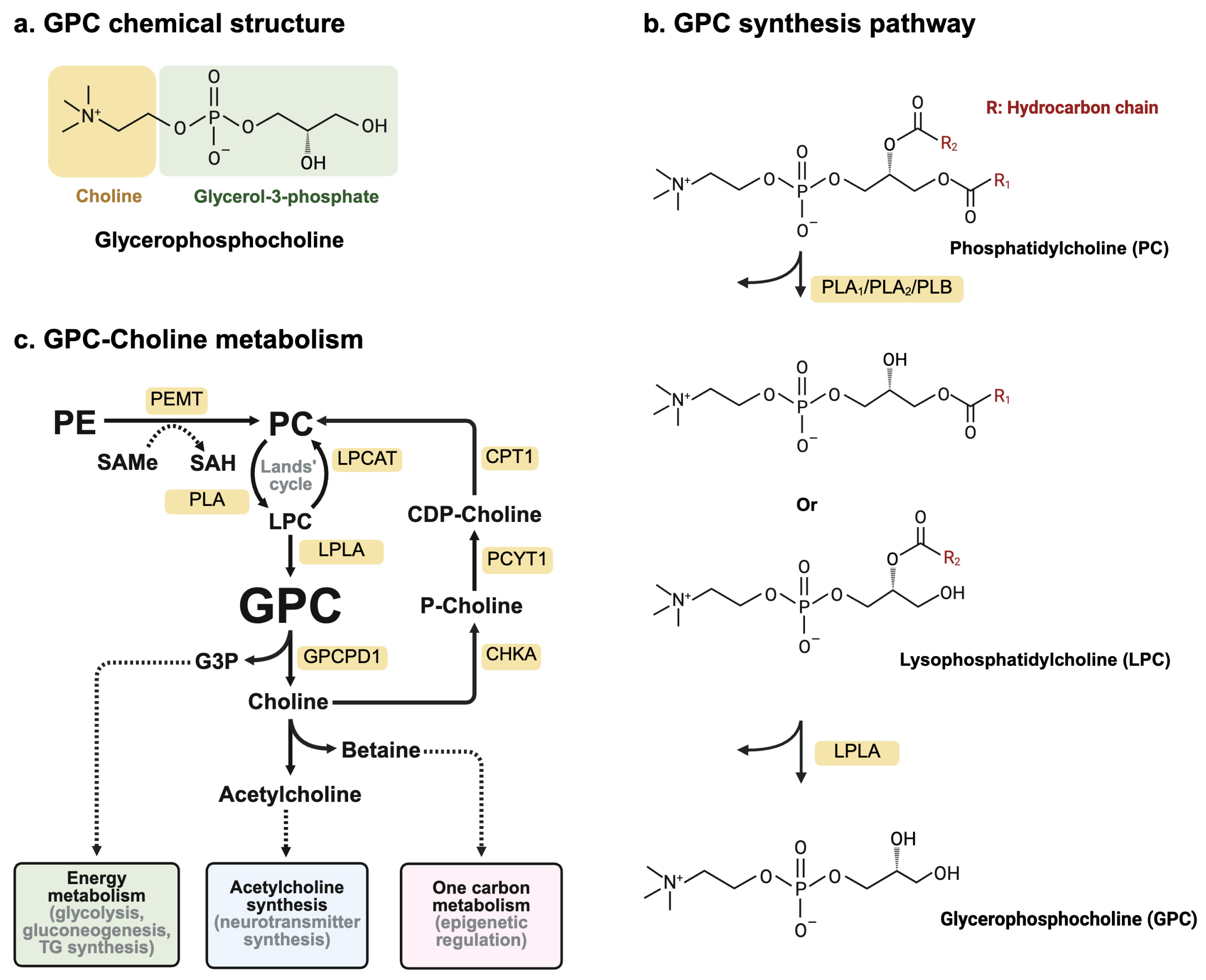
3. Physiological Significance of GPC: Utilization in the Body
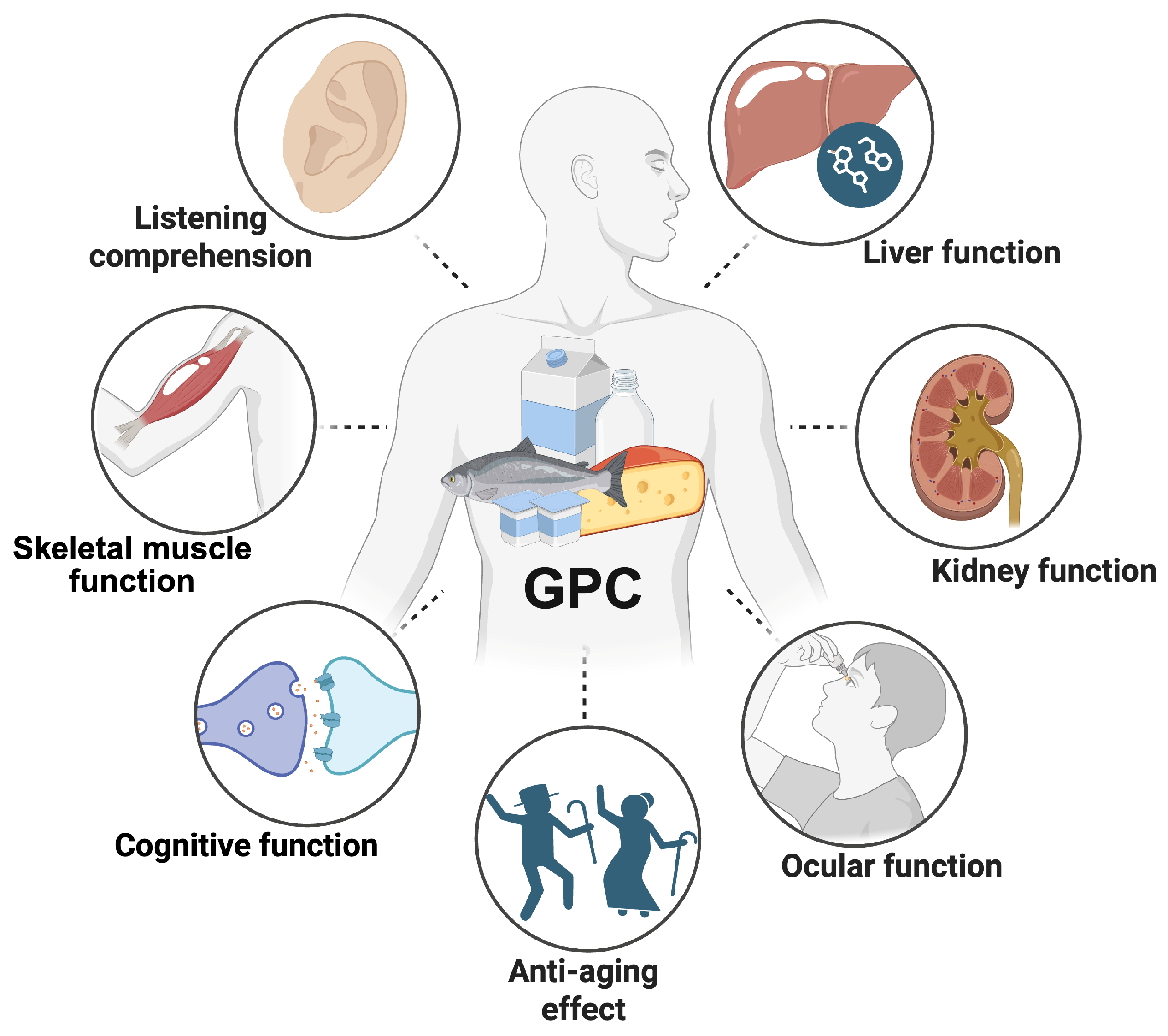
4. GPC Supplementation: Accumulating Evidence
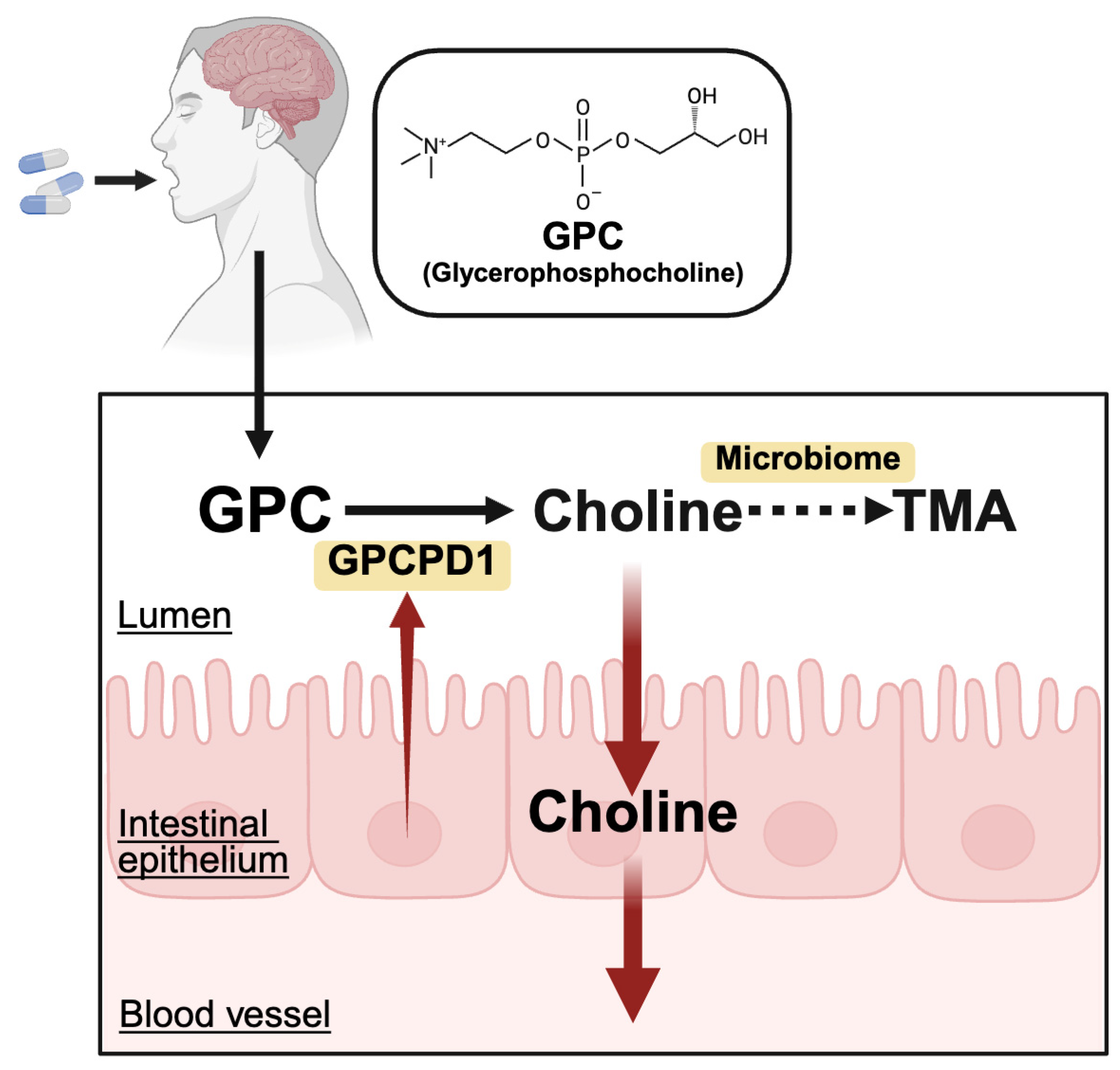
5. GPC Absorption in Mammals: Role of Gut Microbiota and Gpcpd1
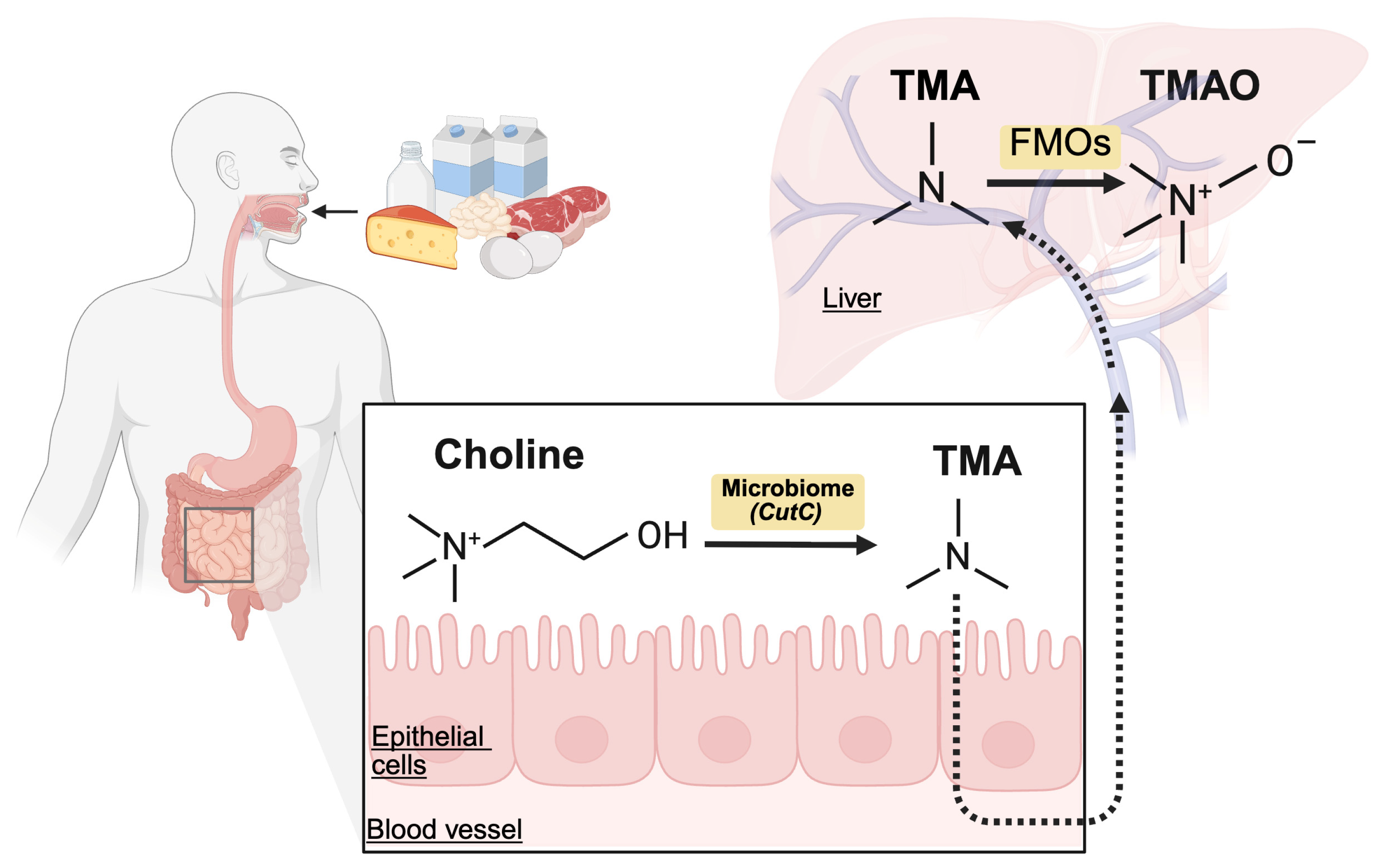
6. Challenge in GPC Supplementation: TMAO Production
7. Conclusions and Future Perspectives
Author Contributions
Funding
Institutional Review Board Statement
Informed Consent Statement
Data Availability Statement
Conflicts of Interest
Abbreviations
| Aβ | Amyloid-β-protein |
| AD | Alzheimer’s Disease |
| AI | Adequate intake |
| CETP | Cholesteryl-ester transfer protein |
| CVD | Cardiovascular disease |
| GPC | Glycerophosphocholine |
| GDE/Gpcpd | Glycerophosphodiesterase |
| FMO | Flavin-containing monooxygenases |
| HDL | High-density lipoprotein |
| LDL | Low-density lipoprotein |
| LPC | Lysophosphocholine |
| lyso-PLA1 | Lysophospholipase A1 |
| MDCK | Madin–Darby canine kidney |
| MRS | Magnetic resonance spectroscopy |
| NMR | Nuclear magnetic resonance |
| NTD | Neural tube defect |
| PC | Phosphatidylcholine |
| PLA2 | Phospholipase A2 |
| ROS | Reactive oxygen species |
| SAMP8 | Senescence-accelerated mouse prone 8 |
| SCFA | Short-chain fatty acids |
| TMA | Trimethylamine |
| TMAO | Trimethylamine N-oxide |
| T2DM | Type 2 diabetes mellitus |
| VLDL | Very-low-density lipoprotein |
References
- World Health Organization. World Population Prospects 2022: Summary of Results; United Nations: Geneva, Switzerland, 2022. [Google Scholar]
- Ristori, S.; Bertoni, G.; Bientinesi, E.; Monti, D. The Role of Nutraceuticals and Functional Foods in Mitigating Cellular Senescence and Its Related Aspects: A Key Strategy for Delaying or Preventing Aging and Neurodegenerative Disorders. Nutrients 2025, 17, 1837. [Google Scholar] [CrossRef] [PubMed]
- Xu, Y.; Song, J.; Huang, Q.; Wei, X.; Deng, Z.; Song, Z.; Huang, H.; Luo, C.; Zhang, D.; Han, L. Functional Foods and Nutraceuticals with Anti-Aging Effects: Focus on Modifying the Enteral Microbiome. J. Funct. Foods 2025, 128, 106786. [Google Scholar] [CrossRef]
- Szőke, K.; Bódi, B.; Hendrik, Z.; Czompa, A.; Gyöngyösi, A.; Haines, D.D.; Papp, Z.; Tósaki, Á.; Lekli, I. Rapamycin Treatment Increases Survival, Autophagy Biomarkers and Expression of the Anti-aging Klotho Protein in Elderly Mice. Pharmacol. Res. Perspect. 2023, 11, e01091. [Google Scholar] [CrossRef]
- Ye, X.; Wang, Y.; Tian, Y.; Bi, R.; Li, M.; Yang, C.; Zhang, L.; Gao, Y. Metformin Alleviates Junctional Epithelium Senescence via the AMPK/SIRT1/Autophagy Pathway in Periodontitis Induced by Hyperglycemia. Heliyon 2024, 10, e27478. [Google Scholar] [CrossRef]
- Guo, J.; Huang, X.; Dou, L.; Yan, M.; Shen, T.; Tang, W.; Li, J. Aging and Aging-Related Diseases: From Molecular Mechanisms to Interventions and Treatments. Signal Transduct. Target. Ther. 2022, 7, 391. [Google Scholar] [CrossRef] [PubMed]
- Arriola Apelo, S.I.; Lamming, D.W. Rapamycin: An InhibiTOR of Aging Emerges from the Soil of Easter Island. J. Gerontol. Ser. A Biomed. Sci. Med. Sci. 2016, 71, 841–849. [Google Scholar] [CrossRef]
- Aroda, V.R.; Edelstein, S.L.; Goldberg, R.B.; Knowler, W.C.; Marcovina, S.M.; Orchard, T.J.; Bray, G.A.; Schade, D.S.; Temprosa, M.G.; White, N.H.; et al. Long-Term Metformin Use and Vitamin B12 Deficiency in the Diabetes Prevention Program Outcomes Study. J. Clin. Endocrinol. Metab. 2016, 101, 1754–1761. [Google Scholar] [CrossRef]
- Mechchate, H.; El Allam, A.; El Omari, N.; El Hachlafi, N.; Shariati, M.A.; Wilairatana, P.; Mubarak, M.S.; Bouyahya, A. Vegetables and Their Bioactive Compounds as Anti-Aging Drugs. Molecules 2022, 27, 2316. [Google Scholar] [CrossRef]
- Hernandez, D.F.; Cervantes, E.L.; Luna-Vital, D.A.; Mojica, L. Food-Derived Bioactive Compounds with Anti-Aging Potential for Nutricosmetic and Cosmeceutical Products. Crit. Rev. Food Sci. Nutr. 2021, 61, 3740–3755. [Google Scholar] [CrossRef]
- Kansakar, U.; Trimarco, V.; Mone, P.; Varzideh, F.; Lombardi, A.; Santulli, G. Choline Supplements: An Update. Front. Endocrinol. 2023, 14, 1148166. [Google Scholar] [CrossRef]
- Li, J.; Zhang, J.; Wang, Y.; Yang, Y.; Su, Y.; Gu, L.; Chang, C. L-Alpha-Glycerylphosphorylcholine (L-α-GPC): A Comprehensive Review of Its Preparation Techniques and Versatile Biological Effects. J. Food Sci. 2025, 90, e70338. [Google Scholar] [CrossRef]
- Fernández-Murray, J.P.; McMaster, C.R. Glycerophosphocholine Catabolism as a New Route for Choline Formation for Phosphatidylcholine Synthesis by the Kennedy Pathway. J. Biol. Chem. 2005, 280, 38290–38296. [Google Scholar] [CrossRef]
- Singh, U.; Yokota, K.; Gupta, C.; Shinozuka, H. Choline Deficiency Activates Phospholipases A2 and C in Rat Liver without Affecting the Activity of Protein Kinase C. J. Nutr. Biochem. 1990, 1, 434–439. [Google Scholar] [CrossRef]
- Iorio, E.; Mezzanzanica, D.; Alberti, P.; Spadaro, F.; Ramoni, C.; D’Ascenzo, S.; Millimaggi, D.; Pavan, A.; Dolo, V.; Canevari, S.; et al. Alterations of Choline Phospholipid Metabolism in Ovarian Tumor Progression. Cancer Res. 2005, 65, 9369–9376. [Google Scholar] [CrossRef] [PubMed]
- Nilsson, Å.; Duan, R.-D. Pancreatic and Mucosal Enzymes in Choline Phospholipid Digestion. Am. J. Physiol. Gastrointest. Liver Physiol. 2019, 316, G425–G445. [Google Scholar] [CrossRef]
- Schettini, G.; Ventra, C.; Florio, T.; Grimaldi, M.; Meucci, O.; Scorziello, A.; Postiglione, A.; Marino, A. Molecular Mechanisms Mediating the Effects of L-α-Glycerylphosphorylcholine, a New Cognition-Enhancing Drug, on Behavioral and Biochemical Parameters in Young and Aged Rats. Pharmacol. Biochem. Behav. 1992, 43, 139–151. [Google Scholar] [CrossRef]
- Sangiorgi, G.B.; Barbagallo, M.; Giordano, M.; Meli, M.; Panzarasa, R. A-Glycerophosphocholine in the Mental Recovery of Cerebral Ischemic Attacks: An Italian Multicenter Clinical Trial. Ann. N. Y. Acad. Sci. 1994, 717, 253–269. [Google Scholar] [CrossRef]
- Hoffman, J.R.; Ratamess, N.A.; Gonzalez, A.; Beller, N.A.; Hoffman, M.W.; Olson, M.; Purpura, M.; Jäger, R. The Effects of Acute and Prolonged CRAM Supplementation on Reaction Time and Subjective Measures of Focus and Alertness in Healthy College Students. J. Int. Soc. Sports Nutr. 2010, 7, 39. [Google Scholar] [CrossRef] [PubMed]
- Bellar, D.; LeBlanc, N.R.; Campbell, B. The Effect of 6 Days of Alpha Glycerylphosphorylcholine on Isometric Strength. J. Int. Soc. Sports Nutr. 2015, 12, 42. [Google Scholar] [CrossRef]
- Tuboly, E.; Molnár, R.; Tőkés, T.; Turányi, R.N.; Hartmann, P.; Mészáros, A.T.; Strifler, G.; Földesi, I.; Siska, A.; Szabó, A.; et al. Excessive Alcohol Consumption Induces Methane Production in Humans and Rats. Sci. Rep. 2017, 7, 7329. [Google Scholar] [CrossRef] [PubMed]
- Martone, G.; Balestrazzi, A.; Ciprandi, G.; Balestrazzi, A. Alpha-Glycerylphosphorylcholine and D-Panthenol Eye Drops in Patients Undergoing Cataract Surgery. J. Ophthalmol. 2022, 2022, 951014. [Google Scholar] [CrossRef]
- Na, G.; Kwak, S.H.; Jang, S.H.; Noh, H.E.; Kim, J.; Yang, S.; Jung, J. Supplementary Effect of Choline Alfoscerate on Speech Recognition in Patients with Age-Related Hearing Loss: A Prospective Study in 34 Patients (57 Ears). Front. Aging Neurosci. 2021, 13, 684519. [Google Scholar] [CrossRef]
- Che, X.; Zhao, Y.; Xu, Z.; Hu, Y.; Ren, A.; Wu, C.; Yang, J. Unlocking the Potential of L-α-Glycerylphosphorylcholine: From Metabolic Pathways to Therapeutic Applications. Nutr. Rev. 2025, 83, 1594–1620. [Google Scholar] [CrossRef]
- Chen, S.; Inui, S.; Aisyah, R.; Nakashima, R.; Kawaguchi, T.; Hinomoto, M.; Nakagawa, Y.; Sakuma, T.; Sotomaru, Y.; Ohshima, N.; et al. Role of Gpcpd1 in Intestinal Alpha-Glycerophosphocholine Metabolism and Trimethylamine N-Oxide Production. J. Biol. Chem. 2024, 300, 107965. [Google Scholar] [CrossRef] [PubMed]
- Zeisel, S.H.; da Costa, K.A.; Youssef, M.; Hensey, S. Conversion of Dietary Choline to Trimethylamine and Dimethylamine in Rats: Dose-Response Relationship. J. Nutr. 1989, 119, 800–804. [Google Scholar] [CrossRef] [PubMed]
- Wang, Z.; Klipfell, E.; Bennett, B.J.; Koeth, R.; Levison, B.S.; Dugar, B.; Feldstein, A.E.; Britt, E.B.; Fu, X.; Chung, Y.-M.; et al. Gut Flora Metabolism of Phosphatidylcholine Promotes Cardiovascular Disease. Nature 2011, 472, 57–65. [Google Scholar] [CrossRef] [PubMed]
- Zheng, Y.; Li, Y.; Rimm, E.B.; Hu, F.B.; Albert, C.M.; Rexrode, K.M.; Manson, J.A.E.; Qi, L. Dietary Phosphatidylcholine and Risk of All-Cause and Cardiovascular-Specific Mortality among US Women and Men. Am. J. Clin. Nutr. 2016, 104, 173–180. [Google Scholar] [CrossRef]
- Lee, G.; Choi, S.; Chang, J.; Choi, D.; Son, J.S.; Kim, K.; Kim, S.M.; Jeong, S.; Park, S.M. Association of L-α Glycerylphosphorylcholine with Subsequent Stroke Risk after 10 Years. JAMA Netw. Open 2021, 4, e2136008. [Google Scholar] [CrossRef]
- Aldana-Hernández, P.; Leonard, K.-A.; Zhao, Y.-Y.; Curtis, J.M.; Field, C.J.; Jacobs, R.L. Dietary Choline or Trimethylamine N-Oxide Supplementation Does Not Influence Atherosclerosis Development in Ldlr−/− and Apoe−/− Male Mice. J. Nutr. 2020, 150, 249–255. [Google Scholar] [CrossRef]
- Gallazzini, M.; Burg, M.B. What’s New About Osmotic Regulation of Glycerophosphocholine. Physiology 2009, 24, 245–249. [Google Scholar] [CrossRef]
- Zeisel, S.H.; Da Costa, K.; Franklin, P.D.; Alexander, E.A.; Lamont, J.T.; Sheard, N.F.; Beiser, A. Choline, an Essential Nutrient for Humans. FASEB J. 1991, 5, 2093–2098. [Google Scholar] [CrossRef]
- Jüngst, D.; Lang, T.; Huber, P.; Lange, V.; Paumgartner, G. Effect of Phospholipids and Bile Acids on Cholesterol Nucleation Time and Vesicular/Micellar Cholesterol in Gallbladder Bile of Patients with Cholesterol Stones. J. Lipid Res. 1993, 34, 1457–1464. [Google Scholar] [CrossRef] [PubMed]
- Cuperus, F.J.C.; Claudel, T.; Gautherot, J.; Halilbasic, E.; Trauner, M. The Role of Canalicular ABC Transporters in Cholestasis. Drug Metab. Dispos. 2014, 42, 546–560. [Google Scholar] [CrossRef]
- Madry, C.; Elbahnsi, A.; Delaunay, J.-L.; Stary, A.; Lagaye, S.; Couvert, P.; Corpechot, C.; Lemoinne, S.; Chignard, N.; Boucherle, B.; et al. ABCB4 Disease-Causing Variants S242R, S346I, T437I and T1077M Significantly Impair Its Function and Display Differential Sensitivity to Potentiators. Sci. Rep. 2025, 15, 44544. [Google Scholar] [CrossRef] [PubMed]
- Cole, L.K.; Vance, J.E.; Vance, D.E. Phosphatidylcholine Biosynthesis and Lipoprotein Metabolism. Biochim. Biophys. Acta (BBA) Mol. Cell Biol. Lipids 2012, 1821, 754–761. [Google Scholar] [CrossRef]
- Garcia-Perez, A.; Burg, M.B. Renal Medullary Organic Osmolytes. Physiol. Rev. 1991, 71, 1081–1115. [Google Scholar] [CrossRef] [PubMed]
- Burg, M.B.; Ferraris, J.D. Intracellular Organic Osmolytes: Function and Regulation. J. Biol. Chem. 2008, 283, 7309–7313. [Google Scholar] [CrossRef]
- Balaban, R.S.; Knepper, M.A. Nitrogen-14 Nuclear Magnetic Resonance Spectroscopy of Mammalian Tissues. Am. J. Physiol. Cell Physiol. 1983, 245, C439–C444. [Google Scholar] [CrossRef]
- Gallazzini, M.; Ferraris, J.D.; Burg, M.B. GDPD5 Is a Glycerophosphocholine Phosphodiesterase That Osmotically Regulates the Osmoprotective Organic Osmolyte GPC. Proc. Natl. Acad. Sci. USA 2008, 105, 11026–11031. [Google Scholar] [CrossRef]
- Nakanishi, T.; Burg, M.B. Osmoregulation of Glycerophosphorylcholine Content of Mammalian Renal Cells. Am. J. Physiol. Cell Physiol. 1989, 257, C795–C801. [Google Scholar] [CrossRef]
- Kwon, E.D.; Jung, K.Y.; Edsall, L.C.; Kim, H.Y.; Garcia-Perez, A.; Burg, M.B. Osmotic Regulation of Synthesis of Glycerophosphocholine from Phosphatidylcholine in MDCK Cells. Am. J. Physiol. Cell Physiol. 1995, 268, C402–C412. [Google Scholar] [CrossRef]
- Gu, X.; Wang, X. An Overview of Recent Analysis and Detection of Acetylcholine. Anal. Biochem. 2021, 632, 114381. [Google Scholar] [CrossRef]
- Kolesnick, R. Signal Transduction through the Sphingomyelin Pathway. Mol. Chem. Neuropathol. 1994, 21, 287–297. [Google Scholar] [CrossRef]
- Voet, D.; Voet, J.G.; Pratt, C.W. Principles of Biochemistry, 3rd ed.; Wiley: New York, NY, USA, 2008. [Google Scholar]
- Ullman, M.D.; Radin, N.S. The Enzymatic Formation of Sphingomyelin from Ceramide and Lecithin in Mouse Liver. J. Biol. Chem. 1974, 249, 1506–1512. [Google Scholar] [CrossRef]
- Voelker, D.R.; Kennedy, E.P. Cellular and Enzymic Synthesis of Sphingomyelin. Biochemistry 1982, 21, 2753–2759. [Google Scholar] [CrossRef]
- Eppler, C.M.; Malewicz, B.; Jenkin, H.M.; Baumann, W.J. Phosphatidylcholine as the Choline Donor in Sphingomyelin Synthesis. Lipids 1987, 22, 351–357. [Google Scholar] [CrossRef] [PubMed]
- Yen, C.E.; Mar, M.; Zeisel, S.H. Choline Deficiency-induced Apoptosis in PC12 Cells Is Associated with Diminished Membrane Phosphatidylcholine and Sphingomyelin, Accumulation of Ceramide and Diacylglycerol, and Activation of a Caspase. FASEB J. 1999, 13, 135–142. [Google Scholar] [CrossRef] [PubMed]
- Walter, A.; Korth, U.; Hilgert, M.; Hartmann, J.; Weichel, O.; Hilgert, M.; Fassbender, K.; Schmitt, A.; Klein, J. Glycerophosphocholine Is Elevated in Cerebrospinal Fluid of Alzheimer Patients. Neurobiol. Aging 2004, 25, 1299–1303. [Google Scholar] [CrossRef] [PubMed]
- Chang, K.; Cheng, M.; Tang, H.; Lin, C.; Chen, C. Dysregulation of Choline Metabolism and Therapeutic Potential of Citicoline in Huntington’s Disease. Aging Cell 2024, 23, e14302. [Google Scholar] [CrossRef] [PubMed]
- Sonkar, K.; Ayyappan, V.; Tressler, C.M.; Adelaja, O.; Cai, R.; Cheng, M.; Glunde, K. Focus on the Glycerophosphocholine Pathway in Choline Phospholipid Metabolism of Cancer. NMR Biomed. 2019, 32, e4112. [Google Scholar] [CrossRef]
- Glunde, K.; Bhujwalla, Z.M.; Ronen, S.M. Choline Metabolism in Malignant Transformation. Nat. Rev. Cancer 2011, 11, 835–848. [Google Scholar] [CrossRef] [PubMed]
- Jacobs, M.A.; Barker, P.B.; Bottomley, P.A.; Bhujwalla, Z.; Bluemke, D.A. Proton Magnetic Resonance Spectroscopic Imaging of Human Breast Cancer: A Preliminary Study. J. Magn. Reson. Imaging 2004, 19, 68–75. [Google Scholar] [CrossRef] [PubMed]
- Aboagye, E.O.; Bhujwalla, Z.M. Malignant Transformation Alters Membrane Choline Phospholipid Metabolism of Human Mammary Epithelial Cells. Cancer Res. 1999, 59, 80–84. [Google Scholar]
- Podo, F. Tumour Phospholipid Metabolism. NMR Biomed. 1999, 12, 413–439. [Google Scholar] [CrossRef]
- Bolan, P.J.; Meisamy, S.; Baker, E.H.; Lin, J.; Emory, T.; Nelson, M.; Everson, L.I.; Yee, D.; Garwood, M. In Vivo Quantification of Choline Compounds in the Breast with 1H MR Spectroscopy. Magn. Reson. Med. 2003, 50, 1134–1143. [Google Scholar] [CrossRef]
- Meisamy, S.; Bolan, P.J.; Baker, E.H.; Bliss, R.L.; Gulbahce, E.; Everson, L.I.; Nelson, M.T.; Emory, T.H.; Tuttle, T.M.; Yee, D.; et al. Neoadjuvant Chemotherapy of Locally Advanced Breast Cancer: Predicting Response with in Vivo 1H MR Spectroscopy—A Pilot Study at 4 T. Radiology 2004, 233, 424–431. [Google Scholar] [CrossRef]
- Baek, H.-M.; Chen, J.-H.; Nie, K.; Yu, H.J.; Bahri, S.; Mehta, R.S.; Nalcioglu, O.; Su, M.-Y. Predicting Pathologic Response to Neoadjuvant Chemotherapy in Breast Cancer by Using MR Imaging and Quantitative 1H MR Spectroscopy. Radiology 2009, 251, 653–662. [Google Scholar] [CrossRef] [PubMed]
- Cuellar-Baena, S.; Morales, J.M.; Martinetto, H.; Calvar, J.; Sevlever, G.; Castellano, G.; Cerdá-Nicolás, M.; Celda, B.; Monleon, D. Comparative Metabolic Profiling of Paediatric Ependymoma, Medulloblastoma and Pilocytic Astrocytoma. Int. J. Mol. Med. 2010, 26, 941–948. [Google Scholar] [CrossRef]
- Rocha, C.M.; Barros, A.S.; Gil, A.M.; Goodfellow, B.J.; Humpfer, E.; Spraul, M.; Carreira, I.M.; Melo, J.B.; Bernardo, J.; Gomes, A.; et al. Metabolic Profiling of Human Lung Cancer Tissue by 1H High Resolution Magic Angle Spinning (HRMAS) NMR Spectroscopy. J. Proteome Res. 2010, 9, 319–332. [Google Scholar] [CrossRef]
- Sjøbakk, T.E.; Vettukattil, R.; Gulati, M.; Gulati, S.; Lundgren, S.; Gribbestad, I.S.; Torp, S.H.; Bathen, T.F. Metabolic Profiles of Brain Metastases. Int. J. Mol. Sci. 2013, 14, 2104–2118. [Google Scholar] [CrossRef]
- Zeisel, S.H. Choline: Critical Role during Fetal Development and Dietary Requirements in Adults. Annu. Rev. Nutr. 2006, 26, 229–250. [Google Scholar] [CrossRef] [PubMed]
- Fischer, L.M.; daCosta, K.A.; Kwock, L.; Stewart, P.W.; Lu, T.-S.; Stabler, S.P.; Allen, R.H.; Zeisel, S.H. Sex and Menopausal Status Influence Human Dietary Requirements for the Nutrient Choline. Am. J. Clin. Nutr. 2007, 85, 1275–1285. [Google Scholar] [CrossRef] [PubMed]
- Buchman, A.L.; Ament, M.E.; Sohel, M.; Dubin, M.; Jenden, D.J.; Roch, M.; Pownall, H.; Farley, W.; Awal, M.; Ahn, C. Choline Deficiency Causes Reversible Hepatic Abnormalities in Patients Receiving Parenteral Nutrition: Proof of a Human Choline Requirement: A Placebo-Controlled Trial. J. Parenter. Enter. Nutr. 2001, 25, 260–268. [Google Scholar] [CrossRef] [PubMed]
- Shaw, G.M.; Carmichael, S.L.; Yang, W.; Selvin, S.; Schaffer, D.M. Periconceptional Dietary Intake of Choline and Betaine and Neural Tube Defects in Offspring. Am. J. Epidemiol. 2004, 160, 102–109. [Google Scholar] [CrossRef]
- Buchman, A.L.; Dubin, M.D.; Moukarzel, A.A.; Jenden, D.J.; Roch, M.; Rice, K.M.; Gornbein, J.; Ament, M.E. Choline Deficiency: A Cause of Hepatic Steatosis during Parenteral Nutrition That Can Be Reversed with Intravenous Choline Supplementation. Hepatology 1995, 22, 1399–1403. [Google Scholar] [CrossRef]
- Chen, A.H.; Innis, S.M.; Davidson, A.G.F.; James, S.J. Phosphatidylcholine and Lysophosphatidylcholine Excretion Is Increased in Children with Cystic Fibrosis and Is Associated with Plasma Homocysteine, S-Adenosylhomocysteine, and S-Adenosylmethionine. Am. J. Clin. Nutr. 2005, 81, 686–691. [Google Scholar] [CrossRef]
- Probst, Y.; Guan, V.; Neale, E. Development of a Choline Database to Estimate Australian Population Intakes. Nutrients 2019, 11, 913. [Google Scholar] [CrossRef]
- Wiedeman, A.M.; Barr, S.I.; Green, T.J.; Xu, Z.; Innis, S.M.; Kitts, D.D. Dietary Choline Intake: Current State of Knowledge Across the Life Cycle. Nutrients 2018, 10, 1513. [Google Scholar] [CrossRef]
- Vennemann, F.B.C.; Ioannidou, S.; Valsta, L.M.; Dumas, C.; Ocké, M.C.; Mensink, G.B.M.; Lindtner, O.; Virtanen, S.M.; Tlustos, C.; D’Addezio, L.; et al. Dietary Intake and Food Sources of Choline in European Populations. Br. J. Nutr. 2015, 114, 2046–2055. [Google Scholar] [CrossRef]
- Holmes-McNary, M.Q.; Cheng, W.L.; Mar, M.H.; Fussell, S.; Zeisel, S.H. Choline and Choline Esters in Human and Rat Milk and in Infant Formulas. Am. J. Clin. Nutr. 1996, 64, 572–576. [Google Scholar] [CrossRef]
- Bernhard, W.; Poets, C.F.; Franz, A.R. Choline and Choline-Related Nutrients in Regular and Preterm Infant Growth. Eur. J. Nutr. 2019, 58, 931–945. [Google Scholar] [CrossRef]
- Ilcol, Y.O.; Ozbek, R.; Hamurtekin, E.; Ulus, I.H. Choline status in newborns, infants, children, breast-feeding women, breast-fed infants and human breast milk. J. Nutr. Biochem. 2005, 16, 489–499. [Google Scholar] [CrossRef] [PubMed]
- Lopez, C.M.; Govoni, S.; Battaini, F.; Bergamaschi, S.; Longoni, A.; Giaroni, C.; Trabucchi, M. Effect of a New Cognition Enhancer, Alpha-Glycerylphosphorylcholine, on Scopolamine-Induced Amnesia and Brain Acetylcholine. Pharmacol. Biochem. Behav. 1991, 39, 835–840. [Google Scholar] [CrossRef]
- Drago, F.; Mauceri, F.; Nardo, L.; Valerio, C.; Lauria, N.; Rampello, L.; Guidi, G. Behavioral Effects of L-α-Glycerylphosphorylcholine: Influence on Cognitive Mechanisms in the Rat. Pharmacol. Biochem. Behav. 1992, 41, 445–448. [Google Scholar] [CrossRef]
- Sigala, S.; Imperato, A.; Rizzonelli, P.; Casolini, P.; Missale, C.; Spano, P. L-α-Glycerylphorylcholine Antagonizes Scopolamine-Induced Amnesia and Enhances Hippocampal Cholinergic Transmission in the Rat. Eur. J. Pharmacol. 1992, 211, 351–358. [Google Scholar] [CrossRef] [PubMed]
- Muccioli, G.; Raso, G.M.; Ghé, C.; Di Carlo, R. Effect of L-α-Glycerylphosphorylcholine on Muscarinic Receptors and Membrane Microviscosity of Aged Rat Brain. Prog. Neuro-Psychopharmacol. Biol. Psychiatry 1996, 20, 323–339. [Google Scholar] [CrossRef]
- Onishchenko, L.S.; Gaikova, O.N.; Yanishevskii, S.N. Changes at the Focus of Experimental Ischemic Stroke Treated with Neuroprotective Agents. Neurosci. Behav. Physiol. 2008, 38, 49–54. [Google Scholar] [CrossRef]
- Tuboly, E.; Szabó, A.; Garab, D.; Bartha, G.; Janovszky, Á.; Ero″s, G.; Szabó, A.; Mohácsi, Á.; Szabó, G.; Kaszaki, J.; et al. Methane Biogenesis during Sodium Azide-Induced Chemical Hypoxia in Rats. Am. J. Physiol. Cell Physiol. 2013, 304, C207–C214. [Google Scholar] [CrossRef]
- Plangár, I.; Szabó, E.R.; Tőkés, T.; Mán, I.; Brinyiczki, K.; Fekete, G.; Németh, I.; Ghyczy, M.; Boros, M.; Hideghéty, K. Radio-Neuroprotective Effect of L-Alpha-Glycerylphosphorylcholine (GPC) in an Experimental Rat Model. J. Neuro-Oncol. 2014, 119, 253–261. [Google Scholar] [CrossRef]
- Tokés, T.; Varga, G.; Garab, D.; Nagy, Z.; Fekete, G.; Tuboly, E.; Plangár, I.; Mán, I.; Szabó, R.E.; Szabó, Z.; et al. Peripheral Inflammatory Activation after Hippocampus Irradiation in the Rat. Int. J. Radiat. Biol. 2014, 90, 1–6. [Google Scholar] [CrossRef] [PubMed]
- Lee, S.H.; Choi, B.Y.; Kim, J.H.; Kho, A.R.; Sohn, M.; Song, H.K.; Choi, H.C.; Suh, S.W. Late Treatment with Choline Alfoscerate (L-Alpha Glycerylphosphorylcholine, α-GPC) Increases Hippocampal Neurogenesis and Provides Protection against Seizure-Induced Neuronal Death and Cognitive Impairment. Brain Res. 2017, 1654, 66–76. [Google Scholar] [CrossRef] [PubMed]
- Matsubara, K.; Okuda, M.; Shibata, S.; Miyaki, S.; Ohkubo, T.; Izu, H.; Fujii, T. The Delaying Effect of Alpha-Glycerophosphocholine on Senescence, Transthyretin Deposition, and Osteoarthritis in Senescence-Accelerated Mouse Prone 8 Mice. Biosci. Biotechnol. Biochem. 2018, 82, 647–653. [Google Scholar] [CrossRef]
- Catanesi, M.; d’Angelo, M.; Antonosante, A.; Castelli, V.; Alfonsetti, M.; Benedetti, E.; Desideri, G.; Ferri, C.; Cimini, A. Neuroprotective Potential of Choline Alfoscerate against Β-amyloid Injury: Involvement of Neurotrophic Signals. Cell Biol. Int. 2020, 44, 1734–1744. [Google Scholar] [CrossRef] [PubMed]
- Narukawa, M.; Kamiyoshihara, A.; Izu, H.; Fujii, T.; Matsubara, K.; Misaka, T. Efficacy of Long-Term Feeding of α-Glycerophosphocholine for Aging-Related Phenomena in Old Mice. Gerontology 2020, 66, 275–285. [Google Scholar] [CrossRef]
- Burgaletto, C.; Di Benedetto, G.; Munafò, A.; Bernardini, R.; Cantarella, G. Beneficial Effects of Choline Alphoscerate on Amyloid-β Neurotoxicity in an In Vitro Model of Alzheimer’s Disease. Curr. Alzheimer Res. 2021, 18, 298–309. [Google Scholar] [CrossRef]
- Liu, J.-Y.; Zheng, R.-Q.; Wang, Y.; Liu, Y.-H.; Jiang, S.; Wang, X.-Z.; He, K.; Pan, X.; Zhou, T.; Li, T.; et al. The Endogenous Metabolite Glycerophosphocholine Promotes Longevity and Fitness in Caenorhabditis Elegans. Metabolites 2022, 12, 177. [Google Scholar] [CrossRef]
- Yu, H.J.; Kim, Y.L.; Kim, M.J.; Park, J.M.; Park, S.Y.; Park, S.N.; Yang, D.W. The Effect of Choline Alphoscerate on Non Spatial Memory and Neuronal Differentiation in a Rat Model of Dual Stress. Brain Res. 2022, 1786, 147900. [Google Scholar] [CrossRef]
- Canal, N.; Franceschi, M.; Alberoni, M.; Castiglioni, C.; De Moliner, P.; Longoni, A. Effect of L-Alpha-Glyceryl-Phosphorylcholine on Amnesia Caused by Scopolamine. Int. J. Clin. Pharm. 1991, 29, 103–107. [Google Scholar]
- Di Perri, R.; Coppola, G.; Ambrosio, L.A.; Grasso, A.; Puca, F.M.; Rizzo, M. A Multicentre Trial to Evaluate the Efficacy and Tolerability of α-Glycerylphosphorylcholine versus Cytosine Diphosphocholine in Patients with Vascular Dementia. J. Int. Med. Res. 1991, 19, 330–341. [Google Scholar] [CrossRef] [PubMed]
- Muratorio, A.; Bonuccelli, U.; Nuti, A.; Battistini, N.; Passero, S.; Caruso, V.; Batani, B.; Baroni, A.; Mayer, F.; Sorbi, T.; et al. A neurotropic approach to the treatment of multi-infarct dementia using L-α-glycerylphosphorylcholine. Curr. Ther. Res. 1992, 52, 741–752. [Google Scholar] [CrossRef]
- Parnetti, L.; Abate, G.; Bartorelli, L.; Cucinotta, D.; Cuzzupo, M.; Maggioni, M.; Villardita, C.; Senin, U. Multicentre Study of L-a-Glyceryl-Phosphorylcholine vs ST200 among Patients with Probable Senile Dementia of Alzheimer’s Type. Drugs Aging 1993, 3, 159–164. [Google Scholar] [CrossRef]
- De Jesus Moreno Moreno, M. Cognitive Improvement in Mild to Moderate Alzheimer’s Dementia after Treatment with the Acetylcholine Precursor Choline Alfoscerate: A Multicenter, Double-Blind, Randomized, Placebo-Controlled Trial. Clin. Ther. 2003, 25, 178–193. [Google Scholar] [CrossRef]
- Levin, O.S.; Batukaeva, L.A.; Anikina, M.A.; Yunishchenko, N.A. Efficacy and Safety of Choline Alphoscerate (Cereton) in Patients with Parkinson’s Disease with Cognitive Impairments. Neurosci. Behav. Physiol. 2011, 41, 47–51. [Google Scholar] [CrossRef]
- Nguyen, T.T.; Risbud, R.D.; Mattson, S.N.; Chambers, C.D.; Thomas, J.D. Randomized, Double-Blind, Placebo-Controlled Clinical Trial of Choline Supplementation in School-Aged Children with Fetal Alcohol Spectrum Disorders. Am. J. Clin. Nutr. 2016, 104, 1683–1692. [Google Scholar] [CrossRef]
- Marcus, L.; Soileau, J.; Judge, L.W.; Bellar, D. Evaluation of the Effects of Two Doses of Alpha Glycerylphosphorylcholine on Physical and Psychomotor Performance. J. Int. Soc. Sports Nutr. 2017, 14, 39. [Google Scholar] [CrossRef] [PubMed]
- Han, S.-H.; Jeong, H.-B.; Park, K.-Y.; Shin, H.-W.; Youn, Y.C.; Kim, S. P300 Latency Changes in Patients with Mild Cognitive Impairment after Taking Choline Alphoscerate; A Preliminary Study. eNeurologicalSci 2018, 11, 5–8. [Google Scholar] [CrossRef]
- Arcadi, F.A.; Corallo, F.; Torrisi, M.; Scarfì, C.; Lo Buono, V.; Formica, C.; Bramanti, P.; Marino, S.; Bonanno, L.; De Cola, M.C. Role of Citicoline and Choline in the Treatment of Post-Stroke Depression: An Exploratory Study. J. Int. Med. Res. 2021, 49, 03000605211055036. [Google Scholar] [CrossRef] [PubMed]
- Barzanjeh, S.P.; Pescatello, L.S.; Figueroa, A.; Ahmadizad, S. The Effects of Alpha-Glycerylphosphorylcholine on Heart Rate Variability and Hemodynamic Variables Following Sprint Interval Exercise in Overweight and Obese Women. Nutrients 2022, 14, 3970. [Google Scholar] [CrossRef]
- Jeon, J.; Lee, S.Y.; Lee, S.; Han, C.; Park, G.D.; Kim, S.-J.; Chang, J.G.; Kim, W.J. Efficacy and Safety of Choline Alphoscerate for Amnestic Mild Cognitive Impairment: A Randomized Double-Blind Placebo-Controlled Trial. BMC Geriatr. 2024, 24, 774. [Google Scholar] [CrossRef]
- Kerksick, C.M. Acute Alpha-Glycerylphosphorylcholine Supplementation Enhances Cognitive Performance in Healthy Men. Nutrients 2024, 16, 4240. [Google Scholar] [CrossRef] [PubMed]
- Park, M.S.; Yang, J.S.; Kang, S.-H.; Choi, H.J.; Jeon, J.P.; Cho, Y.-J. Effect of Choline Alfoscerate on Cognitive Dysfunction After Mild Traumatic Brain Injury: A Single-Center Prospective Case-Control Study. Korean J. Neurotrauma 2025, 21, 114–123. [Google Scholar] [CrossRef]
- Sohn, M.; Park, Y.H.; Lim, S. Effects of Choline Alfoscerate on Cognitive Function and Quality of Life in Type 2 Diabetes: A Double-Blind, Randomized, Placebo-Controlled Trial. Diabetes Obes. Metab. 2025, 27, 1350–1358. [Google Scholar] [CrossRef]
- Amenta, F.; Carotenuto, A.; Fasanaro, A.M.; Rea, R.; Traini, E. The ASCOMALVA Trial: Association between the Cholinesterase Inhibitor Donepezil and the Cholinergic Precursor Choline Alphoscerate in Alzheimer’s Disease with Cerebrovascular Injury: Interim Results. J. Neurol. Sci. 2012, 322, 96–101. [Google Scholar] [CrossRef]
- Amenta, F.; Carotenuto, A.; Fasanaro, A.M.; Rea, R.; Traini, E. The ASCOMALVA (Association between the Cholinesterase Inhibitor Donepezil and the Cholinergic Precursor Choline Alphoscerate in Alzheimer’s Disease) Trial: Interim Results after Two Years of Treatment. J. Alzheimer’s Dis. 2014, 42, S281–S288. [Google Scholar] [CrossRef]
- Tomassoni, D.; Avola, R.; Mignini, F.; Parnetti, L.; Amenta, F. Effect of Treatment with Choline Alphoscerate on Hippocampus Microanatomy and Glial Reaction in Spontaneously Hypertensive Rats. Brain Res. 2006, 1120, 183–190. [Google Scholar] [CrossRef]
- Tayebati, S.K.; Di Tullio, M.A.; Tomassoni, D.; Amenta, F. Neuroprotective Effect of Treatment with Galantamine and Choline Alphoscerate on Brain Microanatomy in Spontaneously Hypertensive Rats. J. Neurol. Sci. 2009, 283, 187–194. [Google Scholar] [CrossRef] [PubMed]
- Salvadori, E.; Poggesi, A.; Donnini, I.; Rinnoci, V.; Chiti, G.; Squitieri, M.; Tudisco, L.; Fierini, F.; Melone, A.; Pescini, F.; et al. Efficacy and Safety of the Association of Nimodipine and Choline Alphoscerate in the Treatment of Cognitive Impairment in Patients with Cerebral Small Vessel Disease. The CONIVaD Trial. Drugs Aging 2021, 38, 481–491. [Google Scholar] [CrossRef] [PubMed]
- Hartmann, P.; Fet, N.; Garab, D.; Szabó, A.; Kaszaki, J.; Srinivasan, P.K.; Tolba, R.H.; Boros, M. L-Alpha-Glycerylphosphorylcholine Reduces the Microcirculatory Dysfunction and Nicotinamide Adenine Dinucleotide Phosphate-Oxidase Type 4 Induction after Partial Hepatic Ischemia in Rats. J. Surg. Res. 2014, 189, 32–40. [Google Scholar] [CrossRef]
- Aisyah, R.; Ohshima, N.; Watanabe, D.; Nakagawa, Y.; Sakuma, T.; Nitschke, F.; Nakamura, M.; Sato, K.; Nakahata, K.; Yokoyama, C.; et al. GDE5/Gpcpd1 Activity Determines Phosphatidylcholine Composition in Skeletal Muscle and Regulates Contractile Force in Mice. Commun. Biol. 2024, 7, 604. [Google Scholar] [CrossRef] [PubMed]
- Conlay, L.A.; Wurtman, R.J.; Blusztajn, K.; Coviella, I.L.; Maher, T.J.; Evoniuk, G.E. Decreased Plasma Choline Concentrations in Marathon Runners. N. Engl. J. Med. 1986, 315, 892. [Google Scholar]
- Kuo, I.Y.; Ehrlich, B.E. Signaling in Muscle Contraction. Cold Spring Harb. Perspect. Biol. 2015, 7, a006023. [Google Scholar] [CrossRef]
- Sánchez, V.; Baumann, A.; Kromm, F.; Yergaliyev, T.; Brandt, A.; Scholda, J.; Kopp, F.; Camarinha-Silva, A.; Bergheim, I. Oral Supplementation of Choline Attenuates the Development of Alcohol-Related Liver Disease (ALD). Mol. Med. 2024, 30, 181. [Google Scholar] [CrossRef]
- Sedhom, S.S.; El Wakeel, L.M.; Barakat, E.M.F.; Shousha, H.I.; Shamkh, M.A.; Salama, S.H.; Zaky, D.Z.; El Kholy, A.A. The Impact of Choline Supplementation on Oxidative Stress and Clinical Outcomes among Patients with Non-Alcoholic Fatty Liver Disease: A Randomized Controlled Study. Ther. Adv. Chronic Dis. 2025, 16, 20406223251358659. [Google Scholar] [CrossRef]
- Zeisel, S.H. Dietary Choline: Biochemistry, Physiology, and Pharmacology. Annu. Rev. Nutr. 1981, 1, 95–121. [Google Scholar] [CrossRef]
- Cheng, W.-L.; Holmes-McNary, M.Q.; Mar, M.-H.; Lien, E.L.; Zeisel, S.H. Bioavailability of Choline and Choline Esters from Milk in Rat Pups. J. Nutr. Biochem. 1996, 7, 457–464. [Google Scholar] [CrossRef]
- Lewis, E.D.; Field, C.J.; Jacobs, R.L. Should the Forms of Dietary Choline Also Be Considered When Estimating Dietary Intake and the Implications for Health? Lipid Technol. 2015, 27, 227–230. [Google Scholar] [CrossRef]
- Horie, A.; Ishida, K.; Watanabe, Y.; Shibata, K.; Hashimoto, Y. Membrane Transport Mechanisms of Choline in Human Intestinal Epithelial LS180 Cells. Biopharm. Drug Dispos. 2014, 35, 532–542. [Google Scholar] [CrossRef] [PubMed]
- Kamath, A.V.; Darling, I.M.; Morris, M.E. Choline Uptake in Human Intestinal Caco-2 Cells Is Carrier-Mediated. J. Nutr. 2003, 133, 2607–2611. [Google Scholar] [CrossRef]
- Crowe, A.P.; Lockman, P.R.; Abbruscato, T.J.; Allen, D.D. Novel Choline Transport Characteristics in Caco-2 Cells. Drug Dev. Ind. Pharm. 2002, 28, 773–781. [Google Scholar] [CrossRef] [PubMed]
- Wang, Z.; Hazen, J.; Jia, X.; Org, E.; Zhao, Y.; Osborn, L.J.; Nimer, N.; Buffa, J.; Culley, M.K.; Krajcik, D.; et al. The Nutritional Supplement L-Alpha Glycerylphosphorylcholine Promotes Atherosclerosis. Int. J. Mol. Sci. 2021, 22, 13477. [Google Scholar] [CrossRef] [PubMed]
- Kawamura, T.; Okubo, T.; Sato, K.; Fujita, S.; Goto, K.; Hamaoka, T.; Iemitsu, M. Glycerophosphocholine Enhances Growth Hormone Secretion and Fat Oxidation in Young Adults. Nutrition 2012, 28, 1122–1126. [Google Scholar] [CrossRef] [PubMed]
- Martínez-del Campo, A.; Bodea, S.; Hamer, H.A.; Marks, J.A.; Haiser, H.J.; Turnbaugh, P.J.; Balskus, E.P. Characterization and Detection of a Widely Distributed Gene Cluster That Predicts Anaerobic Choline Utilization by Human Gut Bacteria. mBio 2015, 6, e00042-15. [Google Scholar] [CrossRef]
- Zeisel, S.H.; Wishnok, J.S.; Blusztajn, J.K. Formation of Methylamines from Ingested Choline and Lecithin. J. Pharmacol. Exp. Ther. 1983, 225, 320–324. [Google Scholar] [CrossRef]
- Craciun, S.; Balskus, E.P. Microbial Conversion of Choline to Trimethylamine Requires a Glycyl Radical Enzyme. Proc. Natl. Acad. Sci. USA 2012, 109, 21307–21312. [Google Scholar] [CrossRef] [PubMed]
- de la Huerga, J.; Popper, H. Urinary Excretion of Choline Metabolites Following Choline Administration in Normals and Patients with Hepatobiliary Diseases. J. Clin. Investig. 1951, 30, 463–470. [Google Scholar] [CrossRef]
- Al-Waiz, M.; Mikov, M.; Mitchell, S.C.; Smith, R.L. The Exogenous Origin of Trimethylamine in the Mouse. Metabolism 1992, 41, 135–136. [Google Scholar] [CrossRef]
- Treacy, E.; Akerman, B.R.; Chow, L.M.L.; Youil, R.; Lin, C.B.; Bruce, A.G.; Knight, M.; Danks, D.M.; Cashman, J.R.; Forrest, S.M. Mutations of the Flavin-Containing Monooxygenase Gene (FMO3) Cause Trimethylaminuria, a Defect in Detoxication. Hum. Mol. Genet. 1998, 7, 839–845. [Google Scholar] [CrossRef]
- Bennett, B.J.; de Aguiar Vallim, T.Q.; Wang, Z.; Shih, D.M.; Meng, Y.; Gregory, J.; Allayee, H.; Lee, R.; Graham, M.; Crooke, R.; et al. Trimethylamine-N-Oxide, a Metabolite Associated with Atherosclerosis, Exhibits Complex Genetic and Dietary Regulation. Cell Metab. 2013, 17, 49–60. [Google Scholar] [CrossRef]
- Zeisel, S.H.; Warrier, M. Trimethylamine N-Oxide, the Microbiome, and Heart and Kidney Disease. Annu. Rev. Nutr. 2025, 55, 44. [Google Scholar] [CrossRef]
- Tang, W.H.W.; Wang, Z.; Levison, B.S.; Koeth, R.A.; Britt, E.B.; Fu, X.; Wu, Y.; Hazen, S.L. Intestinal Microbial Metabolism of Phosphatidylcholine and Cardiovascular Risk. N. Engl. J. Med. 2013, 368, 1575–1584. [Google Scholar] [CrossRef] [PubMed]
- Rath, S.; Heidrich, B.; Pieper, D.H.; Vital, M. Uncovering the Trimethylamine-Producing Bacteria of the Human Gut Microbiota. Microbiome 2017, 5, 54. [Google Scholar] [CrossRef]
- Romano, K.A.; Vivas, E.I.; Amador-Noguez, D.; Rey, F.E. Intestinal Microbiota Composition Modulates Choline Bioavailability from Diet and Accumulation of the Proatherogenic Metabolite Trimethylamine-N-Oxide. mBio 2015, 6, e02481-14. [Google Scholar] [CrossRef]
- Dalla Via, A.; Gargari, G.; Taverniti, V.; Rondini, G.; Velardi, I.; Gambaro, V.; Visconti, G.L.; De Vitis, V.; Gardana, C.; Ragg, E.; et al. Urinary TMAO Levels Are Associated with the Taxonomic Composition of the Gut Microbiota and with the Choline TMA-Lyase Gene (CutC) Harbored by Enterobacteriaceae. Nutrients 2020, 12, 62. [Google Scholar] [CrossRef] [PubMed]
- Brownawell, A.M.; Carmines, E.L.; Montesano, F. Safety Assessment of AGPC as a Food Ingredient. Food Chem. Toxicol. 2011, 49, 1303–1315. [Google Scholar] [CrossRef]
- Koeth, R.A.; Wang, Z.; Levison, B.S.; Buffa, J.A.; Org, E.; Sheehy, B.T.; Britt, E.B.; Fu, X.; Wu, Y.; Li, L.; et al. Intestinal Microbiota Metabolism of L-Carnitine, a Nutrient in Red Meat, Promotes Atherosclerosis. Nat. Med. 2013, 19, 576–585. [Google Scholar] [CrossRef]
- Seldin, M.M.; Meng, Y.; Qi, H.; Zhu, W.F.; Wang, Z.; Hazen, S.L.; Lusis, A.J.; Shih, D.M. Trimethylamine N-Oxide Promotes Vascular Inflammation through Signaling of Mitogen-Activated Protein Kinase and Nuclear Factor-Κb. J. Am. Heart Assoc. 2016, 5, e002767. [Google Scholar] [CrossRef]
- Brunt, V.E.; LaRocca, T.J.; Bazzoni, A.E.; Sapinsley, Z.J.; Miyamoto-Ditmon, J.; Gioscia-Ryan, R.A.; Neilson, A.P.; Link, C.D.; Seals, D.R. The Gut Microbiome–Derived Metabolite Trimethylamine N-Oxide Modulates Neuroinflammation and Cognitive Function with Aging. Geroscience 2021, 43, 377–394. [Google Scholar] [CrossRef] [PubMed]
- Wang, Y.; Shen, S.; Sun, Y.; Zhou, S.; Zhang, X.; Song, Z.; Sun, M.; Jiang, S.; Qian, C.; Zhang, Q.; et al. Dietary Choline-Derived Trimethylamine N-Oxide Impairs Hippocampal Neuronal Function via PANoptosis Activation. npj Sci. Food 2025, 9, 235. [Google Scholar] [CrossRef]
- Bidulescu, A.; Chambless, L.E.; Siega-Riz, A.M.; Zeisel, S.H.; Heiss, G. Usual Choline and Betaine Dietary Intake and Incident Coronary Heart Disease: The Atherosclerosis Risk in Communities (ARIC) Study. BMC Cardiovasc. Disord. 2007, 7, 20. [Google Scholar] [CrossRef] [PubMed]
- Dalmeijer, G.W.; Olthof, M.R.; Verhoef, P.; Bots, M.L.; van der Schouw, Y.T. Prospective Study on Dietary Intakes of Folate, Betaine, and Choline and Cardiovascular Disease Risk in Women. Eur. J. Clin. Nutr. 2008, 62, 386–394. [Google Scholar] [CrossRef]
- Shin, J.Y.; Xun, P.; Nakamura, Y.; He, K. Egg Consumption in Relation to Risk of Cardiovascular Disease and Diabetes: A Systematic Review and Meta-Analysis. Am. J. Clin. Nutr. 2013, 98, 146–159. [Google Scholar] [CrossRef]
- Nagata, C.; Wada, K.; Tamura, T.; Konishi, K.; Kawachi, T.; Tsuji, M.; Nakamura, K. Choline and Betaine Intakes Are Not Associated with Cardiovascular Disease Mortality Risk in Japanese Men and Women. J. Nutr. 2015, 145, 1787–1792. [Google Scholar] [CrossRef]
- Bordoni, L.; Samulak, J.J.; Sawicka, A.K.; Pelikant-Malecka, I.; Radulska, A.; Lewicki, L.; Kalinowski, L.; Gabbianelli, R.; Olek, R.A. Trimethylamine N-Oxide and the Reverse Cholesterol Transport in Cardiovascular Disease: A Cross-Sectional Study. Sci. Rep. 2020, 10, 18675. [Google Scholar] [CrossRef]
- Meyer, K.A.; Benton, T.Z.; Bennett, B.J.; Jacobs, D.R.; Lloyd-Jones, D.M.; Gross, M.D.; Carr, J.J.; Gordon-Larsen, P.; Zeisel, S.H. Microbiota-Dependent Metabolite Trimethylamine N-Oxide and Coronary Artery Calcium in the Coronary Artery Risk Development in Young Adults Study (CARDIA). J. Am. Heart Assoc. 2016, 5, e003970. [Google Scholar] [CrossRef]
- Liu, C.; Li, Z.; Song, Z.; Fan, X.; Shao, H.; Schönke, M.; Boon, M.R.; Rensen, P.C.N.; Wang, Y. Choline and Butyrate Beneficially Modulate the Gut Microbiome without Affecting Atherosclerosis in APOE*3-Leiden. CETP Mice. Atherosclerosis 2022, 362, 47–55. [Google Scholar] [CrossRef]
- Collins, H.L.; Drazul-Schrader, D.; Sulpizio, A.C.; Koster, P.D.; Williamson, Y.; Adelman, S.J.; Owen, K.; Sanli, T.; Bellamine, A. L-Carnitine Intake and High Trimethylamine N-Oxide Plasma Levels Correlate with Low Aortic Lesions in ApoE−/− Transgenic Mice Expressing CETP. Atherosclerosis 2016, 244, 29–37. [Google Scholar] [CrossRef]
- Jawień, J.; Nastałek, P.; Korbut, R. Mouse Models of Experimental Atherosclerosis. J. Physiol. Pharmacol. 2004, 55, 503–517. [Google Scholar]
- Miller, C.A.; Corbin, K.D.; Da Costa, K.A.; Zhang, S.; Zhao, X.; Galanko, J.A.; Blevins, T.; Bennett, B.J.; O’Connor, A.; Zeisel, S.H. Effect of Egg Ingestion on Trimethylamine-N-Oxide Production in Humans: A Randomized, Controlled, Dose-Response Study. Am. J. Clin. Nutr. 2014, 100, 778–786. [Google Scholar] [CrossRef]
- Cho, C.E.; Aardema, N.D.J.; Bunnell, M.L.; Larson, D.P.; Aguilar, S.S.; Bergeson, J.R.; Malysheva, O.V.; Caudill, M.A.; Lefevre, M. Effect of Choline Forms and Gut Microbiota Composition on Trimethylamine-N-Oxide Response in Healthy Men. Nutrients 2020, 12, 2220. [Google Scholar] [CrossRef]
- DiMarco, D.M.; Missimer, A.; Murillo, A.G.; Lemos, B.S.; Malysheva, O.V.; Caudill, M.A.; Blesso, C.N.; Fernandez, M.L. Intake of up to 3 Eggs/Day Increases HDL Cholesterol and Plasma Choline While Plasma Trimethylamine-N-oxide Is Unchanged in a Healthy Population. Lipids 2017, 52, 255–263. [Google Scholar] [CrossRef]
- Shirouchi, B.; Fukuda, A.; Akasaka, T. Unlike Glycerophosphocholine or Choline Chloride, Dietary Phosphatidylcholine Does Not Increase Plasma Trimethylamine-N-Oxide Levels in Sprague-Dawley Rats. Metabolites 2022, 12, 64. [Google Scholar] [CrossRef]
- Bernhard, W.; Shunova, A.; Boriga, J.; Graepler-Mainka, U.; Hilberath, J. Low Plasma Choline, High Trimethylamine Oxide, and Altered Phosphatidylcholine Subspecies Are Prevalent in Cystic Fibrosis Patients with Pancreatic Insufficiency. Nutrients 2025, 17, 868. [Google Scholar] [CrossRef]
- Bernhard, W.; Shunova, A.; Graepler-Mainka, U.; Hilberath, J.; Wiechers, C.; Poets, C.F.; Franz, A.R. Choline in Pediatric Nutrition: Assessing Formula, Fortifiers and Supplements Across Age Groups and Clinical Indications. Nutrients 2025, 17, 1632. [Google Scholar] [CrossRef]



| Reference | Animal Model | Dose | Duration | Results |
|---|---|---|---|---|
| [75] | Adult male SD rats, scopolamine-induced amnesia | i.g. GPC 300, 600, 1000, 2000 mg/kg | 2 h pre scopolamine induction | GPC reverses the amnesia caused by scopolamine in passive avoidance test. |
| [17] | 4 and 24 mo male Wistar, scopolamine-induced amnesia | i.p. GPC 25, 50, 100, and 200 mg/kg | 2 h pre-test and 21 d | GPC improves behavioral and biochemical parameters in young and aged rats. |
| [76] | 24 mo male SD rats, pharmacologically induced amnesia | i.p. GPC 100 mg/kg/d | 20 d | GPC improves learning and memory capacity of animals in all experimental groups. |
| [77] | Adult male SD rats, scopolamine-induced amnesia | Oral GPC 100–600 mg/kg/day | 3 h pre-test | GPC prevents scopolamine-induced amnesia in a time- and dose-dependent manner. |
| [78] | 23 mo SD rats | i.p. GPC 200 mg/kg/d | 30 d | GPC restores the number of muscarinic receptors to levels of young animals and partially attenuates membrane microviscosity, hence increasing membrane fluidity. |
| [79] | Adult mongrel rats induced with ischemia | i.p. GPC 45 mg/kg/d | 3 d after ischemia | GPC increases the tolerance of neurons to ischemic damage and slows the execution of the cell death program. GPC also improves cerebral ischemia-induced neurobehavioral deficits. |
| [80] | SD rats, sodium azide-induced hepatic hypoxia | i.g. GPC 50 mg/kg | 8 d | GPC restores sodium azide-induced ATP decrease and liver damage. |
| [81] | Adult male SD rats exposed to hippocampal radiation | Oral GPC 50 mg/kg/d | 1 wk pre-irradiation, 3x/wk (Mon, Wed, and Fri), continued for 4 consecutive mo | GPC improves radiation-induced memory impairment and tissue damage. |
| [82] | Adult male SD rats exposed to hippocampal radiation | i.v. GPC 50 mg/kg | 5 min pre-radiation | GPC supplementation alleviates irradiation-induced peripheral pro-inflammatory activation and ATP depletion. |
| [83] | 8 wk male SD rats, pilocarpine injection to induce status epilepticus | i.m. GPC 250 mg/kg/d | Immediately after seizure onset for 1 or 3 wk and from 3 wk after the seizure onset for 3 wk | Administration of GPC starting at 3 wk after seizure improved cognitive function through reduced neuronal death and BBB disruption, and increased neurogenesis. |
| [84] | 3 wk SAMP8 mice | 0.07 mg/mL GPC in drinking water | 41 wk | GPC reduces the deposition of transthyretin involved in neuroinflammation and improves joint degeneration. |
| [85] | SH-SY5Y neuronal cell line | 0.1 mM, 1 mM, 10 mM, 50 mM GPC | (1) Cells were incubated in 10 μM Aβ1–42 for 1 h, followed by addition of several concentrations of GPC and kept for 24 h (2) Cells were incubated with several concentrations of GPC for 24 h, followed by addition of 10 μM Aβ1–42, and kept for another 24 h | GPC alleviates the adverse effect of β-amyloid in both in vitro models through the activation of the neurotrophin survival pathway, reduces apoptotic cell death and preserves the neuronal morphology. |
| [86] | 105–118 wk male C57BL/6J | 0.0136% GPC-containing solid diet | From the age of 60 to 105 wk | GPC supplementation increases the expression of genes related to long-term potentiation in the hippocampus, which is necessary for the development of memory and learning capability. |
| [87] | SH-SY5Y neuronal cell line, differentiated for 1 wk with 10 μm of all-trans-retinoic acid, treated for 72 h with 10 μM Aβ25-35 | 100 nM GPC | 1 h pre-treatment | GPC alleviates Aβ25-35-mediated neurotoxicity and attenuates the Aβ-induced phosphorylation of the Tau protein, possibly through the NGF/TrkA system and sustaining the expression level of synaptic vesicle proteins, such as synaptophysin. |
| [88] | C. elegans | 10 mM and 50 nM GPC | 7 d and 15 d adulthood | GPC promotes lifespan and improves exercise capacity during aging with no adverse effect on nematodes’ reproductive abilities and body length. GPC also enhances the stress resistance of C. elegans and inhibits the ROS accumulation in worms. |
| [89] | 8 wk male Wistar rats induced with noise and restraint stress (3 h, 7 d) | Oral GPC 400 mg/kg/d | 12 d from the start of stress induction | GPC shows protective effects on stress-induced cognitive dysfunction by promoting neuronal differentiation. |
| Reference | Study Design | Subject | Dose | Duration | Effects |
| [90] | RCT | 32 individuals, scopolamine-induced amnesia | Oral GPC 1200 mg/d | 10 d | GPC shows rapid onset of memory improvement. |
| [91] | Open multicenter uncontrolled trial | 120 individuals, VaD, (50–80 yo) | i.m. GPC or CDP 1 g/d | 90 d | Both result in a definite symptomatic improvement and very good tolerability. GPC produces higher efficacy compared to CDP. |
| [92] | RCT | 112 individuals, multi-infarct dementia (50–80 yo) | i.m. GPC or CDP 1 g/d | 90 d | GPC enhances cognitive functions, behavior, and personality at the end of treatment. |
| [93] | RCT | 126 individuals, AD | Oral GPC 1200 mg/day or acetyl-l-carnitine 1300 mg/d | 6 mo | Significant improvements in most neuropsychological parameters in GPC recipients. Acetyl-l-carnitine treatment also shows improvement to a lesser extent. |
| [18] | RCT | 2044 individuals, cerebral ischemic attacks within 10 d (45–85 yo) | Parenteral GPC 1000 mg/d (first 28 d) followed by oral GPC 400 mg t.i.d. | 6 mo | GPC effectively improves cognitive function in patients with acute cerebrovascular attacks (stroke and/or TIA) with low incidence of adverse effects. |
| [94] | RCT | 261 individuals, AD | Oral GPC 1200 mg/d | 180 d | Oral GPC significantly improved cognition and global function in the patients. |
| [19] | RCT | 19 physically active subjects | Oral supplement (1.5 g) containing GPC, choline bitartrate, phosphatidylserine, vitamins B3, B6, and B12, folic acid, L-tyrosine, anhydrous caffeine, acetyl-L-carnitine, and naringin | 4 wk | The supplement maintains reaction time and subjective feelings of focus and alertness to both visual and auditory stimuli following exhaustive exercise. |
| [95] | Open 10-day pilot study | 60 individuals, PD (±68 yo) | i.v. GPC 1000 mg/d | 10 d | GPC moderately improves the state of cognitive function more often than piracetam. Supplementation was well-tolerated. |
| [20] | RCT | 26 healthy adults | Oral GPC 600 mg/d | 6 d | GPC improves isometric mid-thigh pull peak force and lower body force. |
| [96] | RCT | Children, FASD (5–10 yo) | Oral liquid GPC 5.25 mL (~1240 mg) | 6 wk | No significant improvement was observed in memory, attention, executive function, or hyperactivity before and after treatment. |
| [97] | RCT | 48 healthy college-aged males | Oral GPC 500 mg/d, 250 mg/d | 7 d | GPC has ergogenic effects at a dose of >250 mg or higher. |
| [98] | Cohort study | 34 individuals, MCI (50–85 yo) | Oral GPC 800 mg/d | 3 mo | Tendency of decreased P300 latencies, indicator of cognitive function, following GPC supplementation. |
| [99] | Cohort study | 44 post-stroke patients with depression (45–75 yo) | Oral GPC 600 mg/d | 6 mo | GPC slightly improves post-stroke depression symptoms, but not to the extent of SSRI. |
| [22] | RCT | 40 patients undergoing cataract surgery | GPC-containing eye drops (dose undisclosed) | 1 mo | GPC-containing eye drops promoted and stabilized the reepithelialization process and accelerated the repair of the corneal innervation. |
| [23] | Case–control | 34 hearing aids users aged 65–85 yo | Oral GPC 800 mg/d | 11 mo | GPC effectively enriches listening comprehension in older hearing aid users. |
| [100] | Crossover RCT | 12 overweight or obese women | Oral GPC 1000 mg | 1 h before test | GPC consumption recovers HRV and blood pressure faster following strenuous exercise in overweight and obese women. |
| [101] | RCT | 100 individuals, MCI (55–85 yo) | Oral GPC 600 mg/d | 12 wk | GPC enhances cognitive outcomes in MCI, and no adverse effects were observed |
| [102] | RCT | 20 healthy adult men | Oral GPC 630 mg or 315 mg | 60 min pre-test | Acute GPC supplementation significantly increased cognitive performance. |
| [103] | Prospective case–control study | 15 patients, mild traumatic brain injuries (>18 yo) | Oral GPC 800 mg/d | 8 wk | GPC improves cognitive function in patients with mild traumatic brain injuries. |
| [104] | RCT | 36 individuals, T2DM and MCI (>60 yo) | Oral GPC 1200 mg/d | 6 mo, 12 mo | GPC leads to slight improvement in cognitive function in T2DM patients with MCI at 6 mo and become significant at 12 mo. |
Disclaimer/Publisher’s Note: The statements, opinions and data contained in all publications are solely those of the individual author(s) and contributor(s) and not of MDPI and/or the editor(s). MDPI and/or the editor(s) disclaim responsibility for any injury to people or property resulting from any ideas, methods, instructions or products referred to in the content. |
© 2026 by the authors. Licensee MDPI, Basel, Switzerland. This article is an open access article distributed under the terms and conditions of the Creative Commons Attribution (CC BY) license.
Share and Cite
Chen, S.; Ohkubo, T.; Yanaka, N.; Aisyah, R. A Friend or Foe: Understanding the Physiological Significance, Therapeutic Uses, and Potential Risks of Glycerophosphocholine—A Narrative Review. Nutrients 2026, 18, 1526. https://doi.org/10.3390/nu18101526
Chen S, Ohkubo T, Yanaka N, Aisyah R. A Friend or Foe: Understanding the Physiological Significance, Therapeutic Uses, and Potential Risks of Glycerophosphocholine—A Narrative Review. Nutrients. 2026; 18(10):1526. https://doi.org/10.3390/nu18101526
Chicago/Turabian StyleChen, Siyi, Takeshi Ohkubo, Noriyuki Yanaka, and Rahmawati Aisyah. 2026. "A Friend or Foe: Understanding the Physiological Significance, Therapeutic Uses, and Potential Risks of Glycerophosphocholine—A Narrative Review" Nutrients 18, no. 10: 1526. https://doi.org/10.3390/nu18101526
APA StyleChen, S., Ohkubo, T., Yanaka, N., & Aisyah, R. (2026). A Friend or Foe: Understanding the Physiological Significance, Therapeutic Uses, and Potential Risks of Glycerophosphocholine—A Narrative Review. Nutrients, 18(10), 1526. https://doi.org/10.3390/nu18101526