The Gut–Skin and Gut–Thyroid Axis in Autoimmunity: Roles of Dysbiosis, Microbial Metabolites, Immune Dysregulation, and Diet in Psoriasis and Hashimoto’s Thyroiditis
 , , ,
, , ,
Abstract
1. Introduction
2. Materials and Methods
3. Results
3.1. Intestinal Permeability (‘Leaky Gut’) in Autoimmune Disease
3.2. Short-Chain Fatty Acids as Mediators of Gut Barrier Integrity and Immune Regulation
3.3. Bile Acids as Microbiota-Derived Mediators of Gut Barrier Integrity and Immune Regulation
3.4. The Gut-Skin and Gut-Thyroid Axes in Immune-Mediated Inflammatory Diseases
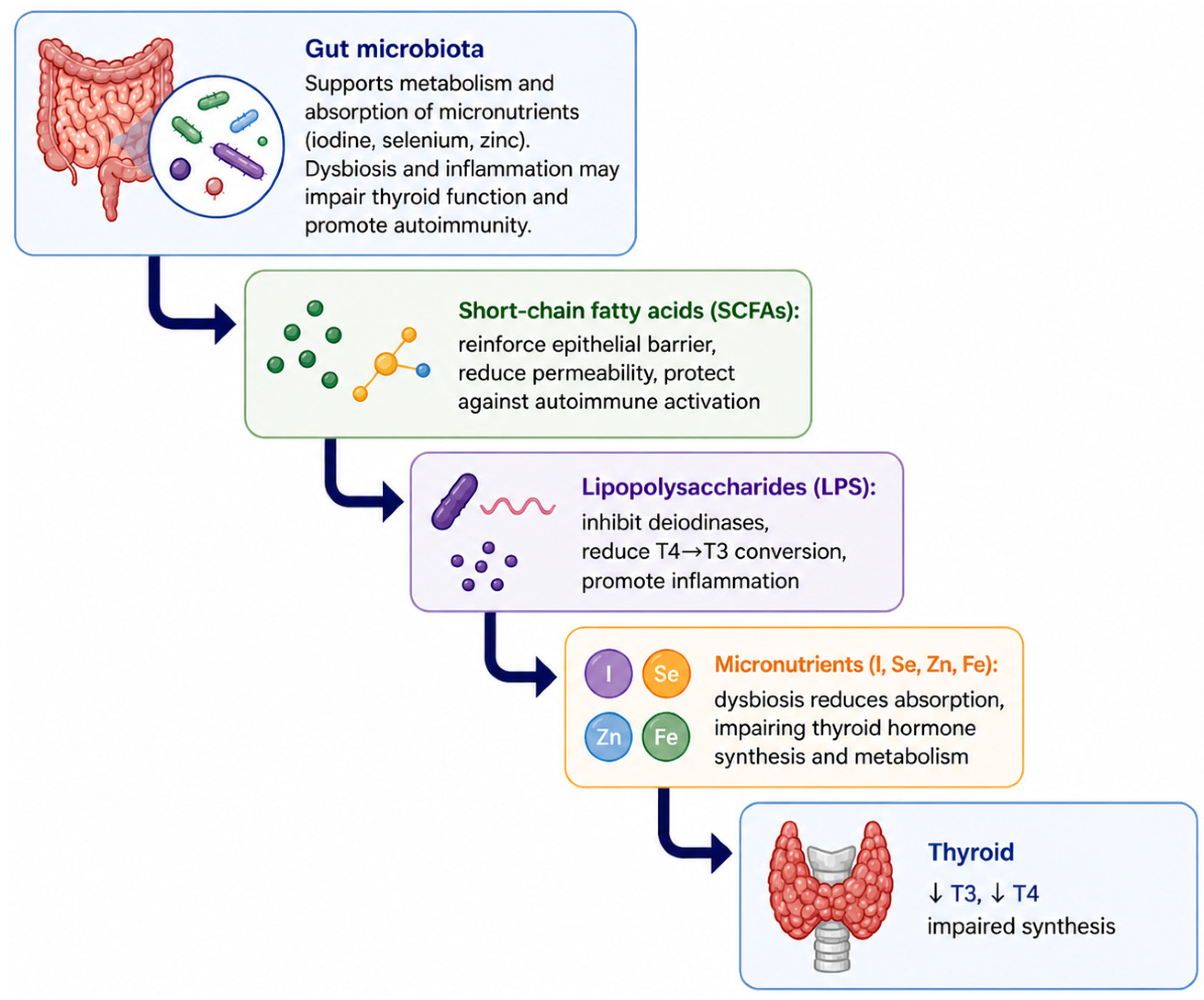
3.5. Gut Microbiota Alterations in Hashimoto’s Thyroiditis
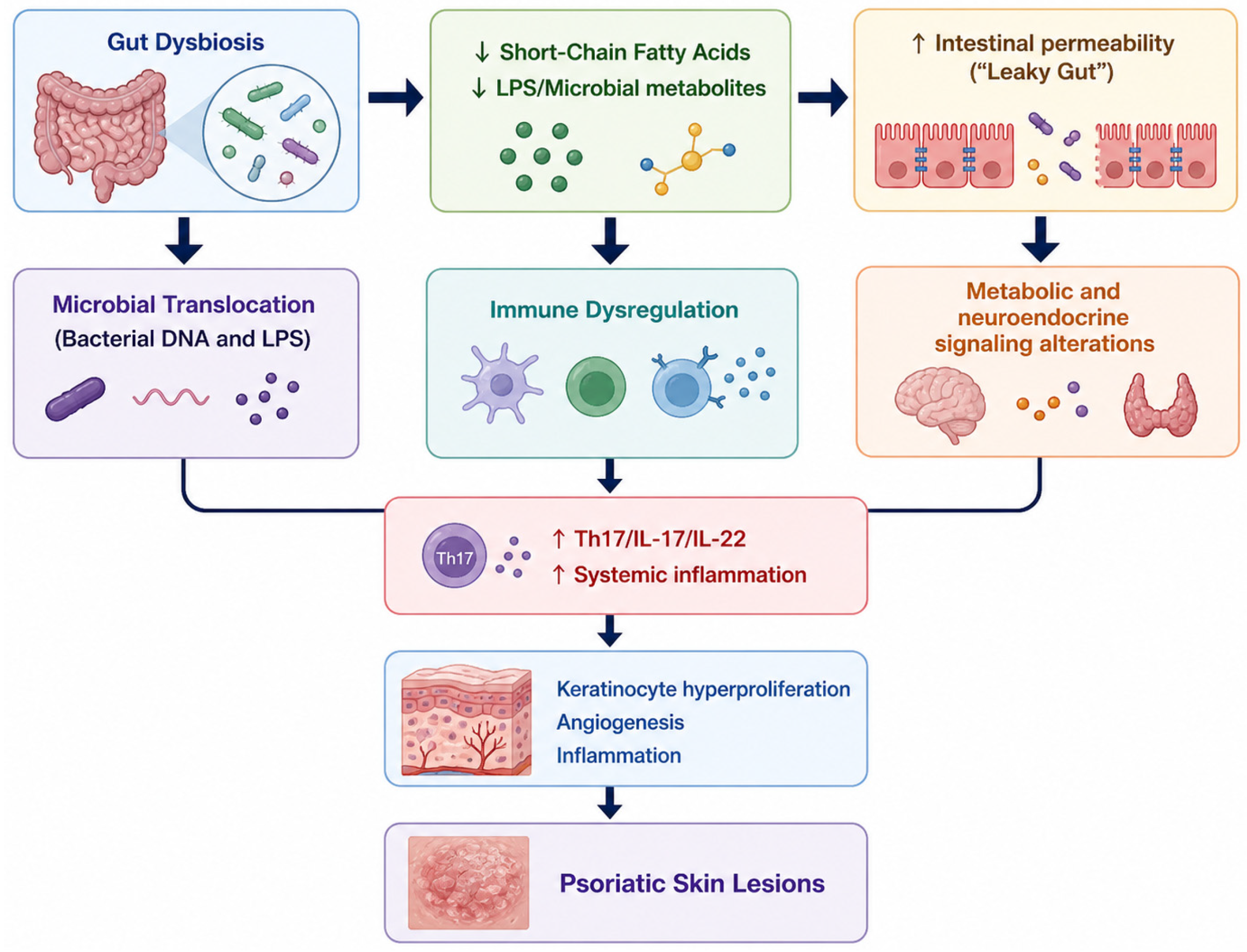
3.6. Gut Microbiota Alterations in Psoriasis
3.7. Dietary Modulation of the Gut Microbiome and Immune Regulation in Psoriasis and Hashimoto’s Thyroiditis
3.8. Postbiotics as Microbiome-Based Interventions
4. Discussion
Author Contributions
Funding
Institutional Review Board Statement
Informed Consent Statement
Data Availability Statement
Acknowledgments
Conflicts of Interest
Abbreviations
| AITDs | Autoimmune thyroid diseases |
| APCs | Antigen-presenting cells |
| D1 | Type I iodothyronine deiodinase |
| D2 | Type II iodothyronine deiodinase |
| FXR | Farnesoid X receptor |
| HT | Hashimoto’s thyroiditis |
| I-FABP | Intestinal fatty acid-binding protein |
| IFN-γ | Interferon gamma |
| IL | Interleukin |
| LPS | Lipopolysaccharides |
| NF-κB | Nuclear factor kappa B |
| SCFAs | Short-chain fatty acids |
| TGR5 | Takeda G protein-coupled receptor 5 |
| Th | T helper cell |
| TLR | Toll-like receptor |
| TNF-α | Tumor necrosis factor alpha |
| TPOAb | Thyroid peroxidase antibodies |
| Treg | Regulatory T cells |
| TSH | Thyroid-stimulating hormone |
References
- Mahmud, M.R.; Akter, S.; Tamanna, S.K.; Mazumder, L.; Esti, I.Z.; Banerjee, S.; Akter, S.; Hasan, M.R.; Acharjee, M.; Hossain, M.S.; et al. Impact of Gut Microbiome on Skin Health: Gut-Skin Axis Observed through the Lenses of Therapeutics and Skin Diseases. Gut Microbes 2022, 14, 2096995. [Google Scholar] [CrossRef]
- Polak, K.; Bergler-Czop, B.; Szczepanek, M.; Wojciechowska, K.; Frątczak, A.; Kiss, N. Psoriasis and Gut Microbiome—Current State of Art. Int. J. Mol. Sci. 2021, 22, 4529. [Google Scholar] [CrossRef]
- Olejniczak-Staruch, I.; Ciążyńska, M.; Sobolewska-Sztychny, D.; Narbutt, J.; Skibińska, M.; Lesiak, A. Alterations of the Skin and Gut Microbiome in Psoriasis and Psoriatic Arthritis. Int. J. Mol. Sci. 2021, 22, 3998. [Google Scholar] [CrossRef]
- Kaur, J.; Jialal, I. Hashimoto Thyroiditis. Available online: https://www.ncbi.nlm.nih.gov/books/NBK459262/ (accessed on 15 December 2025).
- Zhang, X.; Shi, L.; Sun, T.; Guo, K.; Geng, S. Dysbiosis of Gut Microbiota and Its Correlation with Dysregulation of Cytokines in Psoriasis Patients. BMC Microbiol. 2021, 21, 78. [Google Scholar] [CrossRef] [PubMed]
- Madaan, T.; Doan, K.; Hartman, A.; Gherardini, D.; Ventrola, A.; Zhang, Y.; Kotagiri, N. Advances in Microbiome-Based Therapeutics for Dermatological Disorders: Current Insights and Future Directions. Exp. Dermatol. 2024, 33, e70019. [Google Scholar] [CrossRef]
- Guzior, D.V.; Quinn, R.A. Review: Microbial Transformations of Human Bile Acids. Microbiome 2021, 9, 140. [Google Scholar] [CrossRef]
- Jadali, Z.; Esfahanian, F.; Ghelich, R.; Rashidian, H. Increased Levels of Serum Interleukin-17 in Patients with Hashimoto’s Thyroiditis. Indian J. Endocrinol. Metab. 2017, 21, 551. [Google Scholar] [CrossRef] [PubMed]
- Thye, A.Y.-K.; Bah, Y.-R.; Law, J.W.-F.; Tan, L.T.-H.; He, Y.-W.; Wong, S.-H.; Thurairajasingam, S.; Chan, K.-G.; Lee, L.-H.; Letchumanan, V. Gut–Skin Axis: Unravelling the Connection between the Gut Microbiome and Psoriasis. Biomedicines 2022, 10, 1037. [Google Scholar] [CrossRef]
- Liu, S.; An, Y.; Cao, B.; Sun, R.; Ke, J.; Zhao, D. The Composition of Gut Microbiota in Patients Bearing Hashimoto’s Thyroiditis with Euthyroidism and Hypothyroidism. Int. J. Endocrinol. 2020, 2020, 5036959. [Google Scholar] [CrossRef] [PubMed]
- Christovich, A.; Luo, X.M. Gut Microbiota, Leaky Gut, and Autoimmune Diseases. Front. Immunol. 2022, 13, 946248. [Google Scholar] [CrossRef]
- Paray, B.A.; Albeshr, M.F.; Jan, A.T.; Rather, I.A. Leaky Gut and Autoimmunity: An Intricate Balance in Individuals Health and the Diseased State. Int. J. Mol. Sci. 2020, 21, 9770. [Google Scholar] [CrossRef] [PubMed]
- Li, B.; Selmi, C.; Tang, R.; Gershwin, M.E.; Ma, X. The Microbiome and Autoimmunity: A Paradigm from the Gut–Liver Axis. Cell. Mol. Immunol. 2018, 15, 595–609. [Google Scholar] [CrossRef]
- Xiong, Y.; Zhu, X.; Luo, Q. Causal Relationship between Gut Microbiota and Autoimmune Thyroiditis: A Mendelian Study. Heliyon 2024, 10, e25652. [Google Scholar] [CrossRef]
- Danailova, Y.; Velikova, T.; Nikolaev, G.; Mitova, Z.; Shinkov, A.; Gagov, H.; Konakchieva, R. Nutritional Management of Thyroiditis of Hashimoto. Int. J. Mol. Sci. 2022, 23, 5144. [Google Scholar] [CrossRef]
- Cayres, L.C.D.F.; De Salis, L.V.V.; Rodrigues, G.S.P.; Van Helvoort Lengert, A.; Biondi, A.P.C.; Sargentini, L.D.B.; Brisotti, J.L.; Gomes, E.; De Oliveira, G.L.V. Detection of Alterations in the Gut Microbiota and Intestinal Permeability in Patients with Hashimoto Thyroiditis. Front. Immunol. 2021, 12, 579140. [Google Scholar] [CrossRef] [PubMed]
- Zhao, F.; Feng, J.; Li, J.; Zhao, L.; Liu, Y.; Chen, H.; Jin, Y.; Zhu, B.; Wei, Y. Alterations of the Gut Microbiota in Hashimoto’s Thyroiditis Patients. Thyroid 2018, 28, 175–186. [Google Scholar] [CrossRef]
- Tian, Y.; Gui, W.; Koo, I.; Smith, P.B.; Allman, E.L.; Nichols, R.G.; Rimal, B.; Cai, J.; Liu, Q.; Patterson, A.D. The Microbiome Modulating Activity of Bile Acids. Gut Microbes 2020, 11, 979–996. [Google Scholar] [CrossRef]
- An, C.; Chon, H.; Ku, W.; Eom, S.; Seok, M.; Kim, S.; Lee, J.; Kim, D.; Lee, S.; Koo, H.; et al. Bile Acids: Major Regulator of the Gut Microbiome. Microorganisms 2022, 10, 1792. [Google Scholar] [CrossRef]
- Raimondi, F.; Santoro, P.; Barone, M.V.; Pappacoda, S.; Barretta, M.L.; Nanayakkara, M.; Apicella, C.; Capasso, L.; Paludetto, R. Bile Acids Modulate Tight Junction Structure and Barrier Function of Caco-2 Monolayers via EGFR Activation. Am. J. Physiol.-Gastrointest. Liver Physiol. 2008, 294, G906–G913. [Google Scholar] [CrossRef]
- Stenman, L.K.; Holma, R.; Eggert, A.; Korpela, R. A Novel Mechanism for Gut Barrier Dysfunction by Dietary Fat: Epithelial Disruption by Hydrophobic Bile Acids. Am. J. Physiol.-Gastrointest. Liver Physiol. 2012, 304, G227–G234. [Google Scholar] [CrossRef] [PubMed]
- Murakami, Y.; Tanabe, S.; Suzuki, T. High-fat Diet-induced Intestinal Hyperpermeability Is Associated with Increased Bile Acids in the Large Intestine of Mice. J. Food Sci. 2015, 81, H216–H222. [Google Scholar] [CrossRef] [PubMed]
- Calzadilla, N.; Comiskey, S.M.; Dudeja, P.K.; Saksena, S.; Gill, R.K.; Alrefai, W.A. Bile Acids as Inflammatory Mediators and Modulators of Intestinal Permeability. Front. Immunol. 2022, 13, 1021924. [Google Scholar] [CrossRef]
- Shi, L.; Jin, L.; Huang, W. Bile Acids, Intestinal Barrier Dysfunction, and Related Diseases. Cells 2023, 12, 1888. [Google Scholar] [CrossRef]
- The Role of Th17 Cells and IL-17 in Hashimoto’s Thyroiditis: Review. Available online: https://pubmed.ncbi.nlm.nih.gov/38710521/ (accessed on 10 December 2025).
- Role of Bile Acids and Endotoxins in the Pathogenesis and Therapy of Psoriasis. Available online: https://pubmed.ncbi.nlm.nih.gov/10827473/ (accessed on 10 December 2025).
- Song, Y.; Zhao, M.; Zhang, H.; Zhang, X.; Zhao, J.; Xu, J.; Gao, L. Thyroid-Stimulating Hormone Levels Are Inversely Associated With Serum Total Bile Acid Levels: A Cross-Sectional Study. Endocr. Pract. 2015, 22, 420–426. [Google Scholar] [CrossRef]
- Alkader, D.A.A.; Asadi, N.; Solangi, U.; Singh, R.; Rasuli, S.F.; Farooq, M.J.; Raheela, F.N.U.; Waseem, R.; Gilani, S.M.; Abbas, K.; et al. Exploring the Role of Gut Microbiota in Autoimmune Thyroid Disorders: A Systematic Review and Meta-Analysis. Front. Endocrinol. 2023, 14, 1238146. [Google Scholar] [CrossRef] [PubMed]
- Knezevic, J.; Starchl, C.; Berisha, A.T.; Amrein, K. Thyroid-Gut-Axis: How Does the Microbiota Influence Thyroid Function? Nutrients 2020, 12, 1769. [Google Scholar] [CrossRef] [PubMed]
- Pei, X.-Q.; Wang, W.-H.; Gao, Y.-H.; Zhang, T.-X.; Liu, J.-Y.; Zhao, Z.-D.; Zhang, H.-W. Role of Immune Cells in Mediating the Effect of Gut Microbiota on Hashimoto’s Thyroiditis: A 2-Sample Mendelian Randomization Study. Front. Microbiol. 2024, 15, 1463394. [Google Scholar] [CrossRef]
- Ishaq, H.M.; Mohammad, I.S.; Guo, H.; Shahzad, M.; Hou, Y.J.; Ma, C.; Naseem, Z.; Wu, X.; Shi, P.; Xu, J. Molecular Estimation of Alteration in Intestinal Microbial Composition in Hashimoto’s Thyroiditis Patients. Biomed. Pharmacother. 2017, 95, 865–874. [Google Scholar] [CrossRef]
- Zhao, H.; Yuan, L.; Zhu, D.; Sun, B.; Du, J.; Wang, J. Alterations and Mechanism of Gut Microbiota in Graves’ Disease and Hashimoto’s Thyroiditis. Pol. J. Microbiol. 2022, 71, 173–189. [Google Scholar] [CrossRef]
- Cornejo-Pareja, I.; Ruiz-Limón, P.; Gómez-Pérez, A.M.; Molina-Vega, M.; Moreno-Indias, I.; Tinahones, F.J. Differential Microbial Pattern Description in Subjects with Autoimmune-Based Thyroid Diseases: A Pilot Study. J. Pers. Med. 2020, 10, 192. [Google Scholar] [CrossRef]
- Li, M.; Chen, K.; Chen, Y.; Zhang, L.; Cui, Y.; Xiao, F.; Liu, Z.; Zhang, W.; Jiang, J.; Zhou, Q.; et al. Integrative Analysis of Gut Microbiome and Host Transcriptome Reveal Novel Molecular Signatures in Hashimoto’s Thyroiditis. J. Transl. Med. 2024, 22, 1045. [Google Scholar] [CrossRef] [PubMed]
- Sawicka-Gutaj, N.; Gruszczyński, D.; Zawalna, N.; Nijakowski, K.; Muller, I.; Karpiński, T.; Salvi, M.; Ruchała, M. Microbiota Alterations in Patients with Autoimmune Thyroid Diseases: A Systematic Review. Int. J. Mol. Sci. 2022, 23, 13450. [Google Scholar] [CrossRef] [PubMed]
- Sieminska, I.; Pieniawska, M.; Grzywa, T.M. The Immunology of Psoriasis—Current Concepts in Pathogenesis. Clin. Rev. Allergy Immunol. 2024, 66, 164–191. [Google Scholar] [CrossRef]
- Makki, K.; Deehan, E.C.; Walter, J.; Bäckhed, F. The Impact of Dietary Fiber on Gut Microbiota in Host Health and Disease. Cell Host Microbe 2018, 23, 705–715. [Google Scholar] [CrossRef]
- Schoonakker, M.P.; Van Peet, P.G.; Van Den Burg, E.L.; Numans, M.E.; Ducarmon, Q.R.; Pijl, H.; Wiese, M. Impact of Dietary Carbohydrate, Fat or Protein Restriction on the Human Gut Microbiome: A Systematic Review. Nutr. Res. Rev. 2024, 38, 238–255. [Google Scholar] [CrossRef]
- Svanström, C.; Lonne-Rahm, S.-B.; Nordlind, K. Psoriasis and Alcohol. Psoriasis Targets Ther. 2019, 9, 75–79. [Google Scholar] [CrossRef]
- Bagheri, S.; Zolghadri, S.; Stanek, A. Beneficial Effects of Anti-Inflammatory Diet in Modulating Gut Microbiota and Controlling Obesity. Nutrients 2022, 14, 3985. [Google Scholar] [CrossRef]
- Yu, X.; Pu, H.; Voss, M. Overview of Anti-Inflammatory Diets and Their Promising Effects on Non-Communicable Diseases. Br. J. Nutr. 2024, 132, 898–918. [Google Scholar] [CrossRef]
- Mikulska, A.A.; Karaźniewicz-Łada, M.; Filipowicz, D.; Ruchała, M.; Główka, F.K. Metabolic Characteristics of Hashimoto’s Thyroiditis Patients and the Role of Microelements and Diet in the Disease Management—An Overview. Int. J. Mol. Sci. 2022, 23, 6580. [Google Scholar] [CrossRef] [PubMed]
- Garbicz, J.; Całyniuk, B.; Górski, M.; Buczkowska, M.; Piecuch, M.; Kulik, A.; Rozentryt, P. Nutritional Therapy in Persons Suffering from Psoriasis. Nutrients 2021, 14, 119. [Google Scholar] [CrossRef]
- Zhang, M.; Fan, S.; Hong, S.; Sun, X.; Zhou, Y.; Liu, L.; Wang, J.; Wang, C.; Lin, N.; Xiao, X.; et al. Epidemiology of Lipid Disturbances in Psoriasis: An Analysis of Trends from 2006 to 2023. Diabetes Metab. Syndr. Clin. Res. Rev. 2024, 18, 103098. [Google Scholar] [CrossRef] [PubMed]
- Duchnik, E.; Kruk, J.; Tuchowska, A.; Marchlewicz, M. The Impact of Diet and Physical Activity on Psoriasis: A Narrative Review of the Current Evidence. Nutrients 2023, 15, 840. [Google Scholar] [CrossRef]
- Katsimbri, P.; Korakas, E.; Kountouri, A.; Ikonomidis, I.; Tsougos, E.; Vlachos, D.; Papadavid, E.; Raptis, A.; Lambadiari, V. The Effect of Antioxidant and Anti-Inflammatory Capacity of Diet on Psoriasis and Psoriatic Arthritis Phenotype: Nutrition as Therapeutic Tool? Antioxidants 2021, 10, 157. [Google Scholar] [CrossRef]
- Vinderola, G.; Sanders, M.E.; Salminen, S. The Concept of Postbiotics. Foods 2022, 11, 1077. [Google Scholar] [CrossRef]
- De Almeida, C.V.; Antiga, E.; Lulli, M. Oral and Topical Probiotics and Postbiotics in Skincare and Dermatological Therapy: A Concise Review. Microorganisms 2023, 11, 1420. [Google Scholar] [CrossRef] [PubMed]
- Zdybel, K.; Śliwka, A.; Polak-Berecka, M.; Polak, P.; Waśko, A. Postbiotics Formulation and Therapeutic Effect in Inflammation: A Systematic Review. Nutrients 2025, 17, 2187. [Google Scholar] [CrossRef]
- Shi, Z.; Wu, X.; Wu, C.-Y.; Singh, S.P.; Law, T.; Yamada, D.; Huynh, M.; Liakos, W.; Yang, G.; Farber, J.M.; et al. Bile Acids Improve Psoriasiform Dermatitis through Inhibition of IL-17A Expression and CCL20-CCR6–Mediated Trafficking of T Cells. J. Investig. Dermatol. 2021, 142, 1381–1390.e11. [Google Scholar] [CrossRef] [PubMed]



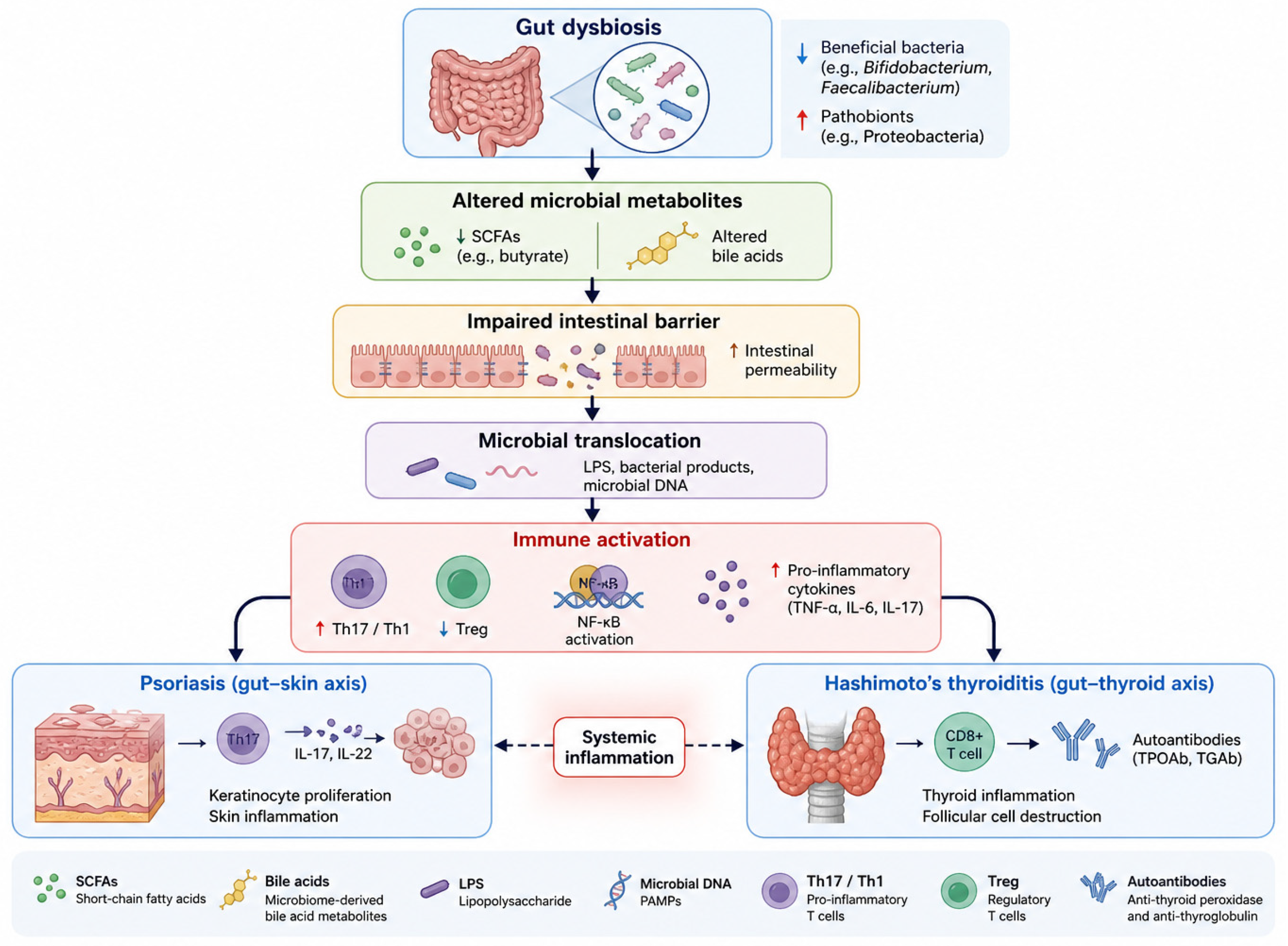
| Immunopathogenic Domain | Shared Mechanisms | Psoriasis | Hashimoto Thyroiditis |
|---|---|---|---|
| Disease nature | Chronic immune-mediated inflammatory diseases | Immune-mediated inflammatory skin disease | Organ-specific autoimmune thyroid disease |
| Primary target tissue | Peripheral organs affected by systemic immune activation | Skin (epidermis and dermis) | Thyroid gland |
| Initiating factors | Gut dysbiosis, barrier dysfunction, environmental triggers, diet | Dysbiosis-driven systemic inflammation | Dysbiosis, molecular mimicry, micronutrient imbalance |
| Intestinal barrier | Increased intestinal permeability (“leaky gut”) facilitating microbial translocation | Elevated gut permeability biomarkers (claudin-3, I-FABP); bacterial DNA detected in circulation | Increased permeability enabling antigen translocation and loss of immune tolerance |
| Innate immune activation | Activation of dendritic cells, macrophages, TLR-mediated signaling | Cutaneous dendritic cell and keratinocyte activation | Thyroid antigen presentation via APCs |
| Dominant adaptive immune response | Th1/Th17 with reduced regulatory control | Predominant Th17-driven response | Mixed Th1/Th17 response with cytotoxic CD8+ T-cell involvement |
| Key cytokine pathways | IL-17, IL-23, TNF-α, IFN-γ | IL-17A, IL-22, IL-23 → keratinocyte hyperproliferation | IFN-γ, TNF-α, IL-17 → thyroid follicular cell destruction |
| Regulatory T cells (Treg) | Impaired Treg differentiation and function | Reduced suppression of skin inflammation | Breakdown of thyroid immune tolerance |
| Role of Th17/IL-17 axis | Central convergent inflammatory pathway | Core pathogenic driver of disease | Increasingly recognized contributor to autoimmunity |
| Autoantibodies | Immune-mediated inflammation without dominant humoral autoimmunity | Not central to pathogenesis | Anti-TPO and anti-TG autoantibody production |
| Microbial metabolites -SCFAs | Reduced SCFA production leading to barrier dysfunction and immune dysregulation | Reduced SCFA production exacerbates skin inflammation | Reduced SCFAs impair immune tolerance and epithelial integrity |
| Microbial metabolites -bile acids | Dysregulated bile acid metabolism alters barrier integrity and Th17/Treg balance | Secondary bile acids modulate IL-17-dependent skin inflammation | Altered bile acid signaling affects immune balance and thyroid hormone metabolism |
| Study | Year | Microbiome Changes |
|---|---|---|
| Danailova et al., Nutrients (PMID 35563541) [15] | 2022 | ↓ Lactobacillus, ↓ Bifidobacterium; impaired gut barrier integrity |
| Xiong et al., Frontiers in Immunology (PMC10865322) [14] | 2024 | ↑ protective taxa: Alcaligenaceae, Pasteurellaceae/Pasteurellales, Peptococcaceae, Lachnospira, Victivallis |
| Dania Akeil et al., Frontiers in Endocrinology [28] | 2023 | ↓ diversity; ↑ Bacteroides, ↑ Escherichia; ↓ Lactobacillus, ↓ Bifidobacterium |
| Fuya Zhao et al., Thyroid [17] | 2018 | ↑ Bacteroides, ↑ Prevotella; ↓ Faecalibacterium, ↓ Bifidobacterium |
| H. M. Ishaq et al., Biomedicine & Pharmacotherapy [31] | 2017 | ↓ Firmicutes; ↑ Proteobacteria; ↓ beneficial bacteria |
| Hong Zhao et al., Polish Journal of Microbiology [32] | 2022 | ↓ Bifidobacterium, ↓ Lactobacillus; ↑ Escherichia, ↑ Enterococcus |
| I. Cornejo-Pareja et al., Journal of Personalized Medicine [33] | 2020 | ↓ diversity; ↓ Faecalibacterium, ↓ Roseburia; ↑ Bacteroides |
| Leonardo C. F. Cayres et al., Frontiers in Immunology [16] | 2021 | ↑ intestinal permeability; ↓ Bifidobacterium, ↓ Lactobacillus; ↑ Enterobacteriaceae |
| Miao Li et al., Journal of Translational Medicine [34] | 2024 | Phylum: ↑ Proteobacteria, ↑ Actinobacteria, ↑ Bacteroidetes, ↑ Bacillota_A, ↑ Spirochaetota, ↑ Verrucomicrobia; Family: ↓ Verrucomicrobiaceae, ↓ Victivallaceae, ↓ Streptococcaceae, ↓ Rikenellaceae; ↑ Alcaligenaceae, ↑ Desulfovibrionaceae, ↑ Bacillaceae; Genus: ↓ Fecalibacterium, ↓ Bifidobacterium, ↓ Akkermansia, ↓ Coprococcus3, ↓ Butyrivibrio; ↑ Blautia, ↑ Roseburia, ↑ Ruminococcus torques group, ↑ Dorea, ↑ Bacteroides, ↑ Prevotella, ↑ Streptococcus, ↑ Alistipes, ↑ Escherichia–Shigella, ↑ Parasutterella, ↑ Intestinimonas, ↑ Turicibacter, ↑ Anaerostipes, ↑ Enterocloster citroniae |
| N. Sawicka-Gutaj et al., International Journal of Molecular Sciences [35] | 2022 | ↓ Bifidobacterium, ↓ Lactobacillus; ↑ Bacteroides, ↑ Proteobacteria |
| Simo Liu et al., International Journal of Endocrinology [10] | 2020 | Euthyroid HT: minor changes; Hypothyroid HT: ↓ Bifidobacterium, ↑ Escherichia, ↑ Streptococcus |
| Clinical Parameter | Positively Correlated Taxa | Negatively Correlated Taxa | Study |
|---|---|---|---|
| TSH | Clostridium coccoides, Clostridium coccoides-Eubacteria rectale | Bacteroidetes, Veillonella, Streptococcus | Cayres et al., 2021 [16], Zhao et al., 2018 [17] |
| FT4 | None reported | Roseburia | Cayres et al., 2021 [16] |
| TPOAb | Bacteroidetes, Veillonella, Streptococcus, Bifidobacterium, Alistipes, Ruminococcaceae, Enterobacteriaceae | Faecalibacterium | Cayres et al., 2021 [16], Zhao et al., 2018 [17] |
| Disease duration | Clostridium coccoides | None reported | Cayres et al., 2021 [16] |
| Study (PMCID) | Year | Methodology | Microbiome Changes in Psoriasis |
|---|---|---|---|
| PMC7941898 | 2021 | 16S rRNA (QIIME, PICRUSt, LEfSe); Wilcoxon | ↑ Veillonellaceae, ↑ Ruminococcaceae, ↑ Faecalibacterium, ↑ Megamonas; ↓ Lachnospiraceae |
| PMC7559734 | 2020 | 16S rRNA; LEfSe; OTU-level analysis | ↑ Faecalibacterium; ↓ Oscillibacter, ↓ Roseburia (Lachnospiraceae) |
| PMC7177330 | 2020 | 16S rRNA; bacterial DNA detection in blood | ↓ Bacteroides, ↑ Faecalibacterium; ↓ Firmicutes; ↓ Actinobacteria in psoriatic arthritis |
| PMC10094986 | 2023 | 16S rRNA; ANCOM; Mann–Whitney U | ↑ Blautia (esp. B. wexlerae); ↓ Parabacteroides distasonis; altered Akkermansia, S. aureus, S. pyogenes, C. albicans |
| PMC8047475 | 2020 | 16S rRNA; Wilcoxon; COG & KEGG | ↑ Actinobacteria, ↑ Firmicutes, ↑ Verrucomicrobia; ↓ Bacteroidetes, ↓ Proteobacteria, ↓ Euryarchaeota; ↑ Faecalibacterium, Bacteroides, Bifidobacterium, Megamonas, Roseburia; ↓ Prevotella, Alistipes, Eubacterium |
| PMC5799943 | 2018 | 16S rRNA;Weighted UniFrac; LEfSe; PMI | ↑ Firmicutes, ↓ Bacteroidetes; ↑ Faecalibacterium, Blautia; ↓ Bacteroides, Paraprevotella |
| PMC10933079 | 2023 | 16S rRNA; LEfSe; metagenomeSeq; PSO rat model | ↑ Firmicutes, ↑ Actinobacteriota; ↓ Bacteroidota; ↑ Faecalibacterium, Megamonas, Prevotella, Escherichia-Shigella; Rats: ↑ Lachnospiraceae, Bacteroides, Roseburia; ↓ Alloprevotella, Muribaculaceae, Alistipes |
| PMC10002560 | 2022 | 16S rRNA; metagenomic analysis | ↑ Firmicutes, ↑ Actinobacteriota, ↑ Akkermansia; ↓ Bacteroidetes; ↑ Blautia, Faecalibacterium; ↓ Prevotella, Alistipes |
| Dietary Component | Effect on Gut Microbiome | Key Microbial/Metabolic Mechanisms (SCFAs/Bile Acids) | Relevance to Psoriasis and HT |
|---|---|---|---|
| Saturated fatty acids | Pro-inflammatory microbial shifts | Altered bile acid metabolism favoring inflammatory signaling | May exacerbate gut dysbiosis and immune dysregulation linked to autoimmune disease [38] |
| Unsaturated fatty acids (Omega-3) | Less detrimental effects on microbial composition | More favorable bile acid signaling | Potentially lower inflammatory impact compared with saturated fats [38] |
| Dietary protein (excess intake) | ↑ Proteolytic fermentation | ↑ Harmful metabolites (IS, TMAO, p-cresyl sulfate, ammonia, phenols, indoles, H2S) | Associated with systemic inflammation and immune activation relevant to psoriasis and HT [1,38] |
| Dietary protein (collagen, whey, pea protein) | ↑ Lactobacillus, Bifidobacterium; ↓ pathogenic taxa | ↑ SCFA production; improved mucosal barrier | May support barrier integrity and reduce inflammatory pathways in autoimmune skin and thyroid disease [1] |
| Dietary fiber (high intake) | ↑ Beneficial taxa (Bifidobacterium, Lactobacillus, Faecalibacterium) | ↑ SCFA production (acetate, propionate, butyrate); | Supports barrier integrity, regulatory immune responses, and attenuation of systemic inflammation relevant to both psoriasis and HT |
| Dietary Factor | Key Effects on Immune Regulation and Barrier Function | Microbiome-Related Mechanisms | Relevance to HT and Psoriasis |
|---|---|---|---|
| Vitamin D | Modulates T-cell responses; ↑ IL-10; reduces inflammatory signaling | Indirect effects via immune–microbiome interactions | ↓ TPO-Ab and improved TSH in HT; improved cutaneous immune balance in psoriasis [4,12] |
| Iron | Essential for thyroid hormone synthesis; deficiency increases inflammatory stress | May indirectly alter microbial composition through metabolic imbalance | Iron deficiency impairs TPO activity in HT and may exacerbate systemic inflammation affecting psoriasis [4] |
| Selenium | Supports antioxidant defense and thyroid hormone metabolism | Influences redox balance affecting microbial–host interactions | ↓ Thyroid autoantibodies in HT; may reduce oxidative stress–driven inflammation in psoriasis [4] |
| Antioxidant vitamins (A, C, E, B-group) | Reduce oxidative stress; regulate immune responses | Support epithelial integrity and microbial homeostasis | May contribute to normalization of inflammatory responses in both HT and psoriasis [12] |
| Polyphenols (resveratrol) | Suppress NF-κB signaling; attenuate Th17-driven inflammation | Promote beneficial microbial taxa and anti-inflammatory metabolites | Reduce inflammatory signaling in psoriasis; support immune regulation relevant to HT [12] |
| Carotenoids | Regulate immune signaling via retinoic acid (RAR/RXR pathways) | Indirect modulation of immune–microbiome crosstalk | Support immune homeostasis in inflammatory and autoimmune disease [12] |
| Alcohol | Disrupts immune regulation; ↑ CRP | Alters microbiota composition and barrier integrity | Associated with psoriasis exacerbations and impaired immune balance relevant to HT [39] |
| Dietary Pattern | Main Effects |
|---|---|
| Anti-inflammatory diet | ↑ Gut microbiota diversity and health-associated taxa [40,41] ↑ SCFA-producing bacteria and SCFA availability [40,41] ↑ Antioxidant defenses and microbial homeostasis [15,42] ↓ Pro-inflammatory microbial pathways and chronic immune activation [40,41,42,43] ↓ Oxidative stress and inflammatory mediator expression in psoriasis [42] ↓ Circulating anti-TPO and anti-Tg antibody levels (observational associations) [42] ↓ Disease triggers (refined sugars, processed foods, saturated fats, alcohol) and psoriasis exacerbations [42] |
| Mediterranean diet | ↑ Beneficial gut microbiota and SCFA-producing taxa [40,41] ↑ Butyrate production and intestinal epithelial integrity [40,41] ↑ Tight-junction stability and regulatory immune responses [40,41] ↑ Favorable bile acid profiles supporting immune regulation [40,42] ↓ Th17-driven inflammatory signaling relevant to psoriasis and HT [15,42] ↓ Oxidative stress and systemic inflammation [41] ↓ Thyroid autoimmunity prevalence and thyroid autoantibody levels (observational data) [42] ↓ Psoriasis disease activity with higher adherence; ↑ activity with poor adherence and processed food intake [44,45,46] |
Disclaimer/Publisher’s Note: The statements, opinions and data contained in all publications are solely those of the individual author(s) and contributor(s) and not of MDPI and/or the editor(s). MDPI and/or the editor(s) disclaim responsibility for any injury to people or property resulting from any ideas, methods, instructions or products referred to in the content. |
© 2026 by the authors. Licensee MDPI, Basel, Switzerland. This article is an open access article distributed under the terms and conditions of the Creative Commons Attribution (CC BY) license.
Share and Cite
Ribačuka, S.; Upmale-Engela, S.; Vaivode, I.; Konrade, I.; Rone-Kupfere, M. The Gut–Skin and Gut–Thyroid Axis in Autoimmunity: Roles of Dysbiosis, Microbial Metabolites, Immune Dysregulation, and Diet in Psoriasis and Hashimoto’s Thyroiditis. Nutrients 2026, 18, 1501. https://doi.org/10.3390/nu18101501
Ribačuka S, Upmale-Engela S, Vaivode I, Konrade I, Rone-Kupfere M. The Gut–Skin and Gut–Thyroid Axis in Autoimmunity: Roles of Dysbiosis, Microbial Metabolites, Immune Dysregulation, and Diet in Psoriasis and Hashimoto’s Thyroiditis. Nutrients. 2026; 18(10):1501. https://doi.org/10.3390/nu18101501
Chicago/Turabian StyleRibačuka, Sabīna, Sabīne Upmale-Engela, Ieva Vaivode, Ilze Konrade, and Māra Rone-Kupfere. 2026. "The Gut–Skin and Gut–Thyroid Axis in Autoimmunity: Roles of Dysbiosis, Microbial Metabolites, Immune Dysregulation, and Diet in Psoriasis and Hashimoto’s Thyroiditis" Nutrients 18, no. 10: 1501. https://doi.org/10.3390/nu18101501
APA StyleRibačuka, S., Upmale-Engela, S., Vaivode, I., Konrade, I., & Rone-Kupfere, M. (2026). The Gut–Skin and Gut–Thyroid Axis in Autoimmunity: Roles of Dysbiosis, Microbial Metabolites, Immune Dysregulation, and Diet in Psoriasis and Hashimoto’s Thyroiditis. Nutrients, 18(10), 1501. https://doi.org/10.3390/nu18101501