Review

Machine Learning-Driven Precision Nutrition: A Paradigm Evolution in Dietary Assessment and Intervention


1
Food and Pharmacy College, Xuchang University, Xuchang 461000, China
2
Collaborative Innovation Center of Functional Food by Green Manufacturing, Xuchang 461000, China
3
School of Food Science and Engineering, South China University of Technology, Guangzhou 510641, China
4
Rice Research Institute, Guangdong Academy of Agricultural Sciences, Guangzhou 510640, China
5
College of Agriculture, Henan University, Kaifeng 475001, China
6
Key Laboratory of Industrial Fermentation Microbiology Ministry of Education, Tianjin Key Laboratory of Industrial Microbiology, College of Biotechnology, Tianjin University of Science and Technology, Tianjin 300457, China
*
Authors to whom correspondence should be addressed.
Nutrients 2026, 18(1), 45; https://doi.org/10.3390/nu18010045
Submission received: 21 November 2025 / Revised: 18 December 2025 / Accepted: 19 December 2025 / Published: 22 December 2025
(This article belongs to the Section Nutrition Methodology & Assessment)

Abstract

The rising global burden of chronic diseases highlights the limitations of traditional dietary guidelines. Precision Nutrition (PN) aims to deliver personalized dietary advice to optimize individual health, and the effective implementation of PN fundamentally relies on comprehensive and accurate dietary data. However, conventional dietary assessment methods often suffer from quantification errors and poor adaptability to dynamic changes, leading to inaccurate data and ineffective guidance. Machine learning (ML) offers a powerful suite of tools to address these limitations, enabling a paradigm shift across the nutritional management pipeline. Using dietary data as a thematic thread, this article outlines this transformation and synthesizes recent advances across dietary assessment, in-depth mining, and nutritional intervention. Additionally, current challenges and future trends in this domain are also further discussed. ML is driving a critical shift from a subjective, static mode to an objective, dynamic, and personalized paradigm, enabling a loop nutrition management framework. Precise food recognition and nutrient estimation can be implemented automatically with ML techniques like computer vision (CV) and natural language processing (NLP). Integrating with multiple data sources, ML is conducive to uncovering dietary patterns, assessing nutritional status, and deciphering intricate nutritional mechanisms. It also facilitates the development of personalized dietary intervention strategies tailored to individual needs, while enabling adaptive optimization based on users’ feedback and intervention effectiveness. Although challenges regarding data privacy and model interpretability persist, ML undeniably constitutes the vital technical support for advancing PN into practical reality.

1. Introduction

As research progresses, the understanding of the association between nutrition and health is deepening. Nutrients influence various physiological processes such as glucose metabolism, lipid metabolism, and amino acid metabolism [1], playing a crucial role in maintaining health and preventing diseases. Imbalanced nutrition intake can increase the risk of chronic diseases such as cardiovascular disease, diabetes, obesity, and cancer [2]. However, the current health of the population is concerning. A study in 2021 showed that there were 529 million people with diabetes worldwide, and the number is projected to exceed 1.31 billion by 2050 [3]. Recent research predicted that by 2035, the number of adults with a high body mass index (BMI > 25) will increase from 2.2 billion in 2020 to nearly 3.3 billion, and more than 39% of children aged 5–19 will be affected by high BMI [4]. The deterioration of health and the increasing prevalence of chronic diseases pose significant challenges to the global public health system, highlighting the inadequacy of current approaches to the prevention and treatment of diet-related diseases. Therefore, in recent years, an emerging nutrition management paradigm, ”Precision Nutrition (PN)”, has become increasingly imperative. As a developing concept in nutrition science, although a unified definition of PN remains pending, it is clear from the available definitions [5,6] that, compared with traditional nutrition strategies, PN emphasizes the precise assessment of individual health and nutritional needs by combining multi-dimensional data (e.g., diet, multi-omics, lifestyle, etc.) and the development of effective personalized nutritional intervention plans.
As one of the core data sources in the implementation of PN, dietary data can contribute to accurate evaluation of individual nutrient intake, profound elucidation of the mechanisms of the dietary impact on health, and the development of precise personalized dietary plans [7]. However, conventional dietary recording, analysis, and recommendation approaches are facing some challenges. For example, questionnaire-based approaches are frequently used in dietary records, but these methods are prone to various forms of errors, such as omission biases during manual documentation and temporal dietary fluctuations across diurnal cycles or seasonal variations [8]. These errors may lead to inaccurate dietary data collection and affect data quality. Besides, manual calculation and chemical analysis are commonly used for nutritional content evaluation of food [9], but are often affected by food quantification errors [10], leading to unreliable nutritional intake results. And the recommendations based on inaccurate assessments are usually ineffective and fail to keep pace with individual and environmental changes. Additionally, the heterogeneity and explosive growth of data have also hindered the application of traditional statistical analysis methods. Therefore, current dietary assessment and intervention approaches need urgent improvement to meet the demands of precision and dynamics in clinical conditions.
Machine learning (ML), with its ability to process high-dimensional data and capture nonlinear relationships [11], has provided robust support for data collection, processing, analysis, and application in PN, gradually becoming one of the core tools in this field. ML refers to the use of computational methods to enable computers to automatically learn patterns from reference data and/or previous iterations with mathematically describable principles, and to optimize performance for a specific task based on these patterns [12]. Although artificial intelligence (AI), machine learning (ML), and deep learning (DL) are often mentioned together, there are certain conceptual boundaries and technical differences among them. ML constitutes the foundational technology for achieving AI, while DL is a special and highly promising form of ML [13]. In this review, we primarily focus on the application of ML methodologies to advance PN. Therefore, our discussion in this article encompasses classical ML algorithms and DL architectures, both of which hold promising prospects in dietary assessment and intervention. According to the learning methods, ML can be classified into several categories, including supervised learning, unsupervised learning, reinforcement learning, and so on. When considering the specific learning tasks, ML can be categorized into various forms, such as regression, classification, clustering, and dimensionality reduction [14]. As for the evaluation of the ML models’ performance, different metrics can be used according to diverse factors such as tasks and practical significance. These evaluation metrics can reflect model performance from various dimensions. Common evaluation metrics for supervised learning are illustrated in Table 1, which will be frequently mentioned in the following parts. Traditional ML algorithms encompass linear regression, logistic regression, decision trees (DTs), support vector machines (SVMs), random forest (RF), gradient boosting methods (e.g., XGBoost), K-Nearest Neighbors (KNNs), and so on [15,16], which have been widely used for data analysis in nutrient estimation and diet analysis. Deep learning (DL) generally refers to ML methods based on multi-layer artificial neural networks. Common DL algorithms include convolutional neural networks (CNNs), recurrent neural networks (RNNs), restricted Boltzmann machines (RBMs), and autoencoders (AEs) [17]. Compared with traditional ML, DL demonstrates a superior capacity to process large-scale complex data and has been widely applied in fields such as natural language processing (NLP), speech recognition, and computer vision (CV) [18], thereby advancing food image recognition, food label data processing, and food nutrient composition evaluation [9].
Given the limitations of traditional dietary assessment and intervention, and the remarkable advantages of ML, it is particularly necessary to synthesize how ML is revolutionizing this field. Therefore, this review outlines an ML-driven nutritional management paradigm that is shifting toward precision, dynamism, and personalization, covering the entire pipeline from data acquisition and deep mining to intervention implementation. To highlight a focus, this paper concentrates on dietary data and provides a comprehensive overview of the advances in ML-driven research on diet and its interactions with other data sources across the above stages. Furthermore, we critically examined current challenges and proposed potential future directions in both technical and ethical aspects. Distinct from purely technique-oriented surveys, this review aims to serve as a bridge for cross-disciplinary practice (e.g., food science, nutrition, biomedicine, and data science), offering both academic context and practical reference for researchers from diverse backgrounds. It is designed to enhance the understanding of the current advancement and potential of ML in dietary assessment and intervention, thereby accelerating convergence and development in this field. This work is a valuable resource for catalyzing the translation of theoretical research into clinical practice.

2. Objective and Automated Dietary Assessment

Comprehensive and accurate dietary data is the foundational pillar of nutrition management. It serves as a key reference for depicting individual differences in nutrient intake and validating the effect of diet intervention. However, as mentioned previously, self-reporting methods are sometimes so subjective that they can be affected by bias and errors, and impose burdens on participants. But the integration of ML technology has introduced transformative advancements in dietary data collection. With some advanced DL techniques, such as CV and NLP, various kinds of diet-related data, including food images and food labels, can be recorded and involved in research. ML is driving a paradigm evolution in dietary data acquisition, moving from subjective and slow self-reporting towards objective, real-time, automated, and multidimensional dietary monitoring (Figure 1). It will provide the indispensable data foundation for personalized and dynamic nutritional management.

2.1. Multimodal Dietary Data Acquisition

For research involving children or the elderly, questionnaire-based approaches often yield incomplete or erroneous data, making the acquisition of accurate dietary intake challenging [10]. Based on CV methods, especially CNN models, food image recognition technology can classify foods with greater precision, which enhances the automation of daily dietary recording and alleviates the load on participants and researchers. Wang et al. [28] proposed a food image retrieval and classification approach based on the Faster R-CNN network, which achieved a 5% improvement in classification performance compared to other models on the Dish-233 food dataset (233 dishes and 49,168 images). Combining food image recognition technology with wearable devices, long-term and passive food intake monitoring is gradually becoming a reality, thus significantly improving the feasibility and accuracy of dietary evaluation. Elbassuoni et al. [29] utilized a wearable camera coupled with an ML system to collect dietary data from children. Their framework deployed a wearable camera to capture images, and three ML models to identify food-related images, determine whether the image was actual food, and ascertain whether the food was consumed by the individual wearing the camera or by others, achieving an accuracy of 93.57% in practical application. It demonstrates that the incorporation of image acquisition from mobile cameras and CV image analysis is reforming the collection of dietary data by automating the recording process, which provides critical technical support for obtaining dietary data at a high spatial and temporal resolution.
After food classification from images, volume estimation is required to calculate nutrient intake. Konstantakopoulos et al. [30]’s system comprises a food classification module based on the EfficientNetB2 model (CNN) and a volume estimation module utilizing stereo vision techniques and algorithms. The volume module could estimate food volume with two food photos from smartphones via 3D reconstruction, achieving a MAPE of 10.5%. An application called Smart Diet Diary could estimate food volume from only one photo with the help of the GrabCut image segmentation algorithm, thereby enabling approximate caloric estimation [31]. But Smart Diet Diary required a coin as a reference object. Shao et al.’s study employed the RGB-D fusion network to integrate RGB and depth image information, enabling estimation of calorie, mass, fat, carbohydrate, and protein contents [32]. In their study, this framework achieved a percentage mean absolute error (PMAE) of 15% for calories. It illustrates that the multi-modal fusion approach can effectively compensate for the information limitations of single-modal approaches, thereby improving nutritional estimation accuracy.
However, it is critical to acknowledge that when applied to dietary information acquisition, CV techniques are facing certain limitations, including image quality and food databases. For instance, poor lighting [33] or food stacking [32] can significantly impair the effectiveness of image recognition. Furthermore, current publicly available food image datasets remain insufficient, since some studies even have to develop proprietary datasets to meet research needs [30,31]. Moreover, existing CV-based nutritional estimation frameworks often rely on simplified assumptions or static databases, which may overlook other contextual factors influencing nutritional composition, such as food brands and cooking methods. We will discuss how ML can incorporate these additional factors to advance the precision of nutrient intake estimation in the following parts.
In the data collection scenario, in addition to food images, a large amount of textual information, such as food labels or customer receipts, can be introduced to simplify the food classification process and enable precise dietary assessment, thereby reducing the requirements for researchers’ knowledge about nutrition and food. For example, Razavi et al. [34] employed ML algorithms, including DT, KNN, SVM, and neural networks, to predict unreported vitamin and mineral contents based on nutrient information from food labels. But such unstructured textual data is difficult to convert manually and efficiently into standard dietary records, due to brief and vague wording. With the help of the NLP technique, this extraction and linking process can be automated, transforming input texts into low-dimensional vectors. Hu et al. [35] used a pre-trained language model to process unstructured text from food labels, and combined it with supervised ML algorithms (Elastic net, KNN, XGBoost) to predict food categories and nutrition quality. Their pre-trained language model achieved an overall accuracy of 0.96 for food major category prediction and an R2 of 0.87 in predicting nutritional quality scores, both surpassing the performance of the bag-of-words method.
Since the popularization of ChatGPT, in recent years, large language models (LLMs) featuring more parameters and large-scale training datasets have aroused wide attention, which achieve better performance in various tasks, including entity extraction and machine translation [36]. Therefore, fine-tuned large LLMs are increasingly introduced to food and nutrition, facilitating new application directions such as mapping food texts to nutritional information. Assiri et al. [37] utilized LLMs such as GPT-4v, GPT-4o, and Gemini to extract nutritional information from food labels in English and Arabic, demonstrating reliable performance. The results of their study suggested that GPT-4o outperformed GPT-4v and Gemini. It highlights the necessity of developing multilingual dietary information acquisition tools to further enhance robustness in handling multiple languages and dietary cultures. With the advancement of multimodal fusion technology, more systems that integrate images, texts, and even voice are being developed for dietary recording and nutrition intake estimation. For instance, a vision-language model called UMDFood-VL integrated image and textual data to enable more rapid and accurate nutritional estimations, demonstrating a macro-AUCROC of 0.921 for lipid quantification [38]. Dodd et al. [39] provided a design for a semi-automated system for dietary assessment, based on image and voice records, which had been evaluated with the data collected in Cambodia. Although its automated transcription and translation performance only achieved an accuracy of 29.1%, this system still effectively reduced analysts’ workload, with Food Composition Database (FCD) matching accuracy reaching 77.2% after manual correction. Compared to text-based systems, this kind of voice-based system may be more suitable for regions with low literacy rates. Lo et al. [40] investigated the application of the multimodal foundation model GPT-4v in dietary assessment, finding that GPT-4v could integrate images before and after eating as well as text prompts to achieve dietitian-level performance in food recognition, portion estimation, and nutritional analysis. These advancements indicate that ML technologies are expanding the dimensions of dietary data collection. They not only effectively enhance the automation and precision of data processing but also address the limitations of single data source techniques.
However, we also observe that large models, designed primarily for general-purpose tasks, often exhibit biases or poor performance when applied to specialized tasks due to the lack of domain-specific training. For instance, without contextual cues, GPT-4v may misidentify banku (an African food) as rice or bread [40]. Additionally, DL-based models face persistent challenges such as high computational demands and poor model interpretability [41], which may hinder their integration into user-centric applications. Future research should prioritize exploring more efficient model architectures that balance performance with computational practicality.

2.2. Dynamic Nutrient Estimation: Transcending Static Tables

The food ingested by the body influences the human body in the form of nutrients, so precise estimation of the nutrient content in food is essential for revealing metabolic mechanisms and providing dietary guidance. It is worth noting that most dietary surveys relied on food composition tables or datasets for nutrient estimation, but these tables often ignore the influence of other factors such as season, origin, processing techniques, and cooking methods on nutrient content [8]. Consequently, these approaches may introduce some errors. For example, different varieties or cooking methods can significantly affect the nutrient content of Lentinus edodes [42]. Therefore, in recent years, ML models have been employed to predict the nutrient content of processed foods, which would contribute to the precision of nutritional intake evaluation and the improvement of food nutritional value. Muthukumar et al. [43] curated a dataset based on literature from Web of Science, Scopus, PubMed, and Google Scholar, and employed Support Vector Regression (SVR) and RF to forecast the protein content of plant-based foods, achieving the best Normalized Mean Squared Error (NMSE) of approximately 0.113. Naravane et al. [44] utilized various ML algorithms (Elastic Net, DT, RF, etc.) to predict vitamins and minerals in cooked plant-based and animal-based foods, and the results suggested that leafy greens and beef were the most predictable subcategories.
ML has also been integrated with non-destructive testing technology to predict nutrient contents of foods, enabling more precise nutrient intake estimation. For instance, hyperspectral imaging (HSI) offers both spatial and spectral information of food [45], and ML techniques have advanced the rapid and accurate analysis of hyperspectral images of food. The combination of HSI and ML has demonstrated capabilities in predicting nutritional values of various foods, such as beverages, meats, and grains [46,47]. Marín-Méndez et al. [47] predicted the nutritional values of 118 food samples from supermarkets, including mixtures of cooked meat and vegetables, via HSI systems with ML algorithms like Principal Component Analysis (PCA) and Ridge regression, suggesting the capacity for the analysis of complex foods. Furthermore, food metabolomics analysis can yield information regarding food composition, quality, and origin. Food metabolites may be related to human health-relevant nutrients, bioactive compounds, and metabolic pathways [48]. Food metabolomics coupled with ML enables more granular classification of food within the same category, facilitating differentiation of geographical origins [49] and processing methods [50]. Consequently, this approach can provide more detailed records of food information. The above technical approaches offer the potential for achieving dynamic assessment beyond food composition tables or food labels, and even extend the concept of “precision” from the individual level to specific foods. Nevertheless, although these technologies enable dynamic and precise dietary assessment, their integration into practical assessment may incur high costs and operational complexity. Thus, there is a need to strike a balance between high precision and low cost to facilitate the translation from the laboratory to clinical implementation.

3. Deep Mining of Dietary Data: From Data to Insights

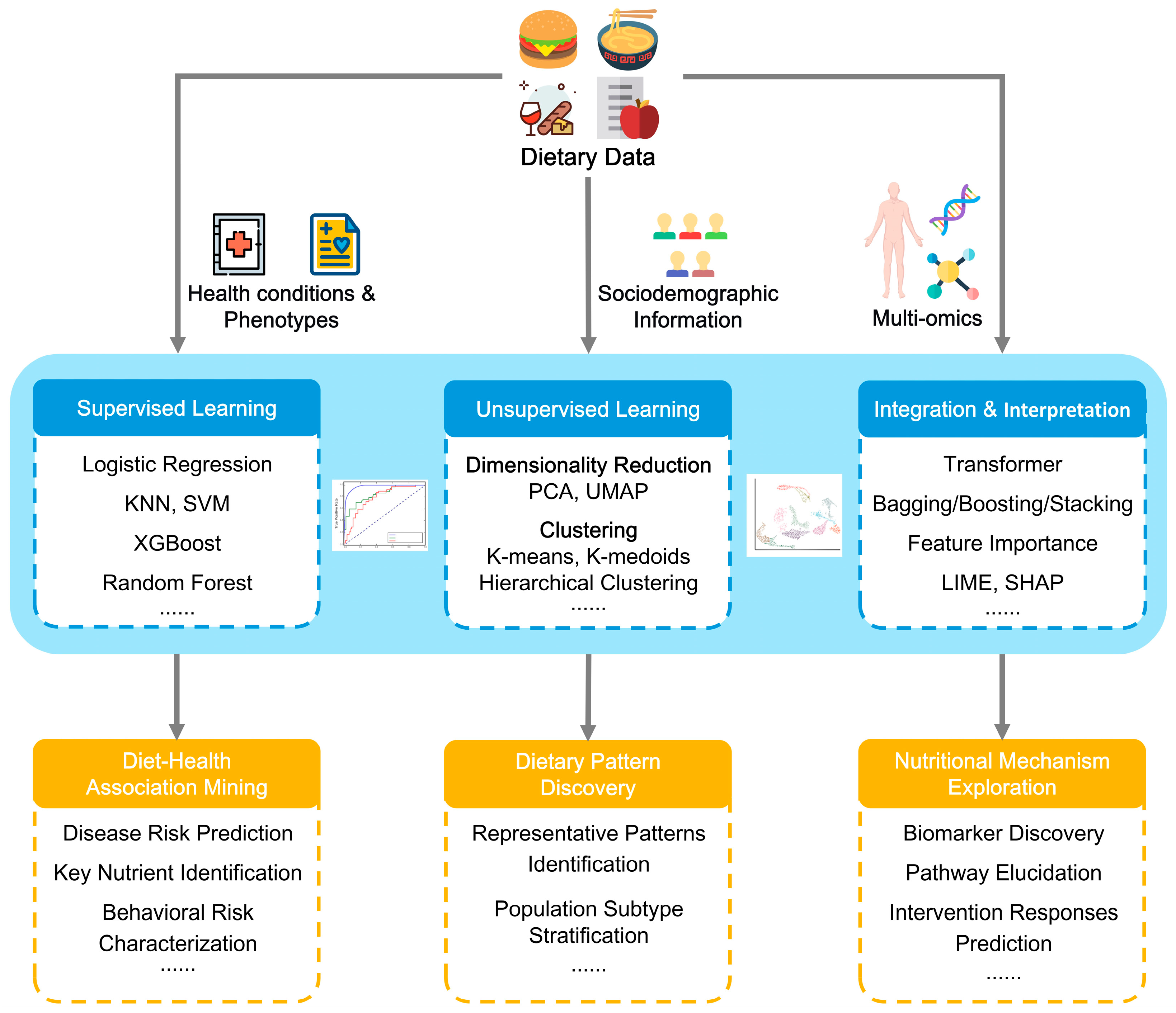
Raw dietary data merely reflect basic consumption facts. Only through systematic analysis can disparate dietary information be transformed into meaningful biological or clinical insights. With the continuous advancement of electronic devices and ML algorithms, more diet-related data can be recorded, rendering dietary data increasingly complex and high-dimensional. Traditional statistical analysis methods struggle to capture the intricate patterns and nonlinear relationships within such data. In contrast, ML is becoming a significant tool for deep mining of dietary data, facilitating the establishment of diet-health associations, the discovery of dietary patterns, and the exploration of nutritional mechanisms (Figure 2).

3.1. Diet-Health Associations Identification

While it is widely accepted that food intake is closely related to human health, such associations are often complex and difficult to uncover. Via supervised learning algorithms, chronic disease prediction is enabled based on nutritional intake, thereby identifying some significant dietary risk exposures, which can provide references for precise nutrition management. For instance, a cardiovascular disease (CVD) prediction model utilizing the XGBoost algorithm identified potassium, vitamin E, and vitamin C intakes as key micronutrients for predicting CVD risk [51]. Morgenstern et al. [52] constructed a CVD prediction model based on dietary data and general health information, achieving favorable predictive performance (AUROC = 0.821) and discovering an association between caffeine intake and increased CVD risk. In addition to CVD, ML has also been employed to evaluate the associations between dietary intake and diseases such as steatosis [53], undiagnosed hypertension [54], and premenstrual syndrome [55], which have identified critical eating behaviors related to disease progression, thereby offering references for health management. Despite these encouraging findings, a critical attitude remains essential. While ML helps mitigate the influence of covariates, it cannot establish causal relationships between nutrients and health outcomes. These results may exhibit context-dependent validity, as interactions among food components or changes in external environmental factors could significantly affect the reliability of observed associations.

3.2. Dietary Pattern Discovery

Although similar studies mentioned above have enhanced our understanding of the relationship between single nutrients and chronic diseases, in practice, nutrients and foods are rarely consumed in isolation, and various food components may interact in complex ways, exhibiting synergistic or antagonistic effects [56]. Consequently, in recent years, researchers have increasingly studied the relationship between diet and health from the perspective of dietary patterns. Dietary pattern refers to the combination and proportion of different foods and nutrients in the diet, encompassing rich dietary variables and exhibiting highly complex and nonlinear relationships [57,58]. Some unsupervised learning methods have been employed to identify representative dietary patterns from complex dietary data, aiding researchers in evaluating diets comprehensively. Silva et al. [59] applied the K-means clustering algorithm to identify two primary dietary patterns from dietary intake data and attempted to predict dietary patterns using six classification algorithms via socio-demographic and clinical data in a Brazilian population dataset: the Prudent pattern, characterized by higher intakes of fruits and vegetables, and the Western pattern, marked by higher intakes of refined grains, legumes, and red meat. A study compared the performance of different clustering algorithms (K-means, K-medoids, and hierarchical ward) in identifying dietary patterns for both sexes in the Dutch population, and the results suggested that K-means clustering was the optimal algorithm for dietary pattern analysis [60]. Besides, the NLP technique has also been introduced to extract more detailed dietary pattern information from unstructured food-related texts. Choi et al. [61] proposed a novel NLP framework to extract the dietary patterns of Korean adults, which could output the specific food compositions of patterns and reduce subjective bias.
The identified dietary patterns can be further correlated with health outcomes, which is conducive to the deeper analysis of the intricate relationship between diet and health, and guiding personalized dietary intervention strategies. Combining PCA dimensionality reduction and K-means clustering, researchers identified two Moroccan dietary patterns (‘prudent pattern’ and ‘dangerous pattern’) related to colorectal cancer (CRC), and logistic regression results indicated that the ‘dangerous pattern’ is associated with a higher risk of CRC [62]. Although PCA is commonly used for identifying dietary patterns, it has difficulty capturing the nonlinear relationships in real-world datasets. Researchers explored the correlation between dietary patterns and hypertension among adult Japanese males, but they employed a nonlinear dimensionality reduction method: Uniform Manifold Approximation and Projection (UMAP), which could reveal complex relationships in high-dimensional data [63]. However, it should be recognized that clustering-based identification methods may exhibit sensitivity to data quality, algorithm selection, and preset parameters, potentially leading to compromised robustness in results. A study analyzed the relationship between animal-sourced or plant-based dietary patterns and Type 2 diabetes via XGBoost and found that such relationships could be confounded by lifestyle variables [64]. This illustrates the importance of a comprehensive study design and the consideration of other interrelated factors in research. If sociodemographic characteristics and other confounding factors are not adequately controlled in the study, it may lead to misleading conclusions.

3.3. Nutritional Mechanisms and Biomarkers Exploration

The studies mentioned above established relationships between foods or dietary patterns and health outcomes, but such macro-level associations can only reveal whether diet affects health. In-depth food nutrition research necessitates an exploration of nutritional mechanisms to understand how food induces changes in health outcomes through biological pathways. Omics technology can provide multi-level biological information, such as genes, metabolism, and microorganisms, covering intricate biological processes between food and phenotypes. Hence, integrating dietary data with omics data facilitates the discovery of key molecular targets, signaling pathways, or metabolic changes caused by dietary interventions in the human body, thereby delineating the specific mechanisms through which nutrients influence human health. For example, a whole-blood transcriptomic analysis revealed a negative correlation between alcohol consumption and the expression of DOCK4 and SORT1 genes, and they were positively correlated with obesity [65]. Similarly, a plasma proteomics study across two cohorts identified 8 plant-based diet-protein associations and implicated 3 overrepresented pathways (complement and coagulation cascades, cell adhesion molecules, and retinol metabolism) [66]. In the large-scale and high-dimensional datasets from such a research strategy, ML can serve as a critical computational bridge, effectively capturing the subtle signals and complicated patterns.
Genomics analyzes DNA sequences representing the genetic information that governs cellular structure and function [67]. It plays a pivotal role in elucidating the impact of genetic variation on individual differences in dietary response and susceptibility to diet-related diseases. Park et al. [68] identified some single-nucleotide polymorphisms (SNPs) related to carbonated sugar-sweetened beverage (CSSB) intake via Genome-Wide Association Study (GWAS) and developed a CSSB consumption prediction model based on genetic, demographic, biochemical, and lifestyle factors through XGBoost and Deep Neural Network (DNN) with the AUROC values of 0.860 and 0.92, respectively. It indicates the interactions between genetic predisposition and dietary patterns. Transcriptomics is concerned with the RNA profiles of organisms, reflecting dynamic changes in gene expression [67]. It can capture changes in individual gene expression after dietary interventions, thereby enhancing the understanding of the molecular mechanisms of the relationship between diet and health outcomes. Oghabian et al. [69] utilized RNA-seq data from 281 individuals’ subcutaneous adipose tissue in an 8-month dietary intervention study and employed the SVM algorithm to construct a model predicting the diet-induced weight loss success based on differentially expressed genes and enriched pathways. Genes involved in triglyceride synthesis and elongation, including GPAM, DGAT2, and ELOVL6, were identified in their model, indicating that individuals with more active triglyceride synthesis in subcutaneous adipose tissue may face greater challenges in achieving long-term weight loss. This highlights the potential of ML to unveil the molecular mechanisms underlying health outcomes led by dietary intervention. Proteomics provides information on changes in protein levels, which aids in the exploration of the molecular mechanisms. Some biomarkers reflecting the body’s nutritional status can be identified, thus enabling rapid and efficient evaluation of the body’s nutritional needs. Mahdavi et al. [70] collected serum proteomic data from high and low dairy intake groups, and built a predictive model for serum vitamin C (VC) levels in hyperinsulinemic individuals using the KNN algorithm. Analysis of the plasma proteins in their model revealed that serum VC concentration was associated with immune response, lipid transport, and the complement and coagulation cascades, suggesting that VC may affect the immune response in hyperinsulinemic patients. It demonstrates that ML can help researchers to screen out significant proteins, thereby revealing potential links between nutrients, biological processes, and health outcomes, and providing new clues for mechanism research. However, due to data noise or research design, the integrated analysis of dietary data and omics data may sometimes identify numerous candidate biomarkers or pathways, but only a small number of them exhibit genuine relevance to the targeted biological mechanisms. Therefore, conclusions derived from such analyses require experimental validation in biological models to confirm their reliability.
Metabolomics focuses on the metabolites or small-molecule chemicals involved in metabolism [67]. Compared with other omics, metabolomics is more closely associated with an organism’s phenotype, so it can reflect body metabolic changes from the combined influence of genetics and environment, thereby elucidating the metabolic processes linking diet to phenotype. Kouraki et al. [71] conducted a 6-week randomized trial where participants supplemented their diets with either Omega-3 or inulin. In this study, various ML algorithms (e.g., elastic net, Random Forest) were employed to distinguish the Omega-3 and inulin groups based on serum or fecal metabolite changes. Serum metabolites CMPF and IPA, as well as fecal metabolite EPA, contributed significantly to their models, suggesting that Omega-3 and inulin improve metabolic health through different metabolic pathways in the human body. This demonstrates that ML can be used to identify metabolic differences led by specific dietary interventions, revealing how foods or nutrients affect biochemical processes in the body. The insights from analysis of in vivo metabolomics can then further assist in guiding the development and optimization of food ingredients and formulations that target specific metabolic pathways. Additionally, the effects of the same dietary intervention can vary considerably across individuals. Metabolomics can capture differences in metabolic profiles among individuals, and when combined with ML, it can predict individual responses to dietary interventions. For instance, a study constructed a QLattice model based on plasma and urine metabolomics to predict the success of weight loss in individuals undergoing the New Nordic Diet intervention, identifying adipate and arginine as potential contributors to body weight regulation [72].
Dietary biomarkers are quantifiable biological indicators of dietary intake or nutritional status [73]. Since metabolomics can provide a profile of small-molecule chemicals involved in metabolism [67], metabolomics also serves as a significant tool for the identification of dietary biomarkers. Hu et al. [74] constructed interpretable ML models to distinguish the intermittent fasting pattern and the control pattern via fecal metabolites. In this study, the Random Forest (RF) model was the most desirable model, and the SHapley Additive exPlanations (SHAP) analysis indicated that Ganoderenic Acid C might be a potential biomarker to distinguish the two dietary patterns. Through applying the least absolute shrinkage and selection operator (LASSO) and multiple comparative ML models, another study even developed a multi-biomarker panel for the Healthy Eating Index to assess individual adherence to the healthy diet pattern, including serum carotenoids and vitamins [75]. Moreover, ML models (RF and DT) have also been proven to predict Mediterranean diet consumption using plasma metabolomics from controlled feeding males, but other factors, such as gender, might influence the performance of ML models [76]. With the help of ML, metabolites can be further connected to chronic diseases and health outcomes, enabling early identification of individual health risks. Leiherer et al. [77] employed ML algorithms such as RF and SVM to predict the 4-year risk of type 2 diabetes in patients with cardiovascular risk using serum metabolomics data, realizing the maximum F1 score of 50%. These examples demonstrate that dietary biomarkers uncovered by metabolomics and ML have the potential to offer new ways for accurate dietary intake assessment and assist in evaluating disease progression and inferring pathogenesis. But most studies did not explore the dose–response relationship between dietary biomarkers and food intake, nor validate their specificity and sensitivity. These issues significantly limit the clinical applications of many biomarkers.

4. Personalized and Dynamic Dietary Intervention

Current general nutrition recommendations, such as dietary guidelines, are primarily based on scientific evidence of nutrition and human health and are proposed to meet the nutritional needs of the entire population [78]. However, these traditional recommendations tend to be relatively homogeneous. As more relevant research emerges, it has been found that dietary interventions and lifestyle choices have different impacts on individuals, likely due to differences in nutrient absorption and metabolism among individuals of various races, genders, genetics, and environments [79]. For example, the improvement effect of dietary intervention on cardiometabolic health has been shown to correlate with the tissue-specific phenotype of insulin resistance: individuals with muscle insulin resistance may benefit more from a high monounsaturated fatty acid diet, while those with liver insulin resistance may benefit more from a low-fat, high-carbohydrate diet [80]. This implies that individual nutritional needs are diverse, and traditional dietary guidelines may not be valid for all individuals. Effective dietary interventions require detailed customization based on individual conditions.

4.1. Personalized Intervention: Data Integration for Customization

Personalized dietary intervention customizes unique plans for different individuals by integrating data from various aspects. ML can facilitate the integrated analysis of these data, thereby enabling the consideration of more individual factors’ impact. Individual information, like Body Mass Index (BMI) and dietary preferences, can also serve as references for dietary recommendations. The dietary recommendation system of Nidhi et al. [81], based on K-means clustering, leveraged age, BMI, and dietary preferences as core user inputs. Their system categorized users into three groups: weight loss, weight gain, and health maintenance, and matched different dietary recommendations with varying calorie and protein ratios for each group. A hybrid diet recommender system incorporated the fat, carbohydrate, calorie, and protein contents of foods, as well as users’ BMI, into the considerations for food recommendations [82]. This system implemented K-means clustering to group foods with similar nutritional profiles and utilizes an RF classifier to recommend diets for users. The performance of this hybrid system outperformed existing models such as Multilayer Perceptron (MLP), RNN, and Long Short-Term Memory (LSTM). Apart from BMI, Basal Metabolic Rate (BMR) and Total Daily Energy Expenditure (TDEE) have also been employed in dietary guidance [83], which reflect individual calorie needs.
Chronic diseases are becoming an increasingly severe public health issue, so more dietary management systems that incorporate medical information have been developed in recent years to meet the nutritional requirements of patients. Vasuki et al. [84] developed a dietary guidance system for diabetic patients, using medical histories, dietary preferences, and blood glucose levels to offer personalized meal plans. Among three ML algorithms, including DT, RF, and Neural Networks, Neural Networks performed the best. A dietary recommendation system designed for hypertensive patients, via content-based filtering and the MLP algorithm, could provide dietary plans according to factors such as food preferences, allergies, smoking status, alcohol consumption, and blood pressure levels [85]. A study even developed a personalized health platform based on metabolomics that could analyze an individual’s risk of type 2 diabetes according to metabolite levels and provide recommendations regarding diet, exercise, and nutritional supplements [86]. There are also some systems that can recommend foods suitable for patients with diseases such as cancers [87] and polycystic ovarian syndrome [88], thus aiding in their dietary management. Although an increasing number of systems attempt to incorporate more aspects of information for better intervention, many studies treat different information as equally important [89]. This may contradict the actual situation, thereby affecting the applicability of these frameworks in clinical settings.

4.2. Dynamic Intervention: From Static Plans to Continuous Adaptation

Traditional dietary intervention usually formulates a fixed, periodic dietary plan based on a single medical consultation or pre-established rules. However, this static mode struggles to adapt to the dynamic changes in individuals over time, such as alterations in physical condition and lifestyle, leading to a gradual decline in intervention effect. Therefore, more emphasis should be placed on the dynamics of dietary intervention. It relies on continuous monitoring of users and integration of user feedback to adjust food plans promptly, thereby meeting users’ nutritional needs. Mogaveera et al. [90] proposed a health monitoring system that provides dietary and fitness recommendations. According to users’ basic information (height, weight, lifestyle, activity, medical conditions, etc.) and recent blood report (e.g., blood glucose, blood pressure, thyroid-stimulating hormone), their system employed the C4.5 decision tree algorithm to generate dietary and exercise advice, which outperformed the ID3 algorithm. Although this study achieves health monitoring by updating users’ latest reports, this approach lacks sustainability. It requires users to actively participate in medical examinations and update their information, which may lead to delays in disease management due to irregular intervals in information collection. In Jagatheesaperumal et al. [91]’s framework based on Internet of Things (IoT), sensors collected information such as blood oxygen level, pulse rate, and body temperature from individuals. Their framework implemented multiple ML algorithms (RF, CatBoost, Logistic Regression, and MLP) to assess individual health status, and then proposes dietary and health recommendations according to health risks. Among these, the CatBoost model demonstrated the best performance. This real-time monitoring enables early detection of health risks, facilitating long-term and dynamic dietary management. In addition to accessing real-time data streams, enhancing the adaptability of dietary recommendation models can advance precise and intelligent transformation in dietary interventions. Clarinda et al. [92] developed the AEPP (Adaptive Eating Pattern Predictor) by integrating ANN and Markov Chains. It provided personalized dietary advice via analyzing food intake and fitness data, with a feedback loop that adjusts suggestions based on ongoing user inputs and changing dietary patterns. The results of their study showed that AEPP outperforms DT, Gradient Boosting Machines (GBMs), and MLP in both accuracy and precision.
To adapt to the real-time changes in individual requirements and provide users with dynamic and adjustable diet plans, reinforcement learning has also been introduced to food recommendation. Reinforcement learning (RL) refers to an ML paradigm where an agent interacts with an uncertain and dynamic environment, continuously updates the parameters according to predefined objectives, and thereby identifies the optimal strategy to maximize the task rewards [93]. It exhibits significant advantages when dealing with complex and dynamic environments, such as low requirements for prior knowledge and adaptability to scenarios with sparse or delayed feedback [14,94]. Common RL algorithms include Q-learning, A3C, etc. [95]. RecipeRL is a multi-step food recommendation framework constructed through Markov Decision Process (MDP)-based Proximal Policy Optimization (PPO) policy [96]. RecipeRL achieved 94.68% precision and 95.67% normalized discounted cumulative gain (NDCG) in top-10 recommendation tasks, and maintained 93.2% precision and 95.71% NDCG even when user preferences dynamically changed, exceeding other algorithms’ performance significantly. Meal planning algorithm CFRL utilized the Deep Q-Network (DQN) RL algorithm and singular value decomposition (SVD) collaborative filtering approach, achieving superior user satisfaction compared to baseline methods in the generated meal plans [97]. RL introduces continuous decision-making and sustained interaction capabilities to food recommendation systems, enabling interactive dietary intervention. These systems can flexibly adjust dietary advice based on user feedback. However, the overall application of RL in dietary recommendations remains relatively limited, and rare research has incorporated other data sources, such as environmental information and food composition.

4.3. Interactive and Explainable Dietary Recommendation

Considering multiple types of data when providing food recommendations facilitates the comprehensive understanding of individual status and improves data reliability, thereby delivering precise dietary intervention strategies that meet personal needs. Therefore, some studies have explored integrating multimodal data into dietary recommendations. MyPlate application incorporated a food recognition module based on the Mask Region-based Convolutional Neural Network (Mask R-CNN) for automatic food identification and calorie calculation [98]. MyPlate’s recommendation module could generate dietary suggestions based on users’ historical intake records. Apart from dietary logs, multimodal data from individuals can also be integrated into dietary interventions. RecommenDiet system [99] could extract facial information with the pre-trained FaceNet model to predict height, weight, and BMI. These metrics were then used to calculate BMR and estimate calorie needs. The dietary plans were generated by KNN according to food preferences. Notably, FaceNet demonstrated superior performance for facial features extraction compared to CNN in RecommenDiet. RecommenDiet provides a convenient approach to infer physiological metrics, reducing reliance on user active self-reporting, but its dependence on facial images might raise privacy concerns. In addition, textual data, such as food descriptions, can also be introduced to the food recommendation to deliver more detailed and comprehensive information. The RecipeRadar system provided personalized recipe recommendations based on user inputs [100]. The core of RecipeRadar was a multi-input neural network model that categorized recipes using textual information (e.g., recipe names, ingredients, descriptions), and RecipeRadar also offered a chatbot for users to interact with. Rani et al. [101] integrated the RoBERTa model, a Transformer-based architecture, into the dietary recommendation system. This system could capture complex semantic information from food descriptions to ensure dietary advice aligns with user preferences. Although many systems have incorporated data such as images and text to deliver dietary recommendations based on calorie needs or user preferences, few interventions are guided by omics information, failing to fully account for individual heterogeneity. Furthermore, since not all users participate in dietary interventions merely for weight loss, future validation should incorporate diverse health phenotypes to verify the precision of the systems in health-oriented interventions.
Differing from traditional button-based interaction modes, LLMs can comprehend users’ natural language expressions, thereby enhancing the interactivity of dietary interventions. The framework of Aydın et al. [102] incorporated a local LLM (Mistral 7B), which could extract structured information from users’ natural language inputs, including dietary types, allergens, culture, and meal time. Then, their framework retrieved dietary suggestions based on nutritional goals and user-defined constraints from a filtered database. Traditional systems primarily rely on independent and static databases, whereas constructing knowledge graphs (KGs) can structurally connect knowledge across different entities, thereby enhancing interpretability. The KG-DietNet system contained a specialized KG based on multi-source data, including the U.S. Department of Agriculture (USDA) database, public food databases, brand products, and user historical dietary logs, which covered entities such as ingredients, nutrients, and health constraints [103]. With the help of a graph neural networks (GNN) and a LLM (e.g., GPT-4 or GPT-3.5 Turbo), KG-DietNet could generate personalized dietary plans. In this study, compared to systems relying solely on LLM, the KG module significantly improved nutritional fit and user satisfaction. In dietary interventions, few studies have compared the performance of different LLMs. Given the early accessibility and demonstrated capabilities in general domains, the ChatGPT series has been adopted in many recent studies for dietary intervention tasks like recipe generation and food recommender chatbots [104,105]. However, this does not imply its universal superiority for all nutrition-related tasks. A study indicated that Llama-3 (70B) outperformed GPT-4o in recognizing compound ingredients in dietary plans [106]. This underscores the growing need for specialized model evaluation in PN applications. Furthermore, research focusing on long-term clinical improvement from novel dietary intervention systems remains limited. Over extended periods, challenges such as concept drift [107] and sensor drift [108] may compromise model performance. Consequently, the real-world effectiveness of most food recommendation frameworks still requires rigorous validation.

5. Current Impact, Challenges, and Future Perspectives

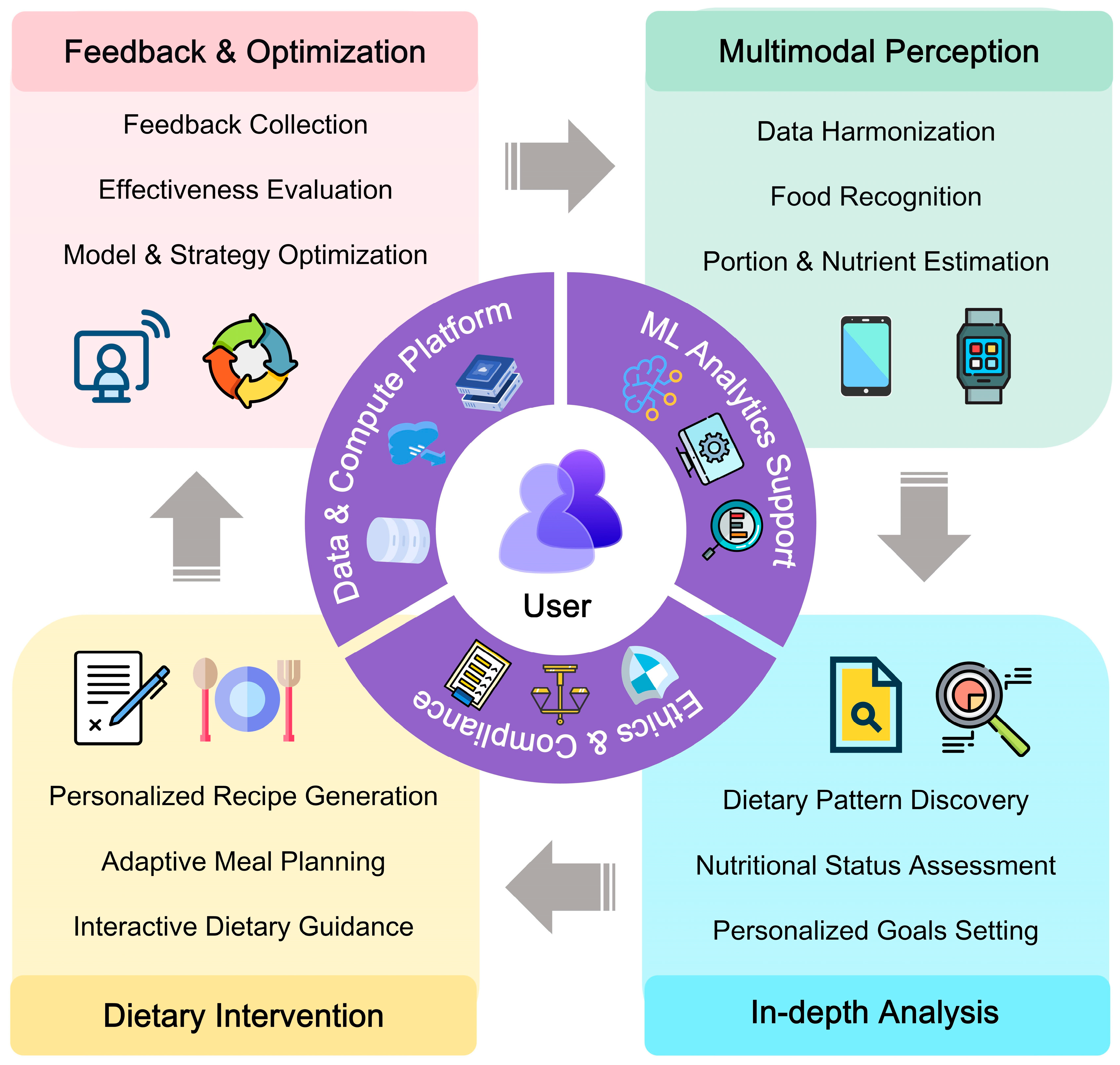
In summary, ML is fundamentally transforming traditional dietary practices (Table 2). It fuels multimodal data fusion, analytical depth, adaptive intervention, and iterative optimization, enabling a leap from generic recommendations to dynamic, personalized nutrition management through a loop system (Figure 3). Several studies have applied ML methods to real-world environments, achieving certain promising outcomes. Sun et al. [109] proposed an AI dietitian based on large language and image recognition models for type 2 diabetes management, which was developed into a WeChat Mini Program called FoodMed Companion. The results of preclinical validation suggested that GPT-4.0 successfully passed the Chinese Registered Dietitian Examination. In Sun et al.’s study, professional dietitians gave positive evaluations to most of ChatGPT’s responses to common nutritional questions (162/168), and the multi-label image recognition model achieved an average F1 score of 0.825. This highlights the significant potential of LLMs in expanding access to nutritional guidance. Meanwhile, automatic dietary assessment has been initially applied to clinical settings such as hospitals, simplifying the traditional, cumbersome dietary assessment process. Albaladejo et al. [110] conducted a pilot study to evaluate the effectiveness of an automatic image recognition device for recording food intake in hospital settings. The results of this study showed that the device was relatively accurate in estimating the weights of meat, fish, and starchy foods, but slightly less accurate for vegetables. The findings from pilot studies could provide valuable guidance for subsequent research. Moreover, some nutritional recording systems are attempting to integrate with smart devices for real-time nutritional monitoring. For instance, Montaina et al. [111] proposed a compact spectroscopic sensing platform that can be integrated into smart cups. Utilizing the KNN algorithm to analyze spectral data, this platform achieved an accuracy of over 96% in distinguishing common beverages. Such kind of solutions based on smart IoT devices hold significant potential, which can substantially reduce the time and effort required for users to manually input dietary information, thereby improving user adherence. However, most PN tools are still in the feasibility validation or pilot phase, and their long-term usability and user adherence need to be further verified in larger-scale and more realistic settings.
In addition, ML-based dietary interventions have also been implemented in clinical cohorts, exerting positive impacts on health status. Rein et al. [112] conducted a 2-week randomized crossover trial involving 23 patients with type 2 diabetes, who were blindly assigned to receive dietary interventions in a crossover sequence of either PPT (Personalized Postprandial Targeting)-MED (Mediterranean) or MED-PPT diets. The recommendations from PPT diets were individually tailored based on personal postprandial glucose responses (PPGRs) predicted by ML algorithms. The results of this crossover intervention showed participants exhibited significantly lower levels of glycemic measures during the PPT diet compared to the MED diet phase. The additional 6-month PPT diet of Rein et al.’s study demonstrated significant improvements in metabolic health parameters, including HbA1c, fasting glucose, and triglycerides, and 61% of the participants exhibited diabetes remission. Similarly, the results of a randomized controlled trial (RCT) demonstrated that, compared with standard type 2 diabetes care using traditional dietary interventions, personalized dietary interventions driven by ML and IoT significantly reduced levels of HbA1c, blood pressure, albuminuria, body weight, and BMI levels [113]. In this study, 72% of participants achieved diabetes remission with personalized interventions after 1 year. However, personalized dietary interventions do not always yield superior benefits compared with conventional dietary interventions. For example, there was no significant difference in weight loss efficacy between personalized diets and low-fat diets among adults with abnormal glucose metabolism and obesity [114]. This indicates that while PN interventions offer notable benefits, these are not universal. The effectiveness of PN implementation is constrained by factors such as intervention objectives and baseline characteristics. Thus, targeted optimization based on specific contexts is required before full-scale implementation.
Despite the prominent advantages, there are still some challenges that cannot be ignored. For instance, there is no denying that high-quality data is critical for developing robust ML models, but current publicly available databases in food and nutrition are still limited. This scarcity is particularly acute when studying rare cases or tasks. Many existing datasets are often limited to single regions, single food categories, or specific population groups [115], which may overlook the impact of other factors, such as culture and race. And the data structures from different sources, platforms, and institutions often lack a unified standard [116]. Consequently, models developed on specific datasets may not perform well in broader contexts and may require modifications to data preprocessing pipelines according to research objectives. And it is necessary to develop more databases concentrating on less prevalent regions or food types, and incorporating data of diverse types and sources. Besides, concerns regarding data privacy protection [117] also require attention, since relevant research often involves sensitive information such as genetics, environments, and medical records. The potential disclosure of such private information could exert a negative impact on research participants. Before large-scale deployment, it is imperative to ensure the use of data is both safe and compliant with regulations. External privacy training and external privacy self-assessment tools may contribute to privacy awareness and organizational resources for privacy protection, thereby reducing human-induced privacy breaches [118]. Deploying multiple privacy-preserving technologies (e.g., blockchain, federated learning, and cryptographic techniques [119]) may significantly enhance the protection of personal information.
In addition, the joint analysis and application of diverse data sources still need to be promoted. Introducing additional data sources can provide multi-level information, thereby gaining comprehensive insights and facilitating effective interventions. For instance, we observed that most nutritional assessment and intervention strategies frequently utilized body weight or BMI as primary health outcomes or reference parameters. In fact, weight and BMI have difficulty in accurately estimating individual fat content, which may potentially misclassify individuals with high muscle mass, such as athletes, as obese [120]. This illustrates that simple indicators sometimes have limitations in assessing the human health status and are not suitable as individual diagnostic tools. Other data sources, such as body composition, can serve as a more useful indicator for evaluating an individual’s health condition and monitoring the effectiveness of nutritional interventions. Therefore, the integration of more data sources, such as body composition, omics, and phenotypes, is essential for developing PN frameworks that enable precise risk stratification and adaptive intervention protocols.
Furthermore, the interpretability of ML models remains a limitation for clinical applications. Clinical practitioners not only desire ML models with superior performance but also require insights into the internal mechanisms of these models, such as the contribution of each feature to the output, since these insights can sometimes provide novel perspectives in research and enhance the credibility of models. Although most traditional ML models are relatively interpretable, these white-box models are often hard to achieve high performance in complex tasks, and interpreting DL models remains challenging (black-box models) [16], which partially hinders the clinical translation of research findings. Global surrogates, local interpretable model-agnostic explanations (LIMEs), and SHapley Additive exPlanations (SHAP) are some of the popular interpretability techniques [121]. SHAP can calculate approximate Shapley values and provide visualized global and local explanations [122], but SHAP may require extensive computational cost in high-dimensional datasets [121]. In dietary data analysis, SHAP is currently widely applied. Perhaps integrating professional knowledge into interpretability analysis would be beneficial to improve the correctness of ML explanations in specific domains.
We believe that with the assistance of ML, dietary assessment and intervention will evolve from the static, independent, and general-purpose model to a precise, dynamic, and intelligent paradigm in the future. As diverse modules are further integrated, this paradigm will be user-centric and integrate perception, assessment, and intervention into a holistic system. Multimodal data (e.g., images, texts, voice, and physiological signals) will be collected and transformed into structured information continuously and automatically. ML will serve as an effective tool to extract features from high-dimensional data and establish models, thus acquiring insights into individual health status and nutritional needs. ML-based systems can generate personalized and understandable dietary plans based on nutritional needs and individual contexts, continuously track user feedback, and adaptively optimize dietary strategies to ensure their effectiveness.
In the future, seamlessly integrating multiple data sources, such as food images, food labels, food nutrition knowledge, multi-omics, body composition, and environmental factors, into the framework will be a critical direction. These multi-dimensional data provide comprehensive information, thereby improving the accuracy of dietary assessment and the effectiveness of intervention. Besides, we also noticed that some LLMs targeting specific domains (e.g., question-answering [123], recipe retrieval [124], and nutrition estimation [125]) have been developed and demonstrated better performance than general models. These specialized LLMs can help researchers interpret literature, automate repetitive processes, and uncover scientific insights, thereby improving research efficiency. They can also popularize knowledge and generate personalized dietary plans for users, thus enabling health management. It is expected that in the future, more powerful specialized LLMs will be developed to address the challenges in dietary assessment and intervention. In addition, future efforts should concentrate on user satisfaction and potential ethical risks. Currently, many studies take health and user preferences as primary objectives, but excessive focus on these goals may cause models to inadvertently recommend extreme or monotonous dietary plans, thereby reducing user satisfaction and even inducing eating disorders. Some multi-objective optimization frameworks have attempted to simultaneously optimize multiple goals such as taste preferences, nutritional health, and dietary diversity [126,127]. More factors should be taken into consideration in future research to enhance practicality.
Crucially, if ML-generated dietary plans cause adverse effects on users, liability attribution can become controversial. Therefore, it is necessary to establish clear frameworks and regulations for responsibility determination and strengthen supervision in the future. Furthermore, as an interdisciplinary field, precise dietary assessment and intervention heavily rely on the contributions from researchers across food science, nutrition, biomedicine, bioinformatics, data science, and other related disciplines. Public users will increasingly engage in clinical practice. Therefore, more user-friendly tools and platforms need to be developed to reduce technical barriers and facilitate seamless connection between foundational research and clinical translation.

6. Conclusions

The global burden of diet-related chronic diseases and the limitations of traditional nutrition guidance underscore an urgent need for the implementation of PN. ML serves as a core catalytic force enabling a transformation across the entire dietary management pipeline. ML drives a critical evolution from a subjective and static mode to an objective, dynamic, and personalized paradigm. As detailed, CV and NLP automate the process and enhance the precision of dietary assessment, moving beyond self-reports. Through its capacity for high-dimensional data analysis, ML enables the discovery of dietary patterns and facilitates the elucidation of complex diet-health mechanisms. Furthermore, ML powers the development of dietary intervention frameworks that can tailor recommendations to individual profiles and dynamically adjust based on continuous feedback.
However, the translation of these technological advances into robust, equitable, and clinically effective solutions faces persistent challenges. These include data privacy, the need for diverse and high-quality datasets, model interpretability, and the practical barriers for the integration of precise high-throughput tools. Despite these hurdles, the potential impact of ML in PN is profound. The paradigm evolution will provide the indispensable technical foundation for moving from population-level guidelines to individual-level nutritional prescriptions. It will shift more focus from disease treatment to proactive health optimization, potentially reducing the long-term burden of diet-related chronic diseases on healthcare systems. Future progress hinges on interdisciplinary collaboration among clinicians, nutrition/biomedicine scientists, and data scientists.

Author Contributions

Conceptualization, W.Q., J.Z., L.D., J.W. and J.H.; Funding acquisition and project administration, J.W. and J.H.; Investigation and Methodology, W.Q. and J.Z.; Writing—Original Draft: W.Q.; Supervision and Writing—Review and Editing: J.W. and J.Z. All authors have read and agreed to the published version of the manuscript.

Funding

This work was supported by the Open Projects (2024XTKF018, 2024XTKF019) of Collaborative Innovation Center of Functional Food by Green Manufacturing, Henan Province (Xuchang 461000, China), and the Food and Pharmacy College, Xuchang University.

Data Availability Statement

Data will be made available on request.

Acknowledgments

The authors would like to thank Collaborative Innovation Center of Functional Food by Green Manufacturing, Henan Province (Xuchang 461000, China), and Food and Pharmacy College, Xuchang University, for financial support.

Conflicts of Interest

The authors have no relevant financial or non-financial interests to disclose.

References

  1. Xiao, Y.-L.; Gong, Y.; Qi, Y.-J.; Shao, Z.-M.; Jiang, Y.-Z. Effects of dietary intervention on human diseases: Molecular mechanisms and therapeutic potential. Signal Transduct. Target. Ther. 2024, 9, 59. [Google Scholar] [CrossRef]
  2. Cena, H.; Calder, P.C. Defining a Healthy Diet: Evidence for The Role of Contemporary Dietary Patterns in Health and Disease. Nutrients 2020, 12, 334. [Google Scholar] [CrossRef]
  3. Ong, K.L.; Stafford, L.K.; McLaughlin, S.A.; Boyko, E.J.; Vollset, S.E.; Smith, A.E.; Dalton, B.E.; Duprey, J.; Cruz, J.A.; Hagins, H.; et al. Global, regional, and national burden of diabetes from 1990 to 2021, with projections of prevalence to 2050: A systematic analysis for the Global Burden of Disease Study 2021. Lancet 2023, 402, 203–234. [Google Scholar] [CrossRef]
  4. Federation, W.O. World Obesity Atlas 2024. Available online: https://data.worldobesity.org/publications/ (accessed on 3 January 2025).
  5. Ferguson, L.R.; De Caterina, R.; Görman, U.; Allayee, H.; Kohlmeier, M.; Prasad, C.; Choi, M.S.; Curi, R.; de Luis, D.A.; Gil, Á.; et al. Guide and Position of the International Society of Nutrigenetics/Nutrigenomics on Personalised Nutrition: Part 1—Fields of Precision Nutrition. J. Nutr. Nutr. 2016, 9, 12–27. [Google Scholar] [CrossRef]
  6. U.S. Department of Health and Human Services. 2020–2030 Strategic Plan for NIH Nutrition Research. Available online: https://dpcpsi.nih.gov/onr/strategic-plan (accessed on 4 January 2025).
  7. Vadiveloo, M.K.; Juul, F.; Sotos-Prieto, M.; Parekh, N. Perspective: Novel Approaches to Evaluate Dietary Quality: Combining Methods to Enhance Measurement for Dietary Surveillance and Interventions. Adv. Nutr. 2022, 13, 1009–1015. [Google Scholar] [CrossRef]
  8. Satija, A.; Yu, E.; Willett, W.C.; Hu, F.B. Understanding Nutritional Epidemiology and Its Role in Policy. Adv. Nutr. 2015, 6, 5–18. [Google Scholar] [CrossRef] [PubMed]
  9. Yang, X.; Ho, C.-T.; Gao, X.; Chen, N.; Chen, F.; Zhu, Y.; Zhang, X. Machine learning: An effective tool for monitoring and ensuring food safety, quality, and nutrition. Food Chem. 2025, 477, 143391. [Google Scholar] [CrossRef] [PubMed]
  10. Livingstone, M.B.E.; Robson, P.J.; Wallace, J.M.W. Issues in dietary intake assessment of children and adolescents. Br. J. Nutr. 2004, 92, S213–S222. [Google Scholar] [CrossRef] [PubMed]
  11. Bzdok, D.; Altman, N.; Krzywinski, M. Statistics versus machine learning. Nat. Methods 2018, 15, 233–234. [Google Scholar] [CrossRef]
  12. Alpaydin, E. Introduction to Machine Learning; MIT Press: Cambridge, MA, USA, 2020. [Google Scholar]
  13. Choi, R.Y.; Coyner, A.S.; Kalpathy-Cramer, J.; Chiang, M.F.; Campbell, J.P. Introduction to Machine Learning, Neural Networks, and Deep Learning. Transl. Vis. Sci. Technol. 2020, 9, 14. [Google Scholar] [CrossRef]
  14. Talaei Khoei, T.; Kaabouch, N. Machine Learning: Models, Challenges, and Research Directions. Future Internet 2023, 15, 332. [Google Scholar] [CrossRef]
  15. An, Q.; Rahman, S.; Zhou, J.; Kang, J.J. A Comprehensive Review on Machine Learning in Healthcare Industry: Classification, Restrictions, Opportunities and Challenges. Sensors 2023, 23, 4178. [Google Scholar] [CrossRef]
  16. Greener, J.G.; Kandathil, S.M.; Moffat, L.; Jones, D.T. A guide to machine learning for biologists. Nat. Rev. Mol. Cell Biol. 2022, 23, 40–55. [Google Scholar] [CrossRef]
  17. Talaei Khoei, T.; Ould Slimane, H.; Kaabouch, N. Deep learning: Systematic review, models, challenges, and research directions. Neural Comput. Appl. 2023, 35, 23103–23124. [Google Scholar] [CrossRef]
  18. Dong, S.; Wang, P.; Abbas, K. A survey on deep learning and its applications. Comput. Sci. Rev. 2021, 40, 100379. [Google Scholar] [CrossRef]
  19. Liu, Y.; Li, S.; Jiang, H.; Wang, J. Exploring the relationship between hypertension and nutritional ingredients intake with machine learning. Healthc. Technol. Lett. 2020, 7, 103–108. [Google Scholar] [CrossRef]
  20. Talukder, A.; Ahammed, B. Machine learning algorithms for predicting malnutrition among under-five children in Bangladesh. Nutrition 2020, 78, 110861. [Google Scholar] [CrossRef]
  21. Guo, J.; He, Q.; Li, Y. Machine learning-based prediction of vitamin D deficiency: NHANES 2001–2018. Front. Endocrinol. 2024, 15, 1327058. [Google Scholar] [CrossRef] [PubMed]
  22. Wong, R.K.; Pitino, M.A.; Mahmood, R.; Zhu, I.Y.; Stone, D.; O’Connor, D.L.; Unger, S.; Chan, T.C.Y. Predicting Protein and Fat Content in Human Donor Milk Using Machine Learning. J. Nutr. 2021, 151, 2075–2083. [Google Scholar] [CrossRef] [PubMed]
  23. Kabaş, A.; Ercan, U.; Kabas, O.; Moiceanu, G. Prediction of Selected Minerals in Beef-Type Tomatoes Using Machine Learning for Digital Agriculture. Horticulturae 2025, 11, 971. [Google Scholar] [CrossRef]
  24. Tachie, C.Y.E.; Obiri-Ananey, D.; Tawiah, N.A.; Attoh-Okine, N.; Aryee, A.N.A. Machine Learning Approaches for Predicting Fatty Acid Classes in Popular US Snacks Using NHANES Data. Nutrients 2023, 15, 3310. [Google Scholar] [CrossRef] [PubMed]
  25. Adjuik, T.A.; Boi-Dsane, N.A.A.; Kehinde, B.A. Enhancing dietary analysis: Using machine learning for food caloric and health risk assessment. J. Food Sci. 2024, 89, 8006–8021. [Google Scholar] [CrossRef]
  26. Modak, A.; Das, D.; Chatterjee, T.N.; Tudu, B.; Roy, R.B. Regression-Based EGCG Detection in Green Tea Employing MIP Electrodes. IEEE Sens. J. 2024, 24, 18090–18097. [Google Scholar] [CrossRef]
  27. Derakhshandara, S.; Franzoni, V.; Mezzetti, D.; Poggioni, V. Machine Learning Decision Support for Macronutrients in Neonatal Parenteral Nutrition. IEEE Access 2024, 12, 170001–170010. [Google Scholar] [CrossRef]
  28. Wei, P.; Wang, B. Food image classification and image retrieval based on visual features and machine learning. Multimed. Syst. 2022, 28, 2053–2064. [Google Scholar] [CrossRef]
  29. Elbassuoni, S.; Ghattas, H.; El Ati, J.; Zoughby, Y.; Semaan, A.; Akl, C.; Trabelsi, T.; Talhouk, R.; Ben Gharbia, H.; Shmayssani, Z.; et al. Capturing children food exposure using wearable cameras and deep learning. PLoS Digit. Health 2023, 2, e0000211. [Google Scholar] [CrossRef]
  30. Konstantakopoulos, F.S.; Georga, E.I.; Fotiadis, D.I. An Automated Image-Based Dietary Assessment System for Mediterranean Foods. IEEE Open J. Eng. Med. Biol. 2023, 4, 45–54. [Google Scholar] [CrossRef]
  31. Nadeem, M.; Shen, H.; Choy, L.; Barakat, J.M.H. Smart Diet Diary: Real-Time Mobile Application for Food Recognition. Appl. Syst. Innov. 2023, 6, 53. [Google Scholar] [CrossRef]
  32. Shao, W.; Min, W.; Hou, S.; Luo, M.; Li, T.; Zheng, Y.; Jiang, S. Vision-based food nutrition estimation via RGB-D fusion network. Food Chem. 2023, 424, 136309. [Google Scholar] [CrossRef]
  33. Wang, Y.; Xie, W.J.; Liu, H.Q. Low-light image enhancement based on deep learning: A survey. Opt. Eng. 2022, 61, 040901. [Google Scholar] [CrossRef]
  34. Razavi, R.; Xue, G. Predicting Unreported Micronutrients From Food Labels: Machine Learning Approach. J. Med. Internet Res. 2023, 25, e45332. [Google Scholar] [CrossRef]
  35. Hu, G.; Ahmed, M.; L’Abbé, M.R. Natural language processing and machine learning approaches for food categorization and nutrition quality prediction compared with traditional methods. Am. J. Clin. Nutr. 2023, 117, 553–563. [Google Scholar] [CrossRef] [PubMed]
  36. Han, S.; Wang, M.; Zhang, J.; Li, D.; Duan, J. A Review of Large Language Models: Fundamental Architectures, Key Technological Evolutions, Interdisciplinary Technologies Integration, Optimization and Compression Techniques, Applications, and Challenges. Electronics 2024, 13, 5040. [Google Scholar] [CrossRef]
  37. Assiri, F.Y.; Alahmadi, M.D.; Almuashi, M.A.; Almansour, A.M. Extract Nutritional Information from Bilingual Food Labels Using Large Language Models. J. Imaging 2025, 11, 271. [Google Scholar] [CrossRef]
  38. Ma, P.; Wu, Y.; Yu, N.; Jia, X.; He, Y.; Zhang, Y.; Backes, M.; Wang, Q.; Wei, C.-I. Integrating Vision-Language Models for Accelerated High-Throughput Nutrition Screening. Adv. Sci. 2024, 11, 2403578. [Google Scholar] [CrossRef]
  39. Dodd, C.T.; Adam, M.T.P.; Stewart, S.J.; Windus, J.L.; Rollo, M.E. Design of a Semi-Automated System for Dietary Assessment of Image-Voice Food Records. IEEE Access 2024, 12, 179823–179838. [Google Scholar] [CrossRef]
  40. Lo, F.P.W.; Qiu, J.; Wang, Z.; Chen, J.; Xiao, B.; Yuan, W.; Giannarou, S.; Frost, G.; Lo, B. Dietary Assessment With Multimodal ChatGPT: A Systematic Analysis. IEEE J. Biomed. Health Inform. 2024, 28, 7577–7587. [Google Scholar] [CrossRef]
  41. Dargan, S.; Kumar, M.; Ayyagari, M.R.; Kumar, G. A Survey of Deep Learning and Its Applications: A New Paradigm to Machine Learning. Arch. Comput. Methods Eng. 2020, 27, 1071–1092. [Google Scholar] [CrossRef]
  42. Zhou, X.; Guan, Q.; Wang, Y.; Lin, D.; Du, B. Effect of Different Cooking Methods on Nutrients, Antioxidant Activities and Flavors of Three Varieties of Lentinus edodes. Foods 2022, 11, 2713. [Google Scholar] [CrossRef] [PubMed]
  43. Muthukumar, K.A.; Gupta, S.; Saikia, D. Leveraging machine learning techniques to analyze nutritional content in processed foods. Discov. Food 2024, 4, 182. [Google Scholar] [CrossRef]
  44. Naravane, T.; Tagkopoulos, I. Machine learning models to predict micronutrient profile in food after processing. Curr. Res. Food Sci. 2023, 6, 100500. [Google Scholar] [CrossRef]
  45. Saha, D.; Manickavasagan, A. Machine learning techniques for analysis of hyperspectral images to determine quality of food products: A review. Curr. Res. Food Sci. 2021, 4, 28–44. [Google Scholar] [CrossRef]
  46. Ahn, D.; Choi, J.-Y.; Kim, H.-C.; Cho, J.-S.; Moon, K.-D.; Park, T. Estimating the Composition of Food Nutrients from Hyperspectral Signals Based on Deep Neural Networks. Sensors 2019, 19, 1560. [Google Scholar] [CrossRef]
  47. Marín-Méndez, J.-J.; Luri Esplandiú, P.; Alonso-Santamaría, M.; Remirez-Moreno, B.; Urtasun Del Castillo, L.; Echavarri Dublán, J.; Almiron-Roig, E.; Sáiz-Abajo, M.-J. Hyperspectral imaging as a non-destructive technique for estimating the nutritional value of food. Curr. Res. Food Sci. 2024, 9, 100799. [Google Scholar] [CrossRef]
  48. Shawky, E.; Zhu, W.; Tian, J.; Abu El-Khair, R.A.; Selim, D.A. Metabolomics-Driven Prediction of Vegetable Food Metabolite Patterns: Advances in Machine Learning Approaches. Food Rev. Int. 2025, 41, 1051–1080. [Google Scholar] [CrossRef]
  49. Li, Y.; Birse, N.; Hong, Y.; Quinn, B.; Logan, N.; Jiao, Y.; Elliott, C.T.; Wu, D. Promoting LC-QToF based non-targeted fingerprinting and biomarker selection with machine learning for the discrimination of black tea geographical origin. Food Chem. 2025, 465, 142088. [Google Scholar] [CrossRef] [PubMed]
  50. Sun, R.; Xing, R.; Zhang, J.; Yu, N.; Ge, Y.; Zhang, W.; Chen, Y. UPLC-QTOF-MS coupled with machine learning to discriminate between NFC and FC orange juice. Food Control 2023, 145, 109487. [Google Scholar] [CrossRef]
  51. Wang, Y.; Han, L.; Ling, S.; Sha, Y.; Sun, H. Dietary intake of potassium, vitamin E, and vitamin C emerges as the most significant predictors of cardiovascular disease risk in adults. Medicine 2024, 103, e39180. [Google Scholar] [CrossRef]
  52. Morgenstern, J.D.; Rosella, L.C.; Costa, A.P.; Anderson, L.N. Development of machine learning prediction models to explore nutrients predictive of cardiovascular disease using Canadian linked population-based data. Appl. Physiol. Nutr. Metab. 2022, 47, 529–546. [Google Scholar] [CrossRef] [PubMed]
  53. Donghia, R.; Pesole, P.L.; Castellaneta, A.; Coletta, S.; Squeo, F.; Bonfiglio, C.; De Pergola, G.; Rinaldi, R.; De Nucci, S.; Giannelli, G.; et al. Age-Related Dietary Habits and Blood Biochemical Parameters in Patients with and without Steatosis—MICOL Cohort. Nutrients 2023, 15, 4058. [Google Scholar] [CrossRef]
  54. Turnbull, N.; Nghiep, L.K.; Butsorn, A.; Khotprom, A.; Tudpor, K. Machine learning models identify micronutrient intake as predictors of undiagnosed hypertension among rural community-dwelling older adults in Thailand: A cross-sectional study. Front. Nutr. 2024, 11, 1411363. [Google Scholar] [CrossRef]
  55. Taheri, R.; ZareMehrjardi, F.; Heidarzadeh-Esfahani, N.; Hughes, J.A.; Reid, R.E.R.; Borghei, M.; Ardekani, F.M.; Shahraki, H.R. Dietary intake of micronutrients are predictor of premenstrual syndrome, a machine learning method. Clin. Nutr. ESPEN 2023, 55, 136–143. [Google Scholar] [CrossRef]
  56. Jacobs, D.R.; Gross, M.D.; Tapsell, L.C. Food synergy: An operational concept for understanding nutrition23. Am. J. Clin. Nutr. 2009, 89, 1543S–1548S. [Google Scholar] [CrossRef]
  57. Reedy, J.; Subar, A.F.; George, S.M.; Krebs-Smith, S.M. Extending Methods in Dietary Patterns Research. Nutrients 2018, 10, 571. [Google Scholar] [CrossRef]
  58. Morgenstern, J.D.; Rosella, L.C.; Costa, A.P.; de Souza, R.J.; Anderson, L.N. Perspective: Big Data and Machine Learning Could Help Advance Nutritional Epidemiology. Adv. Nutr. 2021, 12, 621–631. [Google Scholar] [CrossRef] [PubMed]
  59. Silva, V.C.; Gorgulho, B.; Marchioni, D.M.; Araujo, T.A.d.; Santos, I.d.S.; Lotufo, P.A.; Benseñor, I.M. Clustering analysis and machine learning algorithms in the prediction of dietary patterns: Cross-sectional results of the Brazilian Longitudinal Study of Adult Health (ELSA-Brasil). J. Hum. Nutr. Diet. 2022, 35, 883–894. [Google Scholar] [CrossRef]
  60. van Houwelingen, M.L.; Zhu, Y. Identifying and predicting dietary patterns in the Dutch population using machine learning. Eur. J. Nutr. 2025, 64, 305. [Google Scholar] [CrossRef] [PubMed]
  61. Choi, I.; Kim, J.; Kim, W.C. Dietary Pattern Extraction Using Natural Language Processing Techniques. Front. Nutr. 2022, 9, 765794. [Google Scholar] [CrossRef]
  62. Noura, Q.; Khaoula El, K.; Nada, O.; Karima El, R.; Nour El Houda, C. Cluster analysis of dietary patterns associated with colorectal cancer derived from a Moroccan case–control study. BMJ Health Care Inform. 2023, 30, e100710. [Google Scholar] [CrossRef]
  63. Li, L.; Momma, H.; Chen, H.; Nawrin, S.S.; Xu, Y.; Inada, H.; Nagatomi, R. Dietary patterns associated with the incidence of hypertension among adult Japanese males: Application of machine learning to a cohort study. Eur. J. Nutr. 2024, 63, 1293–1314. [Google Scholar] [CrossRef]
  64. Eckart, A.C.; Sharma Ghimire, P. Exploring Predictors of Type 2 Diabetes Within Animal-Sourced and Plant-Based Dietary Patterns with the XGBoost Machine Learning Classifier: NHANES 2013–2016. J. Clin. Med. 2025, 14, 458. [Google Scholar] [CrossRef] [PubMed]
  65. Lyu, C.; Joehanes, R.; Huan, T.; Levy, D.; Li, Y.; Wang, M.; Liu, X.; Liu, C.; Ma, J. Enhancing selection of alcohol consumption-associated genes by random forest. Br. J. Nutr. 2024, 131, 2058–2067. [Google Scholar] [CrossRef]
  66. Kim, H.; Chen, J.; Prescott, B.; Walker, M.E.; Grams, M.E.; Yu, B.; Vasan, R.S.; Floyd, J.S.; Sotoodehnia, N.; Smith, N.L.; et al. Plasma proteins associated with plant-based diets: Results from the Atherosclerosis Risk in Communities (ARIC) study and Framingham Heart Study (FHS). Clin. Nutr. 2024, 43, 1929–1940. [Google Scholar] [CrossRef]
  67. He, X.; Liu, X.; Zuo, F.; Shi, H.; Jing, J. Artificial intelligence-based multi-omics analysis fuels cancer precision medicine. Semin. Cancer Biol. 2023, 88, 187–200. [Google Scholar] [CrossRef]
  68. Park, S.; Kim, D.S.; Kang, S. Gene-diet interactions in carbonated sugar-sweetened beverage consumption and metabolic syndrome risk: A machine learning analysis in a large hospital-based cohort. Clin. Nutr. ESPEN 2024, 64, 358–369. [Google Scholar] [CrossRef]
  69. Oghabian, A.; Kolk, B.W.D.; Marttinen, P.; Valsesia, A.; Langin, D.; Saris, W.H.; Astrup, A.; Blaak, E.E.; Pietiläinen, K.H. Baseline gene expression in subcutaneous adipose tissue predicts diet-induced weight loss in individuals with obesity. PeerJ 2023, 11, e15100. [Google Scholar] [CrossRef]
  70. Mahdavi, A.; Leclercq, M.; Droit, A.; Rudkowska, I.; Lebel, M. Predictive model for vitamin C levels in hyperinsulinemic individuals based on age, sex, waist circumference, low-density lipoprotein, and immune-associated serum proteins. J. Nutr. Biochem. 2024, 125, 109538. [Google Scholar] [CrossRef] [PubMed]
  71. Kouraki, A.; Nogal, A.; Nocun, W.; Louca, P.; Vijay, A.; Wong, K.; Michelotti, G.A.; Menni, C.; Valdes, A.M. Machine Learning Metabolomics Profiling of Dietary Interventions from a Six-Week Randomised Trial. Metabolites 2024, 14, 311. [Google Scholar] [CrossRef]
  72. Pigsborg, K.; Stentoft-Larsen, V.; Demharter, S.; Aldubayan, M.A.; Trimigno, A.; Khakimov, B.; Engelsen, S.B.; Astrup, A.; Hjorth, M.F.; Dragsted, L.O.; et al. Predicting weight loss success on a new Nordic diet: An untargeted multi-platform metabolomics and machine learning approach. Front. Nutr. 2023, 10, 1191944. [Google Scholar] [CrossRef]
  73. Liang, S.; Nasir, R.F.; Bell-Anderson, K.S.; Toniutti, C.A.; O’Leary, F.M.; Skilton, M.R. Biomarkers of dietary patterns: A systematic review of randomized controlled trials. Nutr. Rev. 2022, 80, 1856–1895. [Google Scholar] [CrossRef] [PubMed]
  74. Hu, X.; Xu, Q.; Ma, X.; Li, L.; Wu, Y.; Sun, F. An interpretable machine learning model for precise prediction of biomarkers for intermittent fasting pattern. Nutr. Metab. 2024, 21, 106. [Google Scholar] [CrossRef] [PubMed]
  75. Liang, S.; Li, A.; Skilton, M.R. Development of a Multibiomarker Panel of Healthy Eating Index in United States Adults: A Machine Learning Approach. J. Nutr. 2023, 153, 385–392. [Google Scholar] [CrossRef]
  76. Côté, M.; Brassard, D.; Plante, P.-L.; Brière, F.; Corbeil, J.; Couture, P.; Lemieux, S.; Lamarche, B. Using machine learning to predict the consumption of a Mediterranean diet with untargeted metabolomics data from controlled feeding studies. Nutr. Metab. Cardiovasc. Dis. 2025, 104290. [Google Scholar] [CrossRef]
  77. Leiherer, A.; Muendlein, A.; Mink, S.; Mader, A.; Saely, C.H.; Festa, A.; Fraunberger, P.; Drexel, H. Machine Learning Approach to Metabolomic Data Predicts Type 2 Diabetes Mellitus Incidence. Int. J. Mol. Sci. 2024, 25, 5331. [Google Scholar] [CrossRef]
  78. Snetselaar, L.G.; de Jesus, J.M.; DeSilva, D.M.; Stoody, E.E. Dietary Guidelines for Americans, 2020–2025: Understanding the Scientific Process, Guidelines, and Key Recommendations. Nutr. Today 2021, 56, 287–295. [Google Scholar] [CrossRef]
  79. Cecil, J.E.; Barton, K.L. Inter-individual differences in the nutrition response: From research to recommendations. Proc. Nutr. Soc. 2020, 79, 171–173. [Google Scholar] [CrossRef] [PubMed]
  80. Trouwborst, I.; Gijbels, A.; Jardon, K.M.; Siebelink, E.; Hul, G.B.; Wanders, L.; Erdos, B.; Péter, S.; Singh-Povel, C.M.; de Vogel-van den Bosch, J.; et al. Cardiometabolic health improvements upon dietary intervention are driven by tissue-specific insulin resistance phenotype: A precision nutrition trial. Cell Metab. 2023, 35, 71–83.e75. [Google Scholar] [CrossRef]
  81. Nidhi, W.; Jahanvi, M.; Melony, B.; Parikh, M.M. Diet Recommendation System Using K-Means Clustering Algorithm of Machine Learning. Int. J. Sci. Res. Comput. Sci. Eng. Inf. Technol. 2024, 10, 567–571. [Google Scholar] [CrossRef]
  82. Vignesh, N.; Bhuvaneswari, S.; Kotecha, K.; Subramaniyaswamy, V. Hybrid Diet Recommender System Using Machine Learning Technique. In Proceedings of the Hybrid Intelligent Systems, online, 13–15 December 2022; pp. 106–115. [Google Scholar]
  83. Abdelmageed, L.N.; Fathy, B.E.; Ali, R.E.; Borham, M.L. Enhancing Dietary Guidance with Machine Learning: A Stacking Classifier Approach to Personalized Nutrition. In Proceedings of the 2024 International Mobile, Intelligent, and Ubiquitous Computing Conference (MIUCC), Cairo, Egypt, 13–14 November 2024; pp. 164–170. [Google Scholar]
  84. Vasuki, M.M. Developing a Machine Learning-Powered Dietary Guidance System for Diabetes Patients. Int. J. Res. Appl. Sci. Eng. Technol. 2024, 12, 4354–4361. [Google Scholar] [CrossRef]
  85. Sookrah, R.; Dhowtal, J.D.; Nagowah, S.D. A DASH Diet Recommendation System for Hypertensive Patients Using Machine Learning. In Proceedings of the 2019 7th International Conference on Information and Communication Technology (ICoICT), Kuala Lumpur, Malaysia, 24–26 July 2019; pp. 1–6. [Google Scholar]
  86. Anwar, M.A.; Barrera-Machuca, A.A.; Calderon, N.; Wang, W.; Tausan, D.; Vayali, T.; Wishart, D.; Cullis, P.; Fraser, R. Value-based healthcare delivery through metabolomics-based personalized health platform. Healthc. Manag. Forum 2020, 33, 126–134. [Google Scholar] [CrossRef]
  87. Buchan, M.L.; Goel, K.; Schneider, C.K.; Steullet, V.; Bratton, S.; Basch, E. National Implementation of an Artificial Intelligence–Based Virtual Dietitian for Patients With Cancer. JCO Clin. Cancer Inform. 2024, 8, e2400085. [Google Scholar] [CrossRef] [PubMed]
  88. Selvaraj, S.; Nidhyananthan, S.S.; Vanmathi, R.; Ramya, M. Diet Recommendation for Poly Cystic Ovarian Syndrome of Indian Patients Using Multi-Attribute and Multi-Labeling Classifier. J. Pharm. Negat. Results 2022, 13, 1660–1672. [Google Scholar] [CrossRef]
  89. Bondevik, J.N.; Bennin, K.E.; Babur, Ö.; Ersch, C. A systematic review on food recommender systems. Expert Syst. Appl. 2024, 238, 122166. [Google Scholar] [CrossRef]
  90. Mogaveera, D.; Mathur, V.; Waghela, S. e-Health Monitoring System with Diet and Fitness Recommendation using Machine Learning. In Proceedings of the 2021 6th International Conference on Inventive Computation Technologies (ICICT), Coimbatore, India, 20–22 January 2021; pp. 694–700. [Google Scholar]
  91. Jagatheesaperumal, S.K.; Rajkumar, S.; Suresh, J.V.; Gumaei, A.H.; Alhakbani, N.; Uddin, M.Z.; Hassan, M.M. An IoT-Based Framework for Personalized Health Assessment and Recommendations Using Machine Learning. Mathematics 2023, 11, 2758. [Google Scholar] [CrossRef]
  92. Clarinda, K.; Deepa, N.; Dhamotharan, R.; Krishnan, R.S.; Raj, J.R.F.; Anchitaalagammai, J.V. Leveraging Machine Learning Algorithms to Optimize Diet Maintenance Based on User Food Intake and Fitness Data. In Proceedings of the 2024 International Conference on Sustainable Communication Networks and Application (ICSCNA), Theni, India, 11–13 December 2024; pp. 1800–1807. [Google Scholar] [CrossRef]
  93. Richard, S.S.; Andrew, G.B. Introduction. In Reinforcement Learning: An Introduction; MIT Press: Cambridge, MA, USA, 1998; pp. 3–23. [Google Scholar]
  94. Bignold, A.; Cruz, F.; Taylor, M.E.; Brys, T.; Dazeley, R.; Vamplew, P.; Foale, C. A conceptual framework for externally-influenced agents: An assisted reinforcement learning review. J. Ambient. Intell. Humaniz. Comput. 2023, 14, 3621–3644. [Google Scholar] [CrossRef]
  95. Canese, L.; Cardarilli, G.C.; Di Nunzio, L.; Fazzolari, R.; Giardino, D.; Re, M.; Spanò, S. Multi-Agent Reinforcement Learning: A Review of Challenges and Applications. Appl. Sci. 2021, 11, 4948. [Google Scholar] [CrossRef]
  96. Liu, L.; Guan, Y.; Wang, Z.; Shen, R.; Zheng, G.; Fu, X.; Yu, X.; Jiang, J. An interactive food recommendation system using reinforcement learning. Expert Syst. Appl. 2024, 254, 124313. [Google Scholar] [CrossRef]
  97. Amiri, M.; Sarani Rad, F.; Li, J. Delighting Palates with AI: Reinforcement Learning’s Triumph in Crafting Personalized Meal Plans with High User Acceptance. Nutrients 2024, 16, 346. [Google Scholar] [CrossRef] [PubMed]
  98. Achuthan, A.; Yii, S.H.; Alkhafaji, A. MyPlate: A Diet Monitoring and Recommender Application. Malays. J. Med. Health Sci. 2024, 20, 196–203. [Google Scholar] [CrossRef]
  99. Pawade, D.; Shah, J.; Gupta, E.; Panchal, J.; Shah, R. RecommenDiet: A System to Recommend a Dietary Regimen Using Facial Features. In Proceedings of the Advances in Distributed Computing and Machine Learning, Odisha, India, 15–16 January 2023; pp. 397–408. [Google Scholar]
  100. Xing, T.; Gao, J. RecipeRadar: An AI-Powered Recipe Recommendation System. In Proceedings of the Intelligent Systems and Applications, Amsterdam, The Netherlands, 5–6 September 2024; pp. 102–113. [Google Scholar]
  101. Rani, B.U.; Joshnavalli, T.; Reddy, B.S.; Sreelaasya, A. An Advanced Deep Learning Approach for Dietary Recommendations using ROBERTA. In Proceedings of the 2024 4th International Conference on Intelligent Technologies (CONIT), Bangalore, India, 21–23 June 2024; pp. 1–6. [Google Scholar]
  102. Aydın, S.K.; Ali, R.H.; Faiz, S.; Khan, T.A. An Integrated AI Framework for Personalized Nutrition Using Machine Learning and Natural Language Processing for Dietary Recommendations. Appl. Sci. 2025, 15, 9283. [Google Scholar] [CrossRef]
  103. Liu, L.; Zhang, S.; Chen, M.; Shi, X.; Li, G. KG-DietNet: A Personalized Dietary Recommendation System Based on Knowledge Graphs and Large Language Models. In Proceedings of the 2025 IEEE 12th Joint International Information Technology and Artificial Intelligence Conference (ITAIC), Chongqing, China, 23–25 May 2025; pp. 833–837. [Google Scholar]
  104. Ataguba, G.; Orji, R. Exploring Large Language Models for Personalized Recipe Generation and Weight-Loss Management. ACM Trans. Comput. Healthc. 2025, 6, 22. [Google Scholar] [CrossRef]
  105. Yang, Z.; Khatibi, E.; Nagesh, N.; Abbasian, M.; Azimi, I.; Jain, R.; Rahmani, A.M. ChatDiet: Empowering personalized nutrition-oriented food recommender chatbots through an LLM-augmented framework. Smart Health 2024, 32, 100465. [Google Scholar] [CrossRef]
  106. Kopitar, L.; Bedrač, L.; Strath, L.J.; Bian, J.; Stiglic, G. Improving Personalized Meal Planning with Large Language Models: Identifying and Decomposing Compound Ingredients. Nutrients 2025, 17, 1492. [Google Scholar] [CrossRef]
  107. Lu, J.; Liu, A.; Dong, F.; Gu, F.; Gama, J.; Zhang, G. Learning under Concept Drift: A Review. IEEE Trans. Knowl. Data Eng. 2019, 31, 2346–2363. [Google Scholar] [CrossRef]
  108. Alluhaidan, A.S.; Bashir, R.N.; Jahangir, R.; Marzouk, R.; Saidani, O.; Alroobaea, R. Machine Learning and Fog Computing-Enabled Sensor Drift Management in Precision Agriculture. IEEE Sens. J. 2024, 24, 36953–36970. [Google Scholar] [CrossRef]
  109. Sun, H.; Zhang, K.; Lan, W.; Gu, Q.; Jiang, G.; Yang, X.; Qin, W.; Han, D. An AI Dietitian for Type 2 Diabetes Mellitus Management Based on Large Language and Image Recognition Models: Preclinical Concept Validation Study. J. Med. Internet Res. 2023, 25, e51300. [Google Scholar] [CrossRef]
  110. Albaladejo, L.; Giai, J.; Deronne, C.; Baude, R.; Bosson, J.-L.; Bétry, C. Assessing real-life food consumption in hospital with an automatic image recognition device: A pilot study. Clin. Nutr. ESPEN 2025, 68, 319–325. [Google Scholar] [CrossRef] [PubMed]
  111. Montaina, L.; Palmieri, E.; Lucarini, I.; Maiolo, L.; Maita, F. Toward a User-Accessible Spectroscopic Sensing Platform for Beverage Recognition Through K-Nearest Neighbors Algorithm. Sensors 2025, 25, 4264. [Google Scholar] [CrossRef] [PubMed]
  112. Rein, M.; Ben-Yacov, O.; Godneva, A.; Shilo, S.; Zmora, N.; Kolobkov, D.; Cohen-Dolev, N.; Wolf, B.-C.; Kosower, N.; Lotan-Pompan, M.; et al. Effects of personalized diets by prediction of glycemic responses on glycemic control and metabolic health in newly diagnosed T2DM: A randomized dietary intervention pilot trial. BMC Med. 2022, 20, 56. [Google Scholar] [CrossRef]
  113. Shamanna, P.; Joshi, S.; Thajudeen, M.; Shah, L.; Poon, T.; Mohamed, M.; Mohammed, J. Personalized nutrition in type 2 diabetes remission: Application of digital twin technology for predictive glycemic control. Front. Endocrinol. 2024, 15, 1485464. [Google Scholar] [CrossRef]
  114. Popp, C.J.; Hu, L.; Kharmats, A.Y.; Curran, M.; Berube, L.; Wang, C.; Pompeii, M.L.; Illiano, P.; St-Jules, D.E.; Mottern, M.; et al. Effect of a Personalized Diet to Reduce Postprandial Glycemic Response vs a Low-fat Diet on Weight Loss in Adults With Abnormal Glucose Metabolism and Obesity: A Randomized Clinical Trial. JAMA Netw. Open 2022, 5, e2233760. [Google Scholar] [CrossRef]
  115. Zhang, Y.; Deng, L.; Zhu, H.; Wang, W.; Ren, Z.; Zhou, Q.; Lu, S.; Sun, S.; Zhu, Z.; Gorriz, J.M.; et al. Deep learning in food category recognition. Inf. Fusion 2023, 98, 101859. [Google Scholar] [CrossRef]
  116. Kim, C.-i.; Kwon, S.O.; Do, J.A.; Ra, S.; Yoon, J. Harmonization, standardization and integration of food and nutrient database in Korea: Open government data at the public data portal. J. Food Compos. Anal. 2025, 148, 108118. [Google Scholar] [CrossRef]
  117. Thapa, C.; Camtepe, S. Precision health data: Requirements, challenges and existing techniques for data security and privacy. Comput. Biol. Med. 2021, 129, 104130. [Google Scholar] [CrossRef]
  118. Ifinedo, P.; Vachon, F.; Ayanso, A. Reducing data privacy breaches: An empirical study of relevant antecedents and an outcome. Inf. Technol. People 2024, 38, 1712–1734. [Google Scholar] [CrossRef]
  119. Shin, H.; Ryu, K.; Kim, J.-Y.; Lee, S. Application of privacy protection technology to healthcare big data. Digit. Health 2024, 10, 20552076241282242. [Google Scholar] [CrossRef]
  120. Watanabe, K.; Wilmanski, T.; Diener, C.; Earls, J.C.; Zimmer, A.; Lincoln, B.; Hadlock, J.J.; Lovejoy, J.C.; Gibbons, S.M.; Magis, A.T.; et al. Multiomic signatures of body mass index identify heterogeneous health phenotypes and responses to a lifestyle intervention. Nat. Med. 2023, 29, 996–1008. [Google Scholar] [CrossRef]
  121. Hakkoum, H.; Idri, A.; Abnane, I. Global and local interpretability techniques of supervised machine learning black box models for numerical medical data. Eng. Appl. Artif. Intell. 2024, 131, 107829. [Google Scholar] [CrossRef]
  122. Ponce-Bobadilla, A.V.; Schmitt, V.; Maier, C.S.; Mensing, S.; Stodtmann, S. Practical guide to SHAP analysis: Explaining supervised machine learning model predictions in drug development. Clin. Transl. Sci. 2024, 17, e70056. [Google Scholar] [CrossRef] [PubMed]
  123. Wu, S.; Yacub, Z.; Shasha, D. DietNerd: A Nutrition Question-Answering System That Summarizes and Evaluates Peer-Reviewed Scientific Articles. Appl. Sci. 2024, 14, 9021. [Google Scholar] [CrossRef]
  124. Tsampos, I.; Marakakis, E. DietQA: A Comprehensive Framework for Personalized Multi-Diet Recipe Retrieval Using Knowledge Graphs, Retrieval-Augmented Generation, and Large Language Models. Computers 2025, 14, 412. [Google Scholar] [CrossRef]
  125. Yan, R.; Luo, H.; Lu, J.; Liu, D.; Posluszny, H.; Dhaliwal, M.P.; MacLeod, J.; Qin, Y.; Yang, C.; Hartman, T.J.; et al. DietAI24 as a framework for comprehensive nutrition estimation using multimodal large language models. Commun. Med. 2025, 5, 458. [Google Scholar] [CrossRef] [PubMed]
  126. Imantho, H.; Seminar, K.B.; Damayanthi, E.; Suyatma, N.E.; Priandana, K.; Ligar, B.W.; Seminar, A.U. An Intelligent Food Recommendation System for Dine-in Customers with Non-Communicable Diseases History. J. Keteknikan Pertan. 2024, 12, 140–152. [Google Scholar] [CrossRef]
  127. Jin, Y.; Min, W.; Zhou, P.; Mei, S.; Jiang, S. Dietary Recommendation Based on Multi-objective Optimization Integrating Nutritional Knowledge and Preference-Health Balance. Food Sci. 2025, 46, 29–37. [Google Scholar] [CrossRef]
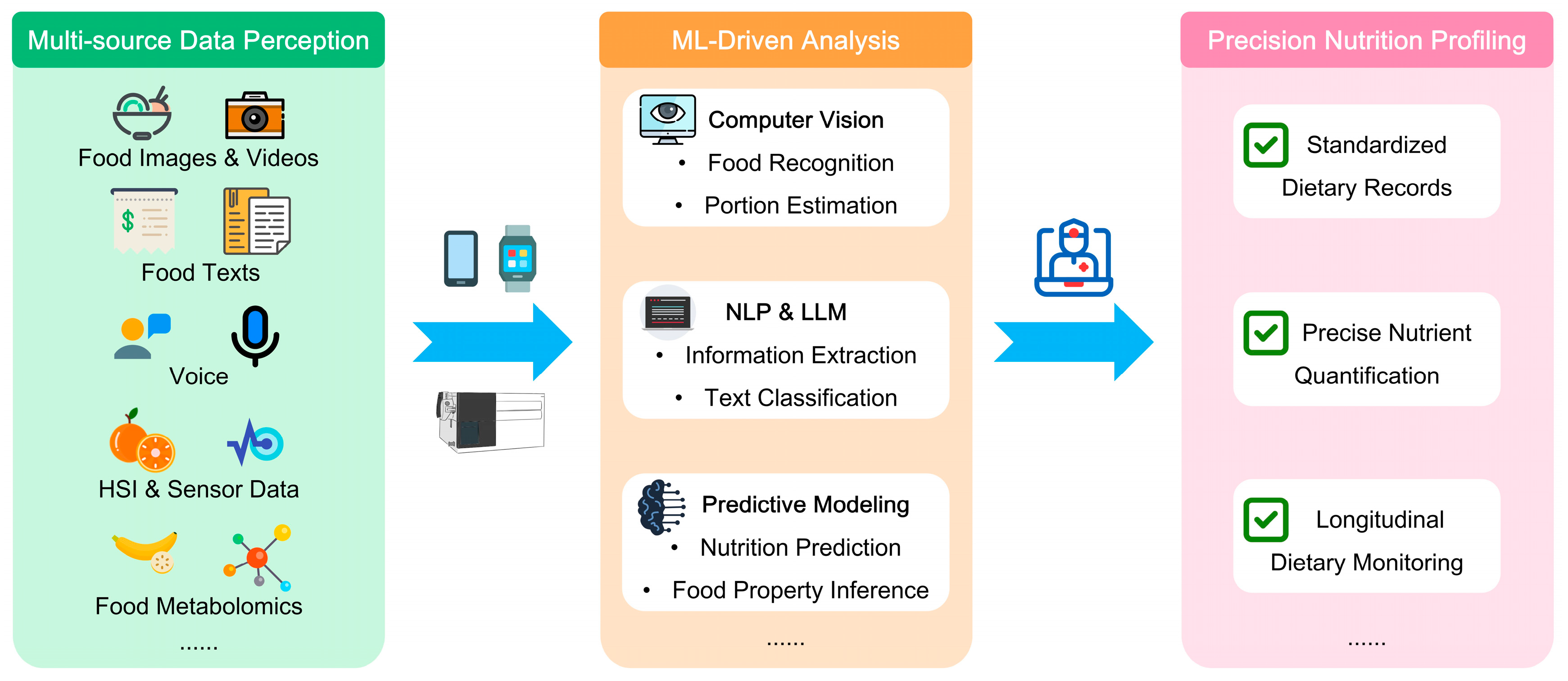
Figure 1. Machine learning-driven multi-source dietary assessment. ML: Machine Learning; NLP: Natural Language Processing; LLM: Large Language Model; HSI: Hyperspectral Imaging.
Nutrients 18 00045 g001
Figure 2. A framework for the deep mining of dietary data driven by machine learning. KNN: K-Nearest Neighbors; SVM: Support Vector Machine; XGBoost: Extreme Gradient Boosting; PCA: Principal Component Analysis; UMAP: Uniform Manifold Approximation and Projection; LIME: Local Interpretable Model-agnostic Explanations; SHAP: SHapley Additive exPlanations.
Nutrients 18 00045 g002
Figure 3. A machine learning-driven paradigm for precision nutrition management. ML: Machine Learning.
Nutrients 18 00045 g003
Table 1. Common evaluation metrics for supervised learning.
Task TypeMetricDefinitionFormulaPros/ConsApplication Examples
ClassificationAccuracyProportion of correctly predicted samples. A c c u r a c y = T p + T N T p + T N + F p + F N Fails in imbalanced classesExploration of the hypertension-nutrient intake relationship [19]
RecallProportion of true positives among actual positives. R e c a l l = T p T p + F N Recall and Precision are inversely related
PrecisionProportion of true positives among predicted positives P r e c i s i o n = T p T p + F P
F1 scoreHarmonic mean of precision and recall F 1 = 2 × P r e c i s i o n × R e c a l l P r e c i s i o n + R e c a l l Balances precision and recall
Area under the Receiver Operating Characteristic Curve (ROC-AUC)ROC curve plots True Positive Rate (TPR) vs. False Positive Rate (FPR). Higher values (closer to 1) indicate better performance. Robust to class imbalance
Cohen’s Kappa coefficientAgreement between a model’s predictions and true labels while accounting for random chance. K a p p a = p o p e 1 p e Suitable for multi-class tasksPrediction of malnutrition in children [20]
Brier score (BS)It quantifies probabilistic prediction accuracy. Lower values (closer to 0) indicate better performance. B S = i = 1 n o i p i 2 n Suitable for probability outputsPrediction of vitamin D deficiency [21]
RegressionMean absolute error (MAE)Average absolute error between predicted values and true values M A E = i = 1 n y i y ^ i n Less penalty on large errorsPrediction of human milk nutrient content [22]
Mean absolute percentage error (MAPE)Average relative error between predicted values and true values M A P E = i = 1 n y i y ^ i y i n × 100 % Undefined for zero true valuesPrediction of minerals in tomatoes [23]
Mean squared error (MSE)Average squared error between predicted values and true values M S E = i = 1 n y i y ^ i 2 n Penalizes large errorsPrediction of snack fatty acid content [24]
Root mean square error (RMSE)Square root of MSE R M S E = i = 1 n y i y ^ i 2 n Penalizes large errors; Matches the unit of the targetPrediction of food calories [25]
Mean squared logarithmic error (MSLE)Average squared difference between the logarithm of predicted values and true values M S L E = i = 1 n log ( 1 + y i ) log ( 1 + y ^ i ) 2 n Suitable for large value rangesPrediction of epigallocatechin-3-gallate content in green tea [26]
R2 (Coefficient of determination)It measures how well the model fits the observed data. Higher values (closer to 1) indicate better performance. R 2 = 1 i = 1 n y i y ^ i 2 i = 1 n y i y ¯ i 2 Less effective for non-linear relationshipsNeonatal parenteral nutrition management [27]
Note: T p : True positive; T N : True negative; F p : False positive; F N : False negative; p o : Ratio of the sum of correctly classified samples in each category to the total number of samples; p e : Sum of the product of true sample proportion and predicted sample proportion for each category; o i : Observed label; p i : Predicted probability; y i : Observed value; y ^ i : Predicted value; y ¯ i : Mean of observed values.
Table 2. Technical applications of machine learning in dietary assessment, data mining, and personalized intervention.
TaskAuthorsMachine Learning AlgorithmsApplicationsModel Performance
Dietary AssessmentWei et al. [28]Faster R-CNNFood image retrieval and classificationAccuracy = 0.754
Elbassuoni et al. [29]CNNRecording children’s food intakePrecision = 82.23–93.57%
Konstantakopoulos et al. [30]EfficientNetB2Automated image-based dietary assessmentAccuracy = 83.8%; MAPE = 10.5%
Nadeem et al. [31]Faster R-CNNFood recognition & calorie calculationAccuracy = 80.1%; Calorie error ≤ 10%
Shao et al. [32]RGB-D fusion networkVision-based automated food nutrient analysisMean PMAE = 18.5%
Razavi et al. [34]RF, KNN, LR, Neural Networks, SVM, etc.Predicting unreported micronutrient contents from food label informationR2 = 0.28 (for magnesium) −0.92 (for manganese)
Hu et al. [35]BERT, Elastic net, KNN, XGBoostFood classification and calculation of nutritional quality using label informationPredicting food major categories: Accuracy = 0.98;
FSANZ score prediction: R2 = 0.87 and MSE = 14.4
Assiri et al. [37]GPT-4v, GPT-4o, and GeminiExtracting nutritional elements/values from food labels in English and ArabicGPT-4o and GPT-4v: median Accuracy = 83–87% (English)
Ma et al. [38]CLIP, MLPEstimating nutrient contents from food images and labelsLipid quantification: macro-AUCROC = 0.921
Lo et al. [40]GPT-4vFood recognition, portion estimation, and nutritional analysisFood Detection: Accuracy = 0.936; F1 score = 0.946
Muthukumar et al. [43]SVR, RFPredicting protein content in plant foods after processingNMSE = 0.13
Naravane et al. [44]MLP, LASSO, Elastic net, Gradient boost, RF, DTPredicting micronutrient contents in processed foodsR2 = 0.42–0.95
Marín-Méndez et al. [47]Multivariate linear regression, LASSO, Ridge regression, Elastic net, KNN, etc.Predicting nutrition values of processed foods using hyperspectral imaging and machine learningNear infrared (NIR): Protein: R2 = 0.88
Data MiningWang et al. [51]XGBoost, KNN, RF, etc.Cardiovascular disease risk assessment according to micronutrient intakeAUC = 0.952
Morgenstern et al. [52]Conditional Inference ForestsDeveloping the cardiovascular disease prediction model using dietary dataAUROC = 0.821
Silva et al. [59]K-means, SVM, KNN, etc.Identifying dietary patterns and predicting them using sociodemographic dataTwo patterns were identified; Accuracy = 69–72%
Houwelingen et al. [60]K-means, K-medoids, and hierarchical clustering; Naïve Bayes, KNN, RF, etcIdentifying and predicting dietary patterns in the Dutch populationK-means Clustering: Silhouette score = 0.045 (males) and 0.054 (females); Classification: Accuracy = 60–68%
Choi et al. [61]LDAExtracting dietary patterns in the Korean populationThree patterns were identified.
Noura et al. [62]PCA, K-means, LRIdentifying CRC-related dietary patterns in the Moroccan populationTwo patterns were identified. OR = 1.59
Li et al. [63]UMAP, K-means, LRAssessing dietary patterns and their association with incident hypertensionFour patterns were identified. OR = 0.39 (Dairy/vegetable-based); OR = 0.37 (Meat-based)
Eckart et al. [64]PCA, XGBoostExploring Predictors of Type 2 Diabetes Within Dietary PatternsAccuracy = 83.4%; AUROC = 68%
Park et al. [68]XGBoost, DNNExploring gene-diet interactions in carbonated sugar-sweetened beverage consumption and metabolic syndrome riskAUROC = 0.860 (XGBoost) and 0.92 (DNN)
Oghabian et al. [69]SVMPredicting weight loss outcomes using gene expression in subcutaneous adipose tissueMax AUC = 0.74, 95% confidence intervals (CIs): 0.62–0.86
Mahdavi et al. [70]KNN, Linear regressionPredicting VC levels in hyperinsulinemia patientsCorrelation coefficient = 68.5% ± 9.8%
Kouraki et al. [71]Elastic net, RF, LRComparing serum and fecal metabolomic changes after inulin or Omega-3 supplementationSerum metabolites: Elastic net regression: AUC = 0.87; Fecal metabolites: Elastic net regression: AUC = 0.86
Pigsborg et al. [72]QLatticeWeight loss prediction after New Nordic Diet interventionROC-AUC = 0.81
Hu et al. [74]DT, KNN, RF, SVM, Naive BayesExploring the potential biomarkers of intermittent fasting via metabolomicsRandom Forest: AUC  =  0.99, Accuracy  =  0.94
Liang et al. [75]LASSO, Elastic net, the Gradient Boosting Regression, XGBoost, RF, MLPDeveloping a panel of objective biomarkers that reflects the Healthy Eating IndexPrimary multi-biomarker panel: RMSE = 10.10, R2 = 0.163 (LASSO, 10-fold cross-validation)
Côté et al. [76]RF and DTPredicting Mediterranean diet consumption using plasma metabolomicsRF: Accuracy of 0.79 (95% CI: 0.71–0.86)
Leiherer et al. [77]RF, SVM, Naive Bayes, etc.Predicting cardiovascular risk within 4 years using serum metabolomicsF1 score = 50%; Specificity = 93%
Dietary InterventionNidhi et al. [81]K-meansDiet recommendation leveraging users’ age, height, BMI, and dietary preferencesAccuracy = 96%
Vignesh et al. [82]K-means, RF, MLP, RNN, LSTMAutomatic diet recommendation according to BMI and food preferencesAccuracy = 0.98
Abdelmageed et al. [83]RF, LSTM, KNN, SVM, etc.Providing tailored nutrition advice with BMI, BMR, and TDEEF1 score = 94%, and ROCAUC = 97%
Vasuki et al. [84]DT, RF, Neural NetworksDietary guidance system for diabetes patientsNeural Networks: Accuracy = 0.90, F1 score = 0.90.
Mogaveera et al. [90]C4.5, ID3Providing diet and exercise recommendationsDiet: Accuracy = 93.55% (C4.5, Prediabetes)
Jagatheesaperumal et al. [91]RF, CatBoost, LR, MLPProviding diet and exercise recommendations based on health indicatorsCatBoost: F1 score = 1
Clarinda et al. [92]ANN, MLP, DT, GBMProviding personalized dietary recommendations by analyzing food intake and fitness dataAccuracy = 92.8%; Precision = 91.2%
Liu et al. [96]PPO, LGCN, SGNN, etc.Interactive food recommendationPrecision = 93.2%; NDCG = 95.71%
Amiri et al. [97]DQNProviding personalized and adaptable meal plansAverage Acceptance Score = 4.5/5.0
Achuthan et al. [98]Mask R-CNNFood identification, portion analysis, calorie calculation, and food recommendationFood Image Recognition: Average Precision = 0.825
Pawade et al. [99]FaceNet, KNNRecommending diet plans based on facial featuresHeight, weight, and BMI estimation: RMSE = 6.2
Aydın et al. [102]RF, GB, Mistral 7BDynamic dietary recommendationCalorie Prediction: R2 = 0.108; Structured Information Extraction: Accuracy = 91%
Liu et al. [103]GNN, GPT-4Personalized dietary recommendationCalorie Prediction: Percentage of error = 3.2%; User satisfaction: personalized alignment = 4.8/5.0
Note: Faster R-CNN: Fast Region-based Convolutional Neural Network; CNN: Convolutional Neural Network; RF: Random Forest; KNN: K-Nearest Neighbor; SVM: Support Vector Machine; XGBoost: eXtreme Gradient Boosting; BERT: Bidirectional Encoder Representations from Transformers; CLIP: Contrastive Language-Image Pre-Training; MLP: Multilayer Perceptron; SVR: Support vector regression; GB: Gradient Boosting; LASSO: Least Absolute Shrinkage and Selection Operator; LR: Logistic Regression; DT: Decision Trees; LDA: Latent Dirichlet Allocation; PCA: Principal Components Analysis; UMAP: Uniform Manifold Approximation And Projection; NMSE: Normalized Mean Squared Error; DNN: deep neural network; LSTM: Long Short-Term Memory; ANN: Artificial Neural Networks; GBM: Gradient Boosting Machines; PPO: Proximal Policy Optimization; LGCN: Localized Graph Convolutional Network; SGNN: Similarity-based Graph Neural Network; DQN: Deep Q-Network; Mask R-CNN: Mask Region-based Convolutional Neural Network; GNN: Graph neural network.
Disclaimer/Publisher’s Note: The statements, opinions and data contained in all publications are solely those of the individual author(s) and contributor(s) and not of MDPI and/or the editor(s). MDPI and/or the editor(s) disclaim responsibility for any injury to people or property resulting from any ideas, methods, instructions or products referred to in the content.