
Article

Purified Anthocyanins Indicated No Significant Effect on Arterial Stiffness, Four-Limb Blood Pressures and Cardiovascular Risk—A 12-Week Dose–Response Trial in Chinese Middle-Aged and Elderly Adults with Hyperglycemia


1
Department of Nutrition, School of Public Health, Sun Yat-sen University (North Campus), Guangzhou 510080, China
2
Department of Clinical Nutrition, Sun Yat-Sen Memorial Hospital, Guangzhou 510080, China
3
Guangzhou Bai-Yun District Community Health-Care Center, Guangzhou 510080, China
4
Faculty of Preventive Medicine, School of Public Health, Sun Yat-sen University, Guangzhou 510080, China
5
Department of Food Science and Nutrition, The Hong Kong Polytechnic University, Hung Hom, Kowloon, Hong Kong 999077, China
*
Author to whom correspondence should be addressed.
These authors contributed equally to this work.
Nutrients 2026, 18(1), 112; https://doi.org/10.3390/nu18010112
Submission received: 31 October 2025 / Revised: 8 December 2025 / Accepted: 19 December 2025 / Published: 29 December 2025
(This article belongs to the Special Issue Effects of Plant Extracts on Human Health—2nd Edition)

Abstract

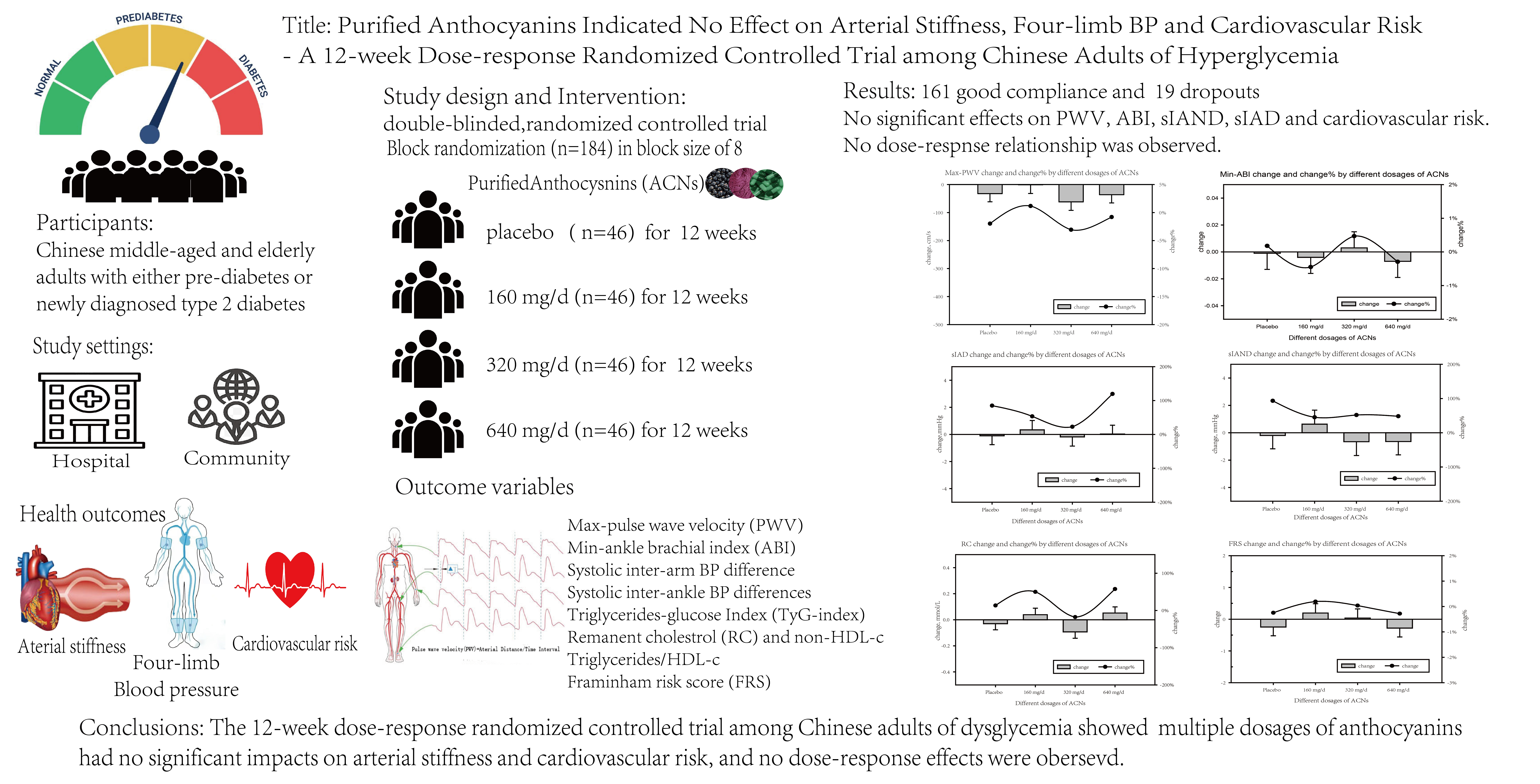
Background: Diabetes is associated with sub-optimal vascular function. Current evidence suggested purified anthocyanins (ACNs) could improve cardio-metabolic health, but the dose–response effects on arterial stiffness have not been verified. Objectives: To assess the dose-responsiveness of purified ACNs on vascular stiffness and cardiovascular risk among Chinese middle-aged and elderly patients with either prediabetes or early diabetes. Methods: This was a secondary analysis based on a 12-week double-blind, randomized and placebo-controlled trial. Eligible participants were randomly assigned to placebo, 160, 320 and 640 mg/d ACNs groups (n = 46/group). Information on dietary intakes and lifestyle habits and blood samples were collected at baseline and at week 12. Arterial stiffness and vascular function were measured by brachial-ankle pulse wave velocity (baPWV), ankle-brachial index (ABI) and four-limb blood pressures. Composite cardiovascular indices were estimated based on lipids and anthropometric data. Results: Total 184 eligible participants were recruited and 19 withdrew during the intervention. Baseline characteristics were generally comparable among groups. No significant effects or dose–response relationships were observed by ACNs supplementation on arterial stiffness and cardiovascular risk factors. Conclusions: The 12-week randomized controlled trial among Chinese middle-aged and elderly adults with dysglycemia showed multiple dosages of anthocyanins had no significant impacts on arterial stiffness and cardiovascular risk.

Graphical Abstract

1. Introduction

Diabetes is a major risk factor for atherosclerosis and associated with compromised vascular function and dysregulated lipids, contributing to significant increase in cardiovascular morbidity and all-cause mortality. Compared with pharmaceutical therapies, phytochemicals are safer and more cost-effective in management of cardiometabolic conditions. Anthocyanins (ACNs) are one major subclass of flavonoids and natural plant pigments conferring purple, blue and red hues to plants. In vitro and animal experiments suggested that ACNs and their metabolites may improve vascular function through enhancing antioxidant defense, reducing oxidative stress and inflammation, augmenting nitric oxide production and bioavailability or modulating gut microbiota [1,2]. Observational studies also suggested higher intake of flavonoid or ACN-rich foods were associated with improved arterial stiffness and lowered risk of cardiovascular diseases (CVD) [3,4,5].
Despite the favorable roles suggested by laboratory and observational studies, randomized controlled trials (RCTs) by ACN intervention have reported equivocal findings on vascular health [2,6,7,8]. A recent meta-analysis of RCTs suggests that chronic berry consumption benefits endothelial function (flow-mediated dilation, FMD) but is less certain on arterial stiffness including pulse wave velocity (PWV) and augmentation index (AIx) [8]. A systematic review supported an improvement on arterial stiffness by flavonoids intake [4], but another found null improvement by chronic ACNs supplementation [6]. The inconsistencies might be due to the wide heterogeneity in ACNs formula and dosage, the food matrix, durations and participants’ features. More clinical trials are required to clarify the efficacy and determine the optimal dosage of ACNs on vascular distensibility.
PWV has been established as a gold standard tool for arterial stiffness and a promising biomarker in cardiovascular diagnostics [9]. Studies confirmed that both PWV [10] and ankle-brachial index (ABI) [11] independently predict all-cause mortality or major cardiovascular events in diabetic patients. A combination of high PWV and low ABI exhibited superior associations with health outcomes in diabetic patients [12] and all-cause mortality in the elder population [13]. Furthermore, four-limb blood pressures are recommended for early detection and diagnosis of hypertension. Increased systolic inter-arm (sIAD) and inter-ankle (sIAND) differences in blood pressure are thought to be associated with atherosclerotic vascular damage in the systemic arterial tree [14]. In addition, both sIAD and sIAND are well-correlated with arterial stiffness and considered as the valid measures for vascular function to assess preclinical vascular diseases [15] and predict CVD events [16] and all-cause mortality [17].
There was considerable inconsistency in the evidence on the efficacy of ACNs with vascular function. No study has testified the dose-responsiveness of ACN on arterial stiffness and four-limb BPs, and its optimal dosage on vascular function has not been determined especially in at-risk populations. We thus conducted secondary analysis on the basis of a 12-week RCT which was conducted among 184 Chinese middle-aged and elderly adults with either prediabetes or early diabetes to testify the dose–response effects of purified ACNs (0, 160, 320 and 640 mg/d) on vascular function and composite CVD variables. We hypothesized that patients with dysglycemia under higher dosages of ACNs supplementation would have better improved arterial elasticity and CVD health.

2. Materials and Methods

2.1. Participants Recruitment

The study was based on a 12-week randomized, double-blind, placebo-controlled, dose–response trial which was conducted from October 2021 to February 2024 with the original purpose to testify the dose–response effects of ACNs on glycemic control and insulin sensitivity. Participants were recruited from health check-up center or local communities. Potential participants were screened for their initial eligibility by questionnaire via either telephone or in person interview. Persons who were identified at high risk of type 2 diabetes (i.e., a recent medical record of hyperglycemia, metabolic syndromes, medical or family history of diabetes, etc.) were invited to receive a standard 75 g oral glucose tolerance test (OGTT) for diabetes determination. For prediabetes, impaired fasting glucose was defined as fasting glucose (FG) within 5.6 to 6.9 mmol/L and impaired glucose tolerance was defined as 2 h post-load glucose (2 h PG) within 7.8 to 11.0 mmol/L. Diabetes was defined as FG level ≥ 7.0 mmol/L or 2 h PG level ≥ 11.1 mmol/L [18].
The Biomedical Ethics Committee of School of Public Health, Sun Yat-sen University approved the study protocol (No. 042 on 30 March 2020). Written informed consents have been obtained from all participants before enrollment. The trial has been registered at Chinese Clinical Trial Registry (ChiCTR2100041743) before initiation of recruitment.

2.2. Inclusion and Exclusion Criteria

Participants were eligible if they were aged 45 to 75 years; with a fasting glucose (FG) ≥ 5.6 mmol/L or a 2 h post-load glucose (PG) ≥ 7.8 mmol/L by standard OGTT; a body mass index (BMI) within 18.5 to 35 kg/m2. They were excluded if they had severe cardiovascular, endocrinal, hepatic or renal dysfunction in the prior 6 months; any malignancies in the last 5 years; abnormal vaginal bleeding for postmenopausal women; were a heavy smoker (>1 cigarette/d) or a heavy alcohol drinker (>30 g alcohol/d); taking medications for losing weight or long-term antibiotic users; mental or cognitive disorders; allergic to berries. Patients of clinically diagnosed type 2 diabetes or hyperlipidemia were allowed if they were undertaking a stable dosage and mono-therapy managed by a physician in the prior 3 months and across the intervention. All the eligible participants were asked to attend an orientation talk during which detailed study information and requirements were introduced.

2.3. Supplements, Randomization and Allocation

Both ACN (Medox) and placebo (maltodextrin) capsules were provided by Medpalett AS (Biolink Group, Sandnes, Norway). Treatment identity was masked by providing all interventions in capsules identical in weight, appearance and packaging. Each Medox capsule contains 80 mg anthocyanin citrate, which are concentrated extracts from wild bilberries (Vaccinium myrtillus) and blackcurrant (Ribes nigrum) comprising a mixture of 32% cyanidin, 58% delphinidin, 2.5% petunidin, 2.5% peonidin and 3.0% malvidin. ACN capsules also contained pullulan, maltodextrin and citric acid to maintain its stability. All capsules were packed into vacuumed blister and stored in cool, dark and dry place.
Before randomization, participants were required to take a two-week run-in exercise with intake of placebo capsules in order to familiarize them with the study requirements. Participants who consumed at least 90% assigned dosages and complied with all lifestyle instructions during the run-in phase, were randomly allocated into 4 treatment groups (0, 160, 320 and 640 mg/d ACNs) by a block randomization strategy in a block size of 8. The random numbers were computer-generated and performed by personnel not involved in the investigation. To secure blinding, participants in all the groups took the same number of 8 capsules daily. For example, participants in the 320 mg/d ACN group consumed 4 capsules of Medox and 4 capsules of placebos, while in the 160 mg/d group, they took 2 Medox and 6 placebo capsules. Total 184 eligible participants were randomized. Series numbers (1–184) were labeled in the cardboard boxes which contained a monthly dosage. Supplements were assigned to participants according to their sequence of enrollment. The group allocation was blinded to all the participants and study investigators. Allocation disclosure was allowed only if serious adverse events occurred with approval from the principle investigator. Blinding efficacy was tested at the end of the trial by asking participants to guess their assignment and comparing the correct rates among groups.

2.4. Instructions to Participants and Compliance Assessment

Participants were free living. They were asked to reduce ACN- or polyphenol-rich foods intake (i.e., purple potatoes, blue strawberries, brassicas, mulberries, cherries, waxberries, red or black rice, red wine and strong tea, etc.) to less than 2 times per week and to refrain from phytochemical supplements and usages of antioxidants or probiotics (i.e., sesame, flax seeds, resveratrol, vitamin E and C, fish oil, berries or berry products, etc.) since the run-in phase. Alcohol drinking was restricted to no more than 30 g alcohol/week. Participants were asked to maintain their habitual lifestyles and medications unchanged during the study course. Both telephone and personal interviews were conducted monthly by research staff to investigate the supplements’ consumption, adverse events, medication usages and lifestyle changes. Compliance was evaluated by counting the leftover capsules to estimate the percentage of intake. Good compliance was defined as intake of at least 80% of expected dosages and attendance of three clinical visits for specimens’ collection.

2.5. Data Collection

2.5.1. Questionnaire Survey and Anthropometric Measures

Socio-demographics were investigated at baseline via face-to-face or telephone interviews using a pre-tested questionnaire. Anthropometrics including body weight, height and waist circumference were measured at baseline and at week 12 by standard protocols. Dietary intakes were evaluated by a validated 79-item food frequency questionnaire (FFQ) at baseline and at the end of trial [19]. Dietary energy and nutrients intakes were calculated using the 2018 Chinese Food Composition Table [20]. Consumption of major nutrients and food groups as well as the changes across intervention were compared among different groups. Physical activities (PAs) were evaluated by a short form of the International Physical Activity Questionnaire (IPAQ) to investigate the weekly time spent on sedentary, walking, moderate and intensive activities [21]. Total PA energy expenditure was expressed as MET-h per week (metabolic equivalent of task hours per week) according to an established compendium PA coding scheme [22]. Basal and final PA as well as their pre–post changes were compared among groups.

2.5.2. Arterial Stiffness and Four-Limb Blood Pressures

Brachial-ankle PWV (baPWV) and ABI were measured in both upper and lower limbs by trained research staff using a non-invasive vascular screening device of Omron Colin BP-203RPEIII (Omron Healthcare, Kyoto, Japan) based on a standard protocol [23]. The measures were made with participants in supine position after a 10 min rest. Participants were asked to refrain from coffee, alcohol and intensive exercise for at least 12 h and to empty their bladder before testing. They were asked to keep calm and remain immobile during measurement. Standard cuffs with oscillometric sensors were attached to their upper arms and ankles. One heart sound detector was placed at the left edge of the sternum. Pulse waves of bilateral brachial and posterior tibial arteries were recorded simultaneously over 10–15 consecutive heartbeats. BaPWV was estimated by dividing the transmission distance (cm) with the time interval (s) from brachium to ankle. The system automatically and simultaneously measured BPs in all four limbs. ABI was calculated as the SBP ratio in the ankle to the brachial artery. Maximum PWV (the higher lateral baPWV) and minimum ABI (the ratio of lower ankle SBP to higher brachial SBP) were further estimated. Systolic inter-arm and inter-ankle blood pressures (sIAD and sIAND) were calculated accordingly.

2.5.3. Specimens Collection and Biochemical Testing

Blood collection was made at the start of run-in, week 0 and week 12 of intervention. Overnight fasting venous samples were collected in both NaF, EDTA and blank tubes. Plasma and serum were separated within 2 h after blood collection and centrifuged at 3000 r/min for 15 min at 4 °C. Samples were allocated into several vials and stored at −80 °C in a freezer until analysis. Blood samples which were collected at baseline and at the end of the trial were analyzed simultaneously in the same run of the auto-analyzer. Lipids including total cholesterol (TC), triglycerides (TG), HDL and LDL-cholesterol were tested by enzymatic methods on Beckman Coulter AU5821 (Brea, CA, USA). All the intra- and inter-CVs were less than 5%. Remnant cholesterol (RC) was calculated by subtracting HDL-c and LDL-c from TC. Non-HDL was estimated by the formula of (LDL-c + 1/5 × TG). The Framingham risk score (FRS) was estimated on the basis of several common coronary risk factors (age, sex, TC, HDL-c, smoking and SBP) to assess individual’s risk of developing coronary heart disease (CHD) [24].

2.6. Sample Size and Power Estimation

Sample size estimation was made for the original study outcome of HbA1c using the formula of 2[(Zα/2 + Zβ) × SD/δ]2] for two-arm RCT, with SD of 0.35% for the change in HbA1c [25]. Based on the conventional two-tailed α of 0.05 and 90% power (β = 0.10), and accounting for a 10% drop-out, 38 subjects per group are appropriate to obtain a significant change in HbA1c (δ = 0.2%). Post hoc power estimation was made for current main outcomes according to their SD and mean differences at the 3-month changes by 320 mg/d ACNs supplementation, which were 94% for max-baPWV, 95% for min-ABI, 91% for sIAD and 93% for sIAND.

2.7. Statistical Analysis

All statistical analyses were performed using IBM SPSS 25.0 software. Statistical significance was defined at an adjusted p value of 0.017 (0.05/3 due to 3 ACNs groups being compared with the placebo). Baseline characteristics were compared to examine the initial comparability among different dosage groups. A carry-forward strategy was applied for complementing the missing data at week 12 due to withdrawals. Normality was tested by Kolmogorov–Smirnov approach. Data of heterogenous variance were logarithmically transformed or analyzed by non-parametric approach. The primary analytical approach was intention-to-treat (ITT) analysis for all the participants who were randomized (n = 184). Per-protocol analysis was furthermore performed as sensitivity analysis among participants of good compliance (n = 161). Pre-post changes and change percentages were compared among groups by one-way ANOVA for ITT analysis, or analysis of covariance (ANCOVA) for per-protocol analysis with controlling for baseline variables and possible confounders. Trend analysis across different dosage groups was conducted by either parametric (ANOVA, linear trend) or non-parametric (Jonckheere–Terpstra) approach when applicable.
Further sensitivity analyses were made to testify the results’ robustness by (1) exclusion of patients who were under medications for lowering glucose, lipids and thyroid dysfunction; (2) multivariable linear mixed model (LMM) with individual participants as random factors and adjustment for baseline data to compare the 3-month change and change% among treatment groups [26]. Subgroup analyses by gender (male vs. female), age (<65 vs. ≥65 yrs), baseline BMI (<24 vs. ≥24 kg/m2), hyperglycemia (prediabetes vs. diabetes), hypertension (yes vs. no) and hyperlipidemia (yes vs. no) were conducted to explore possible effect modifications of ACNs treatment on the outcomes. Interactions were testified before stratification with inclusion of a product term (subgroup variable*treatment group) into the general linear models (GLM). Results by stratification were presented only for those with p for interactions less than 0.15 with at least one of the main outcomes.

3. Results

The study flow was shown in Figure 1. A total of 184 participants were randomized and 19 withdrew during follow-up. The major reasons for the dropouts were discomfort or medical conditions (n = 6, two for abdominal pain, one for edema in foot, one for visual blur, one for diagnosis of breast cancer and one for knee operation), too busy (n = 3) or far distance (n = 3). The dropout rates were similar among different dosage groups (p = 0.561). In total, 161 participants (87.5%) were defined as having good compliance. The blinding tests at the final visit suggested a general good blinding efficacy (p = 0.865 for kappa agreement test).
Baseline features of participants were generally comparable among different dosage groups in terms of age, gender, education attainment, marital status, medication usages, weight, BMI, smoking, alcohol, and tea and coffee drinking (Table 1). Dietary intakes, sedentary time and total PA energy expenditure at baseline and at week 12 and their changes across intervention did not differ significantly among the four treatment groups (Table 2). Results by ITT analysis among 184 randomized participants demonstrated generally non-significant differences among four groups in both change and change% for variables of arterial stiffness including bilateral baPWV and ABI, the max-baPWV and the min-ABI (Table 3). Different dosages of ACNs had no significant impact on four limbs systolic and diastolic BP, mean arterial BP (MAP), sIAN and sIAND (Table 4). Neither significant effect was found on the composite CVD markers including TG/HDL-c, triglycerides-glucose index (TyG-index), TyG-BMI, visceral adiposity index (VAI) and FRS (Table 5).
Only marginal differences were suggested in the 3-month change and change% for RC (p = 0.048 and 0.034) and non-HDL-c (p = 0.037 and 0.033) yet lacking a dose–response trend. Compared with the 160 mg ACN group, RC in the 320 mg group exhibited a significant reduction in the 3-month change with a mean difference of −0.158 ± 0.618 mmol/L (p = 0.011 by LSD approach). Compared with the 320 mg group, a marginal increase in RC was observed in the 640 mg group in the 3-month change and change% with a mean difference of −0.131 ± 0.061 (p = 0.034) mmol/L and 56.6 ± 23.3% (p = 0.016), respectively. For non-HDL-c, compared with placebo, an increase was observed in the 160 mg ACN group with a mean difference of 0.292 ± 0.107 mmol/L in the 3 m change (p = 0.007) or 7.711% ± 2.910% for change% (p = 0.009). In addition, patients in the 640 mg group had a marginal decrease in non-HDL-c in comparison with those of the 160 mg group, with a mean difference of −0.249 ± 0.107 mmol/L in the 3 m change (p = 0.021) or −7.242% ± 2.910% in change% (p = 0.014).
Similar findings were observed by per-protocol (Table S1 and Figures S1–S13) and LMM (Table S2) analyses; neither dosages of ACNs significantly affected vascular and CVD risk variables, although a relatively low level of RC was observed in the 320 mg group at 3 m change% while an elevated level was observed in the 640 mg group with marginal significance (Poverall = 0.018~0.051). Exclusion of patients who were taking medications for hyperglycemia, hyperlipidemia or thyroid dysfunction suggested similar findings with those of whole participants (Supplemental Table S3). Subgroup analyses stratified by different groups of gender, age, basal BMI, hyperglycemia, hypertension and hyperlipidemia exhibited generally non-significant findings and a lack of dose-effectiveness (Supplemental Tables S4–S9). Marginal differences among the four groups were observed in RC at the 3-month change% in the female (Poverall = 0.026) and per-diabetes (Poverall = 0.040) subgroups, with a reduced RC in the 320 mg group.

4. Discussion

4.1. Summary of Current Findings

The 12-week RCT among Chinese middle-aged and elderly men and women with hyperglycemia examined the dose–response effects of ACNs (0, 160, 320 and 640 mg/d) and failed to find their positive effects on the improvement of arterial stiffness, four-limb BP and CVD risk. No dose–response relationship was identified either. ACNs were generally safe even in a high dosage of 640 mg/d; however, the study did not support their anti-arthrosclerosis benefits. Although marginal improvement was suggested by 320 mg/d ACNs supplementation on RC, the one or two significant exploratory findings among the dozens of comparisons should be treated with caution and require confirmation with further research. To our knowledge, this trial was the first testifying the dose–response effects of purified ACNs on arterial stiffness and four-limb BPs. Further studies exploring the mechanisms on treatment response variability by intestinal microbiome and targeted metabolome are warranted to untangle the controversial evidence.

4.2. Results Explanation

Reviews on ACNs with vascular function and elasticity reported inconsistent findings [2,4,6,8,27]. Our findings align with a range of trials demonstrating non-significant changes in PWV or BPs by ACNs supplementation [28,29,30,31,32,33,34,35,36] but not all [37,38,39,40]. The contradictory findings are hard to interpret by different ACNs formulas, duration, dosages or health status of participants. This is because there were studies with longer duration than ours [32], including different ACNs dosages [32,36], ACNs contained in polyphenol-rich foods [28,29,30,31,32,33,34,35,36] or among at-risk populations [28,29,30,31,32,33,34,35,36], that still reported non-significant findings in vascular stiffness. In line with our findings, a 6-month RCT [32] examined the effect of blueberry intake (1, 0.5 and 0 cup/d, containing 364, 182 and 0 mg anthocyanin and 879, 439 and 0 mg phenolics, respectively) among 115 patients of metabolic syndromes showed that, although one cup of blueberries daily improved FMD and AIx, insulin resistance, PWV, BP, NO and overall plasma thiol status were unaffected. A 12-week RCT [35] comparing aronia whole fruit (12 mg polyphenol, 10 g berries) and extract powder (116 mg polyphenol, 75 g berries) found a significant increase in FMD over the control (maltodextrin), but no significant difference in peripheral and central BP, arterial stiffness and lipids. A 3-month RCT [28] with 60 mL tart montmorency cherries (MC) concentrate (equivalent to 68–73.5 mg ACNs and 160.8–178.8 mg total phenolics) on adults at high risk of type 2 diabetes reported null effects of MC on vascular function (PWV, FMD and BP) and metabolic variables. Another randomized, open label, cross-over trial [30] on adults with central obesity also showed, consumption of ACN-rich (50 mg ACNs/500 mL) blood-orange juice for four weeks did not affect lipoproteins, aortic BPs, carotid-femoral and brachial-ankle PWV.
In contrast, several trials reported favorable improvement on arterial stiffness by ACN-rich foods or extracts [37,38,39,40]. A 12-week RCT [37] on overweight participants reported that daily dietary intakes of 293.6 mg anthocyanins and 1370 mg total polyphenols were effective in protecting against arterial stiffness, although they had no benefit on weight loss. Another study [39] among prehypertensive participants found that 12-week Aronia berry consumption improved PWV and Aix, although there were no changes in BP, endothelial function and blood lipids. The favorable changes were possibly via modulation of gut microbiome composition and richness. Evidence suggested the intricate interplay of ACNs with other constituents in the food matrix (i.e., glucose, protein, fibers, organic acids and other polyphenolic compounds) might favor improved bioavailability, leaning benefits towards whole foods over purified foods or extracts [41,42]. The food matrix may exert a protective effect against the degradation of anthocyanins by enhancing its stability, antioxidant property and bioactivity relative to its isolated counterpart [41]. In addition, different flavonoids may generate common groups of metabolites exerting synergistic or additive impacts on vascular health [41]. Further investigations on supplement processing techniques, gut microbiota interactions, inter-individual differences in genetics, ACNs in combination with lifestyle factors or medications for enhanced efficacy might help explain the results [41].
We observed a marginal difference among groups in remnant lipoproteins at the 3-month change or change% with a relative lower level of RC in the 320 mg/d ACNs group while elevated levels were found in the 640 mg/d group. Recent evidence suggested RC [43,44] and non-HDL-c [24] might actually have stronger associations with major adverse CVD events or mortality than LDL-c did. Remnant lipoproteins are deemed as the strongest candidates among triglycerides for targeting CHD risk reduction [24]. A recent systematic review and meta-analysis [45] including 28 cohort studies showed that each 1 SD increase in RC was associated with a 67% (HR 95% CI: 1.39, 2.01) increase in risk of major adverse cardiovascular events (MACE) in a notable dose–response manner. Mendelian randomization results reinforced the existence of causal relationship, suggesting the atherosclerotic risk may be majorly driven by the direct effect of RC [46]. This is because RC has a smaller particle size than LDL-c, favoring its penetration to the endothelial barrier and contributing to the progression of atherosclerosis [47]. Non-HDL-c has been confirmed to highly correlate with atherogenic remnant lipoproteins to enhance CV risk prediction when serum triglycerides are high [24]. Our study was the first RCT examining the effects of ACNs on RC; however, contrary to our expectation, we observed a paradoxical effect on RC, non-HDL-c and triglycerides-related markers (null effect) by ACNs supplementation even if these lipid variables were highly correlated. The reasons are unclear and the paradoxical findings warrant further investigation. Future studies are required with inclusion of a larger sample size and direct measurement of RC and subclasses of HDL-c to confirm the role of ACNs on lipids metabolism.
We did not observe the obvious dose–response effects of ACNs on cardiometabolic markers as other ACNs trials did [48,49,50]. Similar to our findings, studies with higher doses of ACNs-rich foods did not exhibit greater impacts on vascular function than those of lower doses [32,36]. Inadequate sample size, insufficient dosages of ACNs and short duration of intervention might contribute to the null effect. However, compared with trials that reported the significant effects of ACNs on vascular stiffness [37,38,40], our study had relatively large sample size and long enough duration. Post hoc power estimation suggested adequate power (all > 90%) for PWV-, ABI- and peripheral BP-related variables. In addition, our trial included a wide range of ACNs dosages from 0 to 640 mg/d. The insufficient dosage and duration as well as the small sample size thus seem unlikely to be driving the non-significant findings on vascular stiffness.
The health status of participants or their use of medications might confound the results. Although the current study was specifically conducted among patients with either prediabetes or early diabetes, they had generally normal vascular stiffness and BP levels and much lower rates of lipid-lowering therapy among participants. Concurrent medication therapies for metabolic conditions might affect the intervention efficacy. However, all the participants who were undertaking medications for metabolic disorders kept stable dosages and monotherapy across the intervention. Sensitivity analysis with exclusion of patients under medications and subgroup analyses by different metabolic conditions revealed similar findings to those of whole participants. We did not observe significant impacts on lipids other than RC. It is therefore unlikely participants’ health status or medications could explain the non-significant findings.
The null findings could also be explained as the varied responsiveness to ACNs treatment among participants. However, we did not investigate the factors affecting the interindividual variability in response to the intervention. Studies showed participants’ heterogeneities in their biological responses, including gut microbiome composition and (epi)-genetic profiles as well as the differences in the absorption, distribution, metabolism and excretion of bioactive compounds, might play an important role in the contradictory findings [51]. Identifying the main determinants of inter-individual differences and responsiveness profiles, remains essential to target specific populations and optimize the beneficial health effects of bioactive plant food [51].

4.3. Study Strengths and Limitations

The double-blinded, block randomized and placebo-controlled trial designed with multi-dose ACNs were the major strengths of this study. This study was the first to evaluate the dose–response effect of purified ACNs on arterial stiffness among Chinese adults with hyperglycemia. The study had strength in adequate sample size, generally good compliance, low drop-out, effective blinding and use of non-invasive measures for arterial stiffness. In addition, we allowed medication treatment for chronic metabolic conditions which was a common circumstance in the elderly population and this might facilitate the generalizability of the study and its findings. The data regarding the medication history and changes in prescriptions were fully investigated and followed across the intervention, which effectively limited the impact from medications on the outcomes. In addition, all the participants were instructed to restrict their ACNs/polyphenol-rich foods intake to no more than two times per weeks, terminate any phytochemicals or antioxidants supplements since the run-in phase and keep lifestyles unchanged throughout the intervention. Both per-protocol, subgroup and sensitivity analyses suggested robust findings. Although the study was conducted during the COVID pandemic period, which resulted in a relatively slow recruitment progress, no participants withdrew or were hospitalized due to virus infection or quarantine. Lifestyle changes and psychological stress might be brought about during the virus spread [52,53]. However, dietary intakes and physical activities investigated before and after intervention suggested their changes were comparable among different dosage groups.
The study’s limitations should be acknowledged. First, although we applied block randomization for participant assignment, the influence of different genders and BMI levels was not pre-specified. However, post hoc stratification suggested similar findings among subgroups. Second, due to resource limitation, ACNs’ bioavailability and participants’ compliance were not assessed by objective biomarkers. As most of previous ACNs trials did, compliance was not objectively evaluated by ACNs metabolites due to their low bioavailability, short half shelf-life and limited specificity in circulation. Third, arterial stiffness was assessed by baPWV not carotid-femoral PWV (cfPWV). Ba-PWV was an alternative technique for aortic PWV which was measured directly by oscillometry over the arm and ankle [54]. Longitudinal studies have revealed baPWV showed better predictivity for CVD events in Asian diabetic patients [10,55], as baPWV assesses the mechanical property covering both the large-sized central elastic and medium-sized peripheral muscular arteries [56]. In addition, compared with cfPWV, baPWV requires a simpler and faster recording procedure that is less traumatic for the patients and more practical and cost-effective [57].

5. Conclusions

This first dose–response trial among Chinese middle-aged and elder adults with dysglycemia suggested ACNs supplementation for 12 weeks had no significant effects on vascular stiffness, four-limb BP and CVD risk. Although the findings were generally non-significant, ACNs were shown to be safe, well-tolerated and had no deleterious effects on vascular health. Further investigations exploring the mechanisms of individual variability in response to ACNs by gut metabolites and targeted metabolomics are necessary.

Supplementary Materials

The following supporting information can be downloaded at: https://www.mdpi.com/article/10.3390/nu18010112/s1. Reference [58] is cited in the supplementary materials. Table S1. Per-protocol analysis for the effects (change and change%) of anthocyanins on arterial stiffness, four-limb blood pressures and composite cardiovascular markers among participants who had good compliance by multivariable general linear model (n = 161); Table S2. Sensitivity analyses by linear mixed model (LMM) with individual participants as random factor and adjustment for baseline data on the week-12 change and change% of arterial stiffness, four-limb blood pressures and composite cardiovascular markers (n = 184); Table S3. Sensitivity analyses by exclusion of patients under medications for lowering glucose, lipids, or thyroid conditions for the effects of anthocyanins (3-month change and change%) on arterial stiffness, four-limb blood pressures and composite cardiovascular markers by ANCOVA; Table S4. Subgroup analyses by gender (female and male) for the effects of anthocyanins on the pre-post change% of arterial stiffness, four-limb blood pressure and composite cardiovascular markers by ANCOVA; Table S5. Subgroup analyses by age (<65 and ≥65 yrs) for the effects of anthocyanins on the pre-post change% of arterial stiffness, four-limb blood pressure and composite cardiovascular markers by ANCOVA; Table S6. Subgroup analyses by body mass index (BMI <24 vs. ≥24 kg/m2) for the effects of anthocyanins on the pre-post change% of arterial stiffness, four-limb blood pressures and composite cardiovascular markers by ANCOVA; Table S7. Subgroup analyses by severity of hyperglycemia (pre-diabetes vs. diabetes) for the effects of anthocyanins on the pre-post change% of arterial stiffness, four-limb blood pressures and composite cardiovascular markers by ANCOVA; Table S8. Subgroup analyses by baseline hypertension for the effects of anthocyanins on the pre-post change% of arterial stiffness, four-limb blood pressure and composite cardiovascular markers by ANCOVA; Table S9. Subgroup analyses by baseline hyperlipidemia for the effects of anthocyanins on the pre-post change% of arterial stiffness, four-limb blood pressures and composite cardiovascular markers by ANCOVA; Table S10. CONSORT 2025 checklist item description; Figure S1. Max-PWV change and change% by different dosages of ACNs; Figure S2. Min-ABI change and change% by different dosages of ACNs; Figure S3. Left brachial SBP change and change% by different dosages of ACNs; Figure S4. Left brachial DBP change and change% by different dosages of ACNs; Figure S5. sIAD change and change% by different dosages of ACNs; Figure S6. sIAND change and change% by different dosages of ACNs; Figure S7. RC change and change% by different dosages of ACNs; Figure S8. Non-HDL change and change% by different dosages of ACNs; Figure S9. TG/HDL-c change and change% by different dosages of ACNs; Figure S10. TyG-BMI change and change% by different dosages of ACNs; Figure S11. VAI change and change% by different dosages of ACNs; Figure S12. FRS change and change% by different dosages of ACN; Figure S13. TyG-index change and change% by different dosages of ACN.

Author Contributions

Z.L., R.L. and J.C. (Jiachi Chiou) conceptualized the topic and obtained funding support; Z.L. and M.L. made data curation and analysis, results explanation and drafted the manuscript; Y.C. conducted randomization and allocation concealment and offered professional consultation on the project. M.L. and H.L. made field investigation and data collection and analysis; C.C., C.W. and J.C. (Jianyin Chen) helped in participants recruitment, coordinated the study investigation and provided professional advice. All authors have read and agreed to the published version of the manuscript.

Funding

The study was funded by the Natural Science of Funding of China (Grant No: 82073533).

Institutional Review Board Statement

The study was conducted according to the guidelines of the Declaration of Helsinki and approved by the Ethics Committees of School of Public Health, Sun Yat-sen University (North Campus) with protocol code of 2020042 (date of approval: 30 March 2020) and registered on Chinese Clinical Trial with the registry no of ChiCTR2100041743 (date of registration: 3 January 2021; in website of https://www.chictr.org.cn/hvshowproject.html?id=81960&v=1.7, accessed on 1 December 2025).

Informed Consent Statement

Informed consent was obtained from all participants before enrolment.

Data Availability Statement

The original datasets are not publicly available due to ethical limitations on publishing medical record data, but are available from the corresponding author on reasonable request under a strict confidential process.

Acknowledgments

We are grateful to the Medox Norway company for their generous sponsorship, for providing supplements and for their preparation of placebo capsules. We are grateful to all the research members for their keen efforts in field investigation and data collection. We greatly appreciate the doctors and nurses in the Sun Yat-sen Memorial Hospital for their keen assistance in facilitating participants’ recruitment, blood collection and data coordination. We acknowledge the Department of Clinical Laboratory of Sun Yat-sen Memorial Hospital for analyzing the bio-specimens. We would like to thank all the participants for their good compliance and for so generously making their data available for research. We acknowledge Wen-hua Ling (Sun Yat-sen University) provided keen assistance for seeking sponsorship of supplements.

Conflicts of Interest

All the authors had no conflicts of interest to be claimed. The funder and sponsor had no role in the design of the study; the data collection, analyses or interpretation of data; in the writing of the manuscript; or in the decision to publish the results.

References

  1. Tang, Z. Cyanidin-3-glucoside: Targeting atherosclerosis through gut microbiota and anti-inflammation. Front. Nutr. 2025, 12, 1627868. [Google Scholar] [CrossRef] [PubMed]
  2. Woolf, E.K.; Lee, S.Y.; Ghanem, N.; Vazquez, A.R.; Johnson, S.A. Protective effects of blueberries on vascular function: A narrative review of preclinical and clinical evidence. Nutr. Res. 2023, 120, 20–57. [Google Scholar] [CrossRef] [PubMed]
  3. Wood, E.; Hein, S.; Heiss, C.; Williams, C.; Rodriguez-Mateos, A. Blueberries and cardiovascular disease prevention. Food Funct. 2019, 10, 7621–7633. [Google Scholar] [CrossRef] [PubMed]
  4. Lilamand, M.; Kelaiditi, E.; Guyonnet, S.; Antonelli Incalzi, R.; Raynaud-Simon, A.; Vellas, B.; Cesari, M. Flavonoids and arterial stiffness: Promising perspectives. Nutr. Metab. Cardiovasc. Dis. 2014, 24, 698–704. [Google Scholar] [CrossRef]
  5. Jennings, A.; Welch, A.A.; Fairweather-Tait, S.J.; Kay, C.; Minihane, A.M.; Chowienczyk, P.; Jiang, B.; Cecelja, M.; Spector, T.; Macgregor, A.; et al. Higher anthocyanin intake is associated with lower arterial stiffness and central blood pressure in women. Am. J. Clin. Nutr. 2012, 96, 781–788. [Google Scholar] [CrossRef]
  6. Fairlie-Jones, L.; Davison, K.; Fromentin, E.; Hill, A.M. The Effect of Anthocyanin-Rich Foods or Extracts on Vascular Function in Adults: A Systematic Review and Meta-Analysis of Randomised Controlled Trials. Nutrients 2017, 9, 908. [Google Scholar] [CrossRef]
  7. Wallace, T.C.; Slavin, M.; Frankenfeld, C.L. Systematic Review of Anthocyanins and Markers of Cardiovascular Disease. Nutrients 2016, 8, 32. [Google Scholar] [CrossRef]
  8. Talebi, S.; Shirani, M.; Shokri-Mashhadi, N.; Sadeghi, O.; Karav, S.; Bagherniya, M.; Sahebkar, A. The long-term and post-prandial effects of berry consumption on endothelial dysfunction in adults: A systematic review and meta-analysis of randomised controlled trials. Int. J. Food Sci. Nutr. 2025, 76, 134–164. [Google Scholar] [CrossRef]
  9. Pilz, N.; Heinz, V.; Ax, T.; Fesseler, L.; Patzak, A.; Bothe, T.L. Pulse Wave Velocity: Methodology, Clinical Applications, and Interplay with Heart Rate Variability. Rev. Cardiovasc. Med. 2024, 25, 266. [Google Scholar] [CrossRef]
  10. Kim, J.M.; Kim, S.S.; Kim, I.J.; Kim, J.H.; Kim, B.H.; Kim, M.K.; Lee, S.H.; Lee, C.W.; Kim, M.C.; Ahn, J.H.; et al. Arterial stiffness is an independent predictor for risk of mortality in patients with type 2 diabetes mellitus: The REBOUND study. Cardiovasc. Diabetol. 2020, 19, 143. [Google Scholar] [CrossRef]
  11. Nie, F.; He, J.; Cao, H.; Hu, X. Predictive value of abnormal ankle-brachial index in patients with diabetes: A meta-analysis. Diabetes Res. Clin. Pract. 2021, 174, 108723. [Google Scholar] [CrossRef]
  12. Chang, L.H.; Lin, H.D.; Kwok, C.F.; Won, J.G.; Chen, H.S.; Chu, C.H.; Hwu, C.M.; Kuo, C.S.; Jap, T.S.; Shih, K.C.; et al. The combination of the ankle brachial index and brachial ankle pulse wave velocity exhibits a superior association with outcomes in diabetic patients. Intern. Med. 2014, 53, 2425–2431. [Google Scholar] [CrossRef]
  13. Zhang, A.; Liu, Y.; Ma, S.; Bao, Q.; Sun, J.; Su, Y.; Cai, S.; Cheng, B.; Li, M.; Zhang, Y.; et al. Effects of ankle-brachial index and brachial-ankle pulse wave velocity on all-cause mortality in a community-based elderly population. Front. Cardiovasc. Med. 2022, 9, 883651. [Google Scholar] [CrossRef] [PubMed]
  14. Tomiyama, H.; Ohkuma, T.; Ninomiya, T.; Mastumoto, C.; Kario, K.; Hoshide, S.; Kita, Y.; Inoguchi, T.; Maeda, Y.; Kohara, K.; et al. Simultaneously Measured Interarm Blood Pressure Difference and Stroke: An Individual Participants Data Meta-Analysis. Hypertension 2018, 71, 1030–1038. [Google Scholar] [CrossRef] [PubMed]
  15. Liu, S.; Li, P.; Su, H. Four-Limb Blood Pressure Measurement with an Oscillometric Device: A Tool for Diagnosing Peripheral Vascular Disease. Curr. Hypertens. Rep. 2019, 21, 15. [Google Scholar] [CrossRef] [PubMed]
  16. Yang, W.; Sun, L.; He, Y.; Xu, X.; Gan, L.; Guo, T.; Yang, L. Association between four-limb blood pressure differences and arterial stiffness: A cross-sectional study. Postgrad. Med. 2022, 134, 309–315. [Google Scholar] [CrossRef]
  17. Clark, C.E.; Warren, F.C.; Boddy, K.; McDonagh, S.T.J.; Moore, S.F.; Goddard, J.; Reed, N.; Turner, M.; Alzamora, M.T.; Ramos Blanes, R.; et al. Associations Between Systolic Interarm Differences in Blood Pressure and Cardiovascular Disease Outcomes and Mortality: Individual Participant Data Meta-Analysis, Development and Validation of a Prognostic Algorithm: The INTERPRESS-IPD Collaboration. Hypertension 2021, 77, 650–661. [Google Scholar] [CrossRef]
  18. American Diabetes Association Professional Practice Committee; ElSayed, N.A.; Aleppo, G.; Bannuru, R.R.; Bruemmer, D.; Collins, B.S.; Ekhlaspour, L.; Gaglia, J.L.; Hilliard, M.E.; Johnson, E.L.; et al. 2. Diagnosis and Classification of Diabetes: Standards of Care in Diabetes-2024. Diabetes Care 2024, 47, S20–S42. [Google Scholar] [CrossRef]
  19. Zhang, C.X.; Ho, S.C. Validity and reproducibility of a food frequency Questionnaire among Chinese women in Guangdong province. Asia Pac. J. Clin. Nutr. 2009, 18, 240–250. [Google Scholar]
  20. Yang, Y.X. China Food Composition Tables, 6th ed.; Peking University Medical Press: Beijing, China, 2018. [Google Scholar]
  21. Craig, C.L.; Marshall, A.L.; Sjöström, M.; Bauman, A.E.; Booth, M.L.; Ainsworth, B.E.; Pratt, M.; Ekelund, U.; Yngve, A.; Sallis, J.F.; et al. International physical activity questionnaire: 12-country reliability and validity. Med. Sci. Sports Exerc. 2003, 35, 1381–1395. [Google Scholar] [CrossRef]
  22. Ainsworth, B.E.; Haskell, W.L.; Whitt, M.C.; Irwin, M.L.; Swartz, A.M.; Strath, S.J.; O’Brien, W.L.; Bassett, D.R., Jr.; Schmitz, K.H.; Emplaincourt, P.O.; et al. Compendium of physical activities: An update of activity codes and MET intensities. Med. Sci. Sports Exerc. 2000, 32, S498–S504. [Google Scholar] [CrossRef] [PubMed]
  23. Zheng, M.; Xu, X.; Wang, X.; Huo, Y.; Xu, X.; Qin, X.; Tang, G.; Xing, H.; Fan, F.; Cui, W.; et al. Age, arterial stiffness, and components of blood pressure in Chinese adults. Medicine 2014, 93, e262. [Google Scholar] [CrossRef] [PubMed]
  24. National Cholesterol Education Program (NCEP) Expert Panel on Detection, Evaluation, and Treatment of High Blood Cho-lesterol in Adults (Adult Treatment Panel III). Third Report of the National Cholesterol Education Program (NCEP) Expert Panel on Detection, Evaluation, and Treatment of High Blood Cholesterol in Adults (Adult Treatment Panel III) final report. Circulation 2002, 106, 3143–3421. [Google Scholar]
  25. Yang, L.; Ling, W.; Yang, Y.; Chen, Y.; Tian, Z.; Du, Z.; Chen, J.; Xie, Y.; Liu, Z.; Yang, L. Role of Purified Anthocyanins in Improving Cardiometabolic Risk Factors in Chinese Men and Women with Prediabetes or Early Untreated Diabetes-A Randomized Controlled Trial. Nutrients 2017, 9, 1104. [Google Scholar] [CrossRef] [PubMed]
  26. Schielzeth, H.; Dingemanse, N.J.; Nakagawa, S.; Westneat, D.F.; Allegue, H.; Teplitsky, C.; Réale, D.; Dochtermann, N.A.; Garamszegi, L.Z.; Araya-Ajoy, Y.G. Robustness of Linear Mixed-Effects Models to Violations of Distributional Assumptions. Methods in Ecology and Evolution 2020, 11, 1141–1152. [Google Scholar] [CrossRef]
  27. Mozos, I.; Flangea, C.; Vlad, D.C.; Gug, C.; Mozos, C.; Stoian, D.; Luca, C.T.; Horbańczuk, J.O.; Horbańczuk, O.K.; Atanasov, A.G. Effects of Anthocyanins on Vascular Health. Biomolecules 2021, 11, 811. [Google Scholar] [CrossRef]
  28. Kimble, R.; Keane, K.M.; Lodge, J.K.; Howatson, G. The Influence of Tart Cherry (Prunus cerasus, cv Montmorency) Concentrate Supplementation for 3 Months on Cardiometabolic Risk Factors in Middle-Aged Adults: A Randomised, Placebo-Controlled Trial. Nutrients 2021, 13, 1417. [Google Scholar] [CrossRef]
  29. Lynn, A.; Mathew, S.; Moore, C.T.; Russell, J.; Robinson, E.; Soumpasi, V.; Barker, M.E. Effect of a tart cherry juice supplement on arterial stiffness and inflammation in healthy adults: A randomised controlled trial. Plant Foods Hum. Nutr. 2014, 69, 122–127. [Google Scholar] [CrossRef]
  30. Hollands, W.J.; Armah, C.N.; Doleman, J.F.; Perez-Moral, N.; Winterbone, M.S.; Kroon, P.A. 4-Week consumption of anthocyanin-rich blood orange juice does not affect LDL-cholesterol or other biomarkers of CVD risk and glycaemia compared with standard orange juice: A randomised controlled trial. Br. J. Nutr. 2018, 119, 415–421. [Google Scholar] [CrossRef]
  31. Johnson, S.A.; Navaei, N.; Pourafshar, S.; Jaime, S.J.; Akhavan, N.S.; Alvarez-Alvarado, S.; Proaño, G.V.; Litwin, N.S.; Clark, E.A.; Foley, E.M.; et al. Effects of Montmorency Tart Cherry Juice Consumption on Cardiometabolic Biomarkers in Adults with Metabolic Syndrome: A Randomized Controlled Pilot Trial. J. Med. Food 2020, 23, 1238–1247. [Google Scholar] [CrossRef]
  32. Curtis, P.J.; van der Velpen, V.; Berends, L.; Jennings, A.; Feelisch, M.; Umpleby, A.M.; Evans, M.; Fernandez, B.O.; Meiss, M.S.; Minnion, M.; et al. Blueberries improve biomarkers of cardiometabolic function in participants with metabolic syndrome-results from a 6-month, double-blind, randomized controlled trial. Am. J. Clin. Nutr. 2019, 109, 1535–1545. [Google Scholar] [CrossRef]
  33. Woolf, E.K.; Terwoord, J.D.; Litwin, N.S.; Vazquez, A.R.; Lee, S.Y.; Ghanem, N.; Michell, K.A.; Smith, B.T.; Grabos, L.E.; Ketelhut, N.B.; et al. Daily blueberry consumption for 12 weeks improves endothelial function in postmenopausal women with above-normal blood pressure through reductions in oxidative stress: A randomized controlled trial. Food Funct. 2023, 14, 2621–2641. [Google Scholar] [CrossRef] [PubMed]
  34. Wood, E.; Hein, S.; Mesnage, R.; Fernandes, F.; Abhayaratne, N.; Xu, Y.; Zhang, Z.; Bell, L.; Williams, C.; Rodriguez-Mateos, A. Wild blueberry (poly)phenols can improve vascular function and cognitive performance in healthy older individuals: A double-blind randomized controlled trial. Am. J. Clin. Nutr. 2023, 117, 1306–1319. [Google Scholar] [CrossRef] [PubMed]
  35. Istas, G.; Wood, E.; Le Sayec, M.; Rawlings, C.; Yoon, J.; Dandavate, V.; Cera, D.; Rampelli, S.; Costabile, A.; Fromentin, E.; et al. Effects of aronia berry (poly)phenols on vascular function and gut microbiota: A double-blind randomized controlled trial in adult men. Am. J. Clin. Nutr. 2019, 110, 316–329. [Google Scholar] [CrossRef] [PubMed]
  36. Feresin, R.G.; Johnson, S.A.; Pourafshar, S.; Campbell, J.C.; Jaime, S.J.; Navaei, N.; Elam, M.L.; Akhavan, N.S.; Alvarez-Alvarado, S.; Tenenbaum, G.; et al. Impact of daily strawberry consumption on blood pressure and arterial stiffness in pre- and stage 1-hypertensive postmenopausal women: A randomized controlled trial. Food Funct. 2017, 8, 4139–4149. [Google Scholar] [CrossRef]
  37. Arisi, T.O.P.; Gorski, F.; Eibel, B.; Barbosa, E.; Boll, L.; Waclawovsky, G.; Lehnen, A.M. Dietary intake of anthocyanins improves arterial stiffness, but not endothelial function, in volunteers with excess weight: A randomized clinical trial. Phytother. Res. 2023, 37, 798–808. [Google Scholar] [CrossRef]
  38. Dohadwala, M.M.; Holbrook, M.; Hamburg, N.M.; Shenouda, S.M.; Chung, W.B.; Titas, M.; Kluge, M.A.; Wang, N.; Palmisano, J.; Milbury, P.E.; et al. Effects of cranberry juice consumption on vascular function in patients with coronary artery disease. Am. J. Clin. Nutr. 2011, 93, 934–940. [Google Scholar] [CrossRef]
  39. Le Sayec, M.; Xu, Y.; Laiola, M.; Gallego, F.A.; Katsikioti, D.; Durbidge, C.; Kivisild, U.; Armes, S.; Lecomte, M.; Fança-Berthon, P.; et al. The effects of Aronia berry (poly)phenol supplementation on arterial function and the gut microbiome in middle aged men and women: Results from a randomized controlled trial. Clin. Nutr. 2022, 41, 2549–2561. [Google Scholar] [CrossRef]
  40. Johnson, S.A.; Figueroa, A.; Navaei, N.; Wong, A.; Kalfon, R.; Ormsbee, L.T.; Feresin, R.G.; Elam, M.L.; Hooshmand, S.; Payton, M.E.; et al. Daily blueberry consumption improves blood pressure and arterial stiffness in postmenopausal women with pre- and stage 1-hypertension: A randomized, double-blind, placebo-controlled clinical trial. J. Acad. Nutr. Diet. 2015, 115, 369–377. [Google Scholar] [CrossRef]
  41. Kumkum, R.; Aston-Mourney, K.; McNeill, B.A.; Hernández, D.; Rivera, L.R. Bioavailability of Anthocyanins: Whole Foods versus Extracts. Nutrients 2024, 16, 1403. [Google Scholar] [CrossRef]
  42. Mao, T.; Akshit, F.N.U.; Mohan, M.S. Effects of anthocyanin supplementation in diet on glycemic and related cardiovascular biomarkers in patients with type 2 diabetes: A systematic review and meta-analysis of randomized controlled trials. Front. Nutr. 2023, 10, 1199815. [Google Scholar] [CrossRef]
  43. Castañer, O.; Pintó, X.; Subirana, I.; Amor, A.J.; Ros, E.; Hernáez, Á.; Martínez-González, M.; Corella, D.; Salas-Salvadó, J.; Estruch, R.; et al. Remnant Cholesterol, Not LDL Cholesterol, Is Associated with Incident Cardiovascular Disease. J. Am. Coll. Cardiol. 2020, 76, 2712–2724. [Google Scholar] [CrossRef] [PubMed]
  44. Proctor, S.D.; Wang, M.; Vine, D.F.; Raggi, P. Predictive utility of remnant cholesterol in atherosclerotic cardiovascular disease. Curr. Opin. Cardiol. 2024, 39, 300–307. [Google Scholar] [CrossRef] [PubMed]
  45. Bian, X.; Zhang, Y.; Shao, M.; Li, J.; Ge, J.; Li, Z.; Peng, H.; Zhang, M. Remnant cholesterol and risk of major adverse cardiovascular events: A systematic review and dose-response meta-analysis of cohort studies. Coron. Artery Dis. 2024, 35, 413–421. [Google Scholar] [CrossRef] [PubMed]
  46. Raggi, P.; Becciu, M.L.; Navarese, E.P. Remnant cholesterol as a new lipid-lowering target to reduce cardiovascular events. Curr. Opin. Lipidol. 2024, 35, 110–116. [Google Scholar] [CrossRef]
  47. Zhao, Y.; Zhuang, Z.; Li, Y.; Xiao, W.; Song, Z.; Huang, N.; Wang, W.; Dong, X.; Jia, J.; Clarke, R.; et al. Elevated blood remnant cholesterol and triglycerides are causally related to the risks of cardiometabolic multimorbidity. Nat. Commun. 2024, 15, 2451. [Google Scholar] [CrossRef]
  48. Guo, Y.; Zhang, P.; Liu, Y.; Zha, L.; Ling, W.; Guo, H. A dose-response evaluation of purified anthocyanins on inflammatory and oxidative biomarkers and metabolic risk factors in healthy young adults: A randomized controlled trial. Nutrition 2020, 74, 110745. [Google Scholar] [CrossRef]
  49. Xu, Z.; Xie, J.; Zhang, H.; Pang, J.; Li, Q.; Wang, X.; Xu, H.; Sun, X.; Zhao, H.; Yang, Y.; et al. Anthocyanin supplementation at different doses improves cholesterol efflux capacity in subjects with dyslipidemia-a randomized controlled trial. Eur. J. Clin. Nutr. 2021, 75, 345–354. [Google Scholar] [CrossRef]
  50. Zhang, H.; Xu, Z.; Zhao, H.; Wang, X.; Pang, J.; Li, Q.; Yang, Y.; Ling, W. Anthocyanin supplementation improves anti-oxidative and anti-inflammatory capacity in a dose-response manner in subjects with dyslipidemia. Redox Biol. 2020, 32, 101474. [Google Scholar] [CrossRef]
  51. Manach, C.; Milenkovic, D.; Van de Wiele, T.; Rodriguez-Mateos, A.; de Roos, B.; Garcia-Conesa, M.T.; Landberg, R.; Gibney, E.R.; Heinonen, M.; Tomás-Barberán, F.; et al. Addressing the inter-individual variation in response to consumption of plant food bioactives: Towards a better understanding of their role in healthy aging and cardiometabolic risk reduction. Mol. Nutr. Food Res. 2017, 61, 1600557. [Google Scholar] [CrossRef]
  52. Wang, J.; Yeoh, E.K.; Yung, T.K.C.; Wong, M.C.S.; Dong, D.; Chen, X.; Chan, M.K.Y.; Wong, E.L.Y.; Wu, Y.; Guo, Z.; et al. Change in eating habits and physical activities before and during the COVID-19 pandemic in Hong Kong: A cross-sectional study via random telephone survey. J. Int. Soc. Sports Nutr. 2021, 18, 33. [Google Scholar] [CrossRef]
  53. Wang, X.; Lei, S.M.; Le, S.; Yang, Y.; Zhang, B.; Yao, W.; Gao, Z.; Cheng, S. Bidirectional Influence of the COVID-19 Pandemic Lockdowns on Health Behaviors and Quality of Life among Chinese Adults. Int. J. Environ. Res. Public Health 2020, 17, 5575. [Google Scholar] [CrossRef] [PubMed]
  54. Kang, J.; Jeon, K.H.; Choi, K.U.; Choi, H.I.; Sung, K.C. Brachial-Ankle Pulse Wave Velocity as a Predictor of Diabetes Development: Elevated Risk Within Normal Range Values in a Low-Risk Population. J. Am. Heart Assoc. 2024, 13, e037705. [Google Scholar] [CrossRef]
  55. Townsend, R.R.; Wilkinson, I.B.; Schiffrin, E.L.; Avolio, A.P.; Chirinos, J.A.; Cockcroft, J.R.; Heffernan, K.S.; Lakatta, E.G.; McEniery, C.M.; Mitchell, G.F.; et al. Recommendations for Improving and Standardizing Vascular Research on Arterial Stiffness: A Scientific Statement from the American Heart Association. Hypertension 2015, 66, 698–722. [Google Scholar] [CrossRef]
  56. Najjar, S.S.; Scuteri, A.; Shetty, V.; Wright, J.G.; Muller, D.C.; Fleg, J.L.; Spurgeon, H.P.; Ferrucci, L.; Lakatta, E.G. Pulse wave velocity is an independent predictor of the longitudinal increase in systolic blood pressure and of incident hypertension in the Baltimore Longitudinal Study of Aging. J. Am. Coll. Cardiol. 2008, 51, 1377–1383. [Google Scholar] [CrossRef]
  57. Vlachopoulos, C.; Aznaouridis, K.; Terentes-Printzios, D.; Ioakeimidis, N.; Stefanadis, C. Prediction of cardiovascular events and all-cause mortality with brachial-ankle elasticity index: A systematic review and meta-analysis. Hypertension 2012, 60, 556–562. [Google Scholar] [CrossRef]
  58. Hopewell, S.; Chan, A.-W.; Collins, G.S.; Hróbjartsson, A.; Moher, D.; Schulz, K.F.; Tunn, R.; Aggarwal, R.; Berkwits, M.; A Berlin, J.; et al. CONSORT 2025 Statement: Updated guideline for reporting randomised trials. BMJ 2025, 388, e081123. [Google Scholar] [CrossRef]
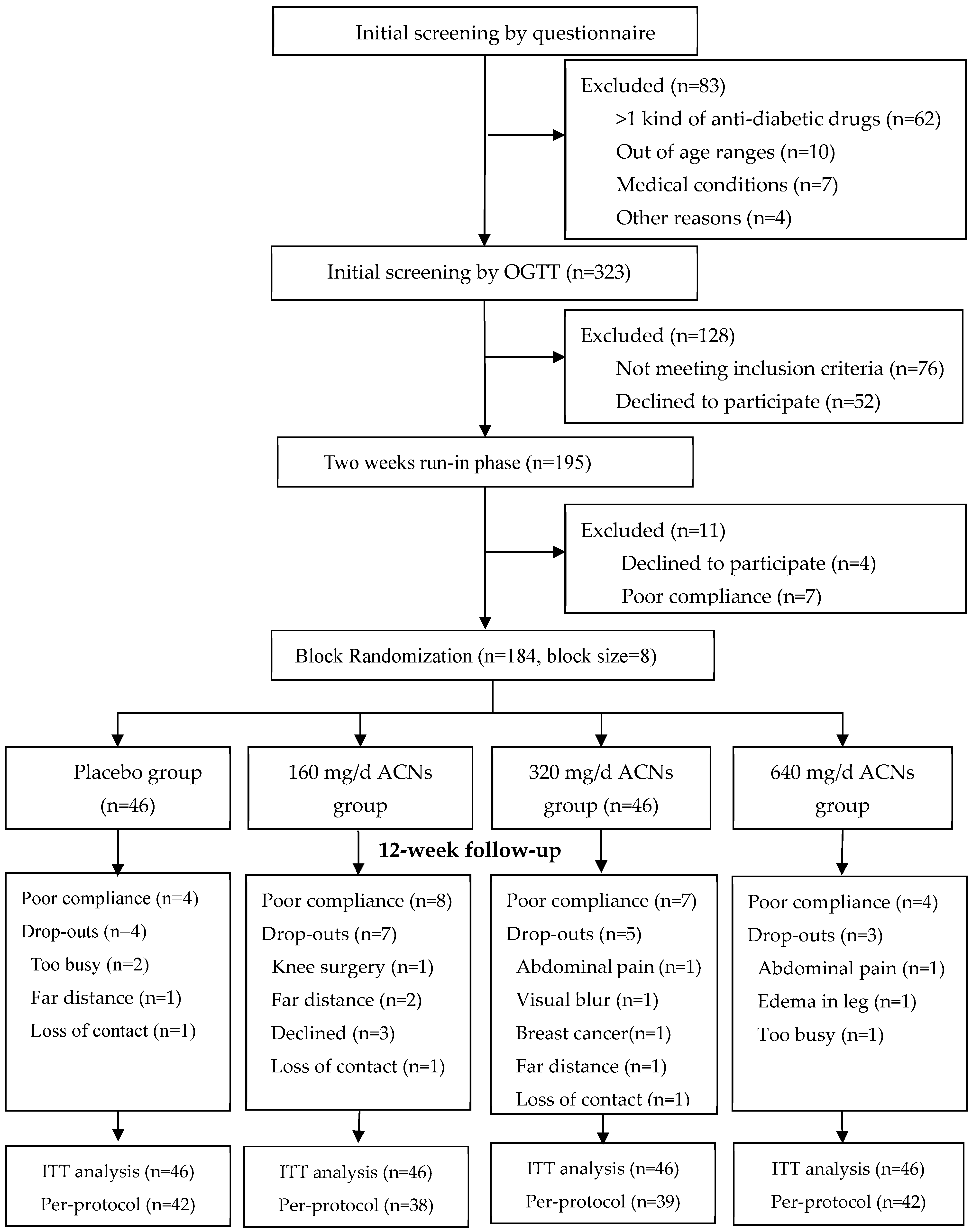
Figure 1. Study flow chart. Abbreviations: OGTT, oral glucose tolerance test; ACNs, anthocyanins; ITT, intention to treat analysis; Per-protocol, per-protocol analysis was conducted among participants who had good compliance.
Nutrients 18 00112 g001
Table 1. Baseline characteristics of participants by different dosages of anthocyanins (n = 184).
Anthocyanins Supplementation by Different Dosages (n = 46/Group)
Placebo160 mg/d320 mg/d640 mg/dp
Age, years62.9 ± 8.063.8 ± 8.762.8 ± 8.960.2 ± 9.40.218
Female, %37 (29.8%)27 (21.6%)28 (22.4%)33 (26.4%)0.091
Diabetes, %26 (27.4%)23 (24.2%)23 (24.2%)23 (24.2%)0.899
Prediabetes (sIFG/sIGT/both), %7/5/85/9/94/7/125/8/100.832
Education, college and above, %9 (19.6%)13 (28.3%)12 (26.1%)15 (32.6%)0.607
Marriage, singled, %11 (23.9%)5 (10.9%)10 (21.7%)5 (10.9%)0.110
Baseline hyperlipidemia, %26 (28.6%)16 (17.6%)26 (28.6%)23 (25.3%)0.121
Baseline hypertension, %19 (26.4%)18 (25.0%)20 (27.8%)15 (20.8%)0.734
Baseline overweight, %30 (30.9%)24 (24.8%)23 (23.7%)20 (20.6%)0.203
Medications at baseline, %
    Diabetes3 (6.5%)8 (17.4%)4 (8.7%)4 (8.7%)0.326
    Hypertension13 (28.3%)13 (28.3%)16 (34.8%)8 (17.4%)0.074
    Hyperlipidemia1 (2.2%)1 (2.2%)01 (2.2%)1.000
    Thyroid dysfunction5 (10.9%)03 (6.5%)5 (10.9%)0.146
Smoking, %3 (6.5%)3 (6.5%)2 (4.3%)2 (4.3%)0.935
Alcohol drinking, %20 (43.5%)11 (23.9%)14 (30.4%)21 (45.7%)0.089
Tea drinking, %39 (84.8%)39 (84.8%)38 (82.6%)40 (87.0%)0.953
Coffee drinking, %16 (34.8%)7 (15.2%)15 (32.6%)11 (23.9%)0.130
Anthropometrics
    Weight, kg64.0 ± 9.561.5 ± 10.064.8 ± 11.660.5 ± 12.80.205
    BMI, kg/m225.1 ± 2.923.9 ± 2.924.5 ± 3.323.6 ± 3.60.120
    WHR0.890 ± 0.0580.897 ± 0.0580.900 ± 0.0570.880 ± 0.0620.417
SBP, mmHg129.5 ± 16.5128.2 ± 17.4131.3 ± 17.8130.0 ± 18.80.865
DBP, mmHg80.7 ± 11.577.9 ± 10.881.1 ± 10.482.2 ± 10.20.277
Max baPWV > 1800 cm/s, %13 (30.2%)11 (25.6%)12 (27.9%)7 (16.3%)0.501
Min ABI < 0.90000NA
sIAD > 15 mmHg, %02 (33.3%)2 (33.3%)2 (33.3%)0.613
sIAND > 15 mmHg, %04 (44.4%)3 (33.3%)2 (22.2%)0.233
Data were presented as mean ± SD for continuous variables and compared by ANOVA, or n (%) for categorical variables and compared by chi-square test. Abbreviations: sIFG, sole impaired fasting glucose; sIGT, sole impaired glucose tolerance; both, having both IFG and IGT; WHR: waist-to-hip ratio; BMI, body mass index; SBP/DBP: systolic/diastolic blood pressure; baPWV, brachial-ankle pulse wave velocity; ABI, ankle brachial index; sIAD, systolic inter-arm difference; sIAND, systolic inter-ankle difference. The maximum baPWV was determined by the higher either left or right PWV. The minimal ABI was estimated by dividing the lower one of ankle SBP with the higher one of brachial SBP.
Table 2. Dietary intakes of major nutrients and food groups, sedentary time and total physical activities across intervention by different treatment groups, intention to treat analysis (n = 184).
Anthocyanins Supplementation by Different Dosages (n = 46/Group)
0 mg/d (Placebo)160 mg/d320 mg/d640 mg/dp
Nutrients
 Total energy, kcal/d
    baseline1884 ± 7091913 ± 6812042 ± 7411963 ± 9270.179
    week 121774 ± 7871927 ± 7021907 ± 6991839 ± 7310.257
    change−109 ± 56410 ± 782−136 ± 654−131 ± 7480.920
 Protein, % total energy
    baseline21.2 ± 4.121.6 ± 5.421.1 ± 4.422.4 ± 4.50.531
    week 1220.4 ± 4.321.7 ± 3.720.8 ± 4.422.7 ± 4.10.036
    change−0.8 ± 4.20.1 ± 5.5−0.3 ± 3.90.4 ± 5.30.666
 Total fat, % total energy
    baseline *23.2 (20.1, 29.4)22.6 (17.3, 28.2)22.0 (18.2, 26.7)22.5 (18.4, 24.4)0.707
    week 1223.5 ± 8.822.9 ± 7.524.7 ± 6.623.9 ± 8.10.752
    change−0.7 ± 6.7−0.8 ± 6.51.1 ± 9.71.5 ± 8.00.362
 Carbohydrate, % total energy
    baseline58.7 ± 10.458.3 ± 12.058.3 ± 11.959.2 ± 9.60.975
    week 1260.0 ± 12.058.4 ± 9.756.5 ± 9.656.8 ± 11.00.358
    change1.3 ± 9.20.1 ± 10.6−1.8 ± 14.3−2.5 ± 11.10.376
 Total cholesterol, mg/d
    baseline558.0 ± 342.0535.9 ± 183.1579.8 ± 365.8564.0 ± 301.20.921
    week 12502.6 ± 349.7546.9 ± 199.3623.1 ± 352.6543.4 ± 285.80.289
    change *−22.1 (−118.3, 24.3)0 (−71.5, 99.0)0 (−87.7, 132.4)10.4 (−132.3, 99.2)0.174
Food groups, g/d
 Total grains, g/d
    baseline *481.8 (384.1, 574.8)480.8 (359.6, 664.2)499.5 (316.8, 649.2)478.4 (333.5, 662.7)0.459
    week 12 *490.0 (382.4, 573.3)498.8 (302.3, 703.4)465.2 (328.9, 610.2)467.0 (286.3, 558.5)0.953
    change1.4 ± 156.86.6 ± 229.9−20.8 ± 241.7−56.5 ± 202.00.465
 Vegetables, g/d
    baseline600.0 ± 608.8597.2 ± 266.4615.0 ± 393.8595.4 ± 457.90.892
    week 12609.3 ± 624.6620.0 ± 246.9526.6 ± 251.3582.6 ± 390.30.695
    change−50.7 ± 275.122.9 ± 274.2−88.4 ± 319.8−12.8 ± 426.40.406
 Fruits, g/d
    baseline245.6 ± 273.5214.8 ± 255.2222.2 ± 177.3247.2 ± 350.10.918
    week 12192.6 ± 149.8261.8 ± 239.5220.1 ± 135.4245.7 ± 324.40.479
    change−52.9 ± 260.846.9 ± 254.5−2.1 ± 202.8−1.4 ± 211.50.244
Red and processed meat, g/d
    baseline108.9 ± 78.996.8 ± 92.4113.5 ± 100.0105.5 ± 99.00.850
    week 1293.9 ± 68.4102.4 ± 102.1108.8 ± 94.799.4 ± 69.10.864
    change−15.0 ± 72.295.6 ± 102.2−4.7 ± 122.0−6.1 ± 78.50.784
Sedentary time, hrs/d
    baseline2.348 ± 2.0632.500 ± 1.8802.326 ± 1.8982.576 ± 2.1190.918
    week 122.435 ± 2.1772.526 ± 2.4002.630 ± 2.3392.614 ± 2.7030.979
    change0.087 ± 2.1400.026 ± 2.1110.304 ± 1.6180.038 ± 2.3130.909
Total PA, Met/h/week
    baseline87.7 ± 66.767.6 ± 62.765.6 ± 58.067.6 ± 52.40.251
    week 12 *62.1 (34.6, 140.9)44.5 (26.1, 112.0)49.0 (28.6, 75.3)49.0 (25.9, 84.5)0.385
    change−0.741 ± 64.4576.905 ± 41.632−6.325 ± 55.652−4.049 ± 54.2750.678
Data were presented as mean ± SD with comparison by ANOVA or median (P25–P75) with comparison by Kruskal–Wallis test if unequal variance was identified. * p value by Kruskal–Wallis test. Trend analysis across different dosage groups was conducted by either parametric (ANOVA, linear trend) or non-parametric (Jonckheere-Terpstra) approach when applicable. For dietary total energy intake, 5 cases (3 at baseline and 2 at week 12) had more than 5000 kcal/d. They were replaced with 5000 kcal/d. The macro-nutrients were expressed as percentages of total energy (% total energy). Abbreviations: PA, physical activity; SD, standard deviation; ANOVA, analysis of variance. Energy expenditure for total physical activity were estimated by adding mild, moderate and intensive PA energy expenditures (Met/h/week).
Table 3. Effects of different dosages of purified anthocyanins on bilateral brachial-ankle pulse wave velocity (baPWV) and ankle brachial index (ABI) by intention to treat analysis (n = 184).
Supplementation of Purified Anthocyanins
Placebo (n = 46)160 mg/d (n = 46)320 mg/d (n = 46)640 mg/d (n = 46)PoverallPtrend
Right PWV, cm/s
 baseline1587.3 ± 312.81559.8 ± 335.91560.3 ± 333.21486.6 ± 298.90.490
 week 121552.6 ± 300.11563.8 ± 317.31519.8 ± 263.21468.7 ± 283.40.401
 change−34.6 ± 193.15.26 ± 233.6−40.4 ± 230.1−23.5 ± 156.60.7190.514
 change%−1.64 ± 10.851.40 ± 14.49−0.42 ± 18.71−1.00 ± 10.210.7510.547
Left PWV, cm/s
 baseline1586.0 ± 314.31590.5 ± 352.71532.3 ± 326.71481.0 ± 287.70.325
 week 121523.1 ± 287.21565.5 ± 339.01506.0 ± 287.61451.1 ± 273.10.325
 change−62.9 ± 210.9−24.3 ± 251.1−26.3 ± 205.0−30.4 ± 168.60.7960.760
 change%−3.14 ± 12.22−0.43 ± 14.75−0.22 ± 14.95−1.45 ± 10.910.7110.602
Max-PWV, cm/s
 baseline1620.5 ± 317.41601.1 ± 353.91580.0 ± 333.31510.6 ± 296.50.405
 week 121575.8 ± 300.61605.4 ± 332.31550.8 ± 266.41492.5 ± 280.50.309
 change−44.7 ± 192.55.4 ± 247.6−29.3 ± 212.8−18.4 ± 161.30.6990.747
 change%−2.21 ± 10.531.53 ± 14.470.02 ± 16.64−0.63 ± 10.170.6010.715
Right ABI
 baseline1.143 ± 0.0671.155 ± 0.0791.153 ± 0.0871.144 ± 0.0820.8660.981
 week 121.147 ± 0.0881.153 ± 0.0931.154 ± 0.0821.135 ± 0.0920.7130.604
 change0.003 ± 0.0810.004 ± 0.0830.001 ± 0.072−0.011 ± 0.0820.7980.870
 change%0.419 ± 7.1850.506 ± 6.8940.282 ± 6.121−0.787 ± 7.0940.7850.843
Left ABI
 baseline1.137 ± 0.0711.158 ± 0.0881.137 ± 0.0861.130 ± 0.0840.4200.466
 week 121.132 ± 0.0711.145 ± 0.0921.136 ± 0.0941.126 ± 0.0840.7570.618
 change−0.004 ± 0.062−0.007 ± 0.092−0.000 ± 0.065−0.003 ± 0.1000.9850.942
 change%−0.237 ± 5.496−0.274 ± 7.7040.085 ± 5.8110.095 ± 9.1400.9910.988
Min-ABI
 baseline1.119 ± 0.0691.126 ± 0.0771.120 ± 0.0761.114 ± 0.0770.893
 week 121.117 ± 0.0851.123 ± 0.0881.122 ± 0.0841.109 ± 0.0850.858
 change−0.001 ± 0.082−0.003 ± 0.0690.002 ± 0.059−0.005 ± 0.0880.9760.883
 change%0.051 ± 7.311−0.172 ± 5.9520.228 ± 5.256−0.226 ± 8.1960.9880.924
The analysis was made by analysis of variance (ANOVA) with results being presented as mean ± SD. Abbreviations: ABI: ankle brachial index. The max-PWV was the higher baPWV at either the left or right side. The min-ABI was estimated by dividing the lower side of the ankle SBP with the higher side of brachial SBP. Change = data at 3-month − data at baseline. Change% = (data at 3-month − data at baseline) × 100/data at baseline.
Table 4. Effects of different dosages of purified anthocyanins on brachial and ankle systolic and diastolic blood pressures by intention to treat analysis (n = 184).
Supplementation of Purified Anthocyanins
Placebo (n = 46)160 mg/d (n = 46)320 mg/d (n = 46)640 mg/d (n = 46)PoverallPtrend
Left-brachial SBP, mmHg
 baseline129.2 ± 13.2125.7 ± 13.3127.4 ± 13.3127.1 ± 19.20.693
 week 12125.1 ± 11.1122.7 ± 12.8123.8 ± 11.4122.0 ± 18.10.742
 change−4.2 ± 10.5−2.9 ± 11.2−3.6 ± 10.4−5.0 ± 10.60.7490.609
 change%−2.8 ± 8.1−2.0 ± 8.5−2.4 ± 7.7−3.6 ± 8.30.7520.572
Left-brachial DBP, mmHg
 baseline73.8 ± 8.771.7 ± 9.573.7 ± 9.474.1 ± 11.70.562
 week 1271.8 ± 8.070.9 ± 9.671.9 ± 9.372.4 ± 11.20.885
 change−2.00 ± 7.15−0.89 ± 7.72−1.78 ± 8.46−1.70 ± 7.520.8410.965
 change%−2.18 ± 9.65−0.71 ± 10.45−1.75 ± 11.88−1.76 ± 10.120.8650.992
Left-brachial MAP, mmHg
 baseline97.0 ± 12.295.0 ± 11.595.7 ± 11.295.5 ± 15.50.849
 week 1294.4 ± 10.092.0 ± 11.493.5 ± 10.193.3 ± 15.00.828
 change−2.63 ± 10.23−3.02 ± 9.33−2.15 ± 10.17−2.24 ± 8.270.9930.795
 change%−1.94 ± 10.88−2.77 ± 9.52−1.62 ± 10.19−1.96 ± 8.620.9860.912
Right-brachial SBP, mmHg
 baseline129.3 ± 13.8125.4 ± 13.4125.6 ± 13.9126.1 ± 19.80.561
 week 12125.3 ± 12.7123.9 ± 13.3124.2 ± 11.8121.5 ± 17.30.626
 change−4.0 ± 11.5−1.5 ± 10.9−1.3 ± 11.9−4.6 ± 9.20.2970.785
 change%−2.7 ± 8.8−0.8 ± 8.7−0.5 ± 9.4−3.0 ± 8.30.3530.862
Right-brachial DBP, mmHg
 baseline74.4 ± 9.571.9 ± 9.572.4 ± 9.273.0 ± 14.50.661
 week 1271.8 ± 9.270.7 ± 9.372.1 ± 9.171.0 ± 11.70.902
 change−2.6 ± 8.6−1.2 ± 6.5−0.3 ± 7.4−2.1 ± 8.10.4490.670
 change%−2.8 ± 11.9−1.2 ± 9.30.1 ± 10.6−0.1 ± 24.70.7890.368
Right-brachial MAP, mmHg
 baseline97.8 ± 12.394.9 ± 11.194.5 ± 11.994.8 ± 17.50.579
 week 1294.6 ± 10.693.3 ± 10.894.8 ± 10.492.6 ± 14.40.785
 change−3.2 ± 10.7−1.6 ± 8.20.3 ± 11.4−2.1 ± 9.40.3860.485
 change%−2.5 ± 11.4−1.3 ± 8.91.1 ± 12.1−0.6 ± 16.20.5730.355
Left-ankle SBP, mmHg
 baseline149.5 ± 20.3146.8 ± 18.1146.7 ± 21.0145.9 ± 26.30.872
 week 12144.4 ± 16.8143.8 ± 17.3143.4 ± 17.9139.6 ± 23.00.621
 Change−5.1 ± 15.2−3.0 ± 14.1−3.3 ± 12.4−6.3 ± 16.10.6650.685
 change%−2.7 ± 9.7−1.6 ± 9.6−1.7 ± 7.9−3.5 ± 10.70.7390.693
Right-ankle SBP, mmHg
 baseline150.4 ± 19.1146.5 ± 18.3148.8 ± 20.8147.9 ± 25.40.851
 week 12146.0 ± 17.7144.5 ± 16.7145.8 ± 18.4140.7 ± 23.40.525
 Change−4.3 ± 14.8−2.0 ± 12.9−3.0 ± 14.2−7.1 ± 13.40.3250.307
 change%−2.4 ± 9.4−0.9 ± 8.5−1.4 ± 9.6−4.4 ± 8.60.2760.276
sIAD, mmHg
 baseline4.130 ± 3.1104.370 ± 4.2554.935 ± 4.4594.348 ± 5.5510.842
 week 124.326 ± 3.5904.544 ± 4.7224.544 ± 5.1844.239 ± 4.1000.983
 Change0.196 ± 4.6120.174 ± 2.719−0.391 ± 4.674−0.109 ± 7.0240.9350.654
 change% *0 (−60.0, 100.0)0 (−50.0, 76.7)0 (−60.0, 50.0)0 (−58.3, 200.0)0.4790.710
sIAND, mmHg
 baseline5.500 ± 3.4946.174 ± 6.8196.283 ± 6.4736.044 ± 4.4770.907
 week 125.783 ± 6.4016.609 ± 6.9235.739 ± 5.2775.196 ± 5.1710.728
 change0.283 ± 7.6380.435 ± 7.562−0.544 ± 6.706−0.848 ± 6.6060.7880.355
 change% 80.4 ± 356.255.2 ± 272.774.7 ± 288.238.7 ± 188.90.8960.872
The analysis was made by analysis of variance (ANOVA) with results being presented as mean ± SD. * Results of heterogenous variance were presented as median (inter-quartile range P25–P75) and compared by Kruskal–Wallis ANOVA with trend analysis by Jonckheere–Terpstra approach. Abbreviations: sIAD, systolic inter-arm difference; sIAND, systolic inter-ankle difference; SBP, systolic blood pressure; DBP, diastolic blood pressure; MAP, mean arterial blood pressure. Change = final value − baseline value; change% = (final value − baseline value) × 100%/baseline value.
Table 5. Effects of different dosages of purified anthocyanins on composite cardiovascular variables by intention to treat analysis, (n = 184).
Supplementation of Purified Anthocyanins
Placebo (n = 46)160 mg/d (n = 46)320 mg/d (n = 46)640 mg/d (n = 46)PoverallPtrend
RC, mmol/L
 baseline0.599 ± 0.5220.476 ± 0.3280.650 ± 0.5270.615 ± 0.5600.367
 week 120.564 ± 0.4380.541 ± 0.3880.556 ± 0.4650.652 ± 0.6420.705
 change−0.035 ± 0.3740.064 ± 0.273−0.094 ± 0.2430.037 ± 0.2710.0480.773
 change% *2.7 (−31.0, 39.9)0 (−18.4, 47.8)−6.8 (−32.2, 10.8)13.2 (−17.6, 75.1)0.0340.746
Non-HDL-c, mmol/L
 baseline4.000 ± 1.0013.764 ± 1.0673.899 ± 1.0813.926 ± 0.9640.742
 week 123.933 ± 0.9653.992 ± 1.0653.944 ± 1.0843.905 ± 0.9880.982
 change−0.065 ± 0.5200.228 ± 0.5700.044 ± 0.489−0.021 ± 0.4680.0370.877
 change%−0.340 ± 13.4717.371 ± 16.5671.747 ± 13.0700.128 ± 12.3400.0330.647
TG/HDL-c
 baseline1.609 ± 2.2561.081 ± 0.8511.616 ± 1.4061.814 ± 3.1200.379
 week 121.341 ± 1.3201.187 ± 1.4851.333 ± 0.8921.686 ± 3.3120.666
 change−0.269 ± 1.3160.106 ± 0.854−0.283 ± 1.005−0.128 ± 1.3460.3380.965
 change%7.381 ± 56.4697.292 ± 44.389−4.429 ± 32.179−0.310 ± 30.6920.4510.213
TyG-index
 baseline8.989 ± 0.5488.779 ± 0.4759.044 ± 0.6628.976 ± 0.6260.144
 week 128.988 ± 0.4988.816 ± 0.5528.966 ± 0.5608.930 ± 0.5950.452
 change−0.001 ± 0.3780.038 ± 0.325−0.078 ± 0.346−0.046 ± 0.3020.3820.262
 change%0.100 ± 4.1850.447 ± 3.700−0.728 ± 3.651−0.439 ± 3.3660.4330.259
TyG-BMI
 baseline225.7 ± 29.1210.3 ± 31.0221.3 ± 33.7212.6 ± 39.40.097
 week 12225.7 ± 32.8211.5 ± 32.0219.1 ± 30.9210.9 ± 39.80.126
 change−0.047 ± 12.3681.200 ± 9.679−2.238 ± 11.054−1.712 ± 9.0660.3900.230
 change%−0.098 ± 5.4260.627 ± 4.655−0.704 ± 4.825−0.739 ± 4.2220.4840.306
VAI
 baseline *1.608 (1.151, 2.385)1.318 (0.878, 2.086)1.731 (1.209, 3.516)1.425 (1.065, 2.477)0.206
 week 122.400 ± 2.4181.876 ± 2.0362.186 ± 1.4422.998 ± 6.5960.533
 change−0.454 ± 2.4110.095 ± 1.198−0.530 ± 1.760−0.292 ± 2.5040.4730.919
 change%8.504 ± 57.9486.017 ± 44.244−6.004 ± 31.911−2.144 ± 30.0900.3210.119
FRS
 baseline14.4 ± 3.313.5 ± 4.114.0 ± 3.713.2 ± 4.40.482
 week 1214.1 ± 3.413.9 ± 4.113.9 ± 3.913.0 ± 4.20.507
 change−0.3 ± 1.70.3 ± 1.8−0.04 ± 1.5−0.2 ± 2.00.3590.953
 change%−1.7 ± 13.45.9 ± 26.2−0.2 ± 11.14.0 ± 31.90.3350.460
Data were presented as mean ± SD with comparison by ANOVA. * If unequal variance was identified, data were presented as median (P25–P75) with group comparison by Kruskal–Wallis and trend analysis by Jonckheere–Terpstra approach. Formulas: RC = TC-HDL-c-LDL-c; Non-HDL-c = LDL-c + 1/5 × TG; TyG-index = In(TG(mg/dL) × FG(mg/dL)/2); TyG-BMI = TyG-index × BMI; Visceral adiposity index (VAI) = WC/(39.68 + 1.88 × BMI) × (TG/1.03) × (1.31/HDL-c) (for males); and WC/(36.58 + 1.89 × BMI) × (TG/0.81) × (1.52/HDL-c) for females. Change = final value − baseline value; change% = (final value − baseline value) × 100%/baseline value. Abbreviations: RC, remnant cholesterol; TG, triglycerides; TC, total cholesterol; TyG-index, triglycerides-glucose index; TyG-BMI, triglycerides-glucose body mass index; Non-HDL-c, non-high density lipoprotein cholesterol; VAI, visceral adiposity index; FRS: Framingham risk score; WC, waist circumference.
Disclaimer/Publisher’s Note: The statements, opinions and data contained in all publications are solely those of the individual author(s) and contributor(s) and not of MDPI and/or the editor(s). MDPI and/or the editor(s) disclaim responsibility for any injury to people or property resulting from any ideas, methods, instructions or products referred to in the content.