Mechanistic Analysis of Fisetin in Liver Diseases and Its Potential Therapeutic Application in IFALD—A Review of In Vitro and In Vivo Studies




Abstract
1. Introduction
2. Fisetin Overview
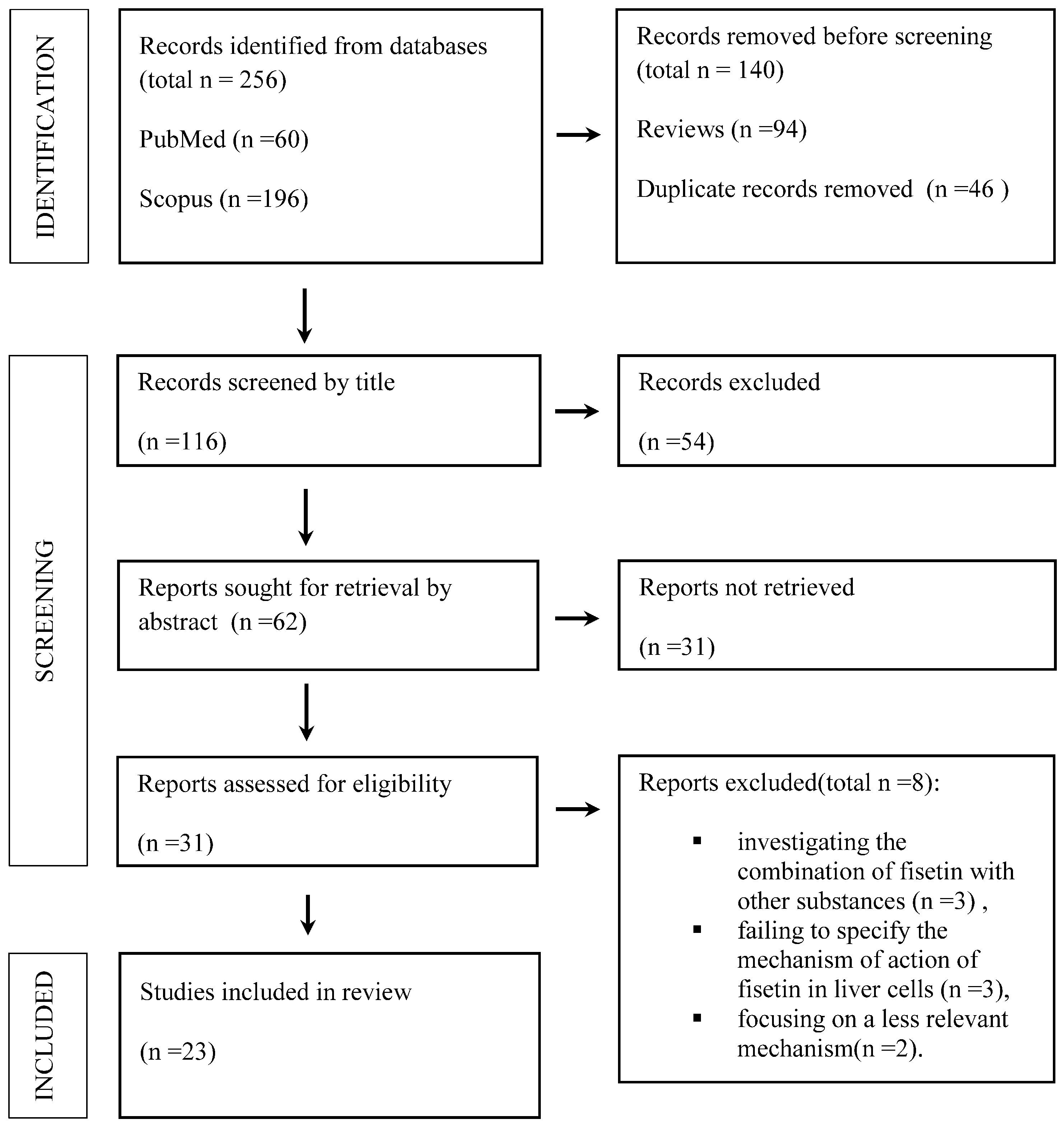
3. Methodology
4. Molecular Basis of Fisetin’s Hepatoprotective Activity
4.1. Inhibition of NF-κB and Inflammatory Signaling
4.2. Senolytic Action Through Induced Apoptosis
4.3. Activation of Nrf2 and Antioxidant Defense
4.4. Regulation of Lipid Metabolism via AMPK, SIRT1, and PPAR Pathways
4.5. Anti-Fibrotic Action Through TGF-β Pathway Suppression
4.6. Modulation of Gut Microbiota Composition
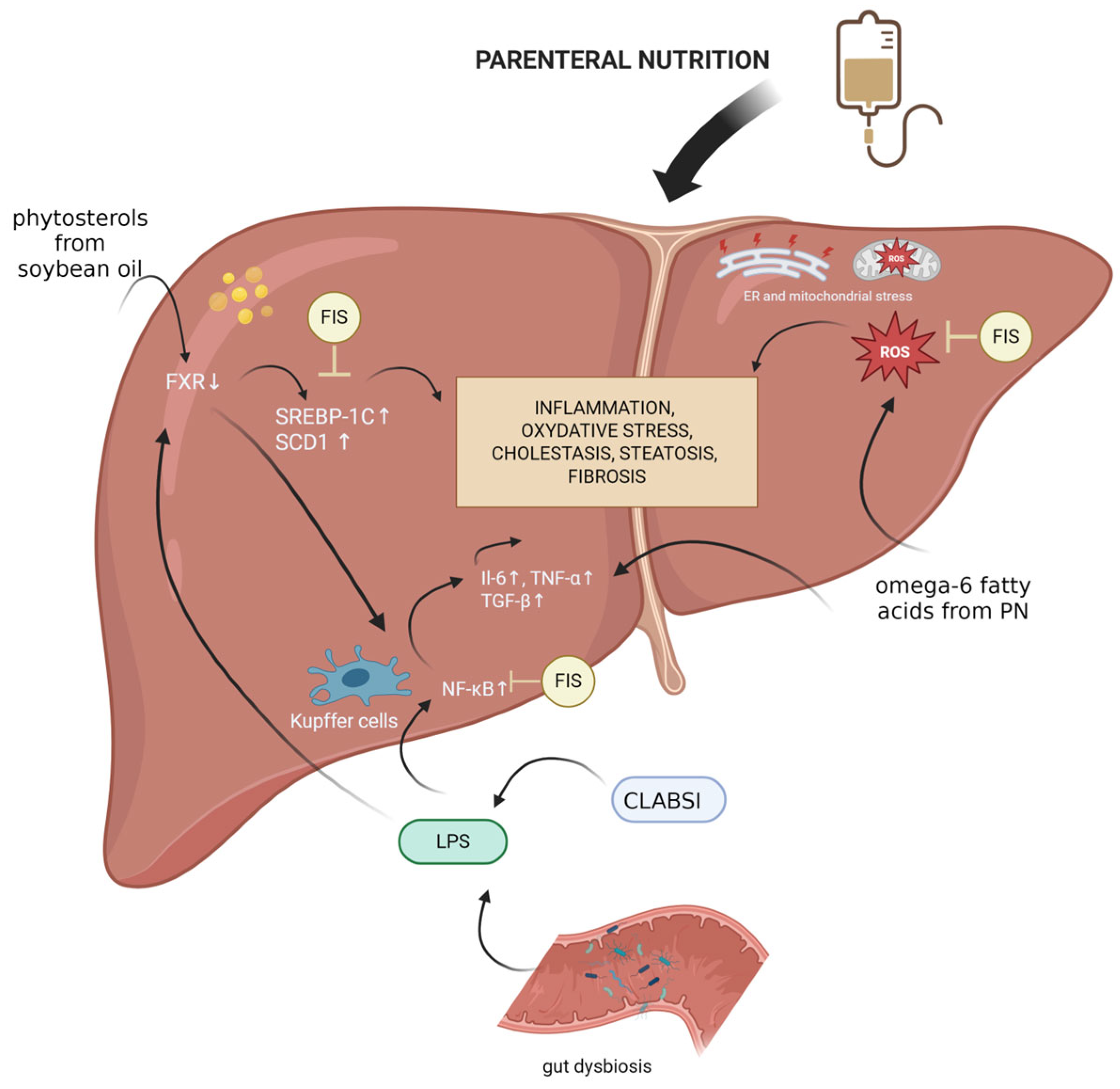
5. Pathomechanism of IFALD
6. The Potential Role of Fisetin in Preventing and Treating IFALD
7. Consideration of Supplying Fisetin to Patients Fed Parenterally
8. Conclusions and Future Perspectives
Author Contributions
Funding
Institutional Review Board Statement
Informed Consent Statement
Data Availability Statement
Conflicts of Interest
Abbreviations
| AMPK | AMP-activated protein kinase |
| COVID-19 | coronavirus disease 2019 |
| CXCL-2 | chemokine (C-X-C motif) ligand 2 |
| ERK1/2 | extracellular signal-regulated kinase 1/2 |
| GPX1 | glutathione peroxidase 1 |
| GSase | galactosylceramide sulfotransferase |
| GSH | glutathione |
| GSR | glutathione reductase |
| Gstm1 | glutathione S-transferase Mu 1 |
| Gstp1 | glutathione S-transferase Pi 1 |
| HO-1 | heme-oxygenase 1 |
| HSF1 | heat shock factor protein 1 |
| FAS | fatty acid synthase |
| FGFR4 | fibroblast growth factor receptor 4 |
| FGFR19 | fibroblast growth factor 19 |
| FXR | farnesoid X receptor |
| IFALD | Intestinal Failure-Associated Liver Disease |
| IL-1β | interleukin-1β |
| IL-6 | interleukin-6 |
| IL-18 | interleukin-18 |
| LPL | lipoprotein lipase |
| LPS | lipopolysaccharide |
| MMP-2 | matrix metalloproteinase-2 |
| MMP-9 | matrix metalloproteinase-9 |
| NAFLD | non-alcoholic fatty liver disease |
| NF-κB | nuclear factor kappa B |
| NLRP3 | NLR family pyrin domain containing 3 |
| NQO1 | NAD(P)H Quinone oxidoreductase 1 |
| Nrf2 | nuclear factor erythroid 2–related factor 2 |
| p53 | tumor protein p53 |
| PAI-1 | plasminogen activator inhibitor-1 |
| PI3K | phosphoinositide 3-kinase |
| PN | parenteral nutrition |
| PPARα | peroxisome proliferator-activated receptor alfa |
| ROS | reactive oxygen species |
| SASP | senescent associated secretory phenotypes |
| SCD1 | stearyl-coenzyme A desaturase 1 |
| SIRT1 | sirtuin 1 |
| SOD2 | superoxide dismutase 2 |
| SREBP-1c | sterol regulatory element-binding protein 1 |
| TGF-β | transforming growth factor beta 1 |
| TLR4 | Toll-like receptor 4 |
| TNF-α | tumor necrosis factor alfa |
| TPN | total parenteral nutrition |
References
- Mehta, P.; Pawar, A.; Mahadik, K.; Bothiraja, C. Emerging Novel Drug Delivery Strategies for Bioactive Flavonol Fisetin in Biomedicine. Biomed. Pharmacother. 2018, 106, 1282–1291. [Google Scholar] [CrossRef]
- Hassan, J.W.; Bhatwadekar, A.D. Senolytics in the Treatment of Diabetic Retinopathy. Front. Pharmacol. 2022, 13, 896907. [Google Scholar] [CrossRef] [PubMed]
- Elsallabi, O.; Patruno, A.; Pesce, M.; Cataldi, A.; Carradori, S.; Gallorini, M. Fisetin as a Senotherapeutic Agent: Biopharmaceutical Properties and Crosstalk between Cell Senescence and Neuroprotection. Molecules 2022, 27, 738. [Google Scholar] [CrossRef] [PubMed]
- Tavenier, J.; Nehlin, J.O.; Houlind, M.B.; Rasmussen, L.J.; Tchkonia, T.; Kirkland, J.L.; Andersen, O.; Rasmussen, L.J.H. Fisetin as a Senotherapeutic Agent: Evidence and Perspectives for Age-Related Diseases. Mech. Ageing Dev. 2024, 222, 111995. [Google Scholar] [CrossRef] [PubMed]
- Koneru, M.; Sahu, B.D.; Kumar, J.M.; Kuncha, M.; Kadari, A.; Kilari, E.K.; Sistla, R. Fisetin Protects Liver from Binge Alcohol-Induced Toxicity by Mechanisms Including Inhibition of Matrix Metalloproteinases (MMPs) and Oxidative Stress. J. Funct. Foods 2016, 22, 588–601. [Google Scholar] [CrossRef]
- Sun, Q.; Zhang, W.; Zhong, W.; Sun, X.; Zhou, Z. Dietary Fisetin Supplementation Protects Against Alcohol-Induced Liver Injury in Mice. Alcohol. Clin. Exp. Res. 2016, 40, 2076–2084. [Google Scholar] [CrossRef]
- Zhang, H.; Zheng, W.; Feng, X.; Yang, F.; Qin, H.; Wu, S.; Hou, D.-X.; Chen, J. Nrf2–ARE Signaling Acts as Master Pathway for the Cellular Antioxidant Activity of Fisetin. Molecules 2019, 24, 708. [Google Scholar] [CrossRef]
- Khan, N.; Syed, D.N.; Ahmad, N.; Mukhtar, H. Fisetin: A Dietary Antioxidant for Health Promotion. Antioxid. Redox Signal. 2013, 19, 151–162. [Google Scholar] [CrossRef]
- Molagoda, I.M.N.; Athapaththu, A.M.G.K.; Choi, Y.H.; Park, C.; Jin, C.-Y.; Kang, C.-H.; Lee, M.-H.; Kim, G.-Y. Fisetin Inhibits NLRP3 Inflammasome by Suppressing TLR4/MD2-Mediated Mitochondrial ROS Production. Antioxidants 2021, 10, 1215. [Google Scholar] [CrossRef]
- Hassan, S.S.U.; Samanta, S.; Dash, R.; Karpiński, T.M.; Habibi, E.; Sadiq, A.; Ahmadi, A.; Bungau, S. The Neuroprotective Effects of Fisetin, a Natural Flavonoid in Neurodegenerative Diseases: Focus on the Role of Oxidative Stress. Front. Pharmacol. 2022, 13, 1015835, Erratum in Front Pharmacol. 2022, 13, 1095648. https://doi.org/10.3389/fphar.2022.1095648. [Google Scholar] [CrossRef]
- Choi, M.-S.; Choi, J.-Y.; Kwon, E.-Y. Fisetin Alleviates Hepatic and Adipocyte Fibrosis and Insulin Resistance in Diet-Induced Obese Mice. J. Med. Food 2020, 23, 1019–1032. [Google Scholar] [CrossRef] [PubMed]
- Xu, M.; Ge, C.; Qin, Y.; Gu, T.; Lv, J.; Wang, S.; Ma, Y.; Lou, D.; Li, Q.; Hu, L.; et al. Activated TNF-α/RIPK3 Signaling Is Involved in Prolonged High Fat Diet-Stimulated Hepatic Inflammation and Lipid Accumulation: Inhibition by Dietary Fisetin Intervention. Food Funct. 2019, 10, 1302–1316. [Google Scholar] [CrossRef] [PubMed]
- Minxuan, X.; Sun, Y.; Dai, X.; Zhan, J.; Long, T.; Xiong, M.; Li, H.; Kuang, Q.; Tang, T.; Qin, Y.; et al. Fisetin Attenuates High Fat Diet-Triggered Hepatic Lipid Accumulation: A Mechanism Involving Liver Inflammation Overload Associated TACE/TNF-α Pathway. J. Funct. Foods 2019, 53, 7–21. [Google Scholar] [CrossRef]
- Gaballah, H.H.; El-Horany, H.E.; Helal, D.S. Mitigative Effects of the Bioactive Flavonol Fisetin on High-fat/High-sucrose Induced Nonalcoholic Fatty Liver Disease in Rats. J. Cell. Biochem. 2019, 120, 12762–12774. [Google Scholar] [CrossRef]
- Kayali, A.; Bora, E.; Acar, H.; Yilmaz, G.; Erbaş, O. Fisetin Ameliorates Methotrexate Induced Liver Fibrosis. Eur. Rev. Med. Pharmacol. Sci. 2024, 28, 3112–3119. [Google Scholar] [CrossRef]
- El-Fadaly, A.A.; Afifi, N.A.; El-Eraky, W.; Salama, A.; Abdelhameed, M.F.; El-Rahman, S.S.A.; Ramadan, A. Fisetin Alleviates Thioacetamide-Induced Hepatic Fibrosis in Rats by Inhibiting Wnt/β-Catenin Signaling Pathway. Immunopharmacol. Immunotoxicol. 2022, 44, 355–366. [Google Scholar] [CrossRef]
- Zhang, J.; Zhao, L.; Hu, C.; Wang, T.; Lu, J.; Wu, C.; Chen, L.; Jin, M.; Hu, H.; Ji, G.; et al. Fisetin Prevents Acetaminophen-Induced Liver Injury by Promoting Autophagy. Front. Pharmacol. 2020, 11, 162. [Google Scholar] [CrossRef]
- Żalikowska-Gardocka, M.; Niewada, M.; Niewiński, G.; Iżycka, M.; Ratyńska, A.; Żurek, M.; Nawrot, A.; Przybyłkowski, A. Early Predictors of Liver Injury in Patients on Parenteral Nutrition. Clin. Nutr. ESPEN 2022, 51, 319–322. [Google Scholar] [CrossRef]
- Kumar, J.; Teckman, J. Controversies in the Mechanism of Total Parenteral Nutrition Induced Pathology. Children 2015, 2, 358–370. [Google Scholar] [CrossRef]
- Park, J.W.; Maeng, S.A.; Kim, S.G.; Kim, Y.S.; Yoo, J.-J. Parenteral Nutrition-Induced Liver Function Complications: Incidence, Risk Factors, and Prognosis. J. Clin. Med. 2025, 14, 1220. [Google Scholar] [CrossRef]
- Zaloga, G.P. Phytosterols, Lipid Administration, and Liver Disease During Parenteral Nutrition. J. Parenter. Enter. Nutr 2015, 39, 39S–60S. [Google Scholar] [CrossRef] [PubMed]
- Jiang, Y.; Fang, Z.; Guthrie, G.; Stoll, B.; Chacko, S.; Lin, S.; Hartmann, B.; Holst, J.J.; Dawson, H.; Pastor, J.J.; et al. Selective Agonism of Liver and Gut FXR Prevents Cholestasis and Intestinal Atrophy in Parenterally Fed Neonatal Pigs. J. Lipid Res. 2025, 66, 100919. [Google Scholar] [CrossRef] [PubMed]
- Szymczak, J.; Cielecka-Piontek, J. Fisetin—In Search of Better Bioavailability—From Macro to Nano Modifications: A Review. Int. J. Mol. Sci. 2023, 24, 14158. [Google Scholar] [CrossRef] [PubMed]
- Antika, L.D.; Dewi, R.M. Pharmacological Aspects of Fisetin. Asian Pac. J. Trop. Biomed. 2021, 11, 1–9. [Google Scholar] [CrossRef]
- Jash, S.K.; Mondal, S. Bioactive Flavonoid Fisetin—A Molecule of Pharmacological Interest. J. Org. Biomol. Chem. 2014, 2, 89–128. [Google Scholar]
- Zhou, C.; Huang, Y.; Nie, S.; Zhou, S.; Gao, X.; Chen, G. Biological Effects and Mechanisms of Fisetin in Cancer: A Promising Anti-Cancer Agent. Eur. J. Med. Res. 2023, 28, 297. [Google Scholar] [CrossRef]
- Shia, C.-S.; Tsai, S.-Y.; Kuo, S.-C.; Hou, Y.-C.; Chao, P.-D.L. Metabolism and Pharmacokinetics of 3,3′,4′,7-Tetrahydroxyflavone (Fisetin), 5-Hydroxyflavone, and 7-Hydroxyflavone and Antihemolysis Effects of Fisetin and Its Serum Metabolites. J. Agric. Food Chem. 2009, 57, 83–89. [Google Scholar] [CrossRef]
- Liou, C.-J.; Wei, C.-H.; Chen, Y.-L.; Cheng, C.-Y.; Wang, C.-L.; Huang, W.-C. Fisetin Protects Against Hepatic Steatosis Through Regulation of the Sirt1/AMPK and Fatty Acid β-Oxidation Signaling Pathway in High-Fat Diet-Induced Obese Mice. Cell. Physiol. Biochem. 2018, 49, 1870–1884. [Google Scholar] [CrossRef]
- Hambright, W.S.; Duke, V.R.; Goff, A.D.; Goff, A.W.; Minas, L.T.; Kloser, H.; Gao, X.; Huard, C.; Guo, P.; Lu, A.; et al. Clinical Validation of C12FDG as a Marker Associated with Senescence and Osteoarthritic Phenotypes. Aging Cell 2024, 23, e14113. [Google Scholar] [CrossRef]
- Sari, E.N.; Soysal, Y. Molecular and Therapeutic Effects of Fisetin Flavonoid in Diseases. J. Basic Clin. Health Sci. 2020, 4, 190–196. [Google Scholar] [CrossRef]
- Ugan, R.A.; Cadirci, E.; Un, H.; Cinar, I.; Gurbuz, M.A. Fisetin Attenuates Paracetamol-Induced Hepatotoxicity by Regulating CYP2E1 Enzyme. An. Acad. Bras. Ciênc. 2023, 95, e20201408. [Google Scholar] [CrossRef] [PubMed]
- Zhao, L.; Zhang, J.; Pan, L.; Chen, L.; Wang, Y.; Liu, X.; You, L.; Jia, Y.; Hu, C. Protective Effect of 7,3′,4′-Flavon-3-Ol (Fisetin) on Acetaminophen-Induced Hepatotoxicity In Vitro and In Vivo. Phytomedicine 2019, 58, 152865. [Google Scholar] [CrossRef]
- Shaer, D.F.E.; Halim, H.I.A.E. The Possible Ameliorating Role of Fisetin on Hepatic Changes Induced by Fluoxetine in Adult Male Albino Rats: Histological, Immunohistochemical, and Biochemical Study. J. Microsc. Ultrastruct. 2023, 11, 161–171. [Google Scholar] [CrossRef] [PubMed]
- Umar, M.; Muzammil, S.; Zahoor, M.A.; Mustafa, S.; Ashraf, A.; Hayat, S.; Ijaz, M.U. Fisetin Attenuates Arsenic-Induced Hepatic Damage by Improving Biochemical, Inflammatory, Apoptotic, and Histological Profile: In Vivo and In Silico Approach. Evid.-Based Complement. Altern. Med. 2022, 2022, 1005255. [Google Scholar] [CrossRef] [PubMed]
- Vásquez-Reyes, S.; Bernal-Gámez, M.; Domínguez-Chávez, J.; Mondragón-Vásquez, K.; Sánchez-Tapia, M.; Ordaz, G.; Granados-Portillo, O.; Coutiño-Hernández, D.; Barrera-Gómez, P.; Torres, N.; et al. The Effects of Novel Co-Amorphous Naringenin and Fisetin Compounds on a Diet-Induced Obesity Murine Model. Nutrients 2024, 16, 4425. [Google Scholar] [CrossRef]
- Dai, X.; Kuang, Q.; Sun, Y.; Xu, M.; Zhu, L.; Ge, C.; Tan, J.; Wang, B. Fisetin Represses Oxidative Stress and Mitochondrial Dysfunction in NAFLD through Suppressing GRP78-Mediated Endoplasmic Reticulum (ER) Stress. J. Funct. Foods 2022, 90, 104954. [Google Scholar] [CrossRef]
- Zhang, H.; Zhang, H.; Wu, X.; Guo, Y.; Cheng, W.; Qian, F. Fisetin Alleviates Sepsis-Induced Multiple Organ Dysfunction in Mice via Inhibiting P38 MAPK/MK2 Signaling. Acta Pharmacol. Sin. 2020, 41, 1348–1356. [Google Scholar] [CrossRef]
- Alsuraih, M.; O’Hara, S.P.; Woodrum, J.E.; Pirius, N.E.; LaRusso, N.F. Genetic or Pharmacological Reduction of Cholangiocyte Senescence Improves Inflammation and Fibrosis in the Mdr2 Mouse. JHEP Rep. 2021, 3, 100250. [Google Scholar] [CrossRef]
- Ouyang, J.; Sun, L.; Pan, J.; Zeng, Z.; Zeng, C.; Zeng, F.; Tian, M.; Wu, S. A Targeted Nanosystem for Detection of Inflammatory Diseases via Fluorescent/Optoacoustic Imaging and Therapy via Modulating Nrf2/NF-κB Pathways. Small 2021, 17, 2102598. [Google Scholar] [CrossRef]
- Xu, M.; Ge, C.; Qin, Y.; Gu, T.; Lou, D.; Li, Q.; Hu, L.; Tan, J. Multicombination Approach Suppresses Listeria Monocytogenes-Induced Septicemia-Associated Acute Hepatic Failure: The Role of iRhom2 Signaling. Adv. Healthc. Mater. 2018, 7, 1800427. [Google Scholar] [CrossRef]
- Huard, C.A.; Gao, X.; Dey Hazra, M.E.; Dey Hazra, R.-O.; Lebsock, K.; Easley, J.T.; Millett, P.J.; Huard, J. Effects of Fisetin Treatment on Cellular Senescence of Various Tissues and Organs of Old Sheep. Antioxidants 2023, 12, 1646. [Google Scholar] [CrossRef]
- Pu, J.-L.; Huang, Z.-T.; Luo, Y.-H.; Mou, T.; Li, T.-T.; Li, Z.-T.; Wei, X.-F.; Wu, Z.-J. Fisetin Mitigates Hepatic Ischemia-Reperfusion Injury by Regulating GSK3β/AMPK/NLRP3 Inflammasome Pathway. Hepatobiliary Pancreat. Dis. Int. 2021, 20, 352–360. [Google Scholar] [CrossRef] [PubMed]
- Li, Z.; Wang, Y.; Zhang, Y.; Wang, X.; Gao, B.; Li, Y.; Li, R.; Wang, J. Protective Effects of Fisetin on Hepatic Ischemia-Reperfusion Injury Through Alleviation of Apoptosis and Oxidative Stress. Arch. Med. Res. 2021, 52, 163–173. [Google Scholar] [CrossRef] [PubMed]
- Yousefzadeh, M.J.; Zhu, Y.; McGowan, S.J.; Angelini, L.; Fuhrmann-Stroissnigg, H.; Xu, M.; Ling, Y.Y.; Melos, K.I.; Pirtskhalava, T.; Inman, C.L.; et al. Fisetin Is a Senotherapeutic That Extends Health and Lifespan. EBioMedicine 2018, 36, 18–28. [Google Scholar] [CrossRef] [PubMed]
- Abi-Aad, S.-J.; Lovell, M.; Khalaf, R.T.; Sokol, R.J. Pathogenesis and Management of Intestinal Failure-Associated Liver Disease. Semin. Liver Dis. 2025, 45, 066–080. [Google Scholar] [CrossRef]
- El Kasmi, K.C.; Anderson, A.L.; Devereaux, M.W.; Fillon, S.A.; Harris, K.J.; Lovell, M.A.; Finegold, M.J.; Sokol, R.J. Toll-like Receptor 4–Dependent Kupffer Cell Activation and Liver Injury in a Novel Mouse Model of Parenteral Nutrition and Intestinal Injury. Hepatology 2012, 55, 1518–1528. [Google Scholar] [CrossRef]
- Wong, S.W.; Kwon, M.-J.; Choi, A.M.K.; Kim, H.-P.; Nakahira, K.; Hwang, D.H. Fatty Acids Modulate Toll-like Receptor 4 Activation through Regulation of Receptor Dimerization and Recruitment into Lipid Rafts in a Reactive Oxygen Species-Dependent Manner. J. Biol. Chem. 2009, 284, 27384–27392. [Google Scholar] [CrossRef]
- Ferrucci-Da Silva, C.; Zhan, L.; Shen, J.; Kong, B.; Campbell, M.J.; Memon, N.; Hegyi, T.; Lu, L.; Guo, G.L. Effects of Total Parenteral Nutrition on Drug Metabolism Gene Expression in Mice. Acta Pharm. Sin. B 2020, 10, 153–158. [Google Scholar] [CrossRef]
- Mungala Lengo, A.; Mohamed, I.; Lavoie, J.-C. Glutathione Supplementation Prevents Neonatal Parenteral Nutrition-Induced Short- and Long-Term Epigenetic and Transcriptional Disruptions of Hepatic H2O2 Metabolism in Guinea Pigs. Nutrients 2024, 16, 849. [Google Scholar] [CrossRef]
- Zhan, L.; Yang, I.; Kong, B.; Shen, J.; Gorczyca, L.; Memon, N.; Buckley, B.T.; Guo, G.L. Dysregulation of Bile Acid Homeostasis in Parenteral Nutrition Mouse Model. Am. J. Physiol.-Gastrointest. Liver Physiol. 2016, 310, G93–G102. [Google Scholar] [CrossRef]
- Kim, M.S.; Shigenaga, J.; Moser, A.; Feingold, K.; Grunfeld, C. Repression of Farnesoid X Receptor during the Acute Phase Response. J. Biol. Chem. 2003, 278, 8988–8995. [Google Scholar] [CrossRef] [PubMed]
- Wang, Y.-D.; Chen, W.-D.; Wang, M.; Yu, D.; Forman, B.M.; Huang, W. Farnesoid X Receptor Antagonizes Nuclear Factor κB in Hepatic Inflammatory Response. Hepatology 2008, 48, 1632–1643. [Google Scholar] [CrossRef] [PubMed]
- Pastor-Clerigues, A.; Marti-Bonmati, E.; Milara, J.; Almudever, P.; Cortijo, J. Anti-Inflammatory and Anti-Fibrotic Profile of Fish Oil Emulsions Used in Parenteral Nutrition-Associated Liver Disease. PLoS ONE 2014, 9, e115404. [Google Scholar] [CrossRef] [PubMed]
- Zafirovska, M.; Zafirovski, A.; Rotovnik Kozjek, N. Current Insights Regarding Intestinal Failure-Associated Liver Disease (IFALD): A Narrative Review. Nutrients 2023, 15, 3169. [Google Scholar] [CrossRef]
- Secor, J.D.; Yu, L.; Tsikis, S.; Fligor, S.; Puder, M.; Gura, K.M. Current Strategies for Managing Intestinal Failure-Associated Liver Disease. Expert Opin. Drug Saf. 2021, 20, 307–320. [Google Scholar] [CrossRef]
- Wang, K.; Zhang, P.; Sun, H.; Cui, S.; Ao, L.; Cui, M.; Xu, X.; Wang, L.; Xu, Y.; Wang, G.; et al. Dual-Function Natural Products: Farnesoid X Receptor Agonist/Inflammation Inhibitor for Metabolic Dysfunction-Associated Steatotic Liver Disease Therapy. Chin. J. Nat. Med. 2024, 22, 965–976. [Google Scholar] [CrossRef]
- Liu, S.-Y.; Chang, L.-W.; Wang, J.; Xie, M.; Chen, L.-L.; Liu, W. Ursodeoxycholic Acid Prevention on Cholestasis Associated with Total Parenteral Nutrition in Preterm Infants: A Randomized Trial. World J. Pediatr. 2022, 18, 100–108. [Google Scholar] [CrossRef]
- Kotb, M.A. Molecular Mechanisms of Ursodeoxycholic Acid Toxicity & Side Effects: Ursodeoxycholic Acid Freezes Regeneration & Induces Hibernation Mode. Int. J. Mol. Sci. 2012, 13, 8882–8914. [Google Scholar] [CrossRef]
- Ragelle, H.; Crauste-Manciet, S.; Seguin, J.; Brossard, D.; Scherman, D.; Arnaud, P.; Chabot, G.G. Nanoemulsion Formulation of Fisetin Improves Bioavailability and Antitumour Activity in Mice. Int. J. Pharm. 2012, 427, 452–459. [Google Scholar] [CrossRef]



| Experimental Model | Hepatotoxic Agent | Daily Dose/Concentration; Duration/Route of Administration | Effect of Fisetin on Liver Function | Mechanism | Reference |
|---|---|---|---|---|---|
| C57BL/6 mice | Ethanol | 5 mg/kg, 10 mg/kg body weight; 8 days/orally | ALT ↓, AST ↓ | NF-κB ↓, HO-1 ↓, NQO1 ↑, SOD ↑, CAT ↑, pro-MMP-2 ↓, active MMP-2 ↓, MMP-9 ↓ | [5] |
| C57BL/6J mice | Ethanol | 10 mg/kg body weight; 4 weeks/orally | ALT ↓, AST ↓, TG ↓, FFA ↓ | ROS ↓, p-AMPK ↑ | [6] |
| C57BL/6 mice/L-02 cell line | APAP | 20 mg/kg, 80 mg/kg body weight; 7 days/orally 5 μM, 50 μM; 48 h | ALT ↓, AST ↓ | ROS ↓, GSH ↑, IL-1β ↓, IL-18 ↓ | [17] |
| Albino wistar rats | APAP | 25 mg/kg, 50 mg/kg body weight; orally by gastric gavage | ALT ↓, AST ↓, ALP ↓, MDA ↓ | SOD ↑, GSH ↑, TNF-α ↓, NF-κB ↓ | [31] |
| C57 mice/L-02 cell line | APAP | 10 mg/kg, 20 mg/kg, 40 mg/kg body weight; 7 days/orally by gastric gavage 50 μM; 24 h | ALT ↓, AST ↓, MDA ↓, | GSH ↑, ROS ↓, GPX1 ↑, CAT ↑, SOD1 ↑, SOD2 ↑ | [32] |
| Wistar rats | Methotrexate | 50 mg/kg body weight; 10 days/intraperitoneal | MDA ↓, ALT ↓ | TGF-β ↓, SIRT1 ↑ | [15] |
| Male albino rats | Fluoxetine | 100 mg/kg body weight; 3 weeks/orally by orogastric tube | ALT ↓, AST ↓, MDA ↓ | SOD ↑, GSH ↑ | [33] |
| Albino Wistar rats | Thioacetamide | 50 mg/kg, 100 mg/kg; 6 weeks/orally by gastric gavage | ALT ↓, AST ↓, ALP ↓ total bilirubin ↓, MDA ↓ | IL-6 ↓, TNF-α ↓, GSH ↑, TGF-β ↓, MMP-9 ↑, α-SMA ↓ | [16] |
| Male albino rats | Arsenic | 2.5 mg/kg body weight, 30 days/orally | ALT ↓, AST ↓, ALP ↓ | CAT ↑, SOD ↑, GSR ↑, GSH ↑, TNF-α ↓, NF-κB ↓, IL-6 ↓, IL-1β ↓, COX-2 ↓ | [34] |
| Male C57BL/6J mice | High-fat diet | 0.02% w/w; 16 weeks/orally | FA ↓, TG ↓ | HMGCR ↓, ACAT ↓, PPARγ ↓, SREBP ↓, SCD1 ↓, β-oxydation ↑ TNF-α ↓, IL-6 ↓, MMP-2 ↓, MMP-9 ↓, TLR4 ↓ | [11] |
| Male C57BL/6 mice | High-fat, high-sucrose diet | HFSD with 0.2% co-amorphous fisetin; 3 months/orally | ALT ↓, LDL ↓, TC ↓, liver cholesterol levels ↓ | Akkermansia muciniphila ↑, Butyricicoccus pullicaecorum ↑, Bifidobacterium breve ↑ | [35] |
| C57BL/6 mice/ NCTC1469 cell line | High-fat diet/ palmitate | 20 mg/kg, 40 mg/kg, 80 mg/kg body weight; 20 weeks/orally by gastric gavage 10, 20, 40 μM; 24 h | AST ↓, ALT ↓, TG ↓, TC ↓, LDL ↓, HDL ↓ | TNF-α ↓, IL-1β ↓, IL-6 ↓, PPAR-α ↑, SCD1 ↓, SREBP ↓ | [12] |
| C57BL/6 mice/FL83B cell line | High-fat diet/ oleic acid | 20 mg/kg body weight, twice a week for 10 weeks/intraperitoneal injection 0–100 µM/24 h | TG ↓, FFA ↓, lipolysis ↑, β-oxidation ↑ | SREB-1C ↓, FAS ↑, PPARα ↑, PPARγ ↓, SIRT1 ↑, AMPKα ↑, p-AMPKα ↑ | [28] |
| Albino rats | High-fat/ high-sucrose diet | 10 mg/kg body weight 12 weeks/orally | TC ↓, LDL ↓, AST ↓, ALT ↓ | PARP-1 ↓, ROS ↓, HNF4-α ↑ | [14] |
| C57BL/6 mice/ NCTC1469, AML12 cell lines | High-fat diet/ palmitate | 20 mg/kg, 40 mg/kg, 80 mg/kg; 20 weeks/orally by gastric gavage 10, 20 and 40 µM/24 h | ALT ↓, AST ↓, TC ↓, TG ↓ | PPAR-α ↑, SREB-1C ↓, SCD1 ↓, IL-1β ↓, TNF-α ↓, IL-6 ↓, IL-18 ↓, NF-κB ↓, p-NF-κB ↓ | [13] |
| C57BL/6N mice/L02, AML12 cell lines | High-fat diet/ palmitate | 80 mg/kg 8 weeks/orally by gastric gavage 20 µM/24 h | ALT ↓, AST ↓, TC ↓, TG ↓, MDA ↓ | TNF-α ↓, IL-6 ↓, ROS ↓, SOD ↑, CAT ↑, GSH ↑, HO-1 ↑, NQO1 ↑, GCLM ↑, Nrf2 ↑, FAS ↓, SCD1 ↓, PPARγ ↓ | [36] |
| C57BL/6 mice/ HEK293T cell lines | Lipopolysaccharide/ cecal ligation and puncture (CLP) | 10 mg/kg | ALT ↓, AST ↓, | NF-κB ↓ | [37] |
| C57BL/6J mice (Mdr2−/− mice/primary sclerosing cholangitis) | None | 100 mg/kg body weight 7 days for 2 months/orally by gastric gavage | TNF-α ↓, IL-1ß ↓, IL-6 ↓ | [38] | |
| BALB/c mice | Lipopolysaccharide, galactosamine | 3.5 mg/kg; for 78h every 6 h/intravenous | ALT ↓ | nuclear Nrf2 ↑, NF-κB ↓, NLRP3 ↓, IL-1ß ↓ | [39] |
| Male BALB/c mice/ Kupffer cells, U937, AML-12, NMu3Li, FL83B, NCTC1469 cell lines | Listeria monocytogenes | 20 mg/kg, 40 mg/kg, 80 mg/kg body weight, 3 times a week for 4 weeks, intraperitoneal injection 10/20/40 µg/mL | ALT ↓, AST ↓, MDA ↓, | TNF-α ↓, IL-6 ↓, IL-18 ↓, IL-1β ↓, IKKα ↓, IKKß ↓, IκBα ↓, NLRP3 ↓, SOD ↑, GST ↑, CAT ↑, Nrf2 ↑ | [40] |
| Columbia Cross female sheep | None | 100 mg/kg body weight; two consecutive days for 8 weeks/intravenous | SOD1 ↓, CAT ↓, NLRP3 ↓ | [41] | |
| C57BL/6J mice/ RAW264.7 macrophages | Hepatic ischemia–reperfusion (I/R) | 5 mg/kg, 10 mg/kg 20 mg/kg body weight; intraperitoneally 2.5, 5, 10 µmol/L | ALT ↓, AST ↓, | IL-1ß ↓, IL-18 ↓, TNF-α ↓, AMPK ↑, p-AMPK ↑, NLRP3 ↓, | [42] |
| C57BL/6 mice/AML-12 hepatocytes | Hepatic ischemia–reperfusion (I/R) | 25 mg/kg, 50 mg/kg body weight; 10 mmol/L, 20 mmol/L | ALT ↓, AST ↓ | ROS ↓, SOD ↑, cytoplasmic Nrf2 ↓, nuclear Nrf2 ↑, HO-1 ↑ | [43] |
| Factor | Mechanism | Ref. |
|---|---|---|
| Phytosterols in Parenteral Nutrition |
| [45] |
| Lipopolysaccharide (LPS) from CLABSI and gut dysbiosis |
| [46] |
| Omega-6 fatty acids in Parenteral Nutrition |
| [47] |
| Oxidative Stress |
| [48,49] |
| Lipid and Bile Acid Metabolism Disruption |
| [50] |
Disclaimer/Publisher’s Note: The statements, opinions and data contained in all publications are solely those of the individual author(s) and contributor(s) and not of MDPI and/or the editor(s). MDPI and/or the editor(s) disclaim responsibility for any injury to people or property resulting from any ideas, methods, instructions or products referred to in the content. |
© 2025 by the authors. Licensee MDPI, Basel, Switzerland. This article is an open access article distributed under the terms and conditions of the Creative Commons Attribution (CC BY) license.
Share and Cite
Belka, M.; Stawny, M.; Masternak, M.M.; Krajka-Kuźniak, V. Mechanistic Analysis of Fisetin in Liver Diseases and Its Potential Therapeutic Application in IFALD—A Review of In Vitro and In Vivo Studies. Nutrients 2026, 18, 102. https://doi.org/10.3390/nu18010102
Belka M, Stawny M, Masternak MM, Krajka-Kuźniak V. Mechanistic Analysis of Fisetin in Liver Diseases and Its Potential Therapeutic Application in IFALD—A Review of In Vitro and In Vivo Studies. Nutrients. 2026; 18(1):102. https://doi.org/10.3390/nu18010102
Chicago/Turabian StyleBelka, Marta, Maciej Stawny, Michal M. Masternak, and Violetta Krajka-Kuźniak. 2026. "Mechanistic Analysis of Fisetin in Liver Diseases and Its Potential Therapeutic Application in IFALD—A Review of In Vitro and In Vivo Studies" Nutrients 18, no. 1: 102. https://doi.org/10.3390/nu18010102
APA StyleBelka, M., Stawny, M., Masternak, M. M., & Krajka-Kuźniak, V. (2026). Mechanistic Analysis of Fisetin in Liver Diseases and Its Potential Therapeutic Application in IFALD—A Review of In Vitro and In Vivo Studies. Nutrients, 18(1), 102. https://doi.org/10.3390/nu18010102