Article

Augmenting Cognitive Function in the Elderly with Mild Cognitive Impairment Using Probiotic Lacticaseibacillus rhamnosus CBT-LR5: A 12-Week Randomized, Double-Blind, Parallel-Group Non-Comparative Study


1
Clinical Trial Center for Functional Foods, Jeonbuk National University Hospital, Jeonju 54907, Republic of Korea
2
Clinical Trial Center for K-FOOD Microbiome, Biomedical Research Institute, Jeonbuk National University Hospital, Jeonju 54907, Republic of Korea
3
R&D Center, Cell Biotech Co., Ltd., Gimpo-si 10003, Republic of Korea
4
Department of Psychiatry, Jeonbuk National University Medical School, Jeonju 54896, Republic of Korea
5
Department of Gastroenterology and Hepatology, Jeonbuk National University Hospital, Jeonju 54896, Republic of Korea
6
Department of Internal Medicine, Jeonbuk National University Medical School, Jeonju 54896, Republic of Korea
*
Authors to whom correspondence should be addressed.
These authors contributed equally to this work.
Nutrients 2025, 17(4), 691; https://doi.org/10.3390/nu17040691
Submission received: 8 January 2025 / Revised: 13 February 2025 / Accepted: 13 February 2025 / Published: 14 February 2025
(This article belongs to the Special Issue Diet, Gut Microbiota and Neuropsychiatric Diseases)

Abstract

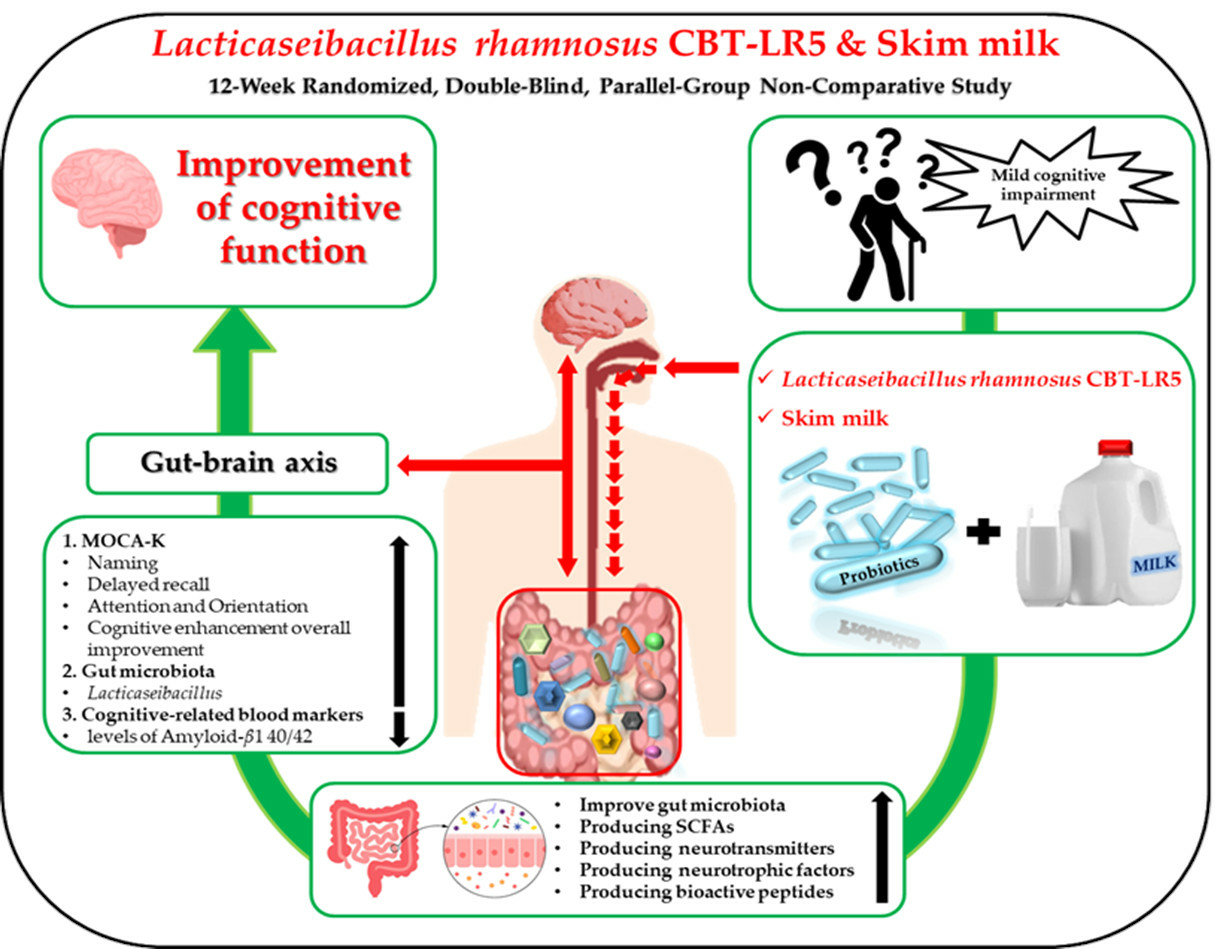
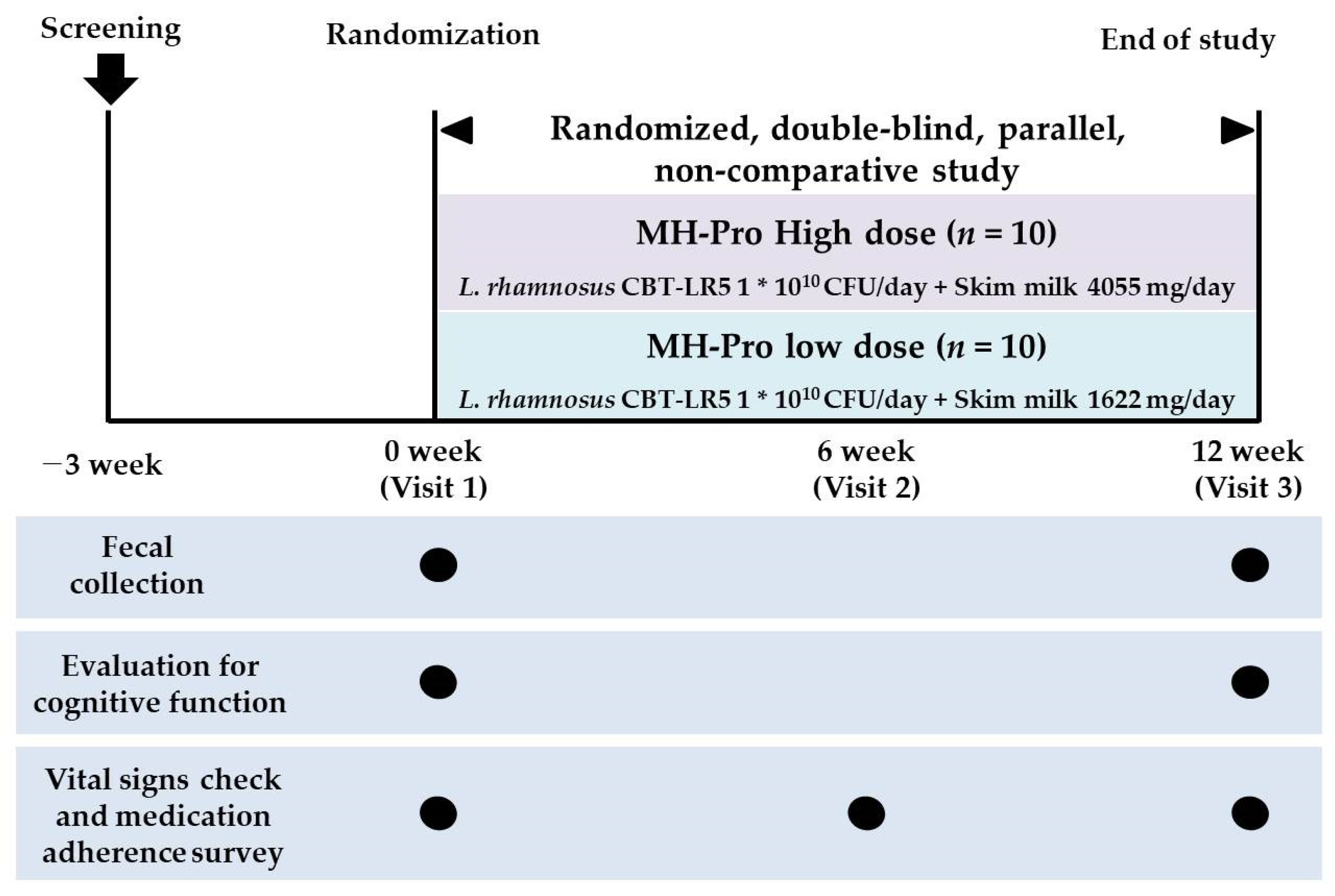
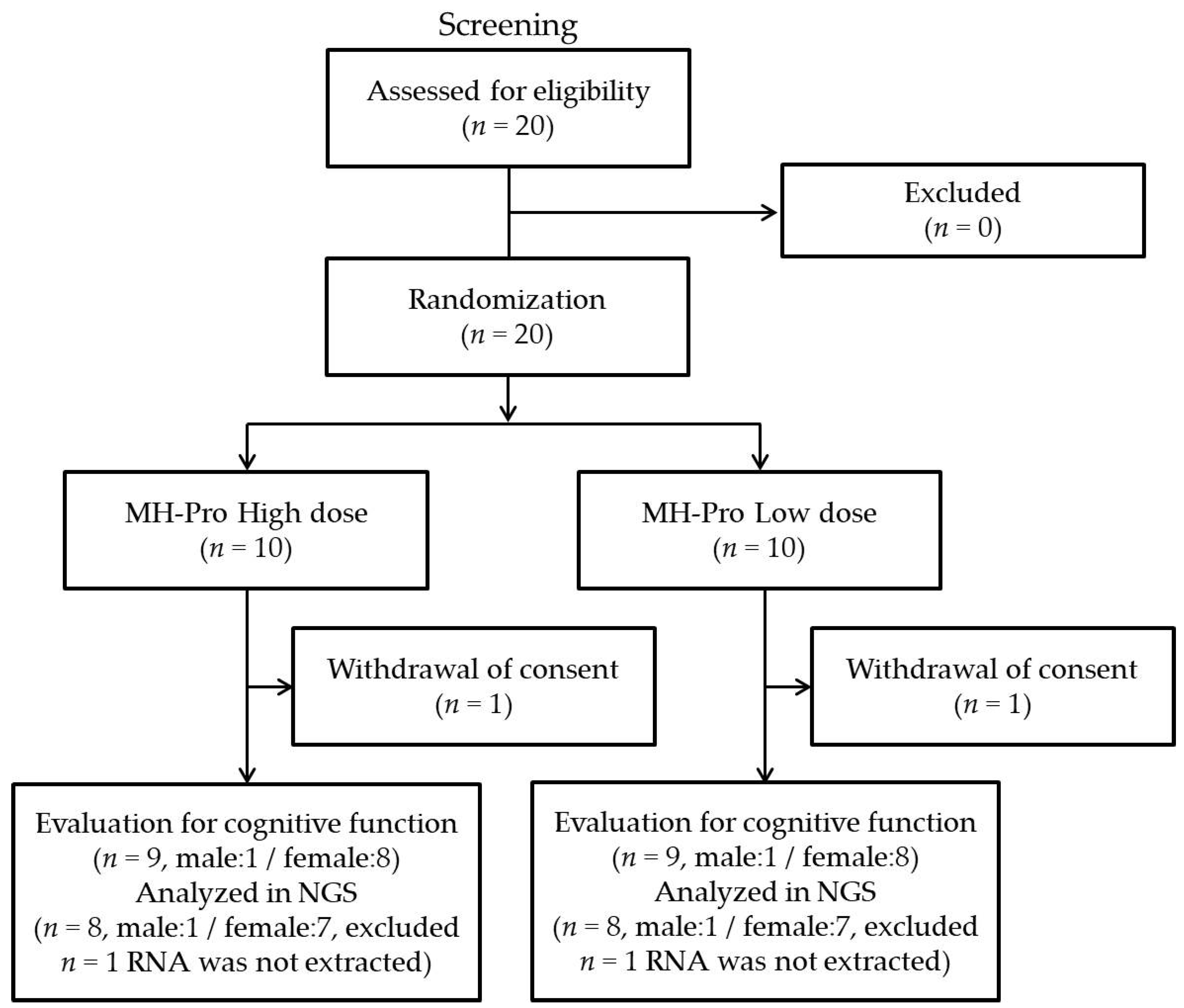
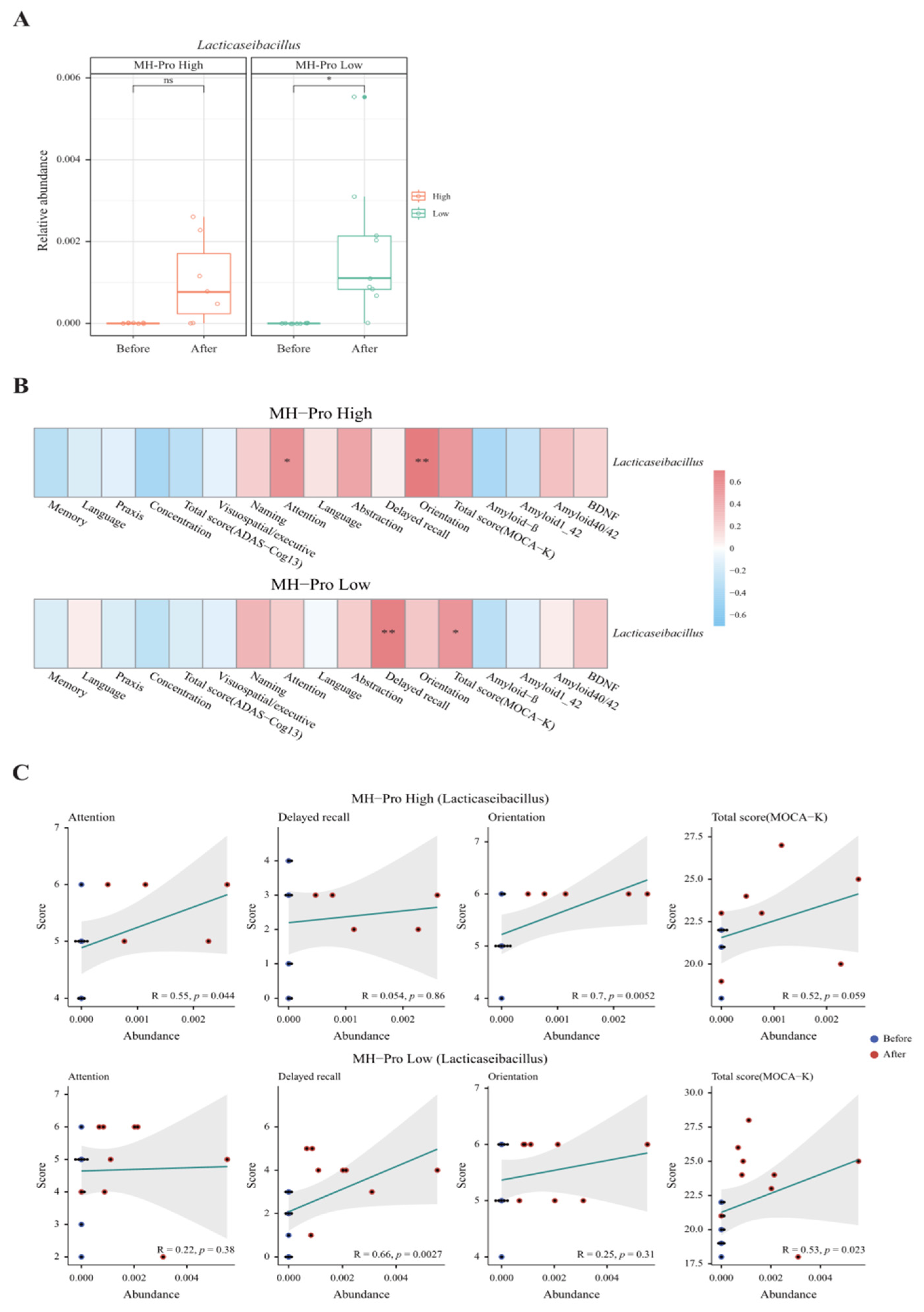
Background: Probiotics have been shown to enhance cognitive function in individuals with mild cognitive impairment (MCI), but their efficacy varies, depending on the strain and dosage. Objectives: Clinical investigations are crucial to confirm their safety, efficacy, and mechanism of action. This study was designed to assess the effective dosage, safety, and efficacy of MH-Pro, a test product containing Lacticaseibacillus rhamnosus CBT-LR5 (LR5) and skim milk (non-fat dry milk), in improving cognitive function and related physiological changes in older adults suspected of MCI over 12 weeks. Methods: In total, 20 participants (mean age: 68.9 years) were randomly assigned in a 1:1 ratio to either a low-dose group (1 × 10¹⁰ CFU LR5 with 1622 mg) or a high-dose group (1 × 10¹⁰ CFU LR5 with 4055 mg skim milk) in a double-blind, parallel-group clinical trial. Results: After 12 weeks, the low-dose group showed significant improvements in the MOCA-K subdomains, specifically in naming (p = 0.01) and delayed recall (p = 0.003). Additionally, levels of amyloid-β1 40/42 in the blood significantly decreased (p = 0.03) following supplementation in the low-dose group. The high-dose group exhibited significant improvement in orientation (p = 0.05). Moreover, overall cognitive enhancement was observed in the low-dose group (p = 0.003), while the high-dose group showed a trend toward improvement (p = 0.06). Fecal analysis revealed significant changes in bacterial composition, with an increase in Lacticaseibacillus after 12 weeks of MH-Pro consumption. Together, these findings provide foundational evidence suggesting that MH-Pro supplementation may serve as a potential intervention for enhancing cognitive function through gut–brain axis pathways in the elderly population. However, given the small sample size and the predominance of female participants, the impact of the outcome may be limited. Further large-scale studies are necessary to validate these preliminary results. Conclusions: This study provides foundational evidence to recognize the use of LR5 and skim milk to prepare a probiotic supplement that enhances cognitive function in the aging population.
Keywords: mild cognitive impairment (MCI); Lacticaseibacillus rhamnosus CBT-LR5; skim milk; probiotics; cognitive function; clinical trial mild cognitive impairment (MCI); Lacticaseibacillus rhamnosus CBT-LR5; skim milk; probiotics; cognitive function; clinical trial
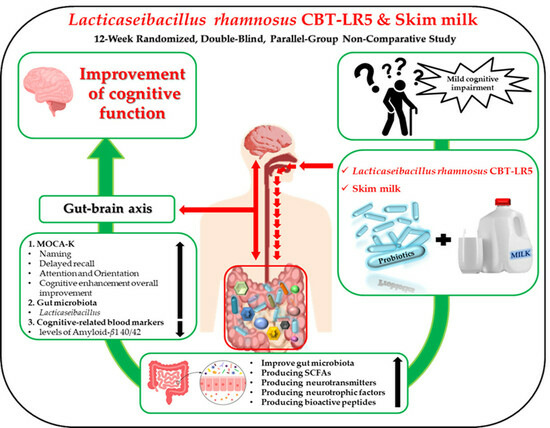
Graphical Abstract