
Nutrient-Induced Remodeling of the Adipose-Cardiac Axis: Metabolic Flexibility, Adipokine Signaling, and Therapeutic Implications for Cardiometabolic Disease

 , ,
, ,  ,
,  and
and 
Abstract
1. Introduction
2. Molecular Mechanisms of Nutrient Sensing and Signaling in Adipose Tissue and Heart
3. Dietary Patterns and Their Impact on Adipose Tissue and Cardiac Function
3.1. Mediterranean Diet (MedDiet)
3.2. Ketogenic Diet
3.3. Intermittent Fasting (IF) and Time-Restricted Eating (TRE)
3.4. Caloric Restriction (CR)
3.5. DASH Diet (Dietary Approaches to Stop Hypertension)
3.6. Plant-Based Diets
3.7. Direct Inter-Diet Comparisons and Personalization Strategies
4. Role of Micronutrients in Adipose and Cardiac Metabolism
5. Macronutrients Effects on Adipose-Cardiac Metabolic Flexibility
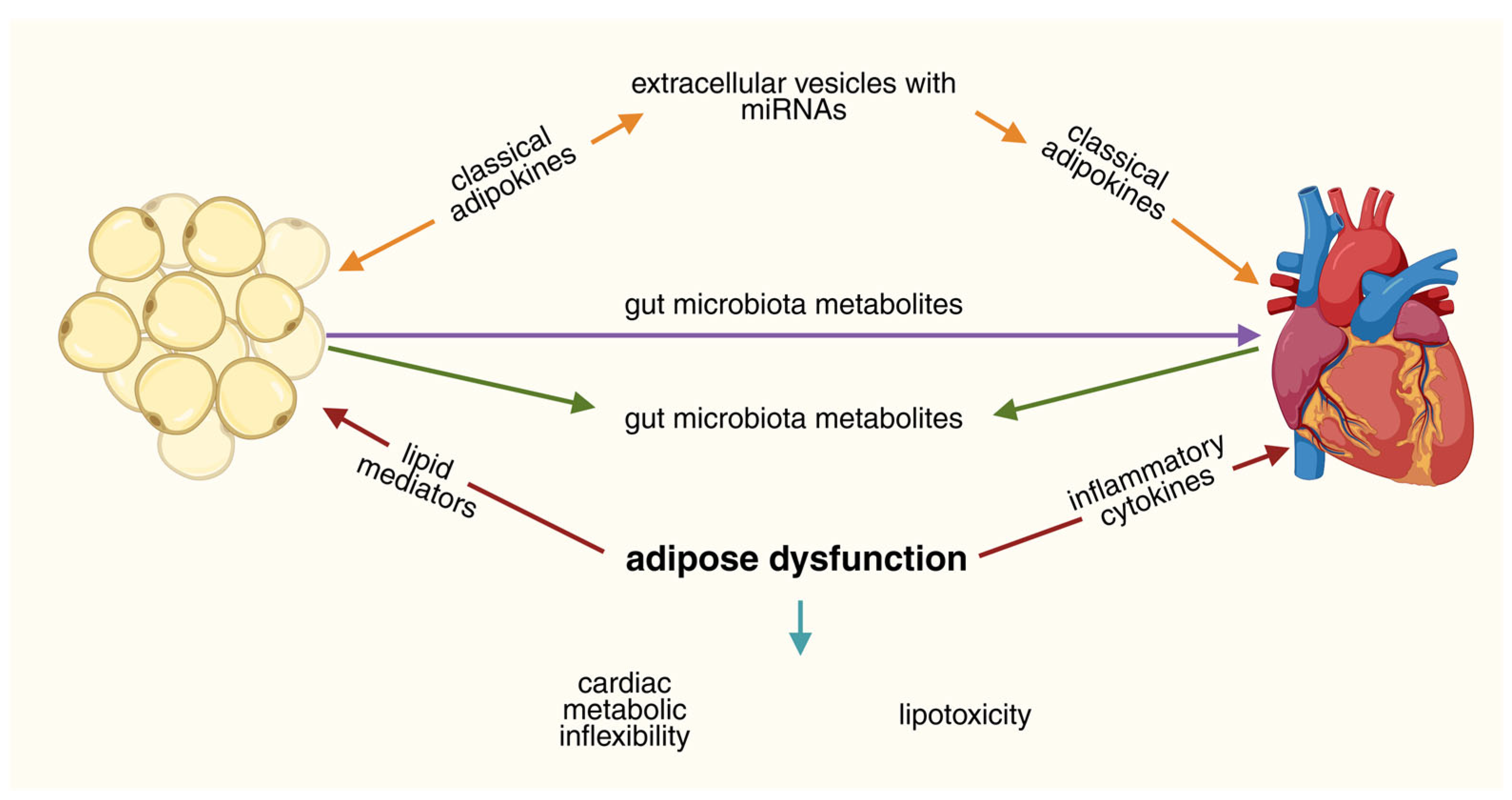
6. Inter-Organ Communication Beyond Adipokines: Exosomes, miRNAs, and Gut Microbiota
7. Biomarkers and Translational Therapeutic Targets in the Adipose-Cardiac Axis
8. Conclusions and Future Directions
Author Contributions
Funding
Institutional Review Board Statement
Informed Consent Statement
Data Availability Statement
Acknowledgments
Conflicts of Interest
References
- Isomaa, B.; Almgren, P.; Tuomi, T.; Forsén, B.; Lahti, K.; Nissén, M.; Taskinen, M.R.; Groop, L. Cardiovascular morbidity and mortality associated with the metabolic syndrome. Diabetes Care 2001, 24, 683–689. [Google Scholar] [CrossRef] [PubMed]
- Al Suwaidi, J.; Zubaid, M.; El-Menyar, A.A.; Singh, R.; Rashed, W.; Ridha, M.; Shehab, A.; Al-Lawati, J.; Amin, H.; Al-Mottareb, A. Prevalence of the metabolic syndrome in patients with acute coronary syndrome in six middle eastern countries. J. Clin. Hypertens. 2010, 12, 890–899. [Google Scholar] [CrossRef] [PubMed]
- Milionis, H.J.; Kalantzi, K.J.; Papathanasiou, A.J.; Kosovitsas, A.A.; Doumas, M.T.; Goudevenos, J.A. Metabolic syndrome and risk of acute coronary syndromes in patients younger than 45 years of age. Coron. Artery Dis. 2007, 18, 247–252. [Google Scholar] [CrossRef] [PubMed]
- Tune, J.D.; Goodwill, A.G.; Sassoon, D.J.; Mather, K.J. Cardiovascular consequences of metabolic syndrome. Transl. Res. 2017, 183, 57–70. [Google Scholar] [CrossRef]
- Lavie, C.J.; Milani, R.V.; Artham, S.M.; Patel, D.A.; Ventura, H.O. The obesity paradox, weight loss, and coronary disease. Am. J. Med. 2009, 122, 1106–1114. [Google Scholar] [CrossRef]
- Thakker, J.; Khaliq, I.; Ardeshna, N.S.; Lavie, C.J.; Oktay, A.A. The Obesity Paradox of Cardiovascular Outcomes in Patients with Diabetes Mellitus. Curr. Diabetes Rep. 2025, 25, 35. [Google Scholar] [CrossRef]
- Diab, A.; Dastmalchi, L.N.; Gulati, M.; Michos, E.D. A Heart-Healthy Diet for Cardiovascular Disease Prevention: Where Are We Now? Vasc. Health Risk Manag. 2023, 19, 237–253. [Google Scholar] [CrossRef]
- Le Goff, D.; Aerts, N.; Odorico, M.; Guillou-Landreat, M.; Perraud, G.; Bastiaens, H.; Musinguzi, G.; Le Reste, J.Y.; Barais, M. Practical dietary interventions to prevent cardiovascular disease suitable for implementation in primary care: An ADAPTE-guided systematic review of international clinical guidelines. Int. J. Behav. Nutr. Phys. Act. 2023, 20, 93. [Google Scholar] [CrossRef]
- Ha, E.E.; Bauer, R.C. Emerging Roles for Adipose Tissue in Cardiovascular Disease. Arter. Thromb. Vasc. Biol. 2018, 38, e137–e144. [Google Scholar] [CrossRef]
- Oikonomou, E.K.; Antoniades, C. The role of adipose tissue in cardiovascular health and disease. Nat. Rev. Cardiol. 2019, 16, 83–99. [Google Scholar] [CrossRef]
- Alotaibi, M.M.; Alrashdi, N.Z.; Almutairi, M.K.; Alqahtani, M.M.; Almutairi, A.B.; Alqahtani, S.M.; Alajel, H.M.; Bajunayd, A.K. Association of adipose tissue infiltration with cardiac function: Scoping review. Adipocyte 2025, 14, 2489467. [Google Scholar] [CrossRef]
- Bou Matar, D.; Zhra, M.; Nassar, W.K.; Altemyatt, H.; Naureen, A.; Abotouk, N.; Elahi, M.A.; Aljada, A. Adipose tissue dysfunction disrupts metabolic homeostasis: Mechanisms linking fat dysregulation to disease. Front. Endocrinol. 2025, 16, 1592683. [Google Scholar] [CrossRef] [PubMed]
- Giralt, M.; Villarroya, F. White, brown, beige/brite: Different adipose cells for different functions? Endocrinology 2013, 154, 2992–3000. [Google Scholar] [CrossRef]
- Walkiewicz, K.W.; Dzięgielewska-Gęsiak, S.; Myrcik, D.; Bednarczyk, M.; Muc-Wierzgoń, M. Eating behavior patterns in relation to obesity phenotypes and beige adipose tissue content with a focus on young women; a narrative review. Front. Nutr. 2025, 12, 1692944. [Google Scholar] [CrossRef] [PubMed]
- Wiszniewski, K.; Grudniewska, A.; Szabłowska-Gadomska, I.; Pilichowska-Paszkiet, E.; Zaborska, B.; Zgliczyński, W.; Dudek, P.; Bik, W.; Sota, M.; Mrozikiewicz-Rakowska, B. Epicardial Adipose Tissue-A Novel Therapeutic Target in Obesity Cardiomyopathy. Int. J. Mol. Sci. 2025, 26, 7963. [Google Scholar] [CrossRef] [PubMed]
- Wen, X.; Zhang, B.; Wu, B.; Xiao, H.; Li, Z.; Li, R.; Xu, X.; Li, T. Signaling pathways in obesity: Mechanisms and therapeutic interventions. Signal Transduct. Target. Ther. 2022, 7, 298, Erratum in Signal Transduct. Target Ther. 2022, 7, 369. https://doi.org/10.1038/s41392-022-01188-4. [Google Scholar] [CrossRef]
- Munoz, M.D.; Zamudio, A.; McCann, M.; Gil, V.; Xu, P.; Liew, C.W. Activation of brown adipose tissue by a low-protein diet ameliorates hyperglycemia in a diabetic lipodystrophy mouse model. Sci. Rep. 2023, 13, 11808. [Google Scholar] [CrossRef]
- Littlejohn, P.T.; Bar-Yoseph, H.; Edwards, K.; Li, H.; Ramirez-Contreras, C.Y.; Holani, R.; Metcalfe-Roach, A.; Fan, Y.M.; Yang, T.M.; Radisavljevic, N.; et al. Multiple micronutrient deficiencies alter energy metabolism in host and gut microbiome in an early-life murine model. Front. Nutr. 2023, 10, 1151670. [Google Scholar] [CrossRef]
- Liu, H.; Wang, S.; Wang, J.; Guo, X.; Song, Y.; Fu, K.; Gao, Z.; Liu, D.; He, W.; Yang, L.L. Energy metabolism in health and diseases. Signal Transduct. Target. Ther. 2025, 10, 69. [Google Scholar] [CrossRef]
- Oldham, S. Obesity and nutrient sensing TOR pathway in flies and vertebrates: Functional conservation of genetic mechanisms. Trends Endocrinol. Metab. 2011, 22, 45–52. [Google Scholar] [CrossRef]
- Choe, S.S.; Huh, J.Y.; Hwang, I.J.; Kim, J.I.; Kim, J.B. Adipose Tissue Remodeling: Its Role in Energy Metabolism and Metabolic Disorders. Front. Endocrinol. 2016, 7, 30. [Google Scholar] [CrossRef] [PubMed]
- Aida, X.M.U.; Ivan, T.V.; Juan, G.J.R. Adipose Tissue Immunometabolism: Unveiling the Intersection of Metabolic and Immune Regulation. Rev. Investig. Clin. 2024, 76, 65–79. [Google Scholar] [CrossRef]
- Tseng, Y.H. Adipose tissue in communication: Within and without. Nat. Rev. Endocrinol. 2023, 19, 70–71. [Google Scholar] [CrossRef] [PubMed]
- Ruan, H.; Dong, L.Q. Adiponectin signaling and function in insulin target tissues. J. Mol. Cell Biol. 2016, 8, 101–109. [Google Scholar] [CrossRef]
- Hivert, M.F.; Manning, A.K.; McAteer, J.B.; Florez, J.C.; Dupuis, J.; Fox, C.S.; O’Donnell, C.J.; Cupples, L.A.; Meigs, J.B. Common variants in the adiponectin gene (ADIPOQ) associated with plasma adiponectin levels, type 2 diabetes, and diabetes-related quantitative traits: The Framingham Offspring Study. Diabetes 2008, 57, 3353–3359. [Google Scholar] [CrossRef]
- Adler, E.M. The Adiponectin-Mitochondria Connection. Sci. Signal. 2010, 3, ec136. [Google Scholar] [CrossRef]
- Qiao, L.; Kinney, B.; Yoo, H.S.; Lee, B.; Schaack, J.; Shao, J. Adiponectin increases skeletal muscle mitochondrial biogenesis by suppressing mitogen-activated protein kinase phosphatase-1. Diabetes 2012, 61, 1463–1470. [Google Scholar] [CrossRef][Green Version]
- Choi, H.M.; Doss, H.M.; Kim, K.S. Multifaceted Physiological Roles of Adiponectin in Inflammation and Diseases. Int. J. Mol. Sci. 2020, 21, 1219. [Google Scholar] [CrossRef]
- Ouchi, N.; Walsh, K. A novel role for adiponectin in the regulation of inflammation. Arter. Thromb. Vasc. Biol. 2008, 28, 1219–1221. [Google Scholar] [CrossRef]
- Clemente-Suárez, V.J.; Redondo-Flórez, L.; Beltrán-Velasco, A.I.; Martín-Rodríguez, A.; Martínez-Guardado, I.; Navarro-Jiménez, E.; Laborde-Cárdenas, C.C.; Tornero-Aguilera, J.F. The Role of Adipokines in Health and Disease. Biomedicines 2023, 11, 1290. [Google Scholar] [CrossRef]
- Kawai, T.; Autieri, M.V.; Scalia, R. Adipose tissue inflammation and metabolic dysfunction in obesity. Am. J. Physiol. Cell Physiol. 2021, 320, C375–C391. [Google Scholar] [CrossRef]
- Menzaghi, C.; Marucci, A.; Antonucci, A.; De Bonis, C.; Ortega Moreno, L.; Salvemini, L.; Copetti, M.; Trischitta, V.; Di Paola, R. Suggestive evidence of a multi-cytokine resistin pathway in humans and its role on cardiovascular events in high-risk individuals. Sci. Rep. 2017, 7, 44337. [Google Scholar] [CrossRef] [PubMed]
- Ghanem, S.E.; Abdel-Samiee, M.; Torky, M.H.; Gaafar, A.; Mohamed, S.M.; Salah Eldin, G.M.M.; Awad, S.M.; Diab, K.A.; Elsabaawy, D.M.; Yehia, S.A.; et al. Role of resistin, IL-6 and NH2-terminal portion proBNP in the pathogenesis of cardiac disease in type 2 diabetes mellitus. BMJ Open Diabetes Res. Care 2020, 8, e001206. [Google Scholar] [CrossRef] [PubMed]
- Lopez-Garcia, E.; Hu, F.B. Nutrition and the endothelium. Curr. Diabetes Rep. 2004, 4, 253–259. [Google Scholar] [CrossRef] [PubMed]
- Dehghani, F.; Hajhashemy, Z.; Keshteli, A.H.; Yazdannik, A.; Falahi, E.; Saneei, P.; Esmaillzadeh, A. Nutrient patterns in relation to insulin resistance and endothelial dysfunction in Iranian women. Sci. Rep. 2024, 14, 2857. [Google Scholar] [CrossRef]
- Hall, M.E.; Harmancey, R.; Stec, D.E. Lean heart: Role of leptin in cardiac hypertrophy and metabolism. World J. Cardiol. 2015, 7, 511–524. [Google Scholar] [CrossRef]
- Kamareddine, L.; Ghantous, C.M.; Allouch, S.; Al-Ashmar, S.A.; Anlar, G.; Kannan, S.; Djouhri, L.; Korashy, H.M.; Agouni, A.; Zeidan, A. Between Inflammation and Autophagy: The Role of Leptin-Adiponectin Axis in Cardiac Remodeling. J. Inflamm. Res. 2021, 14, 5349–5365. [Google Scholar] [CrossRef]
- Dong, F.; Zhang, X.; Ren, J. Leptin regulates cardiomyocyte contractile function through endothelin-1 receptor-NADPH oxidase pathway. Hypertension 2006, 47, 222–229. [Google Scholar] [CrossRef]
- Gruzdeva, O.; Borodkina, D.; Uchasova, E.; Dyleva, Y.; Barbarash, O. Leptin resistance: Underlying mechanisms and diagnosis. Diabetes, Metab. Syndr. Obesity 2019, 12, 191–198. [Google Scholar] [CrossRef]
- Martin, S.S.; Qasim, A.; Reilly, M.P. Leptin resistance: A possible interface of inflammation and metabolism in obesity-related cardiovascular disease. J. Am. Coll. Cardiol. 2008, 52, 1201–1210. [Google Scholar] [CrossRef]
- Li, C.; Sun, X.N.; Zhao, S.; Scherer, P.E. Crosstalk Between Adipose Tissue and the Heart: An Update. J. Transl. Intern. Med. 2022, 10, 219–226. [Google Scholar] [CrossRef]
- Berezin, A.E.; Berezin, A.A.; Lichtenauer, M. Emerging Role of Adipocyte Dysfunction in Inducing Heart Failure Among Obese Patients with Prediabetes and Known Diabetes Mellitus. Front. Cardiovasc. Med. 2020, 7, 583175. [Google Scholar] [CrossRef]
- Zhang, K.; Yuan, Z.; Wang, S.; Zhao, S.; Cui, H.; Lai, Y. The abnormalities of free fatty acid metabolism in patients with hypertrophic cardiomyopathy, a single-center retrospective observational study. BMC Cardiovasc. Disord. 2024, 24, 312. [Google Scholar] [CrossRef] [PubMed]
- Zhang, X.; Yang, S.; Chen, J.; Su, Z. Unraveling the Regulation of Hepatic Gluconeogenesis. Front. Endocrinol. 2019, 9, 802. [Google Scholar] [CrossRef] [PubMed]
- Aubert, G.; Martin, O.J.; Horton, J.L.; Lai, L.; Vega, R.B.; Leone, T.C.; Koves, T.; Gardell, S.J.; Krüger, M.; Hoppel, C.L.; et al. The Failing Heart Relies on Ketone Bodies as a Fuel. Circulation 2016, 133, 698–705. [Google Scholar] [CrossRef]
- Matsuura, T.R.; Puchalska, P.; Crawford, P.A.; Kelly, D.P. Ketones and the Heart: Metabolic Principles and Therapeutic Implications. Circ. Res. 2023, 132, 882–898. [Google Scholar] [CrossRef] [PubMed]
- Michel, L.Y.M. Extracellular Vesicles in Adipose Tissue Communication with the Healthy and Pathological Heart. Int. J. Mol. Sci. 2023, 24, 7745. [Google Scholar] [CrossRef]
- Duncan, J.G.; Finck, B.N. The PPARalpha-PGC-1alpha Axis Controls Cardiac Energy Metabolism in Healthy and Diseased Myocardium. PPAR Res. 2008, 2008, 253817. [Google Scholar] [CrossRef]
- Parodi-Rullán, R.M.; Chapa-Dubocq, X.R.; Javadov, S. Acetylation of Mitochondrial Proteins in the Heart: The Role of SIRT3. Front. Physiol. 2018, 9, 1094. [Google Scholar] [CrossRef]
- Pillai, V.B.; Sundaresan, N.R.; Jeevanandam, V.; Gupta, M.P. Mitochondrial SIRT3 and heart disease. Cardiovasc. Res. 2010, 88, 250–256. [Google Scholar] [CrossRef]
- Tang, S.; Li, R.; Ma, W.; Lian, L.; Gao, J.; Cao, Y.; Gan, L. Cardiac-to-adipose axis in metabolic homeostasis and diseases: Special instructions from the heart. Cell Biosci. 2023, 13, 161. [Google Scholar] [CrossRef] [PubMed]
- Yan, Y.; Wang, L.; Zhong, N.; Wen, D.; Liu, L. Multifaceted Roles of Adipokines in Endothelial Cell Function. Front. Endocrinol. 2024, 15, 1490143. [Google Scholar] [CrossRef] [PubMed]
- Li, S.; Han, X.; Song, J.; Dong, M.; Xie, T. Mechanism of Action and Risk Prediction of Adiponectin in Cardiovascular Diseases. Front. Biosci. 2024, 29, 286. [Google Scholar] [CrossRef] [PubMed]
- Osorio-Conles, Ó.; Olbeyra, R.; Moizé, V.; Ibarzabal, A.; Giró, O.; Viaplana, J.; Jiménez, A.; Vidal, J.; de Hollanda, A. Positive Effects of a Mediterranean Diet Supplemented with Almonds on Female Adipose Tissue Biology in Severe Obesity. Nutrients 2022, 14, 2617. [Google Scholar] [CrossRef]
- Grahovac, M.; Kumric, M.; Vilovic, M.; Supe-Domic, D.; Pavlovic, N.; Bukic, J.; Ticinovic Kurir, T.; Bozic, J. Endocannabinoid and AGE Interactions in Prediabetes: The Role of Mediterranean Diet Adherence. Nutrients 2025, 17, 2517. [Google Scholar] [CrossRef]
- Martinovic, D.; Tokic, D.; Martinovic, L.; Kumric, M.; Vilovic, M.; Rusic, D.; Vrdoljak, J.; Males, I.; Ticinovic Kurir, T.; Lupi-Ferandin, S.; et al. Adherence to the Mediterranean Diet and Its Association with the Level of Physical Activity in Fitness Center Users: Croatian-Based Study. Nutrients 2021, 13, 4038. [Google Scholar] [CrossRef]
- Hsiao, G.; Chapman, J.; Ofrecio, J.M.; Wilkes, J.; Resnik, J.L.; Thapar, D.; Subramaniam, S.; Sears, D.D. Multi-tissue, selective PPARγ modulation of insulin sensitivity and metabolic pathways in obese rats. Am. J. Physiol. Endocrinol. Metab. 2011, 300, E164–E174. [Google Scholar] [CrossRef]
- Florkowski, M.; Abiona, E.; Frank, K.M.; Brichacek, A.L. Obesity-associated inflammation countered by a Mediterranean diet: The role of gut-derived metabolites. Front. Nutr. 2024, 11, 1392666. [Google Scholar] [CrossRef]
- Iwabu, M.; Yamauchi, T.; Okada-Iwabu, M.; Sato, K.; Nakagawa, T.; Funata, M.; Yamaguchi, M.; Namiki, S.; Nakayama, R.; Tabata, M.; et al. Adiponectin and AdipoR1 regulate PGC-1alpha and mitochondria by Ca2+ and AMPK/SIRT1. Nature 2010, 464, 1313–1319. [Google Scholar] [CrossRef]
- Rius-Pérez, S.; Torres-Cuevas, I.; Millán, I.; Ortega, Á.L.; Pérez, S. PGC-1α, Inflammation, and Oxidative Stress: An Integrative View in Metabolism. Oxid. Med. Cell. Longev. 2020, 2020, 1452696. [Google Scholar] [CrossRef]
- Hareer, L.W.; Lau, Y.Y.; Mole, F.; Reidlinger, D.P.; O’Neill, H.M.; Mayr, H.L.; Greenwood, H.; Albarqouni, L. The effectiveness of the Mediterranean Diet for primary and secondary prevention of cardiovascular disease: An umbrella review. Nutr. Diet. 2025, 82, 8–41. [Google Scholar] [CrossRef] [PubMed]
- Otręba, M.; Kośmider, L.; Stojko, J.; Rzepecka-Stojko, A. Cardioprotective Activity of Selected Polyphenols Based on Epithelial and Aortic Cell Lines. A Review. Molecules 2020, 25, 5343. [Google Scholar] [CrossRef] [PubMed]
- Hedayati, N.; Yaghoobi, A.; Salami, M.; Gholinezhad, Y.; Aghadavood, F.; Eshraghi, R.; Aarabi, M.H.; Homayoonfal, M.; Asemi, Z.; Mirzaei, H.; et al. Impact of polyphenols on heart failure and cardiac hypertrophy: Clinical effects and molecular mechanisms. Front. Cardiovasc. Med. 2023, 10, 1174816. [Google Scholar] [CrossRef] [PubMed]
- Grosso, G.; Marventano, S.; Yang, J.; Micek, A.; Pajak, A.; Scalfi, L.; Galvano, F.; Kales, S.N. A comprehensive meta-analysis on evidence of Mediterranean diet and cardiovascular disease: Are individual components equal? Crit. Rev. Food Sci. Nutr. 2017, 57, 3218–3232. [Google Scholar] [CrossRef]
- Andriantsitohaina, R.; Auger, C.; Chataigneau, T.; Étienne-Selloum, N.; Li, H.; Martínez, M.C.; Schini-Kerth, V.B.; Laher, I. Molecular mechanisms of the cardiovascular protective effects of polyphenols. Br. J. Nutr. 2012, 108, 1532–1549. [Google Scholar] [CrossRef]
- Akiyama, M.; Akiyama, T.; Saigusa, D.; Hishinuma, E.; Matsukawa, N.; Shibata, T.; Tsuchiya, H.; Mori, A.; Fujii, Y.; Mogami, Y.; et al. Comprehensive study of metabolic changes induced by a ketogenic diet therapy using GC/MS- and LC/MS-based metabolomics. Seizure 2023, 107, 52–59. [Google Scholar] [CrossRef]
- Biesiekierska, M.; Strigini, M.; Śliwińska, A.; Pirola, L.; Balcerczyk, A. The Impact of Ketogenic Nutrition on Obesity and Metabolic Health: Mechanisms and Clinical Implications. Nutr. Rev. 2025, 83, 1957–1972, Erratum in Nutr. Rev. 2025, 83, 1385. https://doi.org/10.1093/nutrit/nuaf058. [Google Scholar] [CrossRef]
- Li, J.; He, W.; Wu, Q.; Qin, Y.; Luo, C.; Dai, Z.; Long, Y.; Yan, P.; Huang, W.; Cao, L. Ketogenic diets and β-hydroxybutyrate in the prevention and treatment of diabetic kidney disease: Current progress and future perspectives. BMC Nephrol. 2025, 26, 127. [Google Scholar] [CrossRef]
- Llorente-Folch, I.; Düssmann, H.; Watters, O.; Connolly, N.M.C.; Prehn, J.H.M. Ketone body β-hydroxybutyrate (BHB) preserves mitochondrial bioenergetics. Sci. Rep. 2023, 13, 19664. [Google Scholar] [CrossRef]
- Da Eira, D.; Jani, S.; Stefanovic, M.; Ceddia, R.B. The ketogenic diet promotes triacylglycerol recycling in white adipose tissue and uncoupled fat oxidation in brown adipose tissue, but does not reduce adiposity in rats. J. Nutr. Biochem. 2023, 120, 109412. [Google Scholar] [CrossRef]
- Ahmad, Y.; Seo, D.S.; Jang, Y. Metabolic Effects of Ketogenic Diets: Exploring Whole-Body Metabolism in Connection with Adipose Tissue and Other Metabolic Organs. Int. J. Mol. Sci. 2024, 25, 7076. [Google Scholar] [CrossRef] [PubMed]
- Xu, S.; Tao, H.; Cao, W.; Cao, L.; Lin, Y.; Zhao, S.M.; Xu, W.; Cao, J.; Zhao, J.Y. Ketogenic diets inhibit mitochondrial biogenesis and induce cardiac fibrosis. Signal Transduct. Target. Ther. 2021, 6, 54. [Google Scholar] [CrossRef] [PubMed]
- Schmidt, T.; Harmon, D.M.; Kludtke, E.; Mickow, A.; Simha, V.; Kopecky, S. Dramatic elevation of LDL cholesterol from ketogenic-dieting: A Case Series. Am. J. Prev. Cardiol. 2023, 14, 100495. [Google Scholar] [CrossRef] [PubMed]
- Li, S.; Du, Y.; Meireles, C.; Sharma, K.; Qi, L.; Castillo, A.; Wang, J. Adherence to ketogenic diet in lifestyle interventions in adults with overweight or obesity and type 2 diabetes: A scoping review. Nutr. Diabetes 2023, 13, 16. [Google Scholar] [CrossRef]
- Crosby, L.; Davis, B.; Joshi, S.; Jardine, M.; Paul, J.; Neola, M.; Barnard, N.D. Ketogenic Diets and Chronic Disease: Weighing the Benefits Against the Risks. Front. Nutr. 2021, 8, 702802. [Google Scholar] [CrossRef]
- Zambuzzi, W.F.; Ferreira, M.R.; Wang, Z.; Peppelenbosch, M.P. A Biochemical View on Intermittent Fasting’s Effects on Human Physiology-Not Always a Beneficial Strategy. Biology 2025, 14, 669. [Google Scholar] [CrossRef]
- Kazmirczak, F.; Hartweck, L.M.; Vogel, N.T.; Mendelson, J.B.; Park, A.K.; Raveendran, R.M.; O-Uchi, J.; Jhun, B.S.; Prisco, S.Z.; Prins, K.W. Intermittent Fasting Activates AMP-Kinase to Restructure Right Ventricular Lipid Metabolism and Microtubules. JACC Basic Transl. Sci. 2023, 8, 239–254. [Google Scholar] [CrossRef]
- Liu, B.; Page, A.J.; Hutchison, A.T.; Wittert, G.A.; Heilbronn, L.K. Intermittent fasting increases energy expenditure and promotes adipose tissue browning in mice. Nutrition 2019, 66, 38–43. [Google Scholar] [CrossRef]
- Kim, K.H.; Kim, Y.H.; Son, J.E.; Lee, J.H.; Kim, S.; Choe, M.S.; Moon, J.H.; Zhong, J.; Fu, K.; Lenglin, F.; et al. Intermittent fasting promotes adipose thermogenesis and metabolic homeostasis via VEGF-mediated alternative activation of macrophage. Cell Res. 2017, 27, 1309–1326. [Google Scholar] [CrossRef]
- Sebastian, S.A.; Shah, Y.; Arsene, C. Intermittent fasting and cardiovascular disease: A scoping review of the evidence. Dis. Mon. 2024, 70, 101778. [Google Scholar] [CrossRef]
- Kahraman, S.; Dogan, A. Ventricular arrhythmia linked to long intermittent fasting. J. Electrocardiol. 2020, 58, 125–127. [Google Scholar] [CrossRef]
- Eliopoulos, A.G.; Gkouskou, K.K.; Tsioufis, K.; Sanoudou, D. A perspective on intermittent fasting and cardiovascular risk in the era of obesity pharmacotherapy. Front. Nutr. 2025, 12, 1524125. [Google Scholar] [CrossRef] [PubMed]
- Sun, M.L.; Yao, W.; Wang, X.Y.; Gao, S.; Varady, K.A.; Forslund, S.K.; Zhang, M.; Shi, Z.Y.; Cao, F.; Zou, B.J.; et al. Intermittent fasting and health outcomes: An umbrella review of systematic reviews and meta-analyses of randomised controlled trials. EClinicalMedicine 2024, 70, 102519. [Google Scholar] [CrossRef] [PubMed]
- Xiaoyu, W.; Yuxin, X.; Li, L. The effects of different intermittent fasting regimens in people with type 2 diabetes: A network meta-analysis. Front. Nutr. 2024, 11, 1325894. [Google Scholar] [CrossRef] [PubMed]
- Most, J.; Redman, L.M. Impact of calorie restriction on energy metabolism in humans. Exp. Gerontol. 2020, 133, 110875. [Google Scholar] [CrossRef]
- Browning, J.D.; Weis, B.; Davis, J.; Satapati, S.; Merritt, M.; Malloy, C.R.; Burgess, S.C. Alterations in hepatic glucose and energy metabolism as a result of calorie and carbohydrate restriction. Hepatology 2008, 48, 1487–1496. [Google Scholar] [CrossRef]
- Kim, K.E.; Jung, Y.; Min, S.; Nam, M.; Heo, R.W.; Jeon, B.T.; Song, D.H.; Yi, C.O.; Jeong, E.A.; Kim, H.; et al. Caloric restriction of db/db mice reverts hepatic steatosis and body weight with divergent hepatic metabolism. Sci. Rep. 2016, 6, 30111. [Google Scholar] [CrossRef]
- Derous, D.; Mitchell, S.E.; Wang, L.; Green, C.L.; Wang, Y.; Chen, L.; Han, J.J.; Promislow, D.E.L.; Lusseau, D.; Douglas, A.; et al. The effects of graded levels of calorie restriction: XI. Evaluation of the main hypotheses underpinning the life extension effects of CR using the hepatic transcriptome. Aging 2017, 9, 1770–1824. [Google Scholar] [CrossRef]
- Rahmani, S.; Roohbakhsh, A.; Pourbarkhordar, V.; Karimi, G. The Cardiovascular Protective Function of Natural Compounds Through AMPK/SIRT1/PGC-1α Signaling Pathway. Food Sci. Nutr. 2024, 12, 9998–10009. [Google Scholar] [CrossRef]
- Chen, W.K.; Tsai, Y.L.; Shibu, M.A.; Shen, C.Y.; Chang-Lee, S.N.; Chen, R.J.; Yao, C.H.; Ban, B.; Kuo, W.W.; Huang, C.Y. Exercise training augments Sirt1-signaling and attenuates cardiac inflammation in D-galactose induced-aging rats. Aging 2018, 10, 4166–4174. [Google Scholar] [CrossRef]
- Walker, A.E.; Henson, G.D.; Reihl, K.D.; Nielson, E.I.; Morgan, R.G.; Lesniewski, L.A.; Donato, A.J. Beneficial effects of lifelong caloric restriction on endothelial function are greater in conduit arteries compared to cerebral resistance arteries. Age 2014, 36, 559–569. [Google Scholar] [CrossRef] [PubMed]
- Di Daniele, N.; Marrone, G.; Di Lauro, M.; Di Daniele, F.; Palazzetti, D.; Guerriero, C.; Noce, A. Effects of Caloric Restriction Diet on Arterial Hypertension and Endothelial Dysfunction. Nutrients 2021, 13, 274. [Google Scholar] [CrossRef]
- Ungvari, Z.; Parrado-Fernandez, C.; Csiszar, A.; de Cabo, R. Mechanisms underlying caloric restriction and lifespan regulation: Implications for vascular aging. Circ. Res. 2008, 102, 519–528. [Google Scholar] [CrossRef] [PubMed]
- Simsek, B.; Yanar, K.; Kansu, A.D.; Belce, A.; Aydin, S.; Çakatay, U. Caloric restriction improves the redox homeostasis in the aging male rat heart even when started in middle-adulthood and when the body weight is stable. Biogerontology 2019, 20, 127–140. [Google Scholar] [CrossRef] [PubMed]
- Das, J.K.; Banskota, N.; Candia, J.; Griswold, M.E.; Orenduff, M.; de Cabo, R.; Corcoran, D.L.; Das, S.K.; De, S.; Huffman, K.M.; et al. Calorie restriction modulates the transcription of genes related to stress response and longevity in human muscle: The CALERIE study. Aging Cell 2023, 22, e13963. [Google Scholar] [CrossRef]
- Sacks, F.M.; Svetkey, L.P.; Vollmer, W.M.; Appel, L.J.; Bray, G.A.; Harsha, D.; Obarzanek, E.; Conlin, P.R.; Miller, E.R.; Simons-Morton, D.G.; et al. Effects on blood pressure of reduced dietary sodium and the Dietary Approaches to Stop Hypertension (DASH) diet. N. Engl. J. Med. 2001, 344, 3–10. [Google Scholar] [CrossRef]
- Juraschek, S.P.; Miller, E.R., 3rd; Chang, A.R.; Anderson, C.A.M.; Hall, J.E.; Appel, L.J. Effects of the Dietary Approaches to Stop Hypertension Diet on Change in Cardiac Biomarkers Over Time: Results From the DASH-Sodium Trial. J. Am. Heart Assoc. 2022, 12, e026684. [Google Scholar] [CrossRef]
- Azadbakht, L.; Surkan, P.J.; Esmaillzadeh, A.; Willett, W.C. The Dietary Approaches to Stop Hypertension eating plan affects C-reactive protein, coagulation abnormalities, and hepatic function tests among type 2 diabetic patients. J. Nutr. 2011, 141, 1083–1088. [Google Scholar] [CrossRef]
- Soltani, S.; Chitsazi, M.J.; Salehi-Abargouei, A. The effect of dietary approaches to stop hypertension (DASH) on serum inflammatory markers: A systematic review and meta-analysis of randomized trials. Clin. Nutr. 2018, 37, 542–550. [Google Scholar] [CrossRef]
- Appel, L.J.; Moore, T.J.; Obarzanek, E.; Vollmer, W.M.; Svetkey, L.P.; Sacks, F.M.; Bray, G.A.; Vogt, T.M.; Cutler, J.A.; Windhauser, M.M.; et al. A clinical trial of the effects of dietary patterns on blood pressure. N. Engl. J. Med. 1997, 336, 1117–1124. [Google Scholar] [CrossRef]
- Kim, H.; Caulfield, L.E.; Garcia-Larsen, V.; Steffen, L.M.; Coresh, J.; Rebholz, C.M. Plant-Based Diets Are Associated With a Lower Risk of Incident Cardiovascular Disease, Cardiovascular Disease Mortality, and All-Cause Mortality in a General Population of Middle-Aged Adults. J. Am. Heart Assoc. 2019, 8, e012865. [Google Scholar] [CrossRef]
- Kahleova, H.; Levin, S.; Barnard, N.D. Plant-Based Diets for Cardiovascular Risk Reduction: A Review of Observational and Interventional Studies. Nutrients 2017, 9, 848. [Google Scholar] [CrossRef]
- Kahleova, H.; Tura, A.; Hill, M.; Holubkov, R.; Barnard, N.D. A Plant-Based Dietary Intervention Improves Beta-Cell Function and Insulin Resistance in Overweight Adults: A 16-Week Randomized Clinical Trial. Nutrients 2018, 10, 189. [Google Scholar] [CrossRef] [PubMed]
- Yokoyama, Y.; Levin, S.M.; Barnard, N.D. Association between plant-based diets and plasma lipids: A systematic review and meta-analysis. Nutr. Rev. 2017, 75, 683–698. [Google Scholar] [CrossRef] [PubMed]
- Choi, E.Y.; Allen, K.; McDonnough, M.; Massera, D.; Ostfeld, R.J. A plant-based diet and heart failure: Case report and literature review. J. Geriatr. Cardiol. 2017, 14, 375–378. [Google Scholar] [CrossRef]
- Najjar, R.S.; Montgomery, B.D. A defined, plant-based diet as a potential therapeutic approach in the treatment of heart failure: A clinical case series. Complement. Ther. Med. 2019, 45, 211–214. [Google Scholar] [CrossRef]
- Appleby, P.N.; Davey, G.K.; Key, T.J. Hypertension and blood pressure among meat eaters, fish eaters, vegetarians and vegans in EPIC-Oxford. Public Health Nutr. 2002, 5, 645–654. [Google Scholar] [CrossRef]
- Sebastian, S.A.; Padda, I.; Johal, G. Long-term impact of mediterranean diet on cardiovascular disease prevention: A systematic review and meta-analysis of randomized controlled trials. Curr. Probl. Cardiol. 2024, 49, 102509. [Google Scholar] [CrossRef]
- Ordovas, J.M.; Ferguson, L.R.; Tai, E.S.; Mathers, J.C. Personalised nutrition and health. BMJ 2018, 361, bmj.k2173. [Google Scholar] [CrossRef]
- Berry, S.E.; Valdes, A.M.; Drew, D.A.; Asnicar, F.; Mazidi, M.; Wolf, J.; Capdevila, J.; Hadjigeorgiou, G.; Davies, R.; Al Khatib, H.; et al. Human postprandial responses to food and potential for precision nutrition. Nat. Med. 2020, 26, 964–973. [Google Scholar] [CrossRef]
- van de Rest, O.; Schutte, B.A.M.; Deelen, J.; Stassen, S.A.M.; van den Akker, E.B.; van Heemst, D.; Dibbets-Schneider, P.; van Dipten-van der Veen, R.A.; Kelderman, M.; Hankemeier, T.; et al. Metabolic effects of a 13-weeks lifestyle intervention in older adults: The Growing Old Together Study. Aging 2016, 8, 111–126. [Google Scholar] [CrossRef] [PubMed]
- Chang, E.; Kim, Y. Vitamin D Insufficiency Exacerbates Adipose Tissue Macrophage Infiltration and Decreases AMPK/SIRT1 Activity in Obese Rats. Nutrients 2017, 9, 338. [Google Scholar] [CrossRef] [PubMed]
- Ruderman, N.B.; Xu, X.J.; Nelson, L.; Cacicedo, J.M.; Saha, A.K.; Lan, F.; Ido, Y. AMPK and SIRT1: A long-standing partnership? Am. J. Physiol. Endocrinol. Metab. 2010, 298, E751–E760. [Google Scholar] [CrossRef] [PubMed]
- Cazzola, R.; Della Porta, M.; Piuri, G.; Maier, J.A. Magnesium: A Defense Line to Mitigate Inflammation and Oxidative Stress in Adipose Tissue. Antioxidants 2024, 13, 893. [Google Scholar] [CrossRef]
- Manna, P.; Achari, A.E.; Jain, S.K. Vitamin D supplementation inhibits oxidative stress and upregulate SIRT1/AMPK/GLUT4 cascade in high glucose-treated 3T3L1 adipocytes and in adipose tissue of high fat diet-fed diabetic mice. Arch. Biochem. Biophys. 2017, 615, 22–34. [Google Scholar] [CrossRef]
- Vijver, M.A.T.; Bomer, N.; Verdonk, R.C.; van der Meer, P.; van Veldhuisen, D.J.; Dams, O.C. Micronutrient Deficiencies in Heart Failure and Relationship with Exocrine Pancreatic Insufficiency. Nutrients 2024, 17, 56. [Google Scholar] [CrossRef]
- van den Broek, T.J.; Kremer, B.H.A.; Marcondes Rezende, M.; Hoevenaars, F.P.M.; Weber, P.; Hoeller, U.; van Ommen, B.; Wopereis, S. The Impact of Micronutrient Status on Health: Correlation Network Analysis to Understand the Role of Micronutrients in Metabolic-Inflammatory Processes Regulating Homeostasis and Phenotypic Flexibility. Genes Nutr. 2017, 12, 5. [Google Scholar] [CrossRef]
- Marcotorchino, J.; Gouranton, E.; Romier, B.; Tourniaire, F.; Astier, J.; Malezet, C.; Amiot, M.; Landrier, J. Vitamin D Reduces the Inflammatory Response and Restores Glucose Uptake in Adipocytes. Mol. Nutr. Food Res. 2012, 56, 1771–1782. [Google Scholar] [CrossRef]
- Manna, P.; Jain, S.K. Vitamin D Up-Regulates Glucose Transporter 4 (GLUT4) Translocation and Glucose Utilization Mediated by Cystathionine-γ-Lyase (CSE) Activation and H2S Formation in 3T3L1 Adipocytes. J. Biol. Chem. 2012, 287, 42324–42332. [Google Scholar] [CrossRef]
- Lorente-Cebrián, S.; Eriksson, A.; Dunlop, T.; Mejhert, N.; Dahlman, I.; Åström, G.; Sjölin, E.; Wåhlén, K.; Carlberg, C.; Laurencikiene, J.; et al. Differential Effects of 1α,25-Dihydroxycholecalciferol on MCP-1 and Adiponectin Production in Human White Adipocytes. Eur. J. Nutr. 2012, 51, 335–342. [Google Scholar] [CrossRef]
- Ding, C.; Wilding, J.P.H.; Bing, C. 1,25-Dihydroxyvitamin D3 Protects against Macrophage-Induced Activation of NFκB and MAPK Signalling and Chemokine Release in Human Adipocytes. PLoS ONE 2013, 8, e61707. [Google Scholar] [CrossRef] [PubMed]
- Hu, F.; Yan, L.; Lu, S.; Ma, W.; Wang, Y.; Wei, Y.; Yan, X.; Zhao, X.; Chen, Z.; Wang, Z.; et al. Effects of 1, 25-Dihydroxyvitamin D3 on Experimental Autoimmune Myocarditis in Mice. Cell. Physiol. Biochem. 2016, 38, 2219–2229. [Google Scholar] [CrossRef] [PubMed]
- Lontchi-Yimagou, E.; Kang, S.; Goyal, A.; Zhang, K.; You, J.Y.; Carey, M.; Jain, S.; Bhansali, S.; Kehlenbrink, S.; Guo, P.; et al. Insulin-Sensitizing Effects of Vitamin D Repletion Mediated by Adipocyte Vitamin D Receptor: Studies in Humans and Mice. Mol. Metab. 2020, 42, 101095. [Google Scholar] [CrossRef] [PubMed]
- Jeffery, L.E.; Qureshi, O.S.; Gardner, D.; Hou, T.Z.; Briggs, Z.; Soskic, B.; Baker, J.; Raza, K.; Sansom, D.M. Vitamin D Antagonises the Suppressive Effect of Inflammatory Cytokines on CTLA-4 Expression and Regulatory Function. PLoS ONE 2015, 10, e0131539. [Google Scholar] [CrossRef]
- Ozer, P.; Emet, S.; Karaayvaz, E.; Elitok, A.; Bilge, A.; Adalet, K.; Oncul, A. Silent Myocardial Dysfunction in Vitamin D Deficiency. Arch. Med Sci.—Atheroscler. Dis. 2020, 5, 153–162. [Google Scholar] [CrossRef]
- Hosseini Dastgerdi, A.; Ghanbari Rad, M.; Soltani, N. The Therapeutic Effects of Magnesium in Insulin Secretion and Insulin Resistance. Adv. Biomed. Res. 2022, 11, 54. [Google Scholar] [CrossRef]
- Oost, L.J.; Kurstjens, S.; Ma, C.; Hoenderop, J.G.J.; Tack, C.J.; de Baaij, J.H.F. Magnesium Increases Insulin-Dependent Glucose Uptake in Adipocytes. Front. Endocrinol. 2022, 13, 986616. [Google Scholar] [CrossRef]
- Cahill, F.; Shahidi, M.; Shea, J.; Wadden, D.; Gulliver, W.; Randell, E.; Vasdev, S.; Sun, G. High Dietary Magnesium Intake Is Associated with Low Insulin Resistance in the Newfoundland Population. PLoS ONE 2013, 8, e58278. [Google Scholar] [CrossRef]
- Liu, M.; Dudley, S.C. Magnesium, Oxidative Stress, Inflammation, and Cardiovascular Disease. Antioxidants 2020, 9, 907. [Google Scholar] [CrossRef]
- Liu, M.; Liu, H.; Feng, F.; Xie, A.; Kang, G.; Zhao, Y.; Hou, C.R.; Zhou, X.; Dudley, S.C. Magnesium Deficiency Causes a Reversible, Metabolic, Diastolic Cardiomyopathy. J. Am. Heart Assoc. 2021, 10, e020205. [Google Scholar] [CrossRef]
- Ahn, B.-I.; Kim, M.J.; Koo, H.S.; Seo, N.; Joo, N.-S.; Kim, Y.-S. Serum Zinc Concentration Is Inversely Associated with Insulin Resistance but Not Related with Metabolic Syndrome in Nondiabetic Korean Adults. Biol. Trace Element Res. 2014, 160, 169–175. [Google Scholar] [CrossRef] [PubMed]
- de Luis, D.A.; Pacheco, D.; Izaola, O.; Terroba, M.C.; Cuellar, L.; Cabezas, G. Micronutrient Status in Morbidly Obese Women before Bariatric Surgery. Surg. Obes. Relat. Dis. 2013, 9, 323–327. [Google Scholar] [CrossRef] [PubMed]
- Li, H.-T.; Jiao, M.; Chen, J.; Liang, Y. Roles of Zinc and Copper in Modulating the Oxidative Refolding of Bovine Copper, Zinc Superoxide Dismutase. Acta Biochim. Biophys. Sin. 2010, 42, 183–194. [Google Scholar] [CrossRef] [PubMed]
- Franco, C.; Canzoniero, L.M.T. Zinc Homeostasis and Redox Alterations in Obesity. Front. Endocrinol. 2024, 14, 1273177. [Google Scholar] [CrossRef]
- Liu, M.-J.; Bao, S.; Bolin, E.R.; Burris, D.L.; Xu, X.; Sun, Q.; Killilea, D.W.; Shen, Q.; Ziouzenkova, O.; Belury, M.A.; et al. Zinc Deficiency Augments Leptin Production and Exacerbates Macrophage Infiltration into Adipose Tissue in Mice Fed a High-Fat Diet1–3. J. Nutr. 2013, 143, 1036–1045. [Google Scholar] [CrossRef]
- Nazari, M.; Nikbaf-Shandiz, M.; Pashayee-Khamene, F.; Bagheri, R.; Goudarzi, K.; Hosseinnia, N.V.; Dolatshahi, S.; Omran, H.S.; Amirani, N.; Ashtary-larky, D.; et al. Zinc Supplementation in Individuals with Prediabetes and Type 2 Diabetes: A GRADE-Assessed Systematic Review and Dose-Response Meta-Analysis. Biol. Trace Elem. Res. 2024, 202, 2966–2990. [Google Scholar] [CrossRef]
- Rezaei, S.M.A.; Mohammadi, F.; Eftekhari, M.H.; Ejtehadi, F.; Ghaem, H.; Mohammadipoor, N. The Effects of Zinc Supplementation on the Metabolic Factors in Patients with Non-Alcoholic Fatty Liver Disease: A Randomized, Double-Blinded, Placebo-Controlled Clinical Trial. BMC Nutr. 2023, 9, 138. [Google Scholar] [CrossRef]
- Rosenblum, H.; Bikdeli, B.; Wessler, J.; Gupta, A.; Jacoby, D.L. Zinc Deficiency as a Reversible Cause of Heart Failure. Tex. Heart Inst. J. 2020, 47, 152–154. [Google Scholar] [CrossRef]
- Foster, M.; Samman, S. Zinc and Redox Signaling: Perturbations Associated with Cardiovascular Disease and Diabetes Mellitus. Antioxid. Redox Signal. 2010, 13, 1549–1573. [Google Scholar] [CrossRef]
- Ozyıldırım, S.; Baltaci, A.K.; Sahna, E.; Mogulkoc, R. Effects of Chronic and Acute Zinc Supplementation on Myocardial Ischemia-Reperfusion Injury in Rats. Biol. Trace Elem. Res. 2017, 178, 64–70. [Google Scholar] [CrossRef]
- Zimiao, C.; Dongdong, L.; Shuoping, C.; Peng, Z.; Fan, Z.; Rujun, C.; Xiaohua, G. Correlations Between Iron Status and Body Composition in Patients with Type 2 Diabetes Mellitus. Front. Nutr. 2022, 9, 911860. [Google Scholar] [CrossRef]
- Ameka, M.K.; Beavers, W.N.; Shaver, C.M.; Ware, L.B.; Kerchberger, V.E.; Schoenfelt, K.Q.; Sun, L.; Koyama, T.; Skaar, E.P.; Becker, L.; et al. An Iron Refractory Phenotype in Obese Adipose Tissue Macrophages Leads to Adipocyte Iron Overload. Int. J. Mol. Sci. 2022, 23, 7417. [Google Scholar] [CrossRef] [PubMed]
- Pihan-Le Bars, F.; Bonnet, F.; Loréal, O.; Le Loupp, A.-G.; Ropert, M.; Letessier, E.; Prieur, X.; Bach, K.; Deugnier, Y.; Fromenty, B.; et al. Indicators of Iron Status Are Correlated with Adiponectin Expression in Adipose Tissue of Patients with Morbid Obesity. Diabetes Metab. 2016, 42, 105–111. [Google Scholar] [CrossRef] [PubMed]
- Dongiovanni, P.; Ruscica, M.; Rametta, R.; Recalcati, S.; Steffani, L.; Gatti, S.; Girelli, D.; Cairo, G.; Magni, P.; Fargion, S.; et al. Dietary Iron Overload Induces Visceral Adipose Tissue Insulin Resistance. Am. J. Pathol. 2013, 182, 2254–2263. [Google Scholar] [CrossRef] [PubMed]
- Hoes, M.F.; Grote Beverborg, N.; Kijlstra, J.D.; Kuipers, J.; Swinkels, D.W.; Giepmans, B.N.G.; Rodenburg, R.J.; van Veldhuisen, D.J.; de Boer, R.A.; van der Meer, P. Iron Deficiency Impairs Contractility of Human Cardiomyocytes through Decreased Mitochondrial Function. Eur. J. Heart Fail. 2018, 20, 910–919. [Google Scholar] [CrossRef]
- Beavers, C.J.; Ambrosy, A.P.; Butler, J.; Davidson, B.T.; Gale, S.E.; PIÑA, I.L.; Mastoris, I.; Reza, N.; Mentz, R.J.; Lewis, G.D. Iron Deficiency in Heart Failure: A Scientific Statement from the Heart Failure Society of America. J. Card. Fail. 2023, 29, 1059–1077. [Google Scholar] [CrossRef]
- Zhang, H.; Jamieson, K.L.; Grenier, J.; Nikhanj, A.; Tang, Z.; Wang, F.; Wang, S.; Seidman, J.G.; Seidman, C.E.; Thompson, R.; et al. Myocardial Iron Deficiency and Mitochondrial Dysfunction in Advanced Heart Failure in Humans. J. Am. Heart Assoc. 2022, 11, e022853. [Google Scholar] [CrossRef]
- Mentz, R.J.; Garg, J.; Rockhold, F.W.; Butler, J.; De Pasquale, C.G.; Ezekowitz, J.A.; Lewis, G.D.; O’Meara, E.; Ponikowski, P.; Troughton, R.W.; et al. Ferric Carboxymaltose in Heart Failure with Iron Deficiency. N. Engl. J. Med. 2023, 389, 975–986. [Google Scholar] [CrossRef]
- Yan, X.; Xie, Y.; Liu, H.; Huang, M.; Yang, Z.; An, D.; Jiang, G. Iron Accumulation and Lipid Peroxidation: Implication of Ferroptosis in Diabetic Cardiomyopathy. Diabetol. Metab. Syndr. 2023, 15, 161. [Google Scholar] [CrossRef]
- García, O.P.; Long, K.Z.; Rosado, J.L. Impact of micronutrient deficiencies on obesity. Nutr. Rev. 2009, 67, 559–572. [Google Scholar] [CrossRef]
- Via, M. The malnutrition of obesity: Micronutrient deficiencies that promote diabetes. ISRN Endocrinol. 2012, 2012, 103472. [Google Scholar] [CrossRef] [PubMed]
- DiNicolantonio, J.J.; O’Keefe, J.H.; Wilson, W. Subclinical magnesium deficiency: A principal driver of cardiovascular disease and a public health crisis. Open Heart 2018, 5, e000668. [Google Scholar] [CrossRef] [PubMed]
- Cheung, M.M.; Dall, R.D.; Shewokis, P.A.; Altasan, A.; Volpe, S.L.; Amori, R.; Singh, H.; Sukumar, D. The effect of combined magnesium and vitamin D supplementation on vitamin D status, systemic inflammation, and blood pressure: A randomized double-blinded controlled trial. Nutrition 2022, 99–100, 111674. [Google Scholar] [CrossRef] [PubMed]
- Calcaterra, V.; Verduci, E.; Milanta, C.; Agostinelli, M.; Todisco, C.F.; Bona, F.; Dolor, J.; La Mendola, A.; Tosi, M.; Zuccotti, G. Micronutrient Deficiency in Children and Adolescents with Obesity-A Narrative Review. Children 2023, 10, 695. [Google Scholar] [CrossRef]
- Muoio, D.M. Metabolic Inflexibility: When Mitochondrial Indecision Leads to Metabolic Gridlock. Cell 2014, 159, 1253–1262. [Google Scholar] [CrossRef]
- Goldberg, I.J.; Trent, C.M.; Schulze, P.C. Lipid Metabolism and Toxicity in the Heart. Cell Metab. 2012, 15, 805–812. [Google Scholar] [CrossRef]
- Banerjee, S.; Peterson, L.R. Myocardial Metabolism and Cardiac Performance in Obesity and Insulin Resistance. Curr. Cardiol. Rep. 2007, 9, 143–149. [Google Scholar] [CrossRef]
- Oneglia, A.P.; Szczepaniak, L.S.; Jaffery, M.F.; Cipher, D.J.; McDonald, J.G.; Haykowsky, M.J.; Moreau, K.L.; Clegg, D.J.; Zaha, V.; Nelson, M.D. Myocardial Steatosis Impairs Left Ventricular Diastolic–Systolic Coupling in Healthy Humans. J. Physiol. 2023, 601, 1371–1382. [Google Scholar] [CrossRef]
- Geng, J.; Zhang, X.; Guo, Y.; Wen, H.; Guo, D.; Liang, Q.; Pu, S.; Wang, Y.; Liu, M.; Li, Z.; et al. Moderate-Intensity Interval Exercise Exacerbates Cardiac Lipotoxicity in High-Fat, High-Calories Diet-Fed Mice. Nat. Commun. 2025, 16, 613. [Google Scholar] [CrossRef]
- Geladari, E.V.; Kounatidis, D.; Christodoulatos, G.S.; Psallida, S.; Pavlou, A.; Geladari, C.V.; Sevastianos, V.; Dalamaga, M.; Vallianou, N.G. Ultra-Processed Foods and Metabolic Dysfunction-Associated Steatotic Liver Disease (MASLD): What Is the Evidence So Far? Nutrients 2025, 17, 2098. [Google Scholar] [CrossRef]
- Bauer, J.; Ayala, F.O.; Marcadenti, A.; Machado, R.H.V.; Cristina Bersch-Ferreira, Â.; Moreira, M.F.S.; Beretta, M.V.; Feoli, A.M.P.; Busnello, F.M. Consumption of Ultra-Processed Foods and Metabolic Parameters in Type 2 Diabetes Mellitus: A Cross-Sectional Study. Int. J. Environ. Res. Public Health 2025, 22, 1275. [Google Scholar] [CrossRef] [PubMed]
- Choi, Y.; Shin, H.; Tang, Z.; Yeh, Y.; Ma, Y.; Kadegowda, A.K.G.; Wang, H.; Jiang, L.; Arya, R.K.; Chen, L.; et al. Adipose Lipolysis Regulates Cardiac Glucose Uptake and Function in Mice under Cold Stress. Int. J. Mol. Sci. 2021, 22, 13361. [Google Scholar] [CrossRef] [PubMed]
- Szűcs, G.; Sója, A.; Péter, M.; Sárközy, M.; Bruszel, B.; Siska, A.; Földesi, I.; Szabó, Z.; Janáky, T.; Vígh, L.; et al. Prediabetes Induced by Fructose-Enriched Diet Influences Cardiac Lipidome and Proteome and Leads to Deterioration of Cardiac Function Prior to the Development of Excessive Oxidative Stress and Cell Damage. Oxidative Med. Cell. Longev. 2019, 2019, 1–21. [Google Scholar] [CrossRef] [PubMed]
- Velagic, A.; Li, M.; Deo, M.; Li, J.C.; Kiriazis, H.; Donner, D.G.; Anderson, D.; De Blasio, M.J.; Woodman, O.L.; Kemp-Harper, B.K.; et al. A High-Sucrose Diet Exacerbates the Left Ventricular Phenotype in a High Fat-Fed Streptozotocin Rat Model of Diabetic Cardiomyopathy. Am. J. Physiol. Circ. Physiol. 2023, 324, H241–H257. [Google Scholar] [CrossRef]
- Tettamanzi, F.; Bagnardi, V.; Louca, P.; Nogal, A.; Monti, G.S.; Mambrini, S.P.; Lucchetti, E.; Maestrini, S.; Mazza, S.; Rodriguez-Mateos, A.; et al. A High Protein Diet Is More Effective in Improving Insulin Resistance and Glycemic Variability Compared to a Mediterranean Diet—A Cross-Over Controlled Inpatient Dietary Study. Nutrients 2021, 13, 4380. [Google Scholar] [CrossRef]
- Kotzé-Hörstmann, L.; Cois, A.; Johnson, R.; Mabasa, L.; Shabalala, S.; Van Jaarsveld, P.J.; Sadie-Van Gijsen, H. Characterization and Comparison of the Divergent Metabolic Consequences of High-Sugar and High-Fat Diets in Male Wistar Rats. Front. Physiol. 2022, 13, 904366. [Google Scholar] [CrossRef]
- Victorio, J.A.; Guizoni, D.M.; Freitas, I.N.; Araujo, T.R.; Davel, A.P. Effects of High-Fat and High-Fat/High-Sucrose Diet-Induced Obesity on PVAT Modulation of Vascular Function in Male and Female Mice. Front. Pharmacol. 2021, 12, 720224. [Google Scholar] [CrossRef]
- Pointke, M.; Strenge, F.; Piotrowski, D.; Matteikat, A.; Meyhöfer, S.; Meyhöfer, S.M.; Chamorro, R.; Wilms, B. Short-Term High-Fat and High-Carb Diet Effects on Glucose Metabolism and Hedonic Regulation in Young Healthy Men. Front. Nutr. 2024, 11, 1469230. [Google Scholar] [CrossRef]
- Kim, Y.; Lim, J.H.; Kim, E.N.; Hong, Y.A.; Park, H.-J.; Chung, S.; Choi, B.S.; Kim, Y.-S.; Park, J.Y.; Kim, H.W.; et al. Adiponectin Receptor Agonist Ameliorates Cardiac Lipotoxicity via Enhancing Ceramide Metabolism in Type 2 Diabetic Mice. Cell Death Dis. 2022, 13, 282. [Google Scholar] [CrossRef]
- Valero-Muñoz, M.; Cooper, H.L.; Li, S.; Saw, E.L.; Wilson, R.M.; Kusminski, C.M.; Scherer, P.E.; Sam, F. Metabolic Dysregulation in the Heart in Obesity-Associated HFpEF. Front. Cardiovasc. Med. 2025, 12, 1678992. [Google Scholar] [CrossRef]
- Chung, Y.-H.; Lu, K.-Y.; Chiu, S.-C.; Lo, C.-J.; Hung, L.-M.; Huang, J.-P.; Cheng, M.-L.; Wang, C.-H.; Tsai, C.-K.; Lin, Y.-C.; et al. Early Imaging Biomarker of Myocardial Glucose Adaptations in High-Fat-Diet-Induced Insulin Resistance Model by Using 18 F-FDG PET and [U-13C]Glucose Nuclear Magnetic Resonance Tracer. Contrast Media Mol. Imaging 2018, 2018, 8751267. [Google Scholar] [CrossRef] [PubMed]
- Minato-Inokawa, S.; Tsuboi-Kaji, A.; Honda, M.; Takeuchi, M.; Kitaoka, K.; Kurata, M.; Wu, B.; Kazumi, T.; Fukuo, K. Low Muscle Mass Is Associated with Low Insulin Sensitivity, Impaired Pancreatic β Cell Function, and High Glucose Excursion in Nondiabetic Nonobese Japanese Women. Metab. Open 2024, 23, 100306. [Google Scholar] [CrossRef] [PubMed]
- Fuglsang-Nielsen, R.; Rakvaag, E.; Langdahl, B.; Knudsen, K.E.B.; Hartmann, B.; Holst, J.J.; Hermansen, K.; Gregersen, S. Effects of Whey Protein and Dietary Fiber Intake on Insulin Sensitivity, Body Composition, Energy Expenditure, Blood Pressure, and Appetite in Subjects with Abdominal Obesity. Eur. J. Clin. Nutr. 2021, 75, 611–619. [Google Scholar] [CrossRef] [PubMed]
- Chen, C.-N.; Hsu, K.-J.; Chien, K.-Y.; Chen, J.-J. Effects of Combined High-Protein Diet and Exercise Intervention on Cardiometabolic Health in Middle-Aged Obese Adults: A Randomized Controlled Trial. Front. Cardiovasc. Med. 2021, 8, 705282. [Google Scholar] [CrossRef]
- Zhang, J.; Pivovarova-Ramich, O.; Kabisch, S.; Markova, M.; Hornemann, S.; Sucher, S.; Rohn, S.; Machann, J.; Pfeiffer, A.F.H. High Protein Diets Improve Liver Fat and Insulin Sensitivity by Prandial but Not Fasting Glucagon Secretion in Type 2 Diabetes. Front. Nutr. 2022, 9, 808346. [Google Scholar] [CrossRef]
- Choi, B.H.; Hyun, S.; Koo, S.-H. The Role of BCAA Metabolism in Metabolic Health and Disease. Exp. Mol. Med. 2024, 56, 1552–1559. [Google Scholar] [CrossRef]
- Oh, A.; Okazaki, R.; Sam, F.; Valero-Muñoz, M. Heart Failure with Preserved Ejection Fraction and Adipose Tissue: A Story of Two Tales. Front. Cardiovasc. Med. 2019, 6, 110. [Google Scholar] [CrossRef]
- Kita, S.; Maeda, N.; Shimomura, I. Interorgan Communication by Exosomes, Adipose Tissue, and Adiponectin in Metabolic Syndrome. J. Clin. Investig. 2019, 129, 4041–4049. [Google Scholar] [CrossRef]
- Wang, L.; Zhang, J.-J.; Wang, S.-S.; Li, L. Mechanism of Adipose-Derived Mesenchymal Stem Cell Exosomes in the Treatment of Heart Failure. World J. Stem Cells 2023, 15, 897–907. [Google Scholar] [CrossRef]
- Guo, B.; Zhuang, T.-T.; Li, C.-C.; Li, F.; Shan, S.-K.; Zheng, M.-H.; Xu, Q.-S.; Wang, Y.; Lei, L.-M.; Tang, K.-X.; et al. MiRNA-132/212 Encapsulated by Adipose Tissue-Derived Exosomes Worsen Atherosclerosis Progression. Cardiovasc. Diabetol. 2024, 23, 331. [Google Scholar] [CrossRef]
- Chen, L.; Amraee, F.; Sadegh-Nejadi, S.; Saberian, M.; Ghahari, S.A.; Miao, X.; Lisco, G.; Afrisham, R. Molecular Mechanisms Linking Adipose Tissue-Derived Small Extracellular Vesicles/Exosomes to the Development or Amelioration of Obesity, Insulin Resistance, and Diabetes-Related Complications. Eur. J. Med Res. 2025, 30, 1049. [Google Scholar] [CrossRef]
- Hatamnejad, M.R.; Medzikovic, L.; Dehghanitafti, A.; Rahman, B.; Vadgama, A.; Eghbali, M. Role of Gut Microbial Metabolites in Ischemic and Non-Ischemic Heart Failure. Int. J. Mol. Sci. 2025, 26, 2242. [Google Scholar] [CrossRef] [PubMed]
- Snelson, M.; Muralitharan, R.R.; Liu, C.-F.; Markó, L.; Forslund, S.K.; Marques, F.Z.; Tang, W.H.W. Gut-Heart Axis: The Role of Gut Microbiota and Metabolites in Heart Failure. Circ. Res. 2025, 136, 1382–1406. [Google Scholar] [CrossRef] [PubMed]
- Cani, P.D.; Van Hul, M. Gut microbiota in overweight and obesity: Crosstalk with adipose tissue. Nat. Rev. Gastroenterol. Hepatol. 2024, 21, 164–183. [Google Scholar] [CrossRef] [PubMed]
- Mauney, E.E.; Wibowo, M.C.; Tseng, Y.H.; Kostic, A.D. Adipose tissue-gut microbiome crosstalk in inflammation and thermogenesis. Trends Endocrinol. Metab. 2025, 36, 721–732. [Google Scholar] [CrossRef]
- Pan, Y.; Liu, Y.; Gao, Y.; Xing, Y.; Si, Y.; Liu, F.; Jiang, X. Adipocyte-secreted exosomal microRNA-34a inhibits M2 macrophage polarization to promote obesity-induced adipose inflammation. J. Clin. Investig. 2019, 129, 834–849. [Google Scholar] [CrossRef]
- Thomou, T.; Mori, M.A.; Dreyfuss, J.M.; Konishi, M.; Sakaguchi, M.; Wolfrum, C.; Rao, T.N.; Winnay, J.N.; Garcia-Martin, R.; Grinspoon, S.K.; et al. Adipose-derived circulating miRNAs regulate gene expression in other tissues. Nature 2017, 542, 450–455. [Google Scholar] [CrossRef]
- Virtue, A.T.; McCright, S.J.; Wright, J.M.; Jimenez, M.T.; Mowel, W.K.; Kotzin, J.J.; Joannas, L.; Basavappa, M.G.; Spencer, S.P.; Clark, M.L.; et al. The gut microbiota regulates white adipose tissue inflammation and obesity via a family of microRNAs. Sci. Transl. Med. 2019, 11, eaav1892. [Google Scholar] [CrossRef]
- Gan, L.; Xie, D.; Liu, J.; Bond Lau, W.; Christopher, T.A.; Lopez, B.; Zhang, L.; Gao, E.; Koch, W.J.; Ma, X.L.; et al. Small extracellular microvesicles mediated pathological communications between dysfunctional adipocytes and cardiomyocytes as a novel mechanism exacerbating ischemia/reperfusion injury in diabetic mice. Circulation 2020, 141, 968–983. [Google Scholar] [CrossRef]
- Li, Z.; Wu, Z.; Yan, J.; Liu, H.; Liu, Q.; Deng, Y.; Ou, C.; Chen, M. Gut microbe-derived metabolite trimethylamine N-oxide induces cardiac hypertrophy and fibrosis. Lab. Investig. 2019, 99, 346–357. [Google Scholar] [CrossRef]
- Diez-Roda, P.; Perez-Navarro, E.; Garcia-Martin, R. Adipose Tissue as a Major Launch Spot for Circulating Extracellular Vesicle-Carried MicroRNAs Coordinating Tissue and Systemic Metabolism. Int. J. Mol. Sci. 2024, 25, 13488. [Google Scholar] [CrossRef] [PubMed]
- Gan, L.; Guo, X.; Dong, S.; Sun, C. The Biology of Exosomes and Exosomal Non-Coding RNAs in Cardiovascular Diseases. Front. Pharmacol. 2025, 16, 1529375. [Google Scholar] [CrossRef] [PubMed]
- Antoniades, C.; Tousoulis, D.; Vavlukis, M.; Fleming, I.; Duncker, D.J.; Eringa, E.; Manfrini, O.; Antonopoulos, A.S.; Oikonomou, E.; Padró, T.; et al. Perivascular Adipose Tissue as a Source of Therapeutic Targets and Clinical Biomarkers. Eur. Heart J. 2023, 44, 3827–3844. [Google Scholar] [CrossRef] [PubMed]
- Lei, X.; Qiu, S.; Yang, G.; Wu, Q. Adiponectin and Metabolic Cardiovascular Diseases: Therapeutic Opportunities and Challenges. Genes Dis. 2023, 10, 1525–1536. [Google Scholar] [CrossRef]
- Morselli, F.; Pierce, I.; Webber, M.; Falconer, D.; Hughes, A.D.; Orini, M.; Lambiase, P.D.; Moon, J.C.; Captur, G. Imaging Cardiac Fat by Cardiovascular Magnetic Resonance—A State-of-the Art Review. Magn. Reson. Imaging 2025, 124, 110529. [Google Scholar] [CrossRef]
- Frankl, J.; Sherwood, A.; Clegg, D.J.; Scherer, P.E.; Öz, O.K. Imaging Metabolically Active Fat: A Literature Review and Mechanistic Insights. Int. J. Mol. Sci. 2019, 20, 5509. [Google Scholar] [CrossRef]
- Yang, S.; Wu, Y. Ceramide Metabolism and Cardiovascular Risk Factors: Insights into Therapeutic Strategies. Front. Cardiovasc. Med. 2025, 12, 1656113. [Google Scholar] [CrossRef]
- Delcheva, G.; Stefanova, K.; Stankova, T. Ceramides—Emerging Biomarkers of Lipotoxicity in Obesity, Diabetes, Cardiovascular Diseases, and Inflammation. Diseases 2024, 12, 195. [Google Scholar] [CrossRef]
- Xie, H.; Zhang, B.; Xie, M.; Li, T. Circulating Metabolic Signatures of Heart Failure in Precision Cardiology. Precis. Clin. Med. 2023, 6, pbad005. [Google Scholar] [CrossRef]
- Xu, W.; Luo, Y.; Yin, J.; Huang, M.; Luo, F. Targeting AMPK Signaling by Polyphenols: A Novel Strategy for Tackling Aging. Food Funct. 2023, 14, 56–73. [Google Scholar] [CrossRef]
- Sahoo, S.; Losordo, D.W. Exosomes and Cardiac Repair After Myocardial Infarction. Circ. Res. 2014, 114, 333–344. [Google Scholar] [CrossRef]
- Zhou, F.; Li, K.; Yang, K. Adipose-Derived Stem Cell Exosomes and Related MicroRNAs in Atherosclerotic Cardiovascular Disease. J. Cardiovasc. Transl. Res. 2023, 16, 453–462. [Google Scholar] [CrossRef]
- Bakkar, N.Z.; AlZaim, I.; El-Yazbi, A.F. Depot-specific adipose tissue modulation by SGLT2 inhibitors and GLP1 agonists mediates their cardioprotective effects in metabolic disease. Clin. Sci. 2022, 136, 1631–1651. [Google Scholar] [CrossRef]
- Bao, Y.; Hu, Y.; Shi, M.; Zhao, Z. SGLT2 inhibitors reduce epicardial adipose tissue more than GLP-1 agonists or exercise interventions in patients with type 2 diabetes mellitus and/or obesity: A systematic review and network meta-analysis. Diabetes Obes. Metab. 2025, 27, 1096–1112. [Google Scholar] [CrossRef]
- Morciano, C.; Gugliandolo, S.; Capece, U.; Di Giuseppe, G.; Mezza, T.; Ciccarelli, G.; Soldovieri, L.; Brunetti, M.; Avolio, A.; Splendore, A.; et al. SGLT2 inhibition and adipose tissue metabolism: Current outlook and perspectives. Cardiovasc. Diabetol. 2024, 23, 449. [Google Scholar] [CrossRef]
- Théry, C.; Witwer, K.W.; Aikawa, E.; Alcaraz, M.J.; Anderson, J.D.; Andriantsitohaina, R.; Antoniou, A.; Arab, T.; Archer, F.; Atkin-Smith, G.K.; et al. Minimal information for studies of extracellular vesicles 2018 (MISEV2018): A position statement of the International Society for Extracellular Vesicles and update of the MISEV2014 guidelines. J. Extracell. Vesicles 2018, 7, 1535750. [Google Scholar] [CrossRef]
- Szczepaniak, L.S.; Victor, R.G.; Orber, L.; Peshock, R.M.; Grundy, S.M. Myocardial triglycerides and systolic function in humans: In vivo evaluation by localized proton spectroscopy and cardiac imaging. Magn. Reson. Med. 2003, 49, 417–423. [Google Scholar] [CrossRef]


| Micronutrient | Key Effects on Adipose Tissue | Key Effects on the Heart | Refs |
|---|---|---|---|
| Vitamin D | Acts via adipocyte VDR to reduce inflammation and modulate adipokine release. Suppresses IL-6, IL-1β, IL-8, and MCP-1; may increase adiponectin. Improves adipose insulin sensitivity. | VDR is expressed in cardiomyocytes and regulates remodeling and metabolism. Reduces apoptosis, inflammation, and regulates autophagy. Deficiency linked to myocardial dysfunction and pathological hypertrophy. | [118,125] |
| Magnesium | Deficiency induces a pro-inflammatory, insulin-resistant adipocyte state. Hypomagnesemia increases ROS and mitochondrial dysfunction and reduces ATP production. Higher Mg intake correlates with better insulin sensitivity. | Essential for ATP synthesis and mitochondrial function. Magnesium deficiency increases cardiac oxidative stress and impairs energetics. Repletion improves mitochondrial ATP production and diastolic function; deficiency is linked to arrhythmias and hypertrophy. | [126,127,128,129,130] |
| Zinc | Low zinc levels worsen adipose inflammation and oxidative stress. Deficiency alters leptin production and impairs healthy adipokine secretion. Supplementation reduces inflammatory markers and improves metabolic control. | Required for antioxidant defenses and cardiomyocyte survival. Zinc deficiency → oxidative stress, inflammation, impaired calcium handling, apoptosis. Supplementation protects against ischemia–reperfusion injury. | [131,132,133,134,135,136,137,138,139,140] |
| Iron | Excess iron accumulation in adipocytes and macrophages drives oxidative stress, inflammation, and insulin resistance. High adipose iron suppresses adiponectin, promoting metabolic dysfunction. | Iron deficiency impairs mitochondrial respiration and ATP production. Common in heart failure; predicts worse exercise capacity and outcomes. Treatment with IV iron improves symptoms; iron overload causes ROS-driven fibrosis and cardiomyopathy. | [141,142,143,144,145,146,147,148,149] |
| Macronutrient | Key Effects on Adipose Tissue | Key Effects on the Heart | Refs |
|---|---|---|---|
| Carbohydrates | Acute insulin rise suppresses lipolysis and increases adipose glucose uptake. Chronic excess (refined sugars, fructose) induces insulin resistance, adipose overload, and increased adipose-to-heart fuel spillover. | High-carb meals shift myocardium toward glucose utilization (metabolic flexibility). Chronic fructose or sucrose excess leads to mitochondrial dysfunction, altered cardiac lipidome, early diastolic dysfunction. | [162,163,164,166,167] |
| Fats | High-fat feeding promotes adipose expansion and, over time, insulin resistance. Dysfunctional adipose fails to buffer fatty acids → overflow to the heart. | Excess fatty acid supply increases myocardial FA uptake and storage → lipotoxicity, oxidative stress, apoptosis. Protective effects when adipose fat storage is efficient (e.g., MitoNEET mice). | [157,168,169,170,171] |
| Proteins | High-protein diets enhance satiety, reduce fat mass, and preserve lean mass → improve insulin sensitivity. Reduced hyperinsulinemia and improved adipose responsiveness lower circulating FFA spillover. | Improved systemic metabolic control reduces myocardial lipid load and promotes healthier fuel switching. Some amino acids (e.g., BCAAs) may be detrimental when chronically elevated. | [165,169,172,173,174,175,176,177] |
| Category | Biomarker/Target | Role in Adipose–Cardiac Axis | Refs |
|---|---|---|---|
| Adipokines | Adiponectin | Marker of adipose health and metabolic flexibility. Low levels are associated with impaired myocardial fatty acid oxidation, lipotoxicity, and fibrosis. Therapeutic target: adiponectin receptor agonists improve cardiac mitochondrial function and reduce inflammation. | [169,177,194] |
| Lipotoxicity Markers | Ceramides (C16:0, C18:0) | Reflect systemic and cardiac lipotoxic stress. Elevated in obesity/diabetes; predict cardiovascular risk beyond traditional lipids. Therapeutic target: ceramide-lowering strategies and FAO modulators. | [197,198] |
| Mitochondrial Stress Markers | Acylcarnitine profile, mtDNA, mitochondrial peptides | Indicate disrupted substrate oxidation and mitochondrial injury. Useful for assessing cardiac metabolic flexibility and response to interventions. | [197,198] |
| Extracellular Vesicles/miRNAs | Adipose-derived sEV-miRNAs | Carry depot-specific signatures reflecting adipose inflammation and metabolic dysfunction. Affect cardiac FA oxidation, autophagy, fibroblast activation, and remodeling. Therapeutic target: engineered sEVs delivering cardioprotective miRNAs. | [47,178,179,180,191] |
| Imaging Biomarkers | Cardiac MR spectroscopy (myocardial steatosis) | Quantifies cardiac lipid content—predicts lipotoxicity and metabolic rigidity. | [195] |
| FDG-PET/metabolic imaging | Tracks cardiac glucose utilization; detects altered substrate preference in metabolic disease. | [196] | |
| Gut–Heart Mediators | Microbiota metabolites (SCFAs, TMAO) | SCFAs improve adipose insulin sensitivity; TMAO is linked to cardiovascular risk and cardiac remodeling. Target: TMA inhibition, pre/probiotic modulation. | [182,183] |
| Therapeutic Pathways | Adiponectin receptor agonists | Restore mitochondrial function, reduce lipid accumulation, and enhance FA oxidation. | [169,194] |
| AMPK/SIRT1 activators | Enhance mitochondrial biogenesis, improve metabolic flexibility. | [200,201] | |
| Exosome-based therapies | Deliver cardioprotective miRNAs to reduce apoptosis and improve remodeling. | [179,180,181,182,183,191,192] | |
| Microbiome-targeted therapy | Fiber, SCFA enhancers, and TMA inhibitors reduce systemic inflammation and improve adipose signaling. | [183] |
Disclaimer/Publisher’s Note: The statements, opinions and data contained in all publications are solely those of the individual author(s) and contributor(s) and not of MDPI and/or the editor(s). MDPI and/or the editor(s) disclaim responsibility for any injury to people or property resulting from any ideas, methods, instructions or products referred to in the content. |
© 2025 by the authors. Licensee MDPI, Basel, Switzerland. This article is an open access article distributed under the terms and conditions of the Creative Commons Attribution (CC BY) license (https://creativecommons.org/licenses/by/4.0/).
Share and Cite
Pavlović, N.; Todorović, P.; Maglica, M.; Kumrić, M.; Božić, J. Nutrient-Induced Remodeling of the Adipose-Cardiac Axis: Metabolic Flexibility, Adipokine Signaling, and Therapeutic Implications for Cardiometabolic Disease. Nutrients 2025, 17, 3945. https://doi.org/10.3390/nu17243945
Pavlović N, Todorović P, Maglica M, Kumrić M, Božić J. Nutrient-Induced Remodeling of the Adipose-Cardiac Axis: Metabolic Flexibility, Adipokine Signaling, and Therapeutic Implications for Cardiometabolic Disease. Nutrients. 2025; 17(24):3945. https://doi.org/10.3390/nu17243945
Chicago/Turabian StylePavlović, Nikola, Petar Todorović, Mirko Maglica, Marko Kumrić, and Joško Božić. 2025. "Nutrient-Induced Remodeling of the Adipose-Cardiac Axis: Metabolic Flexibility, Adipokine Signaling, and Therapeutic Implications for Cardiometabolic Disease" Nutrients 17, no. 24: 3945. https://doi.org/10.3390/nu17243945
APA StylePavlović, N., Todorović, P., Maglica, M., Kumrić, M., & Božić, J. (2025). Nutrient-Induced Remodeling of the Adipose-Cardiac Axis: Metabolic Flexibility, Adipokine Signaling, and Therapeutic Implications for Cardiometabolic Disease. Nutrients, 17(24), 3945. https://doi.org/10.3390/nu17243945