Abstract
Background: Airline pilots and cabin crew are exposed to multiple occupational stressors, including circadian disruption, irregular meal timing, cabin environment and radiation, which collectively affect sleep, metabolism and overall health. This study aimed to evaluate the health implications of shift work in aviation by combining self-reported experiences with existing scientific evidence. Methods: A cross-sectional survey of 101 airline personnel was conducted to assess sleep patterns, fatigue, nutrition-related challenges and health symptoms. The survey findings were integrated with a literature review to contextualize observed health outcomes within known effects of circadian disruption and aviation-related stressors. Results: Sleep disturbances (71%) and fatigue (89%) were the most prevalent symptoms, while 60% of respondents reported weight fluctuations and 50% limited access to nutritious food during duty. Appetite alterations, reduced taste perception and frequent melatonin use indicated behavioral adaptation to circadian misalignment. Among female aircrew (63%), thyroid and reproductive concerns were reported, aligning with documented impacts of radiation exposure and endocrine disruption. The findings correspond with existing evidence linking aviation-related circadian stress to cardiometabolic, endocrine and gastrointestinal imbalance. Conclusions: Shift work and occupational exposures in aviation contribute to significant disturbances in sleep, metabolism and overall health among aircrew. Preventive strategies should integrate fatigue risk management, circadian-aligned scheduling, improved in-flight nutrition and comprehensive occupational health surveillance to safeguard crew well-being and operational safety.
1. Introduction
Recent decades have witnessed a marked transformation in employment patterns, with a significant decline in standard eight-hour work schedules coinciding with a substantial increase in shift work prevalence. Shift work is widely recognized as a major disruptor of circadian homeostasis, defined as permanent or periodic professional activity outside the typical working hours (7:00–18:00), and is consistently perceived as atypical and burdensome [1,2]. Throughout Europe, shift workers currently represent approximately 21% of the labor force [3]. Among shift workers, pilots and cabin crew constitute a distinctive occupational group, numbering roughly half a million pilots and over one million cabin crew worldwide. Industry indicates the need to employ nearly one million additional aircrew members by 2034 due to fleet expansion and workforce replacement [4,5,6].
Shift work systems operate through either permanent schedule with fixed timing or rotating patterns that may progress clockwise, counterclockwise, or irregularly. Among these arrangements, rotating systems prove particularly burdensome, as they prevent the establishment of stable habits and impede bodily adaptation. Regardless of the model adopted, shift work leads to circadian rhythm disturbances, reduced sleep quality, and lifestyle modifications, including dietary habits [7]. Extensive research has demonstrated that pilots and cabin crew are particularly susceptible to sleep disorders, fatigue, daytime sleepiness, reduced sleep quality, and circadian rhythm disruptions, especially when working night shifts or on intercontinental routes [8,9]. Moreover, misalignment between internal circadian rhythms and external factors such as irregular meal timing or light exposure may compromise metabolic regulation. This phenomenon is central to the emerging field of chrononutrition, which examines how the timing of food intake interacts with circadian biology to influence health outcomes.
Among aircrew members, circadian rhythm disruptions trigger desynchronization of physiological processes while simultaneously increasing the prevalence of sleep disorders and metabolic consequences [10]. These disruptions have also been linked to adverse metabolic changes, including elevated body mass index [10,11]. Additionally, chronic fatigue and restricted exposure to daylight contribute to mood deterioration and heightened depressive symptoms [12,13], while reduced sleep quality and irregular working hours result in diminished alertness, concentration, and overall work capacity [14,15].
The unique occupational demands facing pilots and cabin crew encompass frequent time-zone transitions, extended periods in confined aircraft environments, and restricted access to nutritionally adequate food options. These challenging conditions result in irregular eating patterns, frequent snacking behaviors, excessive caffeine consumption, and compromised overall diet quality-specifically characterized by insufficient fruit and vegetable intake alongside elevated saturated fat consumption [16,17]. Meals are typically consumed in accordance with work breaks rather than biological rhythms, which contributes to nutritional imbalance and poor adherence to dietary recommendations, especially among women [16,17]. Preliminary research has also indicated a high prevalence of being overweight and limited compliance with dietary guidelines [18]. Occupational factors, such as long flight times and inflight catering limitations, further reinforce unfavorable patterns [19].
The combination of irregular dietary patterns and restricted access to healthy food options represents a significant risk factor for metabolic disorders, obesity, cardiometabolic complications, and diminished psychological well-being [8,16,19,20]. Furthermore, misalignment of meal timing with biological rhythms may intensify jet lag symptoms, heighten fatigue, and compromise sleep quality [7,21].
Given these multifaceted challenges, investigating dietary habits and their health implications among aircrew becomes essential not only for individual well-being but equally for occupational safety and public health considerations. The implementation of circadian-aligned dietary and organizational interventions could effectively mitigate the adverse effects of shift work and frequent time-zone travel [2,16,22,23].
However, it is important to recognize that nutrition constitutes merely one component within the complex array of factors determining pilots’ and cabin crew’s overall health. Shift work and aviation-specific environmental factors also contribute to numerous somatic and psychological risks described in the literature as serious hazards for this occupational group [8,9,24].
Considering the expanding demand for aviation personnel coupled with heightened awareness of shift work-related health challenges, developing a comprehensive understanding of occupational risks within this population becomes paramount. This paper integrates findings from a pilot survey among airline personnel with a narrative review of the literature to provide a broad perspective on the health implications of aviation work. By combining empirical data with existing evidence, we aim to identify key areas of concern and highlight strategies that may help mitigate the adverse consequences of shift work and aviation-specific exposures.
2. Materials and Methods
2.1. Study Design
This study employed hybrid research design, combining a cross-sectional survey with a narrative literature review. The purpose of this mixed approach was to integrate empirical data with existing evidence to provide a comprehensive overview of the health implications of shift work among airline personnel.
This pilot study was designed as an exploratory, non-hypothesis-driven investigation aimed at descriptively characterizing health- and nutrition-related patterns among aircrew. No a priori hypotheses were formulated, consistent with the observational and descriptive nature of the study.
2.2. Survey Component
The cross-sectional survey was conducted among airline personnel engaged in shift work, including both flight attendants and pilots. The study population consisted of 101 participants who met the inclusion criteria: age ≥ 18 years and current employment as either a flight attendant or a pilot. Recruitment was carried out using a purposive non-random sampling strategy. Participation was entirely voluntary and anonymous.
Data collection was based on the diagnostic survey method. A structured, self-administered questionnaire specifically developed for this study was used. The instrument was available in two language versions (Polish and English) and distributed electronically via a Microsoft Forms link. Respondents completed the survey independently.
The questionnaire consisted of 31 items, including single-choice, multiple-choice, Likert-scale and open-ended questions, covering the following thematic domains: (1) sociodemographic characteristics, (2) access to food and dietary behavior during flights, (3) appetite and taste perception changes, (4) eating patterns on duty vs. at home, (5) physical activity habits, (6) sleep quality and fatigue, (7) psychological well-being and stress, (8) chronic diseases and other health changes, (9) use of melatonin and dietary supplements, (10) awareness of occupational risks including cosmic radiation.
The questionnaire underwent expert content validation by two specialists in aviation medicine and two specialists in nutrition/public health, who assessed clarity, relevance, and coverage of pertinent health domains. Prior to data collection, the survey was pilot-tested on a group of 10 airline employees to ensure comprehensibility and accurate interpretation of items. Minor linguistic and structural adjustments were made accordingly. Due to the multidimensional character of the instrument, Cronbach’s alpha was not applicable; however, internal logical consistency between related items was confirmed during pilot testing.
To capture perceived health changes over the course of an aviation career, the questionnaire included items assessing whether participants noticed the onset of new conditions since entering the profession.
Items referring to chronic medical conditions (e.g., thyroid dysfunction, hypertension, chronic fatigue) were designed to capture only previously diagnosed conditions. Participants were instructed to report exclusively medically established diagnoses.
This study utilized descriptive statistical methods, consistent with its exploratory design and primary objective of characterizing health- and nutrition-related patterns within the study population. The analytical framework prioritized comprehensive description over hypothesis testing, reflecting the study’s foundational role in establishing a baseline understanding of population characteristics. Continuous variables are presented as means ± standard deviations, while categorical variables are reported as frequencies and percentages. All statistical analyses and data visualizations were performed using Microsoft Excel (Microsoft Corporation, Redmond, WA, USA).
This descriptive approach was deliberately selected to identify and characterize health and nutrition trends rather than to test predetermined hypotheses, thereby providing essential groundwork for future hypothesis-driven research.
2.3. Narrative Review Component
The narrative review was designed to provide a comprehensive synthesis of multidisciplinary evidence on the health consequences of shift work and aviation-specific environmental exposures among flight crew. The review integrates findings related to circadian disruption, metabolic health, cardiovascular risk, nutritional challenges, sensory alterations, respiratory and endocrine function, gastrointestinal and microbiome balance, and evidence-based preventive strategies. Consistent with narrative review methodology, the aim was to summarize representative and conceptually relevant evidence across key thematic domains rather than to exhaustively identify all studies containing individual keywords.
A structured non-systematic literature search was performed in the PubMed, Scopus, and Google Scholar databases using combinations of keywords and Medical Subject Headings (MeSH): shift work, circadian rhythm, pilots, flight attendants, aviation, nutrition, sleep, melatonin, cardiovascular disease, cancer, hormones, radiation, microbiome, and occupational disorders. The search strategy was designed to ensure adequate coverage of major concepts and multidisciplinary evidence, not full retrieval and screening of all records returned by each keyword. Only peer-reviewed articles in English published between 2003 and 2025 were included.
2.4. Ethics and Data Protection
This survey was anonymous and minimal risk, involving no intervention or collection of sensitive personal data. Participation was voluntary, and no identifying information (names, contact details, IP addresses) was collected. The study was conducted in accordance with the principles of the Declaration of Helsinki and complied with the general data protection regulations (GDPR). Data were securely stored in encrypted form and analyzed in aggregate to ensure full anonymity. Formal ethical approval was not required for this type of anonymous, non-interventional research, in accordance with institutional and national regulations.
3. Results
3.1. Study Population
A total of 101 aviation personnel participated in the study, comprising 84% flight attendants and 16% pilots, with 63% of participants being women. The majority were aged 18–35 (82%) and had a university degree (70%). A breakdown of work experience revealed 47% with 1–5 years and 34% with >5 years of aviation experience.
3.2. Occupational Health Outcomes
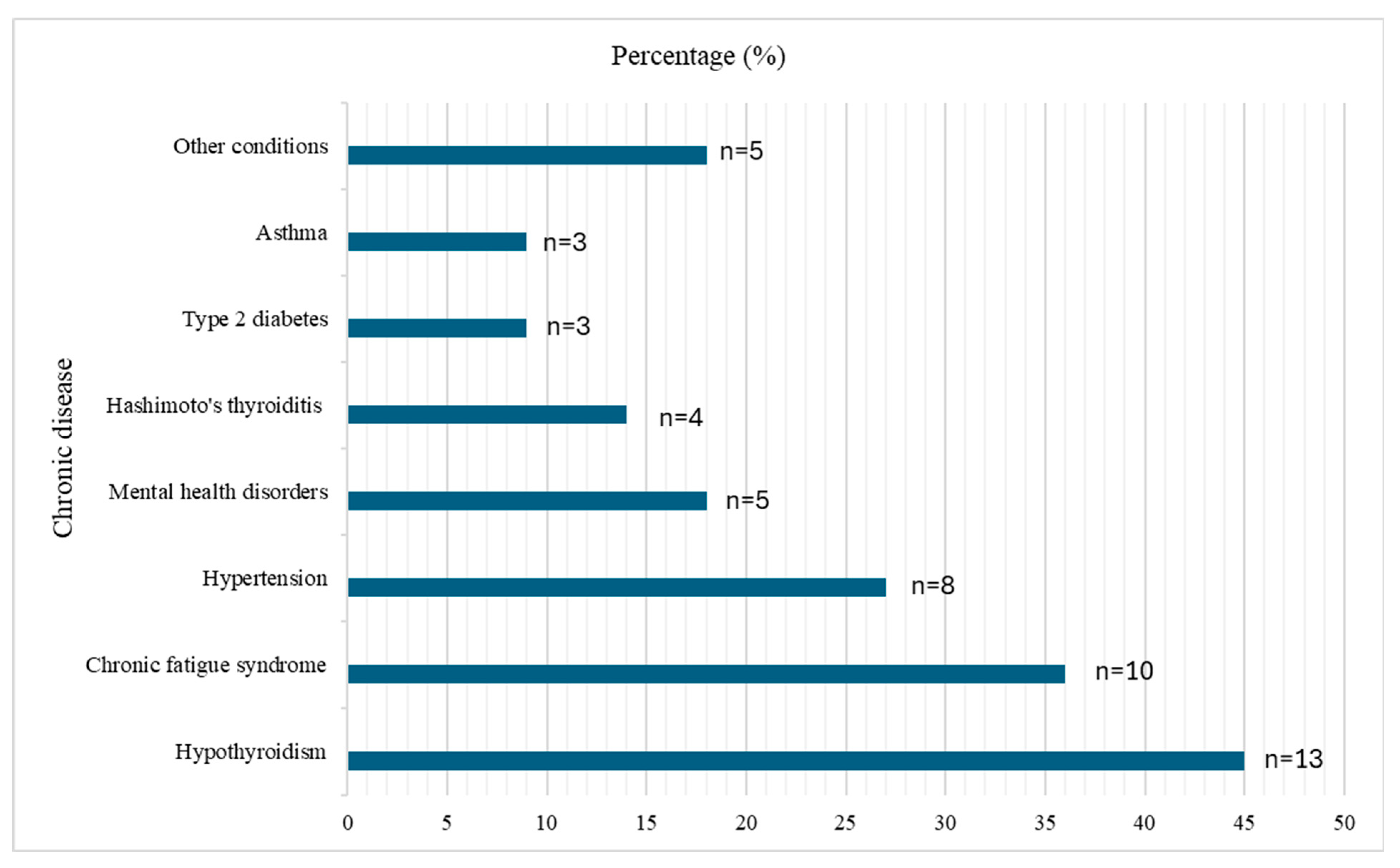
Analysis of occupational health outcomes revealed pronounced sleep and circadian rhythm disturbances, with 71% of participants reporting sleep problems and 89% experiencing frequent work-related fatigue (including 62% who reported fatigue during work and 62% after completing their duties). Nearly one-third of respondents (29%) reported developing chronic diseases after starting their aviation career, with the most common conditions being hypothyroidism (45% of those affected), chronic fatigue syndrome (36%), hypertension (27%), and mental health disorders (18%). Weight changes were also common, affecting 60% of participants, with 38% reporting weight gain and 22% reporting weight loss after starting their aviation career (Figure 1). These changes were frequently accompanied by self-reported appetite alterations and irregular meal timing.
Figure 1.
Prevalence of chronic diseases developing after starting work in aviation (n = 29).
3.3. Dietary Behavior and Circadian Misalignment
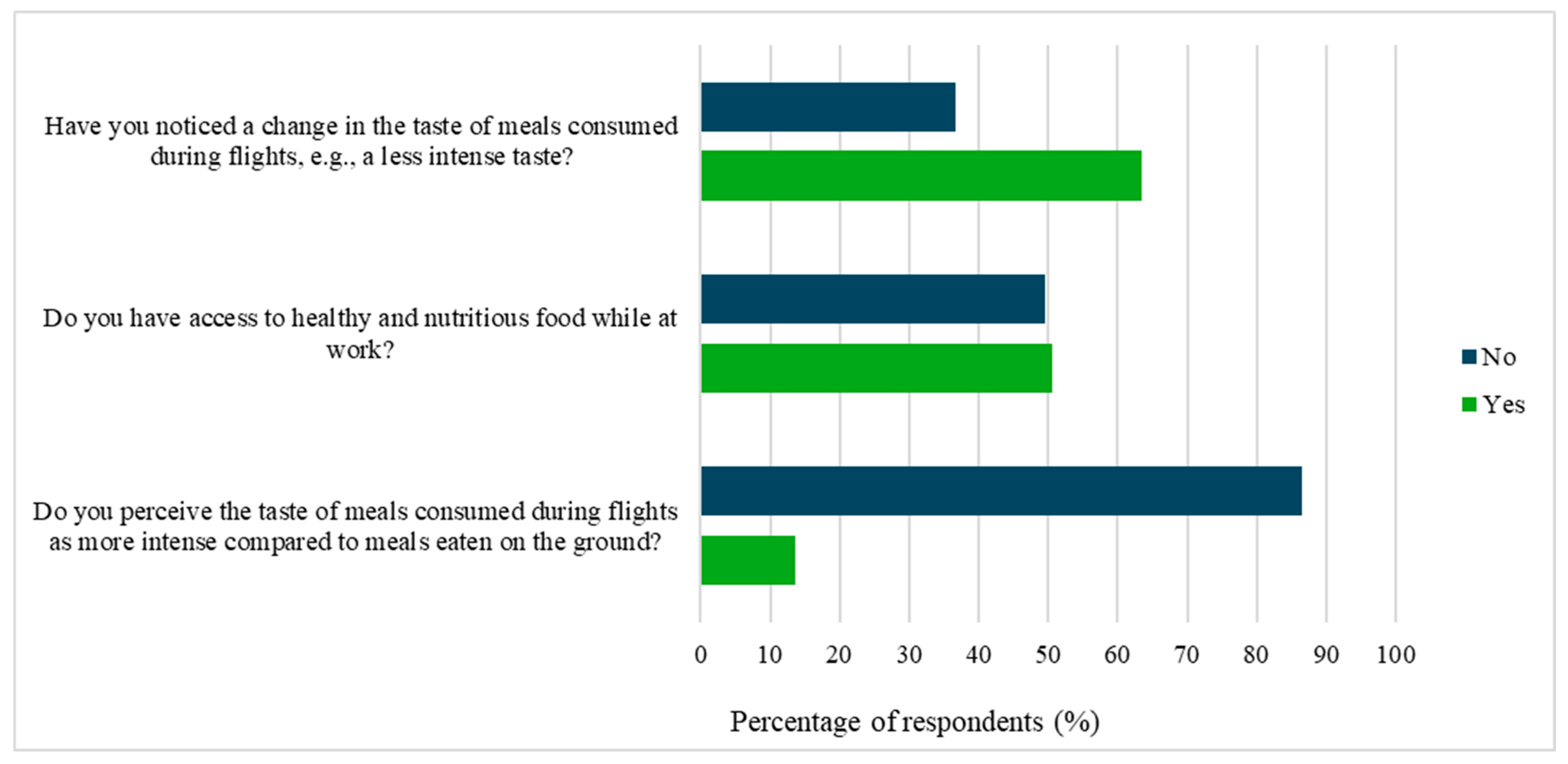
Irregular working hours and circadian rhythm disturbances were frequently associated with changes in dietary behavior. Half of the respondents (50%) reported limited access to nutritious food during work shifts. Appetite changes were common, with 47% of participants reporting an increase in appetite and 21% reporting a decrease in appetite since beginning their employment in aviation.
Altered taste perception was reported by 63% of participants, most often describing meals consumed during flights as having a less intense taste compared to those eaten on the ground (Figure 2). Only 13% of respondents perceived the taste as more intense. Meal structure also differed substantially between workdays and days off. During flights, the majority (57%) consumed airline catering meals, 29% brought homemade food, and smaller groups relied on ready-made or snack-type options. Over 80% of participants reported differences in meal timing or composition between workdays and days off.
Figure 2.
Perception of appetite and taste changes among flight and cockpit crew (n = 101). The figure presents responses regarding changes in appetite, access to healthy food, and perception of meal taste intensity during flights.
3.4. Supplement Use and Self-Management
Melatonin supplementation was reported by 41% of participants, with 76% of them noting improved sleep quality and reduced difficulty falling asleep. The use of other dietary supplements was declared by 56% of participants. The most common were vitamin D (50% of supplement users), multivitamin complexes (43%), omega-3 fatty acids (43%), and magnesium (43%). Fatigue reduction and mood improvement were the primary motivations for supplement use.
Health literacy was high: 85% of participants were knowledgeable about the risks associated with exposure to ionizing radiation, and 92% were aware of the general health consequences of working in aviation. Despite this, only 50% reported adequate access to nutritious food during their workday. Interest in occupational health consultation services was significant: 55% expressed willingness to participate in preventive medical consultations, 23% were not interested, and 22% expressed uncertainty.
4. Occupational Risks and Health Consequences in Aircrew: A Narrative Review
Aviation professionals encounter a unique constellation of occupational factors that synergistically interact to influence multiple physiological systems. These factors include environmental stressors, circadian rhythm disruption, nutritional challenges, and cosmic radiation exposure, all of which collectively contribute to elevated health risks.
4.1. Circadian Disruption and Fatigue
Among aircrew members, circadian rhythm disruptions trigger desynchronization of physiological processes and are associated with an increased prevalence of sleep disorders, adverse metabolic changes, and elevated cardiovascular risk [10,11]. Chronic fatigue and limited daylight exposure contribute to mood deterioration and depressive symptoms [12,13], while reduced sleep quality and irregular working hours result in diminished alertness and cognitive performance [14,15]. The biological basis involves disrupted circadian regulation of cortisol, melatonin, and core body temperature [25] with individual tolerance influenced by circadian clock gene variations (CLOCK, BMAL1, PER3) [26]. Chronic occupational stress further intensifies these effects by disturbing the hypothalamic–pituitary–adrenal axis, leading to flattened diurnal cortisol profiles and compromised recovery [27,28]. Recent evidence also confirms persistent trends of sleep disturbances and fatigue-related disorders among military aviators, underlining the chronic nature of circadian strain in this occupational group [29].
4.2. Nutritional Challenges in Aviation
Aviation personnel face significant nutritional challenges due to frequent time-zone changes, confined cabin environments, and restricted access to high-quality food [16,17].
These occupational factors result in irregular meal timing, excessive snacking, heightened caffeine consumption, insufficient fruit and vegetable intake, and elevated saturated fat consumption [16,17]. Female cabin crew demonstrate higher rates of gastrointestinal complaints and snacking behaviors [17], while preliminary research indicates elevated overweight prevalence and poor dietary adherence [18].
Meal timing misalignment with biological rhythms exacerbates jet lag symptoms and metabolic dysfunction [7,21]. This combination of irregular eating, circadian misalignment, and restricted food variety creates persistent nutritional strain in aviation workers.
Recent evidence confirms that circadian misalignment reduces leptin levels while elevating glucose and insulin, thereby promoting weight gain [26]. Shift workers exhibit significantly higher BMI and metabolic syndrome prevalence compared to day workers [30], with increased consumption of energy-dense, nutrient-poor foods during working hours [16]. Contemporary research has documented specific nutritional deficits in military aviation personnel [31] and identified acute metabolic changes in fighter pilots [32]. Studies of chronobiological eating patterns reveal that meal timing disruption significantly affects total caloric intake and macronutrient distribution [33,34], while unfavorable meal scheduling contributes to circadian syndrome development [30]. Collectively, these findings underscore the complex relationship between disrupted schedules, altered metabolism, and inadequate diet quality among aircrew.
Diet quality is further affected by cabin environmental conditions that alter taste and smell perception. Cabin conditions characterized by low pressure, low humidity, and persistent engine noise significantly impair taste and smell perception, particularly reducing sensitivity to sweet and salty flavors. Airlines compensate by increasing sugar and salt content in onboard meals to maintain acceptable flavor profiles, consequently elevating caloric content and reducing nutritional quality [35].
Research demonstrates that altitude conditions substantially compromise gustatory function [35], with dry cabin air reducing saliva production and impairing taste bud function [36]. Low humidity environments (10–15% typical in aircraft cabins) reduce olfactory sensitivity by 25% [37], given that smell contributes significantly to overall flavor perception.
Recent advances in sensory science research conducted under aviation and space-analog conditions have identified methodological approaches for testing food acceptance under altered environmental conditions [38]. Experimental studies employing virtual reality and microgravity body postures demonstrate measurable changes in food odor perception and affective responses [39].Cabin humidity modeling research provides practical parameters for environmental control systems [40], while extreme isolation studies confirm progressive olfactory and gustatory function impairment over extended periods [41].
These environmental and sensory factors not only alter the dining experience but may also affect food intake and nutritional quality, thereby contributing indirectly to metabolic and cardiovascular strain. Excessive sodium intake from compensatory food formulations increases hypertension risk [42,43], while nutritional recommendations emphasize sodium reduction rather than increased intake particularly among populations at elevated cardiometabolic risk. Meta-analyses have confirmed that a reduction of approximately 2.3 g of dietary sodium per day significantly lowers blood pressure in both hypertensive and normotensive individuals. Contemporary evidence demonstrates dose-dependent cardiovascular benefits of sodium reduction [42,43] and clinical efficacy of salt substitutes [44].
4.3. Cabin Environment and Respiratory Health
Aircrew encounter specific cabin environmental conditions that adversely affect respiratory health. Low humidity (approximately 16% ± 5%) promotes dehydration of mucous membranes, while reduced cabin pressure alters breathing mechanics and elevated ozone concentrations irritate the airways [45,46]. Recent measurements confirm that cabin air contains increased concentrations of ultrafine particles, which fluctuate with engine power and ventilation settings [46], and significant levels of volatile organic compounds including tetrachloroethylene from cleaning agents and cabin materials [47]. Contemporary research demonstrates that contaminated cabin air events expose aircrew to complex mixtures of organophosphates, volatile compounds, and nanoparticles, with systematic reviews documenting associated health consequences and recommending standardized medical assessment protocols [48]. Carbon monoxide levels in cabins have been analyzed with recommendations for enhanced monitoring and lower occupational exposure limits for aircrew [49].
These findings suggest that even short-term exposures may lead to mucosal irritation, reduced breathing comfort, and increased vulnerability to respiratory infections [50]. Aviation-related microbiome alterations may further compromise respiratory health through disrupted microbial balance [51].
4.4. Cancer Risk and Cosmic Radiation Exposure
Pilots and flight attendants experience chronic exposure to cosmic ionizing radiation (CIR) and ultraviolet radiation, which has been associated with an increased risk of certain cancers, particularly melanoma and breast cancer [52]. This occupational hazard is further intensified by long flight hours, high-altitude exposure, and disrupted circadian cycles.
In addition to radiation and circadian misalignment, light exposure during night operations may further elevate cancer risk through suppression of nocturnal melatonin secretion. Melatonin acts as an endogenous oncostatic, antioxidative, and immune-modulating hormone, and its reduction has been shown to facilitate tumor growth mechanisms, as extensively described by Blask [53].
Large cohort studies with cumulative dose assessment demonstrate signals for melanoma and brain tumors in pilots [54]. Recent measurements confirmsignificant UVA transmission through cockpit windows, contributing to pilot melanoma risk [55]. Experimental evidence indicates that simulated cosmic radiation exposure activates breast tumorigenesis pathways involving estrogen receptor alpha (ERα), estrogen-related receptor alpha (ERRα), and secreted phosphoprotein 1 (SPP1) signaling, thereby providing biological plausibility for observed epidemiological associations [56].
Prospective biomarker studies reveal suppressed DNA repair capacity in flight attendants after air travel, with diminished repair of radiation-induced damage and 8-oxoguanine:cytosine (8-oxoG:C)lesions [57]. Contemporary research highlights the peak cancer incidence typically occurs between ages 55–79 in men and 50–74 in women, making long-term follow-up essential for aviation workers who begin careers at young ages. Current evidence supports cosmic ionizing radiation, circadian rhythm disruption, and longer aviation career duration as probable contributors to elevated cancer risk [58].
An additional methodological consideration relevant to the interpretation of these health outcomes is the structural confounding between age, job tenure, and long-haul route exposure. Airline long-haul and trans-meridian operations are disproportionately assigned to more senior crew members, creating systematic overlap between older age, longer flight experience, and greater circadian stressors [59]. Although formal eligibility rules vary across airlines, operational data indicate that seniority and long-haul duty frequently co-occur, making it difficult to isolate the independent effects of time-zone transitions from accumulated exposure [59,60]. Recent operational studies demonstrate that age can moderate the association between night-flight duration and sleep disturbances, suggesting that biological ageing and occupational tenure may jointly influence vulnerability to circadian disruption [60]. To strengthen causal inference, future work should incorporate seniority metrics, route history, and longitudinal duty-pattern tracking to avoid misattributing circadian-related morbidity solely to chronological age [7].
4.5. Endocrine and Reproductive Health in Aircrew
Female flight attendants face significantly elevated risks of reproductive and endocrine complications linked to cosmic ionizing radiation, circadian rhythm disruption, and occupational stressors. Comprehensive epidemiological evidence demonstrates increased reproductive health risks among flight attendants. McNeely et al. reported elevated rates of infertility, miscarriages, preterm births, and fetal abnormalities compared to the general population [61] while Grajewski et al. specifically identified a correlation between cosmic radiation exposure levels and miscarriage rates [62].
Recent research reveals concerning impacts on ovarian function, with flight crew showing significantly lower anti-Müllerian hormone (AMH) levels and accelerated ovarian reserve decline compared to controls [63]. Hormonal disruptions include elevated prolactin levels predisposing to infertility and menstrual disorders, occurring independent of flight frequency in both short-haul and long-haul attendants [63]. Thyroid dysfunction manifests as elevated TSH levels (2.59 vs. 1.52 mcIU/mL in controls) and increased prevalence of thyroid antibodies, with hypothyroidism reaching 4.7% in long-haul attendants compared to general population rates [64,65]. These effects arise from multiple mechanisms including cosmic radiation-induced DNA damage, circadian disruption of hypothalamic-pituitary axes, melatonin dysregulation, and occupational stress-mediated HPA axis activation [62,63,66].
4.6. Gastrointestinal and Microbiome Considerations in Aviation Personnel
Aviation personnel experience significantly higher rates of gastrointestinal disorders and microbiome alterations linked to cabin environmental conditions, circadian disruption, and occupational stressors. Systematic reviews of shift workers and flight crews demonstrate increased prevalence of dyspepsia, irritable bowel syndrome (IBS)-like symptoms, constipation, and work-related fatigue compared to day workers, with strongest associations in night/rotating shift schedules and long-haul operations [67,68]. Reduced cabin pressure (equivalent to 2400 m altitude) causes intestinal gas expansion and gastric distension, leading to upper gastrointestinal discomfort and slowed gastric emptying during flight [69].
Hypobaric hypoxia exposure induces intestinal inflammation, oxidative stress, mucosal barrier disruption, and microbiome shifts toward reduced diversity and increased pro-inflammatory taxa including Escherichia/Shigella, Blautia, and Dialister [70,71]. Circadian misalignment from irregular schedules disrupts gut–brain axis function, altering microbial communities and promoting systemic inflammation that contributes to digestive complaints and metabolic dysfunction [72]. While direct evidence for increased antibiotic-resistant strain transmission in commercial aircrew remains limited, confined cabin environments and crew rest areas create conditions that may promote microbial exchange and opportunistic organism proliferation [73].
4.7. Integrated Cardiometabolic Risk and Organizational Determinants
Among the numerous occupational hazards confronting aircrew, cardiovascular diseases (CVDs) rank among the most prevalent, with risk strongly influenced by circadian rhythm disruption, occupational stress, prolonged sitting, and adverse cabin conditions [74,75,76].
Studies have shown that pilots are more often frequently overweight or obese (67% in New Zealand), physically inactive, exhibit insufficient fruit and vegetable intake, and sleep less than 7 h per day [75]. These lifestyle and occupational factors interact synergistically, thereby amplifying long-term cardiometabolic burden. Elevated CVD risk is also associated with impaired glucose and lipid metabolism, inflammation, and autonomic nervous system dysfunction. This risk increases after just 5 years of shift work, with an additional 7.1% increase for every subsequent 5 years [77].
The heightened susceptibility of pilots to CVDs is attributed to work characteristics involving high stress, prolonged immobility, and tasks requiring intense concentration [76]. Recent evidence shows that asymptomatic military aircrew demonstrate 12% prevalence of clinically significant coronary artery disease [78], while systematic reviews reveal high rates of cardiometabolic risk factors among airline pilots [75]. Contemporary meta-analyses demonstrate dose-dependent relationships between night shift work duration and cardiovascular events [79], with rotating shift patterns showing particularly adverse metabolic effects [80]. Organizational risk factors including irregular schedules and prolonged duty hours significantly affect aircrew health [81], while physical occupational exposures (cosmic radiation, pressure changes, noise) contribute additional health risks [82].
5. Strategies to Mitigate Risks: A Narrative Review
Addressing the specific health risks faced by airline personnel requires structured, evidence-based interventions. One such approach was demonstrated by Wilson et al. [83] in a 16-week personalized program for 125 pilots. The intervention, which included targeted changes in nutrition (e.g., increased fruit and vegetable intake, controlled portion sizes), sleep hygiene (e.g., reduced screen time, establishment of consistent sleep routines), and physical activity (individualized MVPA moderate-to-vigorous physical activity goals based on WHO guidelines: ≥150 min/week of moderate or ≥75 min/week of vigorous activity), resulted in significant benefits: an increase in cardiorespiratory fitness by 4.5 mL/kg/min, a decrease in body fat by 3.7%, and a reduction in systolic blood pressure by 8.1 mmHg. These outcomes highlight the feasibility and clinical relevance of tailored health-promotion programs in aviation settings. A structured overview of major occupational health risks and corresponding countermeasures is presented in Table 1, summarizing actionable strategies across circadian, nutritional, environmental, reproductive, and organizational domains.
5.1. Sleep and Circadian Rhythm Management
Evidence from Pereira et al. [84] on Norwegian Air Ambulance and Austrian Christophorus pilots showed that short naps of approximately 10 min effectively alleviate sleepiness and enhance alertness, whereas longer naps (>30 min) are counterproductive due to sleep inertia—a transient state of reduced vigilance and cognitive performance following awakening [85,86].
Melatonin supplementation has also demonstrated effectiveness in improving sleep quality and daytime functioning among shift workers [87,88]. Beyond regulating sleep, melatonin exhibits antioxidant, anti-inflammatory, and cardioprotective properties [89,90,91,92,93], with experimental studies demonstrating significant improvements in redox status and recovery in physically demanding occupations [91,92].
Randomized and clinical evidence demonstrates that melatonin improves sleep quality, cognitive performance, and multiple sleep parameters in shift workers, despite heterogeneity in dose and study design [94,95,96]. Its mechanisms extend beyond circadian alignment, encompassing anti-inflammatory and mitochondrial-protective actions that may also mitigate cancer risk [89,97]. Recent meta-analyses from 2023 further indicate that melatonin supplementation improves metabolic parameters such as insulin resistance and glycemic control, emphasizing its therapeutic potential beyond sleep regulation [98]. Systematic reviews recognize melatonin as one of the most widely recommended pharmacological tools to support night-shift adaptation and mitigate circadian desynchrony [99,100].
In operational contexts, comprehensive fatigue-management systems integrate melatonin use (0.5–3 mg, 30–60 min before sleep) with chronotherapy, restricting consecutive night duties (<3 nights), controlled morning light exposure (≈ 10,000 lux), and scheduled short naps or walking breaks during night operations [29,67,72,87,101].
In cases of sleep-disordered breathing, melatonin may serve as adjunctive therapeutic option in combination with diagnostic evaluation and targeted treatment [29,102]. Brief bouts of physical activity such as 5-min walking breaks every 30 min combined with light-based countermeasures effectively reduce operational sleepiness and maintain alertness [88,103].
5.2. Nutritional and Sensory Interventions in Aviation Personnel
Available evidence indicates that both the timing and composition of meals can significantly affect alertness, sleep quality, and metabolic homeostasis among shift workers. Dietary approaches such as adjusting macronutrient distribution (e.g., reducing carbohydrate intake at dinner), providing targeted snacks during extended night shifts, or restricting food intake to daytime hours have been shown to enhance alertness, reduce sleepiness, and stabilize mood [104,105,106].
Observational and field studies substantiate the real-world feasibility of meal-timing strategies [107,108]. De Rijk et al. demonstrated that the timing of macronutrient intake during night shifts significantly affects alertness levels, with carbohydrate consumption showing optimal effects when consumed 2–4 h into the shift rather than at shift onset [107]. Similarly, Flanagan et al. documented systematic redistribution of energy intake among rotational shift nurses, revealing that night-shift workers naturally adapt their eating patterns by concentrating caloric consumption during nighttime hours [108]. These adaptive dietary behaviors suggest that structured meal-timing interventions can be successfully implemented in real-world shift work environments. The evidence indicates that both the timing and macronutrient composition of meals during night shifts can be strategically optimized to enhance alertness and support circadian adaptation [107,108], while large cohort studies among flight personnel link late dinners and prolonged eating windows with increased risk of anxiety and depressive symptoms [21].
In addition to meal timing modifications, dietary enrichment with micronutrients essential for energy metabolism and oxygen transport, such as B vitamins, vitamin C, iron, magnesium, and zinc, also plays crucial role [109]. Supplementation with B-complex vitamins (particularly B1, B6, and B12) has been shown to enhance subjective energy levels [110], whereas iron deficiency even without anemia has been linked to fatigue and impaired performance [109].
In parallel, the unique sensory environment of the aircraft cabin influences food perception and requires specific dietary adaptations. Low pressure and humidity reduce taste and smell perception, necessitating food-product reformulation and multisensory design solutions. To offset the health risks associated with such sodium enrichment, potassium-based salt substitutes, gradual sodium-reduction programs, and routine blood-pressure monitoring are recommended [42,43,44]. Techniques such as umami enhancement, the addition of aromatic compounds, and virtual-reality-based acceptance testing have demonstrated effectiveness in maintaining palatability. Cabin humidity control at 40–60% further supports gustatory and olfactory function [39,40,111].
Pre-flight dietary counseling also addresses cabin-pressure-related gastrointestinal symptoms, recommending the avoidance of legumes and carbonated drinks, consumption of balanced meals 2–4 h before flight, and compliance with low-FODMAP principles [69,70].
5.3. Environmental and Engineering Controls
Environmental and engineering controls aim to minimize cabin air contamination, optimize air quality, and reduce occupational strain through technological and procedural innovation. To achieve these goals, standardized clinical and operational protocols have been established to investigate and manage aircrew exposure to contaminated cabin air events, including structured symptom assessment and biomonitoring where available [48]. Engineering interventions encompass upgraded ventilation and air conditioning (HVAC) filtration systems and continuous monitoring of carbon monoxide (CO) and volatile organic compounds (VOCs) in air supply channels [49]. Source control measures entail restricting high-emission cleaning agents and selecting low-VOC cabin materials based on source apportionment studies [47].
In parallel, ongoing technological upgrades such as real-time CO and VOC sensor systems in ventilation ducts and ergonomic improvements to galley design are being implemented to minimize environmental strain and improve crew comfort [112,113]. These initiatives are increasingly complemented by mindfulness-based stress-reduction programs for cabin crew [7].
Systematic review highlight humidity and temperature management, advanced filtration, and infection-control protocols as integral elements of occupational health protection [112].
5.4. Radiation Protection and Reproductive Health Surveillance
Comprehensive occupational health surveillance is essential for protecting reproductive and endocrine function in aircrew. Recommended monitoring procedures include baseline and periodic thyroid function testing (TSH, free T4, antibodies), ovarian reserve assessment (AMH, FSH) for female crew over 30 or with fertility concerns, and specialized reproductive counseling addressing occupational exposure risks [63,64,65].
As circadian misalignment contributes to endocrine and reproductive dysfunction, optimization of circadian health-through schedule control, limitation of consecutive night duties, light therapy, and supervised melatonin supplementation-can mitigate chronobiological disruption [66,93].
Complementary environmental and ergonomic interventions, including enhanced cabin air filtration systems, ergonomic workplace adjustments, and modified duty assignments during preconception and pregnancy, provide additional layers of physical protection [61,114]. Close coordination with reproductive endocrinologists and sleep medicine specialists ensures an integrated approach to managing the unique occupational exposure profile of aviation personnel [63,66].
Preventive strategies further encompass the installation of UV-shielding cockpit windows, routine use of sunscreen, and expanded cancer-screening protocols for high-exposure groups [52,54,55].
Finally, monitoring of DNA-repair biomarkers and implementation of targeted dietary interventions aimed at enhancing antioxidant defense mechanisms have been proposed as potential strategies to reduce molecular damage from chronic radiation exposure [56,58,83].
5.5. Gastrointestinal and Microbiome-Targeted Strategies
Comprehensive gastrointestinal health management in aviation combines organizational measures, dietary planning, and microbiome-targeted interventions. Optimizing duty schedules to minimize night-shift frequency, maintaining circadian stability, and implementing structured timed light exposure protocols can reduce the risk of digestive disturbances [67,72].
Dietary strategies should encompass time-restricted eating patterns, fiber-rich meals, attention to hydration and meal timing, while also prioritizing lower-gas-producing foods during flights to minimize pressure-related gastric distension [68,69].
Human randomized controlled trials indicate that Bifidobacterium supplementation may beneficially modulate gut microbial balance and improve psychological well-being under stress or irregular schedules, although direct evidence in occupational shift-work populations remains preliminary [115,116].
Evidence-based probiotic protocols often include Bifidobacterium longum JBLC-141 in combination with prebiotics such as inulin or fructooligosaccharides (FOSs) and fermented foods such as kefir or kimchi [67,70]. Enhanced cabin air quality management, regular health surveillance including gastrointestinal symptom screening, and referral to gastroenterology specialists for persistent symptoms provide additional clinical support [73]. Routine gastrointestinal monitoring using validated tools such as the Rome IV criteria, combined with quarterly microbiome profiling, may further enhance early detection and individualized management of digestive disorders in aircrew [68,72].
Research priorities include prospective aviation-specific cohort studies with validated symptom instruments, longitudinal microbiome sampling, and randomized trials of schedule interventions, targeted probiotics, and meal timing protocols to establish evidence-based prevention strategies [67,70,73].
5.6. Integrated Cardiometabolic and Organizational Health Strategies

Addressing the heightened cardiometabolic risk observed among aviation personnel requires an integrated approach that combines clinical surveillance, workload optimization, and targeted lifestyle interventions.
In high-risk aircrew, coronary computed tomography angiography (CCTA) is recommended form the age of 40 to facilitate early detection of subclinical coronary artery disease and to guide certification decisions [117]. Structured lifestyle programs integrating exercise, dietary counseling, and weight control have demonstrated substantial benefits in enhancing cardiorespiratory fitness and reducing blood pressure [83].
To counteract circadian disruption and metabolic dysfunction related to night and rotating shifts, optimized duty scheduling, fatigue-risk management systems, and chronobiological interventions such as strategic napping and circadian lighting are progressively implemented [79,80,81]. These strategies enhance sleep quality, metabolic stability, and operational performance.
Given the rising prevalence of obesity and diabetes among aircrew, comprehensive weight-management programs that integrate nutritional counseling, supervised physical activity, and, where indicated, pharmacological support can effectively improve body composition and glycemic control [76,111]. Occupational stress further intensifies cardiometabolic risk through neuroendocrine activation and behavioral pathways; therefore, workload modification, wellness initiatives, and ergonomic improvements are essential to reduce its impact [61,114].
Collectively, these multidimensional strategies illustrate the necessity of aligning individualized clinical care with organizational-level interventions to safeguard both cardiovascular health and operational safety in aviation professionals.
Table 1.
Integrated mitigation strategies for aircrew: risk-intervention matrix.
Table 1.
Integrated mitigation strategies for aircrew: risk-intervention matrix.
| Risk Factor | Mitigation Strategy or Intervention | Implementation | References |
|---|---|---|---|
| Sleep and circadian rhythm management | |||
| Circadian disruption and shift work-related insomnia/fatigue | Melatonin supplementation, chronotherapy, strategic lighting, schedule adaptation to chronotype, fatigue risk management | 0.5–3 mg 30–60 min before sleep; <3 consecutive night shifts; controlled light exposure (10,000 lux AM); strategic naps/walks | Carriedo-Diez et al. [87]; Caldwell and Knapik [29]; Boivin and Boudreau [118]; Lack et al. [101]; Kalra and Kour [119]; Grasa-Ciria et al. [67]; Khan et al. [72] |
| Oxidative stress and post-flight fatigue | Melatonin (antioxidant) + short walking breaks q 30 min during night shifts + performance recovery protocols | 3–10 mg melatonin (antioxidant action) | Leonardo-Mendonça et al. [91]; Farjallah et al. [92]; Easton et al. [103]; Mahdi et al. [120] |
| Sleep apnea and breathing disorders | Melatonin (adjunct) + diagnostic and causal treatment + sleep hygiene education | 3–6 mg melatonin (supportive) | Caldwell and Knapik [29]; Lasala and Lucero-Prisno [102] |
| Nutritional and sensory interventions in aviation personnel | |||
| Irregular eating patterns/meal-timing misalignment | Chronobiological meal planning + structured schedules + education adapted to flight work | Timed meals aligned to circadian rhythms; pre-flight nutrition protocols | Carretero-Krug et al. [31]; Gonçalves et al. [33]; Silva et al. [34] |
| Nutritional deficiencies/poor food access | Targeted supplementation + improved in-flight catering + portable nutrient-dense packs | Vitamin D; micronutrient-controlled meals; access protocols | Gaździńska et al. [32]; Hemmer et al. [121] |
| Impaired taste and smell at altitude | Enhanced flavor profiling + multisensory food design + VR testing + controlled humidity | Umami enhancement; aromatic compounds; humidity 40–60% | Prabodha et al. [38]; Loke et al. [39]; Teleszewski and Gładyszewska-Fiedoruk [40] |
| Excessive sodium intake from flavor compensation | Salt substitutes + reduced-sodium formulations + blood pressure monitoring + CV risk assessment | Potassium-based salts; gradual sodium reduction; regular BP screening | Wang et al. [42]; Huang et al. [43]; Yin et al. [44] |
| Cabin pressure effects (GI gas and comfort) | Dietary modifications, gas-reducing foods, meal-timing optimization, pre-flight counseling | Avoid legumes/carbonated beverages; eat 2–4 h before flight; low-FODMAP education | Li et al. [70]; Qi et al. [69] |
| Environmental and engineering controls | |||
| Cabin air contamination and chemical exposure | Contaminated-air event protocols + source control + continuous monitoring | Standardized medical investigation; low-VOC materials; CO/VOC sensors in air supply | Burdon et al. [48]; Dong et al. [47]; Hageman et al. [49] |
| Low humidity and particle exposure | Environmental controls + engineering solutions + personal protection | Humidity management; personalized ventilation; enhanced HVAC filtration | Georgescu et al. [113]; Michaelis et al. [46]; Wang et al. [42] |
| Environmental stressors | Advanced air quality systems + ergonomic galley design + stress management programs + crew rest optimization | HEPA upgrades; humidity 40–60%; mindfulness-based stress reduction | Qi et al. [69]; Bakr et al. [73] |
| Infection/resistance risk | Enhanced hygiene protocols + antimicrobial stewardship + surveillance systems + crew health monitoring | Hand hygiene > 95%; judicious antibiotic use; pathogen surveillance; regular health screenings | Bakr et al. [73]; Alyami et al. [68] |
| Radiation protection and reproductive health surveillance | |||
| Cosmic radiation and UV exposure | Radiation dose monitoring + UV protection + enhanced medical surveillance + career exposure limits | Personal dosimetry; cockpit UV shields; sunscreen use; periodic cancer screening; rotation policies | Emslie et al. [55]; Scheibler et al. [52]; Dreger et al. [54] |
| DNA damage and impaired repair capacity | Biomarker monitoring + lifestyle interventions + preventive strategies | DNA repair capacity testing; antioxidant-rich diet; controlled interventions | Toprani et al. [58]; Kumar et al. [56]; Wilson et al. [83] |
| Cosmic radiation (exposure in pregnancy) | Dosimetric monitoring, route rotation, pregnancy duty modification | Personal dosimeters; polar route limits; modified assignments during pregnancy | Grajewski et al. [62]; Gómez et al. [122] |
| Thyroid dysfunction | Annual TSH + antibody testing + endocrine consultation | Baseline and periodic testing; specialist referral protocols | Radowicka et al. [65]; Chiovato et al. [64] |
| Ovarian reserve decline | AMH monitoring, reproductive counseling, fertility preservation | Testing for crew > 30 y; specialist consultation; early intervention | Barraza-Ortega et al. [63] |
| Gastrointestinal and microbiome-targeted strategies | |||
| Microbiome dysbiosis | Probiotic therapy + prebiotics + fermented foods + microbiome monitoring | Bifidobacterium longum JBLC-141; inulin/FOS; kefir/kimchi; quarterly profiling | Li et al. [70]; Grasa-Ciria et al. [67] |
| GI symptom burden | Clinical assessment + symptom-directed therapy + occupational health coordination + validated tools | Rome IV criteria; IBS/dyspepsia management; GI referral; quarterly surveys | Alyami et al. [68]; Khan et al. [72] |
| Integrated cardiometabolic and organizational health strategies | |||
| Cardiovascular disease risk (CAD, HTN, MetS) | Enhanced cardiac screening (CCTA) + risk stratification + lifestyle programs + medical certification guidelines | CCTA ≥ 40 y (high-risk); structured exercise; dietary interventions; updated certification criteria | Frijters et al. [78]; Kurek et al. [117]; Wilson et al. [83] |
| Shift work and circadian disruption (night shifts, irregular schedules, metabolic dysfunction) | Optimized work scheduling + fatigue risk management + chronotherapy + health monitoring | Limited consecutive night shifts; strategic napping; circadian lighting; regular assessments | Xi et al. [79]; Cho et al. [80]; Marqueze et al. [81] |
| Obesity and metabolic disorders (weight management, diabetes risk, inactivity) | Weight-management programs + pharmacological options + fitness protocols + nutritional counseling | Structured weight-loss programs; FDA-approved drugs (with safety evaluation); mandatory fitness standards | Prokop et al. [111]; Maculewicz et al. [76] |
| Occupational stress | Workload modification + stress-management + ergonomic improvements | Schedule adjustments; wellness programs; workplace modifications | McNeely et al. [61]; Kim et al. [114] |
6. Discussion
Aviation personnel experience a complex interplay of occupational factors that collectively influence sleep, nutrition, metabolism, and overall physiological stability. Circadian misalignment defined as the mismatch between internal biological rhythms and external work schedules emerges as the primary pathophysiological mechanism linking irregular schedules with sleep disorders, metabolic imbalance, and nutritional dysregulation [7,10,11,16]. The aviation work environment characterized by time-zone transitions, confined cabin conditions, and irregular meal timing imposes cumulative strain on biological rhythms and dietary behavior. Consistent with prior research, our pilot findings confirm that sleep disturbances (71%) and fatigue (89%) are the most prevalent occupational health issues in this population, frequently accompanied by appetite and weight fluctuations, as well as limited access to nutritious food. These results are consistent with previous research showing that circadian misalignment and meal-timing irregularities profoundly alter metabolic and psychological outcomes among airline pilots and cabin crew [7,19,20,21].
Furthermore, circadian disruption is increasingly recognized as a key modulator of neuroendocrine signaling pathways, influencing cortisol secretion, insulin sensitivity, and energy metabolism in aircrew populations [27,79]. These data reinforce the need for targeted, aviation-specific fatigue-risk management strategies and nutritional interventions tailored to shift-working aircrew. Contemporary studies confirm that cardiometabolic risk factors among aircrew significantly exceed those of the general population, with pilots showing elevated rates of obesity, hypertension, and metabolic syndrome [78,117]. In our study, 60% of respondents reported weight changes after starting their aviation careers, suggesting long-term instability of energy balance and lifestyle adaptation. Increased appetite (47%) and decreased appetite (21%) were both common, reflecting dysregulation of hunger and satiety mechanisms caused by circadian misalignment [11,33,123]. Notably, 82% of participants were aged 18–35 years, suggesting early onset of metabolic and endocrine disturbances in a relatively young workforce. The dose-dependent relationship between shift-work duration and cardiovascular events underscores the cumulative nature of occupational health burden in aviation [79,81]. This highlights the importance of early preventive screening in young aviation personnel. Nutritional challenges extend beyond dietary restrictions, as cabin environmental conditions alter sensory perception, necessitating compensatory food formulations that contribute to excessive sodium intake and compromised nutritional quality [40]. Nearly two-thirds (63%) of participants reported altered taste perception typically describing reduced flavor intensity of inflight meals compared to those eaten on the ground which aligns with studies showing that low humidity and cabin pressure blunt gustatory and olfactory responses [36,37]. Environmental factors such as reduced cabin humidity (10–20%) and decreased air pressure have been shown to blunt sweetness and salt perception by up to 30%, while umami sensitivity remains relatively stable [35,36]. This phenomenon explains why inflight meals are often reformulated with higher salt and sugar content, a practice that, while improving palatability, may intensify cardiovascular and metabolic strain [42,43,124,125]. Chronobiological research highlights the importance of meal-timing alignment with circadian rhythms [33,67], and our data confirm frequent desynchrony between workday and off-duty meal schedules (>80% of respondents), reflecting circadian misalignment in dietary behavior.
Self-management practices emerged as compensatory strategies among aircrew. Melatonin use was reported by 41% of respondents, while 56% used dietary supplements most often vitamin D, omega-3 fatty acids, and magnesium. Although 76% of melatonin users reported improved sleep quality, these findings highlight a reliance on self-directed strategies in the absence of standardized institutional guidance. Similar patterns have been observed in previous research, demonstrating the growing popularity of chronobiological and nutraceutical approaches to counteract fatigue and circadian disruption [87,88,89,90,91,92,93,94,95,96,97,98,99]. High health literacy observed in our cohort reflects strong awareness of occupational risks, yet only half of participants reported adequate access to nutritious food during work. This discrepancy underscores a structural gap between knowledge and organizational support, emphasizing the need for airline-level nutritional and recovery standards [16,17,81]. Developing standardized educational programs on fatigue management, sleep hygiene, and evidence-based supplementation could improve both well-being and operational safety [83,87,88].
Female aircrew demonstrate concerning reproductive and endocrine health consequences, including increased thyroid dysfunction and higher risk of adverse reproductive outcomes [63,64,65,78]. Given that 63% of participants in this study were women, the results support prior evidence of occupational vulnerability among female flight attendants, especially those exposed to chronic circadian disruption and cosmic ionizing radiation [61,62]. Furthermore, thyroid dysfunction observed in this cohort may be partially mediated by circadian misalignment and altered melatonin–thyroid axis signaling [64,65]. These findings support the need for proactive reproductive counseling and periodic thyroid screening as part of standard occupational health programs alongside circadian-health optimization [61,62,81]. Environmental endocrine disruptors may further contribute mechanistically, though evidence is population-level rather than aircrew-specific [114,126].
The sex difference observed in our study, with 63% of women reporting symptoms, aligns with emerging evidence demonstrating that hormonal factors and circadian rhythm interact in sex-specific ways that may increase symptom prevalence in female aircrew [63,127,128]. Sex steroids, particularly estrogen and progesterone, exert modulatory effects on circadian clock function at multiple levels, including the suprachiasmatic nucleus, peripheral clocks, and clock gene expression [127,128]. These hormonal influences produce measurable differences in circadian physiology between women and men that extend beyond reproductive health.
Women exhibit earlier circadian timing and larger nocturnal declines in alertness compared to men, creating a physiological vulnerability to shift work and night-time schedules that characterize aviation operations [129]. Recent chronobiology data also show that circadian misalignment affects energy regulation differently in men and women, with women demonstrating greater metabolic sensitivity to misalignment [123]. Furthermore, women exhibit significantly greater light-induced melatonin suppression at bright illuminances (400–2000 lux), suggesting enhanced circadian photosensitivity that could amplify the disruptive effects of irregular light exposure during transmeridian flights [130].
Menstrual cycle phase introduces additional complexity, as fluctuations in estrogen and progesterone produce reproducible within-woman changes in circadian parameters. During the luteal phase, elevated progesterone increases nighttime core body temperature and alters circadian amplitude [131], while menstrual phase–dependent differences in neurobehavioral performance have been linked to the progesterone/estradiol ratio and core body temperature dynamics [131]. Women with premenstrual dysphoric disorder show altered circadian markers and sleep disturbances during symptomatic luteal phases [132,133]. These cycle-dependent variations may create temporal windows of heightened vulnerability to shift-work-related symptoms.
Female aircrew also exhibit higher circadian hormone rhythm amplitudes, with elevated plasma melatonin and cortisol area-under-curve values compared to men [134]. Hormonal contraceptive use—although primarily associated with thromboembolic risk—has been shown to modify cortisol dynamics and increase subjective fatigue in shift-working women, potentially influencing circadian-related symptom expression [125,135].
The convergence of sex-specific circadian architecture, menstrual-cycle effects, enhanced photosensitivity, metabolic sensitivity to circadian misalignment [123], and amplified hormonal rhythms provides a mechanistic framework for understanding why female aircrew may report symptoms at higher rates [63,123,127,128,129,130,131,132]. Epidemiological studies consistently show that women report more subjective sleep and circadian-related complaints than men, even when objective sleep measures are comparable or better [136]. In the context of aviation shift work, these sex-specific biological factors likely interact synergistically with occupational stressors—irregular schedules, transmeridian travel, and cabin environmental conditions—to amplify symptom burden in female personnel.
From an intervention perspective, comprehensive lifestyle programs have shown measurable benefits in aviation contexts, with significant improvements in cardiorespiratory fitness, body composition, and blood pressure among pilots [83]. Our findings, particularly the high prevalence of fatigue, nutritional challenges, and widespread melatonin use suggest that structured interventions combining circadian scheduling, nutritional education, and supervised supplementation could substantially improve crew well-being. The introduction of fatigue-risk management systems, controlled lighting exposure, and duty-rotation policies represents further actionable strategies [29,87,101,118]. Targeted modulation of the gut microbiome through fiber-rich, low-gas inflight meals may reduce gastrointestinal symptoms and stabilize metabolic responses under hypobaric and circadian stress conditions [67,70,115].
Circadian disruption has been linked to alterations in gut microbiome composition and inflammatory signaling, which may further contribute to metabolic instability among aircrew [67,70]. Given the emerging evidence on the gut–brain axis, dietary interventions that support microbial diversity may offer novel preventive avenue for shift-working populations [67,68,70].
This study has several limitations. The modest sample size (n = 101) and cross-sectional design restrict generalizability and causal inference. Data were self-reported, which may introduce recall bias, and participants represented multiple airlines and routes, contributing to heterogeneity in operational exposure profiles. The survey did not collect detailed shift-roster typology (e.g., fixed vs. rotating schedules; clockwise vs. counterclockwise patterns), which limits the ability to stratify participants by specific work schedules. Because the sample was recruited through purposive non-random sampling, selection bias cannot be excluded. In addition, the questionnaire was an ad hoc instrument developed for exploratory purposes, and although it underwent expert validation and pilot testing, it does not represent a standardized diagnostic tool. Items assessing new-onset symptoms over the course of an aviation career were interpreted descriptively and were not adjusted for age or duration of employment. Finally, the survey was intentionally designed as a single-cohort descriptive study without a control group, which limits comparative interpretation but is appropriate for a pilot investigation and will inform the design of future hypothesis-driven research.
However, the hybrid methodology—combining empirical data with a narrative review—allowed for the identification of specific, operationally feasible health-protection strategies tailored to aviation personnel. By integrating descriptive findings with multidisciplinary evidence, the study provides a coherent framework for understanding how circadian disruption, nutritional strain, environmental exposures, and endocrine factors jointly shape aircrew health. Table 2 summarizes key practical recommendations derived from these findings, outlining evidence-based strategies to improve health, performance, and safety in aviation personnel.
Table 2.
Key findings and practical recommendations for aviation personnel.
7. Conclusions
This study demonstrates that shift work exerts a substantial impact on the health and dietary habits of aviation personnel, with consequences extending beyond individual well-being and influencing overall operational safety. The observed prevalence of sleep disturbances, fatigue, and metabolic imbalance underscores the need for comprehensive occupational-health strategies tailored to this professional group.
Practical, evidence-based measures such as structured fatigue management through strategic napping, supervised melatonin use, balanced and circadian-aligned meals, regular physical activity, and preventive health screening can support physiological resilience and reduce occupational health risks. The development and implementation of such targeted interventions require coordinated efforts between aviation operators, occupational-health specialists, and regulatory bodies. Establishing standardized programs for fatigue management, nutritional support, and preventive monitoring will be essential to safeguard crew well-being and ensure long-term operational safety in the aviation environment.
Author Contributions
Conceptualization, A.M.-Z. and O.B.; methodology, O.S. and A.M.-Z.; software, O.S. and A.M.-Z.; validation, A.M.-Z.; investigation, O.S.; writing—original draft preparation, O.S., O.B. and A.M.-Z.; writing—review and editing, A.M.-Z. and O.B.; visualization, A.M.-Z.; supervision, A.M.-Z.; project administration, O.B. All authors have read and agreed to the published version of the manuscript.
Funding
This research received no external funding.
Institutional Review Board Statement
Ethical review and approval were waived for this study due to the anonymous, non-interventional nature of the survey and the absence of sensitive personal data. The study was conducted in accordance with the principles of the Declaration of Helsinki.
Informed Consent Statement
This study involved voluntary participation in an anonymous online survey. No personal or identifying data were collected, and completion of the survey implied informed consent in accordance with ethical standards.
Data Availability Statement
The datasets generated and analyzed during the current study are available from the corresponding author on reasonable request. Data are not publicly available due to participant privacy protection and institutional data protection policies.
Conflicts of Interest
The authors declare no conflict of interest.
References
- Monk, T.H.; Folkard, S. Making Shiftwork Tolerable; CRC Press: London, UK, 2024. [Google Scholar]
- Buxton, O.M.; Shea, S.A. Sleep & Work, Work & Sleep. Sleep Health 2018, 4, 497–498. [Google Scholar] [CrossRef]
- Sweileh, W.M. Analysis and mapping of global research publications on shift work (2012–2021). J. Occup. Med. Toxicol. 2022, 17, 22. [Google Scholar] [CrossRef]
- European Commission. Employment and Working Conditions in Air Transport and Airports; European Commission: Brussels, Belgium, 2015. [Google Scholar]
- CAE. Aviation Talent Forecast 2025: 10-Year Outlook of Demand for Pilots, Cabin Crew, Aircraft Maintenance Technicians and Air Traffic Controllers in Civil Aviation; CAE: Montreal, QC, Canada, 2025. [Google Scholar]
- Group, A.T.A. Aviation: Benefits Beyond Borders 2024; ATAG: Geneva, Switzerland, 2024. [Google Scholar]
- Wen, C.C.Y.; Cherian, D.; Schenker, M.T.; Jordan, A.S. Fatigue and Sleep in Airline Cabin Crew: A Scoping Review. Int. J. Environ. Res. Public Health 2023, 20, 2652. [Google Scholar] [CrossRef]
- Abdelaziz, M.; Alhejaili, F.; Alnouri, L.; Samman, A.; Balkhyour, M.; Seithikurippu, P.-P.R.; O Wali, S.; Wali, S.O.; Alzehairi, A.M.; AlShumrani, R.; et al. Sleep Patterns of Pilots: An Objective Assessment. Cureus 2023, 15, e38983. [Google Scholar] [CrossRef] [PubMed]
- Hu, C.-J.; Hong, R.-M.; Yeh, G.-L.; Hsieh, I.-C. Insomnia, Work-Related Burnout, and Eating Habits Affecting the Work Ability of Flight Attendants. Aerosp. Med. Hum. Perform. 2019, 90, 601–605. [Google Scholar] [CrossRef] [PubMed]
- Shi, R.; Wang, F.; Xu, W.; Fu, L. Association of age and night flight duration with sleep disorders among Chinese airline pilots. Front. Public Health 2023, 11, 1217005. [Google Scholar] [CrossRef] [PubMed]
- Codoñer-Franch, P.; Gombert, M.; Martínez-Raga, J.; Cenit, M.C. Circadian Disruption and Mental Health: The Chronotherapeutic Potential of Microbiome-Based and Dietary Strategies. Int. J. Mol. Sci. 2023, 24, 7579. [Google Scholar] [CrossRef]
- Minoretti, P.; Emanuele, E. Health in the Skies: A Narrative Review of the Issues Faced by Commercial Airline Pilots. Cureus 2023, 15, e38000. [Google Scholar] [CrossRef] [PubMed]
- Wingelaar-Jagt, Y.Q.; Wingelaar, T.T.; Riedel, W.J.; Ramaekers, J.G. Fatigue in Aviation: Safety Risks, Preventive Strategies and Pharmacological Interventions. Front. Physiol. 2021, 12, 712628. [Google Scholar] [CrossRef]
- Pellegrino, P.; Moreno, C.R.d.C.; Marqueze, E.C. Aspects of work organization and reduced sleep quality of airline pilots. Sleep Sci. 2019, 12, 43–48. [Google Scholar] [CrossRef]
- Castro, M.; Carvalhais, J.; Teles, J. Irregular working hours and fatigue of cabin crew. Work 2015, 51, 505–511. [Google Scholar] [CrossRef]
- Hemiö, K.; Puttonen, S.; Viitasalo, K.; Härmä, M.; Peltonen, M.; Lindström, J. Food and nutrient intake among workers with different shift systems. Occup. Environ. Med. 2015, 72, 513–520. [Google Scholar] [CrossRef]
- Perrin, S.L.; Dorrian, J.; Gupta, C.; Centofanti, S.; Coates, A.; Marx, L.; Beyne, K.; Banks, S. Timing of Australian flight attendant food and beverage while crewing: A preliminary investigation. Ind. Health 2019, 57, 547–553. [Google Scholar] [CrossRef] [PubMed]
- Bonilla, F.A.A.D.; Millán, V.A.E.A.; Jerez, C.A.T.O.; Cárdenas, D.A.A.; Mayorga, G.A.Z.; González, M.D.Z. Characterization of nutritional state and physical activity of a rotative pilots population in bogota city. Revista Med. 2015, 23, 12–18. [Google Scholar]
- Wilson, D.; Driller, M.; Johnston, B.; Gill, N. Healthy Nutrition, Physical Activity, and Sleep Hygiene to Promote Cardiometabolic Health of Airline Pilots: A Narrative Review. J. Lifestyle Med. 2023, 13, 1–15. [Google Scholar] [CrossRef]
- Hong, R.M.; Hsu, C.Y.; Hu, C.J. Exploring relationships between health-related lifestyle habits and fatigue among flight attendants and trainees. Work 2023, 74, 1361–1369. [Google Scholar] [CrossRef]
- Zhang, E.; Li, H.; Han, H.; Wang, Y.; Cui, S.; Zhang, J.; Chen, M.; Li, Y.; Qi, H.; Takahashi, M.; et al. Dietary Rhythmicity and Mental Health Among Airline Personnel. JAMA Netw. Open 2024, 7, e2422266. [Google Scholar] [CrossRef]
- Iskra-Golec; Barnes-Farrell, J.; Bohle, P. Social and Family Issues in Shift Work and Non Standard Working Hours; Springer International Publishing: Basel, Switzerland, 2016. [Google Scholar]
- Ruscitto, C.; Ogden, J. Predicting jet lag in long-haul cabin crew: The role of illness cognitions and behaviour. Psychol. Health 2017, 32, 1055–1081. [Google Scholar] [CrossRef] [PubMed]
- ECFSPR. ECFSPR Annual Data Report 2022; ECFSPR: Karup, Denmark, 2024. [Google Scholar]
- Akerstedt, T. Shift Work and Disturbed Sleep/Wakefulness. Occup. Med. 2003, 53, 89–94. [Google Scholar] [CrossRef] [PubMed]
- Boivin, D.; Boudreau, P. Impacts of shift work on sleep and circadian rhythms. Pathol. Biol. 2014, 62, 292–301. [Google Scholar] [CrossRef]
- Azmi, N.A.S.M.; Juliana, N.; Azmani, S.; Effendy, N.M.; Abu, I.F.; Teng, N.I.M.F.; Das, S. Cortisol on Circadian Rhythm and Its Effect on Cardiovascular System. Int. J. Environ. Res. Public Health 2021, 18, 676. [Google Scholar] [CrossRef] [PubMed]
- Radowicka, M.; Pietrzak, B.; Wielgoś, M. Diurnal Cortisol Rhythm in Female Flight Attendants. Int. J. Environ. Res. Public Health 2021, 18, 8395. [Google Scholar] [CrossRef] [PubMed]
- Caldwell, J.A.; Knapik, J.J. Trends and Factors Associated with Insomnia and Sleep Apnea in U.S. Military Aviators, 2006–2022. Aerosp. Med. Hum. Perform 2025, 96, 23–30. [Google Scholar] [CrossRef] [PubMed]
- Akbar, Z.; Shi, Z. Unfavorable Mealtime, Meal Skipping, and Shiftwork Are Associated with Circadian Syndrome in Adults Participating in NHANES 2005–2016. Nutrients 2024, 16, 1581. [Google Scholar] [CrossRef]
- Carretero-Krug, A.; Montero-Bravo, A.; Úbeda, N. Dietary Nutrient Adequacy in Aeronautical Military Personnel in Spain: Strengths and Weaknesses. Nutrients 2024, 17, 92. [Google Scholar] [CrossRef]
- Gaździńska, A.; Krzyżanowska, M.; Jagielski, P. Effect of COVID-19 on The Nutritional Status of Polish Military Flying Personnel and Vitamin D Supplementation on the Incidence of Disease—A Retrospective Cohort Study. Pol. J. Aviat. Med. Bioeng. Psychol. 2025, 28, 5–16. [Google Scholar] [CrossRef]
- Gonçalves, J.V.d.S.; Gonzalez, T.N.; Brito, A.S.d.A.; Gadelha, G.O.; Santos, E.d.S.G.d.; Bezerra, P.C.d.L.; Nehme, P.X.S.d.A.; Moreno, C.R.d.C.; Vasconcelos, S.P. Chrononutritional Patterns: Examining the Interaction Between Shift Work, Eating Habits and Mealtimes in Shift Workers. Am. J. Health Promot. 2025, 39, 8901171251336887. [Google Scholar] [CrossRef]
- Silva, C.M.; Teixeira, B.S.; Wright, K.P.; Maia, Y.C.d.P.; Crispim, C.A. Time-Related Eating Patterns Are Associated with the Total Daily Intake of Calories and Macronutrients in Day and Night Shift Workers. Nutrients 2022, 14, 2202. [Google Scholar] [CrossRef]
- Spence, C. Tasting in the air: A review. Int. J. Gastron. Food Sci. 2017, 9, 10–15. [Google Scholar] [CrossRef]
- Burdack-Freitag, A.; Bullinger, D.; Mayer, F.; Breuer, K. Odor and taste perception at normal and low atmospheric pressure in a simulated aircraft cabin. J. Consum. Prot. Food Saf. 2010, 6, 95–109. [Google Scholar] [CrossRef]
- Holthuysen, N.T.; Vrijhof, M.; de Wijk, R.A.; Kremer, S. “Welcome on board”: Overall liking and just-about-right ratings of airplane meals in three different consumption contexts—Laboratory, re-created airplane, and actual airplane. J. Sens. Stud. 2017, 32, e12254. [Google Scholar] [CrossRef]
- Prabodha, T.; Danner, L.; Iles, G.N.; Heer, M.; Mack, I.; Brennan, C.; Low, J. Initiating Sensory Science Research in Space Conditions—Current Practices and Future Perspectives. Compr. Rev. Food Sci. Food Saf. 2025, 24, e70241. [Google Scholar] [CrossRef]
- Loke, G.; Chandrapala, J.; Besnard, A.; Kantono, K.; Brennan, C.; Newman, L.; Low, J. Food odour perception and affective response in Virtual spacecraft and microgravity body posture (1-G)—Potential ground-based simulations. Food Res. Int. 2024, 197, 115260. [Google Scholar] [CrossRef]
- Teleszewski, T.J.; Gładyszewska-Fiedoruk, K. Development of a Simplified One-Dimensional Model of Humidity in the Cabin of a Passenger Aircraft Based on an Experiment. Atmosphere 2025, 16, 280. [Google Scholar] [CrossRef]
- Klos, B.; Wolf, S.; Ohla, K.; Thoolen, S.; Hagson, H.; Enck, P.; Mack, I. Effects of one year of extreme isolation in Antarctica on olfactory and gustatory functions. Sci. Rep. 2025, 15, 32369. [Google Scholar] [CrossRef] [PubMed]
- Wang, Y.-J.; Yeh, T.-L.; Shih, M.-C.; Tu, Y.-K.; Chien, K.-L. Dietary Sodium Intake and Risk of Cardiovascular Disease: A Systematic Review and Dose-Response Meta-Analysis. Nutrients 2020, 12, 2934. [Google Scholar] [CrossRef] [PubMed]
- Huang, L.; Trieu, K.; Yoshimura, S.; Neal, B.; Woodward, M.; Campbell, N.R.C.; Li, Q.; Lackland, D.T.; Leung, A.A.; Anderson, C.A.M.; et al. Effect of dose and duration of reduction in dietary sodium on blood pressure levels: Systematic review and meta-analysis of randomised trials. BMJ 2020, 368, m315. [Google Scholar] [CrossRef]
- Yin, X.; Rodgers, A.; Perkovic, A.; Huang, L.; Li, K.-C.; Yu, J.; Wu, Y.; Wu, J.H.Y.; Marklund, M.; Huffman, M.D.; et al. Effects of salt substitutes on clinical outcomes: A systematic review and meta-analysis. Heart 2022, 108, 1608–1615. [Google Scholar] [CrossRef]
- Bekö, G.; Allen, J.G.; Weschler, C.J.; Vallarino, J.; Spengler, J.D. Impact of Cabin Ozone Concentrations on Passenger Reported Symptoms in Commercial Aircraft. PLoS ONE 2015, 10, e0128454. [Google Scholar] [CrossRef]
- Michaelis, S.; Loraine, T.; Howard, C.V. Ultrafine particle levels measured on board short-haul commercial passenger jet aircraft. Environ. Health 2021, 20, 89. [Google Scholar] [CrossRef]
- Dong, X.; Yin, Y.; Pei, J.; Qu, M. Concentrations and Source Apportionment of Tetrachloroethylene (PCE) in Aircraft Cabins. Sustainability 2025, 17, 909. [Google Scholar] [CrossRef]
- Burdon, J.; Budnik, L.T.; Baur, X.; Hageman, G.; Howard, C.V.; Roig, J.; Coxon, L.; Furlong, C.E.; Gee, D.; Loraine, T.; et al. Health consequences of exposure to aircraft contaminated air and fume events: A narrative review and medical protocol for the investigation of exposed aircrew and passengers. Environ. Health 2023, 22, 43. [Google Scholar] [CrossRef]
- Hageman, G.; van Broekhuizen, P.; Nihom, J. The role of carbon monoxide in aerotoxic syndrome. NeuroToxicology 2023, 100, 107–116. [Google Scholar] [CrossRef]
- Shargorodsky, J.; Zheng, L.; Stillman, F.; Soong, A.; Navas-Acien, A.; Reh, D. The association between airline flight and sinonasal symptoms. Int. Forum Allergy Rhinol. 2016, 6, 437–444. [Google Scholar] [CrossRef]
- Davis, J.T.; Uyhelji, H.A. Aviation and the Microbiome. Aerosp. Med. Hum. Perform. 2020, 91, 651–661. [Google Scholar] [CrossRef]
- Scheibler, C.; Toprani, S.M.; Mordukhovich, I.; Schaefer, M.; Staffa, S.; Nagel, Z.D.; McNeely, E. Cancer risks from cosmic radiation exposure in flight: A review. Front. Public Health 2022, 10, 947068. [Google Scholar] [CrossRef]
- Blask, D.E. Melatonin, sleep disturbance and cancer risk. Sleep Med. Rev. 2009, 13, 257–264. [Google Scholar] [CrossRef]
- Dreger, S.; Wollschläger, D.; Schafft, T.; Hammer, G.P.; Blettner, M.; Zeeb, H. Cohort study of occupational cosmic radiation dose and cancer mortality in German aircrew, 1960–2014. Occup. Environ. Med. 2020, 77, 285–291. [Google Scholar] [CrossRef] [PubMed]
- Emslie, N.A.; Ben Liley, J.; Johnston, P. Pilot Ultraviolet A Exposures in the Cockpit of Flying Commercial Aircraft. Aerosp. Med. Hum. Perform. 2025, 96, 803–809. [Google Scholar] [CrossRef] [PubMed]
- Kumar, K.; Angdisen, J.; Ma, J.; Datta, K.; Fornace, A.J.; Suman, S. Simulated Galactic Cosmic Radiation Exposure-Induced Mammary Tumorigenesis in ApcMin/+ Mice Coincides with Activation of ERα-ERRα-SPP1 Signaling Axis. Cancers 2024, 16, 3954. [Google Scholar] [CrossRef] [PubMed]
- Toprani, S.M.; Mordukhovich, I.; McNeely, E.; Nagel, Z.D. Suppressed DNA repair capacity in flight attendants after air travel. Sci. Rep. 2025, 15, 16513. [Google Scholar] [CrossRef]
- Toprani, S.M.; Scheibler, C.; Mordukhovich, I.; McNeely, E.; Nagel, Z.D. Cosmic Ionizing Radiation: A DNA Damaging Agent That May Underly Excess Cancer in Flight Crews. Int. J. Mol. Sci. 2024, 25, 7670. [Google Scholar] [CrossRef]
- Şahinkaya, B.; Oktal, H. Modeling of Aircrew Rostering Problem with Fatigue Risk Management Approach. Int. J. Aerosp. Psychol. 2021, 31, 269–282. [Google Scholar] [CrossRef]
- Palil, M.R.; Osman, L.H.; Rahman, M.R.C.A.; Ali, M.H.; Jamsari, E.A.; Ahmad, M.; Khairuddin, N.A.B.; Jamaluddin, N.A.A.B.; Ibrahim, I.A.; Ismail, I.S. Flight Crew Fatigue and the Effect on Airline Business. J. Bisnis dan Akunt. 2021, 23, 157–164. [Google Scholar] [CrossRef]
- McNeely, E.; Mordukhovich, I.; Tideman, S.; Gale, S.; Coull, B. Estimating the health consequences of flight attendant work: Comparing flight attendant health to the general population in a cross-sectional study. BMC Public Health 2018, 18, 346. [Google Scholar] [CrossRef]
- Grajewski, B.; Whelan, E.A.; Lawson, C.C.; Hein, M.J.; Waters, M.A.; Anderson, J.L.; MacDonald, L.A.; Mertens, C.J.; Tseng, C.-Y.; Cassinelli, R.T.I.; et al. Miscarriage Among Flight Attendants. Epidemiology 2015, 26, 192–203. [Google Scholar] [CrossRef] [PubMed]
- Barraza-Ortega, E.; Gómez-Gil, B.; García-Gasca, T.; Lizárraga, D.; Díaz, N.; García-Gasca, A. The Impact of Lifestyle on Reproductive Health: Microbial Complexity, Hormonal Dysfunction, and Pregnancy Outcomes. Int. J. Mol. Sci. 2025, 26, 8574. [Google Scholar] [CrossRef] [PubMed]
- Chiovato, L.; Magri, F.; Carlé, A. Hypothyroidism in Context: Where We’ve Been and Where We’re Going. Adv. Ther. 2019, 36, 47–58. [Google Scholar] [CrossRef]
- Radowicka, M.; Madej, A.; Pietrzak, B.; Wielgoś, M. Assessment of the Thyroid Functions among Female Flight Attendants. Int. J. Environ. Res. Public Health 2021, 18, 1929. [Google Scholar] [CrossRef]
- Blazhkova, A.; Czaja, M.; Łukaszyk, M.; Sitka, H.; Solisch, S.; Susłow, A.; Szczęsna, E. Endocrine Disruptors in Female Fertility. Int. J. Innov. Technol. Soc. Sci. 2025, 2, 47. [Google Scholar] [CrossRef]
- Grasa-Ciria, D.; Couto, S.; Samatán, E.; Martínez-Jarreta, B.; Cenit, M.d.C.; Iguacel, I. Disrupted Rhythms, Disrupted Microbes: A Systematic Review of Shift Work and Gut Microbiota Alterations. Nutrients 2025, 17, 2894. [Google Scholar] [CrossRef]
- Alyami, S.H.; Lomer, M.C.E.; Gibson, R. Gastrointestinal Symptoms and the Assessment of Diet in Shift Workers: A Systematic Scoping Review. J. Hum. Nutr. Diet. 2025, 38, e70114. [Google Scholar] [CrossRef]
- Qi, P.; Jiang, X.; Wang, X.; Sheng, L.; Liang, J.; Zhang, L. Unraveling the pathogenesis and prevention strategies of acute high-altitude illness through gut microecology. Npj Biofilms Microbiomes 2025, 11, 62. [Google Scholar] [CrossRef]
- Li, X.-Y.; Shang, J.; Wang, X.-J.; Ma, H.-P.; Ren, L.-F.; Zhang, L. Bifidobacterium longum JBLC-141 alleviates hypobaric hypoxia-induced intestinal barrier damage by attenuating inflammatory responses and oxidative stress. Front. Microbiol. 2024, 15, 1501999. [Google Scholar] [CrossRef]
- Yan, F.; Wu, S.; Yuan, W.; Yang, Y.; Zhu, H.; Cui, D. Thermophiles, Thick-Walled Bacteria, and Pseudomonads in High-Altitude Gut Microbiota. J. Gastroenterol. Hepatol. 2025, 40, 1976–1990. [Google Scholar] [CrossRef]
- Ahmad, I.; Farooq, M.; Khan, M.A.; Khan, A.; Ullah, F. Gut-Brain Axis: Exploring the Link Between Digestive Health and Mental Health. Indus J. Biosci. Res. 2024, 2, 1307–1313. [Google Scholar] [CrossRef]
- Bakr, M.M.; Caswell, G.M.; Al Ankily, M.; Zeitoun, S.I.; Ahmed, N.; Meer, M.; Shamel, M. Composition and Interactions of the Oral–Gastrointestinal Microbiome Populations During Health, Disease, and Long-Duration Space Missions: A Narrative Review. Oral 2025, 5, 66. [Google Scholar] [CrossRef]
- Hathorn, B.; Adams, J. Return of a flight attendant to full duty following myocardial infarction and subsequent coronary artery bypass grafting through a high-intensity occupation-specific cardiovascular rehabilitation program. Bayl. Univ. Med Cent. Proc. 2023, 37, 165–168. [Google Scholar] [CrossRef] [PubMed]
- Wilson, D.; Driller, M.; Johnston, B.; Gill, N. The Prevalence of Cardiometabolic Health Risk Factors among Airline Pilots: A Systematic Review. Int. J. Environ. Res. Public Health 2022, 19, 4848. [Google Scholar] [CrossRef]
- Maculewicz, E.; Pabin, A.; Kowalczuk, K.; Dziuda, Ł.; Białek, A. Endogenous Risk Factors of Cardiovascular Diseases (CVDs) in Military Professionals with a Special Emphasis on Military Pilots. J. Clin. Med. 2022, 11, 4314. [Google Scholar] [CrossRef]
- Torquati, L.; Mielke, G.I.; Brown, W.J.; Kolbe-Alexander, T. Shift work and the risk of cardiovascular disease. A systematic review and meta-analysis including dose–response relationship. Scand. J. Work. Environ. Health 2017, 44, 229–238. [Google Scholar] [CrossRef]
- Frijters, E.; Nathoe, H.; Grobben, R.; Broekhuizen, L.; Rienks, R.; Velthuis, B. Prevalence and severity of coronary artery disease in asymptomatic military air crew in the Netherlands: A prospective, cross-sectional study (SUSPECT). BMJ Open 2025, 15, e100250. [Google Scholar] [CrossRef]
- Xi, J.; Ma, W.; Tao, Y.; Zhang, X.; Liu, L.; Wang, H. Association between night shift work and cardiovascular disease: A systematic review and dose-response meta-analysis. Front. Public Health 2025, 13, 1668848. [Google Scholar] [CrossRef]
- Cho, H.A.; Lee, D.; Yang, M.; Jang, T.; Cho, S.; Kang, M. Comparing the Health Impacts of Fixed Night and Rotating Shift Work: An Umbrella Review of Meta-Analyses. J. Sleep Res. 2025, e70172. [Google Scholar] [CrossRef]
- Marqueze, E.C.; Benevides, E.A.d.S.e.; Russo, A.C.; Fürst, M.S.G.; Roscani, R.C.; Guimarães, P.C.V.; Salim, C.A. Organizational Risk Factors for Aircrew Health: A Systematic Review of Observational Studies. Int. J. Environ. Res. Public Health 2023, 20, 3401. [Google Scholar] [CrossRef]
- Russo, A.C.; Marqueze, E.C.; Furst, M.S.G.; Benevides, E.A.d.S.e.; Roscani, R.C.; Salim, C.A.; Guimarães, P.C.V. Aircrew Health: A Systematic Review of Physical Agents as Occupational Risk Factors. Int. J. Environ. Res. Public Health 2023, 20, 5849. [Google Scholar] [CrossRef] [PubMed]
- Wilson, D.; Driller, M.; Winwood, P.; Clissold, T.; Johnston, B.; Gill, N. The Effectiveness of a Combined Healthy Eating, Physical Activity, and Sleep Hygiene Lifestyle Intervention on Health and Fitness of Overweight Airline Pilots: A Controlled Trial. Nutrients 2022, 14, 1988. [Google Scholar] [CrossRef] [PubMed]
- Zakariassen, E.; Waage, S.; Harris, A.; Gatterbauer-Trischler, P.; Lang, B.; Voelckel, W.; Pallesen, S.; Bjorvatn, B. Causes and Management of Sleepiness Among Pilots in a Norwegian and an Austrian Air Ambulance Service—A Comparative Study. Air Med. J. 2019, 38, 25–29. [Google Scholar] [CrossRef] [PubMed]
- Sauvet, F.; Beauchamps, V.; Cabon, P. Sleep Inertia in Aviation. Aerosp. Med. Hum. Perform. 2024, 95, 206–213. [Google Scholar] [CrossRef] [PubMed]
- Brooks, A.; Lack, L. A Brief Afternoon Nap Following Nocturnal Sleep Restriction: Which Nap Duration is Most Recuperative? Sleep 2006, 29, 831–840. [Google Scholar] [CrossRef]
- Carriedo-Diez, B.; Tosoratto-Venturi, J.L.; Cantón-Manzano, C.; Wanden-Berghe, C.; Sanz-Valero, J. The Effects of the Exogenous Melatonin on Shift Work Sleep Disorder in Health Personnel: A Systematic Review. Int. J. Environ. Res. Public Health 2022, 19, 10199. [Google Scholar] [CrossRef]
- Wu, Y.; Huang, X.; Zhong, C.; Wu, T.; Sun, D.; Wang, R.; Zhan, Q.; Luo, H. Efficacy of Dietary Supplements on Sleep Quality and Daytime Function of Shift Workers: A Systematic Review and Meta-Analysis. Front. Nutr. 2022, 9, 850417. [Google Scholar] [CrossRef] [PubMed]
- Minich, D.M.; Henning, M.; Darley, C.; Fahoum, M.; Schuler, C.B.; Frame, J. Is Melatonin the “Next Vitamin D”?: A Review of Emerging Science, Clinical Uses, Safety, and Dietary Supplements. Nutrients 2022, 14, 3934. [Google Scholar] [CrossRef]
- Azzeh, F.S.; Kamfar, W.W.M.; Ghaith, M.M.; Alsafi, R.T.; Shamlan, G.; Ghabashi, M.A.; Farrash, W.F.; Alyamani, R.A.; Alazzeh, A.Y.; Alkholy, S.O.; et al. Unlocking the health benefits of melatonin supplementation: A promising preventative and therapeutic strategy. Medicine 2024, 103, e39657. [Google Scholar] [CrossRef] [PubMed]
- Leonardo-Mendonça, R.C.; Ocaña-Wilhelmi, J.; de Haro, T.; de Teresa-Galván, C.; Guerra-Hernández, E.; Rusanova, I.; Fernández-Ortiz, M.; Sayed, R.K.; Escames, G.; Acuña-Castroviejo, D. The benefit of a supplement with the antioxidant melatonin on redox status and muscle damage in resistance-trained athletes. Appl. Physiol. Nutr. Metab. 2017, 42, 700–707. [Google Scholar] [CrossRef]
- Farjallah, M.A.; Hammouda, O.; Ben Mahmoud, L.; Graja, A.; Ghattassi, K.; Boudaya, M.; Jammoussi, K.; Sahnoun, Z.; Souissi, N. Melatonin supplementation ameliorates oxidative stress, antioxidant status and physical performances recovery during a soccer training camp. Biol. Rhythm. Res. 2018, 51, 441–452. [Google Scholar] [CrossRef]
- Nuszkiewicz, J.; Rzepka, W.; Markiel, J.; Porzych, M.; Woźniak, A.; Szewczyk-Golec, K. Circadian Rhythm Disruptions and Cardiovascular Disease Risk: The Special Role of Melatonin. Curr. Issues Mol. Biol. 2025, 47, 664. [Google Scholar] [CrossRef]
- Arendt, J.; Skene, D.J. Melatonin as a chronobiotic. Sleep Med. Rev. 2005, 9, 25–39. [Google Scholar] [CrossRef] [PubMed]
- Synnott, N.C.; Polymeropoulos, C.M.; Xiao, C.; Birznieks, G.; Polymeropoulos, M.H. Melatonin agonist tasimelteon (HETLIOZ®) improves sleep in patients with primary insomnia: A multicenter, randomized, double-blind, placebo-controlled trial. PLoS ONE 2025, 20, e0332366. [Google Scholar] [CrossRef]
- Iyer, S.; Monk, V.; Slater, R.; Baxter, L. Exogenous Melatonin and Sleep Quality: A Scoping Review of Systematic Reviews. J. Clin. Pharmacol. 2025; online ahead of print. [Google Scholar] [CrossRef]
- Reiter, R.J.; Mayo, J.C.; Tan, D.; Sainz, R.M.; Alatorre-Jimenez, M.; Qin, L. Melatonin as an antioxidant: Under promises but over delivers. J. Pineal Res. 2016, 61, 253–278. [Google Scholar] [CrossRef]
- Hannemann, J.; Laing, A.; Middleton, B.; Schwedhelm, E.; Marx, N.; Federici, M.; Kastner, M.; Skene, D.J.; Böger, R. Effect of oral melatonin treatment on insulin resistance and diurnal blood pressure variability in night shift workers. A double-blind, randomized, placebo-controlled study. Pharmacol. Res. 2023, 199, 107011. [Google Scholar] [CrossRef]
- Hohor, S.; Mandanach, C.; Maftei, A.; Zugravu, C.A.; Oțelea, M.R. Impaired Melatonin Secretion, Oxidative Stress and Metabolic Syndrome in Night Shift Work. Antioxidants 2023, 12, 959. [Google Scholar] [CrossRef]
- Wei, T.; Li, C.; Heng, Y.; Gao, X.; Zhang, G.; Wang, H.; Zhao, X.; Meng, Z.; Zhang, Y.; Hou, H. Association between night-shift work and level of melatonin: Systematic review and meta-analysis. Sleep Med. 2020, 75, 502–509. [Google Scholar] [CrossRef]
- Lack, L.C.; Micic, G.; Lovato, N. 831Circadian Rhythm Sleep–Wake Disorders I: Advanced and Delayed Phase Disorders. In The Oxford Handbook of Sleep and Sleep Disorders; Espie, C.A., Zee, P.C., Morin, C.M., Eds.; Oxford University Press: Oxford, UK, 2025. [Google Scholar]
- Lasala, J.J.; Lucero-Prisno, D.E.I. Melatonin as a Therapeutic Adjunct in Obstructive Sleep Apnea: A Review of Potential Benefits. Sleep Med. Res. 2025, 16, 84–92. [Google Scholar] [CrossRef]
- Easton, D.; Gupta, C.; Vincent, G.; Vandelanotte, C.; Duncan, M.; Tucker, P.; Di Milia, L.; Ferguson, S.A. The relationship between circadian type and physical activity as predictors of cognitive performance during simulated nightshifts: A randomised controlled trial. Chrono. Int. 2025, 42, 736–754. [Google Scholar] [CrossRef]
- Makowski, M.S.; Trockel, M.T.; Menon, N.K.; Wang, H.M.; Katznelson, L.; Shanafelt, T.D. Performance Nutrition for Physician Trainees Working Overnight Shifts: A Randomized Controlled Trial. Acad. Med. 2021, 97, 426–435. [Google Scholar] [CrossRef]
- Oriyama, S.; Yamashita, K. Effects of a snack on performance and errors during a simulated 16-h night shift: A randomized, crossover-controlled, pilot study. PLoS ONE 2021, 16, e0258569. [Google Scholar] [CrossRef] [PubMed]
- Qian, J.; Vujovic, N.; Nguyen, H.; Rahman, N.; Heng, S.W.; Amira, S.; Scheer, F.A.J.L.; Chellappa, S.L. Daytime eating prevents mood vulnerability in night work. Proc. Natl. Acad. Sci. USA 2022, 119, e2206348119. [Google Scholar] [CrossRef]
- de Rijk, M.G.; van EekelenAlexander, A.P.J.; Boesveldt, S.B.; Kaldenberg, E.K.; Holwerda, T.H.; Lansink, C.J.M.; Feskens, E.J.M.; de VriesJeanne, H.J.H.M. Macronutrient intake and alertness during night shifts—the time interval matters. Front. Nutr. 2023, 10, 1245420. [Google Scholar] [CrossRef] [PubMed]
- Flanagan, A.; Lowson, E.; Arber, S.; Griffin, B.A.; Skene, D.J. Dietary Patterns of Nurses on Rotational Shifts Are Marked by Redistribution of Energy into the Nightshift. Nutrients 2020, 12, 1053. [Google Scholar] [CrossRef]
- Tardy, A.-L.; Pouteau, E.; Marquez, D.; Yilmaz, C.; Scholey, A. Vitamins and Minerals for Energy, Fatigue and Cognition: A Narrative Review of the Biochemical and Clinical Evidence. Nutrients 2020, 12, 228. [Google Scholar] [CrossRef]
- Kennedy, D.O. B Vitamins and the Brain: Mechanisms, Dose and Efficacy—A Review. Nutrients 2016, 8, 68. [Google Scholar] [CrossRef]
- Prokop, R.L.; Stork, B.F.; James, L.C. Should Military Aircrew Members be Allowed to Use Food and Drug Administration Approved Weight Loss Medications? A Review of the Literature and Recommendations. Mil. Med. 2025, 190, e2303–e2308. [Google Scholar] [CrossRef]
- Wang, F.; You, R.; Zhang, T.; Chen, Q. Recent progress on studies of airborne infectious disease transmission, air quality, and thermal comfort in the airliner cabin air environment. Indoor Air 2022, 32, e13032. [Google Scholar] [CrossRef]
- Georgescu, M.-R.; Danca, P.; Cosoiu, C.I.; Bode, F.; Nastase, I. Seat-integrated Personalized Ventilation Diffuser for Improving Air Quality Aboard Commercial Aircraft. E3S Web Conf. 2025, 608, 02006. [Google Scholar] [CrossRef]
- Kim, J.H.; Moon, N.; Heo, S.J.; Lee, Y.J.; Hwang, J.Y.; Lee, S.J.; Im, J.H.; Im, H. Impact of endocrine disrupting chemical exposure on thyroid disruption and oxidative stress in early pregnancy. Environ. Anal. Health Toxicol. 2025, 40, e2025002. [Google Scholar] [CrossRef] [PubMed]
- Harker, S.A.; Bonham, K.S.; McCann, S.H.; Volpe, A.R.; Zhu, Q.; D’sa, V.; Koinis-Mitchell, D.; Deoni, S.C.L.; Klepac-Ceraj, V.; Lewis, C.R. Associations between relative abundances of Bifidobacterium species in the gut and DNA methylation of cortisol-related genes in a pediatric population. Front. Microbiol. 2025, 16, 1558809. [Google Scholar] [CrossRef]
- de Oliveira, M.T.; de Oliveira, F.L.; Salgaço, M.K.; Mesa, V.; Sartoratto, A.; Duailibi, K.; Sivieri, K. Restoring Balance: Probiotic Modulation of Microbiota, Metabolism, and Inflammation in SSRI-Induced Dysbiosis Using the SHIME® Model. Pharmaceuticals 2025, 18, 1132. [Google Scholar] [CrossRef] [PubMed]
- Kurek, M.A.; Rola, M.; Bard, W.M.A.M.; Dziuda, Ł. MANAGEMENT OF MILITARY PILOTS WITH CORONARY ARTERY DISEASE AND CORONARY ARTERY ANOMALIES IN THE CONTEXT OF NEW MEDICAL CERTIFICATION REGULATIONS IN POLAND. Pol. J. Aviat. Med. Bioeng. Psychol. 2025, 28, 24–31. [Google Scholar] [CrossRef]
- Boivin, D.B.; Boudreau, P. 856Circadian Rhythm Sleep–Wake Disorders II: Shift Work, Irregular, and Non-24-Hour Sleep–Wake Rhythm Disorders. In The Oxford Handbook of Sleep and Sleep Disorders; Espie, C.A., Zee, P.C., Morin, C.M., Eds.; Oxford University Press: Oxford, UK, 2025. [Google Scholar]
- Kalra, Y.; Kour, P. Harnessing Chronobiology for a Healthier and More Productive Workforce: Chronobiology at Work. In Prioritizing Employee Mental Health and Well-Being for Organizational Success; Wongmahesak, K., Marzo, R.R., Ghosh, U.K., Eds.; IGI Global Scientific Publishing: Hershey, PA, USA, 2025; pp. 275–322. [Google Scholar]
- Mahdi, N.; Delleli, S.; Jebabli, A.; Ben Maaoui, K.; Del Coso, J.; Chtourou, H.; Ardigò, L.P.; Ouergui, I. Melatonin Supplementation Enhances Next-Day High-Intensity Exercise Performance and Recovery in Trained Males: A Placebo-Controlled Crossover Study. Sports 2025, 13, 190. [Google Scholar] [CrossRef]
- Hemmer, A.; Mareschal, J.; Dibner, C.; Pralong, J.A.; Dorribo, V.; Perrig, S.; Genton, L.; Pichard, C.; Collet, T.-H. The Effects of Shift Work on Cardio-Metabolic Diseases and Eating Patterns. Nutrients 2021, 13, 4178. [Google Scholar] [CrossRef]
- Gomez, A.P.B.; Dominguez, K.R.L.; de Souza Filho, P.R.; Souza, H.M.R. EFECTOS DE LA EXPOSICIÓN OCUPACIONAL A RADIACIÓN CÓSMICA EN TRIPULANTES AÉREOS: UNA REVISIÓN SISTEMÁTICA. Rev. Ibero Am. De Humanidades Ciências E Educ. 2025, 11, 2237–2254. [Google Scholar] [CrossRef]
- Qian, J.; Morris, C.J.; Caputo, R.; Wang, W.; Garaulet, M.; Scheer, F.A.J.L. Sex differences in the circadian misalignment effects on energy regulation. Proc. Natl. Acad. Sci. USA 2019, 116, 23806–23812. [Google Scholar] [CrossRef]
- Wolberg, A.S.; Rosendaal, F.R.; Weitz, J.I.; Jaffer, I.H.; Agnelli, G.; Baglin, T.; Mackman, N. Venous thrombosis. Nat. Rev. Dis. Primers 2015, 1, 15006. [Google Scholar] [CrossRef]
- Yonis, H.G.H.; Mørch, L.S.; Løkkegaard, E.; Kragholm, K.; Møller, A.L.; Torp-Pedersen, C.; Meaidi, A. Contemporary Hormonal Contraception and Risk of Venous Thromboembolism. JAMA 2025, 333, 1358. [Google Scholar] [CrossRef] [PubMed]
- Yin, S.; Yang, W.; Lin, F.; Jia, M.; Feng, Y.; Chen, Y.; Bai, X.; Dong, Y.; Mao, S.; Hayat, K.; et al. Polycystic ovary syndrome and organochlorine pesticides: Exploring potential links and mechanisms. Front. Reprod. Health 2025, 7, 1563414. [Google Scholar] [CrossRef] [PubMed]
- Bailey, M.; Silver, R. Sex differences in circadian timing systems: Implications for disease. Front. Neuroendocr. 2014, 35, 111–139. [Google Scholar] [CrossRef] [PubMed]
- Mong, J.A.; Cusmano, D.M. Sex differences in sleep: Impact of biological sex and sex steroids. Philos. Trans. R. Soc. B Biol. Sci. 2016, 371, 20150110. [Google Scholar] [CrossRef]
- Boivin, D.B.; Shechter, A.; Boudreau, P.; Begum, E.A.; Ying-Kin, N.M.K.N. Diurnal and circadian variation of sleep and alertness in men vs. naturally cycling women. Proc. Natl. Acad. Sci. USA 2016, 113, 10980–10985. [Google Scholar] [CrossRef]
- Fazlali, F.; Lazar, R.; Yahya, F.; Stefani, O.; Spitschan, M.; Cajochen, C. Sex and Seasonal Variations in Melatonin Suppression and Alerting Response to Light. J. Endocr. Soc. 2025, 9, bvaf155. [Google Scholar] [CrossRef]
- Grant, L.K.; Gooley, J.J.; Hilaire, M.A.S.; Rajaratnam, S.M.W.; Brainard, G.C.; A Czeisler, C.; Lockley, S.W.; A Rahman, S. Menstrual phase-dependent differences in neurobehavioral performance: The role of temperature and the progesterone/estradiol ratio. Sleep 2019, 43, zsz227. [Google Scholar] [CrossRef] [PubMed]
- Sharkey, K.M.; Stumper, A.; Peters, J.R. Applying advanced menstrual cycle affective science methods to study mood regulation and sleep. Sleep 2023, 46, zsad102. [Google Scholar] [CrossRef] [PubMed]
- Moderie, C.; Boudreau, P.; Shechter, A.; Lespérance, P.; Boivin, D.B. Effects of exogenous melatonin on sleep and circadian rhythms in women with premenstrual dysphoric disorder. Sleep 2021, 44, zsab171. [Google Scholar] [CrossRef] [PubMed]
- Gunn, P.J.; Middleton, B.; Davies, S.K.; Revell, V.L.; Skene, D.J. Sex differences in the circadian profiles of melatonin and cortisol in plasma and urine matrices under constant routine conditions. Chrono. Int. 2016, 33, 39–50. [Google Scholar] [CrossRef]
- Boivin, D.B.; Caetano, G.M.; Kervezee, L.; Gonzales-Aste, F.; Boudreau, P. Exploratory study of the effects of sex and hormonal contraceptives on alertness, fatigue, and sleepiness of police officers on rotating shifts. Sleep Adv. 2023, 4, zpac049. [Google Scholar] [CrossRef]
- Carter, J.R.; Gervais, B.M.; Adomeit, J.L.; Greenlund, I.M. Subjective and objective sleep differ in male and female collegiate athletes. Sleep Health 2020, 6, 623–628. [Google Scholar] [CrossRef]
Disclaimer/Publisher’s Note: The statements, opinions and data contained in all publications are solely those of the individual author(s) and contributor(s) and not of MDPI and/or the editor(s). MDPI and/or the editor(s) disclaim responsibility for any injury to people or property resulting from any ideas, methods, instructions or products referred to in the content. |
© 2025 by the authors. Licensee MDPI, Basel, Switzerland. This article is an open access article distributed under the terms and conditions of the Creative Commons Attribution (CC BY) license (https://creativecommons.org/licenses/by/4.0/).