Research Advances in the Impact of Probiotic Supplementation on Ulcerative Colitis Management

Abstract
1. Introduction
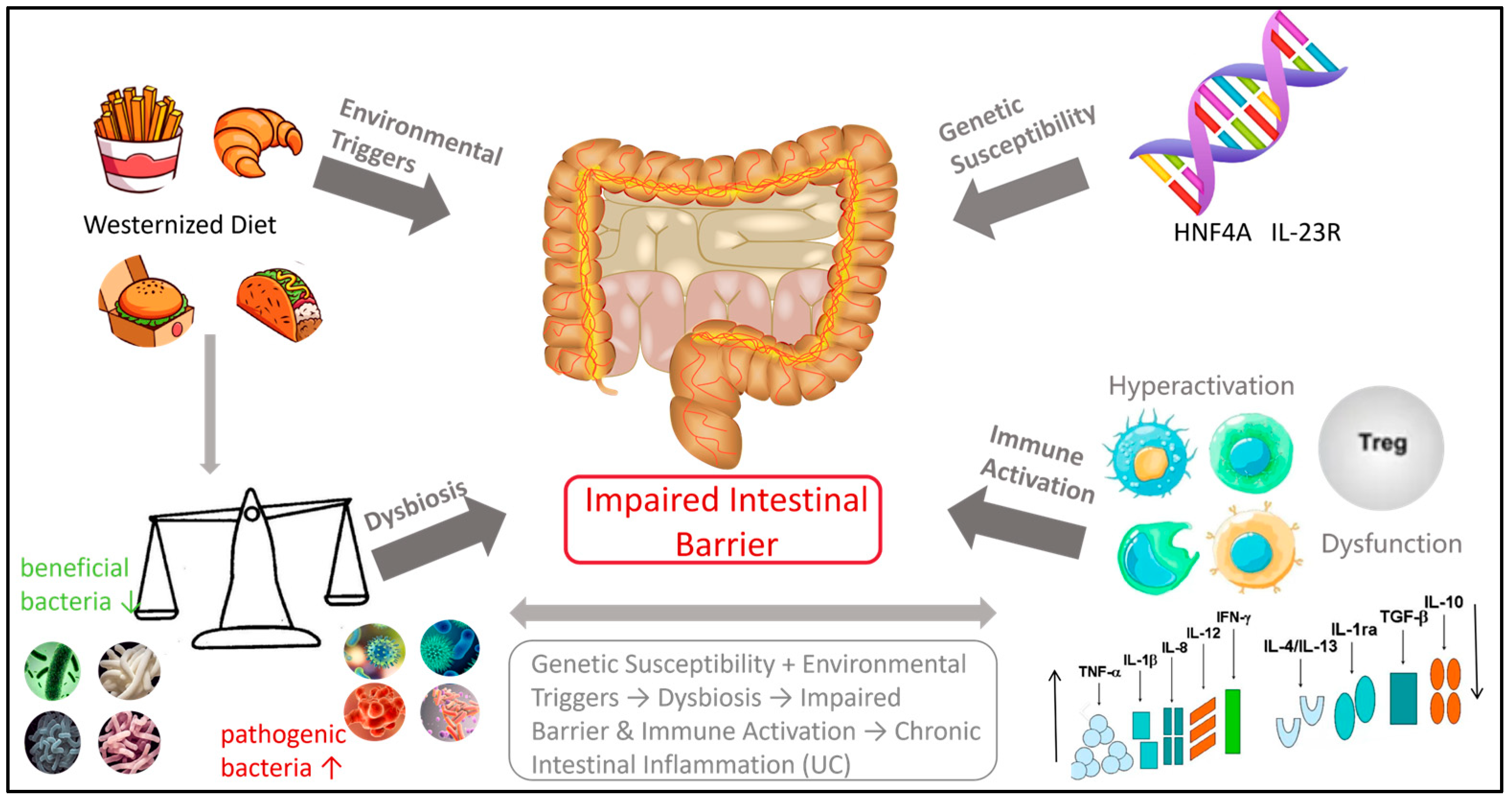
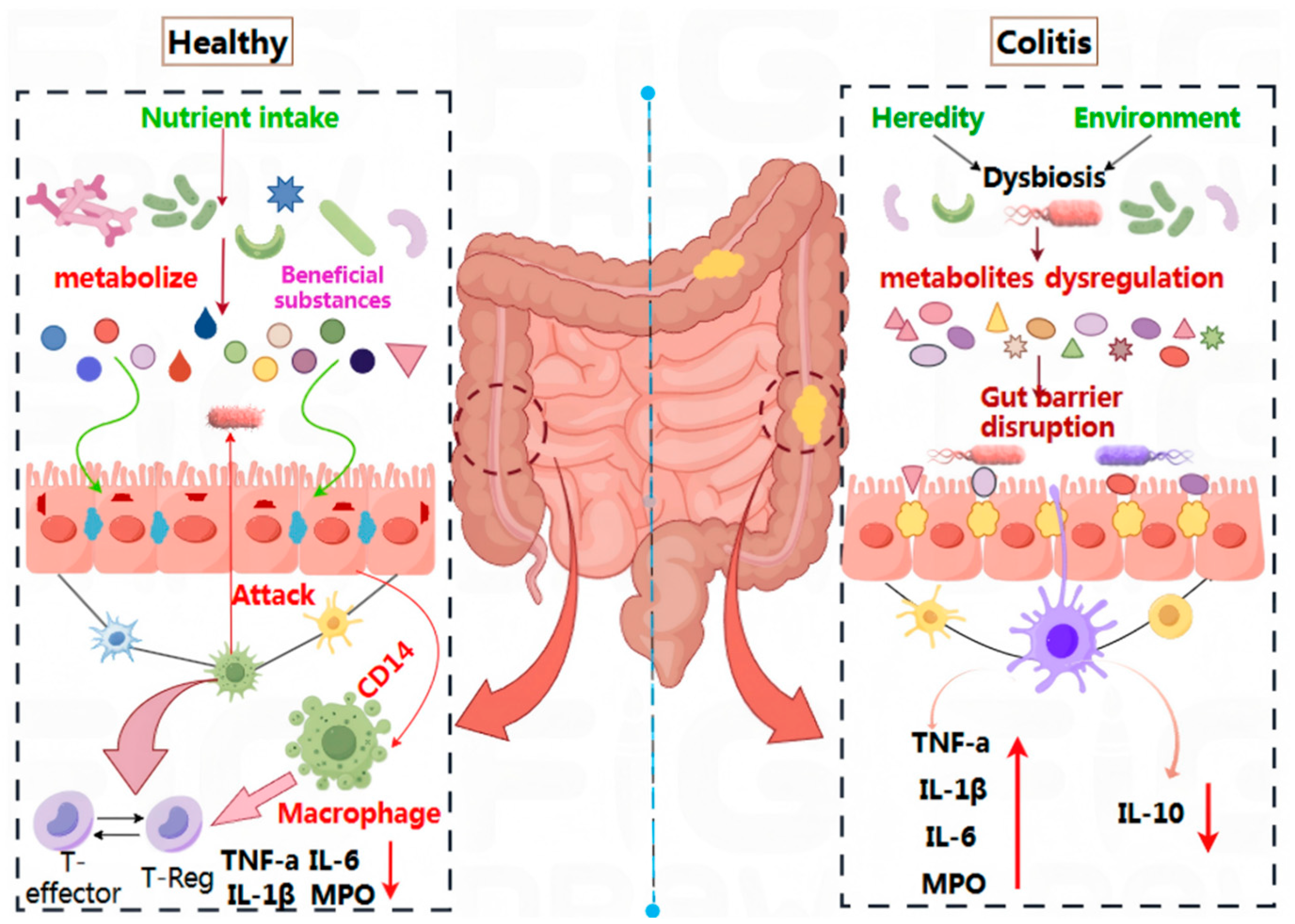
2. The Pathogenesis of UC
3. The Relieving Effect of Probiotics on UC
3.1. Concept, Classification and Physiological Function of Probiotics
3.2. The Mechanism of Probiotics Alleviating UC
3.2.1. Regulating Intestinal Microecological Balance
3.2.2. Repair Intestinal Epithelial Cells and Intestinal Barrier Function
3.2.3. Regulating Immune Response and Inflammatory Signaling Pathways
4. The Application of Probiotics in the Alleviation of UC
4.1. Application of Saccharomyces boulardii in the Alleviation of UC in a Mouse Model
4.2. Application of Mixed Probiotics in UC Patients
4.3. Application of Dietary Probiotics in UC Patients
4.4. Application of Fecal Microbiota Transplantation in UC Patients
4.5. Summary and Critical Appraisal of Evidence
5. Prospect
- Treatment Standardization: It is imperative to develop evidence-based guidelines for precision medicine through systematic dose–effect studies and head-to-head comparative trials of different strains, such as Lactobacillus and Bifidobacterium, as well as specific combinations, such as Bifidobacterium triple viable capsules. Clarifying the optimal treatment parameters for various strains will provide a standardized solution for clinical practice.
- Evidence Level Improvement: Promotion of large-scale, long-term (≥12 months) multi-center clinical trials is essential. These studies should aim to assess the long-term efficacy and safety of probiotics in maintaining clinical remission and reducing recurrence rates, thereby addressing significant gaps in the current evidence base.
- Precision Medicine: The integration of multi-omics techniques (metagenomics, metabolomics, and host genetics) is needed to analyze the biological underpinnings of individual differences in treatment response. By constructing predictive models based on baseline intestinal microbiota and genetic characteristics, it will be possible to achieve individualized and accurate matching of probiotic regimens.
- Synergistic Treatment Strategies: A systematic exploration of the synergistic mechanisms between probiotics and traditional first-line medications (such as mesalazine and biological agents) is necessary. This research should clarify optimal combination regimens and timing for different disease stages (acute and remission) to provide a practical treatment pathway for clinical application.
- Management of Mental Health Comorbidity: Future research should focus on the impact of probiotics on emotional disorders in UC patients. It is advisable to use emotional assessment scores (e.g., HADS, PHQ-9) as secondary endpoints in clinical trials. The efficacy of specific strains, such as Bifidobacterium longum CCFM1077 and Lacticaseibacillus rhamnosus JB-1, in alleviating anxiety and depression symptoms in UC patients should be systematically evaluated. By combining microbiome analysis, metabolomics, and neuroimaging techniques, the specific molecular and neural pathways through which probiotics regulate the gut–brain axis and improve mental health comorbidities can be elucidated. Ultimately, a personalized microecological treatment plan that integrates both physical and mental health will be developed for UC patients.
Author Contributions
Funding
Institutional Review Board Statement
Informed Consent Statement
Data Availability Statement
Acknowledgments
Conflicts of Interest
References
- Gros, B.; Kaplan, G.G. Ulcerative colitis in adults: A review. JAMA 2023, 330, 951–965. [Google Scholar] [CrossRef]
- Inflammatory Bowel Disease Group of Digestive Disease Branch of Chinese Medical Association, China. Inflammatory Bowel Disease Diagnosis and Treatment Quality Control Evaluation Center, Chinese Guidelines for the Diagnosis and Treatment of Ulcerative Colitis (Xi’an, 2023). Chin. J. Inflamm. Bowel Dis. 2024, 8, 33–58. [Google Scholar]
- Segal, J.P.; LeBlanc, J.F.; Hart, A.L. Ulcerative colitis: An update. Clin. Med. 2021, 21, 135–139. [Google Scholar] [CrossRef]
- Li, C.; Wu, G.; Zhao, H.; Dong, N.; Wu, B.; Chen, Y.; Lu, Q. Natural-derived polysaccharides from plants, mushrooms, and seaweeds for the treatment of inflammatory bowel disease. Front. Pharmacol. 2021, 12, 651813. [Google Scholar] [CrossRef]
- Naganuma, M. Solving the questions regarding 5-aminosalitylate formulation in the treatment of ulcerative colitis. J. Gastroenterol. 2020, 55, 1013–1022. [Google Scholar] [CrossRef]
- Knyazev, O.; Tishaeva, I.; Kagramanova, A.; Shkurko, T.; Veselov, A. P514 Influence of the frequency of glucocorticosteroid therapy courses on the hormonal resistance in patients with ulcerative colitis. J. Crohns Colitis 2021, 15 (Suppl. S1), 493. [Google Scholar] [CrossRef]
- Chen, Y.; Wang, P.; Du, X.; Zhang, Y. Comparison of effects of aminosalicylic acid, glucocorticoids and immunosuppressive agents on the expression of multidrug-resistant genes in ulcerative colitis. Sci. Rep. 2022, 12, 20656. [Google Scholar] [CrossRef] [PubMed]
- Dhar, A.; Wilson, A.; Reid, V.; Clark, T.; Tibbatts, C.; Dallongeville, A.; Robertson, J.; Eaton, J.; Cranmer, H.; Owen, G.; et al. P633 Choice of first biologic in moderate to severe ulcerative colitis‚A decision analysis using time-on-treatment and UK costs. J. Crohn’s Colitis 2023, 17 (Suppl. S1), i765–i766. [Google Scholar] [CrossRef]
- Saifuddin, A.; Cozzetto, D.; Olbei, M.; Korcsmaros, T.; Hart, A. P0118 A novel subset of TNIP3+ OLR1+ AQP9+ inflammatory monocytes drives resistance to multiple biologics in ulcerative colitis. J. Crohn’s Colitis 2025, 19 (Suppl. S1), i498–i499. [Google Scholar] [CrossRef]
- Chinuki, Y.; Morita, E. Alpha-Gal-containing biologics and anaphylaxis. Allergol. Int. 2019, 68, 296–300. [Google Scholar] [CrossRef]
- Zhao, R.; Shang, B.; Sun, L.; Lv, S.; Liu, G.; Wu, Q.; Geng, Y. Synergistic effects of probiotics with soy protein alleviate ulcerative colitis by repairing the intestinal barrier and regulating intestinal flora. J. Funct. Foods 2024, 122, 106514. [Google Scholar] [CrossRef]
- Shin, J.; Song, J.H.; Cha, B.; Shin, J.; Song, J.H.; Cha, B.; Hong, J.T.; Kwon, K.S.; Kim, J.S. P1352 Segmental Mucosal Microbiome Variations Across Different Inflammation Extents in Ulcerative Colitis. J. Crohn’s Colitis 2025, 19, i2438. [Google Scholar] [CrossRef]
- Celiberto, L.S.; Bedani, R.; Rossi, E.A.; Cavallini, D.C.U. Probiotics: The scientific evidence in the context of inflammatory bowel disease. Crit. Rev. Food Sci. Nutr. 2017, 57, 1759–1768. [Google Scholar] [CrossRef] [PubMed]
- Shi, R.; Yu, F.; Hu, X.; Liu, Y.; Jin, Y.; Ren, H.; Lu, S.; Guo, J.; Chang, J.; Li, Y.; et al. Protective effect of Lactiplantibacillus plantarum subsp. plantarum SC-5 on dextran sulfate sodium—Induced colitis in mice. Foods 2023, 12, 897. [Google Scholar] [CrossRef] [PubMed]
- Mohammed, C.; Fuego, J.P.; Garcia, K.V.; Jamil, H.; Rajesh, R.Y.; Escobar, A.S.; Hassan, M.J.; Rai, M. A mini literature review of probiotics: Transforming gastrointestinal health through evidence-based insights. Cureus 2024, 16, e57055. [Google Scholar] [CrossRef]
- Derikx, L.A.; Dieleman, L.A.; Hoentjen, F. Probiotics and prebiotics in ulcerative colitis. Best Pract. Res. Clin. Gastroenterol. 2016, 30, 55–71. [Google Scholar] [CrossRef]
- Flach, J.; Dias, A.S.M.; Rademaker, S.H.M.; Van der Waal, M.B.; Claassen, E.; Larsen, O.F.A. Medical doctors’ perceptions on probiotics: Lack of efficacy data hampers innovation. PharmaNutrition 2017, 5, 103–108. [Google Scholar] [CrossRef]
- Nanki, K.; Fujii, M.; Shimokawa, M.; Matano, M.; Nishikori, S.; Date, S.; Takano, A.; Toshimitsu, K.; Ohta, Y.; Takahashi, S.; et al. Somatic inflammatory gene mutations in human ulcerative colitis epithelium. Nature 2020, 577, 254–259. [Google Scholar] [CrossRef]
- Glick, L.R.; Cifu, A.S.; Feld, L. Ulcerative colitis in adults. JAMA 2020, 324, 1205–1206. [Google Scholar] [CrossRef]
- Bénard, M.V.; de Goffau, M.C.; Blonk, J.; Hugenholtz, F.; van Buuren, J.; Paramsothy, S.; Kaakoush, N.O.; D’hAens, G.R.; Borody, T.J.; Kamm, M.A.; et al. Gut Microbiota Features in Relation to Fecal Microbiota Transplantation Outcome in Ulcerative Colitis: A Systematic Review and Meta-Analysis. Clin. Gastroenterol. Hepatol. 2024, 23, 1719–1736. [Google Scholar] [CrossRef]
- Le Berre, C.; Honap, S.; Peyrin-Biroulet, L. Ulcerative colitis. Lancet 2023, 402, 571–584. [Google Scholar] [CrossRef] [PubMed]
- Jostins, L.; Ripke, S.; Weersma, R.K.; Duerr, R.H.; McGovern, D.P.; Hui, K.Y.; Lee, J.C.; Schumm, L.P.; Sharma, Y.; Anderson, C.A.; et al. Host–microbe interactions have shaped the genetic architecture of inflammatory bowel disease. Nature 2012, 491, 119–124. [Google Scholar] [CrossRef]
- Razali, N.N.; Raja Ali, R.A.; Muhammad Nawawi, K.N.; Yahaya, A.; Mokhtar, N.M. Targeted sequencing of cytokine-induced PI3K-related genes in ulcerative colitis, colorectal cancer and colitis-associated cancer. Int. J. Mol. Sci. 2022, 23, 11472. [Google Scholar] [CrossRef] [PubMed]
- Crowley, E.; Muise, A. Inflammatory bowel disease: What very early onset disease teaches us. Gastroenterol. Clin. 2018, 47, 755–772. [Google Scholar] [CrossRef]
- Sonnenburg, E.D.; Smits, S.A.; Tikhonov, M.; Higginbottom, S.K.; Wingreen, N.S.; Sonnenburg, J.L. Diet-induced extinctions in the gut microbiota compound over generations. Nature 2016, 529, 212–215. [Google Scholar] [CrossRef]
- Byndloss, M.X.; Olsan, E.E.; Rivera-Chávez, F.; Tiffany, C.R.; Cevallos, S.A.; Lokken, K.L.; Torres, T.P.; Byndloss, A.J.; Faber, F.; Gao, Y.; et al. Microbiota-activated PPAR-γ signaling inhibits dysbiotic Enterobacteriaceae expansion. Science 2017, 357, 570–575. [Google Scholar] [CrossRef]
- Bach Knudsen, K.E.; Lærke, H.N.; Hedemann, M.S.; Nielsen, T.S.; Ingerslev, A.K.; Nielsen, D.S.G.; Theil, P.K.; Purup, S.; Hald, S.; Schioldan, A.G.; et al. Impact of diet-modulated butyrate production on intestinal barrier function and inflammation. Nutrients 2018, 10, 1499. [Google Scholar] [CrossRef]
- Shah, A.B.; Baiseitova, A.; Zahoor, M.; Ahmad, I.; Ikram, M.; Bakhsh, A.; Shah, M.A.; Ali, I.; Idress, M.; Ullah, R.; et al. Probiotic significance of Lactobacillus strains: A comprehensive review on health impacts, research gaps, and future prospects. Gut Microbes 2024, 16, 2431643. [Google Scholar] [CrossRef]
- Lepage, P.; Hasler, R.; Spehlmann, M.E.; Rehman, A.; Zvirbliene, A.; Begun, A.; Ott, S.; Kupcinskas, L.; Doré, J.; Raedler, A.; et al. Twin study indicates loss of interaction between microbiota and mucosa of patients with ulcerative colitis. Gastroenterology 2011, 141, 227–236. [Google Scholar] [CrossRef]
- Li, Q.; Cui, Y.; Xu, B.; Wang, Y.; Lv, F.; Li, Z.; Li, H.; Chen, X.; Peng, X.; Chen, Y.; et al. Main active components of Jiawei Gegen Qinlian decoction protects against ulcerative colitis under different dietary environments in a gut microbiota-dependent manner. Pharmacol. Res. 2021, 170, 105694. [Google Scholar] [CrossRef] [PubMed]
- Imhann, F.; Vich, V.A.; Bonder, M.J.; Fu, J.; Gevers, D.; Visschedijk, M.C.; Spekhorst, L.M.; Alberts, R.; Franke, L.; van Dullemen, H.M.; et al. Interplay of host genetics and gut microbiota underlying the onset and clinical presentation of inflammatory bowel disease. Gut 2018, 67, 108–119. [Google Scholar] [CrossRef]
- Zhong, Y.; Xiao, Q.; Huang, J.; Yu, S.; Chen, L.; Wan, Q.; Zhang, Z.; Luo, L.; Song, L.; Zhao, H.; et al. Ginsenoside Rg1 alleviates ulcerative colitis in obese mice by regulating the gut microbiota–lipid metabolism–Th1/Th2/Th17 cells Axis. J. Agric. Food Chem. 2023, 71, 20073–20091. [Google Scholar] [CrossRef]
- Zhong, Y.; Xiao, Q.; Kang, Z.; Huang, J.; Ge, W.; Wan, Q.; Wang, H.; Zhou, W.; Zhao, H.; Liu, D. Astragalus polysaccharide alleviates ulcerative colitis by regulating the balance of Tfh/Treg cells. Int. Immunopharmacol. 2022, 111, 109108. [Google Scholar] [CrossRef] [PubMed]
- Swanson, K.S.; Gibson, G.R.; Hutkins, R.; Reimer, R.A.; Reid, G.; Verbeke, K.; Scott, K.P.; Holscher, H.D.; Azad, M.B.; Delzenne, N.M.; et al. The International Scientific Association for Probiotics and Prebiotics (ISAPP) consensus statement on the definition and scope of synbiotics. Nat. Rev. Gastroenterol. Hepatol. 2020, 17, 687–701. [Google Scholar] [CrossRef] [PubMed]
- Suissa, R.; Oved, R.; Jankelowitz, G.; Turjeman, S.; Koren, O.; Kolodkin-Gal, I. Molecular genetics for probiotic engineering: Dissecting lactic acid bacteria. Trends Microbiol. 2022, 30, 293–306. [Google Scholar] [CrossRef]
- Chen, Y.H.; Tsai, W.H.; Wu, H.Y.; Chen, C.Y.; Yeh, W.L.; Chen, Y.H.; Hsu, H.Y.; Chen, W.W.; Chen, Y.W.; Chang, W.W.; et al. Probiotic Lactobacillus spp. act against Helicobacter pylori-induced inflammation. J. Clin. Med. 2019, 8, 90. [Google Scholar] [CrossRef]
- Kishida, C.; Tsuru, A.; Takabayashi, S. Pathogenicity and intestinal barrier disruptive ability of Malassezia furfur in an alternative model host Caenorhabditis elegans is partially alleviated by Lacticaseibacillus rhamnosus. bioRxiv 2024. [Google Scholar] [CrossRef]
- Xia, T.; Huang, F.; Yun, F.; Liu, Y.; Wang, T.; Wang, S.; Jin, S.; Ma, X.; Wang, W.; He, J.; et al. Lacticaseibacillus rhamnosus LRJ-1 alleviates constipation through promoting gut Bacteroides-derived γ-aminobutyric acid production. Curr. Res. Food Sci. 2024, 9, 100924. [Google Scholar] [CrossRef]
- So, J.S.; Song, M.K.; Kwon, H.K.; Lee, C.G.; Chae, C.S.; Sahoo, A.; Jash, A.; Lee, S.H.; Park, Z.Y.; Im, S.H. Lactobacillus casei enhances type II collagen/glucosamine-mediated suppression of inflammatory responses in experimental osteoarthritis. Life Sci. 2011, 88, 358–366. [Google Scholar] [CrossRef]
- Pan, H.; Guo, R.; Ju, Y.; Wang, Q.; Zhu, J.; Xie, Y.; Zheng, Y.; Li, T.; Liu, Z.; Lu, L.; et al. A single bacterium restores the microbiome dysbiosis to protect bones from destruction in a rat model of rheumatoid arthritis. Microbiome 2019, 7, 107. [Google Scholar] [CrossRef] [PubMed]
- Sharma, M.; Wasan, A.; Sharma, R.K. Recent developments in probiotics: An emphasis on Bifidobacterium. Food Biosci. 2021, 41, 100993. [Google Scholar] [CrossRef]
- Rodes, L.; Saha, S.; Tomaro-Duchesneau, C.; Prakash, S. Microencapsulated Bifidobacterium longum subsp. infantis ATCC 15697 favorably modulates gut microbiota and reduces circulating endotoxins in F344 rats. BioMed Res. Int. 2014, 2014, 602832. [Google Scholar] [CrossRef]
- Mishra, G.; Singh, P.; Molla, M.; Yimer, Y.S.; Dinda, S.C.; Chandra, P.; Singh, B.K.; Dagnew, S.B.; Assefa, A.N.; Ewunetie, A. Harnessing the potential of probiotics in the treatment of alcoholic liver disorders. Front. Pharmacol. 2023, 14, 1212742. [Google Scholar] [CrossRef]
- Akkerman, R.; Oerlemans, M.M.P.; Ferrari, M.; Fernández-Lainez, C.; Walvoort, M.T.; de Vos, P. Exopolysaccharides from Bifidobacterium longum subsp. infantis and Bifidobacterium adolescentis modulate Toll-like receptor signaling. Carbohydr. Polym. 2025, 349, 123017. [Google Scholar] [CrossRef]
- Gresse, R.; Cappellozza, B.I.; Macheboeuf, D.; Torrent, A.; Danon, J.; Capern, L.; Sandvang, D.; Niderkorn, V.; Copani, G.; Forano, E. In Vitro Investigation of the Effects of Bacillus subtilis-810B and Bacillus licheniformis-809A on the Rumen Fermentation and Microbiota. Animals 2025, 15, 476. [Google Scholar] [CrossRef] [PubMed]
- Garvey, S.M.; Mah, E.; Blonquist, T.M.; Kaden, V.N.; Spears, J.L. The probiotic Bacillus subtilis BS50 decreases gastrointestinal symptoms in healthy adults: A randomized, double-blind, placebo-controlled trial. Gut Microbes 2022, 14, 2122668. [Google Scholar] [CrossRef]
- Gu, Y.; Wang, C.; Qin, X.; Zhou, B.; Liu, X.; Liu, T.; Xie, R.; Liu, J.; Wang, B.; Cao, H. Saccharomyces boulardii, a yeast probiotic, inhibits gut motility through upregulating intestinal serotonin transporter and modulating gut microbiota. Pharmacol. Res. 2022, 181, 106291. [Google Scholar] [CrossRef]
- Gu, Y.; Zhou, G.; Liu, X.; Wang, B.; Cao, H. 105–Saccharomyces boulardii, a Yeast Probiotic, Regulates Serotonin Transporter in the Intestine. Gastroenterology 2019, 156, S-26. [Google Scholar] [CrossRef]
- Wang, Y.; Li, N.; Yang, J.J.; Zhao, D.M.; Chen, B.; Zhang, G.Q.; Chen, S.; Cao, R.F.; Yu, H.; Zhao, C.Y.; et al. Probiotics and fructo-oligosaccharide intervention modulate the microbiota-gut brain axis to improve autism spectrum reducing also the hyper-serotonergic state and the dopamine metabolism disorder. Pharmacol. Res. 2020, 157, 104784. [Google Scholar] [CrossRef]
- Dinan, T.G.; Stanton, C.; Cryan, J.F. Psychobiotics: A novel class of psychotropic. Biol. Psychiatry 2013, 74, 720–726. [Google Scholar] [CrossRef] [PubMed]
- Neuendorf, R.; Harding, A.; Stello, N.; Hanes, D.; Wahbeh, H. Depression and anxiety in patients with Inflammatory Bowel Disease: A systematic review. Psychosom. Res. 2016, 87, 70–80. [Google Scholar] [CrossRef]
- Sarkar, A.; Lehto, S.M.; Harty, S.; Dinan, T.G.; Cryan, J.F.; Burnet, P.W.J. Psychobiotics and the Manipulation of Bacteria-Gut-Brain Signals. Trends Neurosci. 2016, 39, 763–781. [Google Scholar] [CrossRef]
- Good, B.H.; Rosenfeld, L.B. Eco-evolutionary feedbacks in the human gut microbiome. Nat. Commun. 2023, 14, 7146. [Google Scholar] [CrossRef]
- Bi, Y.; Yang, R. Human gut microbiota, nutrition and health. Sci. Bull. 2019, 64, 260–271. [Google Scholar] [CrossRef]
- Ren, K.; Yong, C.; Jin, Y.; Rong, S.; Xue, K.; Cao, B.; Wei, H. Unraveling the microbial mysteries: Gut microbiota’s role in ulcerative colitis. Front. Nutr. 2025, 12, 1519974. [Google Scholar] [CrossRef]
- Chuang, Y.T.; Wei, J.C.C. Individual Differences in Gut Microbiota: Reconsidering CP101 Efficacy and the Potential Benefits of Bowel Preparation. Gastroenterology 2025, 169, 174. [Google Scholar] [CrossRef] [PubMed]
- Campaniello, D.; Corbo, M.R.; Sinigaglia, M.; Speranza, B.; Racioppo, A.; Altieri, C.; Bevilacqua, A. How diet and physical activity modulate gut microbiota: Evidence, and perspectives. Nutrients 2022, 14, 2456. [Google Scholar] [CrossRef] [PubMed]
- García-Bayona, L.; Comstock, L.E. Bacterial antagonism in host-associated microbial communities. Science 2018, 361, eaat2456. [Google Scholar] [CrossRef]
- Li, Z.; Zhang, S.; Xu, L.; Fang, X.; Wan, Y.; Yu, D.; Guo, Y. A tetrapeptide from maize combined with probiotics exerted strong anti-inflammatory effects and modulated gut microbiota in DSS-induced colitis mice. Food Funct. 2022, 13, 12602–12618. [Google Scholar] [CrossRef]
- Liu, L.; Chen, X.; Zhang, C.; Deng, J.; Xiao, H.; Rao, Y. Lactiplantibacillus biofilm and planktonic cells ameliorate ulcerative colitis in mice via immunoregulatory activity, gut metabolism and microbiota modulation. Food Funct. 2023, 14, 9181–9193. [Google Scholar] [CrossRef] [PubMed]
- Chen, P.; Xu, H.; Tang, H.; Zhao, F.; Yang, C.; Kwok, L.Y.; Cong, C.; Wu, Y.; Zhang, W.; Zhou, X.; et al. Modulation of gut mucosal microbiota as a mechanism of probiotics-based adjunctive therapy for ulcerative colitis. Microb. Biotechnol. 2020, 13, 2032–2043. [Google Scholar] [CrossRef]
- Guo, W.; Tang, X.; Zhang, Q.; Xiong, F.; Yan, Y.; Zhao, J.; Mao, B.; Zhang, H.; Cui, S. Lacticaseibacillus paracasei CCFM1222 ameliorated the intestinal barrier and regulated gut microbiota in mice with dextran sulfate sodium-induced colitis. Probiotics Antimicrob. Proteins 2025, 17, 1001–1013. [Google Scholar] [CrossRef]
- Ye, H.; Liu, X.; Guan, K.; Ma, Y.; Liu, R.; Liu, Y.; Lv, X.; Wang, R.; Li, Q. Therapeutic potential of Lacticaseibacillus rhamnosus grx10 and its derived postbiotic through gut microbiota and MAPK/MLCK/MLC pathway-mediated intestinal barrier repairment in ulcerative colitis. J. Food Sci. 2024, 89, 10035–10052. [Google Scholar] [CrossRef]
- Ismael, M.; Qayyum, N.; Gu, Y.; Na, L.; Haoyue, H.; Farooq, M.; Wang, P.; Zhong, Q.; Lü, X. Functional Effects of Probiotic Lactiplantibacillus plantarum in Alleviation Multidrug-Resistant Escherichia coli-Associated Colitis in BALB/c Mice Model. Probiotics Antimicrob. Proteins 2025, 17, 4138–4155. [Google Scholar] [CrossRef]
- Zhang, K.; Zhu, L.; Zhong, Y.; Xu, L.; Lang, C.; Chen, J.; Yan, F.; Li, J.; Qiu, J.; Chen, Y.; et al. Prodrug integrated envelope on probiotics to enhance target therapy for ulcerative colitis. Adv. Sci. 2023, 10, 2205422. [Google Scholar] [CrossRef] [PubMed]
- Dai, N.; Yang, X.; Pan, P.; Zhang, G.; Sheng, K.; Wang, J.; Liang, X.; Wang, Y. Bacillus paralicheniformis, an acetate-producing probiotic, alleviates ulcerative colitis via protecting the intestinal barrier and regulating the NLRP3 inflammasome. Microbiol. Res. 2024, 287, 127856. [Google Scholar] [CrossRef] [PubMed]
- Terciolo, C.; Dobric, A.; Ouaissi, M.; Siret, C.; Breuzard, G.; Silvy, F.; Marchiori, B.; Germain, S.; Bonier, R.; Hama, A.; et al. Saccharomyces boulardii CNCM I-745 Restores intestinal Barrier Integrity by Regulation of E-cadherin Recycling. Crohns Colitis 2017, 11, 999–1010. [Google Scholar] [CrossRef]
- Chae, J.M.; Chang, M.H.; Heo, W.; Cho, H.T.; Lee, D.H.; Hwang, B.B.; Kim, J.W.; Yoon, S.M.; Yang, S.; Lee, J.H.; et al. LB-9, novel probiotic lactic acid bacteria, ameliorates dextran sodium sulfate-induced colitis in mice by inhibiting TNF-α-mediated apoptosis of intestinal epithelial cells. J. Med. Food 2019, 22, 271–276. [Google Scholar] [CrossRef]
- Zhang, J.; Tan, Z.; Tian, Z.; Zhao, M.; Qian, S.; Feng, H.; Chang, Y.; Hou, J.; Jiang, Z. Probiotics and Postbiotics Produced by Lacticaseibacillus rhamnosus 1.0320 Isolated from Traditional Fermented Dairy Products Alleviate DSS-Induced Colitis by Modulating the Gut Microbiota and Intestinal Metabolism. Agric. Food Chem. 2025, 73, 26014–26034. [Google Scholar] [CrossRef]
- Moon, H.J.; Oh, S.H.; Park, K.B.; Cha, Y.S. Kimchi and Leuconostoc mesenteroides DRC 1506 alleviate dextran sulfate sodium (DSS)-induced colitis via attenuating inflammatory responses. Foods 2023, 12, 584. [Google Scholar] [CrossRef] [PubMed]
- Deng, S.; Pei, C.; Cai, K.; Huang, W.; Xiao, X.; Zhang, X.; Liang, R.; Chen, Y.; Xie, Z.; Li, P.; et al. Lactobacillus acidophilus and its metabolite ursodeoxycholic acid ameliorate ulcerative colitis by promoting Treg differentiation and inhibiting M1 macrophage polarization. Front. Microbiol. 2024, 15, 1302998. [Google Scholar] [CrossRef]
- Cui, Q.; Zhang, Z.; Tian, X.; Liang, X.; Lu, Y.; Shi, Y.; Kuerman, M.; Wang, R.; Zhou, Y.; Gong, P.; et al. Bifidobacterium bifidum Ameliorates DSS-Induced Colitis in Mice by Regulating AHR/NRF2/NLRP3 Inflammasome Pathways through Indole-3-lactic Acid Production. Agric. Food Chem. 2023, 71, 1970–1981. [Google Scholar] [CrossRef]
- Kong, Q.; Chen, Q.; Mao, X.; Wang, G.; Zhao, J.; Zhang, H.; Chen, W. Bifidobacterium longum CCFM1077 Ameliorated Neurotransmitter Disorder and Neuroinflammation Closely Linked to Regulation in the Kynurenine Pathway of Autistic-like Rats. Nutrients 2022, 14, 1615. [Google Scholar] [CrossRef]
- Zhang, H.; Wang, H.; Li, Y.; Leng, Y.; Lin, K.; Ren, D. Uncovering the Beneficial Role of Limosilactobacillus fermentum E7 Exhibiting Antioxidant Activity in Ameliorating DSS-Induced Ulcerative Colitis in a Murine Model. Foods 2025, 14, 137. [Google Scholar] [CrossRef] [PubMed]
- Xu, C.; Qiao, L.; Ma, L.; Guo, Y.; Dou, X.; Yan, S.; Zhang, B.; Roman, A. Biogenic selenium nanoparticles synthesized by Lactobacillus casei ATCC 393 alleviate intestinal epithelial barrier dysfunction caused by oxidative stress via Nrf2 signaling-mediated mitochondrial pathway. Int. Nanomed. 2019, 14, 4491–4502. [Google Scholar] [CrossRef]
- Wu, Y.; Fu, H.; Xu, X.; Jin, H.; Kao, Q.J.; Teng, W.L.; Wang, B.; Zhao, G.; Pi, X.E. Intervention with fructooligosaccharides, Saccharomyces boulardii, and their combination in a colitis mouse model. Front. Microbiol. 2024, 15, 1356365. [Google Scholar] [CrossRef]
- Gao, H.; Li, Y.; Xu, J.; Zou, X.; Yue, T.; Xu, H.; Sun, J.; Wang, M.; Ye, T.; Yu, Y.; et al. Saccharomyces boulardii protects against murine experimental colitis by reshaping the gut microbiome and its metabolic profile. Front. Microbiol. 2023, 14, 1204122. [Google Scholar] [CrossRef] [PubMed]
- Mao, B.; Gu, J.; Li, D.; Cui, S.; Zhao, J.; Zhang, H.; Chen, W. Effects of Different Doses of Fructooligosaccharides (FOS) on the Composition of Mice Fecal Microbiota, Especially the Bifidobacterium Composition. Nutrients 2018, 10, 1105. [Google Scholar] [CrossRef] [PubMed]
- Li, S.; Yin, Y.; Xiao, D.; Zou, Y. Supplemental bifid triple viable capsule treatment improves inflammatory response and T cell frequency in ulcerative colitis patients. BMC Gastroenterol. 2021, 21, 314. [Google Scholar] [CrossRef]
- Pavel, F.M.; Bungau, S.G.; Tit, D.M.; Ghitea, T.C.; Marin, R.C.; Radu, A.F.; Moleriu, R.D.; Llias, T.; Bustea, C.; Vesa, C.M. Clinical implications of dietary probiotic supplement (associated with L-glutamine and biotin) in ulcerative colitis patients’ body composition and quality of life. Nutrients 2023, 15, 5049. [Google Scholar] [CrossRef]
- Mańkowska-Wierzbicka, D.; Stelmach-Mardas, M.; Gabryel, M.; Tomczak, H.; Skrzypczak-Zielińska, M.; Zakerska-Banaszak, O.; Slowinska, A.; Mahadea, D.; Baturo, A.; Molko, L.; et al. The effectiveness of multi-session FMT treatment in active ulcerative colitis patients: A pilot study. Biomedicines 2020, 8, 268. [Google Scholar] [CrossRef]
- Akbar, A.; Arnott, I.; Kennedy, N.A.; Nolan, J.; Peake, S.; Whiteoak, S.R.; Probert, C.; Fraser, A.; Cheshire, A.; Lewis, A.; et al. Recommendations for the optimal use of mesalazine in the management of patients with mild to moderate ulcerative colitis. Br. J. Hosp. Med. 2021, 82, 1–11. [Google Scholar] [CrossRef]
- Loftus, E.V., Jr.; Kane, S.V.; Bjorkman, D. Short-term adverse effects of 5-aminosalicylic acid agents in the treatment of ulcerative colitis. Aliment. Pharmacol. Ther. 2004, 19, 179–189. [Google Scholar] [CrossRef]
- Urquiaga, M.; Saag, K.G. Risk for osteoporosis and fracture with glucocorticoids. Best Pract. Res. Clin. Rheumatol. 2022, 36, 101793. [Google Scholar] [CrossRef]
- Shah, P.; Kalra, S.; Yada, Y.; Deka, N.; Lathia, T.; Jacob, J.J.; Kota, S.K.; Bhattacharya, S.; Gadve, S.S.; Subramanium, K.A.V.; et al. Management of glucocorticoid-induced hyperglycemia. Diabetes Metab. Syndr. Obes. Targets Ther. 2022, 15, 1577–1588. [Google Scholar] [CrossRef]
- Rahimi, L.; Rajpal, A.; Ismail-Beigi, F. Glucocorticoid-induced fatty liver disease. Diabetes Metab. Syndr. Obes. 2020, 13, 1133–1145. [Google Scholar] [CrossRef]
- Caplan, A.; Fett, N.; Rosenbach, M.; Werth, V.P.; Micheletti, R.G. Prevention and management of glucocorticoid-induced side effects: A comprehensive review: A review of glucocorticoid pharmacology and bone health. J. Am. Acad. Dermatol. 2017, 76, 1–9. [Google Scholar] [CrossRef] [PubMed]
- Tomizawa, M.; Shinozaki, F.; Hasegawa, R.; Shirai, Y.; Motoyoshi, Y.; Sugiyama, T.; Yamamoto, S.; Ishige, N. Immunosuppressive agents are associated with peptic ulcer bleeding. Exp. Ther. Med. 2017, 13, 1927–1931. [Google Scholar] [CrossRef]
- Danovitch, G.M. Immunosuppressant-induced metabolic toxicities. Transplant. Rev. 2000, 14, 65–81. [Google Scholar] [CrossRef]
- Ogashiwa, T.; Kouyama, J.; Mizoguchi, A.; Kunisaki, R.; Hashimoto, Y.; Nakamori, Y.; Maeda, S.; Mitsui, T.; Tatsuno, M.; Chida, K.; et al. P670 Therapeutic efficacy and economic impact of half sulfasalazine therapy for refractory ulcerative colitis. J. Crohn’s Colitis 2019, 13, S454. [Google Scholar] [CrossRef]



| Probiotics Genus | Strain | Physiological Function | Action Mechanism | Ref. |
|---|---|---|---|---|
| Lactobacillus | Lactobacillus acidophilus | Improve gastric disease | The secretion of lactic acid lowers intestinal pH, exerting a direct bactericidal effect. | [35,36] |
| Lacticaseibacillus | Lacticaseibacillus rhamnosus | Prevent intestinal diseases such as constipation | Regulate the expression of tight junction proteins in intestinal epithelial cells, enhance intestinal barrier function, and improve the balance of intestinal microbiota. | [37,38] |
| Lacticaseibacillus casei | Reduce joint swelling and pain, and improve joint function | Activate intestinal immune cells, balance inflammatory factors | [39,40] | |
| Bifidobacterium | Bifidobacterium infantis | Reduce liver inflammation, treat alcoholic liver injury | Regulate intestinal microbiota and enhance intestinal barrier function | [41,42] |
| Bifidobacterium longum | Relieve emotional stress | Promote the proliferation of intestinal mucosal cells, enhance intestinal barrier function, regulate the secretion of intestinal neurotransmitters, and improve intestinal dysfunction. | [43,44] | |
| Bacillus | Bacillus subtilis | Relieve abdominal distension, indigestion. | Secrete a variety of enzymes, such as protease, amylase, etc., to help break down food | [45,46] |
| Saccharomyces | Saccharomyces boulardii | Relieve diarrhea, constipation | Regulate intestinal microbiota, improve microbial ecology, and inhibit intestinal peristalsis by regulating intestinal microbiota. | [47,48] |
| Study Type | Model/Population | Sample Size | Intervention (Probiotic Strain/Product) | Key Findings | Notes on Design/Evidence Level |
|---|---|---|---|---|---|
| Animal Study | DSS-induced colitis mice | Not specified | Saccharomyces boulardii | Alleviated symptoms, reduced pro-inflammatory factors, increased Porphyromonadaceae [75]. | Preclinical proof-of-concept. Demonstrates mechanism but direct human applicability is limited. |
| Animal Study | DSS-induced colitis mice | Not specified | FOS + Saccharomyces boulardii | Superior anti-inflammatory effect vs. monotherapy, increased beneficial SCFAs and bacteria [76]. | Suggests potential synergy with prebiotics. |
| Randomized Controlled Trial (RCT) | UC patients | 130 | Mesalazine + Somatostatin + Bifid Triple Viable Capsule (B. longum, L. acidophilus, E. faecalis) vs. control (no probiotics) | Higher clinical efficacy (92.31% vs. 76.92%), lower IL-6, TNF-α, D-lactate; better immune profile in probiotic group [79]. | Moderate evidence. Suggests adjunctive benefit. Limitations: Probiotic not tested alone; specific strain contributions unclear. |
| Randomized Controlled Trial (RCT) | UC patients | 93 | Multi-strain probiotic (B. infantis, B. animalis, L. bulgaricus, L. helveticus, E. faecalis) + nutrients vs. control | Improved SIBDQ score, reduced CRP abnormality, positive effects on muscle mass and body composition [80]. | Moderate evidence. Highlights systemic benefits. Limitations: Intervention includes nutrients (L-glutamine, biotin), making probiotic effect isolation difficult. |
| Clinical Study (Uncontrolled) | Moderate–severe active UC patients | 10 | Fecal Microbiota Transplantation (FMT) | Improved clinical index, reduced CRP and calprotectin, modulated microbiota (↑ Lactobacillus, ↑ Firmicutes) [81]. | Low evidence/Preliminary. Promising but very small sample, no control group. Highlights feasibility and broad microbial modulation. |
| Meta-Analysis | Pooled analysis of multiple RCTs in UC patients | Varies (across studies) | Various probiotic strains and combinations | Probiotic supplementation may increase remission rates and is generally safe, but effects vary by strain and formulation [15,16]. | High-level evidence synthesis. Strength varies with included study quality. Often reveals significant heterogeneity, underscoring need for standardized protocols. |
| Drug Type. | Representative Drug | Defect | Ref. |
|---|---|---|---|
| Aminosalicylate preparations | Sulfasalazine, mesalazine, olsalazine | Limited efficacy in severe disease; may delay necessary intervention. | [5,82,83] |
| glucocorticoid | Prednisone, prednisolone, budesonide | Osteoporosis, increased infection risk, glucose and lipid abnormalities with long-term use. | [84,85,86,87] |
| immunosuppressant | Azathioprine, mercaptopurine, methotrexate and cyclosporine A | Slow onset; risk of hepatorenal toxicity and bone marrow suppression. | [88,89] |
| biologics | Infliximab, adalimumab, vedolizumab | High cost; potential for drug resistance or allergic reactions. | [8,9,10] |
Disclaimer/Publisher’s Note: The statements, opinions and data contained in all publications are solely those of the individual author(s) and contributor(s) and not of MDPI and/or the editor(s). MDPI and/or the editor(s) disclaim responsibility for any injury to people or property resulting from any ideas, methods, instructions or products referred to in the content. |
© 2025 by the authors. Licensee MDPI, Basel, Switzerland. This article is an open access article distributed under the terms and conditions of the Creative Commons Attribution (CC BY) license (https://creativecommons.org/licenses/by/4.0/).
Share and Cite
Xu, Y.; Zhang, J.; Cai, R.; Wei, C.; Chen, Y.; Liu, X. Research Advances in the Impact of Probiotic Supplementation on Ulcerative Colitis Management. Nutrients 2025, 17, 3838. https://doi.org/10.3390/nu17243838
Xu Y, Zhang J, Cai R, Wei C, Chen Y, Liu X. Research Advances in the Impact of Probiotic Supplementation on Ulcerative Colitis Management. Nutrients. 2025; 17(24):3838. https://doi.org/10.3390/nu17243838
Chicago/Turabian StyleXu, Yangyang, Jie Zhang, Ruitao Cai, Chuyang Wei, Yuwei Chen, and Xiaoyong Liu. 2025. "Research Advances in the Impact of Probiotic Supplementation on Ulcerative Colitis Management" Nutrients 17, no. 24: 3838. https://doi.org/10.3390/nu17243838
APA StyleXu, Y., Zhang, J., Cai, R., Wei, C., Chen, Y., & Liu, X. (2025). Research Advances in the Impact of Probiotic Supplementation on Ulcerative Colitis Management. Nutrients, 17(24), 3838. https://doi.org/10.3390/nu17243838