Sex-Specific Diet–Microbiota Interactions in Ageing: Implications for Healthy Longevity


Abstract
1. Introduction
2. Sex-Specific Determinants of Age-Related Disease
3. Gut Microbiota Across Ageing
Sex-Linked Features of the Gut Microbiota in Older Adults
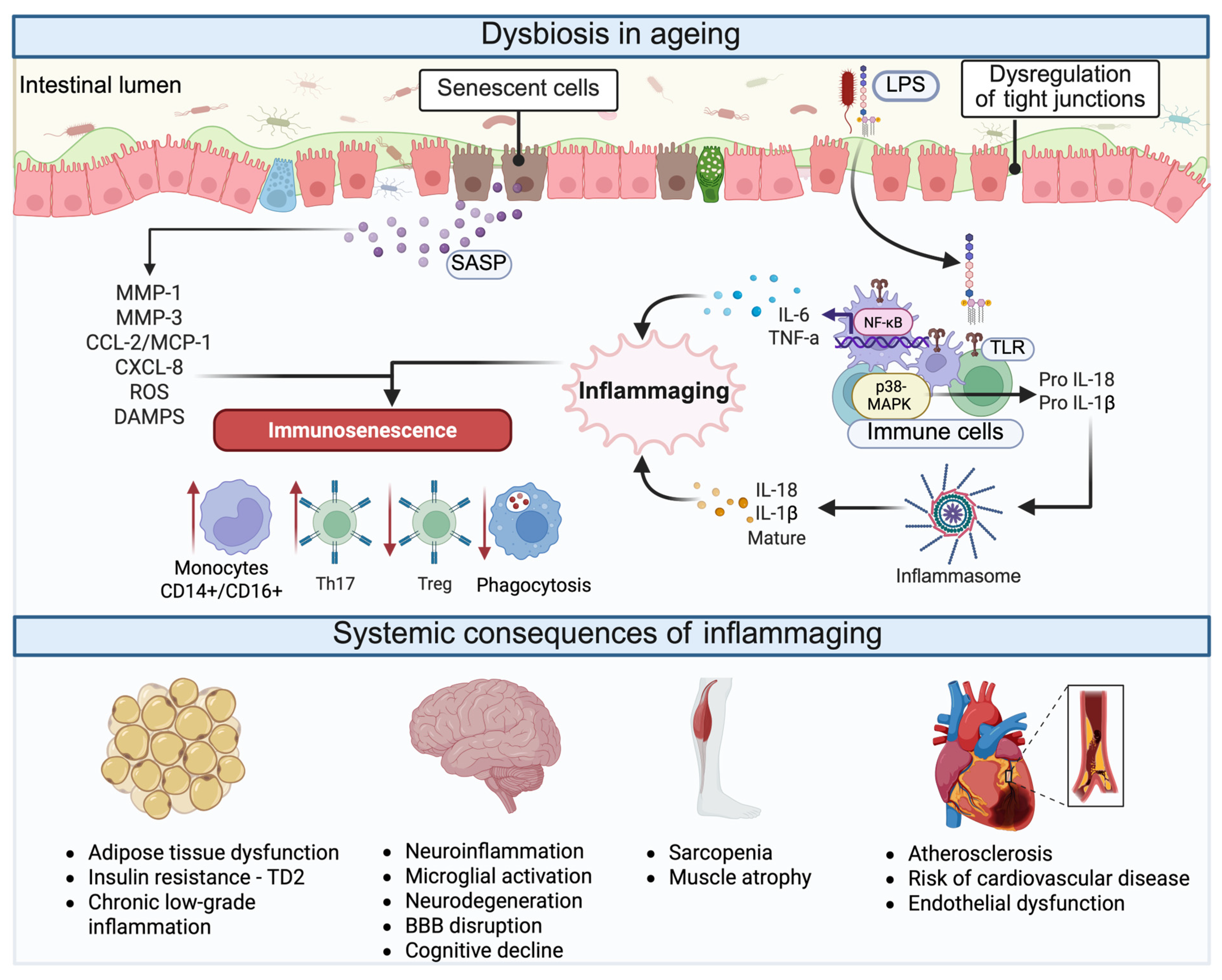
4. Inflammaging as a Microbiota–Immunosenescense Axis
Sex-Specific Features of Inflammaging
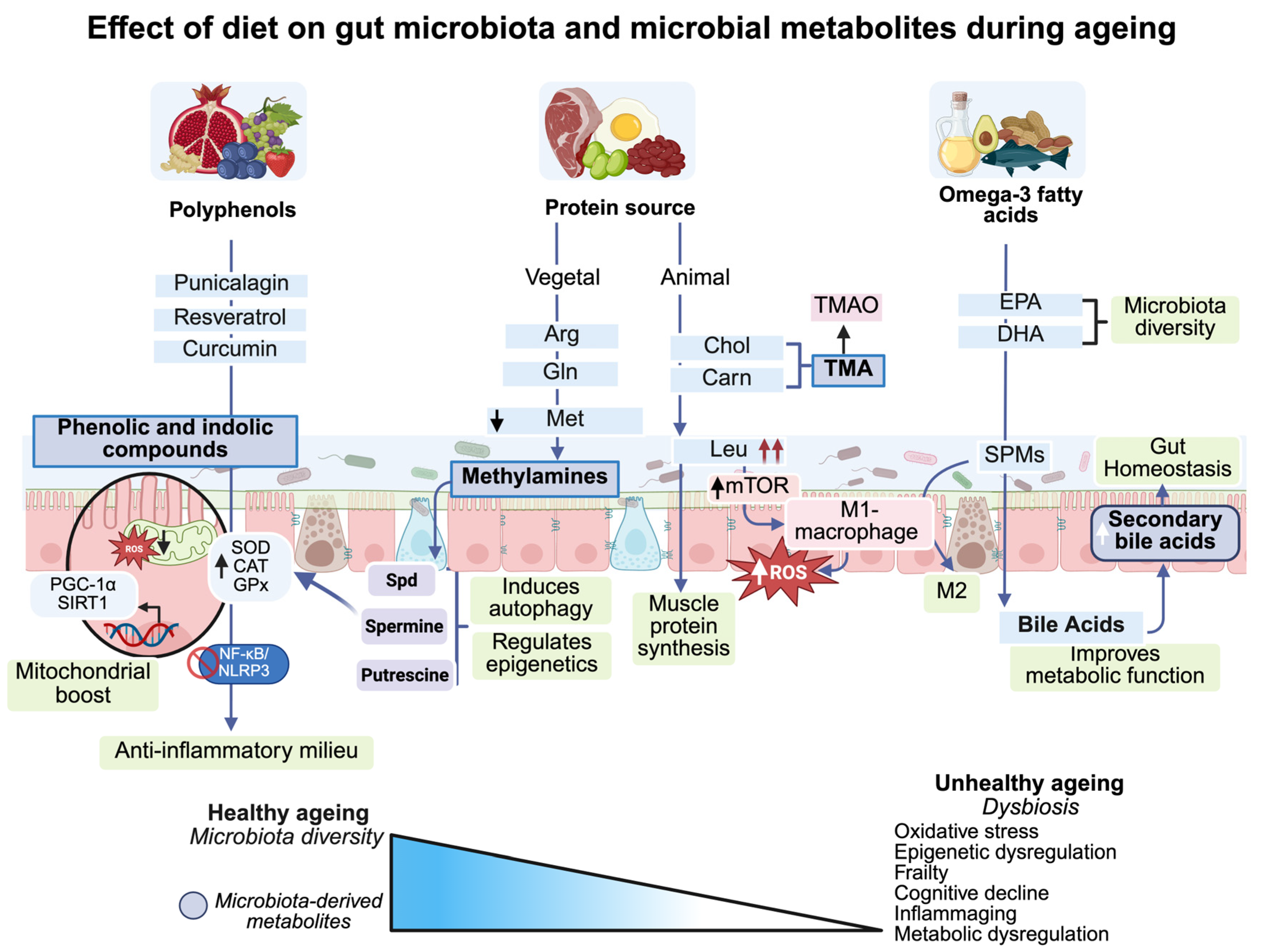
5. Diet–Microbiota Interactions in Ageing
5.1. Microbiota-Derived Metabolites as Mediators of Dietary Effects in Ageing
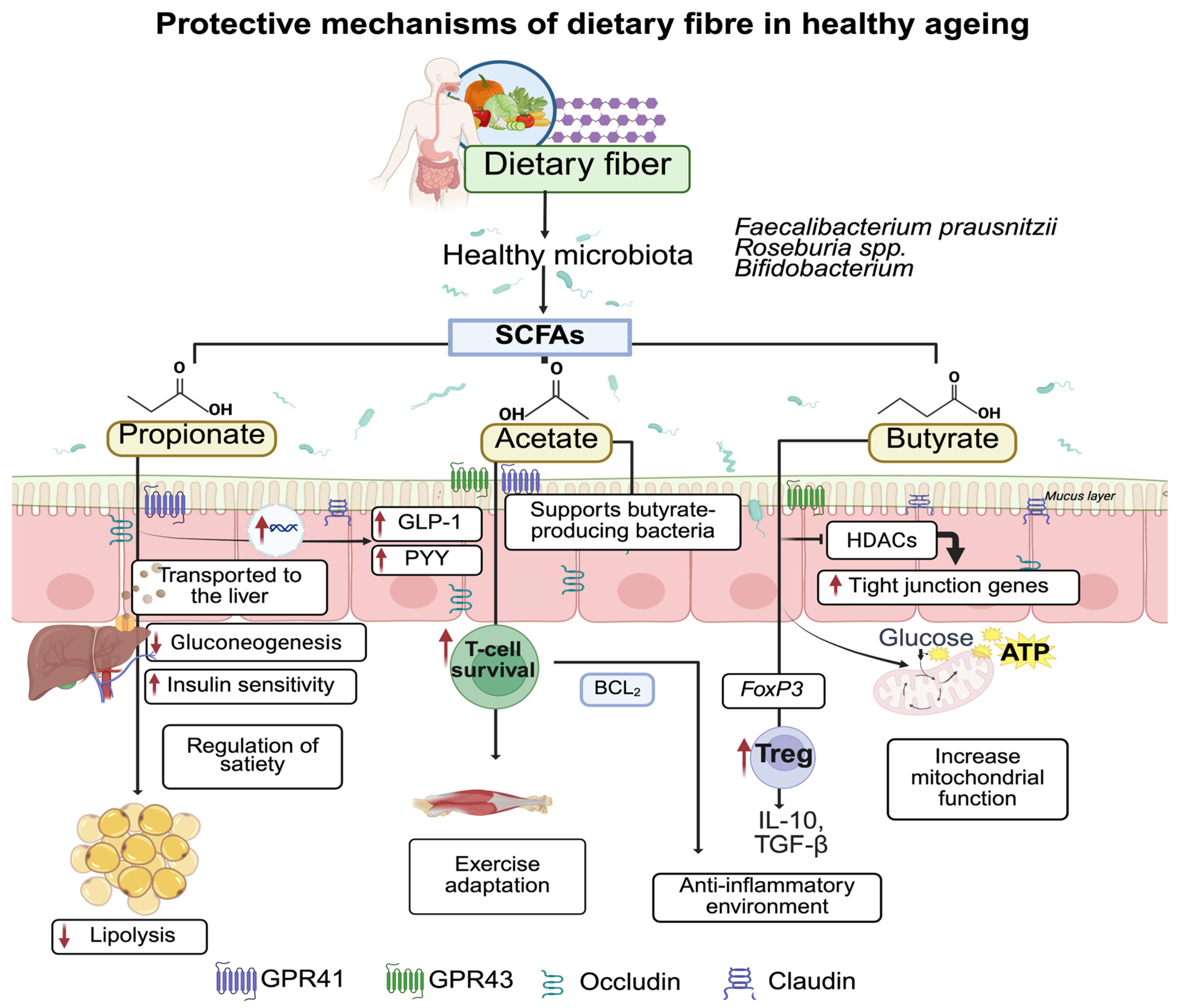
5.2. Fermentable Fiber and SCFA Production
5.3. Polyphenols and Oxidative Stress

5.4. Omega-3 and Anti-Inflammatory Effects
5.5. Proteins, Polyamines, and TMAO
5.6. Bile Acids as Systemic Modulators of Ageing
6. Biological Sex as a Modulator of the Interplay Between Microbiota, Diet, and Ageing
6.1. Sex-Specific Microbial Metabolite Profiles and Disease Risk
6.2. Sex-Dependent Dietary Responsiveness
6.3. Current Challenges and Future Perspectives
7. Conclusions
Funding
Data Availability Statement
Acknowledgments
Conflicts of Interest
References
- Beard, J.R.; Officer, A.; de Carvalho, I.A.; Sadana, R.; Pot, A.M.; Michel, J.-P.; Lloyd-Sherlock, P.; Epping-Jordan, J.E.; Peeters, G.M.E.E.; Mahanani, W.R.; et al. The World Report on Ageing and Health: A Policy Framework for Healthy Ageing. Lancet 2016, 387, 2145–2154. [Google Scholar] [CrossRef] [PubMed]
- O’Toole, P.W. Ageing, Microbes and Health. Microb. Biotechnol. 2024, 17, e14477. [Google Scholar] [CrossRef]
- Sánchez-Tapia, M.; Tovar, A.R.; Torres, N. Diet as Regulator of Gut Microbiota and Its Role in Health and Disease. Arch. Med. Res. 2019, 50, 259–268. [Google Scholar] [CrossRef]
- Vemuri, R.; Sylvia, K.E.; Klein, S.L.; Forster, S.C.; Plebanski, M.; Eri, R.; Flanagan, K.L. The Microgenderome Revealed: Sex Differences in Bidirectional Interactions between the Microbiota, Hormones, Immunity and Disease Susceptibility. Semin. Immunopathol. 2019, 41, 265–275. [Google Scholar] [CrossRef]
- O’Toole, P.W.; Claesson, M.J. Gut Microbiota: Changes throughout the Lifespan from Infancy to Elderly. Int. Dairy J. 2010, 20, 281–291. [Google Scholar] [CrossRef]
- Sun, L.; Li, Z.; Hu, C.; Ding, J.; Zhou, Q.; Pang, G.; Wu, Z.; Yang, R.; Li, S.; Li, J.; et al. Age-Dependent Changes in the Gut Microbiota and Serum Metabolome Correlate with Renal Function and Human Aging. Aging Cell 2023, 22, e14028. [Google Scholar] [CrossRef]
- Frommherz, L.; Bub, A.; Hummel, E.; Rist, M.J.; Roth, A.; Watzl, B.; Kulling, S.E. Age-Related Changes of Plasma Bile Acid Concentrations in Healthy Adults-Results from the Cross-Sectional Karmen Study. PLoS ONE 2016, 11, e0153959. [Google Scholar] [CrossRef]
- Koh, A.; De Vadder, F.; Kovatcheva-Datchary, P.; Bäckhed, F. From Dietary Fiber to Host Physiology: Short-Chain Fatty Acids as Key Bacterial Metabolites. Cell 2016, 165, 1332–1345. [Google Scholar] [CrossRef] [PubMed]
- Tofalo, R.; Cocchi, S.; Suzzi, G. Polyamines and Gut Microbiota. Front. Nutr. 2019, 6, 16. [Google Scholar] [CrossRef]
- Shin, J.H.; Park, Y.H.; Sim, M.; Kim, S.A.; Joung, H.; Shin, D.M. Serum Level of Sex Steroid Hormone Is Associated with Diversity and Profiles of Human Gut Microbiome. Res. Microbiol. 2019, 170, 192–201. [Google Scholar] [CrossRef]
- Majait, S.; Meessen, E.C.E.; Davids, M.; Chahid, Y.; Olde Damink, S.W.; Schaap, F.G.; Kemper, E.M.; Nieuwdorp, M.; Soeters, M.R. Age-Dependent Differences in Postprandial Bile-Acid Metabolism and the Role of the Gut Microbiome. Microorganisms 2024, 12, 764. [Google Scholar] [CrossRef]
- Jin, L.; Shi, L.; Huang, W. The Role of Bile Acids in Human Aging. Med. Rev. 2024, 4, 154–157. [Google Scholar] [CrossRef]
- Peron, G.; Meroño, T.; Gargari, G.; Hidalgo-Liberona, N.; Miñarro, A.; Lozano, E.V.; Castellano-Escuder, P.; González-Domínguez, R.; del Bo’, C.; Bernardi, S.; et al. A Polyphenol-Rich Diet Increases the Gut Microbiota Metabolite Indole 3-Propionic Acid in Older Adults with Preserved Kidney Function. Mol. Nutr. Food Res. 2022, 66, 2100349. [Google Scholar] [CrossRef]
- Clayton, J.A.; Collins, F.S. Policy: NIH to Balance Sex in Cell and Animal Studies. Nature 2014, 509, 282–283. [Google Scholar] [CrossRef]
- Shansky, R.M.; Murphy, A.Z. Considering Sex as a Biological Variable Will Require a Global Shift in Science Culture. Nat. Neurosci. 2021, 24, 457–464. [Google Scholar] [CrossRef]
- Ghosh, T.S.; Shanahan, F.; O’Toole, P.W. The Gut Microbiome as a Modulator of Healthy Ageing. Nat. Rev. Gastroenterol. Hepatol. 2022, 19, 565–584. [Google Scholar] [CrossRef] [PubMed]
- United Nations; Department of Economic and Social Affairs; Popular Division. World Population Ageing 2020 Highlights: Living Arrangements of Older Persons; United Nations: New York, NY, USA, 2020; ISBN 9789211483475. [Google Scholar]
- Angel, J.L.; Vega, W.; López-Ortega, M. Aging in Mexico: Population Trends and Emerging Issues. Gerontologist 2016, 57, gnw136. [Google Scholar] [CrossRef] [PubMed]
- López-Otín, C.; Blasco, M.A.; Partridge, L.; Serrano, M.; Kroemer, G. The Hallmarks of Aging. Cell 2013, 153, 1194–1217. [Google Scholar] [CrossRef] [PubMed]
- Franceschi, C.; Bonafè, M.; Valensin, S.; Olivieri, F.; De Luca, M.; Ottaviani, E.; Benedictis, G. Inflamm-aging: An Evolutionary Perspective on Immunosenescence. Moll. Cell. Gerontol. 2000, 908, 244–254. [Google Scholar] [CrossRef]
- Guo, J.; Huang, X.; Dou, L.; Yan, M.; Shen, T.; Tang, W.; Li, J. Aging and Aging-Related Diseases: From Molecular Mechanisms to Interventions and Treatments. Signal Transduct. Target. Ther. 2022, 7, 391. [Google Scholar] [CrossRef]
- Mattson, M.P.; Arumugam, T.V. Hallmarks of Brain Aging: Adaptive and Pathological Modification by Metabolic States. Cell Metab. 2018, 27, 1176–1199. [Google Scholar] [CrossRef]
- Santoro, A.; Bientinesi, E.; Monti, D. Immunosenescence and Inflammaging in the Aging Process: Age-Related Diseases or Longevity? Ageing Res. Rev. 2021, 71, 101422. [Google Scholar] [CrossRef]
- Alloatti, G.; Penna, C.; Comità, S.; Tullio, F.; Aragno, M.; Biasi, F.; Pagliaro, P. Aging, Sex and NLRP3 Inflammasome in Cardiac Ischaemic Disease. Vasc. Pharmacol. 2022, 145, 107001. [Google Scholar] [CrossRef]
- Ticinesi, A.; Lauretani, F.; Milani, C.; Nouvenne, A.; Tana, C.; Del Rio, D.; Maggio, M.; Ventura, M.; Meschi, T. Aging Gut Microbiota at the Cross-Road between Nutrition, Physical Frailty, and Sarcopenia: Is There a Gut–Muscle Axis? Nutrients 2017, 9, 1303. [Google Scholar] [CrossRef]
- Wirth, M.; Schwarz, C.; Benson, G.; Horn, N.; Buchert, R.; Lange, C.; Köbe, T.; Hetzer, S.; Maglione, M.; Michael, E.; et al. Effects of Spermidine Supplementation on Cognition and Biomarkers in Older Adults with Subjective Cognitive Decline (SmartAge)—Study Protocol for a Randomized Controlled Trial. Alzheimer’s Res. Ther. 2019, 11, 36. [Google Scholar] [CrossRef]
- Biagi, E.; Nylund, L.; Candela, M.; Ostan, R.; Bucci, L.; Pini, E.; Nikkïla, J.; Monti, D.; Satokari, R.; Franceschi, C.; et al. Through Ageing, and Beyond: Gut Microbiota and Inflammatory Status in Seniors and Centenarians. PLoS ONE 2010, 5, e10667. [Google Scholar] [CrossRef]
- Arakelyan, N.A.; Kupriyanova, D.A.; Vasilevska, J.; Rogaev, E.I. Sexual Dimorphism in Immunity and Longevity among the Oldest Old. Front. Immunol. 2025, 16, 1525948. [Google Scholar] [CrossRef] [PubMed]
- Kautzky-Willer, A.; Leutner, M.; Harreiter, J. Sex Differences in Type 2 Diabetes. Diabetologia 2023, 66, 986–1002. [Google Scholar] [CrossRef] [PubMed]
- Goossens, G.H.; Jocken, J.W.E.; Blaak, E.E. Sexual Dimorphism in Cardiometabolic Health: The Role of Adipose Tissue, Muscle and Liver. Nat. Rev. Endocrinol. 2021, 17, 47–66. [Google Scholar] [CrossRef]
- Lizcano, F.; Guzmán, G. Estrogen Deficiency and the Origin of Obesity during Menopause. Biomed. Res. Int. 2014, 2014, 757461. [Google Scholar] [CrossRef]
- Hannan, M.T.; Felson, D.T.; Dawson-Hughes, B.; Tucker, K.L.; Cupples, L.A.; Wilson, P.W.; Kiel, D.P. Risk Factors for Longitudinal Bone Loss in Elderly Men and Women: The Framingham Osteoporosis Study. J. Bone Miner. Res. 2000, 15, 710–720. [Google Scholar] [CrossRef]
- Ciutac, A.M.; Pana, T.; Dawson, D.; Myint, P.K. Sex-Related Differences in Heart Failure Patients: Physiological Mechanisms of Cardiovascular Ageing and Evidence-Based Sex-Specific Medical Therapies. Ther. Adv. Cardiovasc. Dis. 2025, 19, 17539447241309673. [Google Scholar] [CrossRef] [PubMed]
- Lopez-Lopez, J.P.; Del Toro, M.R.; Martinez-Bello, D.; Garcia-Peña, Á.A.; O’Donovan, G.; Perez-Mayorga, M.; Otero, J.; Rangarajan, S.; Yusuf, S.; Lopez-Jaramillo, P. Sex Differences in Cardiovascular Disease Risk Factor Prevalence, Morbidity, and Mortality in Colombia: Findings from the Prospective Urban Rural Epidemiology (PURE) Study. Glob. Heart 2024, 19, 10. [Google Scholar] [CrossRef]
- Bridel, C.; Van Wieringen, W.N.; Zetterberg, H.; Tijms, B.M.; Teunissen, C.E.; Alvarez-Cermeño, J.C.; Andreasson, U.; Axelsson, M.; Bäckström, D.C.; Bartos, A.; et al. Diagnostic Value of Cerebrospinal Fluid Neurofilament Light Protein in Neurology: A Systematic Review and Meta-Analysis. JAMA Neurol. 2019, 76, 1035–1048. [Google Scholar] [CrossRef]
- Ley, R.E.; Peterson, D.A.; Gordon, J.I. Ecological and Evolutionary Forces Shaping Microbial Diversity in the Human Intestine. Cell 2006, 124, 837–848. [Google Scholar] [CrossRef] [PubMed]
- Sommer, F.; Bernardes, J.P.; Best, L.; Sommer, N.; Hamm, J.; Messner, B.; López-Agudelo, V.A.; Fazio, A.; Marinos, G.; Kadibalban, A.S.; et al. Life-Long Microbiome Rejuvenation Improves Intestinal Barrier Function and Inflammaging in Mice. Microbiome 2025, 13, 91. [Google Scholar] [CrossRef]
- Derrien, M.; Turroni, F.; Ventura, M.; van Sinderen, D. Insights into Endogenous Bifidobacterium Species in the Human Gut Microbiota during Adulthood. Trends Microbiol. 2022, 30, 940–947. [Google Scholar] [CrossRef] [PubMed]
- Sánchez-Tapia, M.; Mimenza-Alvarado, A.; Granados-Domínguez, L.; Flores-López, A.; López-Barradas, A.; Ortiz, V.; Pérez-Cruz, C.; Sánchez-Vidal, H.; Hernández-Acosta, J.; Ávila-Funes, J.A.; et al. The Gut Microbiota–Brain Axis during Aging, Mild Cognitive Impairment and Dementia: Role of Tau Protein, β-Amyloid and LPS in Serum and Curli Protein in Stool. Nutrients 2023, 15, 932. [Google Scholar] [CrossRef]
- Ghosh, T.S.; Shanahan, F.; O’Toole, P.W. Toward an Improved Definition of a Healthy Microbiome for Healthy Aging. Nat. Aging 2022, 2, 1054–1069. [Google Scholar] [CrossRef]
- Bourassa, M.W.; Alim, I.; Bultman, S.J.; Ratan, R.R. Butyrate, Neuroepigenetics and the Gut Microbiome: Can a High Fiber Diet Improve Brain Health? Neurosci. Lett. 2016, 625, 56–63. [Google Scholar] [CrossRef]
- LeBlanc, J.G.; Milani, C.; de Giori, G.S.; Sesma, F.; van Sinderen, D.; Ventura, M. Bacteria as Vitamin Suppliers to Their Host: A Gut Microbiota Perspective. Curr. Opin. Biotechnol. 2013, 24, 160–168. [Google Scholar] [CrossRef]
- Grajeda-Iglesias, C.; Durand, S.; Daillère, R.; Iribarren, K.; Lemaitre, F.; Derosa, L.; Aprahamian, F.; Bossut, N.; Nirmalathasan, N.; Madeo, F.; et al. Oral Administration of Akkermansia Muciniphila Elevates Systemic Antiaging and Anticancer Metabolites. Aging 2021, 13, 6375–6405. [Google Scholar] [CrossRef]
- Mhanna, A.; Martini, N.; Hmaydoosh, G.; Hamwi, G.; Jarjanazi, M.; Zaifah, G.; Kazzazo, R.; Haji Mohamad, A.; Alshehabi, Z. The Correlation between Gut Microbiota and Both Neurotransmitters and Mental Disorders: A Narrative Review. Medicine 2024, 103, e37114. [Google Scholar] [CrossRef]
- Wu, M.; Luo, Q.; Nie, R.; Yang, X.; Tang, Z.; Chen, H. Potential Implications of Polyphenols on Aging Considering Oxidative Stress, Inflammation, Autophagy, and Gut Microbiota. Crit. Rev. Food Sci. Nutr. 2021, 61, 2175–2193. [Google Scholar] [CrossRef]
- Rosas-Villegas, A.; Sánchez-Tapia, M.; Avila-Nava, A.; Ramírez, V.; Tovar, A.R.; Torres, N. Differential Effect of Sucrose and Fructose in Combination with a High Fat Diet on Intestinal Microbiota and Kidney Oxidative Stress. Nutrients 2017, 9, 393. [Google Scholar] [CrossRef]
- Weersma, R.K.; Zhernakova, A.; Fu, J. Interaction between Drugs and the Gut Microbiome. Gut 2020, 69, 1510–1519. [Google Scholar] [CrossRef] [PubMed]
- Kawamoto, S.; Uemura, K.; Hori, N.; Takayasu, L.; Konishi, Y.; Katoh, K.; Matsumoto, T.; Suzuki, M.; Sakai, Y.; Matsudaira, T.; et al. Bacterial Induction of B Cell Senescence Promotes Age-Related Changes in the Gut Microbiota. Nat. Cell Biol. 2023, 25, 865–876. [Google Scholar] [CrossRef] [PubMed]
- Prinsloo, S.; Lyle, R. Microbiome, Gut-Brain-Axis, and Implications for Brain Health. NeuroRegulation 2015, 2, 158–161. [Google Scholar] [CrossRef] [PubMed]
- Guevara-Cruz, M.; Flores-López, A.G.; Aguilar-López, M.; Sánchez-Tapia, M.; Medina-Vera, I.; Díaz, D.; Tovar, A.R.; Torres, N. Improvement of Lipoprotein Profile and Metabolic Endotoxemia by a Lifestyle Intervention That Modifies the Gut Microbiota in Subjects with Metabolic Syndrome. J. Am. Heart Assoc. 2019, 8, e012401. [Google Scholar] [CrossRef]
- Ghosh, T.S.; Rampelli, S.; Jeffery, I.B.; Santoro, A.; Neto, M.; Capri, M.; Giampieri, E.; Jennings, A.; Candela, M.; Turroni, S.; et al. Mediterranean Diet Intervention Alters the Gut Microbiome in Older People Reducing Frailty and Improving Health Status: The NU-AGE 1-Year Dietary Intervention across Five European Countries. Gut 2020, 69, 1218–1228. [Google Scholar] [CrossRef]
- Nagpal, R.; Neth, B.J.; Wang, S.; Craft, S.; Yadav, H. Modified Mediterranean-Ketogenic Diet Modulates Gut Microbiome and Short-Chain Fatty Acids in Association with Alzheimer’s Disease Markers in Subjects with Mild Cognitive Impairment. EBioMedicine 2019, 47, 529–542. [Google Scholar] [CrossRef] [PubMed]
- Garcia-Fernandez, H.; Arenas-de Larriva, A.P.; Lopez-Moreno, J.; Gutierrez-Mariscal, F.M.; Romero-Cabrera, J.L.; Molina-Abril, H.; Torres-Peña, J.D.; Rodriguez-Cano, D.; Malagon, M.M.; Ordovas, J.M.; et al. Sex-Specific Differences in Intestinal Microbiota Associated with Cardiovascular Diseases. Biol. Sex Differ. 2024, 15, 7. [Google Scholar] [CrossRef] [PubMed]
- Peters, B.; Santoro, N.; Kaplan, R.; Qi, Q. Spotlight on the Gut Microbiome in Menopause: Current Insights. Int. J. Womens Health 2022, 14, 1059–1072. [Google Scholar] [CrossRef]
- Rampelli, S.; Candela, M.; Turroni, S.; Biagi, E.; Collino, S.; Franceschi, C.; O’Toole, P.W.; Brigidi, P. Functional Metagenomic Profiling of Intestinal Microbiome in Extreme Ageing. Aging 2013, 5, 902–912. [Google Scholar] [CrossRef]
- Biagi, E.; Franceschi, C.; Rampelli, S.; Severgnini, M.; Ostan, R.; Turroni, S.; Consolandi, C.; Quercia, S.; Scurti, M.; Monti, D.; et al. Gut Microbiota and Extreme Longevity. Curr. Biol. 2016, 26, 1480–1485. [Google Scholar] [CrossRef] [PubMed]
- Wu, Y.L.; Xu, J.; Rong, X.Y.; Wang, F.; Wang, H.J.; Zhao, C. Gut Microbiota Alterations and Health Status in Aging Adults: From Correlation to Causation. Aging Med. 2021, 4, 206–213. [Google Scholar] [CrossRef]
- de la Cuesta-Zuluaga, J.; Kelley, S.T.; Chen, Y.; Escobar, J.S.; Mueller, N.T.; Ley, R.E.; McDonald, D.; Huang, S.; Swafford, A.D.; Knight, R.; et al. Age- and Sex-Dependent Patterns of Gut Microbial Diversity in Human Adults. mSystems 2019, 4, 00261-19. [Google Scholar] [CrossRef]
- Zhang, X.; Zhong, H.; Li, Y.; Shi, Z.; Ren, H.; Zhang, Z.; Zhou, X.; Tang, S.; Han, X.; Lin, Y.; et al. Sex- and Age-Related Trajectories of the Adult Human Gut Microbiota Shared across Populations of Different Ethnicities. Nat. Aging 2021, 1, 87–100. [Google Scholar] [CrossRef]
- Hong, S.H.; Roh, H.W.; Nam, Y.J.; Kim, T.W.; Cho, Y.H.; Son, S.J.; Hong, C.H. Age- and Sex-Specific Gut Microbiota Signatures Associated with Dementia-Related Brain Pathologies: An LEfSe-Based Metagenomic Study. Brain Sci. 2025, 15, 611. [Google Scholar] [CrossRef]
- Luan, Z.; Fu, S.; Qi, S.; Li, C.; Chen, J.; Zhao, Y.; Zhang, H.; Wu, J.; Zhao, Z.; Zhang, J.; et al. A Metagenomics Study Reveals the Gut Microbiome as a Sex-Specific Modulator of Healthy Aging in Hainan Centenarians. Exp. Gerontol. 2024, 186, 112356. [Google Scholar] [CrossRef]
- Park, C.H.; Lee, E.J.; Kim, H.L.; Lee, Y.T.; Yoon, K.J.; Kim, H.N. Sex-Specific Associations between Gut Microbiota and Skeletal Muscle Mass in a Population-Based Study. J. Cachexia Sarcopenia Muscle 2022, 13, 2908–2919. [Google Scholar] [CrossRef]
- Franceschi, C.; Campisi, J. Chronic Inflammation (Inflammaging) and Its Potential Contribution to Age-Associated Diseases. J. Gerontol. A Biol. Sci. Med. Sci. 2014, 69, S4–S9. [Google Scholar] [CrossRef] [PubMed]
- Caldarelli, M.; Rio, P.; Marrone, A.; Giambra, V.; Gasbarrini, A.; Gambassi, G.; Cianci, R. Inflammaging: The Next Challenge—Exploring the Role of Gut Microbiota, Environmental Factors, and Sex Differences. Biomedicines 2024, 12, 1716. [Google Scholar] [CrossRef]
- Guijarro-Muñoz, I.; Compte, M.; Álvarez-Cienfuegos, A.; Álvarez-Vallina, L.; Sanz, L. Lipopolysaccharide Activates Toll-like Receptor 4 (TLR4)-Mediated NF-ΚB Signaling Pathway and Proinflammatory Response in Human Pericytes. J. Biol. Chem. 2014, 289, 2457–2468. [Google Scholar] [CrossRef]
- Franceschi, C.; Garagnani, P.; Parini, P.; Giuliani, C.; Santoro, A. Inflammaging: A New Immune–Metabolic Viewpoint for Age-Related Diseases. Nat. Rev. Endocrinol. 2018, 14, 576–590. [Google Scholar] [CrossRef]
- Olivieri, F.; Marchegiani, F.; Matacchione, G.; Giuliani, A.; Ramini, D.; Fazioli, F.; Sabbatinelli, J.; Bonafè, M. Sex/Gender-Related Differences in Inflammaging. Mech. Ageing Dev. 2023, 211, 111792. [Google Scholar] [CrossRef]
- De Filippo, C.; Cavalieri, D.; Di Paola, M.; Ramazzotti, M.; Poullet, J.B.; Massart, S.; Collini, S.; Pieraccini, G.; Lionetti, P. Impact of Diet in Shaping Gut Microbiota Revealed by a Comparative Study in Children from Europe and Rural Africa. Proc. Natl. Acad. Sci. USA 2010, 107, 14691–14696. [Google Scholar] [CrossRef]
- Cani, P.D.; Bibiloni, R.; Knauf, C.; Waget, A.; Neyrinck, A.M.; Delzenne, N.M.; Burcelin, R. Changes in Gut Microbiota Control Metabolic Endotoxemia-Induced Inflammation in High-Fat Diet–Induced Obesity and Diabetes in Mice. Diabetes 2008, 57, 1470–1481. [Google Scholar] [CrossRef] [PubMed]
- Mohr, A.E.; Crawford, M.; Jasbi, P.; Fessler, S.; Sweazea, K.L. Lipopolysaccharide and the Gut Microbiota: Considering Structural Variation. FEBS Lett. 2022, 596, 849–875. [Google Scholar] [CrossRef] [PubMed]
- Gorgoulis, V.; Adams, P.D.; Alimonti, A.; Bennett, D.C.; Bischof, O.; Bishop, C.; Campisi, J.; Collado, M.; Evangelou, K.; Ferbeyre, G.; et al. Cellular Senescence: Defining a Path Forward. Cell 2019, 179, 813–827. [Google Scholar] [CrossRef]
- Acosta, J.C.; Banito, A.; Wuestefeld, T.; Georgilis, A.; Janich, P.; Morton, J.P.; Athineos, D.; Kang, T.-W.; Lasitschka, F.; Andrulis, M.; et al. A Complex Secretory Program Orchestrated by the Inflammasome Controls Paracrine Senescence. Nat. Cell Biol. 2013, 15, 978–990. [Google Scholar] [CrossRef]
- Coppé, J.-P.; Patil, C.K.; Rodier, F.; Sun, Y.; Muñoz, D.P.; Goldstein, J.; Nelson, P.S.; Desprez, P.-Y.; Campisi, J. Senescence-Associated Secretory Phenotypes Reveal Cell-Nonautonomous Functions of Oncogenic RAS and the P53 Tumor Suppressor. PLoS Biol. 2008, 6, e301. [Google Scholar] [CrossRef]
- Butcher, S.K.; Chahal, H.; Nayak, L.; Sinclair, A.; Henriquez, N.V.; Sapey, E.; O’Mahony, D.; Lord, J.M. Senescence in Innate Immune Responses: Reduced Neutrophil Phagocytic Capacity and CD16 Expression in Elderly Humans. J. Leukoc. Biol. 2001, 70, 881–886. [Google Scholar] [CrossRef] [PubMed]
- Schmitt, V.; Rink, L.; Uciechowski, P. The Th17/Treg Balance Is Disturbed during Aging. Exp. Gerontol. 2013, 48, 1379–1386. [Google Scholar] [CrossRef]
- Giefing-Kröll, C.; Berger, P.; Lepperdinger, G.; Grubeck-Loebenstein, B. How Sex and Age Affect Immune Responses, Susceptibility to Infections, and Response to Vaccination. Aging Cell 2015, 14, 309–321. [Google Scholar] [CrossRef]
- Hu, S.; Ding, Q.; Zhang, W.; Kang, M.; Ma, J.; Zhao, L. Gut Microbial Beta-Glucuronidase: A Vital Regulator in Female Estrogen Metabolism. Gut Microbes 2023, 15, 2236749. [Google Scholar] [CrossRef]
- Alghetaa, H.; Mohammed, A. Estrobolome Dysregulation Is Associated with Altered Immunometabolism in a Mouse Model of Endometriosis. Front. Endocrinol. 2023, 14, 1261781. [Google Scholar] [CrossRef] [PubMed]
- Jurcau, M.C.; Jurcau, A.; Cristian, A.; Hogea, V.O.; Diaconu, R.G.; Nunkoo, V.S. Inflammaging and Brain Aging. Int. J. Mol. Sci. 2024, 25, 10535. [Google Scholar] [CrossRef] [PubMed]
- Wrona, M.V.; Ghosh, R.; Coll, K.; Chun, C.; Yousefzadeh, M.J. The 3 I’s of Immunity and Aging: Immunosenescence, Inflammaging, and Immune Resilience. Front. Aging 2024, 5, 1490302. [Google Scholar] [CrossRef]
- Bleve, A.; Motta, F.; Durante, B.; Pandolfo, C.; Selmi, C.; Sica, A. Immunosenescence, Inflammaging, and Frailty: Role of Myeloid Cells in Age-Related Diseases. Clin. Rev. Allergy Immunol. 2023, 64, 123–144. [Google Scholar] [CrossRef]
- Sanchez-Morate, E.; Gimeno-Mallench, L.; Stromsnes, K.; Sanz-Ros, J.; Román-Domínguez, A.; Parejo-Pedrajas, S.; Inglés, M.; Olaso, G.; Gambini, J.; Mas-Bargues, C. Relationship between Diet, Microbiota, and Healthy Aging. Biomedicines 2020, 8, 287. [Google Scholar] [CrossRef]
- Tessier, A.J.; Wang, F.; Korat, A.A.; Eliassen, A.H.; Chavarro, J.; Grodstein, F.; Li, J.; Liang, L.; Willett, W.C.; Sun, Q.; et al. Optimal Dietary Patterns for Healthy Aging. Nat. Med. 2025, 31, 1644–1652. [Google Scholar] [CrossRef]
- Kadyan, S.; Park, G.; Wang, B.; Nagpal, R. Dietary Fiber Modulates Gut Microbiome and Metabolome in a Host Sex-Specific Manner in a Murine Model of Aging. Front. Mol. Biosci. 2023, 10, 1182643. [Google Scholar] [CrossRef]
- Wang, X.; Qi, Y.; Zheng, H. Dietary Polyphenol, Gut Microbiota, and Health Benefits. Antioxidants 2022, 11, 1212. [Google Scholar] [CrossRef]
- Roussel, C.; Anunciação Braga Guebara, S.; Plante, P.-L.; Desjardins, Y.; Di Marzo, V.; Silvestri, C. Short-Term Supplementation with ω-3 Polyunsaturated Fatty Acids Modulates Primarily Mucolytic Species from the Gut Luminal Mucin Niche in a Human Fermentation System. Gut Microbes 2022, 14, 2120344. [Google Scholar] [CrossRef]
- Kitada, M.; Ogura, Y.; Monno, I.; Koya, D. The Impact of Dietary Protein Intake on Longevity and Metabolic Health. EBioMedicine 2019, 43, 632–640. [Google Scholar] [CrossRef]
- Zhang, Y.; Wei, S.; Zhang, H.; Jo, Y.; Kang, J.-S.; Ha, K.-T.; Joo, J.; Lee, H.J.; Ryu, D. Gut Microbiota-Generated Metabolites: Missing Puzzles to Hosts’ Health, Diseases, and Aging. BMB Rep. 2024, 57, 207–215. [Google Scholar] [CrossRef] [PubMed]
- Bárcena, C.; Valdés-Mas, R.; Mayoral, P.; Garabaya, C.; Durand, S.; Rodríguez, F.; Fernández-García, M.T.; Salazar, N.; Nogacka, A.M.; Garatachea, N.; et al. Healthspan and Lifespan Extension by Fecal Microbiota Transplantation into Progeroid Mice. Nat. Med. 2019, 25, 1234–1242. [Google Scholar] [CrossRef] [PubMed]
- Ma, J.; Liu, Z.; Gao, X.; Bao, Y.; Hong, Y.; He, X.; Zhu, W.; Li, Y.; Huang, W.; Zheng, N.; et al. Gut Microbiota Remodeling Improves Natural Aging-Related Disorders through Akkermansia Muciniphila and Its Derived Acetic Acid. Pharmacol. Res. 2023, 189, 106687. [Google Scholar] [CrossRef] [PubMed]
- Kato, M.; Hamazaki, Y.; Sun, S.; Nishikawa, Y.; Kage-Nakadai, E. Clostridium Butyricum MIYAIRI 588 Increases the Lifespan and Multiple-Stress Resistance of Caenorhabditis Elegans. Nutrients 2018, 10, 1921. [Google Scholar] [CrossRef]
- Tao, H.; Li, W.; Zhang, W.; Yang, C.; Zhang, C.; Liang, X.; Yin, J.; Bai, J.; Ge, G.; Zhang, H.; et al. Urolithin A Suppresses RANKL-Induced Osteoclastogenesis and Postmenopausal Osteoporosis by, Suppresses Inflammation and Downstream NF-ΚB Activated Pyroptosis Pathways. Pharmacol. Res. 2021, 174, 105967. [Google Scholar] [CrossRef]
- Ni, Y.; Yang, X.; Zheng, L.; Wang, Z.; Wu, L.; Jiang, J.; Yang, T.; Ma, L.; Fu, Z. Lactobacillus and Bifidobacterium Improves Physiological Function and Cognitive Ability in Aged Mice by the Regulation of Gut Microbiota. Mol. Nutr. Food Res. 2019, 63, e1900603. [Google Scholar] [CrossRef]
- van Krimpen, S.J.; Jansen, F.A.C.; Ottenheim, V.L.; Belzer, C.; van der Ende, M.; van Norren, K. The Effects of Pro-, Pre-, and Synbiotics on Muscle Wasting, a Systematic Review—Gut Permeability as Potential Treatment Target. Nutrients 2021, 13, 1115. [Google Scholar] [CrossRef]
- Claesson, M.J.; Jeffery, I.B.; Conde, S.; Power, S.E.; O’Connor, E.M.; Cusack, S.; Harris, H.M.B.; Coakley, M.; Lakshminarayanan, B.; O’Sullivan, O.; et al. Gut Microbiota Composition Correlates with Diet and Health in the Elderly. Nature 2012, 488, 178–184. [Google Scholar] [CrossRef]
- Kong, F.; Hua, Y.; Zeng, B.; Ning, R.; Li, Y.; Zhao, J. Gut Microbiota Signatures of Longevity. Curr. Biol. 2016, 26, R832–R833. [Google Scholar] [CrossRef] [PubMed]
- Zhou, J.; Zhang, H.; Huo, P.; Shen, H.; Huang, Q.; Yang, L.; Liu, A.; Chen, G.; Tao, F.; Liu, K.; et al. The Association between Circulating Short-Chain Fatty Acids and Blood Pressure in Chinese Elderly Population. Sci. Rep. 2024, 14, 27062. [Google Scholar] [CrossRef] [PubMed]
- Jimenez Gutierrez, G.E.; Borbolla Jiménez, F.V.; Muñoz, L.G.; Tapia Guerrero, Y.S.; Murillo Melo, N.M.; Cristóbal-Luna, J.M.; Leyva Garcia, N.; Cordero-Martínez, J.; Magaña, J.J. The Molecular Role of Polyamines in Age-Related Diseases: An Update. Int. J. Mol. Sci. 2023, 24, 16469. [Google Scholar] [CrossRef] [PubMed]
- Dehhaghi, M.; Kazemi Shariat Panahi, H.; Guillemin, G.J. Microorganisms, Tryptophan Metabolism, and Kynurenine Pathway: A Complex Interconnected Loop Influencing Human Health Status. Int. J. Tryptophan Res. 2019, 12, 1178646919852996. [Google Scholar] [CrossRef]
- Brunt, V.E.; Gioscia-Ryan, R.A.; Casso, A.G.; VanDongen, N.S.; Ziemba, B.P.; Sapinsley, Z.J.; Richey, J.J.; Zigler, M.C.; Neilson, A.P.; Davy, K.P.; et al. Trimethylamine-N-Oxide Promotes Age-Related Vascular Oxidative Stress and Endothelial Dysfunction in Mice and Healthy Humans. Hypertension 2020, 76, 101–112. [Google Scholar] [CrossRef]
- Zhang, L.; Yu, F.; Xia, J. Trimethylamine N-Oxide: Role in Cell Senescence and Age-Related Diseases. Eur. J. Nutr. 2023, 62, 525–541. [Google Scholar] [CrossRef]
- Chilton, P.M.; Ghare, S.S.; Charpentier, B.T.; Myers, S.A.; Rao, A.V.; Petrosino, J.F.; Hoffman, K.L.; Greenwell, J.C.; Tyagi, N.; Behera, J.; et al. Age-Associated Temporal Decline in Butyrate-Producing Bacteria Plays a Key Pathogenic Role in the Onset and Progression of Neuropathology and Memory Deficits in 3×Tg-AD Mice. Gut Microbes 2024, 16, 2389319. [Google Scholar] [CrossRef]
- Fielding, R.A.; Lustgarten, M.S. Impact of a Whole-Food, High-Soluble Fiber Diet on the Gut–Muscle Axis in Aged Mice. Nutrients 2024, 16, 1323. [Google Scholar] [CrossRef]
- Tasse, L.; Bercovici, J.; Pizzut-Serin, S.; Robe, P.; Tap, J.; Klopp, C.; Cantarel, B.L.; Coutinho, P.M.; Henrissat, B.; Leclerc, M.; et al. Functional Metagenomics to Mine the Human Gut Microbiome for Dietary Fiber Catabolic Enzymes. Genome Res. 2010, 20, 1605–1612. [Google Scholar] [CrossRef]
- Lee, J.; d’Aigle, J.; Atadja, L.; Quaicoe, V.; Honarpisheh, P.; Ganesh, B.P.; Hassan, A.; Graf, J.; Petrosino, J.; Putluri, N.; et al. Gut Microbiota–Derived Short-Chain Fatty Acids Promote Poststroke Recovery in Aged Mice. Circ. Res. 2020, 127, 453–465. [Google Scholar] [CrossRef]
- Sato, S.; Chinda, D.; Shimoyama, T.; Iino, C.; Kudo, S.; Sawada, K.; Mikami, T.; Nakaji, S.; Sakuraba, H.; Fukuda, S. A Cohort Study of the Effects of Daily-Diet Water-Soluble Dietary Fiber on Butyric Acid-Producing Gut Microbiota in Middle-Aged and Older Adults in a Rural Region. Microorganisms 2022, 10, 1813. [Google Scholar] [CrossRef] [PubMed]
- Wang, R.X.; Lee, J.S.; Campbell, E.L.; Colgan, S.P. Microbiota-Derived Butyrate Dynamically Regulates Intestinal Homeostasis through Regulation of Actin-Associated Protein Synaptopodin. Proc. Natl. Acad. Sci. USA 2020, 117, 11648–11657. [Google Scholar] [CrossRef]
- Wang, H.B.; Wang, P.Y.; Wang, X.; Wan, Y.L.; Liu, Y.C. Butyrate Enhances Intestinal Epithelial Barrier Function via Up-Regulation of Tight Junction Protein Claudin-1 Transcription. Dig. Dis. Sci. 2012, 57, 3126–3135. [Google Scholar] [CrossRef] [PubMed]
- Chang, G.; Ma, N.; Zhang, H.; Wang, Y.; Huang, J.; Liu, J.; Dai, H.; Shen, X. Sodium Butyrate Modulates Mucosal Inflammation Injury Mediated by GPR41/43 in the Cecum of Goats Fed a High Concentration Diet. Front. Physiol. 2019, 10, 1130. [Google Scholar] [CrossRef] [PubMed]
- Pedersen, S.S.; Ingerslev, L.R.; Olsen, M.; Prause, M.; Billestrup, N. Butyrate Functions as a Histone Deacetylase Inhibitor to Protect Pancreatic Beta Cells from IL-1β-Induced Dysfunction. FEBS J. 2024, 291, 566–583. [Google Scholar] [CrossRef]
- Furusawa, Y.; Obata, Y.; Fukuda, S.; Endo, T.A.; Nakato, G.; Takahashi, D.; Nakanishi, Y.; Uetake, C.; Kato, K.; Kato, T.; et al. Commensal Microbe-Derived Butyrate Induces the Differentiation of Colonic Regulatory T Cells. Nature 2013, 504, 446–450. [Google Scholar] [CrossRef]
- Brown, A.J.; Goldsworthy, S.M.; Barnes, A.A.; Eilert, M.M.; Tcheang, L.; Daniels, D.; Muir, A.I.; Wigglesworth, M.J.; Kinghorn, I.; Fraser, N.J.; et al. The Orphan G Protein-Coupled Receptors GPR41 and GPR43 Are Activated by Propionate and Other Short Chain Carboxylic Acids. J. Biol. Chem. 2003, 278, 11312–11319. [Google Scholar] [CrossRef] [PubMed]
- Yoshida, H.; Ishii, M.; Akagawa, M. Propionate Suppresses Hepatic Gluconeogenesis via GPR43/AMPK Signaling Pathway. Arch. Biochem. Biophys. 2019, 672, 108057. [Google Scholar] [CrossRef] [PubMed]
- Todesco, T.; Rao, A.; Bosello, O.; Jenkins, D. Propionate Lowers Blood Glucose and Alters Lipid Metabolism in Healthy Subjects. Am. J. Clin. Nutr. 1991, 54, 860–865. [Google Scholar] [CrossRef] [PubMed]
- Haghikia, A.; Zimmermann, F.; Schumann, P.; Jasina, A.; Roessler, J.; Schmidt, D.; Heinze, P.; Kaisler, J.; Nageswaran, V.; Aigner, A.; et al. Propionate Attenuates Atherosclerosis by Immune-Dependent Regulation of Intestinal Cholesterol Metabolism. Eur. Heart J. 2022, 43, 518–533. [Google Scholar] [CrossRef]
- Canfora, E.E.; van der Beek, C.M.; Jocken, J.W.E.; Goossens, G.H.; Holst, J.J.; Olde Damink, S.W.M.; Lenaerts, K.; Dejong, C.H.C.; Blaak, E.E. Colonic Infusions of Short-Chain Fatty Acid Mixtures Promote Energy Metabolism in Overweight/Obese Men: A Randomized Crossover Trial. Sci. Rep. 2017, 7, 2360. [Google Scholar] [CrossRef]
- Chambers, E.S.; Viardot, A.; Psichas, A.; Morrison, D.J.; Murphy, K.G.; Zac-Varghese, S.E.K.; MacDougall, K.; Preston, T.; Tedford, C.; Finlayson, G.S.; et al. Effects of Targeted Delivery of Propionate to the Human Colon on Appetite Regulation, Body Weight Maintenance and Adiposity in Overweight Adults. Gut 2015, 64, 1744–1754. [Google Scholar] [CrossRef]
- van der Beek, C.M.; Canfora, E.E.; Kip, A.M.; Gorissen, S.H.M.; Olde Damink, S.W.M.; van Eijk, H.M.; Holst, J.J.; Blaak, E.E.; Dejong, C.H.C.; Lenaerts, K. The Prebiotic Inulin Improves Substrate Metabolism and Promotes Short-Chain Fatty Acid Production in Overweight to Obese Men. Metabolism 2018, 87, 25–35. [Google Scholar] [CrossRef]
- Yan, J.; Pan, Y.; Shao, W.; Wang, C.; Wang, R.; He, Y.; Zhang, M.; Wang, Y.; Li, T.; Wang, Z.; et al. Beneficial Effect of the Short-Chain Fatty Acid Propionate on Vascular Calcification through Intestinal Microbiota Remodelling. Microbiome 2022, 10, 195. [Google Scholar] [CrossRef]
- Cummings, J.; Ritter, A.; Zhong, K. Clinical Trials for Disease-Modifying Therapies in Alzheimer’s Disease: A Primer, Lessons Learned, and a Blueprint for the Future. J. Alzheimer’s Dis. 2018, 64, S3–S22. [Google Scholar] [CrossRef]
- Xu, M.; Jiang, Z.; Wang, C.; Li, N.; Bo, L.; Zha, Y.; Bian, J.; Zhang, Y.; Deng, X. Acetate Attenuates Inflammasome Activation through GPR43-Mediated Ca2+-Dependent NLRP3 Ubiquitination. Exp. Mol. Med. 2019, 51, 1–13. [Google Scholar] [CrossRef]
- Lyu, J.; Li, Z.; Roberts, J.P.; Qi, Y.A.; Xiong, J. The Short-Chain Fatty Acid Acetate Coordinates with CD30 to Modulate T-Cell Survival. Mol. Biol. Cell 2023, 34, br11. [Google Scholar] [CrossRef]
- Chen, X.; Ye, S.; Pu, J.; Gui, S.; Wang, D.; Zhong, X.; Chen, W.; Chen, Y.; Chen, X.; Jiang, Y.; et al. Sex-Specific Dynamic Changes of Serum Short-Chain Fatty Acids in Rhesus Monkeys during Aging. Lipids Health Dis. 2025, 24, 324. [Google Scholar] [CrossRef]
- Chang, Y.H.; Yanckello, L.M.; Chlipala, G.E.; Green, S.J.; Aware, C.; Runge, A.; Xing, X.; Chen, A.; Wenger, K.; Flemister, A.; et al. Prebiotic Inulin Enhances Gut Microbial Metabolism and Anti-Inflammation in Apolipoprotein E4 Mice with Sex-Specific Implications. Sci. Rep. 2023, 13, 15116. [Google Scholar] [CrossRef]
- Lim, E.Y.; Song, E.-J.; Kim, J.G.; Jung, S.Y.; Lee, S.-Y.; Shin, H.S.; Nam, Y.-D.; Kim, Y.T. Lactobacillus Intestinalis YT2 Restores the Gut Microbiota and Improves Menopausal Symptoms in Ovariectomized Rats. Benef. Microbes 2021, 12, 503–516. [Google Scholar] [CrossRef]
- Díaz de Sandy-Galán, D.A.; Villamil-Ramírez, H.; Rodríguez-Cruz, M.; López-Contreras, B.; León-Mimila, P.; Olivares-Arévalo, M.; Maldonado-Hernández, J.; Domínguez-Calderon, I.; Salmerón, J.; Cerqueda-García, D.; et al. Association of Gut Microbiota-Derived Short-Chain Fatty Acids With Persistent Elevated Serum Transaminase Levels in Normal Weight and Obesity: A Pilot Study. J. Nutr. Metab. 2025, 2025, 6652392. [Google Scholar] [CrossRef]
- Vinelli, V.; Biscotti, P.; Martini, D.; Del Bo’, C.; Marino, M.; Meroño, T.; Nikoloudaki, O.; Calabrese, F.M.; Turroni, S.; Taverniti, V.; et al. Effects of Dietary Fibers on Short-Chain Fatty Acids and Gut Microbiota Composition in Healthy Adults: A Systematic Review. Nutrients 2022, 14, 2559. [Google Scholar] [CrossRef] [PubMed]
- Ashwin, K.; Pattanaik, A.K.; Howarth, G.S. Polyphenolic Bioactives as an Emerging Group of Nutraceuticals for Promotion of Gut Health: A Review. Food Biosci. 2021, 44, 101376. [Google Scholar] [CrossRef]
- Mithul Aravind, S.; Wichienchot, S.; Tsao, R.; Ramakrishnan, S.; Chakkaravarthi, S. Role of Dietary Polyphenols on Gut Microbiota, Their Metabolites and Health Benefits. Food Res. Int. 2021, 142, 110189. [Google Scholar] [CrossRef] [PubMed]
- Li, S.; Cai, Y.; Guan, T.; Zhang, Y.; Huang, K.; Zhang, Z.; Cao, W.; Guan, X. Quinic Acid Alleviates High-Fat Diet-Induced Neuroinflammation by Inhibiting DR3/IKK/NF-ΚB Signaling via Gut Microbial Tryptophan Metabolites. Gut Microbes 2024, 16, 2374608. [Google Scholar] [CrossRef]
- Teixeira, J.; Deus, C.M.; Borges, F.; Oliveira, P.J. Mitochondria: Targeting Mitochondrial Reactive Oxygen Species with Mitochondriotropic Polyphenolic-Based Antioxidants. Int. J. Biochem. Cell Biol. 2018, 97, 98–103. [Google Scholar] [CrossRef]
- Zhao, C.; Sakaguchi, T.; Fujita, K.; Ito, H.; Nishida, N.; Nagatomo, A.; Tanaka-Azuma, Y.; Katakura, Y. Pomegranate-Derived Polyphenols Reduce Reactive Oxygen Species Production via SIRT3-Mediated SOD2 Activation. Oxid. Med. Cell Longev. 2016, 2016, 2927131. [Google Scholar] [CrossRef] [PubMed]
- Indo, H.P.; Yen, H.-C.; Nakanishi, I.; Matsumoto, K.-I.; Tamura, M.; Nagano, Y.; Matsui, H.; Gusev, O.; Cornette, R.; Okuda, T.; et al. A Mitochondrial Superoxide Theory for Oxidative Stress Diseases and Aging. J. Clin. Biochem. Nutr. 2015, 56, 1–7. [Google Scholar] [CrossRef]
- Kung, H.-C.; Lin, K.-J.; Kung, C.-T.; Lin, T.-K. Oxidative Stress, Mitochondrial Dysfunction, and Neuroprotection of Polyphenols with Respect to Resveratrol in Parkinson’s Disease. Biomedicines 2021, 9, 918. [Google Scholar] [CrossRef]
- Gherardi, G.; Corbioli, G.; Ruzza, F.; Rizzuto, R. CoQ10 and Resveratrol Effects to Ameliorate Aged-Related Mitochondrial Dysfunctions. Nutrients 2022, 14, 4326. [Google Scholar] [CrossRef]
- Huang, W.-C.; Liou, C.-J.; Shen, S.-C.; Hu, S.; Chao, J.C.-J.; Huang, C.-H.; Wu, S.-J. Punicalagin from Pomegranate Ameliorates TNF-α/IFN-γ-Induced Inflammatory Responses in HaCaT Cells via Regulation of SIRT1/STAT3 Axis and Nrf2/HO-1 Signaling Pathway. Int. Immunopharmacol. 2024, 130, 111665. [Google Scholar] [CrossRef]
- Gupta, S.C.; Patchva, S.; Koh, W.; Aggarwal, B.B. Discovery of Curcumin, a Component of Golden Spice, and Its Miraculous Biological Activities. Clin. Exp. Pharmacol. Physiol. 2012, 39, 283–299. [Google Scholar] [CrossRef] [PubMed]
- Giampieri, F.; Alvarez-Suarez, J.M.; Cordero, M.D.; Gasparrini, M.; Forbes-Hernandez, T.Y.; Afrin, S.; Santos-Buelga, C.; González-Paramás, A.M.; Astolfi, P.; Rubini, C.; et al. Strawberry Consumption Improves Aging-Associated Impairments, Mitochondrial Biogenesis and Functionality through the AMP-Activated Protein Kinase Signaling Cascade. Food Chem. 2017, 234, 464–471. [Google Scholar] [CrossRef] [PubMed]
- Oppedisano, F.; Nesci, S.; Spagnoletta, A. Mitochondrial Sirtuin 3 and Role of Natural Compounds: The Effect of Post-Translational Modifications on Cellular Metabolism. Crit. Rev. Biochem. Mol. Biol. 2024, 59, 199–220. [Google Scholar] [CrossRef]
- Zhu, Y.; Fang, Z.; Bai, J.; Wang, L.; Chen, J.; Zhang, Z.; Wang, Q.; Sheng, W.; Pan, X.; Gao, Z.; et al. Orally Administered Functional Polyphenol-Nanozyme-Armored Probiotics for Enhanced Amelioration of Intestinal Inflammation and Microbiota Dysbiosis. Adv. Sci. 2025, 12, e2411939. [Google Scholar] [CrossRef]
- Wang, J.; Jia, R.; Celi, P.; Zhuo, Y.; Ding, X.; Zeng, Q.; Bai, S.; Xu, S.; Yin, H.; Lv, L.; et al. Resveratrol Alleviating the Ovarian Function Under Oxidative Stress by Alternating Microbiota Related Tryptophan-Kynurenine Pathway. Front. Immunol. 2022, 13, 911381. [Google Scholar] [CrossRef]
- Li, M.; Xu, X.; Jia, Y.; Yuan, Y.; Na, G.; Zhu, L.; Xiao, X.; Zhang, Y.; Ye, H. Transformation of Mulberry Polyphenols by Lactobacillus Plantarum SC-5: Increasing Phenolic Acids and Enhancement of Anti-Aging Effect. Food Res. Int. 2024, 192, 114778. [Google Scholar] [CrossRef] [PubMed]
- Peng, X.; Hao, M.; Zhao, Y.; Cai, Y.; Chen, X.; Chen, H.; Zhang, Y.; Dong, L.; Liu, X.; Ding, C.; et al. Red Ginseng Has Stronger Anti-Aging Effects Compared to Ginseng Possibly Due to Its Regulation of Oxidative Stress and the Gut Microbiota. Phytomedicine 2021, 93, 153772. [Google Scholar] [CrossRef]
- Thoma, A.; Akter-Miah, T.; Reade, R.L.; Lightfoot, A.P. Targeting Reactive Oxygen Species (ROS) to Combat the Age-Related Loss of Muscle Mass and Function. Biogerontology 2020, 21, 475–484. [Google Scholar] [CrossRef]
- Verdú, D.; Valls, A.; Serna-García, M.; Herrera, G.; Ezzeddin-Ayoub, M.; Mauricio, M.D.; Viña, J.; Serna, E. Pomegranate Extract Modulates Oxidative Stress by Reducing Basal ROS Levels and Protecting White Blood Cells from Induced Oxidative Damage in Aging Mice. Int. J. Mol. Sci. 2025, 26, 5957. [Google Scholar] [CrossRef]
- Rundblad, A.; Sandoval, V.; Holven, K.B.; Ordovás, J.M.; Ulven, S.M. Omega-3 Fatty Acids and Individual Variability in Plasma Triglyceride Response: A Mini-Review. Redox Biol. 2023, 63, 102730. [Google Scholar] [CrossRef]
- Upadhyay, G.; Gowda, S.G.B.; Mishra, S.P.; Nath, L.R.; James, A.; Kulkarni, A.; Srikant, Y.; Upendram, R.; Marimuthu, M.; Hui, S.-P.; et al. Targeted and Untargeted Lipidomics with Integration of Liver Dynamics and Microbiome after Dietary Reversal of Obesogenic Diet Targeting Inflammation-Resolution Signaling in Aging Mice. Biochim. Biophys. Acta Mol. Cell Biol. Lipids 2024, 1869, 159542. [Google Scholar] [CrossRef] [PubMed]
- Videla, L.A.; Valenzuela, R.; Del Campo, A.; Zúñiga-Hernández, J. Omega-3 Lipid Mediators: Modulation of the M1/M2 Macrophage Phenotype and Its Protective Role in Chronic Liver Diseases. Int. J. Mol. Sci. 2023, 24, 15528. [Google Scholar] [CrossRef]
- Ordoñez-Gutierrez, L.; Wandosell, F. Sex Hormones and Diets Rich in Polyunsaturated ω-6/ω-3 Fatty Acids Modify Microbiota Distinctly in a Mouse Model of Alzheimer’s Disease. Gut Microbiome 2025, 6, e10. [Google Scholar] [CrossRef]
- Robertson, R.C.; Seira Oriach, C.; Murphy, K.; Moloney, G.M.; Cryan, J.F.; Dinan, T.G.; Paul Ross, R.; Stanton, C. Omega-3 Polyunsaturated Fatty Acids Critically Regulate Behaviour and Gut Microbiota Development in Adolescence and Adulthood. Brain Behav. Immun. 2017, 59, 21–37. [Google Scholar] [CrossRef] [PubMed]
- Hutchinson, A.N.; Tingö, L.; Brummer, R.J. The Potential Effects of Probiotics and ω-3 Fatty Acids on Chronic Low-Grade Inflammation. Nutrients 2020, 12, 2402. [Google Scholar] [CrossRef]
- Fiorucci, S.; Baldoni, M.; Ricci, P.; Zampella, A.; Distrutti, E.; Biagioli, M. Bile Acid-Activated Receptors and the Regulation of Macrophages Function in Metabolic Disorders. Curr. Opin. Pharmacol. 2020, 53, 45–54. [Google Scholar] [CrossRef]
- Martin, M.; Boulaire, M.; Lucas, C.; Peltier, A.; Pourtau, L.; Gaudout, D.; Layé, S.; Pallet, V.; Joffre, C.; Dinel, A.-L. Plant Extracts and ω-3 Improve Short-Term Memory and Modulate the Microbiota–Gut–Brain Axis in D-Galactose Model Mice. J. Nutr. 2024, 154, 3704–3717. [Google Scholar] [CrossRef]
- Farioli-Vecchioli, S.; Sacchetti, S.; di Robilant, N.V.; Cutuli, D. The Role of Physical Exercise and Omega-3 Fatty Acids in Depressive Illness in the Elderly. Curr. Neuropharmacol. 2018, 16, 308–326. [Google Scholar] [CrossRef]
- Kunutsor, S.K.; Jassal, D.S.; Ravandi, A.; Lehoczki, A. Dietary Flaxseed: Cardiometabolic Benefits and Its Role in Promoting Healthy Aging. Geroscience 2025, 47, 2895–2923. [Google Scholar] [CrossRef]
- Reemst, K.; Tims, S.; Yam, K.-Y.; Mischke, M.; Knol, J.; Brul, S.; Schipper, L.; Korosi, A. The Role of the Gut Microbiota in the Effects of Early-Life Stress and Dietary Fatty Acids on Later-Life Central and Metabolic Outcomes in Mice. mSystems 2022, 7, e0018022. [Google Scholar] [CrossRef]
- Deutz, N.E.P.; Bauer, J.M.; Barazzoni, R.; Biolo, G.; Boirie, Y.; Bosy-Westphal, A.; Cederholm, T.; Cruz-Jentoft, A.; Krznariç, Z.; Nair, K.S.; et al. Protein Intake and Exercise for Optimal Muscle Function with Aging: Recommendations from the ESPEN Expert Group. Clin. Nutr. 2014, 33, 929–936. [Google Scholar] [CrossRef]
- Saracino, I.M.; Spisni, E.; Imbesi, V.; Ricci, C.; Dussias, N.K.; Alvisi, P.; Gionchetti, P.; Rizzello, F.; Valerii, M.C. The Bidirectional Link between Nutritional Factors and Inflammatory Bowel Diseases: Dietary Deficits, Habits, and Recommended Interventions-A Narrative Review. Foods 2023, 12, 1987. [Google Scholar] [CrossRef] [PubMed]
- Rogeri, P.S.; Zanella, R.; Martins, G.L.; Garcia, M.D.A.; Leite, G.; Lugaresi, R.; Gasparini, S.O.; Sperandio, G.A.; Ferreira, L.H.B.; Souza-Junior, T.P.; et al. Strategies to Prevent Sarcopenia in the Aging Process: Role of Protein Intake and Exercise. Nutrients 2021, 14, 52. [Google Scholar] [CrossRef] [PubMed]
- Ma, L.; Ni, Y.; Wang, Z.; Tu, W.; Ni, L.; Zhuge, F.; Zheng, A.; Hu, L.; Zhao, Y.; Zheng, L.; et al. Spermidine Improves Gut Barrier Integrity and Gut Microbiota Function in Diet-Induced Obese Mice. Gut Microbes 2020, 12, 1832857. [Google Scholar] [CrossRef] [PubMed]
- Soda, K. Spermine and Gene Methylation: A Mechanism of Lifespan Extension Induced by Polyamine-Rich Diet. Amino Acids 2020, 52, 213–224. [Google Scholar] [CrossRef]
- Ames, B.N. Prolonging Healthy Aging: Longevity Vitamins and Proteins. Proc. Natl. Acad. Sci. USA 2018, 115, 10836–10844. [Google Scholar] [CrossRef]
- van der Heijden, I.; Monteyne, A.J.; Stephens, F.B.; Wall, B.T. Alternative Dietary Protein Sources to Support Healthy and Active Skeletal Muscle Aging. Nutr. Rev. 2023, 81, 206–230. [Google Scholar] [CrossRef]
- Woo, H.W.; Kim, M.K.; Lee, Y.-H.; Shin, D.H.; Shin, M.-H.; Choi, B.Y. Habitual Consumption of Soy Protein and Isoflavones and Risk of Metabolic Syndrome in Adults ≥ 40 Years Old: A Prospective Analysis of the Korean Multi-Rural Communities Cohort Study (MRCohort). Eur. J. Nutr. 2019, 58, 2835–2850. [Google Scholar] [CrossRef]
- Ardisson Korat, A.V.; Shea, M.K.; Jacques, P.F.; Sebastiani, P.; Wang, M.; Eliassen, A.H.; Willett, W.C.; Sun, Q. Dietary Protein Intake in Midlife in Relation to Healthy Aging—Results from the Prospective Nurses’ Health Study Cohort. Am. J. Clin. Nutr. 2024, 119, 271–282. [Google Scholar] [CrossRef] [PubMed]
- Zhang, Y.; Liu, T.; Pan, F.; Li, Y.; Wang, D.; Pang, J.; Sang, H.; Xi, Y.; Shi, L.; Liu, Z. Dietary Methionine Restriction Alleviates Cognitive Impairment in Alzheimer’s Disease Mice via Sex-Dependent Modulation on Gut Microbiota and Tryptophan Metabolism: A Multiomics Analysis. J. Agric. Food Chem. 2025, 73, 1356–1372. [Google Scholar] [CrossRef] [PubMed]
- Thyne, K.M.; Salmon, A.B. Sexually Dimorphic Effects of Methionine Sulfoxide Reductase A (MsrA) on Murine Longevity and Health Span during Methionine Restriction. Geroscience 2023, 45, 3003–3017. [Google Scholar] [CrossRef]
- Mladenović, D.; Radosavljević, T.; Hrnčić, D.; Rasic-Markovic, A.; Stanojlović, O. The Effects of Dietary Methionine Restriction on the Function and Metabolic Reprogramming in the Liver and Brain—Implications for Longevity. Rev. Neurosci. 2019, 30, 581–593. [Google Scholar] [CrossRef] [PubMed]
- McKendry, J.; Lowisz, C.V.; Nanthakumar, A.; MacDonald, M.; Lim, C.; Currier, B.S.; Phillips, S.M. The Effects of Whey, Pea, and Collagen Protein Supplementation beyond the Recommended Dietary Allowance on Integrated Myofibrillar Protein Synthetic Rates in Older Males: A Randomized Controlled Trial. Am. J. Clin. Nutr. 2024, 120, 34–46. [Google Scholar] [CrossRef]
- Mo, X.; Cheng, R.; Shen, L.; Sun, Y.; Wang, P.; Jiang, G.; Wen, L.; Li, X.; Peng, X.; Liao, Y.; et al. High-Fat Diet Induces Sarcopenic Obesity in Natural Aging Rats through the Gut–Trimethylamine N-Oxide–Muscle Axis. J. Adv. Res. 2025, 70, 405–422. [Google Scholar] [CrossRef]
- Brunt, V.E.; LaRocca, T.J.; Bazzoni, A.E.; Sapinsley, Z.J.; Miyamoto-Ditmon, J.; Gioscia-Ryan, R.A.; Neilson, A.P.; Link, C.D.; Seals, D.R. The Gut Microbiome–Derived Metabolite Trimethylamine N-Oxide Modulates Neuroinflammation and Cognitive Function with Aging. Geroscience 2021, 43, 377–394. [Google Scholar] [CrossRef]
- Ismaeel, A.; Valentino, T.R.; Burke, B.; Goh, J.; Saliu, T.P.; Albathi, F.; Owen, A.; McCarthy, J.J.; Wen, Y. Acetate and Succinate Benefit Host Muscle Energetics as Exercise-Associated Post-Biotics. Physiol. Rep. 2023, 11, e15848. [Google Scholar] [CrossRef]
- Perino, A.; Demagny, H.; Velazquez-Villegas, L.; Schoonjans, K. Molecular Physiology of Bile Acid Signaling in Health, Disease, and Aging. Physiol. Rev. 2021, 101, 683–731. [Google Scholar] [CrossRef]
- Chiang, J.Y.L. Bile Acid Metabolism and Signaling. Compr. Physiol. 2013, 3, 1191–1212. [Google Scholar] [CrossRef]
- Wahlström, A.; Sayin, S.I.; Marschall, H.U.; Bäckhed, F. Intestinal Crosstalk between Bile Acids and Microbiota and Its Impact on Host Metabolism. Cell Metab. 2016, 24, 41–50. [Google Scholar] [CrossRef]
- Sayin, S.I.; Wahlström, A.; Felin, J.; Jäntti, S.; Marschall, H.U.; Bamberg, K.; Angelin, B.; Hyötyläinen, T.; Orešič, M.; Bäckhed, F. Gut Microbiota Regulates Bile Acid Metabolism by Reducing the Levels of Tauro-Beta-Muricholic Acid, a Naturally Occurring FXR Antagonist. Cell Metab. 2013, 17, 225–235. [Google Scholar] [CrossRef]
- Ren, Z.; Zhao, L.; Zhao, M.; Bao, T.; Chen, T.; Zhao, A.; Zheng, X.; Gu, X.; Sun, T.; Guo, Y.; et al. Increased Intestinal Bile Acid Absorption Contributes to Age-Related Cognitive Impairment. Cell Rep. Med. 2024, 5, 101543. [Google Scholar] [CrossRef]
- Fu, Z.D.; Csanaky, I.L.; Klaassen, C.D. Gender-Divergent Profile of Bile Acid Homeostasis during Aging of Mice. PLoS ONE 2012, 7, e32551. [Google Scholar] [CrossRef] [PubMed]
- Varma, V.R.; Wang, Y.; An, Y.; Varma, S.; Bilgel, M.; Doshi, J.; Legido-Quigley, C.; Delgado, J.C.; Oommen, A.M.; Roberts, J.A.; et al. Bile Acid Synthesis, Modulation, and Dementia: A Metabolomic, Transcriptomic, and Pharmacoepidemiologic Study. PLoS Med. 2021, 18, 1003615. [Google Scholar] [CrossRef] [PubMed]
- Wallis, A.; Butt, H.; Ball, M.; Lewis, D.P.; Bruck, D. Support for the Microgenderome Invites Enquiry into Sex Differences. Gut Microbes 2017, 8, 46–52. [Google Scholar] [CrossRef]
- Liu, Y.; Zhou, Y.; Mao, T.; Huang, Y.; Liang, J.; Zhu, M.; Yao, P.; Zong, Y.; Lang, J.; Zhang, Y. The Relationship between Menopausal Syndrome and Gut Microbes. BMC Womens Health 2022, 22, 437. [Google Scholar] [CrossRef] [PubMed]
- Moreno-Indias, I.; Sánchez-Alcoholado, L.; Sánchez-Garrido, M.Á.; Martín-Núñez, G.M.; Pérez-Jiménez, F.; Tena-Sempere, M.; Tinahones, F.J.; Queipo-Ortuño, M.I. Neonatal Androgen Exposure Causes Persistent Gut Microbiota Dysbiosis Related to Metabolic Disease in Adult Female Rats. Endocrinology 2016, 157, 4888–4898. [Google Scholar] [CrossRef]
- Kwa, M.; Plottel, C.S.; Blaser, M.J.; Adams, S. The Intestinal Microbiome and Estrogen Receptor–Positive Female Breast Cancer. JNCI J. Natl. Cancer Inst. 2016, 108, djw029. [Google Scholar] [CrossRef]
- Dabek, M.; McCrae, S.I.; Stevens, V.J.; Duncan, S.H.; Louis, P. Distribution of Î2-Glucosidase and Î2-Glucuronidase Activity and of Î2-Glucuronidase Gene Gus in Human Colonic Bacteria. FEMS Microbiol. Ecol. 2008, 66, 487–495. [Google Scholar] [CrossRef]
- Colldén, H.; Landin, A.; Wallenius, V.; Elebring, E.; Fändriks, L.; Nilsson, M.E.; Ryberg, H.; Poutanen, M.; Sjögren, K.; Vandenput, L.; et al. The Gut Microbiota Is a Major Regulator of Androgen Metabolism in Intestinal Contents. Am. J. Physiol. Endocrinol. Metab. 2019, 317, E1182–E1192. [Google Scholar] [CrossRef]
- Liu, S.; Cao, R.; Liu, L.; Lv, Y.; Qi, X.; Yuan, Z.; Fan, X.; Yu, C.; Guan, Q. Correlation Between Gut Microbiota and Testosterone in Male Patients with Type 2 Diabetes Mellitus. Front. Endocrinol. 2022, 13, 836485. [Google Scholar] [CrossRef] [PubMed]
- Harris, R.M.; Pace, F.; Kuntz, T.M.; Morgan, X.C.; Hyland, P.; Summers, K.; McDermott, E.; Blumen, K.; Watnick, P.I. Testosterone Treatment Impacts the Intestinal Microbiome of Transgender Individuals. mSphere 2024, 9, e0055724. [Google Scholar] [CrossRef] [PubMed]
- Munyoki, S.K.; Goff, J.P.; Kolobaric, A.; Long, A.; Mullett, S.J.; Burns, J.K.; Jenkins, A.K.; DePoy, L.; Wendell, S.G.; McClung, C.A.; et al. Intestinal Microbial Circadian Rhythms Drive Sex Differences in Host Immunity and Metabolism. iScience 2023, 26, 107999. [Google Scholar] [CrossRef] [PubMed]
- Navarro-Pardo, E.; Holland, C.A.; Cano, A. Sex Hormones and Healthy Psychological Aging in Women. Front. Aging Neurosci. 2017, 9, 439. [Google Scholar] [CrossRef]
- Agostini, A.; Yuchun, D.; Li, B.; Kendall, D.A.; Pardon, M.-C. Sex-Specific Hippocampal Metabolic Signatures at the Onset of Systemic Inflammation with Lipopolysaccharide in the APPswe/PS1dE9 Mouse Model of Alzheimer’s Disease. Brain Behav. Immun. 2020, 83, 87–111. [Google Scholar] [CrossRef]
- Sheng, L.; Jena, P.K.; Hu, Y.; Wan, Y.-J.Y. Age-Specific Microbiota in Altering Host Inflammatory and Metabolic Signaling as Well as Metabolome Based on the Sex. Hepatobiliary Surg. Nutr. 2021, 10, 31–48. [Google Scholar] [CrossRef]
- Sun, B.; Hu, C.; Li, J.; Yang, Z.; Chen, L. Interaction between Young Fecal Transplantation and Perfluorobutanesulfonate Endocrine Disrupting Toxicity in Aged Recipients: An Estrobolome Perspective. Environ. Int. 2024, 193, 109133. [Google Scholar] [CrossRef]
- Vogt, N.M.; Romano, K.A.; Darst, B.F.; Engelman, C.D.; Johnson, S.C.; Carlsson, C.M.; Asthana, S.; Blennow, K.; Zetterberg, H.; Bendlin, B.B.; et al. The Gut Microbiota-Derived Metabolite Trimethylamine N-Oxide Is Elevated in Alzheimer’s Disease. Alzheimer’s Res. Ther. 2018, 10, 124. [Google Scholar] [CrossRef]
- Nemet, I.; Saha, P.P.; Gupta, N.; Zhu, W.; Romano, K.A.; Skye, S.M.; Cajka, T.; Mohan, M.L.; Li, L.; Wu, Y.; et al. A Cardiovascular Disease-Linked Gut Microbial Metabolite Acts via Adrenergic Receptors. Cell 2020, 180, 862–877.e22. [Google Scholar] [CrossRef] [PubMed]
- Ma, J.; Hong, Y.; Zheng, N.; Xie, G.; Lyu, Y.; Gu, Y.; Xi, C.; Chen, L.; Wu, G.; Li, Y.; et al. Gut Microbiota Remodeling Reverses Aging-Associated Inflammation and Dysregulation of Systemic Bile Acid Homeostasis in Mice Sex-Specifically. Gut Microbes 2020, 11, 1450–1474. [Google Scholar] [CrossRef]
- Ishihara, T.; Tsugawa, H.; Iwanami, S.; Chang, J.-C.; Minoda, A.; Arita, M. Transcriptomic and Lipidomic Analysis of Aging-Associated Inflammatory Signature in Mouse Liver. Inflamm. Regen. 2025, 45, 13. [Google Scholar] [CrossRef]
- Guadamuro, L.; Azcárate-Peril, M.A.; Tojo, R.; Mayo, B.; Delgado, S. Impact of Dietary Isoflavone Supplementation on the Fecal Microbiota and Its Metabolites in Postmenopausal Women. Int. J. Environ. Res. Public Health 2021, 18, 7939. [Google Scholar] [CrossRef]
- Mayo, B.; Vázquez, L.; Flórez, A.B. Equol: A Bacterial Metabolite from The Daidzein Isoflavone and Its Presumed Beneficial Health Effects. Nutrients 2019, 11, 2231. [Google Scholar] [CrossRef]
- Kim, C.-S.; Jung, M.H.; Choi, E.Y.; Shin, D.-M. Probiotic Supplementation Has Sex-Dependent Effects on Immune Responses in Association with the Gut Microbiota in Community-Dwelling Older Adults: A Randomized, Double-Blind, Placebo-Controlled, Multicenter Trial. Nutr. Res. Pract. 2023, 17, 883–898. [Google Scholar] [CrossRef] [PubMed]
- Barrea, L.; Verde, L.; Suárez, R.; Frias-Toral, E.; Vásquez, C.A.; Colao, A.; Savastano, S.; Muscogiuri, G. Sex-Differences in Mediterranean Diet: A Key Piece to Explain Sex-Related Cardiovascular Risk in Obesity? A Cross-Sectional Study. J. Transl. Med. 2024, 22, 44. [Google Scholar] [CrossRef] [PubMed]
- O’Mahony, L.; O’Shea, E.; O’Connor, E.M.; Tierney, A.; Harkin, M.; Harrington, J.; Kennelly, S.; Arendt, E.; O’Toole, P.W.; Timmons, S. Older Adults and Healthcare Professionals Have Limited Awareness of the Link between the Mediterranean Diet and the Gut Microbiome for Healthy Aging. Front. Nutr. 2023, 10, 1104238. [Google Scholar] [CrossRef]
- Emiliano, A.B.; Lopatinsky, N.R.; Kraljević, M.; Higuchi, S.; He, Y.; Haeusler, R.A.; Schwartz, G.J. Sex-Specific Differences in Metabolic Outcomes after Sleeve Gastrectomy and Intermittent Fasting in Obese Middle-Aged Mice. Am. J. Physiol. Endocrinol. Metab. 2022, 323, E107–E121. [Google Scholar] [CrossRef] [PubMed]
- Hutchinson, N.T.; Wang, S.S.; Rund, L.A.; Caetano-Silva, M.E.; Allen, J.M.; Johnson, R.W.; Woods, J.A. Effects of an Inulin Fiber Diet on the Gut Microbiome, Colon, and Inflammatory Biomarkers in Aged Mice. Exp. Gerontol. 2023, 176, 112164. [Google Scholar] [CrossRef]
- Nilsen, J.; Irwin, R.W.; Gallaher, T.K.; Brinton, R.D. Estradiol in Vivo Regulation of Brain Mitochondrial Proteome. J. Neurosci. 2007, 27, 14069–14077. [Google Scholar] [CrossRef]
- Yao, J.; Zhao, L.; Mao, Z.; Chen, S.; Wong, K.C.; To, J.; Brinton, R.D. Potentiation of Brain Mitochondrial Function by S-Equol and R/S-Equol Estrogen Receptor β-Selective PhytoSERM Treatments. Brain Res. 2013, 1514, 128–141. [Google Scholar] [CrossRef]
- Kaliszewska, A.; Allison, J.; Martini, M.; Arias, N. The Interaction of Diet and Mitochondrial Dysfunction in Aging and Cognition. Int. J. Mol. Sci. 2021, 22, 3574. [Google Scholar] [CrossRef] [PubMed]
- Prajapati, S.K.; Shah, R.; Alford, N.; Mishra, S.P.; Jain, S.; Hansen, B.; Sanberg, P.; Molina, A.J.A.; Yadav, H. The Triple Alliance: Microbiome, Mitochondria, and Metabolites in the Context of Age-Related Cognitive Decline and Alzheimer’s Disease. J. Gerontol. Ser. A Biol. Sci. Med. Sci. 2023, 78, 2187–2202. [Google Scholar] [CrossRef]
- Cignarella, F.; Cantoni, C.; Ghezzi, L.; Salter, A.; Dorsett, Y.; Chen, L.; Phillips, D.; Weinstock, G.M.; Fontana, L.; Cross, A.H.; et al. Intermittent Fasting Confers Protection in CNS Autoimmunity by Altering the Gut Microbiota. Cell Metab. 2018, 27, 1222–1235.e6. [Google Scholar] [CrossRef] [PubMed]



| Dietary Component/Intervention | Category | Main Microbiota/Metabolite Changes | Population/Model | Sex-Specific Findings | Refs. |
|---|---|---|---|---|---|
| Fermentable fiber (inulin, GOS, resistant starch, arabinoxylans) | Prebiotic | ↑ Bifidobacterium, ↑ Lactobacillus, ↑ Akkermansia, ↑ SCFAs (acetate, propionate, butyrate), ↓ Proteolytic metabolites (p-cresol, phenols). Ageing models: ↑ butyrate-producers, ↑Faecalibaculum, ↑ Parabacteroides. | Human RCTs in middle-aged and older adults Macaca mulatta (adult-aged) Ovariectomized rats Aged APOE4 mice | Female macaques show greater propionate decline with ageing; ApoE4 females respond more strongly to inulin (↑ diversity, ↓ inflammation); estrogen-deficient rats show ↓ butyrate. No consistent human sex-effects. | [106,118,123,124,125,126,127] |
| Polyphenols (flavonoids, ellagitannins, phenolic acids, anthocyanins, catechins) | Prebiotic-like | Microbial conversion to urolithins and phenolic acids. ↑ SCFAs, ↑ Bifidobacterium, ↑ Lactobacillus, ↑ Akkermansia, ↓ Inflammatory taxa | Older adults; aged mice and rats; human interventions with ellagitannin-rich foods. | Rodent models show sex-dependent antioxidant and metabolic responses to polyphenols. In humans, urolithin phenotypes reflect microbiota structure but show no consistent sex differences; most trials lack sex-stratified analyses. | [45,85,128,129,130,131,132,133,134,135,136,137,138,139,140,141,142,143,144,145] |
| Omega-3 fatty acids (EPA/DHA) | Nutritional supplement | ↑ Akkermansia, ↑ Lactobacillus, ↑ Bifidobacterium, ↑ SCFA BA remodeling via FXR/TGR5. ↑ SPMs: Resolvins, Protectins, Maresins | Older adults; D-galactose-induced ageing mice; Alzheimer models; hormone status and omega-6/omega-3 ratio studies | Women show greater EPA/DHA incorporation and SPM increased; stronger microbiota shifts in ageing females (rodent models). Men: distinct BA/SCFA responses; omega-3 effects modulated by androgen status. Humans: metabolic sex differences present, but microbiota-specific ageing effects are unclear due to limited sex-stratified data. | [146,147,148,149,150,151,152,153,154,155,156] |
| Plant-based protein (legumes, soy, pulses, whole gains) | Protein source/prebiotic-like | ↑ Bifidobacterium, ↑ Lactobacillus, ↑ SCFAs, Microbial conversion of isoflavones to equol and phenolics, ↓ Proteolytic metabolites | Human observational and intervention studies;Ageing rodent models | Women show higher prevalence of equol-producer phenotype; SCFA responses often stronger in females. Men display more variable microbial/metabolic responses. Human data limited. | [157,158,159,160,161,162,163,164,165,166,167,168,169,170,171] |
| Animal protein (red meat, poultry, eggs, dairy) | Protein source | ↑ TMA, ↑ Proteolytic metabolites, ↑ Clostridium spp, ↑ Desulfovibrio, ↑PAGln | Human cohorts; Controlled feeding studies; Ageing rodents | Men typically show higher TMAO/PAGln due to microbiota composition and lower estrogenic modulation; postmenopausal women show increased TMAO with estrogen decline. No human trials assessing sex-specific ageing effects. | |
| Microbiota–bile acid interactions (microbial deconjugation, 7α-dehydroxylation, ASBT/FXR/TGR5 signaling) | Microbial metabolite pathway | Human: ↑ TCA, ↑ GCA, ↓ DCA, LCA, UDCA; altered fasting/postprandial BA patterns with age. Aging models: ↑ ASBT, ↓ Microbial 7α-dehydroxylation; BA imbalance restores with microbiota remodeling. | Healthy adults (18–80 years) from KarMeN cohort; Older adults with metabolic tests; Ageing cognitive cohorts; Aged models | Older women: higher conjugated BAs and greater BA absorption. Ageing men: BA composition shifts and altered receptor expression. Rodent ageing: females show greater BA absorption dysregulation; males show altered BA transporters and Cyp7a1. Humans: sex-specific fasting BA profiles, with older women showing higher conjugated BAs | [7,172,173,174] |
Disclaimer/Publisher’s Note: The statements, opinions and data contained in all publications are solely those of the individual author(s) and contributor(s) and not of MDPI and/or the editor(s). MDPI and/or the editor(s) disclaim responsibility for any injury to people or property resulting from any ideas, methods, instructions or products referred to in the content. |
© 2025 by the authors. Licensee MDPI, Basel, Switzerland. This article is an open access article distributed under the terms and conditions of the Creative Commons Attribution (CC BY) license (https://creativecommons.org/licenses/by/4.0/).
Share and Cite
Hernández-Acosta, J.; Tovar, A.R.; Torres, N. Sex-Specific Diet–Microbiota Interactions in Ageing: Implications for Healthy Longevity. Nutrients 2025, 17, 3833. https://doi.org/10.3390/nu17243833
Hernández-Acosta J, Tovar AR, Torres N. Sex-Specific Diet–Microbiota Interactions in Ageing: Implications for Healthy Longevity. Nutrients. 2025; 17(24):3833. https://doi.org/10.3390/nu17243833
Chicago/Turabian StyleHernández-Acosta, Julieta, Armando R. Tovar, and Nimbe Torres. 2025. "Sex-Specific Diet–Microbiota Interactions in Ageing: Implications for Healthy Longevity" Nutrients 17, no. 24: 3833. https://doi.org/10.3390/nu17243833
APA StyleHernández-Acosta, J., Tovar, A. R., & Torres, N. (2025). Sex-Specific Diet–Microbiota Interactions in Ageing: Implications for Healthy Longevity. Nutrients, 17(24), 3833. https://doi.org/10.3390/nu17243833