Mechanistic Pathways of Gestational Obesity: Implications for Maternal and Offspring Health: A Narrative Review

 , , and
Abstract
1. Introduction
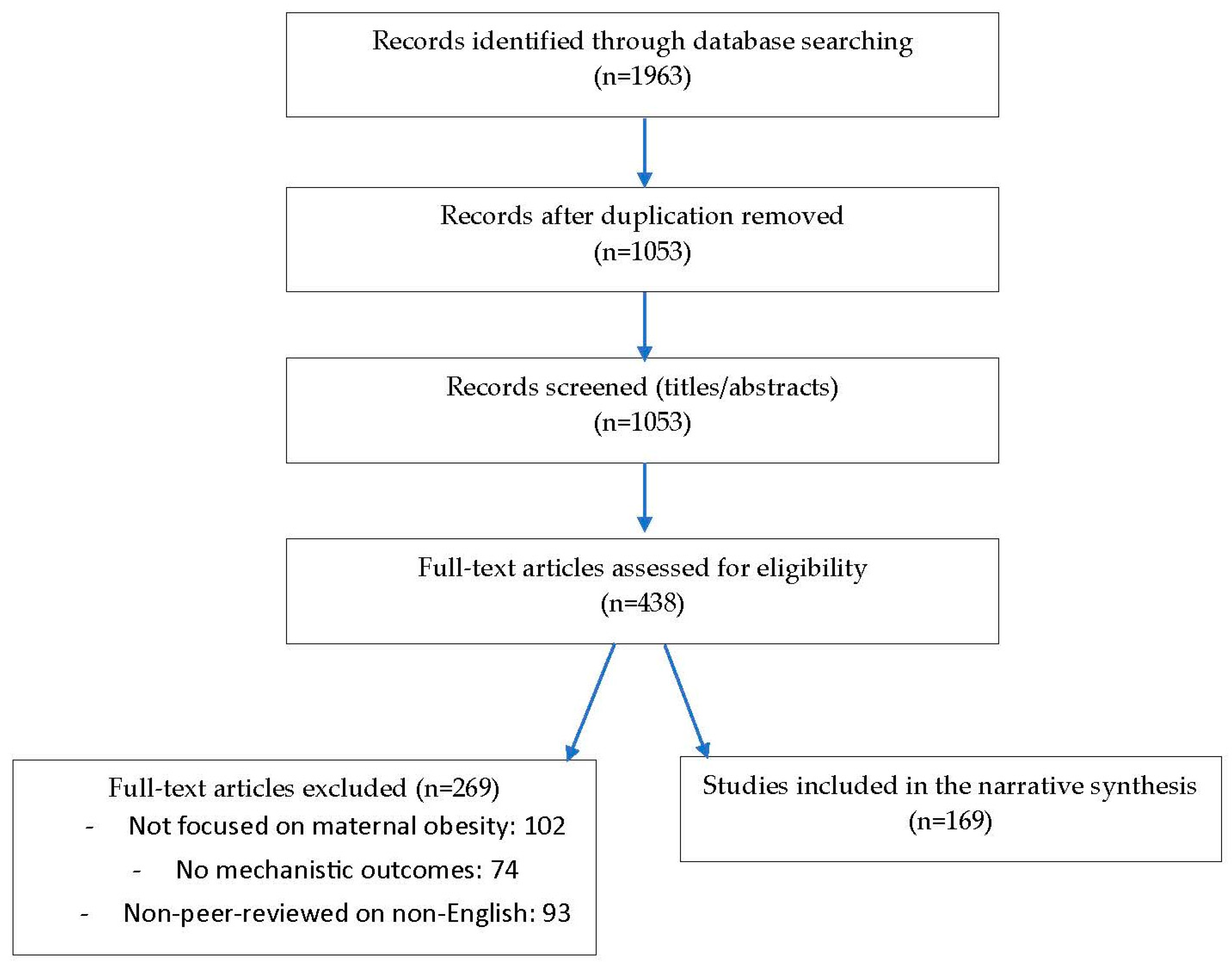
2. Methodology
3. Maternal Nutrition and Fetal Development
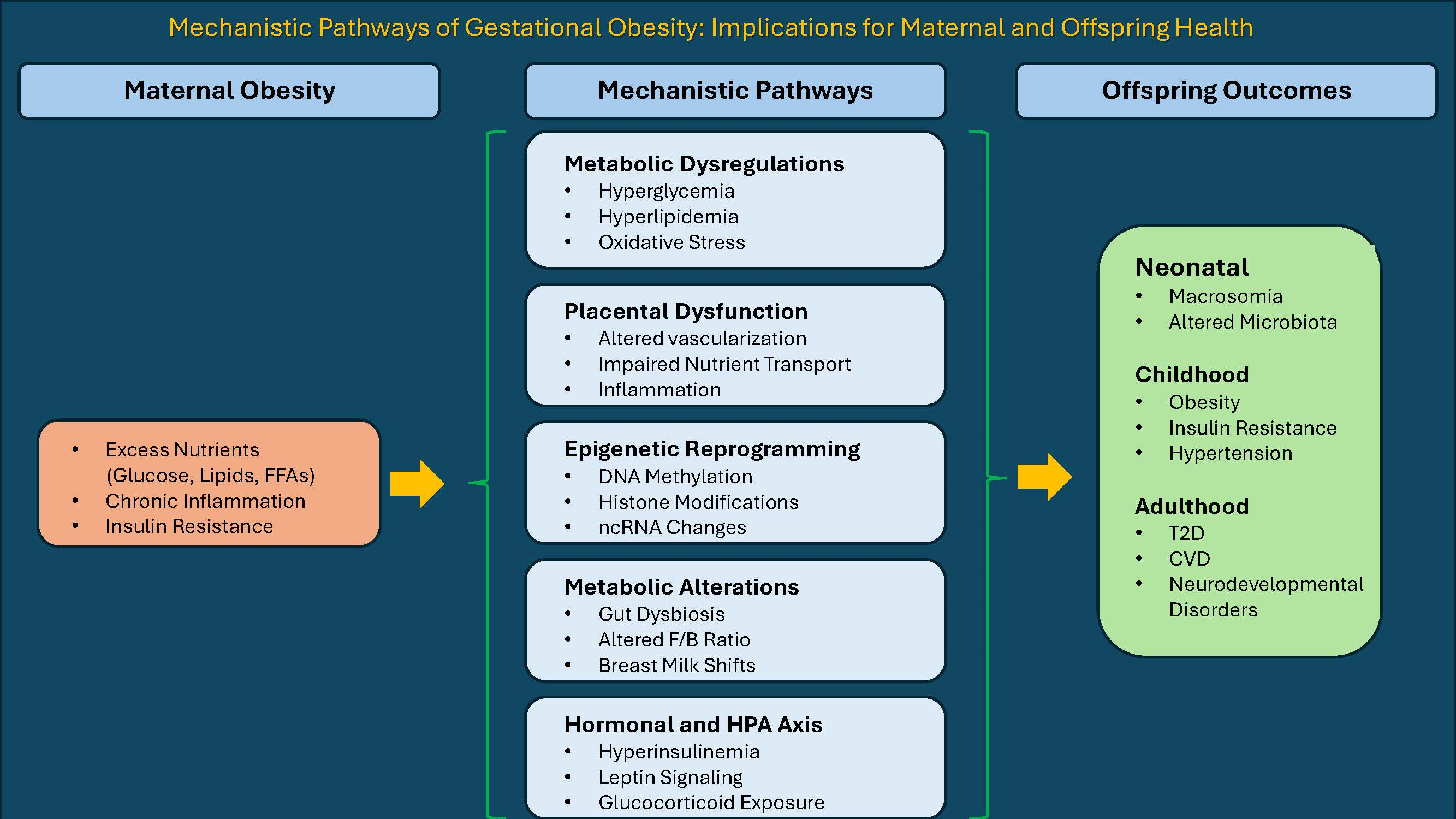
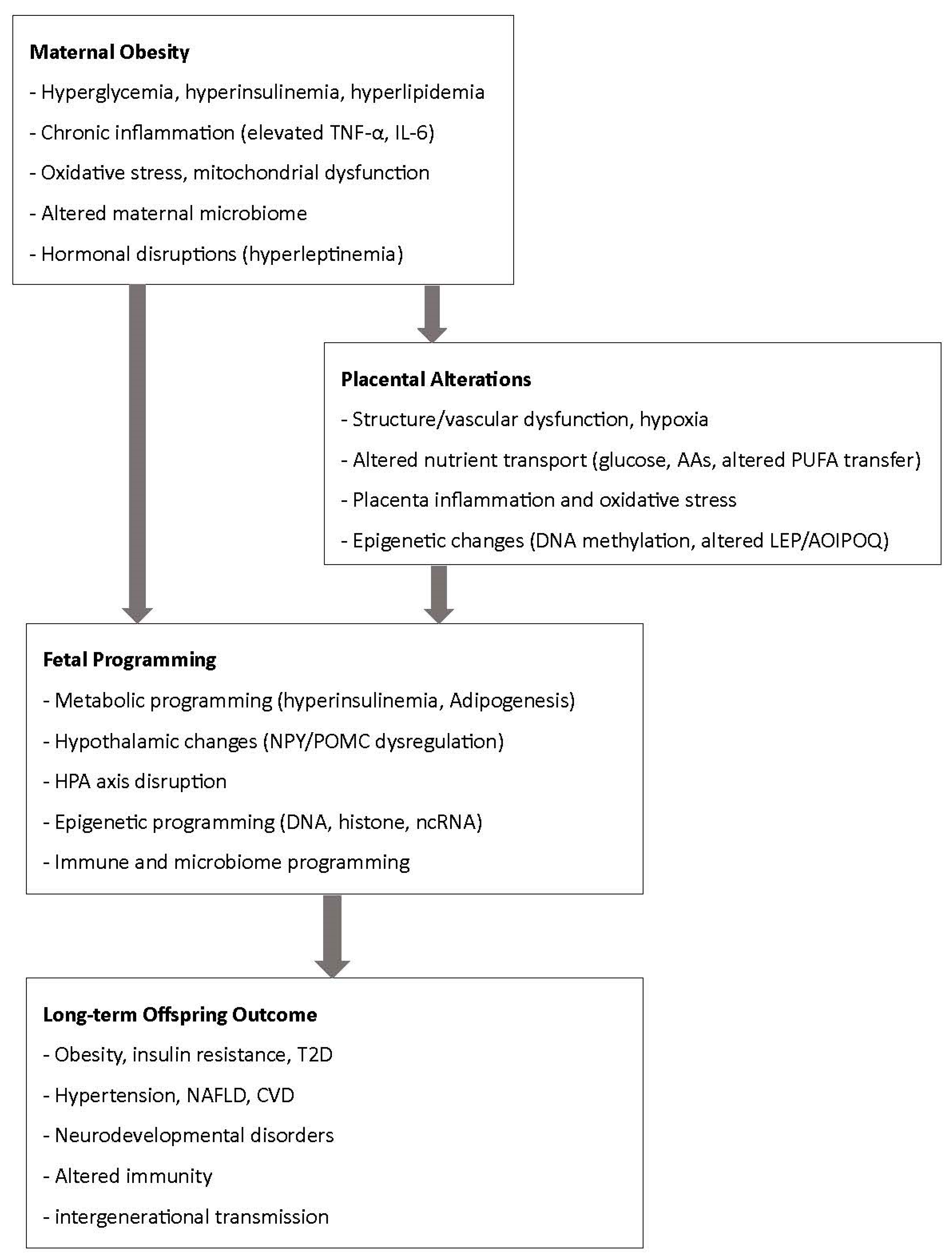
4. Maternal Obesity and Fetal Development: Underlying Mechanisms
4.1. Maternal Obesity and Fetal Programming
4.1.1. Epigenetic Modifications
DNA Methylation, Histone Modifications
Non-Coding RNA Expression
4.1.2. Maternal Obesity and Fetal Hyperinsulinemia
4.1.3. Maternal Obesity and Oxidative Stress
4.1.4. Maternal Obesity and Placental Alterations
4.1.5. Maternal Obesity and HPA Axis Alteration
4.2. Maternal Obesity and Metabolism
5. Maternal Obesity and Breastfeeding
5.1. Challenges in Breastfeeding for Women with Obesity
5.1.1. Physiological Factors
5.1.2. Psychosocial Factors
5.1.3. Mechanical and Practical Considerations
5.2. Maternal Obesity and Breast Milk Microbiota
5.3. Implications for Infant Development and Health
6. Study Strengths and Limitations
7. Conclusions
8. Future Directions
Author Contributions
Funding
Data Availability Statement
Conflicts of Interest
References
- Brunner, K.; Linder, T.; Klaritsch, P.; Tura, A.; Windsperger, K.; Göbl, C. The Impact of Overweight and Obesity on Pregnancy: A Narrative Review of Physiological Consequences, Risks and Challenges in Prenatal Care, and Early Intervention Strategies. Curr. Diabet. Rep. 2025, 25, 30. [Google Scholar] [CrossRef]
- Almutairi, F.S.; Alsaykhan, A.M.; Almatrood, A.A. Obesity Prevalence and Its Impact on Maternal and Neonatal Outcomes in Pregnant Women: A Systematic Review. Cureus 2024, 16, e75262. [Google Scholar] [CrossRef]
- Kweon, J.Y.; Mun, H.; Choi, M.R.; Kim, H.S.; Ahn, Y.J. Maternal Obesity Induced Metabolic Disorders in Offspring and Myeloid Reprogramming by Epigenetic Regulation. Front. Endocrinol. 2023, 14, 1256075. [Google Scholar] [CrossRef]
- Cochrane, A.L.K.; Murphy, M.P.; Ozanne, S.E.; Giussani, D.A. Pregnancy in Obese Women and Mechanisms of Increased Cardiovascular Risk in Offspring. Eur. Heart J. 2024, 45, 5127–5145. [Google Scholar] [CrossRef]
- Godfrey, K.M.; Reynolds, R.M.; Prescott, S.L.; Nyirenda, M.; Jaddoe, V.W.; Eriksson, J.G.; Broekman, B.F.P. Influence of Maternal Obesity on the Long-Term Health of Offspring. Lancet Diabetes Endocrinol. 2017, 5, 53–64. [Google Scholar] [CrossRef]
- Biagioli, V.; Matera, M.; Ramenghi, L.A.; Falsaperla, R.; Striano, P. Microbiome and Pregnancy Dysbiosis: A Narrative Review on Offspring Health. Nutrients 2025, 17, 1033. [Google Scholar] [CrossRef]
- Prodan, N.C.; Schmidt, M.; Hoopmann, M.; Abele, H.; Kagan, K.O. Obesity in Prenatal Medicine: A Game Changer? Arch. Gynecol. Obs. 2024, 309, 961–974. [Google Scholar] [CrossRef] [PubMed]
- Wang, J.; Lin, L. Early-Life Gut Microbiota Development from Maternal Vertical Transmission. Gynecol. Obstet. Clin. Med. 2021, 1, 79–82. [Google Scholar] [CrossRef]
- Wang, L.; O’Kane, A.M.; Zhang, Y.; Ren, J. Maternal Obesity and Offspring Health: Adapting Metabolic Changes through Autophagy and Mitophagy. Obes. Rev. 2023, 24, e13567. [Google Scholar] [CrossRef] [PubMed]
- Martin, C.L.; Jima, D.; Sharp, G.C.; McCullough, L.E.; Park, S.S.; Gowdy, K.M.; Skaar, D.; Cowley, M.; Maguire, R.L.; Fuemmeler, B.; et al. Maternal Pre-Pregnancy Obesity, Offspring Cord Blood DNA Methylation, and Offspring Cardiometabolic Health in Early Childhood: An Epigenome-Wide Association Study. Epigenetics 2019, 14, 325–340. [Google Scholar] [CrossRef] [PubMed]
- Faienza, M.F.; Urbano, F.; Anaclerio, F.; Moscogiuri, L.A.; Konstantinidou, F.; Stuppia, L.; Gatta, V. Exploring Maternal Diet-Epigenetic-Gut Microbiome Crosstalk as an Intervention Strategy to Counter Early Obesity Programming. Curr. Issues Mol. Biol. 2024, 46, 4358–4378. [Google Scholar] [CrossRef]
- Beckers, K.F.; Flanagan, J.P.; Sones, J.L. Microbiome and Pregnancy: Focus on Microbial Dysbiosis Coupled with Maternal Obesity. Int. J. Obes. 2024, 48, 439–448. [Google Scholar] [CrossRef]
- Rees, W.D.; Susan, H.H.; Brown, D.S.; Antipatis, C.; Palmer, R.M. Maternal Protein Deficiency Causes Hypermethylation of DNA in the Livers of Rat Fetuses. J. Nutr. 2000, 130, 1821–1826. [Google Scholar] [CrossRef]
- Langley-Evans, S.C.; Phillips, G.J.; Jackson, A.A. In Utero Exposure to Maternal Low Protein Diets Induces Hypertension in Weanling Rats, Independently of Maternal Blood Pressure Changes. Clin. Nutr. 1994, 13, 319–324. [Google Scholar] [CrossRef] [PubMed]
- Thone-Reineke, C.; Kalk, P.; Dorn, M.; Klaus, S.; Simon, K.; Pfab, T.; Godes, M.; Persson, P.; Unger, T.; Hocher, B. High-Protein Nutrition during Pregnancy and Lactation Programs Blood Pressure, Food Efficiency, and Body Weight of the Offspring in a Sex-Dependent Manner. Am. J. Physiol. Regul. Integr. Comp. Physiol. 2006, 291, R1025–R1030. [Google Scholar] [CrossRef] [PubMed][Green Version]
- Daenzer, M.; Ortmann, S.; Klaus, S.; Metges, C.C. Prenatal High Protein Exposure Decreases Energy Expenditure and Increases Adiposity in Young Rats. J. Nutr. 2002, 132, 142–144. [Google Scholar] [CrossRef] [PubMed]
- Jahan-Mihan, A.; Rodriguez, J.; Christie, C.; Sadeghi, M.; Zerbe, T. The Role of Maternal Dietary Proteins in Development of Metabolic Syndrome in Offspring. Nutrients 2015, 7, 9185–9217. [Google Scholar] [CrossRef]
- Jahan-Mihan, A.; Smith, C.E.; Anderson, G.H. Effect of Protein Source in Diets Fed during Gestation and Lactation on Food Intake Regulation in Male Offspring of Wistar Rats. Am. J. Physiol. Regul. Integr. Comp. Physiol. 2011, 300, R1175–R1184. [Google Scholar] [CrossRef]
- Jahan-mihan, A.; Smith, C.E.; Hamedani, A.; Anderson, G.H. Soy Protein-Based Compared with Casein-Based Diets Fed during Pregnancy and Lactation Increase Food Intake and Characteristics of Metabolic Syndrome Less in Female than Male Rat Offspring. Nutr. Res. 2011, 31, 644–651. [Google Scholar] [CrossRef]
- Jahan-Mihan, A.; Szeto, I.M.Y.; Luhovyy, B.L.; Huot, P.S.P.; Anderson, G.H. Soya Protein-and Casein-Based Nutritionally Complete Diets Fed during Gestation and Lactation Differ in Effects on Characteristics of the Metabolic Syndrome in Male Offspring of Wistar Rats. Br. J. Nutr. 2012, 107, 284–294. [Google Scholar] [CrossRef]
- Ozanne, S.E.; Smith, G.D.; Tikerpae, J.; Hales, C.N. Altered Regulation of Hepatic Glucose Output in the Male Offspring of Protein-Malnourished Rat Dams. Am. J. Physiol. Endocrinol. Metab. 1996, 270, E559–E564. [Google Scholar] [CrossRef]
- Langley, S.C.; Jackson, A.A. Increased Systolic Blood Pressure in Adult Rats Induced by Fetal Exposure to Maternal Low Protein Diets. Clin. Sci. 1994, 86, 217–222. [Google Scholar] [CrossRef]
- Langley-Evans, S.C.; Welham, S.J.M.; Jackson, A.A. Fetal Exposure to a Maternal Low Protein Diet Impairs Nephrogenesis and Promotes Hypertension in the Rat. Life Sci. 1999, 64, 965–974. [Google Scholar] [CrossRef]
- Wang, C.L.; Coleman, N.; Smith, G.D. Altered Muscle Insulin Sensitivity in the Male Offspring of Protein-Malnourished Rats. Am. J. Physiol. 1996, 271, E1128–E1134. [Google Scholar] [CrossRef]
- Petrie, L.; Duthie, S.J.; Rees, W.D.; McConnell, J.M.L. Serum Concentrations of Homocysteine Are Elevated during Early Pregnancy in Rodent Models of Fetal Programming. Br. J. Nutr. 2002, 88, 471–477. [Google Scholar] [CrossRef] [PubMed]
- Jiang, Y.; Sun, T.; Xiong, J.; Cao, J.; Li, G.; Wang, S. Hyperhomocysteinemia-Mediated DNA Hypomethylation and Its Potential Epigenetic Role in Rats. Acta Biochim. Biophys. Sin 2007, 39, 657–667. [Google Scholar] [CrossRef]
- Steegers-Theunissen, R.P.M.; Steegers, E.A.P. Nutrient-Gene Interactions in Early Pregnancy: A Vascular Hypothesis. Eur. J. Obstet. Gynecol. Reprod. Biol. 2003, 106, 115–117. [Google Scholar] [CrossRef]
- Jackson, A.A.; Dunn, R.L.; Marchand, M.C.; Langley-Evans, S.C. Increased Systolic Blood Pressure in Rats Induced by a Maternal Low-Protein Diet Is Reversed by Dietary Supplementation with Glycine. Clin. Sci. 2002, 103, 633–639. [Google Scholar] [CrossRef]
- Cherif, H.; Reusens, B.; Ahn, M.T.; Hoet, J.J.; Remacle, C. Effects of Taurine on the Insulin Secretion of Rat Fetal Islets from Dams Fed a Low-Protein Diet. J. Endocrinol. 1998, 159, 341–348. [Google Scholar] [CrossRef]
- Li, M.; Reynolds, C.M.; Sloboda, D.M.; Gray, C.; Vickers, M.H. Maternal Taurine Supplementation Attenuates Maternal Fructose-Induced Metabolic and Inflammatory Dysregulation and Partially Reverses Adverse Metabolic Programming in Offspring. J. Nutr. Biochem. 2015, 26, 267–276. [Google Scholar] [CrossRef] [PubMed]
- Dai, Z.; Wu, Z.; Hang, S.; Zhu, W.; Wu, G. Amino Acid Metabolism in Intestinal Bacteria and Its Potential Implications for Mammalian Reproduction. Mol. Hum. Reprod. 2014, 21, 389–409. [Google Scholar] [CrossRef] [PubMed]
- Kankowski, L.; Ardissino, M.; McCracken, C.; Lewandowski, A.J.; Leeson, P.; Neubauer, S.; Harvey, N.C.; Petersen, S.E.; Raisi-Estabragh, Z. The Impact of Maternal Obesity on Offspring Cardiovascular Health: A Systematic Literature Review. Front. Endocrinol. 2022, 13, 868441. [Google Scholar] [CrossRef] [PubMed]
- Elshenawy, S.; Simmons, R. Maternal Obesity and Prenatal Programming. Mol. Cell. Endocrinol. 2016, 435, 2–6. [Google Scholar] [CrossRef]
- Rinaudo, P.; Wang, E. Fetal Programming and Metabolic Syndrome. Annu. Rev. Physiol. 2012, 74, 107–130. [Google Scholar] [CrossRef]
- Perrone, S.; Santacroce, A.; Picardi, A.; Buonocore, G. Fetal Programming and Early Identification of Newborns at High Risk of Free Radical-Mediated Diseases. World J. Clin. Pediatr. 2016, 5, 172–181. [Google Scholar] [CrossRef] [PubMed]
- Neri, C.; Edlow, A.G. Effects of Maternal Obesity on Fetal Programming: Molecular Approaches. Cold Spring Harb. Perspect. Med. 2016, 6, a026591. [Google Scholar] [CrossRef]
- Mousa, A.; Naqash, A.; Lim, S. Macronutrient and Micronutrient Intake during Pregnancy: An Overview of Recent Evidence. Nutrients 2019, 11, 443. [Google Scholar] [CrossRef]
- Cortés-Albornoz, M.C.; García-Guáqueta, D.P.; Velez-Van-meerbeke, A.; Talero-Gutiérrez, C. Maternal Nutrition and Neurodevelopment: A Scoping Review. Nutrients 2021, 13, 3530. [Google Scholar] [CrossRef]
- Pérez-Pérez, A.; Toro, A.; Vilariño-García, T.; Maymó, J.; Guadix, P.; Dueñas, J.L.; Fernández-Sánchez, M.; Varone, C.; Sánchez-Margalet, V. Leptin Action in Normal and Pathological Pregnancies. J. Cell. Mol. Med. 2018, 22, 716–727. [Google Scholar] [CrossRef]
- Hill, D.J.; Hill, T.G. Maternal Diet during Pregnancy and Adaptive Changes in the Maternal and Fetal Pancreas Have Implications for Future Metabolic Health. Front. Endocrinol. 2024, 15, 1456629. [Google Scholar] [CrossRef]
- DeLacey, S.; Gurra, M.; Arzu, J.; Lowe, L.P.; Lowe, W.L.; Scholtens, D.M.; Josefson, J.L. Leptin and Adiposity Measures from Birth to Later Childhood: Findings from the Hyperglycemia and Adverse Pregnancy Outcomes Follow-Up Study. Pediatr. Obes. 2024, 19, e13087. [Google Scholar] [CrossRef] [PubMed]
- Leddy, M.A.; Power, M.L.; Schulkin, J. 10-The Impact of Maternal Obesity on Maternal and Fetal Health (Background Info). Rev. Obs. Gynecol. 2008, 170, 1. [Google Scholar]
- Reichetzeder, C. Overweight and Obesity in Pregnancy: Their Impact on Epigenetics. Eur. J. Clin. Nutr. 2021, 75, 1710–1722. [Google Scholar] [CrossRef] [PubMed]
- Jahan-Mihan, A. The Effect of Source of Protein Fed during Pregnancy and Lactation on the Development of Characteristics of Metabolic Syndrome in Male Offspring of Obese Wistar Rats. J. Nutr. Sci. 2023, 12, e113. [Google Scholar] [CrossRef]
- Jahan-Mihan, A. The Interactive Effects of Gestational Obesity and Maternal High- and Normal-Protein Diets on Food Intake, Body Weight, Composition, and Glucose Metabolism in Male Offspring of Obese Wistar Rats. J. Dev. Orig. Health Dis. 2024, 15, e15. [Google Scholar] [CrossRef]
- Watkins, A.J.; Lucas, E.S.; Wilkins, A.; Cagampang, F.R.A.; Fleming, T.P. Maternal Periconceptional and Gestational Low Protein Diet Affects Mouse Offspring Growth, Cardiovascular and Adipose Phenotype at 1 Year of Age. PLoS ONE 2011, 6, e28745. [Google Scholar] [CrossRef]
- Mortensen, E.L.K.; Wang, T.; Malte, H.; Raubenheimer, D.; Mayntz, D. Maternal Preconceptional Nutrition Leads to Variable Fat Deposition and Gut Dimensions of Adult Offspring Mice (C57BL/6JBom). Int. J. Obes. 2010, 34, 1618–1624. [Google Scholar] [CrossRef] [PubMed]
- Rehfeldt, C.; Langhammer, M.; Kucia, M.; Nürnberg, G.; Metges, C.C. Enhanced Sensitivity of Skeletal Muscle Growth in Offspring of Mice Long-Term Selected for High Body Mass in Response to a Maternal High-Protein/Low-Carbohydrate Diet during Lactation. Eur. J. Nutr. 2013, 52, 1201–1213. [Google Scholar] [CrossRef]
- He, Z.X.; Wu, D.Q.; Sun, Z.H.; Tan, Z.L.; Qiao, J.Y.; Ran, T.; Tang, S.X.; Zhou, C.S.; Han, X.F.; Wang, M.; et al. Protein or Energy Restriction during Late Gestation Alters Fetal Growth and Visceral Organ Mass: An Evidence of Intrauterine Programming in Goats. Anim. Reprod. Sci. 2013, 137, 177–182. [Google Scholar] [CrossRef]
- Vesterdorf, K.; Blache, D.; Harrison, A.; Matthiesen, C.F.; Tauson, A.H. Low Protein Provision during the First Year of Life, but Not during Foetal Life, Affects Metabolic Traits, Organ Mass Development and Growth in Male Mink (Neovison Vison). J. Anim. Physiol. Anim. Nutr. 2014, 98, 357–372. [Google Scholar] [CrossRef]
- Agnoux, A.M.; Antignac, J.P.; Simard, G.; Poupeau, G.; Darmaun, D.; Parnet, P.; Alexandre-Gouabau, M.C. Time Window-Dependent Effect of Perinatal Maternal Protein Restriction on Insulin Sensitivity and Energy Substrate Oxidation in Adult Male Offspring. Am. J. Physiol. Regul. Integr. Comp. Physiol. 2014, 307, R184–R197. [Google Scholar] [CrossRef]
- Siddique, K.; Guzman, G.L.; Gattineni, J.; Baum, M. Effect of Postnatal Maternal Protein Intake on Prenatal Programming of Hypertension. Reprod. Sci. 2014, 21, 1499–1507. [Google Scholar] [CrossRef] [PubMed]
- Jahan-Mihan, A.; Leftwich, J.; Berg, K.; Labyak, C.; Nodarse, R.R.; Allen, S.; Griggs, J. The Impact of Parental Preconception Nutrition, Body Weight, and Exercise Habits on Offspring Health Outcomes: A Narrative Review. Nutrients 2024, 16, 4276. [Google Scholar] [CrossRef] [PubMed]
- Osman, H.C.; Moreno, R.; Rose, D.; Rowland, M.E.; Ciernia, A.V.; Ashwood, P. Impact of Maternal Immune Activation and Sex on Placental and Fetal Brain Cytokine and Gene Expression Profiles in a Preclinical Model of Neurodevelopmental Disorders. J. Neuroinflammation 2024, 21, 1–14. [Google Scholar] [CrossRef]
- Plows, J.F.; Stanley, J.L.; Baker, P.N.; Reynolds, C.M.; Vickers, M.H. The Pathophysiology of Gestational Diabetes Mellitus. Int. J. Mol. Sci. 2018, 19, 3342. [Google Scholar] [CrossRef]
- Buchanan, T.A.; Xiang, A.; Kjos, S.L.; Watanabe, R. What Is Gestational Diabetes? Diabetes Care 2007, 30, S105–S111. [Google Scholar] [CrossRef]
- Catalano, P.M.; Shankar, K. Obesity and Pregnancy: Mechanisms of Short Term and Long Term Adverse Consequences for Mother and Child. BMJ 2017, 356, j1. [Google Scholar] [CrossRef]
- Tam, W.H.; Ma, R.C.W.; Ozaki, R.; Li, A.M.; Chan, M.H.M.; Yuen, L.Y.; Lao, T.T.H.; Yang, X.; Ho, C.S.; Tutino, G.E.; et al. In Utero Exposure to Maternal Hyperglycemia Increases Childhood Cardiometabolic Risk in Offspring. Diabetes Care 2017, 40, 679–686. [Google Scholar] [CrossRef] [PubMed]
- Seneviratne, S.N.; Rajindrajith, S. Fetal Programming of Obesity and Type 2 Diabetes. World J. Diabetes 2022, 13, 482–497. [Google Scholar] [CrossRef]
- Cottrell, E.C.; Ozanne, S.E. Early Life Programming of Obesity and Metabolic Disease. Physiol. Behav. 2008, 94, 17–28. [Google Scholar] [CrossRef]
- Plagemann, A.; Harder, T.; Rake, A.; Melchior, K.; Rittel, F.; Rohde, W.; Dörner, G. Hypothalamic Insulin and Neuropeptide Y in the Offspring of Gestational Diabetic Mother Rats. Neuroreport 1998, 9, 4069–4073. [Google Scholar] [CrossRef]
- Koren, O.; Konnikova, L.; Brodin, P.; Mysorekar, I.U.; Collado, M.C. The Maternal Gut Microbiome in Pregnancy: Implications for the Developing Immune System. Nat. Rev. Gastroenterol. Hepatol. 2024, 21, 35–45. [Google Scholar] [CrossRef] [PubMed]
- Gorczyca, K.; Obuchowska, A.; Kimber-Trojnar, Ż.; Wierzchowska-Opoka, M.; Leszczyńska-Gorzelak, B. Changes in the Gut Microbiome and Pathologies in Pregnancy. Int. J. Environ. Res. Publish Health 2022, 19, 9961. [Google Scholar] [CrossRef]
- Edwards, S.M.; Cunningham, S.A.; Dunlop, A.L.; Corwin, E.J. The Maternal Gut Microbiome During Pregnancy. MCN: Am. J. Matern. Child Nurs. 2017, 42, 310–317. [Google Scholar] [CrossRef] [PubMed]
- Tabani, A.; Olendzki, B. The Correlation Between Pregnancy and the Gut. Available online: https://www.umassmed.edu/nutrition/blog/blog-posts/2019/4/the-correlation-between-pregnancy-and-the-gut/ (accessed on 11 May 2025).
- Öztürk, H.N.O.; Türker, P.F. Fetal Programming: Could Intrauterin Life Affect Health Status in Adulthood? Obs. Gynecol. Sci. 2021, 64, 473–483. [Google Scholar] [CrossRef]
- Lavebratt, C.; Almgren, M.; Ekström, T.J. Epigenetic Regulation in Obesity. Int. J. Obes. 2012, 36, 757–765. [Google Scholar] [CrossRef]
- Şanlı, E.; Kabaran, S. Maternal Obesity, Maternal Overnutrition and Fetal Programming: Effects of Epigenetic Mechanisms on the Development of Metabolic Disorders. Curr. Genom. 2019, 20, 419–427. [Google Scholar] [CrossRef]
- Edlow, A.G. Maternal Obesity and Neurodevelopmental and Psychiatric Disorders in Offspring. Prenat. Diagn. 2017, 37, 95–110. [Google Scholar] [CrossRef]
- Harmancıoğlu, B.; Kabaran, S. Maternal High Fat Diets: Impacts on Offspring Obesity and Epigenetic Hypothalamic Programming. Front. Genet. 2023, 14, 1158089. [Google Scholar] [CrossRef] [PubMed]
- Han, L.; Ren, C.; Li, L.; Li, X.; Ge, J.; Wang, H.; Miao, Y.L.; Guo, X.; Moley, K.H.; Shu, W.; et al. Embryonic Defects Induced by Maternal Obesity in Mice Derive from Stella Insufficiency in Oocytes. Nat. Genet. 2018, 50, 432–442. [Google Scholar] [CrossRef]
- Núñez-Sánchez, M.; Jiménez-Méndez, A.; Suárez-Cortés, M.; Martínez-Sánchez, M.A.; Sánchez-Solís, M.; Blanco-Carnero, J.E.; Ruiz-Alcaraz, A.J.; Ramos-Molina, B. Inherited Epigenetic Hallmarks of Childhood Obesity Derived from Prenatal Exposure to Obesogens. Int. J. Environ. Res. Public Health 2023, 20, 4711. [Google Scholar] [CrossRef]
- Dalfrà, M.G.; Burlina, S.; Del Vescovo, G.G.; Lapolla, A. Genetics and Epigenetics: New Insight on Gestational Diabetes Mellitus. Front. Endocrinol. 2020, 11, 602477. [Google Scholar] [CrossRef]
- Barker, D.J.P. The Fetal and Infant Origins of Adult Disease. Br. Med. J. 1990, 301, 1111. [Google Scholar] [CrossRef]
- Mahmoud, A.M. An Overview of Epigenetics in Obesity: The Role of Lifestyle and Therapeutic Interventions. Int. J. Mol. Sci. 2022, 23, 1341. [Google Scholar] [CrossRef] [PubMed]
- Dias, S.; Adam, S.; Abrahams, Y.; Rheeder, P.; Pheiffer, C. Adiponectin DNA Methylation in South African Women with Gestational Diabetes Mellitus: Effects of HIV Infection. PLoS ONE 2021, 16, e0248694. [Google Scholar] [CrossRef]
- O’Reilly, J.R.; Reynolds, R.M. The Risk of Maternal Obesity to the Long-Term Health of the Offspring. Clin. Endocrinol. 2013, 78, 9–16. [Google Scholar] [CrossRef]
- Yang, Q.Y.; Liang, J.F.; Rogers, C.J.; Zhao, J.X.; Zhu, M.J.; Du, M. Maternal Obesity Induces Epigenetic Modifications to Facilitate Zfp423 Expression and Enhance Adipogenic Differentiation in Fetal Mice. Diabetes 2013, 62, 3727–3735. [Google Scholar] [CrossRef] [PubMed]
- Cirulli, F.; Musillo, C.; Berry, A. Maternal Obesity as a Risk Factor for Brain Development and Mental Health in the Offspring. Neuroscience 2020, 447, 122–135. [Google Scholar] [CrossRef]
- Long, Y.; Mao, C.; Liu, S.; Tao, Y.; Xiao, D. Epigenetic Modifications in Obesity-Associated Diseases. MedComm 2024, 5, e496. [Google Scholar] [CrossRef] [PubMed]
- Comas-Armangue, G.; Makharadze, L.; Gomez-Velazquez, M.; Teperino, R. The Legacy of Parental Obesity: Mechanisms of Non-Genetic Transmission and Reversibility. Biomedicines 2022, 10, 2461. [Google Scholar] [CrossRef]
- Alawathugoda, T.T.; Sheikh, M.A.; Challagandla, A.K.; Dheen, S.T.; Emerald, B.S.; Ansari, S.A. Maternal Obesity Alters Histone Modifications Mediated by the Interaction between EZH2 and AMPK, Impairing Neural Differentiation in the Developing Embryonic Brain Cortex. J. Biol. Chem. 2025, 301, 108173. [Google Scholar] [CrossRef]
- Glendining, K.A.; Jasoni, C.L. Maternal High Fat Diet-Induced Obesity Modifies Histone Binding and Expression of Oxtr in Offspring Hippocampus in a Sex-Specific Manner. Int. J. Mol. Sci. 2019, 20, 329. [Google Scholar] [CrossRef]
- Song, Y.; Guo, H.-L.; Zhang, M.-Z.; Zhang, Z.-L.; Jin, K.; He, Q.-Q.; Li, H. LncRNA-miRNA-mRNA Network in Female Offspring Born from Obese Dams. Exp. Ther. Med. 2023, 25, 1–9. [Google Scholar] [CrossRef] [PubMed]
- Zeng, Y.; Wu, Y.; Zhang, Q.; Xiao, X. Non-Coding RNAs: The Link between Maternal Malnutrition and Offspring Metabolism. Front. Nutr. 2022, 9, 1022784. [Google Scholar] [CrossRef]
- Alba-Linares, J.J.; Pérez, R.F.; Tejedor, J.R.; Bastante-Rodríguez, D.; Ponce, F.; Carbonell, N.G.; Zafra, R.G.; Fernández, A.F.; Fraga, M.F.; Lurbe, E. Maternal Obesity and Gestational Diabetes Reprogram the Methylome of Offspring beyond Birth by Inducing Epigenetic Signatures in Metabolic and Developmental Pathways. Cardiovasc. Diabetol. 2023, 22, 1–18. [Google Scholar] [CrossRef]
- Shen, W.B.; Ni, J.; Yao, R.; Goetzinger, K.R.; Harman, C.; Reece, E.A.; Wang, B.; Yang, P. Maternal Obesity Increases DNA Methylation and Decreases RNA Methylation in the Human Placenta. Reprod. Toxicol. 2022, 107, 90–96. [Google Scholar] [CrossRef]
- Li, Y.; Pollock, C.A.; Saad, S. Aberrant Dna Methylation Mediates the Transgenerational Risk of Metabolic and Chronic Disease Due to Maternal Obesity and Overnutrition. Genes 2021, 12, 1653. [Google Scholar] [CrossRef] [PubMed]
- Gao, Y.; Zhao, L.; Liu, X.; Hossain, M.N.; de Avila, J.M.; Du, M. Maternal Obesity Suppresses Embryonic Myogenesis via Enhancing H19 LncRNA Expression. Physiology 2023, 38, 5786249. [Google Scholar] [CrossRef]
- Lluch, A.; Latorre, J.; Oliveras-Cañellas, N.; Fernández-Sánchez, A.; Moreno-Navarrete, J.M.; Castells-Nobau, A.; Comas, F.; Buxò, M.; Rodríguez-Hermosa, J.I.; Ballester, M.; et al. A Novel Long Non-Coding RNA Connects Obesity to Impaired Adipocyte Function. Mol. Metab. 2024, 90, 102040. [Google Scholar] [CrossRef]
- Harary, D.; Akinyemi, A.; Charron, M.J.; Fuloria, M. Fetal Growth and Intrauterine Epigenetic Programming of Obesity and Cardiometabolic Disease. Neoreviews 2022, 23, e363–e372. [Google Scholar] [CrossRef]
- Milner, R.D.G.; Hill, D.J. Fetal Growth Control: The Role of Insulin and Related Peptides. Clin. Endocrinol. 1984, 21, 415–433. [Google Scholar] [CrossRef]
- Plagemann, A. A Matter of Insulin: Developmental Programming of Body Weight Regulation. J. Matern.-Fetal Neonatal Med. 2008, 21, 143–148. [Google Scholar] [CrossRef]
- Silverman, B.L.; Metzger, B.E.; Cho, N.H.; Loeb, C.A. Impaired Glucose Tolerance in Adolescent Offspring of Diabetic Mothers: Relationship to Fetal Hyperinsulinism. Diabetes Care 1995, 18, 611–617. [Google Scholar] [CrossRef]
- Plagemann, A.; Harder, T.; Kohlhoff, R.; Rohde, W.; Dörner, G. Glucose Tolerance and Insulin Secretion in Children of Mothers with Pregestational IDDM or Gestational Diabetes. Diabetologia 1997, 40, 1094–1100. [Google Scholar] [CrossRef]
- Weiss, P.A.M.; Scholz, H.S.; Haas, J.; Tamussino, K.F.; Seissler, J.; Borkenstein, M.H. Long-Term Follow-up of Infants of Mothers with Type 1 Diabetes: Evidence for Hereditary and Nonhereditary Transmission of Diabetes and Precursors. Diabetes Care 2000, 23, 905–911. [Google Scholar] [CrossRef] [PubMed]
- Buchanan, T.A.; Kjos, S.L. Gestational Diabetes: Risk or Myth? J. Clin. Endocrinol. Metab. 1999, 84, 1854–1857. [Google Scholar] [CrossRef] [PubMed][Green Version]
- Hattersley, A.T.; Tooke, J.E. The Fetal Insulin Hypothesis: An Alternative Explanation of the Association of Low Birthweight with Diabetes and Vascular Disease. Lancet 1999, 353, 1789–1792. [Google Scholar] [CrossRef]
- Dorner, G.; Plagemann, A. Perinatal Hyperinsulinism as Possible Predisposing Factor for Diabetes Mellitus, Obesity and Enhanced Cardiovascular Risk in Later Life. Horm. Metab. Res. 1994, 26, 213–221. [Google Scholar] [CrossRef] [PubMed]
- Plagemann, A.; Harder, T.; Melchior, K.; Rake, A.; Rohde, W.; Dörner, G. Elevation of Hypothalamic Neuropeptide Y-Neurons in Adult Offspring of Diabetic Mother Rats. Neuroreport 1999, 10, 3211–3216. [Google Scholar] [CrossRef]
- Dörner, G.; Plagemann, A.; Rückert, J.; Götz, F.; Rohde, W.; Stahl, F.; Kürschner, U.; Gottschalk, J.; Mohnike, A.; Steindel, E. Teratogenetic Maternofoetal Transmission and Prevention of Diabetes Susceptibility. Exp. Clin. Endocrinol. Diabetes 1988, 91, 247–258. [Google Scholar] [CrossRef]
- Bianco, M.E.; Josefson, J.L. Hyperglycemia During Pregnancy and Long-Term Offspring Outcomes. Curr. Diab. Rep. 2019, 19, 143. [Google Scholar] [CrossRef]
- Dearden, L.; Buller, S.; Furigo, I.C.; Fernandez-Twinn, D.S.; Ozanne, S.E. Maternal Obesity Causes Fetal Hypothalamic Insulin Resistance and Disrupts Development of Hypothalamic Feeding Pathways. Mol. Metab. 2020, 42, 101079. [Google Scholar] [CrossRef]
- Wahabi, H.A.; Fayed, A.A.; Alzeidan, R.A.; Mandil, A.A. The Independent Effects of Maternal Obesity and Gestational Diabetes on the Pregnancy Outcomes. BMC Endocr. Disord. 2014, 14, 47. [Google Scholar] [CrossRef] [PubMed]
- Marciniak, A.; Patro-Małysza, J.; Kimber-Trojnar, Ż.; Marciniak, B.; Oleszczuk, J.; Leszczyńska-Gorzelak, B. Fetal Programming of the Metabolic Syndrome. Taiwan. J. Obstet. Gynecol. 2017, 56, 133–138. [Google Scholar] [CrossRef]
- Aouache, R.; Biquard, L.; Vaiman, D.; Miralles, F. Oxidative Stress in Preeclampsia and Placental Diseases. Int. J. Mol. Sci. 2018, 19, 1496. [Google Scholar] [CrossRef]
- Dabelea, D.; Crume, T. Maternal Environment and the Transgenerational Cycle of Obesity and Diabetes. Diabetes 2011, 60, 1849–1855. [Google Scholar] [CrossRef] [PubMed]
- Zafaranieh, S.; Siwetz, M.; Leopold-Posc, B.; Kummer, D.; Huppertz, B.; Desoye, G.; Van Poppel, M.; Desoye, G.; Simmons, D.; Corcoy, R.; et al. Placental Structural Adaptation to Maternal Physical Activity and Sedentary Behavior: Findings of the DALI Lifestyle Study. Hum. Reprod. 2024, 39, 1449–1459. [Google Scholar] [CrossRef]
- Louwen, F.; Kreis, N.N.; Ritter, A.; Yuan, J. Maternal Obesity and Placental Function: Impaired Maternal–Fetal Axis. Arch. Gynecol. Obstet. 2024, 309, 2279–2288. [Google Scholar] [CrossRef] [PubMed]
- Mele, J.; Muralimanoharan, S.; Maloyan, A.; Myatt, L. Impaired Mitochondrial Function in Human Placenta with Increased Maternal Adiposity. Am. J. Physiol. Endocrinol. Metab. 2014, 307, E419–E425. [Google Scholar] [CrossRef]
- Chrousos, G.P. The Role of Stress and the Hypothalamic–Pituitary–Adrenal Axis in the Pathogenesis of the Metabolic Syndrome: Neuro-Endocrine and Target Tissue-Related Causes. Int. J. Obes. 2000, 24, S50–S55. [Google Scholar] [CrossRef]
- Cottrell, E.C.; Seckl, J.R. Prenatal Stress, Glucocorticoids and the Programming of Adult Disease. Front. Behav. Neurosci. 2009, 3, 19. [Google Scholar] [CrossRef]
- Volqvartz, T.; Andersen, H.H.B.; Pedersen, L.H.; Larsen, A. Obesity in Pregnancy—Long-Term Effects on Offspring Hypothalamic-Pituitary-Adrenal Axis and Associations with Placental Cortisol Metabolism: A Systematic Review. Eur. J. Neurosci. 2023, 58, 4393–4422. [Google Scholar] [CrossRef]
- Xiong, F.; Zhang, L. Role of the Hypothalamic-Pituitary-Adrenal Axis in Developmental Programming of Health and Disease. Front. Neuroendocrinol. 2013, 34, 27–46. [Google Scholar] [CrossRef]
- Bose, M.; Oliván, B.; Laferrère, B. Stress and Obesity: The Role of the Hypothalamic-Pituitary-Adrenal Axis in Metabolic Disease. Curr. Opin. Endocrinol. Diabetes Obes. 2009, 16, 340–346. [Google Scholar] [CrossRef]
- Ngema, M.; Xulu, N.D.; Ngubane, P.S.; Khathi, A. A Review of Fetal Development in Pregnancies with Maternal Type 2 Diabetes Mellitus (T2DM)-Associated Hypothalamic-Pituitary-Adrenal (HPA) Axis Dysregulation: Possible Links to Pregestational Prediabetes. Biomedicines 2024, 12, 1372. [Google Scholar] [CrossRef]
- Laugesen, K.; Sørensen, H.T.; Jorgensen, J.O.L.; Petersen, I. Prenatal Exposure to Glucocorticoids and the Prevalence of Overweight or Obesity in Childhood. Eur. J. Endocrinol. 2022, 186, 429–440. [Google Scholar] [CrossRef]
- Laugesen, K.; Skajaa, N.; Petersen, I.; Skovsager Andersen, M.; Feldt-Rasmussen, U.; Kejlberg Al-Mashhadi, S.; Stewart, P.; Lunde Jørgensen, J.O.; Toft Sørensen, H. Mental Disorders Among Offspring Prenatally Exposed to Systemic Glucocorticoids. JAMA Netw. Open 2025, 8, e2453245. [Google Scholar] [CrossRef] [PubMed]
- Eberle, C.; Fasig, T.; Brüseke, F.; Stichling, S. Impact of Maternal Prenatal Stress by Glucocorticoids on Metabolic and Cardiovascular Outcomes in Their Offspring: A Systematic Scoping Review. PLoS ONE 2021, 16, e0245386. [Google Scholar] [CrossRef] [PubMed]
- Huda, S.S.; Brodie, L.E.; Sattar, N. Obesity in Pregnancy: Prevalence and Metabolic Consequences. Semin. Fetal Neonatal Med. 2010, 15, 70–76. [Google Scholar] [CrossRef]
- Poston, L.; Caleyachetty, R.; Cnattingius, S.; Corvalán, C.; Uauy, R.; Herring, S.; Gillman, M.W. Preconceptional and Maternal Obesity: Epidemiology and Health Consequences. Lancet Diabetes Endocrinol. 2016, 4, 1025–1036. [Google Scholar] [CrossRef] [PubMed]
- Nelson, B.N.; Friedman, J.E. Developmental Programming of the Fetal Immune System by Maternal Western-Style Diet: Mechanisms and Implications for Disease Pathways in the Offspring. Int. J. Mol. Sci. 2024, 25, 5951. [Google Scholar] [CrossRef] [PubMed]
- Pereira, T.J.; Fonseca, M.A.; Campbell, K.E.; Moyce, B.L.; Cole, L.K.; Hatch, G.M.; Doucette, C.A.; Klein, J.; Aliani, M.; Dolinsky, V.W. Maternal Obesity Characterized by Gestational Diabetes Increases the Susceptibility of Rat Offspring to Hepatic Steatosis via a Disrupted Liver Metabolome. J. Physiol. 2015, 593, 3181–3197. [Google Scholar] [CrossRef] [PubMed]
- Catalano, P.M. The Impact of Gestational Diabetes and Maternal Obesity on the Mother and Her Offspring. J. Dev. Orig. Health Dis. 2010, 1, 208–215. [Google Scholar] [CrossRef] [PubMed]
- Okereke, N.C.; Huston-Presley, L.; Amini, S.B.; Kalhan, S.; Catalano, P.M. Longitudinal Changes in Energy Expenditure and Body Composition in Obese Women with Normal and Impaired Glucose Tolerance. Am. J. Physiol. Endocrinol. Metab. 2004, 287, E472–E479. [Google Scholar] [CrossRef]
- Nelson, S.M.; Matthews, P.; Poston, L. Maternal Metabolism and Obesity: Modifiable Determinants of Pregnancy Outcome. Hum. Reprod. Update 2009, 16, 255–275. [Google Scholar] [CrossRef]
- Álvarez, D.; Muñoz, Y.; Ortiz, M.; Maliqueo, M.; Chouinard-Watkins, R.; Valenzuela, R. Impact of Maternal Obesity on the Metabolism and Bioavailability of Polyunsaturated Fatty Acids during Pregnancy and Breastfeeding. Nutrients 2021, 13, 19. [Google Scholar] [CrossRef]
- Haggarty, P. Fatty Acid Supply to the Human Fetus. Annu. Rev. Nutr. 2010, 30, 237–255. [Google Scholar] [CrossRef]
- de Siqueira, C.D.; Borges, L.; Dal Mora, T.; Saleh, N.A.; Alves, E.S.; Wopereis, S.; Mendes, B.G.; de Moraes, A.C.R.; Hatanaka, E.; Filippin-Monteiro, F.B. Early Postnatal Effects of Maternal Obesity on Breast Milk Composition and Breastfeeding Outcomes. Clin. Nutr. ESPEN 2025, 65, 365–374. [Google Scholar] [CrossRef]
- Turcksin, R.; Bel, S.; Galjaard, S.; Devlieger, R. Maternal Obesity and Breastfeeding Intention, Initiation, Intensity and Duration: A Systematic Review. Matern. Child. Nutr. 2014, 10, 166–183. [Google Scholar] [CrossRef]
- Kair, L.R.; Colaizy, T.T. Obese Mothers Have Lower Odds of Experiencing Pro-Breastfeeding Hospital Practices than Mothers of Normal Weight: CDC Pregnancy Risk Assessment Monitoring System (PRAMS), 2004–2008. Matern. Child. Health J. 2016, 20, 593–601. [Google Scholar] [CrossRef]
- Li, M.; Francis, E.; Hinkle, S.N.; Ajjarapu, A.S.; Zhang, C. Preconception and Prenatal Nutrition and Neurodevelopmental Disorders: A Systematic Review and Meta-Analysis. Nutrients 2019, 11, 1628. [Google Scholar] [CrossRef]
- Preusting, I.; Brumley, J.; Odibo, L.; Spatz, D.L.; Louis, J.M. Obesity as a Predictor of Delayed Lactogenesis II. J. Hum. Lact. 2017, 33, 684–691. [Google Scholar] [CrossRef] [PubMed]
- Neville, M.C.; Anderson, S.M.; McManaman, J.L.; Badger, T.M.; Bunik, M.; Contractor, N.; Crume, T.; Dabelea, D.; Donovan, S.M.; Forman, N.; et al. Lactation and Neonatal Nutrition: Defining and Refining the Critical Questions. J. Mammary Gland. Biol. Neoplasia 2012, 17, 167–188. [Google Scholar] [CrossRef]
- Riddle, S.W.; Nommsen-Rivers, L.A. A Case Control Study of Diabetes during Pregnancy and Low Milk Supply. Breastfeed. Med. 2016, 11, 80–85. [Google Scholar] [CrossRef]
- Moynihan, A.T.; Hehir, M.P.; Glavey, S.V.; Smith, T.J.; Morrison, J.J. Inhibitory Effect of Leptin on Human Uterine Contractility in Vitro. Am. J. Obs. Gynecol. 2006, 195, 504–509. [Google Scholar] [CrossRef]
- Rasmussen, K.M.; Kjolhede, C.L. Prepregnant Overweight and Obesity Diminish the Prolactin Response to Suckling in the First Week Postpartum. Pediatrics 2004, 113, e465–e471. [Google Scholar] [CrossRef]
- Kamikawa, A.; Ichii, O.; Yamaji, D.; Imao, T.; Suzuki, C.; Okamatsu-Ogura, Y.; Terao, A.; Kon, Y.; Kimura, K. Diet-Induced Obesity Disrupts Ductal Development in the Mammary Glands of Nonpregnant Mice. Dev. Dyn. 2009, 238, 1092–1099. [Google Scholar] [CrossRef]
- Whitaker, K.M.; Marino, R.C.; Haapala, J.L.; Foster, L.; Smith, K.D.; Teague, A.M.; Jacobs, D.R.; Fontaine, P.L.; McGovern, P.M.; Schoenfuss, T.C.; et al. Associations of Maternal Weight Status Before, During, and After Pregnancy with Inflammatory Markers in Breast Milk. Obesity 2017, 25, 2092–2099. [Google Scholar] [CrossRef]
- Panagos, P.G.; Vishwanathan, R.; Penfield-Cyr, A.; Matthan, N.R.; Shivappa, N.; Wirth, M.D.; Hebert, J.R.; Sen, S. Breastmilk from Obese Mothers Has Pro-Inflammatory Properties and Decreased Neuroprotective Factors. J. Perinatol. 2016, 36, 284–290. [Google Scholar] [CrossRef] [PubMed]
- Nommsen-Rivers, L.A.; Chantry, C.J.; Peerson, J.M.; Cohen, R.J.; Dewey, K.G. Delayed Onset of Lactogenesis among First-Time Mothers Is Related to Maternal Obesity and Factors Associated with Ineffective Breastfeeding. Am. J. Clin. Nutr. 2010, 92, 574–584. [Google Scholar] [CrossRef] [PubMed]
- Mok, E.; Multon, C.; Piguel, L.; Barroso, E.; Goua, V.; Christin, P.; Perez, M.J.; Hankard, R. Decreased Full Breastfeeding, Altered Practices, Perceptions, and Infant Weight Change of Prepregnant Obese Women: A Need for Extra Support. Pediatrics 2008, 121, e1319–e1324. [Google Scholar] [CrossRef] [PubMed]
- Figueiredo, B.; Canário, C.; Field, T. Breastfeeding Is Negatively Affected by Prenatal Depression and Reduces Postpartum Depression. Psychol. Med. 2014, 44, 927–936. [Google Scholar] [CrossRef]
- Field, T. Postpartum Depression Effects on Early Interactions, Parenting, and Safety Practices: A Review. Infant. Behav. Dev. 2010, 33, 1–6. [Google Scholar] [CrossRef]
- Jarlenski, M.; McManus, J.; Diener-West, M.; Schwarz, E.B.; Yeung, E.; Bennett, W.L. Association between Support from a Health Professional and Breastfeeding Knowledge and Practices Among Obese Women: Evidence from the Infant Practices Study II. Women’s Health Issues 2014, 24, 641–648. [Google Scholar] [CrossRef]
- Brown, C.R.L.; Dodds, L.; Legge, A.; Bryanton, J.; Semenic, S. Factors Influencing the Reasons Why Mothers Stop Breastfeeding. Can. J. Public Health 2014, 105, e179–e185. [Google Scholar] [CrossRef]
- Garner, C.D.; McKenzie, S.A.; Devine, C.M.; Thornburg, L.L.; Rasmussen, K.M. Obese Women Experience Multiple Challenges with Breastfeeding That Are Either Unique or Exacerbated by Their Obesity: Discoveries from a Longitudinal, Qualitative Study. Matern. Child. Nutr. 2017, 13, e12344. [Google Scholar] [CrossRef] [PubMed]
- Thompson, L.A.; Zhang, S.; Black, E.; Das, R.; Ryngaert, M.; Sullivan, S.; Roth, J. The Association of Maternal Pre-Pregnancy Body Mass Index with Breastfeeding Initiation. Matern. Child. Health J. 2013, 17, 1842–1851. [Google Scholar] [CrossRef] [PubMed]
- Hauff, L.E.; Leonard, S.A.; Rasmussen, K.M. Associations of Maternal Obesity and Psychosocial Factors with Breastfeeding Intention, Initiation, and Duration. Am. J. Clin. Nutr. 2014, 99, 524–534. [Google Scholar] [CrossRef]
- Bever Babendure, J.; Reifsnider, E.; Mendias, E.; Moramarco, M.W.; Davila, Y.R. Reduced Breastfeeding Rates among Obese Mothers: A Review of Contributing Factors, Clinical Considerations and Future Directions. Int. Breastfeed. J. 2015, 10, 1–11. [Google Scholar] [CrossRef]
- Getahun, Z.; Kebede, M.; Tilla, M.; Asnak, G.; Iuzzolino, M.; Urmale, A.; Getachew, H.; Zemedkun, A.; Demeke, T.; Abdi, M.; et al. Comparison of Postoperative Pain Severity between Primary and Repeated Cesarean Section: A Prospective Cohort Study. BMC Anesth. 2025, 25, 1–10. [Google Scholar] [CrossRef]
- Macias, D.A.; Adhikari, E.H.; Eddins, M.; Nelson, D.B.; McIntire, D.D.; Duryea, E.L. A Comparison of Acute Pain Management Strategies after Cesarean Delivery. Am. J. Obstet. Gynecol. 2022, 226, 407.e1–407.e7. [Google Scholar] [CrossRef]
- Stinson, L.F.; Pang, W.W.; Rea, A.; Fok, D.; Chua, M.C.; Tan, K.H.; Yap, F.; Godfrey, K.M.; Shek, L.P.; Eriksson, J.G.; et al. Composition of the Human Milk Microbiome in the GUSTO Cohort Is Shaped by Intrapartum Antibiotic Prophylaxis and Breastfeeding Exclusivity. mSystems 2025, 10, e0067725. [Google Scholar] [CrossRef]
- Gámez-Valdez, J.S.; García-Mazcorro, J.F.; Montoya-Rincón, A.H.; Rodríguez-Reyes, D.L.; Jiménez-Blanco, G.; Rodríguez, M.T.A.; de Vaca, R.P.C.; Alcorta-García, M.R.; Brunck, M.; Lara-Díaz, V.J.; et al. Differential Analysis of the Bacterial Community in Colostrum Samples from Women with Gestational Diabetes Mellitus and Obesity. Sci. Rep. 2021, 11, 1–14. [Google Scholar] [CrossRef]
- Lemay-Nedjelski, L.; Asbury, M.R.; Butcher, J.; Ley, S.H.; Hanley, A.J.; Kiss, A.; Unger, S.; Copeland, J.K.; Wang, P.W.; Stintzi, A.; et al. Maternal Diet and Infant Feeding Practices Are Associated with Variation in the Human Milk Microbiota at 3 Months Postpartum in a Cohort of Women with High Rates of Gestational Glucose Intolerance. J. Nutr. 2021, 151, 320–329. [Google Scholar] [CrossRef]
- Soto, A.; Martín, V.; Jiménez, E.; Mader, I.; Rodríguez, J.M.; Fernández, L. Lactobacilli and Bifidobacteria in Human Breast Milk: Influence of Antibiotherapy and Other Host and Clinical Factors. J. Pediatr. Gastroenterol. Nutr. 2014, 59, 78–88. [Google Scholar] [CrossRef]
- Collado, M.C.; Isolauri, E.; Laitinen, K.; Salminen, S. Effect of Mother’s Weight on Infant’s Microbiota Acquisition, Composition, and Activity during Early Infancy: A Prospective Follow-up Study Initiated in Early Pregnancy. Am. J. Clin. Nutr. 2010, 92, 1023–1030. [Google Scholar] [CrossRef] [PubMed]
- Moossavi, S.; Sepehri, S.; Robertson, B.; Bode, L.; Goruk, S.; Field, C.J.; Lix, L.M.; de Souza, R.J.; Becker, A.B.; Mandhane, P.J.; et al. Composition and Variation of the Human Milk Microbiota Are Influenced by Maternal and Early-Life Factors. Cell Host Microbe 2019, 25, 324–335.e4. [Google Scholar] [CrossRef] [PubMed]
- Karami, S.; Mousavi, S.N.; Shapouri, R.; Naderloo, H.; Heidarzadeh, S.; Afshar, D. Breast Milk Dominant Phyla and Probiotic Bacteria in the Obese Lactating Women Compared with Normal Weights. Sci. Rep. 2024, 14, 19199. [Google Scholar] [CrossRef]
- Lemas, D.J.; Young, B.E.; Ii, P.R.B.; Tomczik, A.C.; Soderborg, T.K.; Hernandez, T.L.; De La Houssaye, B.A.; Robertson, C.E.; Rudolph, M.C.; Ir, D.; et al. Alterations in Human Milk Leptin and Insulin Are Associated with Early Changes in the Infant Intestinal Microbiome. Am. J. Clin. Nutr. 2016, 103, 1291–1300. [Google Scholar] [CrossRef] [PubMed]
- Kumar, H.; du Toit, E.; Kulkarni, A.; Aakko, J.; Linderborg, K.M.; Zhang, Y.; Nicol, M.P.; Isolauri, E.; Yang, B.; Collado, M.C.; et al. Distinct Patterns in Human Milk Microbiota and Fatty Acid Profiles across Specific Geographic Locations. Front. Microbiol. 2016, 7, 1619. [Google Scholar] [CrossRef]
- Raspini, B.; Porri, D.; De Giuseppe, R.; Chieppa, M.; Liso, M.; Cerbo, R.M.; Civardi, E.; Garofoli, F.; Monti, M.C.; Vacca, M.; et al. Prenatal and Postnatal Determinants in Shaping Offspring’s Microbiome in the First 1000 Days: Study Protocol and Preliminary Results at One Month of Life. Ital. J. Pediatr. 2020, 46, 1–14. [Google Scholar] [CrossRef]
- Gomez-Gallego, C.; Garcia-Mantrana, I.; Salminen, S.; Collado, M.C. The Human Milk Microbiome and Factors Influencing Its Composition and Activity. Semin. Fetal Neonatal Med. 2016, 21, 400–405. [Google Scholar] [CrossRef]
- Rodríguez, J.M. The Origin of Human Milk Bacteria: Is There a Bacterial Entero-Mammary Pathway during Late Pregnancy and Lactation? Adv. Nutr. 2014, 5, 779–784. [Google Scholar] [CrossRef]
- Cabrera-Rubio, R.; Mira-Pascual, L.; Mira, A.; Collado, M.C. Impact of Mode of Delivery on the Milk Microbiota Composition of Healthy Women. J. Dev. Orig. Health Dis. 2016, 7, 54–60. [Google Scholar] [CrossRef]
- Williams, J.E.; Carrothers, J.M.; Lackey, K.A.; Beatty, N.F.; York, M.A.; Brooker, S.L.; Shafii, B.; Price, W.J.; Settles, M.L.; McGuire, M.A.; et al. Human Milk Microbial Community Structure Is Relatively Stable and Related to Variations in Macronutrient and Micronutrient Intakes in Healthy Lactating Women. J. Nutr. 2017, 147, 1739–1748. [Google Scholar] [CrossRef] [PubMed]
- Eriksen, K.G.; Christensen, S.H.; Lind, M.V.; Michaelsen, K.F. Human Milk Composition and Infant Growth. Curr. Opin. Clin. Nutr. Metab. Care 2018, 21, 200–206. [Google Scholar] [CrossRef] [PubMed]
- Perrella, S.; Gridneva, Z.; Lai, C.T.; Stinson, L.; George, A.; Bilston-John, S.; Geddes, D. Human Milk Composition Promotes Optimal Infant Growth, Development and Health. Semin. Perinatol. 2021, 45, 151380. [Google Scholar] [CrossRef] [PubMed]
- Bardanzellu, F.; Fanos, V.; Reali, A. Omics in Human Colostrum and Mature Milk: Looking to Old Data with New Eyes. Nutrients 2017, 9, 843. [Google Scholar] [CrossRef]



| Nutritional Factor | Offspring Effects | Risk Estimates/Evidence | References |
|---|---|---|---|
| High-fat maternal diet | Epigenetic changes; ↑ risk of obesity and T2D | Strong evidence from animal and human studies; ↑ lifelong obesity and T2D risk | [13,14,15,16,17] |
| Low-protein maternal diet | ↑ BP, body weight, adiposity | Animal models; consistent ↑ BP and adiposity | [13,14,15,16,17] |
| High-protein maternal diet | ↑ Body weight, BP, food efficiency; ↓ energy expenditure | Animal studies; moderate evidence; ↑ metabolic dysfunction | [13,14,15,16,17] |
| Protein source (soy vs. casein) | Soy diet → ↑ adiposity, BP, HOMA-IR vs. casein | Rat studies; strong sex-dependent effects; clinical translation limited | [18,19,20] |
| Individual amino acids (methionine, glycine, taurine) | Methionine load ↑ BP; Glycine/taurine supplementation improves glucose regulation | Animal studies show normalization with supplementation; mechanistic support strong | [21,22,23,24,25,26,27,28,29,30] |
| Gut microbial metabolism of amino acids | Impacts reproduction, nutrient absorption, fetal growth | Emerging evidence; microbial shifts linked to reproduction/fetal growth | [31] |
| Excessive maternal weight gain | Fetal macrosomia; ↑ risk of metabolic disorders | Clinical evidence; strong association with macrosomia and metabolic risk | [32] |
| Nutrient deficiencies (folate, iron, omega-3, calcium, vitamin D) | Impaired neurological development, IUGR, preeclampsia, ADHD risk | Human and animal data; deficiencies linked to impaired neurodevelopment and IUGR | [36,37,38] |
| Leptin regulation (maternal diet influence) | Hyperleptinemia → GDM risk; altered fetal appetite regulation | Strong evidence; maternal leptin dysregulation linked to GDM and offspring obesity | [39,40,41,42,43] |
| Maternal obesity and protein source effects | Obesity masks protein source effects; limited impact beyond glucose metabolism | Animal models; obesity is dominant factor masking dietary differences | [44,45] |
| Timing of maternal diet (periconception, gestation, lactation, postweaning) | Periconception low protein → long-term obesity risk; lactation diet alters muscle growth; late restriction → low birth weight + catch-up growth | Timing critical; strong animal evidence; human data emerging | [46,47,48,49,50,51,52] |
| Mechanism | Description | Offspring Outcomes | Risk Estimates/Evidence | References |
|---|---|---|---|---|
| Epigenetic Modifications (DNA methylation, histone, ncRNA) | Maternal obesity alters DNA methylation, histone modifications, and ncRNA expression in placenta and fetal tissues. Alters metabolic and appetite-regulating genes; intergenerational effects possible. | ↑ Risk of obesity, T2D, CVD, cognitive/neurodevelopmental disorders | Strong evidence from human and animal studies; genome-wide methylation ↑21% in obese mothers; intergenerational risk supported | [34,35,36,37,38,39,40,41,42,43,67,68,69,70,71,72,73,74,75,76,77,78,79,80,81,82,83,84,85,86,87,88,89,90] |
| Fetal Hyperinsulinemia | Elevated maternal glucose/insulin leads to fetal hyperinsulinemia, hypothalamic alterations, leptin/insulin resistance, increased risk of obesity and metabolic disease. | ↑ Risk of obesity, hyperinsulinemia, metabolic dysfunction | Well-documented in human and animal studies; consistent ↑ risk of obesity, T2D | [92,93,94,95,96,97,98,99,100,101,102,103,104] |
| Oxidative Stress | Excess glucose/FFAs increase ROS, impair antioxidant defenses, damage fetal cardiovascular, neural, and metabolic development. | ↑ Cardiovascular risk, metabolic dysfunction, neurodevelopmental issues | Strong mechanistic support; animal/human data link ROS to placental/fetal dysfunction | [35,36,105,106,107,108,109,110] |
| Placental Alterations | Obesity alters placental structure, nutrient transport, hormone production (e.g., leptin), hypoxia, oxidative stress → macrosomia or growth restriction. | Macrosomia, obesity, growth restriction, long-term metabolic dysfunction | Robust evidence; placental dysfunction strongly associated with macrosomia and IUGR | [42,105,106,107,108,109,110] |
| HPA Axis Alteration | Maternal obesity/stress alters fetal HPA axis, increasing glucocorticoid exposure; long-term risk of obesity, stress disorders, cardiometabolic disease. | ↑ Risk of obesity, neurodevelopmental disorders, stress sensitivity, cardiometabolic disease | Animal and clinical data support; strong mechanistic plausibility for long-term risks | [111,112,113,114,115,116,117,118,119] |
| Maternal Metabolism (Hyperglycemia, Hyperlipidemia, Insulin Resistance) | Obesity increases insulin resistance, GDM risk, altered FA oxidation, hyperglycemia, hyperlipidemia → fetal adiposity, obesity, early T2D, metabolic syndrome. | ↑ Obesity, insulin resistance, metabolic syndrome, CVD risk | Extensive clinical evidence; GDM and hyperlipidemia linked to ↑ offspring obesity and T2D | [36,42,57,120,121,122,123,124,125,126] |
| Gut Microbiome Changes | Maternal obesity linked to gut dysbiosis; altered microbial composition reduces SCFA production, increases inflammation, affects fetal immune/metabolic programming. | Altered metabolic and immune programming; possible transgenerational effects | Emerging evidence; growing support from human cohorts and mechanistic studies | [32,36,62,63,64,65] |
| Challenge/Mechanism | Description | Infant/Maternal Outcomes | Risk Estimates/Evidence | References |
|---|---|---|---|---|
| Breastfeeding initiation | Women with obesity are ~15–20% less likely to initiate breastfeeding compared to normal-BMI women. | Lower breastfeeding initiation rates, higher formula use. | 1.5× higher risk of never initiating breastfeeding. | [130,131] |
| Breastfeeding duration/exclusivity | Obese mothers breastfeed for shorter durations; lower exclusivity at 6 months. | Reduced sustained breastfeeding, higher supplementation. | 39% of obese mothers vs. 53% of normal-BMI mothers breastfeeding at 6 months. | [132] |
| Delayed lactogenesis II | Obesity linked to delayed onset (>72 h) of milk production due to insulin resistance, inflammation, and endocrine disruption. | Increased infant supplementation, early cessation of breastfeeding. | 6% increased odds of delayed lactogenesis per BMI unit increase. | [133,134,135,136,137,138,139,140,141] |
| Altered milk composition | Higher pro-inflammatory cytokines, altered PUFA profile, reduced beneficial nutrients in breast milk. | Potential impairment of infant neurodevelopment, altered immune signaling. | Decreased PUFAs, elevated inflammatory markers in milk. | [129,139,140] |
| Psychosocial factors | Negative body image, lower self-efficacy, higher depression rates, provider bias, perceived low milk supply. | Early cessation of breastfeeding, reduced exclusivity. | Self-efficacy partially mediates obesity–breastfeeding relationship. | [142,143,144,145,146,147,148,149,150] |
| Mechanical/practical challenges | Larger breast size complicates latching and positioning; increased C-section recovery barriers. | Higher nipple trauma, pain, early weaning. | Need for tailored breastfeeding positions and clinical support. | [148,151,152,153] |
| Breast milk microbiota (BMM) | Obesity alters BMM, increasing Staphylococcus/Prevotella, reducing Bifidobacterium/Lactobacillus diversity. | Infant gut dysbiosis, altered immune programming, higher inflammation risk. | Persistent dysbiosis across lactation; reduced IgA in obese mothers’ milk. | [154,155,156,157,158,159,160] |
| Maternal diet/probiotic interventions | Mediterranean diet, probiotics, and prebiotics can partially reverse obesity-related BMM alterations. | Improved maternal metabolism, breast milk microbiota, and infant gut colonization. | Probiotic supplementation increased beneficial bacteria in milk. | [162,163,164,165] |
| Infant outcomes | Obesity-associated breast milk changes attenuate breastfeeding’s protection against obesity. | Altered growth, immune development, and increased long-term obesity risk. | Differences in HMO and cytokine profiles linked to metabolic programming. | [139,166,167,168] |
Disclaimer/Publisher’s Note: The statements, opinions and data contained in all publications are solely those of the individual author(s) and contributor(s) and not of MDPI and/or the editor(s). MDPI and/or the editor(s) disclaim responsibility for any injury to people or property resulting from any ideas, methods, instructions or products referred to in the content. |
© 2025 by the authors. Licensee MDPI, Basel, Switzerland. This article is an open access article distributed under the terms and conditions of the Creative Commons Attribution (CC BY) license (https://creativecommons.org/licenses/by/4.0/).
Share and Cite
Jahan-Mihan, A.; Leftwich, J.; Labyak, C.; Snyder, J.; Berg, K.; Nodarse, R.R. Mechanistic Pathways of Gestational Obesity: Implications for Maternal and Offspring Health: A Narrative Review. Nutrients 2025, 17, 3731. https://doi.org/10.3390/nu17233731
Jahan-Mihan A, Leftwich J, Labyak C, Snyder J, Berg K, Nodarse RR. Mechanistic Pathways of Gestational Obesity: Implications for Maternal and Offspring Health: A Narrative Review. Nutrients. 2025; 17(23):3731. https://doi.org/10.3390/nu17233731
Chicago/Turabian StyleJahan-Mihan, Alireza, Jamisha Leftwich, Corinne Labyak, Jill Snyder, Kristin Berg, and Reniel R. Nodarse. 2025. "Mechanistic Pathways of Gestational Obesity: Implications for Maternal and Offspring Health: A Narrative Review" Nutrients 17, no. 23: 3731. https://doi.org/10.3390/nu17233731
APA StyleJahan-Mihan, A., Leftwich, J., Labyak, C., Snyder, J., Berg, K., & Nodarse, R. R. (2025). Mechanistic Pathways of Gestational Obesity: Implications for Maternal and Offspring Health: A Narrative Review. Nutrients, 17(23), 3731. https://doi.org/10.3390/nu17233731