Extra Virgin Olive Oil (EVOO) Improves Vascular Endothelial Function and Hemodynamic Parameters in Patients with Hyperlipidemia: A Post Hoc Analysis of a Randomized Controlled Trial

 ,
,  ,
,  , ,
, ,  ,
,  ,
,
Abstract
1. Introduction
2. Materials and Methods
2.1. Study Design and Participants
2.2. Intervention
2.3. Vascular Endothelial Function Assessment and Endpoints
2.4. Statistical Analysis
3. Results
3.1. Baseline Characteristics
3.2. Comparison Between Hyperlipidemic Patients and Healthy Individuals
3.3. Comparison Between the 2 Groups of Hyperlipidemic Patients of Different EVOOs
3.4. The Effect of Gender on the Intervention in Patients with Hyperlipidemia
4. Discussion
5. Conclusions
Author Contributions
Funding
Institutional Review Board Statement
Informed Consent Statement
Data Availability Statement
Acknowledgments
Conflicts of Interest
Abbreviations
| EVOO | Extra virgin olive oil |
| NIRS | Near-infrared spectroscopy |
| VOT | Vascular occlusion technique |
| BMI | Body mass index |
| StO2 | Resting tissue oxygen |
| OCR | Oxygen consumption rate |
| RR | Reperfusion rate |
| TiH | Time to hyperemia |
| RHT | Reactive hyperemia time |
| SBP | Systolic blood pressure |
| DBP | Diastolic blood pressure |
| SpO2 | Oxygen saturation |
| HR | Heart rate |
Appendix A

| Vascular Endothelial Function Indices | Time × Group × Gender Interaction (p Value) | Group × Gender Interaction (p Value) | Time × Gender Interaction (p Value) |
|---|---|---|---|
| Resting tissue oxygen (%) | 0.696 | 0.725 | 0.550 |
| Oxygen consumption rate (%/min) | 0.209 | 0.706 | 0.910 |
| Reperfusion rate (%/s) | 0.025 | 0.914 | 0.342 |
| Time to maximum hyperemia (s) | 0.417 | 0.279 | 0.062 |
| Reactive hyperemia time (s) | 0.654 | 0.662 | 0.639 |
| Ischemia area (units × min) | 0.483 | 0.615 | 0.158 |
| Hemodynamic parameters | |||
| Systolic arterial pressure (mmHg) | 0.621 | 0.689 | 0.545 |
| Diastolic arterial pressure (mmHg) | 0.281 | 0.315 | 0.244 |
| Heart rate (beats per min) | 0.543 | 0.673 | 0.309 |
| Blood oxygen saturation (%) | 0.187 | 0.214 | 0.301 |


Appendix B


References
- Jimenez-Lopez, C.; Carpena, M.; Lourenço-Lopes, C.; Gallardo-Gomez, M.; Lorenzo, J.M.; Barba, F.J.; Prieto, M.A.; Simal-Gandara, J. Bioactive Compounds and Quality of Extra Virgin Olive Oil. Foods 2020, 9, 1014. [Google Scholar] [CrossRef] [PubMed]
- Kiritsakis, A.; Keceli, M.T.; Kiritsakis, K. Olive Oil. In Bailey’s Industrial Oil and Fat Products, 6th ed.; Shahidi, F., Ed.; Wiley: Hoboken, NJ, USA, 2020. [Google Scholar]
- Ferreira, C.; Vieira, P.; Sá, H.; Malva, J.; Castelo-Branco, M.; Reis, F.; Viana, S. Polyphenols: Immunonutrients Tipping the Balance of Immunometabolism in Chronic Diseases. Front. Immunol. 2024, 15, 1360065. [Google Scholar] [CrossRef]
- Correia, M.; Gomes, A.T.P.C.; Moreira, I.; El Maghariki, J.; Mendes, K.; Correia, M.J.; Barros, R.; Barbosa, J.C.; Rosa, N.; Gomes, A.M. Unraveling the Extra Virgin Olive Oil Effect on Inflammation and on Gut and Saliva Microbiota. Biomolecules 2025, 15, 338. [Google Scholar] [CrossRef] [PubMed]
- Lu, Y.; Zhao, J.; Xin, Q.; Yuan, R.; Miao, Y.; Yang, M.; Mo, H.; Chen, K.; Cong, W. Protective Effects of Oleic Acid and Polyphenols in Extra Virgin Olive Oil on Cardiovascular Diseases. Food Sci. Hum. Wellness 2024, 13, 529–540. [Google Scholar] [CrossRef]
- Morvaridzadeh, M.; Alami, M.; Zoubdane, N.; Sidibé, H.; Berrougui, H.; Fülöp, T.; Nguyen, M.; Khalil, A. High-Tyrosol/Hydroxytyrosol Extra Virgin Olive Oil Enhances Antioxidant Activity in Elderly Post-Myocardial Infarction Patients. Antioxidants 2025, 14, 867. [Google Scholar] [CrossRef]
- Sarapis, K.; George, E.S.; Marx, W.; Mayr, H.L.; Willcox, J.; Powell, K.L.; Folasire, O.S.; Lohning, A.E.; Prendergast, L.A.; Itsiopoulos, C.; et al. Extra Virgin Olive Oil Improves HDL Lipid Fraction but Not HDL-Mediated Cholesterol Efflux Capacity: A Double-Blind, Randomised, Controlled, Cross-Over Study (OLIVAUS). Br. J. Nutr. 2023, 130, 641–650. [Google Scholar] [CrossRef]
- Helal, O.; Berrougui, H.; Loued, S.; Khalil, A. Extra-Virgin Olive Oil Consumption Improves the Capacity of HDL to Mediate Cholesterol Efflux and Increases ABCA1 and ABCG1 Expression in Human Macrophages. Br. J. Nutr. 2013, 109, 1844–1855. [Google Scholar] [CrossRef]
- Berrougui, H.; Ikhlef, S.; Khalil, A. Extra Virgin Olive Oil Polyphenols Promote Cholesterol Efflux and Improve HDL Functionality. Evid. Based Complement. Alternat. Med. 2015, 2015, 208062. [Google Scholar] [CrossRef]
- Hernáez, Á.; Remaley, A.T.; Farràs, M.; Fernández-Castillejo, S.; Subirana, I.; Schröder, H.; Fernández-Mampel, M.; Muñoz-Aguayo, D.; Sampson, M.; Solà, R.; et al. Olive Oil Polyphenols Decrease LDL Concentrations and LDL Atherogenicity in Men in a Randomized Controlled Trial. J. Nutr. 2015, 145, 1692–1697. [Google Scholar] [CrossRef]
- Castañer, O.; Covas, M.I.; Khymenets, O.; Nyyssonen, K.; Konstantinidou, V.; Zunft, H.F.; de la Torre, R.; Muñoz-Aguayo, D.; Vila, J.; Fitó, M. Protection of LDL from Oxidation by Olive Oil Polyphenols Is Associated with a Downregulation of CD40-Ligand Expression and Its Downstream Products in Vivo in Humans. Am. J. Clin. Nutr. 2012, 95, 1238–1244. [Google Scholar] [CrossRef]
- Milena, E.; Maurizio, M. Exploring the Cardiovascular Benefits of Extra Virgin Olive Oil: Insights into Mechanisms and Therapeutic Potential. Biomolecules 2025, 15, 284. [Google Scholar] [CrossRef]
- Mamun, A.A.; Shao, C.; Geng, P.; Wang, S.; Xiao, J. Polyphenols Targeting NF-κB Pathway in Neurological Disorders: What We Know So Far? Int. J. Biol. Sci. 2024, 20, 1332–1355. [Google Scholar] [CrossRef]
- Wang, T.; Xu, H.; Dong, R.; Wu, S.; Guo, Y.; Wang, D. Effectiveness of Targeting the NLRP3 Inflammasome by Using Natural Polyphenols: A Systematic Review of Implications on Health Effects. Food Res. Int. 2023, 165, 112567. [Google Scholar] [CrossRef] [PubMed]
- Kostić, K.; Brborić, J.; Delogu, G.; Simić, M.R.; Samardžić, S.; Maksimović, Z.; Dettori, M.A.; Fabbri, D.; Kotur-Stevuljević, J.; Saso, L. Antioxidant Activity of Natural Phenols and Derived Hydroxylated Biphenyls. Molecules 2023, 28, 2646. [Google Scholar] [CrossRef] [PubMed]
- Kourek, C.; Makaris, E.; Magiatis, P.; Zouganeli, V.; Benetou, V.; Briasoulis, A.; Xanthopoulos, A.; Paraskevaidis, I.; Melliou, E.; Koudounis, G.; et al. Effects of High-Phenolic Extra Virgin Olive Oil (EVOO) on the Lipid Profile of Patients with Hyperlipidemia: A Randomized Clinical Trial. Nutrients 2025, 17, 2543. [Google Scholar] [CrossRef]
- Anderson, T.J.; Uehata, A.; Gerhard, M.D.; Meredith, I.T.; Knab, S.; Delagrange, D.; Lieberman, E.H.; Ganz, P.; Creager, M.A.; Yeung, A.C.; et al. Close Relation of Endothelial Function in the Human Coronary and Peripheral Circulations. J. Am. Coll. Cardiol. 1995, 26, 1235–1241. [Google Scholar] [CrossRef]
- Baaten, C.C.F.M.J.; Vondenhoff, S.; Noels, H. Endothelial Cell Dysfunction and Increased Cardiovascular Risk in Patients with Chronic Kidney Disease. Circ. Res. 2023, 132, 970–992. [Google Scholar] [CrossRef]
- Rhee, M.; Lee, J.; Lee, E.Y.; Yoon, K.H.; Lee, S.H. Lipid Variability Induces Endothelial Dysfunction by Increasing Inflammation and Oxidative Stress. Endocrinol. Metab. 2024, 39, 511–520. [Google Scholar] [CrossRef] [PubMed]
- Lorey, M.B.; Öörni, K.; Kovanen, P.T. Modified Lipoproteins Induce Arterial Wall Inflammation During Atherogenesis. Front. Cardiovasc. Med. 2022, 9, 841545. [Google Scholar] [CrossRef]
- Davignon, J.; Ganz, P. Role of Endothelial Dysfunction in Atherosclerosis. Circulation 2004, 109, III27–III32. [Google Scholar] [CrossRef]
- Batty, M.; Bennett, M.R.; Yu, E. The Role of Oxidative Stress in Atherosclerosis. Cells 2022, 11, 3843. [Google Scholar] [CrossRef]
- Jiang, H.; Zhou, Y.; Nabavi, S.M.; Sahebkar, A.; Little, P.J.; Xu, S.; Weng, J.; Ge, J. Mechanisms of Oxidized LDL-Mediated Endothelial Dysfunction and Its Consequences for the Development of Atherosclerosis. Front. Cardiovasc. Med. 2022, 9, 925923. [Google Scholar] [CrossRef]
- Daiber, A.; Chlopicki, S. Revisiting Pharmacology of Oxidative Stress and Endothelial Dysfunction in Cardiovascular Disease: Evidence for Redox-Based Therapies. Free Radic. Biol. Med. 2020, 157, 15–37. [Google Scholar] [CrossRef]
- Vijakumaran, U.; Shanmugam, J.; Heng, J.W.; Azman, S.S.; Yazid, M.D.; Haizum Abdullah, N.A.; Sulaiman, N. Effects of Hydroxytyrosol in Endothelial Functioning: A Comprehensive Review. Molecules 2023, 28, 1861. [Google Scholar] [CrossRef] [PubMed]
- Carpi, S.; Scoditti, E.; Massaro, M.; Polini, B.; Manera, C.; Digiacomo, M.; Esposito Salsano, J.; Poli, G.; Tuccinardi, T.; Doccini, S.; et al. The Extra-Virgin Olive Oil Polyphenols Oleocanthal and Oleacein Counteract Inflammation-Related Gene and miRNA Expression in Adipocytes by Attenuating NF-κB Activation. Nutrients 2019, 11, 2855. [Google Scholar] [CrossRef] [PubMed]
- Cappellacci, I.; Di Pietrantonio, N.; Viola, D.; Formoso, G.; Zujko, M.E.; Martín-García, B.; Gomez-Caravaca, A.M.; Verardo, V.; Pandolfi, A.; Pipino, C. Unveiling the anti-inflammatory potential of olive leaf phenolic extracts in diabetes-related endothelial dysfunction. Front. Endocrinol. 2025, 16, 1671932. [Google Scholar] [CrossRef]
- Granados-Principal, S.; Quiles, J.L.; Ramirez-Tortosa, C.L.; Sanchez-Rovira, P.; Ramirez-Tortosa, M.C. Hydroxytyrosol: From laboratory investigations to future clinical trials. Nutr. Rev. 2010, 68, 191–206. [Google Scholar] [CrossRef]
- Vasan, R.S.; Song, R.J.; Xanthakis, V.; Beiser, A.; DeCarli, C.; Mitchell, G.F.; Seshadri, S. Hypertension-Mediated Organ Damage: Prevalence, Correlates, and Prognosis in the Community. Hypertension 2022, 79, 505–515. [Google Scholar] [CrossRef] [PubMed]
- Diamantakos, P.; Giannara, T.; Skarkou, M.; Melliou, E.; Magiatis, P. Influence of Harvest Time and Malaxation Conditions on the Concentration of Individual Phenols in Extra Virgin Olive Oil Related to Its Healthy Properties. Molecules 2020, 25, 2449. [Google Scholar] [CrossRef]
- Iannetta, D.; Inglis, E.C.; Soares, R.N.; McLay, K.M.; Pogliaghi, S.; Murias, J.M. Reliability of Microvascular Responsiveness Measures Derived from Near-Infrared Spectroscopy Across a Variety of Ischemic Periods in Young and Older Individuals. Microvasc. Res. 2019, 122, 117–124. [Google Scholar] [CrossRef]
- Gerovasili, V.; Dimopoulos, S.; Tzanis, G.; Anastasiou-Nana, M.; Nanas, S. Utilizing the Vascular Occlusion Technique with NIRS Technology. Int. J. Ind. Ergon. 2010, 40, 218–222. [Google Scholar] [CrossRef]
- Beilman, G.J.; Blondet, J.J. Near-Infrared Spectroscopy-Derived Tissue Oxygen Saturation in Battlefield Injuries: A Case Series Report. World J. Emerg. Surg. 2009, 4, 25. [Google Scholar] [CrossRef]
- Rosenson, R.S.; Brewer, H.B., Jr.; Ansell, B.J.; Barter, P.; Chapman, M.J.; Heinecke, J.W.; Kontush, A.; Tall, A.R.; Webb, N.R. Dysfunctional HDL and Atherosclerotic Cardiovascular Disease. Nat. Rev. Cardiol. 2016, 13, 48–60. [Google Scholar] [CrossRef]
- Riwanto, M.; Landmesser, U. High Density Lipoproteins and Endothelial Functions: Mechanistic Insights and Alterations in Cardiovascular Disease. J. Lipid Res. 2013, 54, 3227–3243. [Google Scholar] [CrossRef]
- Rroji, M.; Spahia, N.; Figurek, A.; Spasovski, G. Targeting Diabetic Atherosclerosis: The Role of GLP-1 Receptor Agonists, SGLT2 Inhibitors, and Nonsteroidal Mineralocorticoid Receptor Antagonists in Vascular Protection and Disease Modulation. Biomedicines 2025, 13, 728. [Google Scholar] [CrossRef]
- Czlapka-Matyasik, M.; Wadolowska, L.; Gut, P.; Gramza-Michałowska, A. Changes in Oxidative Stress, Inflammatory Markers, and Lipid Profile After a 6-Week High-Antioxidant-Capacity Dietary Intervention in CVD Patients. Nutrients 2025, 17, 806. [Google Scholar] [CrossRef]
- Cutruzzolà, A.; Parise, M.; Vallelunga, R.; Lamanna, F.; Gnasso, A.; Irace, C. Effect of Extra Virgin Olive Oil and Butter on Endothelial Function in Type 1 Diabetes. Nutrients 2021, 13, 2436. [Google Scholar] [CrossRef]
- Njike, V.Y.; Ayettey, R.; Treu, J.A.; Doughty, K.N.; Katz, D.L. Post-Prandial Effects of High-Polyphenolic Extra Virgin Olive Oil on Endothelial Function in Adults at Risk for Type 2 Diabetes: A Randomized Controlled Crossover Trial. Int. J. Cardiol. 2021, 330, 171–176. [Google Scholar] [CrossRef] [PubMed]
- Ruano, J.; Lopez-Miranda, J.; Fuentes, F.; Moreno, J.A.; Bellido, C.; Perez-Martinez, P.; Lozano, A.; Gómez, P.; Jiménez, Y.; Pérez Jiménez, F. Phenolic content of virgin olive oil improves ischemic reactive hyperemia in hypercholesterolemic patients. J. Am. Coll. Cardiol. 2005, 46, 1864–1868. [Google Scholar] [CrossRef]
- Woodward, K.A.; Draijer, R.; Thijssen, D.H.J.; Low, D.A. Polyphenols and Microvascular Function in Humans: A Systematic Review. Curr. Pharm. Des. 2018, 24, 203–226. [Google Scholar] [CrossRef] [PubMed]
- Hijmering, M.L.; Stroes, E.S.; Pasterkamp, G.; Sierevogel, M.; Banga, J.D.; Rabelink, T.J. Variability of Flow-Mediated Dilation: Consequences for Clinical Application. Atherosclerosis 2001, 157, 369–373. [Google Scholar] [CrossRef]
- De Roos, N.M.; Bots, M.L.; Schouten, E.G.; Katan, M.B. Within-Subject Variability of Flow-Mediated Vasodilation of the Brachial Artery in Healthy Men and Women: Implications for Experimental Studies. Ultrasound Med. Biol. 2003, 29, 401–406. [Google Scholar] [CrossRef]
- Moreno-Luna, R.; Muñoz-Hernandez, R.; Miranda, M.L.; Costa, A.F.; Jimenez-Jimenez, L.; Vallejo-Vaz, A.J.; Muriana, F.J.; Villar, J.; Stiefel, P. Olive oil polyphenols decrease blood pressure and improve endothelial function in young women with mild hypertension. Am. J. Hypertens. 2012, 25, 1299–1304. [Google Scholar] [CrossRef]
- Valls, R.M.; Farràs, M.; Suárez, M.; Fernández-Castillejo, S.; Fitó, M.; Konstantinidou, V.; Fuentes, F.; López-Miranda, J.; Giralt, M.; Covas, M.I.; et al. Effects of functional olive oil enriched with its own phenolic compounds on endothelial function in hypertensive patients. A randomised controlled trial. Food Chem. 2015, 167, 30–35. [Google Scholar] [CrossRef]
- Sarapis, K.; Thomas, C.J.; Hoskin, J.; George, E.S.; Marx, W.; Mayr, H.L.; Kennedy, G.; Pipingas, A.; Willcox, J.C.; Prendergast, L.A.; et al. The Effect of High Polyphenol Extra Virgin Olive Oil on Blood Pressure and Arterial Stiffness in Healthy Australian Adults: A Randomized, Controlled, Cross-Over Study. Nutrients 2020, 12, 2272. [Google Scholar] [CrossRef] [PubMed]
- Scioli, M.G.; Storti, G.; D’Amico, F.; Rodríguez Guzmán, R.; Centofanti, F.; Doldo, E.; Céspedes Miranda, E.M.; Orlandi, A. Oxidative Stress and New Pathogenetic Mechanisms in Endothelial Dysfunction: Potential Diagnostic Biomarkers and Therapeutic Targets. J. Clin. Med. 2020, 9, 1995. [Google Scholar] [CrossRef] [PubMed]
- Förstermann, U.; Xia, N.; Li, H. Roles of Vascular Oxidative Stress and Nitric Oxide in the Pathogenesis of Atherosclerosis. Circ. Res. 2017, 120, 713–735. [Google Scholar] [CrossRef]
- Walpola, P.L.; Gotlieb, A.I.; Cybulsky, M.I.; Langille, B.L. Expression of ICAM-1 and VCAM-1 and Monocyte Adherence in Arteries Exposed to Altered Shear Stress. Arterioscler. Thromb. Vasc. Biol. 1995, 15, 2–10. [Google Scholar] [CrossRef]
- Macías, C.; Villaescusa, R.; del Valle, L.; Boffil, V.; Cordero, G.; Hernández, A.; Hernández, P.; Ballester, J.M. [Endothelial Adhesion Molecules ICAM-1, VCAM-1 and E-Selectin in Patients with Acute Coronary Syndrome]. Rev. Esp. Cardiol. 2003, 56, 137–144. [Google Scholar] [CrossRef] [PubMed]
- Malekmohammad, K.; Bezsonov, E.E.; Rafieian-Kopaei, M. Role of Lipid Accumulation and Inflammation in Atherosclerosis: Focus on Molecular and Cellular Mechanisms. Front. Cardiovasc. Med. 2021, 8, 707529. [Google Scholar] [CrossRef]
- Mokhtary, N.; Mousavi, S.N.; Sotoudeh, G.; Qorbani, M.; Dehghani, M.; Koohdani, F. Deletion Allele of Apo B Gene Is Associated with Higher Inflammation, Oxidative Stress and Dyslipidemia in Obese Type 2 Diabetic Patients: An Analytical Cross-Sectional Study. BMC Endocr. Disord. 2022, 22, 73. [Google Scholar] [CrossRef] [PubMed]
- Zamanian-Daryoush, M.; Lindner, D.; Tallant, T.C.; Wang, Z.; Buffa, J.; Klipfell, E.; Parker, Y.; Hatala, D.; Parsons-Wingerter, P.; Rayman, P.; et al. The Cardioprotective Protein Apolipoprotein A1 Promotes Potent Anti-Tumorigenic Effects. J. Biol. Chem. 2013, 288, 21237–21252. [Google Scholar] [CrossRef] [PubMed]
- Saez, Y.; Vacas, M.; Santos, M.; Saez de Lafuente, J.; Sagastagoitia, J.; Molinero, E.; Iriarte, J.A. Relation of High-Density Lipoprotein Cholesterol and Apoprotein A1 Levels with Presence and Severity of Coronary Obstruction. Int. Sch. Res. 2012, 2012, 451730. [Google Scholar] [CrossRef]
- Rudrapal, M.; Khairnar, S.J.; Khan, J.; Dukhyil, A.B.; Ansari, M.A.; Alomary, M.N.; Alshabrmi, F.M.; Palai, S.; Deb, P.K.; Devi, R. Dietary Polyphenols and Their Role in Oxidative Stress-Induced Human Diseases: Insights into Protective Effects, Antioxidant Potentials and Mechanism(s) of Action. Front. Pharmacol. 2022, 13, 806470. [Google Scholar] [CrossRef]
- Bucciantini, M.; Leri, M.; Nardiello, P.; Casamenti, F.; Stefani, M. Olive Polyphenols: Antioxidant and Anti-Inflammatory Properties. Antioxidants 2021, 10, 1044. [Google Scholar] [CrossRef] [PubMed]
- Rodríguez-López, P.; Lozano-Sanchez, J.; Borrás-Linares, I.; Emanuelli, T.; Menéndez, J.A.; Segura-Carretero, A. Structure-Biological Activity Relationships of Extra-Virgin Olive Oil Phenolic Compounds: Health Properties and Bioavailability. Antioxidants 2020, 9, 685. [Google Scholar] [CrossRef] [PubMed]
- Noguera-Navarro, C.; Montoro-García, S.; Orenes-Piñero, E. Hydroxytyrosol: Its role in the prevention of cardiovascular diseases. Heliyon 2023, 9, e12963. [Google Scholar] [CrossRef]
- Souza, P.A.L.; Marcadenti, A.; Portal, V.L. Effects of Olive Oil Phenolic Compounds on Inflammation in the Prevention and Treatment of Coronary Artery Disease. Nutrients 2017, 9, 1087. [Google Scholar] [CrossRef]
- Summerhill, V.; Karagodin, V.; Grechko, A.; Myasoedova, V.; Orekhov, A. Vasculoprotective Role of Olive Oil Compounds via Modulation of Oxidative Stress in Atherosclerosis. Front. Cardiovasc. Med. 2018, 5, 188. [Google Scholar] [CrossRef]
- Tripoli, E.; Giammanco, M.; Tabacchi, G.; Di Majo, D.; Giammanco, S.; La Guardia, M. The phenolic compounds of olive oil: Structure, biological activity and beneficial effects on human health. Nutr. Res. Rev. 2005, 18, 98–112. [Google Scholar] [CrossRef]
- Calabriso, N.; Gnoni, A.; Stanca, E.; Cavallo, A.; Damiano, F.; Siculella, L.; Carluccio, M.A. Hydroxytyrosol Ameliorates Endothelial Function under Inflammatory Conditions by Preventing Mitochondrial Dysfunction. Oxid. Med. Cell Longev. 2018, 2018, 9086947. [Google Scholar] [CrossRef]
- Karkoula, E.; Skantzari, A.; Melliou, E.; Magiatis, P. Quantitative measurement of major secoiridoid derivatives in olive oil using qNMR. Proof of the artificial formation of aldehydic oleuropein and ligstroside aglycon isomers. J. Agric. Food Chem. 2014, 62, 600–607. [Google Scholar] [CrossRef]
- Karkoula, E.; Skantzari, A.; Melliou, E.; Magiatis, P. Direct Measurement of Oleocanthal and Oleacein Levels in Olive Oil by Quantitative 1H NMR. Establishment of a New Index for the Characterization of Extra Virgin Olive Oils. J. Agric. Food Chem. 2012, 60, 11696–11703. [Google Scholar] [CrossRef]


| Demographics | Hyperlipidemic Patients | Healthy Individuals | p Value * |
|---|---|---|---|
| Number of patients (N) | 50 | 20 | |
| Gender (Males/Females) | 24/26 | 9/11 | 0.954 |
| Age (years) | 52.2 ± 9.3 | 48.9 ± 8.7 | 0.432 |
| BMI (kg/m2) | 27.2 ± 4.2 | 26.7 ± 5.1 | 0.865 |
| Hemodynamic parameters | |||
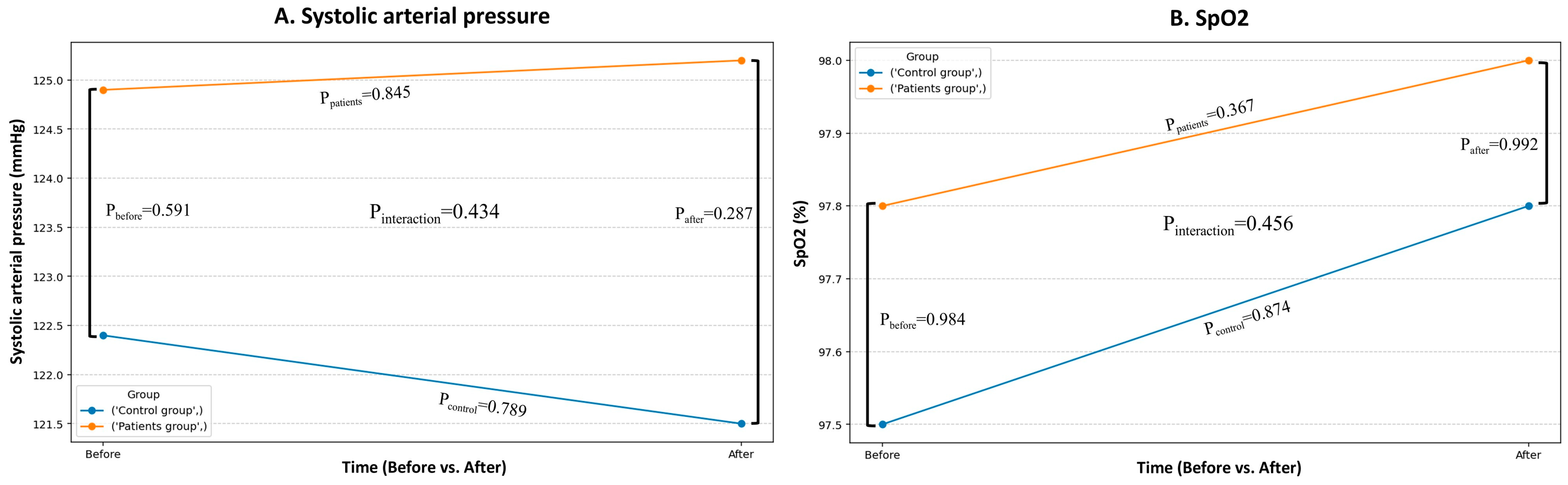
| Systolic arterial pressure (mmHg) | 124.9 ± 12.5 | 122.4 ± 13.1 | 0.311 |
| Diastolic arterial pressure (mmHg) | 79.2 ± 8.1 | 78.8 ± 7.9 | 0.698 |
| Blood oxygen saturation (%) | 97.8 ± 1.1 | 97.5 ± 1.3 | 0.951 |
| Heart rate (bpm) | 75.7 ± 13.5 | 77.9 ± 12.4 | 0.437 |
| Vascular endothelial function indices | |||
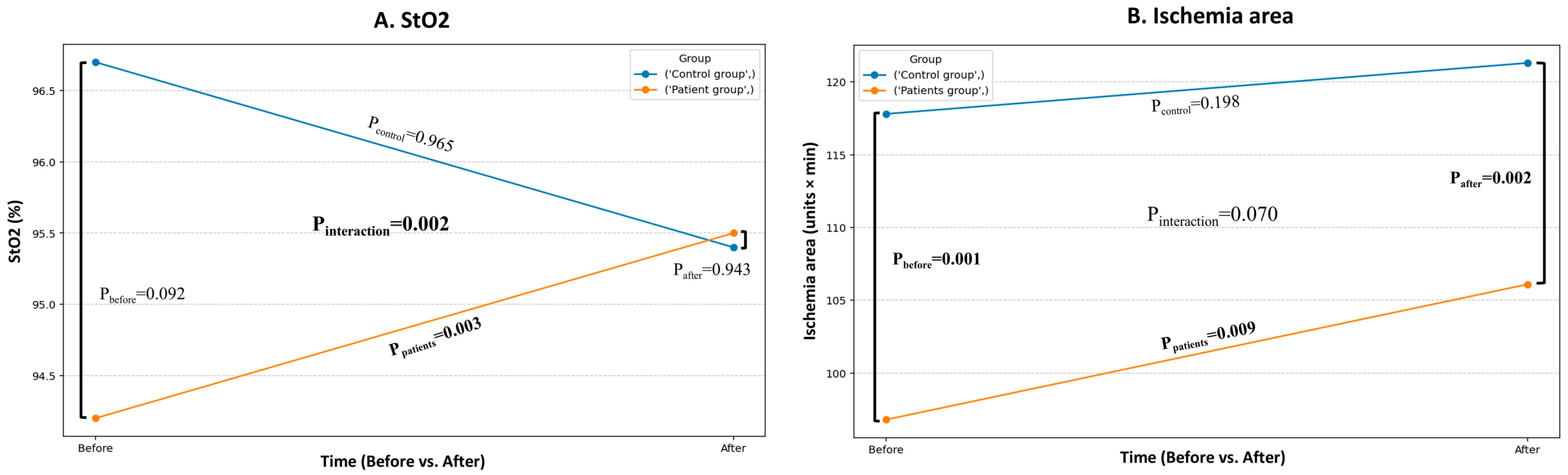
| StO2 (%) | 94.2 ± 2.1 | 96.7 ± 1.8 | 0.092 |
| OCR (%/min) | 7.1 ± 1.7 | 9.3 ± 1.2 | <0.001 |
| RR (%/s) | 3.4 ± 1.1 | 4.4 ± 1.0 | 0.001 |
| TiH (s) | 25.3 ± 7.4 | 20.1 ± 5.6 | 0.006 |
| RHT (s) | 170.9 ± 28.3 | 145.1 ± 24.6 | <0.001 |
| Ischemia area (units × min) | 96.8 ± 25.3 | 117.8 ± 17.6 | 0.002 |
| Demographics | Group 1 | Group 2 | p Value * |
|---|---|---|---|
| Number of patients (N) | 22 | 28 | 0.433 |
| Gender (Males/Females) | 11/11 | 13/15 | 0.802 |
| Age (years) | 52.7 ± 8.0 | 51.8 ± 10.3 | 0.736 |
| BMI (kg/m2) | 26.5 ± 3.9 | 27.8 ± 4.5 | 0.289 |
| Hemodynamic parameters | |||
| Systolic arterial pressure (mmHg) | 124.1 ± 12.2 | 125.5 ± 13.0 | 0.697 |
| Diastolic arterial pressure (mmHg) | 79.6 ± 7.9 | 79.0 ± 8.3 | 0.815 |
| Blood oxygen saturation (%) | 98.0 ± 1.2 | 97.8 ± 1.1 | 0.529 |
| Heart rate (bpm) | 75.1 ± 13.1 | 76.3 ± 14.1 | 0.751 |
| Vascular endothelial function indices | |||
| StO2 (%) | 93.9 ± 2.0 | 94.4 ± 2.3 | 0.292 |
| OCR (%/min) | 7.6 ± 1.7 | 6.7 ± 1.6 | 0.090 |
| RR (%/s) | 3.8 ± 1.1 | 3.1 ± 1.0 | 0.021 |
| TiH (s) | 23.6 ± 5.2 | 26.6 ± 8.5 | 0.288 |
| RHT (s) | 171.9 ± 25.8 | 170.0 ± 30.6 | 0.827 |
| Ischemia area (units × min) | 104.8 ± 24.7 | 90.6 ± 24.3 | 0.018 |
| Values | Estimator (β) | 95% CI | p-Value |
|---|---|---|---|
| Resting tissue oxygen (%) | |||
| (Intercept) | 95.09 | 94.11 to 96.07 | <0.001 |
| Time (After) | 1.18 | −0.44 to 2.18 | 0.071 |
| Group (Group 2) | 0.77 | −0.54 to 2.08 | 0.254 |
| Time × Group (After × Group 2) | 0.28 | −1.96 to 1.40 | 0.743 |
| Oxygen consumption rate (%/min) | |||
| (Intercept) | −7.56 | −8.22 to −6.90 | <0.001 |
| Time (After) | −0.63 | −1.36 to 0.10 | 0.098 |
| Group (Group 2) | 0.81 | −0.06 to 1.69 | 0.072 |
| Time × Group (After × Group 2) | 0.001 | −0.97 to 0.98 | 0.995 |
| Reperfusion rate (%/s) | |||
| (Intercept) | 3.83 | 3.39 to 4.27 | <0.001 |
| Time (After) | −0.14 | −0.60 to 0.31 | 0.539 |
| Group (Group 2) | −0.71 | −1.30 to −0.12 | 0.021 |
| Time × Group (After × Group 2) | 0.62 | 0.02 to 1.23 | 0.049 |
| Time to maximum hyperemia (s) | |||
| (Intercept) | 23.55 | 20.83 to 26.26 | <0.001 |
| Time (After) | −2.09 | −4.88 to 0.70 | 0.148 |
| Group (Group 2) | 3.06 | −0.57 to 6.69 | 0.102 |
| Time × Group (After × Group 2) | −3.23 | −6.96 to 0.49 | 0.095 |
| Reactive hyperemia time (s) | |||
| (Intercept) | 171.86 | 160.30 to 183.43 | <0.001 |
| Time (After) | −15.55 | −28.08 to −3.01 | 0.018 |
| Group (Group 2) | −1.79 | −17.25 to 13.66 | 0.820 |
| Time × Group (After × Group 2) | 2.15 | −14.60 to 18.90 | 0.802 |
| Ischemia area (units × min) | |||
| (Intercept) | −104.83 | −114.26 to −95.34 | <0.001 |
| Time (After) | −8.65 | −18.84 to 1.53 | 0.102 |
| Group (Group 2) | 14.22 | 1.58 to 26.86 | 0.030 |
| Time × Group (After × Group 2) | −1.02 | −14.63 to 12.59 | 0.883 |
| Values | Estimator (β) | 95% CI | p-Value |
|---|---|---|---|
| Systolic arterial pressure (mmHg) | |||
| (Intercept) | 124.09 | 117.96 to 130.23 | <0.001 |
| Time (After) | 3.68 | −0.70 to 8.06 | 0.106 |
| Group (Group 2) | 1.41 | −6.79 to 9.61 | 0.737 |
| Time × Group (After × Group 2) | −6.04 | −11.89 to −0.19 | 0.048 |
| Diastolic arterial pressure (mmHg) | |||
| (Intercept) | 79.55 | 75.48 to 83.61 | <0.001 |
| Time (After) | −2.64 | −6.52 to 1.25 | 0.190 |
| Group (Group 2) | −0.55 | −5.97 to 4.88 | 0.844 |
| Time × Group (After × Group 2) | −1.47 | −6.66 to 3.72 | 0.581 |
| Heart rate (beats per min) | |||
| (Intercept) | 75.05 | 69.76 to 80.33 | <0.001 |
| Time (After) | −3.23 | −7.38 to 0.92 | 0.134 |
| Group (Group 2) | 1.24 | −5.82 to 8.30 | 0.732 |
| Time × Group (After × Group 2) | −1.74 | −7.28 to 3.81 | 0.542 |
| Blood oxygen saturation (%) | |||
| (Intercept) | 97.95 | 97.49 to 98.42 | <0.001 |
| Time (After) | 0.14 | −0.32 to 0.60 | 0.563 |
| Group (Group 2) | −0.20 | −0.83 to 0.42 | 0.524 |
| Time × Group (After × Group 2) | 0.01 | −0.61 to 0.62 | 0.984 |
Disclaimer/Publisher’s Note: The statements, opinions and data contained in all publications are solely those of the individual author(s) and contributor(s) and not of MDPI and/or the editor(s). MDPI and/or the editor(s) disclaim responsibility for any injury to people or property resulting from any ideas, methods, instructions or products referred to in the content. |
© 2025 by the authors. Licensee MDPI, Basel, Switzerland. This article is an open access article distributed under the terms and conditions of the Creative Commons Attribution (CC BY) license (https://creativecommons.org/licenses/by/4.0/).
Share and Cite
Kourek, C.; Makaris, E.; Benetou, V.; Magiatis, P.; Zouganeli, V.; Dimopoulos, S.; Georgiopoulos, G.; Briasoulis, A.; Paraskevaidis, I.; Melliou, E.; et al. Extra Virgin Olive Oil (EVOO) Improves Vascular Endothelial Function and Hemodynamic Parameters in Patients with Hyperlipidemia: A Post Hoc Analysis of a Randomized Controlled Trial. Nutrients 2025, 17, 3650. https://doi.org/10.3390/nu17233650
Kourek C, Makaris E, Benetou V, Magiatis P, Zouganeli V, Dimopoulos S, Georgiopoulos G, Briasoulis A, Paraskevaidis I, Melliou E, et al. Extra Virgin Olive Oil (EVOO) Improves Vascular Endothelial Function and Hemodynamic Parameters in Patients with Hyperlipidemia: A Post Hoc Analysis of a Randomized Controlled Trial. Nutrients. 2025; 17(23):3650. https://doi.org/10.3390/nu17233650
Chicago/Turabian StyleKourek, Christos, Emmanouil Makaris, Vassiliki Benetou, Prokopios Magiatis, Virginia Zouganeli, Stavros Dimopoulos, Georgios Georgiopoulos, Alexandros Briasoulis, Ioannis Paraskevaidis, Eleni Melliou, and et al. 2025. "Extra Virgin Olive Oil (EVOO) Improves Vascular Endothelial Function and Hemodynamic Parameters in Patients with Hyperlipidemia: A Post Hoc Analysis of a Randomized Controlled Trial" Nutrients 17, no. 23: 3650. https://doi.org/10.3390/nu17233650
APA StyleKourek, C., Makaris, E., Benetou, V., Magiatis, P., Zouganeli, V., Dimopoulos, S., Georgiopoulos, G., Briasoulis, A., Paraskevaidis, I., Melliou, E., & Orfanos, P. (2025). Extra Virgin Olive Oil (EVOO) Improves Vascular Endothelial Function and Hemodynamic Parameters in Patients with Hyperlipidemia: A Post Hoc Analysis of a Randomized Controlled Trial. Nutrients, 17(23), 3650. https://doi.org/10.3390/nu17233650