Omega-3 Polyunsaturated Fatty Acids and Cognitive Decline in Adults with Non-Dementia or Mild Cognitive Impairment: An Overview of Systematic Reviews
 , ,
, ,
Abstract
1. Introduction
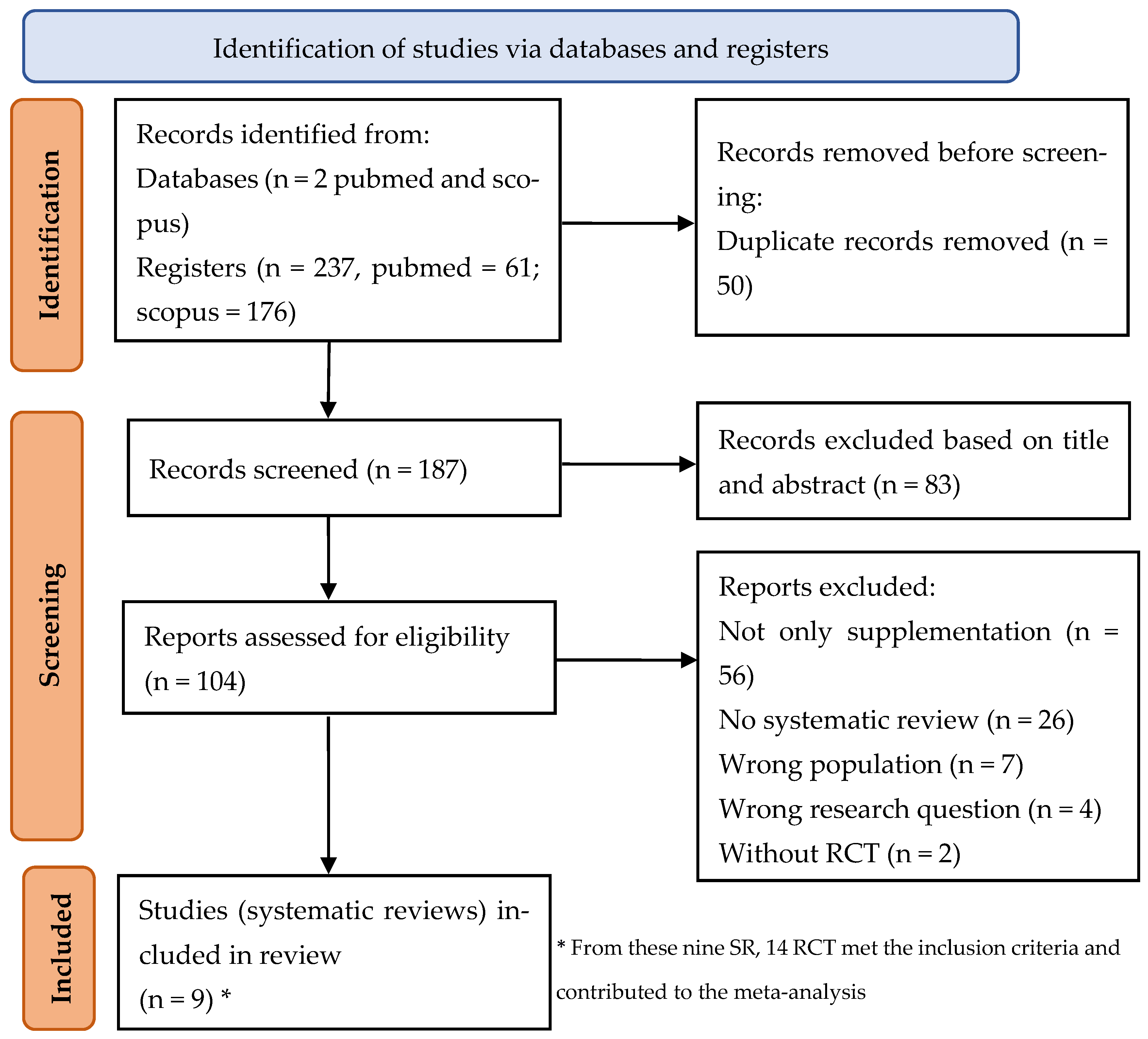
2. Materials and Methods
2.1. Study Design
2.2. Data Sources and Search Strategy
2.3. Eligibility Criteria
2.4. Data Extraction
2.5. Quality Assessment
2.6. Statistical Analysis
3. Results
3.1. Effects of n3PUFA Supplementation on Cognitive and Functional Status
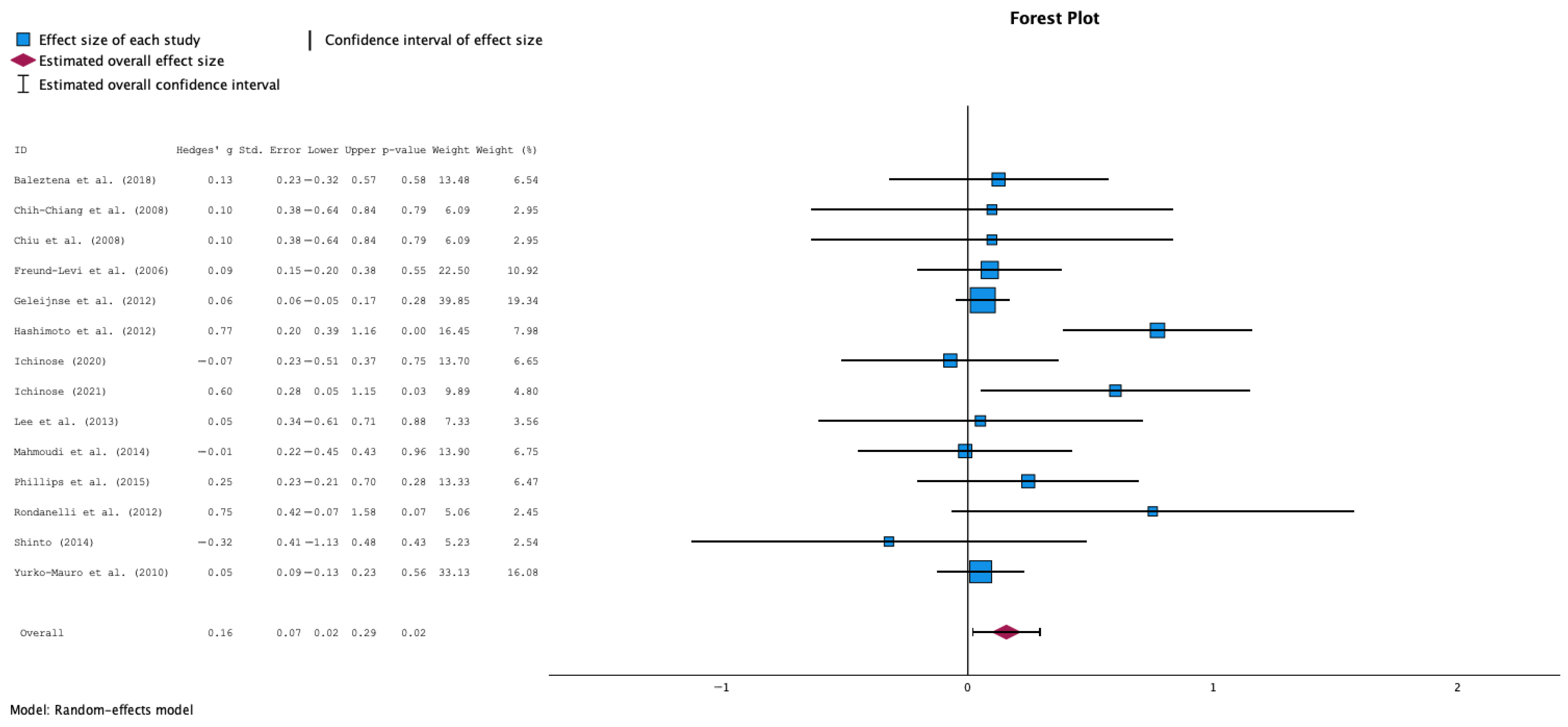
3.2. Pooled Data on Cognitive Impairment (Assessed with MMSE from RCTs)
3.3. Heterogeneity Assessment
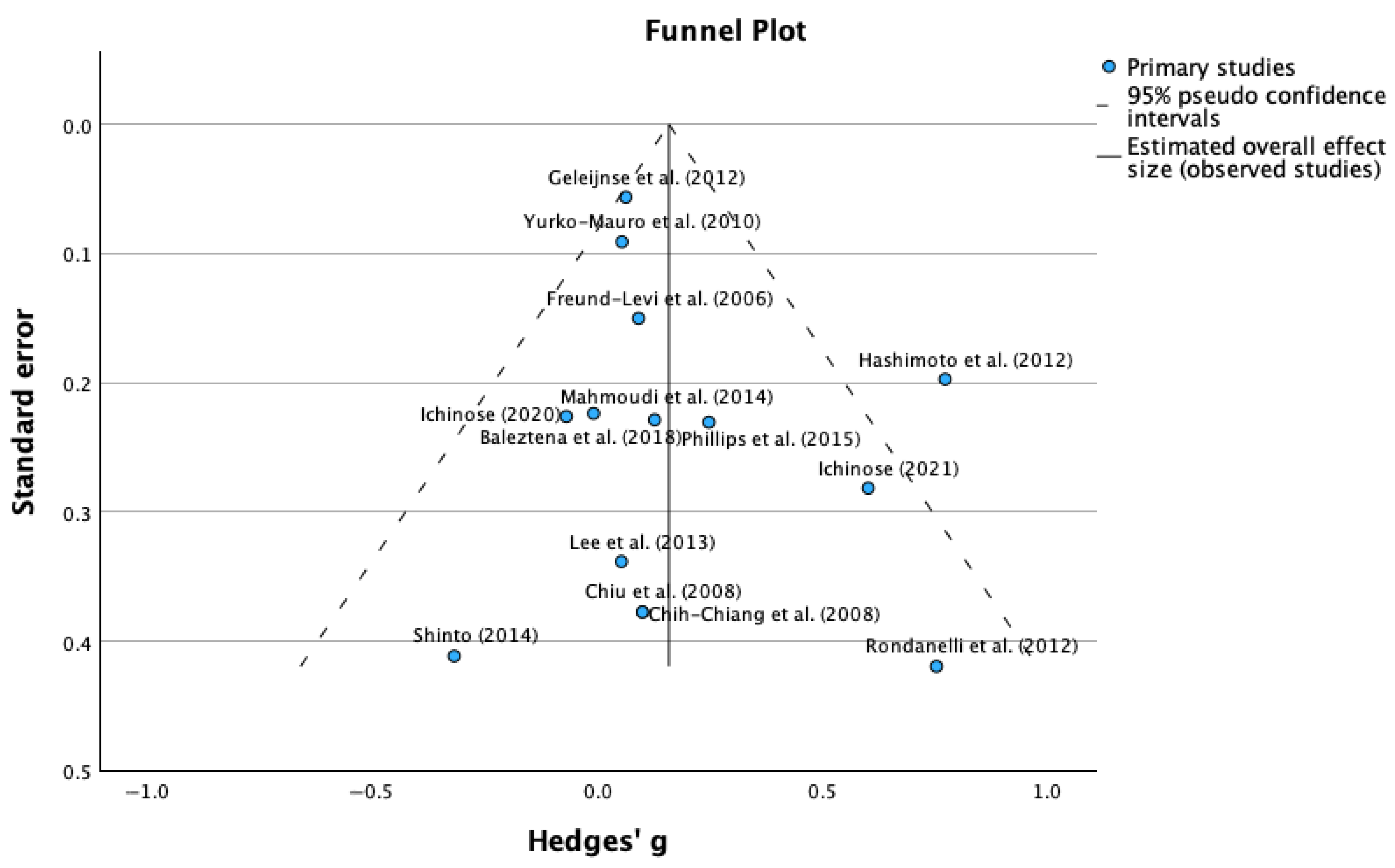
3.4. Egger’s Test for Publication Bias
3.5. Duration–Effect Relationship Analysis
3.6. Dose–Response Relationship Analysis
Combined DHA + EPA Analysis
4. Discussion
5. Conclusions
Supplementary Materials
Author Contributions
Funding
Institutional Review Board Statement
Informed Consent Statement
Data Availability Statement
Conflicts of Interest
Abbreviations
| MCI | Mild Cognitive Impairment |
| DHA | Docosahexaenoic Acid |
| EPA | Eicosapentaenoic acid |
| RCT | Randomized Controlled Trial |
| MMSE | Mini Mental State Examination |
| PUFAs | Polyunsaturated Fatty Acids |
| PRISMA | Preferred Reporting Items for Systematic Reviews and Meta-Analyses |
| SR | Systematic Review |
| ADAS-cog | Assessment Scale-Cognitive Subscale |
References
- World Health Organization: Ageing and Health. Available online: https://www.who.int/news-room/fact-sheets/detail/ageing-and-health (accessed on 1 February 2023).
- Pais, R.; Ruano, L.P.; Carvalho, O.; Barros, H. Global Cognitive Impairment Prevalence and Incidence in Community Dwelling Older Adults—A Systematic Review. Geriatrics. 2020, 5, 84. [Google Scholar] [CrossRef]
- Alzheimer’s Association. Mild Cognitive Impairment (MCI) [Internet]. Available online: https://www.alz.org/alzheimers-dementia/what-is-dementia/related_conditions/mild-cognitive-impairment (accessed on 28 August 2021).
- Langa, K.M.; Levine, D.A. The Diagnosis and Management of Mild Cognitive Impairment. JAMA 2014, 312, 2551–2561. [Google Scholar] [CrossRef]
- Santana, I.; Duro, D.; Lemos, R.; Costa, V.; Pereira, M.; Simões, M.R.; Simões, M.R.; Freitas, S. Mini-mental state examination: Avaliação dos novos dados normativos no rastreio e diagnóstico do défice cognitivo. Acta Med. Port. 2016, 29, 240–248. [Google Scholar] [CrossRef]
- Dementia Care Central. Mini-Mental State Exam (MMSE) Alzheimer’s Dementia Test: Administration, Accuracy and Scoring [Internet]. 2025. Available online: https://www.dementiacarecentral.com/mini-mental-state-exam/ (accessed on 12 June 2025).
- Creavin, S.T.; Wisniewski, S.; Noel-Storr, A.H.; Trevelyan, C.M.; Hampton, T.; Rayment, D.; Thom, V.M.; Nash, K.J.; Elhamoui, H.; Milligan, R.; et al. Mini-Mental State Examination (MMSE) for the detection of dementia in clinically unevaluated people aged 65 and over in community and primary care populations. Cochrane Database Syst. Rev. 2016, 13, CD011145. [Google Scholar] [CrossRef]
- Bhatti, G.K.; Reddy, A.P.; Reddy, P.H.; Bhatti, J.S. Lifestyle Modifications and Nutritional Interventions in Aging-Associated Cognitive Decline and Alzheimer’s Disease. Front. Aging Neurosci. 2020, 11, 369. [Google Scholar] [CrossRef] [PubMed]
- Serra, M.C.; Dondero, K.R.; Larkins, D.; Burns, A.; Addison, O. Healthy Lifestyle and Cognition: Interaction between Diet and Physical Activity. Curr. Nutr. Rep. 2020, 9, 64–74. [Google Scholar] [CrossRef] [PubMed]
- Wesołowska, W.; Bachoń, E.; Doligalska, M.; Stremel, A.; Leszyńska, A.; Linke, J.; Bałoniak, Z.; Kozłowska, D.; Bałoniak, J.; Tuszyńska, W. Omega-3 Fatty Acids: Key Players in Cogni-tive Function and Brain Health. J. Educ. Health Sport 2025, 77, 56776. [Google Scholar] [CrossRef]
- Oppedisano, F.; Macrì, R.; Gliozzi, M.; Musolino, V.; Carresi, C.; Maiuolo, J.; Bosco, F.; Nucera, S.; Caterina Zito, M.; Guarnieri, L.; et al. The Anti-Inflammatory and Antioxidant Proper-ties of n-3 PUFAs: Their Role in Cardiovascular Protection. Biomedicines 2020, 8, 306. [Google Scholar] [CrossRef] [PubMed]
- Blaauw, R.; Calder, P.C.; Martindale, R.G.; Berger, M.M. Combining proteins with n-3 PUFAs (EPA + DHA) and their inflammation pro-resolution mediators for preservation of skeletal muscle mass. Crit. Care 2024, 28, 38. [Google Scholar] [CrossRef] [PubMed]
- Giacobbe, J.; Benoiton, B.; Zunszain, P.; Pariante, C.M.; Borsini, A. The Anti-Inflammatory Role of Omega-3 Polyunsaturated Fatty Acids Metabolites in Pre-Clinical Models of Psychiatric, Neurodegenerative, and Neurological Disorders. Front. Psychiatry 2020, 11, 122. [Google Scholar] [CrossRef]
- Suh, S.W.; Lim, E.; Burm, S.-Y.; Lee, H.; Bin Bae, J.; Han, J.W.; Kim, K.W. The influence of n-3 polyunsaturated fatty acids on cognitive function in individuals without dementia: A systematic review and dose–response meta-analysis. BMC Med. 2024, 22, 109. [Google Scholar] [CrossRef]
- Utpal, B.K.; Al Amin, M.; Zehravi, M.; Sweilam, S.H.; Arjun, U.V.N.V.; Madhuri, Y.B.; Gupta, J.K.; Yaidikar, L.; Tummala, T.; Suseela, R.; et al. Alkaloids as neuroprotectors: Targeting signaling pathways in neurodegenerative diseases. Mol. Cell Biochem. 2025, 480, 4587–4612. [Google Scholar] [CrossRef]
- Molfino, A.; Gioia, G.; Fanelli, F.R.; Muscaritoli, M. The Role for Dietary Omega-3 Fatty Acids Supplementation in Older Adults. Nutrients 2014, 6, 4058–4072. [Google Scholar] [CrossRef] [PubMed]
- Alex, A.A.; Abbott, K.; McEvoy, M.; Schofield, P.W.; Garg, M.L. Long-chain omega-3 polyunsaturated fatty acids and cognitive decline in non-demented adults: A systematic review and meta-analysis. Nutr. Rev. 2019, 78, 563–578. [Google Scholar] [CrossRef] [PubMed]
- Sherzai, A.Z.; Sherzai, A.N.; Sherzai, D. A Systematic Review of Omega-3 Consumption and Neuroprotective Cognitive Out-comes. Am. J. Lifestyle Med. 2023, 17, 560–588. [Google Scholar] [CrossRef]
- Derbyshire, E. Brain health across the lifespan: A systematic review on the role of omega-3 fatty acid supplements. Nutrients 2018, 10, 1094. [Google Scholar] [CrossRef]
- Macpherson, H.; Brownell, S.; Duckham, R.L.; Meyer, B.; Mirzaee, S.; Daly, R.M. Multifaceted intervention to enhance cognition in older people at risk of cognitive decline: Study protocol for the Protein Omega-3 and Vitamin D Exercise Research (PONDER) study. BMJ Open 2019, 9, e024145. [Google Scholar] [CrossRef]
- Page, M.J.; McKenzie, J.E.; Bossuyt, P.M.; Boutron, I.; Hoffmann, T.C.; Mulrow, C.D.; Shamseer, L.; Tetzlaff, J.M.; Akl, E.A.; Brennan, S.E.; et al. The PRISMA 2020 statement: An updated guideline for reporting systematic reviews. BMJ 2021, 372, 71. [Google Scholar] [CrossRef]
- Page, M.J.; Moher, D.; Bossuyt, P.M.; Boutron, I.; Hoffmann, T.C.; Mulrow, C.D.; Shamseer, L.; Tetzlaff, J.M.; Akl, E.A.; Brennan, S.E.; et al. PRISMA 2020 explanation and elaboration: Updated guidance and exemplars for reporting systematic reviews. BMJ 2021, 372, n160. [Google Scholar] [CrossRef]
- Shea, B.J.; Reeves, B.C.; Wells, G.; Thuku, M.; Hamel, C.; Moran, J.; Moher, D.; Tugwell, P.; Welch, V.; Kristjansson, E.; et al. AMSTAR 2: A critical appraisal tool for systematic reviews that include randomised or non-randomised studies of healthcare interventions, or both. BMJ 2017, 358, j4008. [Google Scholar] [CrossRef]
- Santos, C.B.; Santos, B.d.C.; Reis, A.R.; Pires, L.V. APOEε4 genotype and DHA and EPA supplementation on the outcomes of cognitive decline: A systematic review of randomized clinical trials. Hum. Nutr. Metab. 2024, 35, 200249. [Google Scholar] [CrossRef]
- Zhang, X.; Han, H.; Ge, X.; Liu, L.; Wang, T.; Yu, H. Effect of n-3 long-chain polyunsaturated fatty acids on mild cognitive impairment: A meta-analysis of randomized clinical trials. Eur. J. Clin. Nutr. 2019, 74, 548–554. [Google Scholar] [CrossRef]
- Yang, L.; Zhao, F.; Sun, Y.; Wang, Z.; Li, Q.; Wang, H.; Lu, Y. N-3 Polyunsaturated Fatty Acids in Elderly with Mild Cognitive Im-pairment: A Systemic Review and Meta-Analysis. J. Alzheimer’s Dis. 2024, 99, S81–S95. [Google Scholar] [CrossRef]
- Martí, A.; Fortique, F. Omega-3 fatty acids and cognitive decline: A systematic review. Nutr. Hosp. 2019, 36, 939–949. [Google Scholar]
- Zhang, X.-W.; Hou, W.-S.; Li, M.; Tang, Z.-Y. Omega-3 fatty acids and risk of cognitive decline in the elderly: A meta-analysis of randomized controlled trials. Aging Clin. Exp. Res. 2015, 28, 165–166. [Google Scholar] [CrossRef] [PubMed]
- Burckhardt, M.; Herke, M.; Wustmann, T.; Watzke, S.; Langer, G.; Fink, A. Omega-3 fatty acids for the treatment of dementia. Cochrane Database Syst. Rev. 2016, 2016, CD009002. [Google Scholar] [CrossRef] [PubMed]
- He, X.; Yu, H.; Fang, J.; Qi, Z.; Pei, S.; Yan, B.; Liu, R.; Wang, Q.; Szeto, I.M.-Y.; Liu, B.; et al. The effect of n-3 polyunsaturated fatty acid supplementation on cognitive function outcomes in the elderly depends on the baseline omega-3 index. Food Funct. 2023, 14, 9506–9517. [Google Scholar] [CrossRef]
- Baleztena, J.; Ruiz-Canela, M.; Sayon-Orea, C.; Pardo, M.; Añorbe, T.; Gost, J.I.; Gomez, C.; Ilarregui, B.; Bes-Rastrollo, M. Association between cognitive function and supplementation with omega-3 PUFAs and other nutrients in ≥75 years old patients: A randomized multicenter study. PLoS ONE 2018, 13, e0193568. [Google Scholar] [CrossRef]
- Chiu, C.C.; Su, K.P.; Cheng, T.C.; Liu, H.C.; Chang, C.J.; Dewey, M.E.; Stewart, R.; Huang, S.Y. The effects of omega-3 fatty acids monotherapy in Alzheimer’s disease and mild cognitive impairment: A preliminary randomized double-blind placebo-controlled study. Prog. Neuropsychopharmacol. Biol. Psychiatry 2008, 32, 1538–1544. [Google Scholar] [CrossRef]
- Freund-Levi, Y.; Eriksdotter-Jönhagen, M.; Cederholm, T.; Basun, H.; Faxén-Irving, G.; Garlind, A.; Vedin, I.; Vessby, B.; Wahlund, L.O.; Palmblad, J. Omega-3 Fatty Acid Treatment in 174 Patients With Mild to Moderate Alzheimer Disease: OmegAD Study A Randomized Double-blind Trial. Arch. Neurol. 2006, 63, 1402–1408. [Google Scholar] [CrossRef]
- Geleijnse, J.M.; Giltay, E.J.; Kromhout, D. Effects of n-3 fatty acids on cognitive decline: A randomized, double-blind, placebo-controlled trial in stable myocardial infarction patients. J. Alzheimer’s Assoc. 2012, 8, 278–287. [Google Scholar] [CrossRef]
- Hashimoto, M.; Yamashita, K.; Kato, S.; Tamai, T.; Tanabe, Y.; Mitarai, M.; Matsumoto, I.; Ohno, M. Beneficial effects of daily dietary omega-3 poly-unsaturated fatty acid supplementation on age-related cognitive decline in elderly Japanese with very mild dementia: A 2-year randomized, double-blind, placebo-controlled trial. J. Aging Res. Clin. Pract. 2012, 1, 193–201. Available online: https://www.researchgate.net/publication/260985151 (accessed on 10 July 2025).
- Ichinose, T.; Kato, M.; Matsuzaki, K.; Tanabe, Y.; Tachibana, N.; Morikawa, M.; Kato, S.; Ohata, S.; Ohno, M.; Wakatsuki, H.; et al. Beneficial effects of docosahexaenoic acid-enriched milk beverage intake on cognitive function in healthy elderly Japanese: A 12-month randomized, double-blind, placebo-controlled trial. J. Funct. Foods 2020, 74, 104195. [Google Scholar] [CrossRef]
- Ichinose, T.; Matsuzaki, K.; Kato, M.; Tanabe, Y.; Tachibana, N.; Morikawa, M.; Kato, S.; Ohata, S.; Ohno, M.; Wakatsuki, H.; et al. Intake of docosahexaenoic acid-enriched milk beverage prevents age-related cognitive decline and decreases serum bone resorption marker levels. J. Oleo Sci. 2021, 70, 1829–1838. [Google Scholar] [CrossRef] [PubMed]
- Lee, L.K.; Shahar, S.; Chin, A.V.; Yusoff, N.A. Docosahexaenoic acid-concentrated fish oil supplementation in subjects with mild cognitive impairment (MCI): A 12-month randomised, double-blind, placebo-controlled trial. Psychopharmacology 2013, 225, 605–612. [Google Scholar] [CrossRef] [PubMed]
- Mahmoudi, M.J.; Hedayat, M.; Sharifi, F.; Mirarefin, M.; Nazari, N.; Mehrdad, N.; Ghaderpanahi, M.; Tajalizadekhoob, Y.; Badamchizade, Z.; Larijani, B.; et al. Effect of low dose ω-3 poly unsaturated fatty acids on cognitive status among older people: A double-blind randomized placebo-controlled study. J. Diabetes Metab. Disord. 2014, 13, 34. [Google Scholar] [CrossRef]
- Phillips, M.A.; Childs, C.E.; Calder, P.C.; Rogers, P.J. No effect of omega-3 fatty acid supplementation on cognition and mood in individuals with cognitive impairment and probable Alzheimer’s disease: A randomised controlled trial. Int. J. Mol. Sci. 2015, 16, 24600–24613. [Google Scholar] [CrossRef]
- Rondanelli, M.; Opizzi, A.; Faliva, M.; Mozzoni, M.; Antoniello, N.; Cazzola, R.; Savarè, R.; Cerutti, R.; Grossi, E.; Cestaro, B. Effects of a diet integration with an oily emulsion of DHA-phospholipids containing melatonin and tryptophan in elderly patients suffering from mild cognitive impairment. Nutr. Neurosci. 2012, 15, 46–54. [Google Scholar] [CrossRef]
- Shinto, L.; Quinn, J.; Montine, T.; Dodge, H.H.; Woodward, W.; Baldauf-Wagner, S.; Waichunas, D.; Bumgarner, L.; Bourdette, D.; Silbert, L.; et al. A randomized placebo-controlled pilot trial of omega-3 fatty acids and alpha lipoic acid in Alzheimer’s disease. J. Alzheimer’s Dis. 2014, 38, 111–120. [Google Scholar] [CrossRef]
- Yurko-Mauro, K.; McCarthy, D.; Rom, D.; Nelson, E.B.; Ryan, A.S.; Blackwell, A.; Salem, N., Jr.; Stedman, M. Beneficial effects of docosahexaenoic acid on cognition in age-related cog-nitive decline. J. Alzheimers Assoc. 2010, 6, 456–464. [Google Scholar]
- Mora, I.; Arola, L.; Caimari, A.; Escoté, X.; Puiggròs, F. Structured Long-Chain Omega-3 Fatty Acids for Improvement of Cognitive Function during Aging. Int. J. Mol. Sci. 2022, 23, 3472. [Google Scholar] [CrossRef]
- Brainard, J.S.; Jimoh, O.F.; Deane, K.H.O.; Biswas, P.; Donaldson, D.; Maas, K.; Abdelhamid, A.S.; Hooper, L. Omega-3, Omega-6, and Polyunsaturated Fat for Cognition: Systematic Review and Meta-analysis of Randomized Trials. J. Am. Med. Dir. Assoc. 2020, 21, 1439–1450. [Google Scholar] [CrossRef]
- Loong, S.; Barnes, S.; Gatto, N.M.; Chowdhury, S.; Lee, G.J. Omega-3 Fatty Acids, Cognition, and Brain Volume in Older Adults. Brain Sci. 2023, 13, 1278. [Google Scholar] [CrossRef] [PubMed]
- Hefnawy, M.; Diab, R.; Elsayed, M.; Abdelaziz, A.; Mouffokes, A.; Elboraay, T.; Najah, Q.; Aljbaly, A.S.; Negida, A. Impact of Omega-3 fatty acid Supplementation on Global Cognitive Function among Healthy and Althahimer’s disease Elders: A Systematic Review and Meta-analysis (P4-6.007). Neurology 2023, 100 (Suppl. 2). [Google Scholar] [CrossRef]
- Serhan, C.N. Pro-resolving lipid mediators are leads for resolution physiology. Nature 2014, 510, 92–101. [Google Scholar] [CrossRef] [PubMed]
- Kalamara, T.V.; Dodos, K.; Georgakopoulou, V.E.; Fotakopoulos, G.; Spandidos, D.A.; Kapoukranidou, D. Cognitive efficacy of ome-ga-3 fatty acids in Alzheimer’s disease: A systematic review and meta-analysis. Biomed. Rep. 2025, 22, 62. [Google Scholar] [CrossRef]
- Nguyen, C.; Lei, H.-T.; Lai, L.T.F.; Gallenito, M.J.; Mu, X.; Matthies, D.; Gonen, T. Lipid flipping in the omega-3 fatty-acid transporter. Nat. Commun. 2023, 14, 2571. [Google Scholar] [CrossRef]
- Welty, F.K. Omega-3 fatty acids and cognitive function. Curr. Opin. Infect. Dis. 2022, 34, 12–21. [Google Scholar] [CrossRef]
- Ma, K.; Xie, S.; Zhang, Y.; Liu, H.; Yu, W.; Chen, P. Novel Approach to Enhancing Brain DHA Uptake: The Role of Nannochlo-ropsis Microalgae Extract [Internet]. Available online: https://www.researchsquare.com/article/rs-5566027/v1 (accessed on 10 July 2025).
- Liu, Y.; Gu, X.; Li, Y.; Wang, F.; Vyas, C.M.; Peng, C.; Dong, D.; Li, Y.; Zhang, Y.; Zhang, Y.; et al. Interplay of genetic predisposition, plasma metabolome and Mediterranean diet in dementia risk and cognitive function. Nat. Med. 2025. online ahead of print. [Google Scholar] [CrossRef]
- Mazereeuw, G.; Lanctôt, K.L.; Chau, S.A.; Swardfager, W.; Herrmann, N. Effects of ω-3 fatty acids on cognitive performance: A meta-analysis. Neurobiol. Aging 2012, 33, 17–29. [Google Scholar] [CrossRef]
- Wu, S.; Ding, Y.; Wu, F.; Li, R.; Hou, J.; Mao, P. Omega-3 fatty acids intake and risks of dementia and Alzheimer’s disease: A meta-analysis. Neurosci. Biobehav. Rev. 2015, 48, 1–9. [Google Scholar] [CrossRef]



| Criteria | Inclusion Criteria | Exclusion Criteria |
|---|---|---|
| Population | Adults or older adults, healthy or with MCI, mild cognitive decline, Alzheimer’s Disease | Age < 18, pregnant or breastfeeding women, or individuals with diagnosed depression |
| Intervention | Supplementation of exclusively n-3 fatty acids | Supplementation with other nutrients (in addition to n-3 fatty acids) |
| Comparators | Control or treatment | |
| Outcome | Objective and measurable effect on cognitive functional with MMSE tool | Studies with no detailed outcome indicators |
| Timing | Any duration of the intervention | |
| Setting | Hospitalized, living in nursing homes or at home | |
| Study design | SR of RCT | Quasi-RCTs, cluster RCTs, animal studies, case studies, qualitative studies, conference abstracts, comments, letters and duplicated articles, and lack of research information |
| Other | English, Spanish, Portuguese languages |
| Author Year | Objective | Number of RCT | Disease | N | Population | Intervention | Comparison | Time Intervention |
|---|---|---|---|---|---|---|---|---|
| Cynthia Batista Santos 2024 [24] | To discuss the effects of DHA and EPA supplementation on cognitive decline variables and relate them to APOEε4 genotype in middle-aged and older adults | 2 | Healthy and Probable diagnosis of mild AD | 665 (I: 355; C: 310) | 74.6 years | 1720 mg–2 g DHA; 0–600 mg EPA | Corn/soybean oil; 990 mg of olive oil + 10 mg of fish oil (1.2 mg DHA + 1.8 mg EPA) | 18 months |
| Xiaoling Zhang 2019 [25] | To assess the effects of n-3 LC-PUFAs intake on MCI patients to explore whether n-3 LC-PUFAs have positive effective | 7 | MCI | 434 (I: 213; C: 221) | 74.8 years | 180–1300 mg DHA; 40–720 mg EPA | - | 3–24 months |
| Anu Alex 2019 [17] | To determine the changes in cognitive function after intervention with LCn-3PUFA supplementation in non-demented adults, including those with MCI | 25 | Healthy and MCI | 6981 (I: 3530; C: 3451) | 57.54 years | 180–1550 mg DHA; 0–2187 mg EPA | - | 4 weeks–5 years |
| Lei Yang 2023 [26] | To investigate the effectiveness of DHA and EPA supplements in the elderly with MCI. | 12 | MCI | 1124 (I: 558; C: 566) | ≥60 years | 180–2000 mg DHA; 0–1080 EPA | - | 2–24 months |
| Amelia Martí 2019 [27] | To determine whether there is or not a positive effect of n-3 LCPUFAs supplementation on cognitive decline. | 14 | Healthy adults, cognitive impairment/complaints, MCI, cognitive impairment no dementia or AD | 1638 | >45 years | 252–2000 mg DHA; 0–1600 EPA; Krill oil (193 mg EPA + 92 mg DHA) or sardine oil (491 mg EPA + 251 mg DHA); 120 mg ARA | - | 1–12 months |
| Xiao-Wei Zhang [28] | To assess the association between omega-3 fatty acids and risk of cognitive decline in the elderly | 6 | Healthy | 2013 (I: 1003; C: 1010) | 240–900 mg DHA; 0–1080 mg EPA | - | 3–40 months | |
| Marion Burckhardt 2016 [29] | To assess the efficacy and safety of n-3 PUFA supplementation for the treatment of people with dementia | 3 | AD, PD, vascular dementia, dementia with Lewy bodies, and frontotemporal dementia | 632 (I: 354; C: 278) | 74.8 years | 675 mg–1.7 g DHA; 0–975 mg EPA | Isocaloric placebo oil (1 g corn oil, including 0.6 g linoleic acid) and 4 mg vitamin E; soy oil; soybean with 5% fish oil | 6–18 months |
| Xin He 2023 [30] | To evaluate the effect of n-3 PUFA on cognitive function in the elderly and the role of baseline omega-3 index | 15 | Healthy, cognitive impairment | 3734 (I: 1906; C: 1828) | >60 years | 160–2000 mg DHA; 0–975 mg EPA | Linoleic acid; olive oil esters; corn oil; soy oil; margarine; soybean oil; coconut oil; olive oil, 30 mg EPA + 106 mg DHA; paraffin oil | 4–40 months |
| Seung Wan Suh 2024 [14] | To examine the effect of n-3 PUFA on the cognitive function of middle-aged or older adults without dementia | 24 | Healthy | 9660 (I: 4834, C: 4826) | >40 years | 230 to 4000 mg PUFA | 3–36 months |
| Author Year | Outcomes | Results | Amstar 2 Quality |
|---|---|---|---|
| Cynthia Batista Santos 2024 [24] | MMSE without pooled results | DHA and EPA supplementation showed no pragmatic effects on cognitive variables when considering the presence of the APOEε4 allele. | Moderate |
| Xiaoling Zhang 2019 [25] | Intervention: 24.85 MMSE; Control: 23.89 MMSE | N-3 LC-PUFA may have beneficial effects in the elderly with MCI. | Low |
| Anu Alex 2019 [17] | MMSE without pooled results | N-3 LC-PUFA supplementation could provide a mild benefit in improving memory function in nondemented older adults | High |
| Lei Yang 2023 [26] | Intervention: 24.19 MMSE; Control: 23.38 MMSE | DHA and/or EPA supplements have benefits on global cognition, and it may also reduce the level of blood amyloid-β related biomarkers and inflammatory factors. | Moderate |
| Amelia Martí 2019 [27] | MMSE without pooled results | Omega-3 supplementation might have a positive effect on cognitive function. Thus, n-3 LCPUFAs could be used as a preventive or therapeutic tool for cognitive decline in aged or elder adults. | Critically low |
| Xiao-Wei Zhang [28] | Intervention: 26.18 MMSE; Control: 21.4 MMSE | Omega-3 fatty acids may help to prevent cognitive decline in the elderly. | Critically low |
| Marion Burckhardt 2016 [29] | Intervention: 20.85 MMSE; Control: 25.6 MMSE | No evidence for either benefit or harm from N-3 LC-PUFA supplements in people with mild to moderate Alzheimer’s disease. | High |
| Xin He 2023 [30] | MMSE without pooled results | N-3 LC-PUFA supplementation exerted no improvement on global cognitive function. However, a higher baseline omega-3 index and higher omega-3 index increment were associated with an improvement in cognitive function in the elderly. | Moderate |
| Seung Wan Suh 2024 [14] | MMSE without pooled results | Supplementation of N-3 LC-PUFA may offer potential advantages for executive function in the middle-aged and elderly population, particularly in individuals whose dietary DHA + EPA level is not substantially diminished. | High |
| Study (RCT) | N (T/C) | Disease | Age | Intervention | Comparison | Time (Months) | Results |
|---|---|---|---|---|---|---|---|
| Baleztena et al. (2018) [31] | 78 (34/44) | Healthy or with MCI | ≥86.90 | 40 mg EPA + 250 mg DHA | No treatment or basic treatment | 12 | No effect |
| Chih-Chiang et al. (2008) [32] | 29 (17/12) | Mild or moderate Alzheimer’s or MCI | 74 | 720 mg EPA + 1080 mg DHA | Olive oil esters | 6 | Positive effects of intervention |
| Chiu et al. (2008) [32] | 29 (17/12) | MCI | 73 | 1080 mg EPA + 720 mg DHA | Olive oil esters | 6 | Positive effects of intervention |
| Freund-Levi et al. (2006) [33] | 178 (91/87) | MCI | 72.6 | 600 mg EPA + 1600 mg DHA | Linoleic acid | 6 | Positive effects in a small group of patients with very mild AD |
| Geleijnse et al. (2012) [34] | 1265 (627/638) | Healthy | 69 | 160 mg EPA + 240 mg DHA | Margarine | 40 | No effect |
| Hashimoto et al. (2012) [35] | 111 (57/54) | CI | 72 | 470 mg EPA + 1270 mg DHA | - | 24 | Positive effects of intervention |
| Ichinose (2020) [36] | 79 (43/36) | Healthy | 73 | 137 mg EPA + 297 mg DHA | Soybean oil | 12 | Positive effects of intervention |
| Ichinose (2021) [37] | 53 (26/27) | Healthy | 69.1 | 137 mg EPA + 297 mg DHA | Normal milk | 12 | Prevented age-related cognitive decline |
| Lee et al. (2013) [38] | 35 (17/18) | MCI | ≥60 | 450 mg EPA + 1300 mg DHA | Corn oil | 12 | Positive effects of intervention |
| Mahmoudi et al. (2014) [39] | 80 (40/40) | Healthy and MCI | 74.1 | 120 mg EPA + 180 mg DHA | Coconut oil | 6 | No effect |
| Phillips et al. (2015) [40] | 76 (37/39) | MCI | 71.1 | 600 mg EPA + 625 mg DHA | Olive oil | 4 | No effect |
| Rondanelli et al. (2012) [41] | 25 (11/14) | MCI | 86 | 286 mg EPA + 720 mg DHA | - | 3 | Positive effects of intervention |
| Shinto (2014) [42] | 24 (12/12) | MCI | 75.6 | 975 mg EPA + 675 mg DHA | Soybean oil | 12 | Positive effects of intervention |
| Yurko-Mauro et al. (2010) [43] | 485 (242/243) | Healthy | 70 | 900 mg DHA | Corn oil, soy oil | 6 | Positive effects of intervention |
| Study (RCT) | Treatment | Control | ||
|---|---|---|---|---|
| NT | MeanT ± SDT | NC | MeanC ± SDC | |
| Baleztena et al. (2018) [31] | 34 | 23.67 ± 4.95 | 44 | 23.00 ± 5.54 |
| Chih-Chiang et al. (2008) [32] | 17 | 25.47 ± 3.81 | 12 | 25.09 ± 3.67 |
| Freund-Levi et al. (2006) [33] | 91 | 22.80 ± 4.38 | 87 | 22.40 ± 4.52 |
| Geleijnse et al. (2012) [34] | 627 | 27.70 ± 1.75 | 638 | 27.60 ± 1.52 |
| Hashimoto et al. (2012) [35] | 57 | 28.80 ± 2.00 | 54 | 27.00 ± 2.60 |
| Ichinose (2020) [36] | 43 | 27.40 ± 4.50 | 36 | 27.70 ± 3.70 |
| Ichinose (2021) [37] | 26 | 29.5 ± 0.8 | 27 | 28.8 ± 1.4 |
| Lee et al. (2013) [38] | 17 | 26.60 ± 1.87 | 18 | 26.50 ± 1.93 |
| Mahmoudi et al. (2014) [39] | 40 | 17.81 ± 1.71 | 40 | 17.83 ± 1.97 |
| Phillips et al. (2015) [40] | 37 | 24.40 ± 4.10 | 39 | 23.30 ± 4.70 |
| Rondanelli et al. (2012) [41] | 11 | 27.18 ± 1.80 | 14 | 24.56 ± 4.18 |
| Shinto (2014) [42] | 12 | 18.90 ± 4.40 | 12 | 20.40 ± 4.60 |
| Yurko-Mauro et al. (2010) [43] | 242 | 28.00 ± 1.90 | 243 | 27.90 ± 1.90 |
| Chiu et al. (2008) [32] | 17 | 25.47 ± 3.81 | 12 | 25.09 ± 3.67 |
Disclaimer/Publisher’s Note: The statements, opinions and data contained in all publications are solely those of the individual author(s) and contributor(s) and not of MDPI and/or the editor(s). MDPI and/or the editor(s) disclaim responsibility for any injury to people or property resulting from any ideas, methods, instructions or products referred to in the content. |
© 2025 by the authors. Licensee MDPI, Basel, Switzerland. This article is an open access article distributed under the terms and conditions of the Creative Commons Attribution (CC BY) license (https://creativecommons.org/licenses/by/4.0/).
Share and Cite
Barros, M.I.; Brandão, T.; Irving, S.C.; Alves, P.; Gomes, F.; Correia, M. Omega-3 Polyunsaturated Fatty Acids and Cognitive Decline in Adults with Non-Dementia or Mild Cognitive Impairment: An Overview of Systematic Reviews. Nutrients 2025, 17, 3002. https://doi.org/10.3390/nu17183002
Barros MI, Brandão T, Irving SC, Alves P, Gomes F, Correia M. Omega-3 Polyunsaturated Fatty Acids and Cognitive Decline in Adults with Non-Dementia or Mild Cognitive Impairment: An Overview of Systematic Reviews. Nutrients. 2025; 17(18):3002. https://doi.org/10.3390/nu17183002
Chicago/Turabian StyleBarros, Maria Inês, Teresa Brandão, Susana Couto Irving, Paula Alves, Filomena Gomes, and Marta Correia. 2025. "Omega-3 Polyunsaturated Fatty Acids and Cognitive Decline in Adults with Non-Dementia or Mild Cognitive Impairment: An Overview of Systematic Reviews" Nutrients 17, no. 18: 3002. https://doi.org/10.3390/nu17183002
APA StyleBarros, M. I., Brandão, T., Irving, S. C., Alves, P., Gomes, F., & Correia, M. (2025). Omega-3 Polyunsaturated Fatty Acids and Cognitive Decline in Adults with Non-Dementia or Mild Cognitive Impairment: An Overview of Systematic Reviews. Nutrients, 17(18), 3002. https://doi.org/10.3390/nu17183002