


Abstract
Background: Depression and other stress-related mental disorders are the leading causes of disability worldwide, making them a significant global health challenge. This systematic review aimed to determine the effects of psychobiotic microorganisms on mental health outcomes, with particular focus on their sources, metabolites, and therapeutic potential for depression. Methods: A systematic review following PRISMA guidelines was conducted using publications from 2020 to 2024 in Web of Science, Scopus, and PubMed databases. Inclusion criteria encompassed studies examining psychobiotics and their effects on mental health in humans and experimental animals. Risk of bias assessment was performed using the Cochrane Risk of Bias Tool (ROB 2). Results: Of 369 identified articles, 45 met inclusion criteria. The predominant psychobiotic strains belonged to Lactobacillus (45.5%) and Bifidobacterium (29%) genera. Strain sources included commercial preparations (24%), human-derived (16%), and food-derived (16%) strains. Psychobiotic bacterial strains produce neuromodulatory metabolites, such as short-chain fatty acids (SCFAs), neurotransmitters (e.g., GABA and serotonin), and indole derivatives that influence the gut–brain axis. Their mechanisms of action include neurotransmitter regulation (27.1%), modulation of the gut microbiota (27.1%), SCFA production (16.9%), and control of inflammatory responses (15.3%). Lactobacillus plantarum, Bifidobacterium breve, and Akkermansia muciniphila demonstrated particularly promising effects. Conclusions: Psychobiotics show significant potential as adjunctive and therapeutic agents in depressive disorders through modulation of the gut–brain axis.
Keywords:
psychobiotics; microbiota; gut–brain axis; mental health; depression; HPA axis; systematic review 1. Introduction
Depression is a mental disorder characterized by prolonged periods of low mood and anhedonia, as well as sleep and psychomotor disturbances, changes in appetite or weight, fatigue, or loss of energy [1,2]. Recent 2023 data indicates that approximately 280 million people are affected by depression worldwide, making it the most prevalent psychiatric condition and the leading cause of disability globally [3]. Anxiety and cognitive disturbances often precede or coexist with depression [4,5]. Moreover, depression is commonly observed in the early stages of neurodegenerative diseases [6].
Clinical and preclinical studies suggest that a shared underlying factor in these mental illnesses is exposure to long-term, maladaptive stress [7,8,9,10].
In addition to psychiatric symptoms, chronic stress and elevated glucocorticoid levels have been shown to increase intestinal permeability, a condition known as leaky gut syndrome. This allows gut bacteria and their metabolites—such as short-chain fatty acids, neurotransmitters, and cytokines—to translocate into the bloodstream, leading to disruptions in the composition and function of the gut microbiome, a state referred to as dysbiosis. Recent studies indicate that dysbiosis is an important factor associated with depression and that the effectiveness of antidepressant treatment is closely related to the restoration of a healthy gut microbiota [2,11]. Although several antidepressant strategies are currently available—including pharmacotherapy, psychotherapy, electroconvulsive therapy, and transcranial stimulation—their clinical utility is limited due to undesirable side effects, and more than 35% of patients are resistant to treatment [2]. This underscores the urgent need to identify compounds with greater therapeutic efficacy than those currently available.
Psychobiotics are live microorganisms with potential mental health benefits, modulating the microbiota–gut–brain axis via immune, humoral, neural, and metabolic pathways [12,13]. Among the most frequently studied psychobiotic bacteria are genera such as Lactobacillus, Lactococcus, Bifidobacterium, Streptococcus, and Enterococcus, which influence this axis through the production of short-chain fatty acids (SCFAs), neurotransmitters, and other bioactive metabolites [13,14]. Notably, SCFAs-producing bacteria, including Lactobacillus, Bifidobacterium, and Clostridium, have been implicated in various psychiatric disorders, highlighting their potential as novel psychobiotics [12].
The gut microbiota communicates with the brain through the gut–brain axis, and psychobiotics can modulate this interaction by synthesizing neuroactive compounds, regulating the hypothalamic–pituitary–adrenal (HPA) axis, and modulating immune responses [14,15]. Their effects include antidepressant and anxiolytic properties, which have been observed in both preclinical and clinical studies. Furthermore, the concept of psychobiotics has been expanded to include inactivated microorganisms with similar mental health benefits, demonstrating positive effects on behavior and microbiota composition even in healthy individuals [16]. Inactivated microbial cells, also known as postbiotics, include metabolites, inactivated cells, and other molecules that support the development of psychobiotic strains in the gut. The use of inactivated microorganisms has several advantages over live organisms, including the lack of risk of infection in susceptible individuals and ease of use in terms of storage and administration [17].
Psychobiotic microorganisms can be found in fermented foods such as yogurt, sauerkraut, and kimchi [18,19]. Healthy dietary patterns rich in pro- and prebiotics play a crucial role in mood regulation through their impact on the gut microbiome [20,21].
Human-derived probiotics are beneficial microorganisms isolated from the gut, vagina, and feces microbiota, rich in Lactobacillus and Bifidobacterium species [22,23,24]. These strains are characterized by key functional properties, such as survival in an acidic environment and adhesion to intestinal cells, which contribute to health benefits for the digestive system and psychological well-being. However, the use of human-derived probiotics requires rigorous safety assessments, including obtaining the GRAS (Generally Recognized As Safe) status, which guarantees safe therapeutic and supplementary use [25].
Clinical and preclinical studies have demonstrated the potential of psychobiotics in ameliorating conditions such as anxiety, depression, and stress-related disorders [16]. However, it is important to note that the exact mechanisms of action and the specific roles of these microorganisms in modulating the microbiota–gut–brain axis are still not fully understood [13,15]. Further research is essential to unravel the complex interactions between these microorganisms and the central nervous system, paving the way for innovative psychobiotic-based therapies [16,26].
Despite the fact that pharmacological methods of treating depression using psychotropic drugs are known and there are many scientific reports on supporting therapy with probiotic bacteria with neuromodulatory potential, there is still a lack of systematic knowledge about the species of psychobiotic bacteria, their sources of origin, and the produced metabolites that act neuromodulatory in the human body. This information may be helpful in developing effective preventive therapy and depression prophylaxis using psychobiotic preparations. These preparations could also act as a support in patients with depression treated pharmacologically, which would allow for the use of milder doses of psychotropic drugs.
The research question for this systematic review is as follows: What are the effects of psychobiotic microorganisms on mental health outcomes, and what are the key sources, metabolites, and treatment modalities associated with their therapeutic potential? This question aligns with the objective of systematically reviewing and analyzing the current evidence on the role of psychobiotic microorganisms in depression treatment. Specifically, the aims of this review are to identify the primary sources of psychobiotic microorganisms used in mental health research, including specific probiotic strains, prebiotics, synbiotics, and fermented foods; examine key metabolites produced by psychobiotic microorganisms—such as short-chain fatty acids and neurotransmitter-related compounds—and explore their mechanisms of action within the gut–brain axis; evaluate the efficacy of psychobiotic interventions in alleviating core depressive symptoms—particularly anhedonia, anxiety, and cognitive dysfunctions—in both clinical and preclinical studies; and assess the safety and therapeutic potential of psychobiotic-based treatments for mental health disorders. By addressing these objectives, the review will provide a clear understanding of the therapeutic potential of psychobiotics, highlight gaps in the literature, and inform future research and clinical practices related to mental health treatments.
2. Methods
2.1. Protocol
The systematic review methodology followed the guidelines outlined in the Preferred Reporting Items for Systematic Reviews and Meta-Analysis Protocols (PRISMA) statement [27]. To elucidate the thematic structure of the literature, co-occurrence analysis of keywords was conducted using the VOSviewer (version 1.6.20) tool [28].
2.2. Eligibility Criteria
To qualify for inclusion, studies had to examine psychobiotic microorganisms and their impact on depression and other stress-related mental health disorders. Eligible studies included participants with diagnosed depressive disorders, anxiety disorders, stress-related disorders, sleep disorders, or cognitive impairment, as well as undiagnosed individuals exhibiting symptoms of stress-related psychiatric disorders. Animal studies were included if they directly contributed to understanding psychobiotic mechanisms or their effects on mental health-related behaviors. Studies were required to provide detailed information regarding specific psychobiotic strains used, target mental health conditions, mechanisms of action, and validated measurement tools for mental health outcomes. Studies not published in English and publications available only as abstracts, review articles, and commentaries without original empirical data were excluded from the analysis.
2.3. Information Sources and Search Strategy
A systematic literature review was conducted using leading electronic scientific databases: Web of Science, Scopus, and PubMed. It is important to note that psychobiotics is a relatively new area of research, with several high-quality studies and narrative reviews on the topic published over the past decade [29,30,31]. However, to ensure the currency of the analyzed data, a five-year publication timeframe (2020–2024) was adopted. Inclusion criteria encompassed both clinical studies conducted on humans and experimental models using laboratory animals. The methodology applied allowed for the identification of the most current and relevant scientific reports in the studied area, providing a comprehensive review of contemporary knowledge in the field. The literature search methodology used a set of keywords identified by the research team. The search algorithm used was as follows: ((psychobiotic OR probiotic OR synbiotic) AND (metabolites OR neurotransmitters) AND (mental health OR mental disorders)) AND NOT (review). The structure of the algorithm was adapted to the requirements of the individual databases searched. One member of the research team downloaded the Research Information System (RIS) files generated by each of the databases searched, which were then imported into the Rayyan® web application, a specialized tool for conducting systematic reviews [32].
2.4. Selection Process
Articles for the review were selected in two stages. Initially, a preliminary selection was made based on the analysis of titles and abstracts, verifying their compliance with established criteria. Subsequently, an in-depth evaluation of the full texts of publications qualified in the first stage was conducted to definitively confirm their compliance with the inclusion criteria. Each publication was independently assessed by a team of three researchers. Any ambiguities or differences in opinions regarding the inclusion of a given article were resolved through consultations and substantive debate among the authors.
2.5. Data Extraction
Extracted data included the first author, year of publication, study design, and methodological details, such as randomization method, population characteristics (species, gender, and age), and the dysfunction studied (e.g., depression and anxiety). Information was also collected on the bacterial strains used in this study, source, and form of administration. The extracted outcomes primarily focused on behavioral measures (e.g., forced swimming test), while secondary outcomes included bacterial metabolites/neurotransmitters (SCFAs, specific acids such as isobutyric acid and brain neurotransmitters), mechanisms of action (remodeling of gut microbiota, reduction in inflammation, and inhibition of HPA axis hyperactivity), and health benefits (reduction in anxiety-like behaviors and reduction in inflammatory markers). Three authors independently extracted data from each accepted study using the Rayyan® platform. Discrepancies between authors were automatically identified through the platform’s blind review system (blind on/off function), systematically documented, and resolved by consensus with another independent author following predefined protocols for systematic review methodology.
2.6. Risk of Bias in Individual Studies
Three authors were trained in the use of the Revised Cochrane Risk-of-Bias Tool for Randomized Trials (ROB 2) according to official training materials to ensure consistent and reliable assessments. The three authors independently assessed risk for each study using the Cochrane Risk of Bias Tool (ROB 2) developed by Sterne [33]. The ROBVIS tool [34] was used to visually present the risk assessment results. Following the ROB 2 methodology, five parameters were assessed independently: (D1) risk related to the randomization process, (D2) risk related to deviations from planned interventions, (D3) risk related to missing outcome data, (D4) risk related to the way in which outcomes were measured, and (D5) risk related to the selection of reported outcomes. The ROB 2 tool classified the overall risk of bias using colors: red indicated high risk, yellow uncertain risk, and green low risk. Any discrepancies in the assessments were resolved by joint discussion between the three authors until consensus was reached.
2.7. Data Synthesis
Due to the considerable heterogeneity of the collected data and the methodological diversity of the included studies, it was not possible to conduct a formal meta-analysis. Instead, a qualitative narrative synthesis approach was used. The main results and characteristics of the studies were presented graphically using pie charts, which show the percentage distribution of key variables and observations. This form of visualization allowed for a clear presentation of the proportions of individual categories in the analyzed data, which facilitates the interpretation of the main trends and patterns observed in the collected research material.
3. Results
3.1. Summary of Studies
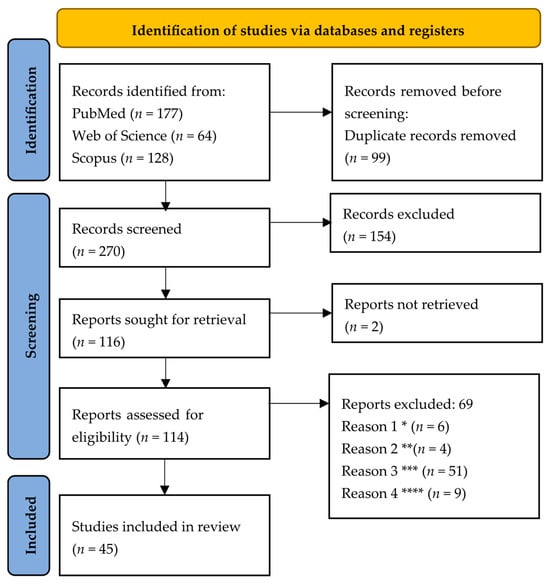
The study selection process, conducted in accordance with the PRISMA 2020 guidelines, identified a total of 369 records across three databases: PubMed (n = 177), Web of Science (n = 64), and Scopus (n = 128) (Figure 1). Following the removal of 99 duplicates, 270 unique publications were deemed eligible for the initial screening stage, of which 154 were excluded based on an analysis of titles and abstracts. Consequently, 116 reports were selected for full-text evaluation; however, two were inaccessible, leaving 114 to be assessed for compliance with the inclusion criteria. At this stage, 69 papers were excluded for the reasons shown in Figure 1. Ultimately, 45 studies that met all the eligibility criteria were included in the systematic review.
Figure 1.
PRISMA flow diagram summarizing the process of article screening and reasons for exclusion. * Reason 1—Research limited to microbiome analysis, ** Reason 2—Dietary studies with an intervention profile that does not meet eligibility criteria, *** Reason 3—Studies on individuals with disorders other than MDD, **** Reason 4—Studies using only subjective measurement tools or research protocols in the planning phase.
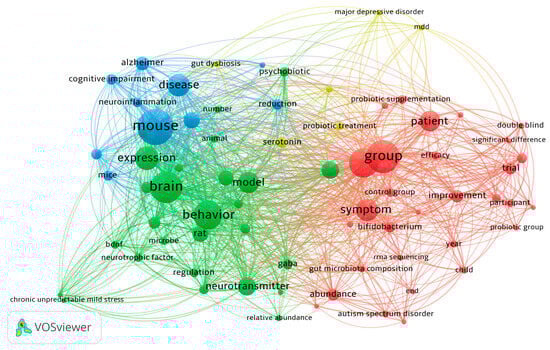
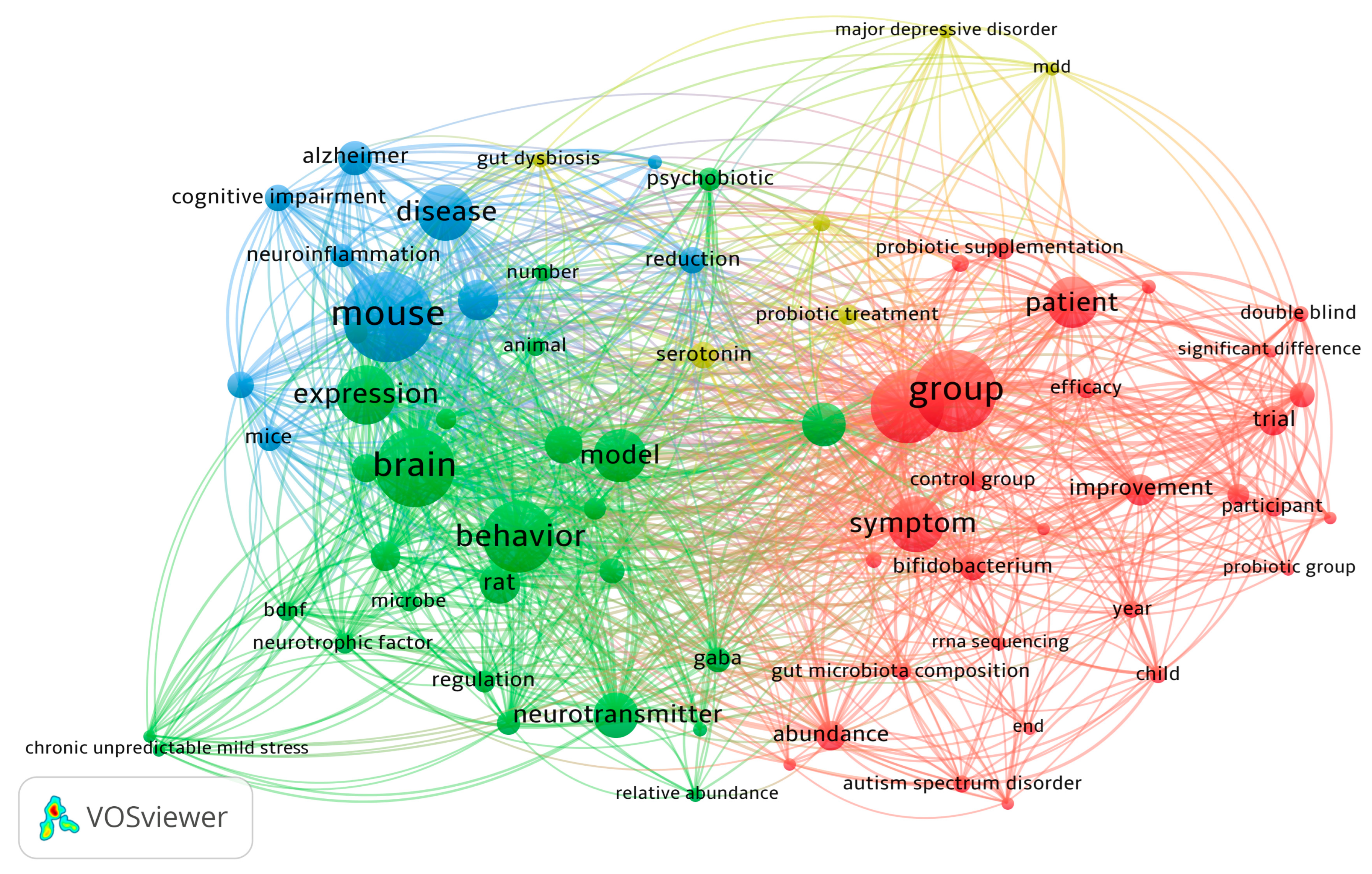
VOSviewer software was used to perform a co-occurrence analysis of keywords in order to reveal the thematic structure of the literature. The concept map (Figure 2) delineated four principal thematic clusters, each representing distinct research approaches and areas of interest within the subject under investigation. The first cluster (green) is centered on preclinical research, encompassing concepts such as the brain, neurotransmitter, behavior, GABA, brain-derived neurotrophic factor (BDNF), model, and SCFAs. Terms related to animal models (such as rats) and neurobiological processes (such as expression of neural signaling molecules) were prominently associated within this cluster. The second cluster (blue) comprised terminology characteristic of neurodegenerative disease research, with a pronounced emphasis on terms such as mouse, Alzheimer’s, cognitive impairment, and neuroinflammation. The third cluster (red) pertains to clinical and intervention approaches, featuring dominant terms such as patient, group, trial, symptom, efficacy, and probiotic supplementation. The fourth cluster (yellow) represents a central conceptual node with dominant terms such as major depressive disorder, gut dysbiosis, psychobiotics, and serotonin, functioning as an integrative bridge between neurobiological mechanisms and clinical interventions. Analysis of the layout revealed that the centrality of the yellow cluster highlights the key role of depressive disorders and gut dysbiosis as a common denominator connecting different research approaches, suggesting the need for an interdisciplinary approach in future research on the gut–brain axis.
Figure 2.
Analysis of the interaction between psychobiotic strains and depression: keyword and abstract co-occurrence network using VOSviewer.
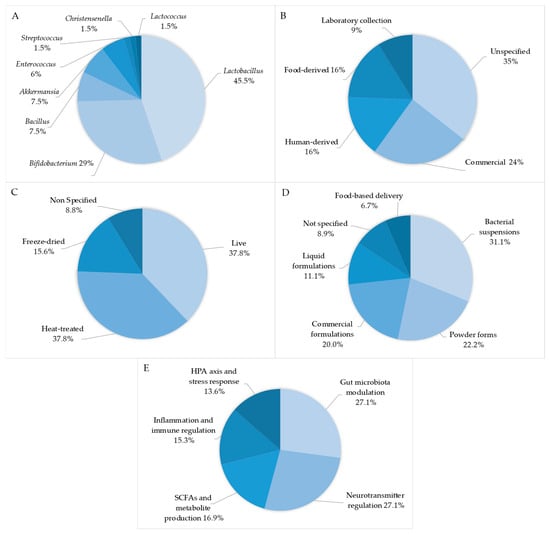
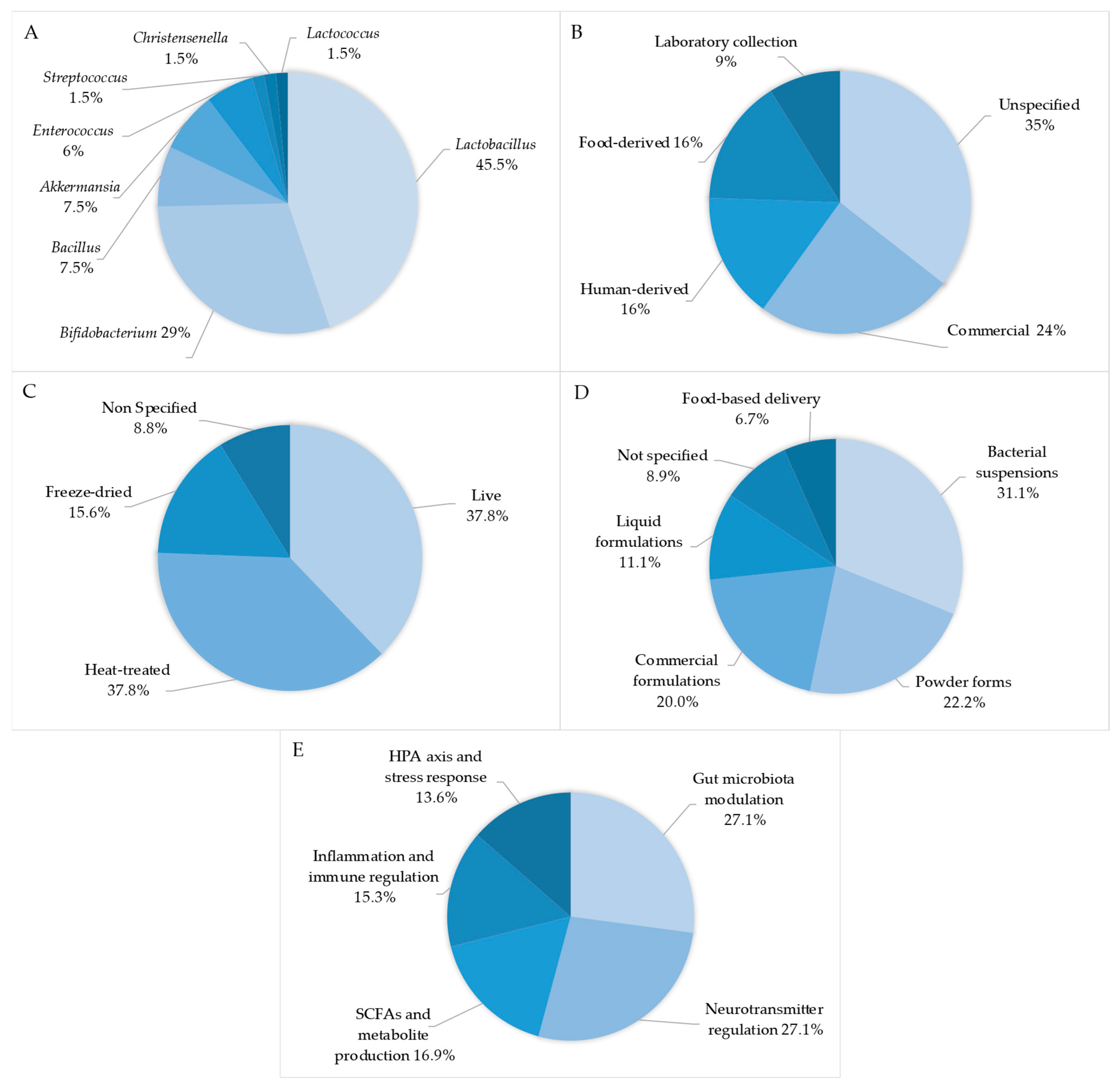
The characteristics of the articles included in this review are detailed in Table 1. Among the bacterial genera used as psychobiotics in depression research (Figure 3A), Lactobacillus was predominantly used (45.5%), followed by Bifidobacterium (29%), while other genera such as Bacillus (7.5%), Akkermansia (7.5%), Enterococcus (6%), Streptococcus (1.5%), Christensenella (1.5%), and Lactococcus (1.5%) were employed less frequently. Regarding the sources of bacterial strains (Figure 3B), a significant portion remained unspecified (35%), while commercial sources constituted 24% of the strains. Human-derived and food-derived strains were equally represented (16% each), with laboratory collections accounting for the remaining 9%. This distribution reflects the diverse origin of psychobiotic strains and indicates potential areas for more detailed reporting in future studies. The forms of bacterial preparations in psychobiotic research (Figure 3C) showed that live and heat-treated bacteria were used in equal proportion (37.8% each), followed by freeze-dried preparations (15.6%); a small percentage (8.8%) did not specify the physical state. These results underscore the growing interest in both viable and non-viable bacterial preparations for psychobiotic applications. For administration forms (Figure 3D), bacterial suspensions were most frequently used (31.1%), followed by powder forms (22.2%) and commercial formulations (20.0%). Liquid formulations accounted for 11.1%, food-based delivery systems represented 6.7%, and non-specified forms constituted 8.9% of the interventions. This variety of delivery methods highlights the field’s exploration of optimal administration approaches for psychobiotic efficacy. The analysis of mechanisms of action of psychobiotics in depression (Figure 3E) revealed that neurotransmitter regulation and gut microbiota modulation were the predominant pathways (27.1% each), followed by HPA axis and stress response mechanisms, which accounted for 13.6% of the studied pathways, while SCFAs and metabolite production represented 16.9%. Inflammation and immune regulation mechanisms constituted 15.3% of the reported mechanisms, highlighting the multifaceted nature of psychobiotic action on the gut–brain axis in the context of depressive disorders.
Table 1.
Characteristics of studies included in the systematic review.
Figure 3.
Characteristics of psychobiotics used in research on depressive disorders: (A) percentage distribution of bacterial genera, (B) sources of bacterial strains, (C) forms of bacterial preparations, (D) administration forms of psychobiotics, and (E) percentage distribution of psychobiotic mechanisms of action in depressive disorders.
An analysis of the studies regarding the employed methodology and research instruments—specifically, the psychological tests—is provided in Supplementary Figure S1.
3.2. Quality Assessment—Risk of Bias
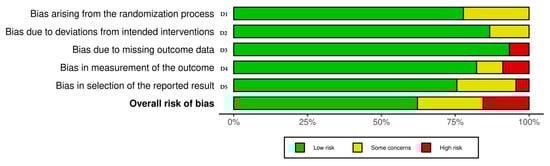
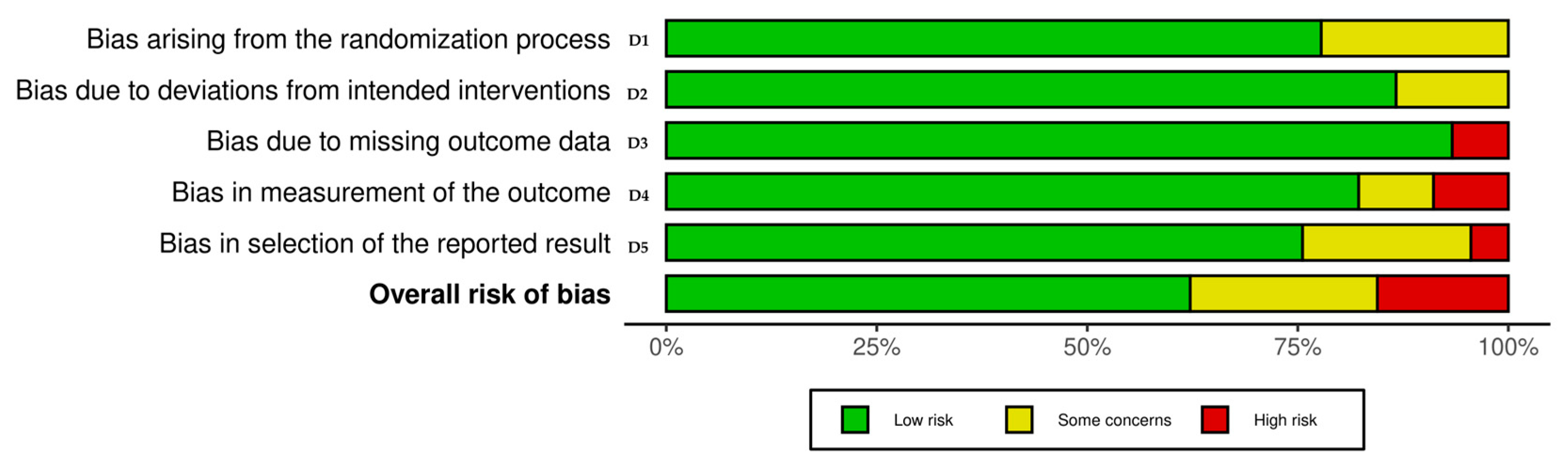
The risk of bias in the included studies, shown in Figure 4 and Supplementary Figure S2, indicates that the overall risk assessment was of some concern. Analysis of the domain related to the randomization process (D1) showed that most studies were at low risk of bias, with only a small proportion of studies having some concern. The distribution was similar for the domain related to deviations from the intended intervention (D2). The domain of missing outcome data (D3) showed low risk of bias in the vast majority of studies, but high risk was also found in a few cases. For outcome measures (D4), the vast majority of studies were assessed as having a low risk of bias, with a small proportion having some concern and a similar proportion having a high risk. The selection of reported outcomes (D5) was at low risk of bias in about two-thirds of studies, while the remainder was divided between some concern and high risk, with the former predominating. Assessment of the overall risk of bias revealed that just over half of the studies were at low risk, about a quarter were of some concern, and the remainder were at high risk of bias.
Figure 4.
Risk of bias assessment for included studies.
4. Discussion
By synthesizing the analyzed evidence, this review aimed to determine the therapeutic potential of psychobiotics in the context of treating depressive disorders.
The systematic review of psychobiotic studies allowed us to identify specific bacterial species that demonstrate the greatest therapeutic potential in the context of mental health and to point to their natural sources of origin, which has significant implications for nutritional strategies. Our analysis reveals that among the microorganisms with the most documented psychobiotic effects, Lactobacillus plantarum stands out. Strains of this species (JYLP-326, CR12, P72, 299v, and GM11) have been shown in numerous studies to be effective in alleviating symptoms of depression, anxiety, and cognitive dysfunction [58,68,71,77]. The mechanism of action of L. plantarum includes modulation of the gut–brain axis by regulating the level of neurotransmitters, in particular serotonin and GABA, and the production of SCFA. Other research studies have also confirmed that L. plantarum is widely present in non-dairy fermented products and has the ability to rapidly reduce symptoms of depression [80].
Our analysis demonstrates that another species with significant psychobiotic potential is Bifidobacterium breve, especially the CCFM1025 strain, which in clinical studies has shown the ability to alleviate symptoms of depression and insomnia, mainly by modulating tryptophan metabolism and regulating the serotonergic system [48,54,68]. Based on our systematic evaluation, we observed that the effectiveness of this strain compared to other psychobiotics is particularly high in the case of sleep disorders, which may be a promising direction for further clinical research. Other studies also confirm that B. breve occurs naturally in dairy products and breast milk, demonstrating immunomodulatory properties and neurodevelopmental benefits [81,82]. Mosquera et al. also showed in their studies that psychobiotics are particularly effective in reducing the symptoms of depression, with several strains, especially B. breve CCFM1025 and combinations of Lactobacillus and Bifidobacteria, showing significant therapeutic efficacy [83].
The results of our analysis indicate a novel link between Akkermansia muciniphila and mental health. Of particular note are its antidepressant and procognitive effects, which are associated with the regulation of serotonin pathways, protection of gut barrier integrity, and anti-inflammatory properties. The patterns identified in our analysis provide new insights into the mechanisms by which this microorganism may affect the gut–brain axis and potentially be part of the treatment of mood disorders [55,57,60].
Lactobacillus rhamnosus (strains zz-1, UBLR-58, and JB-1) and Bifidobacterium longum complete the list of microorganisms with a documented effect on mood disorders, acting through regulation of the HPA axis and modulation of signaling pathways related to BDNF [28,62,65]. Sarkar et al. additionally point to Lactobacillus helveticus, present in fermented milk products such as cheese and yogurt, as a strain with anxiolytic and antidepressant properties via modulation of the gut–brain axis [84].
Live bacterial cultures [35,42] and heat-treated bacteria [66,70] were used equally often, which is an important observation, suggesting that not only live microorganisms but also their inactivated components may have a beneficial effect on mental health. According to the data synthesized in our review, an important observation is the use of both single strains [55,56,57] and complex probiotic formulations containing from several to a dozen or so different bacterial strains [39,52,76], which indicates potential benefits from the synergistic action of different microorganisms. In terms of forms of administration, bacterial suspensions [36,38] and powder forms [44,71] dominated, with the suspensions prepared in various solutions (PBS, water, and culture media), and commercial formulations included capsules and ready-made multi-strain preparations [42,77].
The analyzed studies indicate various natural sources of strains with psychobiotic effects. A significant group consists of traditional fermented milk products, from which effective strains of S. thermophilus and L. plantarum were isolated [38]. Particularly noteworthy is the traditional Sayram Ketteki yogurt from the Xinjiang region in China, which is the source of L. plantarum R6-3 with documented antidepressant effects [42]. Regional fermented plant foods also constitute a rich source of potential psychobiotics. L. brevis DL1-11 from the Chinese fermented food pao cai has shown anxiolytic and sleep-enhancing properties [65]. Similarly, L. plantarum JYLP-326 from fermented glutinous rice [71] and L. plantarum GM11 from Sichuan bean paste [46] have shown antidepressant and anxiolytic effects. The human microbiome is also an important source of strains with psychobiotic potential. B. breve CCFM1025 isolated from the feces of a healthy Tibetan adult [48], L. reuteri ATG-F4 obtained from fecal samples of Korean newborns [44], and C. minuta DSM 32891 from the microbiome of a healthy volunteer [50] are examples of strains with documented effects on neurological functions and behavior.
The studied psychobiotic bacteria affect the gut–brain axis through several main mechanisms. Their ability to modulate the synthesis and metabolism of neurotransmitters plays a key role. Lactobacillus and Bifidobacterium strains increase the levels of serotonin, GABA, dopamine, and noradrenaline in the brain, which directly affects cognitive functions and emotional state [35,43,59]. The regulation of the HPA axis is particularly important, leading to a decrease in the level of corticosterone/cortisol, as shown in studies with A. muciniphila and L. plantarum [50].
The production of SCFAs, especially butyrate, acetate, and propionate, is another important neuromodulatory mechanism. These metabolites exhibit neuroprotective and anti-inflammatory effects. Psychobiotics such as B. breve CCFM1025 also modulate tryptophan metabolism by influencing the kynurenine and indole pathways, which translates into the regulation of serotonin levels [47,48,54].
Based on our systematic evaluation, we observed that an important aspect of the action of psychobiotic bacteria is their influence on the expression of the neurotrophic factor BDNF, which is crucial for neuroplasticity and cognitive function [36,42,79]. Additionally, they exhibit anti-inflammatory effects by reducing the level of pro-inflammatory cytokines (TNF-α and IL-1β) and increasing anti-inflammatory cytokines (IL-10) [50,58]. Protection of the integrity of the intestinal barrier by regulating tight junction proteins prevents the penetration of endotoxins into the bloodstream, which also contributes to the reduction in neuroinflammation [46,59].
The assessment of the effectiveness of psychobiotics in the treatment of depressive disorders based on the analyzed studies indicates promising results. Clinical studies involving patients diagnosed with depressive disorders showed statistically significant improvement in depression scales (HDRS, MADRS, and BDI-II) after the use of psychobiotics, especially B. breve CCFM1025 and L. plantarum 299v [70,76,77]. Similar results were obtained by Kazemi et al., where the combination of L. helveticus and B. longum led to a significant reduction in depressive symptoms measured by the BDI compared to placebo [85]. Particularly pronounced effects were observed in animal models of depression, where administration of psychobiotics resulted in a reduction in depressive and anxious behaviors [42,43,56].
An interesting observation is the potential of psychobiotics as a complementary therapy. A study with a combination of L. helveticus R0052 and B. longum R0175 showed an improvement in BDI-II scores in patients taking antidepressants [79]. It should be noted, however, that not all studies show clear results. Reininghaus et al. (2020) and Romijn et al. (2017) did not observe statistically significant differences between the groups receiving psychobiotics and placebo [86,87]. However, it is worth noting the varied clinical response, suggesting that the effectiveness may depend on the individual composition of the patient’s microbiome [76]. Additionally, psychobiotics have shown a beneficial effect on symptoms accompanying depression, such as sleep disorders [72,74] and gastrointestinal complaints [70,73].
Our systematic evaluation indicates that traditional fermented foods may serve as natural sources of psychobiotics, supporting their potential role in the daily diet. The synthesis of available evidence further supports the promotion of regional products such as yogurt, kefir, kimchi, and various pickled vegetables as a simple strategy to enrich the gut microbiota with beneficial strains that support the gut–brain axis.
Our review identifies that although the research results are promising, it should be noted that clinical trials on psychobiotics for the treatment of depressive disorders are still in the early stages, characterized by small study groups and diverse methodology. However, current evidence suggests significant potential for psychobiotics both as an adjunct to conventional antidepressant therapies and as a component of the prevention of mood disorders through an appropriately composed diet. Based on our integrative approach, we identified that future research should focus on larger, methodologically sound randomized controlled trials with well-defined outcome measures and longer follow-up periods. Our analysis clearly highlights that, in light of the presented data, the development of functional food products enriched with strains with documented psychobiotic effects may be a promising strategy for supporting mental health through nutritional interventions.
4.1. Limitations of the Studies Included in the Review
Despite the encouraging findings, certain methodological limitations should be acknowledged. The diversity in psychological tests employed in these studies significantly affects the comparability of research outcomes. In animal model research, while the Open Field Test (OFT), Forced Swimming Test (FST), and Elevated Plus Maze (EPM) were frequently used, the incorporation of a broad array of additional tests complicates direct comparisons because these tests measure different aspects of behavior, such as locomotion, anxiety, or depressive-like states [36,39,41]. This variability makes it challenging to integrate findings, as the operational definitions of outcomes may differ between tests.
Similarly, in human studies, the usage of multiple scales—ranging from the Hamilton Depression Rating Scale (HDRS) to various sleep quality, anxiety, and additional symptom scales—reflects a lack of standardization in assessing depressive disorders and related symptoms [70,71,73]. The small sample sizes for each specific scale further limit the statistical power and robustness of cross-study comparisons.
Overall, the heterogeneity of assessment tools in both preclinical and clinical research underlines the need for standardized methodologies. Establishing a common set of validated tests or scales would enhance consistency, facilitate meta-analyses, and ultimately improve the translational value of psychobiotic research in depressive disorders. To enhance standardization and comparability of intervention outcomes, greater consensus on behavioral measures for cognitive and mental health is needed. This aligns with recent initiatives by major research funders, such as the NIMH (Bethesda, MD, USA) and Wellcome Trust (London, UK), advocating for more unified approaches in mental health research [88].
The overall risk of bias in the included studies raises some concerns regarding the reliability of their findings. While the majority of studies demonstrated a low risk of bias in domains such as the randomization process (D1) and deviations from intended interventions (D2), there were notable exceptions in other areas. Specifically, three studies showed issues with missing outcome data (D3), four studies exhibited high risk in the measurement of outcomes (D4), and two studies had high risk in the selection of reported results (D5). These findings suggest that although many studies are methodologically sound in certain areas, attention should be paid to the domains with higher risks when interpreting their outcomes.
4.2. Implications of the Results for Practice and Policy
The findings of this review suggest potential applications in food science, nutrition, and public health, particularly in the development of functional foods, dietary supplements, and foods for special medical purposes (FSMPs) aimed at supporting mental well-being. The frequent use of Lactobacillus and Bifidobacterium strains—many of which are naturally present in fermented foods—indicates a feasible pathway for incorporating psychobiotics into everyday diets and commercial products.
The observed use of both live and heat-treated strains highlights technological flexibility, offering options for improved stability and product design. Additionally, the identified mechanisms of action, such as neurotransmitter modulation and gut microbiota regulation, support the concept of psychobiotics as modulators of the gut–brain axis.
For industry and policymakers, these results emphasize the importance of validated strains, accurate labeling, and evidence-based health claims. Future efforts should focus on translating this evidence into safe, effective, and accessible interventions while addressing regulatory and consumer expectations.
5. Conclusions
This systematic review synthesizes current evidence on the use of psychobiotics in the context of depression, with a focus on bacterial sources, metabolites, mechanisms of action, and clinical outcomes. Among the 45 included studies, strains from the genera Lactobacillus and Bifidobacterium were most frequently investigated, accounting for nearly 75% of the total, with some strains—such as L. rhamnosus JB-1 and B. longum 1714—demonstrating notable psychotropic effects. The majority of interventions utilized strains derived from food or human sources, and both live and heat-treated preparations were found to be comparably represented, suggesting growing interest in diverse formulation strategies.
The main mechanisms underlying psychobiotic efficacy included modulation of neurotransmitters (e.g., GABA and serotonin), regulation of the HPA axis, production of SCFA, immune modulation, and restoration of gut microbiota balance. These pathways highlight the complex and multifactorial nature of psychobiotic action on the gut–brain axis.
While clinical outcomes varied, several studies reported significant improvements in depressive symptoms, anxiety, and stress-related markers in both animal models and human subjects. However, the overall heterogeneity in study design, strain specificity, dosage, duration, and psychological assessment tools presents a challenge for drawing definitive conclusions.
In summary, psychobiotics hold promising potential as adjunctive or preventive tools in the management of depressive disorders. Their integration into dietary supplements, functional foods, and medical nutrition strategies is a realistic goal, provided future research continues to address current methodological limitations. Standardization of clinical protocols, long-term safety assessments, and real-world trials in food-based applications will be crucial to advancing the therapeutic potential of psychobiotics and translating microbiome science into meaningful mental health solutions.
Supplementary Materials
The following supporting information can be downloaded at: https://www.mdpi.com/article/10.3390/nu17132139/s1, Figure S1: Frequency of psychological tests in psychobiotics research on MDD; Figure S2: Risk of bias assessment for included studies.
Author Contributions
Conceptualization, A.Ś., M.P.-B., A.W. and K.Z.; literature search, A.Ś. and M.P.-B., literature screening and selection, A.Ś., M.P.-B. and A.W.; risk of bias analysis, A.Ś. and K.Z.; data analysis, A.Ś.; writing—original draft preparation A.Ś. and M.P.-B.; critical revision and editing the article, A.Z.-M. All authors have read and agreed to the published version of the manuscript.
Funding
This research received no external funding.
Institutional Review Board Statement
Not applicable.
Informed Consent Statement
Not applicable.
Data Availability Statement
Not applicable.
Acknowledgments
We gratefully acknowledge the technical support provided by Łukasz Śliwka in the preparation of the graphical abstract for this manuscript.
Conflicts of Interest
The authors declare no conflicts of interest.
References
- American Psychiatric Association. Diagnostic and Statistical Manual of Mental Disorders; American Psychiatric Publishing: Arlington, VA, USA, 2022; Volume 5, ISBN 0890425752. [Google Scholar]
- Zelek-Molik, A.; Litwa, E. Trends in Research on Novel Antidepressant Treatments. Front. Pharmacol. 2025, 16, 1544795. [Google Scholar] [CrossRef] [Scilit] [PubMed]
- Kamran, M.; Bibi, F.; Rehman, A.; Morris, D.W. Major Depressive Disorder: Existing Hypotheses about Pathophysiological Mechanisms and New Genetic Findings. Genes 2022, 13, 646. [Google Scholar] [CrossRef] [Scilit] [PubMed]
- Hopwood, M. Anxiety Symptoms in Patients with Major Depressive Disorder: Commentary on Prevalence and Clinical Implications. Neurol. Ther. 2023, 12, 5–12. [Google Scholar] [CrossRef] [Scilit]
- Rock, P.L.; Roiser, J.P.; Riedel, W.J.; Blackwell, A.D. Cognitive Impairment in Depression: A Systematic Review and Meta-Analysis. Psychol. Med. 2014, 44, 2029–2040. [Google Scholar] [CrossRef] [Scilit]
- Papa, D.; Ingenito, A.; von Gal, A.; Francesca, M.; Piccardi, L. Relationship between Depression and Neurodegeneration: Risk Factor, Prodrome, Consequence, or Something Else? A Scoping Review. Biomedicines 2025, 13, 1023. [Google Scholar] [CrossRef] [Scilit] [PubMed]
- Weinmann, T.; Wibowo, R.; Forster, F.; Gerlich, J.; Wengenroth, L.; Weinmayr, G.; Genuneit, J.; Nowak, D.; Vogelberg, C.; Radon, K.; et al. Association of Chronic Stress during Studies with Depressive Symptoms 10 Years Later. Sci. Rep. 2025, 15, 2379. [Google Scholar] [CrossRef] [Scilit]
- Zelek-Molik, A.; Gądek-Michalska, A.; Wilczkowski, M.; Bielawski, A.; Maziarz, K.; Kreiner, G.; Nalepa, I. Restraint Stress Effects on Glutamate Signaling Protein Levels in the Rats’ Frontal Cortex: Does β1 Adrenoceptor Activity Matter? Front. Pharmacol. 2025, 15, 1451895. [Google Scholar] [CrossRef] [Scilit]
- Bielawski, A.; Zelek-Molik, A.; Rafa-Zabłocka, K.; Kowalska, M.; Gruca, P.; Papp, M.; Nalepa, I. Elevated Expression of HSP72 in the Prefrontal Cortex and Hippocampus of Rats Subjected to Chronic Mild Stress and Treated with Imipramine. Int. J. Mol. Sci. 2023, 25, 243. [Google Scholar] [CrossRef] [Scilit]
- Zelek-Molik, A.; Bobula, B.; Gądek-Michalska, A.; Chorązka, K.; Bielawski, A.; Kuśmierczyk, J.; Siwiec, M.; Wilczkowski, M.; Hess, G.; Nalepa, I. Psychosocial Crowding Stress-Induced Changes in Synaptic Transmission and Glutamate Receptor Expression in the Rat Frontal Cortex. Biomolecules 2021, 11, 294. [Google Scholar] [CrossRef] [Scilit]
- Ye, X.; Wang, D.; Zhu, H.; Wang, D.; Li, J.; Tang, Y.; Wu, J. Gut Microbiota Changes in Patients with Major Depressive Disorder Treated with Vortioxetine. Front. Psychiatry 2021, 12, 641491. [Google Scholar] [CrossRef] [Scilit]
- Warda, A.K.; Rea, K.; Fitzgerald, P.; Hueston, C.; Gonzalez-Tortuero, E.; Dinan, T.G.; Hill, C. Heat-Killed Lactobacilli Alter Both Microbiota Composition and Behaviour. Behav. Brain Res. 2019, 362, 213–223. [Google Scholar] [CrossRef] [Scilit]
- Cheng, Y.; Liu, J.-M.; Ling, Z. Short-Chain Fatty Acids-Producing Probiotics: A Novel Source of Psychobiotics. Crit. Rev. Food Sci. Nutr. 2021, 62, 7929–7959. [Google Scholar] [CrossRef] [Scilit] [PubMed]
- Magalhães-Guedes, K.T. Psychobiotic Therapy: Method to Reinforce the Immune System. Clin. Psychopharmacol. Neurosci. 2022, 20, 17–25. [Google Scholar] [CrossRef] [Scilit] [PubMed]
- Casertano, M.; Fogliano, V.; Ercolini, D. Psychobiotics, Gut Microbiota and Fermented Foods Can Help Preserving Mental Health. Food Res. Int. 2022, 152, 110892. [Google Scholar] [CrossRef] [Scilit]
- Mörkl, S.; Butler, M.I.; Wagner-Skacel, J. Gut-Brain-Crosstalk-the Vagus Nerve and the Microbiota-Gut-Brain Axis in Depression. A Narrative Review. J. Affect. Disord. Rep. 2023, 13, 100607. [Google Scholar] [CrossRef] [Scilit]
- Nataraj, B.H.; Ali, S.A.; Behare, P.V.; Yadav, H. Postbiotics-Parabiotics: The New Horizons in Microbial Biotherapy and Functional Foods. Microb. Cell Factories 2020, 19, 168. [Google Scholar] [CrossRef] [Scilit] [PubMed]
- Nain, N.; Kumari, K.G.; Haridasan, H.; Sharma, S.G. Microbes in Food and Beverage Industry. In Microbial Diversity, Interventions and Scope; Sharma, S., Sharma, N., Sharma, M., Eds.; Springer: Cham, Switzerland, 2020; pp. 249–258. ISBN 9789811540981. [Google Scholar]
- Koubaa, M. Introduction to Conventional Fermentation Processes. In Fermentation Processes; Koubaa, M., Barba, F.J., Roohinejad, S., Eds.; Wiley: Hoboken, NJ, USA, 2021; pp. 1–21. [Google Scholar]
- Parletta, N.; Milte, C.M.; Meyer, B.J. Nutritional Modulation of Cognitive Function and Mental Health. J. Nutr. Biochem. 2013, 24, 725–743. [Google Scholar] [CrossRef] [Scilit]
- Rucklidge, J.J.; Johnstone, J.M.; Kaplan, B.J. Nutrition Provides the Essential Foundation for Optimizing Mental Health. Evid.-Based Pract. Child Adolesc. Ment. Health 2021, 6, 131–154. [Google Scholar] [CrossRef] [Scilit]
- Vilela, A.; Cosme, F.; Inês, A. Wine and Non-Dairy Fermented Beverages: A Novel Source of Pro- and Prebiotics. Fermentation 2020, 6, 113. [Google Scholar] [CrossRef] [Scilit]
- Anglenius, H.; Mäkivuokko, H.; Ahonen, I.; Forssten, S.D.; Wacklin, P.; Mättö, J.; Lahtinen, S.; Lehtoranta, L.; Ouwehand, A.C. In Vitro Screen of Lactobacilli Strains for Gastrointestinal and Vaginal Benefits. Microorganisms 2023, 11, 329. [Google Scholar] [CrossRef] [Scilit]
- Borody, T.J.; Warren, E.F.; Leis, S.M.; Surace, R.; Ashman, O.; Siarakas, S. Bacteriotherapy Using Fecal Flora. J. Clin. Gastroenterol. 2004, 38, 475–483. [Google Scholar] [CrossRef] [Scilit]
- Kalkan, S.; Erginkaya, Z.; Ünal Turhan, E.; Konuray, G. Assessment of the Risk of Probiotics in Terms of the Food Safety and Human Health. In Health and Safety Aspects of Food Processing Technologies; Malik, A., Erginkaya, Z., Erten, H., Eds.; Springer Nature: Cham, Switzerland, 2019; pp. 419–443. [Google Scholar]
- Gupta, A.; Mani, I. Beneficial Effects of Psychobiotic Bacteria, Cyanobacteria, Algae, and Modified Yeast in Various Food Industries. In Recent Advances in Food Biotechnology; Patruni, K., Singh, V., Eds.; Springer Nature: Singapore, 2022; pp. 161–173. ISBN 9789811681240. [Google Scholar]
- Page, M.J.; Moher, D.; Bossuyt, P.M.; Boutron, I.; Hoffmann, T.C.; Mulrow, C.D.; Shamseer, L.; Tetzlaff, J.M.; Akl, E.A.; Brennan, S.E.; et al. PRISMA 2020 Explanation and Elaboration: Updated Guidance and Exemplars for Reporting Systematic Reviews. Br. Med. J. 2021, 372, 160. [Google Scholar] [CrossRef] [PubMed]
- van Eck, N.J.; Waltman, L. Software Survey: VOSviewer, a Computer Program for Bibliometric Mapping. Scientometrics 2010, 84, 523–538. [Google Scholar] [CrossRef] [Scilit]
- Vlainić, J.V.; Šuran, J.; Vlainić, T.; Vukorep, A.L. Probiotics as an Adjuvant Therapy in Major Depressive Disorder. Curr. Neuropharmacol. 2016, 14, 952–958. [Google Scholar] [CrossRef] [Scilit]
- Nadeem, I.; Rahman, M.Z.; Ad-Dab’bagh, Y.; Akhtar, M. Effect of Probiotic Interventions on Depressive Symptoms: A Narrative Review Evaluating Systematic Reviews. Psychiatry Clin. Neurosci. 2019, 73, 154–162. [Google Scholar] [CrossRef] [Scilit] [PubMed]
- Rios, A.C.; Maurya, P.K.; Pedrini, M.; Zeni-Graiff, M.; Asevedo, E.; Mansur, R.B.; Wieck, A.; Grassi-Oliveira, R.; McIntyre, R.S.; Hayashi, M.A.F.; et al. Microbiota Abnormalities and the Therapeutic Potential of Probiotics in the Treatment of Mood Disorders. Rev. Neurosci. 2017, 28, 739–749. [Google Scholar] [CrossRef] [Scilit] [PubMed]
- Ouzzani, M.; Hammady, H.; Fedorowicz, Z.; Elmagarmid, A. Rayyan—A Web and Mobile App for Systematic Reviews. Syst. Rev. 2016, 5, 210. [Google Scholar] [CrossRef] [Scilit]
- Sterne, J.A.C.; Savović, J.; Page, M.J.; Elbers, R.G.; Blencowe, N.S.; Boutron, I.; Cates, C.J.; Cheng, H.-Y.; Corbett, M.S.; Eldridge, S.M.; et al. RoB 2: A Revised Tool for Assessing Risk of Bias in Randomised Trials. BMJ 2019, 366, l4898. [Google Scholar] [CrossRef] [Scilit]
- McGuinness, L.A.; Higgins, J.P.T. Risk-Of-Bias VISualization (Robvis): An R Package and Shiny Web App for Visualizing Risk-Of-Bias Assessments. Res. Synth. Methods 2020, 12, 55–61. [Google Scholar] [CrossRef] [Scilit]
- Feng, S.; Meng, C.; Hao, Z.; Liu, H. Bacillus licheniformis Reshapes the Gut Microbiota to Alleviate the Subhealth. Nutrients 2022, 14, 1642. [Google Scholar] [CrossRef] [Scilit]
- Xu, J.; Tang, M.; Wu, X.; Kong, X.; Liu, Y.; Xu, X. Lactobacillus rhamnosus Zz-1 Exerts Preventive Effects on Chronic Unpredictable Mild Stress-Induced Depression in Mice via Regulating the Intestinal Microenvironment. Food Funct. 2022, 13, 4331–4343. [Google Scholar] [CrossRef] [Scilit]
- Zhao, N.; Shu, Y.; Jian, C.; Zhou, Z.; Bao, H.; Li, X.; Cheng, X.; Zhao, Y.; Jin, S.; Shu, X. Lactobacillus Ameliorates SD-Induced Stress Responses and Gut Dysbiosis by Increasing the Absorption of Gut-Derived GABA in Rhesus Monkeys. Front. Immunol. 2022, 13, 915393. [Google Scholar] [CrossRef] [Scilit]
- Kim, H.; Jeon, S.; Kim, J.; Seol, D.; Jo, J.; Cho, S.; Kim, H. Investigation of Memory-Enhancing Effects of Streptococcus Thermophilus EG007 in Mice and Elucidating Molecular and Metagenomic Characteristics Using Nanopore Sequencing. Sci. Rep. 2022, 12, 13274. [Google Scholar] [CrossRef] [Scilit]
- Dandekar, M.P.; Palepu, M.S.K.; Satti, S.; Jaiswal, Y.; Singh, A.A.; Dash, S.P.; Gajula, S.N.R.; Sonti, R. Multi-Strain Probiotic Formulation Reverses Maternal Separation and Chronic Unpredictable Mild Stress-Generated Anxiety- and Depression-like Phenotypes by Modulating Gut Microbiome–Brain Activity in Rats. ACS Chem. Neurosci. 2022, 13, 1948–1965. [Google Scholar] [CrossRef] [Scilit] [PubMed]
- Alizadeh, K.; Moghimi, H.; Golbabaei, A.; Alijanpour, S.; Rezayof, A. Post-Weaning Treatment with Probiotic Inhibited Stress-Induced Amnesia in Adulthood Rats: The Mediation of GABAergic System and BDNF/C-Fos Signaling Pathways. Neurochem. Res. 2022, 47, 2357–2372. [Google Scholar] [CrossRef] [Scilit]
- Carlessi, A.S.; Botelho, M.E.M.; Manosso, L.M.; Borba, L.A.; Maciel, L.R.; Andrade, N.M.; Martinello, N.S.; Padilha, A.P.Z.; Generoso, C.M.; Bencke, C.V.; et al. Sex Differences on the Response to Antidepressants and Psychobiotics Following Early Life Stress in Rats. Pharmacol. Biochem. Behav. 2022, 220, 173468. [Google Scholar] [CrossRef] [Scilit] [PubMed]
- Zhao, L.; Li, D.; Chitrakar, B.; Li, C.; Zhang, N.; Zhang, S.; Wang, X.; Wang, M.; Tian, H.; Luo, Y. Study on Lactiplantibacillus Plantarum R6-3 from Sayram Ketteki to Prevent Chronic Unpredictable Mild Stress-Induced Depression in Mice through the Microbiota–Gut–Brain Axis. Food Funct. 2023, 14, 3304–3318. [Google Scholar] [CrossRef] [Scilit]
- Hu, Z.; Zhao, P.; Liao, A.; Pan, L.; Zhang, J.; Dong, Y.; Huang, J.; He, W.; Ou, X. Fermented Wheat Germ Alleviates Depression-like Behavior in Rats with Chronic and Unpredictable Mild Stress. Foods 2023, 12, 920. [Google Scholar] [CrossRef] [Scilit]
- Lee, J.; Kim, E.-J.; Park, G.-S.; Kim, J.; Kim, T.-E.; Lee, Y.J.; Park, J.; Kang, J.; Koo, J.W.; Choi, T.-Y. Lactobacillus Reuteri ATG-F4 Alleviates Chronic Stress-Induced Anhedonia by Modulating the Prefrontal Serotonergic System. Exp. Neurobiol. 2023, 32, 313–327. [Google Scholar] [CrossRef] [Scilit]
- Feng, S.; Meng, C.; Liu, Y.; Yi, Y.; Liang, A.; Zhang, Y.; Hao, Z. Bacillus licheniformis Prevents and Reduces Anxiety-like and Depression-like Behaviours. Appl. Microbiol. Biotechnol. 2023, 107, 4355–4368. [Google Scholar] [CrossRef] [Scilit]
- Ma, J.; Chen, Y.; Wang, Z.; Wang, R.; Dong, Y. Lactiplantibacillus plantarum CR12 Attenuates Chronic Unforeseeable Mild Stress Induced Anxiety and Depression-like Behaviors by Modulating the Gut Microbiota-Brain Axis. J. Funct. Foods 2023, 107, 105710. [Google Scholar] [CrossRef] [Scilit]
- Galley, J.D.; King, M.K.; Rajasekera, T.A.; Batabyal, A.; Woodke, S.T.; Gur, T.L. Gestational Administration of Bifidobacterium Dentium Results in Intergenerational Modulation of Inflammatory, Metabolic, and Social Behavior. Brain Behav. Immun. 2024, 122, 44–57. [Google Scholar] [CrossRef] [Scilit] [PubMed]
- Qian, X.; Tian, P.; Guo, M.; Yang, H.; Zhang, H.; Wang, G.; Chen, W. Determining the Emotional Regulation Function of Bifidobacterium breve: The Role of Gut Metabolite Regulation over Colonization Capability. Food Funct. 2024, 15, 1598–1611. [Google Scholar] [CrossRef] [Scilit]
- Lozano, J.; Fabius, S.; Fernández-Ciganda, S.; Urbanavicius, J.; Piccini, C.; Scorza, C.; Zunino, P. Beneficial Effect of GABA-Producing Lactiplantibacillus Strain LPB145 Isolated from Cheese Starters Evaluated in Anxiety- and Depression-like Behaviours in Rats. Benef. Microbes 2024, 15, 465–479. [Google Scholar] [CrossRef] [Scilit]
- Agusti, A.; Molina-Mendoza, G.V.; Tamayo, M.; Rossini, V.; Cenit, M.C.; Frances-Cuesta, C.; Tolosa-Enguis, V.; Pulgar, D.; Flor-Duro, A.; Sanz, Y. Christensenella minuta Mitigates Behavioral and Cardiometabolic Hallmarks of Social Defeat Stress. Biomed. Pharmacother. 2024, 180, 117377. [Google Scholar] [CrossRef] [Scilit] [PubMed]
- Guo, H.; Liu, X.; Chen, T.; Wang, X.; Zhang, X. Akkermansia muciniphila Improves Depressive-like Symptoms by Modulating the Level of 5-HT Neurotransmitters in the Gut and Brain of Mice. Mol. Neurobiol. 2023, 61, 821–834. [Google Scholar] [CrossRef] [Scilit]
- Zhang, N.; Gao, X.; Li, D.; Xu, L.; Zhou, G.; Xu, M.; Peng, L.; Sun, G.; Pan, F.; Li, Y.; et al. Sleep Deprivation-Induced Anxiety-like Behaviors Are Associated with Alterations in the Gut Microbiota and Metabolites. Microbiol. Spectr. 2024, 12, e0143723. [Google Scholar] [CrossRef] [Scilit]
- Xie, J.; Wang, L.; Xu, Y.; Ma, Y.; Zhang, L.; Yin, W.; Huang, Y. Exertional Heat Stroke-Induced Changes in Gut Microbiota Cause Cognitive Impairment in Mice. BMC Microbiol. 2024, 24, 134. [Google Scholar] [CrossRef] [Scilit]
- Tian, P.; Hou, Y.; Wang, Z.; Jiang, J.; Qian, X.; Qu, Z.; Zhao, J.; Wang, G.; Chen, W. Probiotics Administration Alleviates Cognitive Impairment and Circadian Rhythm Disturbance Induced by Sleep Deprivation. Deleted J. 2024, 13, 1951–1961. [Google Scholar] [CrossRef] [Scilit]
- Du, Y.; An, Y.; Song, Y.; Li, N.; Zheng, J.; Lu, Y. Live and Pasteurized Akkermansia muciniphila Ameliorates Diabetic Cognitive Impairment by Modulating Gut Microbiota and Metabolites in Db/Db Mice. Exp. Neurol. 2024, 378, 114823. [Google Scholar] [CrossRef] [Scilit]
- Chen, C.; Zheng, Z.; Gao, K.; Fan, Q.; Li, Y.; Chen, S. Prophylactic Effects of Supplementation of a Combination of Lactobacillus Lactis WHH2078 and Saffron on Depressive-like Behaviors in Mice Exposed to Chronic Stress. J. Food Sci. 2024, 89, 5912–5927. [Google Scholar] [CrossRef] [Scilit]
- Kang, E.J.; Cha, M.-G.; Kwon, G.-H.; Han, S.H.; Yoon, S.J.; Lee, S.K.; Ahn, M.E.; Won, S.-M.; Ahn, E.H.; Suk, K.T. Akkermansia muciniphila Improve Cognitive Dysfunction by Regulating BDNF and Serotonin Pathway in Gut-Liver-Brain Axis. Microbiome 2024, 12, 181. [Google Scholar] [CrossRef] [Scilit]
- Lee, D.-Y.; Baek, J.-S.; Shin, Y.-J.; Kim, D.-H. Alleviation of Immobilization Stress or Fecal Microbiota-Induced Insomnia and Depression-like Behaviors in Mice by Lactobacillus plantarum and Its Supplement. Nutrients 2024, 16, 3711. [Google Scholar] [CrossRef] [Scilit] [PubMed]
- Wei, F.; Jiang, H.; Zhu, C.; Zhong, L.; Lin, Z.; Wu, Y.; Song, L. The Co-Fermentation of Whole Grain Black Barley and Quinoa Improves Murine Cognitive Impairment Induced by a High-Fat Diet via Altering Gut Microbial Ecology and Suppressing Neuroinflammation. Food Funct. 2024, 15, 11667–11685. [Google Scholar] [CrossRef] [Scilit]
- Ding, Y.; Bu, F.; Chen, T.; Shi, G.; Yuan, X.; Feng, Z.; Duan, Z.; Wang, R.; Zhang, S.; Wang, Q.; et al. A Next-Generation Probiotic: Akkermansia muciniphila Ameliorates Chronic Stress–Induced Depressive-like Behavior in Mice by Regulating Gut Microbiota and Metabolites. Appl. Microbiol. Biotechnol. 2021, 105, 8411–8426. [Google Scholar] [CrossRef] [Scilit]
- Natale, N.R.; Kent, M.; Fox, N.; Vavra, D.; Lambert, K. Neurobiological Effects of a Probiotic-Supplemented Diet in Chronically Stressed Male Long-Evans Rats: Evidence of Enhanced Resilience. IBRO Neurosci. Rep. 2021, 11, 207–215. [Google Scholar] [CrossRef] [Scilit] [PubMed]
- Westfall, S.; Caracci, F.; Zhao, D.; Wu, Q.; Frolinger, T.; Simon, J.; Pasinetti, G.M. Microbiota Metabolites Modulate the T Helper 17 to Regulatory T Cell (Th17/Treg) Imbalance Promoting Resilience to Stress-Induced Anxiety- and Depressive-like Behaviors. Brain Behav. Immun. 2021, 91, 350–368. [Google Scholar] [CrossRef] [Scilit] [PubMed]
- Wang, H.; He, S.; Xin, J.; Zhang, T.; Sun, N.; Li, L.; Ni, X.; Zeng, D.; Ma, H.; Bai, Y. Psychoactive Effects of Lactobacillus johnsonii against Restraint Stress-Induced Memory Dysfunction in Mice through Modulating Intestinal Inflammation and Permeability-a Study Based on the Gut-Brain Axis Hypothesis. Front. Pharmacol. 2021, 12, 662148. [Google Scholar] [CrossRef] [Scilit]
- Liu, Y.; Steinhausen, K.; Bharwani, A.; Mian, M.F.; McVey Neufeld, K.-A.; Forsythe, P. Increased Persistence of Avoidance Behaviour and Social Deficits with L. rhamnosus JB-1 or Selective Serotonin Reuptake Inhibitor Treatment Following Social Defeat. Sci. Rep. 2020, 10, 13485. [Google Scholar] [CrossRef] [Scilit]
- Yu, L.; Han, X.; Cen, S.; Duan, H.; Feng, S.; Xue, Y.; Tian, F.; Zhao, J.; Zhang, H.; Zhai, Q.; et al. Beneficial Effect of GABA-Rich Fermented Milk on Insomnia Involving Regulation of Gut Microbiota. Microbiol. Res. 2020, 233, 126409. [Google Scholar] [CrossRef] [Scilit]
- Kambe, J.; Watcharin, S.; Makioka-Itaya, Y.; Inoue, R.; Watanabe, G.; Yamaguchi, H.; Nagaoka, K. Heat-Killed Enterococcus fecalis (EC-12) Supplement Alters the Expression of Neurotransmitter Receptor Genes in the Prefrontal Cortex and Alleviates Anxiety-like Behavior in Mice. Neurosci. Lett. 2020, 720, 134753. [Google Scholar] [CrossRef] [Scilit] [PubMed]
- Duranti, S.; Ruiz, L.; Lugli, G.A.; Tames, H.; Milani, C.; Mancabelli, L.; Mancino, W.; Longhi, G.; Carnevali, L.; Sgoifo, A.; et al. Bifidobacterium adolescentis as a Key Member of the Human Gut Microbiota in the Production of GABA. Sci. Rep. 2020, 10, 14112. [Google Scholar] [CrossRef] [Scilit]
- Ma, J.; Wang, J.; Wang, G.; Wan, Y.; Li, N.; Luo, L.; Gou, H.; Gu, J. The Potential Beneficial Effects of Lactobacillus plantarum GM11 on Rats with Chronic Unpredictable Mild Stress- Induced Depression. Nutr. Neurosci. 2023, 27, 413–424. [Google Scholar] [CrossRef] [Scilit] [PubMed]
- Rayan, N.A.; Aow, J.; Lim, M.G.L.; Arcego, D.M.; Ryan, R.; Nourbakhsh, N.; de Lima, R.M.S.; Craig, K.; Zhang, T.Y.; Goh, Y.T.; et al. Shared and Unique Transcriptomic Signatures of Antidepressant and Probiotics Action in the Mammalian Brain. Mol. Psychiatry 2024, 29, 3653–3668. [Google Scholar] [CrossRef] [Scilit]
- Tian, P.; Chen, Y.; Zhu, H.; Wang, L.; Qian, X.; Zou, R.; Zhao, J.; Zhang, H.; Qian, L.; Wang, Q.; et al. Bifidobacterium breve CCFM1025 Attenuates Major Depression Disorder via Regulating Gut Microbiome and Tryptophan Metabolism: A Randomized Clinical Trial. Brain Behav. Immun. 2022, 100, 233–241. [Google Scholar] [CrossRef] [Scilit] [PubMed]
- Zhu, R.; Fang, Y.; Li, H.; Liu, Y.; Wei, J.; Zhang, S.; Wang, L.; Fan, R.; Wang, L.; Li, S.; et al. Psychobiotic Lactobacillus plantarum JYLP-326 Relieves Anxiety, Depression, and Insomnia Symptoms in Test Anxious College via Modulating the Gut Microbiota and Its Metabolism. Front. Immunol. 2023, 14, 1158137. [Google Scholar] [CrossRef] [Scilit]
- Lan, Y.; Lu, J.; Qiao, G.; Mao, X.; Zhao, J.; Wang, G.; Tian, P.; Chen, W. Bifidobacterium Breve CCFM1025 Improves Sleep Quality via Regulating the Activity of the HPA Axis: A Randomized Clinical Trial. Nutrients 2023, 15, 4700. [Google Scholar] [CrossRef] [Scilit]
- Wang, Y.; Wang, Y.; Ding, K.; Liu, Y.; Liu, D.; Chen, W.; Zhang, X.; Luo, C.; Zhang, H.; Xu, T.; et al. Effectiveness of Psychobiotic Bifidobacterium breve BB05 in Managing Psychosomatic Diarrhea in College Students by Regulating Gut Microbiota: A Randomized, Double-Blind, Placebo-Controlled Trial. Nutrients 2024, 16, 1989. [Google Scholar] [CrossRef] [Scilit]
- Li, J.; Li, Y.; Zhao, J.; Li, L.; Wang, Y.; Chen, F.; Li, Y.; Cheng, R.; He, F.; Xiao, L.Z.; et al. Effects of Bifidobacterium breve 207-1 on Regulating Lifestyle Behaviors and Mental Wellness in Healthy Adults Based on the Microbiome-Gut-Brain Axis: A Randomized, Double-Blind, Placebo-Controlled Trial. Eur. J. Nutr. 2024, 63, 2567–2585. [Google Scholar] [CrossRef] [Scilit]
- Casertano, M.; Dekker, M.; Valentino, V.; De Filippis, F.; Fogliano, V.; Ercolini, D. Gaba-Producing Lactobacilli Boost Cognitive Reactivity to Negative Mood without Improving Cognitive Performance: A Human Double-Blind Placebo-Controlled Cross-over Study. Brain Behav. Immun. 2024, 122, 256–265. [Google Scholar] [CrossRef] [Scilit]
- Kreuzer, K.; Birkl-Toeglhofer, A.M.; Haybaeck, J.; Reiter, A.; Dalkner, N.; Fellendorf, F.T.; Maget, A.; Platzer, M.; Seidl, M.; Mendel, L.-M.; et al. PROVIT-CLOCK: A Potential Influence of Probiotics and Vitamin B7 Add-on Treatment and Metabolites on Clock Gene Expression in Major Depression. Neuropsychobiology 2024, 83, 135–151. [Google Scholar] [CrossRef] [Scilit] [PubMed]
- Godzien, J.; Kalaska, B.; Rudzki, L.; Barbas-Bernardos, C.; Swieton, J.; Lopez-Gonzalvez, A.; Ostrowska, L.; Szulc, A.; Waszkiewicz, N.; Ciborowski, M.; et al. Probiotic Lactobacillus plantarum 299v Supplementation in Patients with Major Depression in a Double-Blind, Randomized, Placebo-Controlled Trial: A Metabolomics Study. J. Affect. Disord. 2024, 368, 180–190. [Google Scholar] [CrossRef] [Scilit] [PubMed]
- Quero, C.D.; Manonelles, P.; Fernández, M.; Abellán-Aynés, O.; López-Plaza, D.; Andreu-Caravaca, L.; Hinchado, M.D.; Gálvez, I.; Ortega, E. Differential Health Effects on Inflammatory, Immunological and Stress Parameters in Professional Soccer Players and Sedentary Individuals after Consuming a Synbiotic. A Triple-Blinded, Randomized, Placebo-Controlled Pilot Study. Nutrients 2021, 13, 1321. [Google Scholar] [CrossRef] [Scilit] [PubMed]
- Heidarzadeh-Rad, N.; Gökmen-Özel, H.; Kazemi, A.; Almasi, N.; Djafarian, K. Effects of a Psychobiotic Supplement on Serum Brain-Derived Neurotrophic Factor Levels in Depressive Patients: A Post Hoc Analysis of a Randomized Clinical Trial. J. Neurogastroenterol. Motil. 2020, 26, 486–495. [Google Scholar] [CrossRef] [Scilit]
- Coelho, T.; Kerpel, R. Psychobiotics in the Treatment of Depression: A New Look at Mental Health—A Systematic Search Review. Rev. Científica Multidiscip. Núcleo Do Conhecimento 2022, 1, 125–152. [Google Scholar] [CrossRef] [Scilit]
- Sakurai, K.; Toshimitsu, T.; Okada, E.; Anzai, S.; Shiraishi, I.; Inamura, N.; Kobayashi, S.; Sashihara, T.; Hisatsune, T. Effects of Lactiplantibacillus Plantarum OLL2712 on Memory Function in Older Adults with Declining Memory: A Randomized Placebo-Controlled Trial. Nutrients 2022, 14, 4300. [Google Scholar] [CrossRef] [Scilit]
- Xiao, J.; Katsumata, N.; Bernier, F.; Ohno, K.; Yamauchi, Y.; Odamaki, T.; Yoshikawa, K.; Ito, K.; Kaneko, T. Probiotic Bifidobacterium breve in Improving Cognitive Functions of Older Adults with Suspected Mild Cognitive Impairment: A Randomized, Double-Blind, Placebo-Controlled Trial. J. Alzheimer’s Dis. 2020, 77, 139–147. [Google Scholar] [CrossRef] [Scilit]
- Mosquera, C.; Martinez, S.L.; Liscano, Y. Effectiveness of Psychobiotics in the Treatment of Psychiatric and Cognitive Disorders: A Systematic Review of Randomized Clinical Trials. Nutrients 2024, 16, 1352. [Google Scholar] [CrossRef] [Scilit]
- Sarkar, A.; Lehto, S.M.; Harty, S.; Dinan, T.G.; Cryan, J.F.; Burnet, P.W.J. Psychobiotics and the Manipulation of Bacteria–Gut–Brain Signals. Trends Neurosci. 2016, 39, 763–781. [Google Scholar] [CrossRef] [Scilit]
- Kazemi, A.; Noorbala, A.A.; Azam, K.; Eskandari, M.H.; Djafarian, K. Effect of Probiotic and Prebiotic vs Placebo on Psychological Outcomes in Patients with Major Depressive Disorder: A Randomized Clinical Trial. Clin. Nutr. 2019, 38, 522–528. [Google Scholar] [CrossRef] [Scilit]
- Reininghaus, E.Z.; Platzer, M.; Kohlhammer-Dohr, A.; Hamm, C.; Mörkl, S.; Bengesser, S.A.; Fellendorf, F.T.; Lahousen-Luxenberger, T.; Leitner-Afschar, B.; Schöggl, H.; et al. PROVIT: Supplementary Probiotic Treatment and Vitamin B7 in Depression—A Randomized Controlled Trial. Nutrients 2020, 12, 3422. [Google Scholar] [CrossRef] [Scilit] [PubMed]
- Romijn, A.R.; Rucklidge, J.J.; Kuijer, R.G.; Frampton, C. A Double-Blind, Randomized, Placebo-Controlled Trial of Lactobacillus helveticus and Bifidobacterium longum for the Symptoms of Depression. Aust. N. Z. J. Psychiatry 2017, 51, 810–821. [Google Scholar] [CrossRef] [Scilit] [PubMed]
- Farber, G.K.; Gage, S.H.; Kemmer, D.; White, R.E. Common Measures in Mental Health: A Joint Initiative by Funders and Journals. Lancet Psychiatry 2023, 10, 465–470. [Google Scholar] [CrossRef] [Scilit] [PubMed]

Disclaimer/Publisher’s Note: The statements, opinions and data contained in all publications are solely those of the individual author(s) and contributor(s) and not of MDPI and/or the editor(s). MDPI and/or the editor(s) disclaim responsibility for any injury to people or property resulting from any ideas, methods, instructions or products referred to in the content. |
© 2025 by the authors. Licensee MDPI, Basel, Switzerland. This article is an open access article distributed under the terms and conditions of the Creative Commons Attribution (CC BY) license (https://creativecommons.org/licenses/by/4.0/).