Review

Family Household Characteristics and Stunting: An Update Scoping Review

by
Desy Indra Yani
1,*,
Laili Rahayuwati
1,
Citra Windani Mambang Sari
1,
Maria Komariah
2 and
Sherllina Rizqi Fauziah
3
1
Department of Community Health Nursing, Faculty of Nursing, Universitas Padjadjaran, Bandung 45363, Indonesia
2
Department of Fundamental Nursing, Faculty of Nursing, Universitas Padjadjaran, Bandung 45363, Indonesia
3
Study Program of Bachelor of Nursing, Faculty of Nursing, Universitas Padjadjaran, Bandung 45363, Indonesia
*
Author to whom correspondence should be addressed.
Nutrients 2023, 15(1), 233; https://doi.org/10.3390/nu15010233
Submission received: 9 December 2022 / Revised: 30 December 2022 / Accepted: 30 December 2022 / Published: 2 January 2023
(This article belongs to the Section Nutrition and Public Health)

Abstract

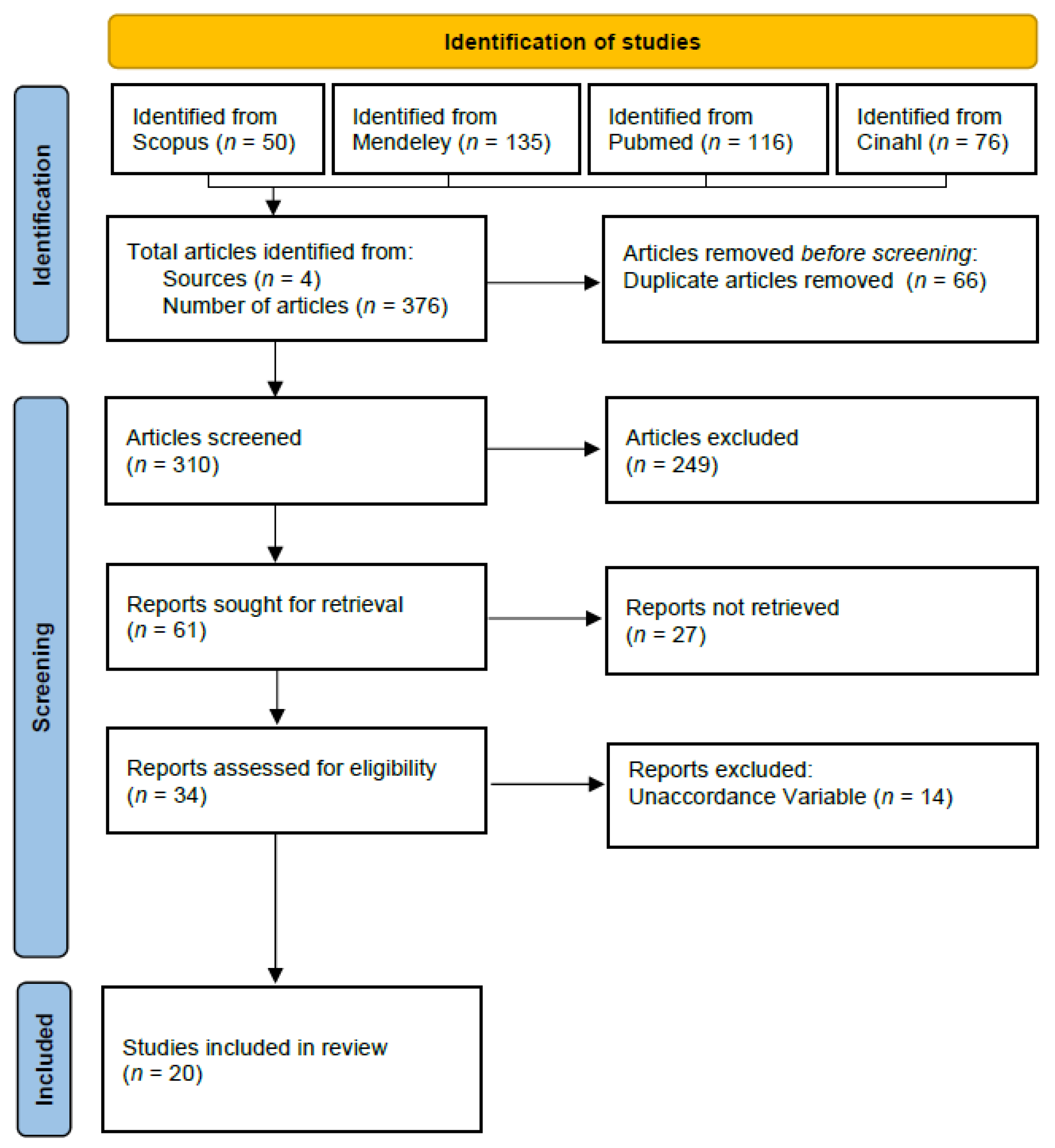
Stunting remains a public health concern in developing countries. Factors related to stunting have been categorized using various frameworks. Family plays an important role in providing nutrients for children; however, no review specifies this aspect for identifying family characteristics related to stunting. This study aimed to identify family household characteristics related to stunting among children aged less than 5 years. A scoping review was undertaken with sources from PubMed, CINAHL, and Scopus, using the keywords “family characteristics” AND “growth”. Inclusion criteria were (1) correlational study; (2) published between 2018 and 31 July 2022; (3) families with children under the age of 5 years; and (4) independent variable any measure of stunting factors from family and household factors. Of 376 articles, only 20 met the inclusion criteria of the study. The family household characteristics included individual factors (sex age, history of diarrhea, and birthplace), family factors (family headship, primary caregiver/mother, social-cultural orientation, and family system factors), and environmental factors. Various child variables, family factors, and environmental factors (the type of home, floor type, water access, source of drinking water, and household electricity) were identified as being associated with stunting. Therefore, these factors should be evaluated to prevent and control stunting, and they should be incorporated into health programs targeting stunting.
Keywords: family; household; stunting family; household; stunting