


Abstract
There are 26 million refugees globally, with as many as 80% facing food insecurity irrespective of location. Food insecurity results in malnutrition beginning at an early age and disproportionately affects certain groups such as women. Food security is a complex issue and must consider gender, policies, social and cultural contexts that refugees face. Our aim is to assess what is known about food security interventions in refugees and identify existing gaps in knowledge. This scoping review followed the guidelines set out in the PRISMA Extension for Scoping Reviews. We included all articles that discussed food security interventions in refugees published between 2010 and 2020. A total of 57 articles were eligible for this study with most interventions providing cash, vouchers, or food transfers; urban agriculture, gardening, animal husbandry, or foraging; nutrition education; and infant and young child feeding. Urban agriculture and nutrition education were more prevalent in destination countries. While urban agriculture was a focus of the FAO and cash/voucher interventions were implemented by the WFP, the level of collaboration between UN agencies was unclear. Food security was directly measured in 39% of studies, half of which used the UN’s Food Consumption Score, and the remainder using a variety of methods. As substantiated in the literature, gender considerations are vital to the success of food security interventions, and although studies include this in the planning process, few see gender considerations through to implementation. Including host communities in food security interventions improves the refugee–host relationship. Collaboration should be encouraged among aid organizations. To assess intervention efficacy, food security should be measured with a consistent tool. With the number of refugees in the world continuing to rise, further efforts are required to transition from acute aid to sustainability through livelihood strategies.
1. Introduction
There are 26 million refugees (“someone who is unable or unwilling to return to their country of origin owing to a well-founded fear of being persecuted for reasons of race, religion, nationality, membership of a particular social group, or political opinion” [1]) around the world (approximately 50% are children) along with another 45.7 million internally displaced people (“[those who] have not crossed a border to find safety. Unlike refugees, they are on the run at home” [2]) and 4.2 million asylum seekers (“someone whose request for sanctuary has yet to be processed” [3]) [4]. The top source countries of refugees as of 2020 include Syria, Venezuela, Afghanistan, South Sudan, and Myanmar [4]. While some refugees reside in camps, the vast majority live in makeshift cities and host communities in neighbouring countries, where rising tensions have been reported [5]. Some refugees are provided the opportunity to resettle in countries such as Canada or those in Europe and others are repatriated [6]. The instability of many countries around the world due to war, religious and cultural persecution, and environmental disasters continues to increase the numbers of people fleeing their homes every day.
Recent conflicts around the globe are creating larger numbers of refugees for more prolonged periods of time. In desperation, refugees pay to board unsafe, overloaded water vessels. Many do not make it across with the number of dead and missing at its highest of more than 5000 in 2016 [7]. Families are forced to separate, people are met with long wait times trying to enter refugee camps in neighbouring countries, and some countries close their borders forcing refugees to search for asylum elsewhere. The protracted nature of crises such as that of Afghanistan and Syria strains host countries and aid agencies, stretching resources thin and impacting health care, food security, and livelihoods.
The United Nations Refugee Agency (UNHCR) reports that 80% of the world’s displaced people are in locations suffering from acute food insecurity and malnutrition [8]. The COVID-19 pandemic continues to exacerbate the situation. Food security exists when all people at all times have access to safe and nutritious food appropriate for culture and lifestyle [9]. Food security must be examined across four pillars: physical availability of food, economic and physical access to food, food utilization, and stability over time [10]. The right to food and food security cannot exist without addressing the restrictive laws and policies refugees face in many countries such as those around employment and freedom of movement [11], yet food security remains a complex issue.
Particular consideration is needed for the most vulnerable, including women and girls; children; lesbian, gay, bisexual, transgender, queer and/or questioning, intersex, asexual, two spirit, and others (LGBTQIA2S+); the elderly; and persons with disabilities [12,13]. Women and children are particularly at risk of violence, sexual exploitation, and abuse as families are often separated during migration and refugees are forced to seek help from smugglers and others who take advantage of them, and refugee camps have high population densities with limited services. LGBTQIA2S+ populations are discriminated against, harassed, abused, and murdered, particularly in countries with anti-LGBTQIA2S+ legislation [14]. The elderly and persons with disabilities face barriers when it comes to accessing resources—such as water if collection points are far from their shelter—healthcare, and other services [15]. Gender roles are important in terms of household finances and food security. All over the world, women have a slightly higher prevalence of food insecurity compared to men [16]. Women are likely to prioritize food needs of spouses and children while compromising their own [17,18]. Culture is another important consideration because a lack of culturally available foods can destabilize cultural identity, affecting both physical and mental health [19]. Food insecurity results in a double burden of disease where malnutrition in childhood is followed by early establishment of chronic diseases later in life. The 2020 Global Nutrition Report indicates that 149 million children less than five years of age are stunted, 50 million are wasted, and 40 million are overweight [20]. Malnutrition is very common in refugee children [21]. Information is available on women and children; however, LGBTQIA2S+, the elderly, and those with disabilities are often overlooked in the design and implementation of humanitarian aid [14,15,22].
Some people live their whole lives in refugee camps with little hope of an autonomous future, yet they do what they can with their limited resources to survive. In camps, refugees are reliant upon aid, provided rations, vouchers, or cash for food. In makeshift cities, they can remain isolated from the host community where significant tensions exist [5,23]. Supplemental and therapeutic feeding centres are common for infant and young child feeding, target both refugees and host communities, and have proven to be successful in addressing malnutrition [24]. A vital strategy is to work with host countries to provide refugees with documentation to allow them the same rights as other citizens so they can access basic necessities like education, healthcare, and employment [25]. Such approaches improve self-reliance and mental health and provide training opportunities for refugees to build the gap between market demand and refugee skills, considering gender and other social and cultural contexts [26].
In resettlement countries, food security remains an issue. Migrants find cultural foods expensive, hard to obtain, and although people often have cooking skills, the unfamiliarity of new foods and how to prepare them pose challenges [19]. Refugees are provided aid for a short period of time, but many barriers such as language and lack of recognition of education from their home country makes it difficult to land jobs that pay well. For example, preliminary data indicates that 70% of Syrian refugees in Canada experience food insecurity [27].
Many countries around the world are welcoming refugees and donating money towards helping those in need. For example, United Nations Agencies and nongovernmental organization (NGO) partners pledged $5.5 billion USD to assist Syrian refugees in 2020 [28]. With the numbers of refugees continuing to rise year after year, we need to review how we are helping these vulnerable people. Therefore, it is important to assess the types of food security interventions and identify the gaps in research to inform future programming to maximize efficiency of resources and help the largest number of people by the greatest extent possible.
Objectives
The objective of this scoping review is to assess what is known about food security interventions in refugees and identify existing gaps in knowledge.
Although our ultimate interest is refugees, interventions aimed towards other populations such as asylum seekers and displaced persons would be similar and so were also included. Interventions included formal interventions from research and humanitarian aid agencies such as cash and food transfers, food vouchers, urban agriculture, community gardens and kitchens. We are interested in knowing what interventions are most successful for refugees. We know that Community Based Participatory Research should be prioritized for successful interventions, placing the population of interest at the core, and engaging them throughout the entire research process. Therefore, we also included informal interventions implemented by refugees themselves such as the development of informal economies (“the diversified set of economic activities, enterprises, jobs, and workers that are not regulated or protected by the state...[including] wage employment in unprotected jobs” [29]). Although we are interested in which interventions are most successful, we also need to know what has been attempted with minimal to no success. Therefore, instead of only including successful interventions, we included all interventions. Refugee food security is a global issue, thus our review includes interventions from all countries, keeping in mind that different types of interventions will be observed according to where the country is along the migration process, from point of entry countries to transit countries, to final destination countries.
2. Methods
This scoping review followed the guidelines set out in the PRISMA Extension for Scoping Reviews (PRISMA-ScR): Checklist and Explanation (2018) article [30].
2.1. Eligibility Criteria
Inclusion criteria for this scoping review included any article that discussed a food security intervention in refugees. Articles were excluded if they were published prior to 2010, were not available in the English language, were not about food security interventions in refugees, or were exploratory studies, protocol or framework papers, conference abstracts, or review articles. For articles published by UN agencies, only those with an accompanying evaluation were included to incorporate a measure of effectiveness of interventions.
2.2. Information Sources and Selection
The search was executed on 29 June 2020 in Ovid MEDLINE, Global Health, Public Health Databases, SCOPUS, and CABI Abstracts Global Health (from Web of Science). The search strategies were developed in consultation with the research team and a librarian experienced in scoping reviews. A sample search strategy from Ovid MEDLINE can be found in Supplementary Table S1: Sample search strategy. Search results were exported to EndNote X9 3.3 and duplicates removed [31]. Articles published from 2010 to 2020 were scanned in the Journal of Refugee Studies, the Journal of Immigration and Refugee Studies, and the Emergency Nutrition Network. The reference lists of all included studies were scanned for articles published from 2010 to 2020 that met the eligibility criteria. Grey literature was also included by scanning United Nations (UN) websites including the UNHCR, the Food and Agriculture Organization of the UN (FAO), the World Food Programme of the UN (WFP), and the World Health Organization. The titles and abstracts were scanned for eligibility criteria by authors CNN and KEL while any disagreements were discussed amongst all authors (CNN, KEL, and HAV) until consensus was reached.
2.3. Data Charting Process and Data Items
A form was developed in Microsoft Excel to extract all necessary details from the included articles: study location, study design (sample sizes at the household/family level vs. individual level and in the intervention vs. evaluation including pre and post), food security measurement tool, participants (age and gender), whether or not the intervention considers gender and any other at-risk groups, outcomes/important results, and limitations. Authors CNN and KEL charted the data and updated the form in an iterative process.
2.4. Synthesis of Results
Results are presented using a series of tables and figures to best depict the different results.
3. Results
Selection and Characteristics of Sources of Evidence
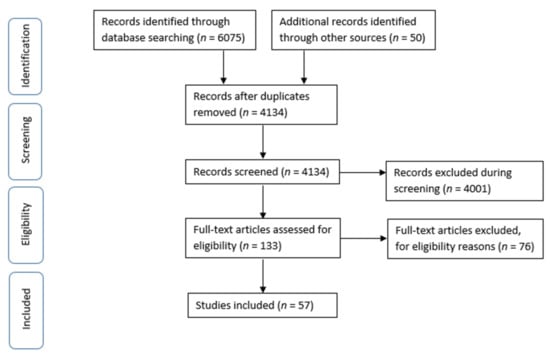
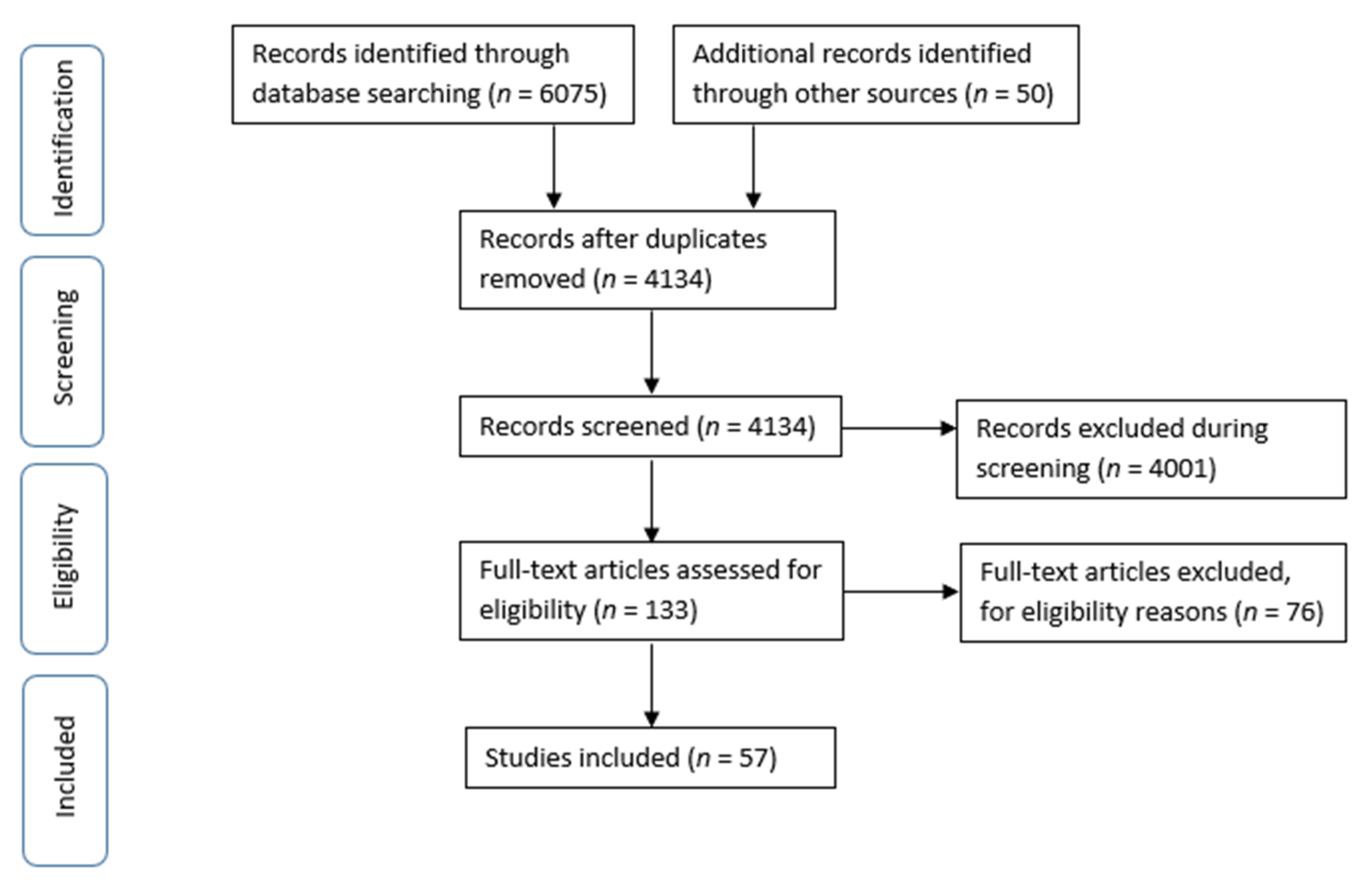
The removal of duplicates left a total of 4134 citations from electronic databases, journal scans, and reference list searches. Scanning titles and abstracts based on the eligibility criteria outlined above resulted in the exclusion of 4001 articles. We then went through 133 full text articles, whereby another 76 were excluded for not being about refugees or not distinguishing refugees from other population groups (e.g., immigrants), not including an intervention (cross-sectional, exploratory, simulation), or being a review, opinion, or policy. Therefore, a total of 57 articles were eligible for this study (Figure 1).
Figure 1.
PRISMA Flow Diagram.
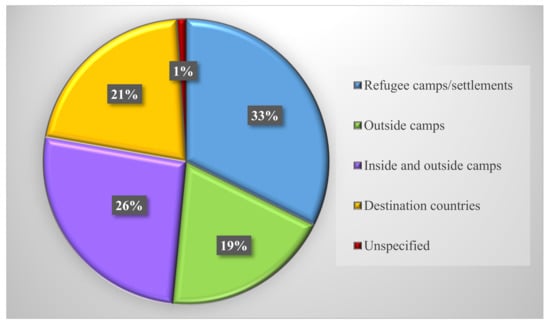
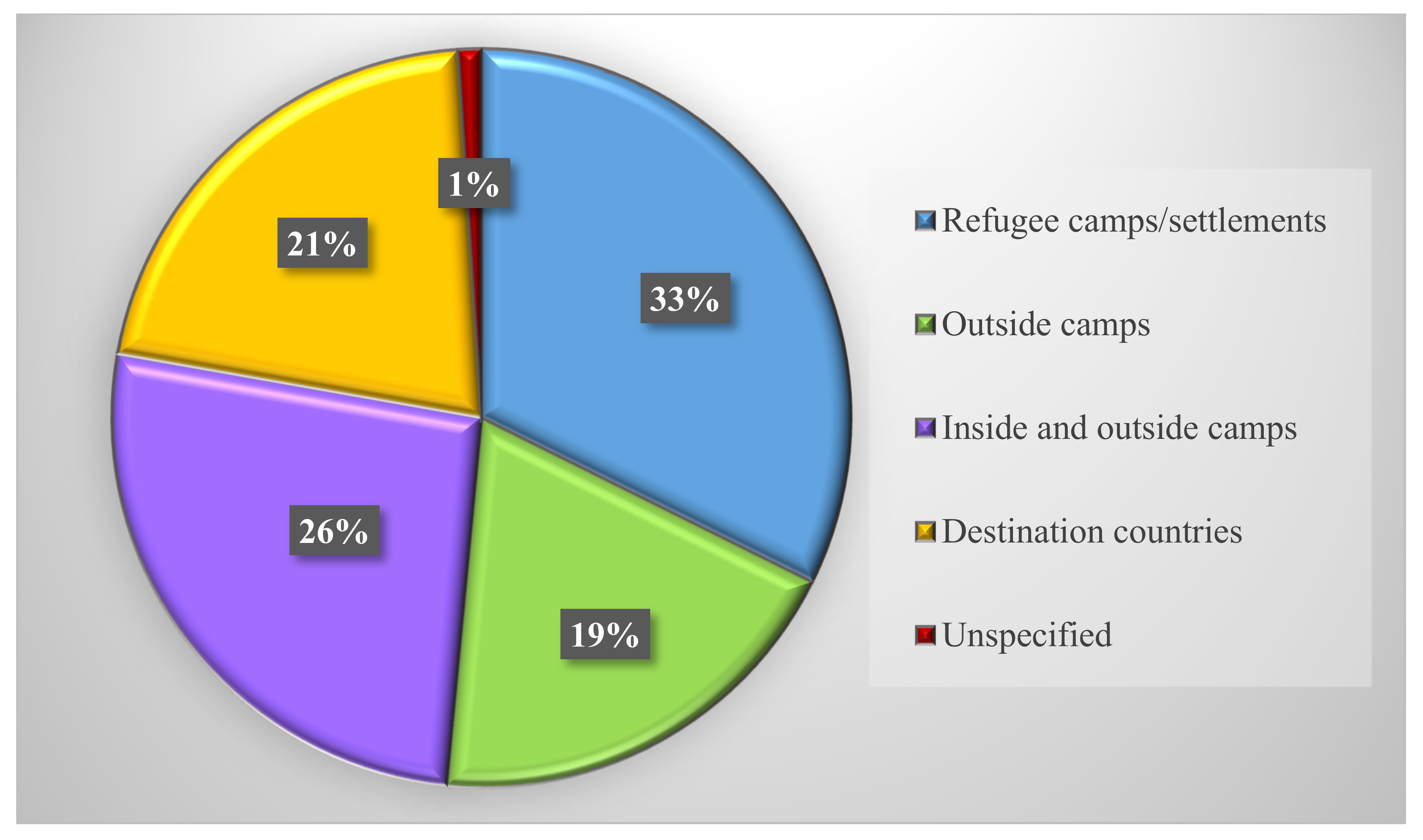
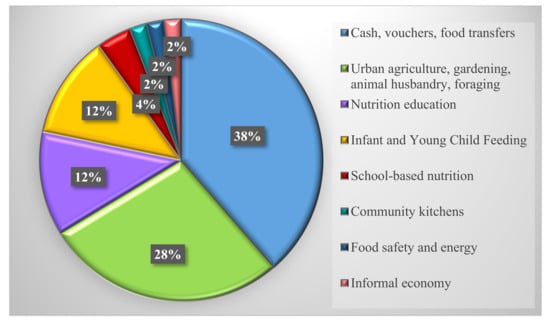
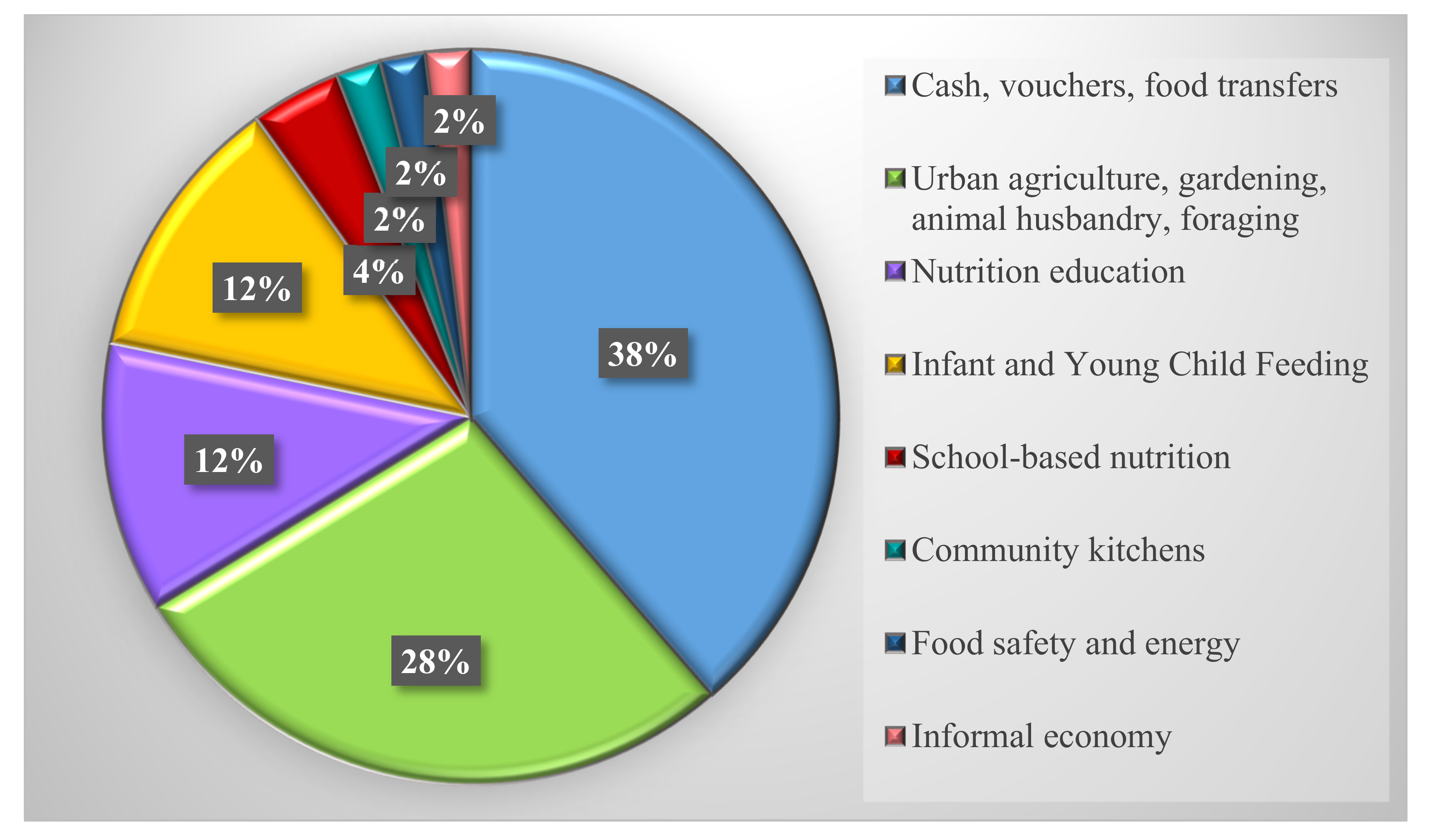
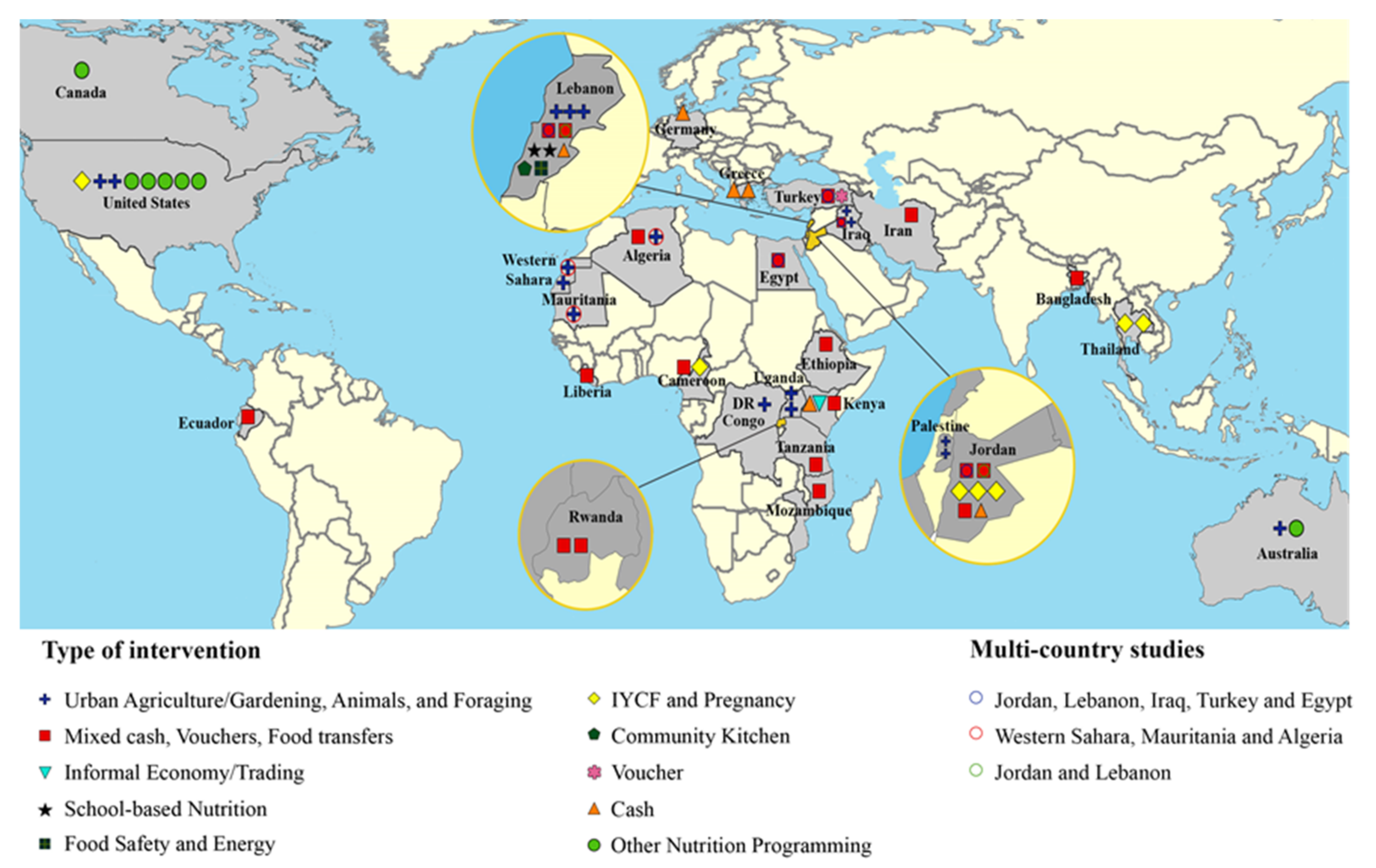
Table 1 is organized by the first author’s last name and provides details on the characteristics of all included articles including aim, study design, and outcomes. We examined articles by location and found that 32% targeted refugee camps and/or settlements, 19% were outside camps, 26% were both inside and outside camps, one article did not specify, and 21% were in destination countries (Figure 2). We also found that 67% of interventions targeted refugees only, while 33% targeted both refugees and host communities. Only 47% of the articles indicated a consideration for gender when designing and implementing the interventions (i.e., programs were targeted specifically to women and/or women were prioritized by being provided e-transfers to manage household expenses or given roles to oversee food distribution). Few studies mentioned other at-risk populations such as children not covered by IYCF programs, the elderly and persons with disabilities. None of the studies mentioned LGBTQIA2S+. We found that 26% used a mixture of cash, vouchers, or food transfers for the intervention while another 11% were cash only interventions and 2% were voucher only. We also found that 28% of interventions were on urban agriculture, gardening, animal husbandry, or foraging; 12% on a combination of nutrition education type interventions; 12% on infant and young child feeding; 4% focused solely on school-based nutrition; 2% on community kitchens specifically; 2% on food safety and energy; and 2% on informal economy/trading (Figure 3). Table 2 is organized by location and provides details on the emerging themes from our results including location, target population, intervention type, consideration for gender, and food security measurement tool. Results indicated that 55% of interventions in nondestination countries were led by UN agencies of which 64% involved cash and/or vouchers; 20% used urban agriculture, gardening, and animal husbandry; and 16% were on infant and young child feeding and pregnancy. For destination countries, one was in Canada, one in Germany, two in Australia, and eight in the USA (Figure 4). All seven of the nutrition education interventions took place in destination countries, representing 58% of the destination country interventions. The other interventions in destination countries involved urban agriculture (25%), infant and young child feeding and pregnancy (8%), and cash (8%).
Table 1.
Characteristics of Sources of Evidence.
Figure 2.
Percent of articles by location.
Figure 3.
Percent of articles by intervention type.
Table 2.
Themes of eligible studies.
Figure 4.
Intervention types according to country.
Food security was directly measured in 39% of studies. While the remainder addressed food security with interventions such as urban agriculture, infant and young child feeding, and nutrition education programs, they did not include direct assessment. While 52% of studies that measured food security used the United Nations Food Consumption Score alone or in addition to the accompanying Diet Diversity Score or Coping Strategies Index, the other 48% each used different methods to measure food security. These methods used one question or multiple questions to assess food security status. Although many seem to be based on the FAO, the WFP, or the United States Department of Agriculture (USDA) methods—the three most well-known validated questionnaires in developing and developed countries—there is no indication that they were validated questionnaires.
4. Discussion
In this review, we evaluated food security interventions in refugees and existing gaps in knowledge. Overall, 57 studies met the inclusion criteria, mainly in the area of refugee crisis. Consistently high levels of food insecurity among refugees indicate a need for one standard tool to measure food security across locations to improve understanding around food security in different contexts and help determine best practices and policies. This review has discovered multiple gaps in research leading to limited knowledge of the efficacy of interventions in different refugee settings.
4.1. Summary of Evidence
4.1.1. Intervention Types across Geographic Locations
Areas of Refugee Crisis
Most studies in areas of refugee crisis such as the Middle East and Southeast Africa report on interventions that include a mixture of cash, vouchers, and food transfers (Figure 3). Substantive literature exists on types of interventions, providing evidence for cash-based transfers as opposed to vouchers or food rations as cash provides choice, flexibility, sense of dignity, and empowerment [23,32,33]. However, in areas where markets are not developed, such as newly established refugee camps, rations seem to be the most beneficial until informal and/or formal economies are established, and markets stabilize. When providing assistance, it is important to consider gender, the inclusion of host communities in the interventions, and the accompaniment of livelihood strategies.
When examining intervention types by UN agencies, we observed that urban agriculture was a focus of the FAO, and cash/voucher interventions were implemented by the WFP; however, there was not much mention of these two agencies working together to combine efforts. The FAO aims to achieve food security for all, the mandate of the UNHCR is to provide international protection to refugees and other persons of concern, and the role of the WFP is to use food aid to support economic and social development, meet food needs in emergency and protracted situations, and promote food security based on FAO recommendations [87,88]. Despite documents such as the 2011 Memorandum of Understanding between UNHCR and WFP being in place, details of these collaborations are lacking, and evaluations of UN agency programs recommend collaboration [81,88]. For example, a 2016 evaluation of WFP programs in Liberia indicated that UNICEF and FAO are listed as partners in the project document, yet no evidence of this collaboration could be found by the evaluation team in any other documentation. Inter-agency action-oriented collaboration could maximize resources, streamline services, and allow the development of successful plans for a transition from cash assistance to livelihood strategies and thus programmatic sustainability.
Based on recommendations from UN agency impact evaluations, in July 2020, the UNHCR and the WFP announced the launch of the “Joint Strategy for Enhancing Self-Reliance in Food Security and Nutrition in Protracted Refugee Situations” [89]. They will assess the refugee situation together, investigate the vulnerabilities, capacities and opportunities together based on their assessment, and set goals to improve self-reliance and livelihoods [89]. They will also evaluate their progress on self-reliance in food security together [89]. The new strategy has two main objectives that focus on empowering refugees and creating a supportive environment by engaging the local government and host communities [89]. Although the new joint strategy seems promising and focuses on empowering refugees by engaging all stakeholders, to our knowledge, there is no evidence to evaluate its effectiveness.
In areas of refugee crisis, when host communities are not involved in interventions, it creates feelings of hostility towards refugees as host communities feel like refugees are being helped above their own most vulnerable. The refugee–host relationship can also be affected by country policies which limit the rights of refugees limiting freedom of movement, access to work visas, ownership of land, and more, which is beyond the scope of this review. Including host communities when targeting households for food assistance improves the refugee–host relationship [46].
Livelihood strategies are important to improve sustainability of the aid provided and assist refugees in becoming self-sufficient, particularly when aid is often reduced [11]. It is of note to mention that not all interventions are purposeful, and some are instigated by refugees themselves in the form of establishing informal economies and trading in and around refugee camps [90]. It is beneficial to take note of these interventions as well because we can learn from the entrepreneurial activities of refugees when planning interventions as it is indicative of what refugees need. By providing more livelihood opportunities with the support of humanitarian aid agencies, it may be possible to improve refugee self-reliance, empowerment, and gender equity [46,47,60,76].
A considerable amount of evidence is focused on Palestinian and Syrian refugees in Lebanon and Jordan [5,41,43,48,58]. While most interventions in refugee crisis areas are focused on cash, vouchers, and food transfers, studies in Lebanon reported more sustainable programs such as school-based nutrition, community kitchens and urban agriculture, which are in the line of main interventions in developed destination countries [41,43,45,48,58].
Destination Countries
Refugees are a vulnerable population that suffer unique challenges that often affect their food security status even after entering destination countries. Our results showed few studies are being conducted on refugee food security interventions in developed destination countries despite similar levels of food insecurity between refugees in destination and nondestination countries [6,91]. For example, a Canadian study by Lane et al. (2019) reported that 50% of refugee households (from various countries of origin) were food insecure [91]. Similarly, 50% of Syrian refugees in Lebanon have been found to be food insecure [6]. It is also common to see studies in destination countries (e.g., Canadian Community Health Survey in Canada) grouping refugees with immigrants and excluding participants who cannot speak the country’s official languages, which portrays an inaccurate and underestimated image of refugee food security issues [92]. Only 17% of refugee food security intervention studies in destination countries measured food security status.
There is a significant difference in the types of interventions in developed destination countries focusing mainly on urban agriculture, gardening, animal husbandry, and foraging, and other nutrition programming such as nutrition education (Figure 3). In destination countries such as Canada, refugees are covered by direct cash support and housing programs in the first year of arrival [93]. Afterwards, based on their situation, they could be eligible for regular social assistance programs. An abrupt cessation to federal government aid may explain the high prevalence of food insecurity among refugees in destination countries a year after arrival [27].
4.1.2. Considerations for the Most Vulnerable
Gender is an important consideration when developing food security interventions. In many cultures, women are often in charge of food preparation for the household. We know that women/mothers are more likely to cut back their intake and portion sizes so that other families, particularly children, can have enough to eat [17]. Women are more likely to be food insecure and women and girls are at greater risk of gender-based violence [50,82,85,94]. Although many UN agency interventions included gender considerations in the intervention plan (e.g., planned to target women as beneficiaries of cash/food transfers), evaluations showed that these considerations are lacking during implementation [81,85]. Evaluations often indicated a need for more security, oversight, monitoring, and evaluation in camp settings [81,84]. Equitable gender considerations can be difficult because many countries still lack women’s rights and their policies and social norms may prevent women from seeking employment outside the home, and other genders are not considered due to discrimination and oppressive laws [14,32,94]. Few studies mentioned other at-risk populations such as children not covered by IYCF programs, the elderly, LGBTQIA2S+, and persons with disabilities, and research shows that these people are often overlooked in the design and implementation of humanitarian aid, indicating a need to amend interventions to assist these at-risk groups [14,15]. Although not all interventions can affect policy change, it is important to work with governments to find ways to assist the most vulnerable.
4.1.3. Assessing Food Security
Our review showed that less than half of the studies that aimed to address food security issues actually measured food security, and those that did used a variety of different tools with only some being validated. The most common tool used to measure food security was the UN’s Food Consumption Score used in 52% of the studies that measured food security, while all other tools were only used in one study each. A wide range of food security topics makes it difficult to assess the efficacy of interventions. A consistent tool that is validated in different languages is needed to accurately compare food security across locations and contexts, differentiating between adult and child food security and providing a more complete picture of food security issues in households, which would allow more targeted interventions. The WFP is evaluating the food security status of refugees in areas of refugee crises using the Consolidated Approach to Reporting Indicators of Food Security (CARI) [95]. This comprehensive tool incorporates the Food Consumption Score, economic capacity, and livelihood coping strategies, which has been widely accepted and is a good measure of food security [95]. The Household Food Security Survey Module (HFSSM) is a questionnaire containing 18 questions that assess income-related food security status at household, adult, and child levels [96]. The HFSSM has been validated and used in more than 19 languages in different countries, particularly developed destination countries [96]. The ability of the HFSSM to assess food security in households, adults, and children makes it a proper candidate as a standard tool that fills the gap in our ability to universally assess the efficacy of food security interventions in different settings. Destination countries such as Canada and the USA are using the HFSSM regularly in their nutrition and health national surveys [96]. Therefore, using either tool or a combination as a standard food security assessment tool will allow the comparison of food security status of refugees with host countries to identify the gaps and disparities.
4.2. Knowledge Gaps and Research Recommendations
A considerable number of studies in areas of refugee crisis evaluated the short-term interventions of international agencies individually [23,81,82]. There is a lack of evidence as to whether international agencies are working together on interventions they support collectively and, if so, how effective those initiatives are compared to interventions implemented by one agency alone. Further, it is not clear the extent to which international agencies work with local governments or NGOs on the sustainability of interventions that is necessary to empower refugees, enable them to be self-sufficient, improve their food security status, and contribute to local economies.
Research has shown that beneficiaries prefer cash to vouchers and rations and that cash often results in better outcomes compared to other modalities [32,33,39,40,56]. The lack of direct food security measures in many studies, along with insufficient methodologies (e.g., measures only in one time point, lack of food security measures, lack of control group), prevented an assessment of any improvement correlated with the intervention itself. The lack of a consistent tool used to measure food security prevents any comparison across studies, which goes beyond the scope of this review. Similarly, limited studies on cash, vouchers, and/or rations measured food security and considered gender in their implementation. Of those that did, none compared food security results across genders.
Grey literature indicates the role of community-based organizations and host communities in supporting and empowering refugees, particularly in destination countries [60,61,77]. Such organizations conduct interventions without proper pre- and post-evaluations, leading to lack of evidence on the impact and effectiveness of such initiatives. There is a need to identify, evaluate, and document best practices aimed to improve the food security status of refugees.
Although international agencies have clear policies and work plans with regards to food security in areas of refugee crisis, to our knowledge no study has evaluated the policies by local governments in areas of refugee crisis as well as destination countries [88,97,98]. Such studies will assist in identifying effective policies that aim to improve food security status of refugees while empowering them as new members of the host community.
Short-term interventions are necessary to alleviate hunger and other short-term effects of food insecurity among refugees. However, many protracted refugees continue to live in unstable situations in host countries, which can impact their food security status. There is limited information surrounding food security interventions in protracted crises, likely due to limited resources and international aid agencies focusing efforts on acute crises. Thus, further efforts are required to address sustainability issues when it comes to food security interventions.
4.3. Strengths and Limitations
To our knowledge, this is the first study to use a systematic approach using the PRISMA guidelines to identify and evaluate the selected literature on refugee food security interventions. The main strength of our study is the systematic method of setting eligibility criteria, identifying the literature, and detecting the gaps in research. The categorization of types of interventions and geo-mapping according to geographic locations is another strength of our study that provides insight into the distribution of the types of interventions across the globe.
Regarding limitations, we only included interventions reported in the English language as indicated in the inclusion criteria. Therefore, we were unable to identify and include reports available in different local languages. The variation in the tools used to assess food security and methods of evaluation limited us from having an overall picture of food insecurity status before the evaluation of the effectiveness of interventions.
5. Conclusions
Refugee crisis is on the rise due to climate change, war and other political and societal conflicts. Humanitarian agencies continually provide assistance and evaluate their interventions in areas of refugee crisis. The resultant evidence has provided substantive information on when to use certain types of interventions, such as cash when markets are stable and the importance of incorporating livelihood strategies to transition to a sustainable level of aid and help refugees become self-sufficient and active members of their communities. In destination countries, the types of interventions are more towards capacity building and education. Considering numerous existing interventions, the rate of food insecurity is still very high among refugees. In addition, due to lack of a proper and universal approach for evaluation, the efficacy of interventions is not clear. Further efforts are necessary to work with governments to affect policy change to advocate for the rights of marginalized populations such as children, seniors, women, LGBTQIA2S+, persons with disabilities, and minority groups. It is also vital to engage host communities and NGOs to create a welcoming culture that benefits both refugees and host communities. Finally, researchers should adopt a standard feasible food security assessment tool which is needed to assess the effectiveness of interventions across locations and countries to develop best practices based on comparative results.
Supplementary Materials
The following supporting information can be downloaded at: https://www.mdpi.com/article/10.3390/nu14030522/s1; Table S1: Sample search strategy.
Author Contributions
Conceptualization, C.N. and H.V.; methodology, C.N. and H.V.; formal analysis, C.N. and K.E.L.; data curation, C.N. and K.E.L.; writing—original draft preparation, C.N. and H.V.; writing—review and editing, C.N. and H.V.; visualization, C.N. and H.V.; supervision, H.V.; project administration, C.N.; funding acquisition, H.V. All authors have read and agreed to the published version of the manuscript.
Funding
This research was funded by The Social Sciences and Humanities Research Council (SSHRC) Canada, Fund number 423118.
Institutional Review Board Statement
Not applicable.
Informed Consent Statement
Not applicable.
Data Availability Statement
Data sharing not applicable to this scoping review.
Conflicts of Interest
The authors declare no conflict of interest.
References
- The UN Refugee Agency. Convention and Protocol Relating to the Status of Refugees; The UN Refugee Agency: Geneva, Switzerland, 2010; Available online: https://www.unhcr.org/protection/basic/3b66c2aa10/convention-protocol-relating-status-refugees.html (accessed on 1 August 2021).
- The UN Refugee Agency. Internally Displaced People; The UN Refugee Agency: Geneva, Switzerland, 2021; Available online: https://www.unhcr.org/internally-displaced-people.html (accessed on 1 August 2021).
- The UN Refugee Agency. Asylum-Seekers; The UN Refugee Agency: Geneva, Switzerland, 2021; Available online: https://www.unhcr.org/asylum-seekers.html (accessed on 1 August 2021).
- The UN Refugee Agency. Figures at a Glance; The UN Refugee Agency: Geneva, Switzerland, 2020; Available online: https://www.unhcr.org/figures-at-a-glance.html (accessed on 1 August 2021).
- World Food Programme. An Evaluation of WFP’s Regional Response to the Syrian Crisis 2011–2014; World Food Programme: Rome, Italy, 2015; Available online: https://www.wfp.org/publications/evaluation-wfps-regional-response-syrian-crisis-2011-2014 (accessed on 28 November 2020).
- The UN Refugee Agency. Regional Refugee and Resilience Plan (3RP): In Response to the Syria Crisis: Regional Strategic Overview 2021–2022; The UN Refugee Agency: Geneva, Switzerland, 2020; Available online: http://www.3rpsyriacrisis.org/wp-content/uploads/2021/03/RSO_2March2021upd.pdf (accessed on 23 November 2020).
- The UN Refugee Agency. Operational Portal Refugee Situations: Mediterranean Situation; The UN Refugee Agency: Geneva, Switzerland, 2021; Available online: http://data2.unhcr.org/en/situations/mediterranean-_ga=2.231906713.787304818.1598719474-1502710622.1598291859 (accessed on 15 October 2020).
- The UN Refugee Agency. Global Trends: Forced Displacement in 2019; The UN Refugee Agency: Geneva, Switzerland, 2020; Available online: https://www.unhcr.org/5ee200e37.pdf (accessed on 25 November 2020).
- Food and Agriculture Organization of the United Nations. World Food Summit: Rome Declaration on World Food Security; Food and Agriculture Organization of the United Nations: Rome, Italy, 1996; Available online: http://www.fao.org/3/w3613e/w3613e00.htm (accessed on 3 July 2021).
- Committee on World Food Security. Global Strategic Framework for Food Security and Nutrition; Committee on World Food Security: Rome, Italy, 2014; Available online: http://www.fao.org/cfs/policy-products/gsf/en/ (accessed on 15 September 2020).
- Oliver, M.; Ilcan, S. The politics of protection: The right to food in protracted refugee situations. Refug. Surv. Q. 2018, 37, 440–457. [Google Scholar] [CrossRef] [Scilit]
- U.S Department of State; Bureau of Population, Refugees, and Migration. At-Risk Populations. Available online: https://www.state.gov/other-policy-issues/at-risk-populations/ (accessed on 27 December 2021).
- Women at Risk International. Refugees at Risk. Available online: https://warinternational.org/refugees-at-risk/ (accessed on 27 December 2021).
- World Economic Forum. Forgotten Twice: The Untold Story of LGBT Refugees; World Economic Forum: Cologny, Switzerland, 2018; Available online: https://www.weforum.org/agenda/2018/01/forgotten-twice-lgbt-refugees/ (accessed on 27 December 2021).
- Burton, A.; Breen, C. Older refugees in humanitarian emergencies. Lancet Suppl. 2002, 360, s47–s48. [Google Scholar] [CrossRef] [Scilit]
- Food and Agriculture Organization of the United Nations; International Fund for Agricultural Development; United Nations Children’s Fund; World Food Programme; World Health Organization. The State of Food Security and Nutrition in the World 2020: Safeguarding against Economic Slowdowns and Downturns; Food and Agriculture Organization of the United Nations: Rome, Italy, 2020. [Google Scholar] [CrossRef] [Scilit]
- Matheson, J.; McIntyre, L. Women respondents report higher household food insecurity than do men in similar Canadian households. Public Health Nutr. 2014, 17, 40–48. [Google Scholar] [CrossRef] [Scilit] [PubMed]
- Haddad, L.J.; Peña, C.; Nishida, C.; Quisumbing, A.R.; Slack, A. Food Security and Nutrition Implications of Intrahousehold Bias: A Review of Literature; Food Consumption and Nutrition Division, International Food Policy Research Institute: Washington, DC, USA, 1996; Available online: https://www.ifpri.org/publication/food-security-and-nutrition-implications-intrahousehold-bias (accessed on 15 September 2020).
- Moffat, T.; Mohammed, C.; Newbold, K.B. Cultural dimensions of food insecurity among immigrants and refugees. Hum. Organ. 2017, 76, 15–27. [Google Scholar] [CrossRef] [Scilit]
- Development Initiatives Poverty Research Ltd. 2020 Global Nutrition Report; Development Initiatives Poverty Research Ltd.: Bristol, UK, 2020; Available online: https://globalnutritionreport.org/reports/2020-global-nutrition-report/ (accessed on 15 September 2020).
- The UN Refugee Agency. Nutrition and Food Security; The UN Refugee Agency: Geneva, Switzerland, 2021; Available online: https://www.unhcr.org/nutrition-and-food-security.html (accessed on 10 October 2020).
- International Disability Alliance. Disability and Food Security: An Unfinished Policy Agenda; International Disability Alliance: New York, NY, USA, 2018; Available online: https://www.internationaldisabilityalliance.org/fao-food-insecurity (accessed on 27 December 2021).
- Dunlop, K.; Ellina, M.; Smith, E. Evaluation of the Effects of Cash Based Interventions on Protection Outcomes in Greece. In Action Against Hunger UK’s Monitoring, Evaluation and Learning Services; The UN Refugee Agency: Geneva, Switzerland, 2018. [Google Scholar]
- Carroll, G.J.; Lama, S.D.; Martinez-Brockman, J.L.; Pérez-Escamilla, R. Evaluation of nutrition interventions in children in conflict zones: A narrative review. Adv. Nutr. 2017, 8, 770–779. [Google Scholar] [CrossRef] [Scilit] [PubMed]
- The UN Refugee Agency. Ending Statelessness; The UN Refugee Agency: Geneva, Switzerland, 2021; Available online: https://www.unhcr.org/ending-statelessness (accessed on 15 September 2020).
- The UN Refugee Agency. In Search of Solutions: Addressing Statelessness in the Middle East and North Africa; The UN Refugee Agency: Geneva, Switzerland, 2016; Available online: https://www.refworld.org/pdfid/5829c32a4.pdf (accessed on 15 September 2020).
- Al-Kharabsheh, L.; Al-Bazz, S.; Koc, M.; Garcia, J.; Lane, G.; Engler-Stringer, R.; White, J.; Vatanparast, H. Household food insecurity and associated socio-economic factors among recent Syrian refugees in two Canadian cities. Bord. Crossing 2020, 10, 203–214. [Google Scholar] [CrossRef] [Scilit]
- The UN Refugee Agency. UN and Partners Launch Plan to Support Syrian Refugees and Countries Hosting Them as Number of Syrian Refugee New-Borns Reaches One Million Mark; The UN Refugee Agency: Geneva, Switzerland, 2018; Available online: https://www.unhcr.org/news/press/2018/12/5c0f80eb4/un-partners-launch-plan-support-syrian-refugees-countries-hosting-number.html (accessed on 15 September 2020).
- Women in Informal Employment: Globalizing and Organizing. Informal Economy. 2021. Available online: https://www.wiego.org/informal-economy-:~:text=The%20informal%20economy%20is%20the,wage%20employment%20in%20unprotected%20jobs (accessed on 10 October 2020).
- Tricco, A.C.; Lillie, E.; Zarin, W.; O’Brien, K.K.; Colquhoun, H.; Levac, D.; Moher, D.; Peters, M.D.J.; Horsley, T.; Weeks, L.; et al. PRISMA extension for scoping reviews (PRISMA-ScR): Checklist and explanation. Ann. Intern. Med. 2018, 169, 467–473. [Google Scholar] [CrossRef] [Scilit]
- Clarivate Analytics, Endnote. Version X9 [Software]. 2021. Available online: https://endnote.com/ (accessed on 1 August 2021).
- Abu Hamad, B.; Jones, N.; Samuels, F.; Gercama, I.; Presler-Marshall, E.; Plank, G. A Promise of Tomorrow: The Effects of UNHCR and UNICEF Cash Assistance on Syrian Refugees in Jordan; Overseas Development Institute: London, UK, 2017; Available online: https://odi.org/en/publications/a-promise-of-tomorrow-the-effects-of-unhcr-and-unicef-cash-assistance-on-syrian-refugees-in-jordan/ (accessed on 9 November 2020).
- Alloush, M.; Taylor, J.E.; Gupta, A.; Rojas Valdes, R.I.; Gonzalez-Estrada, E. Economic life in refugee camps. World Dev. 2017, 95, 334–347. [Google Scholar] [CrossRef] [Scilit]
- Alsamman, S. Managing infant and young child feeding in refugee camps in Jordan. Field Exch. 2014, 48, 85. Available online: https://www.ennonline.net/fex/48/managinginfant (accessed on 2 November 2020).
- Aste, N.; Barbieri, J.; Berizzi, A.; Colombo, E.; Del Pero, C.; Leonforte, F.; Merlo, M.; Riva, F. Innovative energy solutions for improving food preservation in humanitarian contexts: A case study from informal refugees settlements in Lebanon. Sustain. Energy Technol. Assess. 2017, 22, 177–187. [Google Scholar] [CrossRef] [Scilit]
- Battistin, F. Impact Evaluation of the Lebanon Multipurpose Cash Assistance Programme; Lebanon Cash Consortium: Beirut, Lebanon, 2017; p. 52. Available online: https://resourcecentre.savethechildren.net/library/impact-evaluation-multipurpose-cash-assistance-programme (accessed on 9 November 2020).
- Betts, A.; Omata, N.; Sterck, O. The Kalobeyei settlement: A self-reliance model for refugees? J. Refug. Stud. 2020, 33, 189–223. [Google Scholar] [CrossRef] [Scilit]
- Bloom, J.D.; Hardison-Moody, A.; Schulman, M. Bonding and bridging: Leveraging immigrant and refugee community assets to support healthy eating. Community Dev. 2018, 49, 211–230. [Google Scholar] [CrossRef] [Scilit]
- Boston Consulting Group. Food-restricted voucher or unrestricted cash? In How to Best Support Syrian refugees in Jordan and Lebanon? World Food Programme: Rome, Italy, 2017; Available online: https://reliefweb.int/report/lebanon/food-restricted-voucher-or-unrestricted-cash-how-best-support-syrian-refugees-jordan (accessed on 10 October 2020).
- De Bruin, N.; Becker, P. Encampment and cash-based transfer: Concord and controversy in the World Food Programme’s pilot project in Nyarugusu Refugee Camp in Tanzania. J. Immigr. Refug. Stud. 2019, 17, 492–508. [Google Scholar] [CrossRef] [Scilit]
- Dehnavi, S.; Suss, V. Urban agriculture towards food security of Syrian refugees and vulnerable Lebanese host communities. Dev. Pract. 2019, 29, 635–644. [Google Scholar] [CrossRef] [Scilit]
- Eggert, L.K.; Blood-Siefried, J.; Champagne, M.; Al-Jumaily, M.; Biederman, D.J. Coalition building for health: A community garden pilot project with apartment dwelling refugees. J. Community Health Nurs. 2015, 32, 141–150. [Google Scholar] [CrossRef] [Scilit]
- El Harake, M.D.; Kharroubi, S.; Hamadeh, S.K.; Jomaa, L. Impact of a pilot school-based nutrition intervention on dietary knowledge, attitudes, behavior and nutritional status of Syrian refugee children in the Bekaa, Lebanon. Nutrients 2018, 10, 913. [Google Scholar] [CrossRef] [Scilit]
- Fander, G.; Frega, M. Responding to nutrition gaps in Jordan in the Syrian refugee crisis: Infant and Young Child Feeding education and malnutrition treatment. Field Exch. 2014, 48, 82–84. Available online: https://www.ennonline.net/fex/48/responding (accessed on 9 November 2020).
- Food and Agriculture Organization of the United Nations. Improving the Nutrition of Syrian Refugees and Host Communities through Garden Walls; Food and Agriculture Organization of the United Nations: Rome, Italy, 2016; Available online: https://reliefweb.int/report/lebanon/improving-nutrition-syrian-refugees-and-host-communities-through-garden-walls (accessed on 15 September 2020).
- Food and Agriculture Organization of the United Nations. Vegetable and Staple Food Production in Refugee Settlements in Northern and Mid-Western Uganda; Food and Agriculture Organization of the United Nations: Rome, Italy, 2018; Available online: http://www.fao.org/resilience/resources/resources-detail/en/c/1046064/ (accessed on 15 September 2020).
- Food and Agriculture Organization of the United Nations. South Sudanese Refugees Regain Livelihoods in the Democratic Republic of the Congo; Food and Agriculture Organization of the United Nations: Rome, Italy, 2020; Available online: http://www.fao.org/in-action/south-sudanese-refugees-regain-livelihoods-drc/en/ (accessed on 15 September 2020).
- Ghattas, H.; Choufani, J.; Jamaluddine, Z.; Masterson, A.R.; Sahyoun, N.R. Linking women-led community kitchens to school food programmes: Lessons learned from the Healthy Kitchens, Healthy Children intervention in Palestinian refugees in Lebanon. Public Health Nutr. 2019, 23, 914–923. [Google Scholar] [CrossRef] [Scilit]
- Gichunge, C.; Kidwaro, F. Utamu wa Afrika (the sweet taste of Africa): The vegetable garden as part of resettled African refugees’ food environment. Nutr. Diet. 2014, 71, 270–275. [Google Scholar] [CrossRef] [Scilit]
- Giordano, N.; Dunlop, K.; Gabay, T.; Sardiwal, D. Action Against Hunger UK’s Monitoring, Evaluation and Learning Services. Evaluation Synthesis of UNHCR’s Cash Based Interventions in Jordan; The UN Refugee Agency: Geneva, Switzerland, 2017; Available online: https://www.unhcr.org/5a5e16607.pdf (accessed on 9 November 2020).
- Goh, J.; Kurschner, S.; Esmail, T.; Van Arneman, J. When money speaks: Behind asylum seekers’ consumption patterns. Forced Migr. Rev. 2017, 54, 91–93. Available online: https://www.fmreview.org/resettlement/goh-kurschner-esmail-vanarneman (accessed on 23 October 2020).
- Gold, A.; Yu, N.; Buro, B.; Garden-Robinson, J. Discussion map and cooking classes: Testing the effectiveness of teaching food safety to immigrants and refugees. J. Nutr. Educ. Behav. 2014, 46, 547–553. [Google Scholar] [CrossRef] [Scilit] [PubMed]
- Gunnell, S.; Christensen, N.K.; Jewkes, M.D.; LeBlanc, H.; Christofferson, D. Providing nutrition education to recently resettled refugees: Piloting a collaborative model and evaluation methods. J. Immigr. Minority Health 2015, 17, 482–488. [Google Scholar] [CrossRef] [Scilit]
- Hartwig, K.A.; Mason, M. Community gardens for refugee and immigrant communities as a means of health promotion. J. Community Health 2016, 41, 1153–1159. [Google Scholar] [CrossRef] [Scilit] [PubMed]
- Hashmi, A.; Carrara, V.I.; Nyein, P.B.; Darakamon, M.C.; Charunwatthana, P.; McGready, R. The Healthy Baby Flipbook: Piloting home-based counseling for refugee mothers to improve infant feeding and water, sanitation, and hygiene (WASH) practices. Glob. Health Action 2019, 12, 1560115. [Google Scholar] [CrossRef] [Scilit] [PubMed]
- Hidrobo, M.; Hoddinott, J.; Peterman, A.; Margolies, A.; Moreira, V. Cash, food, or vouchers? Evidence from a randomized experiment in northern Ecuador. J. Dev. Econ. 2014, 107, 144–156. [Google Scholar] [CrossRef] [Scilit]
- Hoddinott, J.; Dorosh, P.; Filipski, M.; Rosenbach, G.; Tiburcio, E. Food transfers, electronic food vouchers and child nutritional status among Rohingya children living in Bangladesh. PLoS ONE 2020, 15, e0230457. [Google Scholar] [CrossRef] [Scilit] [PubMed]
- Ibrahim, N.; Honein-AbouHaidar, G.; Jomaa, L. Perceived impact of community kitchens on the food security of Syrian refugees and kitchen workers in Lebanon: Qualitative evidence in a displacement context. PLoS ONE 2019, 14, e0210814. [Google Scholar] [CrossRef] [Scilit]
- Inglis, K.; Vargas, J. Experiences of the e-Food card programme in the Turkish refugee camps. Field Exch. 2014, 48, 145–147. [Google Scholar]
- Karama Organization. Rooftop Gardens for Refugee Women in Deheishe Refugee Camp; Karama Organization: The West Bank, Palestine, 2015; Available online: http://www.karama.org/eng/rooftop_farms.html-:~:text=Rooftop%20Gardens%20for%20Refugee%20Women%20in%20Deheishe%20Refugee%20Camp&text=The%20gardens%20enable%20the%20women,reduces%20their%20levels%20of%20stress (accessed on 23 October 2020).
- Mannion, C.A.; Raffin-Bouchal, S.; Henshaw, C.J. Navigating a strange and complex environment: Experiences of Sudanese refugee women using a new nutrition resource. Int. J. Women’s Health 2014, 6, 411–422. [Google Scholar] [CrossRef] [Scilit]
- McElrone, M.; Colby, S.; Fouts, H.N.; Spence, M.; Kavanagh, K.; Franzen-Castle, L.; Olfert, M.F.; Kattelmann, K.K.; White, A.A. Feasibility and acceptability of implementing a culturally adapted cooking curriculum for Burundian and Congolese refugee families. Ecol. Food Nutr. 2020, 59, 598–614. [Google Scholar] [CrossRef] [Scilit]
- Millican, J.; Perkins, C.; Adam-Bradford, A. Gardening in displacement: The benefits of cultivating in crisis. J. Refug. Stud. 2019, 32, 351–371. [Google Scholar] [CrossRef] [Scilit]
- Mochizuki, Y. The livelihood strategies of South Sudanese in a refugee settlement in Uganda. Localization Humanit. Assist. Framew. East Afr. Pastor. 2017, 53, 131–139. [Google Scholar]
- Ngwenyi, E. Addressing acute malnutrition in Cameroon during an emergency: Results and benefits of an integrated prevention programme. Field Exch. 2019, 60, 96–100. [Google Scholar]
- Oka, R. Unlikely cities in the desert: The informal economy as causal agent for permanent “urban” sustainability in Kakuma Refugee Camp, Kenya. Urban Anthropol. 2011, 40, 223–262. [Google Scholar]
- Pavanello, S. Multi-Purpose Cash and Sectoral Outcomes: Greece Case Study; The UN Refugee Agency: Geneva, Switzerland, 2018; Available online: https://www.unhcr.org/protection/operations/5b2cfa1f7/multi-purpose-cash-sectoral-outcomes-case-study-greece.html (accessed on 25 October 2020).
- Qleibo, E.; Nada, E.A.; Mushtaha, W.; Campbell, J. Cash voucher programme and rabbit raising intervention in Gaza. Field Exch.-Emerg. Nutr. Netw. ENN 2013, 46, 10–12. Available online: https://www.ennonline.net/fex/46/cash (accessed on 8 November 2020).
- Sebuliba, H.; El-Zubi, F. Meeting Syrian refugee children and women nutritional needs in Jordan. Field Exch. 2014, 48, 74–75. Available online: https://www.ennonline.net/fex/48/meetingsyrian (accessed on 8 November 2020).
- Smock, L.; Martelon, M.; Metallinos-Katsaras, E.; Nguyen, T.; Cochran, J.; Geltman, P.L. Recovery from malnutrition among refugee children following participation in the special supplemental nutrition for Women, Infants, and Children (WIC) program in Massachusetts, 1998–2010. J. Public Health Manag. Pract. 2020, 26, 71–79. [Google Scholar] [CrossRef] [Scilit]
- Stuetz, W.; Carrara, V.I.; McGready, R.; Lee, S.J.; Sriprawat, K.; Po, B.; Hanboonkunupakarn, B.; Grune, T.; Biesalski, H.K.; Nosten, F.H. Impact of food rations and supplements on micronutrient status by trimester of pregnancy: Cross-sectional studies in the Maela refugee camp in Thailand. Nutrients 2016, 8, 66. [Google Scholar] [CrossRef] [Scilit]
- Süẞ, V. Role of urban agriculture to increase food security and economic resilience of refugees and vulnerable host communities. In The Case of Syrian Refugees in Bourj Hammoud, Lebanon; Cologne University of Applied Science: Köln, Germany, 2018. [Google Scholar]
- Tomkins, M.; Yousef, S.; Adam-Bradford, A.; Perkins, C.; Grosrenaud, E.; McTough, M.; Viljoen, A. Cultivating refuge: The role of urban agriculture amongst refugees and forced migrants in the Kurdistan region of Iraq. Int. J. Des. Nat. Ecodynamics 2019, 14, 103–118. Available online: https://reliefweb.int/report/iraq/cultivating-refuge-role-urban-agriculture-amongst-refugees-and-forced-migrants-kurdistan (accessed on 8 November 2020). [CrossRef] [Scilit]
- Trapp, M. What’s on the table: Nutrition programming for refugees in the United States. NAPA Bull. 2010, 34, 161–175. [Google Scholar] [CrossRef] [Scilit]
- Volpato, G.; Rossi, D.; Dentoni, D. A reward for patience and suffering: Ethnomycology and commodification of desert truffles among Sahrawi refugees and nomads of Western Sahara. Econ. Bot. 2013, 67, 147–160. [Google Scholar] [CrossRef] [Scilit]
- Volpato, G. Exile, Camps, and Camels: Recovery and Adaptation of Subsistence Practices and Ethnobiological Knowledge among Sahrawi Refugees; Wageningen University: Wageningen, The Netherlands, 2014; Available online: https://edepot.wur.nl/317117 (accessed on 9 November 2020).
- Wilson, A.; Szwed, N.; Renzaho, A. Developing nutrition guidelines for recycled food to improve food security among homeless, asylum seekers, and refugees in Victoria, Australia. J. Hunger. Environ. Nutr. 2012, 7, 239–252. [Google Scholar] [CrossRef] [Scilit]
- World Food Programme. Mozambique PRRO 200355 Assistance to Vulnerable Groups and Disaster Affected Populations: An Operation Evaluation; World Food Programme: Rome, Italy, 2014; Available online: https://www.wfp.org/publications/mozambique-prro-200355-assistance-vulnerable-groups-and-disaster-affected-populations-operat (accessed on 18 September 2020).
- World Food Programme. Iran PRRO 200310 Food Assistance and Education Incentive for Afghan and Iraqi Refugees (2013–2015): A Mid-Term Operation Evaluation; World Food Programme: Rome, Italy, 2015; Available online: https://www.wfp.org/publications/iran-prro-200310-food-assistance-and-education-incentive-afghan-and-iraqi-refugees-2013-2015#:~:text=1%20March%202015-,Iran%20PRRO%20200310%20Food%20Assistance%20and%20education%20incentive%20for%20Afghan,A%20mid%2Dterm%20Operation%20Evaluation&text=The%20evaluation%20assessed%20the%20following,meals%3B%20and%20Food%20For%20Training (accessed on 15 September 2020).
- World Food Programme. Ethiopia PRRO 200700 (2015–2018) Food Assistance for Eritrean, South Sudanese, Sudanese and Somali refugees: An Operation Evaluation; World Food Programme: Rome, Italy, 2016; Available online: https://www.wfp.org/publications/ethiopia-prro-200700-2015-2018-food-assistance-eritrean-south-sudanese-sudanese-and-somali-r (accessed on 15 September 2020).
- World Food Programme. Liberia PRRO 200550 Food Assistance for Refugees and Vulnerable Host Populations: An Operation Evaluation; World Food Programme: Rome, Italy, 2016; Available online: https://www.wfp.org/publications/liberia-prro-200550-food-assistance-refugees-and-vulnerable-host-populations-operation-evalu (accessed on 18 September 2020).
- World Food Programme. Rwanda PRRO 200744 Food and Nutrition Assistance to Refugees and Returnees: A Mid-Term Operation Evaluation; World Food Programme: Rome, Italy, 2016; Available online: https://www.wfp.org/publications/rwanda-prro-200744-food-and-nutrition-assistance-refugees-and-returnees-mid-term-operation-e (accessed on 16 September 2020).
- World Food Programme. Kenya, General Food Distribution Cash Modality Scale up for the Refugees and Host Community in Kakuma and Dadaab Camp: An Evaluation; World Food Programme: Rome, Italy, 2018; Available online: https://www.wfp.org/publications/kenya-general-food-distribution-cash-modality-evaluation-terms-reference#:~:text=1%20December%202018-,Kenya%2C%20General%20Food%20Distribution%20Cash%20Modality%20scale%20u%20for%20the,and%20Dadaab%20Camp%3A%20an%20evaluation&text=Key%20evaluation%20findings%20included%3A,USD1%20to%20beneficiaries%20was%20USD1 (accessed on 19 September 2020).
- World Food Programme. Algeria PRRO 200301: Evaluation of the Nutrition Components; World Food Programme: Rome, Italy, 2018; Available online: https://www.wfp.org/publications/algeria-prro-200301-evaluation-nutrition-components#:~:text=This%20decentralized%20evaluation%20was%20commissioned,October%202017%20and%20July%202018 (accessed on 27 December 2021).
- World Food Programme. Cameroon: An Evaluation of WFP’s Portfolio (2012–2017); World Food Programme: Rome, Italy, 2018; Available online: https://www.wfp.org/publications/cameroon-evaluation-wfps-portfolio-2012-2017 (accessed on 19 September 2020).
- WTsadik, M. The experience of multi-storey gardens in Ethiopian refugee camps. Field Exch. 2011, 40, 35–37. [Google Scholar]
- Food and Agriculture Organization of the United Nations. About FAO; Food and Agriculture Organization of the United Nations: Rome, Italy, 2022; Available online: https://www.fao.org/about/en/ (accessed on 4 July 2021).
- The UN Refugee Agency, World Food Programme. Memorandum of Understanding between the Office of the United Nations High Commissioner for Refugees (UNHCR) and the World Food Programme (WFP); The UN Refugee Agency: Geneva, Switzerland, 2011; Available online: https://www.unhcr.org/publications/operations/53465c929/memorandum-understanding-unhcr-wfp-january-2011.html (accessed on 27 December 2021).
- The UN Refugee Agency, World Food Programme. Joint Strategy: Enhancing Self-Reliance in Food Security and Nutrition in Protracted Refugee Situations; The UN Refugee Agency: Geneva, Switzerland, 2020; Available online: https://reliefweb.int/report/world/wfp-unhcr-joint-strategy-enhancing-self-reliance-food-security-and-nutrition-protracted (accessed on 27 December 2021).
- Moore, E.A.; Munsell, J.F.; Hammett, A.L.T.; Moore, K.M. Agroforestry preferences in refugee hosting communities in Cameroon. Agrofor. Syst. 2014, 88, 735–752. [Google Scholar] [CrossRef] [Scilit]
- Lane, G.; Nisbet, C.; Vatanparast, H. Food insecurity and nutritional risk among Canadian newcomer children in Saskatchewan. Nutrients 2019, 11, 1744. [Google Scholar] [CrossRef] [Scilit] [PubMed]
- Government of Canada. Household Food Insecurity in Canada in 2007–2008: Key Statistics and Graphics. Canadian Community Health Survey; Government of Canada: Ottawa, ON, Canada, 2012; Available online: https://www.canada.ca/en/health-canada/services/food-nutrition/food-nutrition-surveillance/health-nutrition-surveys/canadian-community-health-survey-cchs/household-food-insecurity-canada-overview/household-food-insecurity-canada-2007-2008-key-statistics-graphics-food-nutrition-surveillance-health-canada.html (accessed on 27 December 2021).
- Canadian Council for Refugees. Refugees Receive Limited, If Any, Social Assistance from Government Authorities. Available online: https://ccrweb.ca/en/refugees-social-assistance (accessed on 27 December 2021).
- The UN Refugee Agency. Gender-Based Violence; The UN Refugee Agency: Geneva, Switzerland, 2021; Available online: https://www.unhcr.org/gender-based-violence.html (accessed on 27 December 2021).
- World Food Programme. Consolidated Approach to Reporting Indicators of Food Security (CARI); United Nations World Food Programme, Food Security Analysis (VAM): Rome, Italy, 2015. [Google Scholar]
- Government of Canada. The Household Food Security Survey Module (HFSSM). 2012. Available online: https://www.canada.ca/en/health-canada/services/food-nutrition/food-nutrition-surveillance/health-nutrition-surveys/canadian-community-health-survey-cchs/household-food-insecurity-canada-overview/household-food-security-survey-module-hfssm-health-nutrition-surveys-health-canada.html (accessed on 27 December 2021).
- The UN Refugee Agency, World Food Programme. Joint Principles for Targeting Assistance to Meet Food and other Basic Needs to Persons of Concern; The UN Refugee Agency, World Food Programme: Rome, Italy, 2017; Available online: https://www.unhcr.org/protection/health/5ad9e6407/unhcr-wfp-joint-principles-targeting-assistance-meet-food-other-basic-needs.html (accessed on 27 December 2021).
- Food and Agriculture Organization of the United Nations. Policy Guidance Series: Strengthening Sector Policies for better Food Security and Nutriiton Results; Food and Agriculture Organization of the United Nations: Rome, Italy, 2017; Available online: https://www.fao.org/publications/policy-guidance-series/en/ (accessed on 27 December 2021).

Publisher’s Note: MDPI stays neutral with regard to jurisdictional claims in published maps and institutional affiliations. |
© 2022 by the authors. Licensee MDPI, Basel, Switzerland. This article is an open access article distributed under the terms and conditions of the Creative Commons Attribution (CC BY) license (https://creativecommons.org/licenses/by/4.0/).