Article

Improved Pansharpening with Un-Mixing of Mixed MS Sub-Pixels near Boundaries between Vegetation and Non-Vegetation Objects

1
Key Laboratory of Digital Earth Science, Institute of Remote Sensing and Digital Earth, Chinese Academy of Sciences, No. 9 Dengzhuang South Road, Beijing 100094, China
2
Department of Earth and Space Science and Enginering, York University, Toronto, ON M3J 1P3, Canada
3
State Kay Lab of Geological Processes and Mineral Resources, China University of Geosciences, Beijing 100083, China
*
Author to whom correspondence should be addressed.
Remote Sens. 2016, 8(2), 83; https://doi.org/10.3390/rs8020083
Submission received: 13 October 2015 / Revised: 14 January 2016 / Accepted: 16 January 2016 / Published: 22 January 2016

Abstract

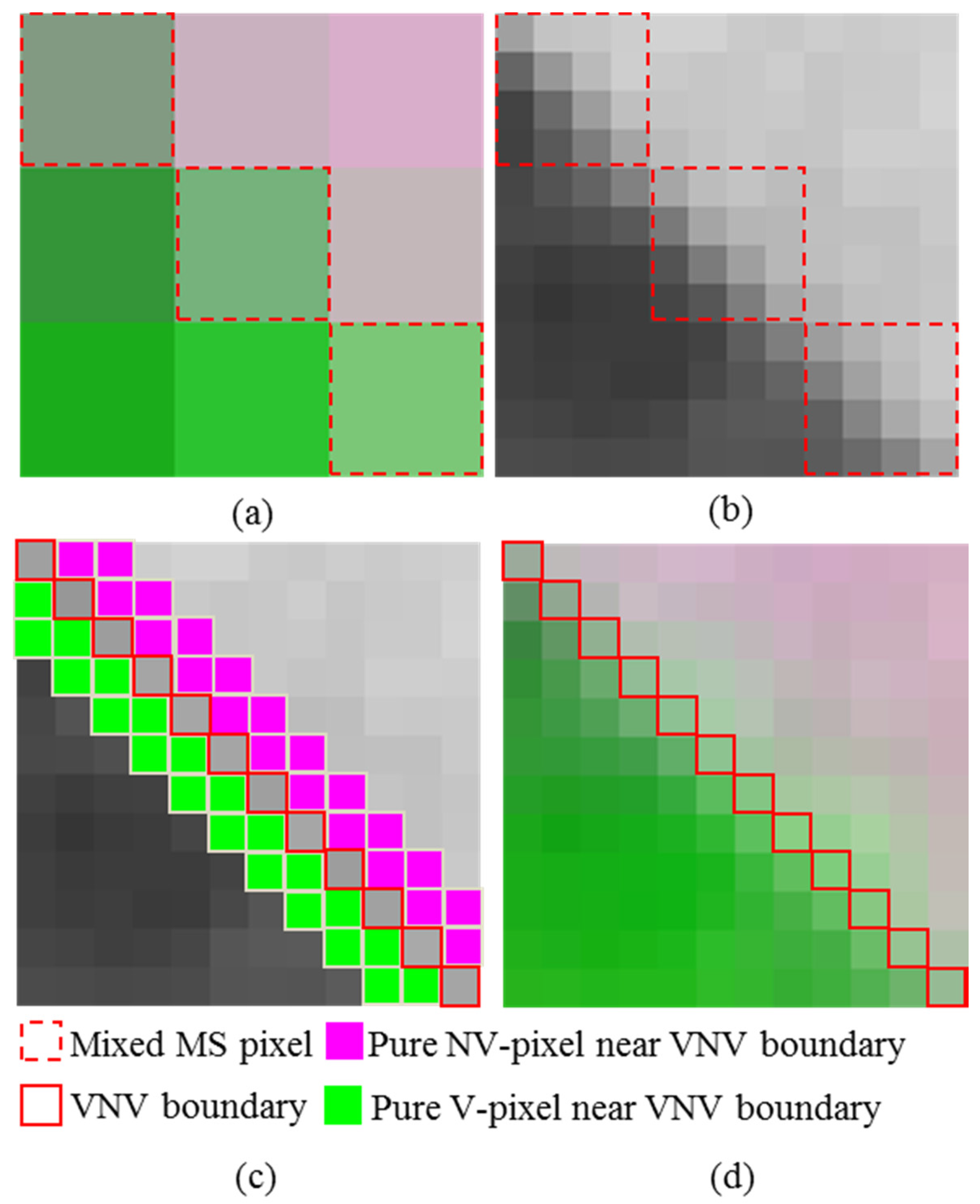
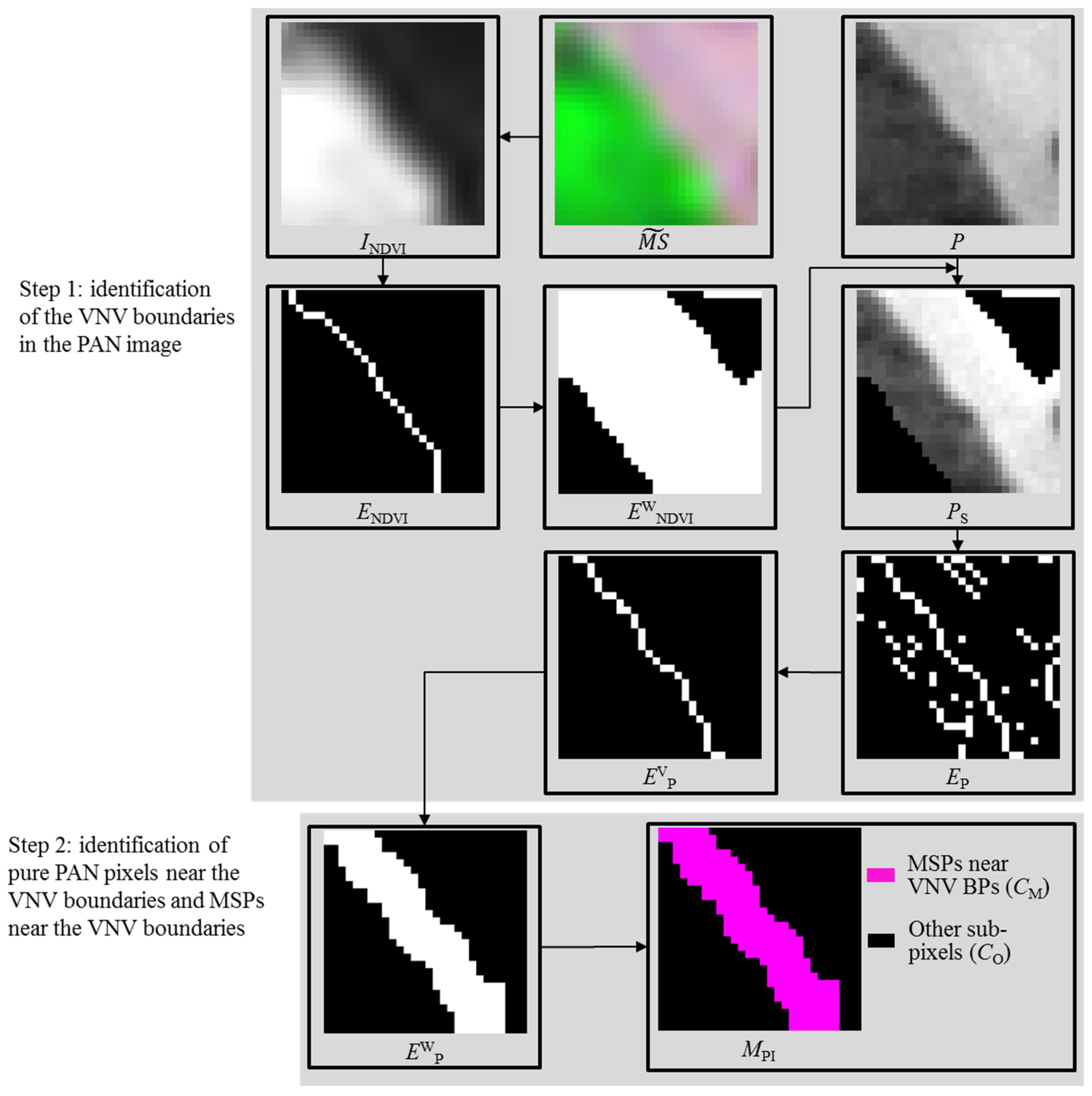
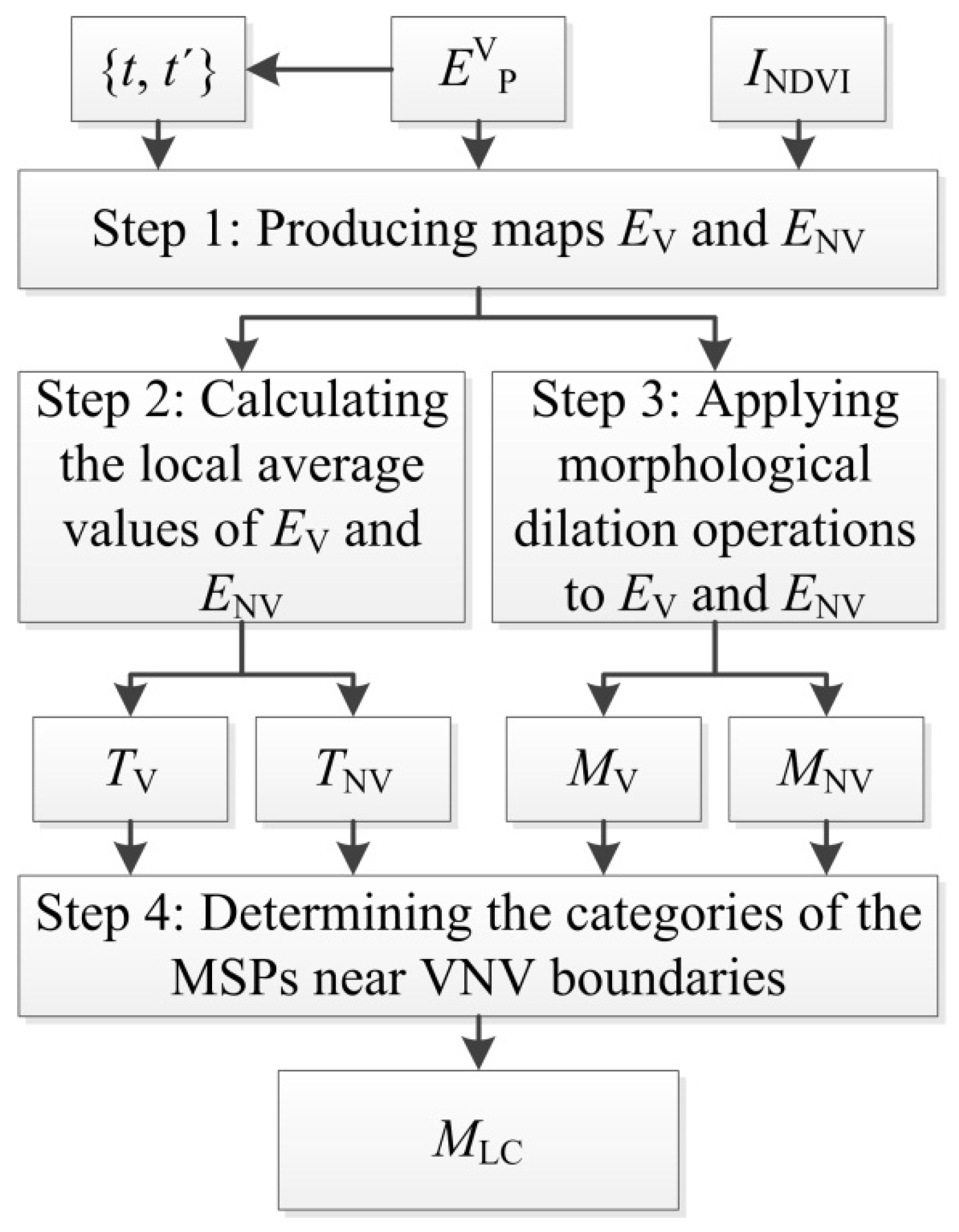
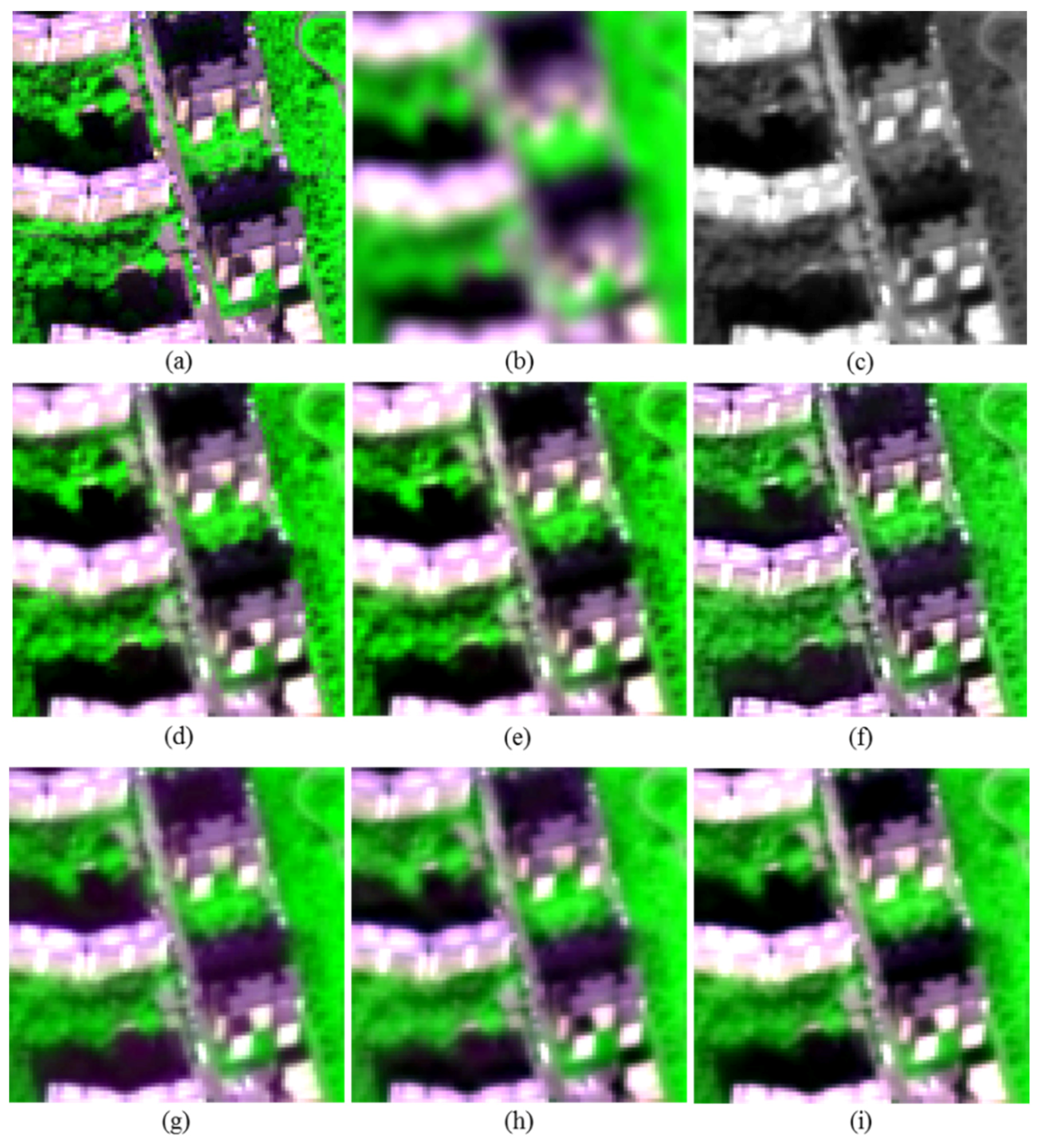
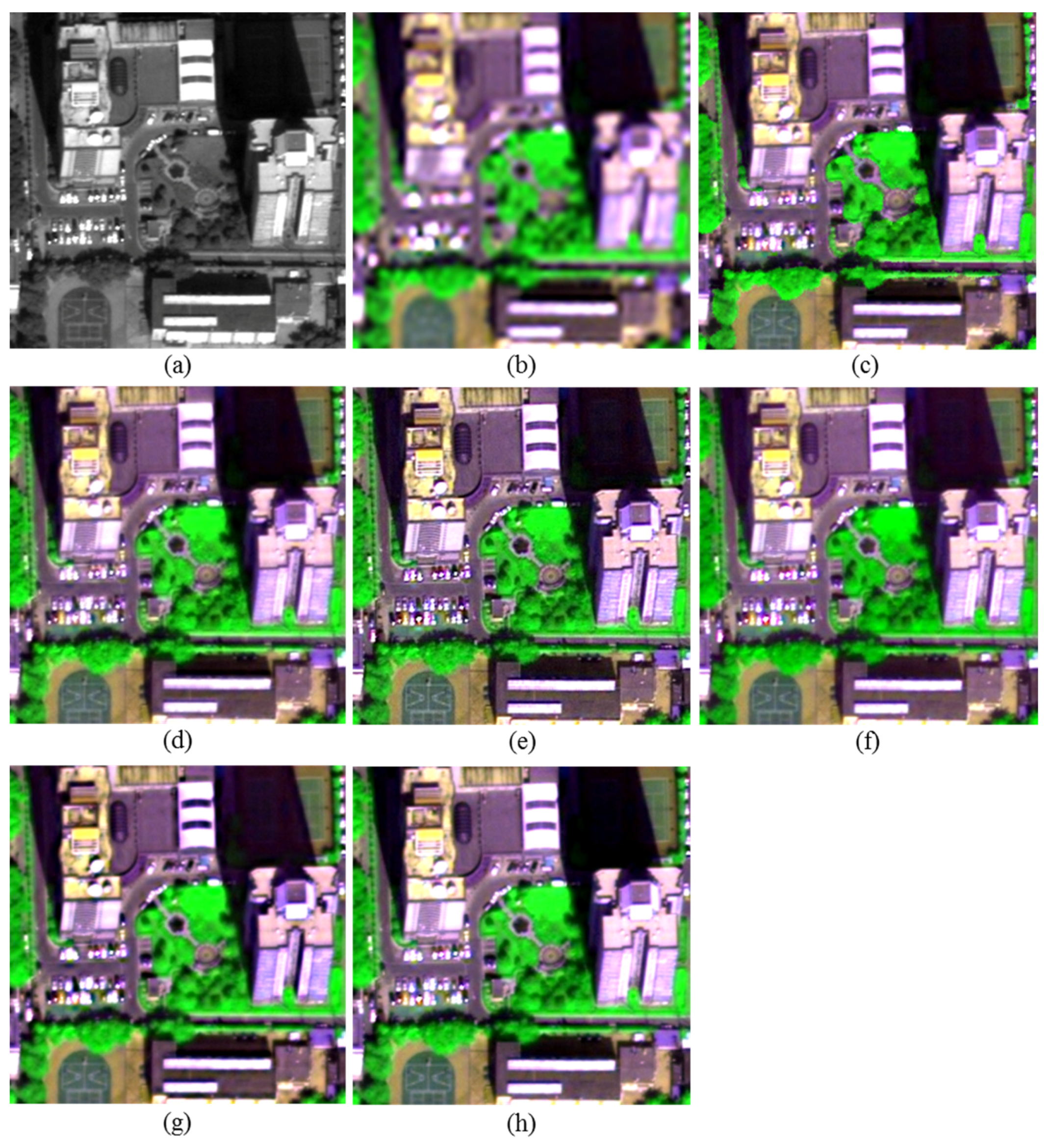
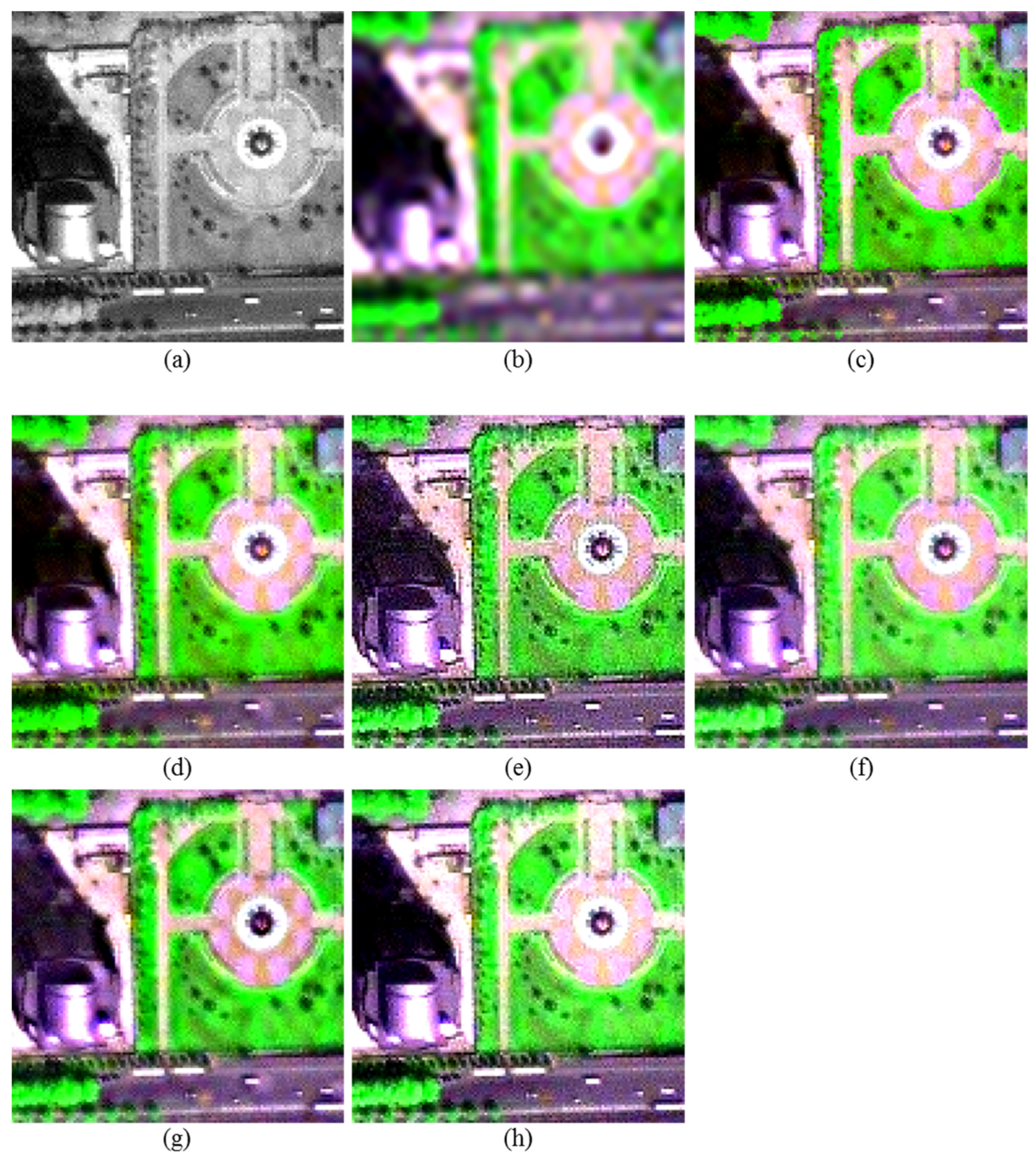
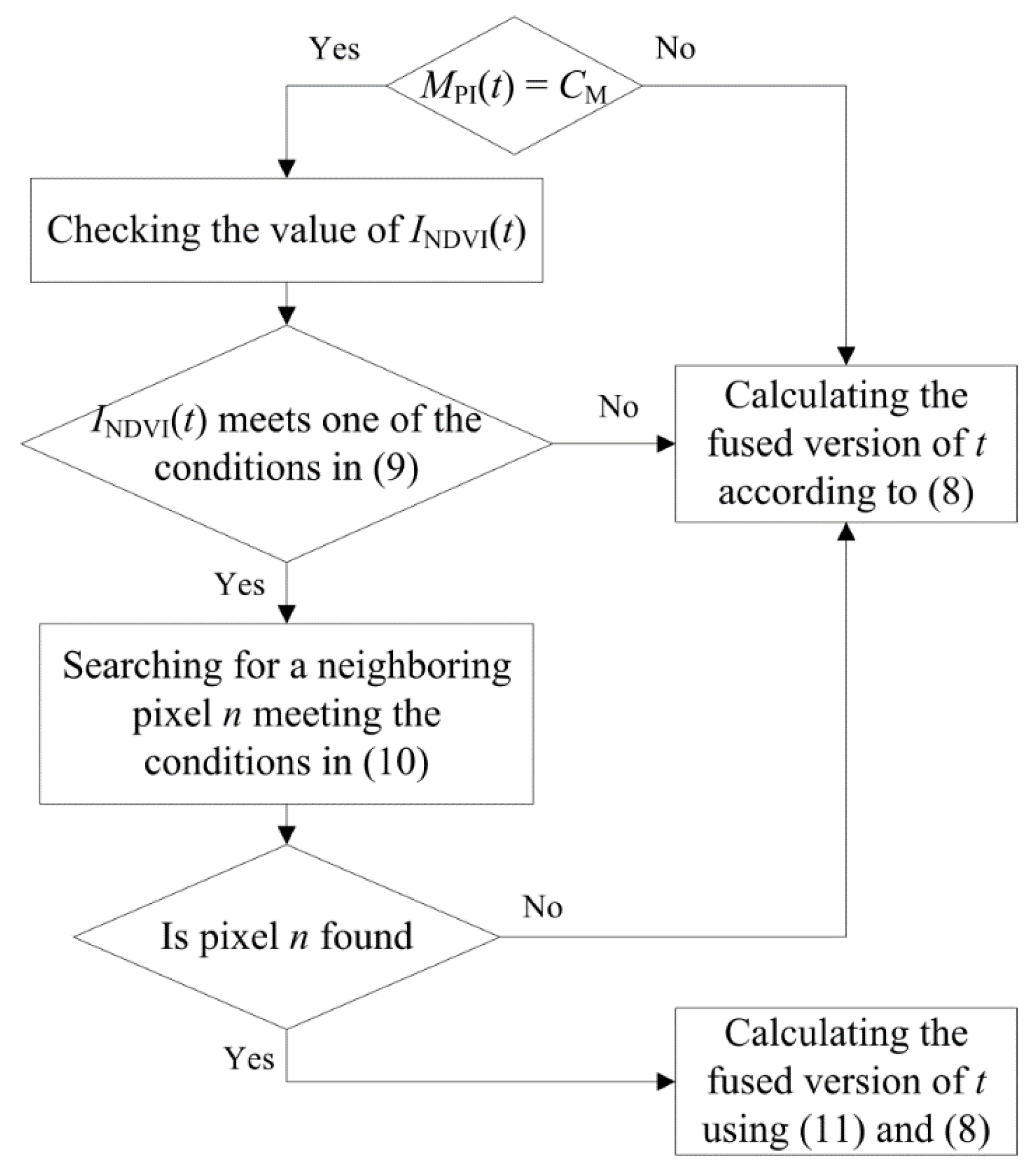
Pansharpening is an important technique that produces high spatial resolution multispectral (MS) images by fusing low spatial resolution MS images and high spatial resolution panchromatic (PAN) images of the same area. Although numerous successful image fusion algorithms have been proposed in the last few decades to reduce the spectral distortions in fused images, few of these take into account the spectral distortions caused by mixed MS sub-pixels (MSPs). Typically, the fused versions of MSPs remain mixed, although some of the MSPs correspond to pure PAN pixels. Due to the significant spectral differences between vegetation and non-vegetation (VNV) objects, the fused versions of MSPs near VNV boundaries cause blurred VNV boundaries and significant spectral distortions in the fused images. In order to reduce the spectral distortions, an improved version of the haze- and ratio-based fusion method is proposed to realize the spectral un-mixing of MSPs near VNV boundaries. In this method, the MSPs near VNV boundaries are identified first. The identified MSPs are then defined as either pure vegetation or non-vegetation pixels according to the categories of the corresponding PAN pixels. Experiments on WorldView-2 and IKONOS images of urban areas using the proposed method yielded fused images with significantly clearer VNV boundaries and smaller spectral distortions than several other currently-used image fusion methods.
Keywords: pansharpening; high resolution optical images; mixed MS sub-pixels; un-mixing pansharpening; high resolution optical images; mixed MS sub-pixels; un-mixing
Graphical Abstract