


Highlights
What are the main findings?
- A unified, multisensor framework was successfully developed to generate high-fidelity pre-launch proxy datasets for ESA’s upcoming CHIME and LSTM missions by integrating physics-based radiative transfer modeling with deep learning architectures.
- The adaptable processing pipelines accurately synthesize 30 m CHIME-equivalent and 50 m, 5-band LSTM-equivalent products from a diverse combination of existing airborne and satellite sources, including PRISMA, EnMAP, Landsat 8/9, and ASTER.
What are the implications of the main findings?
- By utilizing existing orbital and airborne assets, this framework overcomes the geographical limitations of isolated airborne campaigns, enabling large-scale, pre-launch algorithmic prototyping for complex inland, coastal, and riverine environments.
- The highly modular architecture of the simulation chain allows for straightforward integration of future auxiliary datasets, refined spectral response functions (SRFs), or updated radiative transfer models as the actual satellite launches approach.
Abstract
The preparation for next-generation Earth Observation missions, such as the European Space Agency’s (ESA) Copernicus Hyperspectral Imaging Mission for the Environment (CHIME) and Land Surface Temperature Monitoring (LSTM), requires robust pre-launch proxy datasets. Because current simulation methodologies frequently rely on isolated, platform-specific approaches, this study proposes a comprehensive, unified multisensor framework capable of dynamically generating operationally realistic CHIME and LSTM datasets from diverse airborne and satellite sources. Three distinct processing pipelines were established. For hyperspectral data simulation, precursor satellite imagery (PRISMA and EnMAP) and high-resolution airborne measurements (HySpex) were harmonized to CHIME’s 30 m specifications utilizing Spectral Response Function (SRF) adjustments, Point Spread Function (PSF) spatial resampling, and 6S atmospheric radiative transfer modeling. For thermal data simulation, archive Landsat 8/9 and ASTER imagery were transformed into LSTM’s target 50 m, 5-band configuration using a synergistic two-step approach: a physics-based Spectral Super-Resolution (SSR) module followed by an AI-driven Spatial Super-Resolution (SpSR) transformer network. Evaluated across highly diverse inland, coastal, and riverine testbeds in Italy, the simulated products demonstrated high spectral, spatial, and radiometric fidelity. While inherently constrained by the native spectral ranges of the input sensors and by the current lack of absolute on-orbit mission data for validation, the downscaled images closely reproduced complex thermal patterns and water-quality gradients. Ultimately, this scalable framework provides the remote sensing community with early access to representative datasets and mission performance assessments, while accelerating pre-launch algorithm development and testing for environmental monitoring applications—particularly those focused on water discharges.
1. Introduction
The simulation of satellite imagery for upcoming Earth Observation (EO) missions is a powerful tool that provides critical insights during various pre-commissioning stages. Such simulations are instrumental in optimizing system requirements and facilitating the development and testing of sensor-specific algorithms. Furthermore, they support the creation of mission-specific software, enabling users to familiarize themselves with and lay the groundwork for incoming datasets well ahead of launch.
To support mission preparation, most satellite programs generate simulated datasets during the mission development phase. Notable examples include the simulation of NASA-ISRO Synthetic Aperture Radar (NISAR) datasets [1], as well as the Environmental Mapping and Analysis Program (EnMAP) end-to-end Simulation (EeteS) [2] and the Sentinel-2 end-to-end Simulation (S2eteS) software packages [3].
In the optical and hyperspectral domains, various methodologies have been established to generate these datasets. These range from the acquisition of surrogate data and the manipulation of empirical imagery to the use of statistical generation techniques and physical modeling. Recently, deep learning architectures have also been introduced to this field [4,5]. However, physical modeling approaches employing three-dimensional Radiative Transfer (RT) models remain the standard for capturing the complex radiometric characteristics inherent in real-world imagery [6,7].
These physical frameworks typically incorporate RT models to account for the precise radiometry and propagation of light from its source through the atmosphere [8,9]. Among these, MODTRAN [10], Second Simulation of a Satellite Signal in the Solar Spectrum (6S) [11], and libRadtran [12] are the most widely utilized RT codes.
Other examples of physical modeling for hyperspectral missions include the Simulator of TOa RadiancE (STORE), which was developed to simulate PRISMA imagery by applying radiative transfer modeling to Hyperion data [13]. Similarly, a dedicated scene simulator for optical hyperspectral and multispectral data was implemented for the EnMAP mission to support the refinement of data processing chains [14].
In the same way, in the thermal infrared (TIR) domain, simulating orbital data prior to launch is a foundational practice. Historically, airborne simulators such as MASTER were utilized to prototype algorithms for the ASTER and MODIS instruments [15]. Today, as the community prepares for next-generation high-spatial-resolution thermal missions—such as the CNES/ISRO TRISHNA, NASA’s Surface Biology and Geology (SBG), and the upcoming Landsat Next—the need for robust pre-launch proxy datasets has intensified. Recent literature heavily relies on localized airborne campaigns (e.g., AHS data) combined with radiative transfer modeling to synthesize TRISHNA-like thermal bands for urban and hydrological monitoring [16]. Furthermore, precursor satellite data, such as ECOSTRESS, is routinely used to prototype the diurnal thermal cycles that missions like SBG will monitor [17].
Despite these significant advancements, the existing literature predominantly proposes isolated methodologies tailored to specific platforms or sensors. Currently, there is a lack of a unified, adaptable framework capable of guiding the simulation process—both spectrally and spatially—based on the varying types of available input data. Whether the source datasets are derived from highly localized airborne campaigns or globally available but coarser satellite imagery, an operationally realistic simulation pipeline must be able to dynamically adjust its processing chain.
In this study, we propose a physics-based simulation framework for simulating hyperspectral and thermal datasets. The simulation pipelines for source datasets acquired from airborne (hyperspectral) or satellite (hyperspectral and thermal) platforms are described. These pipelines are applied to simulate CHIME- and LSTM-type datasets, focusing on water bodies, with the ultimate goal of using the newly generated data to advance research and fill existing gaps in the study of water discharges. The simulated datasets will provide the remote sensing community with insights into ESA’s CHIME and LSTM upcoming missions, which aim to complement existing Sentinel datasets with dense spectral information and high-resolution land surface temperature measurements. Although the simulated CHIME (30 m) and LSTM (50 m) products allow the analysis of spectral and thermal dynamics across large areas, we acknowledge that these spatial resolutions impose limitations when representing very localized phenomena such as small-scale discharge plumes or narrow riverine structures. For this reason, the framework is primarily intended to characterize mesoscale patterns and gradients, while the detection of highly localized plumes typically requires finer spatial resolutions. Further studies will investigate the suitability of these simulated datasets for real-world applications related to water-discharge monitoring in coastal waters, inland lakes, and riverine environments.
Specifically, CHIME consists of two identical satellites (CHIME-A and CHIME-B), and each will carry an advanced HyperSpectral Imager (HSI) instrument. This sensor is designed to capture imagery in over 200 bands across a wavelength range of 400 nm to 2500 nm, covering the Visible (VIS), Near-Infrared (NIR), and Short-Wave Infrared (SWIR) spectra with a spectral bandwidth of less than 10 nm. The mission will operate at a ground resolution of 30 m with a swath width of 130 km, ensuring high radiometric accuracy [18,19]. The LSTM mission will be equipped with a Thermal Infrared (TIR) instrument operating across the Visible and Near-Infrared (VNIR), SWIR, and TIR spectral bands [20]. With a spatial resolution of 50 m, the sensor offers a significant advance over Sentinel-3, which currently provides global LST measurements at 1 km. The imager will feature five spectral bands within the 8–12.5 μm range, designed to have a wide temperature range (approximately −20 °C to 30 °C) with a measurement precision of 0.3 °C [3].
The following sections are organized as follows: Section 2.1 and Section 2.2 describe the pilot sites and datasets utilized in this work, while Section 2.3 describes the simulation framework and provides details on the three simulation pipelines: (a) hyperspectral data simulation using satellite hyperspectral data, (b) hyperspectral data simulation using airborne hyperspectral data, and (c) thermal data simulation using satellite thermal data. Section 3 presents examples of the proposed methodologies for generating and evaluating CHIME- and LSTM-type simulated datasets, while Section 4 discusses the findings and their implications.
2. Materials and Methods
2.1. Pilot Sites
The study uses several inland, coastal and riverine Areas of Interest (AoIs) in northern and southern Italy (Figure 1). They were chosen to cover very different conditions: clear mountain lakes, turbid coastal waters, and heavily urbanized zones. This variety is important for testing how well the simulated CHIME and LSTM data perform under realistic water-quality changes, land–water boundaries, and human impacts such as industrial discharges, urban heat, and cooling-water outlets.
Figure 1.
Geographic overview of the study areas and detailed views of the selected Areas of Interest (AoIs). The main map shows the Italian peninsula with the locations of six AOIs (A–F), while the inset panels provide high-resolution views of each site: (A) River Lambro near Milan, (B) Lago Centro di Cadore, (C) Lago Morto, (D) coastal areas near Manfredonia and Margherita di Savoia in the Gulf of Manfredonia, (E) coastal and urban interface near Bari, and (F) coastal and urban interface near Taranto. Red polygons delineate the boundaries of each AoI. The basemap is Google Earth images solely integrated to support the visual identification of areas of interest shown in the figure. The maps are displayed in the WGS 84/UTM zone 33N coordinate reference system (EPSG:32633).
Coastal sites in Bari, Manfredonia, Margherita di Savoia, and Taranto are heavily populated and heavily influenced by humans. Bari and Taranto include large ports and industrial areas, which create sharp changes in water turbidity, colored dissolved organic matter (CDOM), chlorophyll and surface temperature. Manfredonia Bay and the nearby saltpans at Margherita di Savoia have shallow, optically complex waters with changing salinity and sediment concentrations, making them good test cases for hyperspectral retrievals and for small coastal plumes. Further north, the Lambro River and the Milano area cover a peri-urban catchment that shifts from dense city to farmland and semi-natural areas, with narrow river sections and mixed land cover right next to the water. The alpine lakes Lago di Centro Cadore (Pieve di Cadore) and Lago Morto add a mountain setting, with clear water, strong topography and marked temperature contrasts between water, forest, bare soil and small settlements. Together, these AoIs provide a compact yet diverse testbed for evaluating the simulated CHIME and LSTM products under conditions similar to those of future operational applications.
2.2. Data
An extensive search was conducted within the archival catalogs of relevant EO missions to ensure comprehensive coverage. The objective was to retrieve all available sand useful satellite data that align with the identified AoIs, with a focus on hyperspectral and thermal data sources.
For a full inventory of the satellite acquisitions and their respective metadata, see Table A1, Table A2, Table A3, Table A4 and Table A5 in Appendix A.
2.2.1. Hyperspectral Data
The spaceborne hyperspectral data utilized in this study consist of radiometrically calibrated Top-of-Atmosphere (TOA) Level-1 products from Italian Space Agency (ASI)’s PRISMA and German Aerospace Center (DLR)’s EnMAP missions. These sensors were selected due to their technical synergies with the forthcoming CHIME mission, specifically their 30 m Ground Resolved Distance (GRD), nadir-viewing geometry, and comparable orbital altitudes. The EnMAP sensor covers the 420–2450 nm range with a Spectral Sampling Distance (SSD) varying between 5 and 12 nm [21]. It features a reference Signal-to-Noise Ratio (SNR) of 500:1 at 495 nm (VNIR) and 175:1 at 2200 nm (SWIR). The PRISMA hyperspectral imager covers the 400–2500 nm spectral range across 237 bands [22]. It maintains a spectral sampling of less than 12 nm and high radiometric performance, with an SNR exceeding 200:1 (average) in the VNIR and 200:1 (average at 1–2 μm) and 100:1 (average at 2–2.5 μm) in the SWIR. A total of 48 satellite scenes were used: 31 PRISMA images (10 in Bari, one in Manfredonia, one in Margherita di Savoia, seven in Taranto, seven in Lambro, three in Largo di Centro Cadore, two in Lago Morto) (see Table A2) and 17 EnMAP images (two in Bari, one in Taranto, seven in Largo di Centro Cadore, seven in Lago Morto) (see Table A1).
Furthermore, seven aerial campaigns were conducted across each AoI between 7 July and 15 July 2025. During these missions, hyperspectral data were acquired using Norsk Elektro Optikk’s (NEO) HySpex VNIR-1800 sensor (Oslo, Norway) (see Table A3). This camera records data across the 400–1000 nm spectral range with a spectral sampling of 3.2 nm over 186 bands, featuring a SNR exceeding 255 [23]. Following the acquisition, the data were processed to generate geometrically corrected and georeferenced radiance products with a high spatial resolution of 0.5 m (see Section 2.3.1).
2.2.2. Thermal Data
For simulating LSTM datasets and detecting thermal discharge anomalies, archival TIR data were obtained from United States Geological Survey’s (USGS)/National Aeronautics and Space Administration’s (NASA) Landsat 8/9 and NASA Jet Propulsion Laboratory’s (JPL) ASTER missions. These sensors were selected for their well-characterized radiometric performance and spectral relevance as precursors to the future LSTM mission.
The Landsat 8/9 Thermal Infrared Sensor (TIRS) captures data across two spectral bands in the 10.6–12.5 µm range at a native spatial resolution of 100 m [24,25]. Both daytime and nighttime Landsat acquisitions were utilized to capture diverse thermal dynamics. To complement the dual-band Landsat data, acquisitions from the Advanced Spaceborne Thermal Emission and Reflection Radiometer (ASTER) were also integrated. The ASTER TIR subsystem provides imagery across five distinct bands spanning 8.125–11.65 µm at a 90 m spatial resolution [26]. Its native multi-band configuration makes it an optimal and highly synergistic precursor for simulating the planned five-band configuration of the upcoming LSTM mission.
In total, 81 thermal satellite scenes were procured and processed to ensure sufficient temporal coverage for the simulation framework. This dataset comprises 16 daytime Landsat 8/9 images (five over Bari, five over Lambro River, four over Centro di Cadore Lake, and two over Morto Lake) (see Table A5) and 61 nighttime Landsat 8/9 images (14 over Bari, 16 over Lambro River, 12 over Manfredonia, eight over Taranto, six over Morto Lake, and five over Centro di Cadore Lake) (see Table A6). Additionally, four ASTER thermal scenes were acquired, with one acquisition each over the Bari, Lambro River, Centro di Cadore Lake, and Morto Lake AoIs (see Table A4).
Table 1 summarizes the spectral range, number of bands, GSD, and temporal resolution of the sensors utilized in this study for the simulation of future CHIME and LSTM data products.
Table 1.
Technical specifications of the satellite and airborne sensors utilized in the study.
2.3. Simulation Methodology
To generate accurate hyperspectral and thermal satellite data, to serve as pre-launch proxy datasets for the upcoming ESA CHIME and LSTM missions, this study introduces a comprehensive, physics and deep-learning-based simulation framework. As illustrated in Figure 2, the methodology is structured around three adaptable processing pipelines tailored to specific input sources (satellite or airborne):
Figure 2.
Overview of the integrated simulation framework. The flowchart illustrates the physics and deep-learning-based processing chains for different sensors and input scenarios.
- hyperspectral data simulation using satellite hyperspectral data,
- hyperspectral data simulation using airborne hyperspectral data, and
- thermal data simulation using satellite thermal data.
2.3.1. Simulation of Hyperspectral Data from Satellite Hyperspectral Data
When satellite hyperspectral data are used to simulate a new hyperspectral sensor data, it is necessary to evaluate and, if required, implement spectral band adjustment (including data preprocessing, Spectral Response Function (SRF) calculation, and band generation), spatial resampling, and radiometric noise addition/reduction. In this study we used PRISMA and EnMAP data for simulating CHIME data.
Data pre-processing
For PRISMA, VNIR and SWIR image cubes were first merged into a single continuous dataset, and radiance units were converted from W/m2/sr/μm to W/m2/sr/nm to match the EnMAP format that was used as a reference for the CHIME simulated data.
Then, to ensure spectral consistency between the VNIR and SWIR detector overlap, bands within the overlapping region (940–970 nm for PRISMA and 900–1000 nm for EnMAP) that did not exhibit a smooth, continuous response across the dataset were removed. Specifically, four bands were removed for PRISMA (two from the VNIR and two from the SWIR detector) and twelve bands were removed for EnMAP. This automated filtering represents approximately 1.7% of the total spectral channels for PRISMA and 5% for EnMAP. Due to the dense spectral sampling in these regions, the removal improved the continuity of the spectra without loss of critical information, facilitating a more stable SRF adjustment (See Section 2.3.1). This VNIR–SWIR mismatch was most noticeable in the PRISMA data but was also evident in water pixels of the EnMAP data. These inconsistencies are linked to variations in calibration, optical paths and noise characteristics at each subsystem and were necessary to correct to prevent these artifacts from propagating into the CHIME simulations.
Spectral Response Function (SRF) calculation
The SRF describes how sensitive a sensor band is to incoming radiance as a function of wavelength. In practice, the measured signal in each band is an integral of the true spectrum weighted by the SRF. They can be approximated using Gaussian shape, parameterized by the band’s central wavelength, CW, and bandwidth (Full Width at Half Maximum (FWHM)), and normalized so that their integral equals one, as given by:
Band generation
The proposed method for spectral adjustment reconstructs a high-resolution continuous spectrum that is consistent with the original sensor’s band , then is inferred from the measured band values from the original sensor and their SRFs, then forward-modeled through the target SRFs to yield simulated CHIME bands.
where is the unknown high-resolution spectrum, is the original sensor SRF matrix, and the CHIME SRF matrix.
This method allows spectral harmonization between sensors with differing spectral characteristics, provided that a sufficiently high-resolution spectral representation is available and the SRFs are known or accurately approximated.
Spatial resampling
In the simulation of satellite-to-satellite datasets, spatial resampling, either downscaling or upscaling depending on the relative GRD of the source and target sensors, is typically required. However, in this study, as both the source instruments (PRISMA and EnMAP) and the target mission (CHIME) share a native spatial resolution of 30 m, no change in pixel size was required.
Rather than resampling, the methodology prioritized maintaining spatial consistency and radiometric integrity through precise georeferencing and grid alignment. This was achieved by reprojecting the PRISMA datasets to match the EnMAP Coordinate Reference System (CRS) and grid geometry.
Radiometric noise addition/reduction
When simulating new sensors, adding or reducing radiometric noise may be required to match the sensors’ SNR specifications. In this study, no additional synthetic noise was needed to be added or reduced into the simulated CHIME data. Published SNR specifications for CHIME, PRISMA, and EnMAP indicate that CHIME’s performance (e.g., average SNR ~328 in VNIR and ~190 in 1–2 μm SWIR ~95 in 2–2.5 μm) is comparable to the reference instruments for the radiance levels observed. Therefore, the simulated data are expected to be representative of realistic CHIME measurements without extra noise modeling.
However, if noise reduction was necessary, the enhancement methodology described by [27] would be implemented. On the other hand, if the introduction of noise was required to match target sensor specifications, a Gaussian noise model would be applied, as detailed in Section 2.3.2.
2.3.2. Simulation of Hyperspectral Data from Airborne Hyperspectral Data
The simulation of satellite images from airborne hyperspectral imagery follows a structured, physically based workflow. The primary objective is to convert very high-resolution airborne data (VNIR-only in our case), into products that are spectrally, radiometrically and spatially consistent with satellite (CHIME in our case) observations at the TOA at the satellite data resolution (30 m in our case). The processing chain consists of five main components: (i) atmospheric and radiometric correction of the airborne data, (ii) spectral adjustment using satellite spectral response functions (SRFs), (iii) spatial resampling to satellite-like resolution using a point spread function (PSF) model, (iv) noise addition/reduction, and (v) forward atmospheric simulation using a radiative transfer model. The following paragraphs illustrate the application of the above steps to simulate CHIME satellite data. In this study, simulation of new satellite hyperspectral data from existing airborne data is given by examples that simulate CHIME data using HySpex data.
Atmospheric and radiometric corrections
First, atmospheric corrections were applied to all airborne hyperspectral datasets to derive Bottom-of-Atmosphere (BOA) reflectance from the initial radiance images. This was performed using ATCOR-4 v6.2, which utilizes radiative transfer modeling based on MODTRAN-derived look-up tables. This process simulates the interaction of solar radiation with atmospheric gases, aerosols, and the underlying terrain before reaching the sensor. For each study region, ATCOR-4 was configured with an atmospheric profile appropriate to local conditions (water vapor, aerosols, and ozone), ensuring that the retrieved reflectance is physically consistent with the scene’s atmosphere. ATCOR-4 also allows the definition of a “custom sensor” using central wavelengths and FWHM to derive SRFs for atmospheric correction of the airborne sensor. This configuration was applied consistently across all flight lines within a region to guarantee radiometric homogeneity.
Bidirectional reflectance effects can be particularly pronounced over water in multi-angle airborne acquisitions. To account for Bidirectional Reflectance Distribution Function (BRDF) distortions in datasets where they were visible (Milano, Margherita, Lago Morto), a nadir normalization (or across-track illumination) correction was applied via ATCOR-4. This method calculates brightness as a function of the scan angle and multiplies each pixel by the reciprocal function.
Finally, to mosaic the flight runs, pixels with a scan angle greater than 12 degrees were masked to remove obvious edge distortions in each run. Each flight run was then radiometrically harmonized bandwise using the mean values of each band of overlapping sections. The final mosaic was generated using the Orfeo ToolBox v9.1.1 (OTB) mosaic algorithm, which manages the blending between overlapping regions. For water surfaces, the “large” blending mode was utilized to ensure seamless transitions across maximum overlap areas. For inland areas, the “slim” blending mode was preferred, as it applies blending over a defined transition distance, avoiding the blur effects that can occur due to slight geometric distortions.
Spectral adjustment with CHIME SRFs
The airborne hyperspectral sensor used in this study acquires data only in the VNIR channels, spanning approximately 403–993 nm. Consequently, only CHIME bands with central wavelengths falling within this range can be simulated from the airborne data. Bands in the SWIR cannot be generated due to the absence of corresponding spectral information in the source imagery.
For bands within the valid VNIR range, the same SRF-based adjustment methodology used for satellite data was applied. Each airborne spectrum was convolved with the CHIME SRFs to ensure spectral consistency between the high-resolution airborne input and the target satellite output.
Spatial resampling and PSF modeling
Airborne data were acquired at a very high spatial resolution of 0.5 m, whereas CHIME operates at 30 m spatial resolution. To bridge this gap, a spatial resampling strategy is implemented that mimics the sensor’s point spread function rather than relying on simple pixel averaging.
First, a Gaussian blur is applied to the high-resolution images to emulate the effect of CHIME’s PSF. This Gaussian kernel introduces controlled spatial smoothing and reduces high-frequency detail, approximating the optical degradation and mixing that would occur in a real satellite observation. The width of the Gaussian (expressed through its standard deviation or FWHM) is chosen based on CHIME’s modulation transfer function (MTF) requirements. In particular, the kernel is selected so that the MTF at the Nyquist frequency remains above the mission’s specified threshold.
In practice, a Gaussian PSF with a FWHM of 30 m was adopted in both across- and along-track directions. This choice yields isotropic spatial blurring that matches CHIME’s expected spatial mixing while remaining compliant with the MTF constraint. Once the Gaussian blur has been applied, the images are downsampled to the CHIME pixel size by taking samples at the appropriate spacing, resulting in 30 m airborne-derived products that realistically approximate CHIME’s spatial characteristics.
Simulation of atmospheric effects
To simulate what CHIME would actually measure at TOA, atmospheric effects need to be reintroduced in a controlled, physically consistent way. For this forward simulation, the 6S v2.1 radiative transfer model is used. 6S computes atmospheric transmission, path radiance, atmospheric reflectance, spherical albedo and direct/diffuse irradiance for each spectral channel, given an atmospheric state and geometry. In this study, atmospheric profiles were built from European Centre for Medium-Range Weather Forecasts (ECMWF)’s ERA5 reanalysis [28] (water vapor and ozone) and CAMS global reanalysis products [29] (aerosol optical depth at 550 nm).
For each scene, solar zenith and azimuth angles were derived from the acquisition time and location, while the sensor zenith angle is fixed at 0° at the image center, reflecting CHIME’s nadir-viewing geometry. To account for varying viewing geometries across the full swath, a series of Look-Up Tables (LUTs) was generated and spatially interpolated for each pixel. The model was configured with CHIME’s SRFs, so that the resulting TOA radiances correspond directly to CHIME bands. BOA reflectance from the upscaled hyperspectral data was then converted to TOA radiance () using the 6S outputs, for CHIME spectral channels within the VNIR range, this conversion was performed as follows:
where is path radiance, upward transmittance, and the direct and diffuse irradiance at the surface, the cosine of the solar zenith angle, the atmospheric spherical albedo, and the surface reflectance.
Radiometric noise addition/reduction
CHIME is characterized by a high SNR, particularly across the VNIR spectrum (average SNR of 328:1). This exceeds the nominal specifications of the HySpex sensor, which has a reported threshold of 255:1. However, the simulation workflow, specifically the Gaussian blurring and spatial averaging performed during the 30 m resampling, significantly enhances the effective SNR of the intermediate products. By comparing homogeneous regions in the original aerial imagery with those in the processed simulations, we determined that the SNR improved by a factor of 4 to 5 across most bands.
To align the radiometric quality of the simulated products with the official CHIME specifications, we applied a noise addition process. A random noise value, generated from a Normal (Gaussian) distribution, was added to each pixel. The standard deviation () required to reach the target noise level was calculated based on the relationship between the initial simulated noise () and the target CHIME noise ():
Finally, to simulate realistic sensor artifacts, a small fraction of pixels was randomly selected and assigned extreme values (outliers) or null values (e.g., NaN or zero). This step ensures the resulting datasets replicate the defective sensor readings typically encountered in satellite images.
2.3.3. Simulation of Thermal Data from Thermal Satellite Data
In this study simulation of new satellite thermal data from existing satellite data is given by examples that simulate the five 50 m TIR bands of the future LSTM mission using Landsat and ASTER thermal data. Landsat 8/9 provides only two TIR bands at 100–120 m, and ASTER provides five TIR bands at 90 m. The proposed framework tackles both missing bands and coarse resolution through a two-step chain:
- Thermal Infrared Spectral Super-Resolution (TIR-SSR): Generation of LSTM-equivalent TIR bands at 100 m from Landsat and ASTER.
- Thermal Infrared Spatial Super-Resolution (TIR-SpSR): Downscaling of the 100 m LSTM-like bands to 50 m using deep learning.
Together, these steps produce physically consistent, high-resolution LSTM-like thermal products.
Thermal Infrared Spectral Super-Resolution
The SSR module generates a full set of LSTM-equivalent thermal bands by integrating Landsat/ASTER TIRS radiances, ASTER GED emissivity, and detailed atmospheric simulations. The thermal emission spectrum in the 8–12 μm window is governed by first principles: Planck’s law and the thermal radiative transfer equation (RTE) [30]. At any given wavelength λ, the Top-of-Atmosphere (TOA) radiance measured by the sensor is defined by the RTE [30,31]:
where τ(λ) is the atmospheric transmittance, is the Planck radiance at the surface temperature, ε(λ) is the surface emissivity, L↓(λ) is the downwelling sky radiance incident on the surface, and L↑(λ) is the thermal emission originating from the atmosphere along the sensor line of sight. Accurate simulation of these terms requires a physically realistic atmospheric profile describing water vapor, temperature and ozone concentration. The blackbody radiance is determined by Planck’s Law:
where h is Planck’s constant, c the speed of light and k is the Boltzmann’s constant.
Once the surface temperature, emissivity, and atmospheric state are known, the shape of the thermal radiance spectrum is highly constrained, smooth, and low-dimensional. This makes the TIR region particularly well suited for a purely physics-based spectral super-resolution approach, without needing any machine learning to “hallucinate” missing bands [32,33].
To obtain the atmospheric terms required, libRadtran v2.0.6 [12] is used to compute spectral transmittance, upwelling and downwelling thermal radiances at fine spectral resolution. For each Landsat and ASTER acquisition, ERA5 reanalysis profiles of temperature, pressure, water vapor and ozone [28] are extracted at the scene center and vertically interpolated to the pressure grid needed by libRadtran. These profiles are used within an AFGL Mid-Latitude Summer baseline atmosphere, with water vapor and ozone scaled to match ERA5 total columns. Simulations cover the 8–12 μm range with 1 nm spectral sampling and are repeated across the relevant set of view zenith angles. The resulting high-resolution spectra of τ(λ), L↑(λ) and L↓(λ) are then convolved with the spectral response functions of Landsat 8/9, ASTER and LSTM to generate band-integrated lookup tables for each instrument.
Surface emissivity is taken from the ASTER GED v3 [34] emissivity mosaics at 100 m resolution. The five ASTER TIR channels act as anchor points for building a continuous emissivity spectrum between 8 and 12 μm via shape-preserving cubic splines. Over land, this emissivity is further refined using Landsat NDVI to apply a fractional vegetation correction, while water emissivity values are held fixed. From this, emissivity maps for the spectral configurations of Landsat, ASTER and LSTM are derived. Because emissivity in the TIR spectrum, like emitted radiance, varies slowly and does not exhibit sharp spectral features for most natural surfaces, this interpolated curve provides a physically realistic representation of the true emissivity spectrum [32,33].
Surface temperature is then retrieved from Landsat and ASTER TIR data. For Landsat 8/9, only Band 10 is used, in line with USGS recommendations [35,36], as Band 11 is affected by stray-light contamination. All ASTER TIR bands are exploited. The workflow consists of converting Level-1 digital numbers to TOA radiances using the calibration coefficients, resampling those radiances to a common 100 m grid, interpolating the band-integrated τ, L↑ and L↓ values from the libRadtran lookup tables at each pixel’s viewing geometry, and then applying the thermal radiative transfer equation to isolate the surface-leaving radiance. Planck’s law is inverted at the effective wavelength (around 10.9 μm) to obtain kinetic surface temperature per pixel. This inversion is nonlinear because of the Planck term, so it is solved iteratively using Newton–Raphson, making use of all available TIR bands to stabilize the solution, when possible, a method particularly effective for the multi-band ASTER configuration [33]. The outcome is a spatially consistent surface temperature map, physically tied to the ERA5-libRadtran atmospheric state.
Once surface temperature and emissivity are known, the BOA thermal spectrum can be reconstructed. Then the BOA spectrum is reconstructed and propagated back through the atmosphere to produce TOA radiances for the five LSTM bands at a 100 m grid. The outcome is therefore a set of five LSTM-equivalent thermal bands at 100 m, representing the radiances that LSTM would have seen under the same surface and atmospheric conditions as the original Landsat or ASTER acquisition.
Thermal Spatial Super-Resolution
The second step, thermal downscaling, aims to increase the spatial resolution of the produced 100 m LSTM-like bands to the 50 m resolution planned for the mission. Current TIR sensors are too coarse to resolve many fine-scale features of interest, such as small river plumes, localized industrial discharges or intra-urban heat patterns. To address this, a deep-learning framework is used utilizing a SwinIR-based single-image super-resolution network.
Thermal downscaling methods have evolved to overcome the resolution constraints of TIR sensors by leveraging high-resolution auxiliary data. Classical approaches have transitioned from data fusion and pansharpening [37,38] to regression-based models [39,40] that establish statistical relationships between land surface properties and temperature. While effective for large-scale patterns, these methods often struggle with complex, nonlinear thermal gradients in heterogeneous landscapes.
The advent of Deep Learning (DL) has significantly advanced the field, moving from early convolutional neural networks (CNNs) [41,42,43], to models incorporating attention mechanisms [44,45,46] to better reconstruct structural details. However, CNNs are often limited by the local nature of convolutional kernels. To address this, we selected the SwinIR model [47], a state-of-the-art architecture based on Swin Transformers. Unlike traditional CNNs, SwinIR utilizes shifted-window self-attention to capture both local textures and long-range spatial dependencies, making it uniquely suited for enhancing 100 m thermal fields to 50 m while maintaining the strict radiometric integrity required for the LSTM mission.
Network Architecture and Training
SwinIR [47] is based on Swin Transformer blocks and follows a U-Net-like architecture. The network’s architecture is composed of three parts: shallow feature extraction, deep feature extraction, and high-resolution image reconstruction. The core consists of a stack of Swin Transformer blocks that process the imagery at multiple scales to capture complex spatial patterns. Residual connections between the input and the deep feature representations stabilize training and ensure efficient gradient flow.
While high-resolution thermal imagery represents the ideal ground truth for downscaling models, such datasets are not easily available. Therefore, training was conducted using existing high-resolution satellite datasets (e.g., 90 m ASTER, 100 m Landsat 8/9) by applying Wald’s protocol [48] to construct scale-invariant training and validation sets. Wald’s protocol is a widely used validation framework for resolution enhancement methods, where high-resolution data are artificially degraded to a lower resolution and then reconstructed. The reconstructed product is subsequently compared against the original high-resolution data to assess performance. The 100 m LSTM-like thermal products generated in the SSR phase were spatially degraded to 200 m to create input–target pairs (200 m → 100 m). This methodology follows the principle that a valid downscaling framework must be capable of reconstructing the original high-resolution signal from a degraded version of itself.
For each scene, the dataset is split into 80% for training and 20% for validation at the scene level to avoid spatial leakage and bias. The images are tiled into overlapping patches (e.g., 64 × 64 pixels at 200 m), and extensive data augmentation (rotations, flips, random crops) is applied, increasing the effective dataset size to approximately 51,200 patches. Thermal values are normalized using min–max scaling. SwinIR was trained end-to-end on a workstation equipped with an Intel® Core™ i9-14900K CPU (Intel Corporation, Santa Clara, CA, USA), 128 GB RAM, and NVIDIA GeForce RTX™ 5090 GPU with 32 GB VRAM (NVIDIA Corporation, Santa Clara, CA, USA). The system used SSD-based storage for data handling. Training was performed for approximately 8 h, utilizing the Adam optimizer with a standard L1 reconstruction loss to prioritize pixel-level radiometric accuracy over artificial perceptual sharpness. Hyperparameters such as window size, number of attention heads, feature depth, and the balance between content and adversarial losses are adjusted to balance quality and computational cost.
Inference and Integration
During inference, the trained models are applied to the 100 m LSTM-simulated bands produced previously. The images are processed in overlapping patches to avoid edge artifacts, and the outputs are then mosaicked and denormalized back to physical units (Wm−2sr−1 μm−1). The resulting 50 m thermal fields show substantially enhanced spatial detail compared with the original 100 m products: thermal gradients around urban structures, water bodies and coastal plumes are sharper and more coherent, while large-scale radiometric patterns remain consistent with the input. In this way, the combination of physics-based spectral reconstruction and transformer/GAN-based spatial sharpening yields a robust, operationally realistic framework for producing 50 m LSTM-like thermal imagery that respects both the underlying physics and the expected spatial structure of the mission’s data.
3. Results
3.1. Satellite-Based Simulation of CHIME Data
The simulation workflow described in the previous section was applied to both PRISMA and EnMAP datasets, successfully generating a suite of 48 simulated CHIME TOA radiance products across the seven study regions. To evaluate the simulation’s performance, the results were quantitatively validated using Root Mean Square Error (RMSE) to assess radiometric fidelity and Spectral Angle Distance (SAD) to assess spectral profile consistency.
Figure 3 displays examples of simulated CHIME TOA radiance bands across different regions and original sensors, demonstrating the consistent radiometric and spectral performance of the simulation workflow across diverse land cover types and atmospheric conditions.
Figure 3.
Simulated CHIME TOA radiance products across representative spectral domains. The panels illustrate simulation outputs derived from: (a) PRISMA data over Morto Lake (27 June 2022); (b) PRISMA data over Fiume River in Milano (11 January 2020); and (c) EnMAP data over Morto Lake (6 August 2024). Representative bands were selected to demonstrate the simulation performance across different wavelengths. Specific band numbers and their corresponding center wavelengths are annotated above each sub-panel. All images have been visualized using a linear contrast stretch between the 3% and 97% percentiles of the radiance distribution.
Visual and quantitative analysis indicates that the simulated CHIME products effectively retain the spectral characteristics of the original PRISMA and EnMAP source data. The reconstructed TOA radiance profiles demonstrate high consistency with the input sensors, preserving key absorption features, and the overall radiometric scaling required for CHIME-like observations. However, the simulation process encountered specific challenges related to sensor noise and spectral coverage.
Noisy bands in PRISMA and EnMAP, were identified visually and using noise metrics. After applying the SRF adjustment, their effect on neighboring CHIME-simulated bands was evaluated. High-frequency noise from these channels does not significantly propagate into adjacent bands. As a result, noisy bands were not removed but flagged, since their presence does not compromise the fidelity of the simulated spectra.
Missing spectral regions were explicitly accounted for. For instance, EnMAP has two spectral gaps (around 1390–1449 nm and 1780–1967 nm) where no data are available. Any CHIME bands whose central wavelengths fall entirely inside these gaps cannot be meaningfully simulated, due to the absence of input information. Similarly, at the spectral edges, CHIME extends beyond the minimum and maximum coverage of PRISMA and EnMAP. Bands lying outside the input sensors’ spectral ranges were therefore not generated.
To further evaluate the results of spectral adjustment, the methodology was applied to a pair of temporally and geometrically matched hyperspectral images acquired by EnMAP (acquired on 14 July 2023 at 10:52:57 local time) and PRISMA (acquired on 15 July 2023 at 10:15:37 local time) over Sardinia, Italy. The EnMAP and PRISMA scenes were selected to minimize external sources of spectral variability, with acquisition dates differing by only one day and off-nadir angles close to less than 10 degrees for both sensors. According to [49], between the two acquisitions there is a clear coincidence in the VNIR region, but in the SWIR bands EnMAP bands are slightly overestimated with respect to that of the PRISMA, these differences are mainly attributed to the sun’s irradiance. Under these conditions, surface and atmospheric differences between the two acquisitions are expected to be small, allowing the assessment to focus primarily on the performance of the SRF-adjustment technique. Thus, no additional relative normalization or empirical radiometric matching was applied between the two scenes to avoid masking the sensor-specific spectral characteristics.
To enable direct pixel-wise comparison, the PRISMA image was first co-registered to the EnMAP scene using an affine transformation based on manually/automatically selected tie points. The transformation parameters were estimated from these control points and refined to achieve sub-pixel accuracy, ensuring spatial alignment of spectral signatures extracted from both sensors. Figure 4 presents the two co-registered datasets: (a) the original PRISMA image (b) the geometrically aligned PRISMA image and (c) the reference EnMAP image. Two small, homogeneous test areas were selected within the scenes to represent spectrally stable surfaces: Box A (red), located in lake water, and Box B (blue), situated on land.
Figure 4.
(a) Original PRISMA image (15 July 2023), (b) geometrically aligned PRISMA image after affine co-registration, and (c) reference EnMAP image (14 July 2023). The two evaluation regions, Box A and Box B, are shown in all images using red and blue outlines, respectively.
Using the SRFs of both sensors, the PRISMA spectra were transformed to simulate the EnMAP’s spectra, and conversely, the EnMAP spectra were transformed to simulate PRISMA-like observations.
The agreement between the original and SRF-simulated spectra was quantified using three commonly used spectral similarity metrics: RMSE, SAD, and the Pearson correlation coefficient. The metrics were calculated after removing the bands at the edges of the spectrum that were not calculated sufficiently due to misalignment between the sensors’ spectral ranges (Figure 5). The results for both Box A and Box B are summarized in Table 2. We observe a satisfactory agreement between original and simulated data.
Figure 5.
Spectral signatures for Box A and Box B. (Upper left): Original EnMAP signature and the corresponding SRF-simulated EnMAP signature for Box A. (Upper right): Original PRISMA signature and the corresponding SRF-simulated PRISMA signature for Box A. (Lower left): Original EnMAP and simulated EnMAP signatures for Box B. (Lower right): Original PRISMA and simulated PRISMA signatures for Box B.
Table 2.
Statistical comparison of original and SRF-simulated spectra, including RMSE (W/m2/sr/\μm), SAD (radians), and Pearson r across study regions (Box A and Box B) to quantify simulation fidelity.
3.2. Airborne-Based Simulation of CHIME Data
The processing chain successfully transformed high-resolution airborne VNIR imagery into simulated CHIME datasets. Figure 6 shows the transition from the initial 0.5 m airborne mosaic to the final 30 m simulated CHIME TOA product. The simulated images maintain the radiometric characteristics of the source data while conforming to the target satellite’s spatial and spectral specifications. To quantitatively assess the simulation’s performance, we compared the airborne-based simulation results with the satellite-based simulation results using images with similar atmospheric conditions across the shared 403–993 nm spectral range.
Figure 6.
The CHIME simulation workflow for the Margherita di Savoia study site (Acquired: 12 July 2022): (a) initial high-resolution airborne radiance imagery (Band 20, 463.66 nm); (b) mosaicked BOA reflectance resampled to the 30 m CHIME grid (Band 20, 463.66 nm); and (c) the final simulated CHIME TOA radiance product (Band 9, 467.2 nm). All panels are visualized using a 3–97% linear contrast stretch to ensure consistency across the radiance and reflectance domains.
The final TOA radiance products were evaluated by comparing their spectral signatures across diverse land cover types. As illustrated in Figure 7, the simulated CHIME spectra effectively preserve the characteristic radiometric profiles of the source data while incorporating the expected atmospheric effects. In the vegetation-dominated pixels of Milano, the simulation accurately captures the “red edge” and the distinct chlorophyll absorption features in the VNIR. At the same time, the water pixels in Margherita di Savoia and Bari demonstrate the expected low-radiance signal in the NIR, where the TOA signal is dominated by atmospheric path radiance.
Figure 7.
Spectral signatures across (a) land (vegetation) pixels in Milano, (b) water (sea) pixels in Margherita di Savoia, and (c) water (sea) pixels in Bari regions. The signatures represent the mean spectra calculated from a 5 × 5 pixel window within spatially homogeneous areas to ensure representative spectral profiles.
To assess the quality of the CHIME-simulated data derived from airborne hyperspectral imagery, an EnMAP-based CHIME simulation was utilized as an independent reference. Ideally, this comparison would be performed using satellite data acquired concurrently with the airborne campaign; however, no temporally coincident EnMAP imagery was available. To address this, a summer EnMAP acquisition over Bari was selected, and the BOA-to-TOA simulation process was replicated based on the specific atmospheric state and viewing geometry of the EnMAP overpass. To ensure the highest degree of consistency between the datasets, atmospheric parameters, namely water vapor, ozone, and AOD, were extracted directly from the EnMAP metadata and used to constrain the forward radiative transfer modeling.
A 5 × 5-pixel water patch was extracted from the same geographic location in both datasets (Figure 8). Water surfaces exhibit low spatial variability and well-understood spectral behavior, making them suitable targets for consistency checks. However, aquatic environments are inherently ‘dark targets’ characterized by low radiance, particularly in the NIR and SWIR regions where absorption is high. In these ranges, the SNR typically decreases, making the data more susceptible to sensor noise and quantization effects. The CHIME mission is specifically engineered with high radiometric requirements for water observations; for example, the target SNR for water exceeds 1800 in the blue-green visible range (442.5 nm) and remains high at approximately 812 in the NIR (778.75 nm) after binning. In this study, the impact of stochastic noise is further mitigated by the use of 5 × 5 spatial averaging, which stabilizes the signal and ensures that the mean spectra used for comparison reflect the physical properties of the water body rather than sensor-induced artifacts.
Figure 8.
Comparison between satellite- and airborne-derived CHIME simulated data. (a) EnMAP-based CHIME simulated product (Band 10, acquired: 28 September 2024), (b) Airborne-based CHIME simulated product (Band 10, acquired: 12 July 2025), and (c) the extracted water patch (indicated by the red box in images (a,b)) utilized for quantitative spectral comparison.
The comparison shows strong agreement between the two spectra in the region where both datasets have valid bands. Since the airborne simulation produces radiance values only in the VNIR domain, the evaluation metrics were computed exclusively over the VNIR spectral range. Within this range, the airborne-based CHIME simulation demonstrates consistent spectral behavior relative to the EnMAP reference.
To quantitatively assess the agreement between the airborne-derived CHIME simulation and the EnMAP-based reference spectrum, several spectral similarity metrics were calculated using a 5 × 5 water patch extracted from identical locations in both datasets. The comparison reveals a very strong linear correspondence, with a correlation coefficient of 0.9969, indicating that the simulated spectrum effectively reproduces the overall spectral profile of the EnMAP-derived observation.
The calculated RMSE (0.0012172 W/m2/sr/μm) reflects minimal radiometric discrepancies. The spectral angle (SAD = 0.0754 rad) further validates spectral consistency, demonstrating that the two spectra follow nearly identical directional trends in spectral space. Observed discrepancies are primarily concentrated in the initial bands, where both sensors exhibit reduced radiometric sensitivity and a higher noise floor near the extreme blue region. Overall, these results indicate that the airborne-derived CHIME simulation provides a realistic representation of water spectral behavior under comparable atmospheric and illumination conditions.
3.3. Simulation of LSTM Data
The validation of the simulated LSTM data was conducted in two sequential phases, corresponding to the two-step simulation architecture: Spectral Super-Resolution (SSR) and Spatial Super-Resolution (SpSR). The SSR phase reconstructs the limited Thermal Infrared (TIR) bands of Landsat 8/9 and ASTER into a continuous 5-band LSTM-like configuration at 100 m spatial resolution. Subsequently, the SpSR phase employs a deep learning algorithm to downscale these 100 m thermal bands to the 50 m spatial resolution required by the LSTM mission specifications.
3.3.1. Spectral Super-Resolution (SSR)
To rigorously evaluate the physical fidelity of the physics-based SSR outputs, a highly constrained validation dataset was constructed. Because actual LSTM data is not yet available, simulating ASTER imagery from Landsat 8/9 inputs served as the primary proxy for validating the SSR module. We queried the Landsat 8/9 and ASTER archives for coincident overpasses across the Italian territory during the 2023–2024 period, strictly filtering for acquisitions with a temporal difference of less than 30 min. This strict temporal threshold was established to minimize the possibility that the thermal radiance of the surface changed significantly between the two satellite acquisitions. The final quantitative validation dataset consists of four highly coincident scene pairs: one located north-east of Rome and three located over Sicily.
The performance of the physics-based band generation is qualitatively evaluated by examining the spatial distribution of the simulated radiance. As illustrated in Figure 9, the simulated 5-band ASTER-like product accurately reconstructs the thermal morphology of the landscape when compared to the actual ASTER L1T reference. The spatial gradients, particularly along land-water interfaces and complex urban topographies, are preserved without blurring or artificial pixelation. The visual alignment between the simulated and reference images is further physically validated by the image quality metrics (Table 3) and specifically the SAD and Structural Similarity Index Measure (SSIM) metrics.
Figure 9.
Visual qualitative validation of the Spectral Super-Resolution (SSR) module. Observed ASTER L1T compared to simulated ASTER L1T thermal radiance bands generated via the physics-based framework. The maps are presented in the WGS 84/UTM zone 33N coordinate reference system (EPSG:32633).
Table 3.
Spectral Super-Resolution (SSR) Evaluation Metrics.
To quantitatively evaluate the physical fidelity of the SSR outputs, the simulated 100 m TOA radiances were validated against actual ASTER L1T observations across the independent validation sites, distinct from the primary study areas. To ensure a rigorous pixel-to-pixel comparison, the native 90 m ASTER L1T products were spatially harmonized—via reprojection and resampling—to match the 100 m simulation grid. The evaluation focused on verifying that the band generation process did not introduce radiometric noise, spatial artifacts, or spectral distortions across the thermal infrared domain and was carried out through image quality evaluation metrics [50] presented in Table 3.
The simulated spectral bands demonstrated exceptional radiometric stability and structural coherence. The SSIM values range between 0.76 and 0.99 (mean ≈ 0.83), indicating strong structural similarity between the reconstructed and reference images while allowing for localized differences due to spectral reconstruction complexity. Furthermore, the absolute radiometric error remained minimal, with the mean RMSE at just 0.277 Wm−2sr−1 μm−1 and the Peak Signal-to-Noise Ratio (PSNR) averaging 31.97 dB.
Crucially, the integrity of the thermal emission signatures across the simulated bands was evaluated using the SAD and the Erreur Relative Globale Adimensionnelle de Synthèse (ERGAS). The SAD metric averaged a remarkably low 0.014, demonstrating that the multi-band spectral curve of the generated LSTM-like data flawlessly matches the relative shape of the reference thermal signatures. Additionally, the ERGAS values ranged from 2.35 to 4.47. Because ERGAS values strictly below 30 are considered the benchmark for high-quality spectral synthesis, this exceptionally low range definitively proves that the physics-based band generation framework successfully mimics the radiometric and spectral behavior of the future LSTM sensor. Finally, the high spatial correlation (Mean Correlation Coefficient (CC) = 0.888, peaking at 0.967) indicates that thermal anomalies and localized temperature gradients are accurately reconstructed in the generated bands. The visual alignment between the simulated and reference images physically validates the low SAD and high SSIM metrics.
To further evaluate the spectral reconstruction performance, residual maps (difference between reconstructed and reference radiances) were computed for each thermal band (Figure 10). The residuals are generally low in magnitude and spatially coherent across the scene, indicating strong agreement between the reconstructed and reference data.
Figure 10.
Residual maps (SSR—reference) for the spectral super-resolution (SSR) task across the reconstructed thermal bands. Residuals are expressed in radiance units and visualized using a diverging color scale centered at zero. The maps are presented in the WGS 84/UTM zone 33N coordinate reference system (EPSG:32633).
Higher residual values are primarily observed along sharp spatial transitions, such as land–water boundaries and high-contrast edges. These localized discrepancies are attributed to slight spatial misalignments between the Landsat and ASTER acquisitions, as well as differences in their native spatial resolution. Such effects are expected in multi-sensor fusion scenarios and do not indicate systematic reconstruction errors.
Importantly, no widespread or structured residual patterns are observed across homogeneous regions, confirming that the spectral super-resolution approach preserves the radiometric consistency of the thermal signal while accurately reconstructing the spectral characteristics.
3.3.2. Spatial Super-Resolution (SpSR)
Following the spectral reconstruction, the AI-driven SpSR module was evaluated to ensure that the SwinIR-based spatial downscaling did not degrade the radiometric integrity or introduce structural artifacts. This evaluation was conducted using the independent validation subset, which comprises simulated LSTM products derived from Landsat 8/9 and ASTER imagery. To provide ground-truth reference for 50 m spatial enhancement, validation followed Wald’s protocol: the 100 m reference thermal fields were spatially degraded to 200 m to serve as model inputs, and the model’s 100 m reconstructions were then compared against the original 100 m observations.
The quantitative results, summarized in Table 4, demonstrate near-perfect structural and radiometric fidelity. The SSIM is consistently very high (≥0.97, mean ≈ 0.99), indicating that the Swin Transformer architecture preserves the spatial morphology of thermal plumes, urban grids, and land-water boundaries with negligible distortion. Radiometric accuracy was equally high, with a mean RMSE of approximately 0.12 Wm−2sr−1 μm−1 and PSNR values averaging 38.6 dB. These metrics confirm that the SpSR module successfully enhances spatial detail while maintaining the strict radiometric calibration required for LST retrieval.
Table 4.
Spatial Super-Resolution (SpSR) Validation Metrics.
Beyond spatial and radiometric accuracy, the preservation of spectral relationships during the downscaling process was evaluated using the SAD metric. The SpSR module achieved a mean SAD of 0.010 rad, indicating that the ‘spectral shape’ across the five LSTM bands remains nearly identical between the reference and model predictions. This is a critical finding, as it ensures that the spatial sharpening process does not introduce artifacts that would negatively impact subsequent emissivity and Land Surface Temperature (LST) separation algorithms, which rely on the relative radiance ratios between bands.
To further assess the physical consistency of the spatial super-resolution (SpSR) outputs, a Power Spectral Density (PSD) analysis was performed within the adopted Wald validation framework. The original 100 m thermal images were used as reference, while degraded 200 m versions were generated through spatial downsampling. These degraded images were then upsampled to 100 m using bilinear interpolation to provide a baseline, and processed with the SwinIR model to produce the super-resolved outputs.
For each scene, the PSD was computed after mean removal to suppress the DC component. A two-dimensional Fast Fourier Transform (FFT) was applied to the valid image regions (excluding NoData areas), and the resulting power spectra were radially averaged to obtain one-dimensional PSD curves as a function of spatial frequency. The PSD curves were normalized and averaged across all validation scenes and spectral bands.
The results are presented in Figure 11. At low spatial frequencies, all curves closely overlap, indicating that large-scale thermal structures are preserved across all methods. At intermediate frequencies, the upsampled baseline exhibits a clear loss of energy due to interpolation smoothing, whereas the SwinIR outputs recover a substantial portion of the lost frequency content, approaching the reference behavior.
Figure 11.
Power Spectral Density (PSD) comparison for the 200 m → 100 m validation setup (mean over five thermal bands and all validation scenes). The reference 100 m data (green), upsampled 200 m baseline (blue), and SwinIR outputs (orange) are shown. The shaded areas indicate the variability of the PSD across the validation scenes and spectral bands.
At higher spatial frequencies, the baseline rapidly loses energy, reflecting the absence of fine-scale detail in the interpolated inputs, while the reference PSD remains relatively stable, representing the true fine-scale variability of the thermal signal. The super-resolved outputs closely follow the reference behavior without exhibiting a systematic increase in high-frequency energy. This indicates that the model enhances spatial detail in a controlled and physically consistent manner, without introducing artificial textures or hallucinated features.
Overall, the PSD analysis confirms that the proposed approach effectively reconstructs the spatial frequency content lost during degradation while preserving the physical characteristics of the thermal signal.
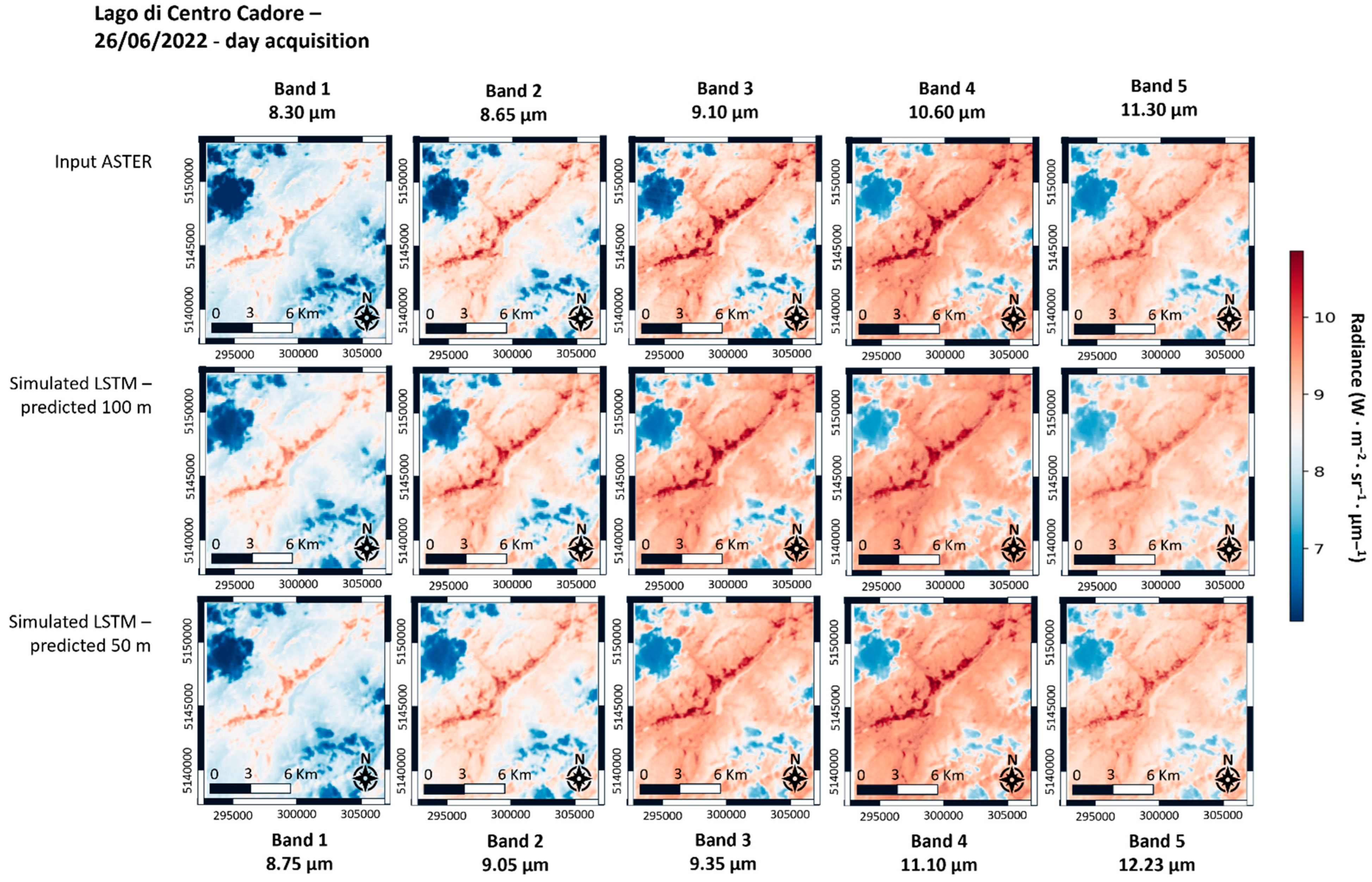
The final output of the proposed framework—the 50 m, 5-band LSTM-like products—is visually evaluated in Figure 12 and Figure 14. Those figures showcase the end-to-end result after both Spectral (SSR) and Spatial (SpSR) super-resolution steps. The transition from the original Landsat/ASTER inputs to the final 50 m product demonstrates a significant gain in spatial sharping, effectively delineating high-frequency thermal features. The visual coherence across all five generated bands (8.3 μm to 11.3 μm) confirms that integrating physics-based modeling with deep learning provides a robust pathway for high-resolution thermal mission prototyping.
Residual maps for the spatial super-resolution (SpSR) task are shown in Figure 13. The residuals are generally very low in magnitude (<0.1 Wm−2sr−1 μm−1) and spatially smooth across the scene, indicating strong agreement between the super-resolved outputs and the reference data.
Slightly higher residual values are observed in regions affected by cloud contamination, which can be attributed to the use of surface emissivity assumptions that do not explicitly account for cloud emissivity effects. These discrepancies may introduce minor radiometric inconsistencies between the reference and reconstructed data; however, they remain low in magnitude. Overall, the residuals do not exhibit any consistent spatial pattern across the scene, and no systematic concentration is observed over specific surface types, indicating stable model performance across diverse spatial conditions.
Importantly, no structured high-frequency residual patterns or noise amplification are observed, suggesting that the model does not introduce artificial textures or hallucinated features. This behavior is consistent with the PSD analysis, which showed no excess high-frequency energy in the reconstructed images.
Overall, the residual analysis confirms that the spatial super-resolution approach enhances spatial detail while preserving the physical consistency and radiometric integrity of the thermal signal.
Figure 12.
End-to-end visual assessment of the simulated LSTM thermal products. The panels display the progression from the input Landsat 9 Band 10 (100 m), to the spectrally simulated five-band LSTM intermediate product (100 m), and finally to the spatially super-resolved LSTM output (50 m). The maps are displayed in the WGS 84/UTM zone 33N coordinate reference system (EPSG:32633).
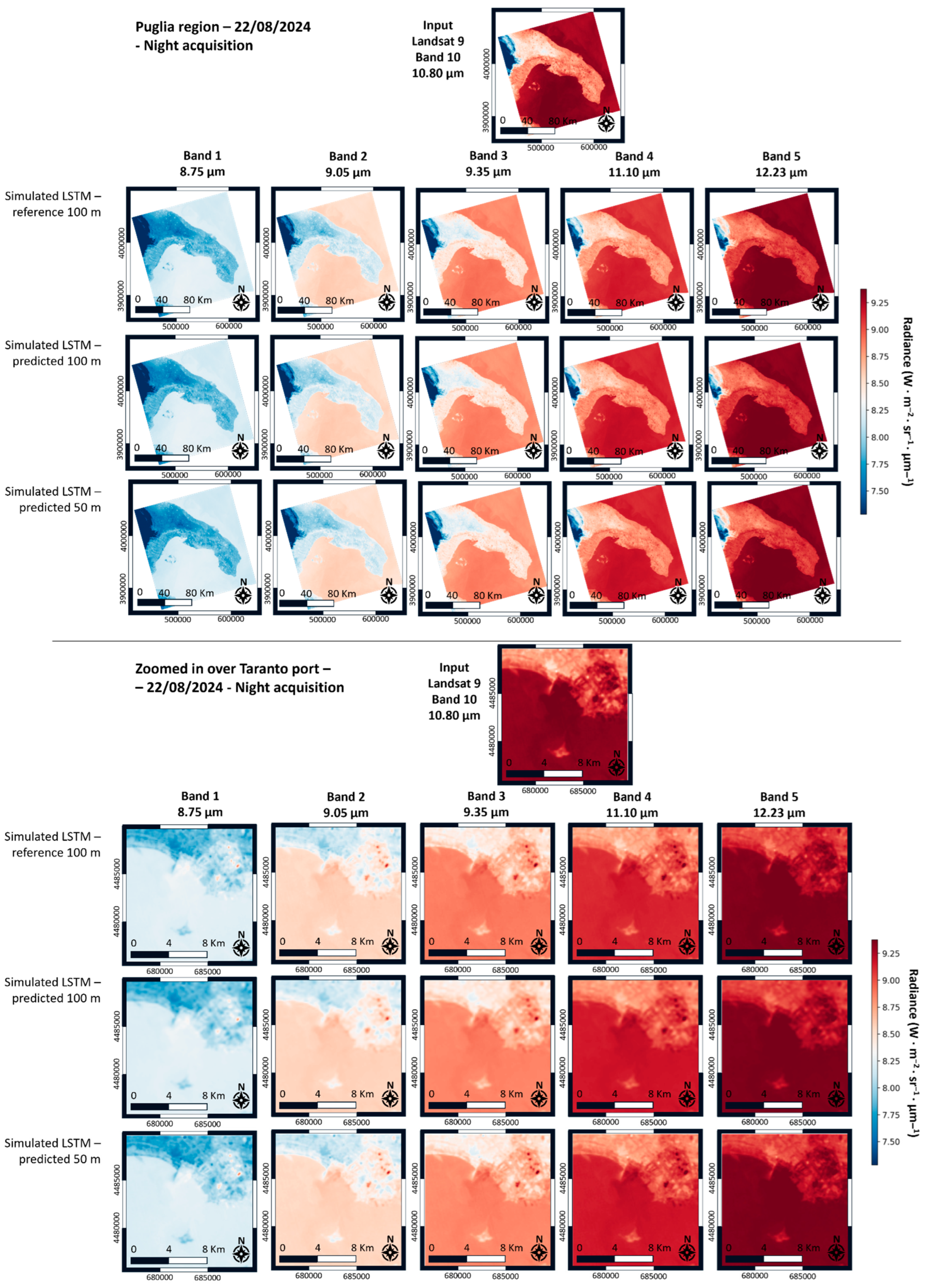
Figure 13.
Residual maps (SpSR—reference) for the spatial super-resolution (SpSR) task (100 m → 50 m), shown for the five reconstructed thermal bands. Residuals are expressed in radiance units and visualized using a diverging color scale centered at zero. The maps are displayed in the WGS 84/UTM zone 33N coordinate reference system (EPSG:32633).
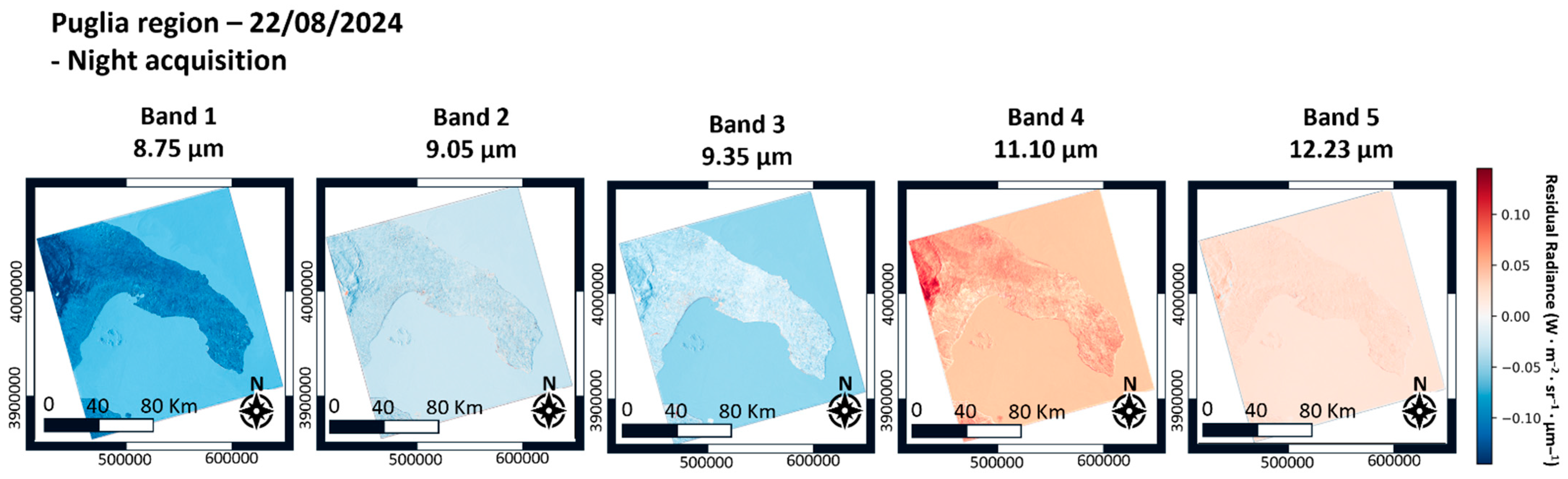
Figure 14.
End-to-end visual assessment of the simulated LSTM thermal products. The panels display the progression from the input ASTER bands (90 m), to the spectrally simulated five-band LSTM intermediate product (100 m), and finally to the spatially super-resolved LSTM output (50 m). The maps are displayed in the WGS 84/UTM zone 33N coordinate reference system (EPSG:32633).
4. Discussion and Conclusions
This work presented an end-to-end framework for simulating hyperspectral and thermal observations from existing satellite and airborne data, with a specific focus on inland, lacustrine, riverine, and coastal environments affected by anthropogenic and natural water-quality variability. The framework was applied to CHIME and LSTM simulations and includes hyperspectral satellite data (PRISMA, EnMAP), airborne HySpex acquisitions, and multisource thermal satellite data (Landsat 8/9, ASTER). It integrates radiative transfer modeling, radiometric corrections, and deep learning–based spatial downscaling to generate realistic, mission-like products prior to launch.
For CHIME, two complementary simulation chains were developed. The satellite-based chain exploits the spectral similarity among CHIME, PRISMA, and EnMAP, while explicitly handling VNIR–SWIR overlap discontinuities, noisy bands, and gaps in spectral coverage. SRF-based band adjustment ensures spectral harmonization, and the analysis of missing regions clearly delineates bands that cannot be reliably simulated. The airborne-based chain adds a spatially explicit component: high-resolution HySpex reflectance is transformed into CHIME-like TOA radiance via 6S, using ECMWF atmospheric inputs, and then spatially resampled through a PSF-driven Gaussian convolution consistent with CHIME’s MTF requirements. Validation using matched EnMAP–PRISMA pairs and an airborne–EnMAP comparison demonstrates that SRF-based spectral adjustment reproduces native spectra with low RMSE, high correlations and small spectral angles, with most discrepancies confined to spectrally and radiometrically challenging regions (e.g., extreme blue bands and spectral gaps).
For LSTM, the proposed methodology addresses both spectral and spatial limitations of current TIR satellite missions. The physics-based TIR spectral super-resolution module reconstructs LSTM-like five-band thermal radiances from Landsat/ASTER by explicitly solving the thermal radiative transfer equation with libRadtran and ERA5 atmospheric profiles, combined with ASTER-derived emissivity. This avoids purely empirical interpolation and guarantees physically consistent spectral behavior in the 8–12 μm window. The spectral component has been evaluated against Landsat and ASTER observations, demonstrating consistency with real satellite data. The subsequent spatial super-resolution module uses the ViT SwinIR model trained with the Wald’s protocol, to downscale the thermal products from 100 m to 50 m while preserving radiometric consistency. Validation metrics show very high SSIM and correlation and low RMSE and ERGAS values, indicating that the downscaled images closely reproduce the reference thermal patterns, with enhanced texture and sharper land–water and urban–rural contrasts.
Despite these positive results, several limitations remain. The CHIME simulations are constrained by the spectral ranges of PRISMA, EnMAP and HySpex, which prevent the reconstruction of CHIME bands outside the available wavelength domains or within EnMAP’s spectral gaps. Specifically, the HySpex airborne acquisitions were limited to the VNIR range, meaning the SWIR components could not be simulated for those specific campaigns. However, this is not an inherent limitation of the methodological framework itself, the workflow is fully capable of processing and simulating the complete CHIME spectral suite provided that the input data covers the required wavelengths. This highlights that while the simulation architecture is transferable and robust, the fidelity of the final product remains highly dependent on the spectral breadth of the source data. For LSTM, while the spectral component is validated against real satellite observations, the spatial super-resolution module is currently validated using a controlled degradation framework (Wald’s protocol), due to the limited availability of independent high-resolution thermal reference datasets at the target spatial scale. In addition, the current evaluation is primarily based on scenes from the Mediterranean region, which include diverse land cover types such as urban, coastal, inland water, and rural environments. While this provides a representative testbed, further assessment over geographically distinct regions and climatic conditions would be beneficial to fully evaluate the generalization capability of the model.
In addition, the overall reliability of the simulated products is influenced by the sequential nature of the processing chain, where uncertainties arise from individual components such as spectral transformation, atmospheric modeling, and super-resolution. While a full uncertainty propagation analysis is not currently feasible, the component-wise validation results indicate that these uncertainties remain controlled and do not lead to the introduction of non-physical artifacts in the simulated outputs.
Overall, the results show that the proposed multi-sensor framework is sufficiently comprehensive and enables reliable simulations. This is demonstrated by the generation of CHIME- and LSTM-like data products with high spectral and spatial fidelity, suitable for pre-launch algorithm testing, mission performance assessment, and service prototyping. The modular structure of the chain (atmospheric correction, SRF-based spectral transformation, PSF-based resampling, radiative transfer simulation, and AI-based downscaling) allows for straightforward updates as new auxiliary datasets, improved SRFs or better RTMs become available. Future work will focus on (i) extending the validation to additional sites and acquisition conditions, (ii) incorporating airborne thermal campaigns for independent evaluation of the LSTM modules, and (iii) integrating the simulated products into retrieval, data assimilation and early-warning workflows for monitoring water discharges and thermal impacts in operational settings.
Author Contributions
Conceptualization, M.K., P.K. and V.K.; methodology, P.K., M.K. and V.K.; software P.K. and M.K.; validation, P.K. and M.K.; data curation, P.D.L. and J.A.V.-S.; writing—original draft preparation P.K. and M.K.; writing—review and editing, M.K., P.K., V.K., A.A., G.C., P.D.L., J.A.V.-S. and E.L.; visualization, P.K. and M.K.; supervision, M.K., V.K., A.A., G.C. and E.L.; project administration, A.A.; funding acquisition, G.C. All authors have read and agreed to the published version of the manuscript.
Funding
This work was supported by the Sentinel Users Preparation (SUP) initiative of the European Space Agency under ESA Contract No. 4000146580/24/I-DT-bgh (Multisensor Water Discharges Project).
Data Availability Statement
The simulated CHIME-like and simulated LSTM-like datasets are available at the APEx PRR (Project Results Repository).
Conflicts of Interest
Author Paola Di Lauro was employed by the company Planetek. The remaining authors declare that the research was conducted in the absence of any commercial or financial relationships that could be construed as a potential conflict of interest.
Abbreviations
The following abbreviations are used in this manuscript:
| AoIs | Areas of Interest |
| ASI | Italian Space Agency |
| ASTER | Advanced Spaceborne Thermal Emission and Reflection Radiometer |
| BOA | Bottom-of-Atmosphere |
| BRDF | Bidirectional Reflectance Distribution Function |
| CC | Correlation Coefficient |
| CDOM | Colored dissolved organic matter |
| CHIME | Copernicus Hyperspectral Imaging Mission for the Environment |
| CNNs | Convolutional Neural Networks |
| CRS | Coordinate Reference System |
| DL | Deep Learning |
| DLR | German Aerospace Center |
| ECMWF | European Centre for Medium-Range Weather Forecasts |
| EeteS | EnMAP end-to-end Simulation |
| EnMAP | Environmental Mapping and Analysis Program |
| EO | Earth Observation |
| ERGAS | Erreur Relative Globale Adimensionnelle de Synthèse |
| ESA | European Space Agency |
| GRD | Ground Resolved Distance |
| HSI | HyperSpectral Imager |
| JPL | Jet Propulsion Laboratory |
| LSTM | Land Surface Temperature Monitoring |
| LUTs | Look-Up Tables |
| MTF | Modulation Transfer Function |
| NASA | National Aeronautics and Space Administration |
| NEO | Norsk Elektro Optikk |
| NIR | Near-Infrared |
| NISAR | NASA-ISRO Synthetic Aperture Radar |
| PSF | Point Spread Function |
| PSNR | Peak Signal-to-Noise Ratio |
| RMSE | Root Mean Square Error |
| RT | Radiative Transfer |
| RTE | radiative transfer equation |
| S2eteS | Sentinel-2 end-to-end Simulation |
| SAD | Spectral Angle Distance |
| SBG | Surface Biology and Geology |
| SNR | Signal-to-Noise Ratio |
| SpSR | Spatial Super-Resolution |
| SRF | Spectral Response Function |
| SSD | Spectral Sampling Distance |
| SSIM | Structural Similarity Index Measure |
| SSR | Spectral Super-Resolution |
| STORE | Simulator of TOa RadiancE |
| SWIR | Short-Wave Infrared |
| TIR | Thermal Infrared |
| TIR-SpSR | Thermal Infrared Spatial Super-Resolution |
| TIR-SSR | Thermal Infrared Spectral Super-Resolution |
| TIRS | Thermal Infrared Sensor |
| TOA | Top-of-Atmosphere |
| USGS | United States Geological Survey |
| VIS | Visible |
| VNIR | Visible and Near-Infrared |
Appendix A
This appendix provides a comprehensive summary of the satellite and airborne datasets utilized in this study. The data were selected from a broader repository of available imagery based on their spatial coverage of the defined geographic sites between 2019 and early 2025. To ensure data quality, acquisitions were filtered to include only those with a cloud cover of less than 60%.
Regarding the hyperspectral datasets, PRISMA and EnMAP products were initially selected without filtering for spectral consistency to maintain a complete record of available overpasses. These datasets were subsequently processed to remove channels in the VNIR and SWIR overlapping region, as detailed in Section 2.3.2.
In the following tables, a cloud cover value of −1 is used to denote nighttime acquisitions. This distinction is made because nighttime thermal data are processed differently and are not subject to the same reflective cloud-masking algorithms as daytime optical data, or were selected based on clear-sky thermal signatures regardless of the standard daytime metadata flags.
Table A1.
EnMAP Hyperspectral Data Acquisitions (2022–2025).
Table A2.
PRISMA Hyperspectral Data Acquisitions (2019–2024).
Table A3.
Airborne Hyspex Hyperspectral Data Acquisitions (2025).
Table A4.
ASTER Thermal Data Acquisitions (2020–2023).
Table A5.
Landsat Thermal Data Daytime Acquisitions (2020–2025).
Table A6.
Landsat Thermal Data Nighttime Acquisitions (2023–2024).
References
- Ghaemi, H.; Fattahi, H.; Hawkins, B.; Jung, J.; Huang, B.; Brancato, V.; Shimada, J.; Gunter, G.; Shiroma, G.H.X.; Burns, R.; et al. NISAR SweepSAR Echo Simulation: Summary and Results. In Proceedings of the IGARSS 2023-2023 IEEE International Geoscience and Remote Sensing Symposium, Pasadena, CA, USA, 16–21 July 2023; pp. 876–879. [Google Scholar] [CrossRef] [Scilit]
- Segl, K.; Küster, T.; Rogaß, C.; Kaufmann, H.; Sang, B.; Mogulsky, V.; Hofer, S. EeteS: An End-to-End Image Simulation Tool Applied to the EnMAP Hyperspectral Mission. In Proceedings of the International Geoscience and Remote Sensing Symposium (IGARSS), Munich, Germany, 22–27 July 2012; pp. 5025–5028. [Google Scholar] [CrossRef] [Scilit]
- Segl, K.; Guanter, L.; Gascon, F.; Kuester, T.; Rogass, C.; Mielke, C. S2eteS: An End-to-End Modeling Tool for the Simulation of Sentinel-2 Image Products. IEEE Trans. Geosci. Remote Sens. 2015, 53, 5560–5571. [Google Scholar] [CrossRef] [Scilit]
- Manipulation and Generation of Synthetic Satellite Images Using Deep Learning Models. Available online: https://www.spiedigitallibrary.org/journals/journal-of-applied-remote-sensing/volume-16/issue-4/046504/Manipulation-and-generation-of-synthetic-satellite-images-using-deep-learning/10.1117/1.JRS.16.046504.full (accessed on 21 February 2026).
- Longepe, N.; Petrelli, I.; Oman Kadunc, N.; Peressutti, D.; Del Prete, R.; Casaburi, M.; Babkina, I.; Vercruyssen, N.; Callejo Luis, E.; Moron, A.; et al. Simulation of Multispectral and Hyperspectral EO Products for Onboard Machine Learning Application. IEEE J. Sel. Top. Appl. Earth Obs. Remote Sens. 2024, 17, 17651–17665. [Google Scholar] [CrossRef] [Scilit]
- Han, S.; Kerekes, J.P. Overview of Passive Optical Multispectral and Hyperspectral Image Simulation Techniques. IEEE J. Sel. Top. Appl. Earth Obs. Remote Sens. 2017, 10, 4794–4804. [Google Scholar] [CrossRef] [Scilit]
- Di Giacomo, M.; De Santis, D.; Bassani, C.; Curci, G.; Sasidharan, S.T.; Amarillo, A.C.; Barnaba, F.; Di Liberto, L.; Pasqualini, F.; Fontinovo, G.; et al. A Physics-Based Framework for PRISMA-Like Hyperspectral Data Simulation in Urban Environment. SSRN 2026. [Google Scholar] [CrossRef] [Scilit]
- Verrelst, J.; Morata, M.; García-Soria, J.L.; Sun, Y.; Qi, J.; Rivera-Caicedo, J.P. RTM Surrogate Modeling in Optical Remote Sensing: A Review of Emulation for Vegetation and Atmosphere Applications. Remote Sens. 2025, 17, 3618. [Google Scholar] [CrossRef] [Scilit]
- Brath, M.; Petersen, J.; Buehler, S.A.; Eriksson, P. Extending the Atmospheric Radiative Transfer Simulator (ARTS) to Shortwave Radiation. J. Adv. Model. Earth Syst. 2026, 18, e2025MS005024. [Google Scholar] [CrossRef] [Scilit]
- Berk, A.; Bernstein, L.S.; Robertson, D.C. MODTRAN: A Moderate Resolution Model for LOWTRAN; Spectral Sciences, Inc.: Burlington, MA, USA, 1987. [Google Scholar]
- Vermote, E.F.; Tanré, D.; Deuzé, J.L.; Herman, M.; Morcrette, J.J. Second Simulation of the Satellite Signal in the Solar Spectrum, 6s: An Overview. IEEE Trans. Geosci. Remote Sens. 1997, 35, 675–686. [Google Scholar] [CrossRef] [Scilit]
- Emde, C.; Buras-Schnell, R.; Kylling, A.; Mayer, B.; Gasteiger, J.; Hamann, U.; Kylling, J.; Richter, B.; Pause, C.; Dowling, T.; et al. The LibRadtran Software Package for Radiative Transfer Calculations (Version 2.0.1). Geosci. Model Dev. 2016, 9, 1647–1672. [Google Scholar] [CrossRef] [Scilit]
- Silvestri, M.; Musacchio, M.; Buongiorno, M.F.; Ananasso, C. Hyperspectral Data Simulation Data and Image Classification in the Future Earth Observation Asi Mission Framework. In Proceedings of the Workshop on Hyperspectral Image and Signal Processing, Evolution in Remote Sensing, Tokyo, Japan, 2–5 June 2015. [Google Scholar] [CrossRef] [Scilit]
- Guanter, L.; Segl, K.; Kaufmann, H. Simulation of Optical Remote-Sensing Scenes with Application to the EnMAP Hyperspectral Mission. IEEE Trans. Geosci. Remote Sens. 2009, 47, 2340–2351. [Google Scholar] [CrossRef]
- Hook, S.J.; Myers, J.J.; Thome, K.J.; Fitzgerald, M.; Kahle, A.B. The MODIS/ASTER Airborne Simulator (MASTER)—A New Instrument for Earth Science Studies. Remote Sens. Environ. 2001, 76, 93–102. [Google Scholar] [CrossRef] [Scilit]
- Michel, A.; Granero-Belinchon, C.; Cassante, C.; Boitard, P.; Briottet, X.; Adeline, K.R.M.; Poutier, L.; Sobrino, J.A. A New Material-Oriented TES for Land Surface Temperature and SUHI Retrieval in Urban Areas: Case Study over Madrid in the Framework of the Future TRISHNA Mission. Remote Sens. 2021, 13, 5139. [Google Scholar] [CrossRef] [Scilit]
- Hulley, G.; Shivers, S.; Wetherley, E.; Cudd, R. New ECOSTRESS and MODIS Land Surface Temperature Data Reveal Fine-Scale Heat Vulnerability in Cities: A Case Study for Los Angeles County, California. Remote Sens. 2019, 11, 2136. [Google Scholar] [CrossRef] [Scilit]
- Nieke, J.; Despoisse, L.; Gabriele, A.; Weber, H.; Strese, H.; Ghasemi, N.; Gascon, F.; Alonso, K.; Boccia, V.; Tsonevska, B.; et al. The Copernicus Hyperspectral Imaging Mission for the Environment (CHIME): An Overview of Its Mission, System and Planning Status. Sens. Syst. Next-Gener. Satell. XXVII 2023, 12729, 21–40. [Google Scholar] [CrossRef] [Scilit]
- Rast, M.; Adams, J.; Gascon, F.; Nieke, J.; Ananasso, C.; Bach, H.; Dor, B.; Chabrillat, S.; Colombo, R.; Feret, J.-B.; et al. ESA UNCLASSIFIED-for Official Use Title Copernicus Hyperspectral Imaging Mission for the Environment-Mission Requirements Document Issue Number 3 Revision Number 0; European Space Agency (ESA): Noordwijk, The Netherlands, 2021.
- Koetz, B.; Baschek, B.; Bastiaanssen, W.; Berger, M.; Blommaert, J.; Alamanac, A.B.; Barat, I.; Fabrizia Buongiorno, M.; D’andrimont, R.; Bello, U.D.; et al. ESA UNCLASSIFIED-for ESA Official Use Only Title Copernicus High Spatio-Temporal Resolution Land Surface Temperature Mission: Mission Requirements Document Issue Number 3 Revision Number 0; European Space Agency (ESA): Noordwijk, The Netherlands, 2021.
- German Aerospace Center (DLR). EnMAP Ground Segment EnMAP HSI Level 1/Level 2 Product Specification Document Restriction: Public; DLR: Oberpfaffenhofen, Germany, 2024.
- Italian Space Agency (ASI). PRISMA Products Specification Document; Version 2.3; ASI: Roma, Italy, 2020.
- Norsk Elektro Optikk AS (NEO). HySpex VNIR-1800. Available online: https://www.hyspex.com/hyspex-products/hyspex-classic/vnir-1800 (accessed on 26 February 2026).
- Department of the Interior U.S. Geological Survey. Landsat 8 (L8) Data Users Handbook. Version 5.0; Department of the Interior U.S. Geological Survey: Reston, VA, USA, 2019.
- Department of the Interior U.S. Geological Survey. Landsat 9 Data Users Handbook. Version 1.0; Department of the Interior U.S. Geological Survey: Reston, VA, USA, 2022.
- Jet Propulsion Laboratory/California Institute of Technology. ASTER User Handbook Version 2; Jet Propulsion Laboratory/California Institute of Technology: Pasadena, CA, USA, 2002. [Google Scholar]
- Cerra, D.; Muller, R.; Reinartz, P. Noise Reduction in Hyperspectral Images through Spectral Unmixing. IEEE Geosci. Remote Sens. Lett. 2014, 11, 109–113. [Google Scholar] [CrossRef] [Scilit]
- Hersbach, H.; Bell, B.; Berrisford, P.; Biavati, G.; Horányi, A.; Muñoz Sabater, J.; Nicolas, J.; Peubey, C.; Radu, R.; Rozum, I.; et al. ERA5 Hourly Data on Single Levels from 1940 to Present 2023. Available online: https://cds.climate.copernicus.eu/datasets/reanalysis-era5-single-levels (accessed on 1 November 2025).
- Inness, A.; Ades, M.; Agustí-Panareda, A.; Barr, J.; Benedictow, A.; Blechschmidt, A.M.; Jose Dominguez, J.; Engelen, R.; Eskes, H.; Flemming, J.; et al. The CAMS Reanalysis of Atmospheric Composition. Atmos. Chem. Phys. 2019, 19, 3515–3556. [Google Scholar] [CrossRef] [Scilit]
- Dash, P.; Göttsche, F.M.; Olesen, F.S.; Fischer, H. Land Surface Temperature and Emissivity Estimation from Passive Sensor Data: Theory and Practice-Current Trends. Int. J. Remote Sens. 2002, 23, 2563–2594. [Google Scholar] [CrossRef] [Scilit]
- Schott, J.R. Remote Sensing: The Image Chain Approach; Oxford University Press: New York, NY, USA, 2007. [Google Scholar] [CrossRef] [Scilit]
- Borel, C.C. Iterative Retrieval of Surface Emissivity and Temperature for a Hyperspectral Sensor; Los Alamos National Lab.: Los Alamos, NM, USA, 1997. [Google Scholar]
- Gillespie, A.; Rokugawa, S.; Matsunaga, T.; Steven Cothern, J.; Hook, S.; Kahle, A.B. A Temperature and Emissivity Separation Algorithm for Advanced Spaceborne Thermal Emission and Reflection Radiometer (ASTER) Images. IEEE Trans. Geosci. Remote Sens. 1998, 36, 1113–1126. [Google Scholar] [CrossRef] [Scilit]
- Hulley, G.C.; Hook, S.J.; Abbott, E.; Malakar, N.; Islam, T.; Abrams, M. The ASTER Global Emissivity Dataset (ASTER GED): Mapping Earth’s Emissivity at 100 Meter Spatial Scale. Geophys. Res. Lett. 2015, 42, 7966–7976. [Google Scholar] [CrossRef] [Scilit]
- Gerace, A.; Montanaro, M. Derivation and Validation of the Stray Light Correction Algorithm for the Thermal Infrared Sensor Onboard Landsat 8. Remote Sens. Environ. 2017, 191, 246–257. [Google Scholar] [CrossRef] [Scilit]
- U.S. Geological Survey Landsat 8 OLI and TIRS Calibration Notices. Available online: https://www.usgs.gov/landsat-missions/landsat-8-oli-and-tirs-calibration-notices (accessed on 1 November 2025).
- Yang, J.; Yao, Y.; Wei, Y.; Zhang, Y.; Jia, K.; Zhang, X.; Shang, K.; Bei, X.; Guo, X. A Robust Method for Generating High-Spatiotemporal-Resolution Surface Reflectance by Fusing MODIS and Landsat Data. Remote Sens. 2020, 12, 2312. [Google Scholar] [CrossRef] [Scilit]
- Kremezi, M.; Kristollari, V.; Karathanassi, V.; Topouzelis, K.; Kolokoussis, P.; Taggio, N.; Aiello, A.; Ceriola, G.; Barbone, E.; Corradi, P. Increasing the Sentinel-2 Potential for Marine Plastic Litter Monitoring through Image Fusion Techniques. Mar. Pollut. Bull. 2022, 182, 113974. [Google Scholar] [CrossRef] [Scilit]
- Kustas, W.P.; Norman, J.M.; Anderson, M.C.; French, A.N. Estimating Subpixel Surface Temperatures and Energy Fluxes from the Vegetation Index-Radiometric Temperature Relationship. Remote Sens. Environ. 2003, 85, 429–440. [Google Scholar] [CrossRef] [Scilit]
- Sharma, K.V.; Khandelwal, S.; Kaul, N. Downscaling of Coarse Resolution Land Surface Temperature Through Vegetation Indices Based Regression Models. In Applications of Geomatics in Civil Engineering; Lecture Notes in Civil Engineering; Springer: Singapore, 2020; Volume 33, pp. 625–636. [Google Scholar] [CrossRef] [Scilit]
- Choi, Y.; Kim, N.; Hwang, S.; Kweon, I.S. Thermal Image Enhancement Using Convolutional Neural Network. In Proceedings of the IEEE International Conference on Intelligent Robots and Systems, Daejeon, Republic of Korea, 9–14 October 2016; pp. 223–230. [Google Scholar] [CrossRef] [Scilit]
- He, Z.; Tang, S.; Yang, J.; Cao, Y.; Ying Yang, M.; Cao, Y. Cascaded Deep Networks With Multiple Receptive Fields for Infrared Image Super-Resolution. IEEE Trans. Circuits Syst. Video Technol. 2019, 29, 2310–2322. [Google Scholar] [CrossRef] [Scilit]
- Wang, Z.; Chen, J.; Hoi, S.C.H. Deep Learning for Image Super-Resolution: A Survey. IEEE Trans. Pattern Anal. Mach. Intell. 2021, 43, 3365–3387. [Google Scholar] [CrossRef] [Scilit] [PubMed]
- Gutierrez, N.B.; Beksi, W.J. Thermal Image Super-Resolution Using Second-Order Channel Attention with Varying Receptive Fields. In Computer Vision Systems; Lecture Notes in Computer Science (Including Subseries Lecture Notes in Artificial Intelligence and Lecture Notes in Bioinformatics); Springer International Publishing: Cham, Switzerland, 2021; Volume 12899 LNCS, pp. 3–13. [Google Scholar]
- Yang, X.; Zhang, M.; Li, W.; Tao, R. Visible-Assisted Infrared Image Super-Resolution Based on Spatial Attention Residual Network. IEEE Geosci. Remote Sens. Lett. 2022, 19, 3100061. [Google Scholar] [CrossRef] [Scilit]
- Rivadeneira, R.E.; Sappa, A.D.; Hammoud, R.; Rao, J.; Zhong, H.; Wang, Y.; Zhao, S.; Zhong, Z.; Li, Y.H.; Wang, S.; et al. Thermal Image Super-Resolution Challenge Results—PBVS 2025. In Proceedings of the IEEE Computer Society Conference on Computer Vision and Pattern Recognition Workshops, Nashville, TN, USA, 11–15 June 2025; pp. 4621–4630. [Google Scholar] [CrossRef] [Scilit]
- Liang, J.; Cao, J.; Sun, G.; Zhang, K.; Van Gool, L.; Timofte, R. SwinIR: Image Restoration Using Swin Transformer. In Proceedings of the IEEE International Conference on Computer Vision, Montreal, BC, Canada, 11–17 October 2021; pp. 1833–1844. [Google Scholar] [CrossRef] [Scilit]
- Wald, L.; Ranchin, T.; Mangolini, M. Fusion of Satellite Images of Different Spatial Resolutions: Assessing the Quality of Resulting Images. Photogramm. Eng. Remote Sens. 1997, 63, 691–699. [Google Scholar]
- Musacchio, M.; Silvestri, M.; Romaniello, V.; Casu, M.; Buongiorno, M.F.; Melis, M.T. Comparison of ASI-PRISMA Data, DLR-EnMAP Data, and Field Spectrometer Measurements on “Sale ‘e Porcus”, a Salty Pond (Sardinia, Italy). Remote Sens. 2024, 16, 1092. [Google Scholar] [CrossRef] [Scilit]
- Jagalingam, P.; Hegde, A.V. A Review of Quality Metrics for Fused Image. Aquat. Procedia 2015, 4, 133–142. [Google Scholar] [CrossRef] [Scilit]
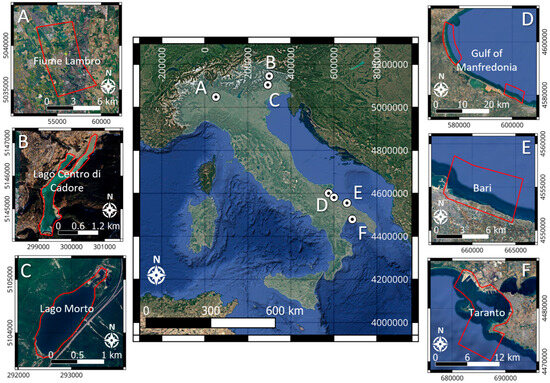
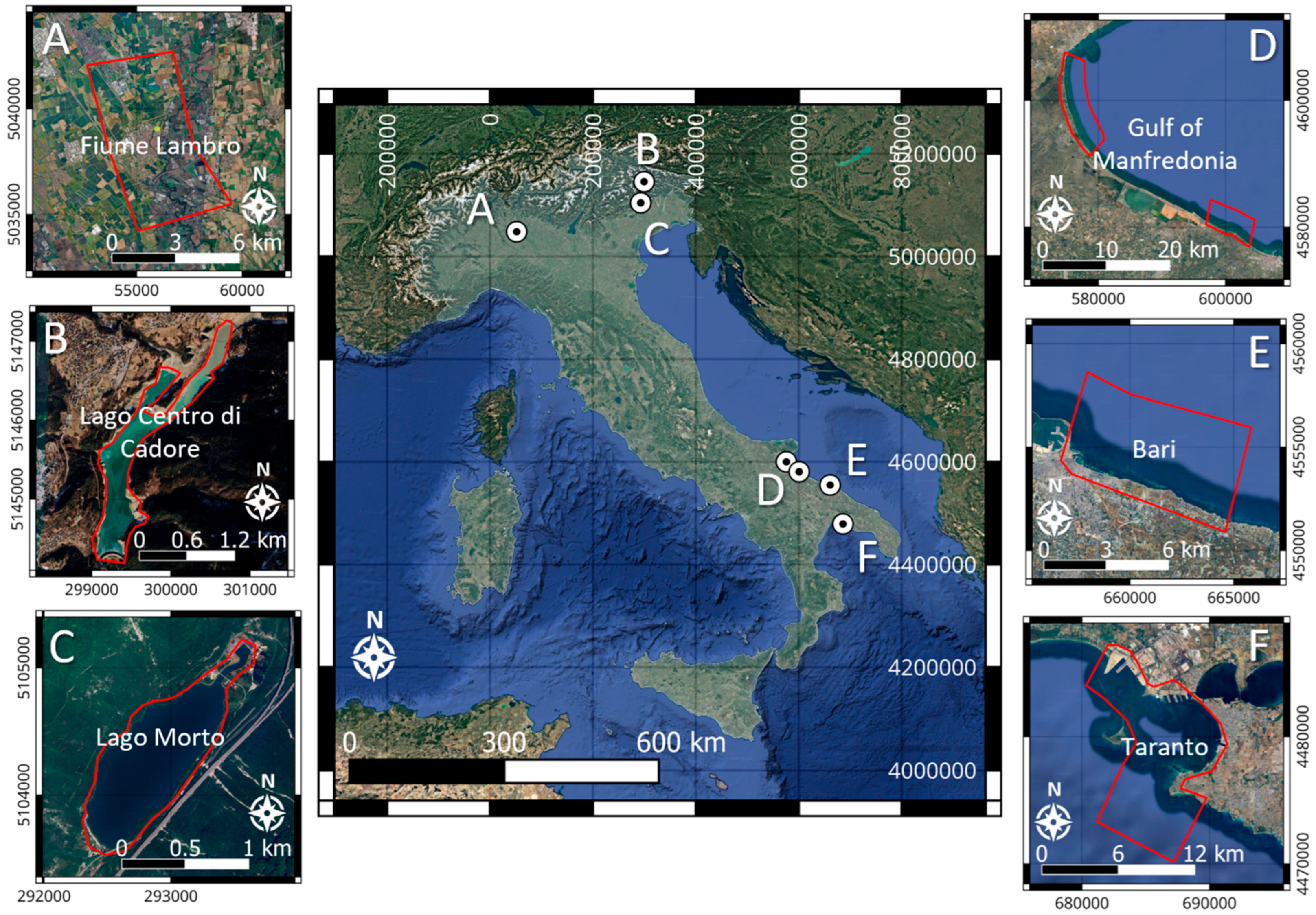
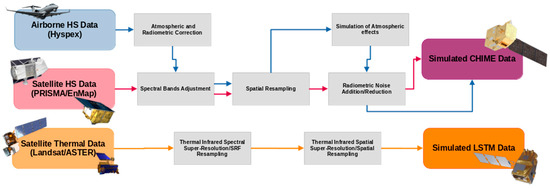
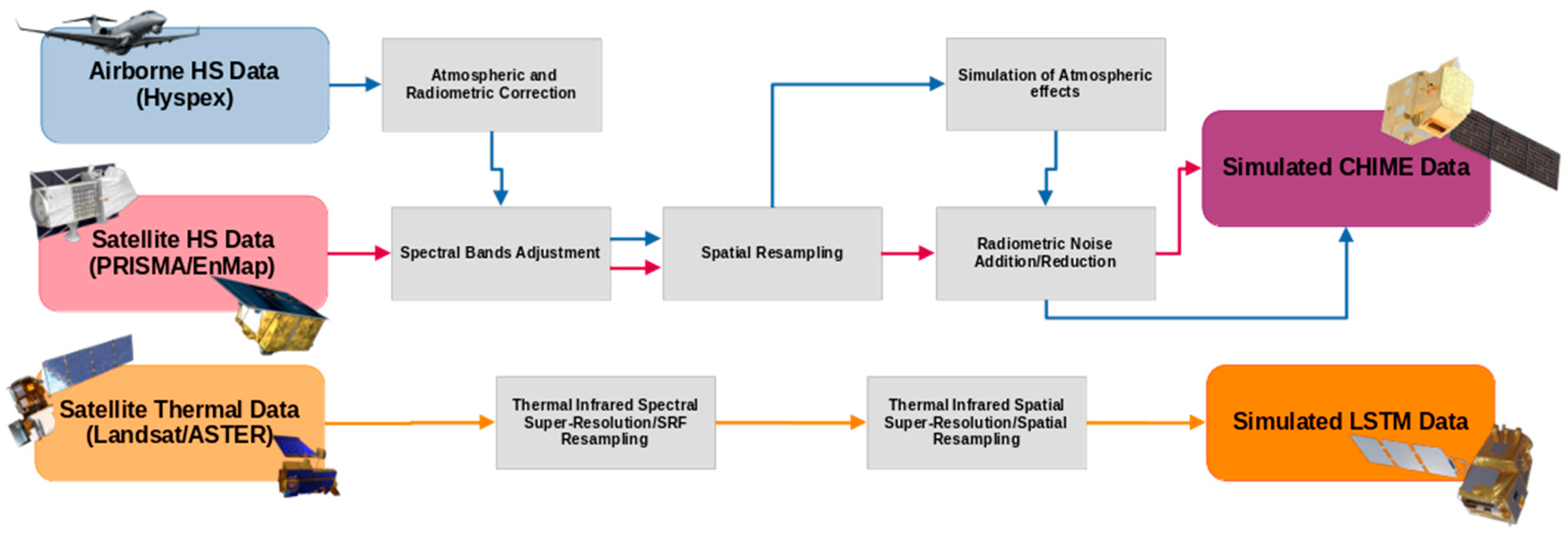
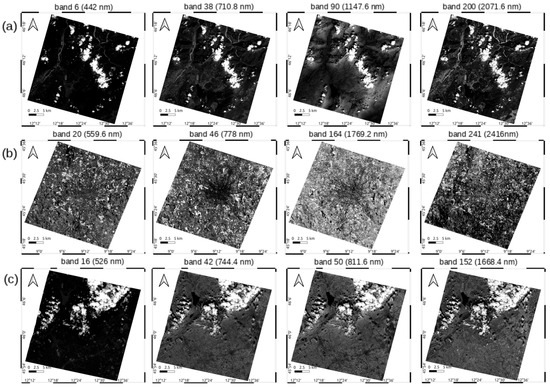
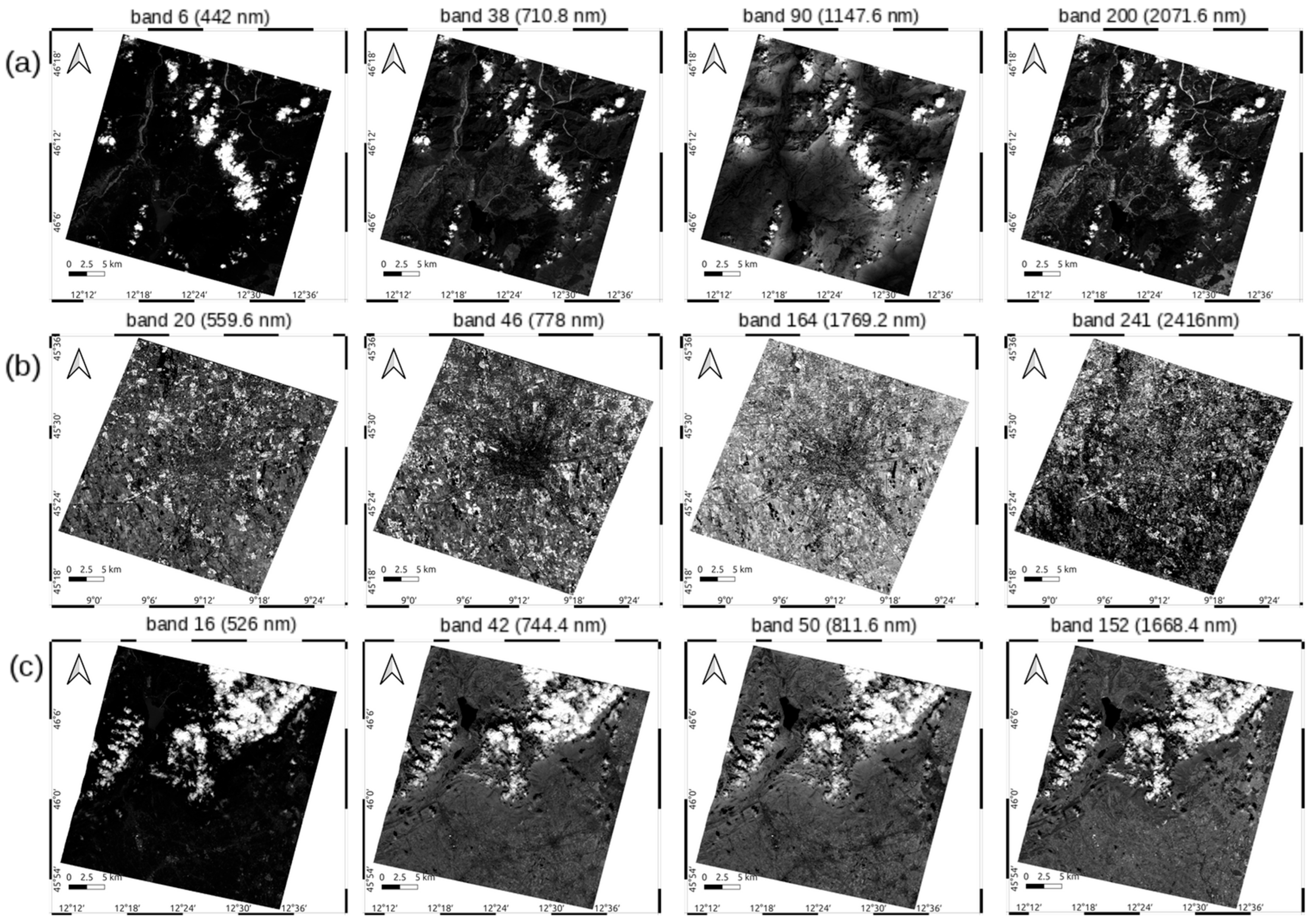
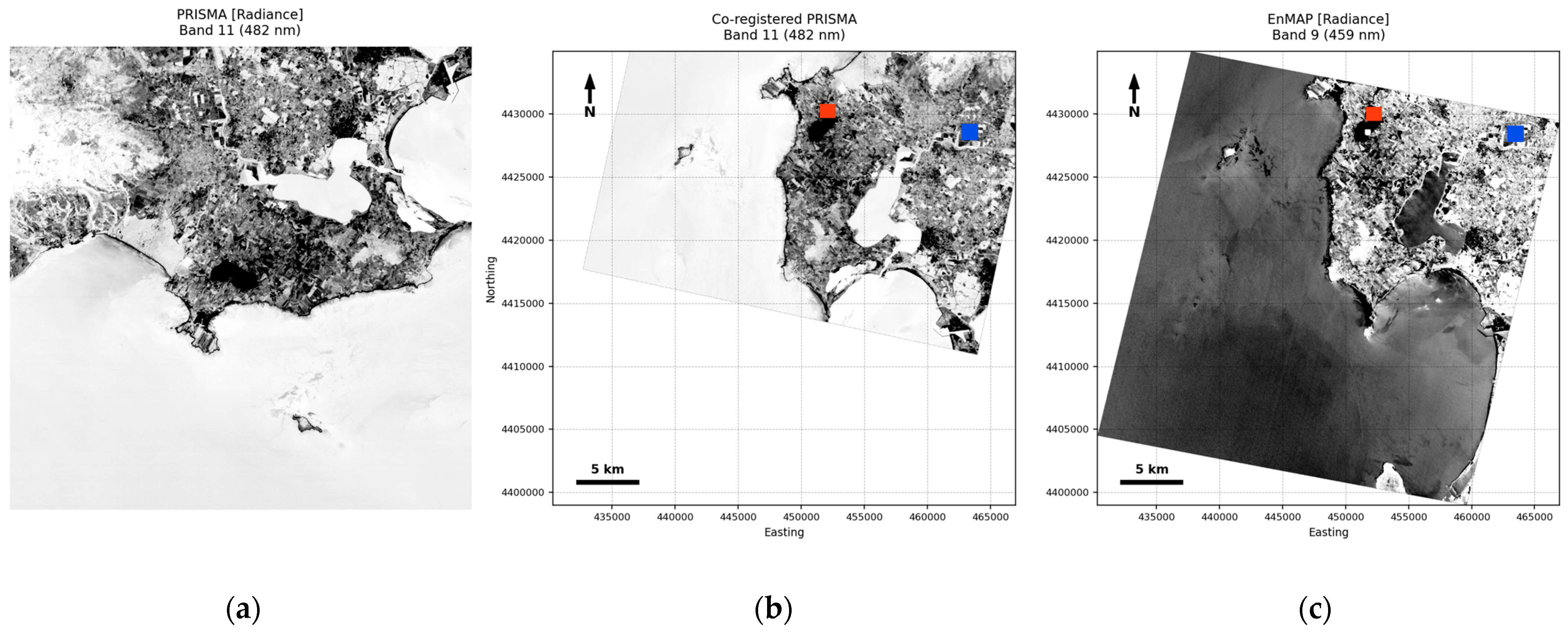
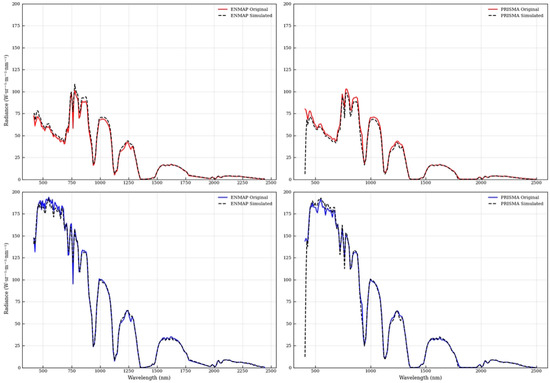
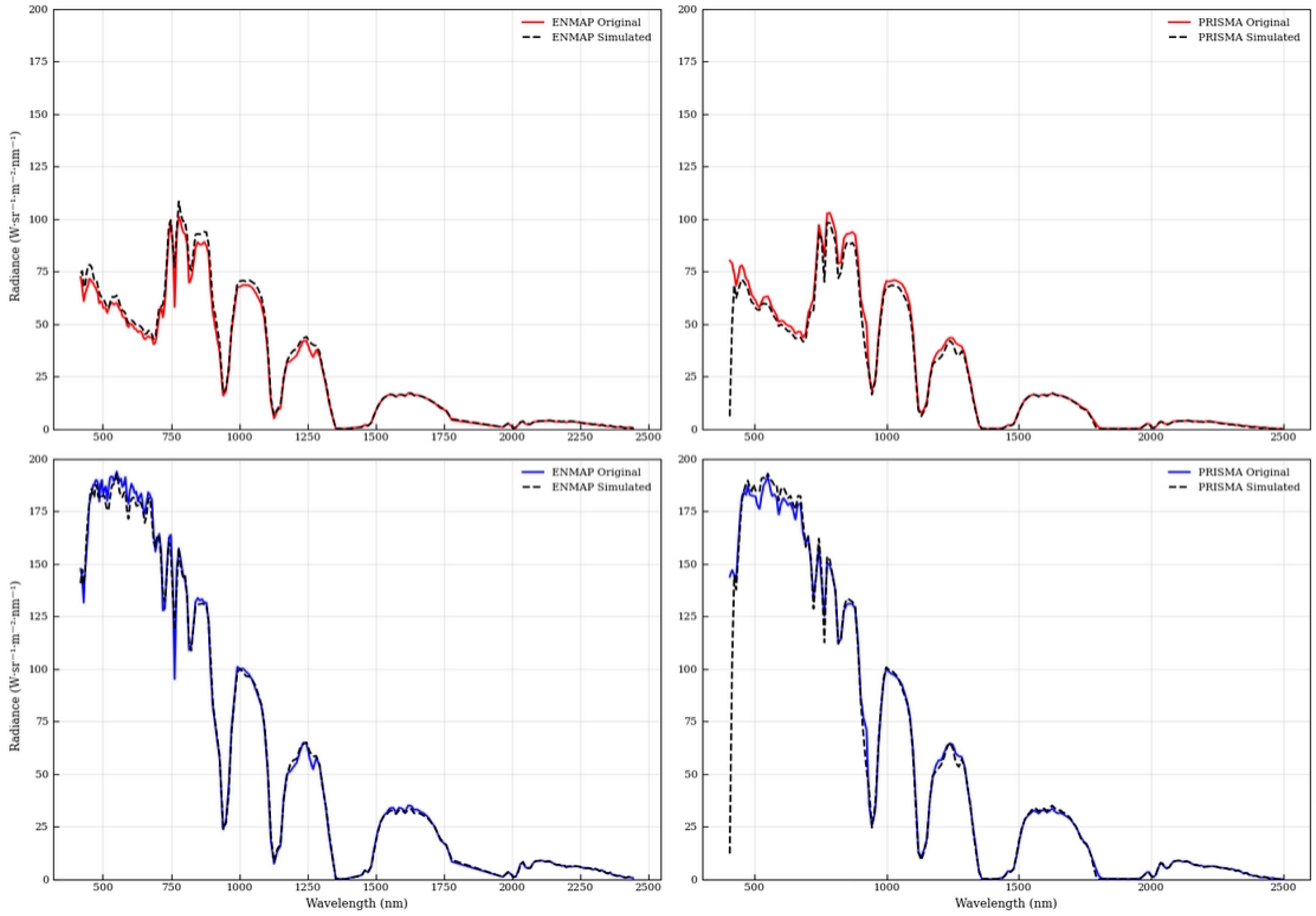
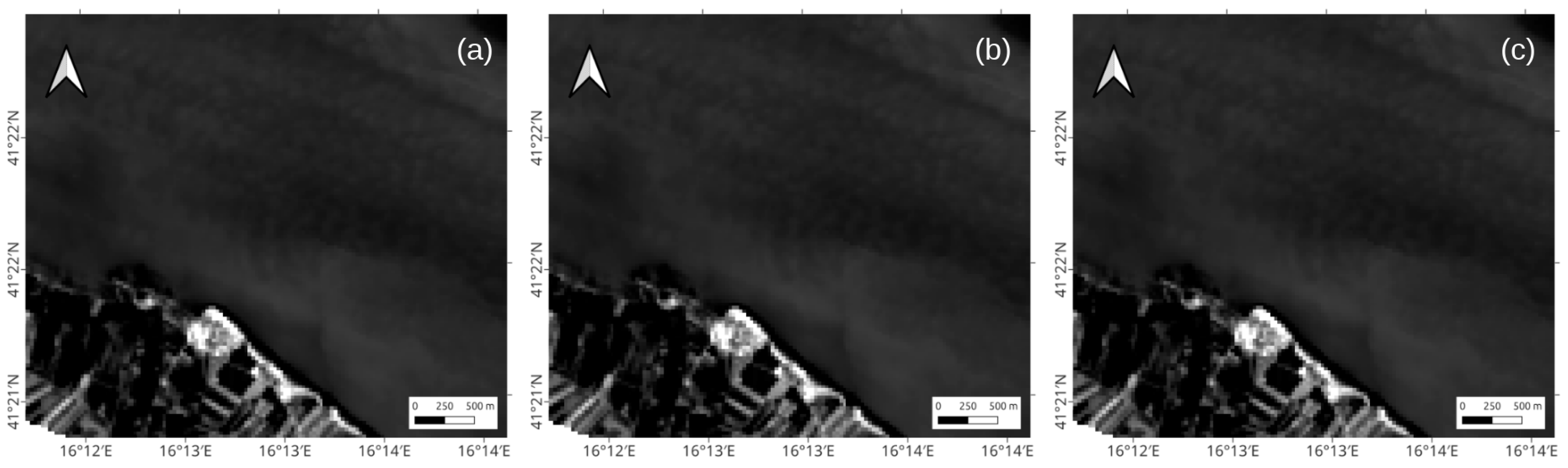
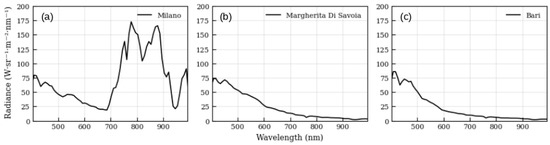
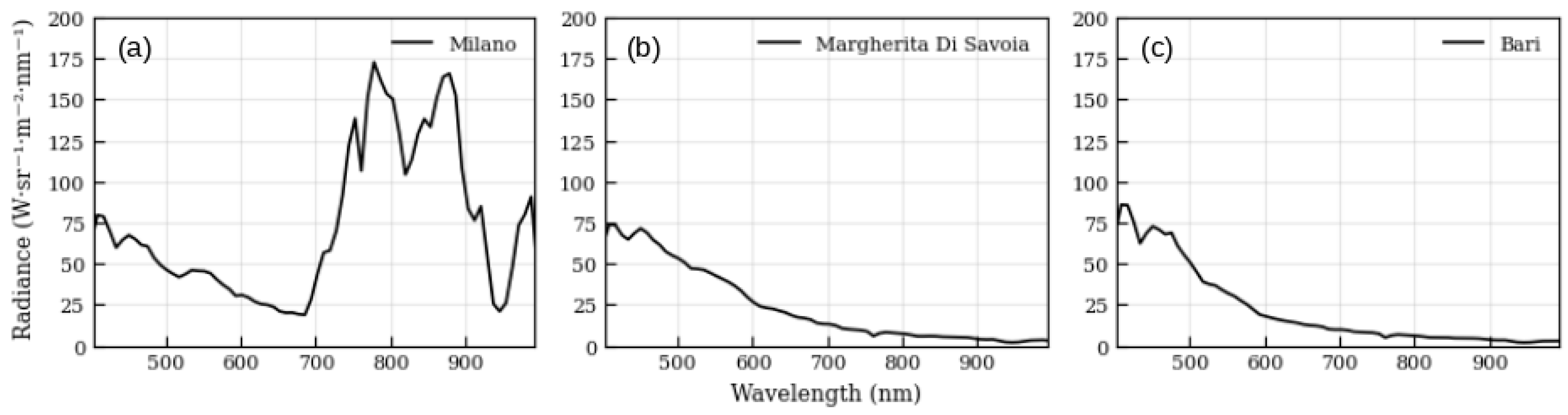
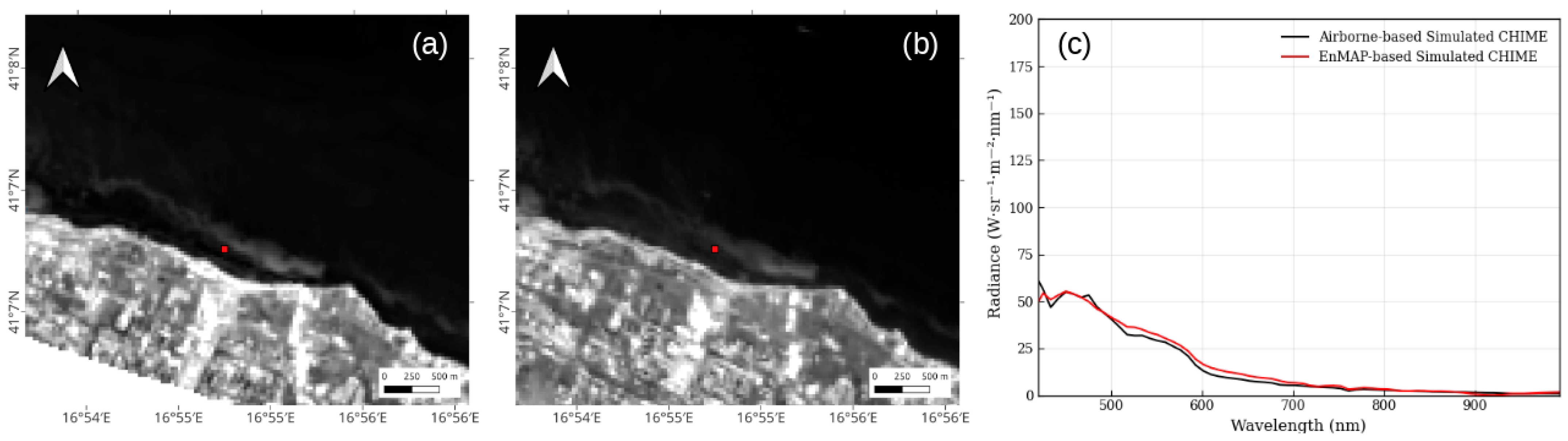
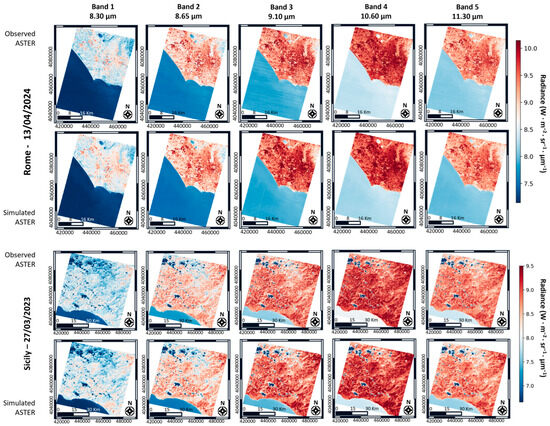
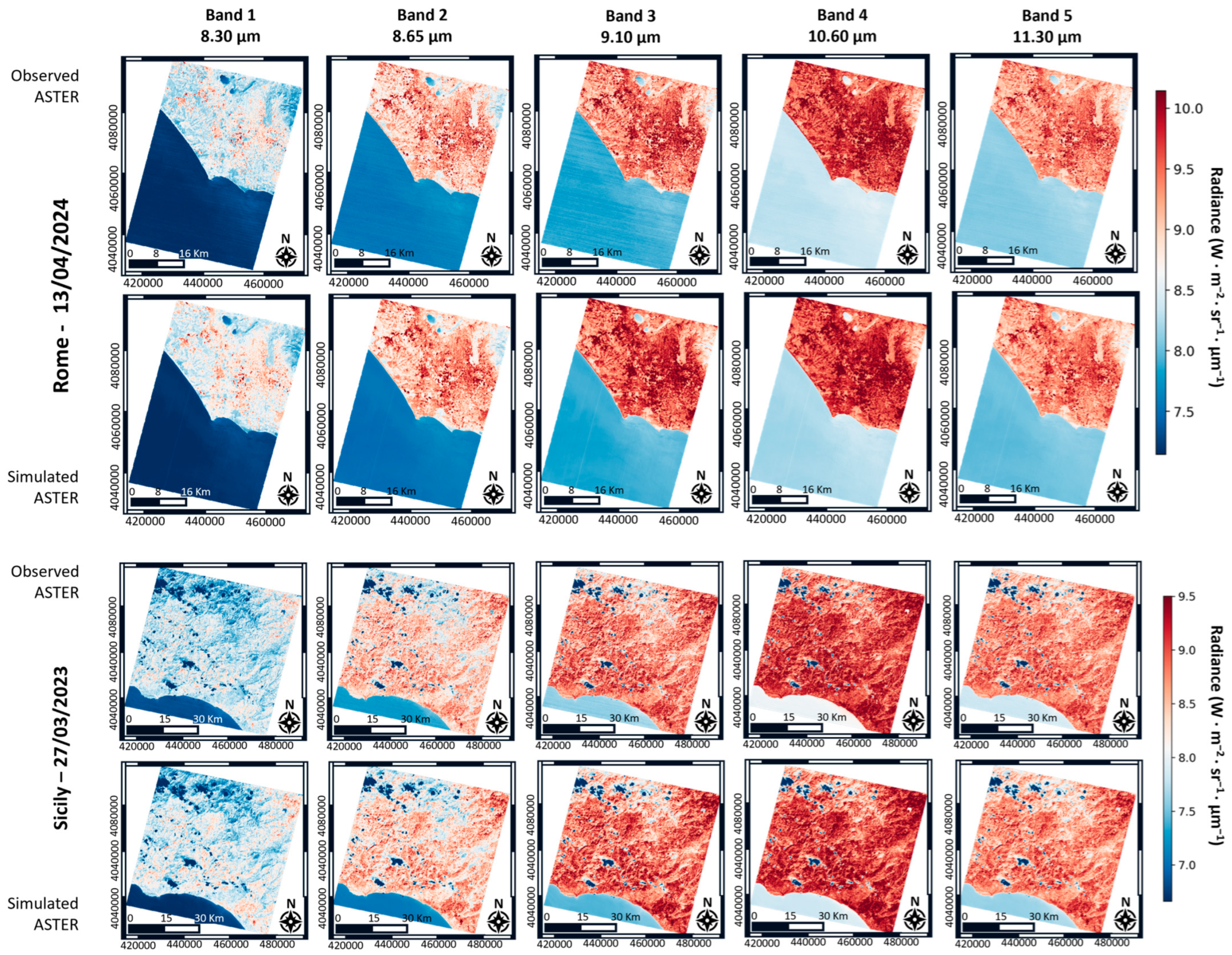
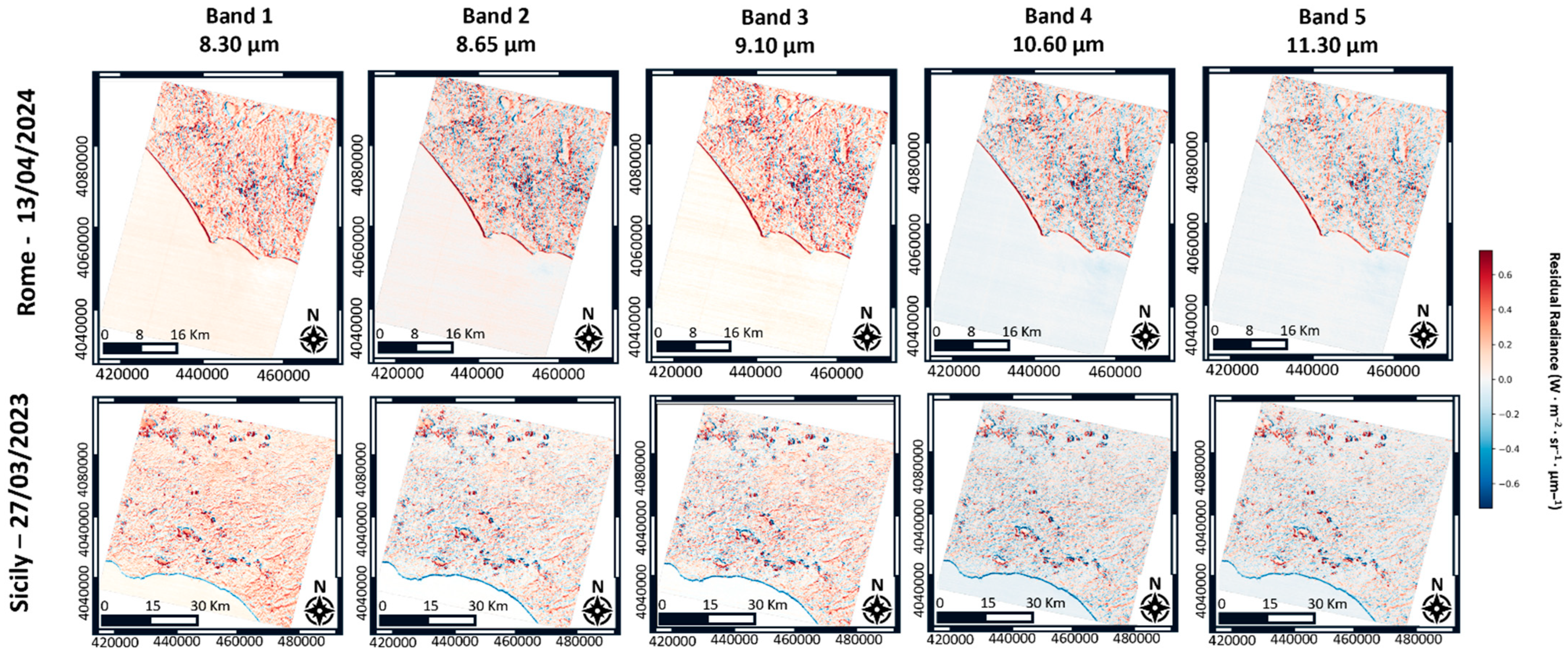
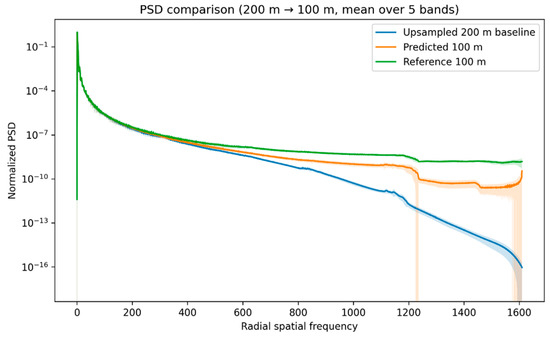
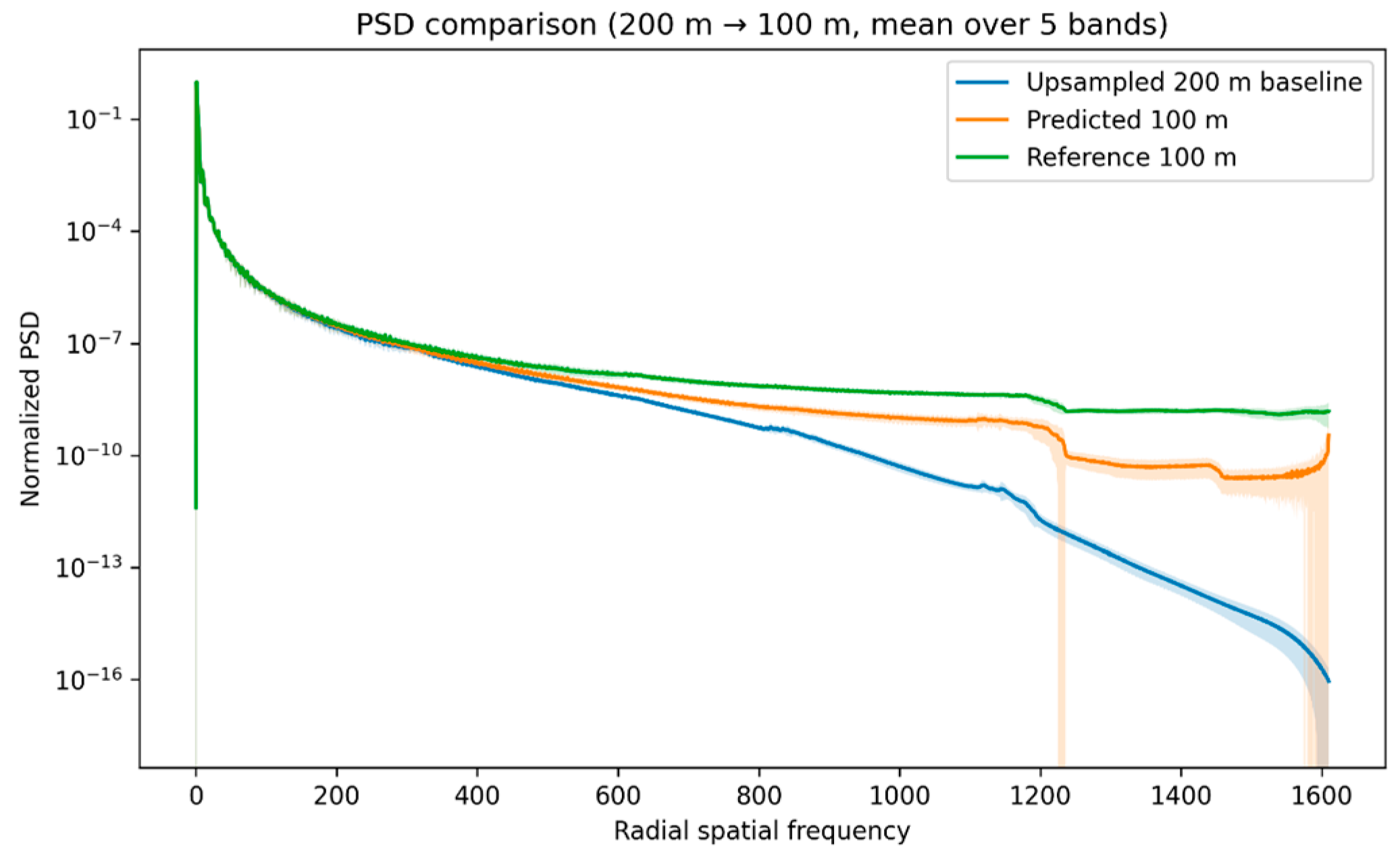

Disclaimer/Publisher’s Note: The statements, opinions and data contained in all publications are solely those of the individual author(s) and contributor(s) and not of MDPI and/or the editor(s). MDPI and/or the editor(s) disclaim responsibility for any injury to people or property resulting from any ideas, methods, instructions or products referred to in the content. |
© 2026 by the authors. Licensee MDPI, Basel, Switzerland. This article is an open access article distributed under the terms and conditions of the Creative Commons Attribution (CC BY) license.