Article

Distributed Latent Representation Clustering for Efficient Multi-Satellite Image Compression

1
School of Fundamental Physics and Mathematical Sciences, Hangzhou Institute for Advanced Study, University of Chinese Academy of Sciences, Hangzhou 310024, China
2
University of Chinese Academy of Sciences, Beijing 100049, China
3
School of Intelligent Science and Technology, Hangzhou Institute for Advanced Study, University of Chinese Academy of Sciences, Hangzhou 310024, China
4
Innovation Academy of Microsatellites, Chinese Academy of Sciences, Shanghai 201306, China
5
Key Laboratory for Satellite Digitalization Technology, Chinese Academy of Sciences, Shanghai 201210, China
*
Author to whom correspondence should be addressed.
Remote Sens. 2026, 18(9), 1355; https://doi.org/10.3390/rs18091355
Submission received: 17 February 2026 / Revised: 4 April 2026 / Accepted: 20 April 2026 / Published: 28 April 2026

Abstract

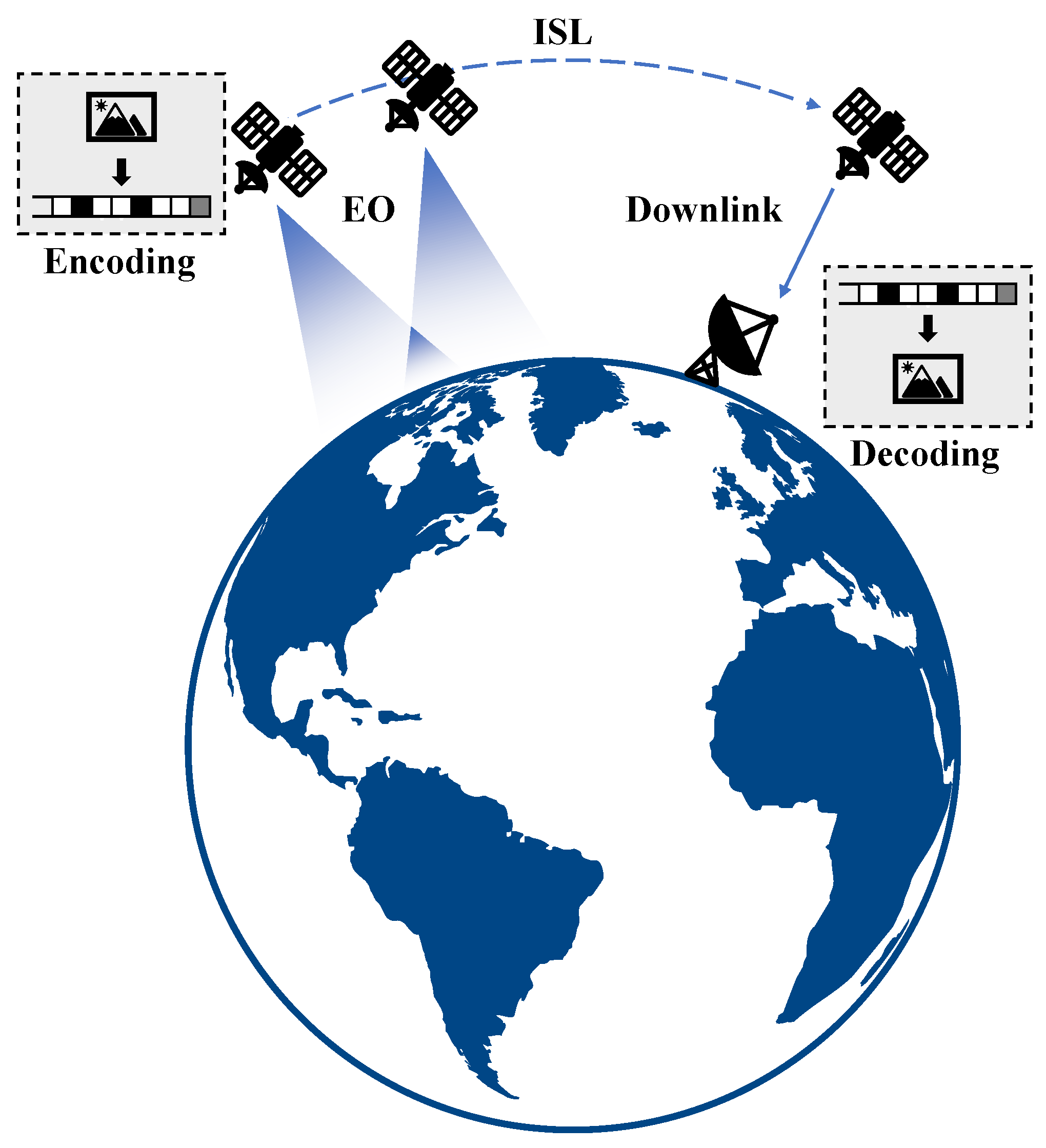
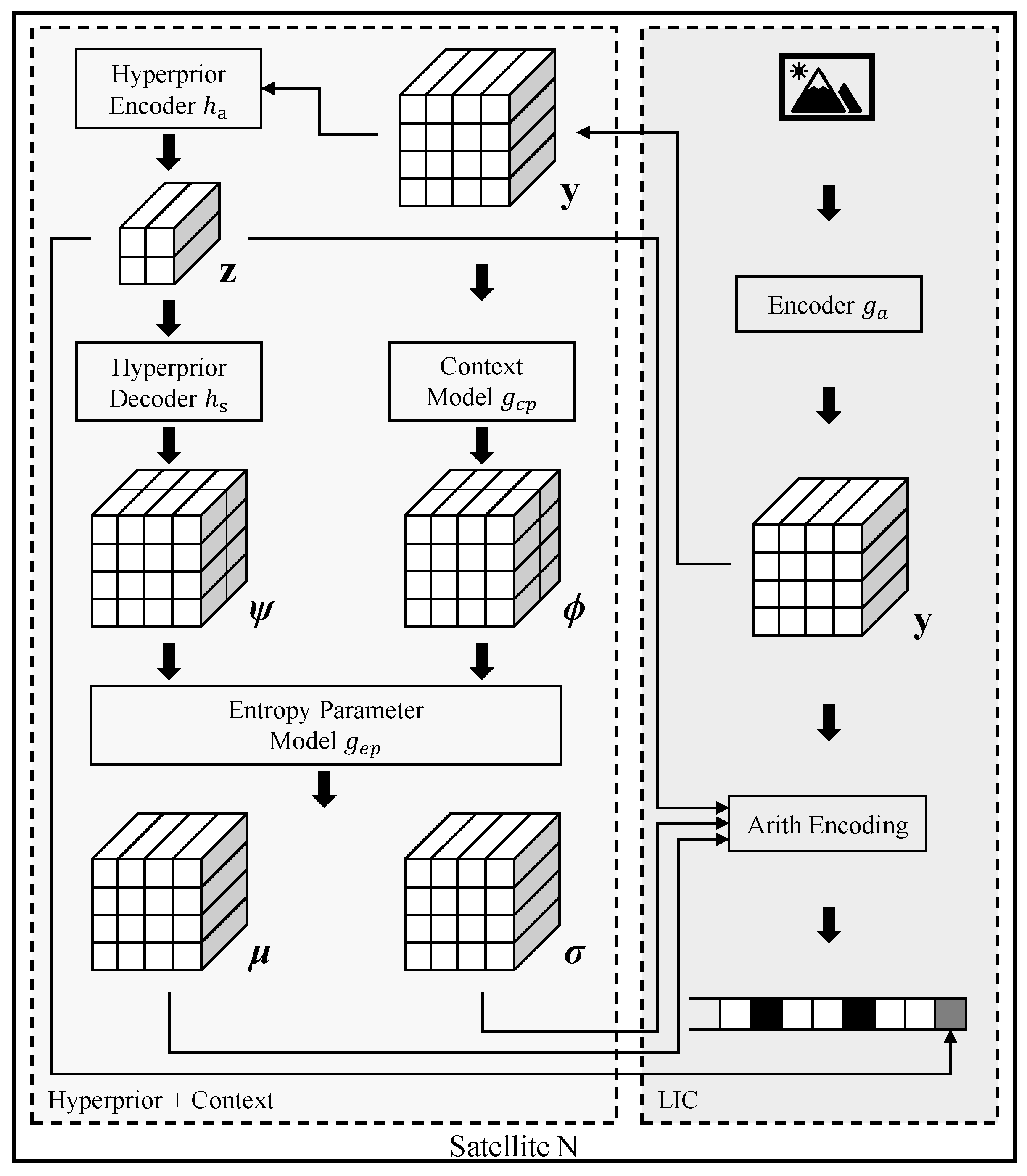
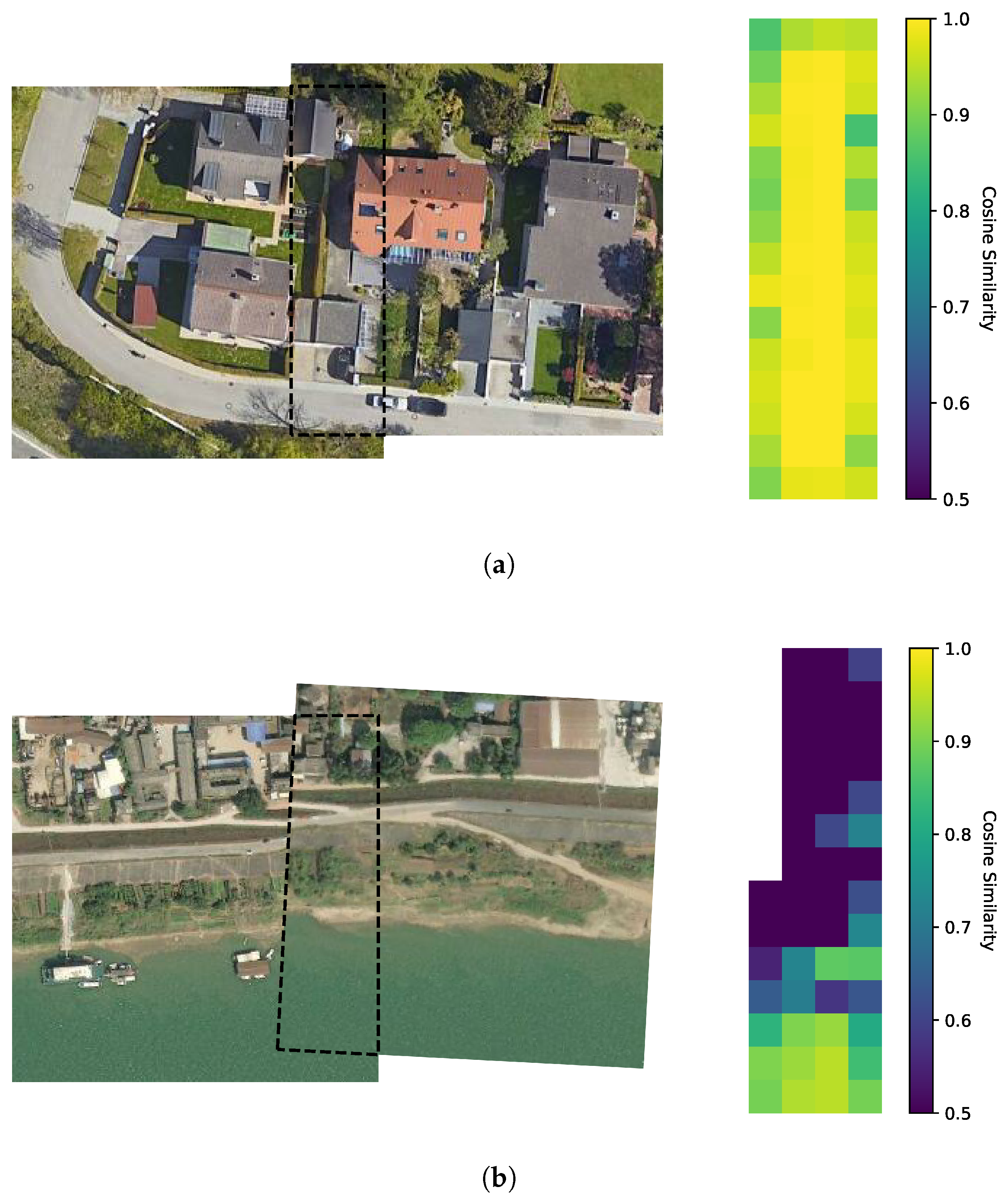
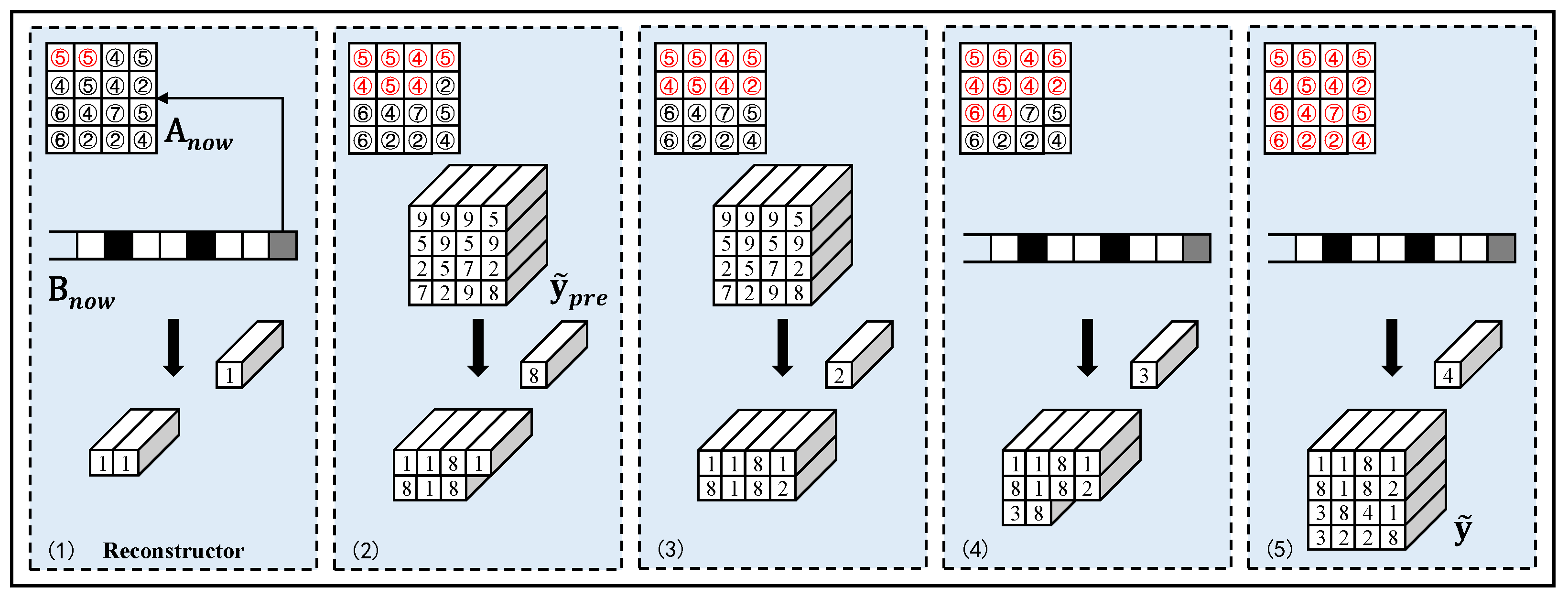
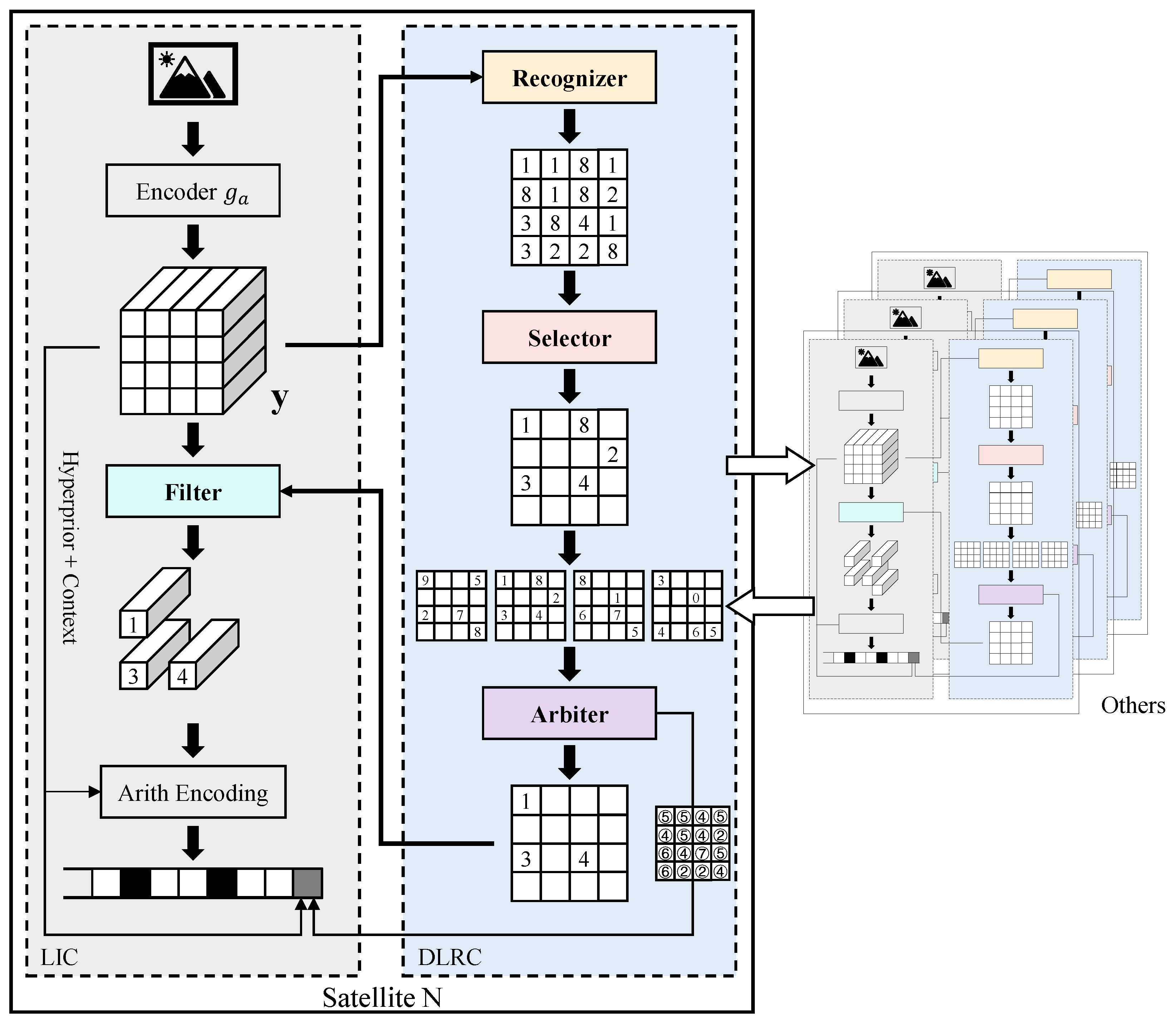
With the increasing number and enhanced sensing capabilities of satellites, the volume of satellite imagery has substantially surpassed the available bandwidth of satellite-to-ground links. Recently, with the adoption of commercial on-board GPUs, Learned Image Compression (LIC) offers the potential to mitigate this bottleneck by virtue of its superior rate–distortion performance over traditional codecs. However, existing LIC solutions operate in isolation on single satellites and underutilize the overlapping observations, which limits further gains in compression performance. In this paper, we propose Distributed Latent Representation Clustering (DLRC), which represents the first attempt to integrate real-time multi-satellite observation redundancy elimination into LIC. DLRC first introduces a local latent representation clustering mechanism. It discretizes the latent representation of LIC into compact cluster signatures on each satellite with lightweight computational overhead. Subsequently, DLRC presents a global cluster signature synchronization strategy. By exchanging signatures with negligible communication overhead, it enables multiple satellites to identify globally redundant local observations on a per-signature basis. By coding and downlinking only the latent representation corresponding to globally unique signatures, DLRC achieves non-redundant downlink in a training-free paradigm while remaining compatible with existing LIC architectures. Through extensive experiments, we demonstrate that DLRC achieves efficient bits per pixel reduction compared to independent LIC solutions while maintaining comparable reconstruction quality.
Keywords: earth observation imagery; learned image compression; locality-sensitive hashing earth observation imagery; learned image compression; locality-sensitive hashing