Article

Prediction of Rice and Wheat Cultivation Regions of Chongming Island Using Time-Series Sentinel-1A SAR Images

1
School of Remote Sensing and Information Engineering, Wuhan University, Wuhan 430072, China
2
The College of Surveying and Geo-Informatics, Tongji University, Shanghai 200092, China
*
Author to whom correspondence should be addressed.
These authors contributed equally to this work.
Remote Sens. 2026, 18(8), 1248; https://doi.org/10.3390/rs18081248
Submission received: 12 March 2026 / Revised: 10 April 2026 / Accepted: 16 April 2026 / Published: 20 April 2026

Highlights

What are the main findings?
  • We developed a deep learning framework combining time-series Sentinel-1 SAR imagery with Recurrent Neural Networks (RNN), integrating backscattering coefficients (VV, VH, VV/VH) and polarimetric decomposition parameters (H, α , A) to classify crops on Chongming Island.
  • Our fused multi-dimensional feature model achieved classification accuracies exceeding 98% for rice, wheat, and six crop rotation patterns, reducing classification errors by up to 70% compared to using only backscattering features.
What are the implications of the main findings?
  • This method enables all-weather, high-precision crop type mapping in cloudy and rainy regions, overcoming limitations of optical remote sensing and supporting agricultural resource management and food security assessment.
  • The integration of RNN-based temporal modeling with decision-level voting provides an operational framework for large-scale cultivated land monitoring in complex cropping systems, as demonstrated by island-wide rice and wheat probability maps for Chongming Island.

Abstract

Accurate identification of cultivated land planting types is essential for agricultural resource management and national food security. Traditional optical remote sensing approaches are susceptible to weather interference in cloudy regions, making continuous crop growth monitoring challenging to achieve. To address this limitation, this study proposes a crop classification framework based on time-series Sentinel-1A SAR imagery combined with Recurrent Neural Networks (RNN), using Chongming Island, Shanghai as the experimental area. The framework integrates backscattering coefficients (VV, VH, VV/VH ratio) with polarimetric decomposition parameters (entropy H, scattering angle alpha, anisotropy A) as multi-dimensional temporal input features, and employs decision-level voting to obtain plot-level classification results. Experiments on three classification tasks (Rice versus Non-Rice, Wheat versus Non-Wheat, and multi-class rotation patterns) demonstrate that the proposed method achieves pixel-level accuracies of 99.72%, 99.60%, and 98.39% respectively using the six-dimensional BSPD model, with plot-level F1 scores exceeding 0.990 across all tasks. The fusion of polarimetric decomposition features reduces classification errors by up to 70% compared with backscattering-only features, particularly improving discrimination of phenologically overlapping crop categories. These results confirm that multi-dimensional temporal features extracted from dense time-series SAR imagery significantly enhance crop classification accuracy in all-weather conditions.

1. Introduction

High-precision identification of crop planting types serves as the core foundation for agricultural resource management, food security assessment, and sustainable development decision-making. With the accelerated urbanization process, the pattern of cultivated land use exhibits dynamic change characteristics, and traditional ground survey methods struggle to respond to this change in a timely manner. Synthetic Aperture Radar (SAR), relying on its active microwave imaging characteristics and all-weather observation capabilities, provides an irreplaceable data source for the dynamic monitoring of cultivated land in cloudy and rainy regions. By capturing the scattering evolution laws throughout the entire crop growth cycle, time-series SAR images create new opportunities for refined crop planting classification.
For crop identification, optical images serve as a crucial data source for cultivated land use classification and crop monitoring due to their rich multispectral information and high spatial resolution. Early studies mainly utilized low-resolution optical images, such as AVHRR and MODIS, for large-scale land cover mapping [1,2,3]. With the popularization of medium and high-resolution optical satellites, medium and high-resolution data including Landsat [4] and QuickBird [5] have been widely applied in refined classification. However, the limitations of optical images cannot be ignored either. Low- and medium-resolution images fail to address the mixed pixel problem caused by the fragmentation of small-scale farmland and the spectral confusion in complex terrain areas, restricting the improvement of classification accuracy. Cloud and fog weather leads to data loss. Pan et al. [6] pointed out that although high-resolution images can identify small-area paddy fields, they are limited by the frequent cloud and fog coverage in rice-growing regions, making it difficult to ensure the integrity of time-series data.
Synthetic Aperture Radar (SAR) has overcome the limitations of optical sensors and demonstrated unique advantages in crop planting classification, thanks to its all-weather observation capabilities and sensitivity to surface structures. The use of SAR for crop mapping originated in the 1990s [7,8]. With the development of SAR technology, high-resolution sensors such as TerraSAR-X and RADARSAT-2 have been widely used for complex crop classification [9]. In major rice-producing regions of Southeast Asia, Bouvet et al. [10] developed a rapid mapping method for paddy fields in the Mekong Delta using ENVISAT/ASAR wide-swath data. By fusing information from different polarization channels, ALOS PALSAR multi-polarization data has significantly improved crop classification accuracy [11]. Li Qianjing et al. [12] used GF-6 WFV images combined with deep learning to verify the effectiveness of the red edge band of GF-6 WFV for crop classification. COSMO-SkyMed time-series data has been applied to refined land cover classification and surface parameter retrieval [13], particularly demonstrating the advantage of high spatial resolution in fragmented farmland areas. Nevertheless, the acquisition cost of full-polarization data is high, restricting its operational application; meanwhile, high-spatial-resolution SAR images have certain deficiencies in temporal continuity.
The Sentinel-1A satellite features high spatial and temporal resolution, as well as the convenience of free and open access, making it suitable for crop growth research and classification. Bazzi et al. [14] used decision trees and random forests combined with Sentinel-1A time-series backscattering features to accurately map rice-growing areas. Chang et al. [15] constructed five features related to rice growth and proposed a threshold-based decision method for rice mapping based on feature distribution, achieving an overall accuracy of 91.9%. Both Zhang et al. [16] and Gao et al. [17] combined Sentinel-1 SAR images with Sentinel-2 optical images to build fully automated rice mapping frameworks. Liu et al. [18] integrated crop growth patterns with spatiotemporal SAR data and established a rice growth model by monitoring plant height. Zhang et al. [19] combined time-series SAR data with InSAR technology and obtained favorable validation results in cloudy regions. Zhao Hongwei et al. [20] used one-dimensional CNN (1D-CNN) and found that the early crop classification accuracy in southern China decreased in the order of VH + VV, VH, and VV polarization data. Chang et al. [21] proposed a novel spatiotemporal neural network, ConvLSTM-RFC, which integrates the characteristics of RNN and CNN models to classify paddy fields from SAR time-series images, achieving an accuracy of 98.08% in the rice-growing areas of Yunlin County and Chiayi County, Taiwan.
However, existing methods are mostly focused on single-type recognition, classification, and the mapping of crops such as rice, and still have significant limitations in identifying multiple crop types or crop rotation patterns. In addition, time-series SAR-based cultivated land classification faces the following challenges: (1) Most methods rely on manually constructed feature datasets or only on backscattering intensity, resulting in insufficient separability among various crop types. (2) The robustness of plot-scale classification is inadequate; pixel-level results are affected by mixed pixel interference, and plot fusion methods such as majority voting suffer from increased misclassification rates in fragmented farmland. (3) Poor adaptability to complex planting patterns: for annual time-series crop rotation patterns, the phenological overlap of crops in rotation areas leads to confused scattering responses, resulting in low classification accuracy of existing models.
To address the aforementioned issues, this study takes Chongming Island, Shanghai as the experimental area and proposes a cultivated land planting classification method based on time-series SAR images, combined with time-series Sentinel-1 data. It focuses on solving three key problems: (1) Construction of multi-dimensional time-series features: integrating backscattering coefficients (VV, VH, VV/VH) with polarimetric decomposition parameters (H, α , A) to fully tap the discriminative potential of time-series scattering characteristics. (2) Design of a dynamic modeling mechanism: constructing a time-series dependency model based on a Recurrent Neural Network (RNN) to adaptively capture the scattering response features of crops during key phenological periods. (3) Multi-level classification optimization: synergistically improving the classification robustness of cultivated land crops through pixel-level deep learning classification and plot-level decision voting. Through the aforementioned efforts, this study aims to provide accurate information for cultivated land crop planting classification, assisting local governments in formulating scientific plans, promoting land system reform, optimizing resource allocation, protecting the ecological environment, and safeguarding national food security.

2. Materials and Methods

2.1. Study Area and Data Sets

2.1.1. Overview of the Study Area

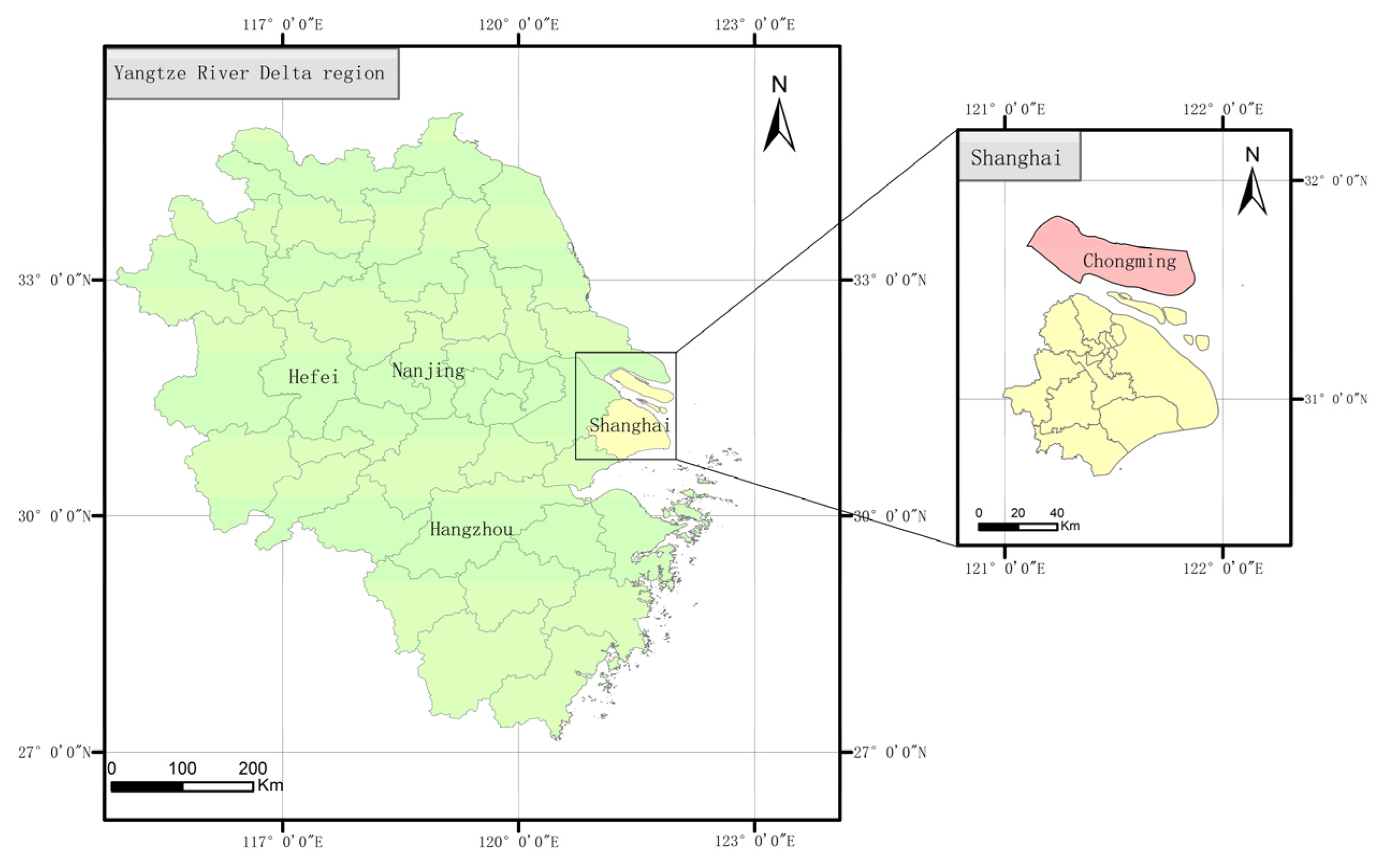
This study selects Chongming Island in Shanghai as the research area, as shown in Figure 1. Located at the Yangtze River Estuary, Chongming Island is the third-largest island in China, situated between latitude 31°27′–31°51′N and longitude 121°09′–121°54′E. It stretches approximately 80 km east–west and 13 to 18 km north–south, covering a total area of about 1269 square kilometers. Chongming Island has a subtropical monsoon climate with four distinct seasons, an annual average temperature of around 16.5 °C, mild and humid weather, and abundant precipitation. Deposited by the sediment carried by the Yangtze River, the island’s soil is mainly dominated by alluvial soil with high fertility, making it suitable for agricultural production. The main crops include rice, wheat, corn, soybean, rape, and others.

2.1.2. Plot Data of the Study Area

The Third National Land Survey of Shanghai (hereinafter referred to as the “Third Land Survey”) is a fundamental survey of natural resources carried out in accordance with the unified national deployment from 2017 to 2021. Based on high-resolution remote sensing images and on-site verification, it adopts the “Classification Standards for the Third National Land Survey” to form a high-precision territorial space database. This study utilized the cultivated land plot vector files obtained from the Third Land Survey of Shanghai, covering approximately 400,000 cultivated land plots (paddy fields and irrigated fields, without dry land). All field survey data used in this study determine the survey sampling points based on the Third Land Survey plots. Currently, the field surveys conducted mainly focus on data from Chongming Island, derived from two field survey tasks: (1) an intensive time-series detailed survey and (2) a sparse time-series crop type survey.
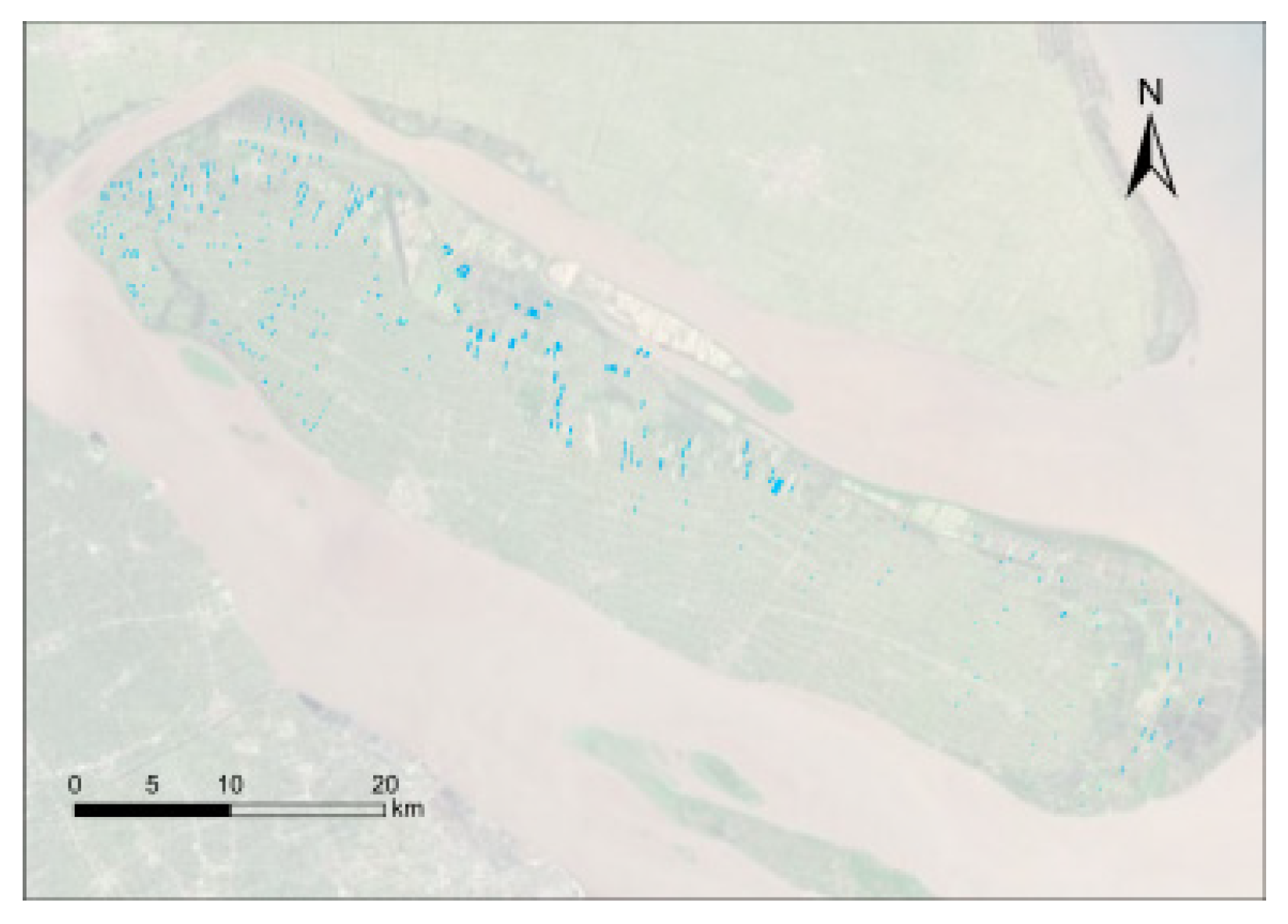
The intensive time-series crop detailed survey dataset includes sampling points located on Chongming Island, with a total of 581 sampling points. The dataset covers 18 periods (from May 2023 to November 2024, one period per month). After data cleaning, spatial vector data and planting attribute data of 455 plots are obtained. The spatial distribution of the dataset is shown in Figure 2.
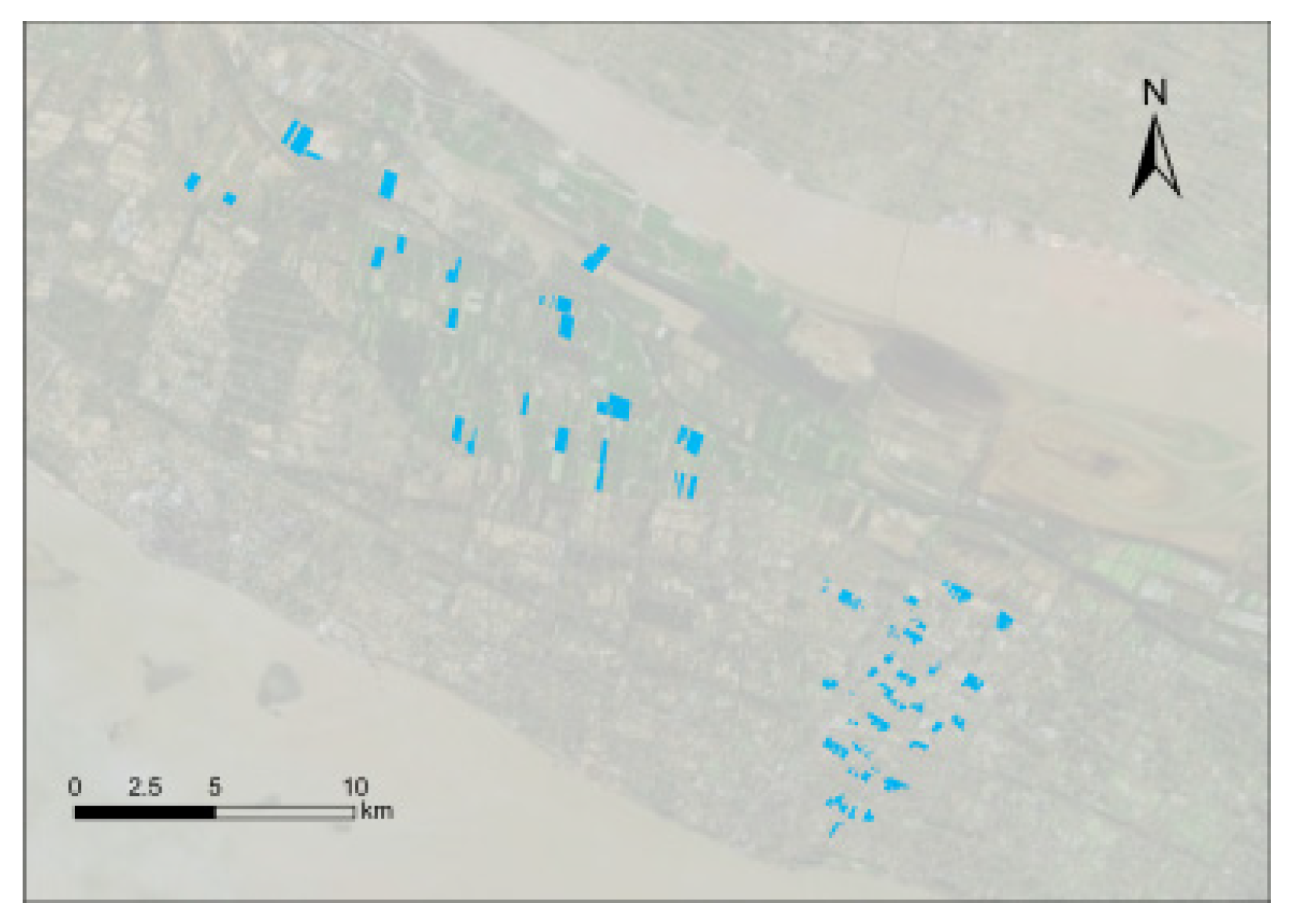
The sparse time-series crop type survey dataset has sparse time coverage but a wider spatial scope, including 5 periods of data (from June to October 2024, one period per month). This dataset contains 852 sampling points, each from an independent plot. The spatial distribution of the dataset is shown in Figure 3. The blue marks in the figures are the sample plots we used.

2.1.3. Time-Series SAR Image Data

The SAR image data utilized in this study is sourced from the Sentinel-1A satellite of the European Space Agency (ESA). The satellite acquires data in Interferometric Wide (IW) mode, with a spatial resolution of approximately 5 × 20 m and a revisiting period of 12 days, and possesses all-time and all-weather observation capabilities [22]. The polarization mode of all used images is dual-polarization VV + VH. This polarization combination can provide abundant surface scattering characteristic information, aiding in facilitating the distinction of different types of ground objects. The image products selected in this paper include two types: Ground Range Detected High Resolution (GRDH) images and Single Look Complex (SLC) images.
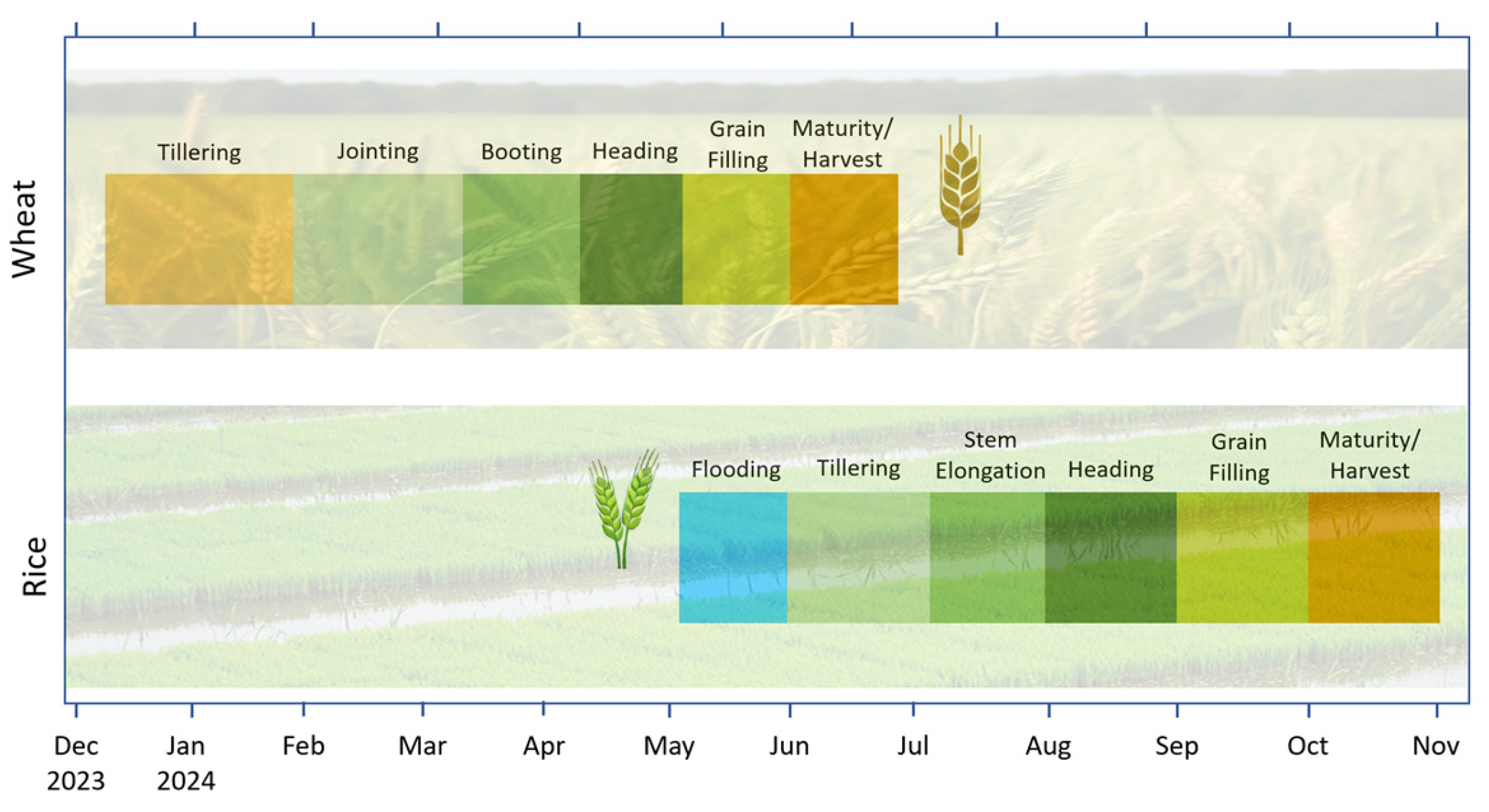
For the study area of Chongming Island in Shanghai, the images we used consist of 25 scenes captured from 5 December 2023 to 24 October 2024. The image data is obtained from the Copernicus Data Space Downloading System of the European Space Agency. Taking rice and wheat as examples, the reference phenological time chart for the acquired image coverage dates and key growth stages of crops is shown in Figure 4.
Image preprocessing is a key step to eliminate noise from raw data, improve data quality, and adapt to subsequent analyses. The preprocessing of time-series SAR images includes performing backscattering coefficient decomposition for GRDH products and H-Alpha polarimetric decomposition for SLC products, resulting in backscattering image maps and polarimetric decomposition image maps, respectively. All image preprocessing is completed in SNAP 11.0.0.
(1)
Backscattering Coefficient Image Maps
Synthetic Aperture Radar (SAR) actively transmits microwave pulses and receives echo signals reflected by ground objects. The brightness of features in radar images depends on the portion of the emitted energy returned to the radar from surface targets, hence the term backscattering. The magnitude or intensity of backscattering energy is determined by how radar energy interacts with the surface. Studies on radar data processing by Karjalainen et al. [23] and Smith et al. [24] have shown that the phenological growth stages of plants influence the backscattering of SAR signals, and there is a significant correlation between various biophysical parameters of plants (including plant height, plant water content, plant color, etc.) and the backscattering of radar signals. The radar backscattering of vegetation is a function of wavelength, polarization, and frequency; different frequencies and polarizations can infer various characteristic information from a single object. In agricultural radar applications, polarization combinations help extract additional information about crop characteristics [25].
We used the sigma-naught backscatter to calculate the backscattering coefficients: the backscattering coefficient of VV polarization, the backscattering coefficient of VH polarization, and the ratio of backscattering coefficients of the two polarization modes (VV/VH). The calculation of backscattering coefficients uses GRDH products, and the computational procedures are as follows:
Precise Orbit Replacement. The orbit state data contained in the Sentinel-1 satellite metadata are generally inaccurate. Precise orbit files can provide accurate satellite position and velocity information. After calibration, more precise orbital positions are obtained, which support high-accuracy co-registration processing.
Adjacent Image Merging. This step is used to mosaic two scenes of images acquired along the same orbital track on the same date.
Radiometric Calibration. Radiometric calibration performs radiometric correction on SAR images, ensuring that pixel values in SAR images truthfully represent the radar backscattering of reflecting surfaces. The radiometric calibration operation outputs the normalized radar backscattering coefficient σ 0 .
Refined Lee Speckle Filtering. Speckle noise in SAR images is an inherent phenomenon caused by the coherence of the SAR imaging mechanism, which reduces the signal-to-noise ratio of the image. The experiment utilized a 7 × 7 window size for filtering processing.
Terrain Correction. Distortions in slant range within SAR images may arise due to topographic variations in the scene and the inclination of the satellite sensor. Terrain correction is designed to compensate for such distortions so that the geometric representation of the image approximates the real world as closely as possible. In this step, SNAP automatically downloads the corresponding DEM data and performs geocoding and terrain radiometric correction to eliminate topographic distortions.
Conversion to Decibels. Following the above processing steps, the backscattering coefficient is obtained in linear scale units as small positive values. Conversion to decibels transforms the linear backscattering coefficient into decibel (dB) values to facilitate visualization and data analysis. The formula for converting the backscattering coefficient σ 0 to decibels is given by:
σ 0   ( dB ) = 10 × l o g 10 ( σ 0 )
Band Calculation. The ratio of backscattering coefficients between dual polarization channels, i.e., VV/VH, is computed and added as the third band.
In SNAP 11.0.0, a flowchart processing file for backscattering coefficient decomposition is created using the flowchart tool in accordance with the processing sequence. The overall flowchart is presented in Figure 5:
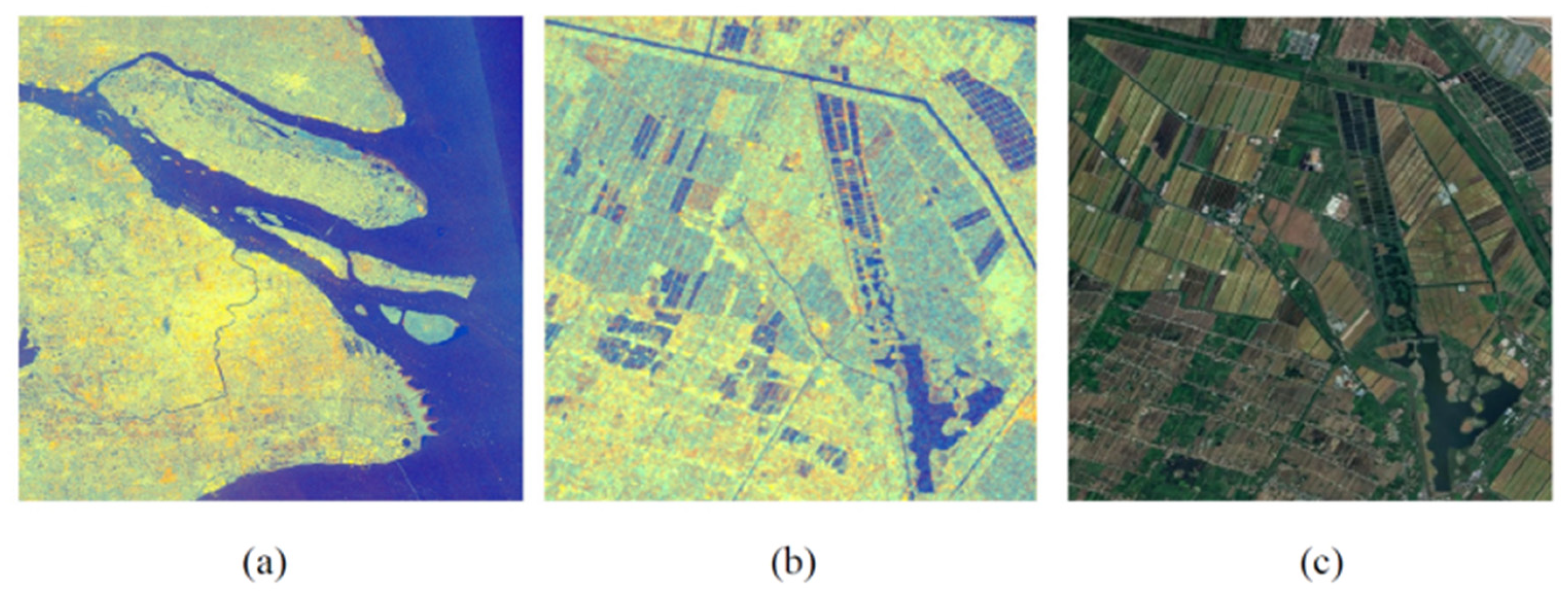
Finally, the VV band is assigned as red, the VH band as green, and the VV/VH band as blue. After normalization, the visualization results of three-channel backscattering features are obtained. The backscattering images are shown in Figure 6:
(2)
H-Alpha Polarization Decomposition Image Maps
Polarization decomposition parameters serve as an additional source of information for backscattering coefficients, analyzing the scattering mechanism of targets from a mathematical and physical perspective. For dual-polarization data, decomposition can only be performed based on eigenvectors and eigenvalues. On this basis, three polarization scattering coefficients are defined: polarization entropy (H), average scattering angle ( α ), and anisotropy (A). Polarization entropy (H) describes the randomness of the scattering process and reflects the mixing degree of different scattering mechanisms; the average scattering angle ( α ) characterizes the type of dominant scattering mechanism and is related to the physical structure of the scatterer; and anisotropy (A) measures the differences between secondary scattering mechanisms and can supplement the information provided by entropy.
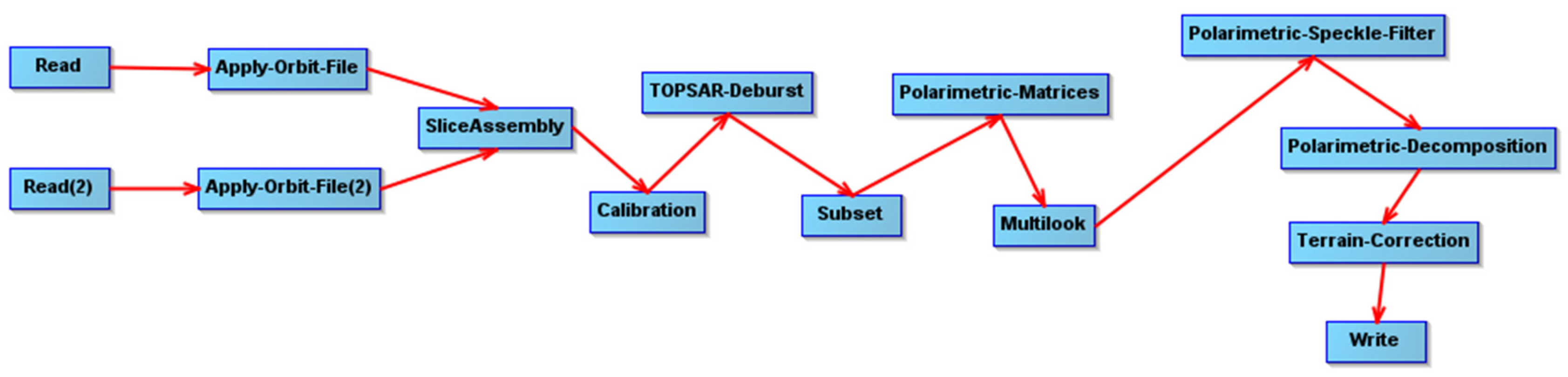
The calculation of polarization scattering coefficients utilizes SLC products, and the processing steps include precise orbit replacement, adjacent image merging, radiometric calibration (outputting complex numbers), Deburst, C2 matrix generation, multi-looking processing, H-Alpha polarization decomposition, and terrain correction. Here are several steps that differ from the backscattering coefficient:
Deburst. Remove the dark band part (no signal part) of the burst band in the SLC image, and merge the effective signal parts of the three IW bands.
C2 matrix generation. Sentinel-1 only has dual-polarization data, so only the C2 covariance matrix can be generated here, recording the elements C11, C12, and C22.
Multi-look processing. Multi-look can eliminate or suppress the impact of speckle, but it can also reduce the resolution of the image. The previous GRDH has already undergone multi-look processing, so no multi-look processing was performed during the operation. The SLC data are the retained original image data, so performing multi-look processing can reduce noise and significantly reduce the data volume.
H-Alpha polarization decomposition. This decomposition yields three variables: polarization entropy H, average scattering angle α, and anisotropy A.
The flowchart for polarization decomposition created in SNAP 11.0.0 is shown in Figure 7:
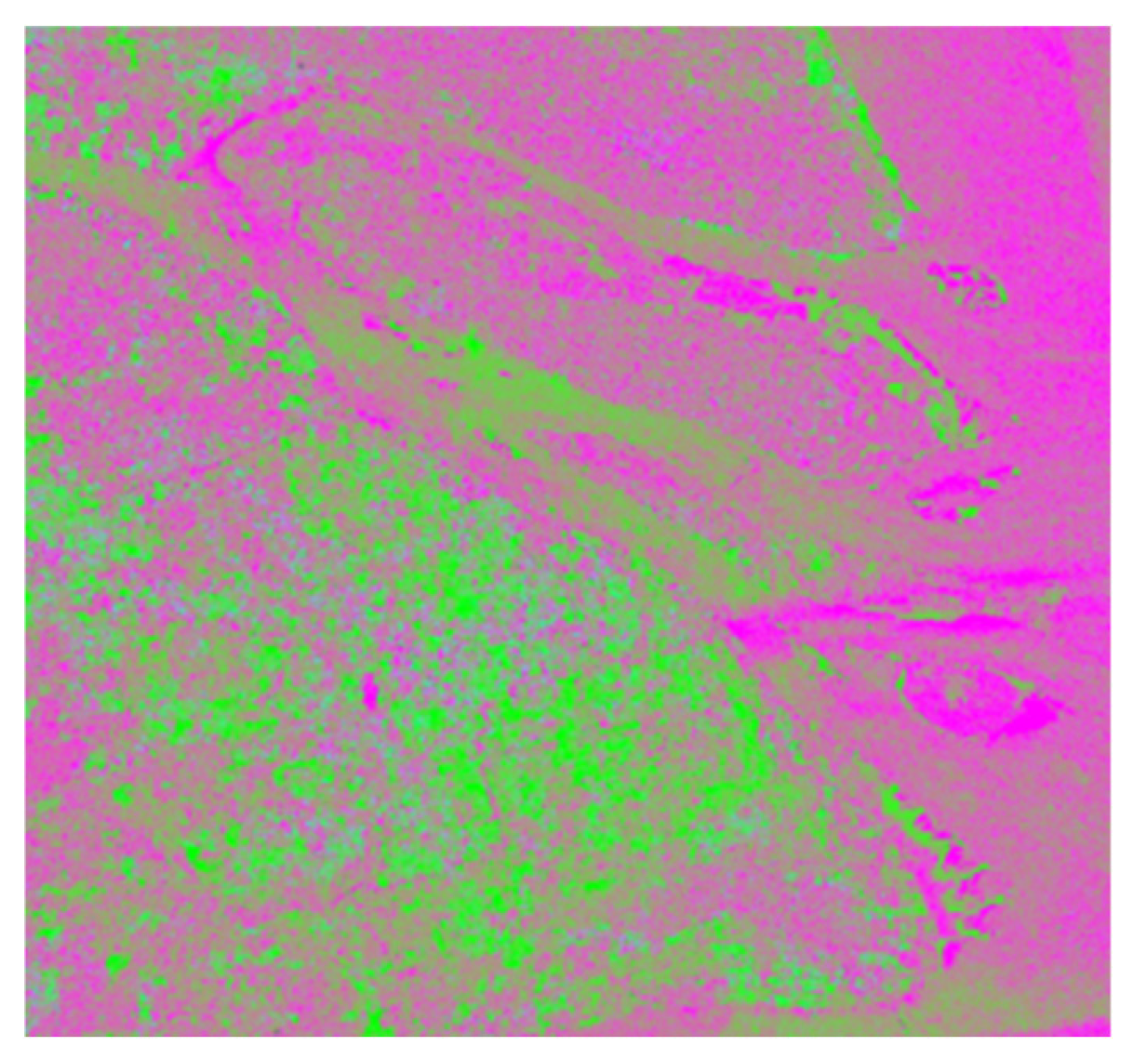
Figure 8 presents the visualization results after normalizing the polarization scattering coefficients H, α, and A as RGB channels respectively.

2.1.4. Production of Pixel-Level Temporal SAR Image Feature Dataset

This study adopts a pixel-level time-series dataset construction method combining vector parcels and time-series SAR imagery. In the experiment, the time-series backscattering imagery is projected into the same coordinate system as the vector parcels; each vector plot contains a specific crop type label, and the temporal features are obtained by segmenting the backscattering images according to the geographic vector data of the sample plots. The data of pixel i at time t can be expressed as x i ( t ) :
x i ( t ) = σ V V , σ V H , σ V V σ V H T
The pixel extraction process first determines the precise position of each vector plot in the raster image through a geospatial masking operation. For each pixel point, backscattering coefficient features are extracted from 25 temporal SAR images. After pixel extraction, the time-series data of a single pixel can be expressed as x i = x i ( 1 ) , . . . , x i ( 25 ) .
The training sample structure is designed as a 3D tensor, with dimensions organized as: number of samples × temporal length × feature dimension. The feature dimensions are divided into two types: backscattering features (BS) include three channels, namely VV polarization, VH polarization, and VV/VH ratio; the fusion of backscattering features and polarimetric decomposition features (BSPD) includes six channels in total: VV polarization, VH polarization, VV/VH ratio, polarization entropy (H), average scattering angle (α), and anisotropy (A). It should be noted that no additional smoothing, temporal aggregation, or explicit phenological indicator extraction was applied to the input features. The raw pixel-level backscattering coefficients and polarimetric decomposition parameters are directly used as input to the model, with temporal modeling entirely delegated to the RNN architecture, which adaptively captures the temporal dependencies and phenological stage transitions through its recurrent hidden-state propagation mechanism. Table 1 summarizes the complete set of input variables used in this study.

2.1.5. Three Categories of Data Samples

The experiment utilizes pixel-level raw features and constructs three types of data samples based on crop labels from time-series datasets, including: (1) Rice vs. Non-Rice (Rice24K) training set; (2) Wheat vs. Non-Wheat (Wheat90K) training set; and (3) Rotation dataset for multi-crop rotation patterns.
(1)
Rice vs. Non-Rice
Based on data from two field surveys, all plots were categorized into either rice or non-rice according to their labels. To balance the number of positive and negative samples, 12,000 pixel samples were randomly selected each from the rice and non-rice categories, thereby constructing the Rice24K training set. The data statistics are presented in Table 2.
(2)
Wheat vs. Non-Wheat
The growing season for wheat in Chongming Island typically spans from December to May. However, the survey period for the sparse dataset was from June to October 2024, a period outside the wheat growing period; all data used for the Wheat vs. Non-Wheat category were sourced exclusively from the dense time-series investigation dataset. Based on the data from the dense time-series field surveys, all plots were classified as either wheat or non-wheat according to their labels. The data statistics are presented in Table 3.
(3)
Multi-Category Rotation Patterns
Utilizing the temporal crop type information from the dense time-series investigation dataset, six of the most representative cropping rotation patterns were selected to construct the Rotation dataset. The crop rotation labels were derived from the crop labels of the same plot over the entire year. The distribution of pixel-level and plot-level labels for this dataset is presented in Table 4.

2.2. Crop Type Classification Based on Time-Series SAR Imagery

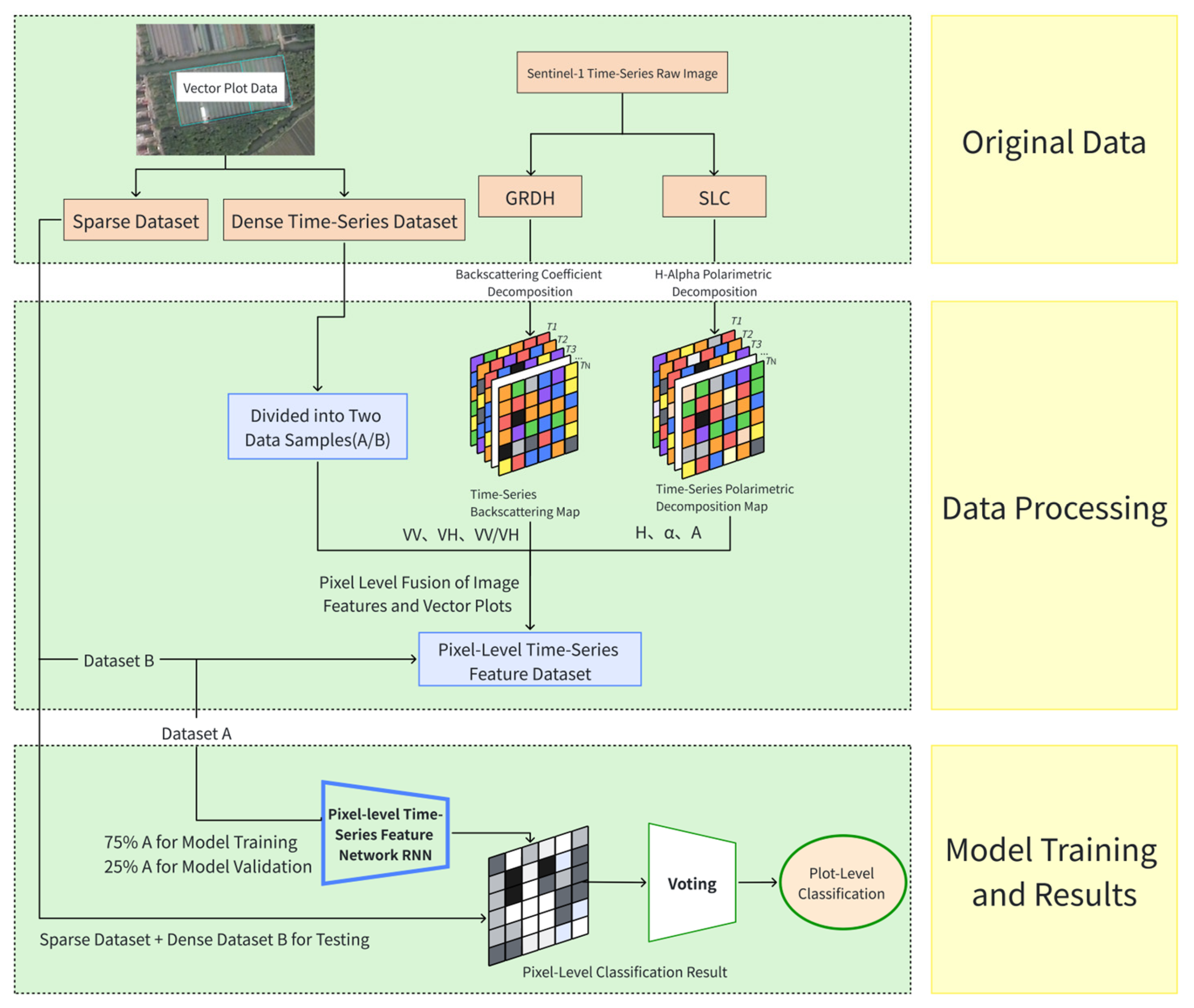
This study proposes a crop type classification method for cultivated land that integrates multi-dimensional features from time-series Synthetic Aperture Radar (SAR) imagery with Recurrent Neural Networks (RNN). The main workflow comprises the following steps: (1) Data preprocessing of Sentinel-1 Ground Range Detected (GRD) and Single Look Complex (SLC) images, involving backscattering coefficient decomposition and H-Alpha polarimetric decomposition; (2) creation of a pixel-level time-series dataset to generate multi-class training samples; (3) supervised classification using a pixel-level RNN; and (4) decision-level fusion for plot-scale classification. The classification framework is illustrated in Figure 9.

2.2.1. Recurrent Neural Network

In this research on crop type classification analysis using time-series SAR imagery, the RNN is employed to correlate the variations in backscattering and polarimetric features of crops across multiple SAR acquisitions. This data-driven approach allows the network to adaptively focus on key phenological stage transitions—such as sowing, growth, and harvesting—without requiring hand-crafted temporal features. The network identifies pattern differences corresponding to various crop phenological stages, correlating phenological patterns with changes in backscattering coefficients and polarimetric parameters. This enables accurate discrimination between crops with distinct spectral signatures or those with similar spectra but different growth cycles, thereby achieving crop classification.
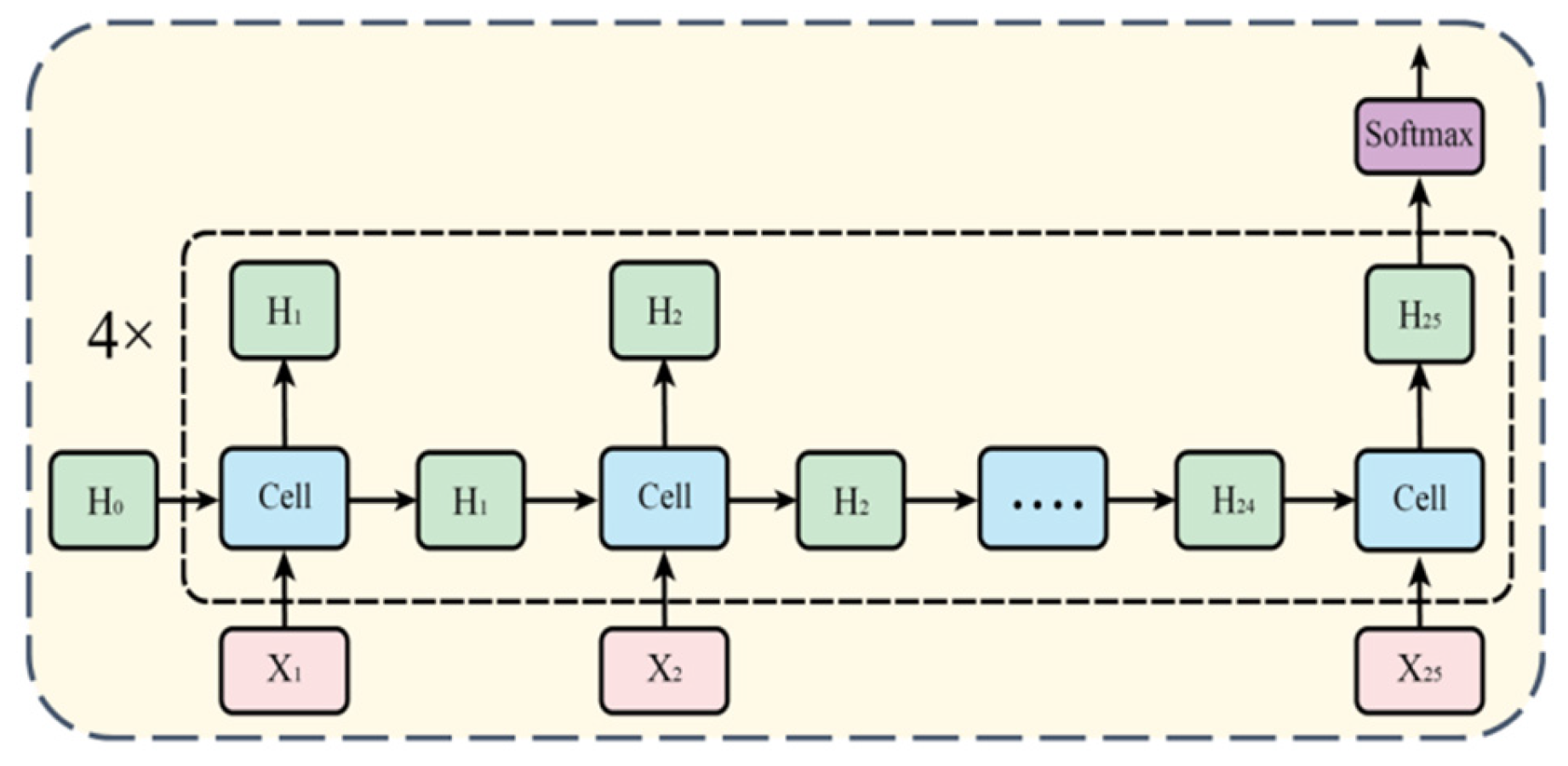
The model architecture primarily consists of three functional modules: the Recurrent Neural Network layer, the Feature Integration layer, and the Classification layer. The RNN layer encodes the temporal features, capturing dependencies between different temporal images. The Feature Integration layer extracts key crop-related information from the sequential features, utilizing an RNN with 42 hidden neurons across 4 layers as the backbone feature extraction, and a single-layer Softmax function as the classification head. The Classification layer maps the extracted features onto the target category space. The model inputs a sequence of pixel-level time-series features, with dimensions of batch size × temporal sequence length × feature dimension, and outputs a probability distribution over the target classes. The model architecture is shown in Figure 10.
The model training adopts a supervised learning approach, combining a cross-entropy loss function with the AdamW optimizer. Given the frequent occurrence of class imbalance in agricultural remote sensing data, a class-weighted loss function was implemented to mitigate the influence of over-represented categories. The training process employed mini-batch gradient descent. Gradient clipping was applied to prevent exploding gradients by constraining the gradient norm within a reasonable range. Model evaluation was conducted using a confusion matrix and comprehensive metrics including precision, recall, and the F1 score. The confusion matrix, which documents the correspondence between predictions and ground truth labels, served as the foundation for assessing the classification model.

2.2.2. Decision-Level Voting

In remote sensing image classification, pixel-level classification results often suffer from spatial discontinuity and the “salt-and-pepper noise” phenomenon, making them difficult to meet practical application requirements. As a post-processing technique, decision-level voting enhances classification by aggregating the results of all pixels within a plot, thereby elevating the decision from the pixel level to the plot level.
The core principle of decision-level voting is to treat the plot as the minimum decision unit, synthesizing the classification results of all its pixels to determine the plot’s overall category. This study proposes a decision-level voting method based on probability weighting. This approach not only considers the hard classification labels of pixels but also fully utilizes the pixel-wise probability information output by the classifier, aiming to improve classification accuracy through a probability-weighted mechanism. The specific procedure is as follows: Firstly, the deep learning model classifies each pixel to obtain its probability distribution across all categories, followed by normalization using the softmax function. Then, the probability value for each pixel corresponding to the predicted crop type is extracted. Finally, the average of these probability values for all pixels within a plot is calculated. The final category for the plot is determined based on a predefined threshold applied to this average probability.

3. Results

The experiment utilized raw pixel features to construct three types of pixel-level land-use classifiers based on time-series data using RNN, including: (1) a Rice vs. Non-Rice classifier; (2) a Wheat vs. Non-Wheat classifier; and (3) a multi-class cropping pattern classifier. Furthermore, based on the aforementioned pixel-level classifiers, a plot-level classifier was constructed using the decision-level fusion voting method. To ensure spatial independence, we ensure that the training, validation, and test data all originate from different plots. The data were split into training, validation, and test sets in a ratio of 6:2:2. The 3-dimensional backscattering coefficient is used to form the BS model, and a combination of 3-dimensional backscattering coefficients and 3-dimensional polarimetric decomposition coefficients constitutes the 6-dimensional BSPD model.
For the RNN neural network, to ensure a controlled comparison of experimental results across all model trainings, the hyperparameters were unified as follows: Optimizer: Adam, Learning Rate: 0.001, Epochs: 800, Batch Size: 128, Dropout: 0.2.
The RNN model architecture was configured as: Input layer: 3–42 or 6–42; Hidden layers: 4 layers, each with 42 neurons; and Output layer: a fully connected layer of 42–2.

3.1. Rice vs. Non-Rice Classifier

(1)
Rice24K-BS Model
Using the Rice24K training set, the study conducted tests in the following three forms: (1) Pixel-level classification on the Rice24K test set. (2) Pixel-level and plot-level classification on the dense time-series investigation dataset. (3) Pixel-level and plot-level testing on the sparse time-series investigation dataset. The test results are shown in Table 5:
(2)
Rice24K-BSPD Model
Compared to the Rice24K-RNN-BS model, this model incorporates H-Alpha polarimetric decomposition features in addition to the backscattering coefficient features, forming a six-band feature input. This model was named Rice24K-RNN-BSPD and underwent the same three forms of testing as the previous model. The results are shown in Table 6:

3.2. Wheat vs. Non-Wheat Classifier

The models underwent testing in the following two forms: (1) Pixel-level classification on the Wheat90K test set. (2) Pixel-level and plot-level classification on the dense time-series investigation dataset. The test results are shown in Table 7 and Table 8:

3.3. Multi-Class Rotation Pattern Classifier

For the crop rotation patterns, pixel-level accuracy tests were conducted for each pattern on the Rotation validation set. The results are shown in Table 9 and Table 10:

3.4. Validation of Island-Wide Crop Extraction in Chongming

The Third National Land Survey data of Shanghai includes all vector geographic information data about Chongming Island. Combined with 25-phase backscattering and polarimetric decomposition image maps from 2024, this data was used to create an island-wide and pixel-level dataset featuring both backscattering and polarimetric decomposition characteristics.
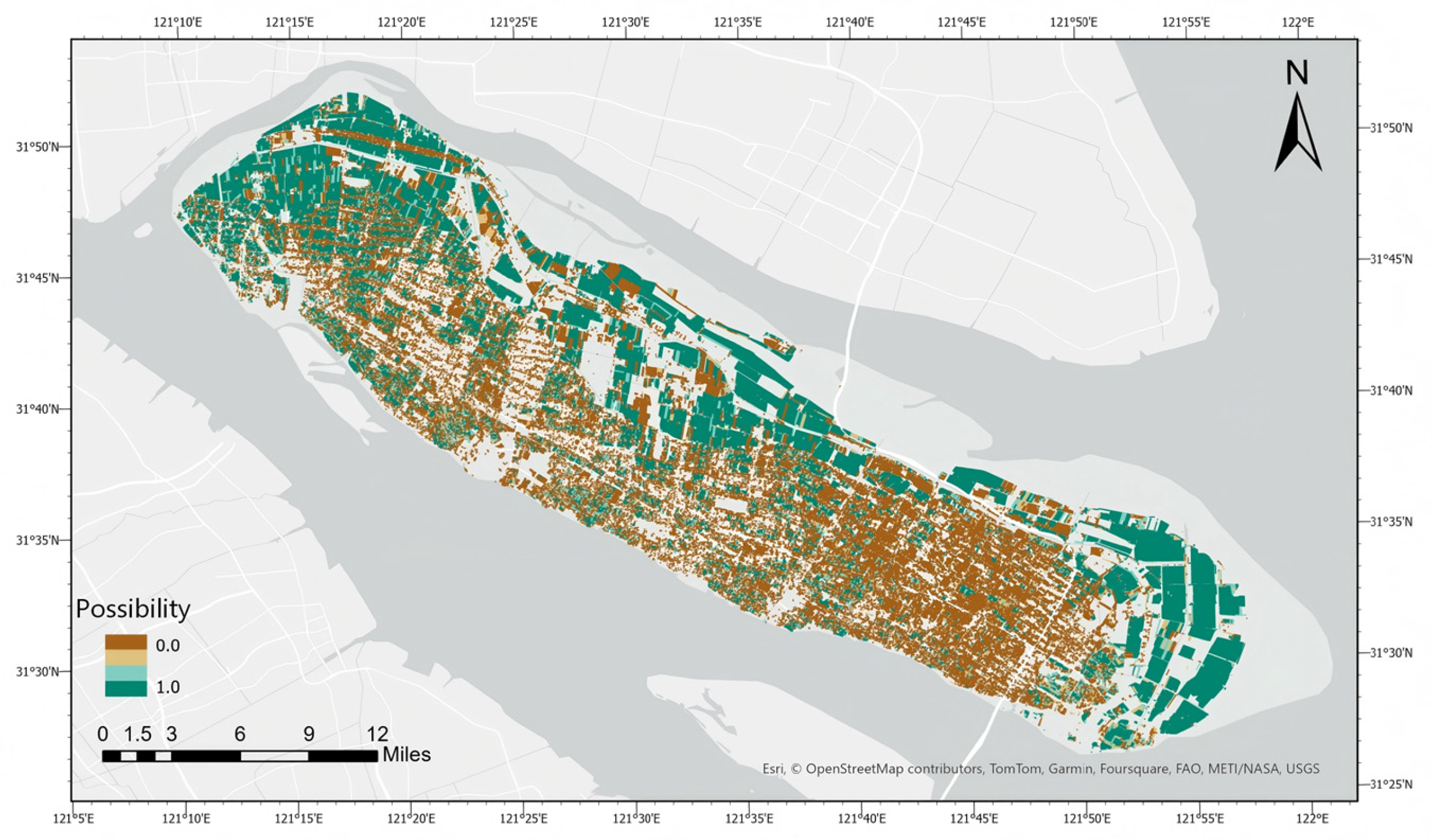
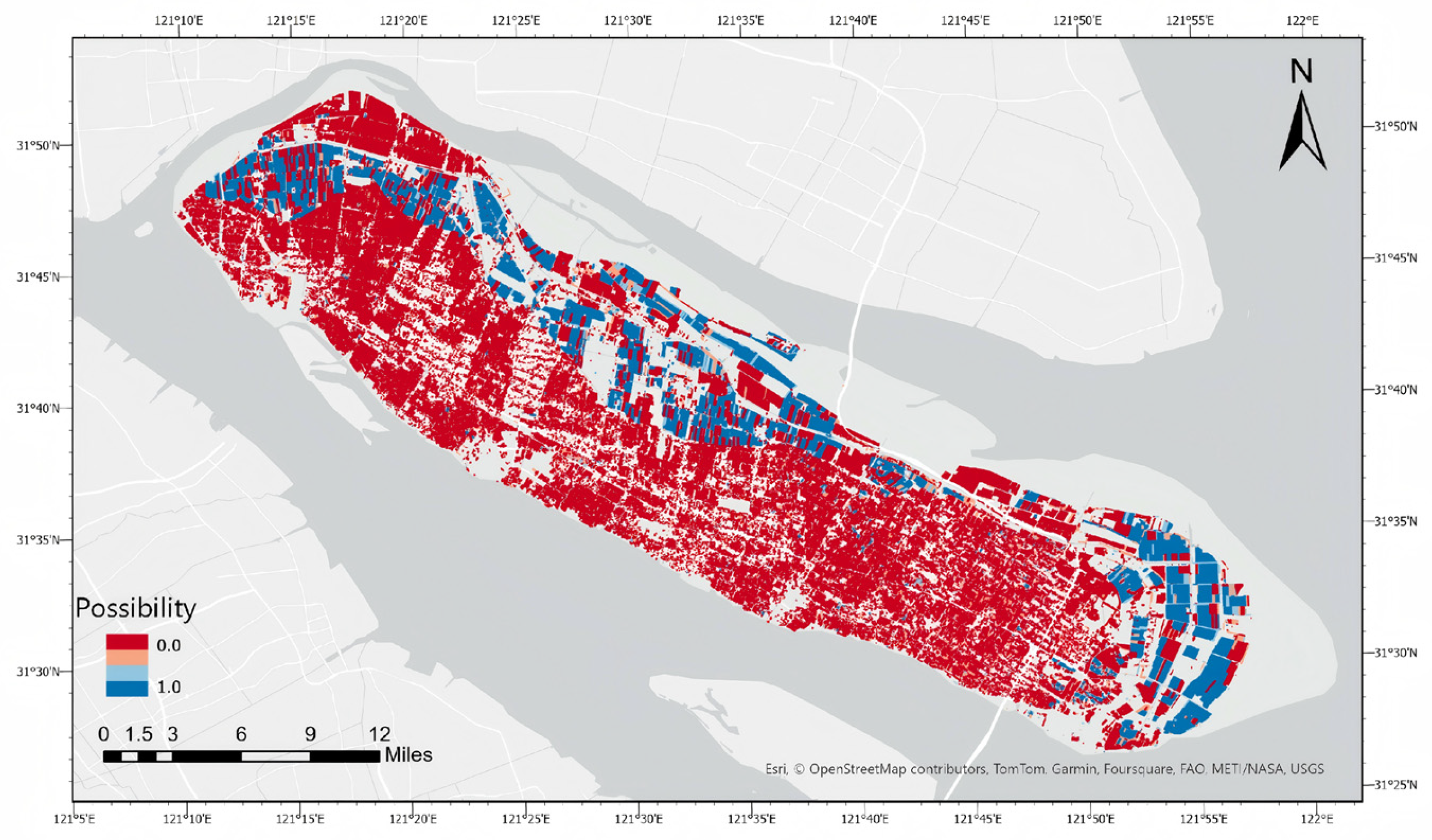
Utilizing the Rice24K-BSPD and Wheat90K-BSPD models along with the island-wide pixel-level feature dataset of Chongming Island, planting maps for rice and wheat about probability across Chongming Island in 2024 were generated, as shown in Figure 11 and Figure 12, respectively. The probability was calculated as the proportion of pixels classified as rice or wheat within each plot. The accuracy of the rice and wheat extraction requires further validation with larger-scale ground truth or data from other sources.
In the rice probability map, darker green colors indicate higher probabilities of rice cultivation. In the wheat probability map, darker blue colors indicate higher probabilities of wheat cultivation. Overall, both rice and wheat are primarily distributed in the northwestern and southeastern parts of Chongming Island. Rice cultivation covers a more extensive and relatively denser area compared to wheat. The northwestern sector, serving as a modern agricultural agglomeration zone supported by large-scale farmland consolidation projects, shows large, contiguous areas of rice cultivation, while wheat distribution is relatively sparse and scattered. Rice distribution is also relatively widespread in the central region, with some areas dedicated to wheat cultivation. The southeastern ecological agriculture composite zone features relatively continuous and large-scale planting areas for both crops. The overlapping distribution suggests that this region possesses suitable topography, water sources, etc., for both crops, practicing a rice-wheat rotation pattern.
Other non-rice or wheat cultivation areas, such as the large southern region, also align with Chongming’s regional planning. The southern area is primarily urban, containing industrial parks, economic development zones, and smart data industry parks, while the north hosts the Chongming Modern Agricultural Park. The distribution of crops like rice and wheat across Chongming Island is influenced not only by natural factors like topography and water sources but is also closely intertwined with the island’s development planning.

4. Discussion

4.1. Discussion and Analysis of Experimental Results

This experiment systematically evaluated the efficacy of backscattering features (BS) and their fusion with polarimetric decomposition features (BSPD) through the construction of classifiers for rice, wheat, and multiple rotation patterns. It validated the capability of time-series SAR features combined with Recurrent Neural Networks for cultivated land use classification. Overall, the BSPD model, which integrates polarimetric decomposition parameters on top of backscattering features, significantly enhanced the classification accuracy and robustness across various classifiers and complex cropping scenarios.
Compared to the Rice24K-BS model, the Rice24K-BSPD model incorporates three-dimensional polarimetric decomposition features in addition to the three-dimensional backscattering coefficients. In terms of model training perspective, the convergence loss of both the training set and validation set of the Rice24K-BSPD model has decreased, and the validation accuracy improved from 98.4% to 99.7%. The BS model, which is relying solely on backscattering coefficients, achieved an F1 score of 0.980 on the Rice24K test set. With the introduction of polarimetric decomposition parameters, the F1 score of the BSPD model increased to 0.994, representing approximately a 70% reduction in classification error rate, demonstrating its classification errors decreased after incorporating polarimetric features. On the dense time-series dataset, the parcel-level F1 score of the BS model was 0.984, higher than the pixel-level result of 0.975, indicating that spatial aggregation achieved through voting by decision level can effectively suppress mixed pixel noise in medium resolution SAR imagery. However, because of the sparse dataset containing only five temporal phases with only one single observation in every plot, it lacks temporal continuity and is suitable only for crop presence testing, resulting in relatively lower accuracy. The plot-level F1 score of the BS model on the sparse dataset dropped to 0.931 when the temporal density of test data decreased, while the BSPD model still maintained a score of 0.951, indicating the introduction of polarimetric features compensated for the uncertainty caused by the lack of temporal information. When pixel-level classification has a low accuracy, voting to create plot-level classifications resulted in decreased accuracy, reflecting that spatial aggregation might amplify errors under low temporal density. However, the multi-dimensional feature fusion strategy significantly enhanced the robustness of rice identification, demonstrating better adaptability in sparse temporal scenarios.
Regarding the Wheat-versus-Non-Wheat classifier, the Wheat90K-BSPD model achieved an F1 score of 0.996 on the test set. The BSPD model improved performance by 1.2 percentage points over the BS model through the introduction of entropy parameters, which assist in distinguishing plowed fields from natural surfaces. In the field-level test on the dense dataset, the recall rate of the BS model decreased to 97.32%, possibly due to interference from mixed pixels in field ridge areas affecting backscattering coefficients. The BSPD model mitigated boundary heterogeneity interference through spatial consistency constraints provided by the H-alpha parameters, elevating the plot-level F1 score to 0.993, thereby verifying the suppression effect of physically derived features on spatial heterogeneity.
For multi-class rotation patterns, the imbalance among categories poses a major challenge. As rice and wheat dominate cultivation in Chongming Island, the Wheat-Rice rotation pattern had the highest representation with 167 plots, while the underrepresented Lotus Root category had only 3 plots. Consequently, the BS model achieved 100% recall and 98.97% accuracy for the sparsely sampled Lotus Root class. The BSPD model achieved 100% in both accuracy and recall, perhaps due to the strong separability of water’s specular scattering at spatial scales, although potential overfitting is unable to be ruled out. The typical Wheat-Rice rotation pattern already achieved an F1 score of 0.983 in the BS model, as their growth seasons are completely offset (wheat from December to May, and rice from June to October), leading to significant phase differences in time-series backscattering curves and supported by ample data samples. This indicates the improvement from additional physical parameters is limited for categories with strong temporal separability. Conversely, for Rapeseed–Rice and Green Manure–Rice patterns that have overlapping phenology, the F1 score of the BS model was 0.96, while the BSPD model improved it to 0.99, confirming the capability of H-α parameters to capture subtle differences in scattering mechanisms. Woodland exhibited minimal annual temporal variation and stable annual scattering. It also showed low discriminability using only backscattering features. After incorporating the physical characteristics from polarimetric decomposition, the BSPD model enhanced its distinction from other crops by leveraging differences in high anisotropy and low entropy.

4.2. Comparison with Optical Remote Sensing Approaches

A question arises as to how our SAR-based classification approach compares with conventional optical remote sensing methods, particularly those based on Sentinel-2 multispectral imagery or NDVI time-series analysis. While this study focuses exclusively on SAR data, it is informative to contextualize our findings within the broader landscape of crop mapping methodologies.
Optical sensors such as Sentinel-2 offer rich spectral information across multiple bands (including red-edge and shortwave infrared), enabling the derivation of vegetation indices (e.g., NDVI, EVI) that are highly sensitive to chlorophyll content and canopy structure. A comprehensive review by Donmez et al. [26] on satellite-based crop cover classification over Europe concluded that optical products generally provide more information content per observation than radar products for crop identification, owing to their direct sensitivity to biochemical properties of vegetation. Studies combining Sentinel-1 and Sentinel-2 data, such as those by Gao et al. [17] and Zhang et al. [27], have consistently reported that fusing optical spectral features with SAR backscattering yields the highest classification accuracies, suggesting that SAR provides complementary rather than redundant information relative to optical data.
However, the SAR-only approach adopted in this study offers distinct and tangible advantages in the specific context of Chongming Island and similar cloudy regions. First, Chongming Island is located in the Yangtze River Delta, a region characterized by frequent cloud cover and precipitation, particularly during the critical rice growing season (June–October). As noted by Bazzi et al. [14] and Chang et al. [15], obtaining cloud-free optical imagery throughout an entire crop growth cycle in such regions is often impractical, leading to significant temporal gaps in NDVI time series that compromise phenology-based classification. In contrast, the C-band SAR sensor operates at microwave wavelengths (~5.6 cm) that penetrate clouds and precipitation without attenuation, ensuring consistent temporal coverage regardless of weather conditions. Our dense time-series dataset comprises 25 uninterrupted SAR acquisitions over approximately one year, which would be unattainable with Sentinel-2 alone in this region.
Second, recent comparative studies have demonstrated that SAR-only approaches can achieve competitive or even superior accuracy to optical-only methods under cloudy conditions. Robertson et al. [28] evaluated C-band SAR imagery for classifying diverse cropping systems across 10 sites worldwide and reported overall classification accuracies above 85% for 8 of 10 sites using dense time-series SAR stacks alone, with the user’s and producer’s accuracies exceeding 90% for maize at half of the sites. Similarly, Zhang et al. [16] developed a fully automated rice mapping framework (FARM) combining Sentinel-1 and Sentinel-2 data and found that while optical-SAR fusion achieved optimal performance, the SAR-only branch maintained robust accuracy (>90%) even when optical data were unavailable due to cloud contamination. Our results are consistent with these findings: the BSPD model achieved 99.72% pixel-level accuracy and 99.50% plot-level accuracy for rice identification, and 99.60% for wheat, demonstrating that a well-designed deep learning framework leveraging dense SAR time series can match or exceed typical optical-based classification performance in cloudy agricultural regions.
Third, SAR backscattering coefficients and polarimetric decomposition parameters capture physical properties of crops (e.g., canopy structure, water content, scattering mechanism type) that are complementary to the biochemical signals captured by optical sensors. For instance, the polarization entropy (H) parameter used in our BSPD model characterizes the randomness of the scattering process, which is sensitive to crop structural complexity but largely independent of chlorophyll content. This physical interpretability can be advantageous when discriminating between crops with similar spectral signatures but different structural characteristics, such as rapeseed versus green manure in rotation patterns where phenological overlap confounds purely spectral discrimination.
Nevertheless, we acknowledge that a direct benchmark comparison with Sentinel-2/NDVI-based classification on the same study area would provide more conclusive evidence of the relative merits of each approach. Such a comparison was beyond the scope of the present study due to the unavailability of sufficiently dense cloud-free Sentinel-2 coverage over Chongming Island during the study period. Future work should explicitly compare SAR-only, optical-only, and fused SAR-optical classification frameworks under controlled conditions to quantify the specific accuracy gains attributable to each modality.

4.3. Limitations and Future Directions

While the proposed method demonstrates promising classification performance, several limitations should be acknowledged to inform proper interpretation of the results and guide future research directions.
(1)
Sensitivity to soil moisture and flooding conditions. The C-band SAR signal is sensitive not only to crop canopy characteristics but also to underlying soil moisture conditions. Variations in soil moisture caused by rainfall events, irrigation, or flooding (particularly relevant for paddy rice cultivation) can introduce additional variability in backscattering coefficients that may confound crop discrimination. Although the RNN architecture’s ability to model sequential patterns may partially mitigate such transient effects through its temporal smoothing property via hidden-state propagation, explicit modeling of soil moisture covariates or incorporation of weather data could further improve robustness [29].
(2)
Inter-annual variability in crop phenology. The trained models were calibrated using data from a single year (2024). However, crop phenological calendars can shift inter-annually due to climate variations (e.g., temperature anomalies, precipitation timing changes), adjustments in planting dates by farmers, or policy-driven cropping pattern changes. Such phenological shifts may alter the temporal backscattering signatures that the RNN has learned to associate with each crop category, potentially degrading classification accuracy when applied to different years. Transfer learning approaches that adapt pre-trained models to new years with limited labeled data, as explored by Guo et al. [30] for polarimetric SAR image classification, represent a promising direction to address this limitation.
(3)
Transferability beyond Chongming Island. The generalizability of the proposed framework to other geographic regions remains to be validated. Chongming Island has a relatively homogeneous agricultural landscape dominated by rice–wheat rotation systems with large-scale consolidated parcels. The performance of the model in regions with smaller field sizes, more diverse cropping systems, different radar incidence angles (which affect backscatter magnitude), or distinct climatic regimes cannot be guaranteed. Cross-regional validation studies, such as those conducted by Robertson et al. [28] across multiple international sites, are essential to establish the transferability boundaries of SAR-based crop classification models. Incorporating domain adaptation techniques or region-invariant feature representations could enhance cross-region applicability [31].
(4)
Vanishing gradient in RNN architectures. As mentioned in the Conclusions, the vanilla RNN architecture employed in this study suffers from the vanishing gradient problem, which limits its capacity to capture long-range temporal dependencies in extended time sequences. While our 25-phase time series proved sufficient for distinguishing major crop types in this study, longer sequences or more subtle phenological transitions might benefit from advanced recurrent architectures such as Long Short-Term Memory (LSTM) networks, Gated Recurrent Units (GRU), or Transformer-based sequence models [32]. These architectures have demonstrated superior ability to model long-term dependencies in various time-series remote sensing applications.

5. Conclusions

This study selects Chongming Island, Shanghai, as the experimental area. A recurrent neural network (RNN) classification framework integrating backscattering and polarimetric decomposition features is proposed, based on Sentinel-1A dual-polarization time-series SAR imagery, to perform crop-type classification within the cultivated land of the study area. The main conclusions are as follows:
(1)
RNN-based temporal modeling optimizes the extraction of key phenological stage features. The designed four-layer RNN, through its hidden-state propagation mechanism, can adaptively focus on crop-sensitive phenological periods and capture the coupling relationship between scattering behavior and phenological development. This approach achieves high-accuracy crop identification and classification without manual phenological feature extraction.
(2)
For both single-crop identification and rotational-crop identification in the study area, the six-dimensional BSPD model (incorporating backscattering and polarimetric decomposition features) yields higher classification accuracy and F1-scores. In binary classification models, compared with the single-polarization BS model, the BSPD model with added polarimetric decomposition features improves test accuracy by more than 1% on dense time-series datasets. For the rotation-crop model, it also significantly reduces classification errors for phenologically overlapping categories (e.g., Rapeseed–Rice and Green Manure–Rice) and categories with low temporal variation (e.g., woodland). The fusion of these two feature types notably enhances classification performance.
(3)
The introduction of a decision-level voting mechanism, which aggregates classification probability results from all pixels within a parcel, makes full use of model-prediction uncertainty information and improves parcel-level classification accuracy. For dense time-series data, decision-level voting leads to higher parcel-level accuracy compared with pixel-level classification. However, for temporally sparse data, parcel-level voting may increase classification error rates when pixel-level accuracy is already low.

Author Contributions

Conceptualization, H.Z.; methodology, H.Z. and B.Z.; software, J.W.; visualization, J.W.; and supervision, S.Z. All authors have read and agreed to the published version of the manuscript.

Funding

This research received no external funding.

Data Availability Statement

Data may not be available publicly due to privacy concern.

Conflicts of Interest

The authors declare no conflict of interest.

References

  1. Loveland, T.R.; Reed, B.C.; Brown, J.F.; Ohlen, D.O.; Zhu, Z.; Yang, L.; Merchant, J.W. Development of a global land cover characteristics database and IGBP DISCover from 1 km AVHRR data. Int. J. Remote Sens. 2000, 21, 1303–1330. [Google Scholar] [CrossRef]
  2. Huang, J.; Wang, X.; Li, X.; Tian, H.; Pan, Z. Remotely Sensed Rice Yield Prediction Using Multi-Temporal NDVI Data Derived from NOAA’s-AVHRR. PLoS ONE 2013, 8, e70816. [Google Scholar] [CrossRef]
  3. Hao, P.; Zhan, Y.; Wang, L.; Niu, Z.; Shakir, M. Feature Selection of Time Series MODIS Data for Early Crop Classification Using Random Forest: A Case Study in Kansas, USA. Remote Sens. 2015, 7, 5347–5369. [Google Scholar] [CrossRef]
  4. Kontgis, C.; Schneider, A.; Ozdogan, M. Mapping rice paddy extent and intensification in the Vietnamese Mekong River Delta with dense time stacks of Landsat data. Remote Sens. Environ. 2015, 169, 255–269. [Google Scholar] [CrossRef]
  5. Xu, X.; Li, Q.; Zhou, W.; Wu, B. Classification Application of QuickBird Imagery to Obtain Crop Planting Area. Remote Sens. Technol. Appl. 2008, 23, 17–23. [Google Scholar]
  6. Pan, B.; Zheng, Y.; Shen, R.; Ye, T.; Zhao, W.; Dong, J.; Ma, H.; Yuan, W. High Resolution Distribution Dataset of Double-Season Paddy Rice in China. Remote Sens. 2021, 13, 4609. [Google Scholar] [CrossRef]
  7. Panigrahy, S.; Manjunath, K.R.; Chakraborty, M.; Kundu, N.; Parihar, J. Evaluation of RADARSAT Standard Beam data for identification of potato and rice crops in India. ISPRS J. Photogramm. Remote Sens. 1999, 54, 254–262. [Google Scholar] [CrossRef]
  8. Paudyal, D.R.; Aschbacher, J. Land-cover separability studies of filtered ERS-1 SAR images in the tropics. In Proceedings of IGARSS ′93—IEEE International Geoscience and Remote Sensing Symposium, Tokyo, Japan, 18–21 August 1993; IEEE: New York, NY, USA, 1993; pp. 1216–1218. [Google Scholar]
  9. McNairn, H.; Kross, A.; Lapen, D.; Caves, R.; Shang, J. Early season monitoring of corn and soybeans with TerraSAR-X and RADARSAT-2. Int. J. Appl. Earth Obs. Geoinf. 2014, 28, 252–259. [Google Scholar] [CrossRef]
  10. Bouvet, A.; Le Toan, T. Use of ENVISAT/ASAR wide-swath data for timely rice fields mapping in the Mekong River Delta. Remote Sens. Environ. 2011, 115, 1090–1101. [Google Scholar] [CrossRef]
  11. McNairn, H.; Shang, J.; Jiao, X.; Champagne, C. The Contribution of ALOS PALSAR Multipolarization and Polarimetric Data to Crop Classification. IEEE Trans. Geosci. Remote Sens. 2009, 47, 3981–3992. [Google Scholar] [CrossRef]
  12. Qianjing, L.; Jun, L.; Xiaofei, M.; Jian, Y.; Tao, Y. Object-oriented crop classification for GF-6 WFV remote sensing images based on Convolutional Neural Network. Natl. Remote Sens. Bull. 2021, 25, 549–558. [Google Scholar] [CrossRef]
  13. Mattia, F.; Satalino, G.; Balenzano, A.; D’Urso, G.; Capodici, F.; Iacobellis, V.; Milella, P.; Gioia, A.; Rinaldi, M.; Ruggieri, S.; et al. Time series of COSMO-SkyMed data for landcover classification and surface parameter retrieval over agricultural sites. In Proceedings of the 2012 IEEE International Geoscience and Remote Sensing Symposium, Munich, Germany, 22–27 July 2012; IEEE: New York, NY, USA, 2012; pp. 6511–6514. [Google Scholar]
  14. Bazzi, H.; Baghdadi, N.; El Hajj, M.; Zribi, M.; Minh, D.H.T.; Ndikumana, E.; Courault, D.; Belhouchette, H. Mapping Paddy Rice Using Sentinel-1 SAR Time Series in Camargue, France. Remote Sens. 2019, 11, 887. [Google Scholar] [CrossRef]
  15. Chang, L.; Chen, Y.T.; Wang, J.H.; Chang, Y.L. Rice-Field Mapping with Sentinel-1A SAR Time-Series Data. Remote Sens. 2021, 13, 103. [Google Scholar] [CrossRef]
  16. Zhang, X.; Shen, R.; Zhu, X.; Pan, B.; Fu, Y.; Zheng, Y.; Chen, X.; Peng, Q.; Yuan, W. Sample-free automated mapping of double-season rice in China using Sentinel-1 SAR imagery. Front. Environ. Sci. 2023, 11, 1207882. [Google Scholar] [CrossRef]
  17. Gao, Y.; Pan, Y.; Zhu, X.; Li, L.; Ren, S.; Zhao, C.; Zheng, X. FARM: A fully automated rice mapping framework combining Sentinel-1 SAR and Sentinel-2 multi-temporal imagery. Comput. Electron. Agric. 2023, 213, 108262. [Google Scholar] [CrossRef]
  18. Liu, Y.; Wang, B.; Sheng, Q.; Li, J.; Zhao, H.; Wang, S.; Liu, X.; He, H. Dual-polarization SAR rice growth model: A modeling approach for monitoring plant height by combining crop growth patterns with spatiotemporal SAR data. Comput. Electron. Agric. 2023, 215, 108358. [Google Scholar] [CrossRef]
  19. Zhang, R.; Tang, Z.; Luo, D.; Luo, H.; You, S.; Zhang, T. Combined Multi-Time Series SAR Imagery and InSAR Technology for Rice Identification in Cloudy Regions. Appl. Sci. 2021, 11, 6923. [Google Scholar] [CrossRef]
  20. Zhao, H.; Chen, Z.; Jiang, H.; Liu, J. Early growing stage crop species identification in southern China based on sentinel-1A time series imagery and one-dimensional CNN. Trans. Chin. Soc. Agric. Eng. (Trans. CSAE) 2020, 36, 169–177. [Google Scholar]
  21. Chang, Y.L.; Tan, T.H.; Chen, T.H.; Chuah, J.H.; Chang, L.; Wu, M.C.; Tatini, N.B.; Ma, S.C.; Alkhaleefah, M. Spatial-Temporal Neural Network for Rice Field Classification from SAR Images. Remote Sens. 2022, 14, 1929. [Google Scholar] [CrossRef]
  22. Torres, R.; Snoeij, P.; Geudtner, D.; Bibby, D.; Davidson, M.; Attema, E.; Potin, P.; Rommen, B.; Floury, N.; Brown, M.; et al. GMES Sentinel-1 mission. Remote Sens. Environ. 2012, 120, 9–24. [Google Scholar] [CrossRef]
  23. Karjalainen, M.; Kaartinen, H.; Hyyppä, J. Agricultural Monitoring Using Envisat Alternating Polarization SAR Images. Photogramm. Eng. Remote Sens. 2008, 74, 117–126. [Google Scholar] [CrossRef]
  24. Smith, A.M.; Eddy, P.R.; Bugden-Storie, J.; Pattey, E.; McNairn, H.; Nolin, M.; Perron, I.; Hinther, M.; Miller, J.; Haboudane, D. Multipolarized radar for delineating within-field variability in corn and wheat. Can. J. Remote Sens. 2006, 32, 300–313. [Google Scholar] [CrossRef]
  25. Nasirzadehdizaji, R.; Balik Sanli, F.; Abdikan, S.; Cakir, Z.; Sekertekin, A.; Ustuner, M. Sensitivity Analysis of Multi-Temporal Sentinel-1 SAR Parameters to Crop Height and Canopy Coverage. Appl. Sci. 2019, 9, 655. [Google Scholar] [CrossRef]
  26. Donmez, E.; Heckelei, T.; Storm, H. Satellite remote sensing-based crop cover classification over Europe: Accuracy of different methodological approaches. Int. J. Remote Sens. 2025, 46, 8251–8294. [Google Scholar] [CrossRef]
  27. Zhang, K.; Yuan, D.; Yang, H.; Zhao, J.; Li, N. Synergy of Sentinel-1 and Sentinel-2 Imagery for Crop Classification Based on DC-CNN. Remote Sens. 2023, 15, 2727. [Google Scholar] [CrossRef]
  28. Robertson, L.D.; Davidson, A.M.; McNairn, H.; Hosseini, M.; Mitchell, S.; de Abelleyra, D.; Verón, S.; le Maire, G.; Plannells, M.; Valero, S.; et al. C-band synthetic aperture radar (SAR) imagery for the classification of diverse cropping systems. Int. J. Remote Sens. 2020, 41, 9628–9649. [Google Scholar] [CrossRef]
  29. Deb Roy, P.; Dey, S.; Bhogapurapu, N.; Chakraborty, S. Retrieval of Surface Soil Moisture at Field Scale Using Sentinel-1 SAR Data. Sensors 2025, 25, 3065. [Google Scholar] [CrossRef]
  30. Guo, X.; Yin, J.; Yang, J. Fine classification of crops based on an inductive transfer learning method with compact polarimetric SAR images. GIScience Remote Sens. 2024, 61, 2319939. [Google Scholar] [CrossRef]
  31. Orynbaikyzy, T.; Gessner, U.; Conrad, C. Crop type classification by fusion of optical and SAR imagery: A review. Remote Sens. 2019, 11, 2280. [Google Scholar]
  32. Vaswani, A.; Shazeer, N.; Parmar, N.; Uszkoreit, J.; Jones, L.; Gomez, A.N.; Kaiser, Ł.; Polosukhin, I. Attention is all you need. In Proceedings of the Advances in Neural Information Processing Systems, Long Beach, CA, USA, 4–9 December 2017; pp. 5998–6008. [Google Scholar]
Figure 1. Geographical location and administrative division of the Yangtze River Delta and Chongming Island.
Remotesensing 18 01248 g001
Figure 2. Spatial distribution of the dense temporal crop dataset.
Remotesensing 18 01248 g002
Figure 3. Spatial distribution of the sparse temporal crop dataset.
Remotesensing 18 01248 g003
Figure 4. Rice and wheat phenological timeline diagram.
Remotesensing 18 01248 g004
Figure 5. Flowchart for backscattering coefficient calculation.
Remotesensing 18 01248 g005
Figure 6. Backscattering coefficient and satellite images. (a) Backscattering image of Shanghai area on 27 May 2023; (b) an enlarged view of a region of northern Chongming Island from the left image; (c) Google Earth satellite image of the same region captured on 23 May 2023.
Remotesensing 18 01248 g006
Figure 7. Polarization decomposition flowchart.
Remotesensing 18 01248 g007
Figure 8. Polarization decomposition image map of the Shanghai area.
Remotesensing 18 01248 g008
Figure 9. Cultivated land planting classification framework.
Remotesensing 18 01248 g009
Figure 10. RNN model architecture.
Remotesensing 18 01248 g010
Figure 11. Probability map of rice planting in Chongming Island in 2024.
Remotesensing 18 01248 g011
Figure 12. Probability map of wheat planting in Chongming Island in 2024.
Remotesensing 18 01248 g012
Table 1. Summary of input variables for the classification model.
Feature CategoryVariableDescriptionModel
Backscattering (BS)VVVV-polarized backscattering coefficient (dB)BS/BSPD
VHVH-polarized backscattering coefficient (dB)BS/BSPD
VV/VHRatio of VV to VH backscattering coefficientBS/BSPD
Polarimetric DecompositionHPolarization entropy (scattering randomness)BSPD
αAverage scattering angle (dominant scattering mechanism)BSPD
AAnisotropy (secondary scattering mechanism difference)BSPD
Table 2. Statistics of rice vs. non-rice data.
DatasetRice PixelsRice PlotsNon-Rice PixelsNon-Rice Plots
Dense79,08840412,10187
Sparse82,11280312,951273
Total161,200120725,052360
Table 3. Statistics of wheat vs. non-wheat data.
DatasetWheat PixelsWheat PlotsNon-Wheat PixelsNon-Wheat Plots
Dense46,72219244,467299
Table 4. Rotation dataset statistics.
Rotation LabelPlot-LevelPixel-Level
Wheat–Rice16740,803
Rapeseed–Rice357475
Green Manure–Rice697941
Woodland262813
Wheat–Maize6962
Lotus Root3622
Table 5. Rice24K-BS model testing.
Test DatasetAccuracyRecallF1 Score
Rice24K Test Set-Pixel-level98.47%97.01%0.980
Dense Time-Series Dataset-Pixel-level97.92%97.03%0.975
Dense Time-Series Dataset-Plot-level98.99%97.76%0.984
Sparse Time-Series Dataset-Pixel-level96.39%94.02%0.952
Sparse Time-Series Dataset-Plot-level93.68%92.44%0.931
Table 6. Rice24K-BSPD model testing.
Test DatasetAccuracyRecallF1 Score
Rice24K Test Set-Pixel-level99.72%99.10%0.994
Dense Time-Series Dataset-Pixel-level98.84%98.52%0.987
Dense Time-Series Dataset-Plot-level99.50%98.50%0.990
Sparse Time-Series Dataset-Pixel-level97.59%96.29%0.969
Sparse Time-Series Dataset-Plot-level95.79%94.52%0.951
Table 7. Wheat90K-BS Model testing.
Test DatasetAccuracyRecallF1 Score
Wheat90K Test Set-Pixel-level98.19%98.57%0.984
Dense Time-Series Dataset-Pixel-level97.86%97.64%0.978
Dense Time-Series Dataset-Plot-level97.98%97.32%0.977
Table 8. Wheat90K-BSPD Model testing.
Test DatasetAccuracyRecallF1 Score
Wheat90K Test Set-Pixel-level99.60%99.57%0.996
Dense Time-Series Dataset-Pixel-level99.33%98.89%0.991
Dense Time-Series Dataset-Plot-level99.66%99.00%0.993
Table 9. Validation set accuracy of the Rotation-BS model.
Rotation PatternAccuracyRecallF1 Score
Wheat–Rice99.39%97.24%0.983
Rapeseed–Rice94.85%95.61%0.963
Green Manure–Rice95.61%97.75%0.967
Woodland84.08%97.23%0.902
Wheat–Maize92.98%96.72%0.948
Lotus Root98.97%100.00%0.995
Table 10. Validation set accuracy of the Rotation-BSDP model.
Rotation PatternAccuracyRecallF1 Score
Wheat–Rice99.85%99.62%0.997
Rapeseed–Rice99.28%99.01%0.991
Green Manure–Rice99.16%99.92%0.995
Woodland98.10%99.28%0.987
Wheat–Maize97.86%100.00%0.989
Lotus Root100.00%100.00%1.00
Disclaimer/Publisher’s Note: The statements, opinions and data contained in all publications are solely those of the individual author(s) and contributor(s) and not of MDPI and/or the editor(s). MDPI and/or the editor(s) disclaim responsibility for any injury to people or property resulting from any ideas, methods, instructions or products referred to in the content.