1. Introduction
Wetlands are among the most biologically diverse ecosystems on Earth and serve as critical transitional zones between terrestrial and aquatic environments. They play indispensable roles in maintaining ecological balance, conserving biodiversity, and regulating the climate [
1,
2,
3,
4]. Qinghai Lake, the largest inland saline lake in China, is situated in the northeastern Tibetan Plateau, a region widely known as the “Asian Water Tower”. This area is highly sensitive to global environmental change and is characterized by a fragile ecosystem [
5,
6]. The lake, together with its surrounding wetland and grassland ecosystems, is essential for sustaining biodiversity, regulating the regional climate, and securing water resources. Therefore, strengthening the monitoring and management of wetlands in the Qinghai Lake Basin is of irreplaceable significance for maintaining regional ecological security and promoting sustainable development [
7,
8]. In particular, the alpine wetlands of the Qinghai Lake basin provide critical habitats for endemic and migratory species and function as important carbon sinks, making their conservation vital to both regional and global environmental stability.
According to the Third National Land Survey of China, the country’s wetland area covers approximately 2.35 × 10
5 km
2, with Qinghai Province ranking first nationwide in terms of wetland coverage. Owing to the intrinsic complexity of wetland ecosystems, more than 60 wetland definitions have been proposed worldwide, and new classification systems continue to emerge [
9]. In the revised Current Land Use Classification standard of China, 14 land use categories are explicitly classified as wetlands, including paddy fields, mangrove forests, forest swamps, shrub swamps, marsh meadows, salt fields, river surfaces, lake surfaces, reservoir surfaces, pond surfaces, coastal beaches, inland tidal flats, ditches, and marshlands [
10]. Among these, eight secondary categories are specifically identified in the Classification and Identification Rules for the Third National Land Survey issued by the State Council, namely mangrove forest land, forest swamp, shrub swamp, marsh meadow, salt field, coastal beach, inland tidal flats, and marshland [
11,
12,
13,
14].
Marsh meadows and inland tidal flats account for 47.48% and 25.08% of China’s total wetland area, respectively, and represent two typical high-altitude wetland types on the Tibetan Plateau [
15]. These wetlands not only provide critical habitats and breeding grounds for a wide range of flora and fauna, but also play pivotal roles in maintaining ecosystem stability and biodiversity across the plateau. Accordingly, rapid and accurate monitoring of wetlands on the Tibetan Plateau has become a major research priority. Although traditional field surveys can provide essential information, such as wetland extent, they are constrained by high labor intensity, logistical difficulties, and limited capacity for continuous large-scale monitoring [
16].
Remote sensing has become an indispensable tool for wetland monitoring, enabling the efficient acquisition and continuous observation of key parameters such as land-cover types, vegetation characteristics, and hydrological dynamics. As such, it provides a robust scientific foundation for wetland conservation and sustainable management [
17]. With the increasing availability of data from platforms such as Landsat and Sentinel, optical remote sensing has widely applied to the accurate identification and classification of wetlands [
15,
18]. However, optical imagery is inherently constrained by atmospheric conditions, particularly cloud cover and adverse weather [
19]. In contrast, Synthetic Aperture Radar (SAR) imagery offers distinct advantages, as it can acquire surface information under all-weather conditions and during both day and night. This capability provides valuable complementary information for wetland classification and analyzing spatiotemporal wetland dynamics [
20,
21,
22].
Given the transitional nature of wetlands between aquatic and terrestrial environments, single-source remote sensing data often fails to capture their complex characteristics, which may lead to incomplete or biased monitoring results [
23,
24,
25]. Consequently, an increasing number of studies have integrated multi-source remote sensing data to improve the accuracy of wetland extraction and classification [
26,
27]. Furthermore, the integration of remote sensing data with socioeconomic and environmental datasets enables a more in-depth analysis of the driving forces underlying wetland dynamics, thereby providing a more holistic understanding of regional land surface changes [
28,
29,
30].
Considering the unique geographical and climatic conditions of plateau wetlands, auxiliary data, such as Digital Elevation Models (DEM), play a critical role in characterizing the topographic features of high-altitude regions [
31,
32,
33]. For instance, Lang et al. [
31] analyzed the distribution and temporal changes in Tibetan Plateau wetlands from 2008 to 2016 by integrating Landsat 8 OLI imagery with existing wetland classification data, elevation information, and watershed boundaries. This integrated approach provided valuable insights for environmental change research and contributed significantly to wetland conservation efforts on the plateau.
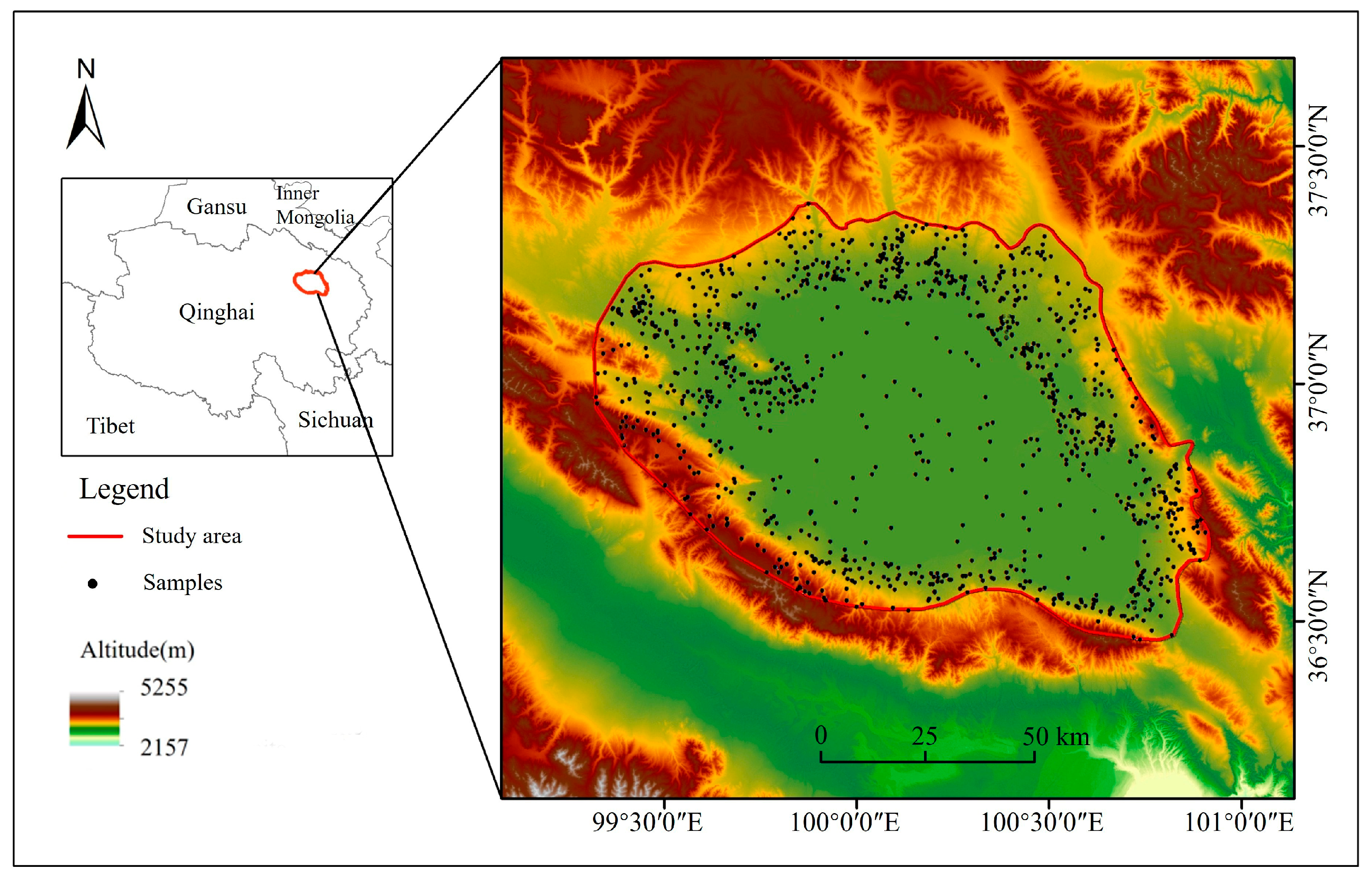
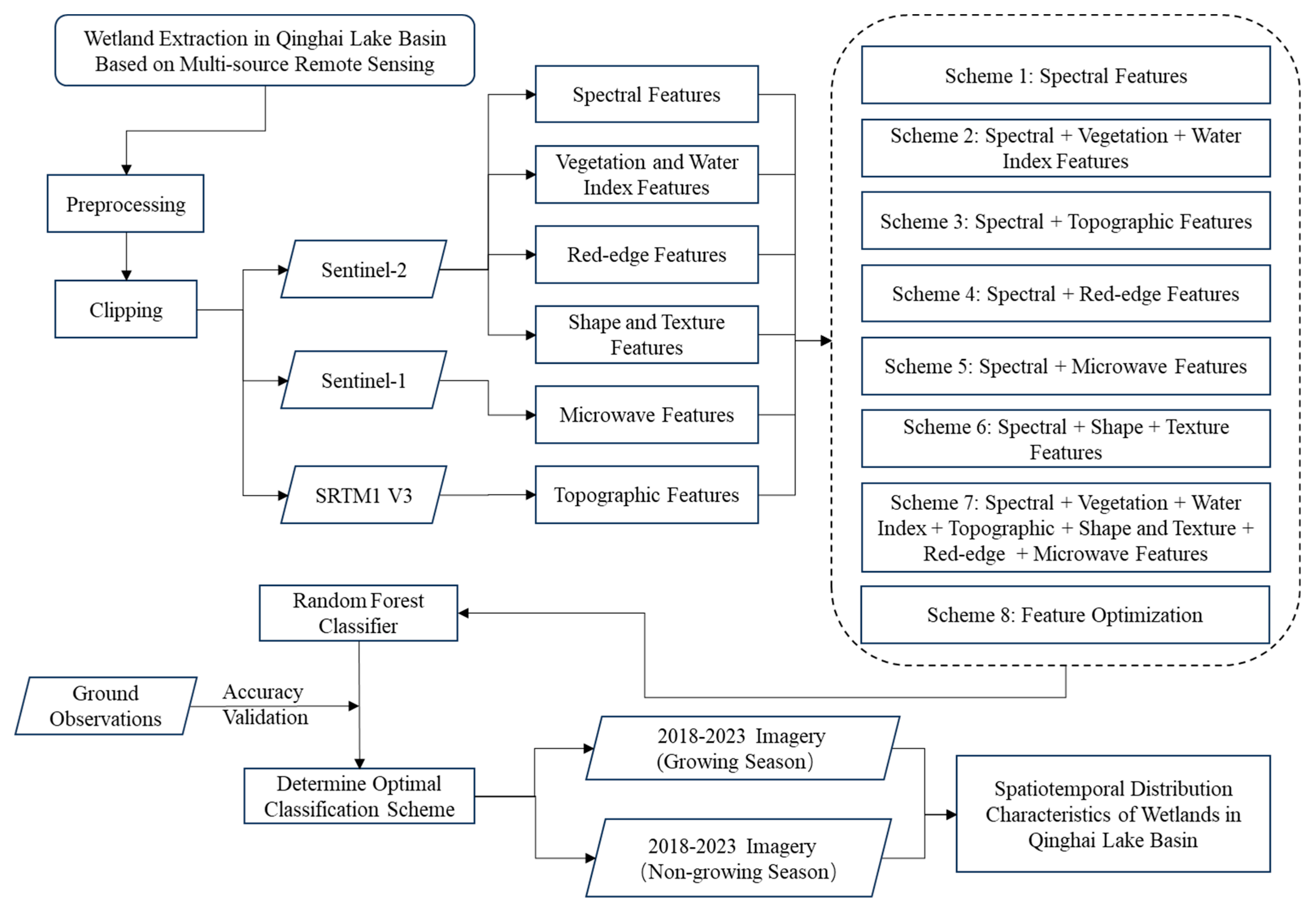
Despite the demonstrated potential of multi-source remote sensing data for wetland mapping, effectively integrating these datasets while avoiding redundancy remains a challenge that requires further investigation. Moreover, the unique altitudinal gradients and complex climatic conditions of plateau regions pose additional challenges to the monitoring of plateau wetlands [
34]. To address these issues, this study focuses on marsh meadows and inland tidal flats in the Qinghai Lake Basin, integrating Sentinel-2 optical data with Sentinel-1 SAR data to construct a multi-dimensional feature dataset comprising spectral, topographic, radar, red-edge, and textural features. A total of eight classification schemes were developed to evaluate the effectiveness of feature set optimization using the Separability and Thresholds (SEaTH) algorithm, thereby facilitating the extraction of information on these two representative plateau wetland types. Using wetland extent data derived for the period 2018–2023, we further analyzed the dynamic evolution characteristics and driving factors of these wetlands, thereby providing a robust methodological framework for long-term monitoring and sustainable management of alpine wetland ecosystems.
3. Results
3.1. Feature Optimization Results
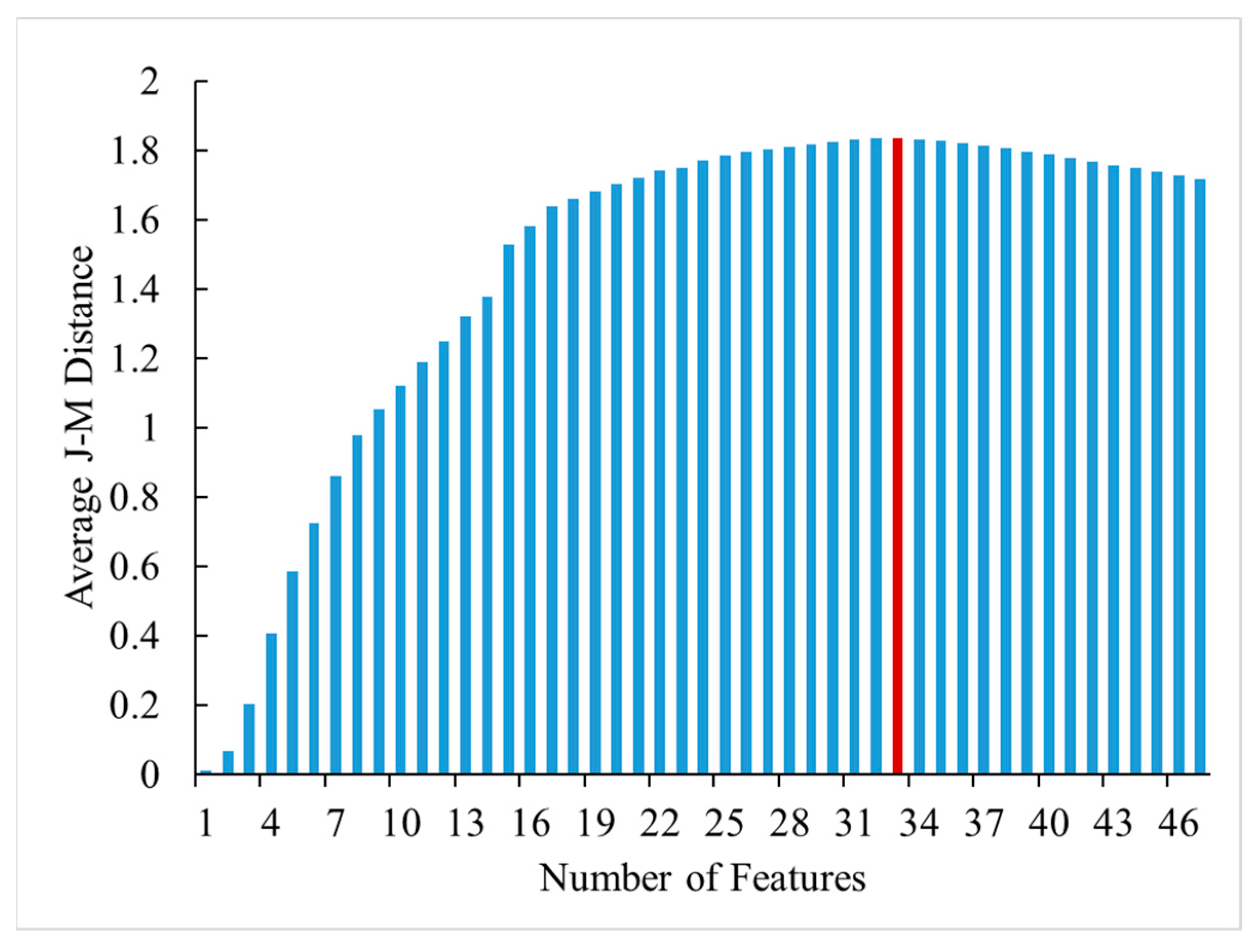
The SEaTH algorithm was used to analyze the separability of all 47 candidate features in the feature set by calculating the average J-M distance between classes. The relationship between the number of selected features and the average J-M distance is shown in
Figure 3. The J-M distance increased rapidly with increasing number of features and reached a maximum value of 1.835 when 33 features were included, indicating that the separability between classes was optimal at this point. As the number of features continued to increase, the J-M distance decreased, indicating that features redundancy began to negatively affect classification performance. The top 33 features corresponding to the peak J-M distance were DVI, B2, NDMI, Shape index, GLCM Correlation, Roundness, NDVIre2, B5, B10, B4, Slope, GLCM Entropy, B12, Rectangular Fit, Cire, Compactness, B3, B7, B8A, Elliptic Fit, GLCM Mean, SAVI, B6, RVI, B11, NDVIre3, NDVI, B8, GLCM Dissimilarity, NDre1, VH, NDre2, VV/VH. These 33 features were therefore selected as the optimized feature set for Scheme 8.
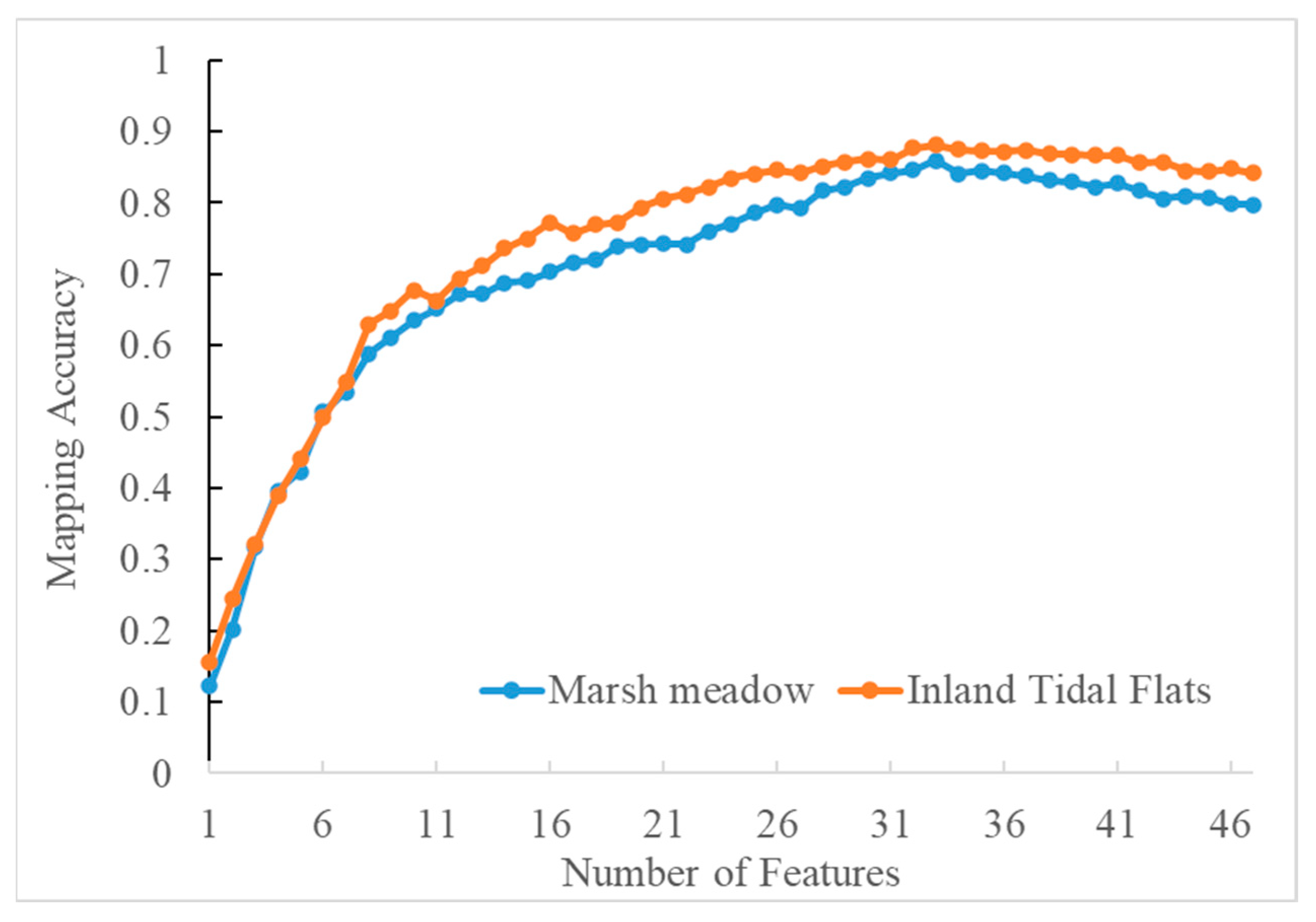
Considering that the primary research objects of this study are alpine wetlands in the Qinghai Lake Basin, the mapping accuracy of the two typical wetland types in the study area—marsh meadow and inland tidal flats—was further analyzed. As the number of features increased, the mapping accuracy of marsh meadow and inland tidal flats showed a trend of an initial rapid increase followed by a slight decline (
Figure 4). This further confirms that when the number of features exceeds the aforementioned 33, the dataset begins to contain repetition or redundancy information, possibly due to the high correlations among multiple features.
3.2. Comprehensive Comparison of Classification Schemes
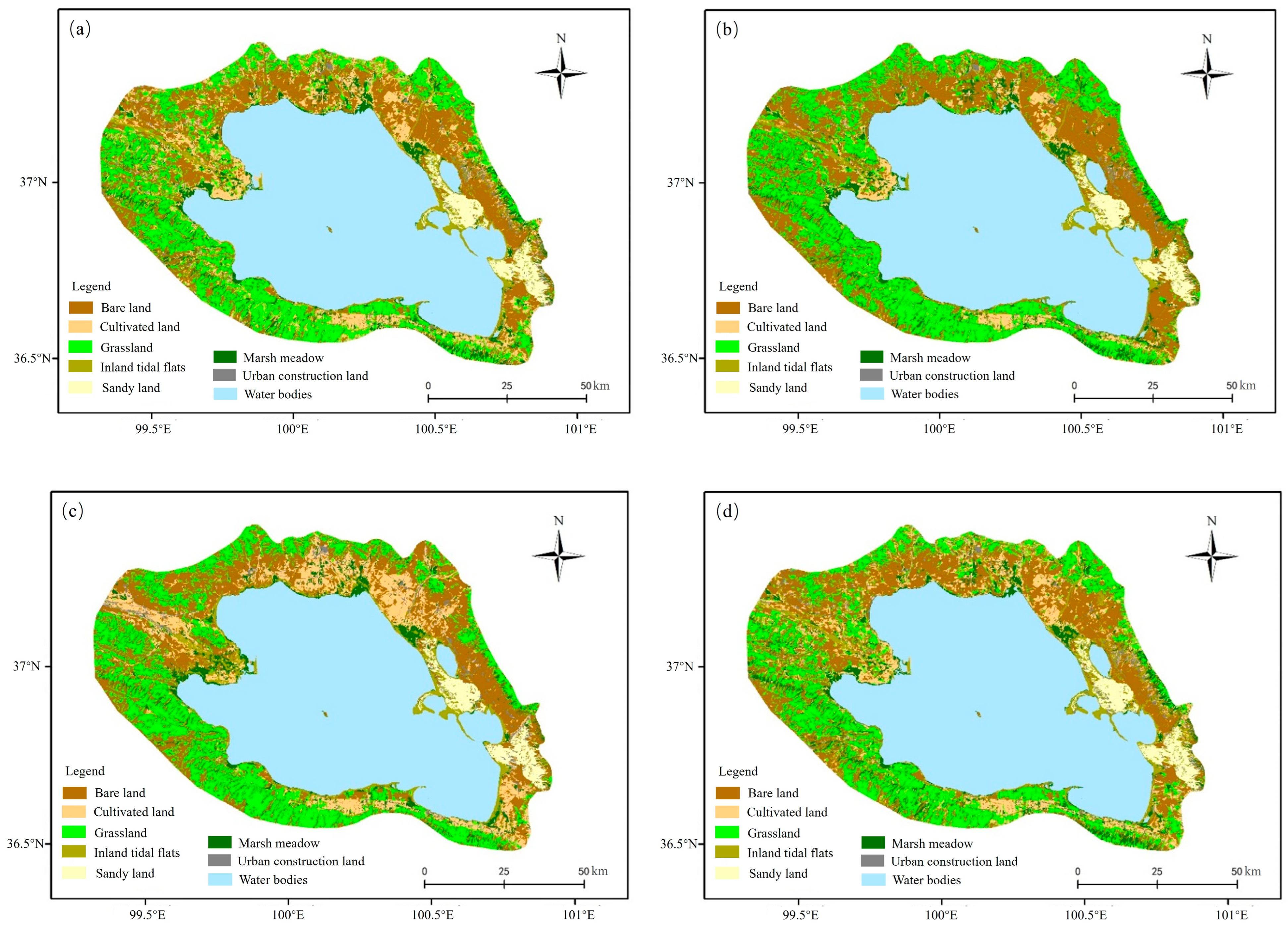
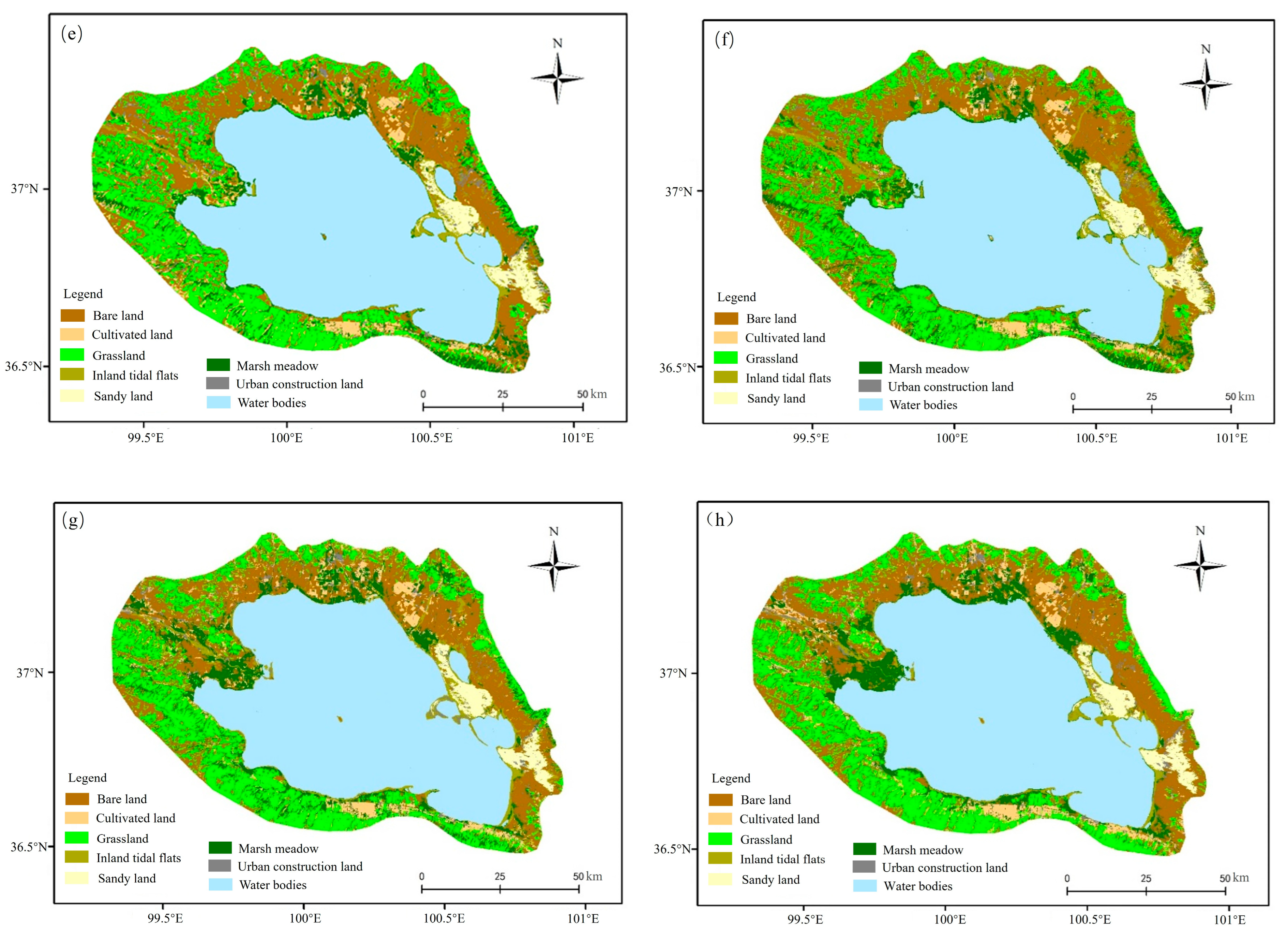
The classification results of the eight schemes for the study area are shown in
Figure 5. Overall, water bodies and sandy land exhibited the best classification performance.
Among the first six experimental schemes, compared with Scheme 1, which used only spectral features, the schemes incorporating the other five types of features all improved the extraction accuracy of marsh meadow and inland tidal flats. However, for marsh meadow, some misclassification still occurred, and it was easily confused with cultivated land. For inland tidal flats, due to their relatively narrow and elongated shape, obvious misclassification with roads in urban construction land was observed. Meanwhile, classification fragmentation was evident across several land-cover types, making it difficult to form spatially coherent geographic distributions.
From visual comparison, Scheme 8 exhibited relatively better classification performance, with clearer class boundaries and fewer obvious misclassifications. The final determination of the optimal scheme was based on the quantitative accuracy assessment results presented below. Although feature optimization reduced the misclassification and omission of marsh meadow and inland tidal flats to some extent, confusion between marsh meadow and cultivated land still remained, possibly because some cultivated soils had relatively high moisture content, resulting in spectral and structural characteristics similar to those of marsh meadow.
The accuracy evaluation of the eight classification schemes for the study area is presented in
Table 4. Among the first six schemes, the incorporation of vegetation and water indices, topographic features, red-edge features, microwave features, and shape–texture features all contributed to wetland classification performance. Compared with the baseline scheme, the addition of these feature types increased the overall accuracy by 6.69%, 4.9%, 6.48%, 6.1%, 5.62%, 8.71%, and 10.19%, respectively, and increased the Kappa coefficient by 0.06, 0.03, 0.06, 0.05, 0.04, 0.07, and 0.11, respectively.
Among these feature types, vegetation and water indices, red-edge features, and shape–texture features showed more pronounced effects on the extraction of the two wetland types, namely marsh meadow and inland tidal flats. Specifically, these features improved the producer’s accuracy of marsh meadow by 10.12%, 6.32%, and 8.21%, respectively, and improved the producer’s accuracy of inland tidal flats by 7.62%, 7.73%, and 10.00%, respectively. This indicates that these three categories of features provide greater advantages for alpine wetland information extraction.
Although Scheme 7, which incorporated all features, achieved higher classification accuracy than the schemes using single feature types, it did not account for potential information redundancy among features. Scheme 8 applied the SEaTH algorithm to optimize the feature set by calculating the maximum average J-M distance between classes and determining the optimal feature thresholds, thereby reducing the number of features to 33, lowering data dimensionality, and eliminating highly correlated redundant features. According to
Table 4, the feature optimization scheme (Scheme 8) improved overall accuracy by 1.48% and the Kappa coefficient by 0.04 compared with the non-optimized scheme (Scheme 7).
For the two key wetland types, the feature optimization scheme further improved extraction accuracy. Specifically, the producer’s accuracy and user’s accuracy of marsh meadow increasing by 6.11% and 5.77%, respectively, whereas those of inland tidal flats increased by 3.96% and 2.74%, respectively. These results demonstrate the effectiveness of feature optimization in improving the discrimination of alpine wetland types in the Qinghai Lake Basin.
Analysis of the optimal extraction scheme (Scheme 8) for alpine wetlands in the Qinghai Lake Basin further showed (
Table 5) that the total area of the study region was 10,091.50 km
2. The wetland types mainly comprised marsh meadow, inland tidal flats, and water bodies. The area of marsh meadow was 700.65 km
2, accounting for 6.94% of the study area; the area of inland tidal flats was 261.78 km
2, accounting for 2.59%; and the area of water bodies was 4434.96 km
2, accounting for 43.95%.
3.3. Dynamic Evolution of Marsh Meadow and Inland Tidal Flats
3.3.1. Growing Seasons
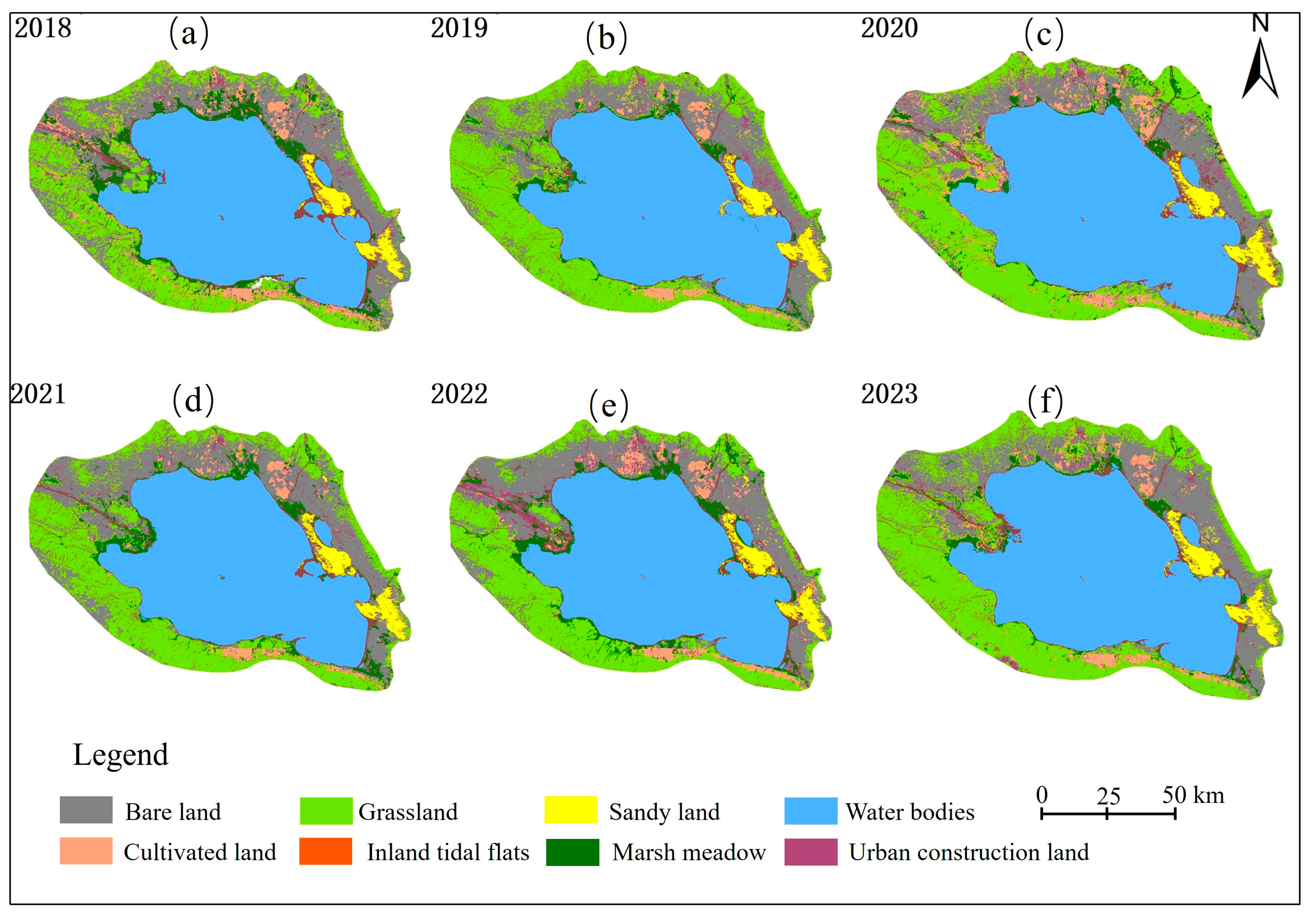
As showed in
Figure 6, during the growing season, the area of marsh meadow increased significantly from 336 km
2 in 2018 to 443.27 km
2 in 2023 (as showed in
Table 6). This increasing trend indicates a clear expansion of the marsh meadow ecosystem, which may be associated with ecological restoration measures and natural succession processes. In 2018, the conversion of marsh meadow was primarily observed into inland tidal flats, grassland, bare land, and water bodies, with conversion rates of 12.72%, 9.71%, 9.12%, and 8.15%, respectively. By 2023, the conversion sources of marsh meadow became more diversified, with conversion rates from grassland, bare land, inland tidal flats, and water bodies rising to 17.04%, 13.82%, 10.38%, and 9.29%, respectively. These results reflect the increasing complexity and dynamic nature of land-use transitions in the study area.
Simultaneously, the area of inland tidal flats increased slightly from 308 km2 in 2018 to 313 km2 in 2023. In 2018, the conversion of inland tidal flats mainly originated from bare land, marsh meadow, and urban construction land, with proportions of 17.98%, 14.93%, and 10.82%, respectively. By 2023, the composition of conversion sources had changed, with the proportions derived from urban construction land, marsh meadow, and bare land adjusted to 17.92%, 13.61%, and 13.03%, respectively. These results suggest that the dynamics of inland tidal flats were jointly influenced by land-use policies and variations in natural environmental conditions.
The dynamic changes in water bodies also deserve attention. In 2018, 41.17 km2 of marsh meadow and 15.60 km2 of inland tidal flats were converted into water bodies, whereas 27.39 km2 of marsh meadow and 8.74 km2 of inland tidal flats were converted from water bodies to other land-cover types. This bidirectional conversion pattern highlights the substantial influence of hydrological conditions and land-use strategies on the lake ecosystem.
3.3.2. Non-Growing Seasons
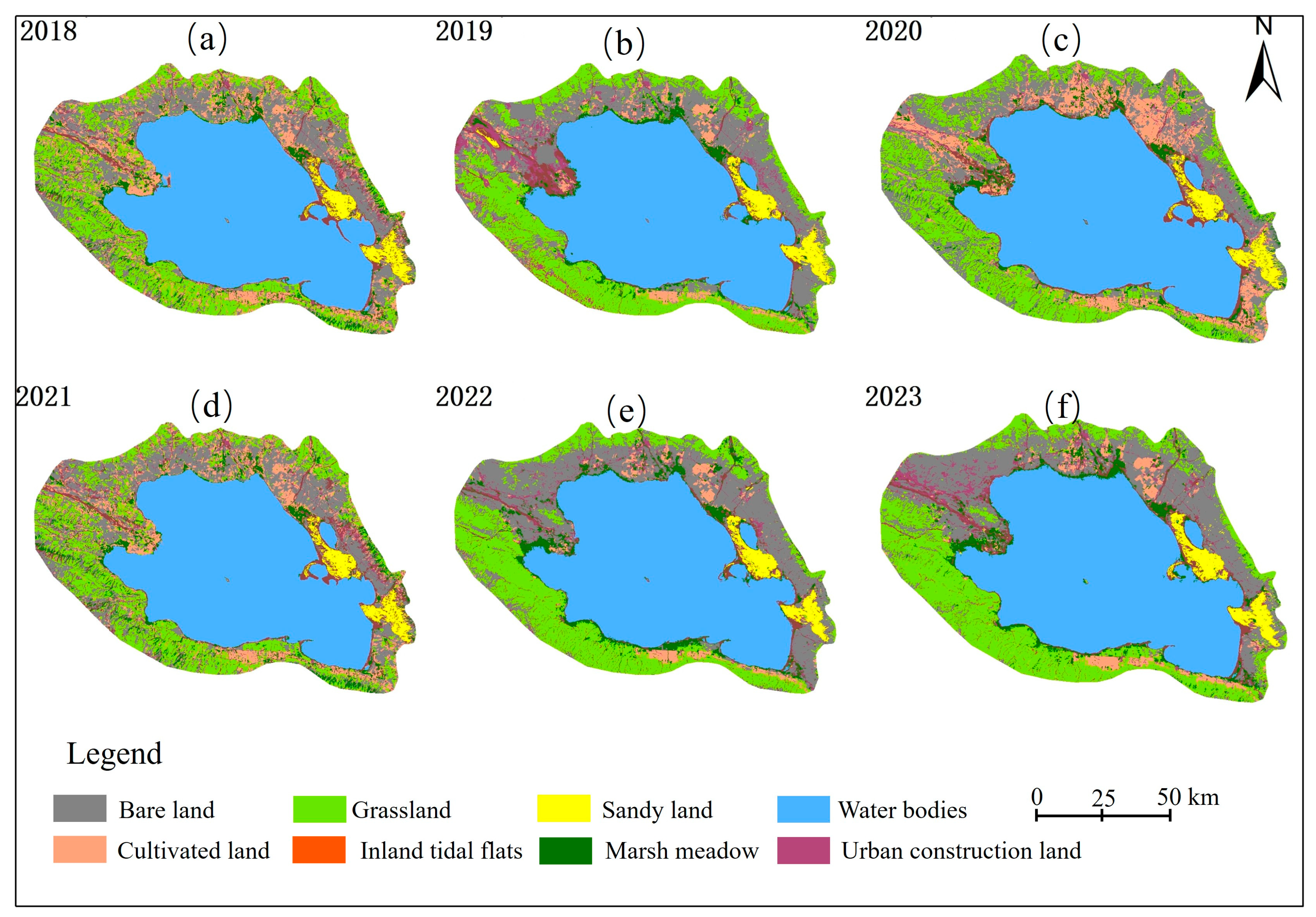
During the non-growing season, land use changes in wetland ecosystems exhibit trends opposite to those observed during growing season (
Figure 7). Between 2018 and 2023, the area of marsh meadow decreased by 42.95 km
2, whereas inland tidal flats expanded significantly, with an increase of 95.41 km
2 (
Table 7). These changes may reflect the response of wetland ecosystems to seasonal environmental conditions, as well as the influence of human activities.
In the non-growing season of 2018, the transformation of marsh meadow was mainly characterized by increases in grassland, inland tidal flats, water bodies, and bare land, with area proportions of 22.28%, 10.79%, 6.92%, and 5.25%, respectively. By 2023, the source composition of marsh meadow had changed, with conversion proportions from grassland, bare land, and inland tidal flats adjusted to 12.59%, 10.78%, and 6.48%, respectively. This shift may indicate adjustments in land use strategies and the dynamics of natural succession processes.
The transformation pathways of inland tidal flats also exhibited marked seasonal variation. In the non-growing season of 2018, inland tidal flats mainly originated from bare land, marsh meadow, and sandy land, with area proportions of 9.52%, 7.93%, and 6.01%, respectively. By 2023, water bodies, bare land, and marsh meadow became the main sources of inland tidal flats, accounting for 16.67%, 12.99%, and 10.59% of the area, respectively. These changes may be associated with seasonal fluctuations in hydrological conditions and adjustments in human land management activities.
Water bodies also showed a decreasing trend during the non-growing season. In 2018, 50.84 km2 of water bodies area was converted into inland tidal flats, whereas by 2023, 20.70 km2 of water bodies area originated from marsh meadow. This change may be associated with seasonal fluctuations in lake water level and the interactions among wetland ecosystems.
4. Discussion
Our results support the initial hypothesis that the integration of SAR backscatter with spectral, topographic, and shape–textural features improves the discrimination accuracy of alpine wetlands. The spectral-only scheme (Scheme 1) achieved an overall accuracy of 76.05%, whereas the multi-source integrated scheme (Scheme 7) achieved an overall accuracy of 84.76%. After feature optimization, Scheme 8 further improved the overall accuracy to 86.24%. These results indicate that SAR backscatter and ancillary structural features provide complementary information beyond spectral features alone, thereby enhancing the separability of wetland classes. This finding is consistent with the complex physiognomy of marsh meadows in the Qinghai Lake Basin, where variations in vegetation structure, moisture gradients, and surface heterogeneity create distinct spectral and textural signatures [
12,
22].
While recursive feature elimination (RFE), as employed in Zhang et al. (2024) [
26], requires iterative model training, SEaTH leverages separability metrics (J-M distance) to pre-screen features without classifier bias, reducing computational cost while maintaining comparable accuracy gains. This advantage is consistent with the results obtained in this study, and can be attributed to SEaTH’s ability to exclude redundant spectral bands that exhibit high inter-correlation in alpine grassland–wetland mosaics [
31], thereby mitigating the Hughes phenomenon often encountered in high-dimensional OBIA [
14,
19].
The dominance of shape and texture features (e.g., GLCM homogeneity, shape compactness) reflects the fine-scale heterogeneity of Qinghai Lake wetlands, where patchy Carex meadows intersperse with exposed mudflats [
32]. Unlike lowland wetlands with continuous canopies [
18], alpine wetlands exhibit high spatial fragmentation, which renders geometric descriptors more discriminative than pure spectral signatures. Sentinel-1 backscatter (VV/VH) provides critical information on surface roughness and soil moisture, effectively distinguishing inland tidal flats from saline flats that exhibit similar reflectance in optical bands [
14,
20]. This is consistent with findings by Mahdianpari et al. (2017) [
22] regarding L-band SAR’s utility in herbaceous wetlands, though our C-band results suggest sufficient penetration for shallow alpine marsh systems.
Despite optimization, confusion persisted between marsh meadows and wet grasslands (with PA remaining below 90%), likely due to the transitional ecotone vegetation structure and seasonal phenological overlap [
5,
6]. Our single-period approach (based on imagery from growing and non-growing seasons) may not fully capture intra-annual hydrological dynamics critical for wetland delineation, as emphasized by Slagter et al. (2020) [
34] for ephemeral wetlands. The accuracy assessment relied on field campaigns primarily conducted in accessible areas, potentially underestimating errors in topographically complex regions [
32].
The SEaTH-OBIA workflow offers a transferable framework for data-scarce mountain regions (e.g., Tibetan Plateau, Andes, Drakensberg [
32]), where cloud cover limits the utility of optical sensors and computational resources constrain deep learning approaches. Fine-scale maps of marsh meadows (characterized by high carbon stock) and inland tidal flats (which serve as critical waterbird habitats) provide essential baselines for assessing degradation under climate warming [
2,
5], thereby supporting biodiversity conservation targets in alpine protected areas.
Future work should integrate SEaTH with deep learning (e.g., CVTNet [
27]) to capture non-linear spectral–textural relationships, potentially thereby addressing the remaining spectral confusion. Incorporating Sentinel-1 time-series (growing/non-growing season) together with vegetation height information derived from ICESat-2, a satellite LiDAR mission, could improve the discrimination of different vegetation structure types [
19]. Long-term monitoring (2000–2024) using Landsat archives [
29,
30] is needed to link wetland dynamics with glacier retreat patterns identified by Yao et al. [
5] and Chen et al. [
6].
5. Conclusions
Based on object-oriented technology on the eCognition platform, combined with Sentinel-1 SAR satellite data and Sentinel-2 satellite data, this study designed multiple comparative experiments to explore the role of various feature types including vegetation and water indices, topographic features, red-edge features, microwave features, and shape and texture features in alpine wetland extraction, and verified the feasibility of improving alpine wetland classification accuracy through feature optimization methods. The experimental results show that using the SEaTH algorithm for feature optimization successfully reduced the feature set from 47 to 33, achieving an overall accuracy of 86.24% and a Kappa coefficient of 0.79, with significant effects on extracting both types of alpine wetlands.
Although this study achieved good extraction results for alpine wetlands in the Qinghai Lake Basin, certain limitations still exist. Although this study employed multi-temporal remote sensing data from 2018 to 2023, the analysis relied on seasonal or annual composites and did not fully exploit dense time-series observations. Future studies will incorporate higher temporal resolution data to improve change detection and dynamic analysis.