A Framework for Accurate Annual Regional Crop Yield Prediction


Highlights
- Annual regional crop yield can be accurately predicted with only opensource data.
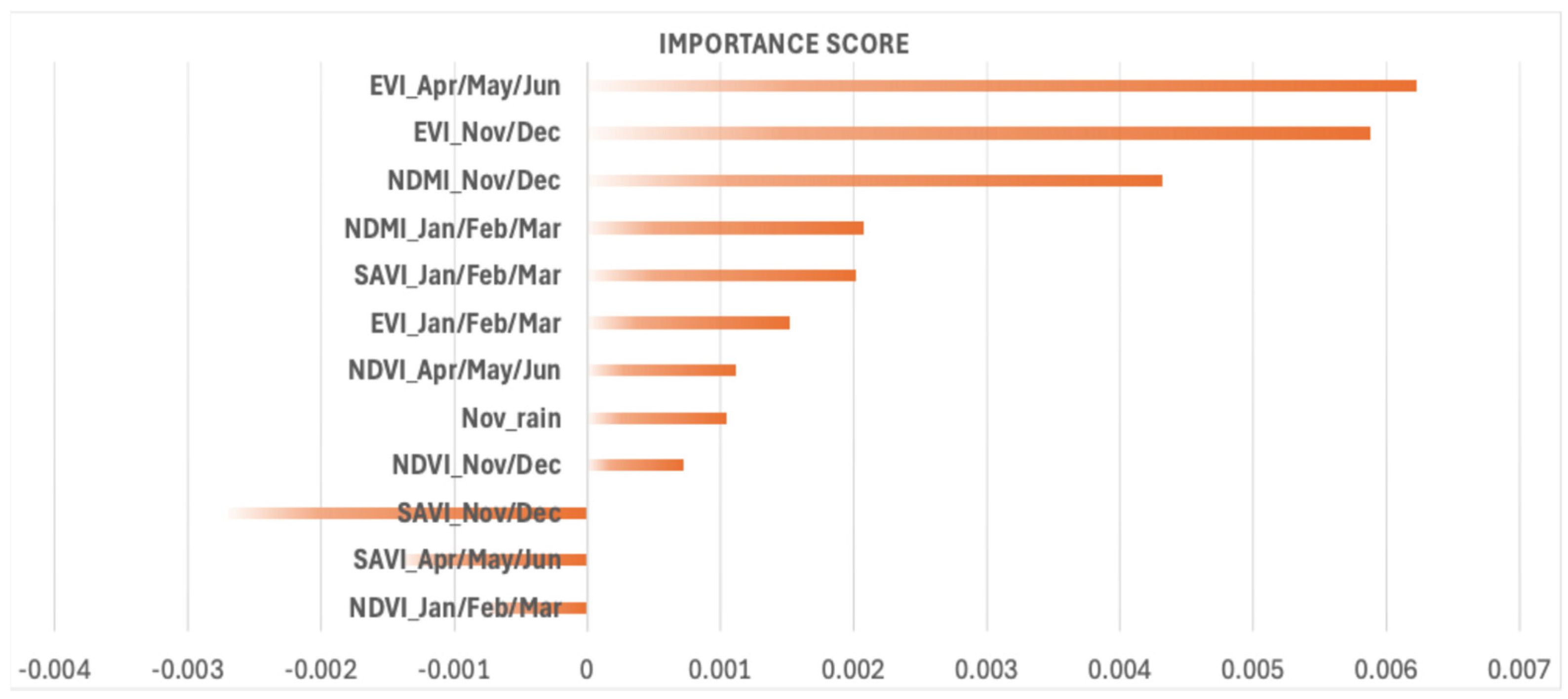
- EVI is the most important feature in the yield prediction framework.
- EVI in April, May and June shows a strong correlation with winter barley yield.
- High values of NDMI from April to June reduce annual yields of winter barley.
Abstract
1. Introduction
- (1)
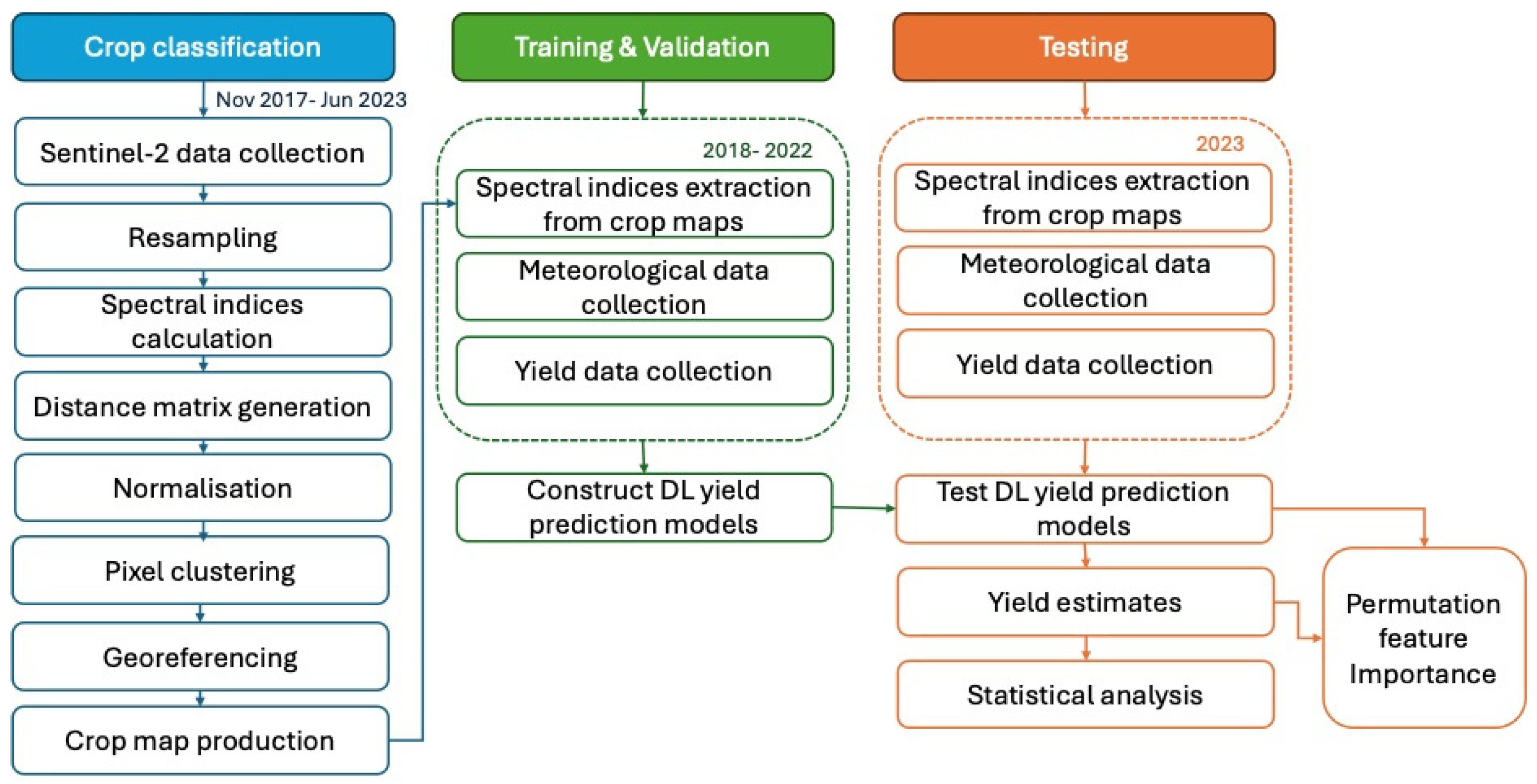
- Constructing a framework from online opensource datasets for broader usage under various conditions in multiple regions.
- (2)
- Automatically producing crop maps with zero ground truth data by means of unsupervised crop classification and extracting spectral indices of winter barley.
- (3)
- Comparing the results of yield estimates by DL models to find out the most suitable DL model to be applied in this framework.
- (4)
- Studying the importance of variables in DL models and analysing the correlations between the spectral indices, meteorological data and the yield of winter barley.
2. Materials and Methods
2.1. Yield Prediction Framework
2.2. Crop Classification
2.3. Yield Prediction Models
2.3.1. 1D CNN
2.3.2. LSTM
2.3.3. 1D CNN-LSTM
2.3.4. Permutation Feature Importance
3. Results
3.1. Crop Maps from 2018 to 2023
3.2. Yield Monitoring and Estimation Evaluation
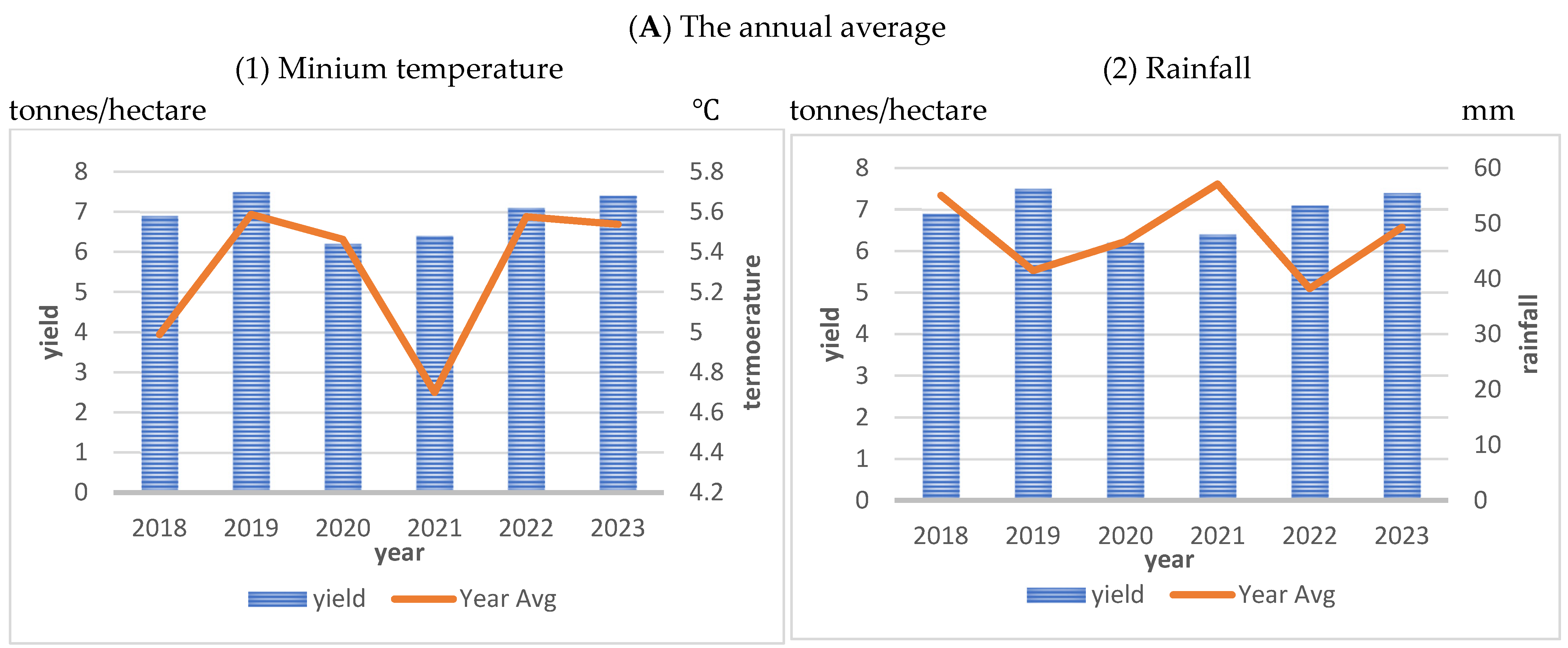
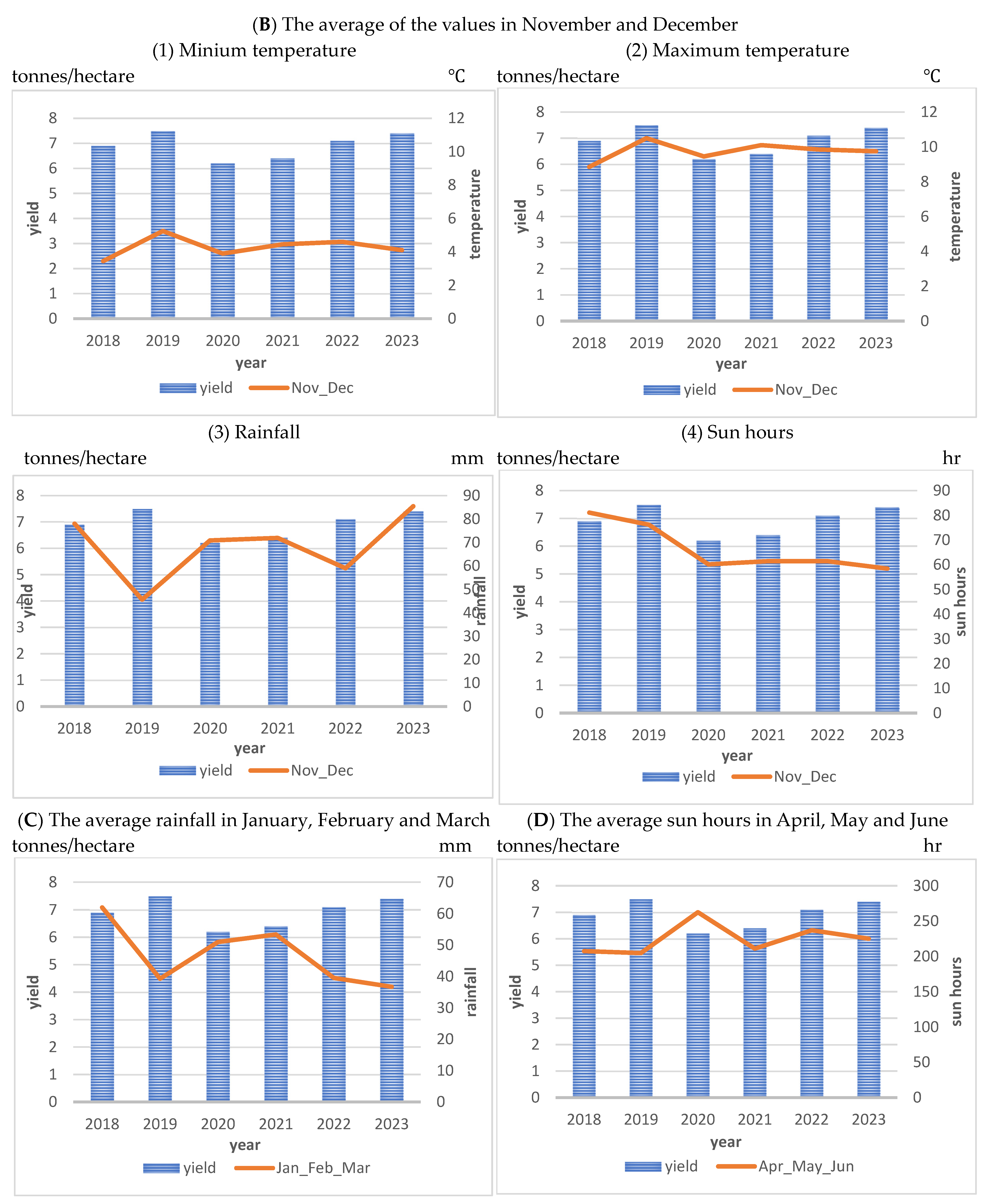
3.3. Correlation Analysis Between the Yield and Meteorological Datasets
4. Discussion
5. Conclusions
- (1)
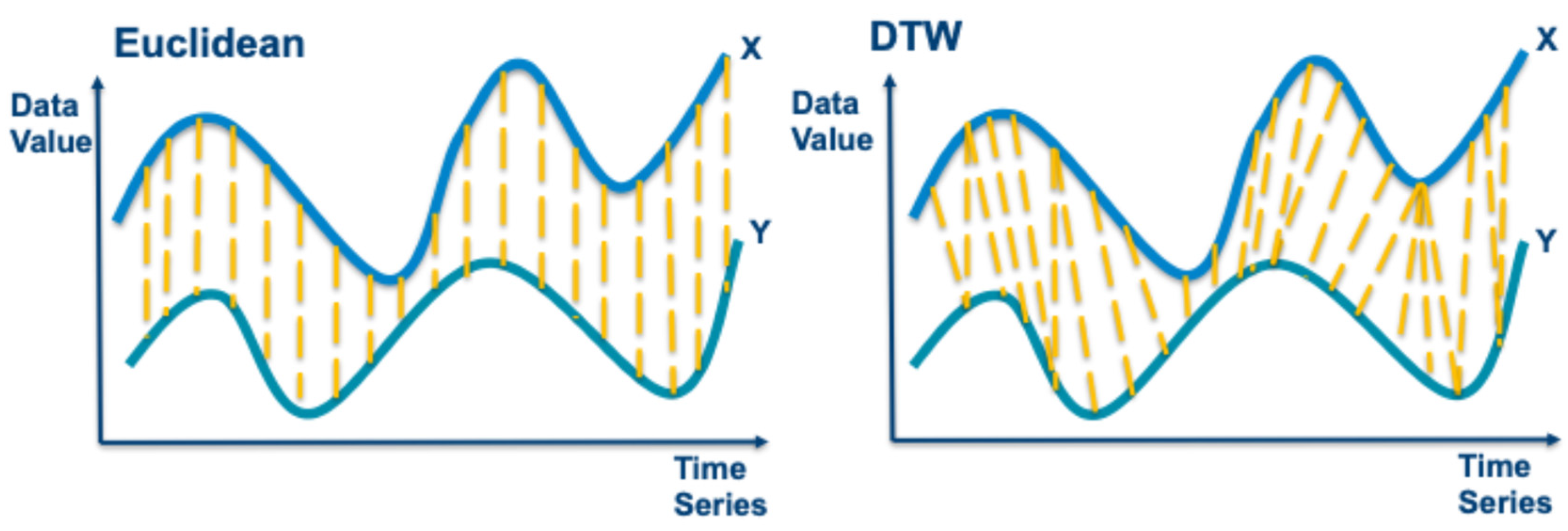
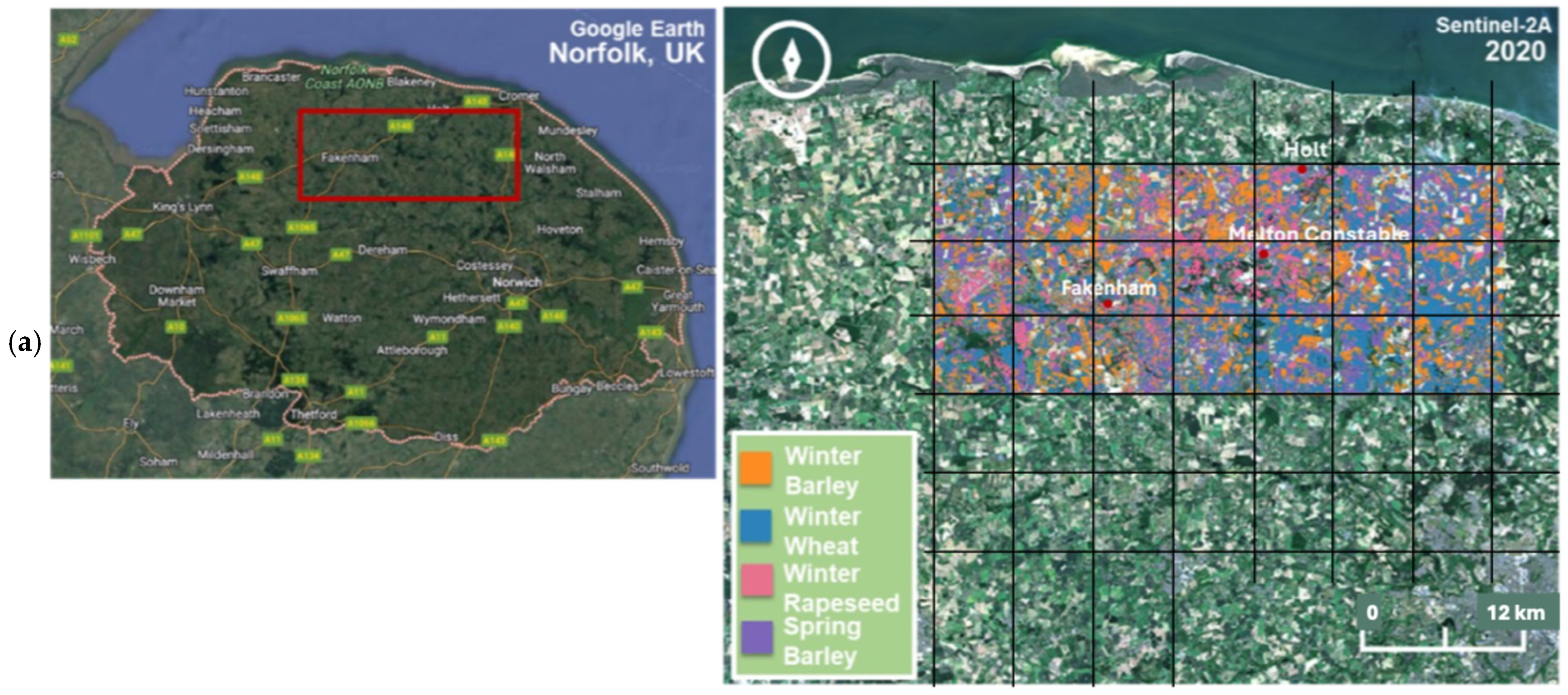
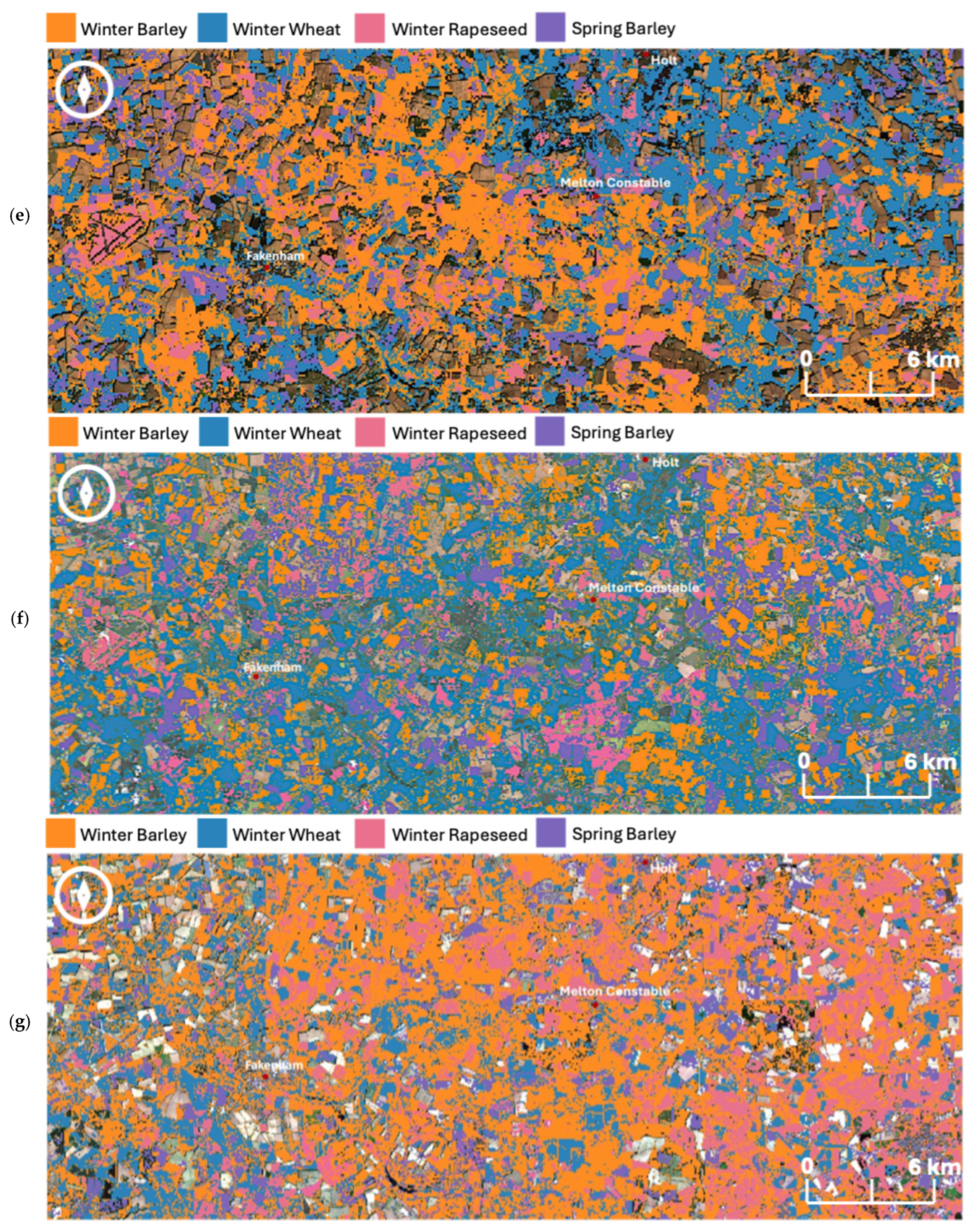
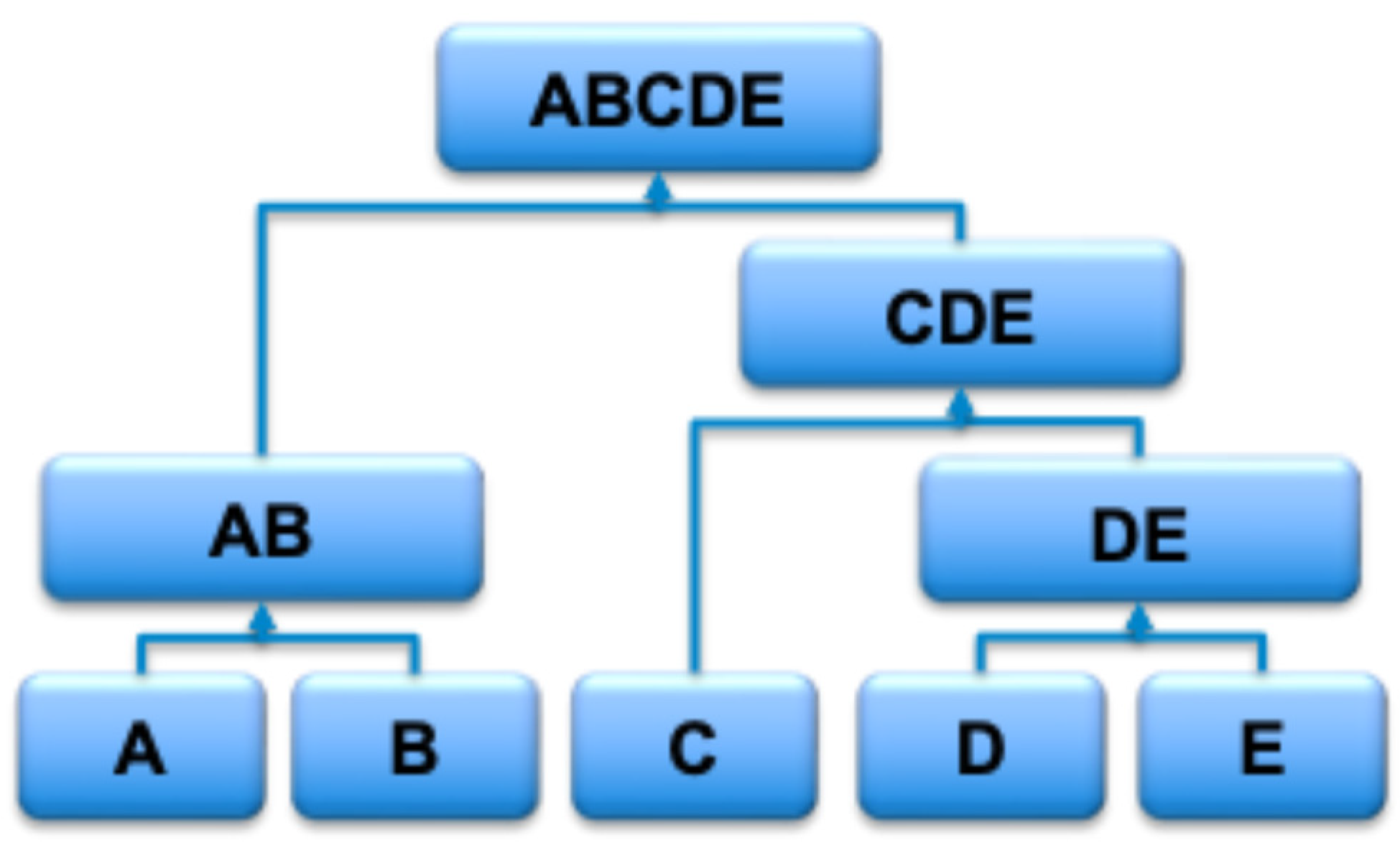
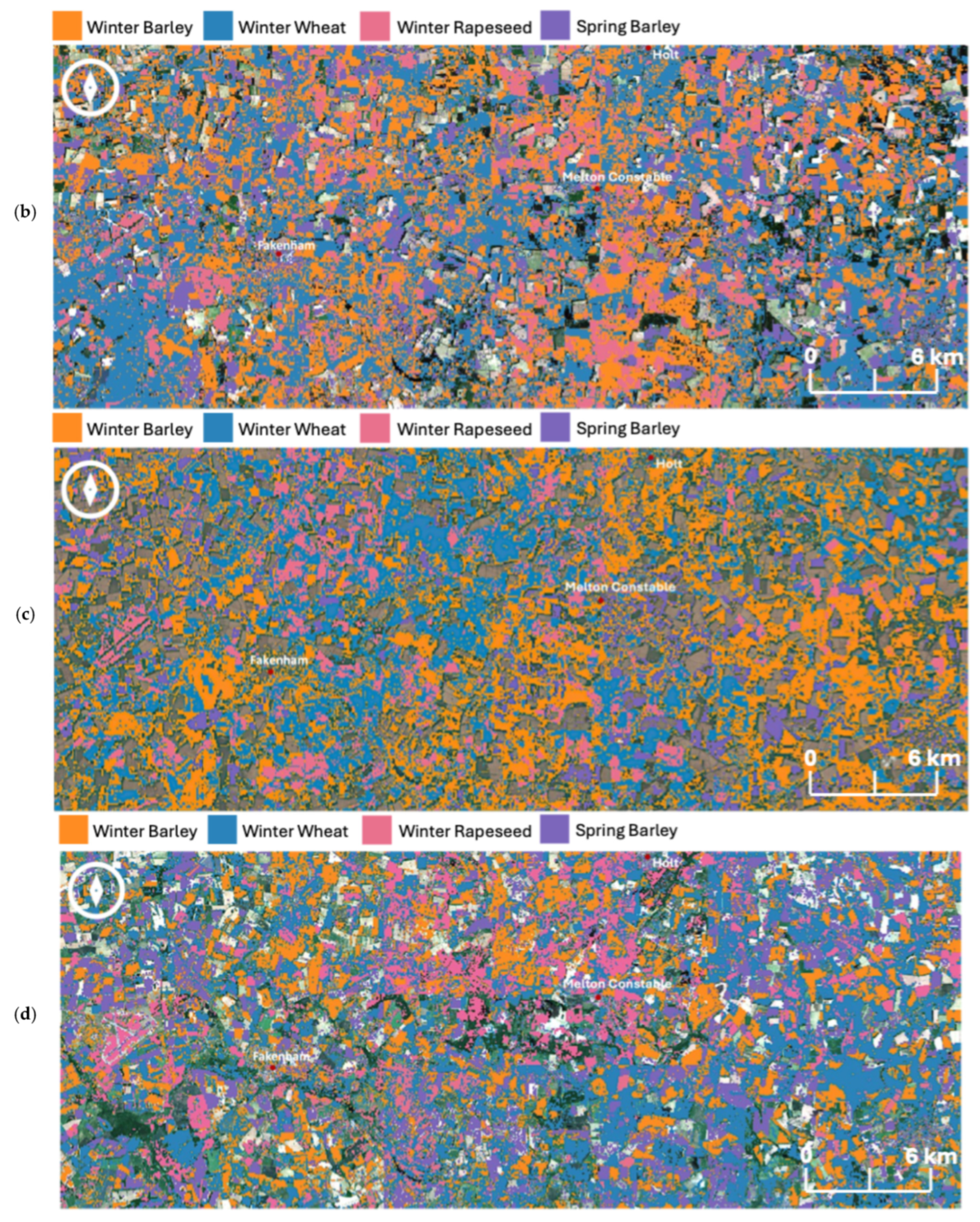
- The accurate historical crop maps are generated with zero ground truth by FastDTW-HC, which does not require further local surveying. This unsupervised classification method can be used to investigate large regions (land areas) after being tested in a small region.
- (2)
- The values of spectral indices of winter barley are extracted from the historical crop maps directly from the pixels of the winter barley, which are considered more accurate. This resolves the inaccuracy of previous research studies which directly applied to regional average values of spectral indices for studies on winter barley. The relationships between spectral indices and the yield of winter barley are studied with more accurate data, which points out that:
- The EVI in April, May and June is the most important feature of the DL yield prediction due to the strong correlation with the yield of winter barley throughout 2018 to 2023.
- The analysis of spectral indices indicates that the commonly used NDVI in yield predictions is not the best parameter due to the relatively low PFI and correlation.
- A higher NDMI at the tillering stage and the stem elongation, flowering and grain filling stage has been interpreted as excess Water Content (WC), which could lead to poor plant health and declines in the yields of winter barley.
- (3)
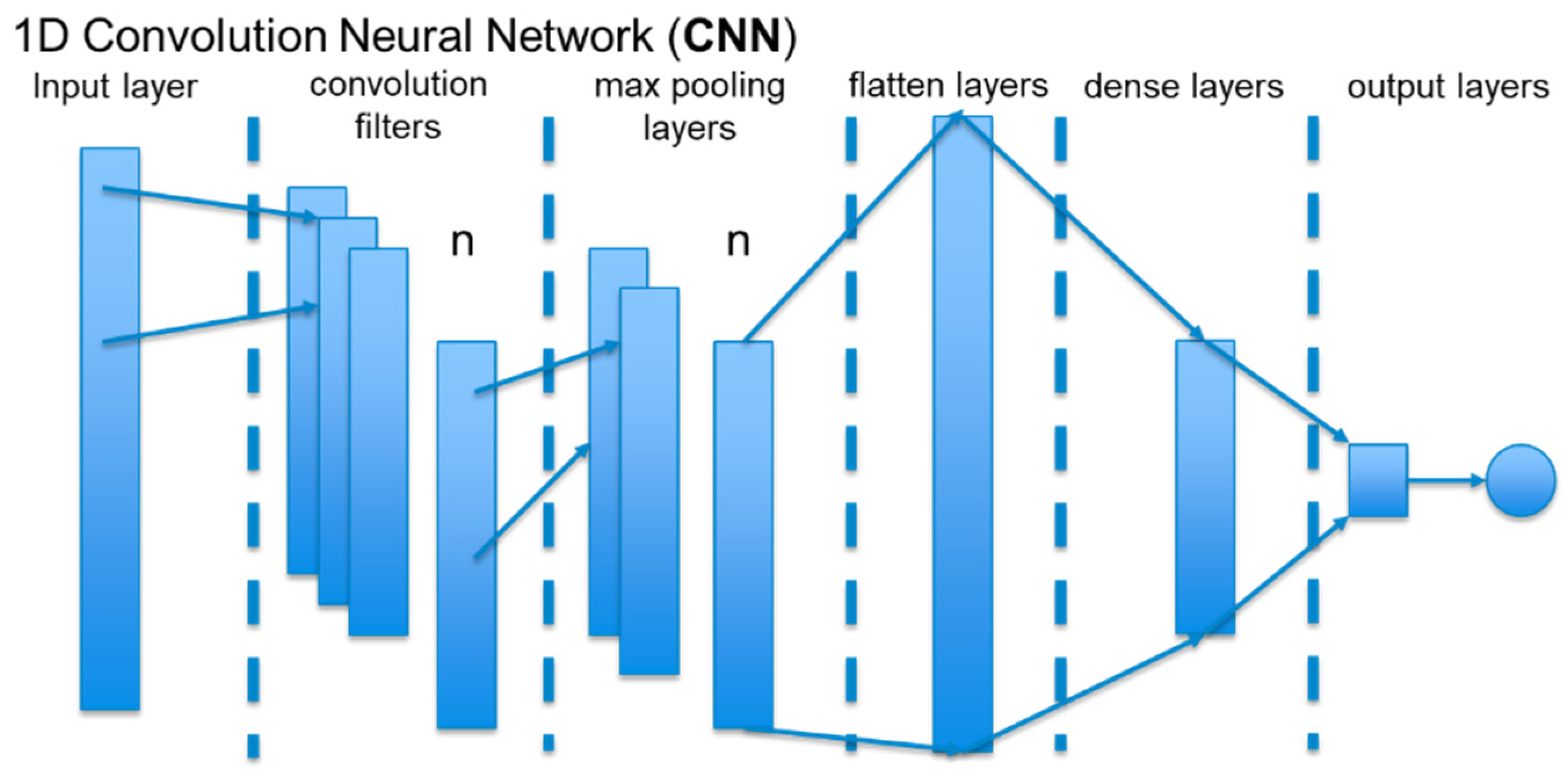
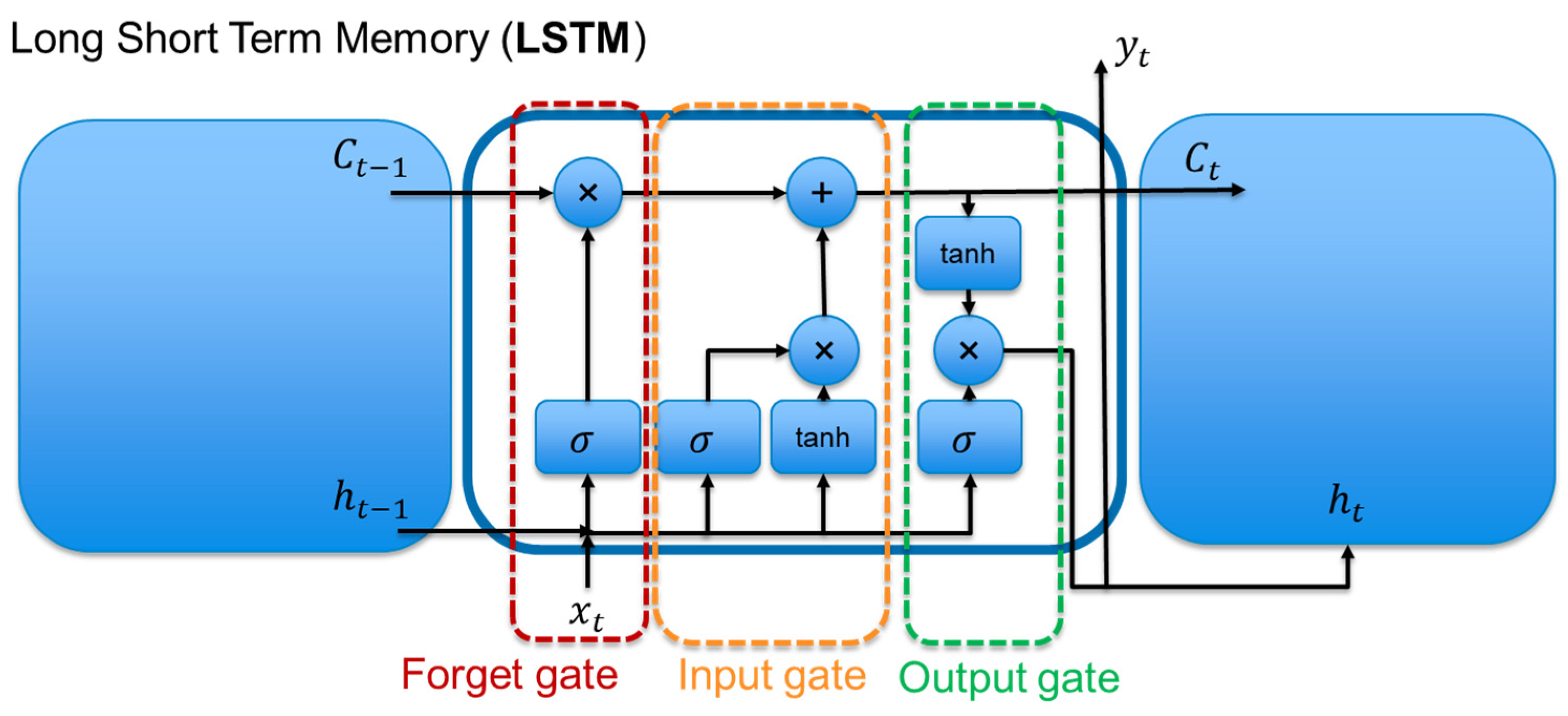
- LSTM outperforms CNN and CNN-LSTM in this research with its capability of extracting the temporal features. The LSTM demonstrates the best results in this research with RMSE 0.406 kg/hectare, MSE 0.165 kg/hectare and MAE 10.495 kg/hectare.
- (4)
- This analysis indicates that certain weather conditions during specific times of the year can have a significant impact on yield. In particular, it was found that:
- Temperature and sun hours have significant impacts during the germination and seedling growth stages (November and December), with higher temperatures and sun hours improving germination and seedling growth and eventual yield of winter barley.
- High rainfall during the tillering stage (January, February and March) and high sun hours during the stem elongation, flowering and grain filling stages (April, May and June) produce lower yields of winter barley.
6. Future Work
Author Contributions
Funding
Data Availability Statement
Conflicts of Interest
References
- Grassini, P.; Eskridge, K.; Cassman, K. Distinguishing between yield advances and yield plateaus in historical crop production trends. Nat. Commun. 2013, 4, 2918. [Google Scholar] [CrossRef] [PubMed]
- Lin, M.; Huybers, P. Reckoning wheat yield trends. Environ. Res. Lett. 2012, 7, 024016. [Google Scholar] [CrossRef]
- Ray, D.K.; Ramankutty, N.; Mueller, N.D.; West, P.C.; Foley, J.A. Recent patterns of crop yield growth and stagnation. Nat. Commun. 2012, 3, 1293. [Google Scholar] [CrossRef]
- Brisson, N.; Gate, P.; Gouache, D.; Charmet, G.; Oury, F.-X.; Huard, F. Why are wheat yields stagnating in Europe? A comprehensive data analysis for France. Field Crops Res. 2010, 119, 201–212. [Google Scholar] [CrossRef]
- Kristensen, K.; Schelde, K.; Olesen, J.E. Winter wheat yield response to climate variability in Denmark. J. Agric. Sci. 2011, 149, 33–47. [Google Scholar] [CrossRef]
- Børgesen, C.D.; Olesen, J.E. A probabilistic assessment of climate change impacts on yield and nitrogen leaching from winter wheat in Denmark. Nat. Hazards Earth Syst. Sci. 2011, 11, 2541–2553. [Google Scholar] [CrossRef] [PubMed]
- Alston, J.M.; Beddow, J.M.; Pardey, P.G. Agricultural Research, Productivity, and Food Prices in the Long Run. Science 2009, 325, 1209–1210. [Google Scholar] [CrossRef]
- Mandal, D.; Rao, Y.S. SASYA: An integrated framework for crop biophysical parameter retrieval and within-season crop yield prediction with SAR remote sensing data. Remote Sens. Appl. Soc. Environ. 2020, 20, 100366. [Google Scholar] [CrossRef]
- Maas, S.J. Parameterized Model of Gramineous Crop Growth: I. Leaf Area and Dry Mass Simulation. Agron. J. 1993, 85, 348–353. [Google Scholar] [CrossRef]
- Maas, S.J. Parameterized Model of Gramineous Crop Growth: II. Within-Season Simulation Calibration. Agron. J. 1993, 85, 354–358. [Google Scholar] [CrossRef]
- Duchemin, B.; Maisongrande, P.; Boulet, G.; Benhadj, I. A simple algorithm for yield estimates: Evaluation for semi-arid irrigated winter wheat monitored with green leaf area index. Environ. Model. Softw. 2008, 23, 876–892. [Google Scholar] [CrossRef]
- Yeom, J.-M.; Ko, J.; Kim, H.-O. Application of GOCI-derived vegetation index profiles to estimation of paddy rice yield using the GRAMI rice model. Comput. Electron. Agric. 2015, 118, 1–8. [Google Scholar] [CrossRef]
- Kim, H.; Ko, J.; Jeong, S.; Yeom, J.; Ban, J.-O.; Kim, H.-Y. Simulation and mapping of rice growth and yield based on remote sensing. J. Appl. Remote Sens. 2015, 9, 096067. [Google Scholar] [CrossRef]
- Battude, M.; Bitar, A.A.; Morin, D.; Cros, J.; Huc, M.; Sicre, C.M.; Le Dantec, V.; Demarez, V. Estimating maize biomass and yield over large areas using high spatial and temporal resolution Sentinel-2 like remote sensing data. Remote Sens. Environ. 2016, 184, 668–681. [Google Scholar] [CrossRef]
- Ameline, M.; Fieuzal, R.; Betbeder, J.; Berthoumieu, J.-F.; Baup, F. Estimation of Corn Yield by Assimilating SAR and Optical Time Series Into a Simplified Agro-Meteorological Model: From Diagnostic to Forecast. IEEE J. Sel. Top. Appl. Earth Obs. Remote Sens. 2018, 11, 4747–4760. [Google Scholar] [CrossRef]
- Kim, M.; Ko, J.; Jeong, S.; Yeom, J.; Kim, H. Monitoring canopy growth and grain yield of paddy rice in South Korea by using the GRAMI model and high spatial resolution imagery. GIScience Remote Sens. 2017, 54, 534–551. [Google Scholar] [CrossRef]
- Ma, C.; Liu, M.; Ding, F.; Li, C.; Cui, Y.; Chen, W.; Wang, Y. Wheat growth monitoring and yield estimation based on remote sensing data assimilation into the SAFY crop growth model. Sci. Rep. 2022, 12, 5473. [Google Scholar] [CrossRef] [PubMed]
- Ed-Daoudi, R.; Alaoui, A.; Ettaki, B.; Zerouaoui, J. Improving Crop Yield Predictions in Morocco Using Machine Learning Algorithms. J. Ecol. Eng. 2023, 24, 392–400. [Google Scholar] [CrossRef]
- Gumma, M.K.; Thenkabail, P.S.; Panjala, P.; Teluguntla, P.; Yamano, T.; Mohammed, I. Multiple agricultural cropland products of South Asia developed using Landsat-8 30 m and MODIS 250 m data using machine learning on the Google Earth Engine (GEE) cloud and spectral matching techniques (SMTs) in support of food and water security. GIScience Remote Sens. 2022, 59, 1048–1077. [Google Scholar] [CrossRef]
- Srivastava, A.K.; Safaei, N.; Khaki, S.; Lopez, G.; Zeng, W.; Ewert, F. Winter wheat yield prediction using convolutional neural networks from environmental and phenological data. Sci. Rep. 2022, 12, 3215. [Google Scholar] [CrossRef]
- Shammi, S.A.; Meng, Q. Modeling crop yield using NDVI-derived VGM metrics across different climatic regions in the USA. Int. J. Biometeorol. 2023, 67, 1051–1062. [Google Scholar] [CrossRef]
- Jurečka, F.; Fischer, M.; Hlavinka, P.; Balek, J.; Semerádová, D.; Bláhová, M.; Anderson, M.C.; Hain, C.; Žalud, Z.; Trnka, M. Potential of water balance and remote sensing-based evapotranspiration models to predict yields of spring barley and winter wheat in the Czech Republic. Agric. Water Manag. 2021, 256, 107064. [Google Scholar] [CrossRef]
- Yalcin, H. An approximation for a relative crop yield estimate from field images using deep learning. In 2019 8th International Conference on Agro-Geoinformatics; Institute of Electrical and Electronics Engineers Inc.: New York, NY, USA, 2019; p. 8820693. [Google Scholar] [CrossRef]
- Elavarasan, D.; Vincent, P.M.D. Crop Yield Prediction Using Deep Reinforcement Learning Model for Sustainable Agrarian Applications. IEEE Access 2020, 8, 86886–86901. [Google Scholar] [CrossRef]
- Kiran Kumar, V.; Ramesh, K.V.; Rakesh, V. Optimizing LSTM and Bi-LSTM models for crop yield prediction and comparison of their performance with traditional machine learning techniques. Appl. Intell. 2023, 53, 28291–28309. [Google Scholar] [CrossRef]
- Tian, H.; Wang, P.; Tansey, K.; Zhang, J.; Zhang, S.; Li, H. An LSTM neural network for improving wheat yield estimates by integrating remote sensing data and meteorological data in the Guanzhong Plain, PR China. Agric. For. Meteorol. 2021, 310, 108629. [Google Scholar] [CrossRef]
- Bhimavarapu, U.; Battineni, G.; Chintalapudi, N. Improved Optimization Algorithm in LSTM to Predict Crop Yield. Computers 2023, 12, 10. [Google Scholar] [CrossRef]
- Klompenburg, T.V.; Kassahun, A.; Catal, C. Crop yield prediction using machine learning: A systematic literature review. Comput. Electron. Agric. 2020, 177, 105709. [Google Scholar] [CrossRef]
- Dharani, M.K.; Thamilselvan, R.; Natesan, P.; Kalaivaani, P.C.D.; Santhoshkumar, S. Review on Crop Prediction Using Deep Learning Techniques. J. Phys. Conf. Ser. 2021, 1767, 012026. [Google Scholar] [CrossRef]
- Khaki, S.; Wang, L.; Archontoulis, S.V. A CNN-RNN Framework for Crop Yield Prediction. Front. Plant Sci. 2020, 10, 1750. [Google Scholar] [CrossRef] [PubMed]
- Jiang, H.; Hu, H.; Zhong, R.; Xu, J.; Xu, J.; Huang, J.; Wang, S.; Ying, Y.; Lin, T. A deep learning approach to conflating heterogeneous geospatial data for corn yield estimation: A case study of the US Corn Belt at the county level. Glob. Change Biol. 2019, 26, 1754–1766. [Google Scholar] [CrossRef]
- Schwalbert, R.A.; Amado, T.; Corassa, G.; Pott, L.P.; Vara Prasad, P.V.; Ciampitti, I.A. Satellite-based soybean yield forecast: Integrating machine learning and weather data for improving crop yield prediction in southern Brazil. Agric. For. Meteorol. 2020, 284, 107886. [Google Scholar] [CrossRef]
- Sun, J.; Di, L.; Sun, Z.; Shen, Y.; Lai, Z. County-Level Soybean Yield Prediction Using Deep CNN-LSTM Model. Sensors 2019, 19, 4363. [Google Scholar] [CrossRef]
- Rouse, J.W.; Haas, R.H.; Schell, J.A.; Deering, D.W.; Harlan, J.C. Monitoring the Vernal Advancement and Retrogradation (Greenwave Effect) of Natural Vegetation; NASA/GSFC Type III Final Report; NASA/GSFC: Greenbelt, MD, USA, 1974. Available online: https://ntrs.nasa.gov/api/citations/19750020419/downloads/19750020419.pdf (accessed on 18 March 2025).
- Huete, A.R. A soil-adjusted vegetation index (SAVI). Remote Sens. Environ. 1988, 25, 295–309. [Google Scholar] [CrossRef]
- Liu, H.Q.; Huete, A. A feedback based modification of the NDVI to minimize canopy background and atmospheric noise. IEEE Trans. Geosci. Remote Sens. 1995, 33, 457–465. [Google Scholar] [CrossRef]
- Gao, B. NDWI—A normalized difference water index for remote sensing of vegetation liquid water from space. Remote Sens. Environ. 1996, 58, 257–266. [Google Scholar] [CrossRef]
- Sentinel-2—Missions—Sentinel Online—Sentinel Online. (n.d.). Sentinel Online. Available online: https://dataspace.copernicus.eu/data-collections/copernicus-sentinel-missions/sentinel-2 (accessed on 10 October 2024).
- Li, H.-Y.; Lawrence, J.A.; Mason, P.J.; Ghail, R.C. Assessing the Effect of Spatial Resolution on Crop Classification Success. In Proceedings of the IGARSS 2025—2025 IEEE International Geoscience and Remote Sensing Symposium, Brisbane, Australia, 3–8 August 2025; pp. 2968–2972. [Google Scholar] [CrossRef]
- Li, H.-Y.; Lawrence, J.A.; Mason, P.J.; Ghail, R.C. Fast Dynamic Time Warping and Hierarchical Clustering with Multispectral and Synthetic Aperture Radar Temporal Analysis for Unsupervised Winter Food Crop Mapping. Agriculture 2025, 15, 82. [Google Scholar] [CrossRef]
- Li, H.Y.; Lawrence, J.A.; Mason, P.J.; Ghail, R.C. Unsupervised Winter Wheat Mapping Based on Multi-spectral and Synthetic Aperture Radar Observations. Int. Arch. Photogramm. Remote Sens. Spatial Inf. Sci. 2023, XLVIII-1/W2-2023, 1411–1416. [Google Scholar] [CrossRef]
- Met Office. MIDAS: UK Hourly Weather Observation Data. NCAS British Atmospheric Data Centre. 2006. Available online: https://catalogue.ceda.ac.uk/uuid/916ac4bbc46f7685ae9a5e10451bae7c (accessed on 28 February 2025).
- Key Development Phases and Growth Stages in Barley, Agriculture and Horticulture Development Board (AHDB), 2025. Available online: https://ahdb.org.uk/knowledge-library/key-development-phases-and-growth-stages-in-barley (accessed on 3 September 2025).
- Cereal and Oilseed Production in the United Kingdom 2023, Department of Environment, Food and Rural Affairs (DEFRA), UK. 2025. Available online: https://www.gov.uk/government/statistics/cereal-and-oilseed-rape-production#full-publication-update-history (accessed on 10 July 2024).
- Kiranyaz, S.; Ince, T.; Gabbouj, M. Personalized Monitoring and Advance Warning System for Cardiac Arrhythmias. Sci. Rep. 2017, 7, 9270. [Google Scholar] [CrossRef]
- Kiranyaz, S.; Ince, T.; Gabbouj, M. Real-Time Patient-Specific ECG Classification by 1-D Convolutional Neural Networks. IEEE Trans. Biomed. Eng. 2016, 63, 664–675. [Google Scholar] [CrossRef]
- Hochreiter, S.; Schmidhuber, J. Long short-term memory. Neural Comput. 1997, 9, 1735–1780. [Google Scholar] [CrossRef]
- Mirzaei, M.; Yu, H.; Dehghani, A.; Galavi, H.; Shokri, V.; Mohsenzadeh Karimi, S.; Sookhak, M. A Novel Stacked Long Short-Term Memory Approach of Deep Learning for Streamflow Simulation. Sustainability 2021, 13, 13384. [Google Scholar] [CrossRef]
- Dehghani, A.; Moazam, H.M.Z.H.; Mortazavizadeh, F.; Ranjbar, V.; Mirzaei, M.; Mortezavi, S.; Ng, J.L.; Dehghani, A. Comparative evaluation of LSTM, CNN, and ConvLSTM for hourly short-term streamflow forecasting using deep learning approaches. Ecol. Inform. 2023, 75, 102119. [Google Scholar] [CrossRef]
- Aksan, F.; Li, Y.; Suresh, V.; Janik, P. CNN-LSTM vs. LSTM-CNN to Predict Power Flow Direction: A Case Study of the High-Voltage Subnet of Northeast Germany. Sensors 2023, 23, 901. [Google Scholar] [CrossRef]
- Halbouni, A.; Gunawan, T.S.; Habaebi, M.H.; Halbouni, M.; Kartiwi, M.; Ahmad, R. CNN-LSTM: Hybrid Deep Neural Network for Network Intrusion Detection System. IEEE Access 2022, 10, 99837–99849. [Google Scholar] [CrossRef]
- Breiman, L. Random Forests. Mach. Learn. 2001, 45, 5–32. [Google Scholar] [CrossRef]
- Sekiyama, T.; Nagashima, A. Solar Sharing for Both Food and Clean Energy Production: Performance of Agrivoltaic Systems for Corn. A Typical Shade-Intolerant Crop. Environments 2019, 6, 65. [Google Scholar] [CrossRef]
- Mkhabela, M.S.; Bullock, P.; Raj, S.; Wang, S.; Yang, Y. Crop yield forecasting on the Canadian Prairies using MODIS NDVI data. Agric. For. Meteorol. 2011, 151, 385–393. [Google Scholar] [CrossRef]
- Marti, J.; Bort, J.; Slafer, G.A.; Araus, J.L. Can wheat yield be assessed by early measurement of normalised difference vegetation index? Ann. Appl. Biol. 2007, 150, 253–257. [Google Scholar] [CrossRef]
- Salazar, L.; Kogan, F.; Roytman, L. Use of remote sensing data for estimation of winter wheat yield in the United States. Int. J. Remote Sens. 2007, 28, 3795–3811. [Google Scholar] [CrossRef]
- Panek, E.; Gozdowski, D. Analysis of relationship between cereal yield and NDVI for selected regions of Central Europe based on MODIS satellite data. Remote Sens. Appl. Soc. Environ. 2020, 17, 100286. [Google Scholar] [CrossRef]
- Hill, M.J.; Donald, G.E. Estimating spatio-temporal patterns of agricultural productivity in fragmented landscapes using AVHRR NDVI time series. Remote Sens. Environ. 2003, 84, 367–384. [Google Scholar] [CrossRef]
- Kouadio, L.; Newlands, N.K.; Davidson, A.; Zhang, Y.; Chipanshi, A. Assessing the Performance of MODIS NDVI and EVI for Seasonal Crop Yield Forecasting at the Ecodistrict Scale. Remote Sens. 2014, 6, 10193–10214. [Google Scholar] [CrossRef]
- Johnson, D.M.; Rosales, A.; Mueller, R.; Reynolds, C.; Frantz, R.; Anyamba, A.; Pak, E.; Tucker, C. USA Crop Yield Estimation with MODIS NDVI: Are Remotely Sensed Models Better than Simple Trend Analyses? Remote Sens. 2021, 13, 4227. [Google Scholar] [CrossRef]
- Huete, A.; Justice, C. MODIS Vegetation Index (MOD 13) Algorithm Theoretical Basis Document. 1999. Available online: https://modis.gsfc.nasa.gov/data/atbd/atbd_mod13.pdf (accessed on 18 March 2025).
- Imtiaz, F.; Farooque, A.A.; Randhawa, S.G.; Wang, X.; Esau, J.T.; Acharya, B.; Garmdareh, S.E.H. An inclusive approach to crop soil moisture estimation: Leveraging satellite thermal infrared bands and vegetation indices on Google Earth engine. Agric. Water Manag. 2024, 306, 109172. [Google Scholar] [CrossRef]
- Koohikeradeh, E.; Jose Gumiere, S.; Bonakdari, H. NDMI-Derived Field-Scale Soil Moisture Prediction Using ERA5 and LSTM for Precision Agriculture. Sustainability 2025, 17, 2399. [Google Scholar] [CrossRef]
- Knight, C.; Khouakhi, A.; Waine, T.W. The impact of weather patterns on inter-annual crop yield variability. Sci. Total Environ. 2024, 955, 177181. [Google Scholar] [CrossRef]
- Juhász, C.; Gálya, B.; Kovács, E.; Nagy, A.; Tamás, J.; Huzsvai, L. Seasonal predictability of weather and crop yield in regions of Central European continental climate. Comput. Electron. Agric. 2020, 173, 105400. [Google Scholar] [CrossRef]






| Spectral Indices | Formula |
|---|---|
| NDVI (Normalised Difference Vegetation Index) | (NIR − Red)/(NIR + Red) [34] |
| SAVI (Soil-Adjusted Vegetation Index) | (1 + L) × (NIR − Red)/(NIR + Red + L); where L = 0.5 [35] |
| EVI (Enhanced Vegetation Index) | 2.5 × (NIR − Red)/(NIR + 6 × Red − 7.5 × Blue + 1) [36] |
| NDMI (Normalised Difference Moisture Index) | (NIR − SWIR)/(NIR + SWIR) [37] |
| Unit: kg/hectare | CNN | LSTM | CNN-LSTM |
|---|---|---|---|
| RMSE | 8.579 | 0.406 | 5.013 |
| MSE | 73.601 | 0.165 | 25.135 |
| MAE | 271.294 | 10.495 | 156.718 |
| NDVI | SAVI | EVI | NDMI | |
|---|---|---|---|---|
| 2018 | 0.403 | 0.349 | 0.429 | 0.178 |
| 2019 | 0.370 | 0.299 | 0.421 | 0.153 |
| 2020 | 0.559 | 0.356 | 0.394 | 0.201 |
| 2021 | 0.486 | 0.353 | 0.433 | 0.202 |
| 2022 | 0.385 | 0.313 | 0.429 | 0.150 |
| 2023 | 0.428 | 0.372 | 0.445 | 0.206 |
| Correlation with yield | −0.874 | −0.424 | 0.573 | −0.523 |
| November & December | ||||
| NDVI | SAVI | EVI | NDMI | |
| 2018 | 0.370 | 0.308 | 0.371 | 0.154 |
| 2019 | 0.339 | 0.266 | 0.383 | 0.135 |
| 2020 | 0.482 | 0.275 | 0.318 | 0.152 |
| 2021 | 0.383 | 0.300 | 0.415 | 0.151 |
| 2022 | 0.368 | 0.288 | 0.399 | 0.146 |
| 2023 | 0.423 | 0.359 | 0.438 | 0.192 |
| Correlation with yield | −0.593 | 0.278 | 0.547 | 0.165 |
| January & February & March | ||||
| 2018 | 0.323 | 0.267 | 0.322 | 0.114 |
| 2019 | 0.332 | 0.263 | 0.361 | 0.111 |
| 2020 | 0.521 | 0.308 | 0.328 | 0.148 |
| 2021 | 0.325 | 0.248 | 0.345 | 0.108 |
| 2022 | 0.343 | 0.275 | 0.369 | 0.099 |
| 2023 | 0.348 | 0.288 | 0.332 | 0.131 |
| Correlation with yield | −0.602 | −0.165 | 0.400 | −0.372 |
| April & May & June | ||||
| 2018 | 0.445 | 0.396 | 0.493 | 0.210 |
| 2019 | 0.449 | 0.378 | 0.535 | 0.225 |
| 2020 | 0.629 | 0.434 | 0.477 | 0.259 |
| 2021 | 0.628 | 0.441 | 0.500 | 0.283 |
| 2022 | 0.444 | 0.375 | 0.518 | 0.205 |
| 2023 | 0.489 | 0.438 | 0.531 | 0.266 |
| Correlation with yield | −0.853 | −0.547 | 0.919 | −0.448 |
| Minimum Temperature ) | Maximum Temperature ) | Rainfall (mm) | Sun Hours (h) | |
|---|---|---|---|---|
| 2018 | 4.99 | 11.11 | 55.03 | 129.80 |
| 2019 | 5.59 | 12.15 | 41.46 | 138.40 |
| 2020 | 5.46 | 12.41 | 46.70 | 155.40 |
| 2021 | 4.70 | 10.84 | 57.09 | 125.99 |
| 2022 | 5.58 | 12.44 | 38.24 | 156.00 |
| 2023 | 5.54 | 11.94 | 49.30 | 135.54 |
| Correlation with yield | 0.54 | 0.26 | −0.46 | −0.11 |
| November December | January February March | April May June | November December | January February March | April May June | |
|---|---|---|---|---|---|---|
| Minimum temperature () | Rainfall (mm) | |||||
| 2018 | 3.45 | 1.93 | 9.07 | 78.00 | 62.03 | 32.70 |
| 2019 | 5.25 | 3.17 | 8.23 | 45.60 | 39.27 | 40.90 |
| 2020 | 3.90 | 3.77 | 8.20 | 70.85 | 51.00 | 26.30 |
| 2021 | 4.45 | 2.37 | 7.20 | 71.90 | 53.37 | 50.93 |
| 2022 | 4.60 | 3.37 | 8.43 | 58.95 | 39.53 | 23.13 |
| 2023 | 4.10 | 3.23 | 8.80 | 85.95 | 36.70 | 37.80 |
| Correlation with yield | 0.45 | −0.04 | 0.50 | −0.28 | −0.65 | 0.03 |
| Maximum temperature () | Sun hours (h) | |||||
| 2018 | 8.85 | 7.30 | 16.43 | 81.10 | 84.47 | 207.60 |
| 2019 | 10.50 | 9.70 | 15.70 | 76.20 | 113.47 | 204.80 |
| 2020 | 9.45 | 9.80 | 17.00 | 60.15 | 111.67 | 262.63 |
| 2021 | 10.10 | 7.93 | 14.23 | 61.45 | 84.00 | 211.00 |
| 2022 | 9.85 | 9.80 | 16.80 | 61.45 | 137.87 | 237.17 |
| 2023 | 9.75 | 9.53 | 15.80 | 58.45 | 97.30 | 225.17 |
| Correlation with yield | 0.34 | 0.28 | 0.024 | 0.31 | 0.25 | −0.49 |
Disclaimer/Publisher’s Note: The statements, opinions and data contained in all publications are solely those of the individual author(s) and contributor(s) and not of MDPI and/or the editor(s). MDPI and/or the editor(s) disclaim responsibility for any injury to people or property resulting from any ideas, methods, instructions or products referred to in the content. |
© 2026 by the authors. Licensee MDPI, Basel, Switzerland. This article is an open access article distributed under the terms and conditions of the Creative Commons Attribution (CC BY) license.
Share and Cite
Li, H.-Y.; Lawrence, J.A.; Mason, P.J.; Ghail, R.C. A Framework for Accurate Annual Regional Crop Yield Prediction. Remote Sens. 2026, 18, 1157. https://doi.org/10.3390/rs18081157
Li H-Y, Lawrence JA, Mason PJ, Ghail RC. A Framework for Accurate Annual Regional Crop Yield Prediction. Remote Sensing. 2026; 18(8):1157. https://doi.org/10.3390/rs18081157
Chicago/Turabian StyleLi, Hsuan-Yi, James A. Lawrence, Philippa J. Mason, and Richard C. Ghail. 2026. "A Framework for Accurate Annual Regional Crop Yield Prediction" Remote Sensing 18, no. 8: 1157. https://doi.org/10.3390/rs18081157
APA StyleLi, H.-Y., Lawrence, J. A., Mason, P. J., & Ghail, R. C. (2026). A Framework for Accurate Annual Regional Crop Yield Prediction. Remote Sensing, 18(8), 1157. https://doi.org/10.3390/rs18081157