


Highlights
What are the main findings?
- A stacked ensemble machine learning model integrating Sentinel-1 SAR and 13 FCFs achieved the highest performance, outperforming other ML models in mapping flood susceptibility in the Kosi Megafan.
- Approximately 39% of the Kosi Megafan falls within high to very high flood susceptibility zones, with elevation, GFI, precipitation, and NDVI identified as key driving factors.
What are the implications of the main findings?
- Combining SAR data with ensemble machine learning improves flood susceptibility mapping in complex and data-scarce regions.
- Nearly 2.69 million people reside in high to very high susceptibility zones, emphasizing the need for better flood planning, risk reduction strategies, and community-based early warning systems in the Kosi Basin.
Abstract
Every year, floods disrupt the lives of hundreds of millions of people worldwide. Their impacts are further intensified by climate change, rapid urbanization, and land-use changes, making it crucial to identify areas most susceptible to flooding. While machine learning (ML) models have proven effective in identifying flood susceptibility, their validity and the integration of human risk remain underexplored in geomorphologically complex and highly flood-prone regions. This study developed an ensemble ML framework for flood susceptibility mapping in the Kosi Megafan, located in Nepal and India. We compared its performance with established ML models and a one-dimensional convolutional neural network (1D-CNN), validated results using Dartmouth Flood Observatory (DFO) and Sentinel-1 SAR (Synthetic Aperture Radar) data, and assessed the population exposed to high-risk zones. A total of 13 (8 retained) flood conditioning factors (FCFs) were derived from remote sensing datasets, and a flood inventory was created to train multiple ML models, including Random Forest (RF), Extreme Gradient Boosting (XGBoost), Adaptive Boosting (AdaBoost), Support Vector Machine (SVM), 1D-CNN, and a Stacked Ensemble model. Among these, the stacked ensemble model achieved the highest performance (AUC = 0.76, accuracy = 0.70, precision = 0.69, recall = 0.72, F1-score = 0.70). The resulting susceptibility map identified high-risk zones mainly in the southern and southwestern Megafan, showing strong spatial agreement with the Sentinel-1-derived flood inventory and the DFO flood data (1992–2022). This study highlights the effectiveness of combining SAR-derived flood evidence with ensemble ML approaches for accurate and scalable flood susceptibility mapping in data-scarce, hazard-prone basins. Ultimately, the research supports efforts to build resilience and mitigate the long-term impact of flooding in the region.
1. Introduction
Natural hazards occur globally and frequently. They threaten human society, natural systems, and major infrastructures [1,2]. Flooding is one of the most destructive natural hazards globally [3,4,5,6], causing substantial socio-economic losses and environmental degradation [7]. Although every country faces its unique mix of natural hazards, such as cyclones, earthquakes, or wildfires, floods remain one of the most widespread and devastating threats to people’s lives, homes, and livelihoods [8]. Flooding accounts for over 40% of all climate-related disasters [9], with increasing frequency and intensity due to anthropogenic activities and climate change. Urbanization, deforestation, and land use transformations exacerbate flood risks by altering the natural hydrological balance of flood-prone regions [4]. According to the World Meteorological Organization, floods impacted nearly 2.5 billion people worldwide between 1994 and 2013, underscoring their widespread reach. On average, they cause over $40 billion in damage annually worldwide. Additionally, between 2000 and 2015, the number of people living in flood-prone areas grew by 24%, rising from approximately 58 million to 86 million, highlighting increasing exposure and vulnerability.
The rising frequency of devastating floods is closely linked to global climate change, which has been increasingly evident in Southeast Asia [10]. The Kosi Megafan, a transboundary watershed shared by Nepal and India, is particularly vulnerable to recurrent flooding, especially during monsoon seasons [11,12]. The region’s complex topography, variable climate, poor infrastructure, and dense populations make it susceptible to large-scale inundation events. Historical floods in the basin have resulted in significant loss of lives, infrastructure damage, and prolonged disruption of agricultural productivity. Nepal and Bihar in India have faced severe flood impacts over the decades. From 1954 to 2014, floods in Nepal claimed nearly 6500 lives and affected over 3.5 million people [13]. On 18 August 2008, due to poor maintenance and design of the embankment, the Kosi River breached its embankment in Nepal, 12 km upstream of the Kosi barrage (Figure 1), diverting its flow to a new 15 km-wide course. This sudden shift affected over 2.5 million people, forcing many to seek refuge on rooftops and elevated ground [14]. Therefore, research on flood susceptibility in the Kosi Basin is not only necessary but also urgent, as it supports risk-informed development, disaster resilience planning, and humanitarian response.
Figure 1.
Study Area Map. (a) The location of Kosi Megafan in the context of India and Nepal. (b) Kosi Megafan. The map was prepared using ArcGIS Pro 3.5.4.
Flood susceptibility mapping is an essential component of proactive flood risk management. These maps provide spatial estimates of areas most likely to be affected by floods and help local authorities and planners design effective mitigation and adaptation strategies. Accurate mapping supports better flood forecasting, land-use zoning, and infrastructure planning, thereby minimizing losses. The application of remote sensing and geospatial technologies has transformed flood hazard assessment. In particular, the integration of SAR data from Sentinel-1 and high-resolution Digital Elevation Models (DEMs) has improved our ability to detect flood extents and model topographic influences on flood behavior. SAR imagery is especially useful under cloud-covered conditions, making it suitable for flood monitoring during the rainy season [15,16].
Parallel to this, the emergence of ML and deep learning (DL) models has revolutionized flood susceptibility analysis [17,18]. ML models can effectively capture nonlinear relationships between FCFs (e.g., elevation, slope, land cover, precipitation) and historical flood occurrences. These models outperform traditional statistical approaches in terms of accuracy, generalization, and processing capability [19,20]. Various ML algorithms have been extensively tested and validated in recent flood susceptibility and mapping studies. RF and hybrid approaches have proven effective for multitemporal flood mapping, demonstrating strong predictive capabilities across different flood events and temporal scenarios [21,22]. SVM and XGBoost have shown robust classification performance with minimal overfitting, making them reliable for handling complex flood datasets [19]. Additionally, Convolutional Neural Networks (CNNs) and deep ensemble models have achieved high accuracy in near real-time flood monitoring and floodplain extraction, offering valuable tools for rapid assessment and disaster response [17,23,24,25].
Flood inventory maps serve as an essential element in flood susceptibility analysis, which contain the spatial extent and occurrence of historical flood events. These maps can be converted into binary target variables by classifying areas as either flood-affected or non-flood-affected, making them suitable for supervised ML applications [26]. In this framework, FCFs, such as elevation, slope, land use/land cover, precipitation, topographic indices, and distance to rivers, which directly or indirectly influence flood occurrence, are employed as predictor variables. ML models can capture the complex and non-linear relationships between these FCFs and historical flood occurrences to generate flood susceptibility maps [27]. This data-driven approach has been demonstrated to outperform traditional empirical or deterministic methods, offering improved accuracy, scalability, and adaptability across diverse geographical settings [28,29]. The integration of flood inventory maps and FCFs within ML algorithms thus facilitates spatially explicit flood risk assessments and supports more informed decision-making for disaster management and land-use planning. Moreover, hybrid ML models, which combine the predictive power of multiple algorithms or couple learning models with optimization techniques, have shown enhanced precision in flood susceptibility prediction, as they improve model performance by leveraging the complementary strengths of diverse learning mechanisms [5,30]. However, the integration of ML models with geomorphological indicators for flood susceptibility mapping remains limited, especially in hydrologically complex regions like the Kosi Megafan, which features multiple anabranching channels and dynamic fluvial processes [31]. As one of the largest and most active megafans in the Himalayan foreland, it reflects common issues in data-scarce alluvial systems, including flat terrain, shifting channels, and limited ground observations that make conventional hydrodynamic modelling difficult. Similar conditions exist across parts of South and Southeast Asia, sub-Saharan Africa, and South America, making the SAR-based inventory and stacked ensemble approach presented here a useful and transferable framework for studying other complex regions. Moreover, earlier studies often fail to confront the interpretability challenges of ML models [32], overlooking the need for transparent and explainable approaches in high-risk, data-scarce environments such as the Kosi Basin. Also, the validation of these ML models by cross-examining against historic flood data has rarely been tested [33], which remains a major research gap and makes it difficult to understand how accurate the models are compared to historic flood events.
Given these advancements and limitations, this study aims to develop a comprehensive framework for flood susceptibility mapping in the Kosi Basin. Specifically, the objectives are (1) to develop a novel decision tree–based stacked ensemble model for flood susceptibility mapping of the Kosi Megafan, integrating a wide range of FCFs derived from both optical and microwave remote sensing; (2) to validate and compare the model outputs with historical flood data using Sentinel-1 SAR imagery and the Dartmouth Flood Observatory (DFO) dataset; (3) to evaluate the performance of the ensemble model against widely used ML and CNN approaches, providing insights into its relative effectiveness in complex geomorphological settings; (4) to assess the proportion of people residing in high and very high susceptibility zones to quantify the human exposure to flood hazards; and (5) to identify the most influential FCFs among the 13 considered. By pursuing these objectives, the study aims to improve the accuracy of flood susceptibility mapping and support better emergency preparedness, climate-resilient planning, and disaster risk reduction in one of South Asia’s most flood-prone basins [34,35].
2. Materials and Methods
2.1. Study Area
The Kosi River originates from the confluence of the Sun Kosi, Arun Kosi, and Tamur Kosi rivers in the mountainous regions of Tibet and Nepal [36,37]. Flowing southward into the Indian state of Bihar, it contributes to the formation of the extensive Kosi Megafan (Figure 1) and significantly influences the geomorphology of the Kosi River Basin (KRB). The Megafan spans an area exceeding 12,000 km2, of which approximately 10,351 km2 lies within the northern Bihar plains [31], Geographically, the region is situated between latitudes 25°20′04″N and 26°47′42″N, and longitudes 86°30′02″E and 87°48′30″E.
The Kosi Megafan is composed primarily of sediments transported from the Himalayas, with quartz being the dominant mineral component. The median grain size of these sediments is approximately 300 µm in the proximal zone and about 200 µm in the distal zone [31,38]. The fan’s surface has been shaped by repeated avulsion events, resulting in a near-conical geomorphic structure. The elevation across the Megafan varies from 109 m in the upper reaches to 19 m in the southern extremities. The basin experiences a subtropical climate, with average annual precipitation ranging from 1190 mm to 1707 mm and temperature extremes between 0 °C and 43 °C [39].
Over the past two centuries, the Kosi River has undergone a substantial westward migration of nearly 150 km, shifting from the eastern margin of the Megafan to its present location along the western edge [38,40,41,42,43]. This dynamic fluvial behavior, characterized by frequent channel shifting and sediment deposition, has made the region highly susceptible to floods. The river is often seen as problematic due to frequent flooding and changes in its course over the years [44]. Consequently, the Kosi River has earned the epithet “Sorrow of Bihar” due to its recurrent and devastating flood events and their widespread socio-economic impact [45].
2.2. Parameters and Data Sources
The data used in this study were sourced from a combination of satellite-based remote sensing products, global climate datasets, and derived terrain models. Flood extent was mapped using Sentinel-1 SAR imagery (European Space Agency), which provided event-based radar data capable of detecting surface water even under cloud cover. Topographic variables, including elevation, slope, aspect, curvature, TWI, TRI, and TPI, were derived from the Forest and Buildings removed Copernicus DEM (FABDEM) at a 30 m resolution. Precipitation data were obtained from the Climatic Research Unit (CRU) dataset, enabling the calculation of long-term rainfall. Vegetation and built-up indices, specifically NDVI and NDBI, were extracted from 10 m resolution Sentinel-2 imagery. High-resolution LULC data were derived from 4.7 m resolution Planet Labs Basemap imagery. Hydrological indicators, such as DD and DR, were computed from the FABDEM, while the GFI was calculated using terrain and stream network geometry. These datasets, shown in Table 1, were harmonized in terms of spatial resolution and projection to support integrated flood susceptibility modeling
Table 1.
Parameters and data sources used in the study.
2.3. Methods
2.3.1. Flood Inventory Development
The overall workflow adopted in this study is illustrated in Figure 2. The process began with the development of a flood inventory map (Figure 3) using Sentinel-1 SAR imagery processed in Google Earth Engine (GEE). Sentinel-1 operates in C-band microwave frequency and is unaffected by cloud cover, making it particularly suitable for flood mapping in the Kosi Megafan, where monsoon cloud cover renders optical imagery largely unusable during peak flood periods. The VH (cross-polarization) channel was selected as the primary detection band due to its clearer bimodal separation between water and land backscatter values in vegetated agricultural floodplains, while VV polarization was retained for dual-polarization analysis [46,47]. Sentinel-1 GRD imagery was acquired from the COPERNICUS/S1_GRD collection covering floods from 2020 to 2024, incorporating both ascending and descending orbital passes in Interferometric Wide (IW) swath mode.
Figure 2.
Workflow of flood susceptibility mapping using Sentinel-1 SAR data and derived FCFs. The process includes flood inventory generation, data preparation, model training using ML and CNN models, and final susceptibility mapping through accuracy assessment and model selection. The figure was created using draw.io.
Figure 3.
Flood Inventory Map. (a) Flood inventory map of the Kosi Megafan derived from Sentinel-1 SAR imagery (2020–2024) using Otsu adaptive thresholding applied to the log-ratio of VH and VV polarization composites, with permanent water bodies distinguished separately. (b) Spatial distribution of labeled sample points used for model training and validation. Red points indicate flood-affected locations, while gray points represent non-flooded areas. Maps were prepared using ArcGIS Pro 3.5.4.
Images from both pre-flood and post-flood dates were analyzed, and speckle was reduced using the Refined Lee filter [48], which preserves edge features by applying directionally adaptive kernels, making it well-suited to the complex channel morphology of the megafan. All backscatter values were subsequently normalized to a 30° reference incidence angle using a cosine correction to remove systematic brightness variation across the Sentinel-1 swath prior to thresholding. To identify the most accurate flood detection approach, a sensitivity analysis was conducted comparing three fixed backscatter thresholds (−18, −20, and −22 dB) applied to the angle-normalized VH composite, an Otsu adaptive threshold applied to the VH and VV log-ratio images, and a dual-polarization fusion approach weighting VH at 60% and VV at 40%. For fixed threshold methods, a pixel was classified as flooded if pre-flood VH backscatter exceeded the threshold and post-flood VH backscatter fell below it. For the Otsu method, a log-ratio image was computed as the difference between post-flood and pre-flood backscatter in dB, and the Otsu algorithm was applied independently to VH and VV log-ratio images to determine scene-adaptive thresholds by maximizing between-class variance of the change histogram. The union of VH and VV Otsu flood masks was taken as the final flood extent.
All methods were validated against a hand-labeled reference dataset of 200 points (105 flooded, 95 non-flooded) digitized through visual interpretation of Sentinel-2 optical imagery acquired closest in time to the flood events. Confusion matrices and accuracy metrics, including Overall Accuracy, Precision, Recall, F1 Score, Commission Error, and Omission Error, were computed for each method (Table 2).
Table 2.
Sensitivity Analysis Result.
The Otsu adaptive method achieved the highest performance with an Overall Accuracy of 83.5%, Precision of 86.0%, Recall of 81.9%, and F1 Score of 83.9%. All fixed threshold methods showed similarly elevated omission errors, reflecting backscatter attenuation over flooded surfaces partially covered by standing crops. The Otsu method mitigates this by anchoring the flood boundary to the observed backscatter change distribution rather than a global constant, making it robust to inter-annual variability in vegetation phenology and soil moisture across the Kosi Megafan. Accordingly, Otsu adaptive thresholding was adopted as the primary flood detection method for this study. Following this, a total of 12,000 random points were generated (Figure 3), equally representing flooded and non-flooded areas, which were used to extract spatially corresponding values from the FCFs. These point-based samples served as input data for training and validating the ML models. The flood raster for all sensitivity analysis methods is provided in the Supplementary Materials.
2.3.2. Flood Conditioning Factors (FCFs)
FCFs are variables that influence the formation and occurrence of floods. Following the creation of flood inventories, a total of 13 FCFs (Figure 4 and Figure 5) were derived from the aforementioned datasets (Table 1). These factors included topographic variables such as elevation, slope, aspect, curvature, topographic wetness index (TWI), Terrain Ruggedness Index (TRI), and Topographic Position Index (TPI). Hydrological proximity variables such as Drainage Density (DD) and Distance from River (DR) were calculated from Digital Elevation Model (DEM) and river network layers. Climatic and environmental indices, including Geomorphic Flood Index (GFI), Normalized Difference Vegetation Index (NDVI), and Normalized Difference Built-up Index (NDBI), were computed from time-series data and optical imagery. Although Land Use Land Cover (LULC) was initially considered as a conditioning factor and is presented in Figure 5 for spatial context, it was ultimately excluded from model training due to its categorical nature and the resolution mismatch between the 4.7 m Planet Labs Basemap source and the 30 m modeling grid, which introduced resampling artifacts that reduced its reliability as a predictor. LULC is retained in Figure 5 to provide contextual information on land cover distribution across the Megafan. While previous flood susceptibility studies have generally employed 7–12 factors, most commonly slope, elevation, curvature, rainfall, land use, and vegetation indices [49,50,51,52], this study advances the field by integrating 13 diverse FCFs. These conditioning factors represent the multi-dimensional drivers of flood susceptibility in the basin and were used as predictor variables in the modeling process.
Figure 4.
Maps of flood conditioning factors (FCFs). (a) Elevation; (b) Slope; (c) Aspect; (d) Curvature; (e) Distance from River; (f) Drainage Density; (g) Normalized Difference Vegetation Index (NDVI); (h) Normalized Difference Built-Up Index (NDBI); (i) Topographic Wetness Index (TWI). Maps were prepared using ArcGIS Pro 3.5.4.
Figure 5.
Maps of flood conditioning factors (FCFs). (a) Precipitation; (b) Terrain Ruggedness Index (TRI); (c) Geomorphic Flood Index (GFI); (d) Topographic Position Index (TPI); (e) Land Use Land Cover (LULC). Maps were prepared using ArcGIS Pro 3.5.4.
Elevation determines the vertical position of the terrain and directly influences the movement and accumulation of floodwaters. In the Kosi Megafan, elevation ranges from 19 to 109 m, with higher terrain predominantly located in the northern zone and lower-lying areas concentrated in the southern floodplains. These elevation gradients govern the direction and extent of flood propagation, making lower elevations more susceptible to inundation [53] (Figure 4a).
Slope measures the steepness of the terrain and plays a critical role in surface runoff and water retention. Gentle slopes promote water accumulation, increasing flood risk, while steeper slopes facilitate faster runoff [54]. In the study area, slope values range from 0° to 24.4°, with flatter terrains dominating much of the central and southern regions of the basin (Figure 4b).
Aspect refers to the compass direction of slope faces and affects microclimatic conditions such as solar radiation, evaporation, and soil moisture content. These factors, in turn, influence vegetation growth and infiltration potential. In the Kosi basin, aspect values range from −1 to 359 degrees, indicating a diverse directional distribution across the landscape (Figure 4c).
Curvature represents the rate of change of slope across the terrain surface, capturing the concavity or convexity of the landscape, which impacts water flow and accumulation. Positive curvature values indicate convex surfaces that promote surface runoff and reduce water retention, while negative values indicate concave surfaces where water tends to accumulate, increasing local flood susceptibility [55,56]. The curvature values in the study area vary between −2.6 and 2.8, highlighting localized terrain undulations (Figure 4d).
DR quantifies the horizontal distance between any given point and the nearest river channel. Areas located closer to rivers are generally more prone to flooding due to direct exposure to overbank flow and inundation. In this study, DR values span from 0 to 12,978 m, with zones within 500 m categorized as extremely high-risk flood-prone areas (Figure 4e). DD is the total length of streams per unit area and reflects the efficiency of surface drainage. Higher DD suggests greater potential for surface runoff and localized flooding [57]. DD values in the study area range from 0 to 2.00 km/km2 (Figure 4f).
NDVI is used to assess vegetation density and health. Areas with sparse vegetation have reduced infiltration and higher runoff, increasing flood risk [58]. NDVI values range from −1 to 0.65, with dense vegetation mostly in the southern and central parts of the basin (Figure 4g). NDBI quantifies urban or built-up surfaces. Impervious areas associated with high NDBI reduce infiltration and increase runoff. In this study, NDBI values range from −0.4 to 0.6, with higher values concentrated around settlement areas (Figure 4h).
TWI indicates areas likely to retain moisture based on slope and upstream contributing areas. Higher TWI values are associated with wetter zones prone to flooding [59]. In the Kosi Megafan, TWI ranges from 4.8 to 26.7 (Figure 4i).
Precipitation is a key climatic driver of floods. In the Kosi basin, rainfall intensifies runoff and sediment load, influencing flood dynamics. The annual precipitation ranges from 1159 mm to 1500 mm, with higher rainfall areas concentrated in the southern and central zones (Figure 5a).
TRI assesses surface roughness based on elevation variation. Low TRI areas, indicative of flatter terrain, are more prone to flooding. TRI values in the study area range from 0 to 6.3, with most of the basin being relatively flat (Figure 5b).
GFI estimates flood-prone zones based on terrain and hydrologic connectivity. It highlights low-lying regions close to the drainage network. In the Kosi basin, GFI ranges from 0 to 1, with higher values outlining flood-susceptible corridors (Figure 5c).
TPI identifies terrain positions (e.g., ridges vs. valleys) by comparing a point’s elevation to its surroundings. Lower TPI values suggest depressions that are more flood-prone. In the Kosi region, TPI values range from −4.6 to 6.3 (Figure 5d).
LULC influences surface runoff and infiltration. Urban and agricultural areas generate higher runoff, whereas forests mitigate it [60]. The Kosi Megafan exhibits diverse LULC classes, with dominant agricultural land and patches of vegetation and settlements (Figure 5e).
It should be noted that although 13 FCFs were initially prepared and considered for this study, not all were retained for model training. As detailed in Section 2.3.3, multicollinearity assessment using VIF and hierarchical clustering based on Spearman rank correlation identified significant redundancy among several topographic variables, particularly TRI, Slope, TPI, and DD, which were subsequently removed. The final feature set used for training and validating the machine learning models comprised 8 conditioning factors: NDVI, Precipitation, DR, Aspect, TWI, Curvature, GFI, and DEM.
All FCFs were resampled to a uniform 30 m spatial resolution using bilinear interpolation. Following spatial resampling, all 8 FCFs were standardised to zero mean and unit variance using StandardScaler prior to model training. This step is particularly important for the SVM base learner, whose RBF kernel is sensitive to the relative scale of input features, but was applied uniformly across all models to ensure pipeline consistency [61]. Additionally, all datasets were projected to a common geographic coordinate system, WGS 1984 UTM Zone 45N, to ensure spatial consistency for analysis and modeling. A random sampling approach was used to extract labeled data points for model training and validation. Sample points were drawn from both flooded and non-flooded areas identified in the inventory map. Each point was attributed with values for all eight conditioning factors, forming the basis of the training dataset. The dataset was subsequently split into training and testing subsets using a 70:30 ratio to evaluate model performance [33,52].
2.3.3. Multicollinearity Assessment
Prior to model training, multicollinearity among the 13 flood conditioning factors was assessed to identify and remove redundant predictors that could destabilize model coefficients and inflate feature importance estimates. The analysis followed a two-stage approach combining Variance Inflation Factor (VIF) computation and hierarchical clustering based on Spearman rank correlation distance.
In the first stage, a Spearman rank correlation matrix was computed across all thirteen features (Figure 6a) and converted to a dissimilarity matrix defined as one minus absolute correlation. VIF was computed for all thirteen features to quantify the degree of linear dependency between each predictor and the remaining feature set (Figure 7a). TRI and Slope exhibited the highest multicollinearity with VIF values of 14.19 and 12.41, respectively, both exceeding the commonly used threshold of 10, indicating severe redundancy. TPI and Curvature also returned elevated VIF scores of 9.28 and 9.06, approaching the critical threshold. The remaining nine features, NDBI, NDVI, Aspect, DEM, DD, Precipitation, DR, TWI, and GFI, all returned VIF values below 5, suggesting acceptable levels of collinearity. Hierarchical clustering was applied to this dissimilarity matrix using Ward’s linkage method, and a cut threshold of 0.5 was applied to the resulting dendrogram to partition features into clusters of high mutual correlation. Within each cluster, the feature with the lowest VIF score was retained as the representative predictor, ensuring that the selected subset preserved maximum information while minimizing redundancy. DEM and Precipitation were explicitly forced into separate clusters regardless of clustering outcome, given their distinct hydrological and topographic significance to flood susceptibility modeling in the Kosi Megafan.
Figure 6.
Multicollinearity assessment of FCFs using Spearman rank correlation matrices. (a) Correlation matrix for the original 13-feature set. (b) Correlation matrix for the reduced 8-feature set. Figures generated using Jupyter Notebook in Visual Studio Code (v1.113).
Figure 7.
Variance Inflation Factor (VIF) scores for FCFs before and after multicollinearity reduction. (a) VIF scores for the original 13-feature set. TRI (VIF = 14.19) and Slope (VIF = 12.41) exceed the critical threshold of 10 (red dashed line). (b) VIF scores for the reduced 8-feature set following hierarchical clustering-based feature selection. All retained features return VIF values approximately equal to 1.0. Figures generated using Jupyter Notebook in Visual Studio Code (v1.113).
This procedure reduced the feature set from 13 to 8 predictors: NDVI, Precipitation, DR, Aspect, TWI, Curvature, GFI, and DEM. The five removed features were NDBI, DD, Slope, TRI, and TPI, consistent with the high VIF scores identified in the first stage, where Slope and TRI in particular were found to be highly correlated with each other and with TPI and Curvature. An updated Spearman rank correlation matrix was computed (Figure 6b) and VIF was recomputed for the reduced feature set to confirm that multicollinearity had been resolved (Figure 7b). All eight retained features returned VIF values approximately equal to 1.0, ranging from 1.044 (DR) to 1.443 (DEM), well below both the conservative threshold of 5 and the critical threshold of 10, confirming the absence of significant multicollinearity in the final feature set used for model training.
2.3.4. Machine Learning and Deep Learning Algorithms
A range of supervised ML algorithms was employed to model flood susceptibility. These included both ML and DL approaches. Among the ML models, Random Forest (RF), Support Vector Machine (SVM), AdaBoost, and Extreme Gradient Boosting (XGBoost) were used. Along with the ML models, a one-dimensional Convolutional Neural Network (1D-CNN) was employed to capture higher levels of spatial patterns and feature hierarchies. Finally, a hybrid model using the stacking ensemble method was developed to evaluate whether combining multiple base learners could improve predictive performance over the neural network and traditional ML models.
RF, developed by Breiman [62], was selected for its ensemble structure and robustness to overfitting. RF is a robust, non-parametric ensemble method based on bagging. It handles noisy and high-dimensional data well and provides strong baseline performance with relatively low overfitting [63]. Its strength lies in capturing complex interactions among features, especially in terrain and environmental datasets.
SVM was adapted for binary classification by constructing optimal decision boundaries between flooded and non-flooded classes. SVM is a powerful algorithm for binary classification tasks and is effective in high-dimensional spaces [64]. It models the decision boundary with maximum margin and is less sensitive to outliers. Including SVM brings a geometric perspective that contrasts with tree-based models, adding diversity to the ensemble.
Boosting algorithms such as AdaBoost and XGBoost were also implemented to enhance predictive performance by sequentially correcting classification errors. XGBoost is a gradient-boosted decision tree model optimized for speed and accuracy [65]. It performs exceptionally well on structured/tabular data and handles missing values and feature interactions efficiently [33,66]. Its inclusion enhances the ensemble’s capacity to learn complex patterns. AdaBoost complements XGBoost by employing shallow trees as weak learners and up-weighting misclassified samples at each iteration [67], producing a distinct error profile from XGBoost’s regularized deep trees and ensuring the two boosting methods contribute non-redundant information to the meta-learner [68].
To capture higher-level spatial patterns and feature hierarchies, a 1D-CNN was employed. This deep learning architecture processes feature sequences through convolution and pooling operations before feeding them into fully connected layers for final classification. The model was optimized using backpropagation and stochastic gradient descent. This approach has been validated in recent flood susceptibility studies where 1D-CNNs applied to tabular environmental predictors demonstrated competitive or superior performance compared to tree-based models [25].
2.3.5. Stacked Ensemble Construction
A stacked ensemble model was developed by combining the predictions of multiple classifiers. Previous studies have found that ensemble models can outperform traditional models and are more accurate in predicting flood-prone areas [5,30]. In this study, RF, SVM, XGBoost, and AdaBoost have been used as the base models of the stacked model, and then their outputs went through the logistic regression model for the meta learner (Figure 8). The four base learners were deliberately selected to maximize algorithmic diversity across three distinct learning paradigms: bagging (RF), margin-based kernel learning (SVM), and boosting (XGBoost, AdaBoost), following the principle that effective stacking requires base learners with uncorrelated error profiles [69,70]. The ensemble output was generated using stacking, thereby leveraging the strengths of each individual model. Because RF, SVM, XGBoost, and AdaBoost each partition the feature space through different mechanisms, their prediction disagreements are informative rather than redundant the logistic regression meta-learner exploits these complementary signals to produce a more robust final classification than any individual base learner could achieve alone [71,72].
Figure 8.
Architecture of the Stacked Ensemble Model. Four base classifiers, RF, SVM, XGBoost, and AdaBoost, generate predictions, which are then combined and used as input for the meta-learner, a Logistic Regression model, to enhance overall classification performance. The figure was created using draw.io.
Each model was trained using the same training dataset and evaluated on the reserved test dataset. Table 3 represents the hyperparameters of the model. Performance metrics included overall accuracy, area under the receiver operating characteristic curve (AUC), precision, recall, and the F1-score. These metrics were used to identify the most effective model for final susceptibility mapping.
Table 3.
Hyperparameters of the models.
The hyperparameters reported in Table 3 reflect a combination of scikit-learn defaults and values established as robust baselines in the flood susceptibility literature. For RF, the default n_estimators = 100 and max_features = sqrt have been shown to provide stable performance across environmental datasets [73]. For XGBoost, learning_rate = 0.3 and max_depth = 6 represent the standard starting configuration recommended by [74]. SVM was trained with the default RBF kernel at C = 1.0, which provides a balanced bias-variance trade-off for binary classification in high-dimensional spaces [61]. These parameter choices were validated by monitoring training and test accuracy to confirm the absence of overfitting, rather than through exhaustive grid search. We acknowledge that systematic hyperparameter optimization through cross-validated grid search or Bayesian optimization could further improve performance and is identified as a methodological refinement for future work.
2.3.6. Model Evaluation
Model performance was assessed using five complementary metrics: accuracy, precision, recall, F1-score, and the Area Under the Receiver Operating Characteristic Curve (AUC-ROC). Together, these metrics provide a comprehensive and multi-dimensional evaluation of classifier behavior, which is particularly important in flood susceptibility mapping, where the consequences of false negatives (flood-prone areas classified as safe) and false positives (safe areas classified as flood-prone) carry different practical implications for disaster risk management. Accuracy measures overall classification correctness, but can be misleading under class imbalance [75].
Precision quantifies the rate of false alarms, while recall measures the proportion of actual flood-prone areas correctly identified, a critical consideration in hazard mapping where missed detections carry significant humanitarian consequences [27,28]. The F1-score provides a balanced summary of precision and recall [19]. AUC-ROC evaluates discrimination ability across all classification thresholds independently of any single cutoff value, making it the primary basis for model comparison [76]. All metrics range from 0 to 1, with higher values indicating better performance.
3. Results
3.1. Model’s Accuracy Assessment and Comparison
Among all models tested, the Stacked Ensemble Model achieved the best overall performance. As shown in Table 4, it recorded the highest accuracy of 0.70, surpassing AdaBoost (0.64) and 1D-CNN (0.67), and matching RF, XGBoost, and SVM (all 0.68). While the margin over individual models is modest, the ensemble model demonstrated consistent superiority across all evaluation metrics, reflecting its stronger ability to aggregate complementary learning signals from the constituent base learners.
Table 4.
Model’s accuracy assessment.
In terms of precision, which measures the model’s ability to minimize false positives, the Stacked Model achieved the highest precision at 0.69, followed by RF and XGBoost (both 0.68). SVM recorded a notably lower precision of 0.65, indicating a higher tendency to classify non-flooded areas as flooded. AdaBoost returned a precision of 0.65, while 1D-CNN scored 0.67. High precision is particularly important in flood susceptibility mapping to avoid overestimating risk and misallocating resources.
For recall, which reflects the model’s ability to detect actual flood-prone areas and minimize false negatives, SVM achieved the highest individual score of 0.73, followed by the Stacked Model and RF at 0.72 and 0.70, respectively. XGBoost recorded 0.69, while AdaBoost returned the lowest recall at 0.61, indicating that it missed a relatively large proportion of genuinely flood-prone locations. A high recall value is crucial for emergency planning and disaster response, where overlooking flood-prone areas carries significant consequences.
The F1 Score, representing the harmonic mean of precision and recall, confirmed the overall superiority of the Stacked Ensemble Model with a value of 0.70, equal to both RF and XGBoost, and above SVM (0.68), 1D-CNN (0.67), and AdaBoost (0.63). This balanced metric is particularly informative in the presence of class imbalance, as it penalizes models that achieve high precision or recall at the expense of the other.
According to the ROC–AUC curve analysis (Figure 9), the Stacked Ensemble Model achieved the highest AUC score of 0.76, indicating the strongest overall ability to discriminate between flood-prone and non-flood-prone areas. Both RF and XGBoost scored 0.75, reflecting solid and comparable predictive capabilities. The 1D-CNN model recorded an AUC of 0.73, while SVM achieved 0.72. AdaBoost recorded the lowest AUC at 0.70, consistent with its weaker performance across other metrics.
Figure 9.
ROC–AUC curve of the models. The X-axis represents the False Positive Rate (1 − Specificity), and the Y-axis represents the True Positive Rate (Sensitivity). The Stacked Ensemble model (solid dark red line) achieved the highest AUC of 0.76, indicating the strongest discriminative ability between flood-prone and non-flood-prone areas. The blue, orange, green, and purple lines represent the AUC curves for RF, SVM, XGBoost, and AdaBoost models, respectively. The black diagonal dashed line represents a random classifier with AUC = 0.50, serving as the baseline reference. Figure generated using Jupyter Notebook in Visual Studio Code (v1.113).
Overall, the consistent outperformance of the Stacked Ensemble Model across all five evaluation metrics, Accuracy, Precision, Recall, F1 Score, and AUC, demonstrates its robustness and reliability for flood susceptibility mapping in the Kosi Megafan. Although the performance differences between the top models are relatively narrow, the ensemble approach proved most effective at balancing the trade-off between precision and recall, which is a critical requirement in hazard mapping applications where both over- and under-prediction of flood risk carry practical consequences.
3.2. Feature Importance Analysis
The relative contribution of each flood conditioning factor to flood susceptibility prediction was assessed through SHAP (SHapley Additive exPlanations) feature importance analysis using the Stacked Ensemble model (Figure 10). Among the eight retained factors, DEM emerged as the most influential predictor with a mean absolute SHAP value of 0.0925, highlighting the dominant role of elevation in controlling flood inundation extent across the low-gradient alluvial landscape of the Kosi Megafan. GFI ranked second (0.0867), reflecting the importance of the geomorphic flood index in capturing the susceptibility of landform units to inundation. Precipitation followed as the third most important factor (0.0649), confirming the direct role of rainfall intensity and distribution in driving flood occurrence. NDVI (0.0595) and TWI (0.0558) contributed moderately, collectively capturing the influence of vegetation cover and topographic wetness on surface water accumulation and retention. DR recorded a SHAP value of 0.0321, indicating a secondary but meaningful contribution of distance to river in delineating flood-prone zones. Aspect (0.0125) and Curvature (0.0124) returned the lowest SHAP values, suggesting relatively limited independent influence on flood susceptibility prediction within the ensemble framework, though their retention following multicollinearity reduction confirms their non-redundant contribution to the feature set.
Figure 10.
SHAP feature importance for the Stacked Ensemble model. The X-axis represents the mean absolute SHAP value for each flood conditioning factor, indicating its average contribution to the model output across all predictions. The Y-axis lists the eight retained factors in descending order of importance. Figure generated using Jupyter Notebook in Visual Studio Code (v1.113).
3.3. Flood Susceptibility Map of the Kosi Megafan
Among all the models evaluated, the stacked ensemble model demonstrated superior predictive accuracy, making it the most reliable approach for flood susceptibility mapping across the study area. The generated flood susceptibility map (Figure 11) illustrates the spatial variation in flood likelihood, derived from the combined influence of multiple FCFs. The model outputs continuous susceptibility values ranging from 0 to 1, where values closer to 0 indicate very low flood susceptibility and those near 1 indicate very high susceptibility. These values were reclassified into five categories using the quantile method. The categorized results were then visualized on a spatial map, with corresponding area statistics documented for each susceptibility class.
Figure 11.
Flood susceptibility map of the Kosi Megafan. This map depicts the spatial distribution of flood susceptibility derived from the stacked ensemble ML model. Values range from very low to very high susceptibility, classified using the quantile method. The results highlight high and very high susceptibility zones concentrated mainly in the southern and southwestern parts of the Megafan. Map generated using Jupyter Notebook in Visual Studio Code (v1.113) and ArcGIS Pro 3.5.4.
4. Discussion
The Kosi Megafan presents a particularly demanding setting for flood susceptibility modeling due to its low-lying alluvial terrain, history of channel avulsion, and transboundary hydrology, which make it geomorphically distinct from the river basins studied in most comparable work. Prior flood susceptibility studies in South Asian settings have generally relied on historical flood records compiled from optical satellite data or government archives [20,77,78], which are prone to cloud-cover gaps and under-report inundation beneath the vegetation canopy. This study departs from that convention by deriving flood inventory labels directly from Sentinel-1 SAR imagery (2020–2024), enabling detection of flood extents under monsoon cloud cover that systematically affects optical sensors. A second distinguishing element is the inclusion of the Geomorphic Flood Index (GFI) as a conditioning factor, a terrain-derived predictor specifically suited to capturing the lateral connectivity and inundation potential of low-gradient megafan surfaces, and one not previously applied in this regional context. Third, the stacked ensemble framework, integrating RF, XGBoost, AdaBoost, and SVM as base learners with logistic regression as meta-learner, outperformed all individual classifiers, consistent with ensemble theory and recent comparative studies [30,77,79,80,81]. This improvement arises from its use of multiple base learners, which helps reduce overfitting and improve generalization in the complex geomorphological environment of the Kosi Megafan. Unlike individual models that may perform well in certain areas but not in others, the ensemble consistently achieves a balance of accuracy, recall, precision, and AUC by using varied decision-making methods. Critically, this performance advantage was achieved without resorting to architecturally complex deep learning models, suggesting that well-constructed ensemble strategies offer a practical and interpretable alternative in data-constrained transboundary settings. Taken together, the combination of SAR-derived labels, megafan-specific geomorphic predictors, and an explainable stacked ensemble represents a methodological advance over studies that apply standard ML pipelines to conventionally compiled inventories. However, some studies suggest that CNN has a high AUC for flood susceptibility [25,82], while others suggest that RF and XGBoost can perform better than other models [16,33,83,84]. This study further indicates that RF and XGBoost perform well alongside the ensemble model. Since no single model consistently excels across all geomorphic and hydrologic settings, our study tests all these approaches and demonstrates that ensemble models can provide more reliable predictions for complex regions like the Kosi Megafan.
The final map (Figure 11) shows that about 39% of the total area is in the high (20%) and very high (19%) susceptibility zones, which is a concerning issue for the region compared to other studies where this range is typically between 15% and 30% [5,16,85]. It can be explained by the region’s geomorphic and hydrological settings. The Kosi River experiences significant monsoon flows and carries heavy sediments from the Himalayas. Its history of frequent avulsions [38,86,87,88] or changes in the river’s course increases the risk of flooding. Additionally, the widespread settlement and agricultural activities in low-lying areas further heighten exposure to floods. These factors likely contribute to the larger areas classified as high and very-high-risk zones in this study. To understand which factor is most important for floods in this region, SHAP feature importance analysis was conducted, revealing that elevation (0.0925), GFI (0.0867), precipitation (0.0649), NDVI (0.0595), and TWI (0.0558) are the most significant contributors to flood susceptibility, followed by distance from river (0.0321), while aspect (0.0125) and curvature (0.0124) showed comparatively lower influence. The Kosi Basin is heavily influenced by the monsoon season, which causes intense rainfall and rapid runoff, especially in regions with low elevations. Additionally, the presence of vegetation, as indicated by the NDVI, plays a crucial role in reducing flood risk; areas that are deforested or have little vegetation tend to experience more surface runoff and flooding during peak monsoon periods [89]. These findings highlight that flood risk in this region is primarily controlled by topographic factors such as elevation and geomorphic flood index, along with hydrological and vegetation-related variables, including precipitation, NDVI, and TWI, emphasizing the importance of terrain-driven processes and surface conditions in shaping flood susceptibility. These findings align with past research [90,91], which emphasized the role of vegetation, topography, and hydrological connectivity in flood dynamics [27,30,33,78,92]. For instance, high NDVI values tend to lower runoff, while low elevation and high GFI reflect greater exposure to surface flow concentration, which can heighten flood potential.
The flood susceptibility map demonstrates strong agreement with both the flood inventory derived from Sentinel-1 SAR data and the DFO flood hazard dataset, spanning the period from 1992 to 2022 (Figure 12). High and very-high susceptibility areas in the southern and southwestern parts of the Kosi Megafan correspond well with flood-prone regions captured by both datasets. Similarly, central areas show moderate to high susceptibility, aligning with frequently inundated zones, particularly along drainage lines. However, some regions, particularly in the southeastern and central parts, are marked as flooded in the Sentinel-1-based flood inventory but not in the DFO flood map. This discrepancy highlights a key limitation of the DFO dataset, which is based on optical satellite data (MODIS and LANDSAT) that can be obstructed by cloud cover or fail to detect water under vegetation. In contrast, the SAR-based flood inventory can detect water through clouds and canopy, providing more reliable flood detection. Notably, many of these areas are also identified as high susceptibility in the flood susceptibility map, suggesting that our model is accurately capturing flood-prone regions that optical sensors may have missed. This consistency further validates the strength of the susceptibility model in reflecting both observed and potential flood risks.
Figure 12.
Comparison of flood susceptibility outputs with historical flood data for the Kosi Megafan. (a) Dartmouth Flood Observatory (DFO) dataset (1992–2022), derived from optical satellite observations. (b) Flood susceptibility map generated by the stacked ensemble model, reclassified into five categories (very low to very high). (c) Sentinel-1 SAR–based flood inventory (2020–2024), produced using the Otsu adaptive method. Maps were prepared using ArcGIS Pro 3.5.4.
The comparison between population data from the World Pop project [93], provided as a 100 m resolution raster of population counts, and the flood susceptibility maps over the Kosi Megafan reveal critical spatial patterns of flood risk and vulnerability (Figure 13). Specifically, the southern and southwestern regions, which show high to very high flood susceptibility, also correspond to zones of relatively high population density, as indicated by lighter grayscale values. This spatial overlap suggests that a substantial portion of the population resides in areas highly susceptible to flooding, thereby increasing their exposure to flood hazards and the potential for displacement, infrastructure damage, and livelihood disruption. Conversely, the northern and central Megafan, characterised by higher elevation, lower drainage density, and greater distance from active channels, shows both lower flood susceptibility and comparatively lower population density, suggesting that settlement patterns in this region have historically been shaped, at least in part, by the natural constraints imposed by the geomorphic and hydrological landscape. This observation highlights the urgent need for targeted disaster risk reduction (DRR) strategies in high-risk zones, particularly in the southern urban and agricultural belts. Integrating flood susceptibility data with population and socio-economic layers can guide more effective planning, enabling targeted flood defenses, early warning systems, and climate-resilient development.
Figure 13.
Spatial relationship between flood susceptibility and population. (a) Population count of Kosi Megafan [93]. (b) Flood susceptibility map of the Kosi Megafan. Maps were prepared using ArcGIS Pro 3.5.4.
The distribution of the population across different flood susceptibility classes in the Kosi Megafan is shown in Figure 14. The total population across the study area amounts to approximately 17.07 million people. Most of the population resides in very low (5.29 million; 31.0%) and low (5.40 million; 31.6%) susceptibility zones, while 3.70 million people (21.7%) live in moderate-risk areas. A combined total of approximately 2.69 million individuals are located in high (2.02 million, 11.8%) and very high (0.67 million, 3.9%) susceptibility zones, respectively. At first glance, the percentages of people in the highest-risk categories seem relatively small. However, considering the dense population of the basin, these figures represent nearly 2.69 million individuals exposed to significant flood hazards. This situation highlights that even a small percentage can translate into a substantial number of vulnerable individuals. Moreover, much of the land classified as high and very high susceptibility is concentrated along river channels and croplands, meaning that the potential impacts extend beyond direct population exposure. These impacts may include agricultural losses, food insecurity, and damage to livelihoods reliant on rivers. These findings underscore the urgent need for targeted risk reduction strategies in communities and farmlands located in flood-prone areas, despite the seemingly low percentages.
Figure 14.
Population distribution across flood susceptibility classes in the Kosi Megafan. Figure generated using Jupyter Notebook in Visual Studio Code (v1.113).
The modeling framework developed here, including the flood inventory dataset and conditioning factors made publicly available via Zenodo [94], is designed to be transferable, though with important caveats. The core pipeline, SAR-based flood inventory construction, ensemble stacking, and SHAP-driven feature interpretation, is applicable to any river basin where Sentinel-1 data are available, which now encompasses most flood-prone regions globally. The conditioning factor set is also largely replicable, with the exception of GFI, whose predictive value is strongest in low-gradient alluvial and megafan settings where lateral inundation rather than channelized overflow dominates flood dynamics; its utility in steep, confined catchments would require re-evaluation. The susceptibility map itself, showing 39% of the megafan in high or very high classes, should be interpreted as specific to the Kosi Megafan’s geomorphic and climatic regime and is not directly transferable to other basins as an absolute benchmark. However, the relative spatial patterns and the dominance of elevation and GFI as top predictors are likely to generalize to comparable Himalayan foreland megafans (e.g., Gandaki, Karnali), where similar topographic and hydrological controls operate. Future work testing the framework on these adjacent systems would help establish the generalizability of both the methodology and the feature importance findings.
Despite the promising results, this study has several limitations. First, it primarily utilized static conditioning factors (e.g., elevation, slope, NDVI), which may not fully reflect dynamic hydrological processes such as changing rainfall intensity, land-use transitions, or upstream interventions. Second, socio-economic and infrastructural variables, such as embankments, urban drainage capacity, or early warning systems, were not considered, although they play a crucial role in shaping flood impacts. Third, the validation of the flood susceptibility map relied on comparisons with DFO and SAR-derived flood datasets that were assessed visually rather than through quantitative spatial agreement metrics. Additionally, no zone-wise or subregional validation was conducted to evaluate model performance under varying geomorphic and hydrological conditions. Future work should focus on integrating rainfall data, river discharge, and real-time satellite observations to model short-term flood forecasting. Additionally, incorporating vulnerability and exposure indicators could enable comprehensive flood risk mapping instead of susceptibility alone. Furthermore, applying quantitative validation metrics (e.g., IoU, kappa) and conducting region-specific validation would strengthen model evaluation. Validation with ground-based flood records or community feedback would also enhance trust and local applicability.
5. Conclusions
This study focuses on the ongoing and serious flood risks in the Kosi River Basin. A flood susceptibility map was generated using advanced ML techniques. The study integrates Sentinel-1 SAR-derived flood data with 13 flood conditioning factors, of which 8 were retained after multicollinearity assessment. Six models were evaluated: RF, XGBoost, AdaBoost, SVM, 1D-CNN, and a stacked ensemble model. The stacked ensemble model performed the best, reaching an AUC of 0.76, accuracy of 0.70, precision of 0.69, recall of 0.72, and F1-score of 0.70. These results show that the model is reliable for predicting flood-prone areas and outperforms traditional single models. The study finds that elevation (DEM), precipitation, and GFI are the main factors influencing flood susceptibility. The flood susceptibility map matches well with historical flood patterns found in both the SAR flood data and the DFO data. Notably, around 39% of the basin area falls within high to very high susceptibility zones, exposing approximately 2.69 million people to flood hazards. This highlights a critical need for targeted disaster management, improved infrastructure planning, and community-based early warning systems. The outcomes of this study provide essential insights for policymakers and planners to strengthen flood resilience and safeguard vulnerable populations in one of South Asia’s most flood-prone regions.
Supplementary Materials
The following supporting information can be downloaded at: https://www.mdpi.com/article/10.3390/rs18081158/s1.
Author Contributions
Conceptualization, K.M.K. and B.W.; methodology, K.M.K., B.W. and H.D.; software and analysis, K.M.K.; writing—original draft preparation, K.M.K.; writing—review and editing, K.M.K., B.W., H.D., D.P. and L.C.S.; visualization, K.M.K. and B.W. All authors have read and agreed to the published version of the manuscript.
Funding
This research is funded by the NASA Terrestrial Hydrology Program (80NSSC24K0829).
Data Availability Statement
The flood conditioning factor rasters, SAR-derived flood inventory outputs for all sensitivity analysis methods, the hand-labeled reference dataset, the final flood susceptibility map, the WorldPop population raster, Supplementary Materials, and analysis notebooks are available at https://doi.org/10.5281/zenodo.19423001. The DFO Global Active Archive of Large Flood Events is available at https://floodobservatory.colorado.edu/ (accessed on 31 July 2025).
Conflicts of Interest
The authors declare no conflicts of interest.
References
- Cui, P.; Peng, J.B.; Shi, P.J.; Tang, H.M.; Ouyang, C.J.; Zou, Q.; Liu, L.Y.; Li, C.D.; Lei, Y. Scientific challenges of research on natural hazards and disaster risk. Geogr. Sustain. 2021, 2, 216–223. [Google Scholar] [CrossRef] [Scilit]
- Van Wyk de Vries, M. All hazards are multihazards, few of them are natural. npj Nat. Hazards 2025, 2, 18. [Google Scholar] [CrossRef] [Scilit]
- World Meteorological Organization. Floods. 2023. Available online: https://wmo.int/topics/floods (accessed on 11 September 2025).
- Misra, A.; White, K.; Nsutezo, S.F.; Straka, W.; Lavista, J. Mapping global floods with 10 years of satellite radar data. Nat. Commun. 2025, 16, 5762. [Google Scholar] [CrossRef] [Scilit] [PubMed]
- Amiri, A.; Soltani, K.; Ebtehaj, I.; Bonakdari, H. A novel machine learning tool for current and future flood susceptibility mapping by integrating remote sensing and geographic information systems. J. Hydrol. 2024, 632, 130936. [Google Scholar] [CrossRef] [Scilit]
- Fischer, S.; Lun, D.; Schumann, A.H.; Blöschl, G. Detecting flood-type-specific flood-rich and flood-poor periods in peaks-over-threshold series with application to Bavaria (Germany). Stoch. Environ. Res. Risk Assess. 2023, 37, 1395–1413. [Google Scholar] [CrossRef] [Scilit]
- Dottori, F.; Szewczyk, W.; Ciscar, J.C.; Zhao, F.; Alfieri, L.; Hirabayashi, Y.; Bianchi, A.; Mongelli, I.; Frieler, K.; Betts, R.A.; et al. Increased human and economic losses from river flooding with anthropogenic warming. Nat. Clim. Change 2018, 8, 781–786. [Google Scholar] [CrossRef] [Scilit]
- Jevrejeva, S.; Jackson, L.; Grinsted, A.; Lincke, D.; Marzeion, B. Flood damage costs under the sea level rise with warming of 1.5 °C and 2 °C. Environ. Res. Lett. 2018, 13, 074014. [Google Scholar] [CrossRef] [Scilit]
- Rentschler, J.; Salhab, M.; Jafino, B.A. Flood exposure and poverty in 188 countries. Nat. Commun. 2022, 13, 3527. [Google Scholar] [CrossRef] [Scilit]
- Hirabayashi, Y.; Mahendran, R.; Koirala, S.; Konoshima, L.; Yamazaki, D.; Watanabe, S.; Kim, H.; Kanae, S. Global flood risk under climate change. Nat. Clim. Change 2013, 3, 816–821. [Google Scholar] [CrossRef] [Scilit]
- Parida, B.R.; Tripathi, G.; Pandey, A.C.; Kumar, A. Estimating floodwater depth using SAR-derived flood inundation maps and geomorphic model in kosi river basin (India). Geocarto Int. 2022, 37, 4336–4360. [Google Scholar] [CrossRef] [Scilit]
- Alfthan, B.; Gupta, N.; Gjerdi, H.; Schoolmeester, T.; Andresen, M.; Jurek, M.; Agrawal, N. Outlook on Climate Change Adaptation in the Hindu Kush Himalaya, Mountain Adaptation Outlook Series; United Nations Environment Programme: Nairobi, Kenya; The International Centre for Integrated Mountain Development: Kathmandu, Nepal, 2018. [Google Scholar]
- Gaire, S.; Castro Delgado, R.; Arcos González, P. Disaster risk profile and existing legal framework of Nepal: Floods and landslides. Risk Manag. Healthc. Policy 2015, 8, 139–149. [Google Scholar] [CrossRef] [Scilit] [PubMed]
- Disaster Management Department, Government of Bihar. Koshi Flood. 2025. Available online: https://state.bihar.gov.in/disastermgmt/Content.html?links&page=koshi-flood (accessed on 25 July 2025).
- Farhadi, H.; Ebadi, H.; Kiani, A.; Asgary, A. Near Real-Time Flood Monitoring Using Multi-Sensor Optical Imagery and Machine Learning by GEE: An Automatic Feature-Based Multi-Class Classification Approach. Remote Sens. 2024, 16, 4454. [Google Scholar] [CrossRef] [Scilit]
- Zhang, M.; Fu, X.; Liu, S.; Zhang, C. Integrating Remote Sensing and Machine Learning for Actionable Flood Risk Assessment: Multi-Scenario Projection in the Ili River Basin in China Under Climate Change. Remote Sens. 2025, 17, 1189. [Google Scholar] [CrossRef] [Scilit]
- Bentivoglio, R.; Isufi, E.; Jonkman, S.N.; Taormina, R. Deep learning methods for flood mapping: A review of existing applications and future research directions. Hydrol. Earth Syst. Sci. 2022, 26, 4345–4378. [Google Scholar] [CrossRef] [Scilit]
- Kumar, V.; Sharma, K.V.; Mangukiya, N.K.; Tiwari, D.K.; Ramkar, P.V.; Rathnayake, U. Machine learning applications in flood forecasting and predictions, challenges, and way-out in the perspective of changing environment. Aims Environ. Sci. 2025, 12, 72–105. [Google Scholar] [CrossRef] [Scilit]
- Chowdhury, M.E.; Islam, A.K.M.S.; Zzaman, R.U.; Khadem, S. A machine learning-based approach for flash flood susceptibility mapping considering rainfall extremes in the northeast region of Bangladesh. Adv. Space Res. 2025, 75, 1990–2017. [Google Scholar] [CrossRef] [Scilit]
- Shah, A.A.; Iqbal, M.F. Flood Susceptibility Mapping in District Jhang using Remote Sensing and Advanced Machine Learning Techniques. In Proceedings of the 2024 International Conference on Frontiers of Information Technology, FIT 2024, Islamabad, Pakistan, 9–10 December 2024. [Google Scholar]
- Ebadati, B.; Attarzadeh, R.; Alikhani, M.; Youssefi, F.; Pirasteh, S. Efficient Flood Detection through Hybrid Machine Learning and Metaheuristic Methods using Sentinel-1. Int. Arch. Photogramm. Remote Sens. Spat. Inf. Sci. 2024, 48, 35–43. [Google Scholar] [CrossRef] [Scilit]
- Singha, C.; Sahoo, S.; Mahtaj, A.B.; Moghimi, A.; Welzel, M.; Govind, A. Advancing flood risk assessment: Multitemporal SAR-based flood inventory generation using transfer learning and hybrid fuzzy-AHP-machine learning for flood susceptibility mapping in the Mahananda River Basin. J. Environ. Manag. 2025, 380, 124972. [Google Scholar] [CrossRef] [Scilit]
- Wang, Y.; Fang, Z.C.; Hong, H.Y.; Peng, L. Flood susceptibility mapping using convolutional neural network frameworks. J. Hydrol. 2020, 582, 124482. [Google Scholar] [CrossRef] [Scilit]
- Zhao, G.; Pang, B.; Xu, Z.X.; Peng, D.Z.; Zuo, D.P. Urban flood susceptibility assessment based on convolutional neural networks. J. Hydrol. 2020, 590, 125235. [Google Scholar] [CrossRef] [Scilit]
- Ouma, Y.O.; Omai, L. Flood Susceptibility Mapping Using Image-Based 2D-CNN Deep Learning: Overview and Case Study Application Using Multiparametric Spatial Data in Data-Scarce Urban Environments. Int. J. Intell. Syst. 2023, 2023, 5672401. [Google Scholar] [CrossRef] [Scilit]
- Demissie, Z.; Rimal, P.; Seyoum, W.M.; Dutta, A.; Rimmington, G. Flood susceptibility mapping: Integrating machine learning and GIS for enhanced risk assessment. Appl. Comput. Geosci. 2024, 23, 100183. [Google Scholar] [CrossRef] [Scilit]
- Tehrany, M.S.; Pradhan, B.; Jebur, M.N. Flood susceptibility mapping using a novel ensemble weights-of-evidence and support vector machine models in GIS. J. Hydrol. 2014, 512, 332–343. [Google Scholar] [CrossRef] [Scilit]
- Khosravi, K.; Shahabi, H.; Pham, B.T.; Adamowski, J.; Shirzadi, A.; Pradhan, B.; Dou, J.; Ly, H.B.; Gróf, G.; Ho, H.L.; et al. A comparative assessment of flood susceptibility modeling using Multi-Criteria Decision-Making Analysis and Machine Learning Methods. J. Hydrol. 2019, 573, 311–323. [Google Scholar] [CrossRef] [Scilit]
- Islam, T.; Zeleke, E.B.; Afroz, M.; Melesse, A.M. A Systematic Review of Urban Flood Susceptibility Mapping: Remote Sensing, Machine Learning, and Other Modeling Approaches. Remote Sens. 2025, 17, 524. [Google Scholar] [CrossRef] [Scilit]
- Alam, M.G.; Tripathi, V.; Bhatt, C.M.; Mohanty, M.P. A novel framework embedding Bayesian-optimized ensemble machine learning and explainable artificial intelligence (XAI) to improve flood prediction in complex watersheds. Environ. Sustain. Indic. 2025, 27, 100760. [Google Scholar] [CrossRef] [Scilit]
- Gaurav, K.; Métivier, F.; Devauchelle, O.; Sinha, R.; Chauvet, H.; Houssais, M.; Bouquerel, H. Morphology of the Kosi megafan channels. Earth Surf. Dyn. 2015, 3, 321–331. [Google Scholar] [CrossRef] [Scilit]
- Pradhan, B.; Dikshit, A.; Lee, S.R.; Kim, H. An explainable AI (XAI) model for landslide susceptibility modeling. Appl. Soft Comput. 2023, 142, 110324. [Google Scholar] [CrossRef] [Scilit]
- Dey, H.; Haque, M.M.; Shao, W.; VanDyke, M.; Hao, F. Simulating flood risk in Tampa Bay using a machine learning driven approach. npj Nat. Hazards 2024, 1, 40. [Google Scholar] [CrossRef] [Scilit]
- Sinha, R.; Gupta, A.; Mishra, K.; Tripathi, S.; Nepal, S.; Wahid, S.; Swarnkar, S. Basin-scale hydrology and sediment dynamics of the Kosi river in the Himalayan foreland. J. Hydrol. 2019, 570, 156–166. [Google Scholar] [CrossRef] [Scilit]
- Kumar, S.; Parida, B.R.; Ahammed, K.B. Flood risk assessment of the Kosi River Basin in North Bihar using Synthetic Aperture Radar (SAR) data and AHP approach. Nat. Hazards Res. 2025, 5, 618–632. [Google Scholar] [CrossRef] [Scilit]
- Chakraborty, T.; Kar, R.; Ghosh, P.; Basu, S. Kosi megafan: Historical records, geomorphology and the recent avulsion of the Kosi River. Quat. Int. 2010, 227, 143–160. [Google Scholar] [CrossRef] [Scilit]
- Wells, N.A.; Dorr, J.A., Jr. Shifting of the Kosi river, northern India. Geology 1987, 15, 204–207. [Google Scholar] [CrossRef] [Scilit]
- Gohain, K.; Parkash, B. Morphology of the Kosi megafan. In Alluvial Fans. A Field Approach; John Wiley & Sons: Hoboken, NJ, USA, 1990. [Google Scholar]
- Srivastava, P.K.; Pradhan, R.K.; Petropoulos, G.P.; Pandey, V.; Gupta, M.; Yaduvanshi, A.; Jaafar, W.Z.W.; Mall, R.K.; Sahai, A.K. Long-Term Trend Analysis of Precipitation and Extreme Events over Kosi River Basin in India. Water 2021, 13, 1695. [Google Scholar] [CrossRef] [Scilit]
- Mackey, S.D.; Bridge, J.S. Three-dimensional model of alluvial stratigraphy; theory and applications. J. Sediment. Res. 1995, 65, 7–31. [Google Scholar] [CrossRef] [Scilit]
- Assine, M.L. River avulsions on the Taquari megafan, Pantanal wetland, Brazil. Geomorphology 2005, 70, 357–371. [Google Scholar] [CrossRef] [Scilit]
- Bridge, J.S. Rivers and Floodplains: Forms, Processes, and Sedimentary Record; John Wiley & Sons: Hoboken, NJ, USA, 2009. [Google Scholar]
- Kumar, N.; Jha, R. GIS-based Flood Risk Mapping: The Case Study of Kosi River Basin, Bihar, India. Eng. Technol. Appl. Sci. Res. 2023, 13, 9830–9836. [Google Scholar] [CrossRef] [Scilit]
- Sinha, R. Kosi: Rising waters, dynamic channels and human disasters. Econ. Political Wkly. 2008, 43, 42–46. [Google Scholar]
- Mukul, M.; Srivastava, V.; Mukul, M. Structural control on the landscape evolution and avulsive behavior of rivers at mountain exits: The example of the Kosi River in eastern Nepal Himalaya. Tectonophysics 2024, 888, 230442. [Google Scholar] [CrossRef] [Scilit]
- Twele, A.; Cao, W.; Plank, S.; Martinis, S. Sentinel-1-based flood mapping: A fully automated processing chain. Int. J. Remote Sens. 2016, 37, 2990–3004. [Google Scholar] [CrossRef] [Scilit]
- Zhuang, H.; Wang, P.; Hao, M.; Fan, H.; Tan, Z. Flood inundation mapping in SAR images based on nonlocal polarization combination features. J. Hydrol. 2025, 646, 132326. [Google Scholar] [CrossRef] [Scilit]
- Lee, J.-S. Digital image enhancement and noise filtering by use of local statistics. IEEE Trans. Pattern Anal. Mach. Intell. 1980, PAMI-2, 165–168. [Google Scholar] [CrossRef] [Scilit]
- Bui, D.T.; Tsangaratos, P.; Ngo, P.-T.T.; Pham, T.D.; Pham, B.T. Flash flood susceptibility modeling using an optimized fuzzy rule based feature selection technique and tree based ensemble methods. Sci. Total Environ. 2019, 668, 1038–1054. [Google Scholar] [CrossRef] [Scilit]
- Youssef, A.M.; Hegab, M.A.E.-R. Flood-Hazard Assessment Modeling Using Multicriteria Analysis and GIS. In Spatial Modeling in GIS and R for Earth and Environmental Sciences; Elsevier: Amsterdam, The Netherlands, 2019. [Google Scholar]
- Ngo, P.-T.T.; Hoang, N.-D.; Pradhan, B.; Nguyen, Q.K.; Tran, X.T.; Nguyen, Q.M.; Nguyen, V.N.; Samui, P.; Tien Bui, D. A Novel Hybrid Swarm Optimized Multilayer Neural Network for Spatial Prediction of Flash Floods in Tropical Areas Using Sentinel-1 SAR Imagery and Geospatial Data. Sensors 2018, 18, 3704. [Google Scholar] [CrossRef] [Scilit]
- Khosravi, K.; Pham, B.T.; Chapi, K.; Shirzadi, A.; Shahabi, H.; Revhaug, I.; Prakash, I.; Tien Bui, D. A comparative assessment of decision trees algorithms for flash flood susceptibility modeling at Haraz watershed, northern Iran. Sci. Total Environ. 2018, 627, 744–755. [Google Scholar] [CrossRef] [Scilit]
- Keya, T.A.; Balakrishnan, S.S.; Solayappan, M.; Dheena Dhayalan, S.S.; Subramaniam, S.; An, L.J.; Leela, A.; Fernandez, K.; Kumar, P.; Lokeshmaran, A.; et al. Enhancing precision flood mapping: Pahang’s vulnerability unveiled. PLoS ONE 2024, 19, e0310435. [Google Scholar] [CrossRef] [Scilit]
- Alafostergios, N.; Evelpidou, N.; Spyrou, E. Flood Susceptibility Assessment Based on the Analytical Hierarchy Process (AHP) and Geographic Information Systems (GIS): A Case Study of the Broader Area of Megala Kalyvia, Thessaly, Greece. Information 2025, 16, 671. [Google Scholar] [CrossRef] [Scilit]
- Youssef, A.M.; Pradhan, B.; Hassan, A.M. Flash flood risk estimation along the St. Katherine road, southern Sinai, Egypt using GIS based morphometry and satellite imagery. Environ. Earth Sci. 2011, 62, 611–623. [Google Scholar] [CrossRef] [Scilit]
- Moore, I.D.; Grayson, R.B.; Ladson, A.R. Digital terrain modelling: A review of hydrological, geomorphological, and biological applications. Hydrol. Process. 1991, 5, 3–30. [Google Scholar] [CrossRef] [Scilit]
- Pallard, B.; Castellarin, A.; Montanari, A. A look at the links between drainage density and flood statistics. Hydrol. Earth Syst. Sci. 2009, 13, 1019–1029. [Google Scholar] [CrossRef] [Scilit]
- Nguyen, H.D.; Dinh, K.D.; Truong, H.Q.; Bui, Q.-T.; Nguyen, T.N.U.; Petrisor, A.-I. Flood susceptibility assessment using deep neural networks and open-source spatial datasets in transboundary river basin. Vietnam. J. Earth Sci. 2025, 47, 315–336. [Google Scholar] [CrossRef] [Scilit]
- Ogundolie, O.I.; Olabiyisi, S.O.; Ganiyu, R.A.; Jeremiah, Y.S.; Ogundolie, F.A. Assessment of flood vulnerability in Osun River Basin using AHP method. BMC Environ. Sci. 2024, 1, 9. [Google Scholar] [CrossRef] [Scilit]
- Hoang, D.V.; Liou, Y.A. Elevating Flash Flood Prediction Accuracy: A Synergistic Approach with PSO and GA Optimization. Nat. Hazards Earth Syst. Sci. Discuss. 2024. [Google Scholar] [CrossRef] [Scilit]
- Cortes, C.; Vapnik, V. Support-vector networks. Mach. Learn. 1995, 20, 273–297. [Google Scholar] [CrossRef] [Scilit]
- Breiman, L. Random forests. Mach. Learn. 2001, 45, 5–32. [Google Scholar] [CrossRef] [Scilit]
- Quaye, G.E. Random Forest for High-Dimensional Data; The University of Texas: El Paso, TX, USA, 2024. [Google Scholar]
- Mathur, A.; Foody, G.M. Multiclass and binary SVM classification: Implications for training and classification users. IEEE Geosci. Remote Sens. Lett. 2008, 5, 241–245. [Google Scholar] [CrossRef] [Scilit]
- Hall, T.; Rasheed, K. A survey of machine learning methods for time series prediction. Appl. Sci. 2025, 15, 5957. [Google Scholar] [CrossRef] [Scilit]
- Somvanshi, S.; Das, S.; Javed, S.A.; Antariksa, G.; Hossain, A. A survey on deep tabular learning. arXiv 2024, arXiv:2410.12034. [Google Scholar] [CrossRef] [Scilit]
- Freund, Y.; Schapire, R.E. A Decision-Theoretic Generalization of On-Line Learning and an Application to Boosting. J. Comput. Syst. Sci. 1997, 55, 119–139. [Google Scholar] [CrossRef] [Scilit]
- Schapire, R.E. The Boosting Approach to Machine Learning: An Overview. In Nonlinear Estimation and Classification; Denison, D.D., Hansen, M.H., Holmes, C.C., Mallick, B., Krzanowski, C., Eds.; Springer: New York, NY, USA, 2003; pp. 149–171. [Google Scholar]
- Wolpert, D.H. Stacked generalization. Neural Netw. 1992, 5, 241–259. [Google Scholar] [CrossRef] [Scilit]
- Džeroski, S.; Ženko, B. Is Combining Classifiers with Stacking Better than Selecting the Best One? Mach. Learn. 2004, 54, 255–273. [Google Scholar]
- Sagi, O.; Rokach, L. Ensemble learning: A survey. WIREs Data Min. Knowl. Discov. 2018, 8, e1249. [Google Scholar] [CrossRef] [Scilit]
- Polikar, R. Ensemble based systems in decision making. IEEE Circuits Syst. Mag. 2006, 6, 21–45. [Google Scholar] [CrossRef] [Scilit]
- Belgiu, M.; Drăguţ, L. Random forest in remote sensing: A review of applications and future directions. ISPRS J. Photogramm. Remote Sens. 2016, 114, 24–31. [Google Scholar] [CrossRef] [Scilit]
- Chen, T.; Guestrin, C. XGBoost: A Scalable Tree Boosting System. In Proceedings of the 22nd ACM SIGKDD International Conference on Knowledge Discovery and Data Mining; Association for Computing Machinery: San Francisco, CA, USA, 2016; pp. 785–794. [Google Scholar]
- Branco, P.; Torgo, L.; Ribeiro, R.P. A Survey of Predictive Modeling on Imbalanced Domains. ACM Comput. Surv. 2016, 49, 1–50. [Google Scholar] [CrossRef] [Scilit]
- Fawcett, T. An introduction to ROC analysis. Pattern Recognit. Lett. 2006, 27, 861–874. [Google Scholar] [CrossRef] [Scilit]
- Prasad, P.; Loveson, V.J.; Das, B.; Kotha, M. Flood Mapping and Damage Assessment using Ensemble Model Approach. Sens. Imaging 2024, 25, 1. [Google Scholar] [CrossRef] [Scilit]
- Mishra, K.; Sinha, R. Flood risk assessment in the Kosi megafan using multi-criteria decision analysis: A hydro-geomorphic approach. Geomorphology 2020, 350, 106861. [Google Scholar] [CrossRef] [Scilit]
- Sharma, N.K.; Saharia, M. DeepSARFlood: Rapid and automated SAR-based flood inundation mapping using vision transformer-based deep ensembles with uncertainty estimates. Sci. Remote Sens. 2025, 11, 100203. [Google Scholar] [CrossRef] [Scilit]
- Prasad, P.; Loveson, V.J.; Das, B.; Kotha, M. Novel ensemble machine learning models in flood susceptibility mapping. Geocarto Int. 2022, 37, 4571–4593. [Google Scholar] [CrossRef] [Scilit]
- Saha, A.; Pal, S.C.; Arabameri, A.; Blaschke, T.; Panahi, S.; Chowdhuri, I.; Chakrabortty, R.; Costache, R.; Arora, A. Flood Susceptibility Assessment Using Novel Ensemble of Hyperpipes and Support Vector Regression Algorithms. Water 2021, 13, 241. [Google Scholar] [CrossRef] [Scilit]
- Mustikaningrum, D.; Widya, L.K.; Ulfah, U.; Wijayanti, R.F. Flood Susceptibility Mapping Using Machine Learning in Kening River, Sub Watershed of Bengawan Solo, Tuban. Indones. J. Urban Environ. Technol. 2024, 7, 183–200. [Google Scholar] [CrossRef] [Scilit]
- Madhuri, R.; Sistla, S.; Raju, K.S. Application of machine learning algorithms for flood susceptibility assessment and risk management. J. Water Clim. Change 2021, 12, 2608–2623. [Google Scholar] [CrossRef] [Scilit]
- Sanders, W.; Li, D.F.; Li, W.Z.; Fang, Z.N. Data-Driven Flood Alert System (FAS) Using Extreme Gradient Boosting (XGBoost) to Forecast Flood Stages. Water 2022, 14, 747. [Google Scholar] [CrossRef] [Scilit]
- Al-Ruzouq, R.; Shanableh, A.; Jena, R.; Gibril, M.B.A.; Hammouri, N.A.; Lamghari, F. Flood susceptibility mapping using a novel integration of multi-temporal sentinel-1 data and eXtreme deep learning model. Geosci. Front. 2024, 15, 101780. [Google Scholar] [CrossRef] [Scilit]
- Sinha, R. The Great avulsion of Kosi on 18 August 2008. Curr. Sci. 2009, 97, 429–433. [Google Scholar]
- Dixit, A. Kosi Embankment Breach in Nepal: Need for a Paradigm Shift in Responding to Floods. Econ. Political Wkly. 2009, 44, 70–78. [Google Scholar]
- DeCelles, P.G.; Cavazza, W. A comparison of fluvial megafans in the Cordilleran (Upper Cretaceous) and modern Himalayan foreland basin systems. GSA Bull. 1999, 111, 1315–1334. [Google Scholar] [CrossRef] [Scilit]
- Bradshaw, C.J.A.; Sodhi, N.S.; Peh, K.S.-H.; Brook, B.W. Global evidence that deforestation amplifies flood risk and severity in the developing world. Glob. Change Biol. 2007, 13, 2379–2395. [Google Scholar] [CrossRef] [Scilit]
- Yuan, F.; Lee, C.-C.; Mobley, W.; Farahmand, H.; Xu, Y.; Blessing, R.; Dong, S.; Mostafavi, A.; Brody, S.D. Predicting road flooding risk with crowdsourced reports and fine-grained traffic data. Comput. Urban Sci. 2023, 3, 15. [Google Scholar] [CrossRef] [Scilit]
- Sarkar, S.K.; Ansar, S.B.; Ekram, K.M.M.; Khan, M.H.; Talukdar, S.; Naikoo, M.W.; Islam, A.R.T.; Rahman, A.; Mosavi, A. Developing Robust Flood Susceptibility Model with Small Numbers of Parameters in Highly Fertile Regions of Northwest Bangladesh for Sustainable Flood and Agriculture Management. Sustainability 2022, 14, 3982. [Google Scholar] [CrossRef] [Scilit]
- Abijith, D.; Saravanan, S.; Parthasarathy, K.S.S.; Reddy, N.M.; Niraimathi, J.; Bindajam, A.A.; Mallick, J.; Alharbi, M.M.; Abdo, H.G. Assessing the impact of climate and land use change on flood vulnerability: A machine learning approach in coastal region of Tamil Nadu, India. Geosci. Lett. 2025, 12, 1. [Google Scholar] [CrossRef] [Scilit]
- Bondarenko, M.; Priyatikanto, R.; Tejedor-Garavito, N.; Zhang, W.; McKeen, T.; Cunningham, A.; Woods, T.; Hilton, J.; Cihan, D.; Nosatiuk, B.; et al. Constrained Estimates of 2015–2030 Total Number of People Per Grid Square at a Resolution of 3 Arc (Approximately 100m at the Equator) R2025A Version v1; Global Demographic Data Project—Funded by The Bill and Melinda Gates Foundation (INV-045237); WorldPop, University of Southampton: Southampton, UK, 2025. [Google Scholar]
- Khan, K.M.; Wang, B. Dataset for “Flood Susceptibility Mapping of the Kosi Megafan Using Ensemble Machine Learning and SAR Data”; Zenodo: Geneva, Switzerland, 2026. [Google Scholar]
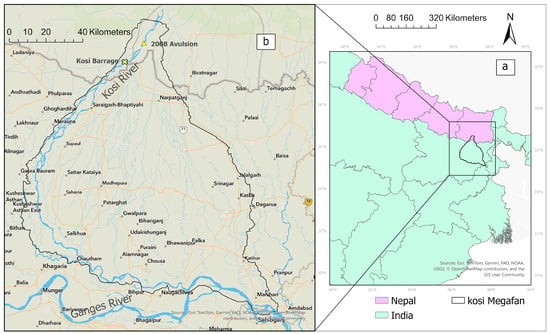
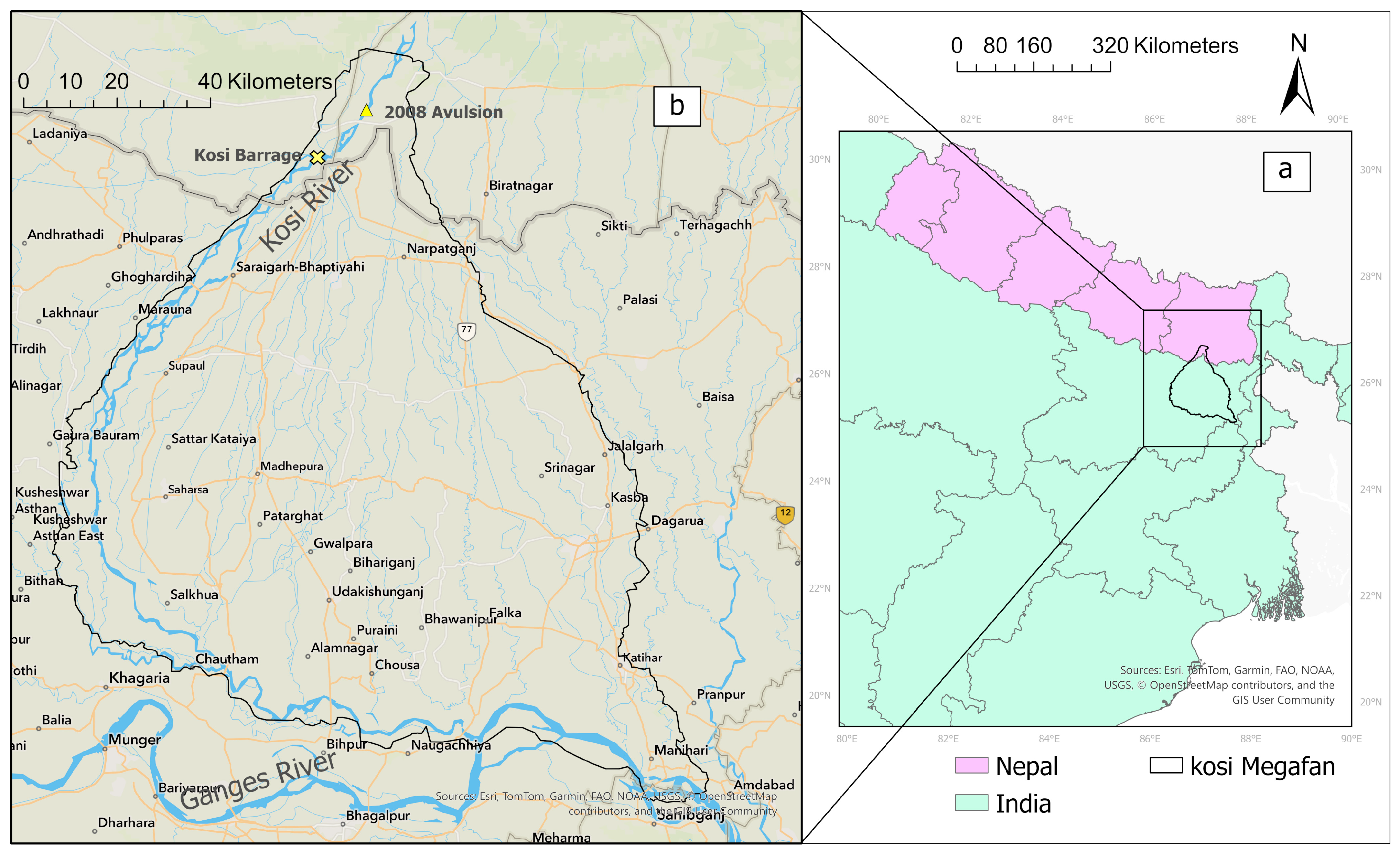
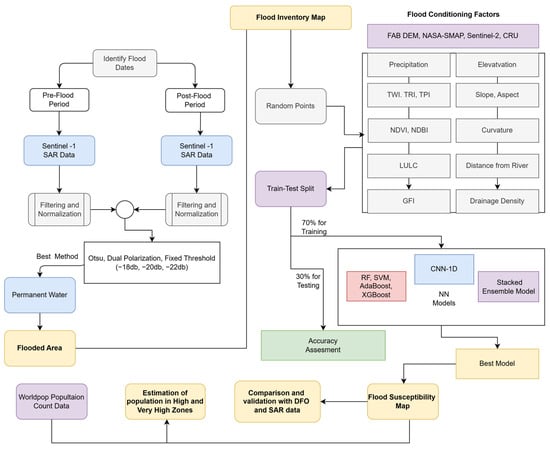
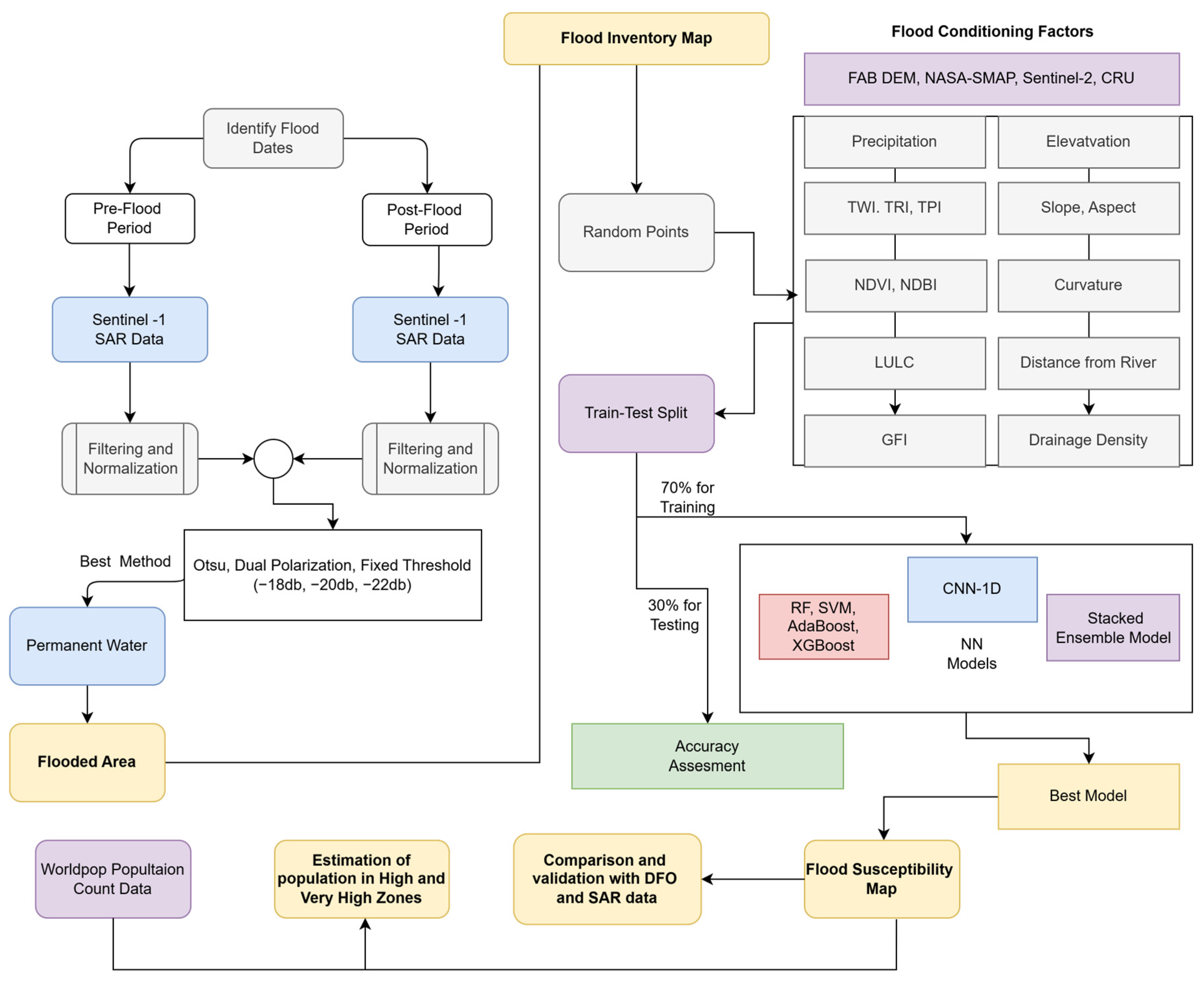
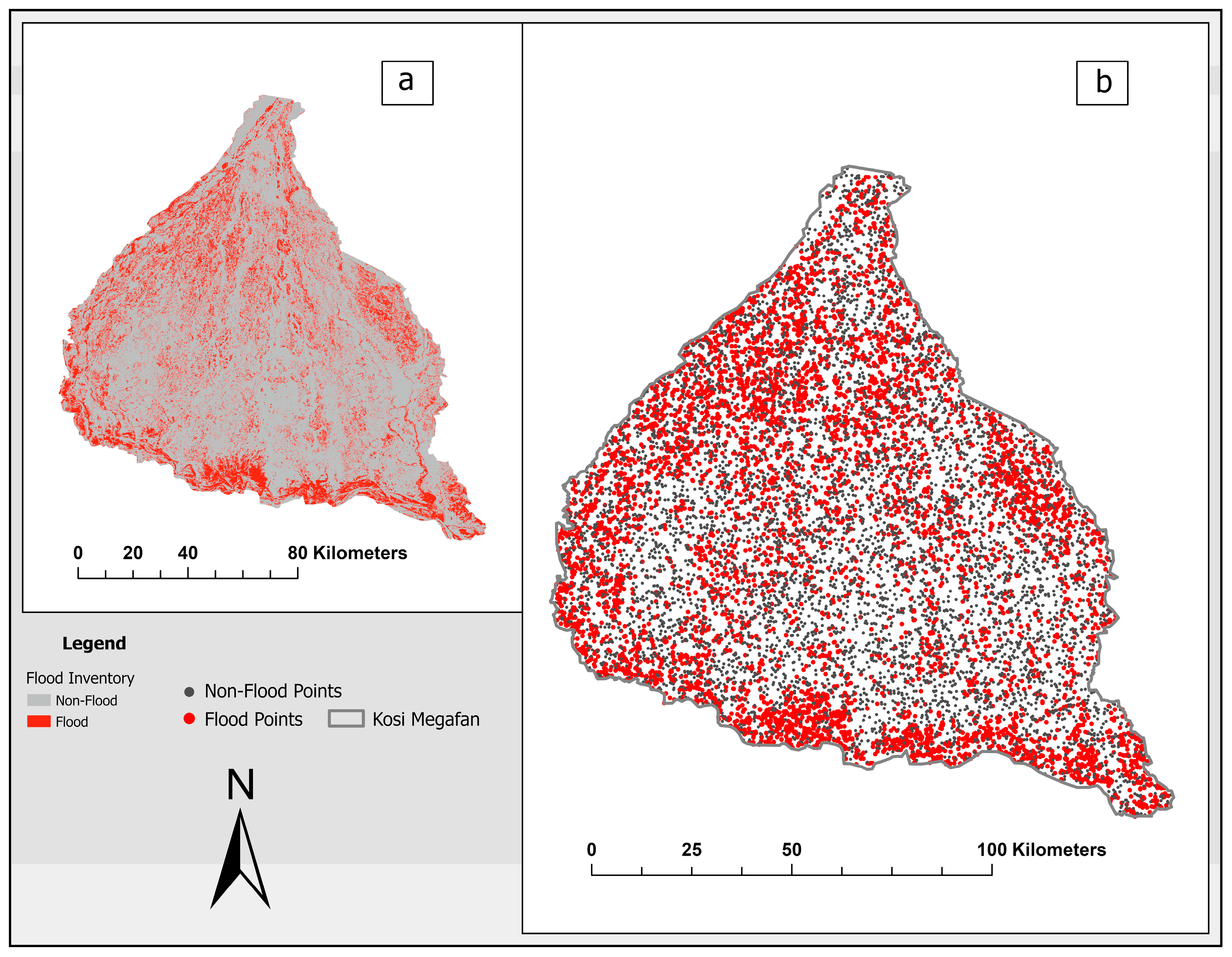
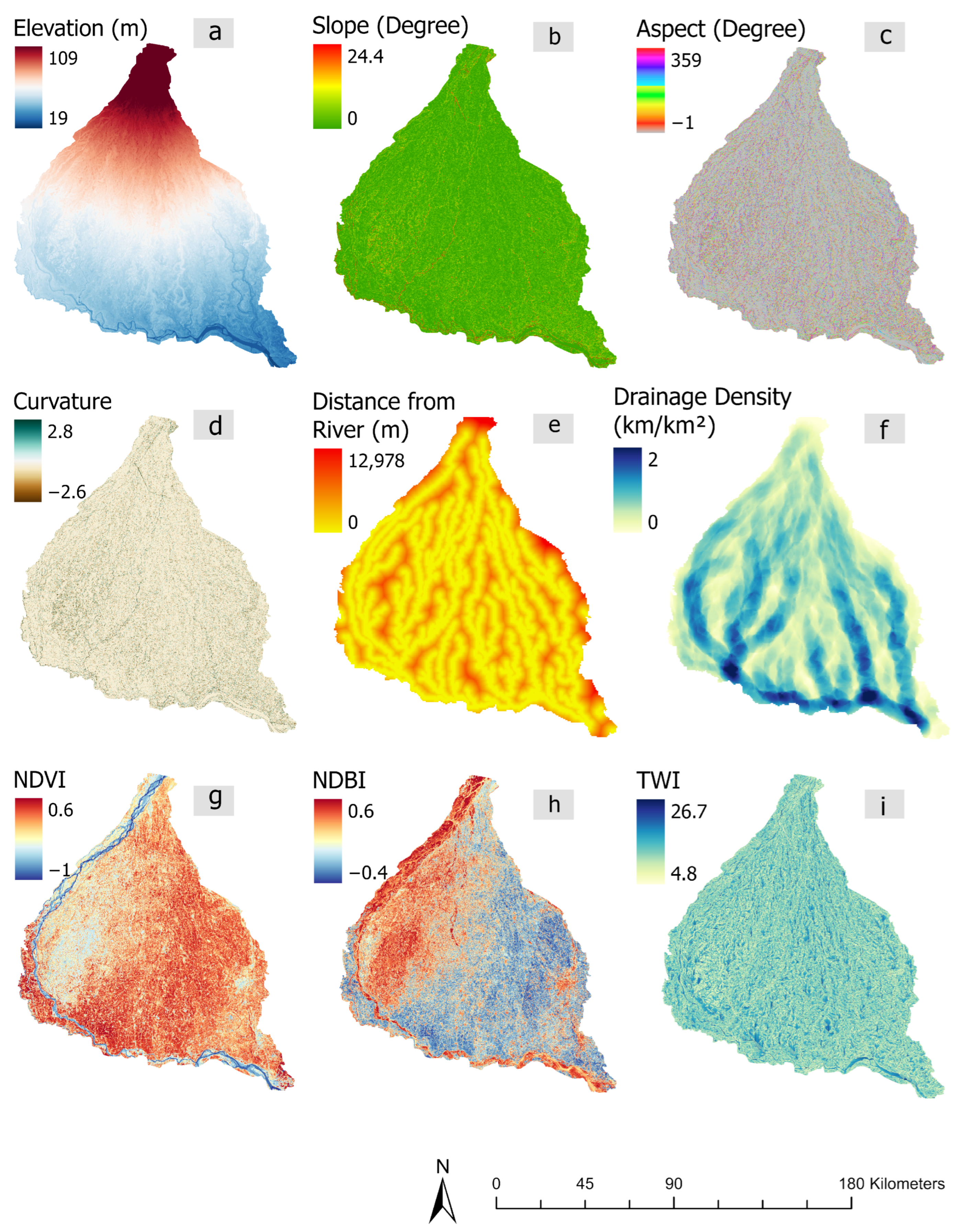
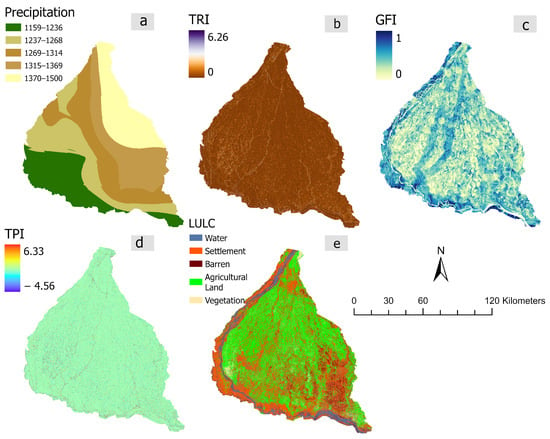
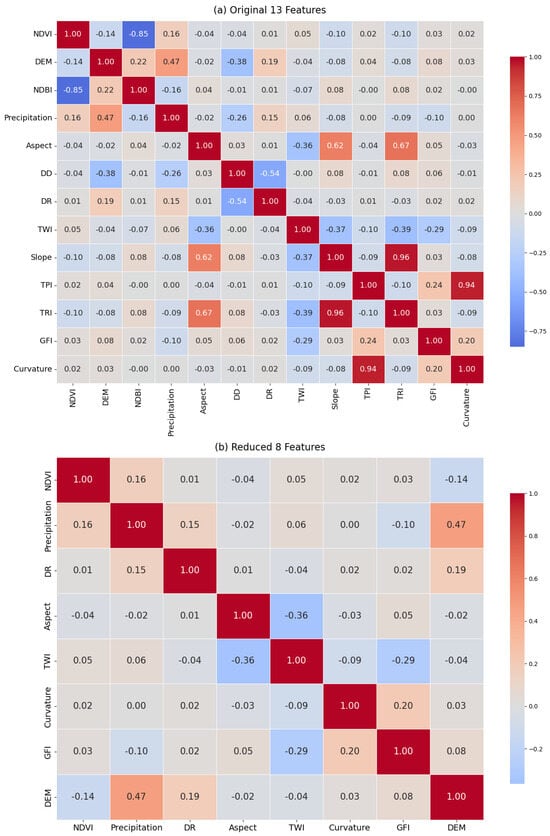
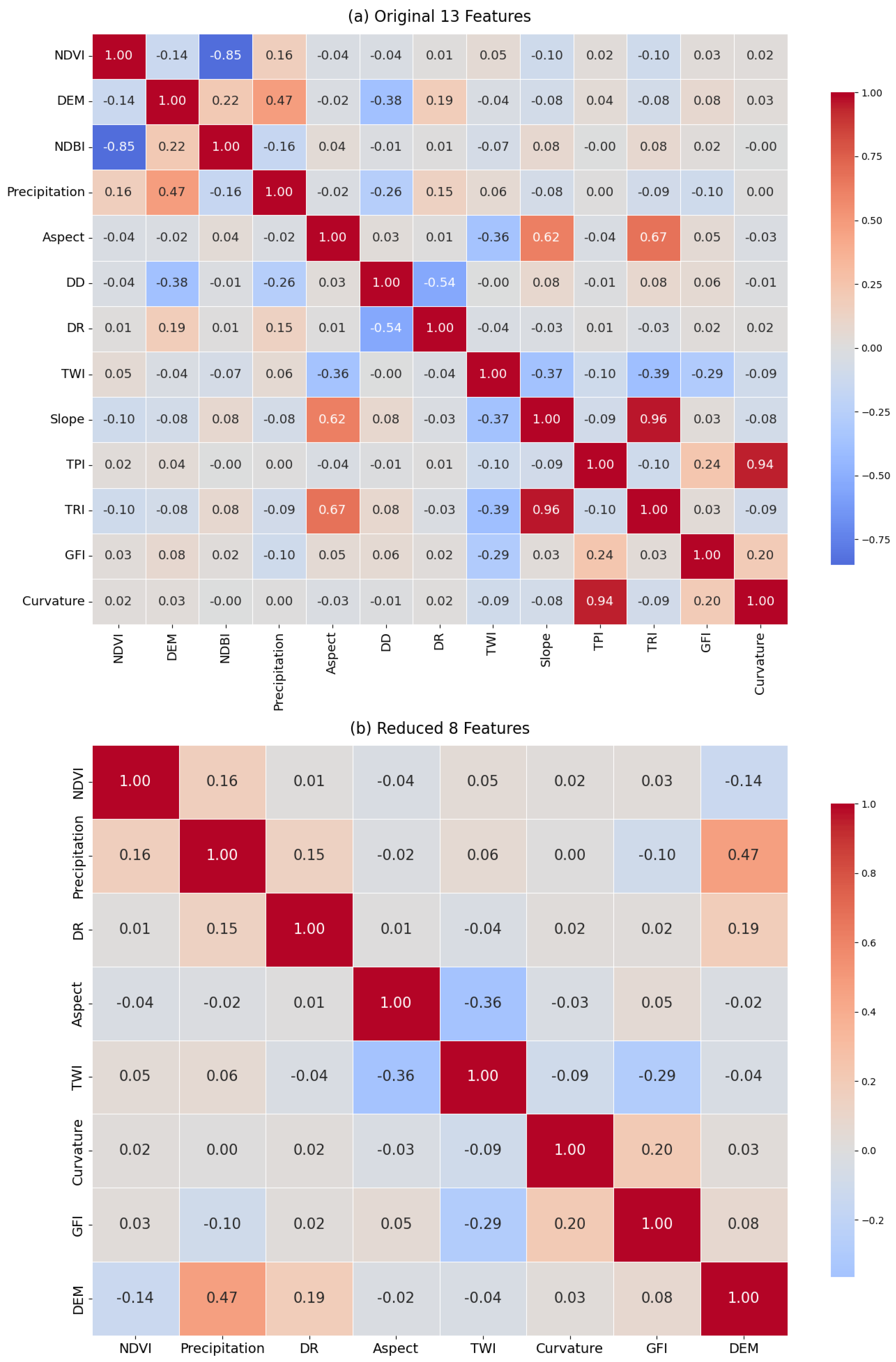
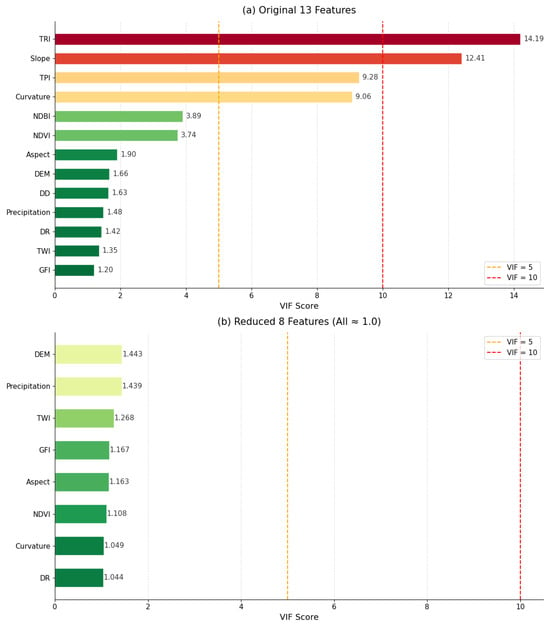
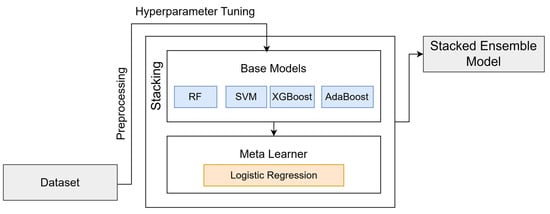
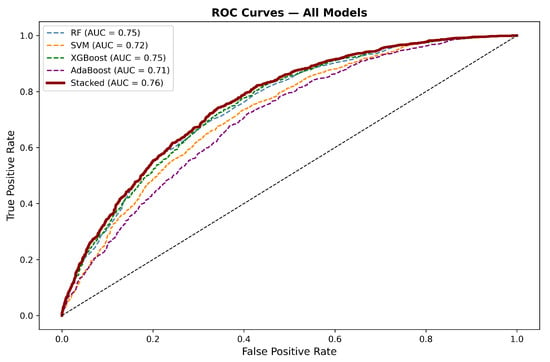
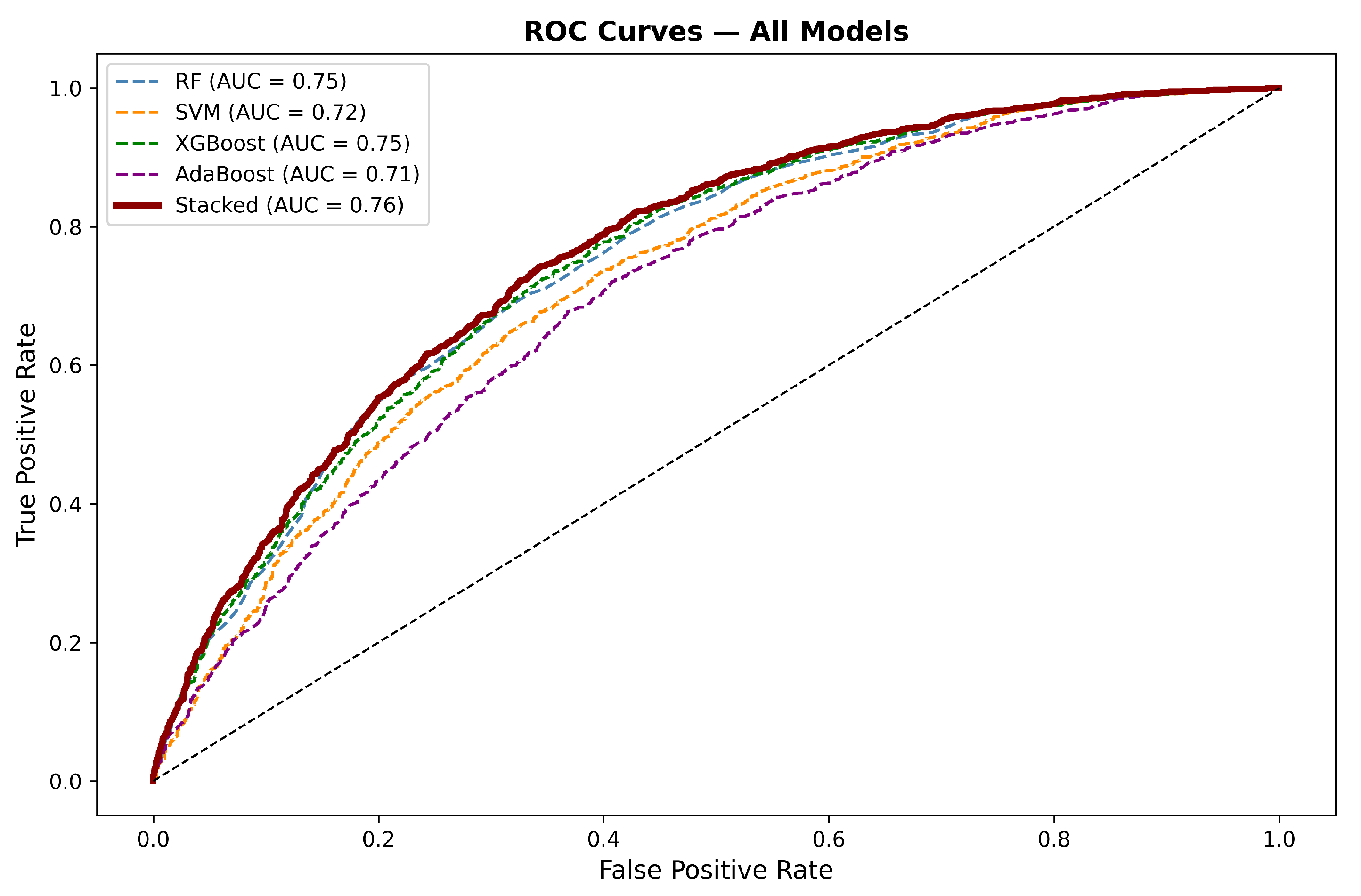
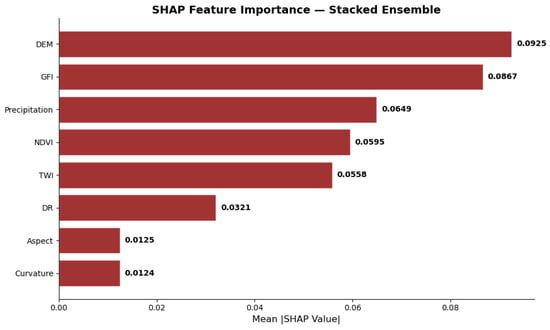
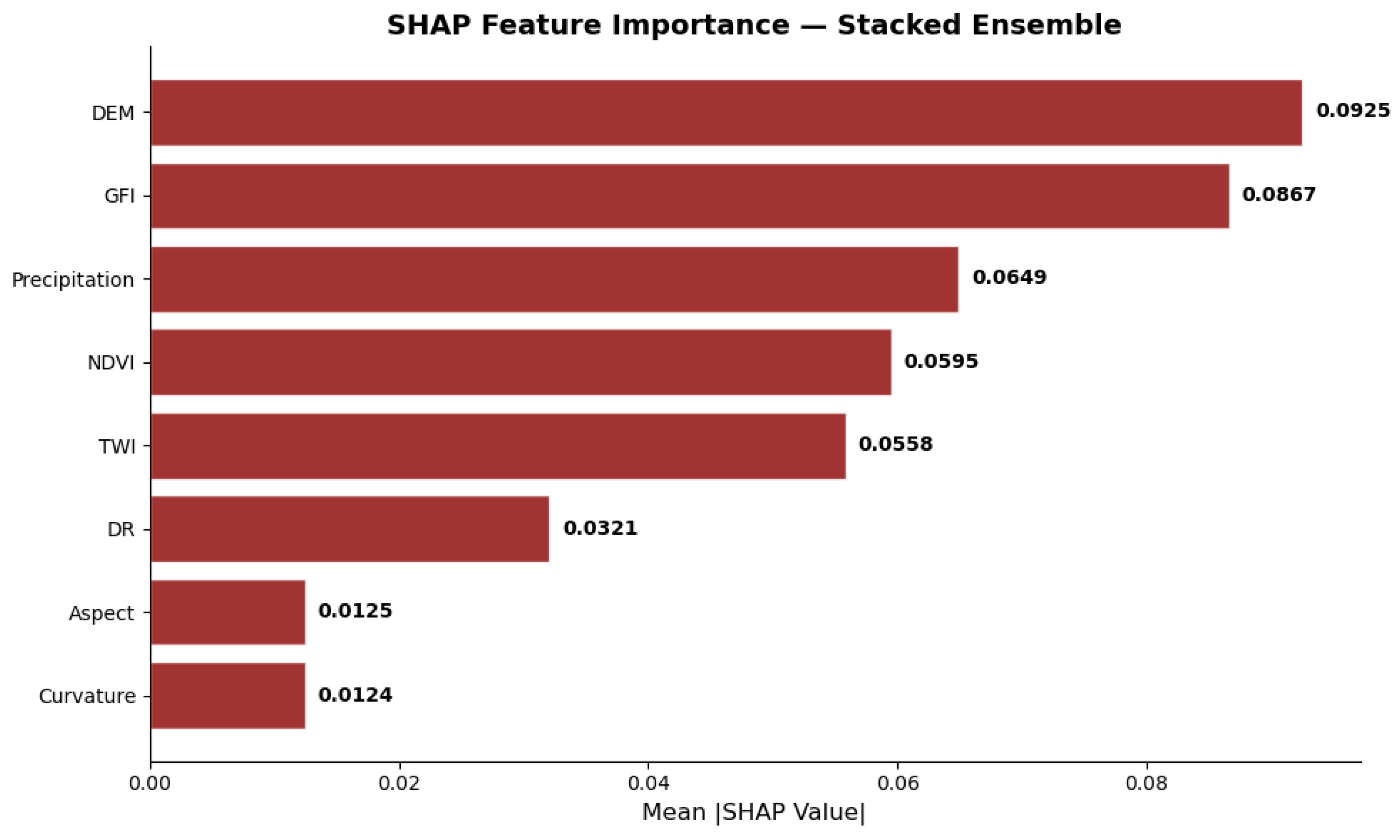
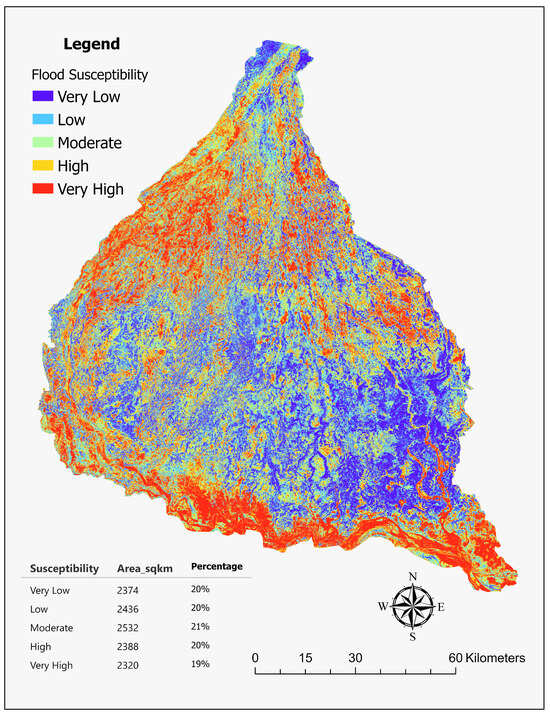
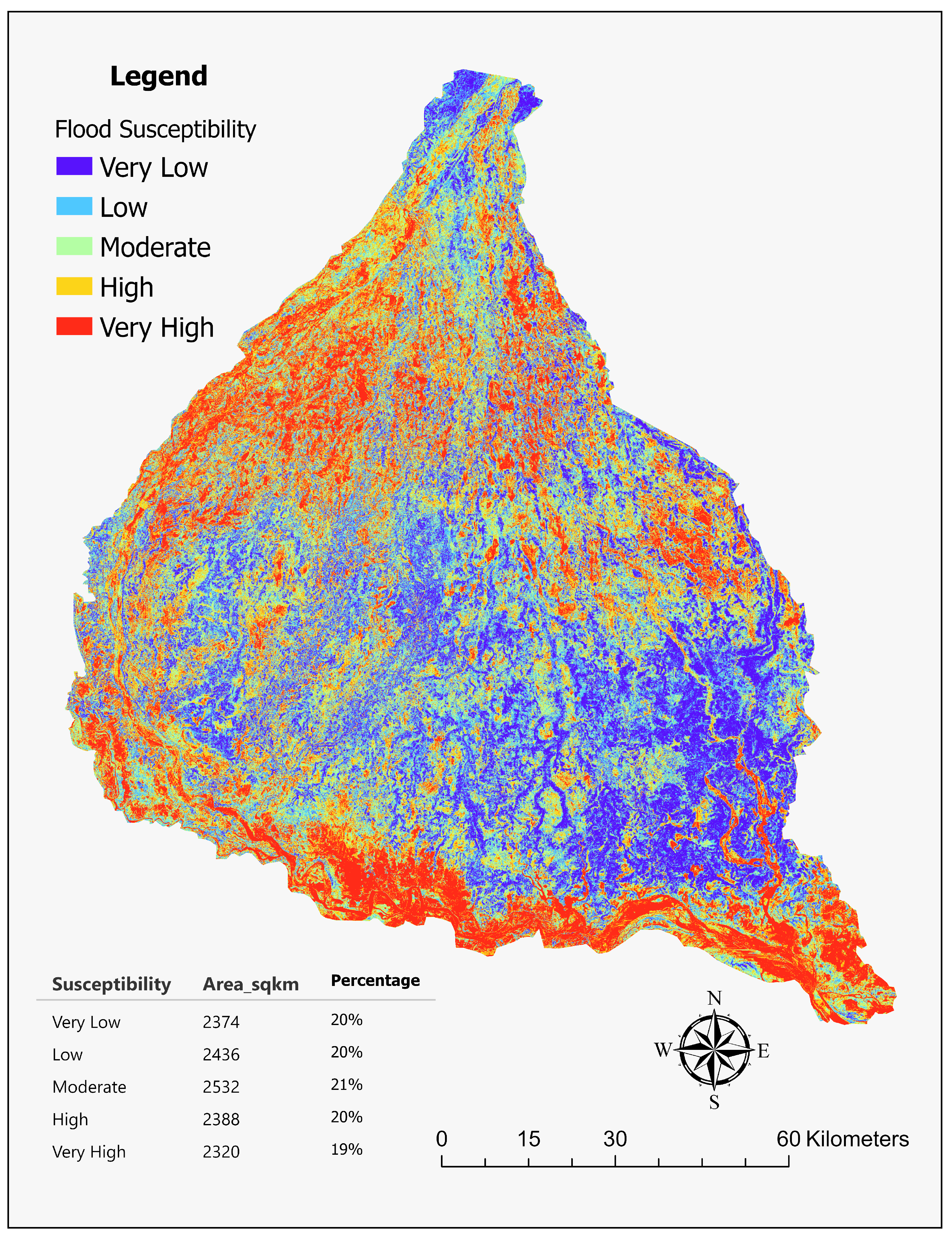
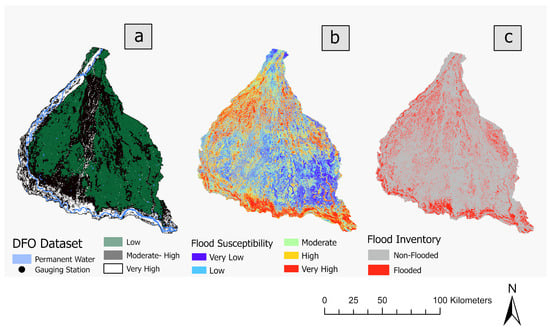
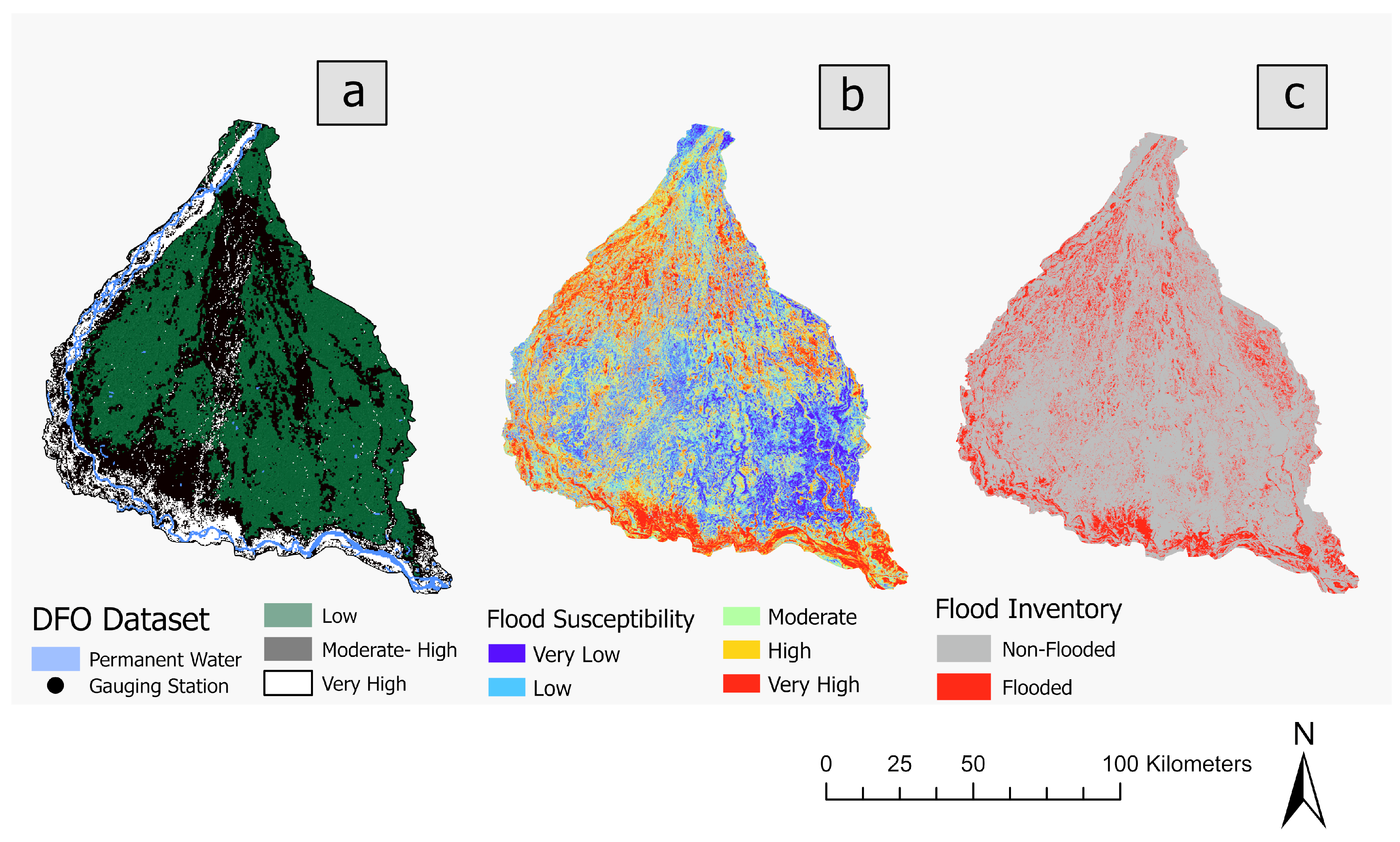
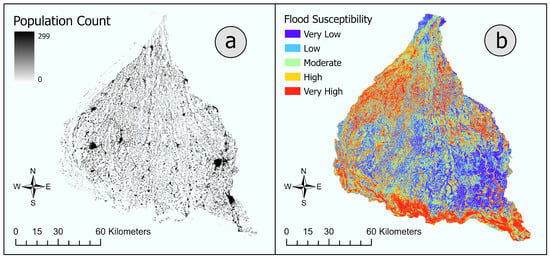
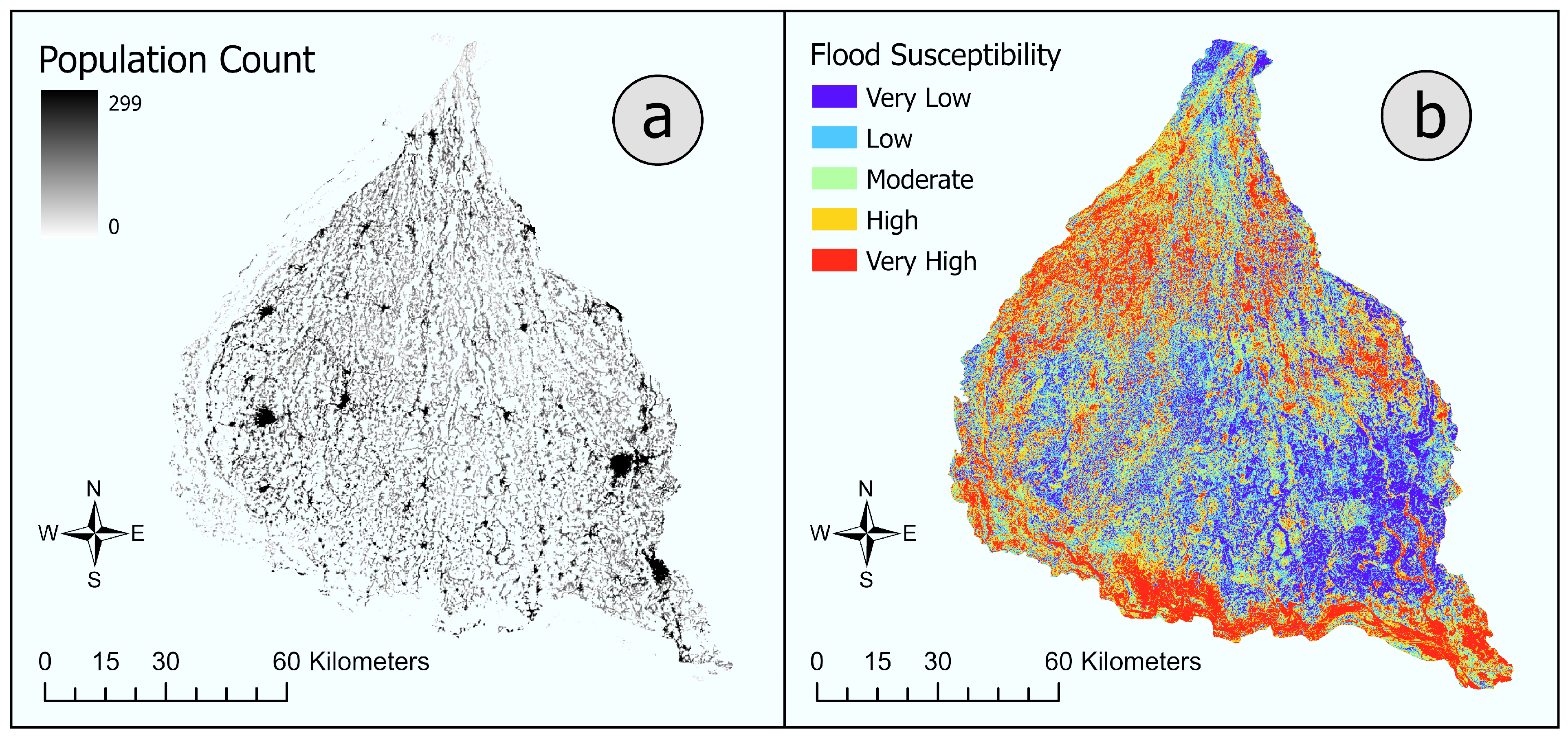
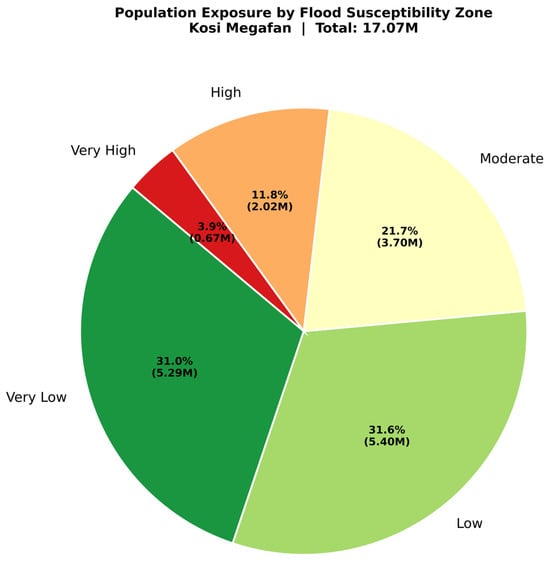
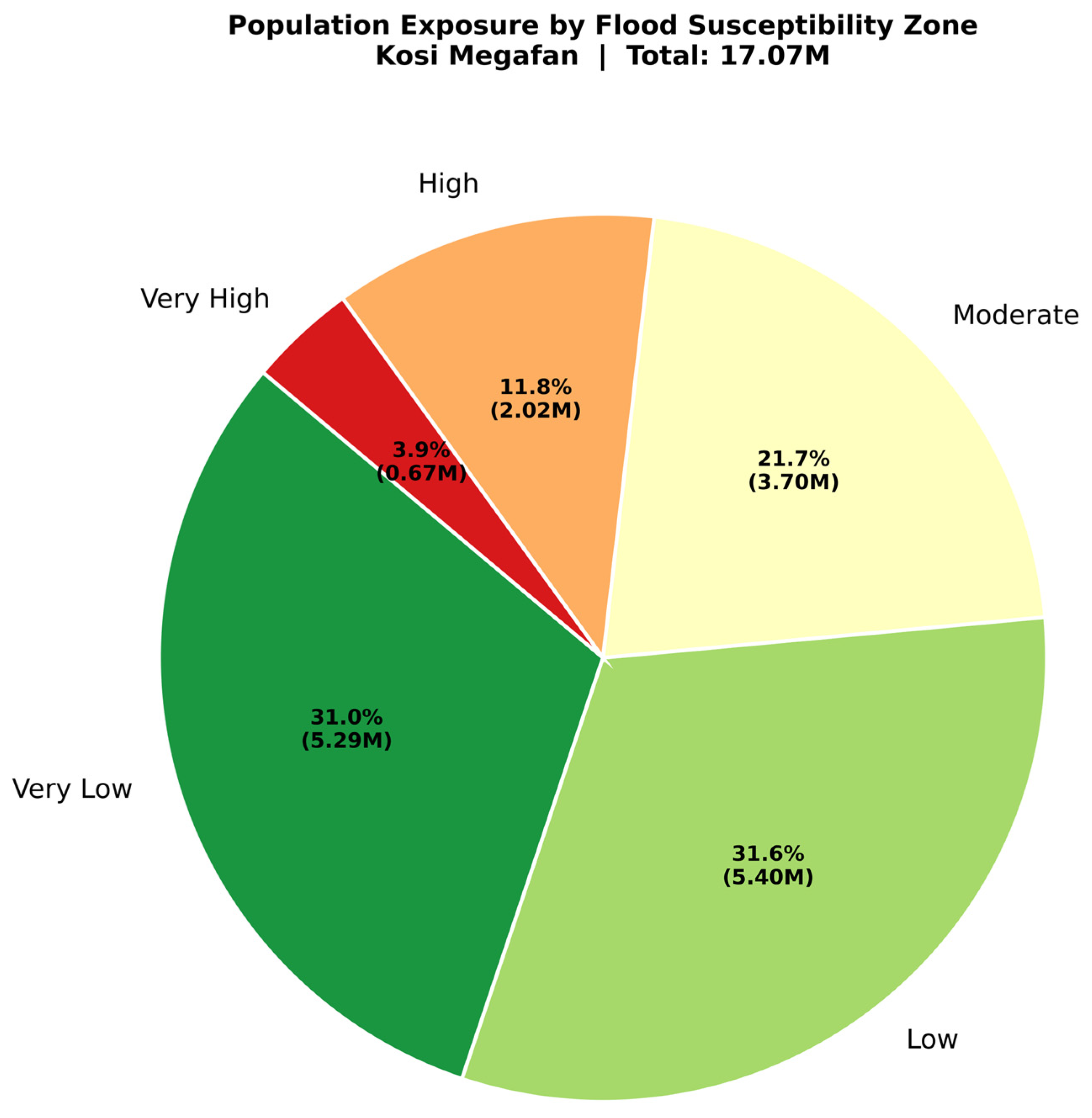

Disclaimer/Publisher’s Note: The statements, opinions and data contained in all publications are solely those of the individual author(s) and contributor(s) and not of MDPI and/or the editor(s). MDPI and/or the editor(s) disclaim responsibility for any injury to people or property resulting from any ideas, methods, instructions or products referred to in the content. |
© 2026 by the authors. Licensee MDPI, Basel, Switzerland. This article is an open access article distributed under the terms and conditions of the Creative Commons Attribution (CC BY) license.