Communication

Altimetry Data from ICESat-2 Brings Value to the Private Sector

1
Department of Geographical Sciences, University of Maryland, College Park, MD 20740, USA
2
Science Systems and Applications, Inc., Lanham, MD 20706, USA
3
Graduate School of Geography, Clark University, Worcester, MA 01610, USA
4
Cryospheric Sciences Laboratory, NASA Goddard Space Flight Center, Greenbelt, MD 20771, USA
*
Author to whom correspondence should be addressed.
Remote Sens. 2026, 18(8), 1114; https://doi.org/10.3390/rs18081114
Submission received: 20 January 2026 / Revised: 6 April 2026 / Accepted: 7 April 2026 / Published: 9 April 2026
(This article belongs to the Section Satellite Missions for Earth and Planetary Exploration)

Highlights

What are the main findings?
  • Desk review found substantial economic value of ICESat-2 data.
  • Conceptual model was used to guide valuation of data-driven impacts.
What are the implications of the main findings?
  • We show the impact of capacity-building and engagement to improve satellite uptake.
  • Private-sector uptake of satellite data across multiple sectors has substantial economic impact.

Abstract

This short communication synthesizes evidence on how the Ice, Cloud and Land Elevation Satellite-2 (ICESat-2) altimetry data are used by private sector actors and the implications for economic value creation. Using secondary research that collected and summarized information from existing data from reports, journals, websites, and databases, the work identifies 54 companies across 9 sectors leveraging ICESat-2-derived elevation, canopy height, bathymetry, and surface measurements to inform decision-making, risk assessment, and new business models. The analysis situates ICESat-2 within a broader context where freely available Earth observation data can generate substantial private- and public-sector value, potentially exceeding hundreds of billions in aggregate when scaled across industries such as geospatial services, climate management, real estate, and insurance. The paper uses a four-pillar conceptual model to guide valuation of data-driven impacts: Data Utility (intrinsic information value of altimetry and related metrics), Decision Impact (tangible economic benefits from improved models and operations), Strategic Integration (emergence of new business models and market opportunities), and Data Ecosystem Exclusivity (development of proprietary datasets and workflows that enable competitive differentiation). Empirical findings illustrate how these pillars manifest in practice. The paper seeks to connect private-sector uptake to NASA’s Earth Science to Action framework and related capacity-building efforts, highlighting pathways for broader utilization through training, tutorials, and accessible interfaces. Limitations of the study include partial sector coverage and reliance on publicly reported use cases. Future work should quantify economic returns with standardized metrics and extend the dataset to capture dynamic shifts in data products, governance, and IP development within the evolving data ecosystem.

1. Introduction

Over fifty years of Earth observation data and analyses have enormously increased humanity’s understanding of natural processes, anthropogenic impacts and geophysical variables that are otherwise difficult to observe [1,2]. Earth observation data are available and can be used to support policies and risk reduction measures. However, adoption is challenging as it requires awareness and expertise that can take years to develop, as well as organizational transformation to incorporate this data into decision-making [3]. Benefits from the use of the data take even longer to emerge [3]. The ability to predict future benefits of satellite imagery used in decision-making is critical to designing and securing ongoing support for new Earth observing sensors [4].
Quantifying the benefits of Earth observation data for the private sector is challenging given the limited description of the underlying decisions that is made available to the public. Determining the impact of scientific research has long been a challenge. Impact of science and research beyond publication and citations has long been a concern of health organizations like the Centers for Disease Control [5] and other disciplines focused on behavior modification or improved decision-making [6,7]. The Scientific Impact Framework from Ari et al. [5] can be used to assess impact across government, institutional and regulatory domains, particularly when documentation is available [8].
Previous studies focused on calculating the economic impact of remote sensing data in the private sector and broader business domains were able to document measurable benefits in innovation, market growth, cost reduction, regulation, and industrial competitiveness. Nagaraj (2022) showed the value of the free Landsat data archive in enabling new business entrants into mineral exploration, especially for smaller firms and startups [9]. A study done by the World Economic Forum found that free Earth observation data could add up to $700 billion in value by 2030 for six major industries, including those providing information for operational efficiency, risk management, and product innovation [10]. Businesses use ICESat-2 data to improve asset management, enhance decision-making, and drive the development of new services, bringing substantial value to industries while increasing productivity across sectors. Reid and Castka [11] propose that freely available, widely viewed satellite imagery may improve real-time environmental monitoring and early intervention. This could drive a substantial investment in compliance systems to ensure businesses are able to maintain their licenses to operate across a wide range of industries, including forestry, mining, agriculture, and others [11].
Here, we focus on creating a workflow that can generate information on how an Earth science mission can articulate how it is driving economic growth, which is a priority for the US Government. We use altimetry data from the ICESat-2 mission as a pilot for this workflow. It is becoming increasingly important to understand who is using NASA data, how they are using it, and how NASA and the mission can help them leverage it more effectively. Some of the businesses we identify here have built their business models on ICESat-2 data [12]. However, many more could do so if the value and capabilities of the data were more well known. NASA now has an explicit strategic objective to help potential data users identify, use and profit from Earth observation data via its program “Earth Science to Action.” New activities, including training, tutorials, guidance on notebooks, and graphical user interface methods of accessing the data are currently available through such programs as NASA’s Applied Remote Sensing Training Program (ARSET), Earth Science Data Systems, and many others [13].
The ICESat-2 spacecraft carries an Advanced Topographic Laser Altimeter System (ATLAS), which has a green (532 nm) photon-counting laser that is able to acquire very accurate elevation data over ice sheets, glaciers, sea ice, vegetation and the ocean surface. Although radar and lidar are both active, time-of-flight remote sensing technologies used to detect objects and measure distances, ATLAS’s lidar design provides high-accuracy elevation data at sampled points, which have been shown to be extremely useful to a broad community [14]. After almost eight years of service, ATLAS has gathered sufficient data to create gridded products [15], which can accurately assess changes to ice, forest canopy height and structure, and ocean sea level changes over time [16,17,18]. Previous research has shown that ICESat-2 data have documented substantial economic and societal impact, supporting diverse applications ranging from climate mitigation and marine navigation to risk management in agriculture and public safety [19]. ICESat-2 data have enabled advances in decision-making for public institutions, provided crucial inputs for operational services, and underpinned real-world use cases such as improved flood forecasting, water resource management, and forest monitoring [20,21,22].
Light et al. [8] documented the impact of ICESat-2 and its predecessor mission, ICESat, on government, policy and non-governmental decision-making, capturing metrics of data dissemination, community awareness, data-driven actions, measurable changes, and future influence. The analysis extended beyond traditional academic metrics to assess the missions’ reach and effectiveness. The study found extensive use of the data in shallow water bathymetry, climate mitigation strategies, and forest management applications [8]. Here, we use a similar research approach but focus on private-sector companies explicitly.
In this short communication, we seek to describe how ICESat-2 altimetry data are being used to support decision-making in the private sector and to articulate the value of that information for economic activity. Although not exhaustive, this approach contributes to a growing area of research that seeks to demonstrate the value of free, high quality satellite-derived environmental data to the economy and society.

2. Data and Methods

We used a desk review approach to identify 54 private sector companies that use satellite altimetry data. Please see Supplementary Materials for a full list. We began with an initial internet search to identify private sector organizations that used ICESat-2 data. Then, we conducted a targeted exploration of companies and private sector institutions, the sources that those companies link to, as well as an iterative selection and refinement process [23]. Here, we used a search engine to identify for-profit companies that used keywords relevant to laser altimetry, ICESat-2, the ATLAS instrument and derived data products such as bathymetry. We used the search terms “ICESat-2”, “ATLAS”, “satellite”, and “altimetry” along with topical applications to refine the search to identify companies that use ICESat-2 remote sensing technology. These topics, highlighted by ICESat-2 mission applications, include:
  • Forest canopy mapping.
  • Ice sheet dynamics.
  • Sea ice thickness estimation.
  • Sea level rise.
  • Inland water level monitoring.
  • Coastal bathymetry.
  • Cryospheric hazards.
  • Atmospheric profiling.
  • Geohazard mapping of landslides and volcanoes.
  • Woody biomass and carbon stocks.
  • Ocean navigation.
  • Wildland fuel mapping [24].
Once a company was identified, we looked at their website, media materials and other posted information to ensure that the company used ICESat-2 data in their business. We conducted this desk review between June 2025 and December 2025.
To expand our dataset in the absence of a definitive database, we used a snowball sampling/network sampling approach to identify partners or clients of keyword-derived companies [25]. Once a private sector user was identified, or identified by the mission’s website as an affiliated organization, its products and services were considered derivatives of ICESat-2 data, therefore its customers were considered secondary users of the data. For example, TCarta Marine uses ICESat-2 bathymetry data to create comprehensive coastal bathymetry data products. Their clients, including international engineering firms, major oil and gas companies, geophysics and hydrographic survey companies, scientific and research organizations, and a variety of other user groups, use TCarta’s products for their own purposes. We identified these secondary users through news articles, press releases, and descriptions about a company’s client base and projects on company websites. These companies were then evaluated for whether they report using the technology either directly or indirectly added to the dataset. The data were iteratively sampled until the search did not provide additional companies [26].
As a requirement to be included in the desk review (primary, secondary, or potential user), the website’s information must indicate work in applications described in the company’s website and/or a direct indication of the use of satellite altimetry technology. Indicators of relevant work include a description of their work in an application, a staff member’s bio that describes a focus on an application, press releases and news articles, or a blog post/website feature detailing work that includes an altimetry-derived product or ICESat-2 dataset [14]. Of the 54 companies, 25 were identified with a keyword search using Google, 4 were companies known to use ICESat-2 due to previous research [27], 15 were identified through secondary or partner organizations, and 10 were identified via large language models that were able to examine technical documentation to determine uses of ICESat-2 to calibrate datasets or models developed by the company.
For example, Haskoning is an international engineering consultancy firm with a focus on sustainable development for businesses and government. The “Projects” section of the Haskoning website details a 2022 flood risk study for Santam, the largest insurer in South Africa. The project states that the model created by Haskoning to investigate flood exposure in Ladysmith incorporates multiple datasets, including Digital Elevation Models (DEMs) derived from satellite imagery and altimetry [28]. This is a direct indication of an altimetry-derived product, used in a simulation model to determine the risk of overbank flooding in addition to predicting and managing flood disasters.
Once a company was identified, it was categorized into a business sector, size, and use type determined through examination of the company’s website and data products. Although some of the companies identified have extremely diverse lines of business, we focus here only on the area of the company’s business that uses satellite altimetry.

Categorizing Companies into Conceptual Model Pillars

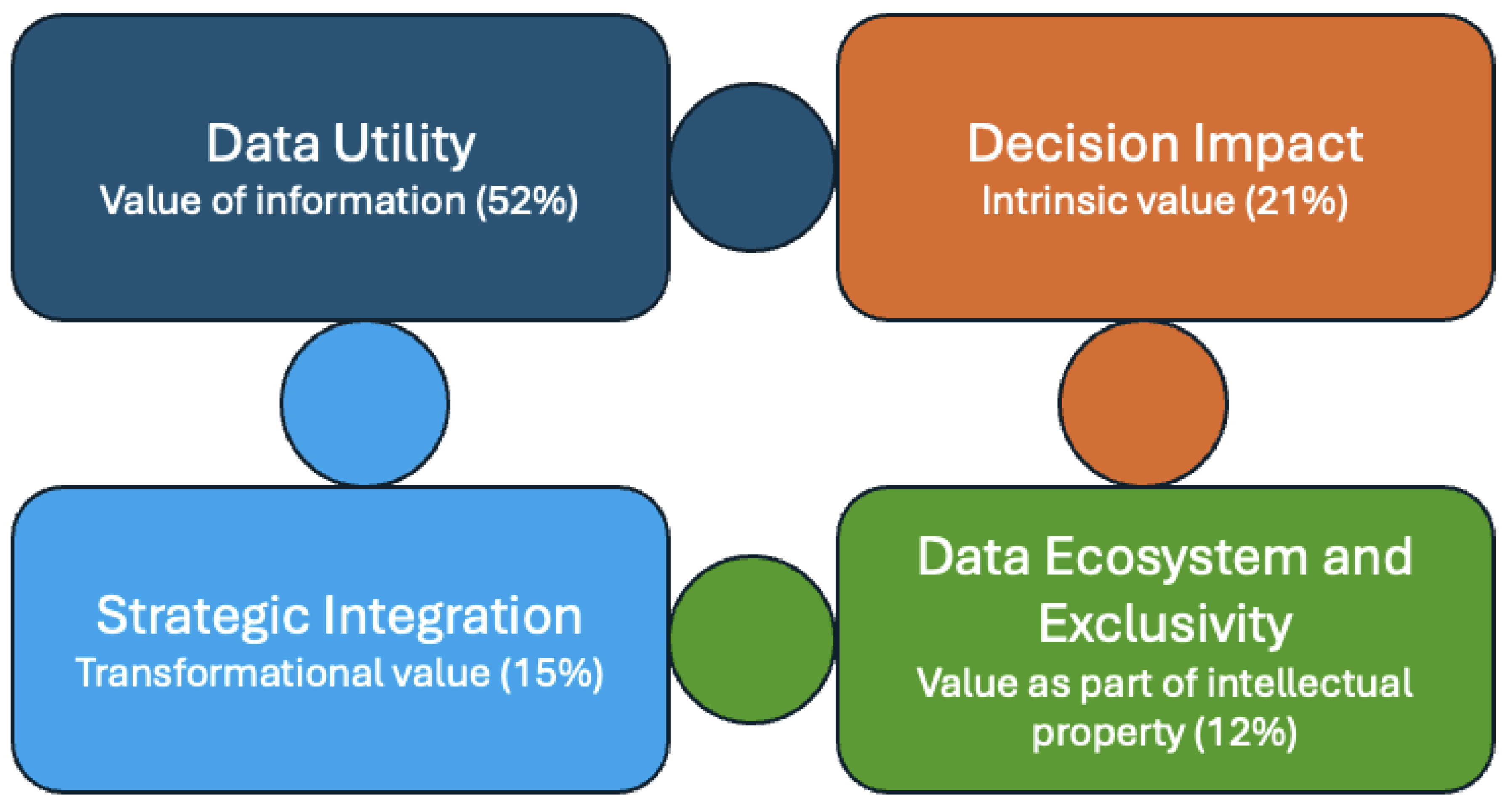
A conceptual model can be used to determine the ICESat-2 data’s impact on business decision-making, risk management, and innovation in the companies we identified. Here, we use a four-pillar conceptual model to categorize how ICESat-2 data contributes to corporate value creation in each private company use case:
  • Data Utility (Information Value): Companies use ICESat-2’s information within their work to determine specific information such as elevation, canopy, and surface height, and through its use, transforms it into value for the company [29].
  • Decision Impact (Intrinsic Value): Uses the data as a means to an end; for example, improving information that informs decisions in the business regarding logistics, impacts of extreme events, compliance reduction, or avoided losses [30].
  • Strategic Integration (Transformational Value): Companies use the data to create new business models, enable new sectors, and enhance resilience against environmental or market risks [31].
  • Data Ecosystem and Exclusivity (Development of Exclusive Intellectual Property Value): Captures firm-level value created through specialized expertise and proprietary datasets by transforming ICESat-2 data in ways that cannot be replicated elsewhere, specialized workflow integration, and service differentiation despite open data access.
Together, these four forms of value create a continuum from data as an informational asset to data-driven innovation capacity, applicable for assessing the corporate uptake of ICESat-2 data (Figure 1) [32].

3. Results

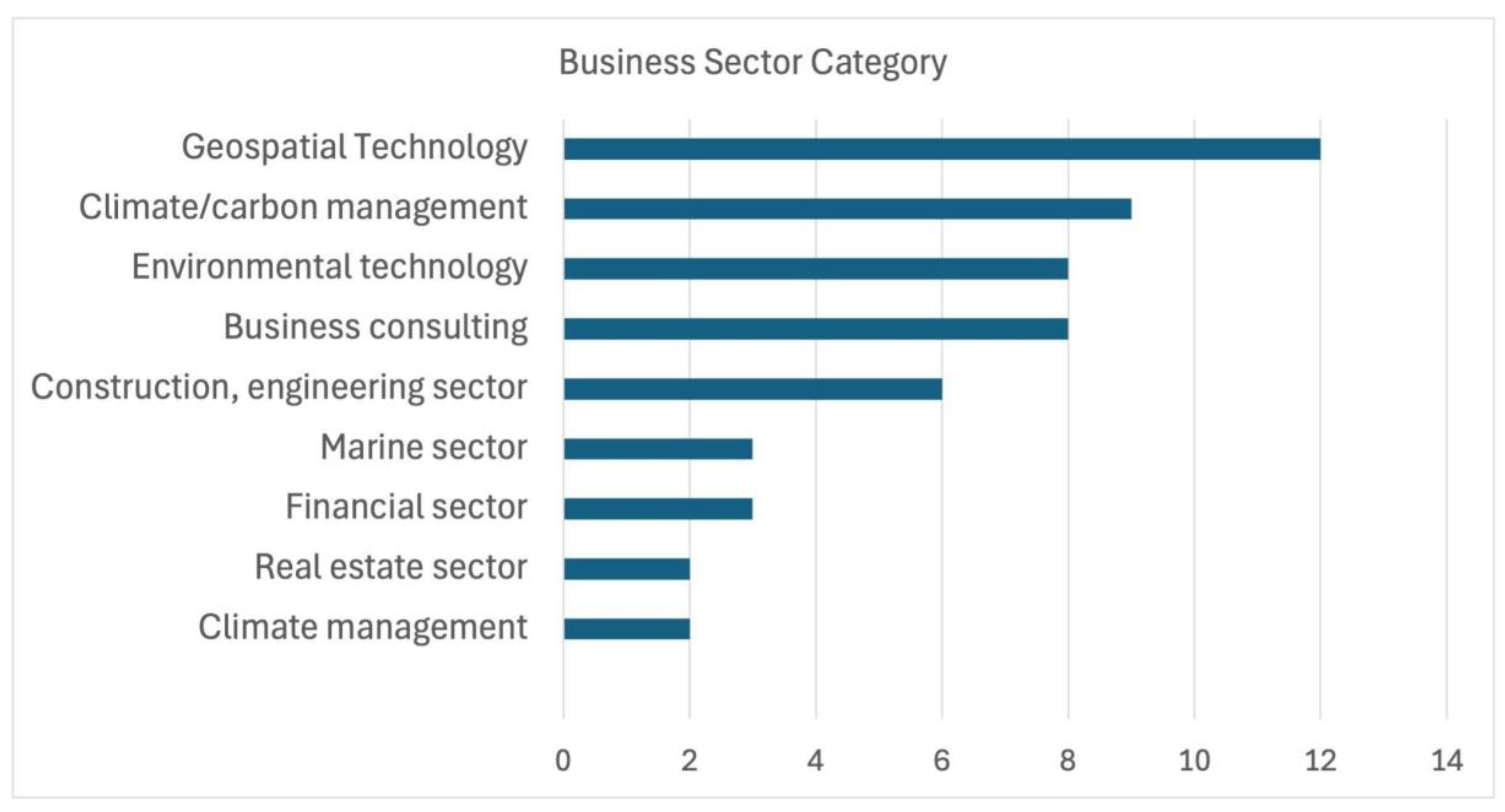
We identified 54 companies working across 9 business sectors who used satellite-derived elevation or altimetry data. The geospatial technology sector is the most common business category identified (Figure 2), which is an industry that collects, stores, analyzes and uses location-based information to support its clients’ decision-making across a wide variety of sectors. Climate management products, specifically forestry and carbon mapping, were the second most common activity. Five companies work in the business consulting sector, providing a suite of data products to a variety of businesses and individuals assessing risk and financial investments. An example of a company that uses ICESat-2 data in real estate is Rightmove, which provides large-scale property market data using a combination of individual parcel data combined with satellite elevation and climate data on flood risk and climate change. ICESat-2 data is a critical component of forest carbon estimation when used together with other LiDAR datasets, such as GEDI and airborne measurements of elevation [33,34,35]. Chloris Geospatial integrates data from the ICESat-2 mission, specifically the geolocated photon data (ATL03) and the land and vegetation height product (ATL08), to provide high-quality above-ground biomass (AGB) stock and change data to its clients.
Although ICESat-2’s primary mission is providing data on sea ice and glaciers and delivering very high-accuracy vegetation height [36], it has expanded to cover many other topics. The marine sector had far fewer companies than expected given the enormous importance of ICESat-2 to estimate sea ice and wave levels globally [16,37,38,39]. The marine sector includes ship and boat building, coastal tourism and recreation, and goods transporting and warehousing. Given the 30-to-45-day latency of the final ICESat-2 elevation observations, these sectors typically use live observations from buoys, coastal tide gauges and other data instead of satellite observations, since these can be updated rapidly and are positioned near high-traffic shipping corridors [40]. The three companies we found that use ICESat-2 data in the marine sector are TCarta Marine, which uses ICESat-2 data to support its bathymetry basemaps and navigational data packages, Fathom Global, which produces global flood maps that support risk professionals with all perils and climate data, and Noveltis, which has coastal risk management products. These companies need ICESat-2’s unique high accuracy altimetry data to provide datasets that can be validated and used in business settings.
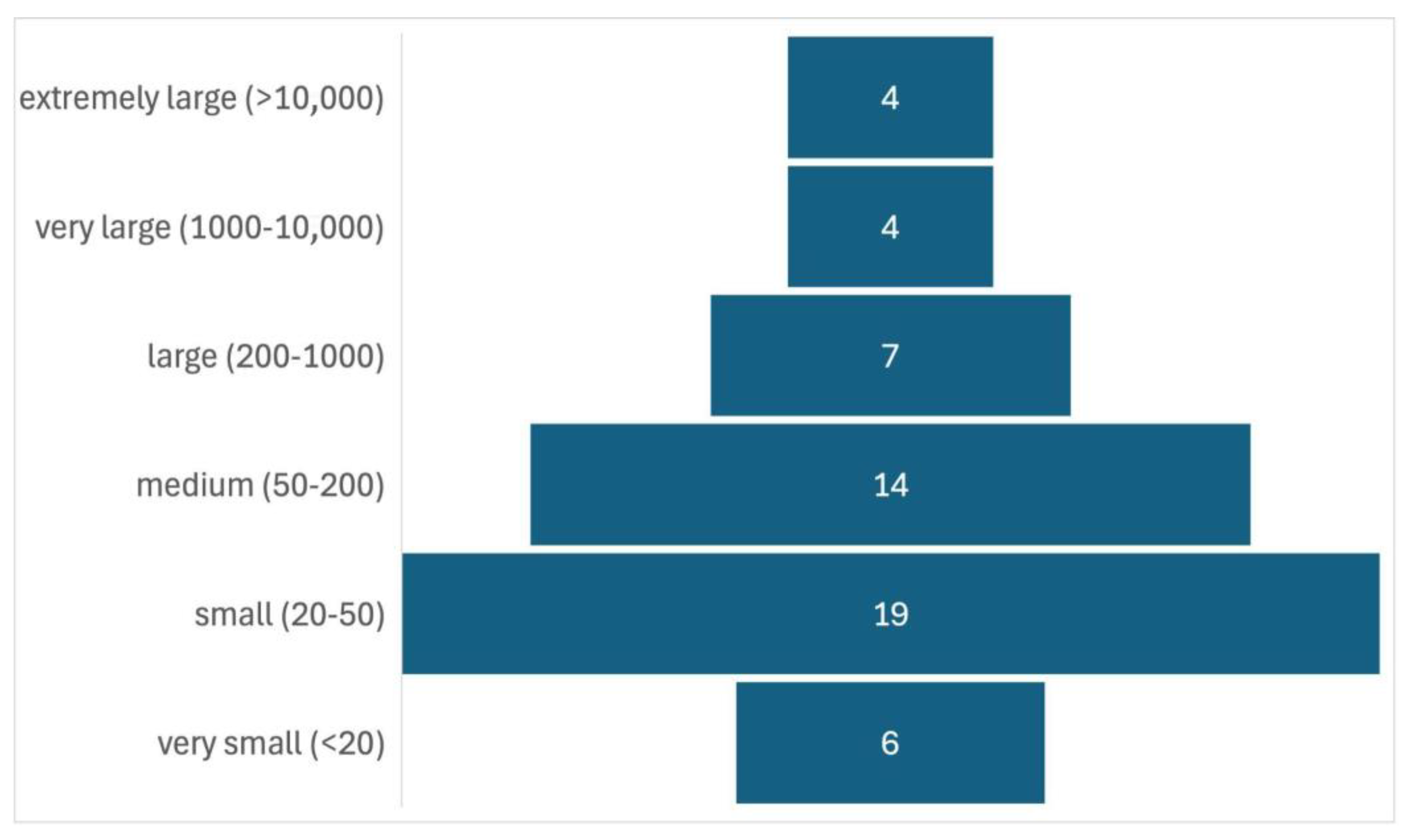
Figure 3 shows the sizes of the companies we identified as users of ICESat-2 products and derived datasets, ranging from very small companies with less than 20 employees through extremely large companies with more than 10,000 employees. The contribution of the satellite data to supporting the work that these employees do is an important part of their impact.
Less than half of the companies (44%) are exclusively US companies. However, the eight “very large” and “extremely large” companies are based in the United States, and operate internationally.

4. Discussion

This analysis identified private sector organizations and companies who have benefited from highly accurate, satellite-derived altimetry data from ICESat-2. Although our study provides only a snapshot of companies’ use of ICESat-2 data, the information helps define the value of the mission to the US economy and beyond.

4.1. Business Value of ICESat-2 Data

4.1.1. Data Utility

A little over half of the identified firms use ICESat-2 data within their work as a way to create value for their customers. They incorporate very accurate elevation data, tree canopy geometry and sea levels into a suite of applications that form the products the companies sell. For example, TerraDepth uses ICESat-2-derived sea floor bathymetry to create thematic ecological classifications of seafloor habitats. Rightmove, a company in the United Kingdom, uses ICESat-2 data within its flood modeling system to estimate the probability that a specific property in the country might flood or otherwise be affected by climate hazards. Forest carbon data, including growth rate and the carbon sequestration of existing forests, are measured using ICESat-2 canopy height data with models that incorporate field observations of tree size, height and species [21,41]. Companies such as Haskoning create information to help governments monitor and manage their carbon footprint and sustainability plans [42].

4.1.2. Decision Impact

ICESat-2 data improve the ability of companies to efficiently create flood risk and sea level rise models (Haskoning, Rightmove, ClimateX, Fathom and others) by replacing traditional high-accuracy instrument systems that measure height above sea level at points across the landscape. These hand-held instruments have varying accuracy and cost, but the most expensive part of acquiring information required for slope, aspect and land surface elevation datasets is the labor required to measure the ground surface across large areas. Until the advent of space-based altimeters, the accuracy of digital elevation data was limited, given the need for enormous numbers of observations. Flood mapping was often based on ground surveys, historical accounts of past flooding events and the use of simple hydraulic equations [43]. ICESat and ICESat-2 allowed the development of a wide range of digital elevation models [44], flood risk datasets [22], monitoring of deforestation and regulatory compliance [45] and financial products designed to improve resilience to climate extremes [46]. Another example is Fugro, who used the active green Lidar point cloud analysis to evaluate vertical uncertainties within their thematic ecological classification of seafloor habitat for Pacific countries.

4.1.3. Strategic Integration for New Business Models

Satellite data from ICESat-2 has enabled new business models, which brings significant value to the US and international economy. We identified nine companies working in the carbon voluntary market and data products that support climate risk management. Vibrant Planet, for example, builds advanced risk monitoring and decision support applications for carbon storage investments built on a data and modeling infrastructure that assembles thousands of data sets, runs millions of simulations, and packages land management insights for decision makers. Elevation datasets derived from ICESat-2 and other altimeters are critical for these data products. Business models around forest management and carbon sequestration rely upon low-cost, government-provided remote sensing datasets to ensure the feasibility of the business model.
We identified 12 companies using altimetry data within forest management analyses across a diverse number of applications. For example, Landvest sells information derived from altimetry data to real estate brokers interested in identifying high-value timberland. Previscio provides risk assessment and decision support information to government agencies responsible for determining evacuation and emergency response plans.
The Seven Islands Land Company directly manages large tracts of Maine forests, with a focus on sustainability, including carbon sequestration and creating healthy and productive forests. The forestry and land use segment is the largest contributor to the voluntary carbon market, which was estimated to be worth $1.6 billion in September 2025 [47]. Seven Islands uses ICESat-2 to rapidly estimate the carbon in the forest, a technique that was validated with traditional forest inventory data via the NASA Carbon Monitoring System [48]. They continue to use the data to reduce expenses and improve ongoing analyses of the effectiveness of their management strategies.

4.1.4. Data Ecosystem and Exclusivity

ICESat-2 provides critical data for strategic decision-making and is used together with local data to create proprietary datasets used within businesses and sold as a product to other businesses. Proprietary datasets provide a competitive advantage, enabling the business to differentiate itself and maintain a leading market position. This includes combining public information from Earth observations with confidential data like customer lists, environmental observations, and processes of change to create new datasets, as well as unique products such as patented software or a secret algorithm. The value lies in their ability to drive revenue, enhance reputation, and protect the company’s innovations from competitors. For example, Blue Sky Analytics creates and provides proprietary environmental datasets to businesses, governments, and other organizations on air and water quality, heatwaves, and flood risk. Terrabiotics automatically fuses multiple sources of satellite remote sensing data to provide analytical services for other companies tracking natural resource supply chains, assets and operations. The data are used to help clients with climate risk assessment, sustainability, and improved decision-making. Similarly, ClimateCheck uses satellite altimetry from ICESat-2, optical data, and climate models to create unique reports that assess a property’s exposure to risks like flood, fire and heat. These reports are used in real estate listings to advise on property investments, insurance and urban planning.

4.2. ICESat-2 Characteristics That Limit Private Sector Value

ICESat-2 photon cloud data have extremely high vertical accuracy and allow for the creation of a three-dimensional model of the land surface, but only revisit each location on the planet every 91 days. This is sufficient for slow-moving phenomena such as tree growth or changes in ice sheets, but is not appropriate for fast-moving environmental hazards such as floods that require rapid repeated observations. Dense clouds and smoke also attenuate the laser accuracy, reducing the number of photons that return to the sensor [49]. Despite these limitations, this research has shown that when combined with other observations and models, the data have great value for the community.

4.3. NASA’s Earth Science to Action Framework

NASA has recently reaffirmed its focus on its Earth Science to Action framework, which includes efficiency, private sector collaboration and intra-agency coordination to reduce duplication of effort. NASA has made strides to increase engagement with the private sector through industry workshops and training, specifically engaging with finance and insurance professionals on how to leverage NASA’s Earth observations to create pre/post disaster products, develop resources for risk evaluation and enhance property loss to natural disasters [13]. NASA has recently begun the INNOVATE program, which focuses on impactful and novel uses of NASA Earth observations and models for value-added applications, technology and societal benefits. The program seeks to rapidly advance Earth observation applications for U.S. economy growth, national security and operational decision-making. National security priorities include predicting risks associated with air quality, droughts, landslides, floods, food security, wildfires, and other threats. Applications that support economic growth, national security and safety are also critical elements.

4.4. Limitations and Future Work

In this analysis, we focused only on information available publicly about the use of ICESat-2 data by private companies. Online searches carry bias because they provide the most popular and public data, as well as data that cater to user algorithms. The analysis does not provide insight into the full value of each company to the economy, since we focus only on the part of a business that is informed by satellite altimetry data. The results are from one time point only, and are likely to capture only part of the environmental sectors relying on ICESat-2 data. Future work should quantify economic returns with standardized metrics and extend the dataset to capture dynamic shifts in data products, governance, and development of intellectual property within an evolving data ecosystem. Future work can also qualify the impact of ICESat-2 data on managers, employees, and consumers.

5. Conclusions

This paper presented a method and analytical model that describe the economic impact of the ICESat-2 mission. We found that freely available ICESat-2 data not only inform academic research but also provide societal and economic value. As the data record lengthens, the utility and capabilities of Earth observing networks expand, and the increase in data accessibility through tutorials and training will increase the value of the information over time. Additional space-borne lidar missions are being planned, including the Earth Dynamics Geodetic Explorer (EDGE) mission, to be launched around 2030. Additional observations and capabilities will enhance the utility of these data to even more stakeholders.

Supplementary Materials

The following supporting information can be downloaded at: https://www.mdpi.com/article/10.3390/rs18081114/s1.

Author Contributions

Conceptualization, M.E.B. and A.N.; methodology, M.E.B. and A.P.; formal analysis, M.E.B.; writing—original draft preparation, M.E.B. and A.N.; writing—review and editing, D.F.; visualization, M.E.B.; funding acquisition, D.F. All authors have read and agreed to the published version of the manuscript.

Funding

This research was funded by NASA Goddard Space Flight Center (80NSSC23K1494).

Data Availability Statement

All data created in this study are available in the Supplementary Materials.

Conflicts of Interest

Author Aimee Neeley was employed by the company Science Systems and Applications, Inc. Author Molly E. Brown was affiliated with 6th Grain Corporation. The remaining authors declare that the research was conducted in the absence of any commercial or financial relationships that could be construed as a potential conflict of interest.

References

  1. Tatem, A.J.; Goetz, S.J.; Hay, S.I. Fifty Years of Earth Observation Satellites: Views from above Have Lead to Countless Advances on the Ground in Both Scientific Knowledge and Daily Life. Am. Sci. 2008, 96, 390–398. [Google Scholar] [CrossRef]
  2. Young, O.R.; Onoda, M. Satellite Earth Observations in Environmental Problem-Solving. In Satellite Earth Observations and Their Impact on Society and Policy; Springer: Singapore, 2017; pp. 3–27. ISBN 9789811037122. [Google Scholar]
  3. Tassa, A. The Socio-Economic Value of Satellite Earth Observations: Huge, yet to Be Measured. J. Econ. Policy Reform 2020, 23, 34–48. [Google Scholar] [CrossRef]
  4. Maier, M.W.; Wendoloski, E.; Houston, D.; Wilson, J. Launch and Production Schedule Modeling for Sustained Earth Observation Constellations. In 2018 IEEE Aerospace Conference; IEEE: New York, NY, USA, 2018. [Google Scholar]
  5. Ari, M.D.; Iskander, J.; Araujo, J.; Casey, C.; Kools, J.; Chen, B.; Swain, R.; Kelly, M.; Popovic, T. A Science Impact Framework to Measure Impact beyond Journal Metrics. PLoS ONE 2020, 15, e0244407. [Google Scholar] [CrossRef]
  6. Mervis, J. Peer Review. Beyond the Data. Science 2011, 334, 169–171. [Google Scholar] [CrossRef]
  7. Fielding, J.E.; Teutsch, S.M. So What? A Framework for Assessing the Potential Impact of Intervention Research. Prev. Chronic Dis. 2013, 10, 120160. [Google Scholar] [CrossRef]
  8. Light, S.L.; Brown, M.E.; Neeley, A.R.; Neumann, T.A. Applying the Science Impact Framework to Understand Real-World Applications and Impacts of ICESat and ICESat-2 Data on Decision-Making. Remote Sens. Appl. Soc. Environ. 2025, 39, 101669. [Google Scholar] [CrossRef]
  9. Nagaraj, A. The Private Impact of Public Data: Landsat Satellite Maps Increased Gold Discoveries and Encouraged Entry. Manag. Sci. 2022, 68, 564–582. [Google Scholar] [CrossRef]
  10. Loubert, B.; Fawcett, B.; Burdett, H. Earth Observation Will Unlock Huge Economic and Climate Value for These 6 Industries by 2030; World Economic Forum: Geneva, Switzerland, 2024. [Google Scholar]
  11. Reid, J.; Castka, P. The Impact of Remote Sensing on Monitoring and Reporting—The Case of Conformance Systems. J. Clean. Prod. 2023, 393, 136331. [Google Scholar] [CrossRef]
  12. Ravichandran, A. Why “Science-as-a-Service” Doesn’t Work for Earth Science. Available online: https://newsletter.terrawatchspace.com/why-science-as-a-service-doesnt-work-for-earth-science/ (accessed on 11 November 2025).
  13. Brown, M.; Neeley, A.; Neumann, T. Data to Decisions: Changing Priorities for Earth Observations. Eos 2024, 105. [Google Scholar] [CrossRef]
  14. Brown, M.E.; Arias, S.D.; Chesnes, M. Review of ICESat and ICESat-2 Literature to Enhance Applications Discovery. Remote Sens. Appl. Soc. Environ. 2023, 29, 100874. [Google Scholar] [CrossRef]
  15. Neuenschwander, A.; Jelly, B.; Guenther, E.; Robbins, J. Ice, Cloud, and Land Elevation Satellite 2 (ICESat-2) Algorithm Theoretical Basis Document (ATBD) for Land-Vegetation Gridded Products (ATL18/ATL28), 1st ed.; National Snow and Ice Data Center (NSIDC): Boulder, CO, USA, 2026. [Google Scholar]
  16. Lu, X.; Hu, Y.; Yang, Y.; Vaughan, M.; Palm, S.; Trepte, C.; Omar, A.; Lucker, P.; Baize, R. Enabling Value Added Scientific Applications of ICESat-2 Data With Effective Removal of Afterpulses. Earth Space Sci. 2021, 8, e2021EA001729. [Google Scholar] [CrossRef]
  17. Lee, A.; Scarth, P.; Gerrand, A. A New Dataset for Forest Height across Australia: Pilot Project to Calibrate ICESat Laser Data with Airborne LiDAR. In Innovations in Remote Sensing and Photogrammetry; Lecture Notes in Geoinformation and Cartography; Springer: Berlin/Heidelberg, Germany, 2009; pp. 37–50. ISBN 9783540882657. [Google Scholar]
  18. Kacimi, S.; Kwok, R. Two Decades of Arctic Sea-Ice Thickness from Satellite Altimeters: Retrieval Approaches and Record of Changes (2003–2023). Remote Sens. 2024, 16, 2983. [Google Scholar] [CrossRef]
  19. Brown, M.E.; Delgodo Arias, S.; Neumann, T.; Jasinski, M.F.; Posey, P.; Babonis, G.; Glenn, N.F.; Birkett, C.M.; Escobar, V.M.; Markus, T. Applications for ICESat-2 Data: From NASA’s Early Adopter Program. IEEE Geosci. Remote Sens. Mag. 2016, 4, 24–37. [Google Scholar] [CrossRef]
  20. Jiang, F.; Zhao, F.; Ma, K.; Li, D.; Sun, H. Mapping the Forest Canopy Height in Northern China by Synergizing ICESat-2 with Sentinel-2 Using a Stacking Algorithm. Remote Sens. 2021, 13, 1535. [Google Scholar] [CrossRef]
  21. Mulverhill, C.; Coops, N.C.; Hermosilla, T.; White, J.C.; Wulder, M.A. Evaluating ICESat-2 for Monitoring, Modeling, and Update of Large Area Forest Canopy Height Products. Remote Sens. Environ. 2022, 271, 112919. [Google Scholar] [CrossRef]
  22. Vernimmen, R.; Hooijer, A.; Akmalia, R.; Fitranatanegara, N.; Mulyadi, D.; Yuherdha, A.; Andreas, H.; Page, S. Mapping Deep Peat Carbon Stock from a LiDAR Based DTM and Field Measurements, with Application to Eastern Sumatra. Carbon Balance Manag. 2020, 15, 4. [Google Scholar] [CrossRef]
  23. Barbieri, M.; Catania, G.; Hayter, M.; Aleo, G.; Zanini, M.; Sasso, L.; Bagnasco, A. Desk Review as a Methodological Approach for Identifying Policies and Gray Literature: A Case Study. Nurs. Outlook 2025, 73, 102547. [Google Scholar] [CrossRef]
  24. NASA NASA ICEsat-2 Applied Users. Available online: https://icesat-2.gsfc.nasa.gov/applied-user (accessed on 23 March 2026).
  25. Parker, C.; Scott, S.; Geddes, A. Snowball Sampling. In SAGE Research Methods Foundations; SAGE Publications Ltd.: London, UK, 2019. [Google Scholar] [CrossRef]
  26. Yoon, C.; Moon, S.; Lee, H. Symbiotic Relationships in Business Ecosystem: A Systematic Literature Review. Sustainability 2022, 14, 2252. [Google Scholar] [CrossRef]
  27. Brown, M.E.; Mitchell, C.; Halabisky, M.; Gustafson, B.; do Rosario Gomes, H.; Goes, J.I.; Zhang, X.; Campbell, A.D.; Poulter, B. Assessment of the NASA Carbon Monitoring System Wet Carbon Stakeholder Community: Data Needs, Gaps, and Opportunities. Environ. Res. Lett. 2023, 18, 084005. [Google Scholar] [CrossRef]
  28. Haskoning Consultants. Ladysmith Flood Risk Study; Santam Insurance Company: Ladysmith, South Africa, 2022. [Google Scholar]
  29. Macauley, M.K. The Value of Information: Measuring the Contribution of Space-Derived Earth Science Data to Resource Management. Space Policy 2006, 22, 274–282. [Google Scholar] [CrossRef]
  30. Mashalah, H.A.; Hassini, E.; Gunasekaran, A.; Bhatt Mishra, D. The Impact of Digital Transformation on Supply Chains through E-Commerce: Literature Review and a Conceptual Framework. Transp. Res. Part E Logist. Trans. Rev. 2022, 165, 102837. [Google Scholar] [CrossRef]
  31. Haraguchi, M.; Lall, U. Flood Risks and Impacts: A Case Study of Thailand’s Floods in 2011 and Research Questions for Supply Chain Decision Making. Int. J. Disaster Risk Reduct. 2015, 14, 256–272. [Google Scholar] [CrossRef]
  32. Hartmann, P.M.; Zaki, M.; Feldmann, N.; Neely, A. Capturing Value from Big Data—A Taxonomy of Data-Driven Business Models Used by Start-up Firms. Int. J. Oper. Prod. Manag. 2016, 36, 1382–1406. [Google Scholar] [CrossRef]
  33. Duncanson, L.; Neuenschwander, A.; Silva, C.A.; Montesano, P.; Guenther, E.; Thomas, N.; Hancock, S.; Minor, D.; White, J.; Wulder, M.; et al. Forest Aboveground Biomass Estimation with GEDI and ICESat-2 in Boreal Forests. In 2021 IEEE International Geoscience and Remote Sensing Symposium IGARSS; IEEE: Brussels, Belgium, 2021; pp. 670–672. [Google Scholar]
  34. Neuenschwander, A.; Duncanson, L.; Montesano, P.; Minor, D.; Guenther, E.; Hancock, S.; Wulder, M.A.; White, J.C.; Purslow, M.; Thomas, N.; et al. Towards Global Spaceborne Lidar Biomass: Developing and Applying Boreal Forest Biomass Models for ICESat-2 Laser Altimetry Data. Sci. Remote Sens. 2024, 10, 100150. [Google Scholar] [CrossRef]
  35. Lefsky, M.A.; Harding, D.J.; Keller, M.; Cohen, W.B.; Carabajal, C.C.; Del Bom Espirito-Santo, F.; Hunter, M.O.; de Oliveira, R., Jr. Estimates of Forest Canopy Height and Aboveground Biomass Using ICESat. Geophys. Res. Lett. 2005, 32, L22S02. [Google Scholar] [CrossRef]
  36. Markus, T.; Neumann, T.; Martino, A.; Abdalati, W.; Brunt, K.; Csatho, B.; Farrell, S.; Fricker, H.; Gardner, A.; Harding, D.; et al. The Ice, Cloud, and Land Elevation Satellite-2 (ICESat-2): Science Requirements, Concept, and Implementation. Remote Sens. Environ. 2017, 190, 260–273. [Google Scholar] [CrossRef]
  37. Wang, X.; Cheng, X.; Gong, P.; Huang, H.; Li, Z.; Li, X. Earth Science Applications of ICESat/GLAS: A Review. Int. J. Remote Sens. 2011, 32, 8837–8864. [Google Scholar] [CrossRef]
  38. Amante, C.J.; Love, M.; Carignan, K.; Sutherland, M.G.; MacFerrin, M.; Lim, E. Continuously Updated Digital Elevation Models (CUDEMs) to Support Coastal Inundation Modeling. Remote Sens. 2023, 15, 1702. [Google Scholar] [CrossRef]
  39. Yang, J.; Zhang, J. Validation of Sentinel-3A/3B Satellite Altimetry Wave Heights with Buoy and Jason-3 Data. Sensors 2019, 19, 2914. [Google Scholar] [CrossRef]
  40. Nittis, K.; Tziavos, C.; Bozzano, R.; Cardin, V.; Thanos, Y.; Petihakis, G.; Schiano, M.E.; Zanon, F. The M3A Multi-Sensor Buoy Network of the Mediterranean Sea. Ocean Sci. 2007, 3, 229–243. [Google Scholar] [CrossRef]
  41. Lang, M.; Tampuu, T.; Trofimov, H. Forest Stand Height Predicted from ICESat-2 ATLAS Data for Forest Inventory and Comparison to Airborne Laser Scanning Metrics. For. Stud. 2024, 80, 1–19. [Google Scholar] [CrossRef]
  42. Xu, X.; Zhang, Y.; Fu, P.; Dang, C.; Cai, B.; Zhuang, Q.; Shao, Z.; Li, D.; Ding, Q. Synergistic Mapping of Urban Tree Canopy Height Using ICESat-2 Data and GF-2 Imagery. Int. J. Appl. Earth Obs. Geoinf. 2025, 136, 104348. [Google Scholar] [CrossRef]
  43. Mudashiru, R.B.; Sabtu, N.; Abustan, I.; Balogun, W. Flood Hazard Mapping Methods: A Review. J. Hydrol. 2021, 603, 126846. [Google Scholar] [CrossRef]
  44. Magruder, L.; Neuenschwander, A.; Klotz, B. Digital Terrain Model Elevation Corrections Using Space-Based Imagery and ICESat-2 Laser Altimetry. Remote Sens. Environ. 2021, 264, 112621. [Google Scholar] [CrossRef]
  45. Luo, Y.; Qi, S.; Liao, K.; Zhang, S.; Hu, B.; Tian, Y. Mapping the Forest Height by Fusion of ICESat-2 and Multi-Source Remote Sensing Imagery and Topographic Information: A Case Study in Jiangxi Province, China. Forests 2023, 14, 454. [Google Scholar] [CrossRef]
  46. Thomas, M.; Tellman, E.; Osgood, D.E.; DeVries, B.; Islam, A.S.; Steckler, M.S.; Goodman, M.; Billah, M. A Framework to Assess Remote Sensing Algorithms for Satellite-Based Flood Index Insurance. IEEE J. Sel. Top. Appl. Earth Obs. Remote Sens. 2023, 16, 2589–2604. [Google Scholar] [CrossRef]
  47. Kreye, M.; Clay, K.; Chizmar, S.; Cooper, L.; Diedrich, G.; Gadoth-Goodman, D.; Parajuli, R.; Sutton, A. Forest Carbon Market Structures and Mechanisms; PennState Extension: Bellefonte, PA, USA, 2023. [Google Scholar]
  48. Daigneault, A.J.; Hayes, D.J.; Fernandez, I.J. Forest Carbon Accounting and Modeling Framework Alternatives: An Inventory, Assessment, and Application Guide for Eastern US State Policy Agencies; University of Maine: Orono, ME, USA, 2022. [Google Scholar]
  49. Liu, Z.; Schweiger, A. ICESat-2 Shows Sea Ice Leads Have Little Overall Effects on the Arctic Cloudiness in Cold Months. J. Clim. 2024, 37, 4045–4058. [Google Scholar] [CrossRef]
Figure 1. The four pillars of business strategy for using Earth Observation data and the percentage of identified firms that are best described by that category with respect to type of value derived from ICESat-2 data.
Remotesensing 18 01114 g001
Figure 2. Sectors of businesses using satellite-derived altimetry data.
Remotesensing 18 01114 g002
Figure 3. Size of businesses using the number of employees as a proxy for annual revenue.
Remotesensing 18 01114 g003
Disclaimer/Publisher’s Note: The statements, opinions and data contained in all publications are solely those of the individual author(s) and contributor(s) and not of MDPI and/or the editor(s). MDPI and/or the editor(s) disclaim responsibility for any injury to people or property resulting from any ideas, methods, instructions or products referred to in the content.